The Cape Peninsula — Cape Town's Greatest Show
If you only have one full day in Cape Town, spend it on the Cape Peninsula. This roughly 100-kilometre loop from the city to the tip of Africa and back is, without exaggeration, one of the most spectacular drives on Earth.
In a single day, you'll experience: soaring coastal cliffs, pristine white-sand beaches, a colony of endangered African penguins, dramatic mountain scenery, the legendary Cape of Good Hope, charming seaside villages, and some of the best seafood in South Africa.
The Route — Stop by Stop
Stop 1: Sea Point & Camps Bay (08:00)
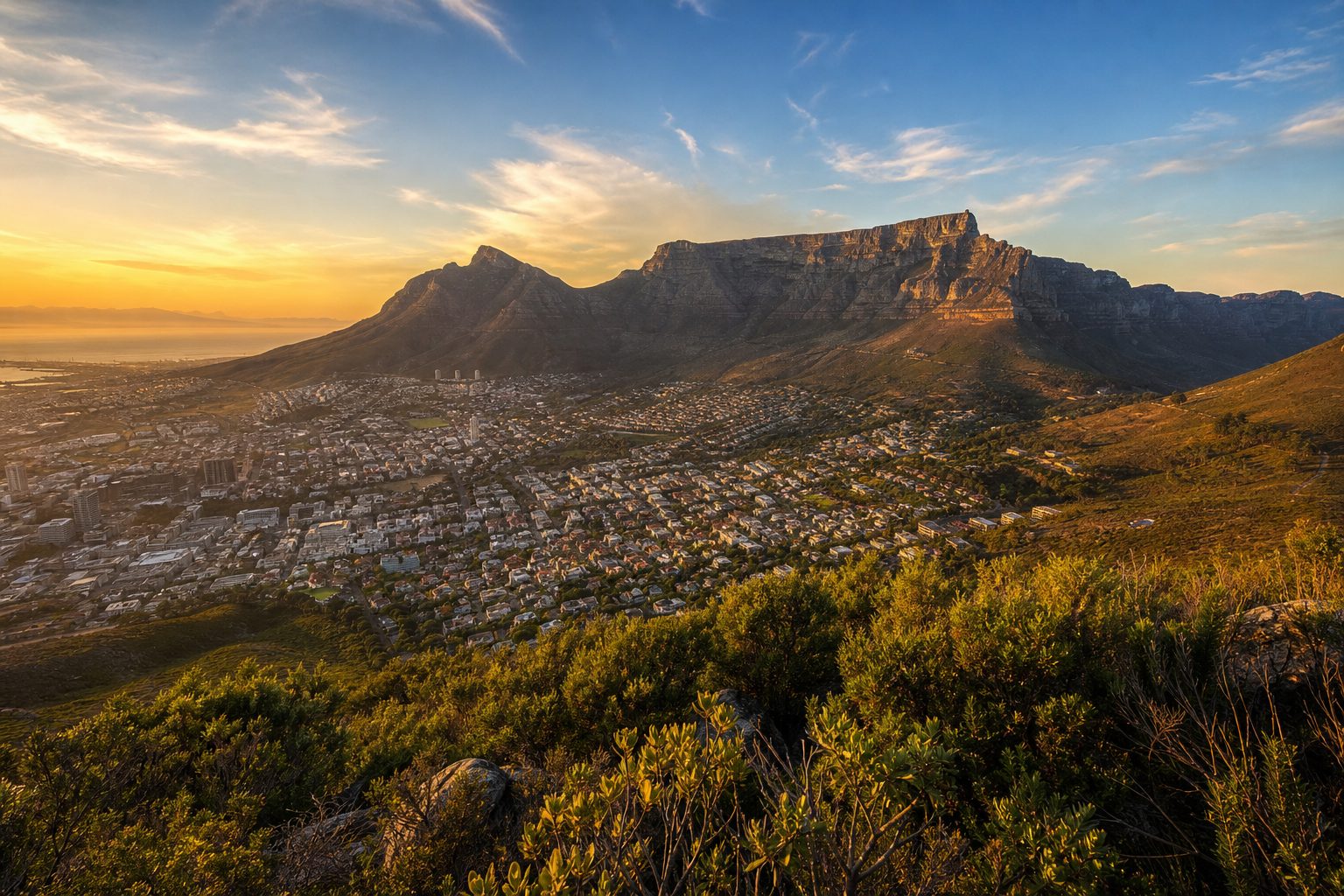
Your journey begins along Cape Town's glamorous Atlantic Seaboard. The drive from Sea Point through Clifton and Camps Bay — with the Twelve Apostles mountain range as a backdrop and turquoise waters below — is a stunning warm-up for what's to come.
Photo stop: The Maiden's Cove lookout point above Camps Bay offers the classic Cape Town postcard shot.
Stop 2: Hout Bay (08:45)
Hout Bay is a working fishing harbour nestled in a wide bay surrounded by mountains. Options here include a 40-minute boat trip to Duiker Island (home to thousands of Cape fur seals) or simply soaking in the harbour atmosphere.
The famous Hout Bay fish market serves the freshest snoek, calamari, and fish and chips you'll find — but it's early, so we'll save seafood for lunch.
Stop 3: Chapman's Peak Drive (09:15)
This is it — the star of the show. Chapman's Peak Drive is a 9-kilometre engineering marvel carved into the cliff face between Hout Bay and Noordhoek, with 114 curves and endless ocean views.
The road hugs the mountainside 593 metres above the Atlantic, offering views that genuinely make passengers gasp. Multiple pull-off points allow for photos, and on clear days, you can see all the way to Cape Point at the far end of the peninsula.
"Chapman's Peak is to driving what the Mona Lisa is to painting — you've seen a thousand photos, but nothing prepares you for the real thing." — Travel + Leisure
Stop 4: Cape of Good Hope & Cape Point (10:30)
The Cape of Good Hope section of Table Mountain National Park occupies the dramatic tip of the Cape Peninsula. The entry fee (R376 for international adults) grants access to two iconic landmarks:
- Cape of Good Hope — The southwestern-most point of the African continent. The famous sign is the most photographed spot in South Africa. Arrive early to beat the crowds (another advantage of our anti-clockwise route)
- Cape Point Lighthouse — Take the Flying Dutchman funicular (R90 return) or walk the 20-minute trail to the old lighthouse, 238 metres above the crashing ocean. On a clear day, the views stretch to infinity
Keep an eye out for baboons, eland, ostrich, bontebok, and Cape mountain zebra — all resident in the reserve. Warning: baboons are bold here. Never leave food unattended or car windows open.
Stop 5: Boulders Beach Penguins (12:30)
Just 15 minutes from Cape Point, Boulders Beach in Simon's Town is home to a colony of over 3,000 endangered African penguins. Boardwalks wind through the colony, bringing you within a metre of these charismatic birds as they waddle, swim, and bray (their call sounds hilariously like a donkey).
The African penguin population has declined by 97% since 1900, making this colony critically important for conservation. Your entrance fee directly funds penguin conservation programmes.
Stop 6: Lunch in Kalk Bay (13:30)
Kalk Bay is Cape Town's most charming village — a bohemian enclave of antique shops, art galleries, bookstores, and exceptional restaurants clustered around a working fishing harbour.
For lunch, you have superb options:
- Harbour House — Fine dining with floor-to-ceiling ocean views
- Kalkys — The best fish and chips in Cape Town, straight from the harbour. Cash only, always a queue, totally worth it
- The Brass Bell — Casual seafood restaurant literally on the rocks. Waves crash below your table at high tide
- Olympia Café & Deli — Famous breakfasts and brunch. Arrive with patience — the wait is part of the Kalk Bay experience
Stop 7: Muizenberg & St James (14:30)
The colourful Muizenberg beach huts are one of Cape Town's most photographed landmarks — a row of brightly painted Victorian bathing boxes against the backdrop of False Bay. It's also Cape Town's premier surfing beach, with gentle waves perfect for beginners.
Just around the corner, the St James tidal pool offers calm, sheltered swimming with mountain views.
Return via Constantia (15:30)
The drive back through Constantia takes you past Cape Town's oldest wine estates. If energy allows, a late-afternoon wine tasting at Groot Constantia or Beau Constantia is the perfect way to cap the day.
Why a Guided Tour Beats Self-Driving
- The driver should be watching the road, not the views — Chapman's Peak has narrow lanes and sharp curves. A passenger enjoys it 10x more than a driver
- Parking headaches disappear — Cape Point, Boulders, and Kalk Bay all have limited parking during peak times
- Local knowledge — We know which viewpoints are empty, where the penguins nest, and which Kalk Bay restaurant has the shortest queue today
- Wine tasting without worry — End the day at Constantia without designating a driver
The Cape Peninsula is waiting. Book your private peninsula experience or ask us to customise the perfect route.