We're Open8am–6pm SAST
WishlistPartner Portal
← Back to BlogSafari

Botswana Fly-In Safari 2026 | The Ultimate Way to See the Delta

Audio EditionListen to this story
0:000:00
Narrated by George — audio edition

Key Takeaways

  • A fly-in safari links remote camps by light aircraft — the standard way to explore Botswana
  • Most flights depart Maun or Kasane; hops between camps take 15–45 minutes
  • Strict luggage limit — usually 20kg total in a soft bag (no hard suitcases)
  • The scenic low-level flights over the Delta are a highlight in their own right
  • Ideal itinerary: 2–3 camps across different habitats (water, land, desert) over 7–10 days
  • Inter-camp flights typically add ~$400–900 per person depending on the route

What Is a Fly-In Safari?

In much of Africa you drive between destinations. In Botswana, you fly. The country's finest camps sit deep inside vast private concessions and the roadless heart of the Okavango Delta, unreachable by ordinary vehicle — so you travel between them the way the wilderness demands: by light aircraft, landing on grass and gravel airstrips scratched out of the bush.

This is a fly-in safari, and it is the classic Botswana experience. You arrive by international flight into Maun or Kasane, then board a small plane — often a six- to twelve-seat Cessna Caravan or similar — for the short hop to your first camp. Over the coming days you'll criss-cross the Delta by air, spending a few nights at each camp before flying on to the next, your guide waiting at every airstrip.

It sounds logistical, but in practice it's utterly seamless — and the flights themselves are unforgettable. Low over the floodplains, you watch elephant herds wade through the shallows, hippos scatter, and the water threading through the islands like liquid silver. Many guests say the scenic flights were among the most beautiful moments of the whole trip.

How It Works: From International Arrival to Camp

The journey usually unfolds like this: you fly internationally into Maun (the main safari gateway) or Kasane (near Chobe and Victoria Falls). From there, a light-aircraft transfer — scheduled or private — takes you to your first camp's airstrip. Flights are coordinated by the camps and your operator, so connections are built around your arrival.

Between camps, you simply fly on. A member of the camp team drives you to the airstrip, the plane lands, you climb aboard, and 15–45 minutes later you're touching down in a completely new landscape. There's no border faff, no long drives, no wasted days — just a short, scenic hop and a fresh guide waiting with a cool drink.

Fly-In EssentialsDetail
Main gatewaysMaun (Delta) and Kasane (Chobe)
Aircraft6–12 seat Cessna Caravan / similar
Hop length15–45 minutes between camps
Luggage limit~20kg total, soft bags only
Flight cost~$400–900 pp for a typical route
Best itinerary2–3 camps, 7–10 days, varied habitats
Typical RouteLegsInter-Camp Flights (pp)
Maun – one Delta camp – Maun2 short hops~$400–550
Two-camp Delta & Linyanti circuit3 hops~$550–750
Classic three-camp (Delta, land, Chobe)4 hops~$700–900
Delta & Kalahari with Kasane finish4–5 hops~$850–1,100
A red-and-white Cessna Caravan on a bush airstrip in the Okavango Delta as safari guests board
Safari guests with soft bags gathered beside a light aircraft on a remote grass airstrip under a big blue sky
A single-engine safari plane taxiing on a sandy Delta airstrip fringed by bush
Light Aircraft • Scenic Delta Hops

The fly-in experience — six- to twelve-seat Cessna Caravans landing on grass and gravel airstrips scratched out of the bush, your guide waiting at every strip with a cool drink.

The Luggage Rules — Pack Light and Soft

The one thing every fly-in guest must know: luggage limits are strict, and they're for safety, not fuss. Light aircraft can only carry so much weight. The standard allowance is around 20kg (about 44lb) total per person, including hand luggage, packed in a soft-sided bag — no rigid suitcases, which won't fit in the small holds.

It sounds restrictive, but safari life is casual and most camps offer same-day laundry, so you need far less than you think. Think neutral, layerable clothing, a warm fleece for chilly morning drives, a hat, sunglasses, sun cream, your camera and binoculars. Your operator will send a detailed packing list — follow it, and you'll never miss the extra bag.

Design My Botswana Fly-In Safari

Pack (soft bag, ~20kg)Leave Behind
Neutral, layerable clothing (khaki, olive, beige)Hard-shell suitcases (won’t fit the holds)
Warm fleece & windproof for dawn drivesBright colours & camouflage prints
Wide-brim hat, sunglasses, high-factor sun creamBulky toiletries — camps supply the essentials
Camera, spare batteries & binocularsExcess “just in case” outfits (laundry is daily)

Building the Perfect Route

The art of a great Botswana fly-in safari is combining contrasting habitats. Because you can move so easily by air, you can experience three completely different worlds in a single week. A classic seven- to ten-day route might look like this:

Camp 1 — A water-based Delta camp for mokoro, boating and the shimmering heart of the Okavango (think Jao, Vumbura or Duba Plains).
Camp 2 — A big-cat land camp such as Mombo or Chief's Camp for predators and general game.
Camp 3 — A contrast finale — the surreal Kalahari salt pans at Jack's Camp, or the elephants and Victoria Falls of the Chobe–Zambezi region.

This variety is the secret to Botswana. Rather than staying in one place, you sample the Delta's water, the plains' predators and the desert's strange beauty — each reached in minutes by a scenic flight. See our guide to the best luxury safari lodges in Botswana for camp inspiration.
Classic Fly-In RouteHabitatsBest For
Delta → Linyanti → ChobeWater, predator plains, big-riverThe complete first-timer’s Botswana
Delta → Mombo → Jack’s CampWater, big cats, Kalahari desertMaximum contrast & photography
Delta → Chobe → Victoria FallsWater, elephants, the fallsHoneymoons & short-trip highlights
Two-camp Delta focusTwo contrasting water campsDelta purists with less time
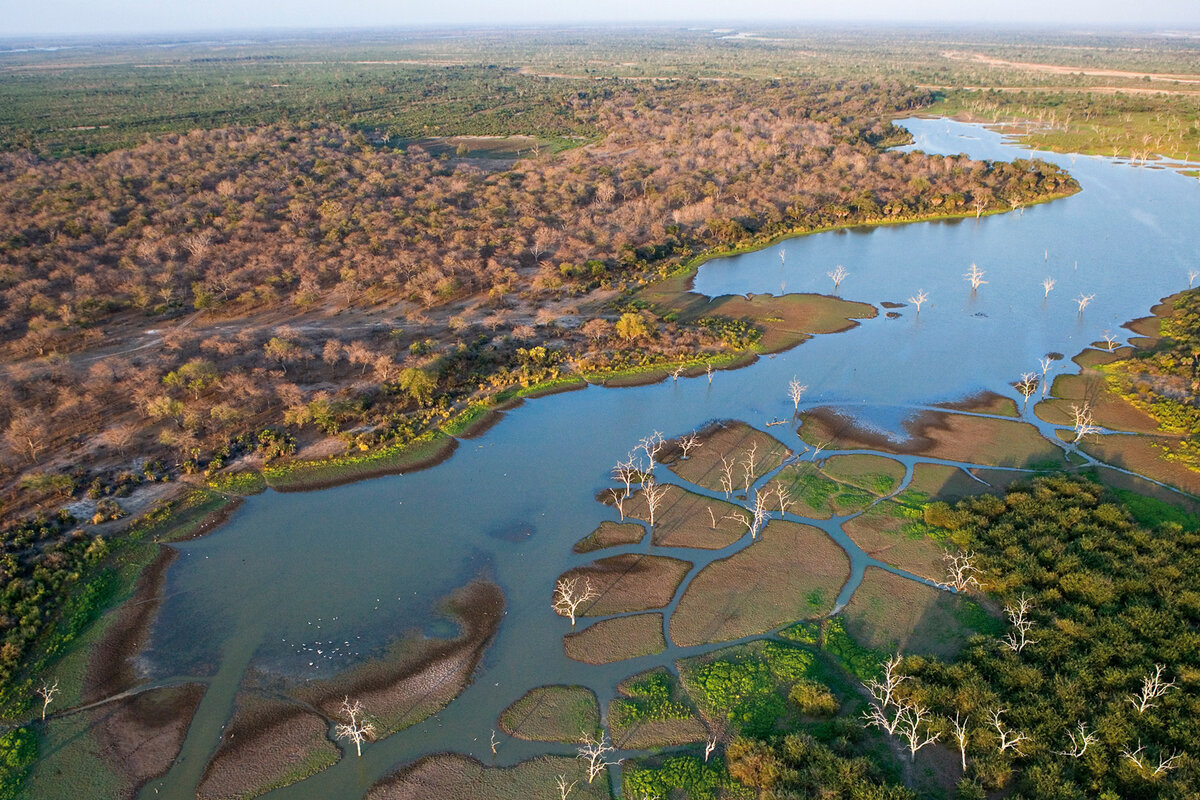
Aerial view of the Okavango Delta's flooded channels, islands and dead-tree islands at golden light
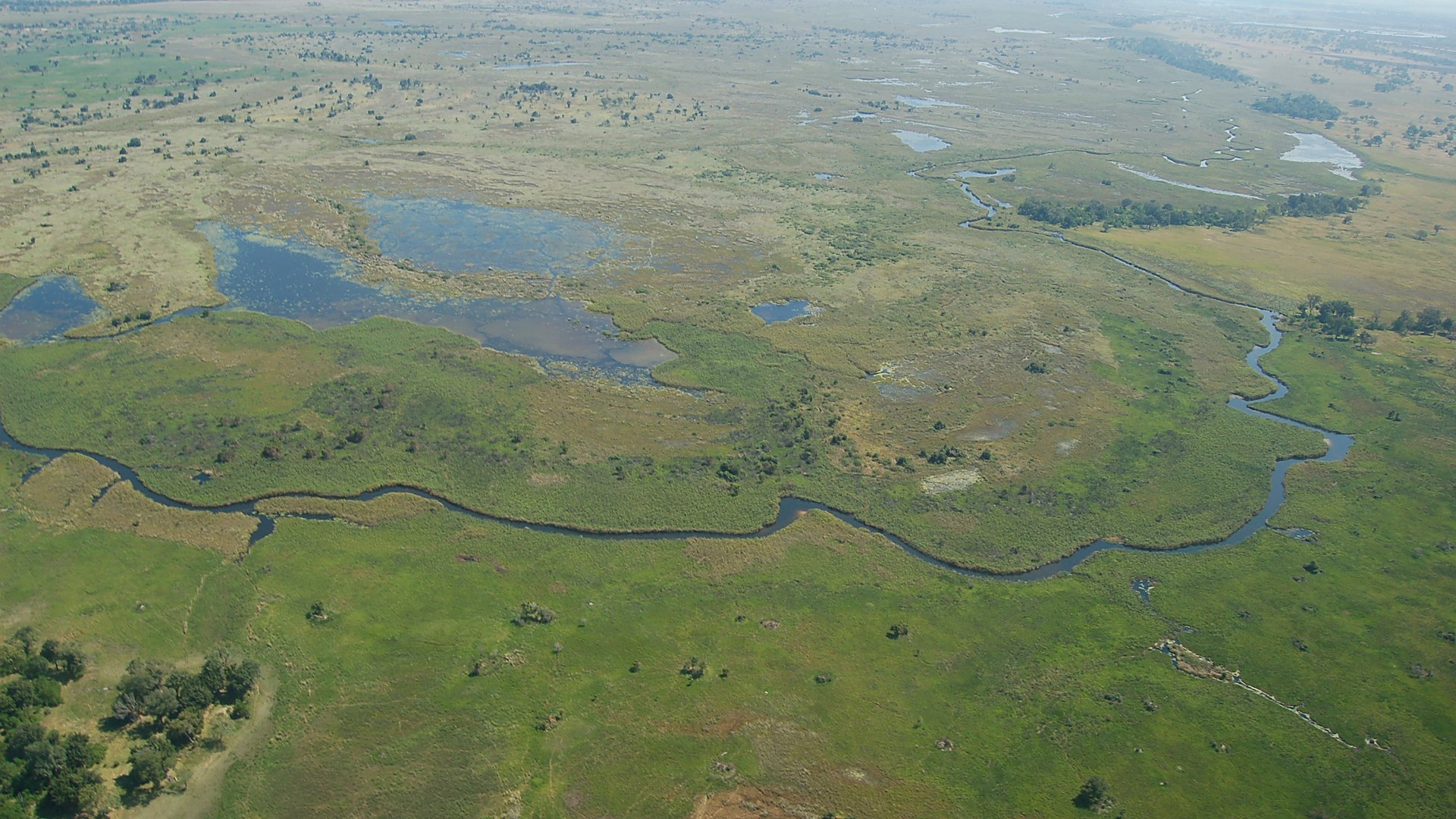
A meandering delta channel threads through green floodplains seen from a low scenic flight
A helicopter flies low over the shining channels and palm islands of the Okavango Delta
Scenic Flights • Aerial Over the Delta

Aerial over the Delta — the low-level flights are a highlight in their own right, threading over floodplains, elephant herds and channels shining like liquid silver.

Is a Fly-In Safari Safe?

Yes. Botswana's safari air operators are experienced, professional and well regulated. Pilots fly these routes daily, aircraft are maintained to strict standards, and flights are grounded in genuinely poor weather. The planes are small, so if you're nervous about flying it's worth knowing in advance — but the low-level, short-hop nature of the flights, and the extraordinary views, win over most anxious flyers within minutes.

Fly-In vs Self-Drive

Botswana can also be explored by 4x4 self-drive — a rugged, adventurous, budget-friendlier way to see the country for experienced overlanders. But for most travellers, and certainly for honeymooners and those seeking comfort and the finest camps, fly-in is the way to go. It saves days of hard driving, unlocks the truly remote camps, and turns transfers into scenic highlights. If you'd rather drive, read about the alternative in our Botswana self-drive coverage; if you want the classic luxury experience, fly.

When to Go

Fly-in safaris run year-round. The dry season (July–October) offers the best big-game viewing as wildlife concentrates around water, and the flights reveal the Delta's channels at their most photogenic. The green season (November–April) is quieter, greener and better value, with dramatic skies and superb birdlife — and the scenic flights over a flooding, greening Delta are magical in their own right.

Private Tours Cape Town designs seamless fly-in safaris across Botswana — every flight coordinated, every camp hand-picked, every golden hour accounted for.
BOTSWANA FLY-IN SAFARI

The ultimate way to see the Delta

Hop between remote camps by light aircraft, floating over floodplains, elephant herds and shining channels — the scenic, seamless heart of the classic Botswana safari.

Frequently Asked Questions

You fly internationally into Maun or Kasane, then travel between remote camps by light aircraft (15–45 minute hops), with a guide meeting you at each bush airstrip. Camps and your operator coordinate all the connections.

The inter-camp flights typically add around $400–900 per person depending on the route, on top of camp rates. A full luxury fly-in safari usually runs from roughly $8,000 to $15,000+ per person for 7–10 days.

Usually around 20kg (44lb) total per person, including hand luggage, packed in a soft-sided bag. Hard suitcases are not permitted because of the small aircraft holds.

Yes. Botswana's air operators are experienced and well regulated, pilots fly these routes daily, and flights are grounded in poor weather. The planes are small, so nervous flyers should be prepared, but most are won over by the views.

Two to three camps across different habitats — water, land and desert — over 7–10 days is the classic, giving you the full range of Botswana's landscapes and wildlife.

July–October for peak game viewing and the most photogenic Delta channels; November–April for green landscapes, birdlife and better value.

Almost all fly-in safaris begin in Maun, the main safari gateway for the Okavango Delta, or in Kasane, near Chobe National Park and Victoria Falls. You fly internationally into one of these towns, then transfer to your first camp by light aircraft.

Most inter-camp flights use six- to twelve-seat Cessna Caravans or similar single-engine light aircraft. They fly low and slow, which makes the scenic views extraordinary — and the short, gentle hops win over most nervous flyers within minutes.

It is ideal. Fly-in safaris remove long, tiring drives, unlock the most remote and romantic camps, and turn every transfer into a scenic highlight. Combining a water-based Delta camp with a big-cat camp or Victoria Falls makes for an unforgettable honeymoon.

Make It Happen

Safari Packages

Ready to experience it yourself?

Let our local experts craft a private journey around the places you just read about.

Explore ToursPlan My Trip
Curated For You

You May Also Like

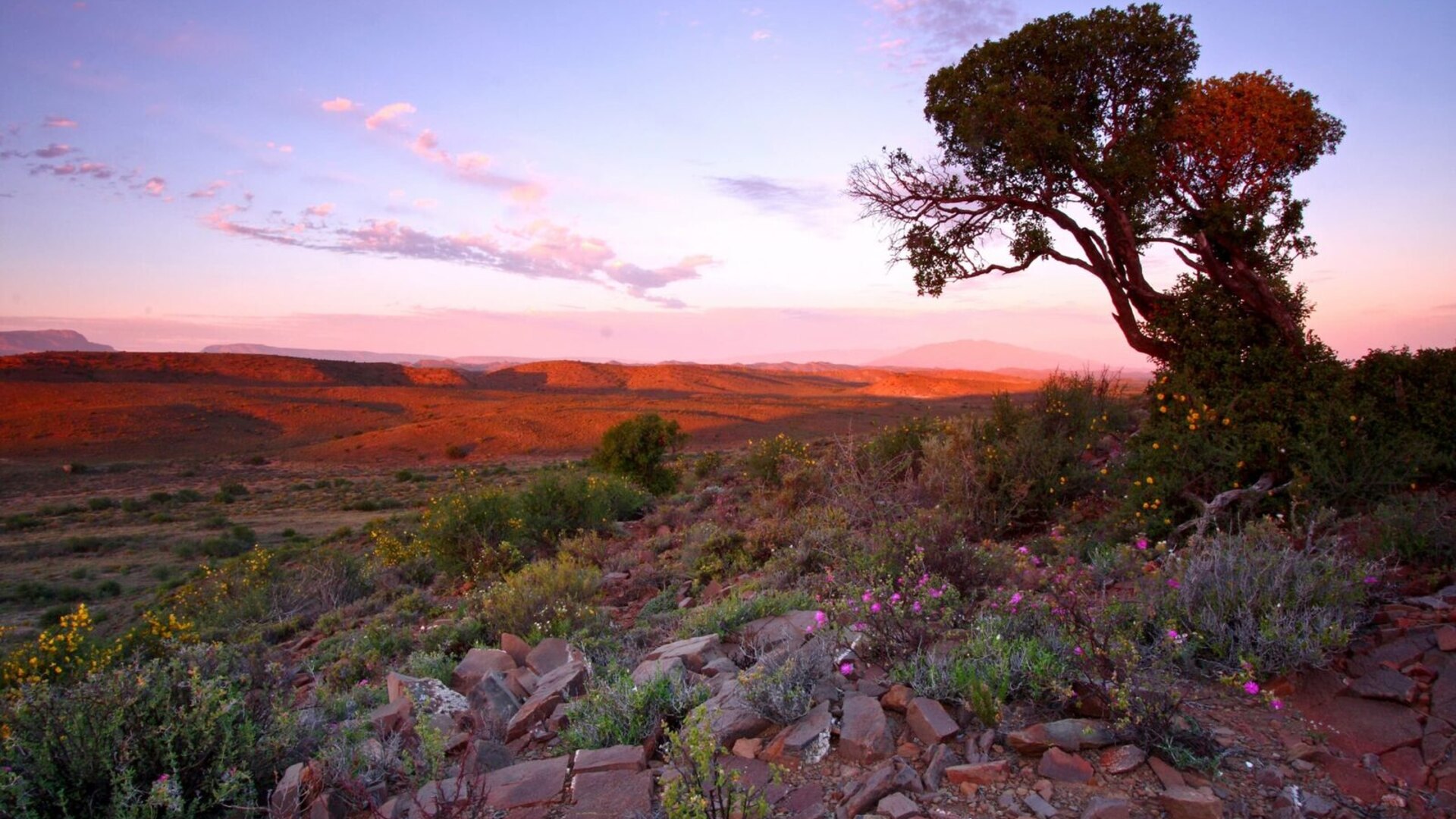
Golden Karoo light over a malaria-free Western Cape game reserve, classic family safari country near Cape TownSafari

Best Family Game Reserves in the Western Cape (2026): Malaria-Free Safaris for Kids

The Western Cape is the easiest place in South Africa to take children on safari. Every reserve here is genuinely malaria-free — no tablets for young kids — and most sit within two to four hours of Cape Town, so a Big Five safari slots neatly onto a family holiday alongside beaches, the Garden Route and Table Mountain. This is the definitive guide to the best family game reserves in the Western Cape for 2026: six reserves ranked and compared, with each one’s kids’ programme, the real minimum ages for game drives, honest per-night guidance, driving times from Cape Town, and the private family safaris we run to each. No marketplace listings — just genuine reserves and real trips, designed and operated by Beyond Africa Safaris, direct.

13 Sept 2026 · 16 min
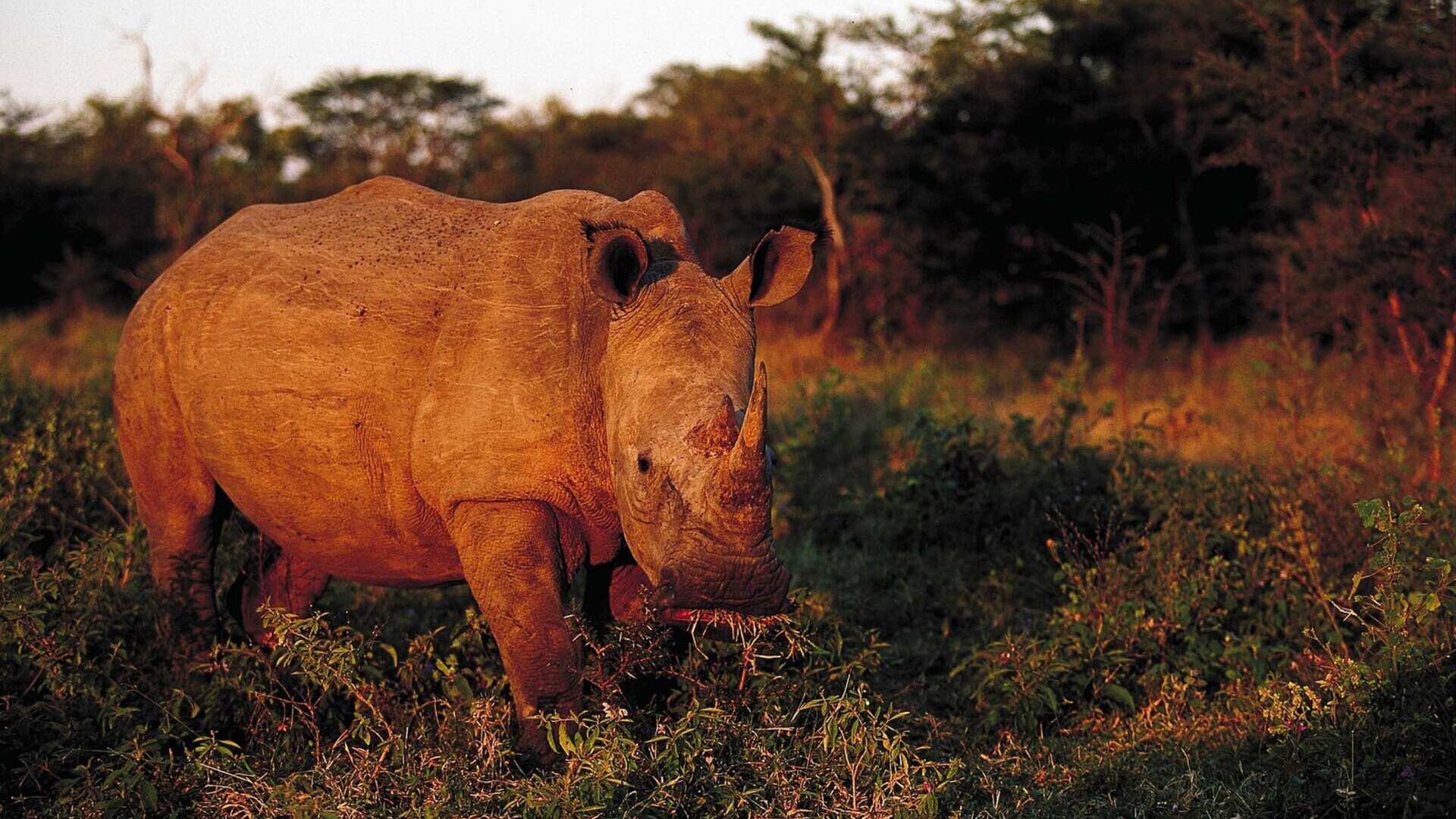
White rhino grazing at golden hour in a KwaZulu-Natal game reserveSafari

Best Big Five Game Reserves in KwaZulu-Natal (2026): Where to See the Big Five

KwaZulu-Natal is the quiet giant of South African safari — the province that saved the white rhino from extinction, holds the oldest proclaimed game reserve on the continent, and pairs the Big Five with Zulu culture and a warm Indian Ocean coastline you can reach in the same trip. This is the definitive guide to the best Big Five game reserves in KwaZulu-Natal for 2026: seven reserves ranked and compared, with what each one does best, honest per-night guidance, the real malaria picture reserve by reserve, driving times from Durban and Johannesburg, and the private safaris we run to each. No marketplace listings — just genuine reserves and real trips, designed and operated by Beyond Africa Safaris, direct.

13 Sept 2026 · 17 min
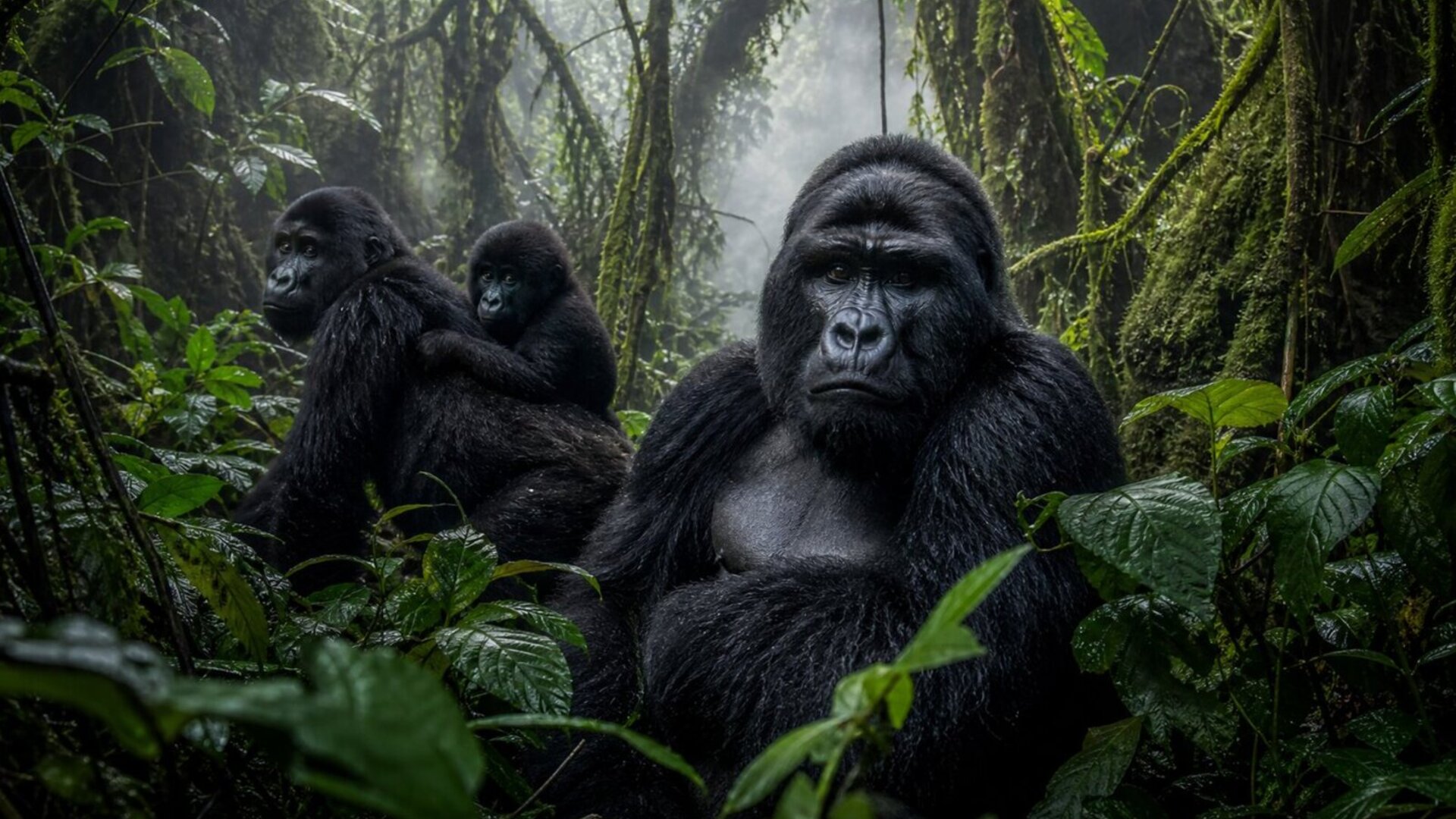
Mountain gorilla in the misty Bwindi Impenetrable Forest, UgandaSafari

Uganda Safari Packages 2026: Best Gorilla, Chimp & Wildlife Itineraries

Uganda is the Pearl of Africa — a green, friendly, wildlife-rich country where you can look a mountain gorilla in the eye in the forests of the south-west, track chimpanzees through Kibale by the following morning, watch lions draped in fig trees at Ishasha, and cruise beneath the raw power of the Nile at Murchison Falls by the end of the week. This is the definitive guide to Uganda safari packages for 2026: the real, bookable trips we run across Uganda's finest parks, with genuine day-by-day itineraries, honest per-person prices from value to ultra-luxury, a species-by-park breakdown of where each package goes, a month-by-month calendar for timing your trip, and clear advice on how to choose the right one. No marketplace listings, no bait pricing — just real journeys designed and operated by Beyond Africa Safaris, direct.

12 Sept 2026 · 18 min
Simple, Personal, Expert-Led

How It Works

From first message to the trip of a lifetime — planning your safari with us is effortless.

  1. 1

    Share Your Dream

    Tell us who is travelling, your dates and what you long to see. One quick message is all it takes to begin.

  2. 2

    We Design It

    Your specialist crafts a private, tailor-made itinerary — the right camps, the right season, every detail considered.

  3. 3

    Refine Together

    We fine-tune the journey with you until every day feels perfect, then handle flights, transfers and permits.

  4. 4

    Travel With Confidence

    Set off knowing every detail is handled and a dedicated specialist is on call from your first game drive to home.

Your Journey Starts Here

Let Our Experts Craft Your Perfect Safari

Every itinerary is handcrafted by our team of local specialists who have spent 18+ years exploring Southern and East Africa. From Big Five game drives to gorilla trekking — we create journeys that stay with you forever.

Start PlanningChat with Us
Chat