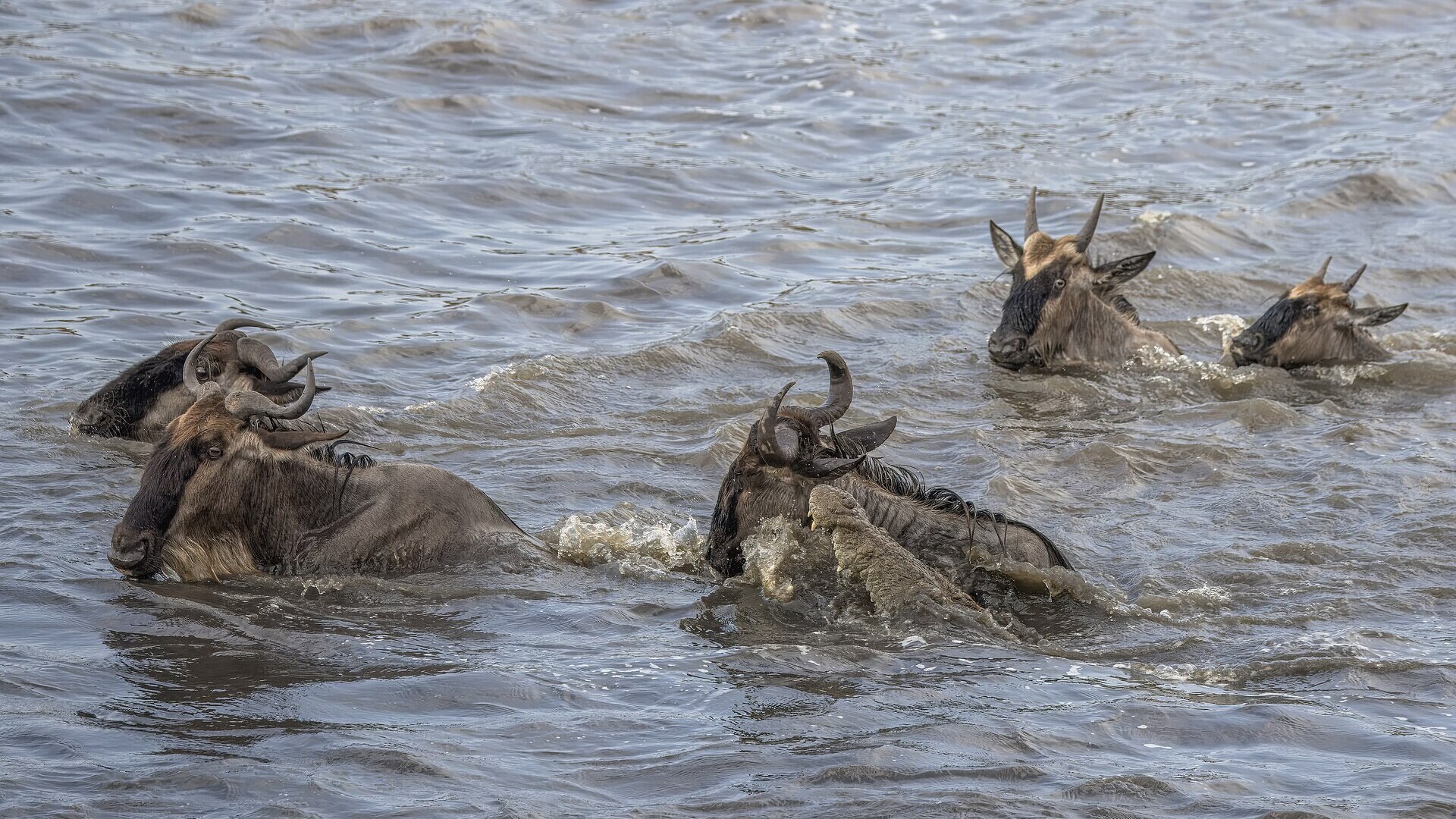
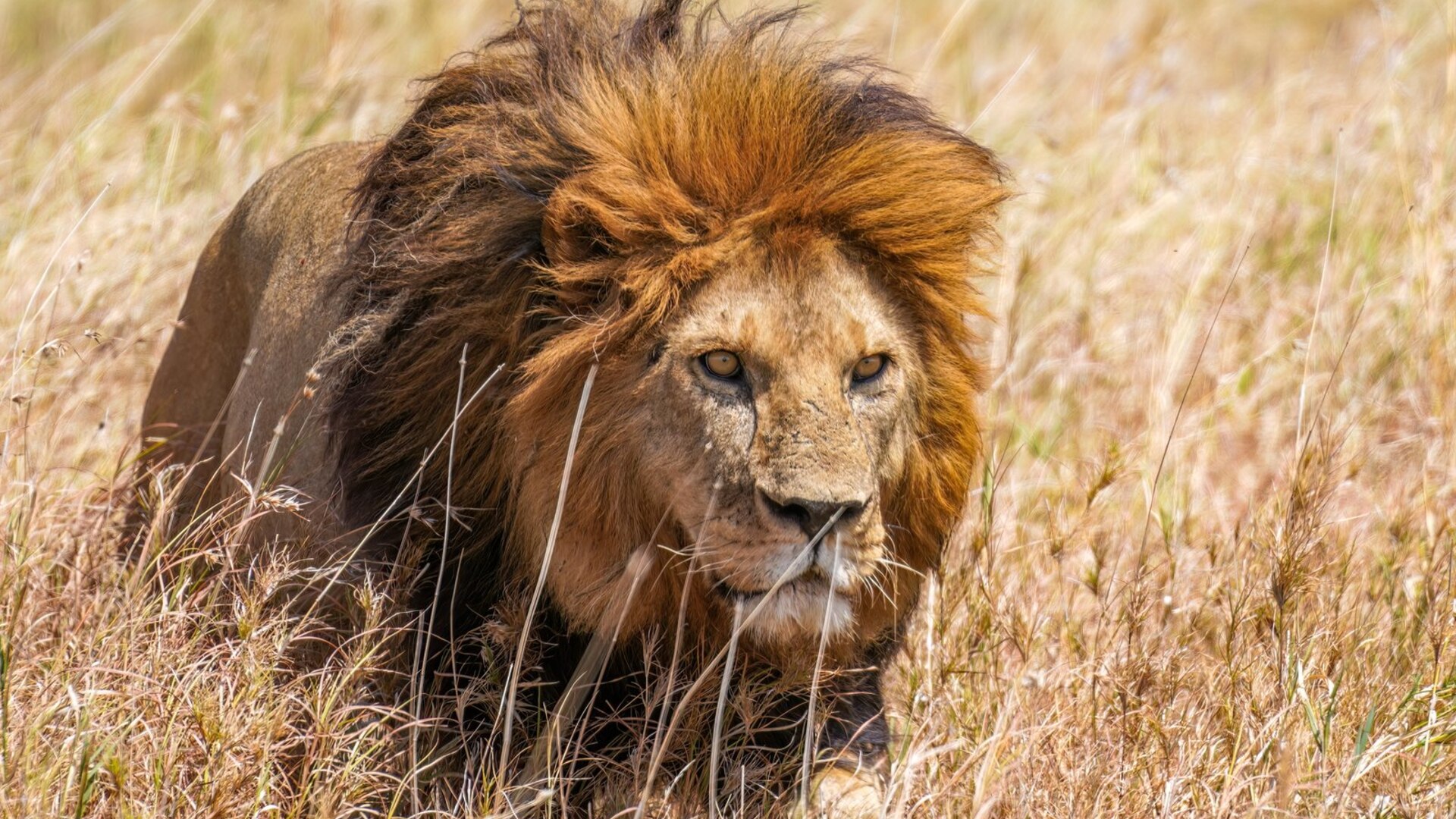
Key Takeaways
- No flights needed: every reserve in this guide is reachable by road from Cape Town, so a Western Cape safari can be built as one continuous drive rather than a fly-in trip.
- Malaria-free throughout: South Africa is the only country where you can do a full Big Five safari with zero malaria risk, which makes the Western Cape ideal for families, older travellers and anyone who would rather skip the tablets.
- Closest Big Five is about two hours away: Aquila sits roughly two hours from the city, Sanbona and Inverdoorn around two-and-a-half to three-and-a-half, and the Garden Route reserves within a comfortable day.
- Pair three things: the strongest Western Cape package combines Cape Town (Table Mountain, the peninsula), the Cape Winelands (Stellenbosch and Franschhoek) and one malaria-free reserve for game viewing.
- Three clear budget tiers: from a short value add-on around US$1,150 per person, through mid-range family combos near US$3,000, to luxury Cape Town and safari routes from US$5,000 and up.
- Match the reserve to the traveller: families, couples, photographers, first-timers and repeat visitors each have a natural best fit, and this guide lays out which is which.
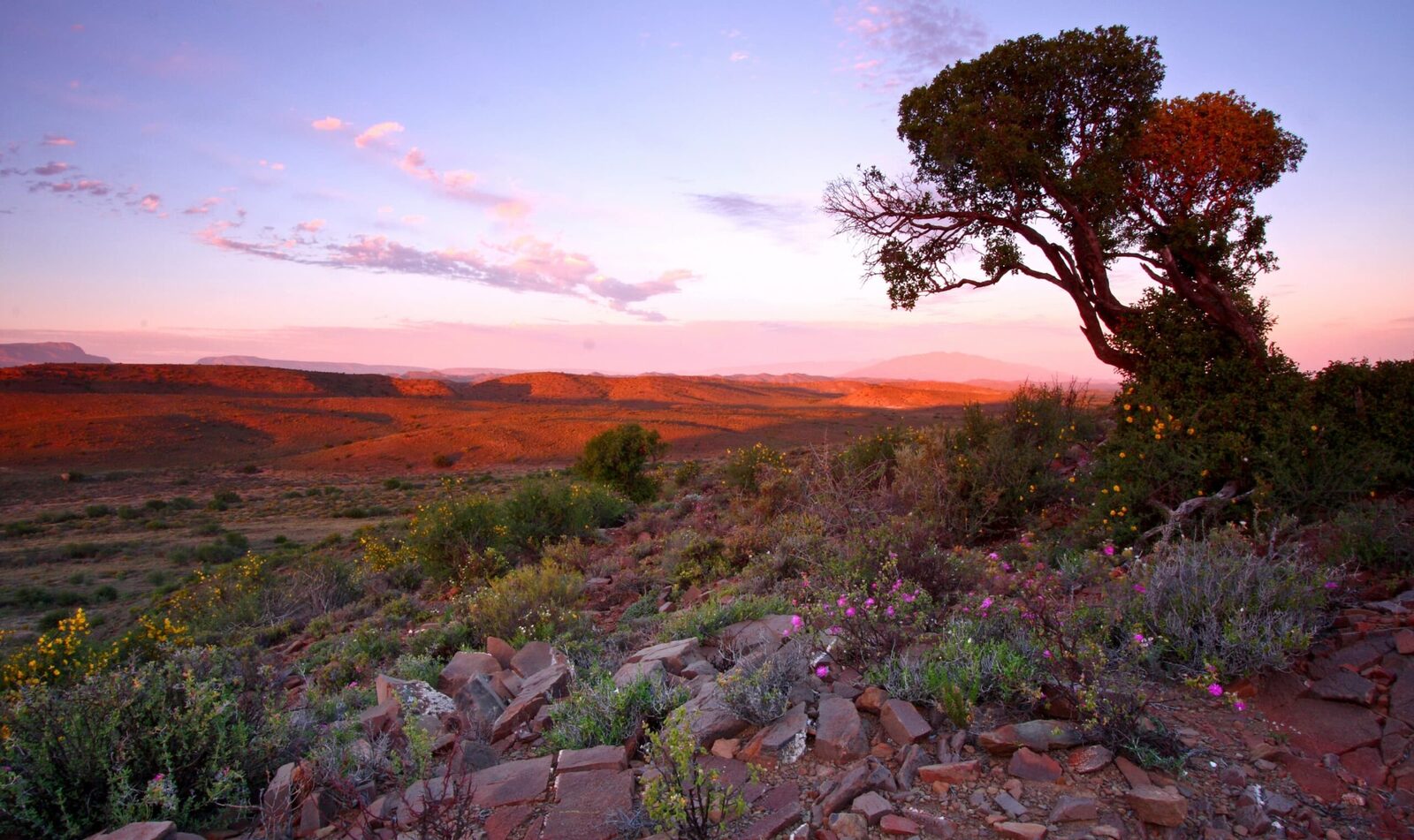
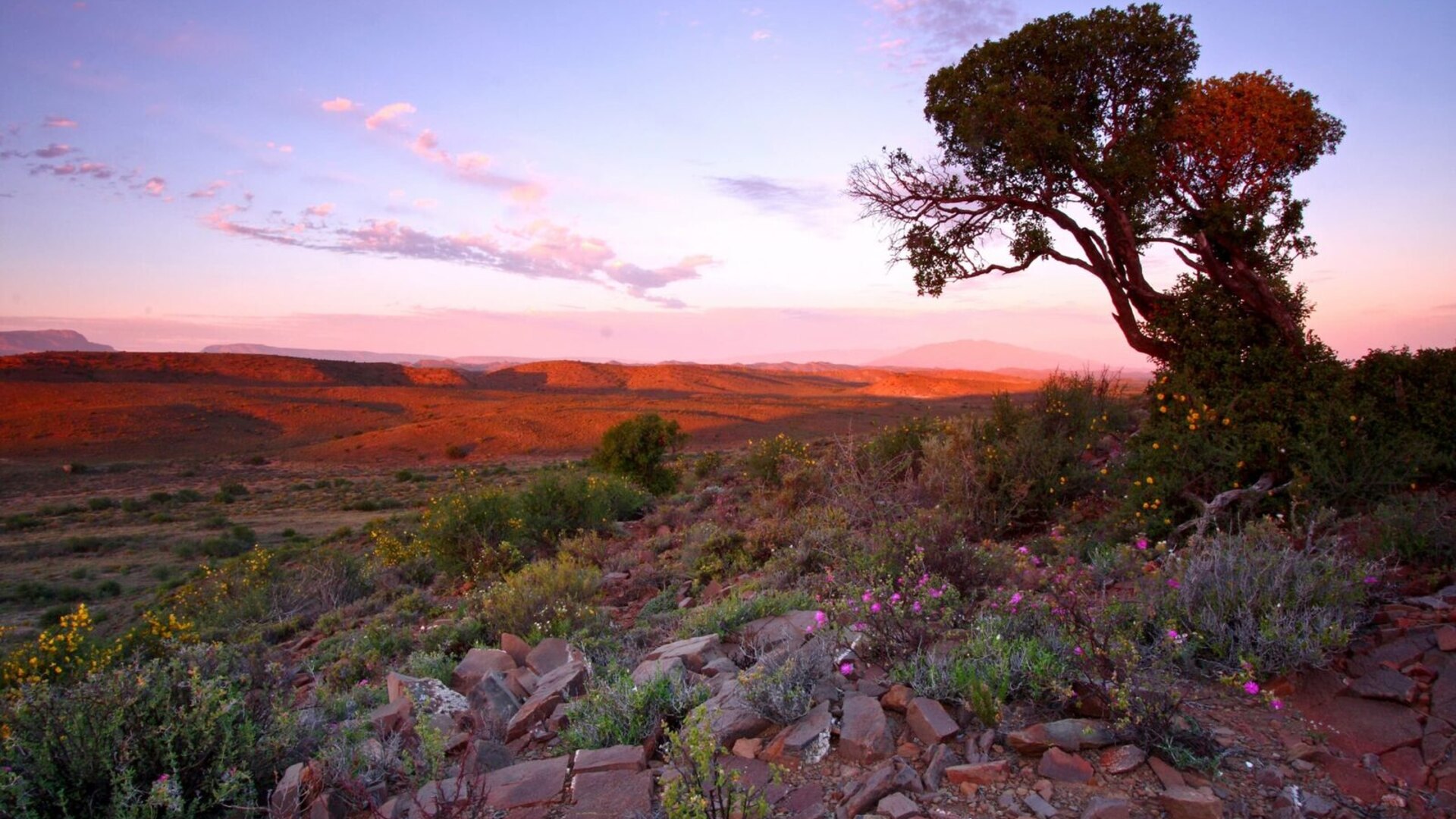
Cape Winelands and open safari country — the Western Cape lets you combine both in a single road trip.
Why This Guide Matters
Most people arrive in Cape Town for the mountain, the beaches and the wine, then discover they can add a genuine Big Five safari without flying anywhere or taking a single anti-malarial tablet. The problem is choosing well: there are half a dozen reserves within a few hours of the city, they suit very different travellers, and the packages that bundle them with Cape Town and the Winelands vary widely in length and price. This guide sets out the honest options — which reserve fits which kind of traveller, what each tier really costs, and how to string the pieces into one smooth route.
Why the Western Cape Works So Well for Safari
South Africa is the only country in the world where you can complete a full Big Five safari with no malaria risk at all, and the Western Cape is where that advantage matters most. The reserves within reach of Cape Town lie in dry, mountainous Karoo and fynbos country where malaria simply does not occur. That single fact changes who can travel: grandparents, toddlers, pregnant travellers and anyone uneasy about prophylactics can all do a Big Five safari here without a second thought.
The second advantage is distance, or rather the lack of it. In the classic safari regions of the north and east, reaching a good reserve usually means a domestic flight and then a light-aircraft transfer. In the Western Cape you drive. The closest Big Five reserve is about two hours from the city; the furthest in this guide is a comfortable half-day. That means no baggage limits, no transfer costs and the freedom to build your own route at your own pace.
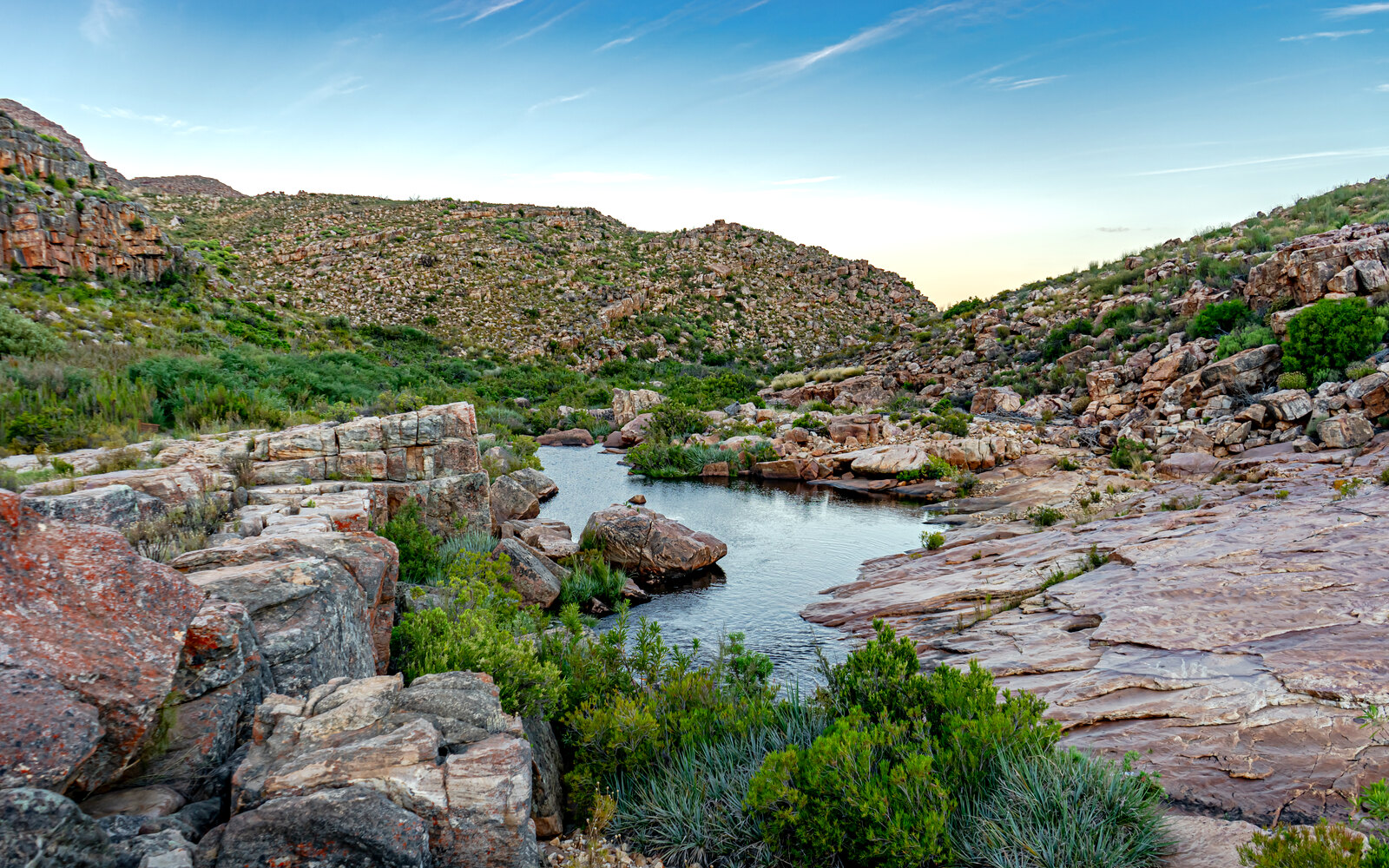
The third advantage is variety within a small radius. In the space of a week you can stand on Table Mountain, taste in centuries-old Winelands cellars, walk among fynbos found nowhere else on Earth, watch lion and elephant on a game drive, and sleep in a sandstone cave under a sky thick with stars. Few regions anywhere pack that much range into so little driving.
The One-Line Verdict
If you want a safari that slots neatly onto a Cape Town holiday — no flights, no malaria tablets, no long transfers — the Western Cape is the easiest place in Africa to do it. Pick one reserve that matches your travellers, add two or three days of game viewing, and let Cape Town and the Winelands carry the rest of the trip.
The Three Pieces of a Western Cape Safari Package
Almost every strong itinerary here is built from the same three parts. Understanding them makes it far easier to see where a package spends your time and money.
1. Cape Town and the Peninsula
The city anchors nearly every trip. Table Mountain, the Cape Point peninsula, the penguins at Boulders Beach, the V&A Waterfront and the drive along Chapman's Peak fill two to four days comfortably. Most travellers start here, partly because it is where international flights land and partly because it is the easiest place to shake off jet lag before heading into the countryside.
2. The Cape Winelands
An hour inland lie Stellenbosch, Franschhoek and Paarl, the historic wine towns whose oak-lined streets and mountain-ringed estates are a destination in their own right. Two nights in the Winelands is the usual dose — enough for a couple of tastings, a long lunch on a wine estate and a slower pace before or after the game viewing. The Winelands also sit conveniently on the road between Cape Town and several of the reserves.
3. A Malaria-Free Reserve
The safari itself is the third piece. Depending on which reserve you choose, this is anywhere from a single overnight to three or four nights of game drives. The reserve you pick shapes the whole character of the trip, which is why the bulk of this guide is devoted to matching reserves to travellers. Get this choice right and the rest of the package falls into place around it.
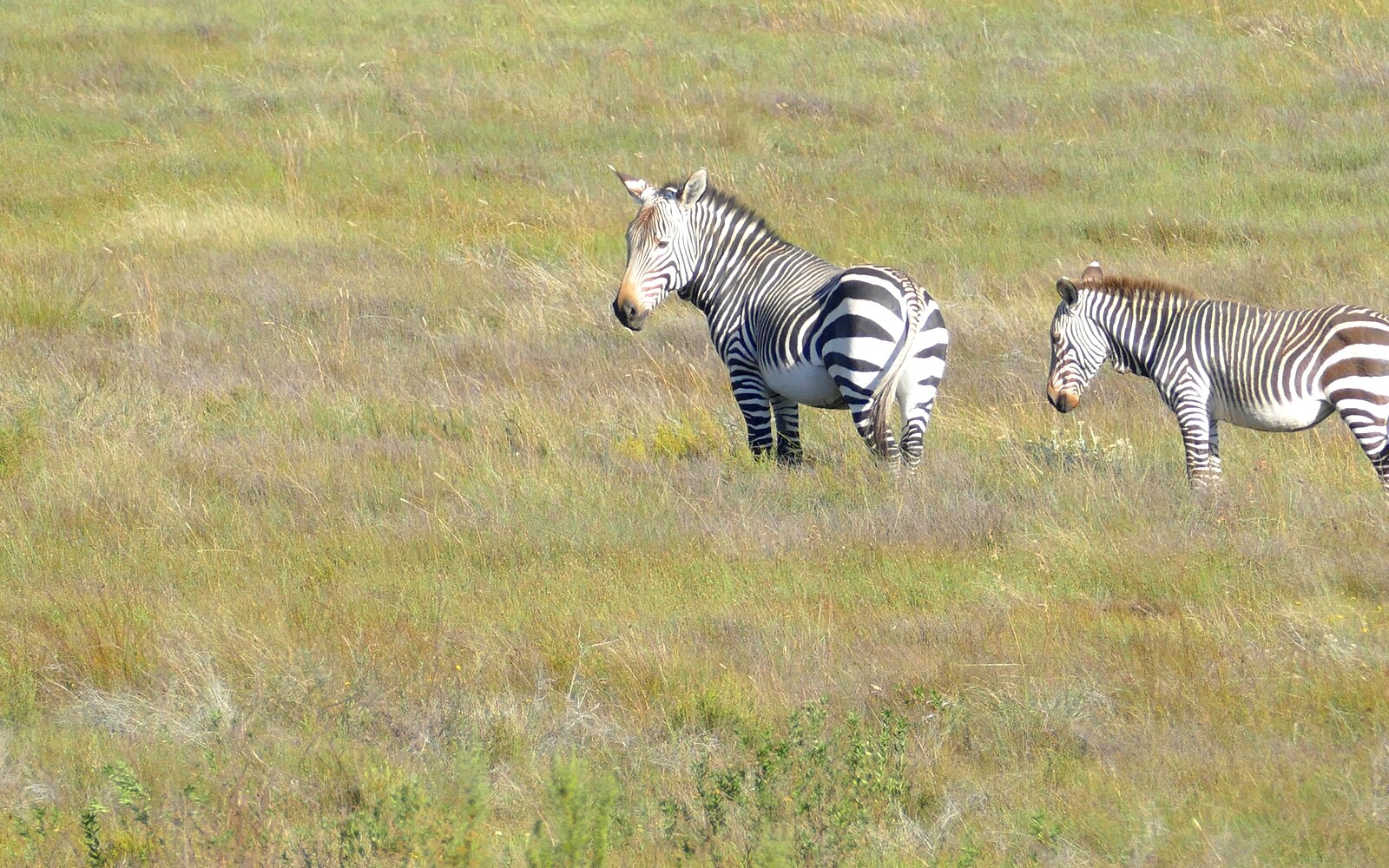
The Reserves: Which One Suits You
There are more malaria-free reserves within reach of Cape Town than most visitors realise, and they are genuinely different from one another. Below is an honest run through the main options, what each does best, and the kind of traveller it suits.
Aquila Private Game Reserve — Closest and Most Flexible
Roughly two hours from the city near Touws River, Aquila is the closest Big Five reserve to Cape Town and the easiest to visit on a day trip. It runs guided day safaris with transfers from the city, as well as overnight stays, which makes it the natural pick for travellers short on time or testing the water before committing to a longer safari elsewhere. Game viewing here is reliable rather than remote-wilderness in feel, and the reserve is well set up for families and first-timers.
Sanbona Wildlife Reserve — Big Five and Free-Roaming Lions
About three to three-and-a-half hours away in the Klein Karoo, Sanbona is the largest private reserve in the region at some 58,000 hectares, with genuine Big Five and a famous population of free-roaming white lions. It feels like a proper wilderness rather than a day-trip park, with a handful of lodges spread across a vast landscape. Sanbona suits travellers who want a fuller, more immersive safari without giving up the malaria-free, drive-from-Cape-Town convenience. Read our full Sanbona Wildlife Reserve review for the detail.
Inverdoorn Game Reserve — Cheetah Conservation
Under two-and-a-half hours from the city in the Ceres Karoo, Inverdoorn is known for its cheetah conservation work and offers Big Five game viewing along with the chance to learn about big-cat rehabilitation. It works well as a one or two-night stay and appeals to travellers who like the idea of a conservation angle alongside their drives.
Gondwana Game Reserve — Fynbos Big Five on the Garden Route
About four hours from Cape Town on the Garden Route near Mossel Bay, Gondwana is a malaria-free Big Five reserve set in rolling fynbos-covered hills rather than flat bush. It has a strong family programme, including a Junior Ranger offering for children, and pairs naturally with a Garden Route road trip. If you are already planning to drive the coast, Gondwana is the obvious safari to build in.
Garden Route Game Lodge and Botlierskop — Value on the Coast Road
Also on the Garden Route, Garden Route Game Lodge offers accessible Big Five game viewing with a well-run children's programme, while Botlierskop, minutes from Mossel Bay, delivers Big Five drives at an approachable price. Both are excellent for families and for travellers who want to add a short safari to a coastal holiday without a luxury budget.
Bushmans Kloof and Kagga Kamma — Cederberg Character (Not Big Five)
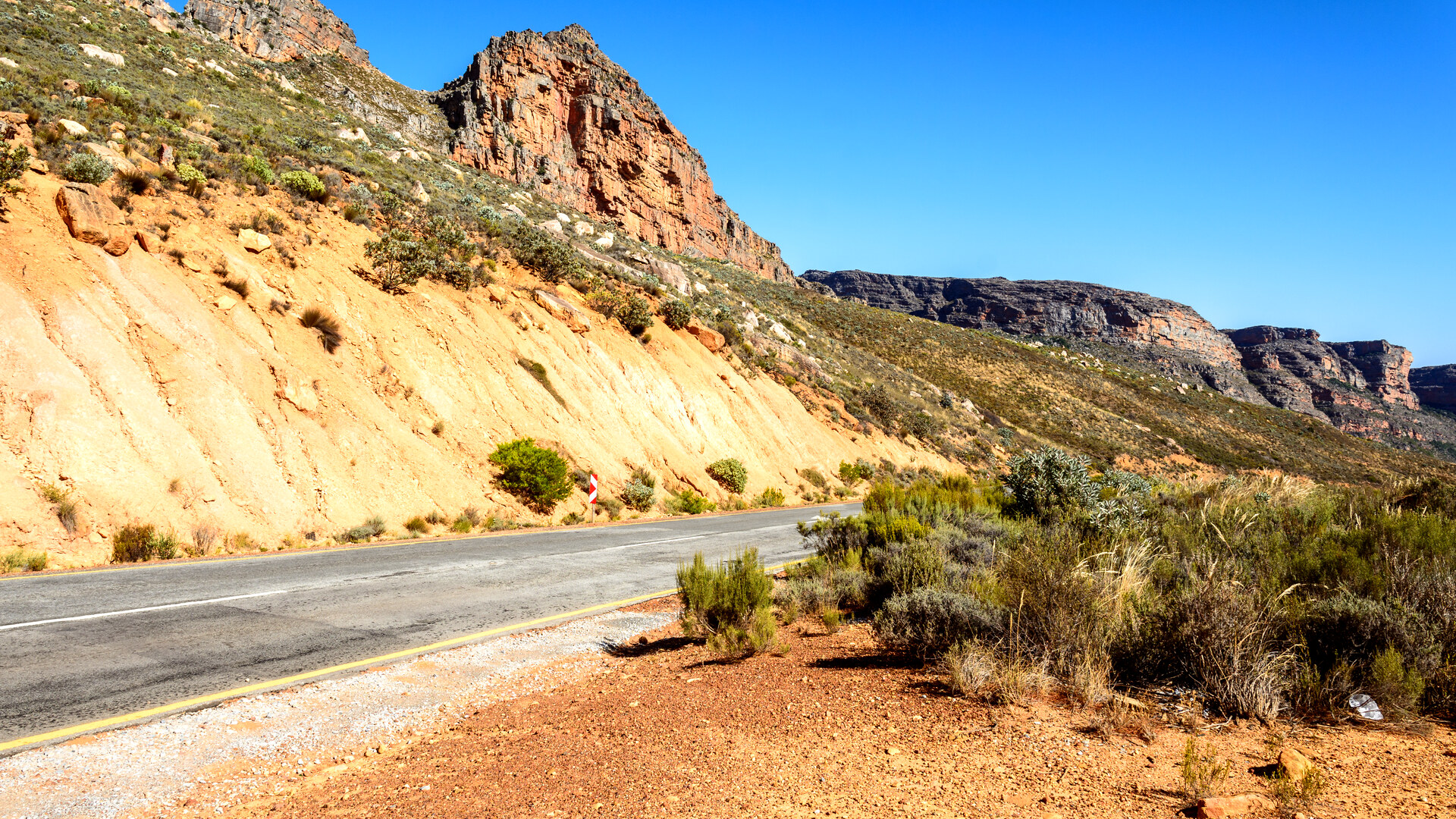
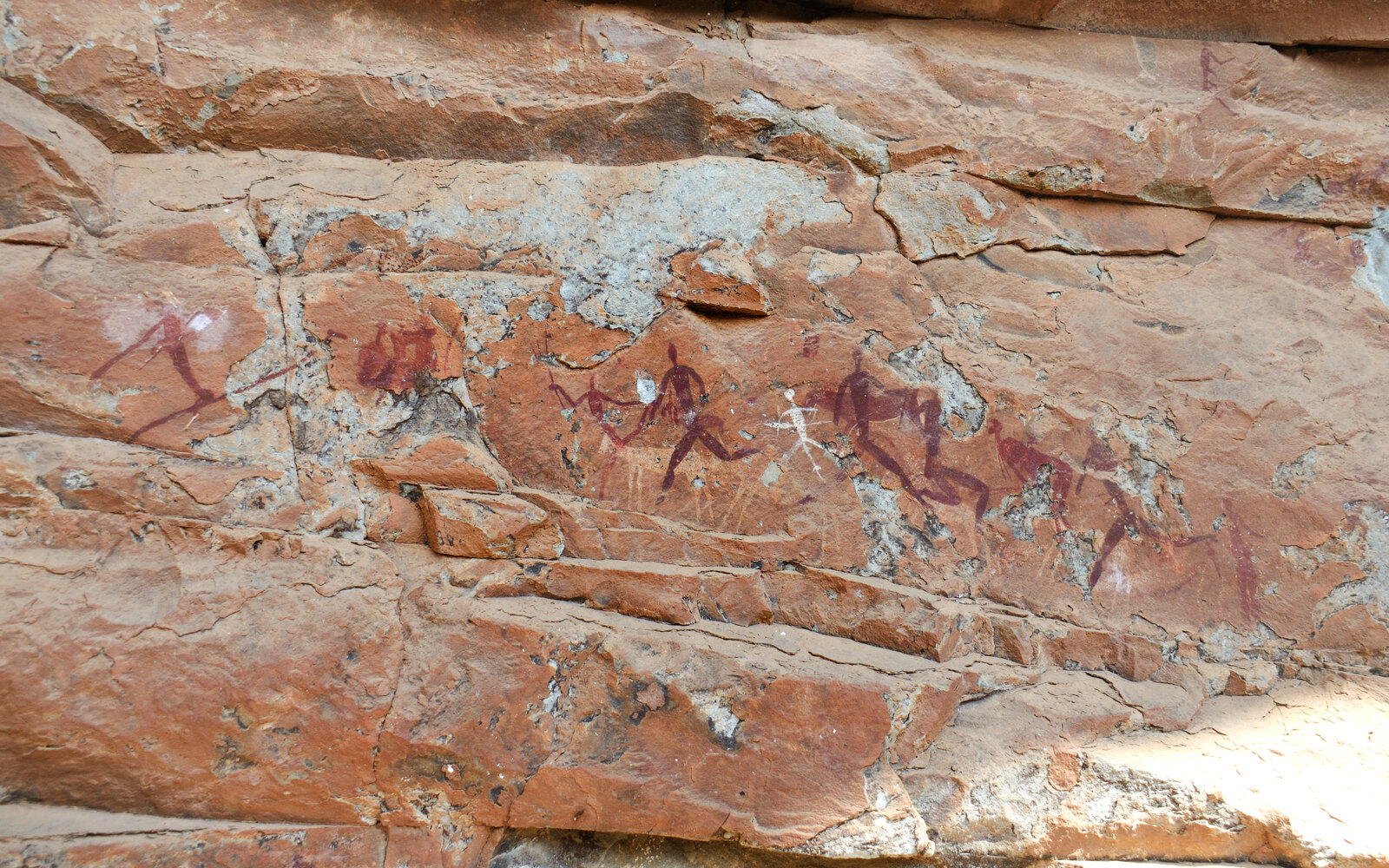
Two of the most distinctive stays in the region are not Big Five reserves at all. In the Cederberg, about three-and-a-half hours from Cape Town, Bushmans Kloof is a five-star wilderness and wellness retreat with more than 130 rock-art sites, while Kagga Kamma is famous for cave suites carved into sandstone and open-air star beds under some of the darkest skies in the country. Neither has lions, but both offer something no Big Five reserve can, and they combine beautifully with a predator reserve elsewhere on the same trip.
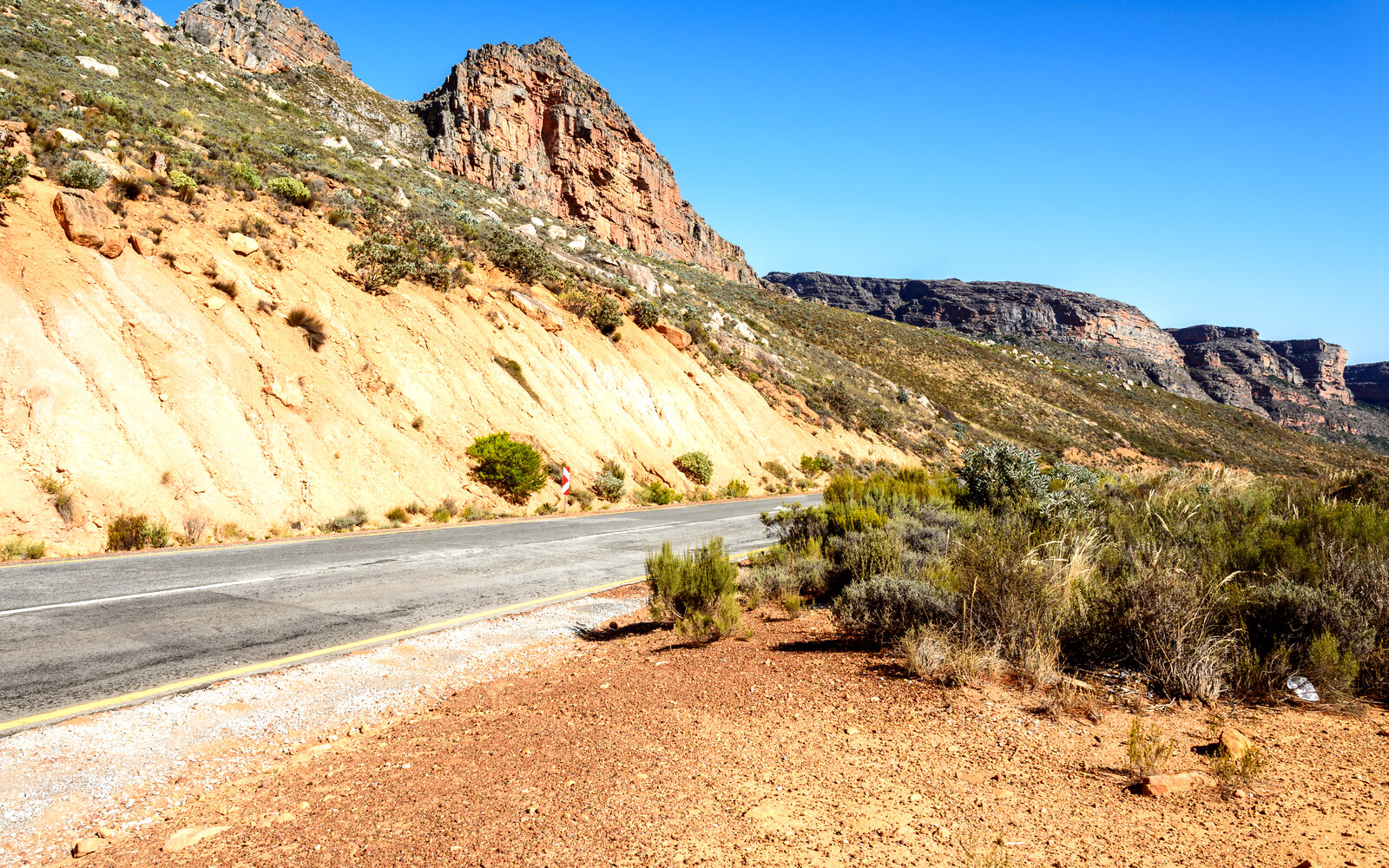
Reserve Comparison at a Glance
The table below sets the main reserves side by side so you can see, quickly, which fits your time, budget and travellers. Drive times are approximate from central Cape Town.
| Reserve | Drive from Cape Town | Big Five? | Best for |
|---|---|---|---|
| Aquila | ~2 hours | Yes | Day trips, short stays, first-timers |
| Inverdoorn | ~2.5 hours | Yes | Cheetah conservation, short breaks |
| Sanbona | ~3.5 hours | Yes (white lions) | Immersive wilderness, couples, longer stays |
| Gondwana | ~4 hours | Yes | Garden Route trips, families |
| Garden Route Game Lodge / Botlierskop | ~4-4.5 hours | Yes | Value, families, coastal add-ons |
| Bushmans Kloof | ~3.5 hours | No | Wellness, rock art, romance |
| Kagga Kamma | ~3.5 hours | No | Cave suites, star beds, stargazing |
Three Ways to Build the Trip, by Budget
Western Cape safari packages sort naturally into three tiers. The figures below are per-person guide prices and depend on season, room grade and group size, but they give you a realistic sense of what each level buys. Always confirm current rates and inclusions when you book.
Value: Short Add-On Safari
If the safari is a two or three-day chapter on a wider Cape Town holiday, the value tier is your friend. A short Garden Route safari such as our Botlierskop Garden Route Safari starts from around US$1,150 per person and delivers Big Five drives minutes from Mossel Bay. Aquila day trips and single overnights sit in a similar bracket. This tier is about adding genuine game viewing without stretching the budget or the calendar.
Mid-Range: The Classic Family Combo
The mid-range tier is where most families and first-time visitors land. Our eight-day family safari package runs from around US$3,000 per person and blends Cape Town, coast and a malaria-free reserve at a pace that suits children. For travellers who want to fold in the coast road, the twelve-day Garden Route and Safari Experience from about US$4,000 per person links Cape Town, the Garden Route and a Big Five reserve into one unhurried loop. This tier balances comfort, variety and value.
Luxury: Cape Town, Winelands and Premium Game Viewing
At the top end, the emphasis shifts to five-star lodges, private guiding and the finest addresses in the city and the Winelands. Our Cape Town and Safari Combo runs ten days from around US$5,000 per person, pairing the city and a premium reserve. For golfers, the Fancourt Garden Route and Big Five Golf Safari from about US$6,850 per person adds championship golf to the mix, while the Addo Elephant and Garden Route Safari at around US$2,950 per person leans into elephants and coastal scenery. This tier is for travellers who want the safari and the surrounding holiday to be equally polished.
Not Sure Which Tier Fits?
Tell us who is travelling, how long you have and what you most want to see, and we will shape a Western Cape route around it — from a short add-on safari to a full Cape Town, Winelands and Big Five itinerary. Every option here is malaria-free and reachable by road.
Plan My Western Cape SafariSample Routes That Need No Flights
Because everything connects by road, you can join the pieces into a single loop. Here are three patterns that work well.
The Long Weekend (4-5 days)
Two nights in Cape Town for the mountain and the peninsula, then a short drive to Aquila or a two-night stay at Sanbona or Inverdoorn for your game viewing. This is the tightest way to combine city and safari, and it suits travellers adding a Cape leg to a longer South Africa trip.
The Classic Week (7-8 days)
Three nights in Cape Town, two in the Winelands, then two or three at a Big Five reserve such as Sanbona or Gondwana. This is the itinerary most first-time visitors want: enough time for the city, a proper taste of the wine country and a satisfying safari, all without rushing.
The Garden Route Grand Tour (10-12 days)
Cape Town and the Winelands, then the Garden Route east through Hermanus, the coastal towns and the forests, with a Big Five reserve such as Gondwana or an Eastern Cape reserve at the far end. Our Garden Route and Safari Experience follows this shape. It is the fullest way to see the region and works beautifully as a self-drive or a guided trip.
Self-Drive or Guided?
One of the Western Cape's real strengths is that both styles work. The roads are good, signage is clear and distances are manageable, so self-driving between Cape Town, the Winelands and most reserves is straightforward and popular. You keep full control of your pace and stops, and once at a reserve the lodge handles the actual game drives in open vehicles with trained guides.
A guided or privately transferred trip removes the driving entirely and is worth it for travellers who would rather not navigate, who are visiting for the first time, or who want a specialist guide throughout. Many packages blend the two — self-drive for the scenic legs, with fully guided game viewing at each reserve. There is no wrong answer here, only what suits your group.
Planning Tip: Book Reserves Around Your City Days
Lodges in the popular reserves fill fast in peak season and over school holidays, and the best rooms go first. Decide your reserve and lock in those nights early, then arrange the flexible city and Winelands nights around them. It is far easier to move a hotel booking than to find space at a full lodge.
When to Go
The Western Cape has a Mediterranean climate, which sets it apart from the summer-rainfall safari regions further north. Summer, from roughly November to March, is warm and dry, perfect for Cape Town, the beaches and the Winelands, and the peak season for the open-air experiences in the Cederberg. Game viewing is good year-round in the malaria-free reserves, but the cooler, wetter winter months from June to August can bring green landscapes, fewer crowds and lower rates, with animals often easier to spot against sparser cover.
For most travellers the shoulder seasons of spring, from September to November, and autumn, from March to May, offer the best balance: pleasant weather, good game viewing, spring wildflowers in the drier reserves and softer prices than midsummer. If stargazing in the Cederberg is a priority, plan around the new moon in the warmer months.
Who Each Package Suits
To make the choice concrete, here is how the options tend to sort by traveller.
- Families with young children: a mid-range combo built around Gondwana, Garden Route Game Lodge or our eight-day family safari package, where children's programmes and short drive times keep everyone happy. Our guide to the best family game reserves in the Western Cape goes deeper on this.
- Couples and honeymooners: Sanbona for immersive wilderness, or a pairing of a Big Five reserve with the romance of Bushmans Kloof or the Kagga Kamma star beds.
- First-time safari-goers: Aquila or a classic week combining Cape Town, the Winelands and Sanbona, which delivers the full experience without a steep learning curve.
- Photographers and repeat visitors: the Cederberg reserves for landscape and night skies, plus a longer stay at Sanbona for wildlife across a vast, uncrowded canvas.
- Golfers: the Fancourt Garden Route and Big Five Golf Safari, which builds championship courses into a Big Five trip.
- Budget-conscious travellers: a short value add-on such as the Botlierskop Garden Route Safari tacked onto a self-drive Cape holiday.
Practical Logistics
A few practical points make the difference between a smooth trip and a stressful one.
- Car hire: for self-drive routes, book a comfortable vehicle in Cape Town; a standard car handles all the tarred routes, though a higher-clearance vehicle helps on the gravel roads into the Cederberg reserves.
- Driving times: build in buffer time, stop for the views and avoid arriving at a reserve after dark, as the final gravel stretches are slow going at night.
- Fuel and supplies: fill up and stock up in the last major town before a remote reserve, since shops thin out quickly once you leave the main routes.
- Layers: even in summer, early-morning and evening game drives are cold, and Karoo nights drop sharply, so pack warm clothing whatever the season.
- Seasons and holidays: South African school holidays and the December-January period fill lodges and push up rates, so book well ahead if you must travel then.
- Cash and cards: lodges take cards, but carry some cash for gratuities and small purchases in rural areas where card facilities can be patchy.
What a Day on Safari Actually Looks Like
If you have never done a safari before, it helps to know the shape of a typical day at a Western Cape reserve, because it is more restful than many people expect. The morning game drive leaves early, usually before or around sunrise, when the air is cool and the animals are most active. You head out in an open vehicle with a guide who reads tracks, explains behaviour and finds the game, returning after two or three hours for a full breakfast back at the lodge.
The middle of the day is yours. Most lodges are designed for slow afternoons — a pool, a viewing deck, a spa treatment or simply a nap through the heat while the bush goes quiet. The second drive leaves in the late afternoon and runs into the evening, often stopping for a sundowner drink somewhere with a view before switching to a spotlight for the nocturnal animals on the way home. Dinner follows, sometimes around a fire. It is an easy rhythm, and two nights of it gives you four game drives, which is plenty to see a great deal.
Lodges, Food and Comfort
One of the pleasant surprises of a Western Cape safari is how good the lodges are. Because the reserves are close to Cape Town and the Winelands, standards for food and hospitality are high, and even mid-range lodges tend to serve excellent meals built around local produce and Cape wines. At the luxury end, the lodges rival the finest in the country, with private plunge pools, spa facilities and design that frames the landscape through every window.
Meals are usually included at safari lodges and often generous — a cooked breakfast after the morning drive, a relaxed lunch, and a proper dinner in the evening. Dietary needs are handled easily with notice. The one thing worth remembering is that a safari lodge is not a hotel with room service on tap; the day runs on the drive schedule, and the reward for that structure is time spent out in the reserve rather than waiting in the lodge.
Conservation and Why It Matters
The reserves in this region are not just tourism businesses; most are active conservation projects that have restored former farmland to wild country and reintroduced species that once roamed here. Sanbona rehabilitated a vast stretch of the Klein Karoo and returned free-roaming lions to the landscape. Inverdoorn runs a well-known cheetah conservation and rehabilitation programme. The Cederberg reserves protect irreplaceable rock art and some of the last truly dark skies in the country.
When you book a stay, part of what you pay funds that work — anti-poaching, habitat restoration, wildlife monitoring and community employment. Choosing a reserve that takes conservation seriously means your trip leaves the landscape a little better protected than it found it, which is worth factoring into where you spend your nights.
Common Mistakes to Avoid
- Trying to do too much: cramming three reserves into a week leaves you spending the trip in the car. Pick one or two and give them time.
- Underestimating drive times: the final gravel stretches to remote reserves are slower than the map suggests, so plan to arrive in daylight.
- Expecting the Big Five everywhere: the Cederberg reserves are superb but have no predators, so match your expectations to the reserve you have chosen.
- Booking the reserve last: lodges fill before city hotels do, so lock in the safari nights first and build the flexible nights around them.
- Packing only for summer: game drives are cold morning and evening year-round, so warm layers matter even in January.
Making the Most of the Winelands Leg
The Cape Winelands are more than a stop between the city and the game reserves, and a little planning turns them into a highlight rather than a pass-through. Stellenbosch is the oldest of the wine towns, with a walkable historic centre, oak-shaded streets and dozens of estates within a short drive. Franschhoek, half an hour on, is smaller and more polished, known for its food as much as its wine and for the open-air wine tram that lets you taste without driving. Paarl and the quieter Constantia valley, closer to the city, round out the options.
Two nights is usually enough to enjoy the area without rushing: a morning of tastings, a long lunch on an estate with mountains on every side, and an afternoon at leisure. Because the Winelands sit on the road toward several of the reserves, they slot in cleanly either just after Cape Town or on the way back, so you rarely lose driving time by including them. For couples in particular, a Winelands stay pairs beautifully with the romance of a Cederberg lodge or an immersive night or two at a Big Five reserve.
Adding More to Your Cape Town Days
The city itself rewards more than a quick visit. Beyond Table Mountain and Cape Point, the peninsula drive past Chapman's Peak, the penguin colony at Boulders Beach, the Kirstenbosch botanical gardens and the harbour restaurants of Kalk Bay and Hout Bay can easily fill an extra day or two. Whale watching from Hermanus, roughly ninety minutes east, is superb in season and can be worked into the drive toward the Garden Route reserves. Building a little slack into your city days means you arrive at your first game drive relaxed rather than rushed.
Combining the Western Cape With the Rest of South Africa
A Western Cape safari does not have to stand alone. Many travellers pair it with the classic reserves further north, flying from Cape Town to the Kruger region or a private reserve for a second, different safari experience. Others extend east into the Eastern Cape, where reserves such as those around Addo add elephants and a different landscape within a continuous Garden Route drive — the shape our Addo Elephant and Garden Route Safari follows. The Western Cape's malaria-free reserves make an ideal, low-stress first safari that you can later build on.
Keep Reading: Western Cape Safaris
- Sanbona Wildlife Reserve review — Big Five and free-roaming white lions in the Klein Karoo.
- Bushmans Kloof Wilderness Reserve review — five-star Cederberg wellness and 130+ rock-art sites.
- Kagga Kamma review — sandstone cave suites and open-air star beds under dark skies.
- Best family game reserves in the Western Cape — the malaria-free reserves that work best with children.
Final Word
The Western Cape gives you something few regions can: a proper Big Five safari with no flights and no malaria tablets, wrapped inside one of the world's great city-and-wine holidays. The trick is to choose the reserve that fits your travellers, set the number of safari nights against your budget, and let Cape Town and the Winelands do the rest. Want a short value add-on, a classic family week or a polished luxury loop? The pieces connect by road into a trip that is as easy to plan as it is memorable to take.