Key Takeaways
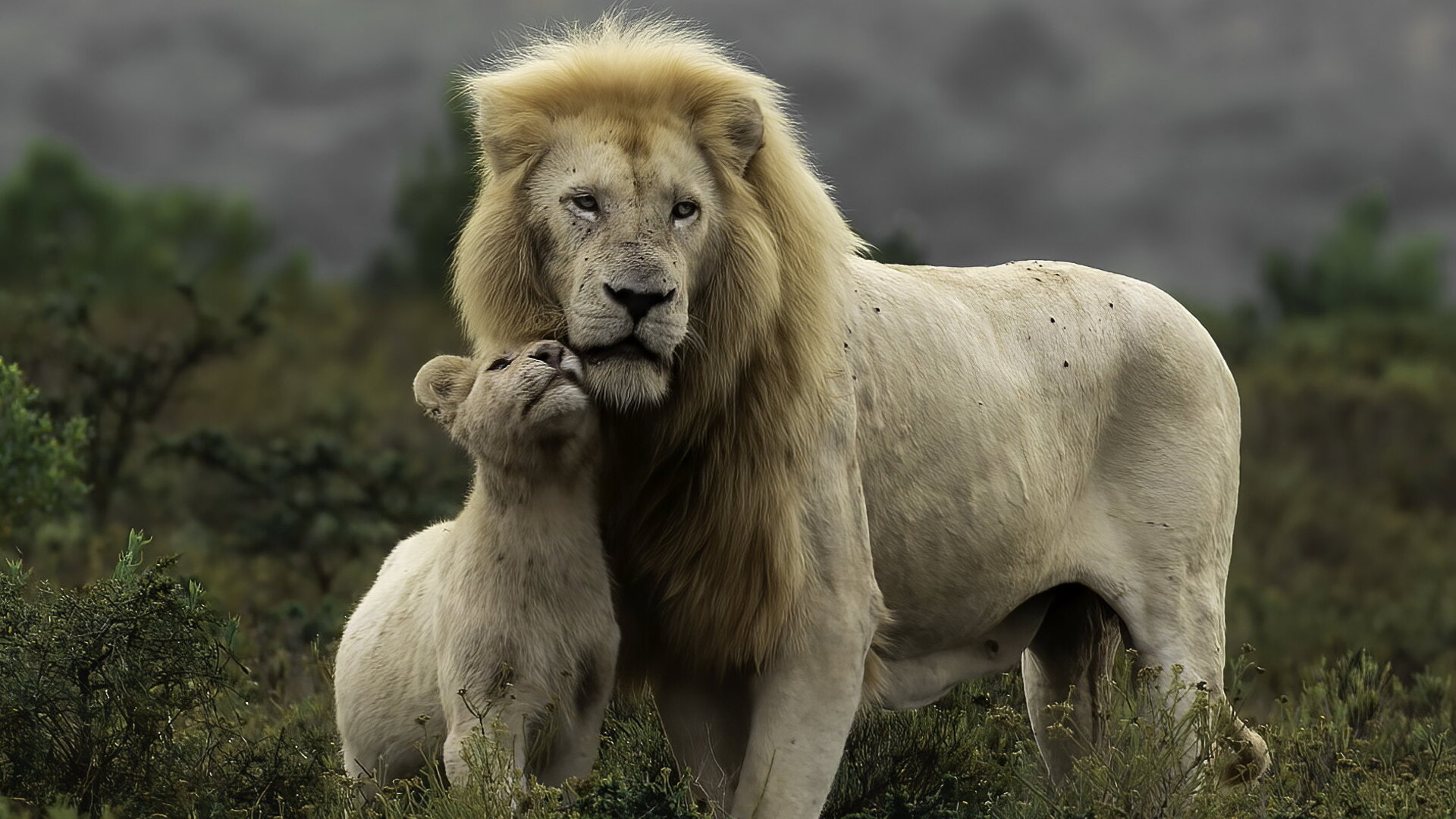
- The Only White Lions on Earth: Sanbona is the single place in the world where you can see free-roaming, self-sustaining white lions in their natural habitat
- Vast & Malaria-Free: 62,000 hectares of protected Klein Karoo wilderness — one of South Africa's largest private reserves — with zero malaria risk
- Reachable from Cape Town: Around 3 to 3.5 hours (270km) via the scenic Route 62 — no flights required
- Three Distinct Lodges + a Camp: Dwyka Tented Lodge (couples, 16+), Tilney Manor (elegant, 12+), Gondwana Family Lodge (all ages), and the walking-focused Explorer Camp
- Conservation at the Core: Owned and run by a non-profit — every stay funds habitat restoration, anti-poaching and endangered-species work
- All-Inclusive Rates: From about R9,535 to R18,045 per person per night sharing, including two daily nature drives, walks, all meals and house drinks
Why This Review Matters
Sanbona is not just another malaria-free reserve within striking distance of Cape Town — it is a place with a genuine claim to being unlike anywhere else on the planet. This is the only reserve on Earth with free-roaming, self-sustaining white lions, set across a scale of Karoo wilderness — 62,000 hectares — that most Western Cape reserves cannot approach. If you want big-country space, dramatic arid landscapes, 3,500-year-old San rock art and a Big Five experience that feels like real wilderness rather than a managed game park, Sanbona is the answer. But it is also a serious commitment in both price and driving distance, and this review sets honest expectations on both.
Location & Setting: Deep in the Heart of the Klein Karoo
Sanbona Wildlife Reserve lies in the Klein Karoo (Little Karoo) of the Western Cape, at the foot of the Warmwaterberg mountains, between the historic Route 62 towns of Montagu and Barrydale. It is roughly 270km from Cape Town — around 3 to 3.5 hours' drive via the N1, R60 and the wonderfully scenic R62.
The approach itself is part of the experience. Route 62 is the world's longest wine route, winding past farm stalls, mountain passes and one-street Karoo dorpies. By the time you reach the Sanbona welcome lounge and transfer into the reserve, you feel genuinely far from the city — which is exactly the point.
What makes the setting extraordinary is the sheer scale and drama of the landscape. This is semi-arid country: wide-open plains, jagged quartzite mountain ranges, dry riverbeds, and succulent Karoo veld that erupts into colour after rain. The light here is famous — sunrises and sunsets flood the ranges in copper, rose and violet. It is one of South Africa's most photogenic wilderness landscapes, and utterly distinct from the bushveld most visitors picture when they imagine a safari.
The proximity makes Sanbona viable for:
- Cape Town extensions — a genuine Big Five safari without a domestic flight to Kruger
- Route 62 & Garden Route road trips — pair with Montagu, Oudtshoorn, or a loop back via the coast
- Special-occasion escapes — honeymoons, milestone birthdays and anniversaries
- Photographers and nature lovers drawn to arid landscapes and big skies
The White Lions: Sanbona's Singular Claim
Let's start with the reason Sanbona is world-famous. It is the only place on the planet where white lions roam free and breed naturally in the wild. White lions are not a separate species or albinos — they carry a rare recessive gene (leucism) that produces their pale, cream-to-white coats. Historically they occurred only around Timbavati, and for decades existed almost exclusively in captivity.
Sanbona's white lions descend from animals reintroduced to the reserve, and crucially they have gone on to survive, hunt and reproduce without human intervention — something no other free-ranging population on Earth can claim. Seeing one padding across the open Karoo plains, or resting pale against the ochre veld, is a genuinely once-in-a-lifetime sighting.
An honest note on expectations: the white lions are wild animals across 62,000 hectares, so sightings are never guaranteed on any given drive. Sanbona's guides track them and your odds over a two- or three-night stay are good, but this is real wilderness, not a fenced enclosure where predators are shown on demand. That unpredictability is part of what makes the reserve special — and part of what you should be prepared for.
The Wildlife Reality: What You'll Actually See
Beyond the white lions, Sanbona is a genuine Big Five reserve — lion, leopard, elephant, rhino and buffalo all occur here. But because the reserve is so large and so wild, the experience is different from a compact, high-density park. Here is the honest breakdown:
Lion (Tawny & White)
Alongside the famous white lions, Sanbona has resident tawny lion prides. Because they roam freely across a huge area, guides rely on real tracking rather than habituated, on-demand sightings. Expect the thrill of the search — and the deep reward when you find them.
Elephant & Rhino
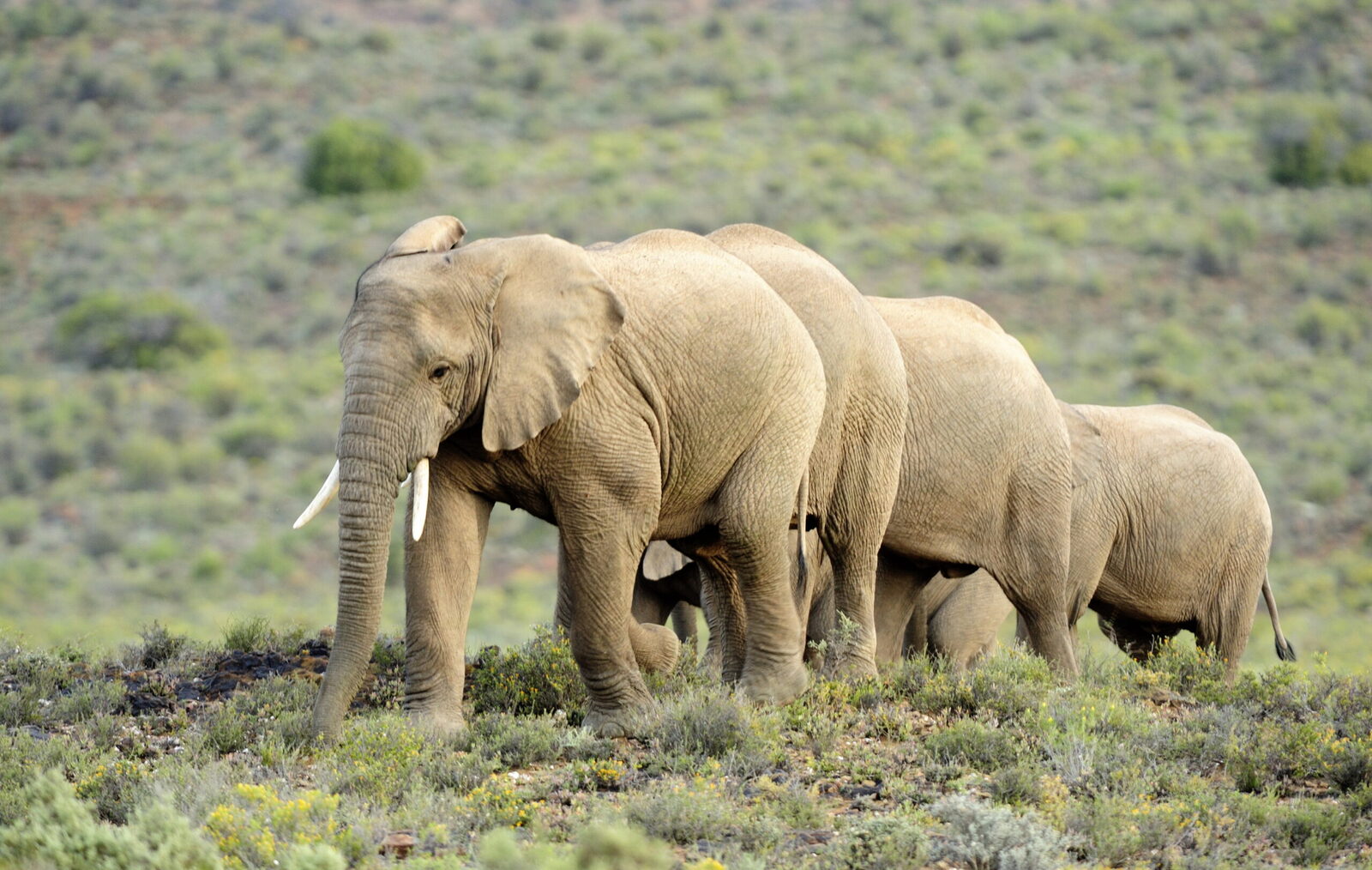
Elephant herds move through the plains and valleys and are among the more reliably seen of the big species — often at a distance across open country, which suits landscape photography beautifully. Rhino are present but, as everywhere in South Africa, their movements are protected and sensitively managed for anti-poaching reasons.
Buffalo & Leopard
Buffalo occur across the reserve. Leopard are present but, as in almost every reserve, elusive — the arid, rocky terrain and vast area make sightings a bonus rather than an expectation.
Plains Game, Cheetah & the Small Wonders
You'll see strong plains-game populations — giraffe, gemsbok, kudu, springbok, eland, Cape mountain zebra and red hartebeest. Cheetah have been part of Sanbona's predator story. Just as importantly, the reserve is a refuge for endangered specialists like the tiny riverine rabbit, and its birdlife and reptile diversity reward patient, curious guests.
The Verdict: Sanbona is a wilderness reserve, not a wildlife theme park. Densities are lower than the Sabi Sand or Addo, and no sighting is scripted. What you gain in return is scale, silence, dramatic scenery and the incomparable possibility of a wild white lion — a trade experienced safari-goers will happily make.
The Lodges: Three Characters, One Reserve
Sanbona's accommodation is unusually varied for a single reserve — three distinct lodges plus a walking camp, each with its own personality, age policy and price point. All rates are fully inclusive of two daily nature drives, guided walks, all meals and a selection of house beverages.
Dwyka Tented Lodge (The Iconic One)
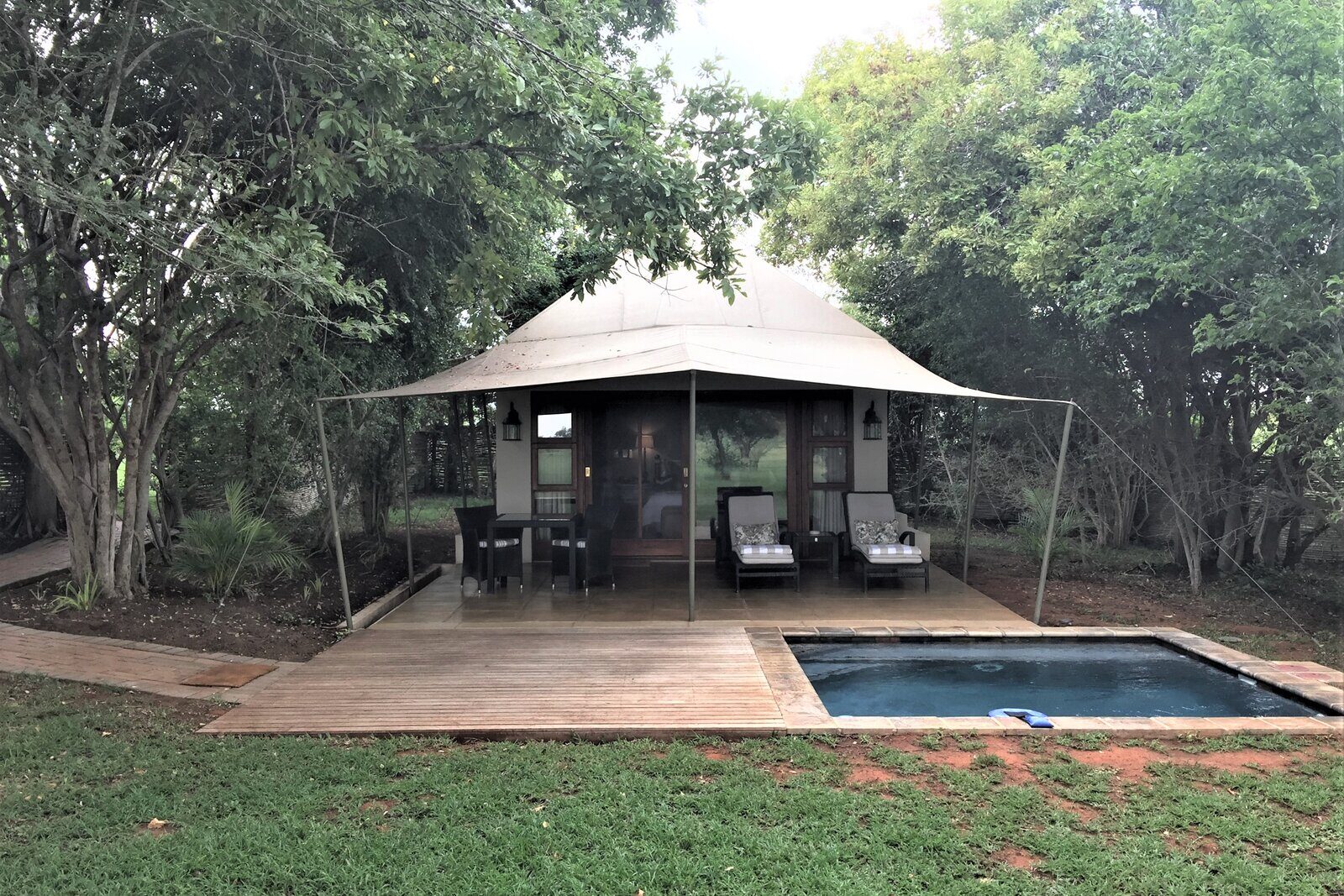
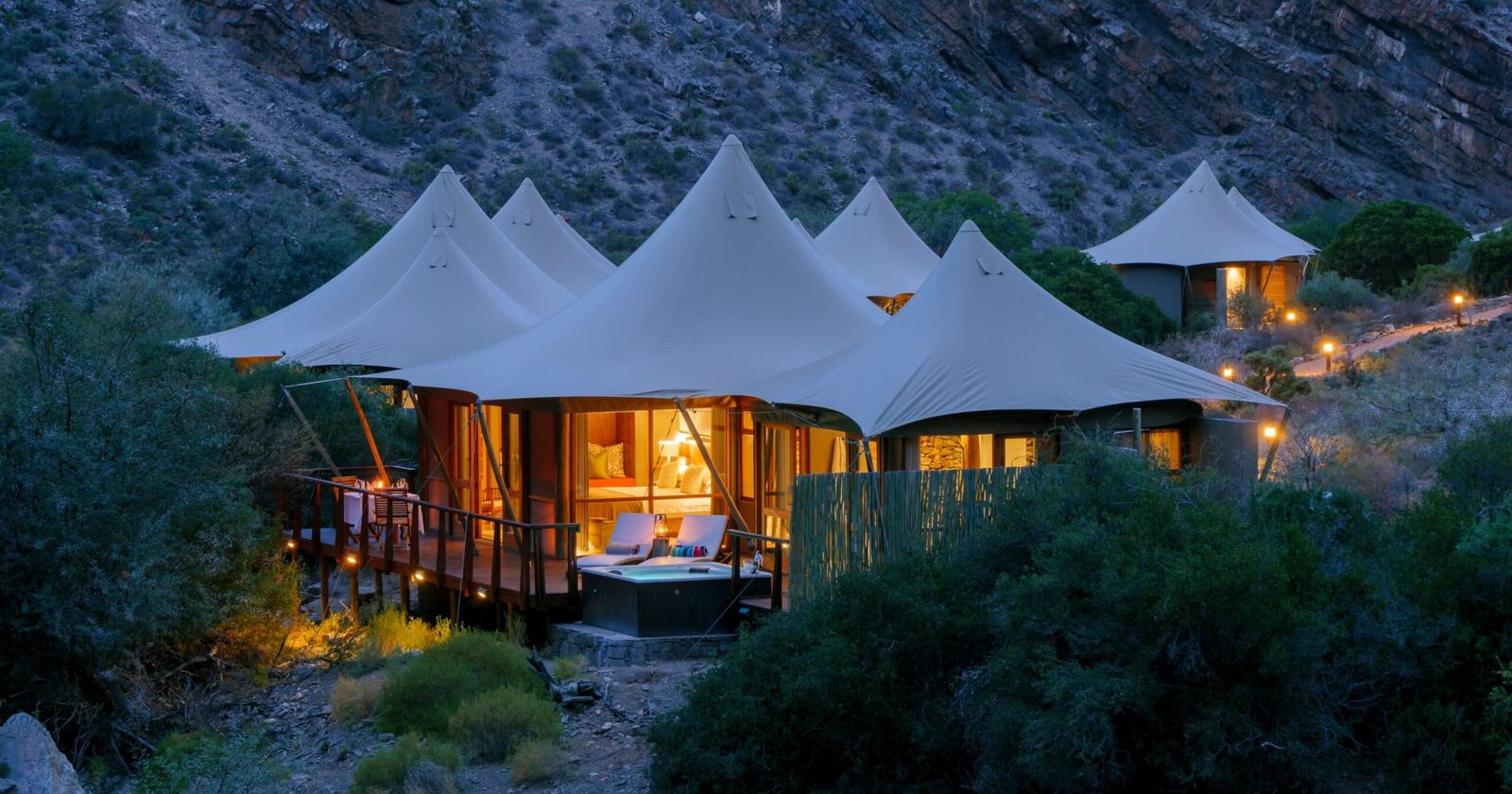
Sanbona's signature lodge, and one of the most dramatically sited camps in the country. Nine tented suites are tucked into a horseshoe bend of a dry Karoo riverbed, ringed by towering rock formations that glow at sunset. Each air-conditioned suite has a private plunge pool, indoor and outdoor showers, and a deck facing the ravine walls.
- Couples-focused, romantic and secluded
- Age restriction: 16 years and older
- Rates roughly R10,730 (low season) to R18,045 (seasonal peak) per person sharing
Our Take: This is the Sanbona of the postcards — canvas, stone and firelight against those extraordinary rock walls. For honeymoons and special occasions, it is superb.
Tilney Manor (The Elegant One)
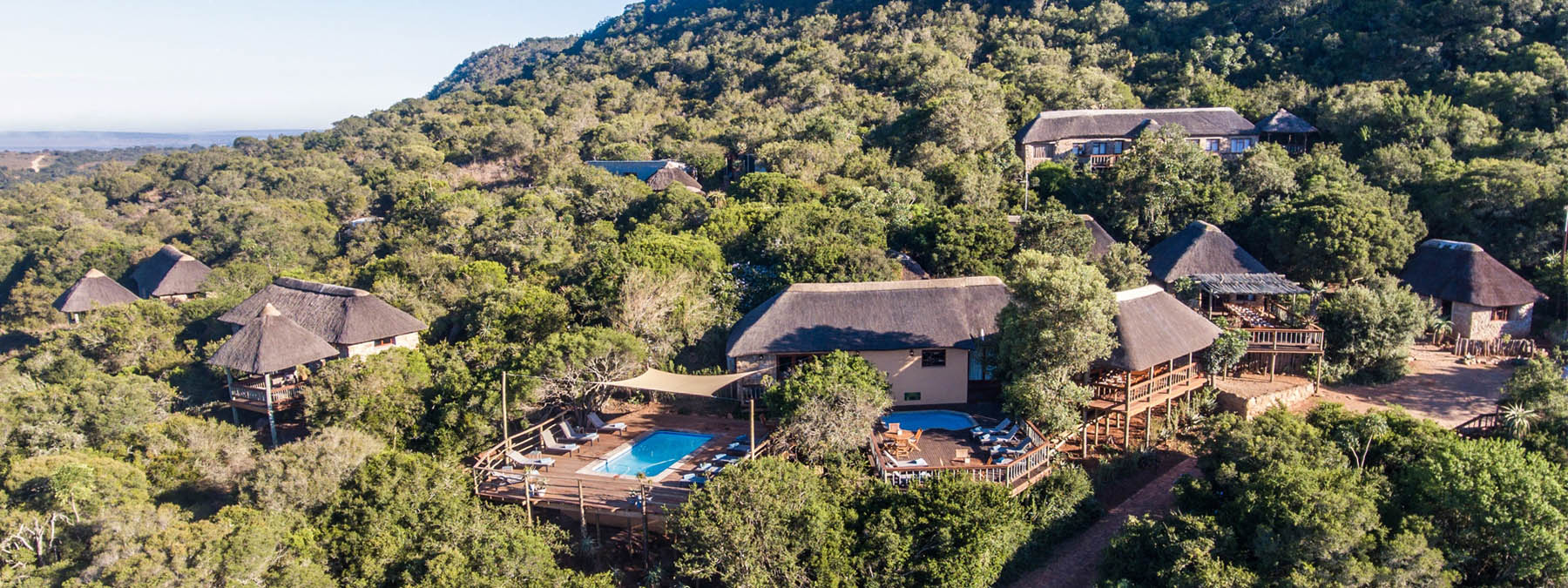
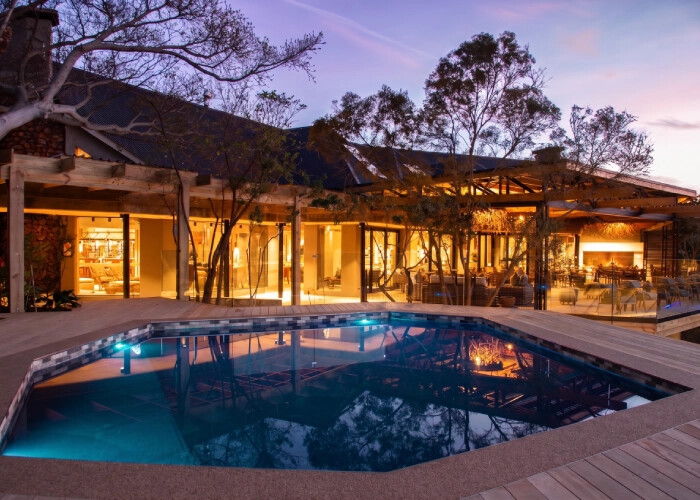
A restored, Cape Georgian-style homestead offering a more formal, boutique-hotel elegance. Spacious suites, gracious lounges, high thatched ceilings and manicured surrounds give it a refined, country-house feel.
- Sophisticated and intimate
- Age restriction: 12 years and older
- Rates roughly R9,535 (low season) to R17,115 (seasonal peak) per person sharing
Our Take: The choice for travellers who want polish and grace over rugged bush theatre — and Sanbona's most affordable entry point.
Gondwana Family Lodge (The Family One)
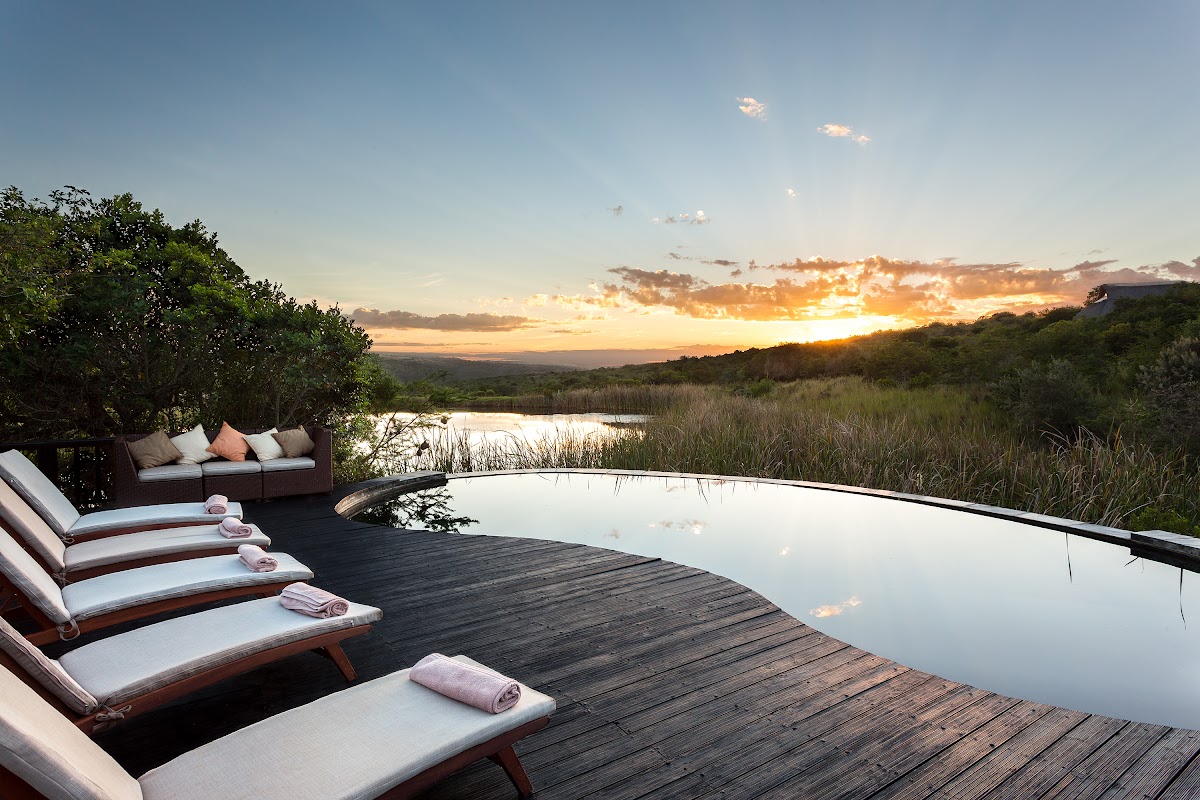
Purpose-built for families, welcoming children of all ages. A relaxed, contemporary lodge with a swimming pool, a children's playroom and the excellent Kids on Safari / Eco Explorers programme that turns young guests into junior rangers.
- Family-friendly, all ages welcome (note: children under 4 cannot join game drives)
- Children aged 4–11 charged at 50% of the adult sharing rate
- Adult rates roughly R9,845 (low season) to R17,670 (seasonal peak) per person sharing
Our Take: One of the very few genuinely luxurious, malaria-free family safari options near Cape Town — a rare and valuable niche.
Explorer Camp (The Adventurous One)
For those who want to go deeper, Explorer Camp offers a rugged, walking-focused wilderness experience — simple, un-fenced tented sleep-outs and guided foot safaris that immerse you in the Karoo on its own terms. A world away from the plunge-pool comforts of Dwyka.


Activities: Beyond the Game Drive
Nature Drives
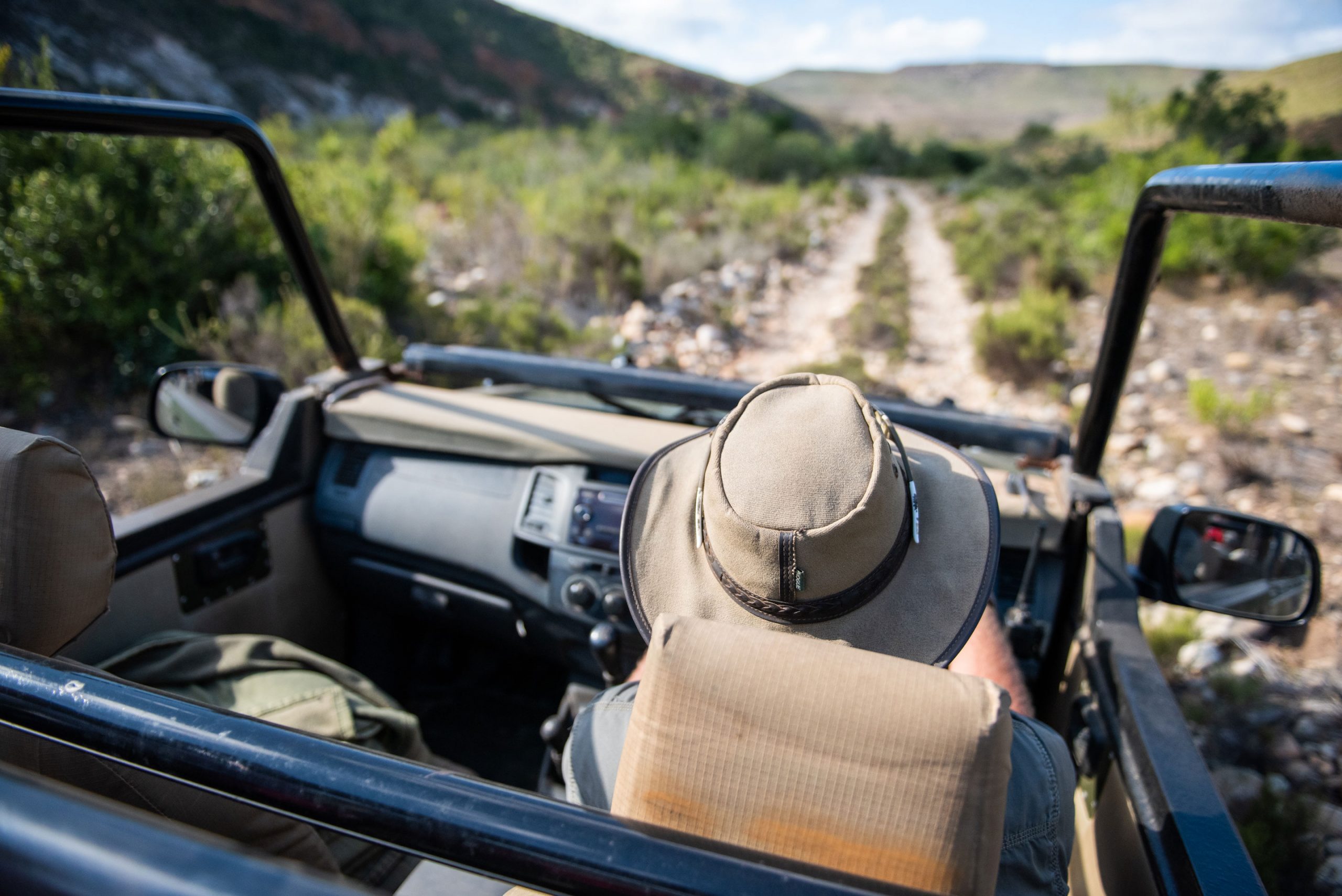
Two daily drives (dawn and late afternoon) in open 4x4 vehicles with expert guides. Given the scale of the reserve, drives feel like real exploration — you cover big country, and the tracking of white and tawny lions adds genuine anticipation. The landscapes alone make every drive worthwhile.
Guided Walks & Nature Walks
Guided walks let you slow down and read the Karoo up close — tracks, medicinal plants, succulents, insects and the geology of this ancient landscape. It is a completely different, more meditative register than the drives.
San Rock Art
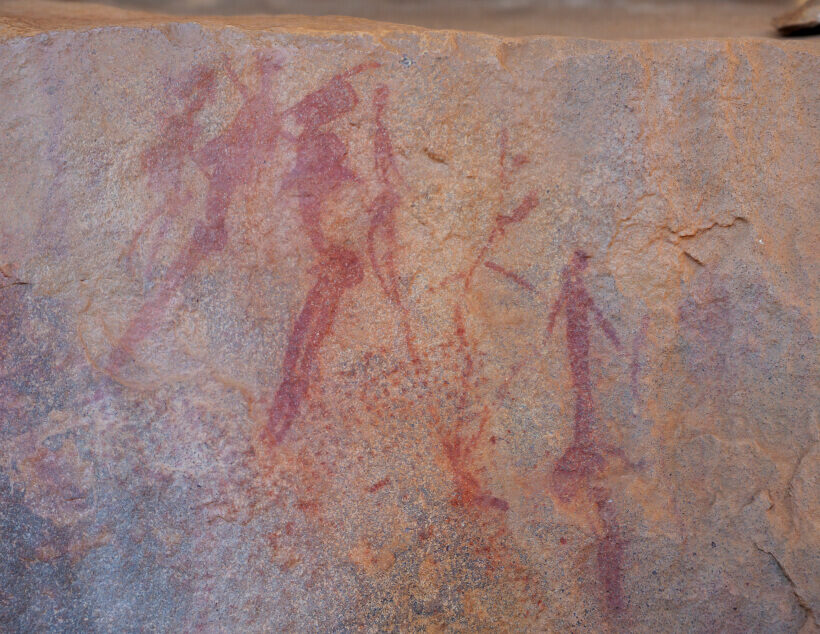
Sanbona protects San rock art estimated at around 3,500 years old — a profound, tangible link to the first peoples of this land. Guided visits to the rock-art sites are among the most moving experiences on the reserve, and something few safari destinations can offer.
Stargazing & Wellness
Far from any city glow, Sanbona's night skies are spectacular. Add spa treatments, swimming and simply the profound Karoo silence, and the reserve becomes as much a place of restoration as of wildlife.
Dining: Karoo Flavours Under Big Skies
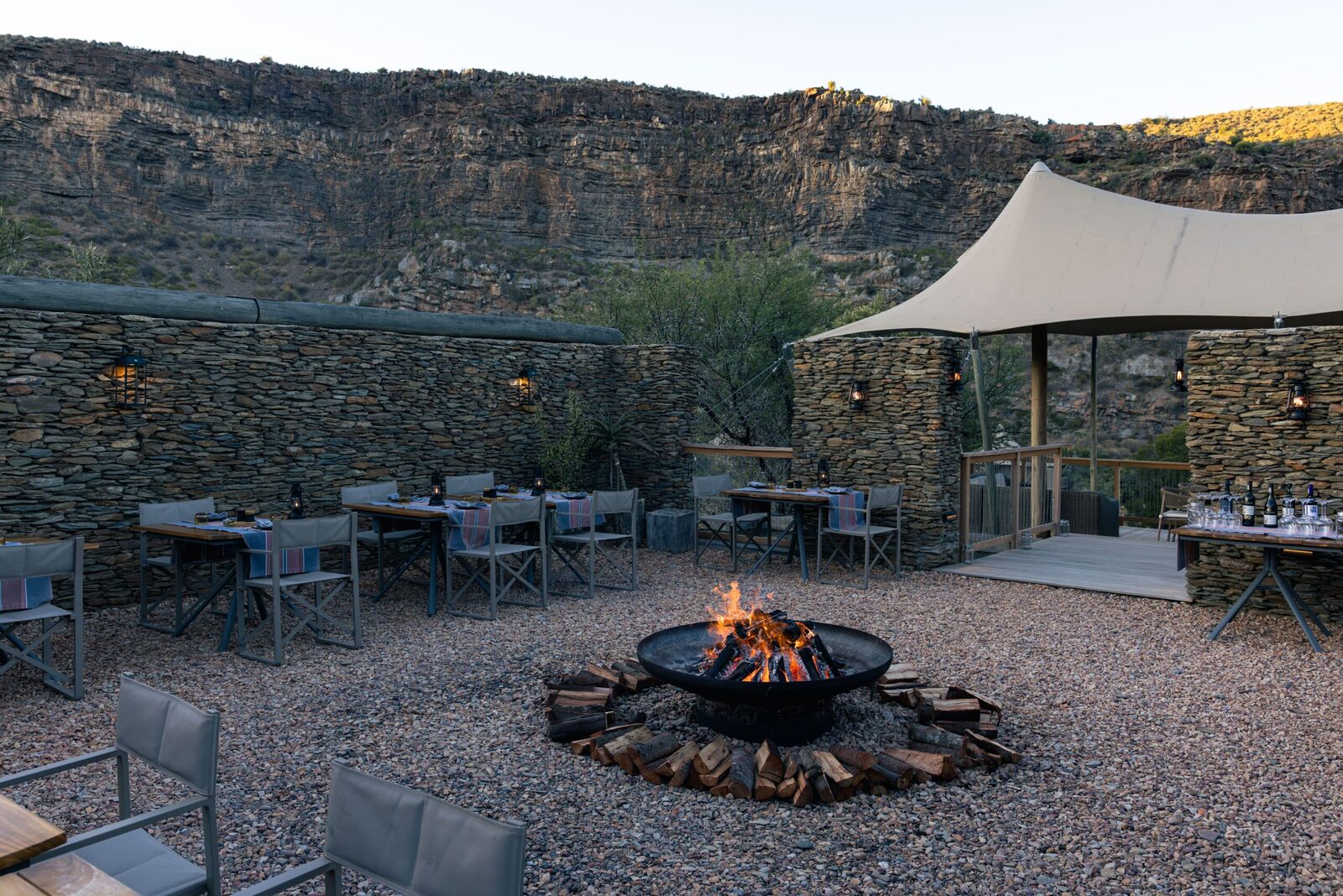
Each lodge has its own dining character, but the thread throughout is generous, seasonal South African cuisine with a strong sense of place — Karoo lamb, fresh local produce, and Western Cape wines (fitting for the heart of Route 62 wine country). Meals move with the day: bush breakfasts after the morning drive, relaxed lunches, and dinners that range from elegant plated menus at Tilney Manor to firelit boma feasts under the stars at Dwyka.
House beverages are included in the rate, and the kitchens handle dietary requirements — vegetarian, vegan, gluten-free and others — well with advance notice. The food is accomplished and satisfying; the setting, more often than not, is the real showstopper.
Pricing & Value Analysis
| Lodge | Rate (per person per night sharing) | Best For |
|---|---|---|
| Tilney Manor (12+) | R9,535 – R17,115 | Elegant, boutique-hotel refinement |
| Gondwana Family Lodge (all ages) | R9,845 – R17,670 | Families (kids 4–11 at 50%) |
| Dwyka Tented Lodge (16+) | R10,730 – R18,045 | Couples, honeymoons, drama |
| Included: two daily nature drives, guided walks, all meals and a selection of house beverages, and internal reserve transfers. Extra: a conservation levy of about R190 per person per day. Minimum stay: two nights. Complimentary transfers from the Sanbona welcome lounge must be booked at least 72 hours ahead. | ||
Comparative Value
- vs. Sabi Sand: Top Sabi Sand lodges run R12,000–R30,000+ pp/pn with famously high leopard densities. Sanbona is often more affordable and offers something Sabi Sand cannot — white lions, Karoo scale and no malaria — but with lower general game density.
- vs. Gondwana or Garden Route Game Lodge: Those Garden Route reserves are cheaper (from around R4,900–R6,200 pp/pn) and closer to the coast, but far smaller and without white lions. Sanbona is the step up in scale, wildness and exclusivity.
- vs. flying to Kruger: Sanbona saves you a domestic flight and delivers a wilder, more scenic landscape — though Kruger and its private reserves win outright on sheer wildlife volume.
The Value Proposition: Sanbona is a premium reserve, and priced accordingly. You are paying for scale, exclusivity, conservation impact and the singular white-lion experience — not for guaranteed, high-frequency sightings. For the right traveller, it is worth every rand.
Conservation: A Reserve With a Purpose
Crucially, Sanbona is owned and operated by a non-profit organisation, which changes the whole complexion of a stay. Guest revenue is channelled directly into habitat restoration, anti-poaching, and the protection of endangered species — from the free-roaming white lions to the critically endangered riverine rabbit. The reserve has rehabilitated former farmland back into functioning wilderness across its 62,000 hectares.
This means your holiday genuinely funds conservation rather than shareholder returns — an increasingly meaningful distinction for travellers who want their money to matter. It is one of Sanbona's quiet, powerful advantages over the corporate-owned competition.
What Could Be Better: Honest Critiques
In the spirit of a balanced review, here is where Sanbona may not suit everyone:
1. Wildlife Density & Guaranteed Sightings
Because the reserve is so vast and genuinely wild, general game density and sighting frequency are lower than compact, high-traffic parks. If you want back-to-back Big Five action every drive, a Sabi Sand or greater-Kruger reserve will deliver more.
2. The Drive
Three to three-and-a-half hours from Cape Town is very reachable by South African standards, but it is still a half-day on the road each way. It rewards a two- or three-night stay, not an overnight dash.
3. Price Point
Sanbona sits firmly in the premium bracket. The nearby Garden Route reserves (Gondwana, Botlierskop, Garden Route Game Lodge) offer Big Five at roughly half the price — if budget is the deciding factor, they are worth considering.
4. Age Restrictions
Only Gondwana Family Lodge welcomes all ages. Families with younger children are effectively channelled there, as Dwyka (16+) and Tilney (12+) are adults-oriented.
5. The Landscape Is Arid, Not Lush
The Karoo's stark, semi-desert beauty is spectacular — but it is not the green, water-rich bushveld some first-timers picture. It is a different, more austere kind of magnificent. Go knowing that.
Who Should Book Sanbona?
✅ Ideal For:
- Travellers who want the white lions — the one experience found nowhere else on Earth
- Couples and honeymooners seeking drama, seclusion and romance at Dwyka Tented Lodge
- Families wanting a genuinely luxurious, malaria-free safari near Cape Town (Gondwana Family Lodge)
- Landscape and wilderness lovers who value scale, silence and scenery over sighting counts
- Conscious travellers who want their spend to fund real conservation
- Route 62 and Garden Route road-trippers adding a wild Karoo highlight
❌ Perhaps Not For:
- Budget-first travellers — the Garden Route reserves deliver Big Five for far less
- Those needing guaranteed, high-volume sightings every single drive
- Families with under-12s wanting Dwyka or Tilney specifically (age-restricted)
- Anyone unwilling to drive three-plus hours from Cape Town
Practical Booking & Visit Information
Best Time to Visit
- Autumn & Spring (Mar–May, Sep–Nov): Our pick — mild days, cool nights, comfortable game viewing and often beautiful veld.
- Winter (Jun–Aug): Cold mornings but excellent visibility and atmospheric, low-angled light. Pack warm layers for dawn drives.
- Summer (Dec–Feb): Hot and dry in the Karoo, but big skies and dramatic light; early and late drives avoid the midday heat.
Getting There
- Self-Drive: Approximately 270km / 3–3.5 hours from Cape Town via the N1, R60 and R62, arriving at the Sanbona welcome lounge for transfer into the reserve.
- Transfers: Complimentary internal transfers from the welcome lounge to your lodge — book at least 72 hours in advance. Private road transfers from Cape Town can be arranged.
- Minimum Stay: Two nights year-round (longer minimums may apply over peak periods).
What to Pack
- Neutral-coloured clothing for drives, plus warm layers — Karoo mornings and evenings are cold even in summer
- Sun protection: wide-brimmed hat, sunglasses and high-SPF sunscreen (the Karoo sun is fierce)
- Binoculars and a camera with a zoom lens for the wide-open sightings
- Closed walking shoes for guided walks and rock-art visits
- Swimwear for lodge and plunge pools
Health & Safety
- Malaria-free — no prophylaxis required
- Children under 4 are not permitted on game drives
- The nearest towns (Montagu, Barrydale) have basic facilities; larger hospitals are in Worcester and Cape Town
Ready to See the Only White Lions on Earth?
Let our specialists craft your Sanbona escape — the right lodge for your party, Route 62 and Garden Route add-ons, and seamless transfers from Cape Town.
💬 Enquire Now — Get Custom Quote📞 WhatsApp us 24/7: +27 83 628 0850
🦁 Explore the Full Garden Route Big Five Collection
Sanbona is one of four premier Big Five destinations in the Garden Route and Klein Karoo corridor — all malaria-free, 2–4 hours from Cape Town, and perfect for combining safari with wine estates, Route 62, and the coastal Garden Route.