We're Open08:00–19:00 SAST
WhatsAppWishlistPartner Portal
Namibia — Land of Contrasts — Where Desert Meets Ocean and Time Stands Still
SOUTHERN AFRICA · NAMIBIA

NAMIBIA

Land of Contrasts — Where Desert Meets Ocean and Time Stands Still

Namibia is a country drawn in extremes. Dunes the colour of burnt sienna rise three hundred metres from a valley floor that has not seen rain in five million years. A coastline of shipwrecks and fog-draped sand stretches for five hundred kilometres without a single human settlement. Elephants have learned to walk sixty kilometres in a day across desert riverbeds to find water. This is not a destination for the faint of spirit—it is a landscape that demands your attention, rewards your curiosity, and permanently alters your definition of beauty.

22.5609° S, 17.0658° EFrom $350 per person per day
Why Travel Private

Why Namibia Is Southern Africa's Greatest Adventure

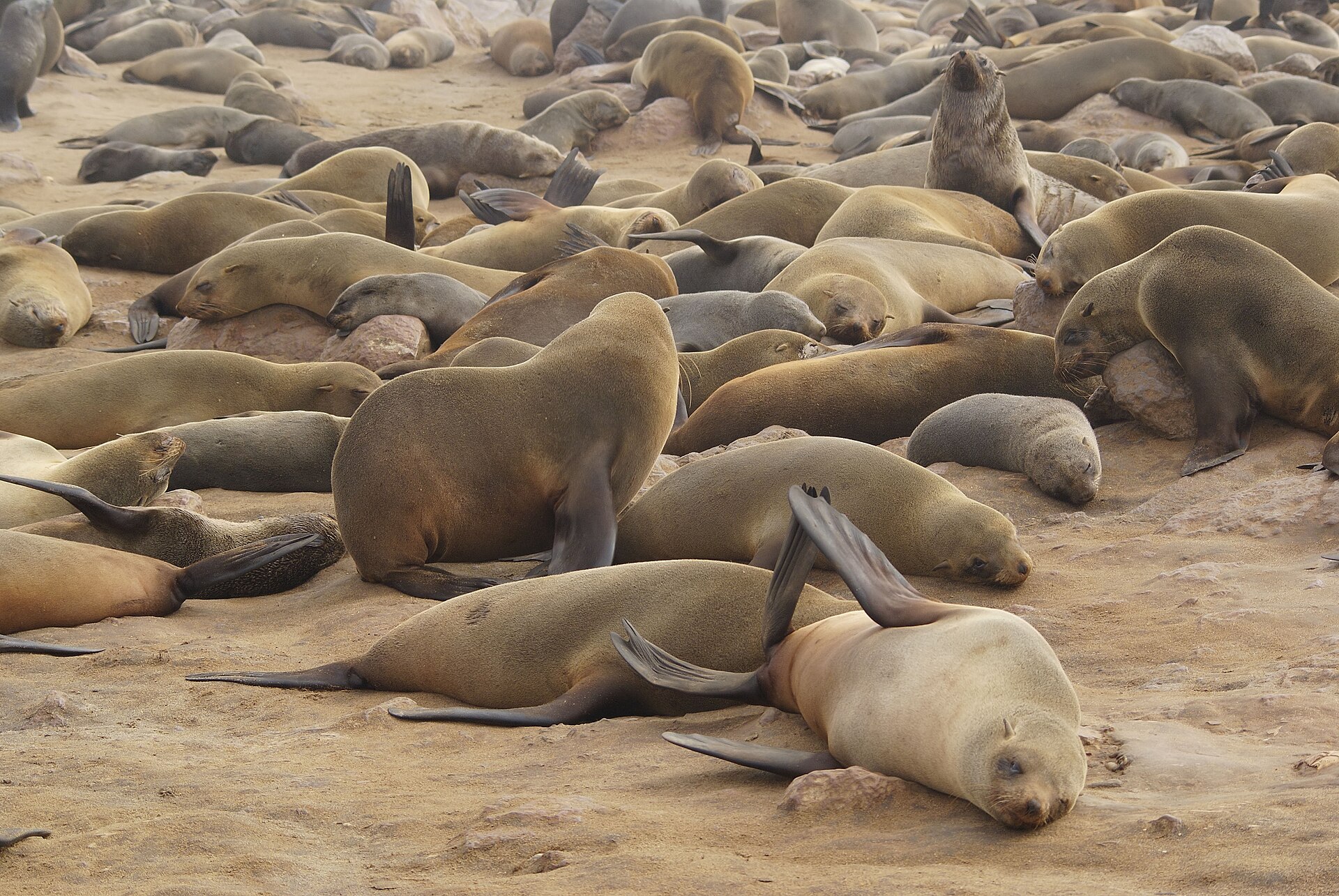
Namibia is the country that photography was invented for. No other destination on earth offers such a concentration of visual extremes within such manageable distances—towering red dunes that shift with every hour of light, petrified forests standing in white clay pans beneath cobalt skies, coastal deserts where Cape fur seals gather in colonies of two hundred thousand, and volcanic landscapes where desert-adapted elephants navigate riverine corridors that may not see surface water for years.

What makes Namibia exceptional for private touring is its infrastructure paradox: the country is vast, sparsely populated, and dramatically remote, yet its road network is well-maintained, its lodges are architecturally stunning, and its tourism industry operates with a professionalism that belies its youthful independence. A self-drive or guided tour through Namibia delivers the sensation of exploring an undiscovered world with the comfort of knowing that a cold gin and tonic awaits at the end of every dusty road.

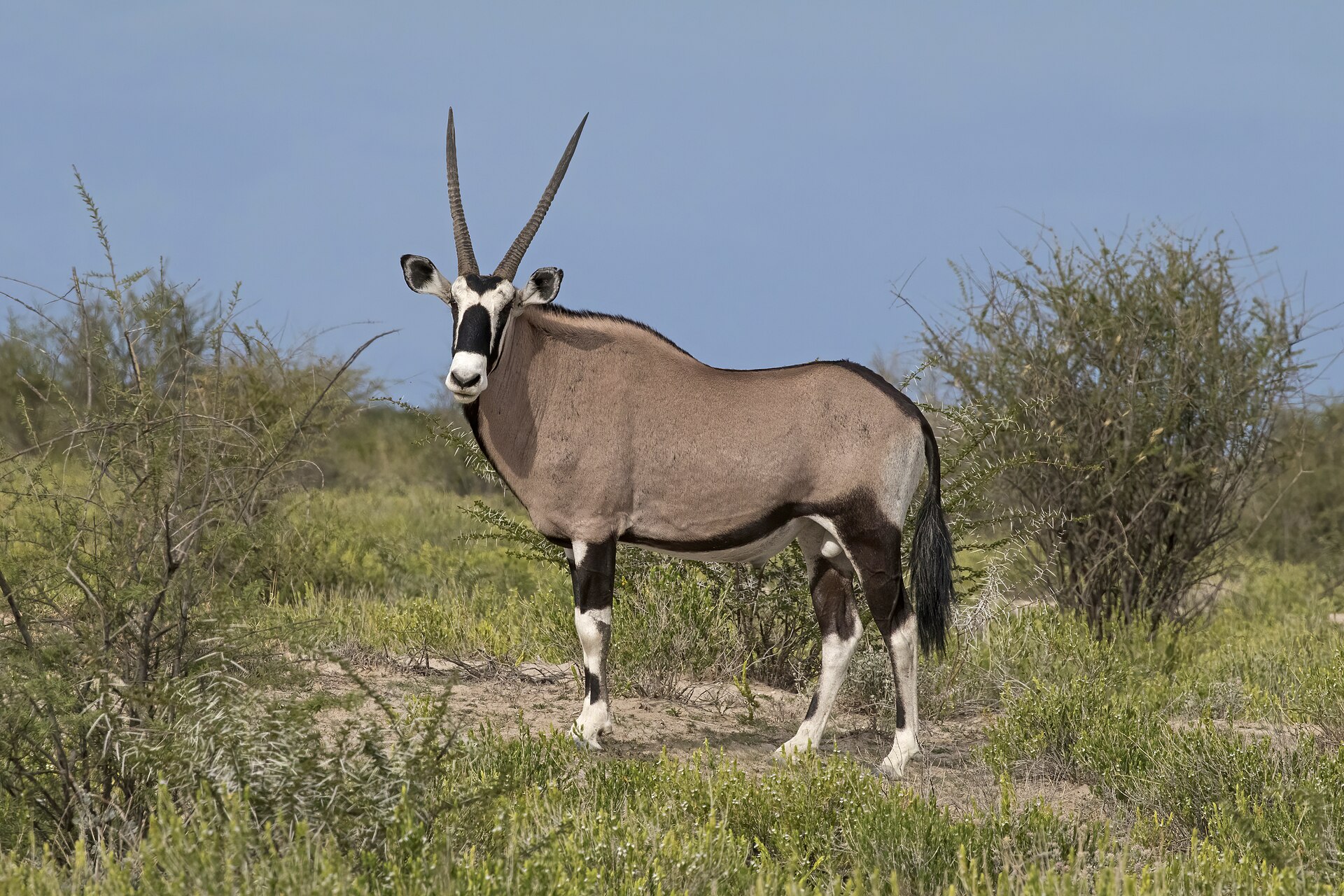
The country is also one of Africa's great conservation success stories. Namibia was the first African nation to enshrine environmental protection in its constitution, and its communal conservancy programme—the most successful of its kind on the continent—has placed vast tracts of wilderness under community management, rewarding rural populations who protect wildlife with tourism revenue. The result is a landscape where black rhino roam free, desert lion prides hunt gemsbok on gravel plains, and cheetah populations are among the healthiest on earth.

For the adventurous traveller, Namibia delivers experiences impossible to replicate elsewhere: sandboarding down Dune 7, quad-biking across the Dorob National Park, skydiving over the Namib, or kayaking with seals at Pelican Point. For the contemplative traveller, it offers the oldest desert on earth, the clearest skies in the southern hemisphere, and a silence so complete that you can hear your own heartbeat.

Our private Namibia tours—designed as extensions from Cape Town or standalone journeys—place you in the heart of this extraordinary landscape with expert guides who transform vast distances into intimate discoveries. Whether you choose a guided luxury tour or a curated self-drive adventure, Namibia unfolds as one of travel's most rewarding revelations.

At a Glance

Namibia at a Glance

Best Time to VisitYear-round destination. May–October for wildlife and comfortable temperatures. April–May and August–November for photography. December–March for dramatic summer skies and green landscapes.
Tour Duration7–14 days (10–12 days optimal for comprehensive tour)
ClimateArid to semi-arid. Coastal regions cool and foggy year-round (15–20°C). Interior deserts hot in summer (35–42°C), cold in winter mornings (near freezing). Rainfall limited to November–April in the north and east.

Quick Facts

  • CurrencyNamibian Dollar (NAD), pegged 1:1 to South African Rand; ZAR accepted everywhere
  • LanguagesEnglish (official), Afrikaans, Oshiwambo, German widely spoken
  • Time ZoneCAT (UTC+2)
  • VisaVisa required for US, UK, EU, Canada, Australia (from April 2025). E-visa or visa on arrival available (NAD 1,600 / ~$90 USD)
  • AirportsWindhoek Hosea Kutako (WDH), Walvis Bay (WVB)
  • DrivingLeft-hand side; well-maintained gravel roads

Signature Highlights

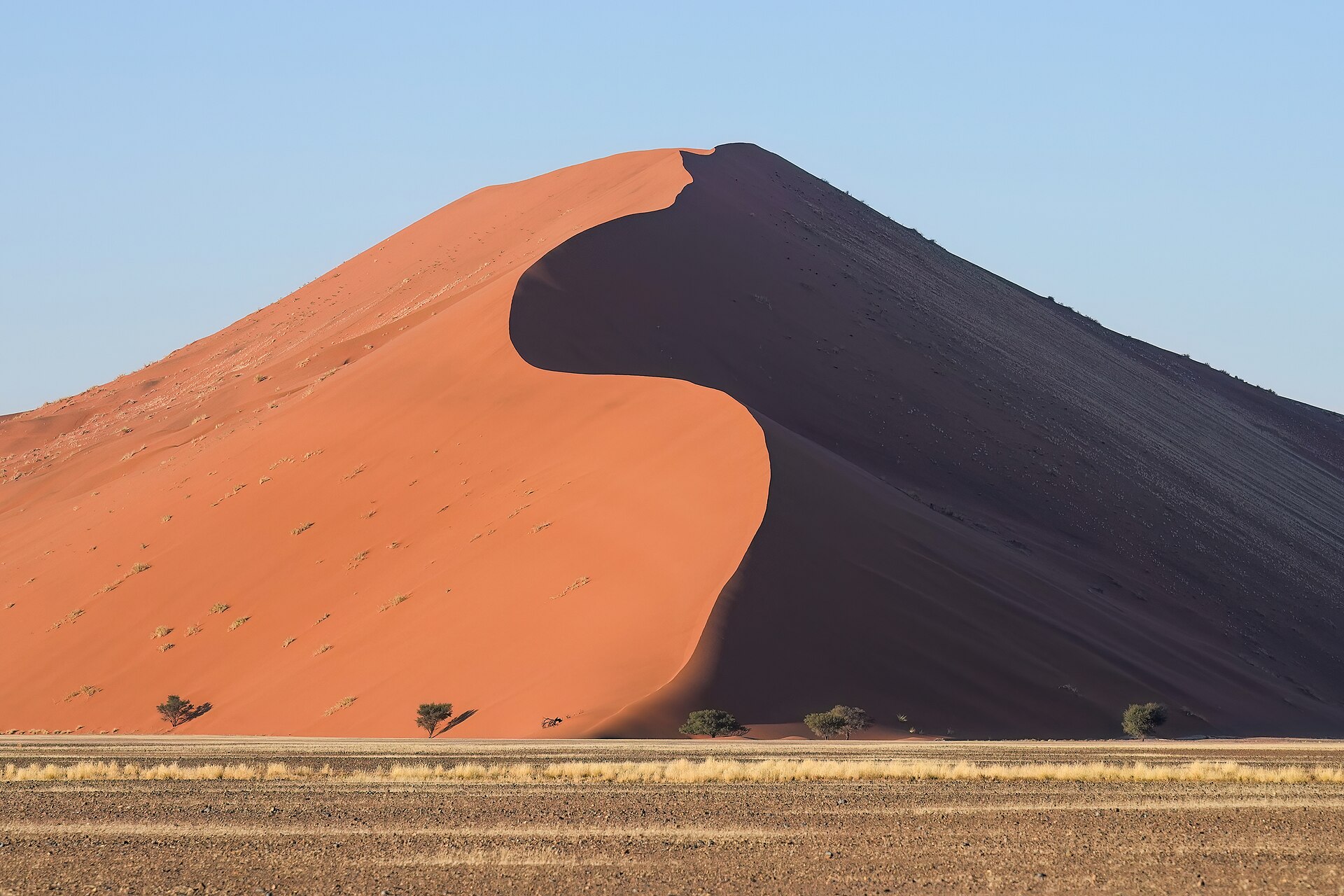
  • Sunrise on Dune 45 at Sossusvlei
  • Dead Vlei's ancient camel-thorn trees
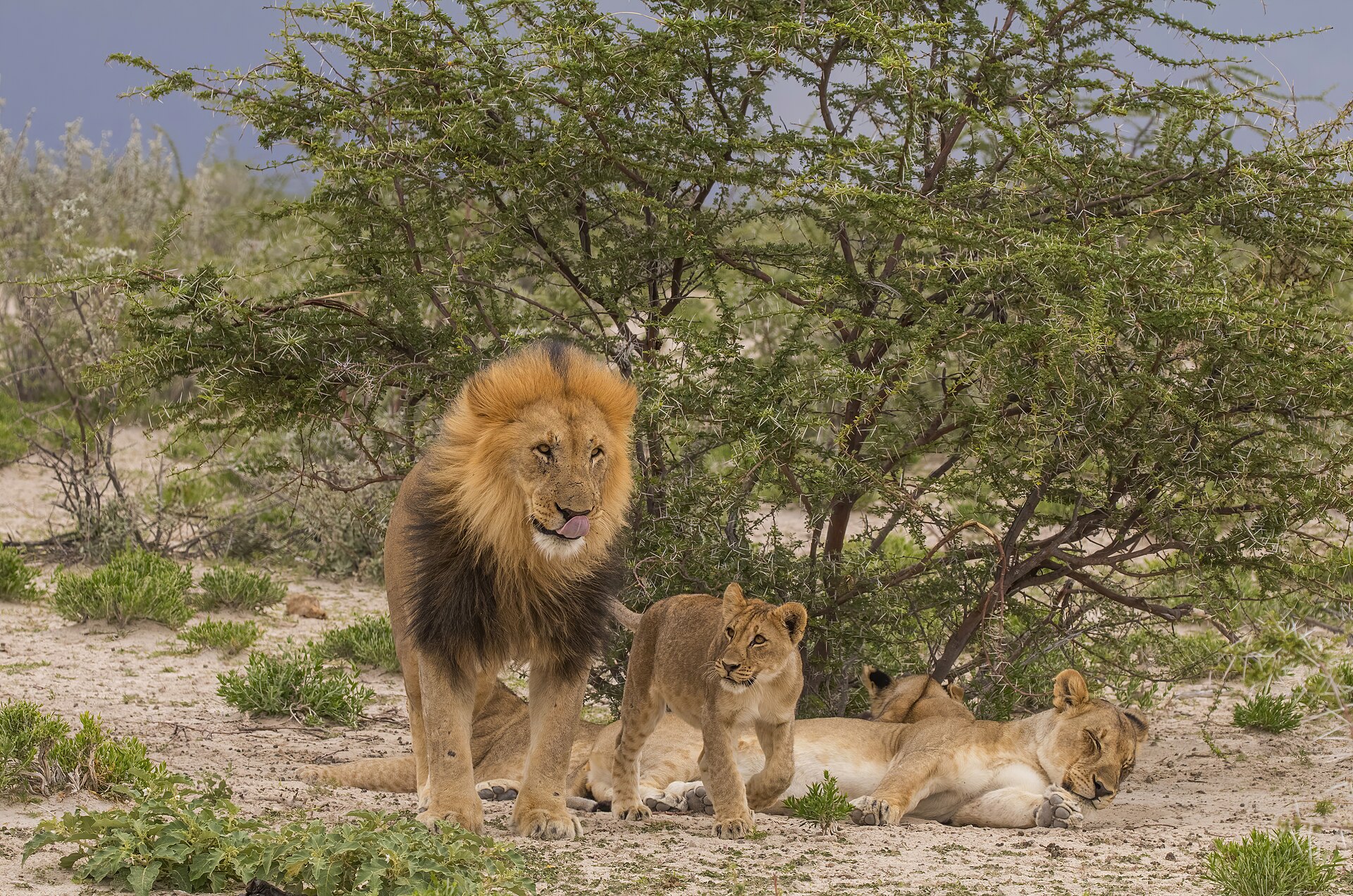
  • Etosha waterhole game viewing
  • Skeleton Coast shipwreck exploration
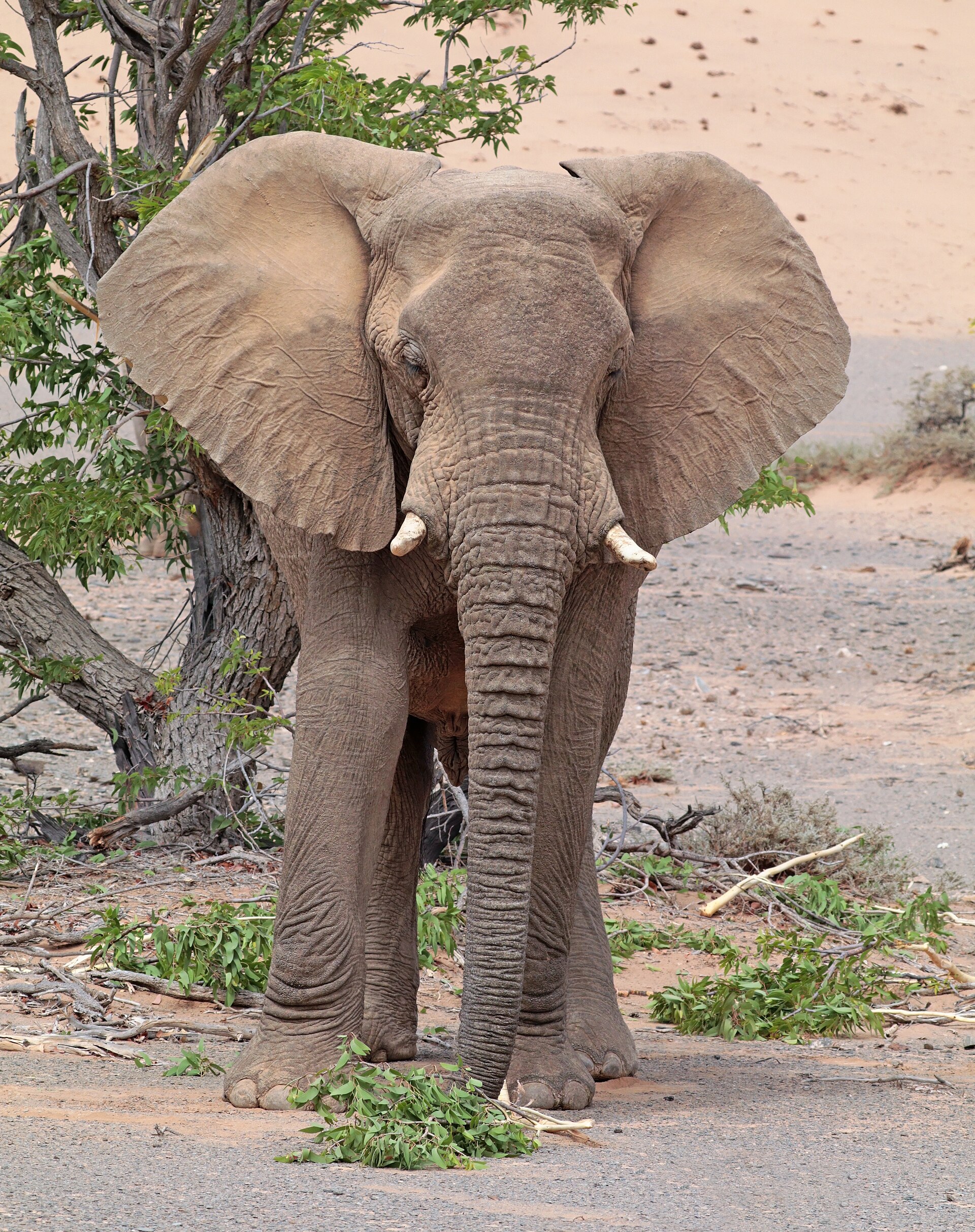
  • Desert-adapted elephant tracking in Damaraland
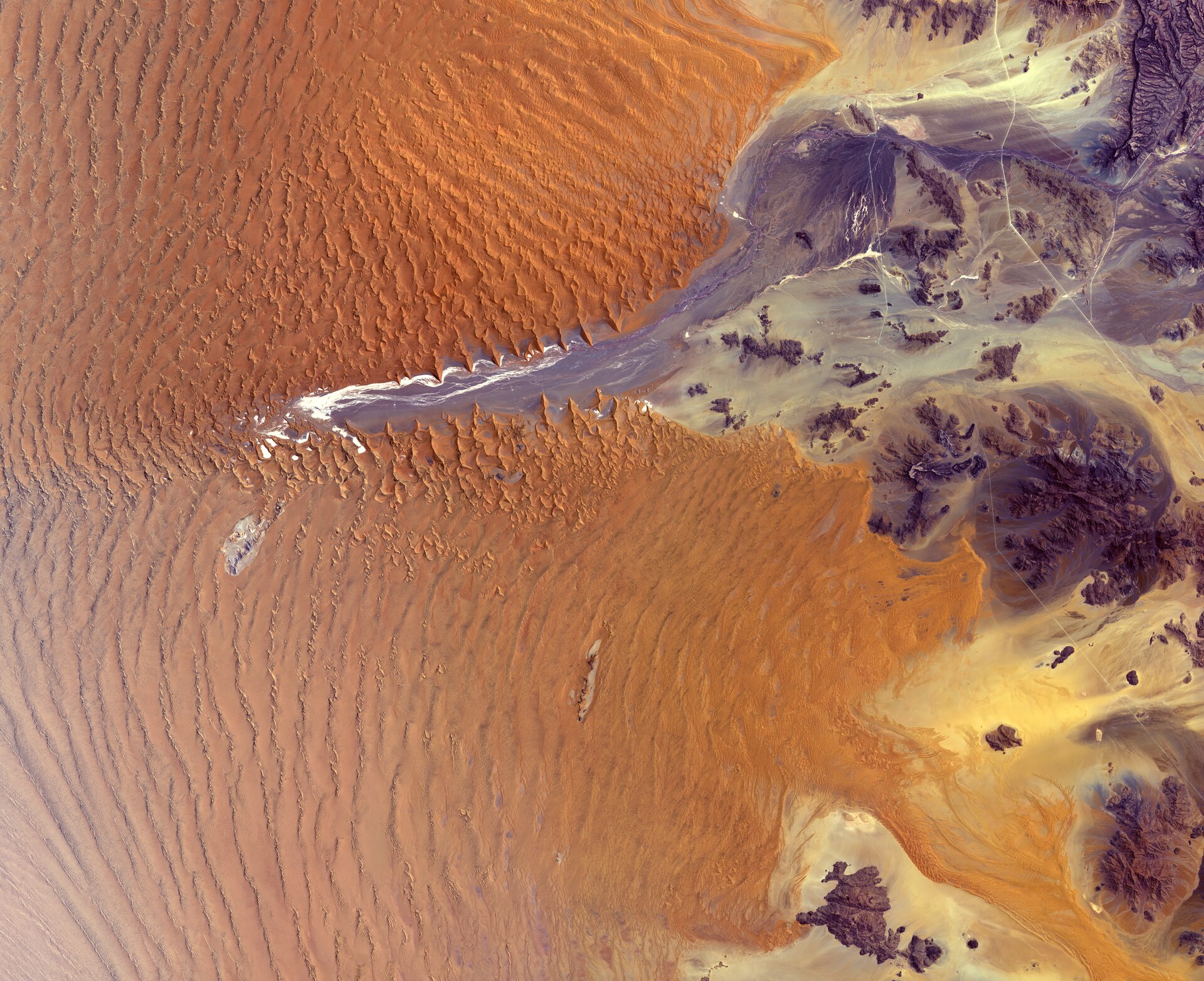
  • Scenic flight over the Namib Sand Sea
  • Sandboarding and quad-biking at Swakopmund
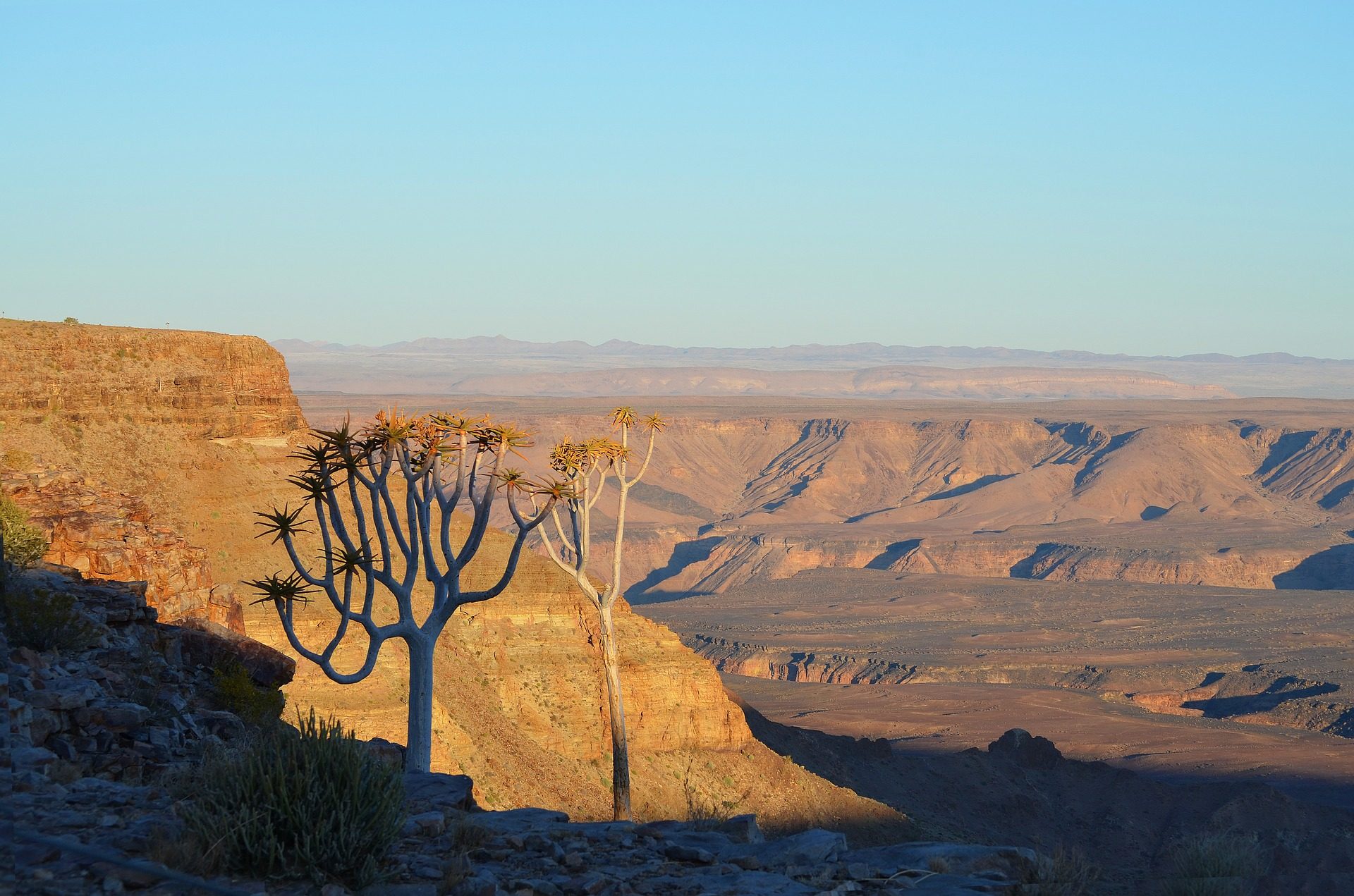
  • Fish River Canyon rim viewpoints
Where to Go

Regional Highlights

The defining landscapes and experiences that shape a private journey through Namibia.

Sossusvlei & the Namib Sand Sea01

Sossusvlei & the Namib Sand Sea

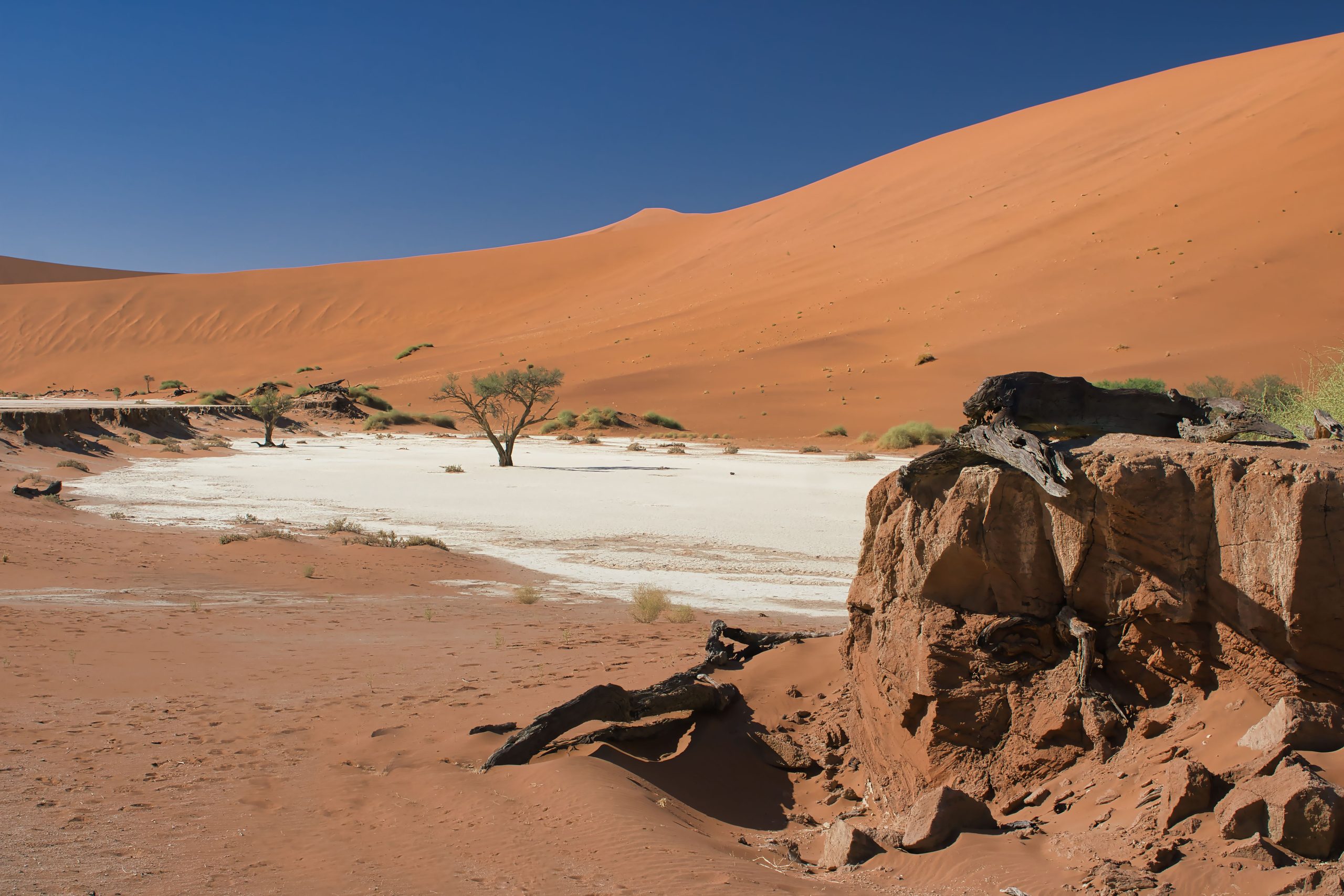
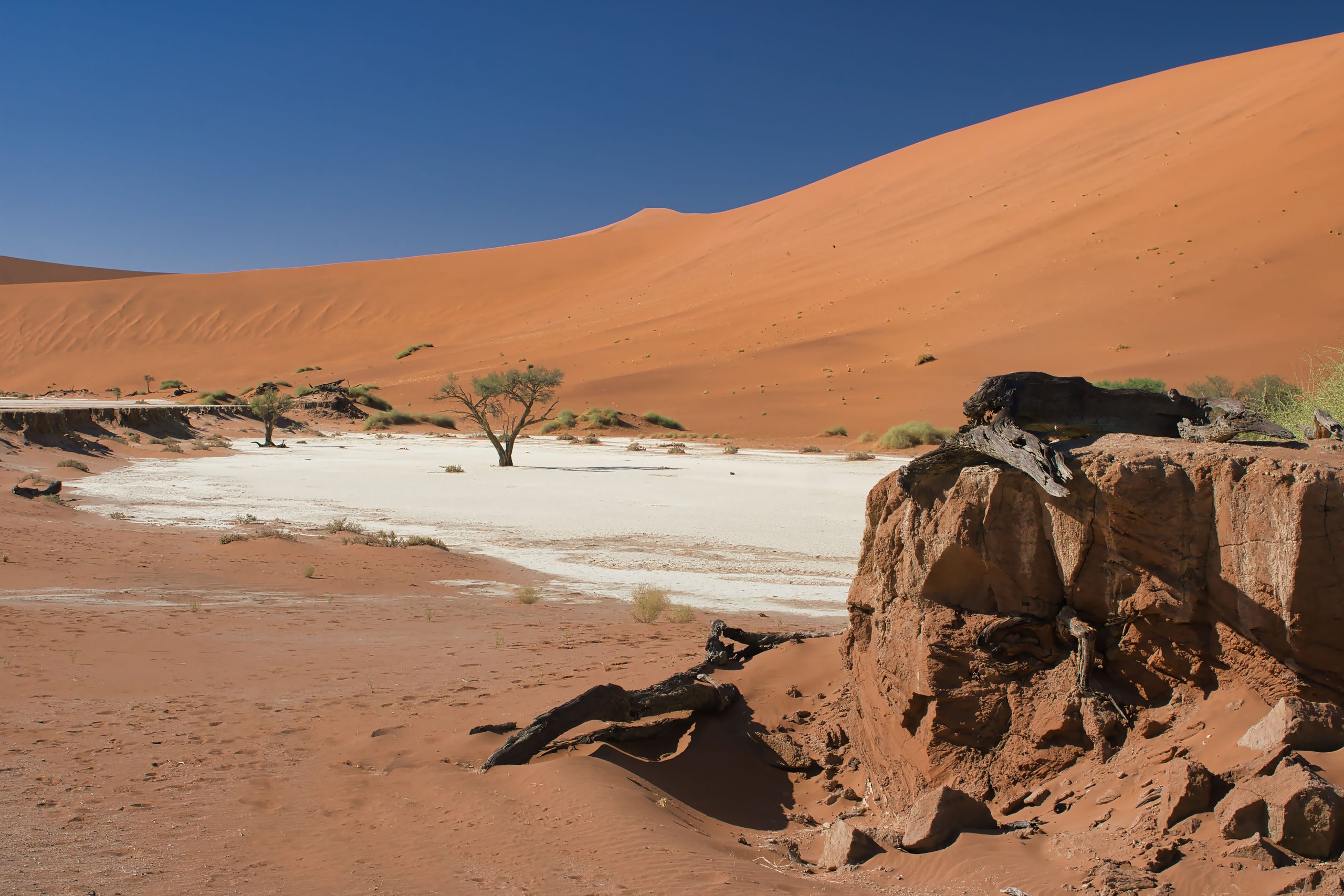
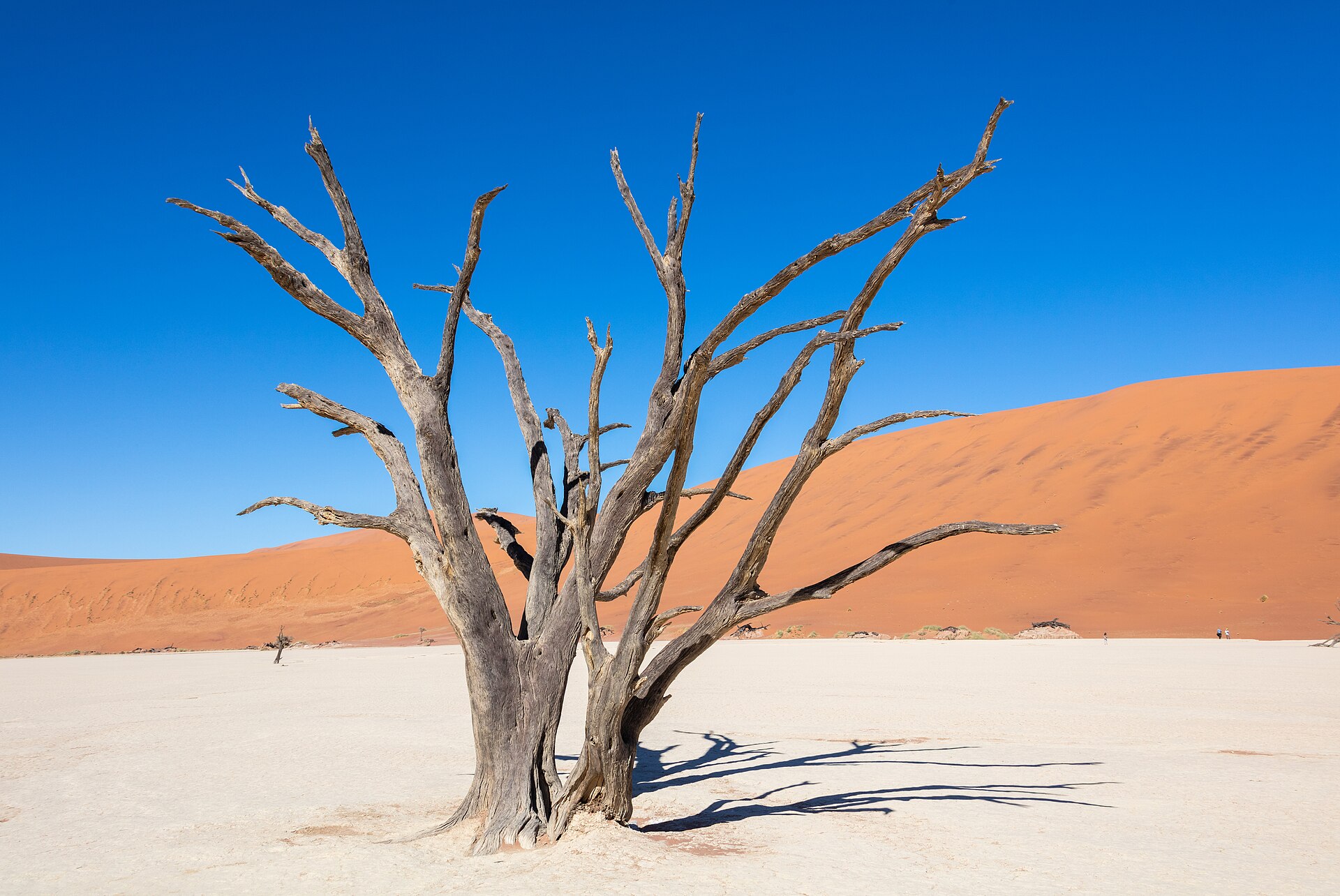
Sossusvlei is the image that launched a thousand bucket lists—a cathedral of rust-red dunes rising from a valley floor of cracked white clay, framed by skies so blue they appear artificial. The Namib Sand Sea, a UNESCO World Heritage Site, is the oldest desert on earth—an estimat…

  • Dune 45 sunrise climb
  • Big Daddy and Dead Vlei
  • Sesriem Canyon
  • NamibRand Nature Reserve
  • Hot-air balloon flights
Etosha National Park02

Etosha National Park

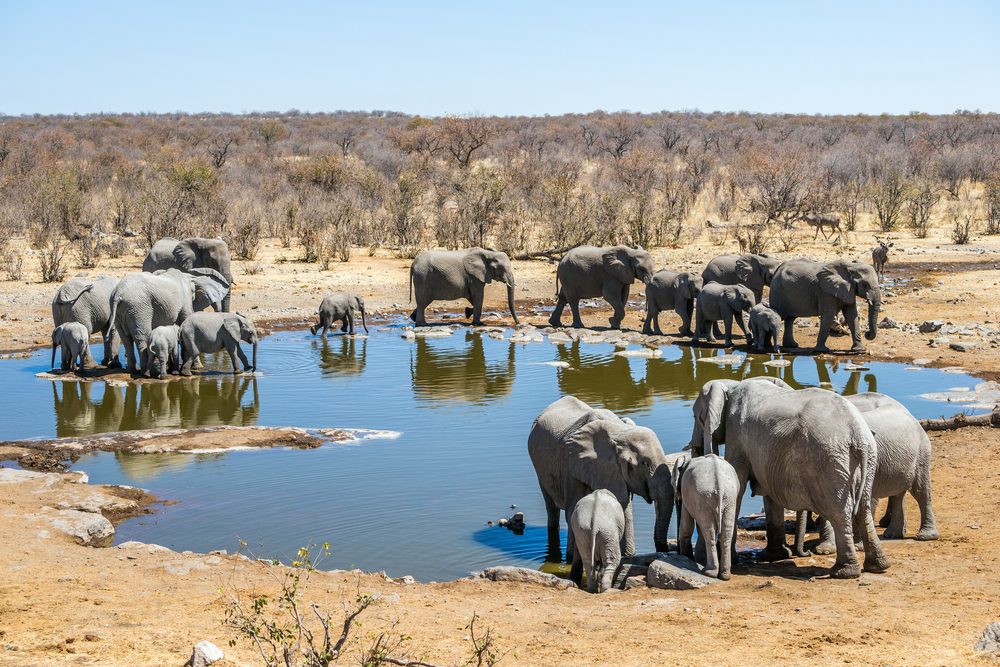
Etosha is Namibia's answer to the Serengeti—a 22,270-square-kilometre national park dominated by a vast, shimmering salt pan visible from space, around whose edges some of the most concentrated wildlife viewing in southern Africa takes place. The Etosha Pan itself—a flat, white,…

  • Okaukuejo floodlit waterhole
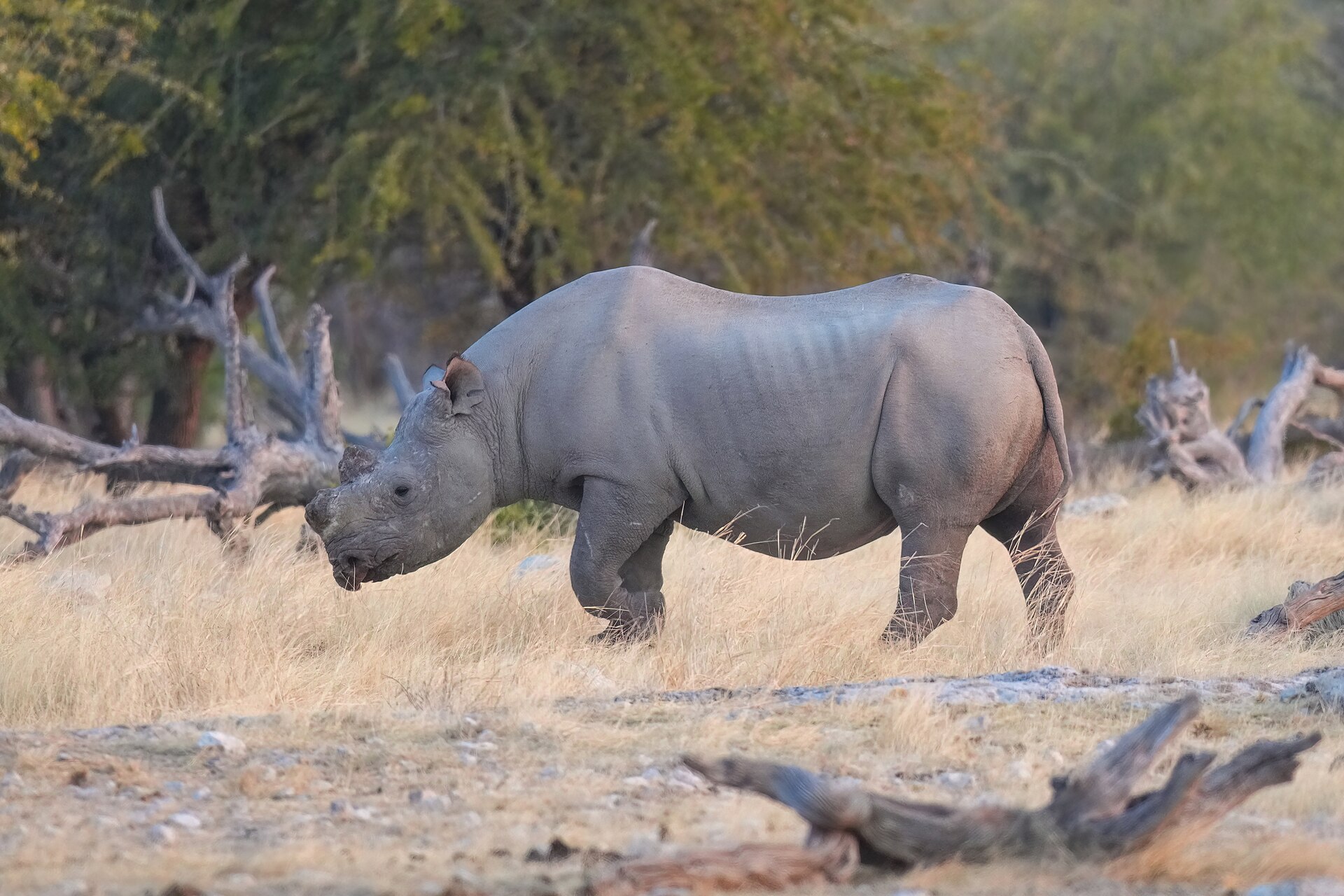
  • Black rhino sightings
  • Etosha Pan mirages
  • Fischer's Pan flamingos
  • Self-drive game viewing
The Skeleton Coast03

The Skeleton Coast

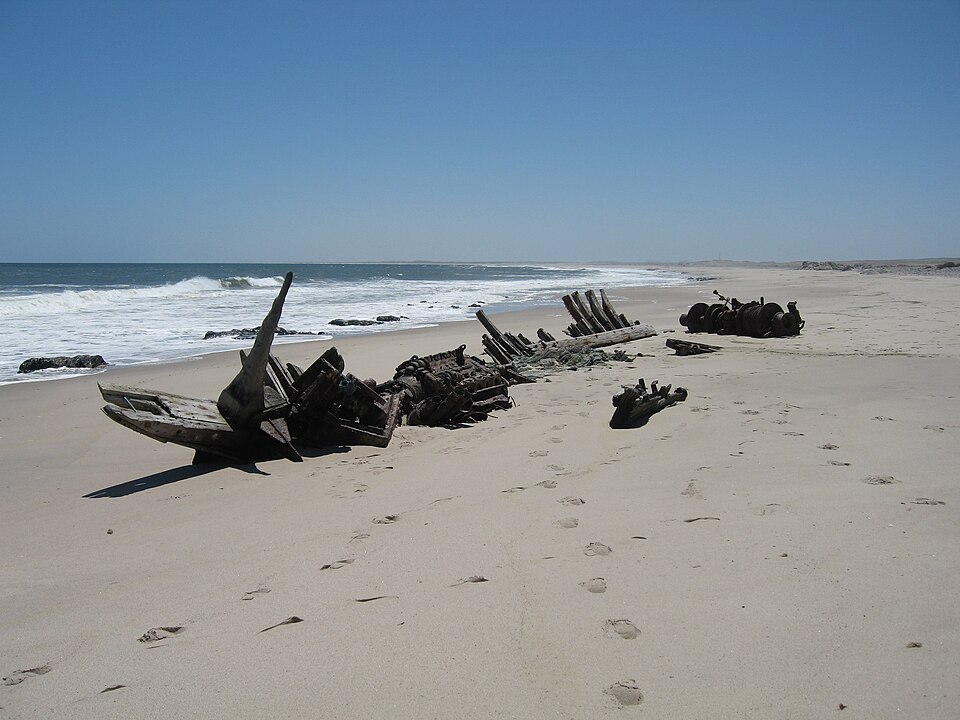
The Skeleton Coast is the most hauntingly beautiful coastline on earth—a five-hundred-kilometre ribbon of fog, sand, and maritime tragedy stretching from Swakopmund to the Kunene River at the Angolan border. The San Bushmen called it 'the land God made in anger.' Portuguese sailo…

  • Cape Cross seal colony
  • Shipwrecks (Eduard Bohlen)
  • Fly-in safari to northern coast
  • Desert-meets-ocean landscapes
  • Brown hyena tracking
Swakopmund & Walvis Bay04

Swakopmund & Walvis Bay

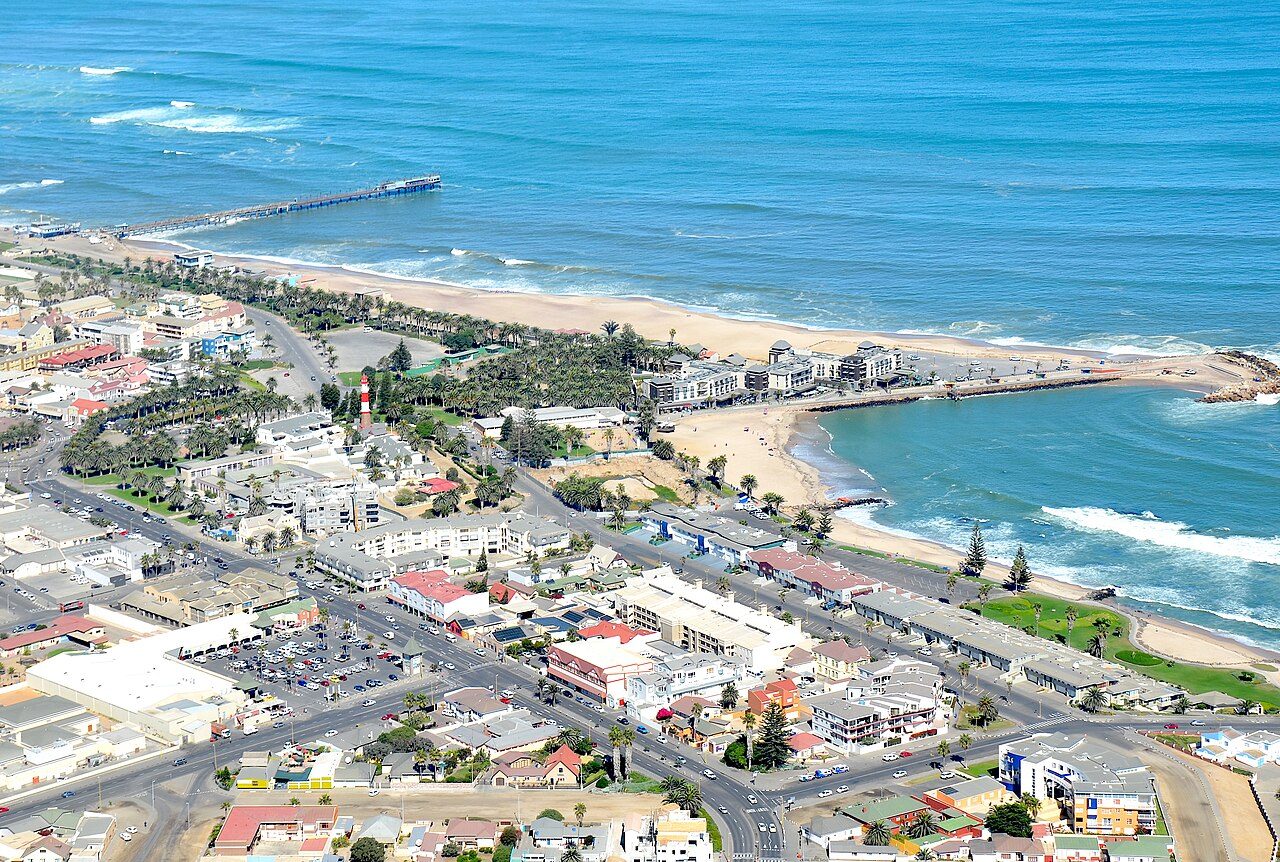
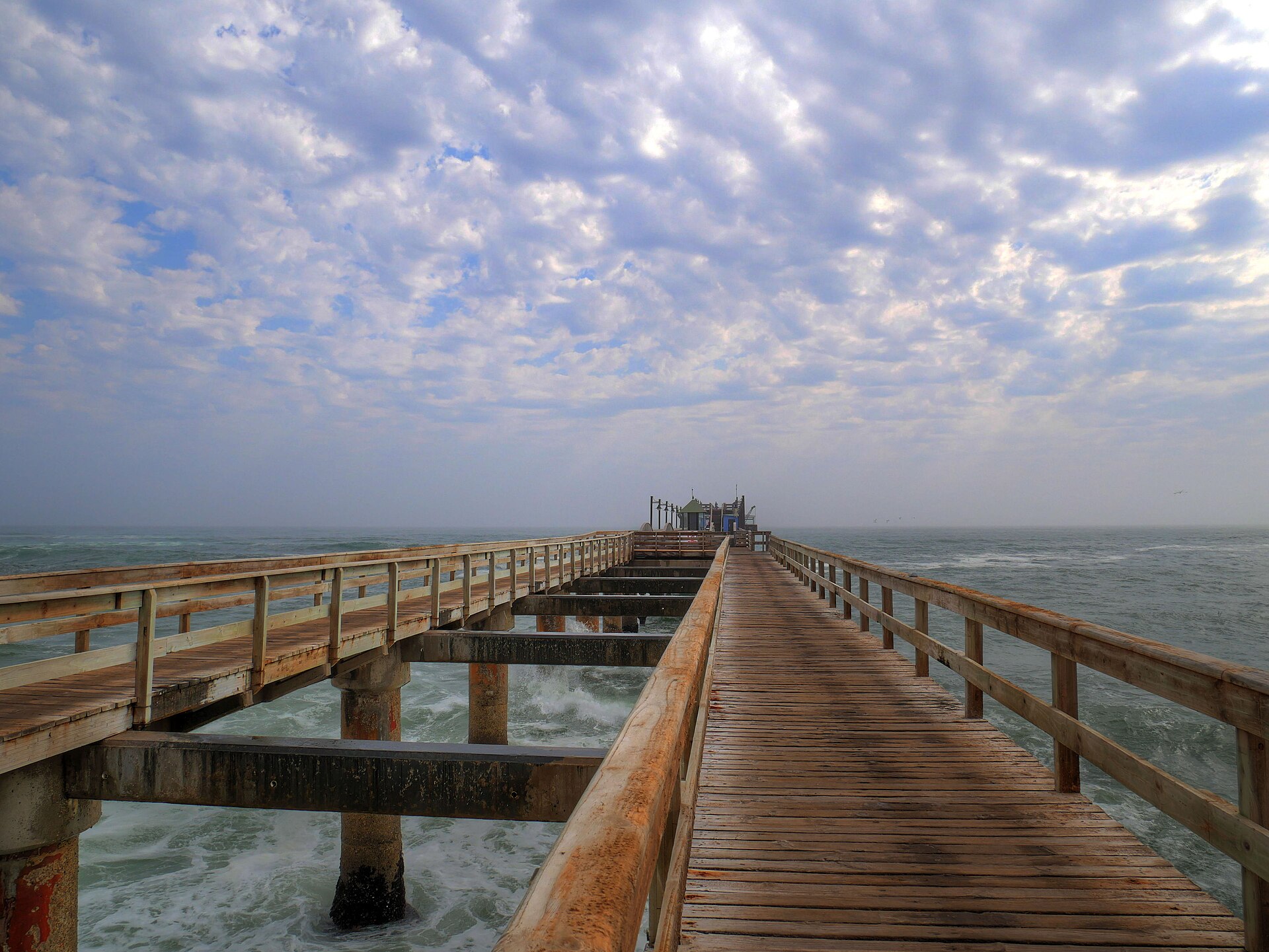
Swakopmund is Namibia's adventure capital—a quirky, pastel-painted coastal town wedged between the Atlantic Ocean and the Namib Desert, where German colonial architecture shares the streetscape with surf shops, craft breweries, and adrenaline outfitters. It is the unexpected love…

  • Sandboarding on Dune 7
  • Quad-biking in Dorob National Park
  • Skydiving over the Namib
  • Kayaking with seals at Pelican Point
  • Sandwich Harbour 4x4 excursion
Curated For You

Signature Experiences

Dune Adventures & Desert Thrills

Namibia's dunes are not passive scenery—they are playgrounds, canvases, and proving grounds for travellers who believe that the best way to understand a landscape is to throw yourself at it.

Sandboarding at Swakopmund comes in two flavours: stand-up (for surfers and the overconfident) and lie-down (for everyone else, and by far the faster option). On a lie-down board, speeds reach 80 kilometres per hour as you descend Dune 7's face with nothing between you and the sand but a thin layer of wax and your nerve. Quad-biking excursions traverse the Dorob National Park's interconnected dune system, carving through crests and valleys in a landscape of pure sand.

At Sossusvlei, the adventure is more meditative but no less physical. Climbing Big Daddy's 325-metre ridge at dawn, calves burning in the shifting sand, is a pilgrimage of effort rewarded by a panorama that makes every step worthwhile. The descent—a controlled sprint-slide into Dead Vlei—is pure, childlike joy.

For those who prefer their desert from above, scenic flights over the Namib Sand Sea reveal patterns impossible to appreciate from ground level: the linear dunes of the central Namib marching in parallel ranks to the horizon, the turquoise pools of Sandwich Harbour nestled between dune and ocean, and the surreal geometry of fairy circles—mysterious bare patches whose origin remains debated by scientists.

Wildlife & Desert Tracking

Namibia's wildlife has adapted to conditions that would defeat animals anywhere else on earth, and encountering these specialists in their element produces a safari experience fundamentally different from the green abundance of Botswana or Kruger.

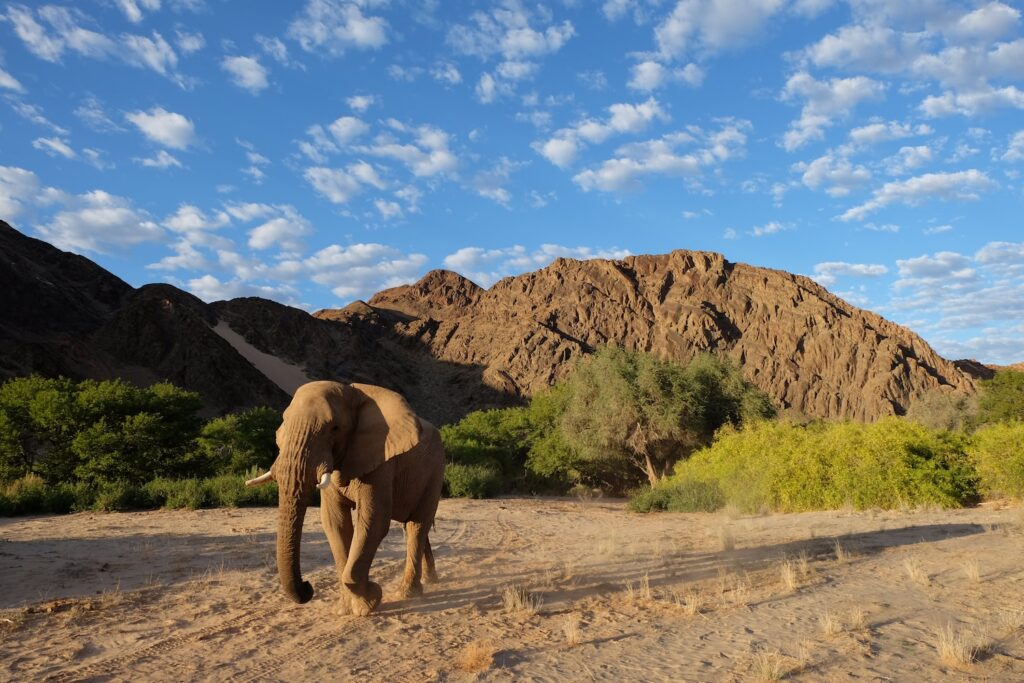
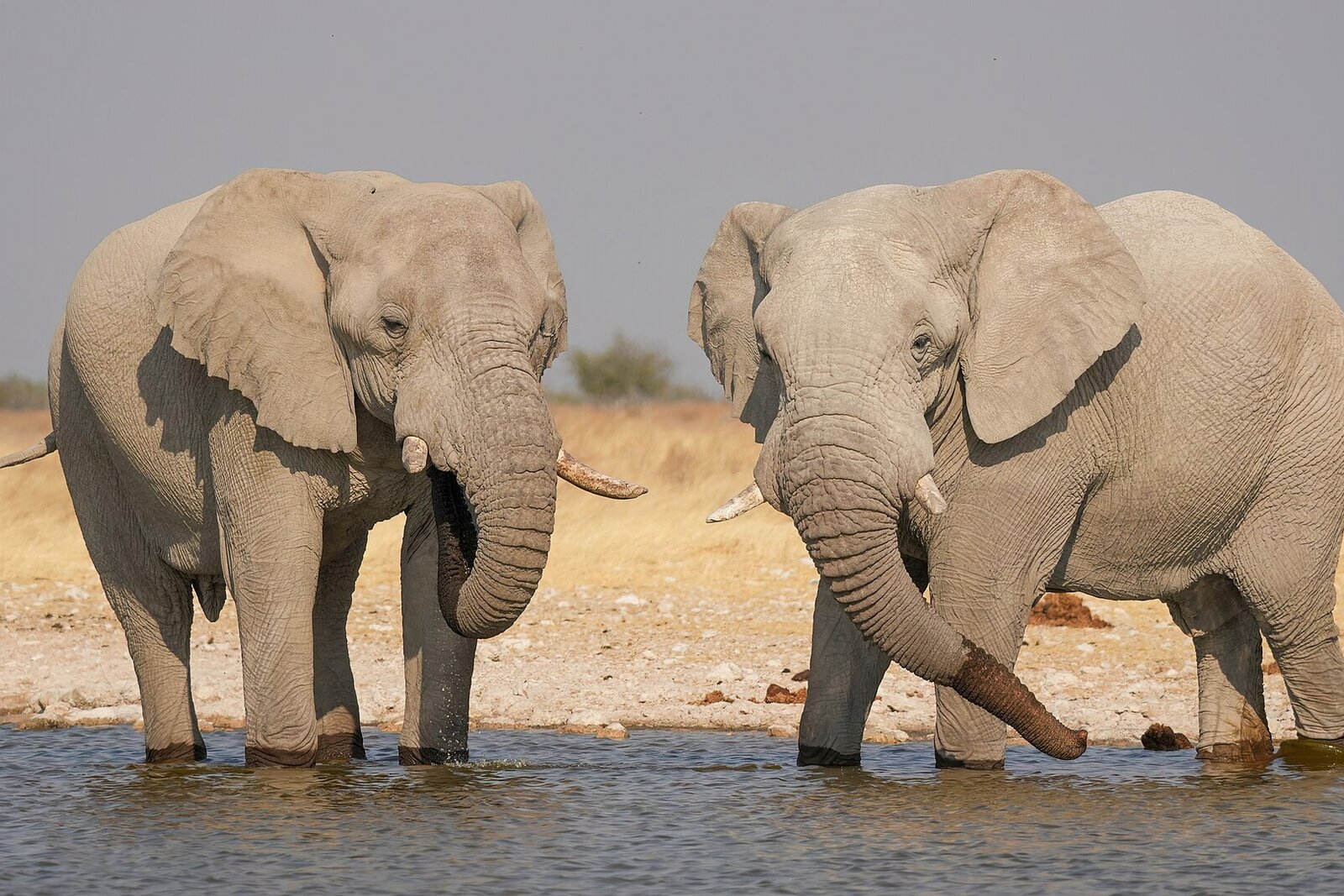
In Damaraland, desert-adapted elephants—not a separate species but a behavioural adaptation honed over generations—navigate dry riverbeds using an ancestral memory of underground water sources. Tracking them on foot with community conservancy guides is raw, unpredictable, and deeply rewarding. Desert lion, once nearly extinct, have staged a remarkable comeback in the Kunene region, where prides have learned to hunt seals on the coast—a behaviour found nowhere else in Africa.

Etosha's waterhole game viewing operates on a different principle: let the wildlife come to you. Positioning yourself at a productive waterhole during the dry season and waiting is a masterclass in patience rewarded. Black rhino, the park's flagship species, drink regularly at several waterholes—sightings are among the most reliable anywhere on the continent.

The Walvis Bay lagoon shifts the focus from terrestrial to avian. Up to 150,000 flamingos—both greater and lesser—turn the tidal flats pink. Pelicans, terns, and waders share the mudflats in a cacophony of coastal birdlife that ranks among southern Africa's finest.

Scenic Flights & Aerial Photography

Namibia is the one destination where you should budget for at least one flight—not as transport but as an experience in itself. The country's landscapes were sculpted at a scale that only altitude can fully reveal, and a scenic flight over the Namib changes your relationship with the desert permanently.

The classic Sossusvlei scenic flight departs from Swakopmund and tracks south along the coast before banking inland over the Kuiseb River Canyon and the Namib Sand Sea. From altitude, the dunes arrange themselves into geometric patterns of mesmerising regularity—star dunes, linear dunes, and barchan crescents spreading to the horizon in shades of copper, rust, and burnt orange. The flight passes over Sandwich Harbour, where turquoise ocean meets amber sand in a collision of colour that appears computer-generated but is entirely real.

Skeleton Coast flyovers trace the shipwreck belt from above, revealing the wrecks' positions relative to the advancing dune fields—a time-lapse of coastal geology compressed into a single visual. Helicopter flights over the Brandberg and Damaraland's volcanic terrain deliver perspectives that transform flat landscapes into three-dimensional relief maps.

For photographers, the golden hours either side of sunrise and sunset produce light conditions that are, without exaggeration, among the finest on the planet. Several operators offer dedicated photography flights with doors removed and routes optimised for shooting angles.

Stargazing & Night Sky Experiences

Namibia possesses some of the darkest skies on earth. The country's low population density—just 2.5 people per square kilometre—combined with its arid climate and minimal light pollution creates conditions for night-sky observation that rival the world's great observatories.

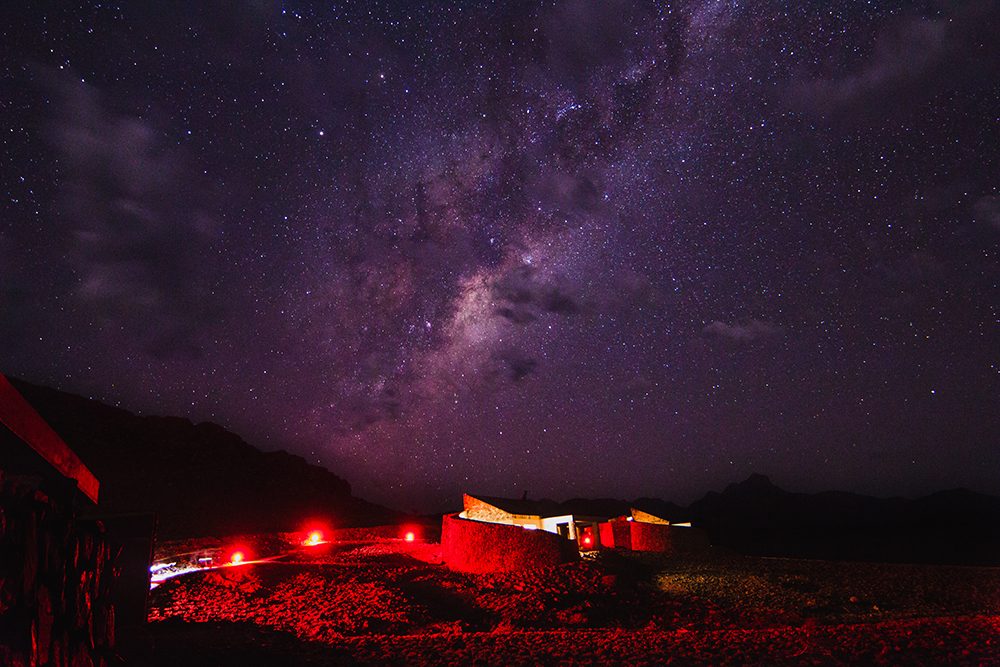
The NamibRand Nature Reserve holds Africa's only International Dark Sky Reserve certification, and lodges within it offer guided astronomy sessions with telescopes that reveal Saturn's rings, Jupiter's moons, the Magellanic Clouds, and the dense stellar highway of the Milky Way's galactic core. On a moonless night, the sky is so bright with stars that it casts visible shadows—a phenomenon that most people living in light-polluted cities have never experienced.

Sossusvlei Desert Lodge maintains a private observatory with a computerised telescope that automates celestial tracking, allowing guests to observe deep-sky objects—nebulae, globular clusters, distant galaxies—with the assistance of a trained astronomer. The experience typically begins after dinner and extends for as long as curiosity holds—which, under skies this extraordinary, can be several hours.

For the truly committed, sleep-out experiences on the Makgadikgadi-style salt pans or desert platforms place you under the naked sky with nothing between you and the cosmos but a thin layer of canvas and a quietly astonished sense of perspective.

Hour by Hour

A Perfect Adventure Day at Sossusvlei

An hour-by-hour journey through the world's oldest desert

  1. 04:45

    Pre-Dawn Departure

    The alarm is unwelcome but necessary. Coffee and rusks are served in the lodge's main area as you layer up against the desert cold. Your guide loads the vehicle in starlight—the Southern Cross hanging directly overhead, bright enough to navigate by.

  2. 05:15

    Sesriem Gate Opening

    The park gate opens precisely at sunrise, and your guide has timed the departure to arrive as the boom lifts. The sixty-kilometre drive to Sossusvlei follows a paved road through a corridor of dunes that grow progressively taller and more intensely red as the sun climbs.

  3. 06:00

    Dune 45 Sunrise

    The classic first stop. Dune 45's graceful S-curve catches the first horizontal rays, transforming from deep purple to burnt amber to blazing orange in a fifteen-minute colour progression. Some climb to the crest; others photograph from the base as the shadows create graphic compositions of light and form.

  4. 07:30

    Big Daddy Ascent

    The vehicle continues to the 4x4 parking area, where a short walk leads to the base of Big Daddy. The climb takes sixty to ninety minutes—steep, hot, and punctuated by moments where the shifting sand makes you question gravity. The ridge narrows to a single footprint's width near the top, with dune faces falling away on both sides.

  5. 09:00

    Dead Vlei

    The descent from Big Daddy deposits you directly into Dead Vlei—the white clay pan surrounded by towering orange dunes, punctuated by the skeletal forms of nine-hundred-year-old camel-thorn trees. The contrast is so extreme it looks surreal. Your guide allows thirty to forty-five minutes for photography and silent contemplation.

  6. 10:30

    Sesriem Canyon Walk

    Leaving the dunes, you explore the two-kilometre Sesriem Canyon on foot—descending into a gorge carved through ancient conglomerate rock. The canyon walls, layered in peach and cream, provide welcome shade. Natural pools in the rock sustain life even in the driest months.

  7. 12:00

    Brunch at the Lodge

    Return to the lodge for a late brunch—fresh fruit, bircher muesli, eggs, and strong coffee served on a terrace overlooking the desert plains. The midday heat shimmers on the horizon. This is the time for pool, spa, or the simple luxury of reading in the shade.

  8. 15:30

    NamibRand Nature Drive

    The afternoon excursion heads into the NamibRand Reserve. Your guide navigates rolling grasslands and red dune fields, stopping for gemsbok herds, springbok, and the occasional ostrich. The fairy circles—mysterious bare patches in the grass—provoke theories and debate.

  9. 17:30

    Sundowner on a Granite Outcrop

    The vehicle climbs to a granite inselberg overlooking the desert basin. Gin and tonics, Namibian sparkling wine, and sundowner snacks are arranged on a blanket. The sun sinks into the dunes, painting the desert floor in graduating bands of gold, copper, and crimson.

  10. 19:30

    Stargazing Dinner

    Dinner is served outdoors—grilled springbok medallions, roasted vegetables, and malva pudding—beneath a sky so densely packed with stars that the Milky Way casts shadows on the tablecloth. Your guide points out constellations of the southern hemisphere. The silence is absolute. The desert's oldest gift is its newest revelation: that you are very small, very temporary, and very lucky to be here.

When to Visit

When to Visit: A Seasonal Guide

Winter Dry Season (May – October)

Namibia's peak tourism season offers clear skies, moderate daytime temperatures (20–28°C), and the best wildlife viewing as animals concentrate at water sources. Etosha's waterholes are at their most productive, and Damaraland's desert elephants are most easily tracked along dry riverbeds. Mornings and evenings are cold—near-freezing temperatures at altitude are common from June to August. This is the ideal window for most first-time visitors.

Best for
  • Etosha wildlife viewing
  • Desert elephant tracking
  • Comfortable touring temperatures
  • Photography (clear skies, golden light)
  • Astrophotography (dry, cloudless nights)

Peak season rates and highest demand. Book premium lodges 6–12 months ahead. Coastal fog around Swakopmund can limit visibility. Pack warm layers for early mornings.

Shoulder Seasons (April–May & November)

The transition months deliver outstanding conditions for photography, with moderate temperatures and the potential for dramatic skies. April–May offers green landscapes fading to gold—an atmospheric combination that photographers prize. November brings the first rains, explosive thunderstorm skies, and the arrival of migratory birds. Wildlife viewing remains strong, and rates sit below peak levels.

Best for
  • Landscape photography
  • Dramatic sky conditions
  • Value-conscious travel
  • Birdwatching (November)
  • Green-to-gold landscape transitions

November rains may cause some road closures in the north. April evenings can be cold. Excellent value compared to peak season.

Summer Wet Season (December – March)

Summer transforms Namibia's northern regions into lush, green landscapes. Afternoon thunderstorms produce some of the most dramatic skies on the planet—towering cumulonimbus clouds lit by golden light, often accompanied by vivid rainbows and double rainbows. Etosha's pans fill with water, attracting flamingos. Damaraland greens. Wildlife disperses but newborn animals add a different appeal. The coast remains cool and often fog-free.

Best for
  • Dramatic landscape photography
  • Flamingo season at Etosha
  • Skeleton Coast (less fog)
  • Lower rates and fewer tourists
  • Lush desert landscapes

Extreme heat in interior (35–42°C). Afternoon thunderstorms can be intense. Some gravel roads in the north become slippery or flooded. Not ideal for first-time visitors to Etosha.

Month-by-Month Calendar
JanFull summer. Dramatic thunderstorms, green landscapes. Hot. Etosha pans hold water. Lowest rates.
FebPeak rains in the north. Flamingos gather at Etosha's Fischer's Pan. Excellent storm photography.
MarRains easing. Lush landscapes, good birdwatching. Shoulder rates begin.
AprTransition month. Green fading to gold. Excellent photography light. Comfortable temperatures return.
MayDry season begins. Cool mornings, warm days. Etosha waterholes start concentrating wildlife.
JunWinter arrives. Cold mornings (near freezing), clear skies. Outstanding game viewing begins.
JulPeak dry season. Excellent wildlife at Etosha. Best stargazing conditions. Peak rates.
AugPrime month for landscape photography. Desert light at its finest. Etosha thriving.
SepLate dry season. Hottest of the winter months. Game still concentrated. Wildflowers in the south.
OctHot and dry. Transition month. Wildlife desperate for water—intense waterhole action. Prices begin to drop.
NovFirst rains. Migrant birds arrive. Explosive thunderstorm skies. Green season rates begin.
DecFull summer. Hot, dramatic, beautiful. Festive season may elevate rates at some properties.
Travel With Purpose

Conservation & Communal Conservancies

Namibia's communal conservancy programme is the most successful community-based conservation model in Africa. Since its inception in 1996, over 86 communal conservancies have been established, covering more than 166,000 square kilometres—roughly twenty per cent of Namibia's total land area. These conservancies are managed by local communities who receive direct revenue from tourism operators leasing concessions on their land.

The results speak for themselves. Namibia is the only country in Africa where wildlife populations have increased across the board outside of national parks. The country's black rhino population—once decimated by poaching—is now the largest free-roaming population on earth, with over 2,500 individuals. Desert lion numbers in the Kunene have recovered from fewer than twenty in the 1990s to over 150 today. Desert-adapted elephant herds in Damaraland have stabilised and expanded.

This conservation model succeeds because it aligns economic incentives with ecological outcomes. A community that earns tourism revenue from living wildlife has a powerful incentive to protect it. When you stay at a conservancy lodge in Damaraland or the Kunene, your per-night fee directly funds community development—schools, clinics, and employment for local guides and trackers. This is not greenwashing; it is a functioning economic system that has transformed Namibia's relationship with its wildlife and earned global recognition as a model for sustainable tourism.

Know Before You Go

Travel Essentials

Getting There

Windhoek's Hosea Kutako International Airport (WDH) is the primary gateway, receiving direct flights from Johannesburg (two hours), Cape Town (two and a half hours), and Frankfurt (ten hours). Walvis Bay Airport (WVB) serves the coast with connections from Johannesburg and Cape Town. From Cape Town, we typically recommend flying to Windhoek and collecting a vehicle or meeting your guide for the journey north. Internal charter flights connect remote lodges in the Skeleton Coast, Damaraland, and the Kaokoveld.

Getting Around

Namibia is one of Africa's premier self-drive destinations. The road network comprises well-maintained tarred highways and graded gravel roads that a standard 4x2 can navigate in dry conditions. A 4x4 is recommended for the Skeleton Coast, Damaraland's desert tracks, and Kaokoveld. Distances are vast—Windhoek to Etosha is 450 kilometres, Etosha to Swakopmund approximately 530 kilometres—so daily driving legs of 300–400 kilometres are common. For those who prefer not to drive, our guided tours provide an experienced driver-guide and luxury vehicle for the entire journey.

Visa Requirements

As of April 2025, Namibia requires visas for citizens of many previously exempt countries, including the United States, United Kingdom, Canada, Australia, Germany, and France. Visas can be obtained online via the e-visa portal (eservices.mhaiss.gov.na) or on arrival at major ports of entry. The fee is NAD 1,600 (approximately USD $90). Passports must be valid for at least six months with three blank pages. Travellers with children must carry unabridged birth certificates. Several nationalities, including South African, Botswana, and Zambian citizens, remain visa-exempt. We provide updated visa guidance as part of your booking confirmation.

Currency & Payments

The Namibian Dollar (NAD) is pegged 1:1 to the South African Rand, and both currencies are accepted everywhere. Credit cards (Visa, Mastercard) are widely accepted at hotels, lodges, and restaurants in towns. Carry cash for fuel stations, small shops, and conservancy fees in rural areas. ATMs are available in Windhoek, Swakopmund, and major towns. Tipping is customary: NAD 50–100 per day for guides, NAD 20–50 per day for lodge staff. USD and EUR can be exchanged at banks and airport bureaux.

Health & Safety

Namibia is one of Africa's safest destinations for tourists. No vaccinations are mandatory for direct arrivals, though Hepatitis A and routine immunisations are recommended. Malaria risk is limited to the northern regions (Etosha, Kavango, Caprivi) during the wet season (November–April)—prophylaxis is advised for these areas. The sun is intense year-round: SPF 50+, a wide-brimmed hat, and hydration are essential. Medical facilities in Windhoek are good; rural areas require evacuation for serious conditions. Comprehensive travel insurance is strongly recommended.

What to Pack

Namibia's temperature extremes demand layering. Mornings in the desert can be near-freezing; middays may exceed 35°C. Pack a warm fleece, a windbreaker, shorts and lightweight shirts, and sturdy closed-toe shoes for hiking. Neutral colours are best for wildlife viewing. Bring a quality camera with a wide-angle lens for landscapes and a telephoto for wildlife. Binoculars enhance every Etosha waterhole session. Sunscreen (SPF 50+), a reusable water bottle, a headlamp, and a universal power adapter (Type D/M) complete the essentials. For self-drive trips, pack a cooler bag for picnic lunches between lodges.

Multi-Country Journeys

Combining Namibia with South Africa

Namibia and South Africa complement each other with an almost poetic symmetry—the lush winelands and ocean-washed coastline of the Cape against the vast, arid grandeur of the Namib. A combined itinerary delivers the full emotional range of southern African travel, from urban sophistication to desert solitude.

The most common combination begins with four to five days in Cape Town and the Winelands—Table Mountain, the peninsula, Stellenbosch, and Franschhoek—followed by a flight to Windhoek and a ten-to-twelve-day Namibia circuit. A typical Namibia route runs from Windhoek south to the Fish River Canyon and Lüderitz, west to Sossusvlei, north through Swakopmund and the Skeleton Coast, inland to Damaraland, and north to Etosha before returning to Windhoek. The full journey covers approximately 3,500 kilometres by road—a distance that sounds daunting but unfolds at a natural pace with three-to-four-hour driving days and overnight stops at exceptional lodges.

Alternatively, a shorter Namibia highlight tour of seven to eight days covers Sossusvlei, Swakopmund, and Etosha—the country's three essential experiences—and pairs beautifully with a Cape Town stay for a total journey of ten to twelve days.

We design both guided and self-drive Namibia itineraries, providing detailed route maps, pre-booked accommodation, and 24/7 roadside support. The transition from Bree Street's restaurants to the silence of the Namib takes a single flight and a few hours of driving—but the psychological distance is immeasurable.

Good to Know

Frequently Asked Questions

Is Namibia safe for self-drive travel?

Namibia is one of the safest countries in Africa for self-drive tourism. The road network is well-maintained, crime rates in tourist areas are very low, and the country's sparse population means you are more likely to encounter wildlife than traffic. Standard precautions apply: drive during daylight, carry a spare tyre and basic tools, maintain adequate fuel levels between towns, and watch for animals on the road, particularly at dawn and dusk. We provide detailed route guides, emergency contact numbers, and 24/7 roadside support for all self-drive clients.

Do I need a 4x4 vehicle?

For a standard circuit covering Windhoek, Sossusvlei, Swakopmund, and Etosha, a 4x2 SUV with high clearance is sufficient on the well-maintained gravel roads. A 4x4 is recommended for the Skeleton Coast, Damaraland's desert tracks, Kaokoveld, and Fish River Canyon approaches. If your itinerary includes any off-road or remote sections, we always recommend 4x4 with two spare tyres. We arrange the appropriate vehicle as part of your tour package.

Do I need a visa for Namibia?

As of April 2025, citizens of the United States, United Kingdom, Canada, Australia, Germany, France, and many other previously exempt nationalities now require a visa. The process is straightforward: apply online via the e-visa portal or obtain a visa on arrival at major entry points including Hosea Kutako International Airport. The fee is approximately NAD 1,600 (~USD $90). Processing takes about five working days for online applications. We provide current visa guidance specific to your nationality during booking.

What is the best time to visit Namibia?

Namibia is a year-round destination, but the dry winter months (May–October) are generally optimal for first-time visitors—wildlife viewing is best, temperatures are comfortable, and skies are clear. Photographers favour the shoulder months (April–May and August–November) for the most dramatic light. The wet season (December–March) offers dramatic thunderstorm skies, green landscapes, and lower rates but extreme heat in the interior.

How many days do I need in Namibia?

A highlights tour covering Sossusvlei, Swakopmund, and Etosha requires a minimum of seven to eight days including travel days from Windhoek. A comprehensive circuit adding Damaraland, the Skeleton Coast, and Fish River Canyon requires twelve to fourteen days. Ten to twelve days is the sweet spot for most travellers, allowing comfortable driving days and adequate time at each destination without rushing.

What does a luxury Namibia tour cost?

Luxury guided tours range from $350–$750 per person per day depending on accommodation tier and group size. A ten-day guided luxury tour typically costs $8,000–$15,000 per person including accommodation, meals, vehicle, guide, and park fees (excluding international flights). Self-drive options are more economical, with premium lodge accommodation averaging $300–$600 per person per night. We provide transparent, itemised quotes tailored to your specific itinerary.

Can I see the Big Five in Namibia?

Namibia offers four of the Big Five—lion, leopard, elephant, and rhino (both black and white). Buffalo are largely absent from Namibia's major parks. Etosha is one of Africa's best destinations for black rhino, and Damaraland offers unique desert-adapted elephant encounters. For a complete Big Five experience, we recommend combining Namibia with a Kruger or Chobe safari extension.

What should I know about driving distances?

Namibia is vast—roughly twice the size of California with a population of 2.5 million. Driving legs between destinations typically range from 250 to 450 kilometres, taking three to five hours on gravel roads where average speeds of 80–100 km/h are comfortable. We design itineraries that limit daily driving to four hours maximum, ensuring you arrive at each destination with energy for afternoon activities and sundowners.

Is the Skeleton Coast accessible by road?

The southern Skeleton Coast from Swakopmund to Cape Cross and Terrace Bay is accessible by road with a standard vehicle or 4x4. The northern Skeleton Coast, beyond Terrace Bay, is restricted and accessible only via fly-in safari. This remote region requires permits and is best experienced through specialist operators who provide light aircraft transfers and luxury camp accommodation.

What is the food like in Namibia?

Namibia's cuisine reflects its German colonial heritage and African roots. Expect excellent game meats (gemsbok, springbok, kudu), German-style breads and pastries, and fresh Atlantic seafood along the coast—Swakopmund's oysters are exceptional. Luxury lodges serve multi-course dinners with wine pairings. Vegetarian and dietary requirements are accommodated at all premium properties. Don't miss the Namibian craft beer scene—Windhoek Lager is deservedly famous, but microbreweries are emerging.

Can I see desert-adapted elephants?

Yes—Damaraland is one of only two places in Africa where desert-adapted elephants survive. These elephants are tracked through ephemeral riverbeds with expert community conservancy guides. Sightings are not guaranteed but experienced trackers achieve high success rates, particularly during the dry season (July–November) when elephants concentrate near water sources. The tracking experience itself—reading spoor, interpreting the landscape—is as rewarding as the sighting.

What are fairy circles?

Fairy circles are mysterious circular patches of bare sand found in Namibia's grasslands, particularly in the NamibRand and Marienfluss areas. Ranging from two to fifteen metres in diameter, they have puzzled scientists for decades. Competing theories attribute them to termite activity, plant competition for water, or gas emissions from the earth. No definitive explanation exists—they remain one of nature's most photogenic riddles.

Is Namibia suitable for families with children?

Namibia is an excellent family destination. The self-drive format allows flexible scheduling, Etosha's waterhole viewing is engaging for all ages, and Swakopmund's adventure activities—sandboarding, quad-biking, seal kayaking—appeal to teenagers and adults alike. Most luxury lodges welcome children of all ages, and several offer dedicated children's programmes. The country's low malaria risk (prophylaxis only needed in the far north during summer) makes it a comfortable choice for families.

How does Namibia combine with Botswana?

Namibia and Botswana pair beautifully—desert landscapes followed by water-based safari. The most common route enters Botswana via the Trans-Caprivi Highway in Namibia's northeastern strip, crossing into Chobe National Park at Kasane. From there, three nights in Chobe or a fly-in to the Okavango Delta completes a combined itinerary of fourteen to eighteen days. Alternatively, fly from Windhoek to Maun for a shorter Botswana addition. We coordinate cross-border logistics, vehicle returns, and all transfers.

What photography equipment should I bring?

Namibia rewards both wide-angle and telephoto lenses. A wide-angle (16–35mm) is essential for Sossusvlei's dunes, Dead Vlei, and starscapes. A telephoto (100–400mm) covers Etosha's waterhole wildlife and desert elephants. A polarising filter enhances the desert's contrast, and a sturdy tripod is non-negotiable for astrophotography. Protect equipment from fine sand with zip-lock bags and a blower brush. Drone photography requires a permit from the Namibian Civil Aviation Authority—apply at least six weeks in advance.

Chat