We're Open08:00–19:00 SAST
WhatsAppWishlistPartner Portal
Botswana — Africa's Last Eden — Where the Wild Remains Untamed
SOUTHERN AFRICA · BOTSWANA

BOTSWANA

Africa's Last Eden — Where the Wild Remains Untamed

In the heart of southern Africa lies a country that has elevated conservation to an art form and exclusivity to a philosophy. Botswana is not merely a safari destination—it is the distilled essence of what Africa was before the modern world arrived. Here, the Okavango Delta floods an ancient desert with crystalline water, creating a labyrinth of emerald channels where elephants wade chest-deep and leopards hunt from island canopies. Here, tourism is measured not in visitor numbers but in the silence between heartbeats when a lion lifts its gaze to meet yours across the amber grass.

22.3285° S, 24.6849° EFrom $1,200 per person per night
Why Travel Private

Why Botswana Is Africa's Ultimate Safari Destination

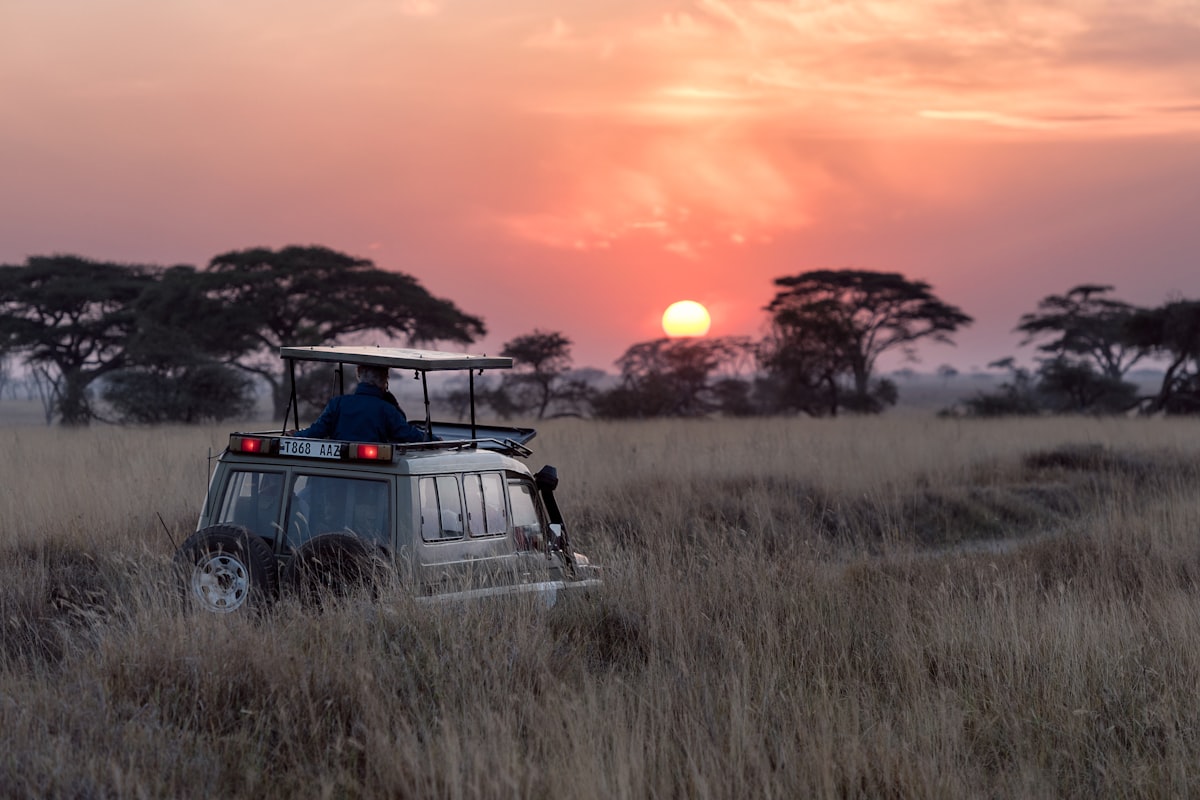
Botswana operates on a principle that every luxury traveller instinctively understands: scarcity creates value. The government's deliberate high-value, low-volume tourism policy limits the number of visitors who can enter its wilderness areas at any given time. The result is an experience so intimate, so unmediated, that you might spend an entire morning with a pack of African wild dogs and never encounter another vehicle.

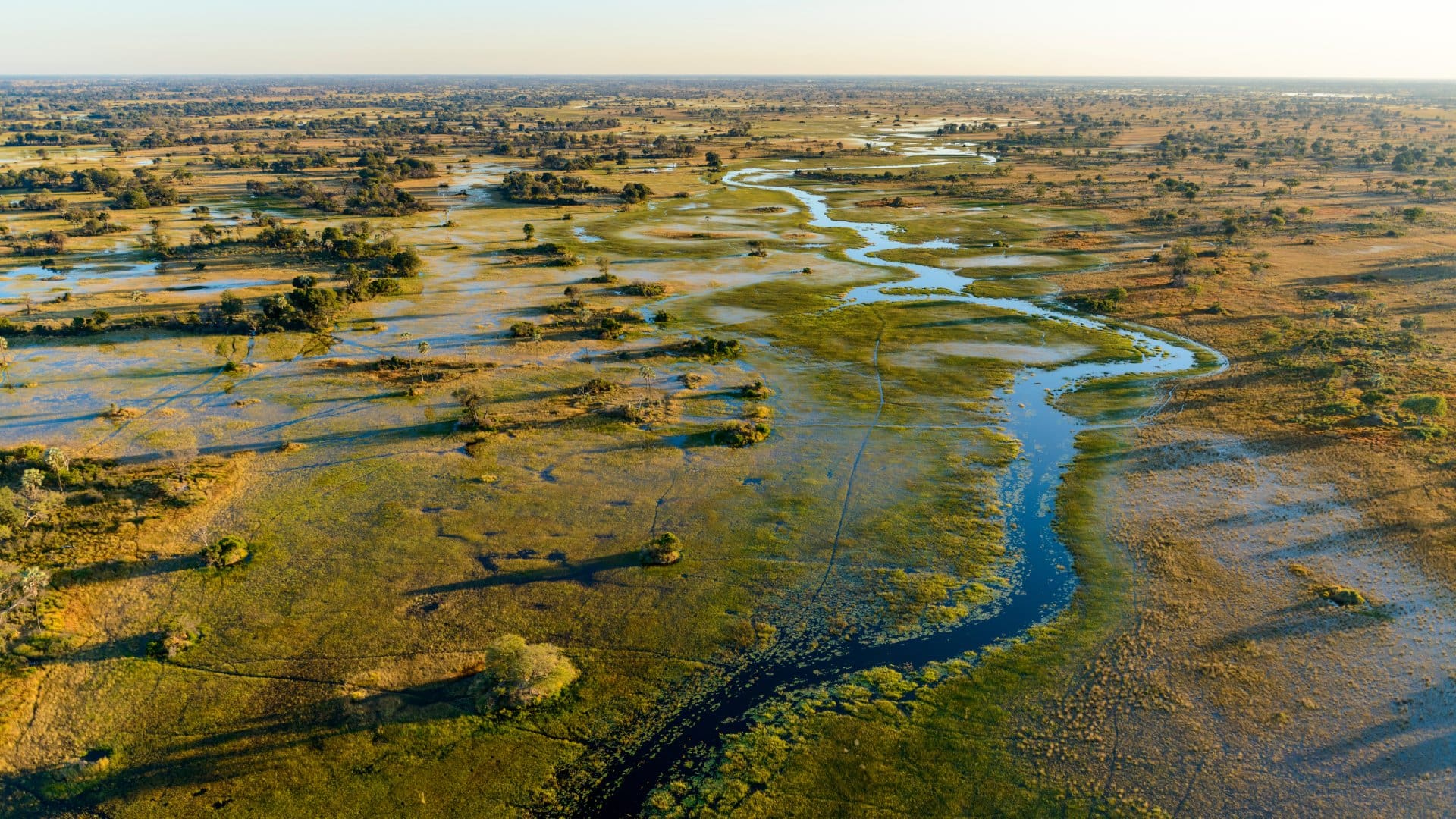
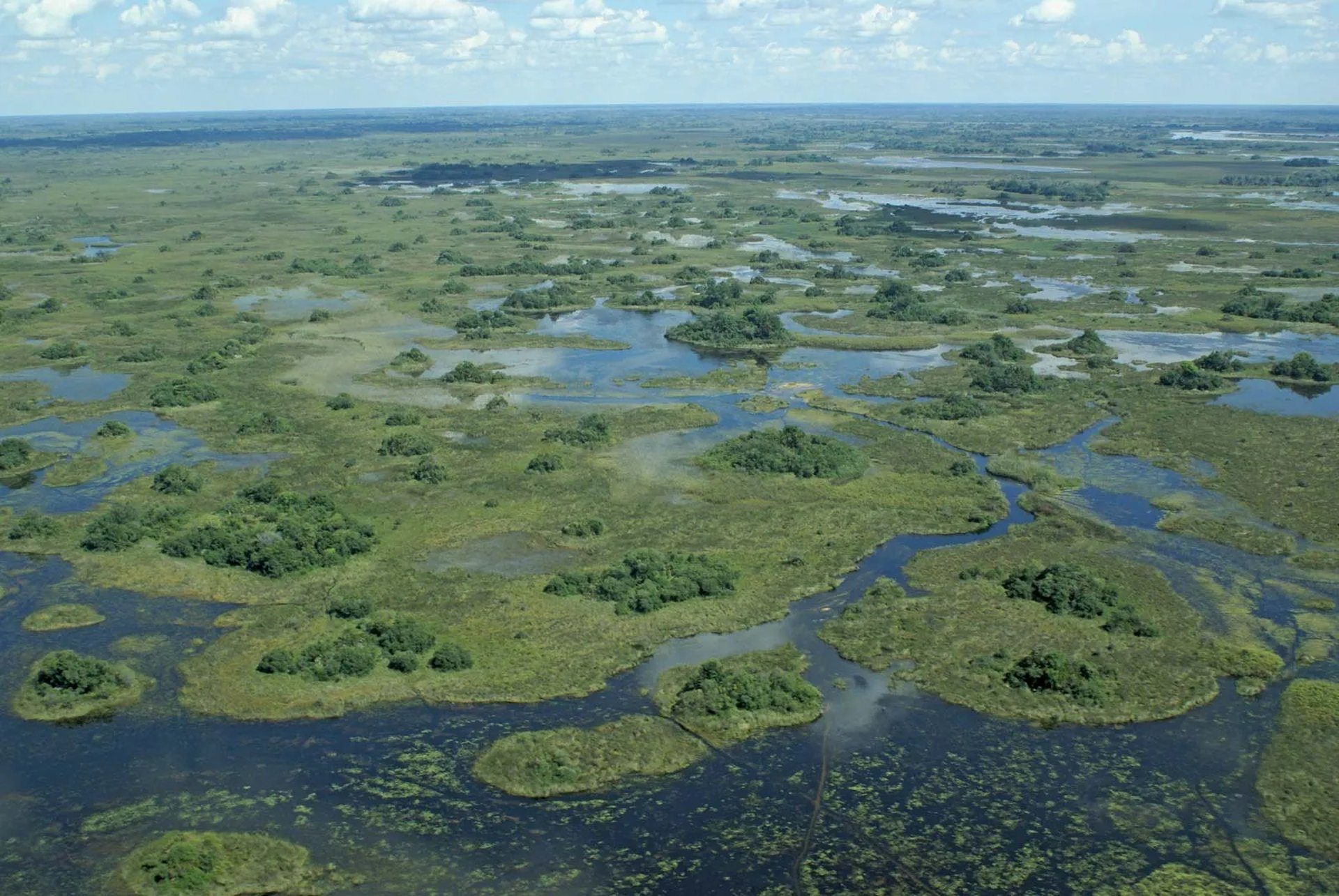
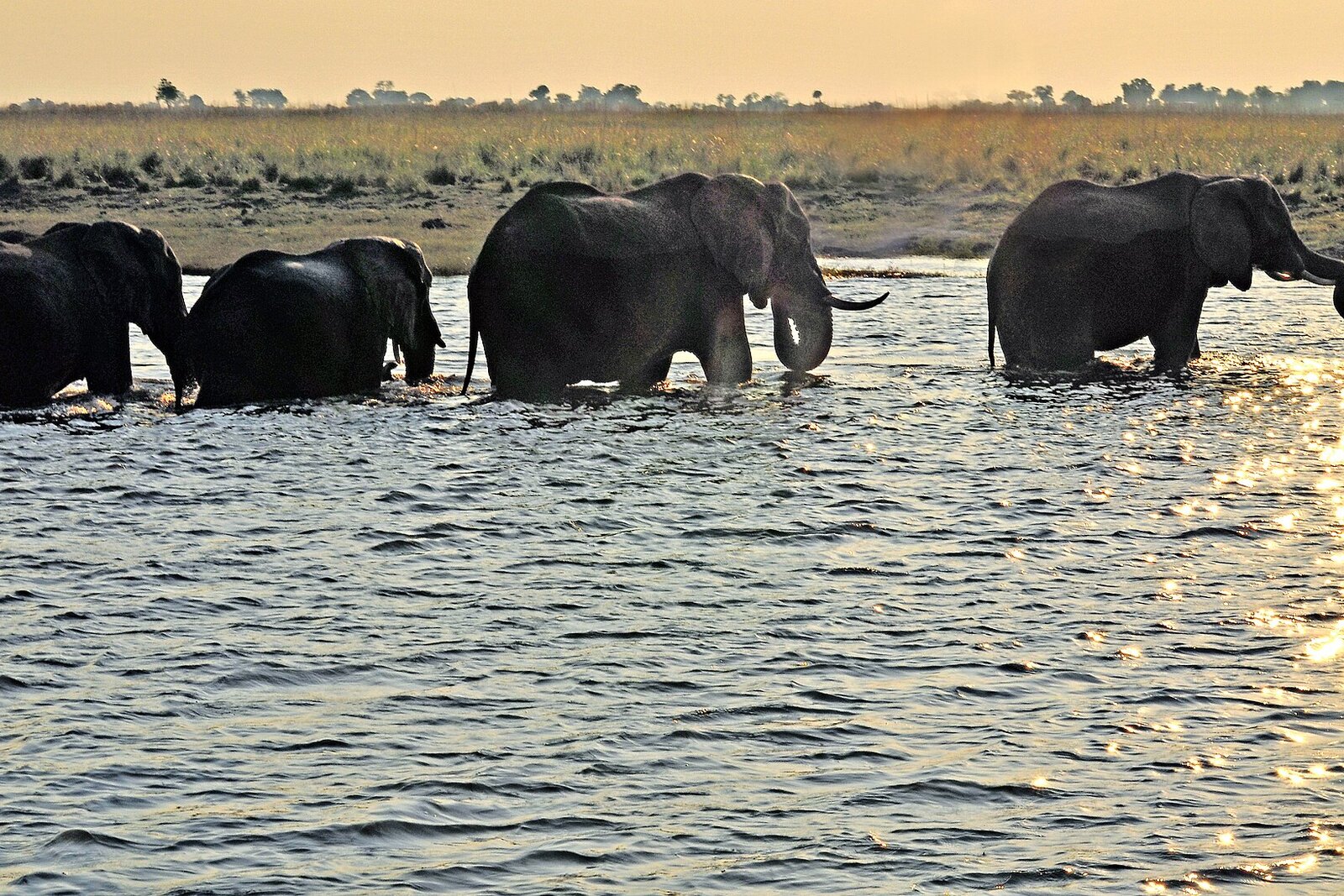
This is a country where nearly forty per cent of the national territory is dedicated to wildlife reserves, national parks, and protected concessions. The Okavango Delta—the world's largest inland delta—floods each year with water that has travelled 1,200 kilometres from the Angolan highlands, transforming the Kalahari sands into a shimmering mosaic of lagoons, floodplains, and palm-fringed islands. It is the only place on earth where you can glide silently through papyrus channels in a mokoro at dawn, track a pride of lions on a game drive by mid-morning, and watch a herd of five hundred elephants cross the Chobe River at sunset.

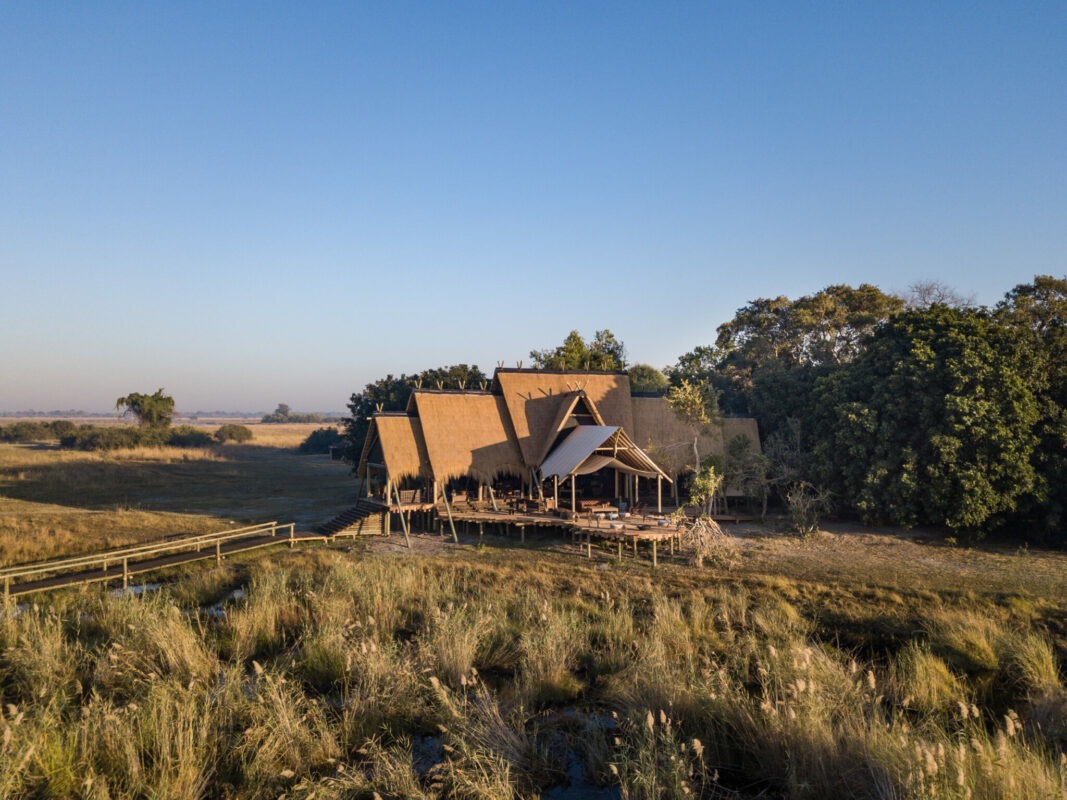
Botswana's safari camps redefine the concept of luxury accommodation. These are not hotels transplanted into the bush—they are architectural responses to the landscape itself. Canvas walls roll up to reveal floodplain panoramas. Outdoor showers face nothing but sky and savannah. Plunge pools overlook waterholes where buffalo drink at dusk. Every camp operates with a maximum of eight to sixteen guests, ensuring that your safari feels less like a tour and more like a private audience with the natural world.

For the discerning traveller who has seen the Serengeti and walked the Kruger, Botswana represents the next frontier—a safari experience stripped of crowds, noise, and compromise. When you combine this with some of Africa's most skilled guides, a conservation ethic that has virtually eliminated poaching, and a political stability rare on the continent, the argument for Botswana becomes less a matter of persuasion and more a statement of fact: this is where the most meaningful wildlife encounters on earth take place.

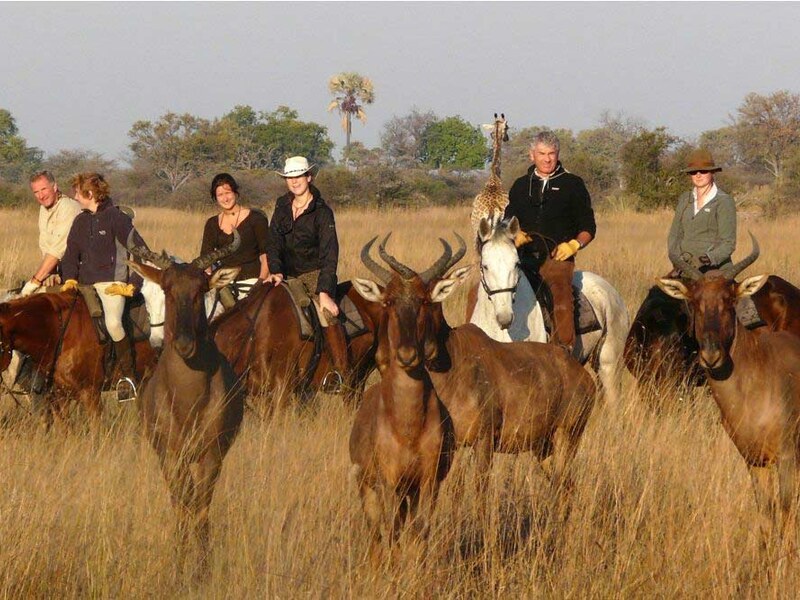
Our private Botswana safaris, arranged as extensions from Cape Town, place you in the heart of this extraordinary wilderness with every detail—flights, transfers, camps, and guiding—seamlessly orchestrated.

At a Glance

Botswana at a Glance

Best Time to VisitMay–October (dry season) for peak wildlife. June–August for Okavango Delta high water. November–April (green season) for birdwatching, newborn wildlife, and lower rates.
Tour Duration4–10 nights (7 nights optimal for multi-region safari)
ClimateSemi-arid with distinct wet (Nov–Apr) and dry (May–Oct) seasons. Dry season days warm (25–30°C) with cold mornings (5–10°C). Summer highs reach 35–40°C with afternoon thundershowers.

Quick Facts

  • CurrencyBotswana Pula (BWP); USD widely accepted at camps
  • LanguagesEnglish (official), Setswana widely spoken
  • Time ZoneCAT (UTC+2)
  • VisaVisa-free for US, UK, EU, Canada, Australia (up to 90 days)
  • AirportsMaun (MUB) for Delta, Kasane (BBK) for Chobe, Gaborone (GBE)
  • DrivingLeft-hand side

Signature Highlights

  • Mokoro excursion through the Okavango Delta
  • Chobe River sunset cruise with elephant herds
  • Walking safari with San Bushmen trackers
  • Aerial helicopter flight over the Delta
  • Night game drive in a private concession
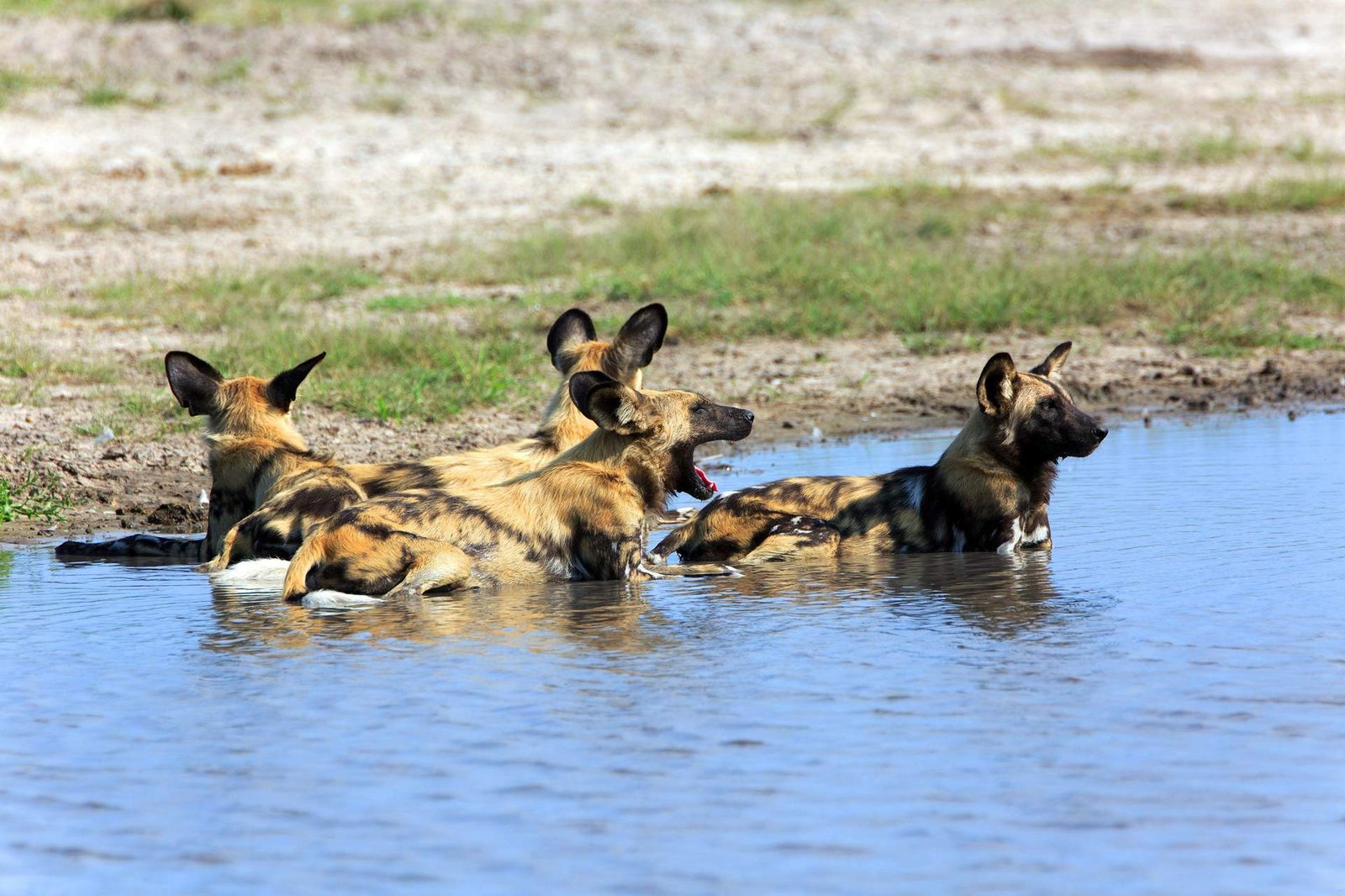
  • Wild dog tracking in Moremi Game Reserve
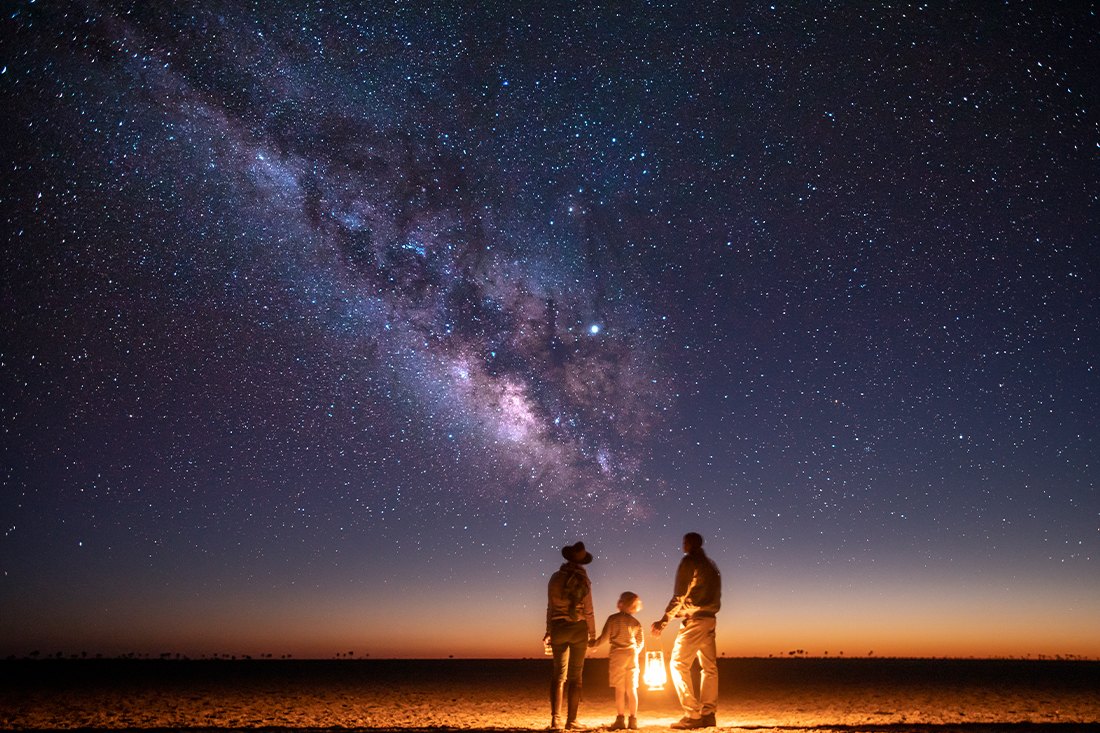
  • Stargazing on the Makgadikgadi salt pans
  • Luxury mobile camping safari
Where to Go

Regional Highlights

The defining landscapes and experiences that shape a private journey through Botswana.

The Okavango Delta01

The Okavango Delta

There is no landscape on earth quite like the Okavango Delta—a paradox made visible, where a river dies so that an entire ecosystem may live. Each year between June and August, floodwaters from the Angolan highlands pour into the Kalahari Desert basin, creating a 22,000-square-ki…

  • Mokoro excursions
  • Chief's Island game drives
  • Helicopter scenic flights
  • Walking safaris on Delta islands
  • Birdwatching (over 450 species)
Chobe National Park02

Chobe National Park

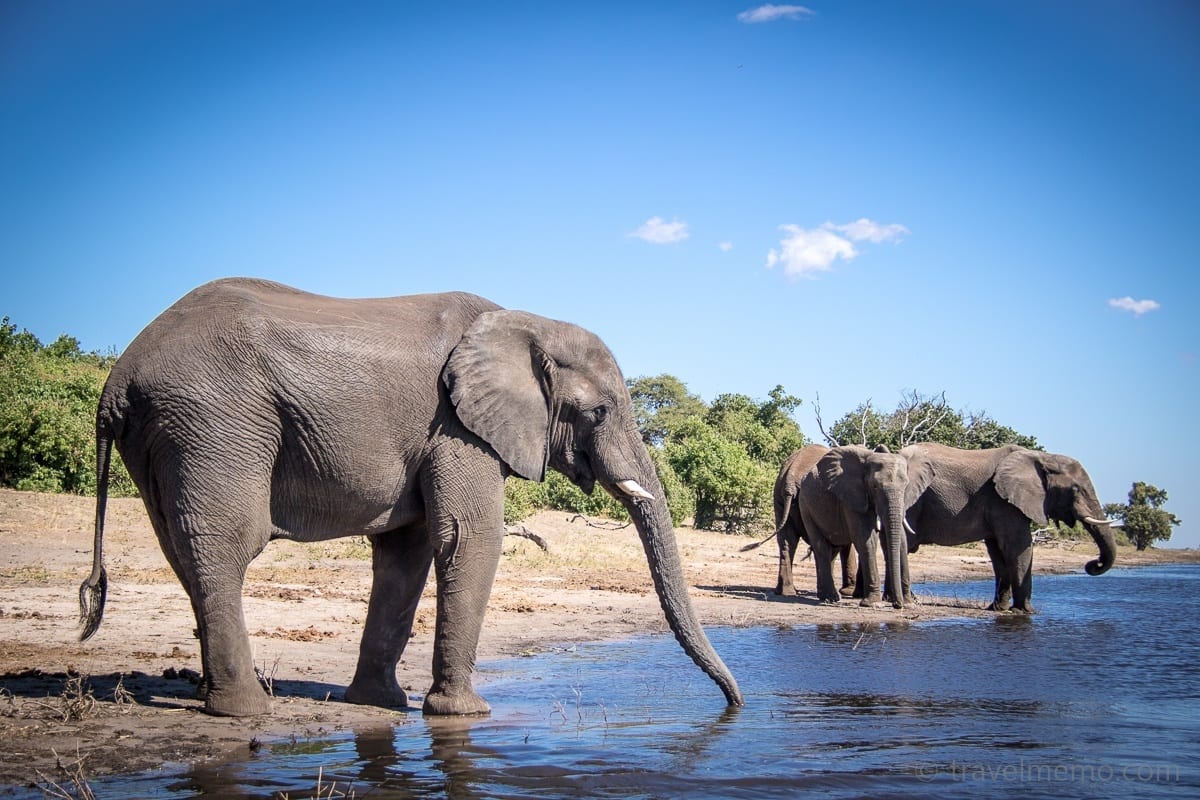
If Botswana's tourism model is defined by exclusivity and restraint, Chobe National Park is its magnificent exception—a place of almost absurd abundance. The park shelters an estimated 120,000 elephants, the largest concentration of any single population on earth. During the dry…

  • Chobe River sunset cruise
  • Elephant herds at the riverfront
  • Savuti predator viewing
  • Birdwatching along the Chobe
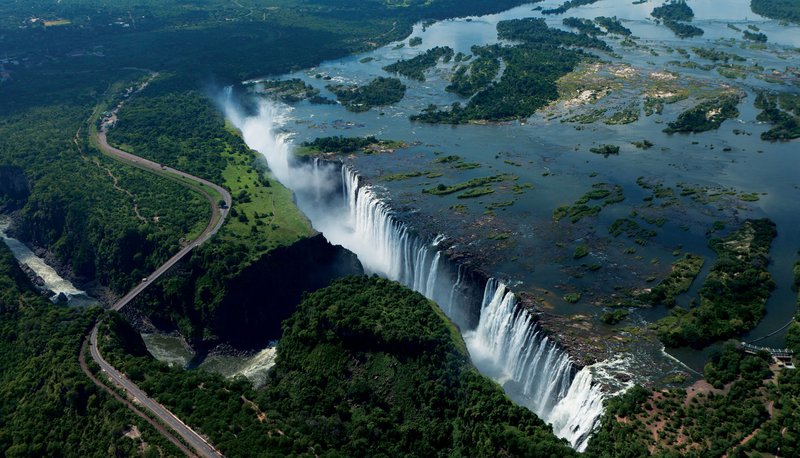
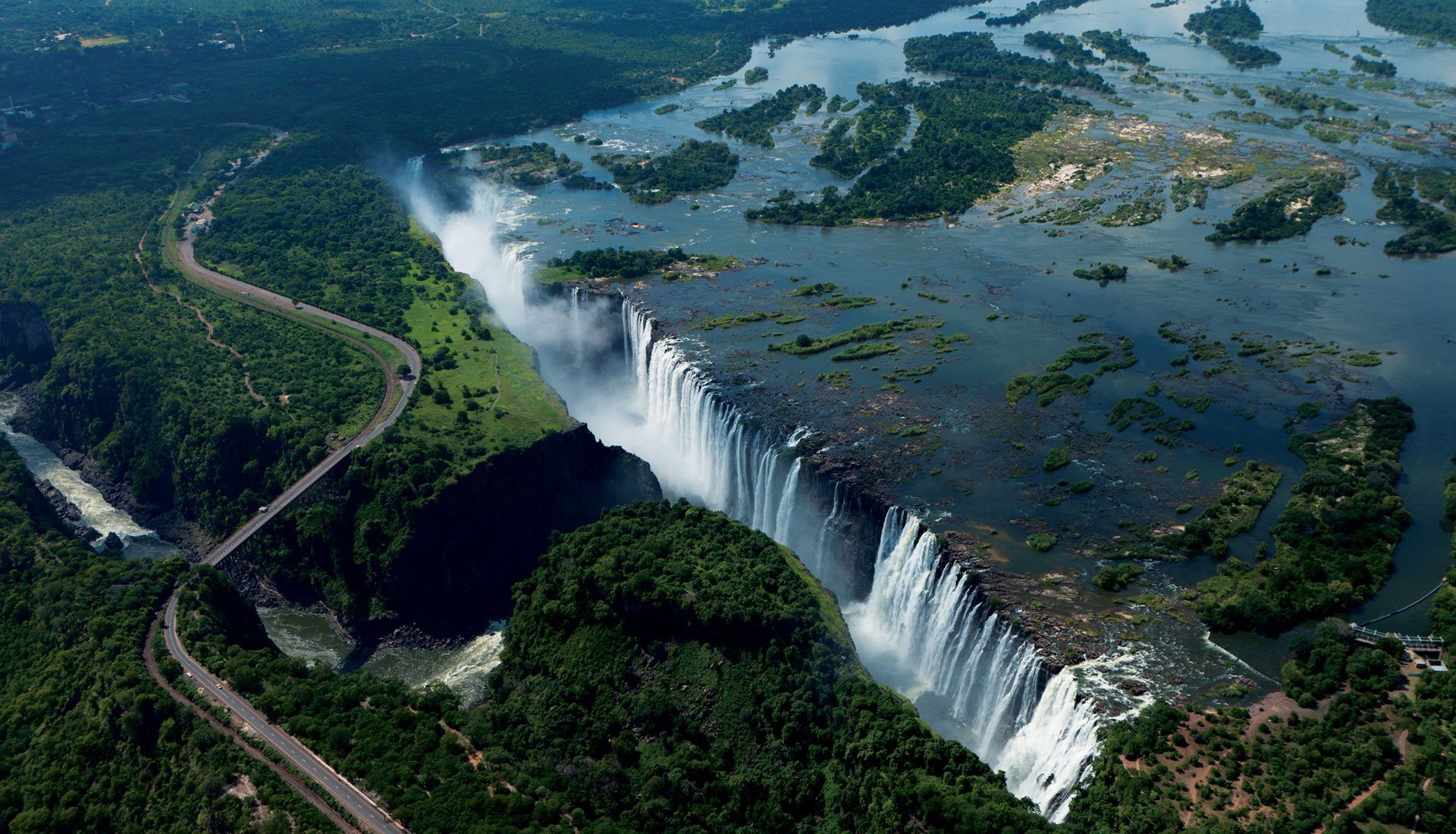
  • Day trip to Victoria Falls
Moremi Game Reserve03

Moremi Game Reserve

Moremi Game Reserve occupies the eastern third of the Okavango Delta and is widely regarded as one of the most beautiful wildlife reserves in Africa. Unlike private concessions where exclusivity is purchased at premium rates, Moremi is a national reserve—yet its combination of pe…

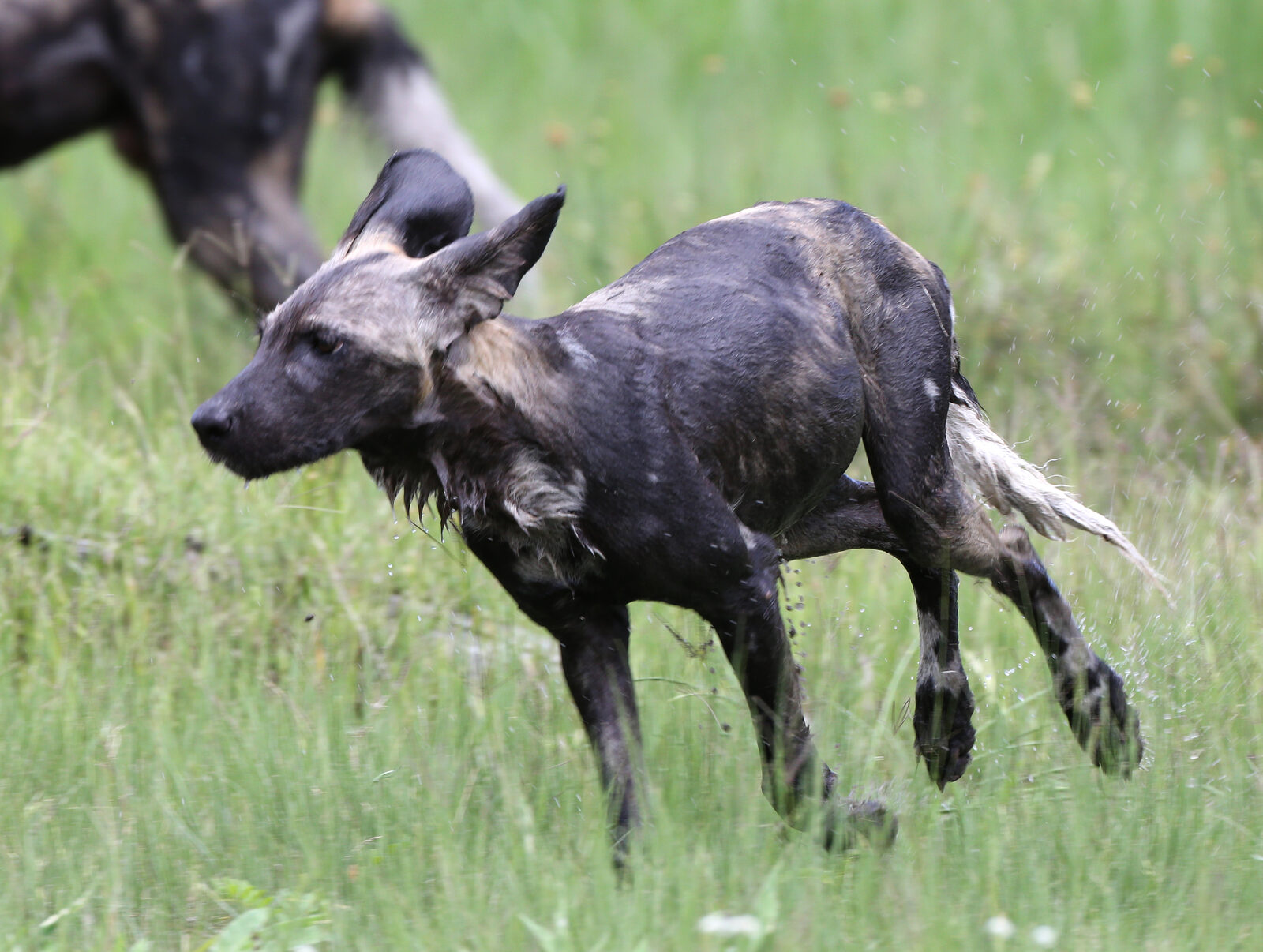
  • African wild dog tracking
  • Xakanaxa Lagoon
  • Predator viewing
  • Third Bridge wilderness camping
  • Birding (400+ species)
The Makgadikgadi Pans04

The Makgadikgadi Pans

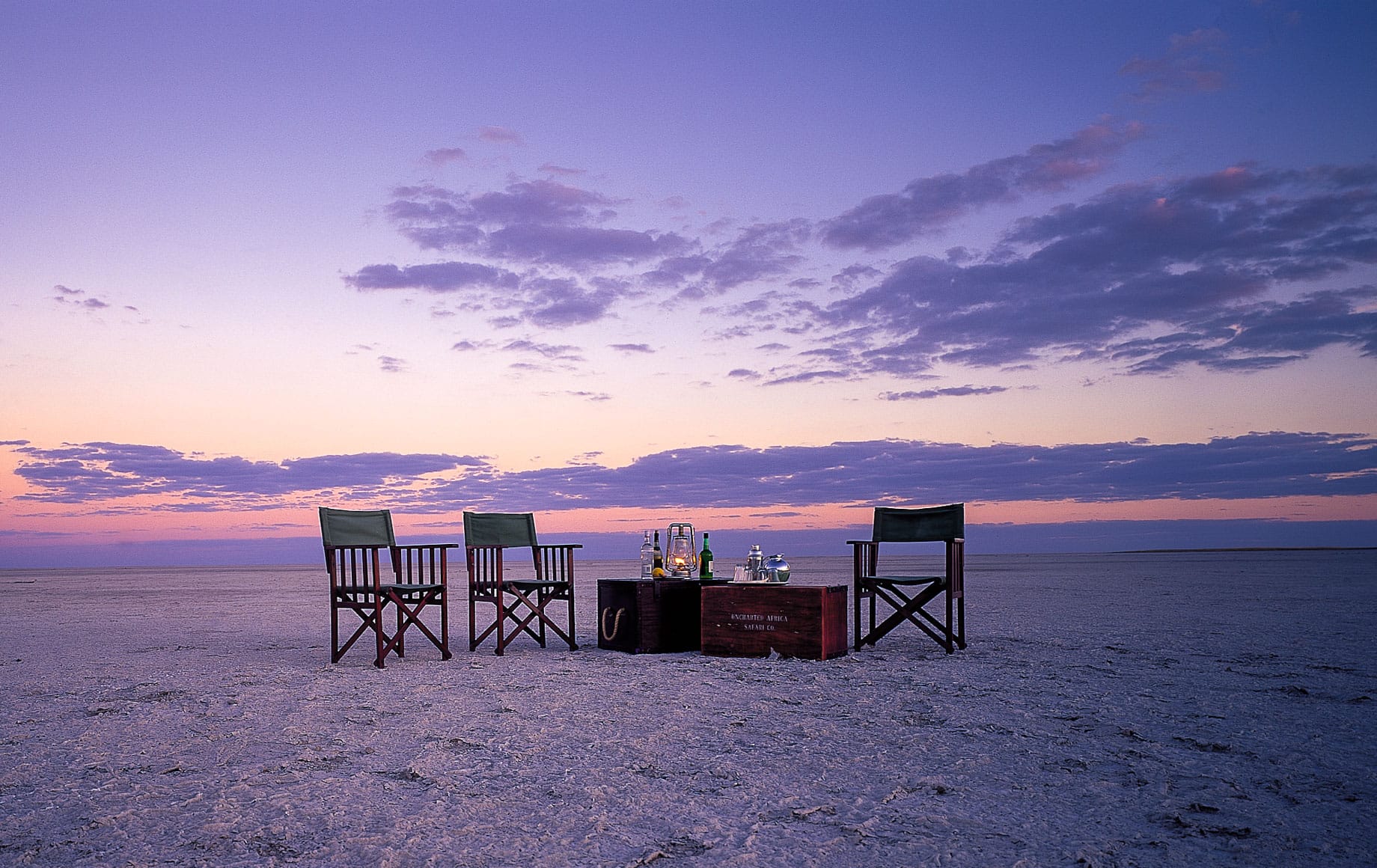
The Makgadikgadi Pans are what remains when an ancient super-lake the size of Switzerland evaporates over millennia—a vast, blindingly white expanse of salt and silence that stretches to every horizon. Standing at the centre of Ntwetwe Pan, you occupy a landscape so featureless t…

  • Sleep-out on the salt pans
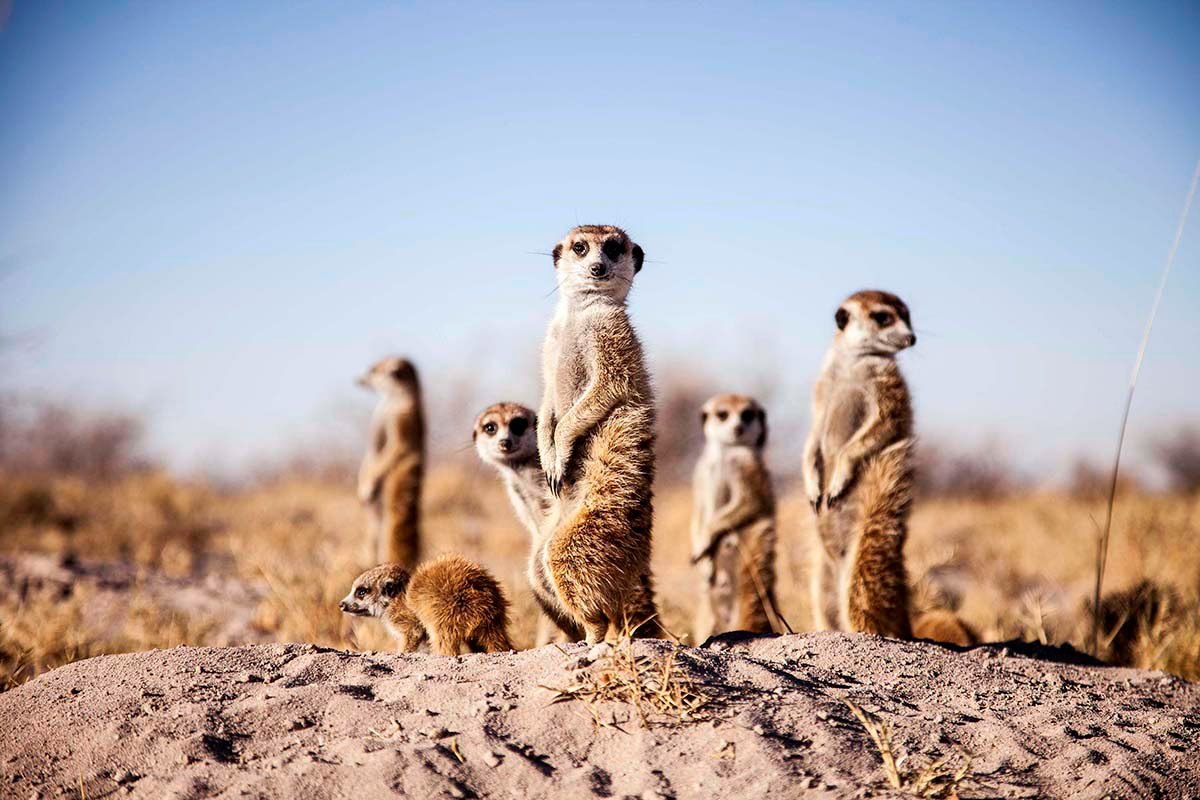
  • Meerkat habituated colonies
  • Zebra migration (Nov–Apr)
  • Flamingo spectacle
  • Quad-biking on the pans
Curated For You

Signature Experiences

Mokoro & Water Safari

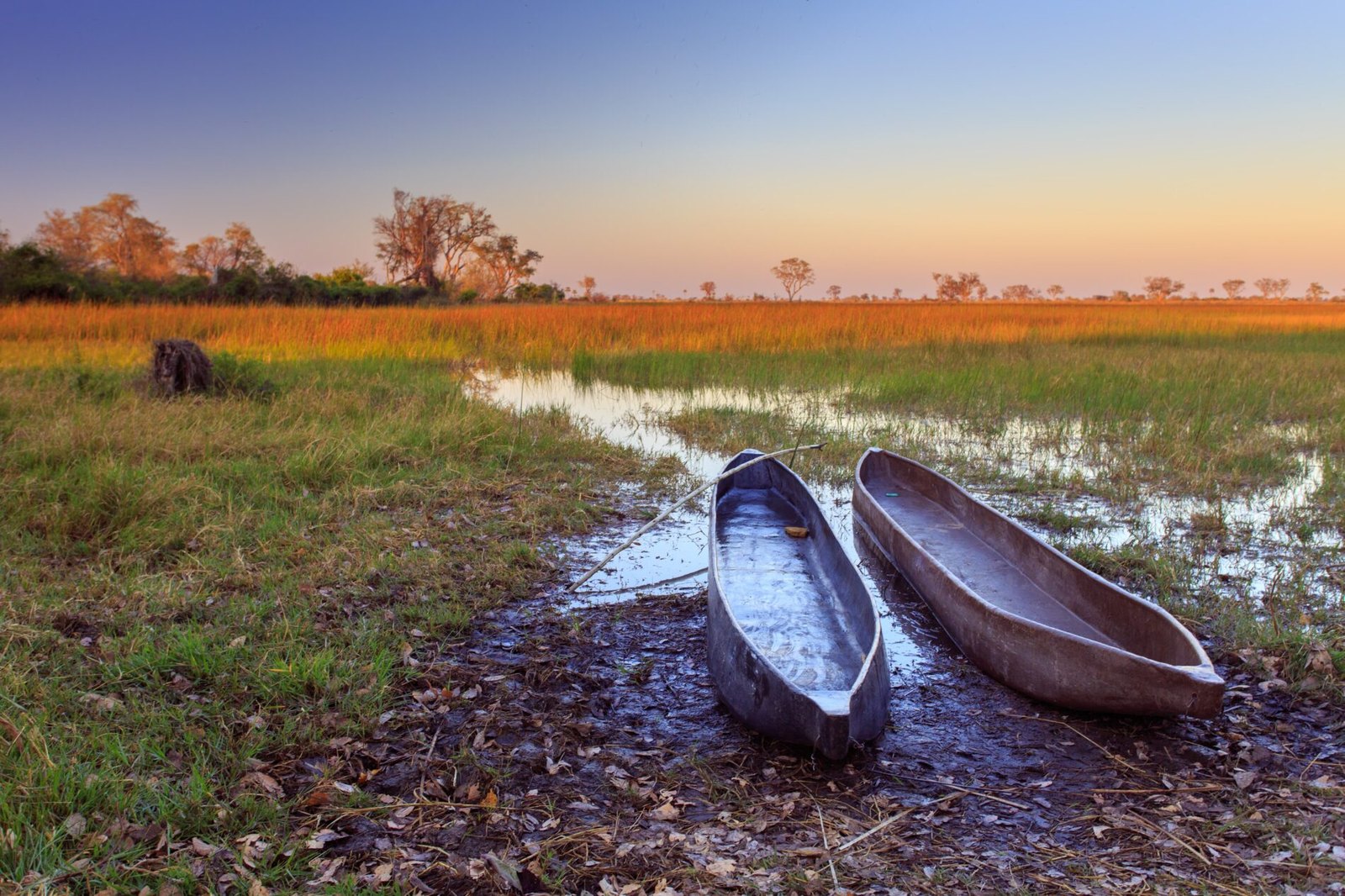
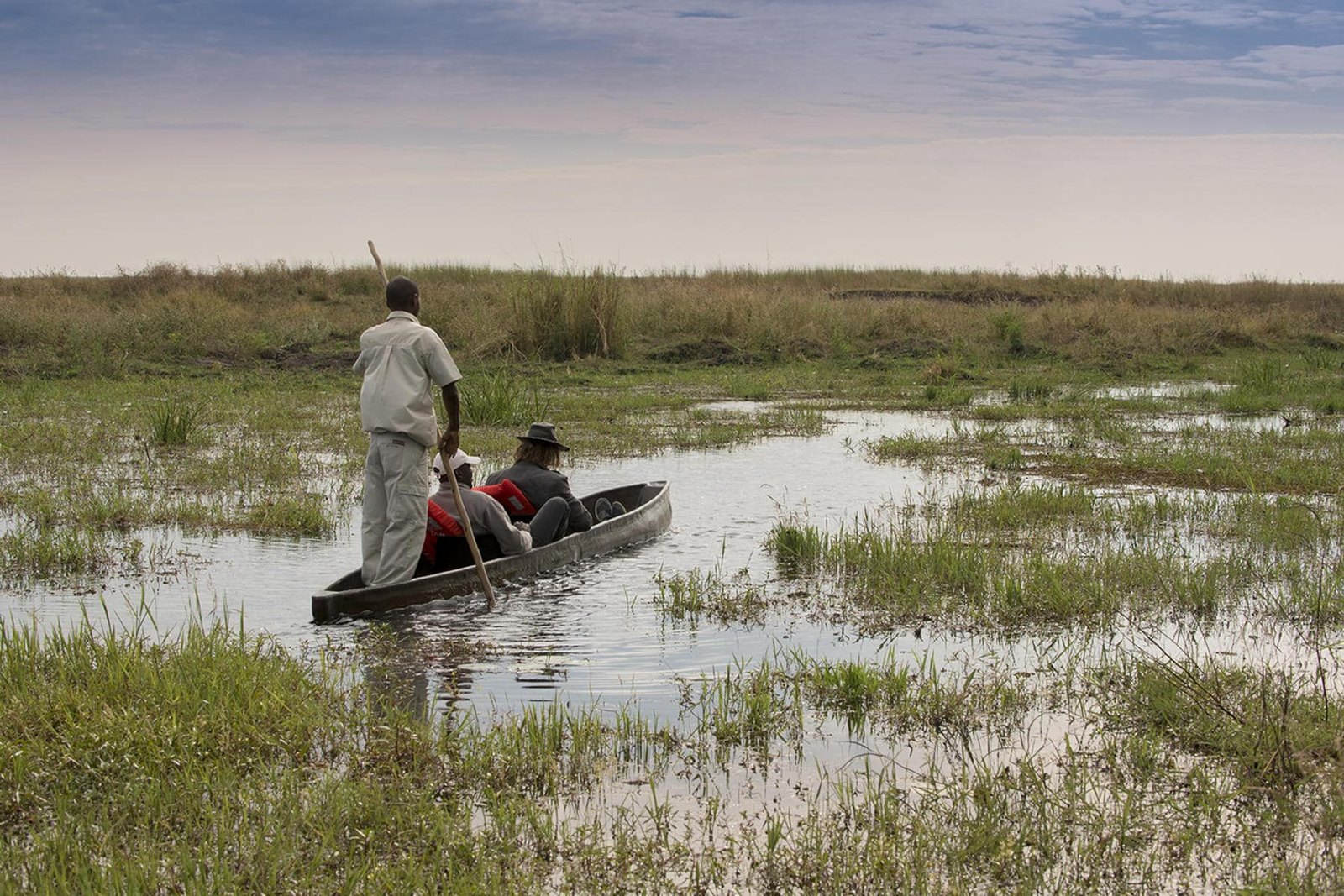
The mokoro is to the Okavango Delta what the gondola is to Venice—except the channel is lined with papyrus instead of palazzi, and the passengers sharing your waterway weigh several tonnes. A mokoro excursion is the quintessential Delta experience: a shallow dugout canoe (today typically fibreglass to protect the ebony and sausage trees once harvested for the purpose) propelled by a standing poler through water so clear you can count the scales on the bream below.

The silence is the first thing that strikes you. Without an engine, the soundscape becomes entirely natural—the metallic trill of a malachite kingfisher, the splash of a hippo surfacing fifty metres ahead, the dry rustle of reeds parting before the prow. Your poler, invariably a local Bayei or Basarwa guide with decades of Delta knowledge, navigates by reading the water—current speed, reed density, lily-pad patterns—in a display of indigenous expertise that no GPS could replicate.

Mokoro excursions range from two-hour sunrise paddles to multi-day expeditions with island camping. The sunrise option is particularly magical: departing at first light when the water is glass-still, mist rising from the channels, and the birdlife at its most vocal. Longer expeditions incorporate walking safaris on Delta islands, fly camping under the stars, and the simple, irreplaceable pleasure of falling asleep to the calls of the African bush.

Big Five & Predator Tracking

Botswana's wildlife credentials are impeccable—this is one of the last places in Africa where the Big Five roam genuinely wild landscapes with minimal human interference. But it is in predator encounters that Botswana truly distinguishes itself from every other safari destination on the continent.

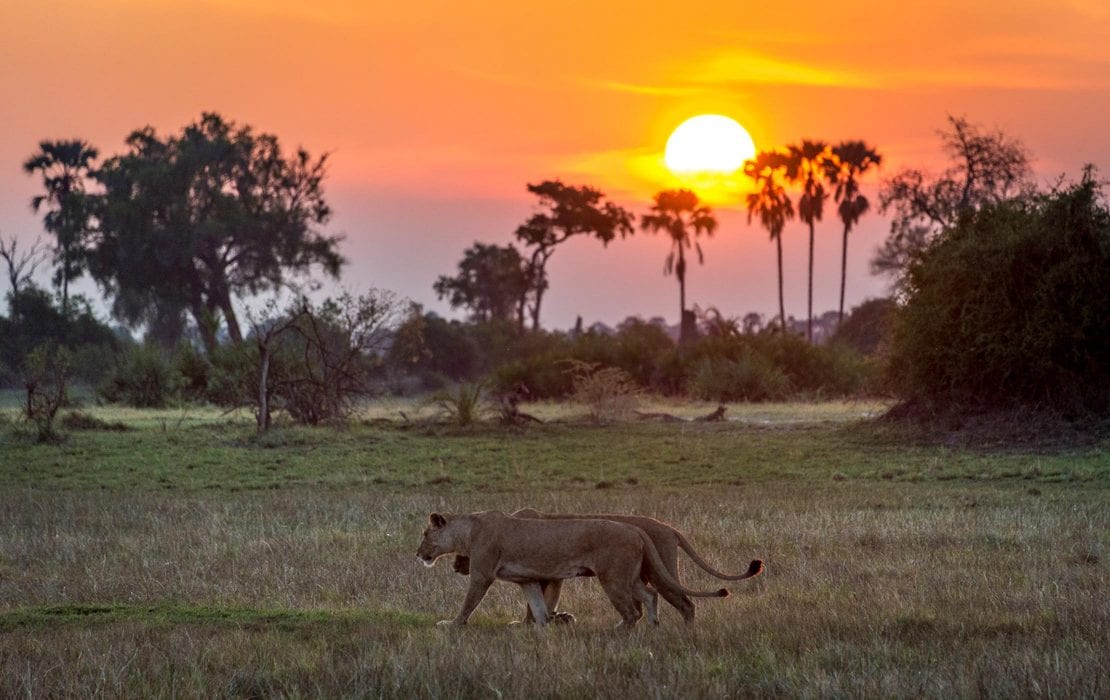
The country's private concession model means that when your guide picks up fresh lion tracks in the sand at dawn, the pursuit is unhurried, uninterrupted, and entirely yours. There is no queue of vehicles at the sighting, no time limit imposed by a park schedule, and no fence between you and the moment a lioness breaks cover at full charge toward a wildebeest herd. In the Linyanti, wild dog packs can be followed for hours as they coordinate hunts across the floodplain with a level of tactical precision that makes them the bush's most efficient predators.

Night drives in private concessions add a dimension that national parks cannot offer. The spotlight reveals leopard on the move, hyena packs at a kill, African wildcat stalking mice in the grass, and the bizarre, aardvark-like pangolin—one of Africa's rarest and most elusive mammals. Your guide interprets every sound, every movement, and every silence, transforming what would be a drive through darkness into a masterclass in nocturnal ecology.

Cultural Encounters & San Bushmen

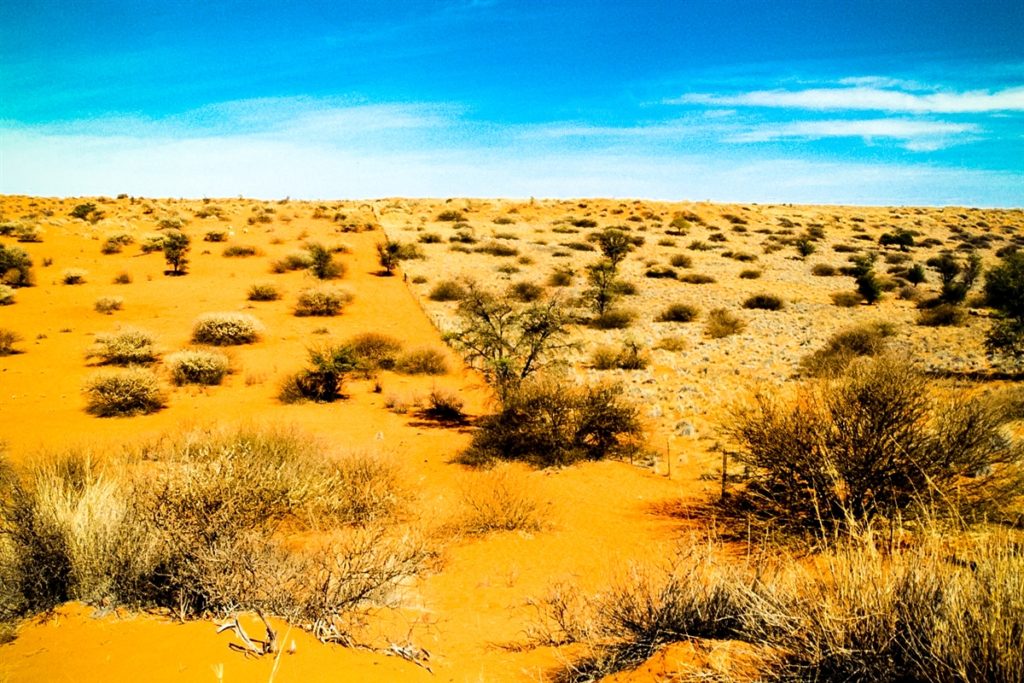
The San Bushmen of the Kalahari represent humanity's oldest continuous culture—a genetic and linguistic lineage that pre-dates every other civilisation on earth by tens of thousands of years. Walking with San trackers through the desert is not a cultural performance; it is an encounter with a knowledge system so ancient and so finely attuned to the natural world that modern science is only now beginning to understand its depth.

On a guided San walk, your tracker may identify forty species of plant within a two-hundred-metre radius—indicating which yield water when the roots are crushed, which produce poison for arrow tips, and which serve as antiseptics for wounds. Animal tracks in the sand are read like a newspaper: species, gender, age, direction of travel, speed, and time since passage—all decoded from impressions that you would walk past without noticing.

These encounters are facilitated by community-run programmes that ensure direct economic benefit to San families. Camps like Jack's Camp and Meno a Kwena integrate cultural walks into their activities with the consent and active participation of community elders. The experience is transformative—not because it is exotic, but because it recalibrates your relationship with the landscape and reminds you that the most sophisticated technology is sometimes the oldest.

Scenic Flights & Helicopter Safaris

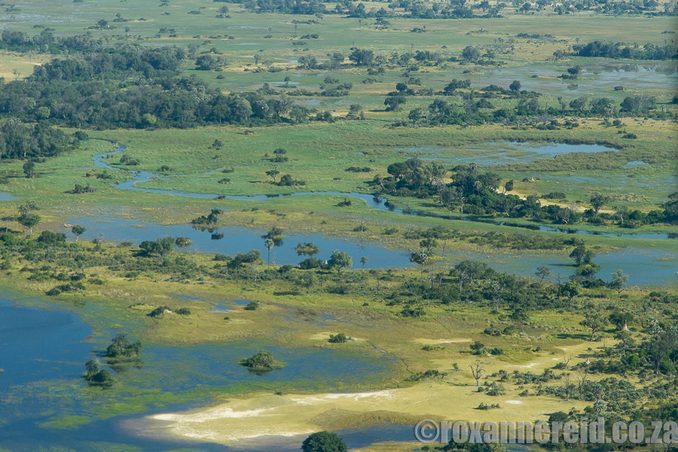
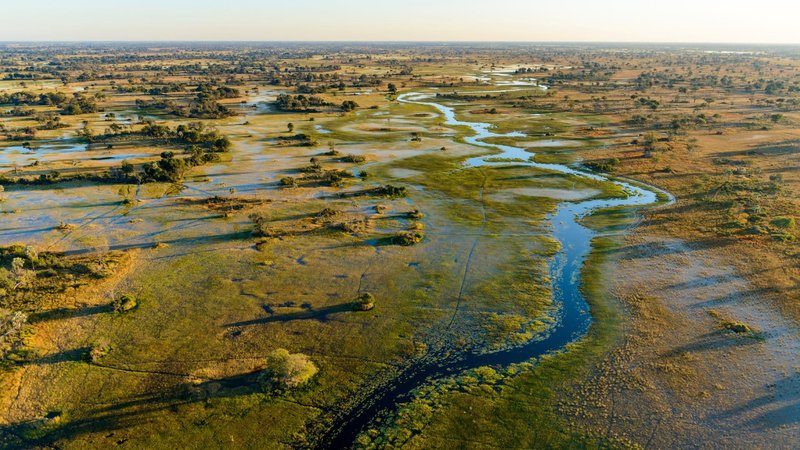
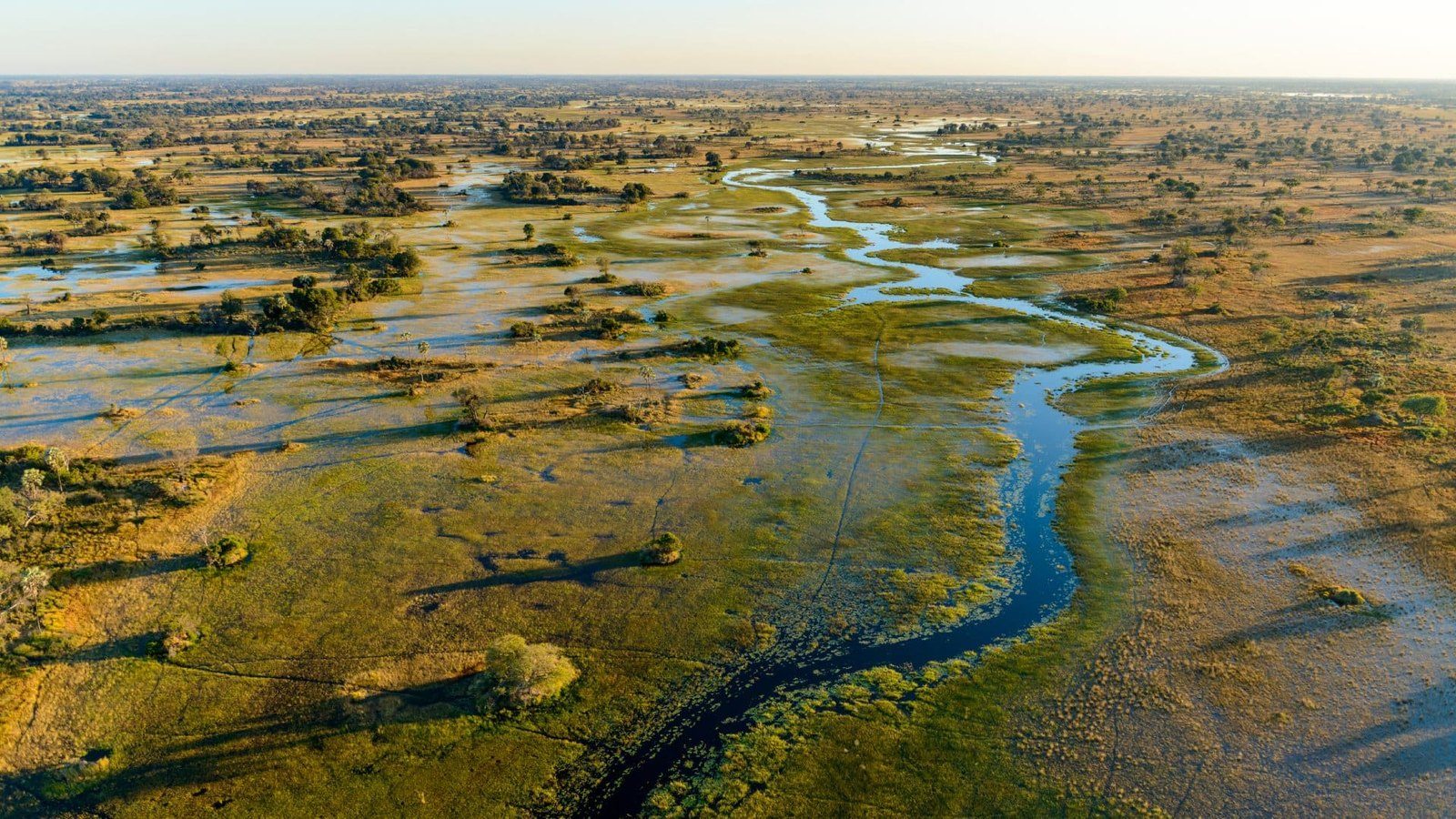
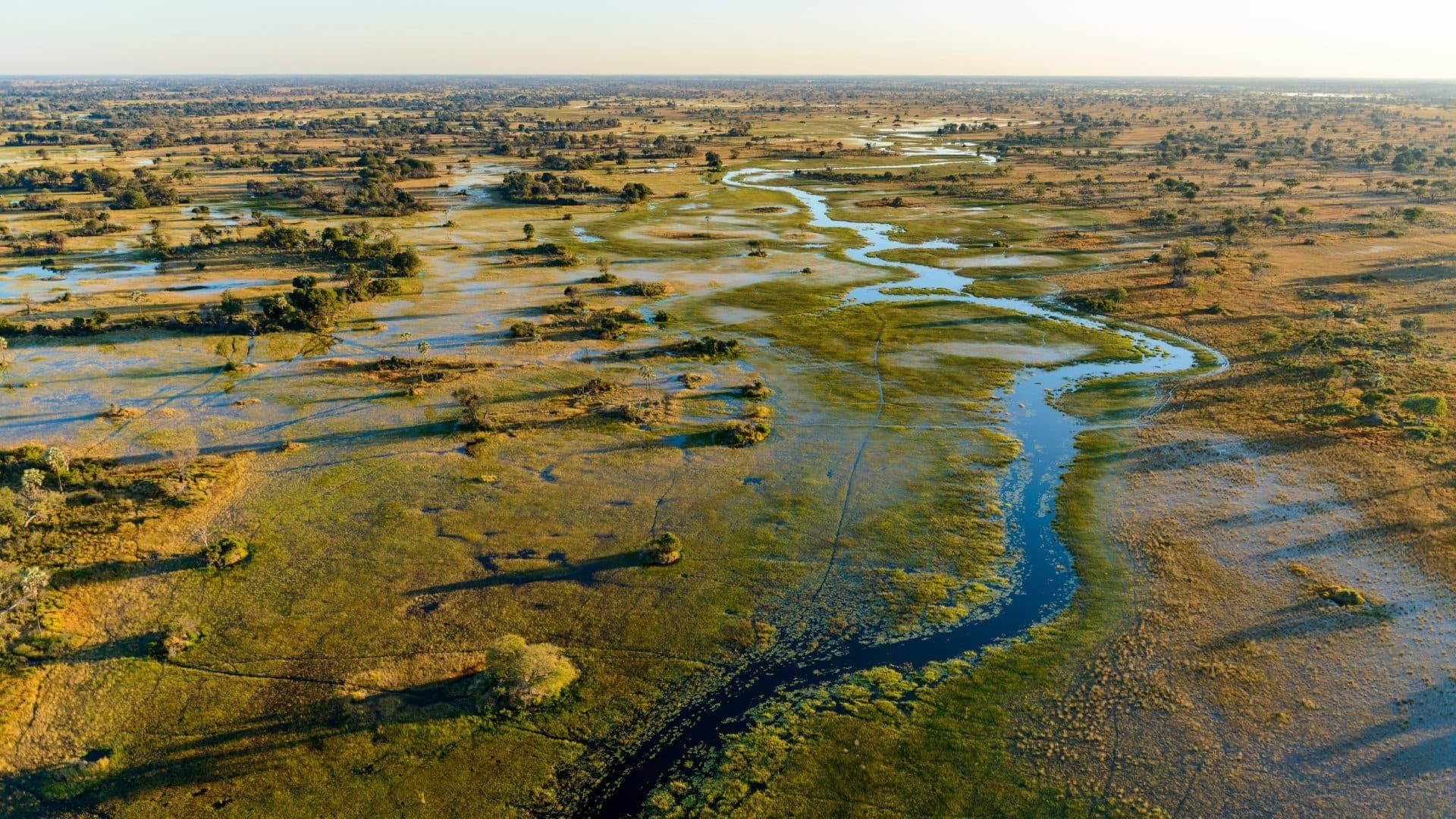
The Okavango Delta was designed to be seen from the air. Its fractal patterns of channels and islands, visible only from altitude, reveal a geometry so complex that satellite imagery of the Delta has been used in mathematical research on natural systems. A scenic helicopter flight over the Delta is not merely a transfer between camps—it is a safari activity in its own right.

From five hundred feet, the Delta unfolds as a living map. Elephant herds appear as grey dots moving through emerald channels. Hippo pods create concentric ripples in turquoise lagoons. Buffalo trails trace ancient pathways through the floodplain. The contrast between the Delta's green abundance and the surrounding Kalahari's copper sands is so abrupt it appears artificial—a line drawn by nature with a ruler.

Helicopter safaris offer flexibility that fixed-wing flights cannot match—hovering over herds, descending to treetop level for photography, and landing on remote islands for private bush lunches. Several operators now offer multi-day helicopter-supported safaris that combine aerial perspectives with ground-level game drives, creating a three-dimensional understanding of the ecosystem that transforms how you interpret every subsequent sighting.

Hour by Hour

A Perfect Safari Day in the Okavango Delta

An hour-by-hour journey through Africa's most pristine wilderness

  1. 05:30

    Wake-Up Call & Coffee

    A gentle knock and the aroma of freshly brewed coffee draw you from beneath canvas. The air is sharp—single digits at this hour—and the sky holds the last stars of the night. Wrap yourself in a fleece and step onto your suite's viewing deck as the eastern horizon turns from indigo to amber.

  2. 06:00

    Morning Game Drive

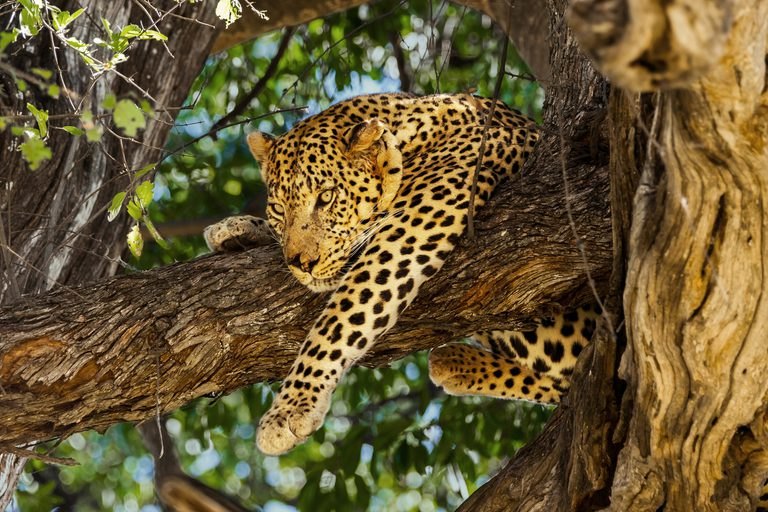
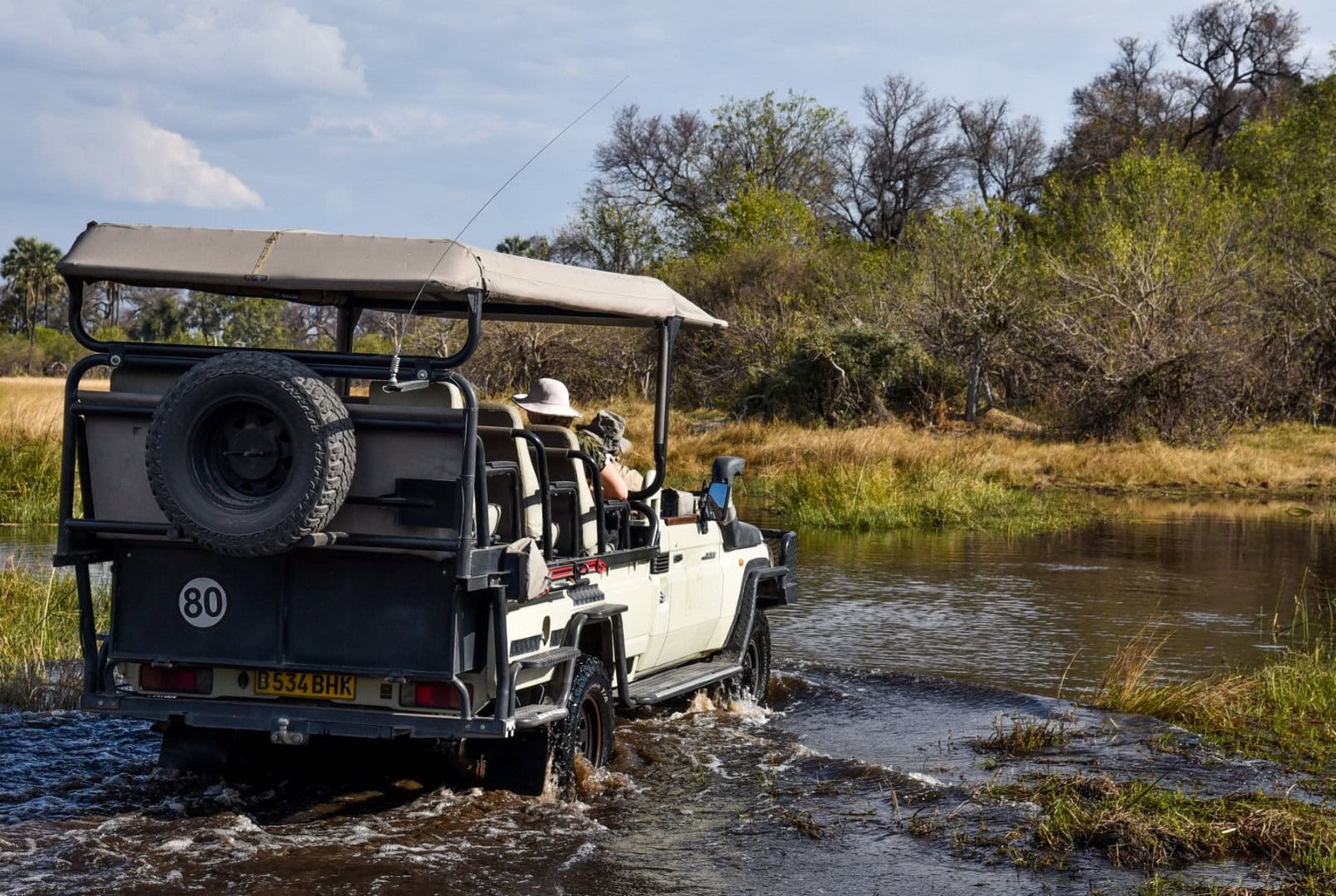
    Your guide has already spotted fresh leopard tracks near the camp perimeter. You set off in an open-sided Land Cruiser as the first rays of sun ignite the floodplain. Within forty minutes, you locate a female leopard draped across a sausage tree branch, her spotted coat luminous in the side-light. The engine switches off. The only sound is the rhythmic call of a Burchell's coucal.

  3. 09:00

    Bush Breakfast

    Your guide pulls into a clearing beside a lagoon. The camp team has set a linen-draped table beneath a canopy of leadwood trees—eggs to order, freshly baked pastries, tropical fruit, and sparkling wine. A herd of red lechwe grazes on the opposite bank, undisturbed.

  4. 10:30

    Mokoro Excursion

    Trade the vehicle for a mokoro. Your poler navigates through papyrus channels so narrow that the reeds brush your shoulders. Malachite kingfishers flash electric blue from their perches. A monitor lizard slips from a fallen log into water so clear you can see its shadow on the sandy bottom.

  5. 12:30

    Island Walking Safari

    The mokoro deposits you on a palm-fringed island. An armed guide leads a two-hour walking safari through the bush—identifying tracks, explaining the medicinal properties of plants, and approaching a breeding herd of elephant on foot with a proximity and reverence that no vehicle sighting can replicate.

  6. 14:30

    Afternoon at Camp

    Return to camp for a light lunch on the main deck—grilled fish, garden salads, and a cold Savanna cider. The heat of the afternoon invites a nap in your suite, a plunge in the pool overlooking the lagoon, or a session in the camp's library with a wildlife reference guide.

  7. 16:00

    Afternoon Game Drive

    The late afternoon drive targets the open floodplains where a pride of nine lions has been resting through the midday heat. As the light softens, a male rises, stretches, and begins to call—a sound that carries across the Delta like distant thunder. Your guide positions the vehicle for the golden hour, and the pride begins to move.

  8. 18:30

    Sundowner on the Floodplain

    The vehicle stops on a slight rise overlooking the Delta's western channels. Your guide opens a cooler box: gin and tonics, local craft beer, biltong, and roasted nuts. The sun dissolves into the horizon in bands of copper and violet. A spotted hyena begins its ascending whoop in the distance.

  9. 19:30

    Night Drive Return

    Spotlights mounted on the vehicle reveal the nocturnal shift—a genet flowing along a tree branch, the reflective eyes of a spring hare, a honey badger ambling with characteristic indifference. Back at camp, a fire crackles in the boma.

  10. 20:30

    Dinner Under the Stars

    A three-course dinner served in the open-air boma—flame-grilled kudu loin, roasted root vegetables, and a dark chocolate fondant—paired with South African wines selected by the camp sommelier. Your guide shares stories of the bush while the Southern Cross blazes overhead. Tomorrow, a new chapter of the Delta awaits.

When to Visit

When to Visit: A Seasonal Guide

Peak Dry Season (July – October)

This is Botswana at its most spectacular. Vegetation thins to reveal animals in extraordinary concentrations. The Okavango Delta reaches maximum flood levels in July and August, creating the paradox of a water wonderland in the middle of the driest months. Predator activity intensifies as prey species congregate around dwindling water sources. Morning temperatures hover near freezing, rising to a comfortable 25–28°C by midday.

Best for
  • Peak wildlife viewing
  • Okavango Delta high water & mokoro
  • Predator-prey interactions
  • Photography (clear skies, concentrated game)
  • Chobe elephant herds at the river

Highest rates and greatest demand. Book 12–18 months in advance for premium camps. Mornings are very cold—pack warm layers for early game drives.

Shoulder Dry Season (May – June)

The transition into the dry season offers a sweet spot of excellent game viewing, rising flood levels in the Delta, and rates that sit below peak-season premiums. Vegetation is still green enough for pleasing photographic backgrounds, yet dry enough for animals to begin concentrating at water. This is arguably the best-value window for serious safari travellers.

Best for
  • Value-conscious luxury travel
  • Rising Delta flood levels
  • Green-to-gold landscape transition
  • Wild dog denning season begins
  • Comfortable daytime temperatures

Some camps close briefly for seasonal maintenance in May. Nights grow progressively colder.

Green Season (November – April)

Botswana's emerald season is a revelation for those willing to trade peak wildlife density for a different kind of magic. Summer rains transform the Kalahari into lush grassland. Migratory birds—carmine bee-eaters, European rollers, Wahlberg's eagles—arrive in their thousands. The Makgadikgadi Pans host the zebra and wildebeest migration. Newborn impala, tsessebe, and wildebeest attract predators in dramatic hunts. Rates drop by 30–50 per cent.

Best for
  • Birdwatching (migrant species arrive)
  • Makgadikgadi zebra migration
  • Newborn wildlife and predator action
  • Photography (dramatic skies, green landscapes)
  • Budget-friendly luxury

Afternoon thunderstorms are frequent but typically short. Some remote roads become impassable. A number of Delta camps close from January to March. Malaria risk is higher during the wet months.

Month-by-Month Calendar
JanDeep green season. Spectacular thunderstorms, newborn wildlife, migratory birds. Some camps closed. Lowest rates.
FebPeak rains. Lush landscapes, flamingos on Makgadikgadi. Best for birdwatching enthusiasts.
MarRains begin to ease. Zebra migration in Makgadikgadi. Green season rates still apply.
AprTransition month. Vegetation begins to dry. Wild dog pups emerging. Excellent value.
MayDry season begins. Okavango floods arriving. Game concentrating. Shoulder-season rates.
JunDelta flood levels rising. Cold mornings, clear skies. Wild dog denning. Excellent game drives.
JulPeak floods in the Delta. Prime mokoro season. Lion and leopard active. Peak rates begin.
AugDry season intensifies. Chobe elephants at their most concentrated. Outstanding predator viewing.
SepLate dry season. Game viewing at its absolute peak. Hot days, cold nights. Book well ahead.
OctHottest month. First rains possible. Game still concentrated but heat challenging. Rates begin to drop.
NovFirst consistent rains. Migratory birds arrive. Landscape greens rapidly. Green season rates return.
DecFull green season. Dramatic skies, newborn wildlife. Festive season may elevate rates at select camps.
Travel With Purpose

Conservation & Community

Botswana's conservation record is among the most impressive in Africa. The 2014 nationwide ban on trophy hunting—one of the most significant wildlife protection measures enacted by any African nation—reflected the government's commitment to preserving its natural heritage as a living asset rather than a consumable resource. Community-based natural resource management (CBNRM) programmes ensure that revenue from tourism flows directly to rural communities, who in turn become active stewards of the wildlife and land that generate their livelihoods.

The country's anti-poaching efforts are equally robust. Botswana deploys military-trained anti-poaching units and has implemented a shoot-to-kill policy against armed poachers—a controversial but effective deterrent that has kept poaching levels among the lowest on the continent. The result is visible: Botswana shelters more elephants than any other country on earth, its rhino populations are recovering, and its wild dog numbers remain among the healthiest anywhere.

When you book a luxury safari in Botswana, you participate directly in this conservation economy. Camp fees fund community trusts, guide salaries support local families, and the economic value of a living elephant—estimated at over $1.6 million in tourism revenue over its lifetime—far exceeds the value of its ivory. This is conservation not as charity but as economic logic, and it is why Botswana's wilderness remains as vital today as it was a century ago.

Know Before You Go

Travel Essentials

Getting There

Most Botswana safaris begin with a flight to Maun (MUB) for the Okavango Delta and Makgadikgadi, or to Kasane (BBK) for Chobe. Both airports receive daily flights from Johannesburg (approximately two hours). From Cape Town, travellers connect through Johannesburg or fly directly to Maun on seasonal routes. Light aircraft transfers from Maun or Kasane to individual bush camps take 30–60 minutes and are typically included in safari packages. We coordinate all flights and transfers as part of your bespoke itinerary.

Getting Around

Internal movement in Botswana's safari regions is almost exclusively by light aircraft, as distances are vast and roads in the Delta are non-existent. Bush flights are operated by experienced charter companies using Cessna Caravans and similar aircraft, with luggage limited to 20 kg in soft-sided bags (no hard suitcases). Within camps, open-sided 4x4 vehicles, mokoros, and boats provide game-viewing transport. Your guide manages all logistics—the only navigation required is from your suite to the sundowner deck.

Visa Requirements

Botswana maintains one of southern Africa's most welcoming entry policies. Citizens of the United States, United Kingdom, European Union, Canada, Australia, and most Commonwealth nations enjoy visa-free entry for up to 90 days. Your passport must be valid for at least six months beyond your arrival date with a minimum of three blank pages. Travellers arriving from yellow-fever-endemic countries must present a valid vaccination certificate. For nationalities requiring a visa, applications can be submitted via the Botswana eVisa portal (evisa.gov.bw) with processing times of approximately five working days.

Currency & Payments

The Botswana Pula (BWP) is the official currency, but US dollars are universally accepted at safari camps and lodges—indeed, most camps price exclusively in USD. Credit cards are accepted at major lodges for incidentals and curio purchases. ATMs are available in Maun and Kasane but not in the bush. Tipping is customary and appreciated: USD $10–20 per person per day for your guide, and a similar amount divided among camp staff, typically placed in a communal tip box.

Health & Safety

Malaria is present in the northern safari regions (Delta, Chobe, Linyanti) year-round, with higher risk during the wet season (November–April). Antimalarial prophylaxis is strongly recommended—consult your travel health provider at least four to six weeks before departure. No vaccinations are mandatory for direct arrivals, though Hepatitis A, Typhoid, and routine immunisations are advised. Safari camps maintain radio contact with medical evacuation services, and comprehensive travel insurance with medical evacuation cover is essential. Botswana is one of Africa's most politically stable nations with very low crime rates in tourist areas.

What to Pack

Safari packing is an exercise in disciplined minimalism—your bush flight limits luggage to 20 kg in a soft-sided duffel. Pack neutral-coloured clothing (khaki, olive, tan) in layers: early mornings are cold (a warm fleece or down jacket is essential from May to September), middays are warm, and evenings at the fire pit call for comfortable layers. Binoculars are indispensable. A quality camera with a 200–400mm zoom lens captures the moments your memory cannot. Bring high-SPF sunscreen, a wide-brimmed hat, insect repellent with DEET, and a headlamp. Most camps provide laundry service, so fewer clothes than you think are needed.

Multi-Country Journeys

Combining Botswana with South Africa

A Botswana safari extension from Cape Town is one of the most compelling multi-destination itineraries in African travel. The combination delivers the full spectrum of the continent's offerings: Cape Town's urban sophistication, the Winelands' culinary excellence, and Botswana's untamed wilderness—all within a ten-to-fourteen-day framework.

The logistics are straightforward. A two-hour flight from Cape Town to Johannesburg connects to daily services into Maun or Kasane. From there, light aircraft transfers deliver you to your chosen bush camp within the hour. We design seamless itineraries that might begin with four days in the Cape—Table Mountain, the peninsula, Stellenbosch wine estates—before transitioning to four nights in the Okavango Delta and two nights in Chobe, concluding with a day at Victoria Falls.

This pairing works because each destination amplifies the other. The refinement of Cape Town makes the raw wildness of the Delta more profound. The silence of the bush makes the city's energy more vivid upon return. And the storytelling of a single private guide in Cape Town, complemented by specialist bush guides in Botswana, creates a narrative thread that connects the entire journey.

We handle every detail—flights, transfers, camp selection, dietary requirements, and special celebrations—so that the transition from cappuccino on Bree Street to sundowners on the Chobe feels effortless.

Good to Know

Frequently Asked Questions

How much does a luxury Botswana safari cost?

Luxury safari camps in Botswana range from $1,200 to $4,500 per person per night, all-inclusive of accommodation, meals, premium beverages, and twice-daily safari activities. A seven-night itinerary spanning the Okavango Delta and Chobe typically costs $10,000–$25,000 per person depending on season and camp tier. Green season (November–April) offers rates 30–50% below peak, while shoulder months (May–June) provide excellent value with strong game viewing.

What is the best time to visit the Okavango Delta?

The peak season runs from July to October, when dry conditions concentrate wildlife and the annual flood reaches its height, creating ideal mokoro and water safari conditions. However, the green season (November–April) offers exceptional birdwatching, dramatic skies, and significantly lower rates. May and June provide an excellent compromise of rising floods, good game viewing, and shoulder-season pricing.

Is Botswana safe for tourists?

Botswana is one of the safest countries in Africa and ranks among the most politically stable nations on the continent. Crime rates in tourist areas are extremely low. Safari camps are located in remote wilderness areas with professional guides and strict safety protocols. Wildlife encounters are managed by experienced guides who maintain safe distances while maximising sighting quality. Comprehensive travel insurance with medical evacuation cover is recommended.

Do I need vaccinations for Botswana?

No vaccinations are mandatory for direct arrivals from non-endemic countries. However, antimalarial prophylaxis is strongly recommended for the northern safari regions (Okavango Delta, Chobe, Linyanti). Hepatitis A, Typhoid, and routine immunisations are advised. A yellow fever vaccination certificate is required if arriving from or transiting through a yellow-fever-endemic country. Consult your travel health provider four to six weeks before departure.

How do I get to the Okavango Delta?

The Okavango Delta is reached by light aircraft from Maun, Botswana's safari gateway town. Flights from Johannesburg to Maun operate daily and take approximately two hours. From Cape Town, connections route through Johannesburg. Bush flights from Maun to individual Delta camps take 30–60 minutes and are included in safari packages. The flight itself is a highlight—the aerial view of the Delta's waterways is unforgettable.

What is a mokoro and what should I expect?

A mokoro is a traditional dugout canoe propelled by a standing poler through the Okavango Delta's shallow channels. Modern mokoros are made from fibreglass to protect indigenous trees. Excursions range from two-hour sunrise paddles to multi-day island-camping expeditions. Expect extraordinary birdlife, close encounters with hippos and crocodiles at a safe distance, and a silence that allows you to hear the bush breathe. Mokoro trips are suitable for all fitness levels.

What luggage restrictions apply for bush flights?

Light aircraft transfers to safari camps limit luggage to 20 kg per person in a soft-sided duffel bag—no hard suitcases or wheelie bags. This includes camera equipment and hand luggage. Most camps provide complimentary laundry service, allowing you to pack fewer items. We provide a detailed packing list upon booking that ensures you have everything needed within the weight allowance.

Can I combine Botswana with Victoria Falls?

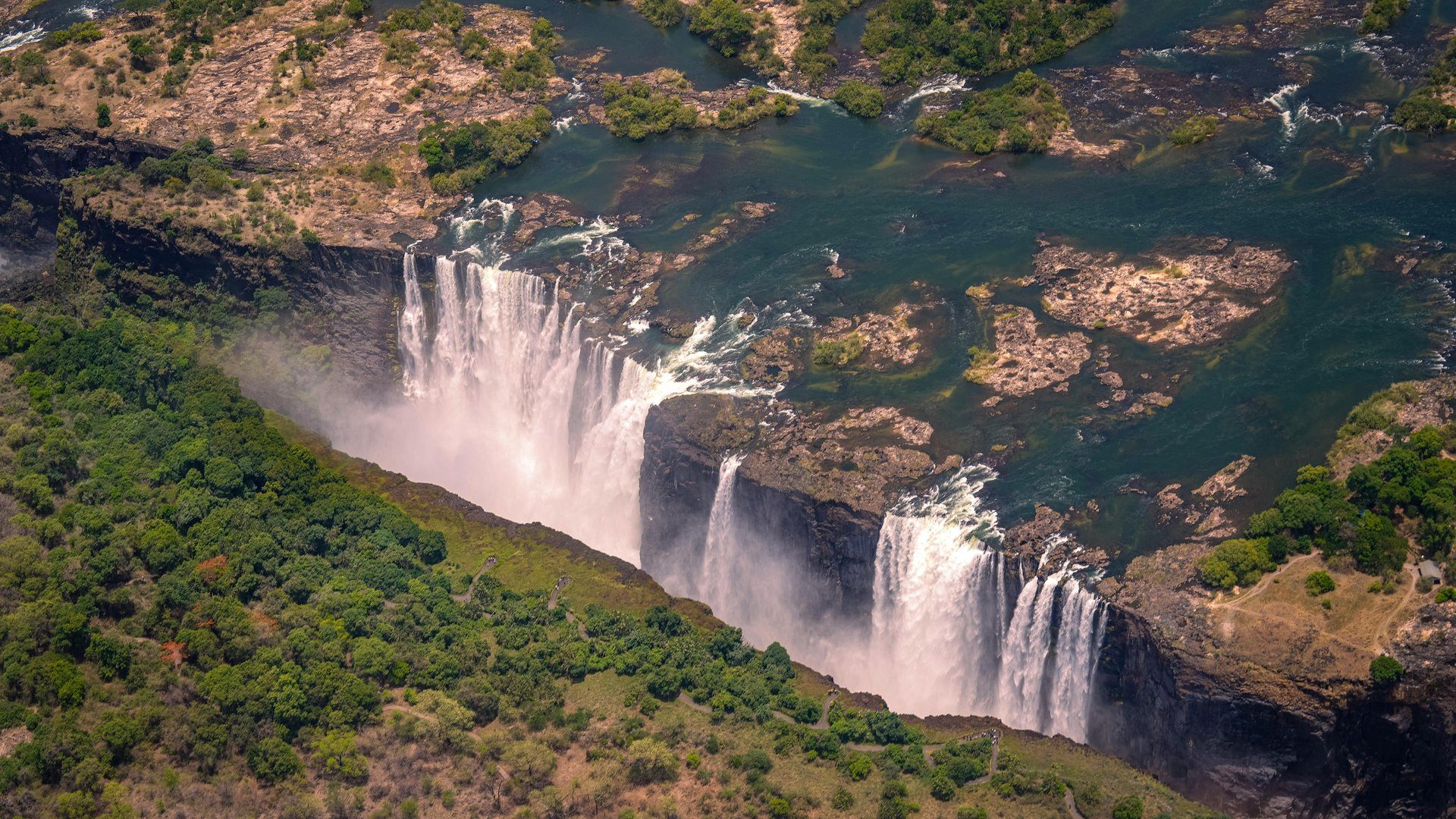
Absolutely—this is one of our most popular combinations. Chobe National Park sits just ninety minutes by road from Victoria Falls. Many clients spend two to three nights in Chobe before crossing into Zimbabwe or Zambia for a night or two at the Falls. The KAZA Univisa (USD $50) facilitates easy cross-border movement between Botswana, Zimbabwe, and Zambia. We arrange all border logistics and transfers seamlessly.

Is Botswana suitable for children?

Many luxury camps welcome children aged six and above, with some properties accepting younger children in private-use bookings. Family-friendly camps offer modified game drives, junior ranger programmes, and nature activities designed to engage young travellers. The Makgadikgadi Pans—with meerkat colonies, quad-biking, and open landscapes—are particularly popular with families. We advise on age-appropriate camps and malaria considerations during itinerary planning.

What wildlife will I see in Botswana?

Botswana offers reliable sightings of the Big Five (lion, leopard, elephant, buffalo, and rhino—the latter primarily in the Okavango Delta). The country also supports one of Africa's healthiest populations of African wild dog, cheetah, and spotted hyena. The Chobe region hosts the world's largest elephant population. Birdlife exceeds 590 species, including the iconic African fish eagle, lilac-breasted roller, and carmine bee-eater.

What is the green season and is it worth visiting?

The green season (November–April) follows the summer rains, transforming the landscape into a lush paradise. While wildlife disperses across wider areas, the compensations are significant: migratory bird species arrive in their thousands, newborn animals attract dramatic predator action, the Makgadikgadi zebra migration occurs, skies produce spectacular photography conditions, and rates drop 30–50%. Serious birders and photographers often prefer this season.

How many days do I need in Botswana?

A minimum of four nights provides a meaningful single-region experience (e.g., three nights in the Delta and one in Chobe). Seven nights is optimal for combining two or three regions—our most popular itinerary pairs four nights in the Delta with three in Chobe. Ten nights allows the addition of the Makgadikgadi Pans or Kalahari, creating a comprehensive Botswana safari that captures the country's full diversity.

Are walking safaris available in Botswana?

Walking safaris are one of Botswana's signature experiences, available in private concessions and the Okavango Delta islands. Led by armed, professionally qualified guides, walks range from gentle two-hour island strolls to multi-day wilderness trails. Walking brings you closer to the smaller details—insect life, tracking spoor, plant identification—and creates a visceral connection to the landscape impossible from a vehicle. The Selinda Spillway canoe and walking trail is particularly acclaimed.

What is the tipping etiquette in Botswana?

Tipping is appreciated and customary at safari camps. Guidelines suggest USD $10–20 per person per day for your safari guide and a similar amount for camp staff, typically deposited in a communal tip box at reception. For private mokoro polers, USD $5–10 per person per excursion is appropriate. Light aircraft pilots are generally not tipped. We provide detailed tipping guidance as part of your pre-departure briefing.

How does Botswana compare to Kenya or Tanzania for safari?

Botswana offers a fundamentally different safari philosophy. While East Africa's parks are celebrated for the Great Migration and vast open plains, Botswana prioritises exclusivity, intimacy, and the quality of individual encounters over sheer volume. Vehicle limits in private concessions mean you may spend an hour with a leopard and never see another tourist. The trade-off is higher pricing, but for travellers who value depth over breadth, Botswana is without equal.

Chat