Luxury5 DaysSamburu Ultimate Safari — 5 Days
The Special Five of Kenya's wild north. Kenya's arid north holds species found nowhere in the southern parks.

A two-minute journey, narrated. Press play and let Samburu National Reserve unfold.
The Wild North & the Special Five
Samburu is Kenya's untamed north — a sun-scorched land of red earth, doum palms and the life-giving Ewaso Ng'iro River, where rare desert-adapted wildlife found almost nowhere else on Earth gathers to drink, and the proud Samburu people keep their traditions alive beneath the sacred Ol Lolokwe mountain.
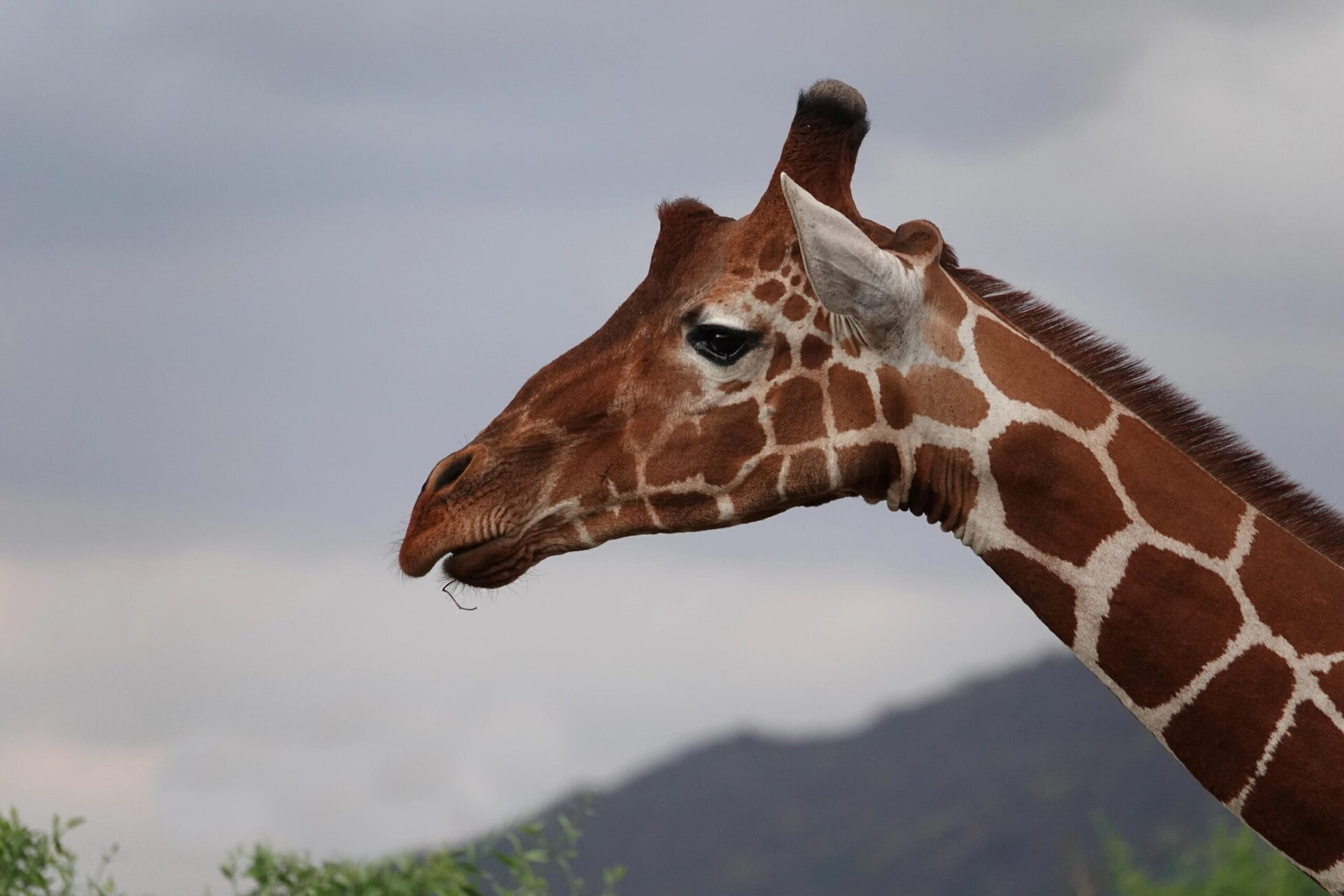
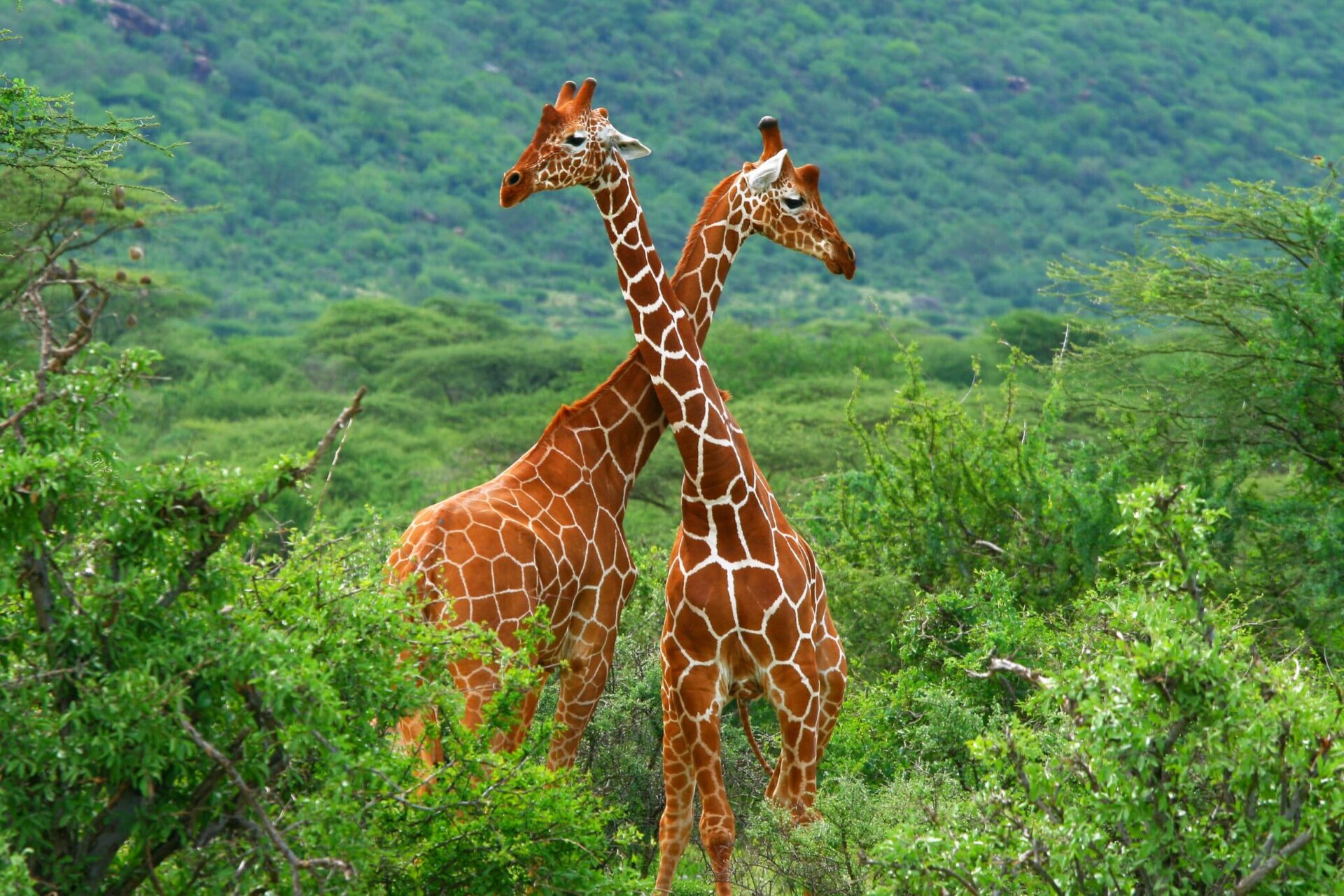
Samburu is the gateway to Kenya's wild, arid north — a landscape utterly different from the green plains of the south, and all the more spellbinding for it. Here the Ewaso Ng'iro River carves a ribbon of green through a hot, red-earth wilderness of acacia scrub, doum palms and ancient volcanic hills, drawing wildlife to its banks in a daily procession that has continued for millennia. Samburu's fame rests on its 'Special Five' — five dry-country species found almost nowhere else in Kenya: the elegant reticulated giraffe with its crisp geometric coat, the endangered Grévy's zebra with its fine pinstripe, the long-necked gerenuk that browses standing on its hind legs, the blue-legged Somali ostrich and the Beisa oryx with its rapier horns. Around them roam some of the country's finest leopards, big herds of elephant that know the river intimately, lion, cheetah and packs of endangered African wild dog. Presiding over it all is Ol Lolokwe, the great flat-topped sacred mountain of the Samburu people — cattle-herding cousins of the Maasai whose crimson robes, intricate beadwork and deep knowledge of this land give the reserve a living cultural soul. Together with the neighbouring Buffalo Springs and Shaba reserves and a constellation of community conservancies, Samburu forms one of Africa's great conservation success stories, where luxury camps sit lightly on the land and every visit supports the people and wildlife of the north. Remote, dramatic and refreshingly uncrowded, Samburu is the wild heart of a Kenya few travellers ever reach.
The wild, uncrowded north — the rare species, the great leopards and the guides who call it home.
We place you in the camps and conservancies where the Special Five roam and the leopards hunt the river line, with Samburu guides whose knowledge of this land runs generations deep. This is the Kenya few travellers ever see — dramatic, exclusive and unforgettable.
Samburu is Kenya's untamed north — a sun-scorched land of red earth, doum palms and the life-giving Ewaso Ng'iro River, where rare desert-adapted wildlife found almost nowhere else on Earth gathers to drink, and the proud Samburu people keep their traditions alive beneath the sacred Ol Lolokwe mountain.
reticulated giraffe, Grévy's zebra, gerenuk, Somali ostrich & Beisa oryx
Superb leopard viewing along the palm-fringed Ewaso Ng'iro River
Big elephant herds that gather daily to drink and cross the river
The sacred flat-topped Ol Lolokwe mountain towering over the reserve
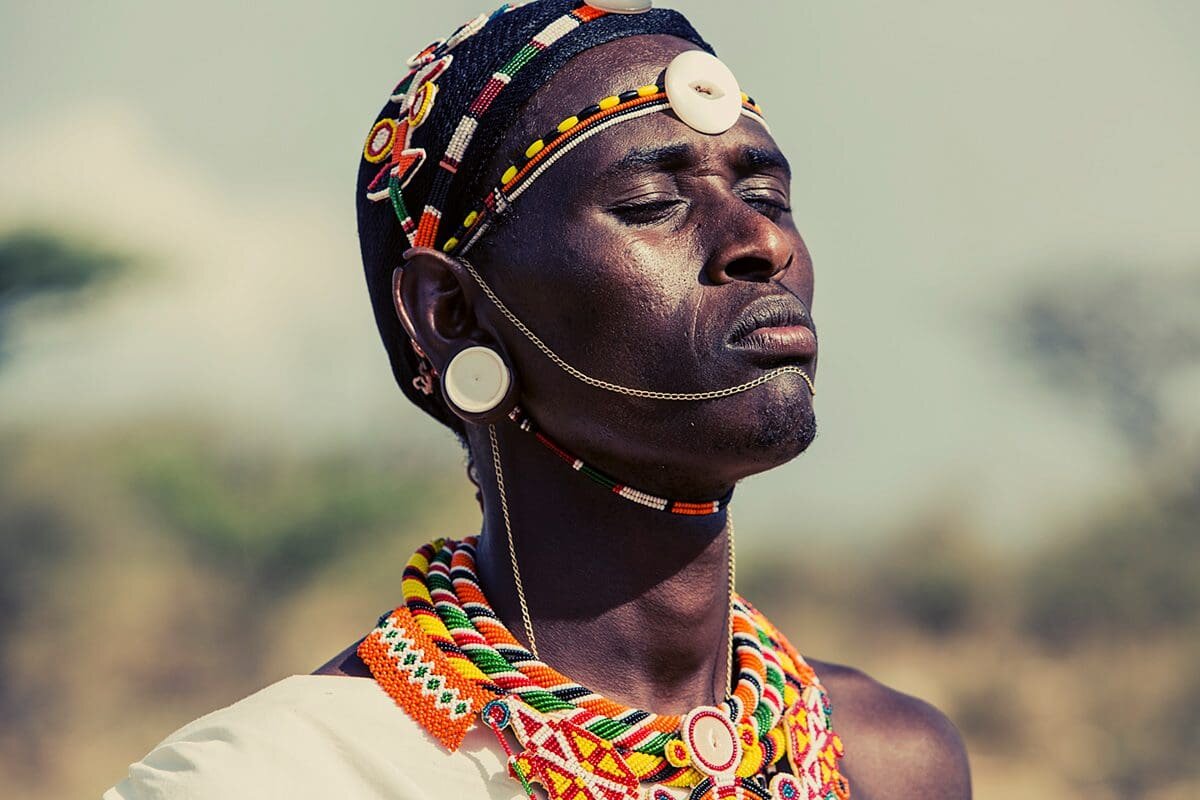
crimson-robed warriors and living pastoral tradition
Hand-crafted private journeys through Samburu National Reserve — from our flagship ultra-luxury expedition to exceptional value escapes. Every package is fully tailor-made, privately guided and includes luxury lodges, expert rangers and smooth logistics.
Luxury5 DaysThe Special Five of Kenya's wild north. Kenya's arid north holds species found nowhere in the southern parks.
Mid-Range4 DaysRiver game drives and rare northern species. A well-priced classic on the Ewaso Ng'iro River.
Luxury3 DaysA short journey into the wild north. A short, affordable window on Samburu's rare species and river scenery.

Samburu's signature drive is a treasure hunt for the five dry-country specials found almost nowhere else in Kenya. Your guide works the river line, scrub and open plains for reticulated giraffe, Grévy's zebra, gerenuk, Somali ostrich and Beisa oryx, alongside elephant, lion and the reserve's famed leopards. The northern light, red earth and doum-palm backdrops make every sighting cinematic.

Samburu's signature drive is a treasure hunt for the five dry-country specials found almost nowhere else in Kenya. Your guide works the river line, scrub and open plains for reticulated giraffe, Grévy's zebra, gerenuk, Somali ostrich and Beisa oryx, alongside elephant, lion and the reserve's famed leopards. The northern light, red earth and doum-palm backdrops make every sighting cinematic.
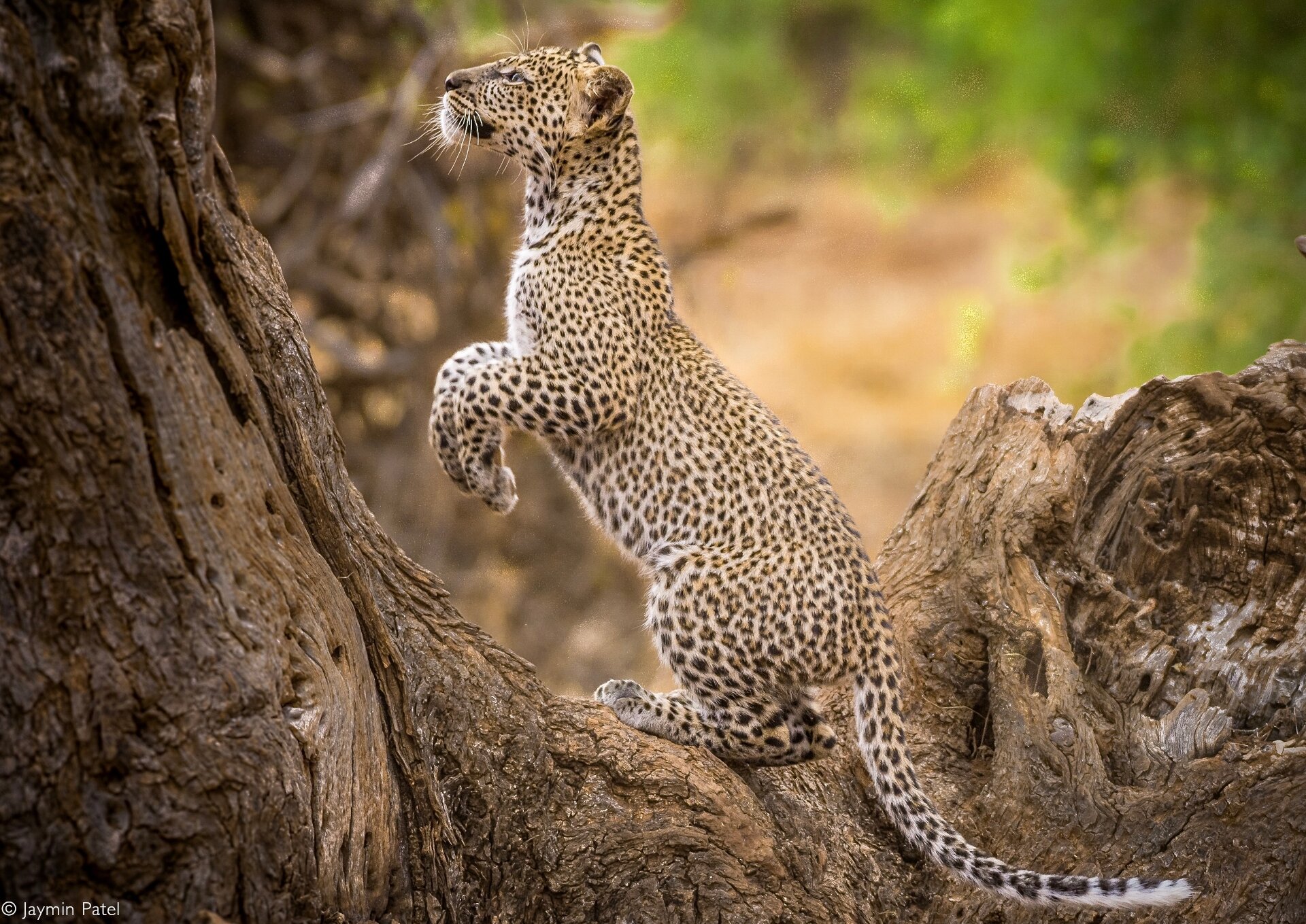
The riverine forest and rocky kopjes of Samburu shelter some of Kenya's most reliably seen leopards. Guided by trackers who know the resident cats, you follow alarm calls and fresh signs to find these elusive predators draped in a doum palm or stalking the river's edge at dusk. Few sightings in Africa quicken the pulse like a Samburu leopard caught in the golden evening light.

The Samburu are close cousins of the Maasai, and a visit to a community manyatta reveals one of Africa's most striking living cultures. Welcomed by crimson-robed morans (warriors) adorned in beadwork, you learn about pastoral life in the arid north, traditional song and dance, and the delicate coexistence of people and wildlife. Community-run visits channel your support directly to local schools and conservancies.

On the community conservancies bordering the reserve you can leave the vehicle and explore on foot with an armed Samburu guide. Reading tracks and bushcraft at ground level, you learn how the Samburu have thrived in this arid land for centuries — which plants heal, which signs warn of danger, and how the whole ecosystem hangs on the Ewaso Ng'iro River. It is a slower, deeper way to feel the north.

Samburu is the world capital of the reticulated giraffe, whose crisp, geometric coat glows against the red earth and blue hills. With a photographic guide and low-angle vehicle you work these elegant giants — and the elephants, oryx and leopards around them — in the north's extraordinary light. The dramatic backdrops of doum palm, river and Ol Lolokwe give every frame a wild, editorial quality.

As the heat of the northern day fades, your guide sets up a classic sundowner on the banks of the Ewaso Ng'iro or a rocky rise overlooking the plains. Drinks in hand, you watch elephants drift to the water, the doum palms turn to silhouette and the sky blaze over the sacred mountain. It is the perfect, cinematic full stop to a day in the wild north.
Handpicked luxury lodges ranging from award-winning ultra-luxury suites to exceptional value properties — every lodge delivers a world-class safari experience.

A design showpiece above the Ewaso Ng'iro River on the Westgate Conservancy — vast open-fronted suites with private plunge pools, camel rides and deep Samburu community ties
The Safari Collection — celebrated boutique portfolio

A relaxed, characterful tented camp set among doum palms on the riverbank inside the reserve, where elephants regularly amble between the tents — intimate, atmospheric and wonderfully located
Atua Enkop Africa — riverfront specialist

A dramatic architect-designed lodge perched on a rocky kopje in the vast Kalama Conservancy, with sweeping views to Ol Lolokwe, an infinity pool over the valley and exclusive access far from the crowds
Saruni — multi-award-winning conservation lodges

A well-established riverside tented camp with a shady, palm-fringed setting and a great reputation for family safaris — comfortable, dependable and superbly located for game viewing
Heritage Hotels — trusted Kenyan collection

An intimate, richly personal camp on the riverbank built almost entirely from natural materials, run by the family behind Save the Elephants — unmatched elephant knowledge and pioneering conservation
Linked to Save the Elephants — conservation pioneer
For couples seeking something truly special, Samburu National Reserve pairs unforgettable shared experiences with intimate lodges and quiet, golden moments away from the crowds.
The riverine forest and rocky kopjes of Samburu shelter some of Kenya's most reliably seen leopards.
The Samburu are close cousins of the Maasai, and a visit to a community manyatta reveals one of Africa's most striking living cultures.
On the community conservancies bordering the reserve you can leave the vehicle and explore on foot with an armed Samburu guide.
Samburu is the world capital of the reticulated giraffe, whose crisp, geometric coat glows against the red earth and blue hills.
One of the Special Five — crisp geometric coat found only in the arid north
Endangered Special Five species — larger and finer-striped than the common zebra
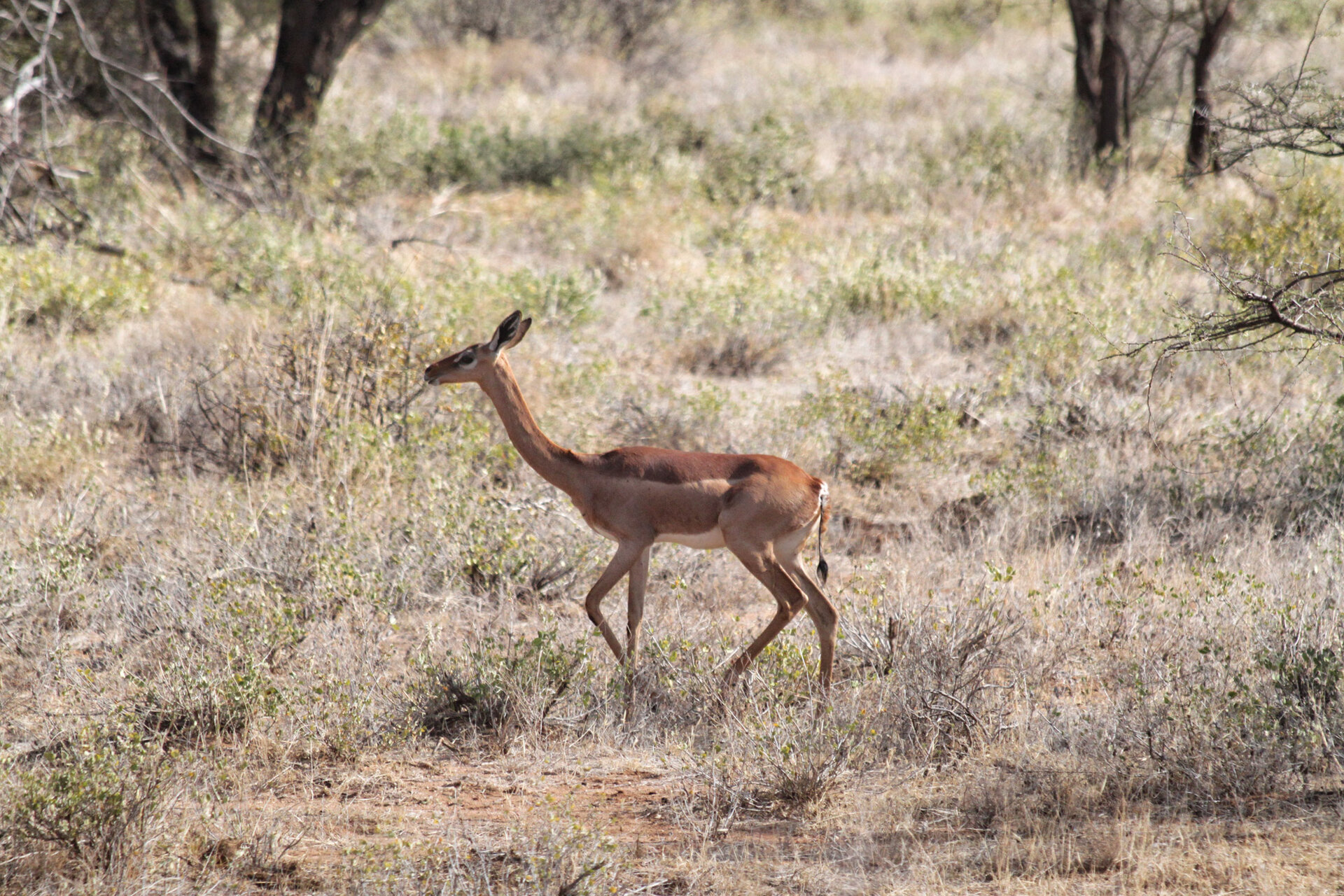
The long-necked 'giraffe gazelle' that browses standing on its hind legs
Reliably seen along the river and rocky kopjes — Samburu is a leopard stronghold
Big FiveBig herds gather daily at the Ewaso Ng'iro, subject of decades of research
Big FivePrides patrol the plains and river line, including the famous local lion families
Big FiveEndangered packs range across the surrounding conservancies of the north
Two more of the Special Five — the rapier-horned oryx and the blue-legged ostrich
Samburu National Reserve stands apart — here's how it compares to other reserves.
The land bakes dry and wildlife concentrates along the Ewaso Ng'iro River in wonderful numbers — the finest game viewing of the year, with clear skies and dramatic light
A warm, largely dry window with excellent wildlife viewing and lush green flushes after the short rains — a superb and often quieter time to visit the north
Brief afternoon storms bring dramatic skies, migrant birds and newborn animals; the bush greens up and visitors are few
The greenest and best-value season, with fine birding and dramatic light; occasional heavy rain can affect tracks but wildlife stays close to the river
The practical details that make a real difference — gathered from years of sending travellers into this region.
Make a checklist of the reticulated giraffe, Grévy's zebra, gerenuk, Somali ostrich and Beisa oryx — spotting all five is one of Samburu's great safari rewards.
A scheduled flight from Nairobi's Wilson Airport takes about an hour and fifteen minutes and beats a long road transfer. The drive via Nanyuki and the equator is scenic if you have time.
Samburu is hot and dry. Pack light, breathable layers, a good sun hat and plenty of sunscreen, and plan drives for the cooler hours of dawn and dusk.
Malaria risk is lower in the dry north but still present. Speak to a travel clinic about prophylactics and bring repellent and long sleeves for dusk.
Samburu's leopards reward patience along the river and kopjes at dawn and dusk. Stay out for the golden light and let your guide follow the alarm calls.
Choosing community conservancy camps puts your money directly into Samburu schools and wildlife protection, and unlocks walking safaris and cultural visits few guests ever enjoy.
Most guests reach Samburu on a scheduled flight from Nairobi's Wilson Airport, landing at Samburu or Kalama airstrip where camp vehicles complete the transfer. The scenic road route via Nanyuki and the equator is also rewarding. Samburu pairs beautifully with the Laikipia Plateau and Ol Pejeta for a complete northern Kenya safari.
A Samburu National Reserve safari pairs beautifully with the regions below. Our team stitches them into one unhurried journey — flights, transfers and timing handled end to end.
KenyaPair Samburu with the neighbouring Laikipia Plateau for rhino, wild dog and horseback safaris — the definitive northern Kenya circuit.
Explore Laikipia
KenyaContrast the wild north with the Maasai Mara's big cats and Great Migration for Kenya's two most rewarding regions.
Explore Masai Mara
KenyaAdd Amboseli in the south for its great tuskers beneath Kilimanjaro — a north-and-south journey across Kenya.
Explore AmboseliSamburu National Reserve lies in the arid north of Kenya, on the banks of the Ewaso Ng'iro River. It is famous for its 'Special Five' — the reticulated giraffe, Grévy's zebra, gerenuk, Somali ostrich and Beisa oryx — five dry-country species found almost nowhere else in Kenya, as well as for excellent leopard, big elephant herds and the vibrant culture of the Samburu people.
The Special Five are the signature dry-country animals of the north: the reticulated giraffe with its crisp geometric coat, the endangered fine-striped Grévy's zebra, the long-necked gerenuk that browses on its hind legs, the blue-legged Somali ostrich and the rapier-horned Beisa oryx. Spotting all five is a highlight of any Samburu safari and a rare privilege found in very few places on Earth.
Beyond the Special Five, Samburu offers superb leopard viewing along the river, large elephant herds that gather daily to drink, lion, cheetah and, on the surrounding conservancies, endangered African wild dog. The reserve also holds more than 450 bird species. Buffalo and rhino are scarce here, so Samburu is prized less for a Big Five tick-list and more for its rare, dramatic and uncrowded wildlife.
The dry season from June to October is the classic time, when wildlife concentrates along the Ewaso Ng'iro River and viewing is at its best. The short dry season from December to March is also excellent and often quieter, with green flushes after the November rains. April and May bring the long rains — lush, dramatic and great value, though occasional heavy showers can affect the tracks.
Most visitors fly in on a scheduled flight of about an hour and fifteen minutes from Nairobi's Wilson Airport, landing at Samburu or Kalama airstrip where camp vehicles meet them. A scenic five-to-six-hour drive via Nanyuki and the equator is also popular. Samburu pairs naturally with the Laikipia Plateau, so many guests combine the two on a northern circuit that we arrange end to end.
Very much so. Samburu is one of the most reliable places in Kenya to see leopard, thanks to the dense riverine forest and rocky kopjes along the Ewaso Ng'iro. Combined with the red earth, doum palms, the sacred Ol Lolokwe mountain and the striking Special Five, it is a dream for photographers. Several camps offer photographic guiding and low-angle vehicles to help you make the most of the dramatic northern light.
The Samburu are a semi-nomadic pastoralist people closely related to the Maasai, known for their crimson robes, elaborate beadwork and deep knowledge of this arid land. Many of the reserve's surrounding conservancies are community-owned, so tourism directly supports Samburu schools, healthcare and wildlife protection. A visit to a community manyatta is a genuine and enriching part of the safari.
Two to three nights is ideal, allowing time to find all of the Special Five, enjoy the leopards and elephants, and experience Samburu culture. Many guests combine Samburu with the Laikipia Plateau, Ol Pejeta or the Maasai Mara for a richer week-or-longer Kenya safari that contrasts the wild north with the great southern plains.
Samburu carries a lower malaria risk than lowland Kenya because of its hot, dry climate, but it is still advisable to take precautions. Speak to your doctor or a travel clinic about prophylactics before you travel, and pack insect repellent, long sleeves for dusk and a good sun hat. Our team will share the latest health guidance as part of your trip planning.
Samburu offers superb choices for every style. Sasaab and Saruni Samburu lead the luxury field with dramatic architecture and private conservancy locations, Elephant Watch Camp offers deeply personal eco-luxury with unrivalled elephant knowledge, while Elephant Bedroom Camp and Samburu Intrepids deliver characterful, well-located comfort and great value on the river. We match every guest to the camp that suits them best.
Join 200,000+ travellers who have trusted us with their African safari dreams since 2008. Our expert team will craft a tailor-made Samburu National Reserve itinerary perfectly suited to your style, budget and dates.