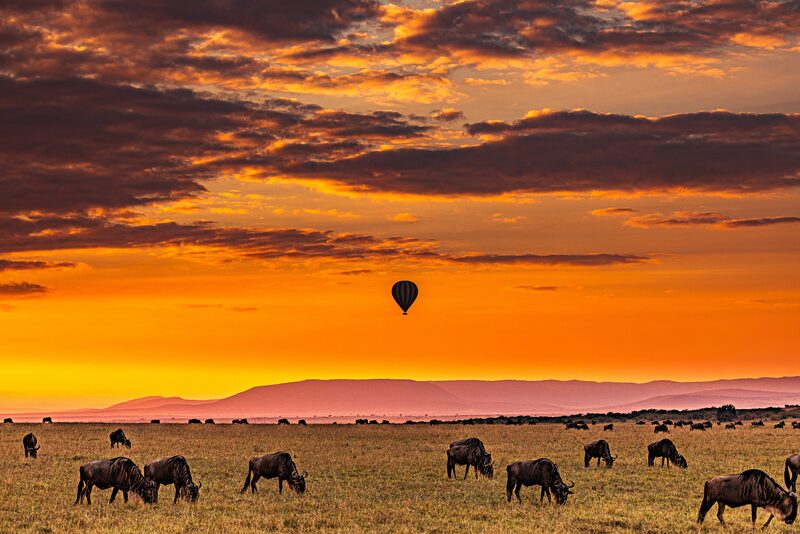
Ultra-Luxury7 DaysUltimate Great Migration Safari
Seven Days at the Heart of the World's Greatest Wildlife Spectacle. This is the definitive Masai Mara safari — seven unhurried days timed to the thunder of the Gr…

Witness the Great Migration — Safari's Spiritual Home
The most celebrated wildlife reserve on Earth. Watch 1.5 million wildebeest thunder across the Mara River, track Africa's highest density of big cats, drift over the plains by hot-air balloon at dawn, and stay in the world's finest tented camps.
The Masai Mara is, quite simply, the most celebrated wildlife reserve on the planet. Covering 1,510 km² of rolling savannah in southwestern Kenya, the Mara is the northern anchor of the Serengeti-Mara ecosystem — one of the most biodiverse habitats on Earth. Every year between July and October, more than 1.5 million wildebeest, 400,000 zebra, and 200,000 Thomson's gazelle pour across the Mara River in a spectacle National Geographic has called the greatest wildlife show on Earth. But the Mara's magic extends far beyond the migration: year-round it supports one of Africa's highest densities of big cats — lion prides thirty strong, leopards draped in acacia branches, and cheetahs sprinting across open plains. The surrounding private conservancies — Mara North, Olare Motorogi, Naboisho — offer exclusive traversing with strict vehicle limits, while the Mara's camps, from tented suites with copper bathtubs to private mobile camps that follow the herds, represent the pinnacle of safari hospitality.
Four hand-crafted private journeys through Masai Mara, Kenya — from our flagship ultra-luxury expedition to exceptional value escapes. Every package is fully tailor-made, privately guided and includes luxury lodges, expert rangers and seamless logistics.
Ultra-Luxury7 DaysSeven Days at the Heart of the World's Greatest Wildlife Spectacle. This is the definitive Masai Mara safari — seven unhurried days timed to the thunder of the Gr…
High-End5 DaysFive Days Tracking Lion, Cheetah and Leopard in the Mara. The Masai Mara holds the highest density of big cats in Africa, and this five-day journey is built aroun…
Luxury4 DaysFour Days of Classic Mara Game Viewing and Culture. A beautifully balanced introduction to the Masai Mara, this four-day journey blends classic game drives across…
Value3 DaysThree Days Chasing the Great Migration. Short on time but determined to witness the Great Migration? This focused three-day escape drops you straight into the hea…

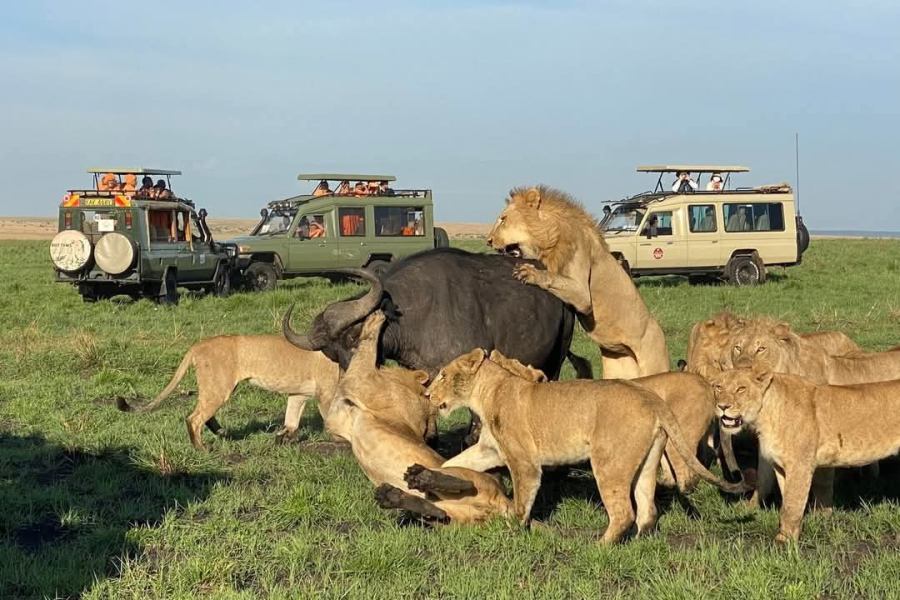
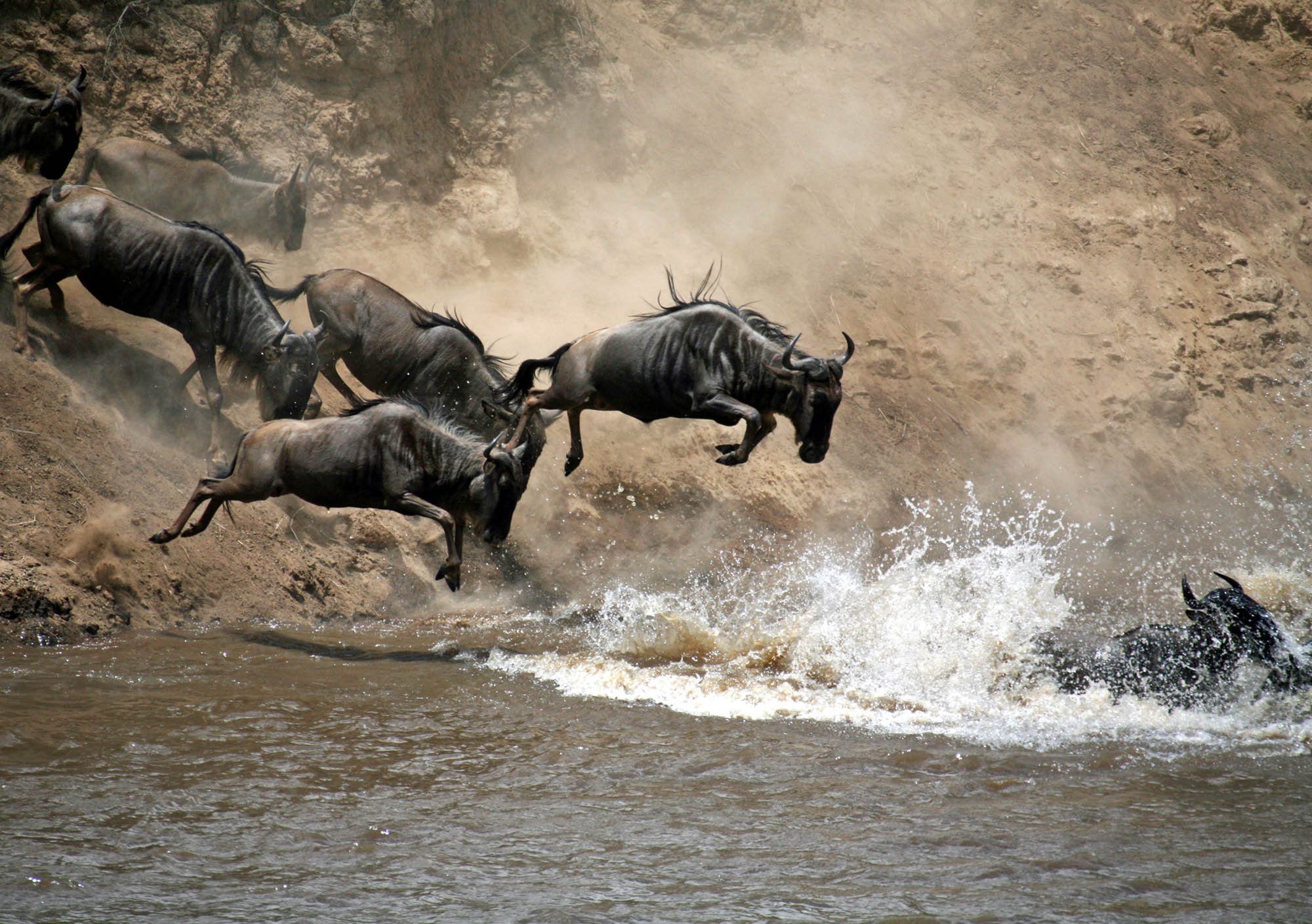
Track the Great Migration across the Mara's golden grasslands. From July to October, witness the heart-stopping Mara River crossings as wildebeest and zebra plunge into croc-infested waters while lions and hyenas wait on the banks. Your guide follows the herds' real-time movements for front-row seats to nature's greatest spectacle — a thundering river of life that has crossed these plains for millennia.

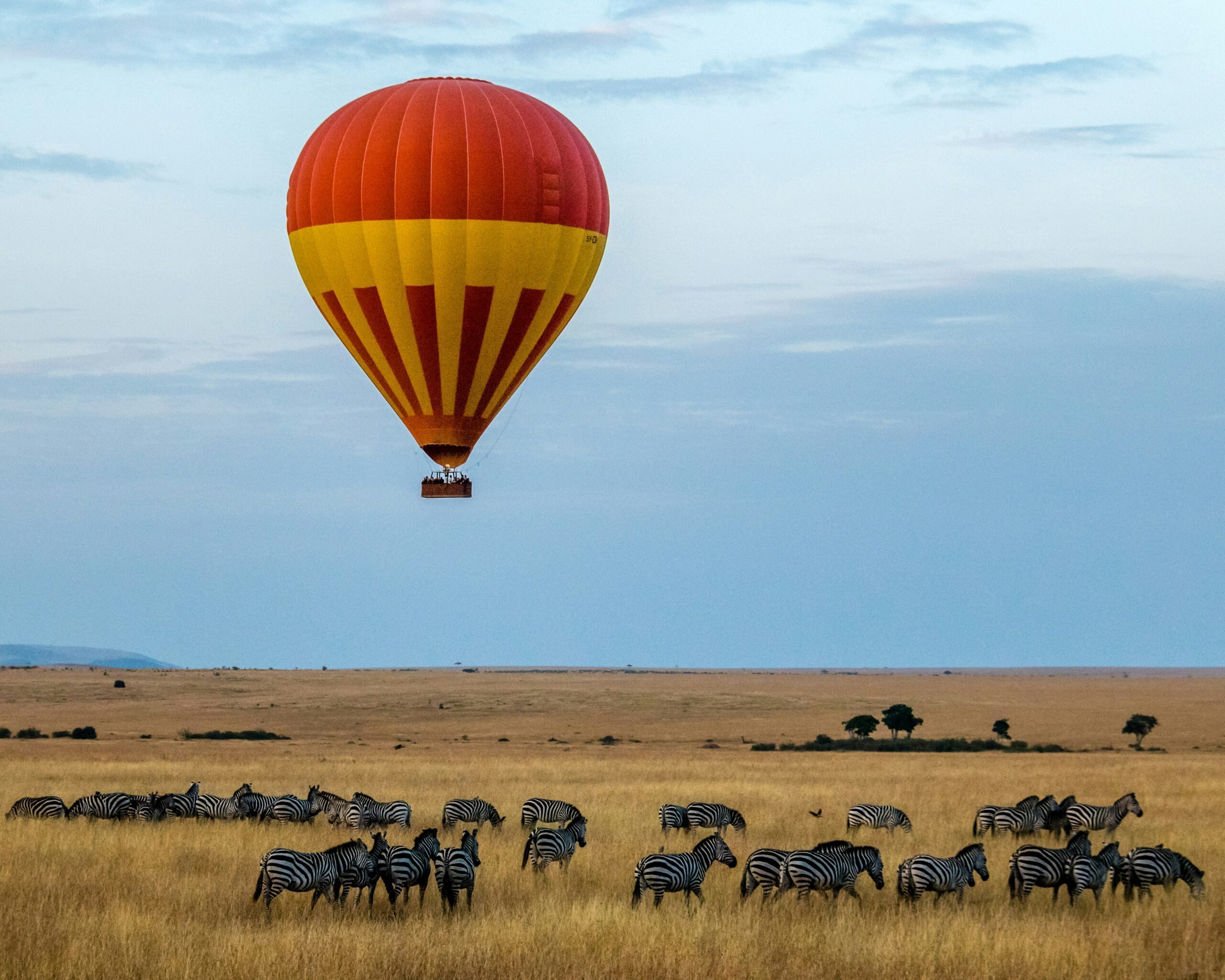
Lift off as the sun ignites the Mara and float in silence over the endless plains. Watch migrating herds, predators on the prowl, and elephants from a bird's-eye view as your pilot drifts low over the savannah and high for sweeping panoramas. Touch down to a full champagne bush breakfast laid beneath an acacia tree — one of Africa's most romantic and unforgettable experiences.

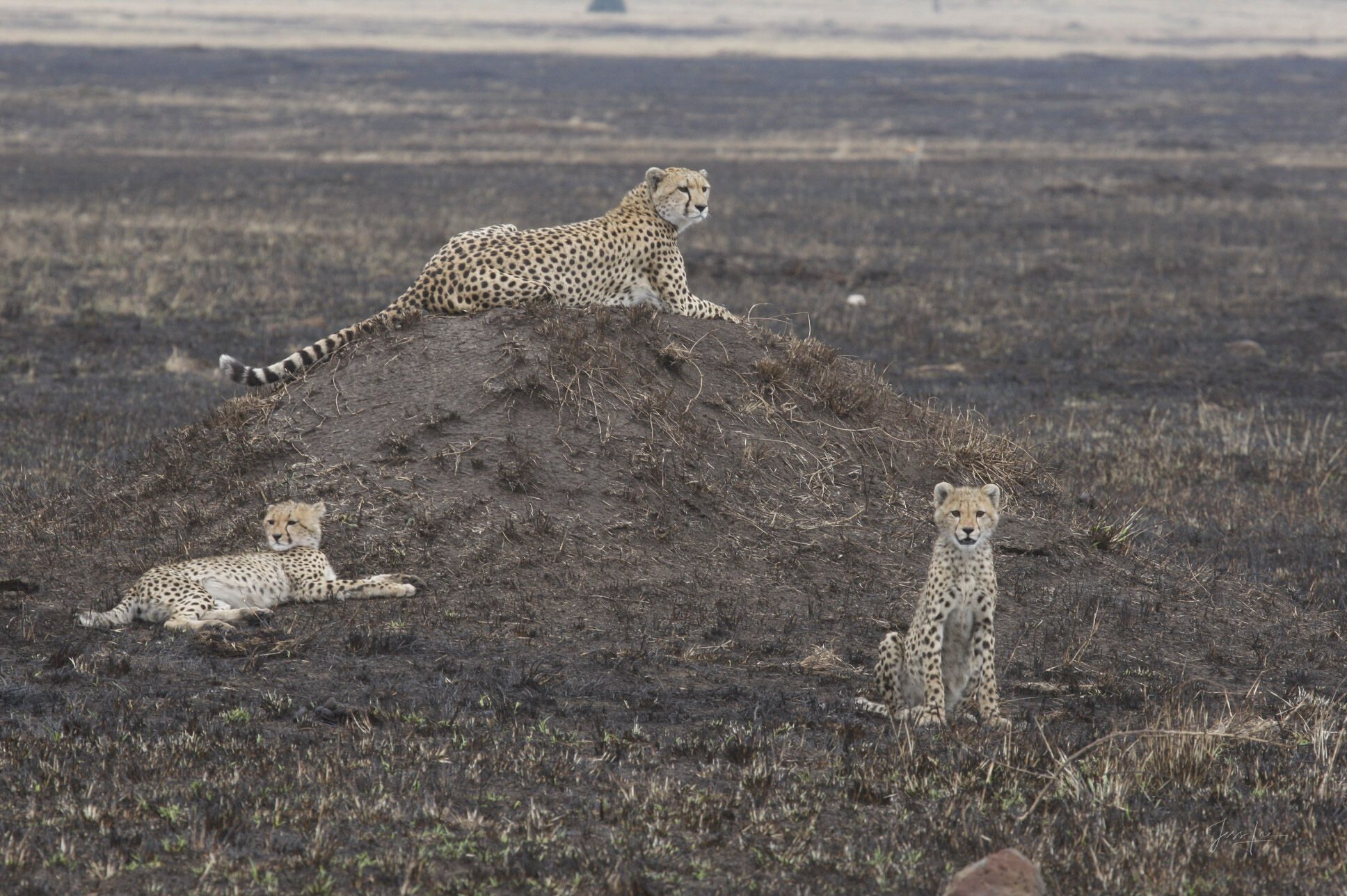
The Mara is the big cat capital of Africa. Famous lion prides — some thirty members strong — patrol the grasslands, leopards drape over branches along the Mara and Talek rivers, and cheetahs scan the open plains for Thomson's gazelle, reaching speeds above 100 km/h in the hunt. With expert spotters and the highest predator density on the continent, sunrise and sunset drives deliver heart-pounding sightings of all three big cats in a single day.

The private conservancies bordering the reserve — Mara North, Olare Motorogi, and Naboisho — limit vehicle numbers and permit off-road driving and after-dark game drives banned inside the public Mara. Spotlit night drives reveal elusive nocturnal hunters: leopard, serval, aardwolf, and bat-eared fox. With only a handful of camps sharing vast tracts of wilderness, sightings are intimate and uncrowded — the most exclusive way to experience the Mara.

Step out of the vehicle and onto the plains with armed rangers and Maasai guides who read the bush like a book. Learn animal tracking, medicinal plants, and survival skills passed down for generations. Feel the earth underfoot, hear the alarm calls of impala, and experience the visceral thrill of being on foot in big cat country. Walking safaris are permitted only in the private conservancies.

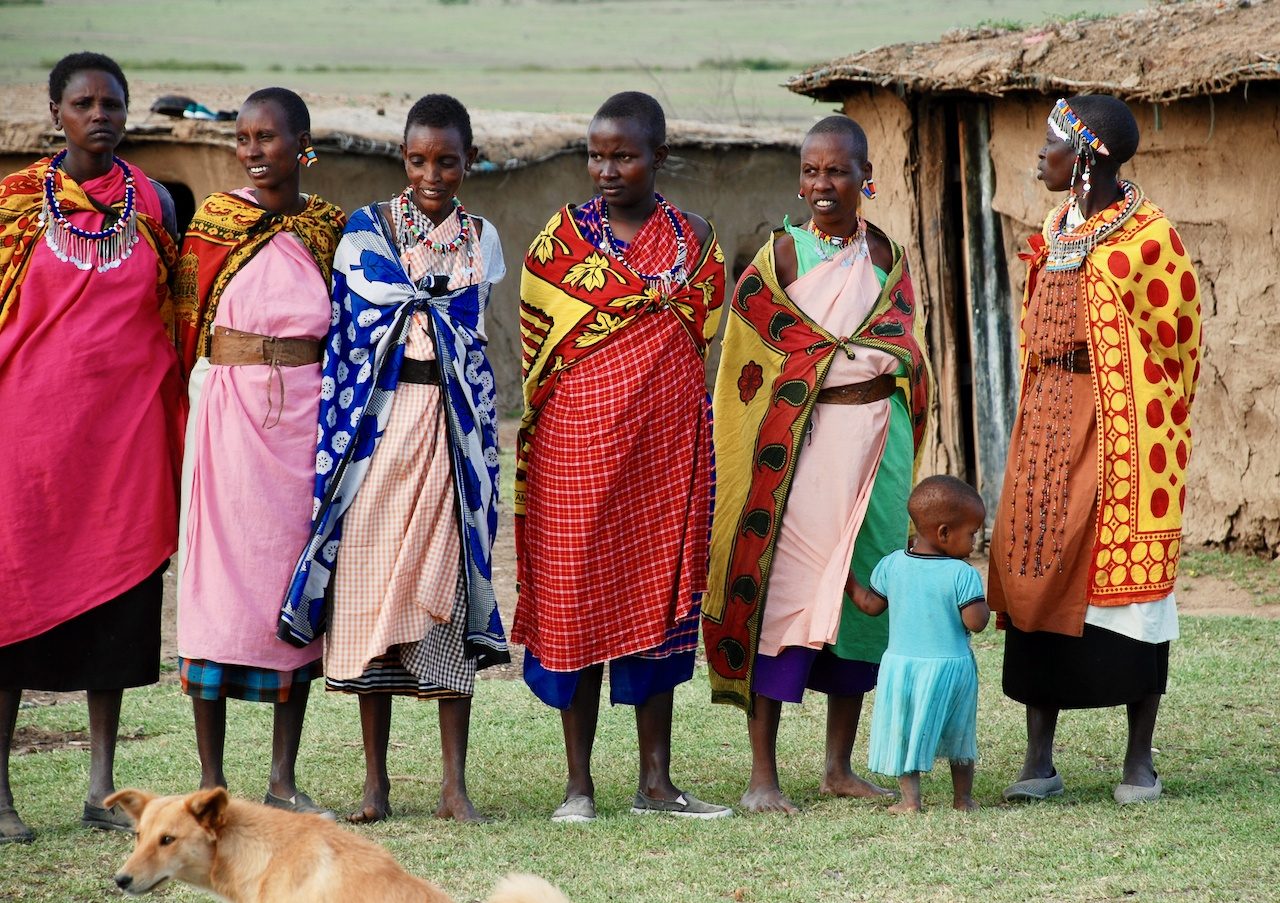
Visit a Maasai boma to experience the culture of East Africa's most iconic pastoralist people. Watch the famous adumu jumping dance, learn about cattle herding and warrior rites of passage, see intricate beadwork, and hear stories of a people who have lived alongside the Mara's wildlife for centuries. A meaningful, community-supporting encounter that deepens every safari.
Handpicked luxury lodges ranging from award-winning ultra-luxury suites to exceptional value properties — every lodge delivers a world-class safari experience.

Suspended above the Great Rift Valley with the most celebrated view in Africa — barefoot luxury where Out of Africa was filmed
Travel + Leisure World's Best, Condé Nast Traveler Gold List

Intimate, design-led tented suites in a private big-cat conservancy — Relais & Châteaux luxury with exclusive off-road traversing
Relais & Châteaux, National Geographic Unique Lodges of the World

The most luxurious of the Governors' camps — vast tents hidden in ancient riverine forest on the banks of the Mara River
Safari Awards Best Classic Safari Camp

Tucked around its own game-filled waterhole and accessed by boat — classic, intimate camp in the heart of the migration zone
TripAdvisor Travellers' Choice

The original Masai Mara safari camp since 1972 — legendary location on the river at the centre of the reserve
Eco Tourism Kenya Gold Rated

Iconic hilltop lodge inspired by a Maasai manyatta — superb value with sweeping views over a famous river-crossing point
Eco Tourism Kenya certified

Africa's highest lion density — famous prides like the Marsh Pride roam the plains
Big Five
Frequently seen draped in acacias along the Mara and Talek rivers
Big Five
Open plains make the Mara one of the best places on Earth for cheetah sightings

Large breeding herds browse the riverine woodland and open grasslands
Big Five
Big herds graze the plains year-round — a Big Five staple of the Mara
Big Five
Endangered black rhino protected within the reserve — a rare and special sighting
Big Five
1.5 million wildebeest pour across the Mara River each migration season

400,000 zebra migrate alongside the wildebeest herds

Giant crocs lie in wait at the Mara River crossings for dramatic predation

Including the secretary bird, lilac-breasted roller, Kori bustard and martial eagle
The best time to visit — wildebeest herds and dramatic Mara River crossings, superb big cat action and clear, dry weather
Warm, dry and quieter — excellent resident big cat sightings and lush early-year scenery with fewer crowds
Lush green landscapes, dramatic skies, fewer visitors and the lowest rates — some afternoon downpours and muddy tracks
Short rains green the plains, herds have moved south, good value and excellent resident wildlife
Most visitors fly from Nairobi's Wilson Airport on a scheduled 45-minute light-aircraft flight directly to a Mara airstrip near their camp — by far the easiest and most scenic option. Self-drive or private transfer from Nairobi takes 5–6 hours via Narok. The Mara pairs seamlessly with Tanzania's Serengeti as the same migration ecosystem, and with Kenya's coast for a classic bush-and-beach holiday.
July to October is peak season, when 1.5 million wildebeest and zebra are in the Mara and the dramatic Mara River crossings take place. River crossings are unpredictable but most frequent from late July through September. The herds then move back south to Tanzania's Serengeti around November.
They are two halves of the same ecosystem. The Mara is smaller and more compact, which means higher big-cat density and excellent sightings in a shorter visit, plus the iconic Mara River crossings (July–October). The Serengeti is far larger and more remote. Many travellers combine both. The Mara also offers private conservancies with off-road and night driving that the Serengeti's national park does not.
Absolutely — it's a bucket-list highlight. Drifting over the plains at sunrise as herds and predators wake below, followed by a champagne bush breakfast, is unforgettable. At around $450–$550 per person it's a splurge, so book well in advance, especially in peak migration season.
The Masai Mara National Reserve is the public, government-run core, famous for the river crossings but busier with vehicles. The surrounding private conservancies — Mara North, Olare Motorogi, Naboisho and others — are leased from Maasai landowners, cap vehicle numbers, and allow off-road driving, night drives, and walking safaris. Staying in a conservancy delivers a more exclusive, uncrowded experience while still allowing day trips into the reserve.
Yes. The Mara is one of Africa's most established and well-managed safari destinations, and Kenya has a long, professional safari tourism industry. Wildlife is wild, so always follow your guide's instructions, stay in the vehicle except at designated areas, and never approach animals on foot outside a guided walk.
Most travellers need an electronic travel authorisation (eTA) obtained online before arrival (around $30–$51, depending on category). Your passport should have at least 6 months' validity and blank pages. Requirements change, so check the official Kenyan eTA portal before you travel; we assist all our guests with the process.
No — the Mara is a malaria-risk area, so anti-malarial prophylaxis is strongly recommended. Consult your doctor 4–6 weeks before travel. Camps provide mosquito nets and repellent, and evening cover-up plus repellent greatly reduces risk. The risk is manageable with sensible precautions.
Yes. A classic itinerary pairs 3–4 nights in the Mara with the white-sand beaches of Diani or the Lamu archipelago for a 'bush and beach' holiday. Because the Mara and Tanzania's Serengeti are the same ecosystem, cross-border safaris combining both are also popular and spectacular.
3–4 nights is ideal. That gives time for multiple game drives, a hot-air balloon safari, a Maasai cultural visit, and — in season — the patience needed to catch a river crossing. If the migration is your priority, 4 nights meaningfully improves your chances of witnessing a crossing.
Yes. Many camps welcome families, and the Mara's high density of easily-spotted wildlife keeps children engaged. Several properties offer family tents, dedicated young-explorer programmes and flexible game-drive timings. Most camps set a minimum age (often around 6+) for game drives — we match every family with the right camp.
Join 200,000+ travellers who have trusted us with their African safari dreams since 2008. Our expert team will craft a tailor-made Masai Mara, Kenya itinerary perfectly suited to your style, budget and dates.