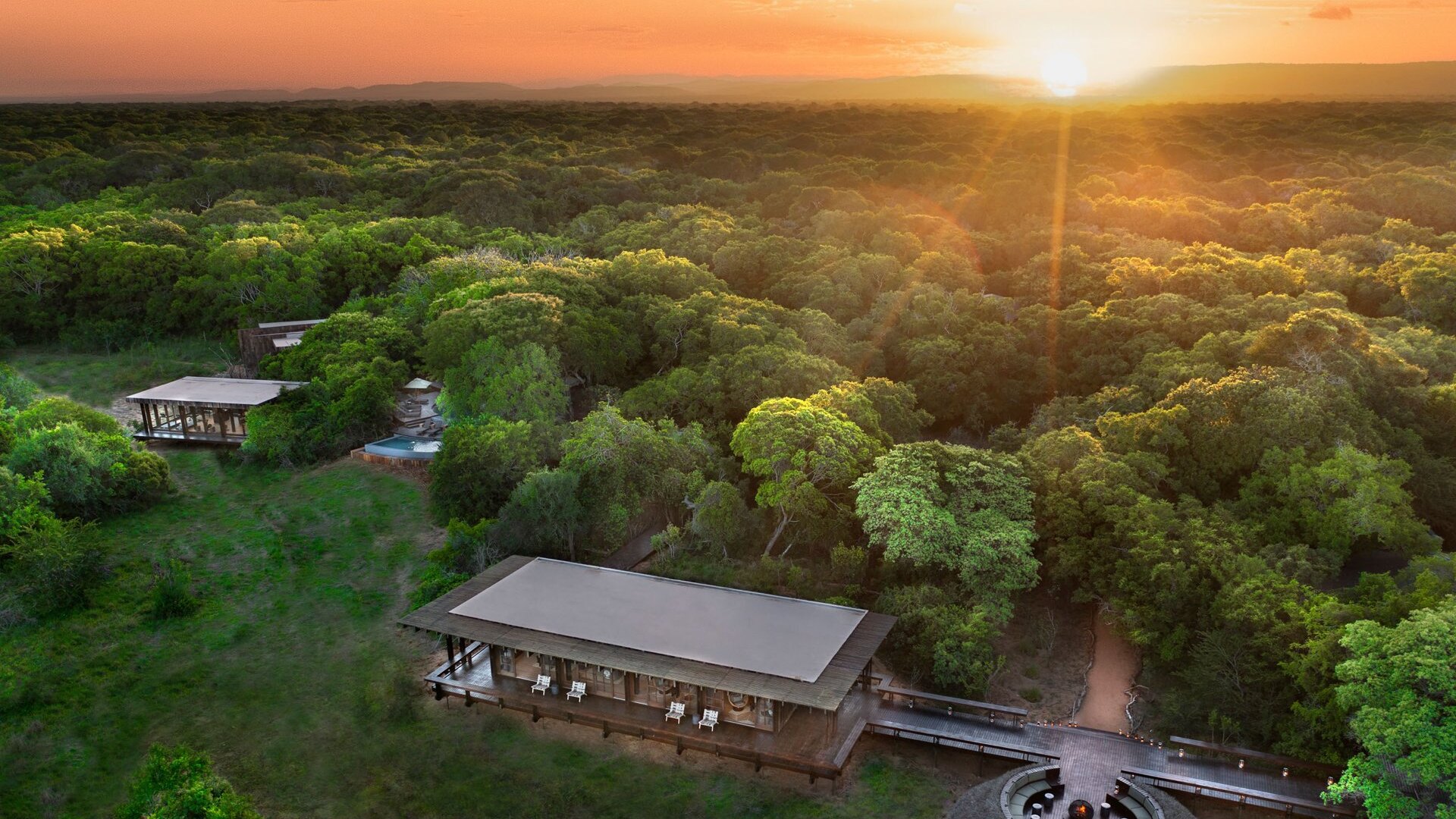
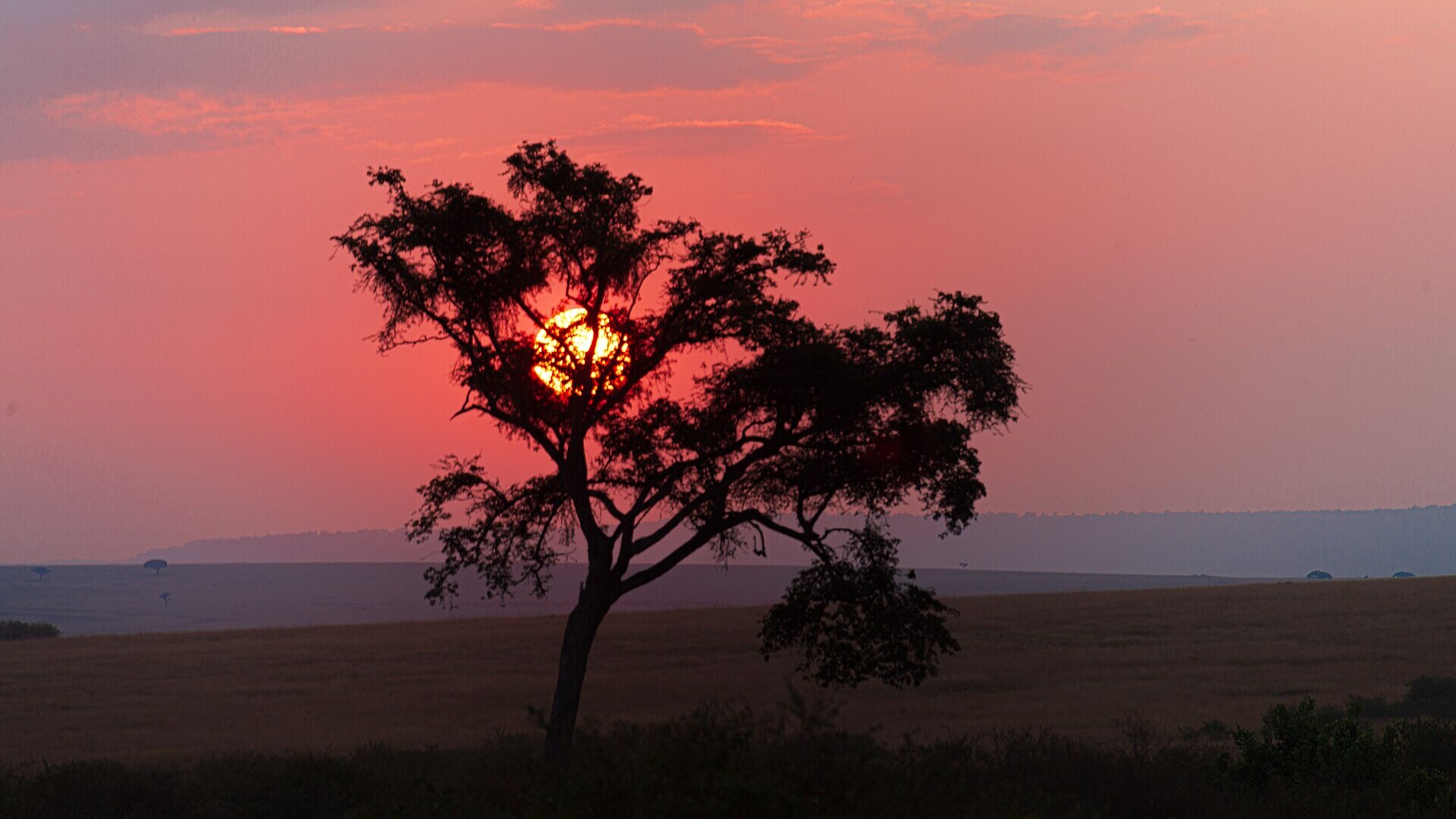
Key Takeaways
- Cave rooms are the signature: the cave suites are built into natural sandstone outcrops, with the back walls left as original rock. It is one of very few places in the world where you sleep inside the mountain itself.
- Star beds under dark skies: the open-air Sky Suite and Star Suite let you sleep out under the Milky Way. The Cederberg has some of the least light-polluted skies in South Africa, so the stargazing is genuinely world class.
- Not a Big Five reserve: Kagga Kamma is a nature reserve with small plains game and mountain wildlife, not lions and leopards. You come for the rooms, the rock, the stars and the rock art, not predator drives.
- Ancient rock art: the reserve protects Khoi and San paintings on its sandstone, viewed on a guided Rock Art Tour that explains who painted them and why.
- Malaria-free and drivable: in the Cederberg on the edge of the Ceres Karoo, roughly a 3 to 3.5-hour drive from Cape Town on tar and then gravel — no flight, no anti-malarial tablets.
- Rooms for most budgets: from camping and self-catering chalets through thatched hut suites to the cave suites and the remote open-air star beds, with pamper and spa packages available.
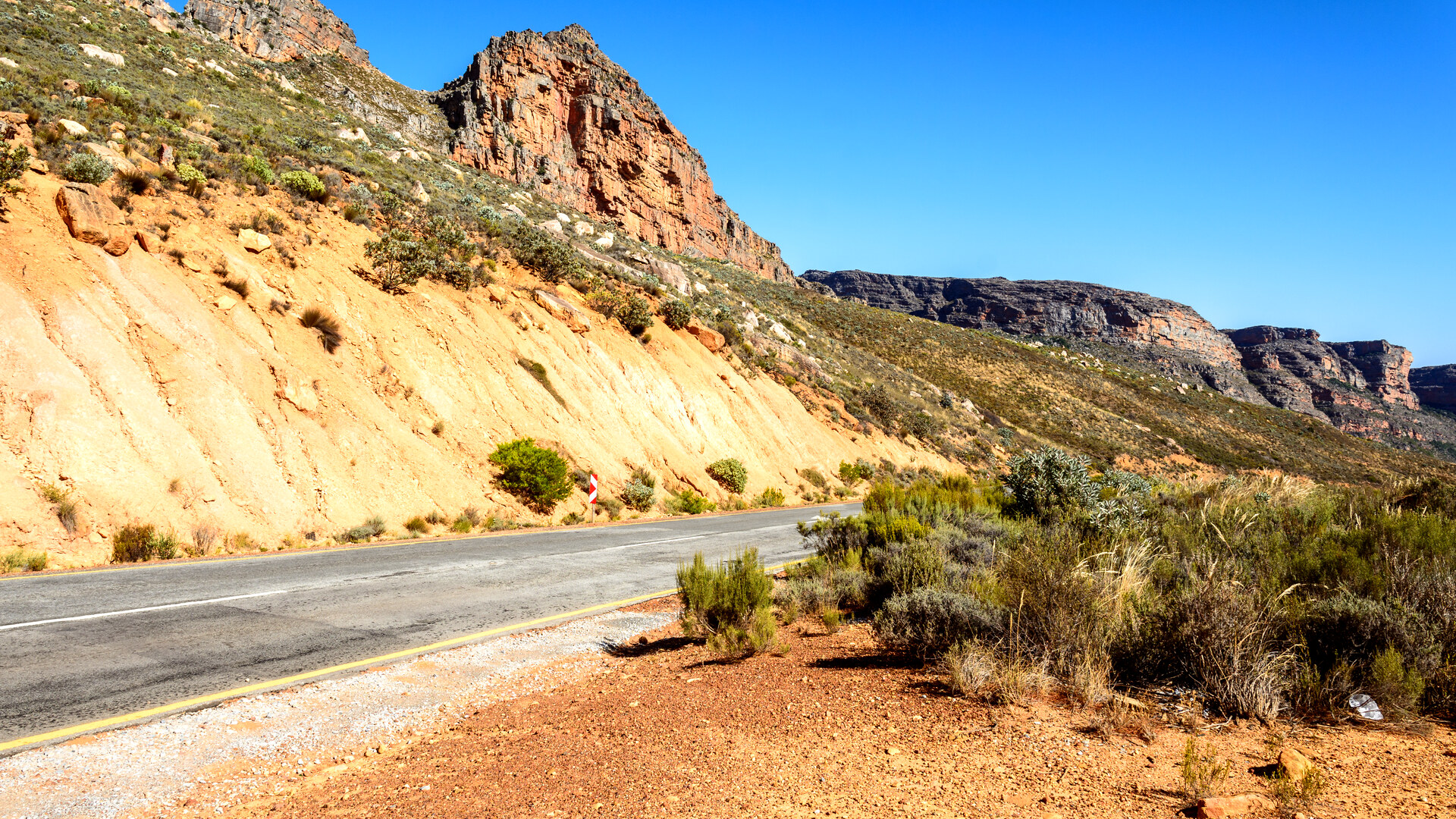
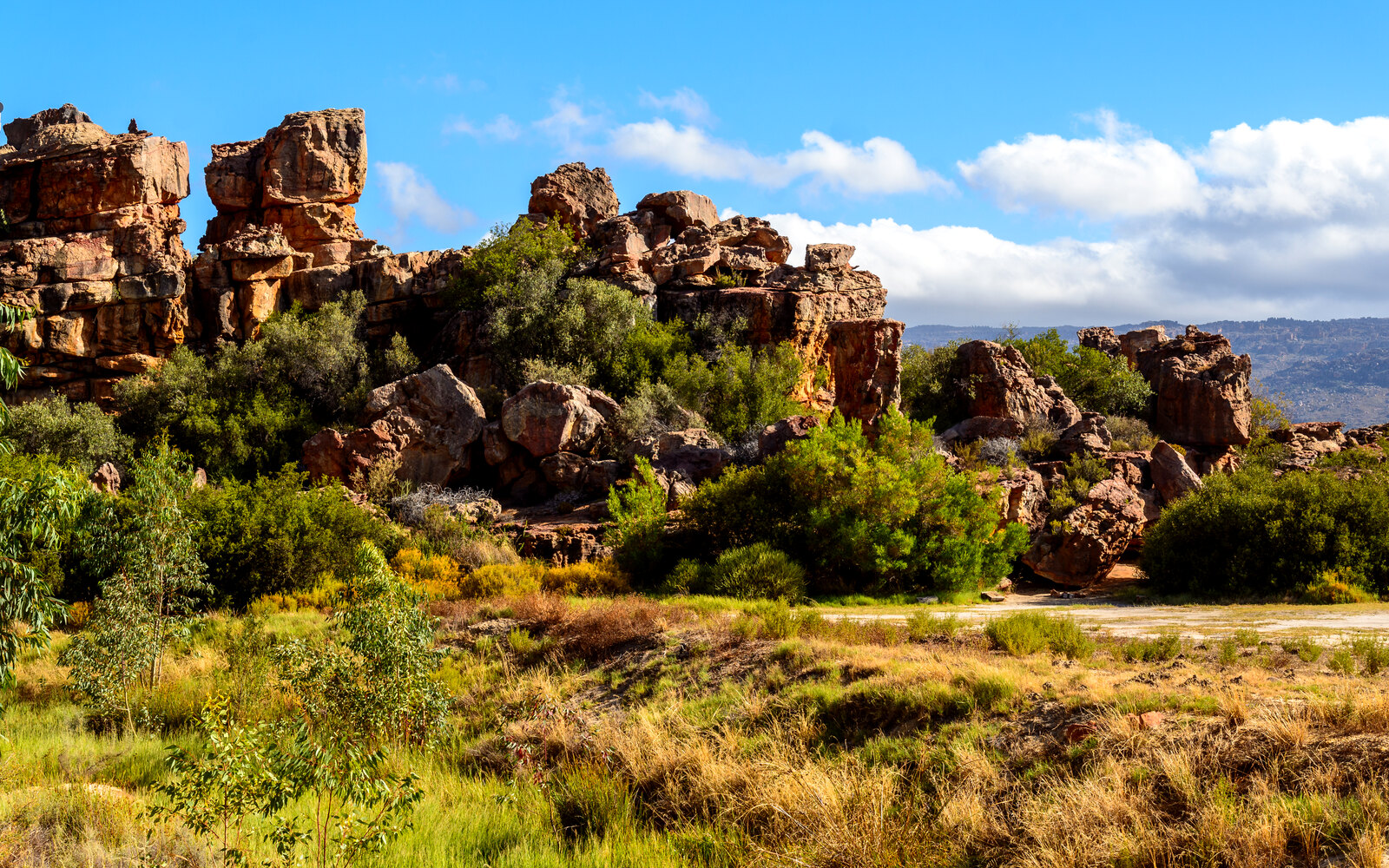
Wind-sculpted sandstone in the Cederberg, the setting for Kagga Kamma's cave rooms and star beds.
Why This Review Matters
Search for a safari near Cape Town and most results push lions and leopards. Kagga Kamma answers a different question: where can you sleep inside a rock, wake to sandstone glowing at sunrise, and lie in a proper bed under the full sweep of the Milky Way, all within a half-day drive of the city? This review sets honest expectations. If your heart is set on the Big Five, Sanbona or the Garden Route reserves will serve you better. If you want one of the most distinctive places to sleep in South Africa, and a night sky most city dwellers have never really seen, Kagga Kamma is hard to beat.
What Kagga Kamma Actually Is
Kagga Kamma Private Nature Reserve sits high in the Cederberg, on the edge of the Ceres Karoo in South Africa's Western Cape. The name comes from the Khoi language and is usually translated as "place of water" — a fitting description for springs that surface among these dry, weathered mountains. The reserve covers a wide stretch of sandstone country where 500-million-year-old rock has been carved by wind and water into arches, stacks, hollows and cathedral-like formations.
This is not a manicured resort dropped into the veld. It is a working nature reserve that has chosen to protect its geology, its plant life and its rock-art record rather than stock itself with predators for a tick-list game drive. The wildlife you see is genuine to the region: small antelope, mountain-adapted game and desert-edge birds. What pulls people up the gravel road is the combination you cannot get anywhere else in one place — cave rooms, open-air star beds, ancient paintings and mountains that turn copper and rose at either end of the day.
Crucially for many visitors, the whole reserve is malaria-free. There is no need for prophylactics, no mosquito nets, and no anxiety about travelling here with children or older parents. It is also reachable entirely by road, which makes it an easy add-on to a Cape Town and Winelands trip without the cost and hassle of a light-aircraft transfer.
The One-Line Verdict
Kagga Kamma is the best place near Cape Town to sleep somewhere genuinely unusual — inside a sandstone cave or out under the stars — and to see a truly dark night sky. Treat it as a two-night stay for the rooms, the rock and the stargazing, not as a Big Five safari.
The Rooms: Caves, Huts and Open-Air Star Beds
Accommodation is what sets Kagga Kamma apart, and it is worth understanding the categories before you book, because they are very different experiences at very different price points.
Cave Suites
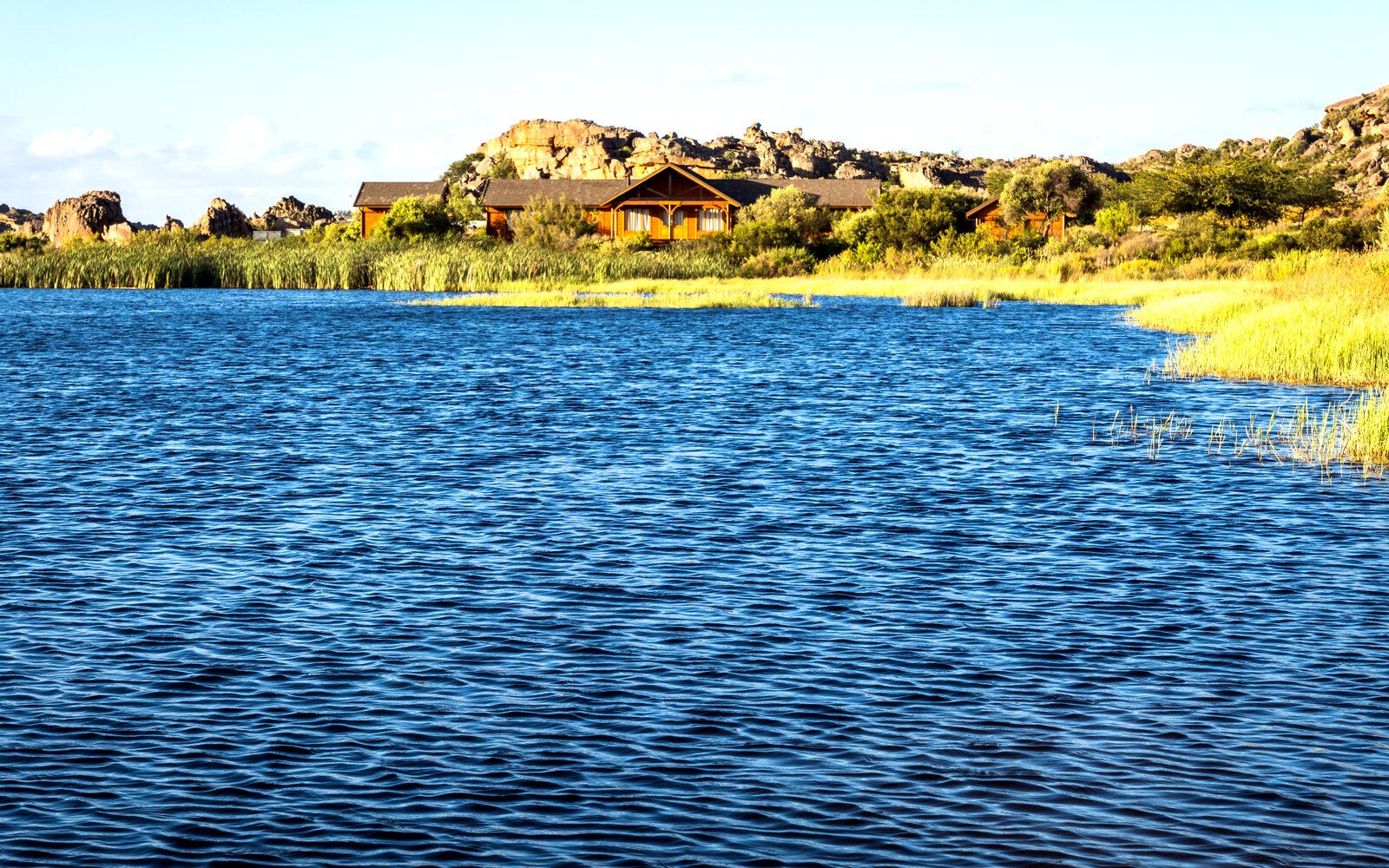
The cave suites are the reason most people first hear about Kagga Kamma. Each one is built into a natural sandstone outcrop, and the back wall of the room is the living rock of the mountain, left raw and unpainted. The front is finished with a proper door, glass, a comfortable bed, an en-suite bathroom and the essentials you would expect from a good lodge room, but the moment you step inside you are aware that you are sleeping inside the stone itself. On a hot Karoo afternoon the rock keeps the room cool; on a cold Cederberg night it holds a little warmth. There are standard cave suites as well as Honeymoon and Premium versions with more space and better outlooks. Because the caves are dug into the outcrops, each is slightly different in shape and feel — no two are identical.
Hut Suites
The hut suites are thatched, free-standing rooms styled with a nod to traditional shelter, and they sit apart from the caves. They are a good choice if you like the idea of the reserve but prefer a conventional room with a view out over the plains rather than a rock wall at your back. They carry a similar level of comfort to the cave suites and often come in a little lower on price.
Open-Air Suites: Sky Suite and Star Suite
The open-air suites are the reserve's most talked-about experience. There are two. The Sky Suite is perched on a remote rocky crag with an open bedroom and an outdoor bathroom, positioned so that you fall asleep and wake with an uninterrupted view of the sky. The Star Suite is a private wooden platform set roughly three kilometres from the main lodge, with a queen bed out in the open, a star bath, an outdoor shower, a private rock pool and its own boma for an evening fire. You are driven out in the late afternoon, left with a picnic-style dinner and breakfast, and collected the next morning. It is exposed to the weather by design, so both open-air suites are only offered in the warmer, drier months, generally from around September to April, and always subject to conditions on the night. If sleeping out under a full sky is on your list, this is one of the finest ways in the country to do it.
Camping and Self-Catering
For a lighter budget, the Swartrug Campsite offers pitches out in the reserve, and there are self-catering chalets for families and groups who want to cook their own meals and set their own pace. These options let you experience the same landscape, rock art and star-drenched skies at a fraction of the suite rates, which makes Kagga Kamma unusually accessible for a reserve of this quality.
The Real Reason to Come: Dark Skies and Star Beds
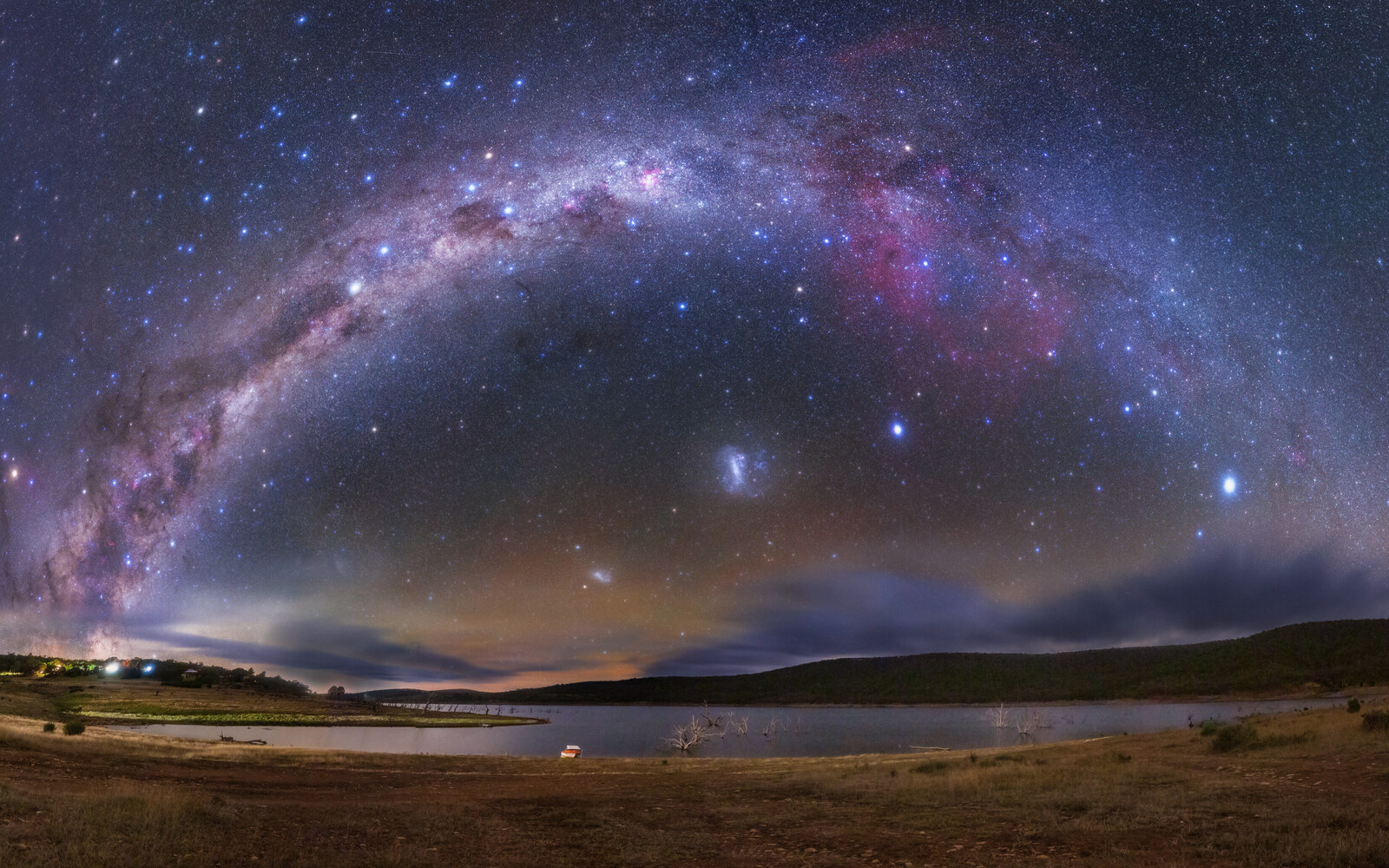
The Cederberg and Ceres Karoo sit far from any city glow, and the air here is dry and clear for much of the year. The result is a night sky that genuinely surprises people who have only ever seen a handful of stars over a town. On a moonless night the Milky Way is not a faint smudge but a bright band stretching from horizon to horizon, with the Magellanic Clouds, the Southern Cross and countless individual stars laid out overhead.
Kagga Kamma leans into this. Guided stargazing sessions use the naked eye and telescopes to pick out planets, star clusters and deep-sky objects, and the guides know the Southern Hemisphere sky well. Even without a formal session, simply lying back near your cave or out on the star-bed platform is an experience that stays with people long after they leave. If clear skies and stargazing are your main goal, plan your stay around the new moon, when the sky is at its darkest.
Planning Tip: Time Your Visit to the Moon
For the best stargazing and the fullest Milky Way, aim for the nights around new moon and avoid the few days either side of full moon, when moonlight washes out the fainter stars. Combine that with the September-to-April open-air suite season and you get the strongest version of what Kagga Kamma does best.
Rock Formations and the Cederberg Landscape
Even in daylight, the geology is the star. The sandstone here has been weathering for hundreds of millions of years, and the reserve is full of shapes that look almost designed — balancing stacks, wind-hollowed caves, natural arches and long fins of rock catching the low sun. Guided and self-guided walks take you among these formations, and the light at sunrise and sunset turns the pale stone to gold, amber and deep orange. Photographers tend to run out of memory card long before they run out of subjects.
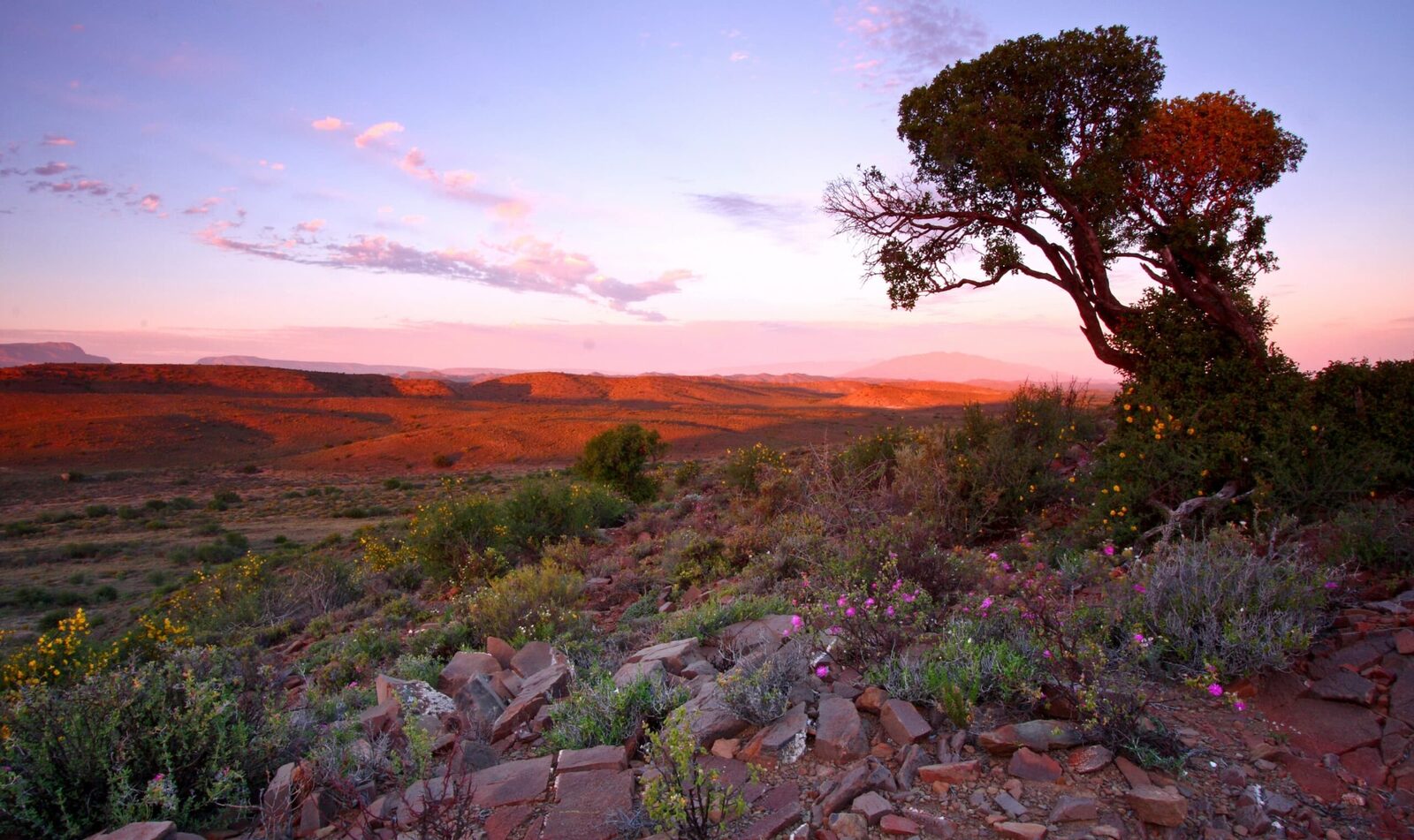
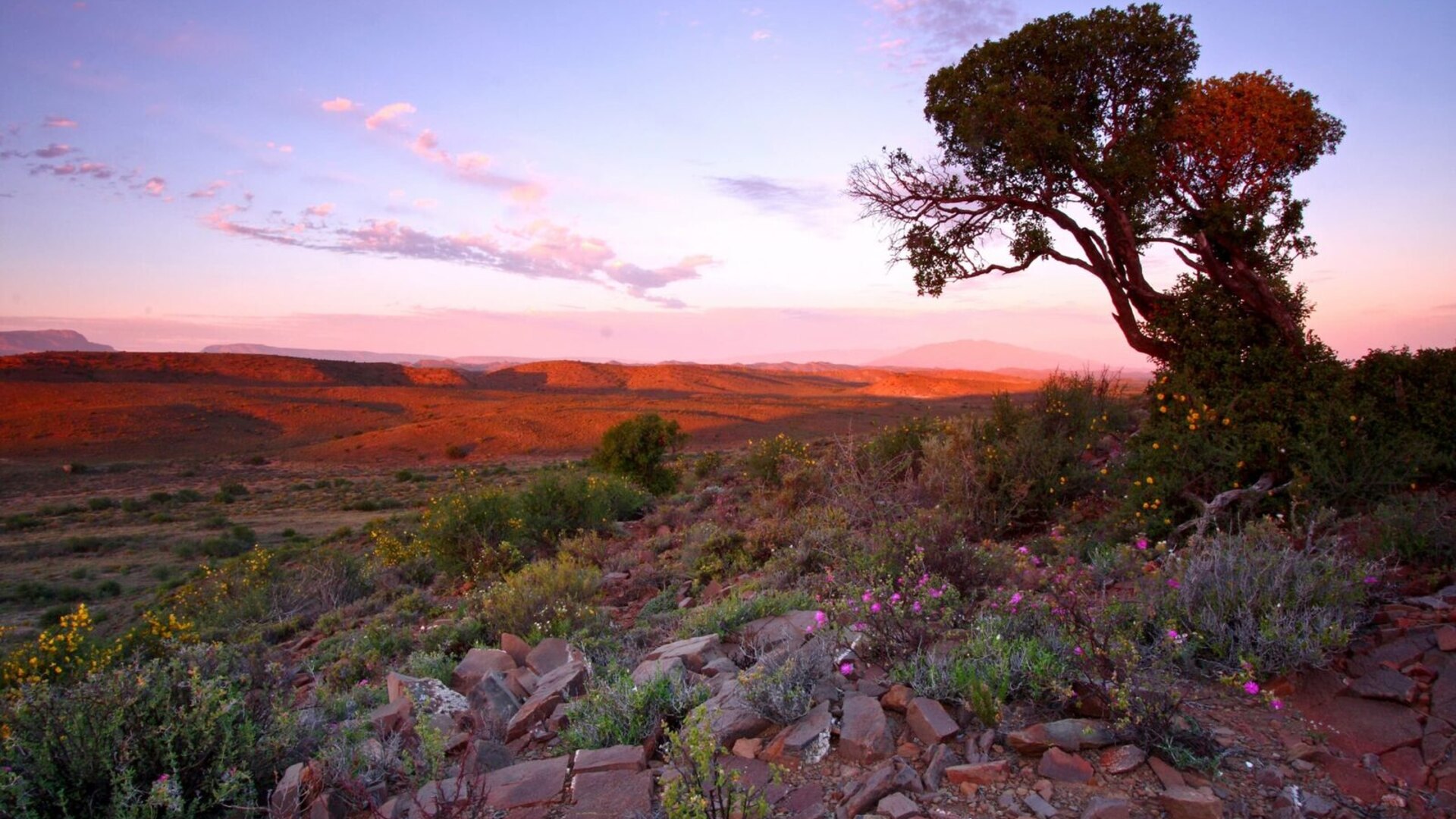
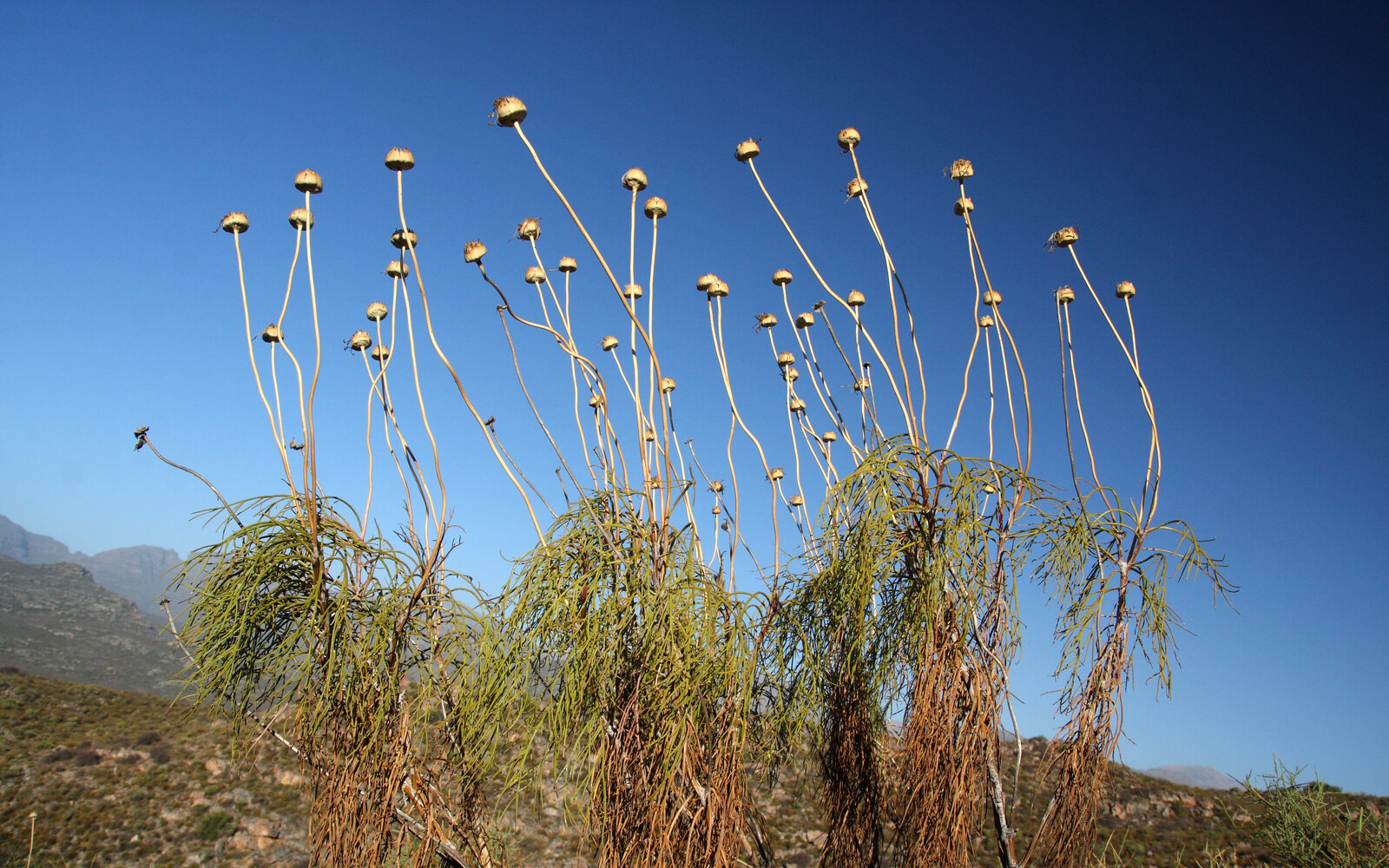
The plant life is part of the Cape Floral Kingdom, one of the most botanically diverse regions on Earth, so the ground between the rocks is dotted with hardy fynbos and Karoo-edge succulents rather than bare desert. In spring, after good rain, patches of flowers appear across the reserve, adding colour to the stone.
Ancient Rock Art
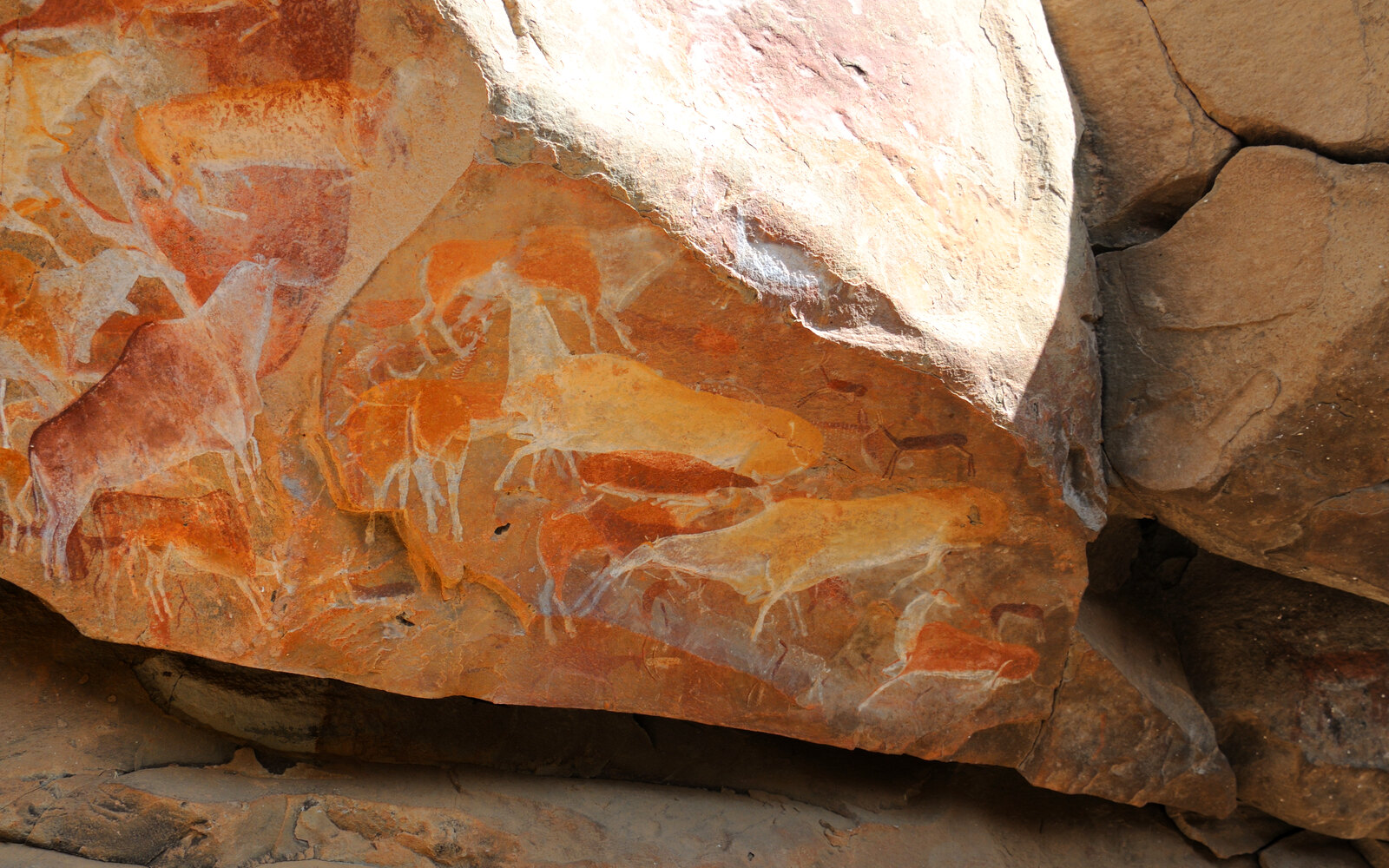
Long before it was a reserve, this land belonged to the Khoi and San people, and they left their mark on the sandstone in paintings that survive to this day. Kagga Kamma protects these panels and shares them on a guided Rock Art Tour, where a guide walks you to selected sites and explains what the images show, how they were made and what they meant to the people who painted them. Seeing the art in place, on the same rock beneath the same sky, is very different from seeing photographs of it. It is a quiet, moving reminder of how long people have lived in and read this landscape.
Wildlife: Set Your Expectations Honestly
This is the point where honesty matters most. Kagga Kamma is a nature reserve, not a Big Five game park. You will not see lion, leopard, elephant, rhino or buffalo here. What you will see is the wildlife that belongs in this mountain and desert-edge country: small antelope, mountain-adapted plains game, dassies sunning on the rocks, and a good range of birds including raptors riding the thermals above the cliffs. Game viewing happens on nature drives that double as scenery and geology tours, and on night drives that look for the reserve's nocturnal creatures.
If you arrive expecting big-cat sightings you will be disappointed. If you arrive wanting to understand a landscape — its rock, its plants, its stars and its long human history — you will leave full. This is a place for slow looking, not a fast tick-list.
Activities
For a reserve without predators, Kagga Kamma keeps guests busy. The core offering includes:
- Rock Art Tour: a guided walk to the Khoi and San paintings, with context on the people who made them.
- Nature and scenic drives: open-vehicle outings among the rock formations to see the geology, plant life and small game.
- Stargazing tours: guided sessions with telescopes under some of the darkest skies in the country.
- Quad-bike outings: a more active way to cover the reserve's tracks and reach viewpoints.
- Hiking and cycling: guided and self-guided routes among the sandstone, from short walks to longer trails.
- Night drives: after-dark outings for nocturnal wildlife and, of course, more sky.
- Spa and pamper packages: treatments and pamper add-ons for a restful, slow-paced stay.
Most guests find that two nights is the sweet spot: one full day for a rock-art walk, a scenic drive and a stargazing session, with time left over to simply sit and take in the quiet.
Rates: What You Actually Pay
Kagga Kamma is priced across a wide range because the room types are so different. The figures below are a broad guide to help you plan; always confirm current rates and what is included at the time of booking, as they change by season and by unit.
| Accommodation type | Style | Broad guide price | Best for |
|---|---|---|---|
| Swartrug Campsite | Self-pitched camping | From roughly R160–R250 per person | Budget travellers, campers, stargazers |
| Self-catering chalets | Cook-your-own units | From roughly R1,900–R2,400 per unit | Families and groups on a budget |
| Hut Suites | Thatched rooms with a view | From roughly R2,200 (higher in peak season) | Couples wanting comfort and outlook |
| Cave Suites | Rooms built into sandstone | From roughly R2,200, around R3,460 pp/night incl. breakfast at peak via agents | The signature Kagga Kamma stay |
| Open-Air Suites (Sky / Star) | Star beds under the sky | Cave/hut rate plus an upgrade from roughly R1,500–R1,750 | Couples, honeymooners, keen stargazers |
The open-air suites are booked as an add-on to a cave or hut stay and are seasonal, so factor that into both budget and timing. Camping and self-catering make the reserve genuinely reachable for travellers who could never stretch to a five-star Big Five lodge, which is part of what makes Kagga Kamma special.
How Kagga Kamma Compares to Other Western Cape Reserves
It helps to see where Kagga Kamma fits among the malaria-free reserves within reach of Cape Town. Each does something different.
| Reserve | Drive from Cape Town | Big Five? | Signature draw |
|---|---|---|---|
| Kagga Kamma | ~3 to 3.5 hours | No | Cave rooms, star beds, dark-sky stargazing, rock art |
| Bushmans Kloof | ~3.5 hours | No | Five-star wellness retreat, 130+ rock-art sites, mountain wildlife |
| Sanbona | ~3 to 3.5 hours | Yes | Big Five in the Klein Karoo, including free-roaming white lions |
| Aquila | ~2 to 2.5 hours | Yes | Closest Big Five to Cape Town, easy day or overnight trips |
| Gondwana | ~4 hours (Garden Route) | Yes | Fynbos Big Five reserve on the Garden Route, family-friendly |
The pattern is clear: if you want the Big Five, look at Sanbona, Aquila or Gondwana. If you want something no game park can give you — a bed inside a rock or out under the stars, plus a real dark-sky night — Kagga Kamma stands alone.
Plan a Cederberg Stay With Us
We build private Western Cape trips that pair Cape Town and the Winelands with a Cederberg stay at Kagga Kamma or Bushmans Kloof, and can add a Big Five reserve such as Sanbona if you want predators too. Tell us your dates and we will design the route.
Enquire About a Western Cape TripGetting There and Best Time to Visit
Kagga Kamma is reached by road from Cape Town in roughly 3 to 3.5 hours. The route runs on tar for most of the way before a stretch of good gravel into the reserve, so a normal car is fine in dry conditions, though a higher-clearance vehicle is more comfortable on the final gravel. There is no airstrip transfer to worry about, which keeps costs down and makes the reserve an easy add-on to a wider Western Cape trip.
As for timing, the shoulder seasons of spring (September to November) and autumn (March to April) tend to be most comfortable, with warm days, cool nights and the open-air suites in operation. Summer days can be very hot in this Karoo-edge country, while winter nights are cold and the open-air suites close, though winter can bring beautifully crisp, clear stargazing for those who do not mind the chill. For the strongest all-round visit, combine a shoulder-season stay with nights around the new moon.
Who It Suits, and Who It Does Not
Kagga Kamma is a strong choice if you are: a couple or honeymooner after somewhere genuinely different to sleep; a keen stargazer or photographer; a family wanting a malaria-free, activity-filled base within a half-day of Cape Town; a traveller on a tighter budget who still wants a real reserve experience through camping or self-catering; or anyone who values rock, sky and human history over a big-game tick-list.
Look elsewhere if you: have your heart set on lions, leopards and the full Big Five — in which case Sanbona, Aquila or Gondwana are the reserves to book; need step-free, fully accessible rooms, since cave and open-air units involve uneven natural ground; or want a short, easy day trip, as the drive rewards an overnight or two-night stay rather than a rushed visit.
The Main Lodge, Dining and Facilities
Beyond the rooms, daily life at Kagga Kamma centres on the main lodge, where the restaurant, bar and communal areas look out over the sandstone. Meals lean on hearty country cooking with a Karoo and Cape influence — think slow-cooked lamb, farm vegetables, fresh bread and generous breakfasts to set you up for a morning walk or drive. Dinners are often served with a fire going, and on clear nights the after-dinner ritual is simply to step outside and look up. A swimming pool offers relief on hot afternoons, and the spa runs the pamper and treatment packages that pair well with a slow, restful stay.
Because the reserve caters to campers and self-caterers as well as suite guests, facilities are practical rather than showy. Self-catering guests have their own kitchens and braai areas, while cave and hut guests can eat at the restaurant or arrange packed meals for a day out among the rocks. It is worth noting that mobile signal and connectivity are limited by design — this is a place to switch off, and most visitors quickly stop reaching for their phones once the sky takes over.
A Typical Two-Night Stay
To picture how the pieces fit together, here is how a well-paced two-night visit tends to run. It is a guide rather than a fixed programme, and the reserve is flexible about how you spend your time.
- Day one: arrive from Cape Town in the early afternoon after a lunch stop in Ceres or along the route. Settle into your cave or hut suite, then head out on a late-afternoon scenic drive among the rock formations as the light turns gold. After dinner at the lodge, join a guided stargazing session or simply lie back and take in the sky.
- Day two: start with the guided Rock Art Tour in the cooler morning, walking to the Khoi and San panels with time to ask questions. Spend the middle of the day at a slower pace — a swim, a spa treatment, or a self-guided walk among the nearer formations. In the late afternoon, either take a quad-bike outing or, if you have booked it and the season allows, transfer out to the Sky Suite or Star Suite for a night under the open sky.
- Day three: enjoy a final sunrise over the sandstone and a full breakfast before the drive back to Cape Town, or continue on to a Big Five reserve such as Sanbona if you want to add predators to your trip.
Two nights lets you do the rock art, a drive, a stargazing session and one open-air or spa experience without rushing. One night is possible but tight; three nights suits those who want to truly slow down.
History and Conservation
The land Kagga Kamma protects has a human story reaching back tens of thousands of years, and the reserve treats that heritage as its central responsibility. The Khoi and San who once lived across this part of the Cederberg left the paintings you can still see today, and the reserve works to preserve those panels while sharing them respectfully with visitors. In more recent decades the property shifted from farming toward conservation and low-impact tourism, a change that has allowed the natural plant life and small wildlife to recover across the sandstone country.
That conservation focus shapes the whole experience. Building rooms into existing rock rather than clearing ground, keeping paths unlit to protect the dark sky, limiting numbers so the reserve never feels crowded — these are deliberate choices that keep the place quiet and intact. When you stay here, a share of what you pay goes toward protecting the geology, the plants and the irreplaceable rock art for the people who come after you.
Photography Notes
Few places in the Western Cape reward a camera as generously as Kagga Kamma, and it is worth arriving prepared. The sandstone formations are at their best in the first and last hour of daylight, when low sun rakes across the rock and picks out every ridge and hollow. Midday light is flat and harsh, so use those hours for walks and rest and save your shooting for the edges of the day.
The night sky is the real prize. To capture the Milky Way you will want a tripod, a wide fast lens and a camera that handles long exposures well; even a modern phone in night mode can produce surprising results against skies this dark. Plan around the new moon, give your eyes twenty minutes to adjust away from any light, and be patient — the band of the galaxy only reveals its full detail once the sky is genuinely black. The cave suites and open-air platforms make natural foregrounds for a starscape.
Combining Kagga Kamma With the Rest of the Western Cape
Kagga Kamma works beautifully as one chapter of a larger Western Cape trip rather than a standalone destination. The most popular pattern is to spend a few days in Cape Town and the Cape Winelands first, then drive up into the Cederberg for two nights at Kagga Kamma, and finish with a Big Five reserve if you want predators. Because everything is malaria-free and connected by good roads, you can string these together without a single flight.
Families often pair Kagga Kamma with a stay at a Big Five reserve so children get both the cave-and-stars novelty here and the classic game-drive experience elsewhere. Couples and honeymooners tend to combine the star beds with a romantic Winelands stay. Photographers build trips around the rock formations and dark skies, sometimes adding the wider Cederberg for more sandstone and rock art. However you shape it, the reserve slots naturally into a route that shows off the best of the region.
Practical Tips Before You Go
- Book the open-air suites early: the Sky Suite and Star Suite are limited, seasonal and popular, so reserve them well ahead and have a cave or hut suite as your base and bad-weather fallback.
- Pack layers: Karoo-edge days can be hot while nights turn cold quickly, especially in the shoulder seasons and winter, so bring warm clothing even in summer.
- Bring a torch or headlamp: paths between rooms and formations are natural and unlit to protect the dark sky, so a red-light torch is ideal for moving around without spoiling the stargazing.
- Fill up on fuel and supplies: stock up in Ceres or Citrusdal before the final gravel stretch, as there are no shops close to the reserve.
- Respect the rock art: never touch the paintings, as skin oils damage them; view and photograph from the distance your guide sets.
- Manage expectations on wildlife: come for rooms, rock, stars and rock art, and treat any game sightings as a bonus rather than the main event.
Keep Reading: Western Cape Safaris
- Bushmans Kloof Wilderness Reserve review — the five-star Cederberg wellness retreat and its 130+ rock-art sites.
- Sanbona Wildlife Reserve review — Big Five and free-roaming white lions in the Klein Karoo.
- Western Cape safari packages — how to combine Cape Town, the Winelands and a malaria-free reserve.
- Best family game reserves in the Western Cape — the malaria-free reserves that work best with children.
Final Word
Kagga Kamma does one thing better than almost anywhere in South Africa: it gives you a night you could not have anywhere else. Sleeping inside a sandstone cave, or out on a platform under a Milky Way so bright it casts a faint shadow, is the kind of memory that outlasts most safaris. Add the ancient rock art, the sculpted mountains and the easy drive from Cape Town, and you have one of the Western Cape's most rewarding short stays — as long as you come for the rock and the stars rather than the roar of a lion.