Key Takeaways
- Kwandwe Private Game Reserve is a 30,000-hectare malaria-free Big Five reserve in the Eastern Cape, with the Great Fish River winding thirty kilometres through its heart.
- It is celebrated for black rhino conservation and rhino tracking — some of the finest and most responsible rhino viewing in South Africa — alongside the full Big Five and cheetah.
- With just five lodges across 30,000 hectares, Kwandwe offers one of the most exclusive, low-density safaris in the country — space, privacy and rarely another vehicle in sight.
- It sits about two hours by road from Gqeberha (Port Elizabeth), or a short charter flight to its own private airstrip from Gqeberha or East London.
- The five lodges — Great Fish River Lodge, Ecca Lodge, Melton Manor, Uplands Homestead and Fort House — span riverside suites, family lodges and sole-use villas.
- We build bespoke Kwandwe stays from around US$750–US$1,600 per person per night. See our guides to Eastern Cape private game reserves and malaria-free safari destinations.
The Great Fish River Wilderness
Some reserves impress with the density of their sightings; Kwandwe impresses with the scale of its wilderness. Spread across 30,000 hectares of the malaria-free Eastern Cape near Makhanda, and threaded by thirty kilometres of the Great Fish River, Kwandwe is a reserve where seven of South Africa's eight biomes converge — euphorbia-studded thickets, open plains, riverine bush and rolling hills, all held under enormous skies. And with just five lodges sharing all of that space, it delivers something increasingly rare on the African safari circuit: solitude.
The name Kwandwe means "place of the Blue Crane" in Xhosa — a nod to South Africa's elegant national bird, which you will very likely see stalking the grasslands here. But it is another animal that has made Kwandwe famous: the black rhino. This is one of the country's flagship black rhino reserves, and the chance to track these critically endangered animals on foot with an expert guide is, for many, the single most powerful experience the Eastern Cape offers. Reached in about two hours from Gqeberha or a short hop to its own private airstrip, Kwandwe is remote enough to feel truly wild, yet easy enough to reach in a morning.
Black Rhino: Kwandwe's Conservation Crown
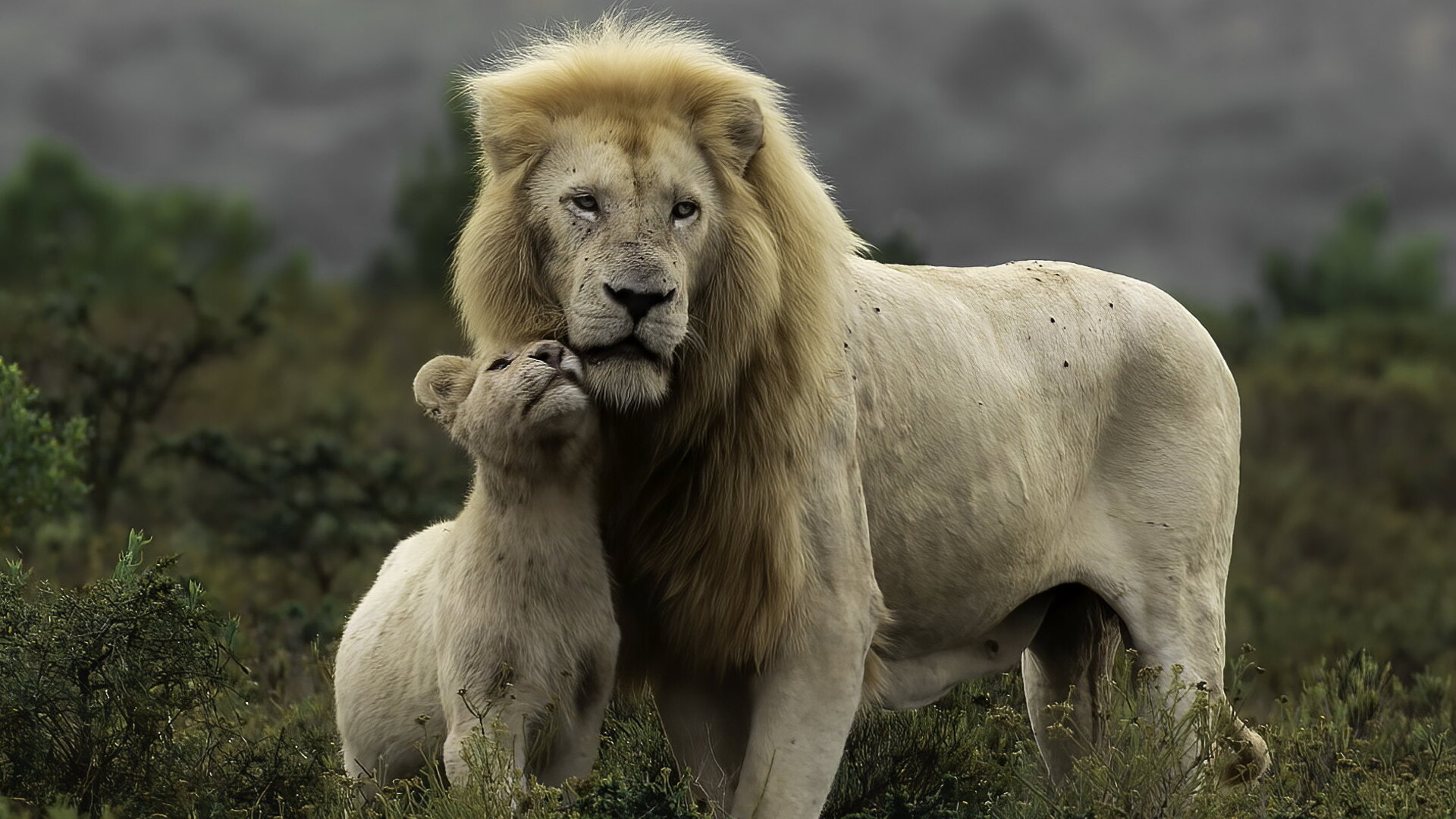
If Shamwari is defined by cats and Pumba by its white lions, Kwandwe is defined by rhino — and black rhino in particular. Critically endangered and famously elusive, the black rhino is one of Africa's hardest animals to see well, and Kwandwe is among the best places on the continent to do so responsibly. The reserve protects a significant population of both black and white rhino, and its guiding team's expertise in finding and quietly approaching them is genuinely world-class.
The signature experience is rhino tracking on foot: setting out with an armed, expert guide to follow fresh sign through the thickets until, if you are fortunate, you come upon a black rhino browsing quietly ahead of you. It is humbling, adrenaline-charged and deeply moving — a far cry from a vehicle sighting. Guests can also learn about the reserve's conservation and monitoring work first-hand, understanding the round-the-clock effort that keeps these animals safe. The image of a black rhino cow and her calf pushing through the fynbos, as in our gallery, captures exactly why Kwandwe matters. For the national context, see our Big Five safari guide.
The Big Five & Beyond
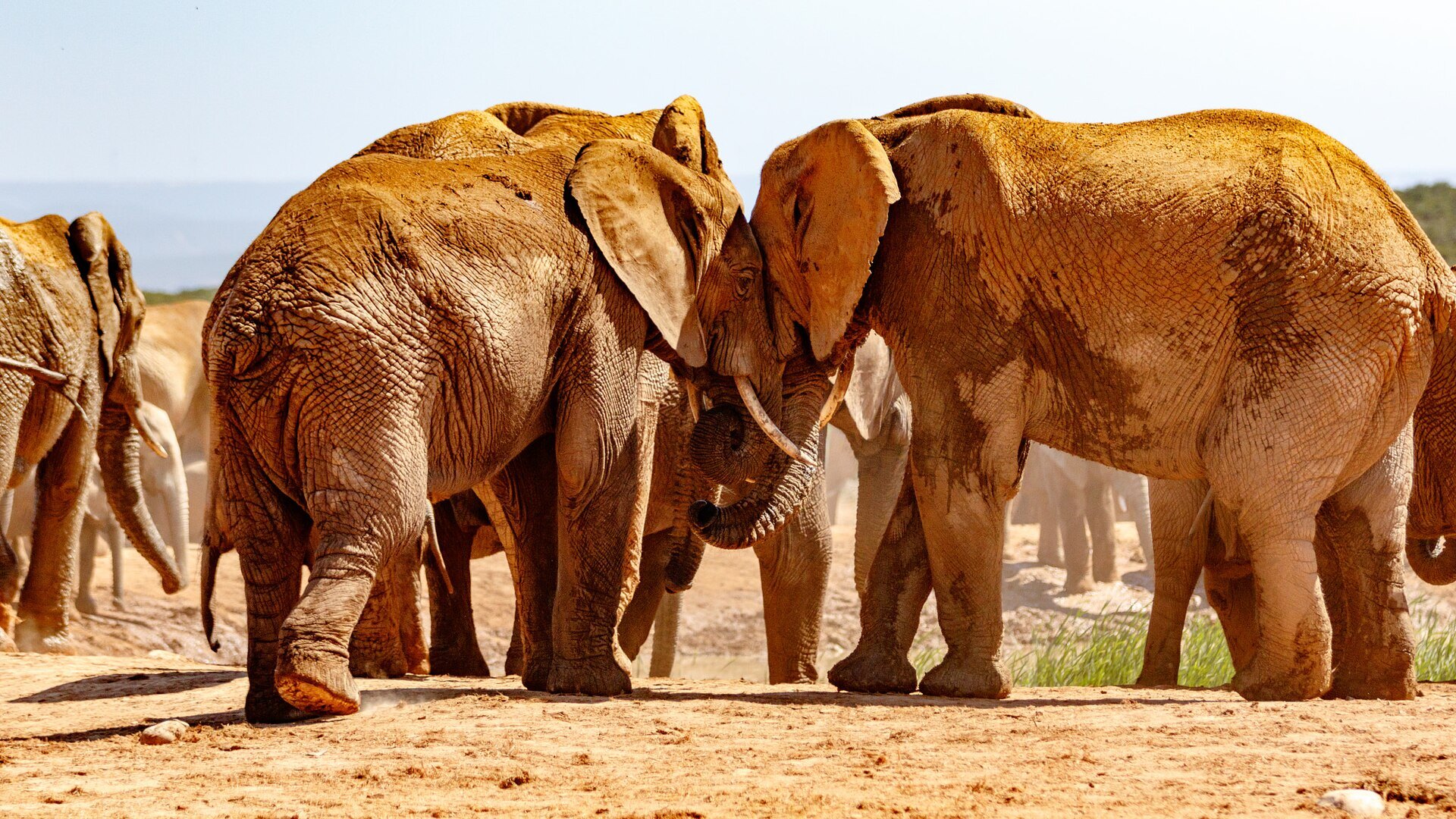
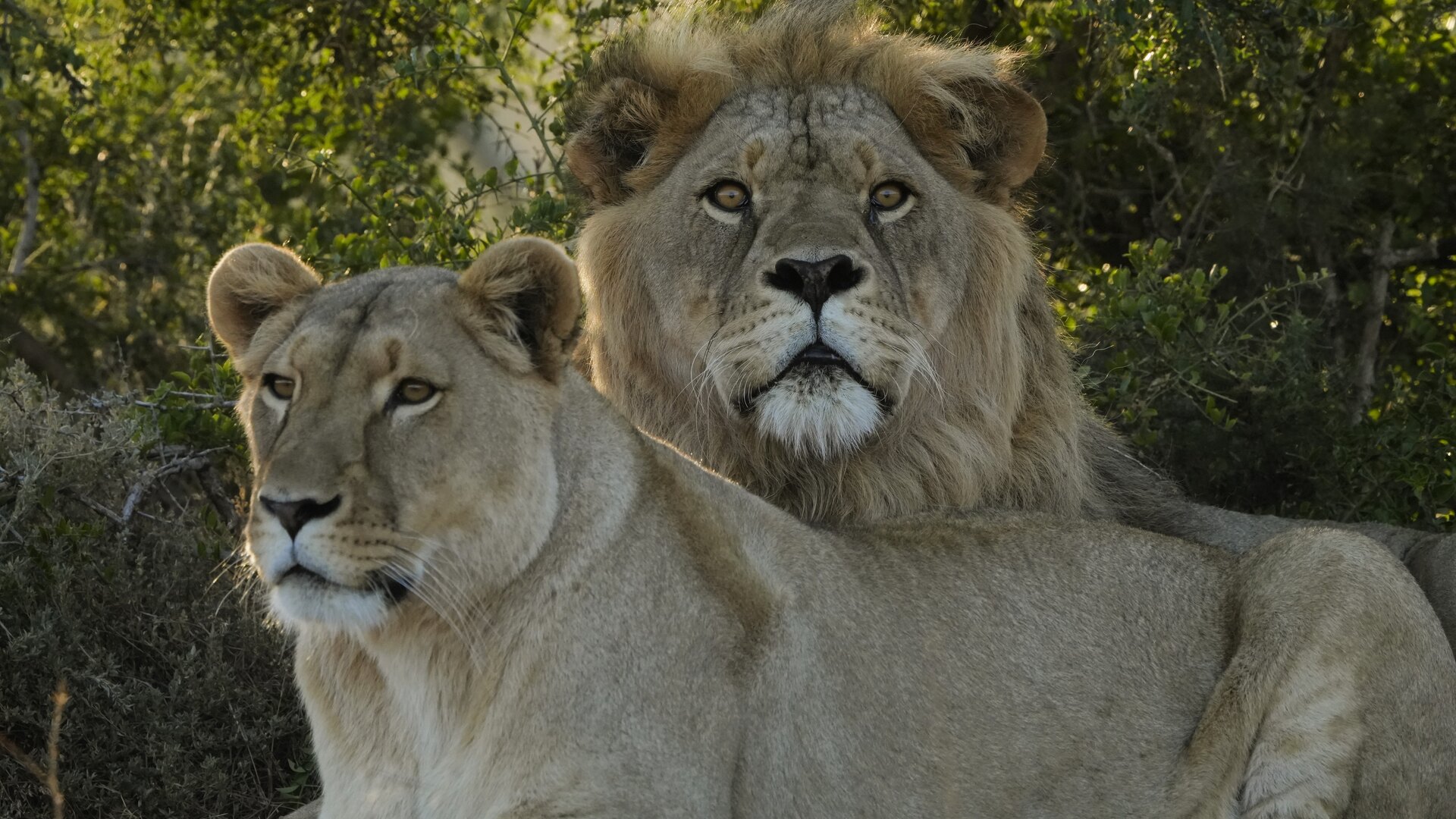
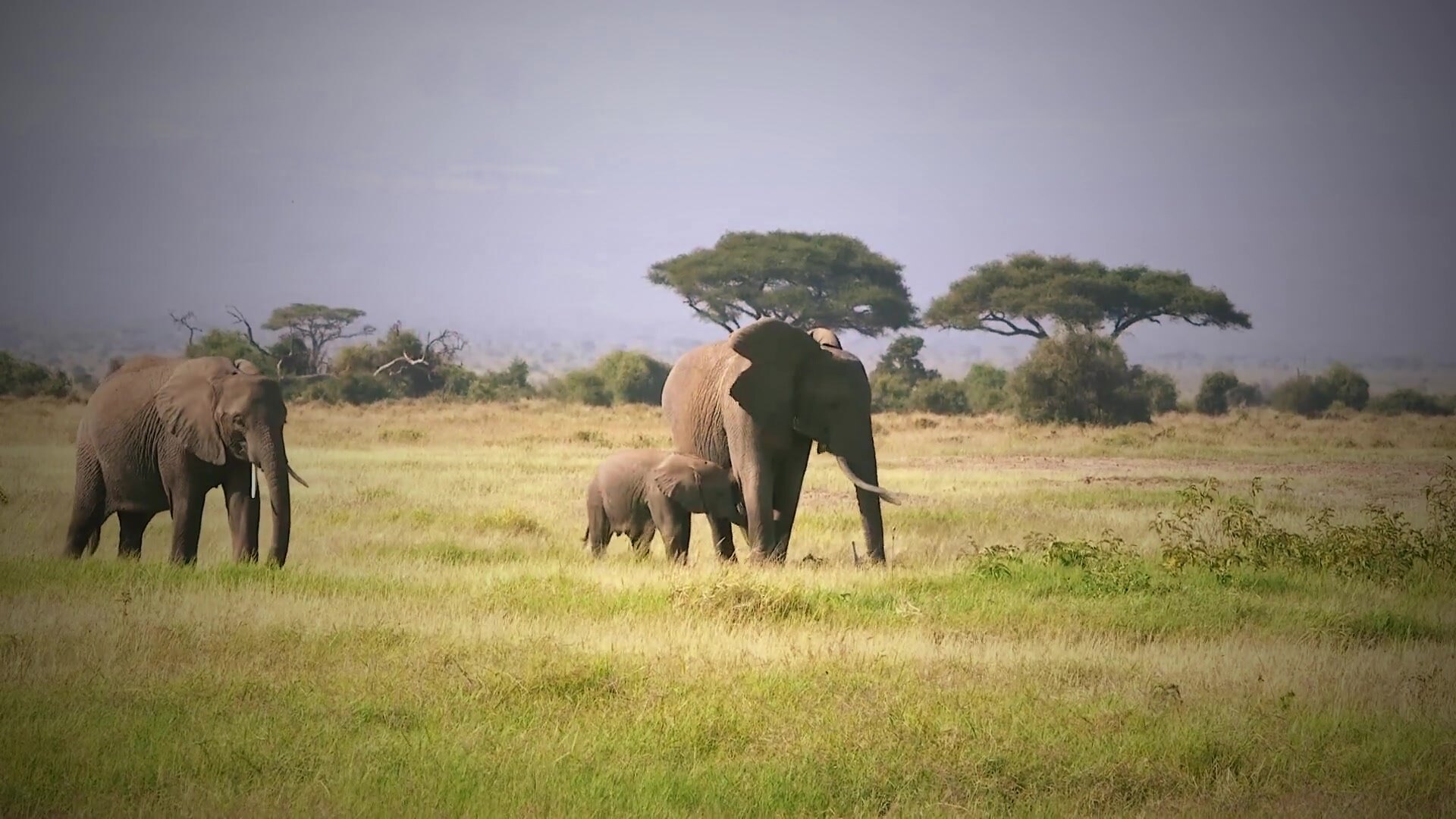
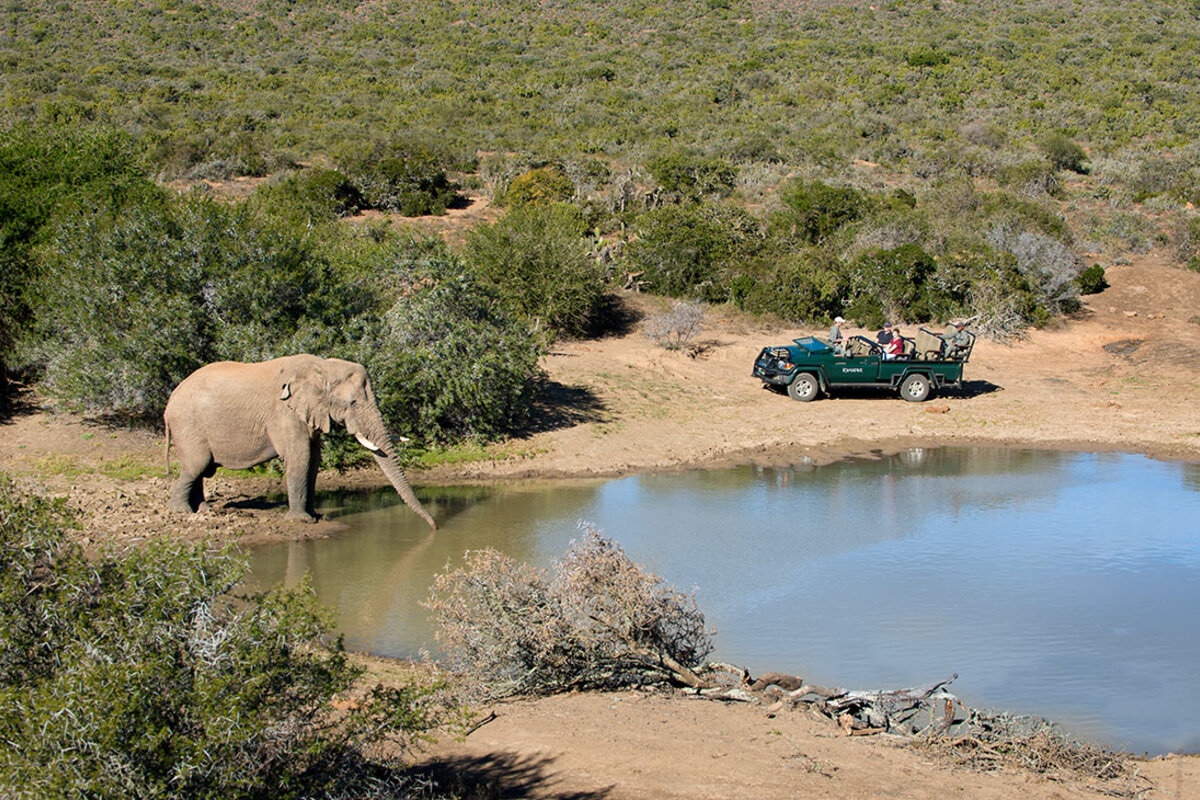
Beyond its rhino, Kwandwe holds the complete Big Five — lion, leopard, elephant and buffalo — plus cheetah, which thrive on the reserve's open plains. Because the guest density is so low, sightings here are unhurried and private: it is common to spend a long, quiet hour with a pride of lions or a cheetah and her cubs with no other vehicle anywhere near. Elephant herds move along the Great Fish River, and the varied terrain supports a rich supporting cast of giraffe, kudu, zebra, wildebeest, hippo and a long antelope list.
Birders are richly rewarded too — the Blue Crane that gives the reserve its name, along with raptors, waterbirds and thicket specialists across the seven biomes. Because Kwandwe is malaria-free, every bit of this is accessible to families with children old enough for game drives, and to travellers who prefer to skip anti-malarials entirely. See how it fits the wider region in our Eastern Cape malaria-free family safari guide.
The Five Lodges of Kwandwe
Kwandwe's five lodges are deliberately intimate, and each has a distinct character, so a stay can be matched precisely to couples, families or exclusive-use groups:
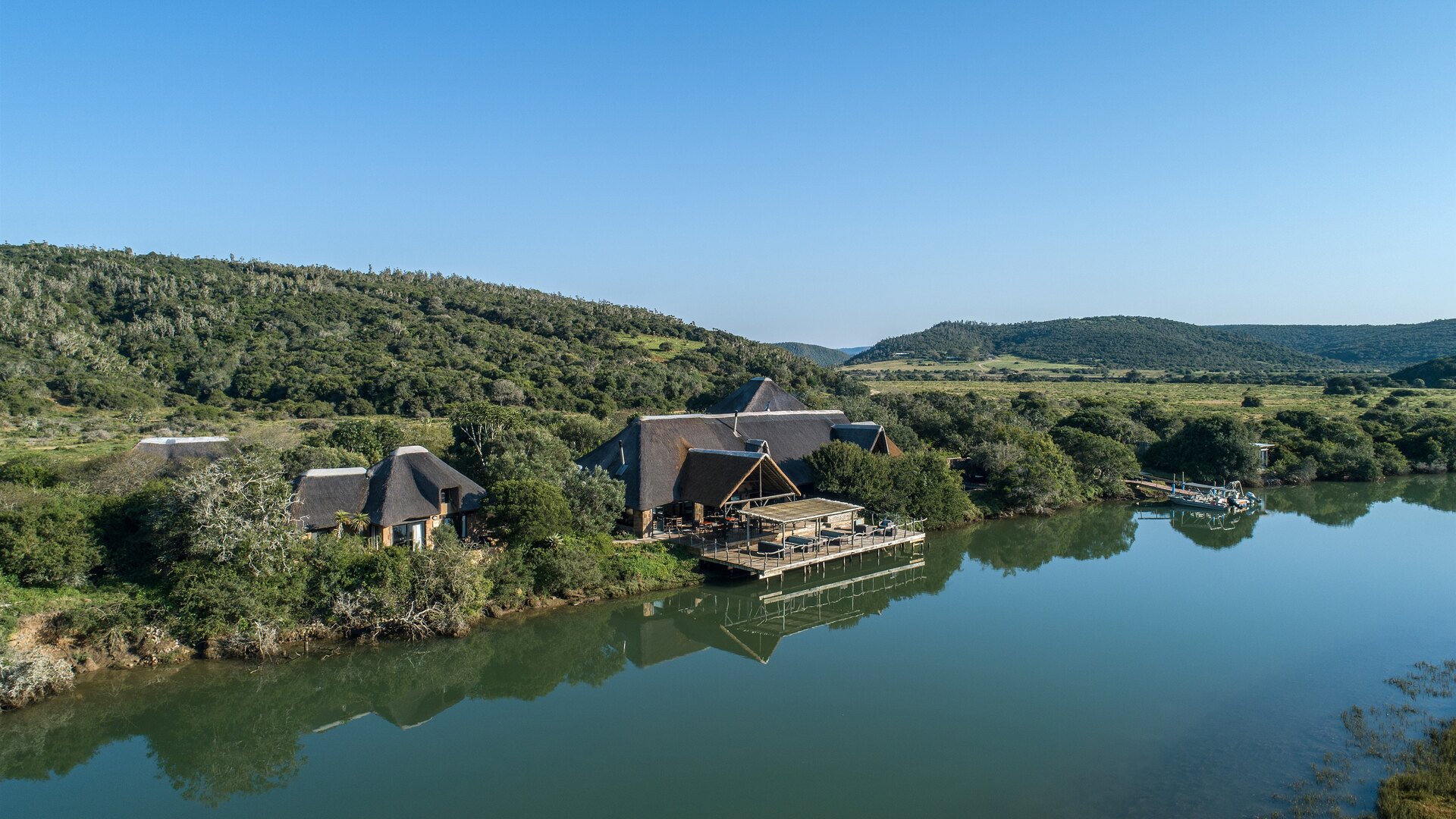
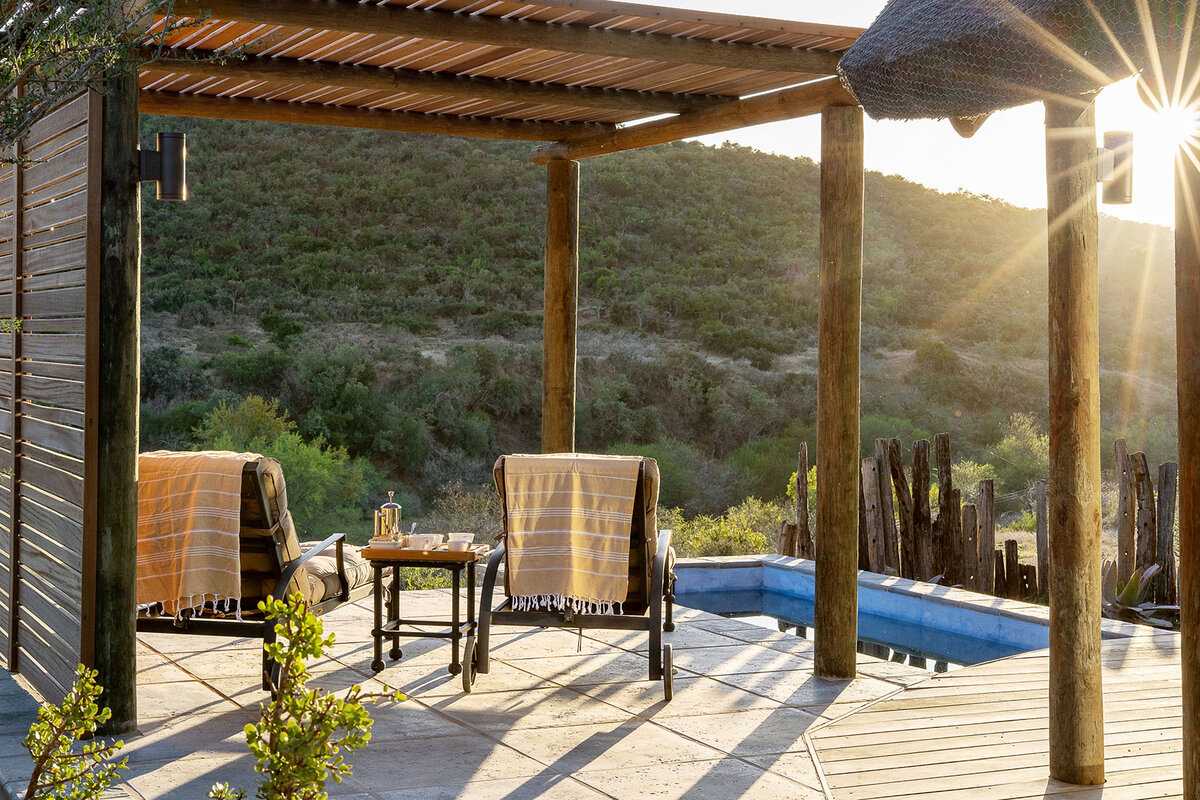
- Great Fish River Lodge — the flagship: nine glass-fronted suites strung along the riverbank cliff, each with a private plunge pool and sweeping views over the Great Fish River. Contemporary, romantic and utterly private.
- Ecca Lodge — a contemporary, family-friendly lodge of six suites, with bold design, space for children and options with a private safari vehicle.
- Melton Manor — a four-bedroom, sole-use frontier-style farmhouse with its own chef, guide and vehicle; ideal for families or groups wanting exclusive use.
- Uplands Homestead — a beautifully restored 1905 farmhouse for exclusive use by up to six guests, full of settler-era character and complete privacy.
- Fort House — a four-bedroom villa elevated above the plains, with a wine cellar and spa treatment room, for the most exclusive stays.
Whichever you choose, the rhythm blends classic game drives with Kwandwe's signature walking safaris and rhino tracking, unhurried meals and long afternoons watching the light move across the valley. The riverside suites and private plunge pools of Great Fish River Lodge, pictured throughout this review, are the reserve at its most seductive. For the wider category, browse our Eastern Cape private game reserves roundup.
Space, Privacy & the Private Airstrip
Exclusivity is Kwandwe's defining luxury. Thirty thousand hectares shared by only five lodges produces a land-to-guest ratio most reserves cannot match, and it changes the entire feel of the safari. Sightings are private and unhurried, drives roam freely without radio-directed crowds, and walking safaris — including the famous rhino tracking — are genuinely possible because there is space to do them properly and safely.
Access adds to the sense of a world apart. Kwandwe has its own private airstrip, so guests can fly into Gqeberha or East London and take a 30-to-35-minute charter directly into the reserve, stepping from the aircraft almost straight onto a game drive. Those preferring to drive reach the reserve in about two hours from Gqeberha. Either way, the arrival feels like crossing into a private wilderness — because that is exactly what it is. It is one of the reasons Kwandwe features so often when guests ask us for the most exclusive corner of the Eastern Cape.
Best Time to Visit Kwandwe
Kwandwe rewards visitors year-round, and being malaria-free means no season carries a health penalty. The dry winter (May to September) is prime for game viewing and rhino tracking: the bush thins, sign is easier to follow, and animals concentrate near water — bring warm layers for cold, clear mornings. The green summer (October to April) brings lush landscapes, newborn animals and superb birding, with warm days ideal for the plunge pools; game viewing stays very good throughout. The shoulder months of spring and autumn offer an excellent balance of comfort and visibility.
The Eastern Cape's milder climate means Kwandwe avoids the fierce summer heat of the lowveld, keeping it comfortable in every season. For the national picture see when to visit South Africa for safari.
Plan Your Kwandwe Safari
We know Kwandwe's lodges and its rhino-tracking experience intimately, and build every stay by hand — the right lodge, the right season, and a seamless charter or transfer. Tell us your dates and who's travelling, and we'll design it.
Plan My Kwandwe Safari Browse Safari Packages WhatsApp UsHow to Book Kwandwe — and What It Costs
Kwandwe sits at the exclusive end of the Eastern Cape market, and its low guest numbers mean availability in peak season is genuinely limited — booking ahead through a specialist is essential. As a guide, Kwandwe's lodges run from around US$750 per person per night at Ecca and Great Fish River Lodge up to US$1,600 or more per night for the sole-use villas of Melton Manor, Uplands and Fort House, all fully inclusive of meals, drinks, game drives, walking safaris and rhino tracking. Most guests stay two to four nights to make the most of the walking experiences and the sheer space.
We build bespoke Kwandwe stays and combine them with wider South African journeys — Cape Town, the Winelands and the Garden Route. If you are comparing reserves, our roundup of Eastern Cape private game reserves sets Kwandwe alongside Shamwari, Kariega and Pumba, while the best malaria-free safari destinations guide places it in national context. For travellers who want space, privacy and the black rhino, nothing in the Eastern Cape matches it.