Key Takeaways
- Shamwari Private Game Reserve is a 25,000-hectare malaria-free Big Five reserve in the Eastern Cape — home to lion, leopard, elephant, rhino and buffalo across five of South Africa's nine biomes.
- It sits just 45 minutes to an hour from Gqeberha (Port Elizabeth) airport on tarred roads — no light aircraft, no anti-malarials, no long transfers.
- Shamwari is a conservation flagship, home to the Born Free big-cat sanctuaries, a Wildlife Rehabilitation Centre and the Shamwari Foundation — and a multiple winner of the World's Leading Conservation Company award.
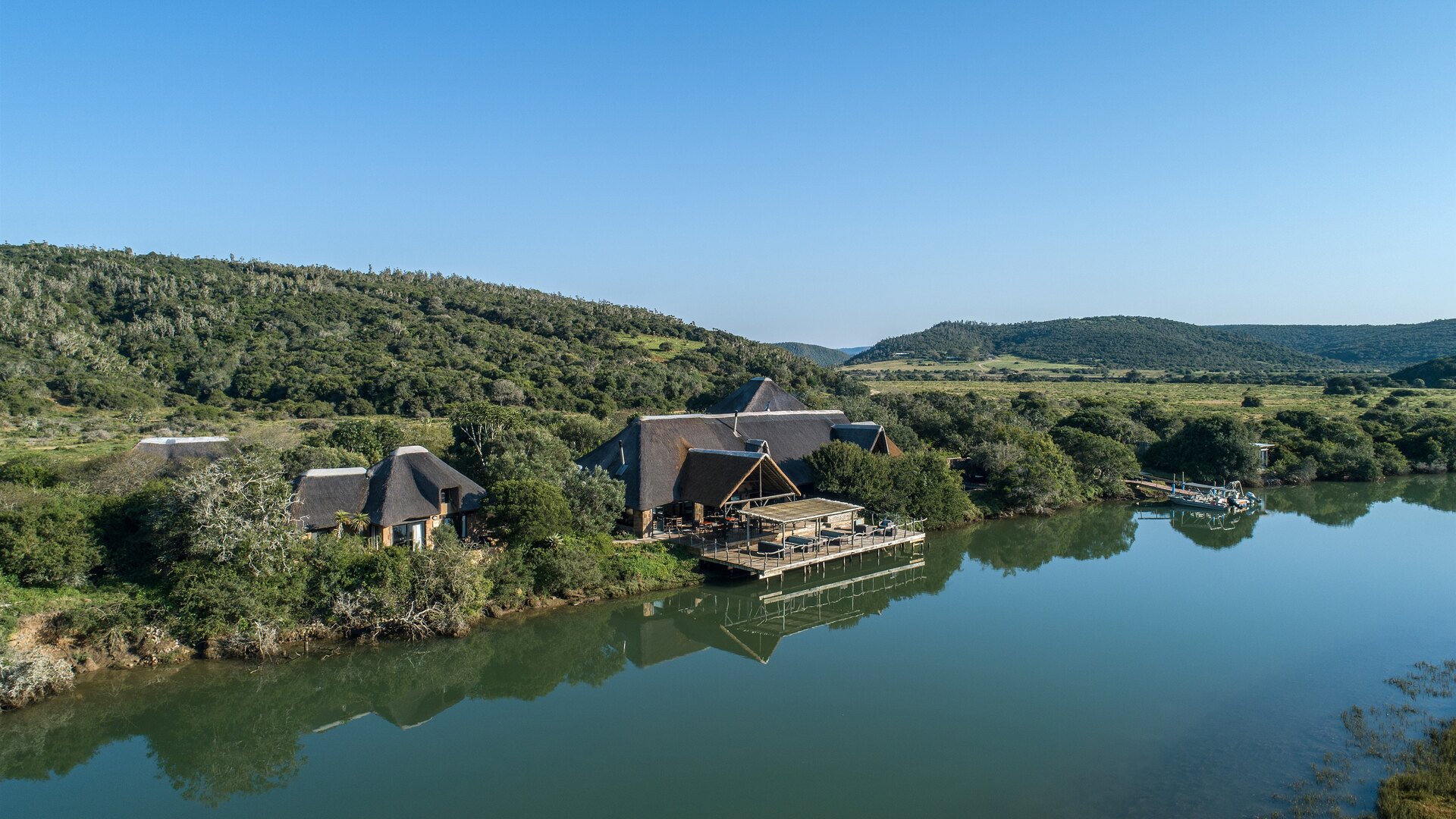
- The reserve has seven distinct lodges — Bayethe, Eagles Crag, Explorer Camp, Long Lee Manor, Riverdene, Sarili and Sindile — spanning tented luxury, cliff-top suites and family comfort.
- Because it is malaria-free and easy to reach, Shamwari is one of the best family and first-timer safaris in South Africa, and a natural pairing with Cape Town and the Garden Route.
- We build bespoke Shamwari stays from around US$550–US$1,500 per person per night depending on lodge and season. See our guides to Eastern Cape private game reserves and malaria-free safari destinations.
The Reserve That Started It All
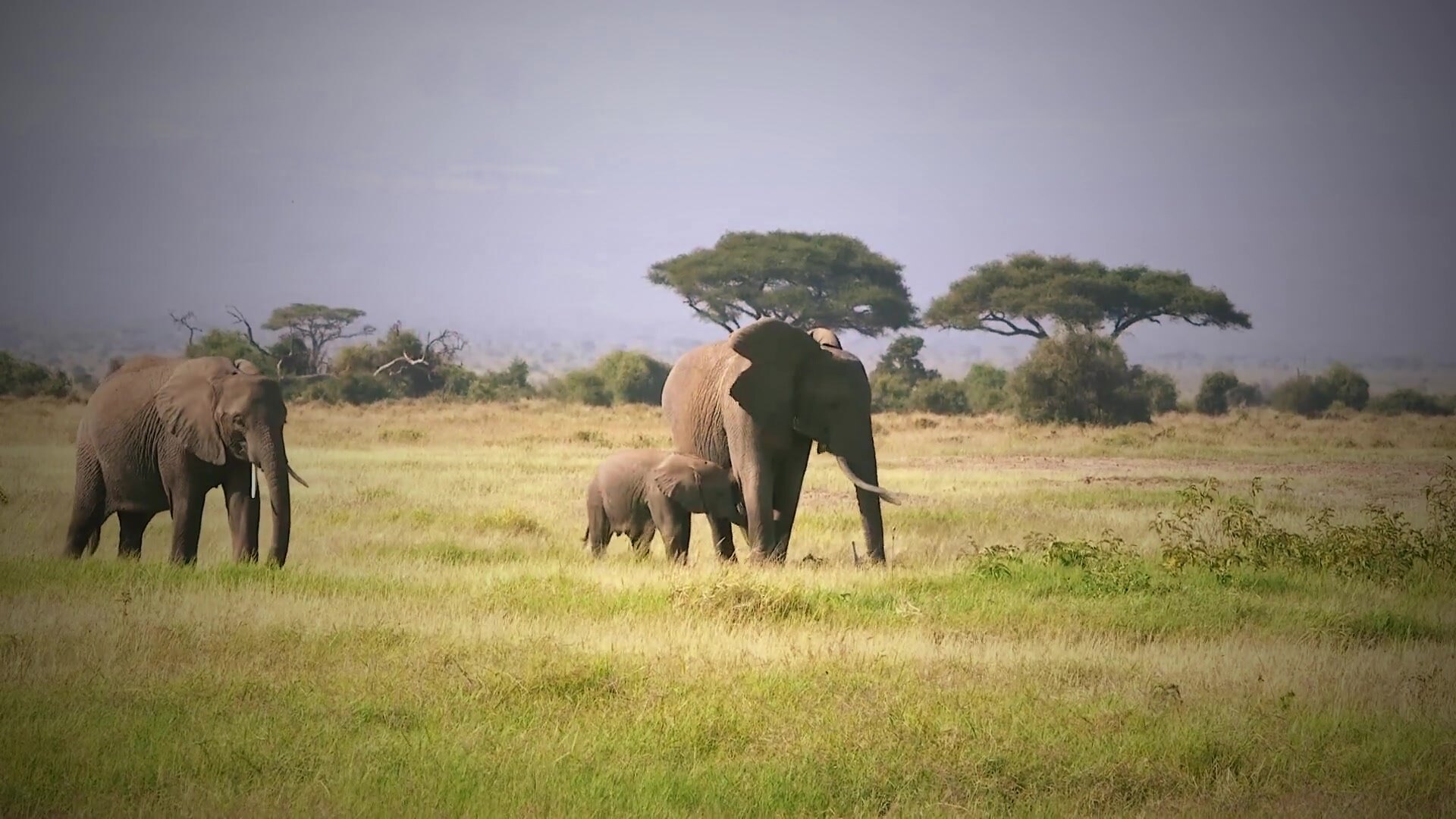
Before Shamwari, the Eastern Cape was not a safari destination. It was farmland — overgrazed, fenced and largely emptied of its big game. Then, in the early 1990s, a single vision began buying back those farms, dropping the fences and letting the wild return. Three decades later, Shamwari Private Game Reserve spans roughly 25,000 hectares of restored wilderness between Gqeberha and Makhanda, holds all of the Big Five, and has become the reserve that every other Eastern Cape property is measured against. It is, quite simply, the flagship — the place that proved a malaria-free, world-class Big Five safari was possible barely an hour from a major airport.
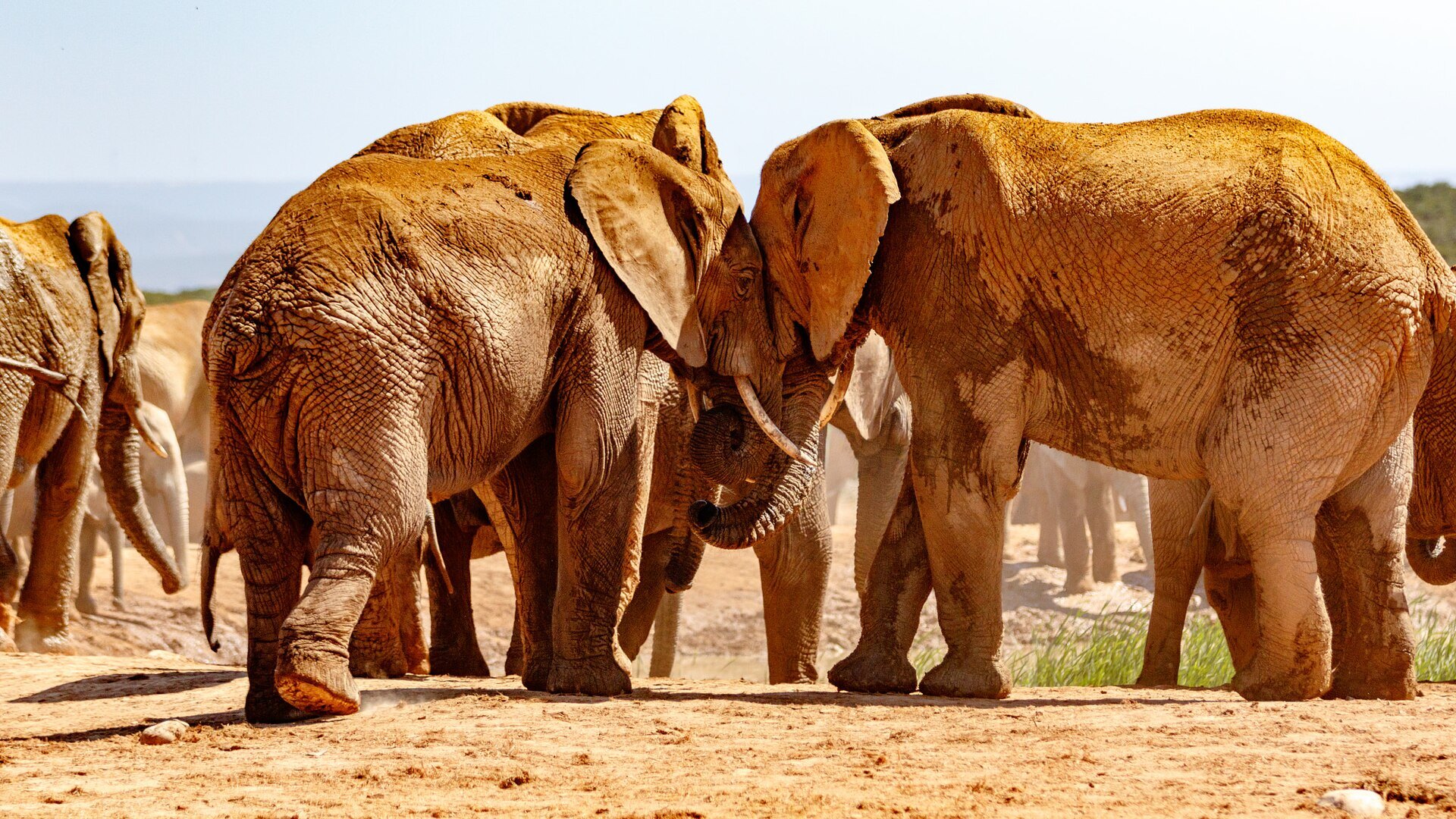
That accessibility is the first thing that strikes you. There is no charter flight, no anti-malarial course, no half-day of dirt roads. You land at Gqeberha, drive forty-five minutes to an hour on tar, and by mid-afternoon you can be watching elephants drink at a waterhole. For families with young children, for first-time safari-goers, and for anyone bolting a bush experience onto a Cape Town and Garden Route holiday, that ease is transformative. But Shamwari is far more than convenient — it is one of the most decorated conservation reserves on the continent, and the wildlife shows it.
Lions, Leopards & the Big-Cat Legacy
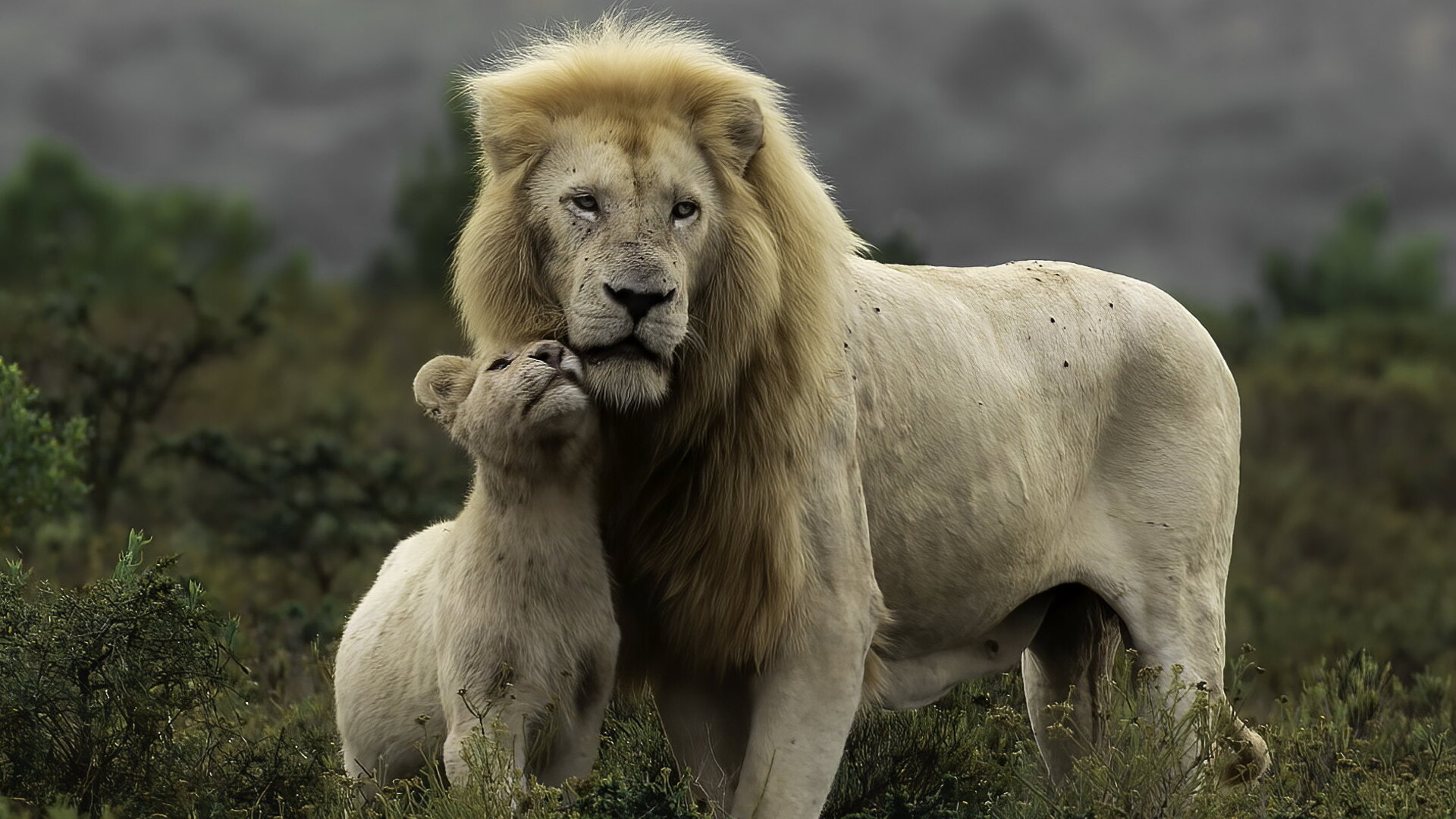
If Shamwari has a signature, it is cats. The reserve's free-roaming lion prides are its headline act — territorial males calling across the valleys at dawn, lionesses moving cubs through the thickets, the whole soap opera of pride life playing out across restored plains that once held nothing but sheep. Because Shamwari's guiding is genuinely excellent and the reserve is large enough to hold real wild dynamics, lion sightings here feel earned rather than staged, and they are frequent. Watching a pair of lions at rest in the golden Eastern Cape grass, as in the image at the top of this review, is the classic Shamwari moment.
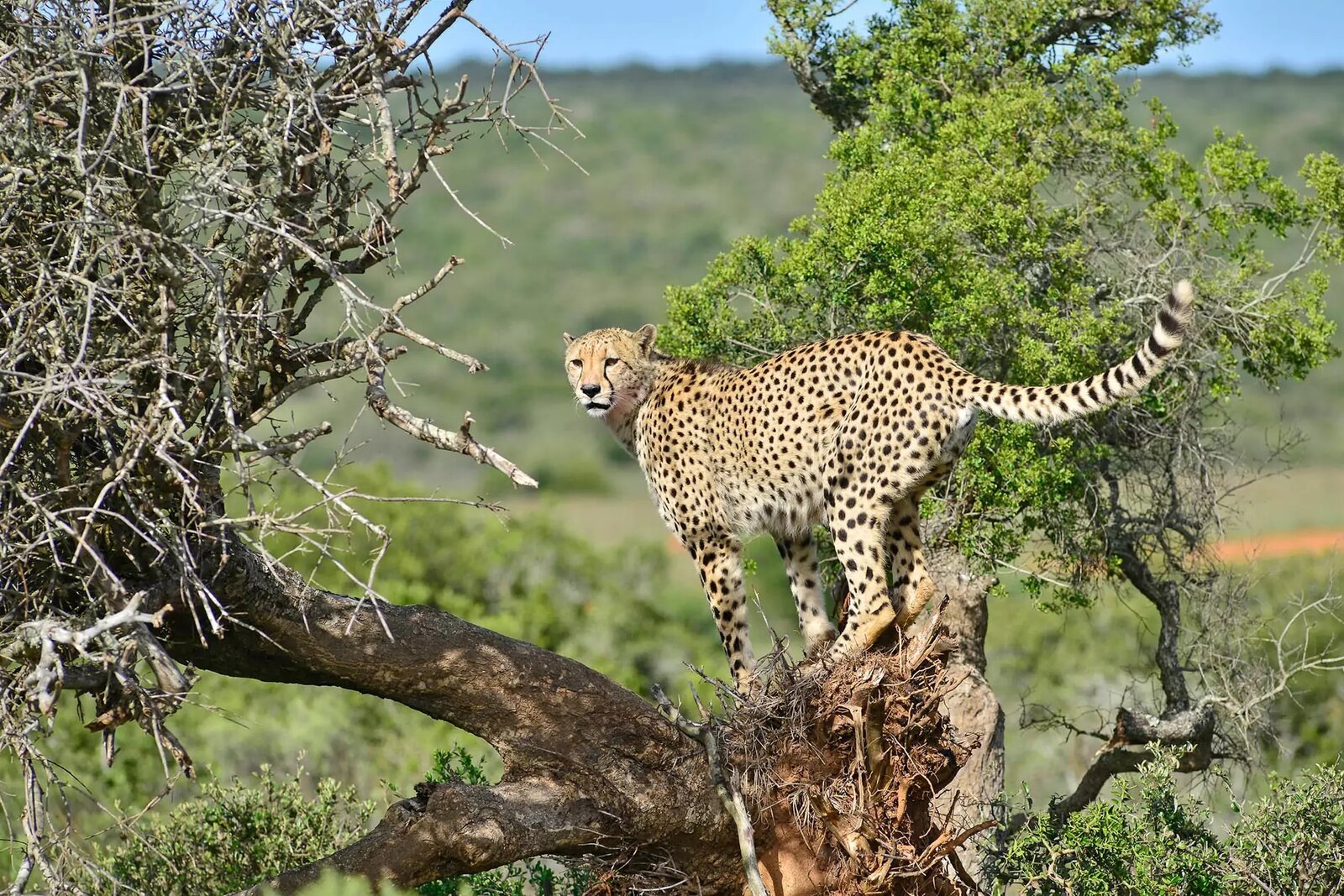
Beyond lions, Shamwari is a strong cheetah reserve — the open terrain suits them, and sightings of cheetah hunting or resting with cubs are a highlight for many guests. Leopard are present too, more secretive as always, haunting the rocky ridges and riverine bush. Add the reserve's role as home to the Born Free big-cat sanctuaries (more on that below), and Shamwari becomes, in effect, the big-cat capital of the Eastern Cape. For the wider national picture of predator viewing, see our guide to the Big Five safari in South Africa.
Born Free & the Shamwari Conservation Story
What genuinely sets Shamwari apart from every other reserve in the region is conservation — not as a marketing line, but as the reserve's founding purpose. Shamwari has been named the World's Leading Conservation Company more times than any other property, and the substance behind that is easy to see on the ground. The reserve is home to two Born Free Foundation big-cat sanctuaries, which provide lifelong care for lions and leopards rescued from circuses, zoos and captivity around the world — animals that can never be released, given a dignified home in the African bush at last.
Alongside Born Free, Shamwari runs an on-site Wildlife Rehabilitation Centre that treats and releases injured and orphaned wildlife, and the Shamwari Foundation, which drives anti-poaching, environmental education and community programmes. For many guests — especially families — a visit to the conservation facilities is the emotional heart of the stay, a reminder that this restored wilderness exists because people chose to bring it back. It is the kind of story that turns a good safari into a meaningful one, and it is unique to Shamwari.
The Big Five & Beyond
Shamwari delivers the complete Big Five — lion, leopard, elephant, rhino (both white and black are protected here) and buffalo — across a landscape that packs an astonishing five of South Africa's nine biomes into a single reserve. That ecological diversity is why a two- or three-night stay feels so generous: within a single day's drives you can move from open grassland to dense thicket, from riverine forest to Karoo scrub, each holding different species.
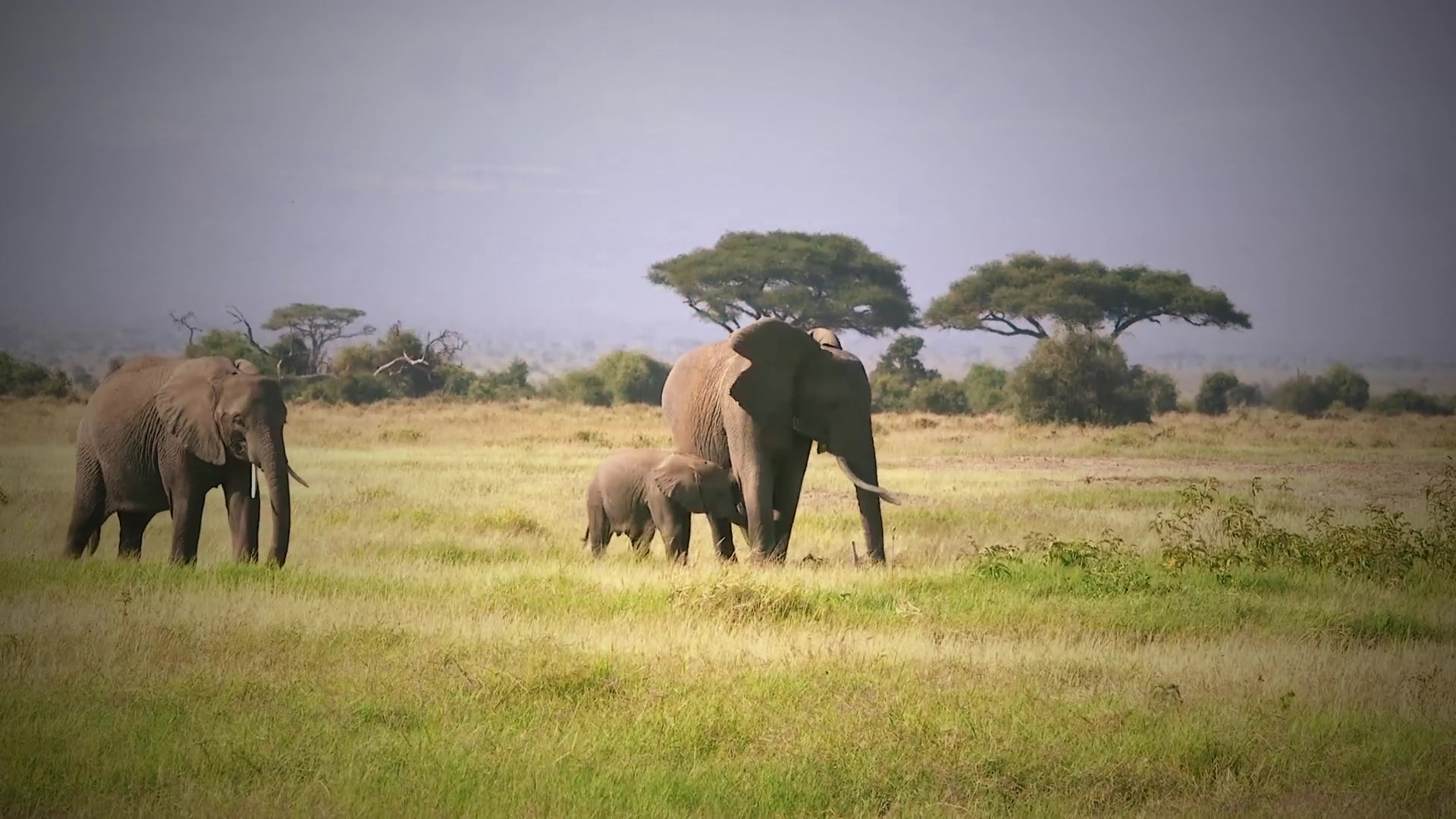
The supporting cast is superb. Elephant herds move through the valleys, white rhino graze the open plains, and general game — giraffe, zebra, kudu, wildebeest, warthog, hippo and a long list of antelope — is abundant and relaxed. Birdlife is excellent year-round, with the varied habitats drawing everything from raptors to waterbirds. Because Shamwari is malaria-free, you can enjoy all of it with young children and complete peace of mind — one of the reasons it appears in our guide to family safaris in South Africa.
The Seven Lodges of Shamwari
One of Shamwari's great strengths is choice. Rather than a single style, the reserve offers seven distinct lodges and camps, so a stay can be matched precisely to couples, families or groups, and to any budget from accessible-luxury to ultra-exclusive:
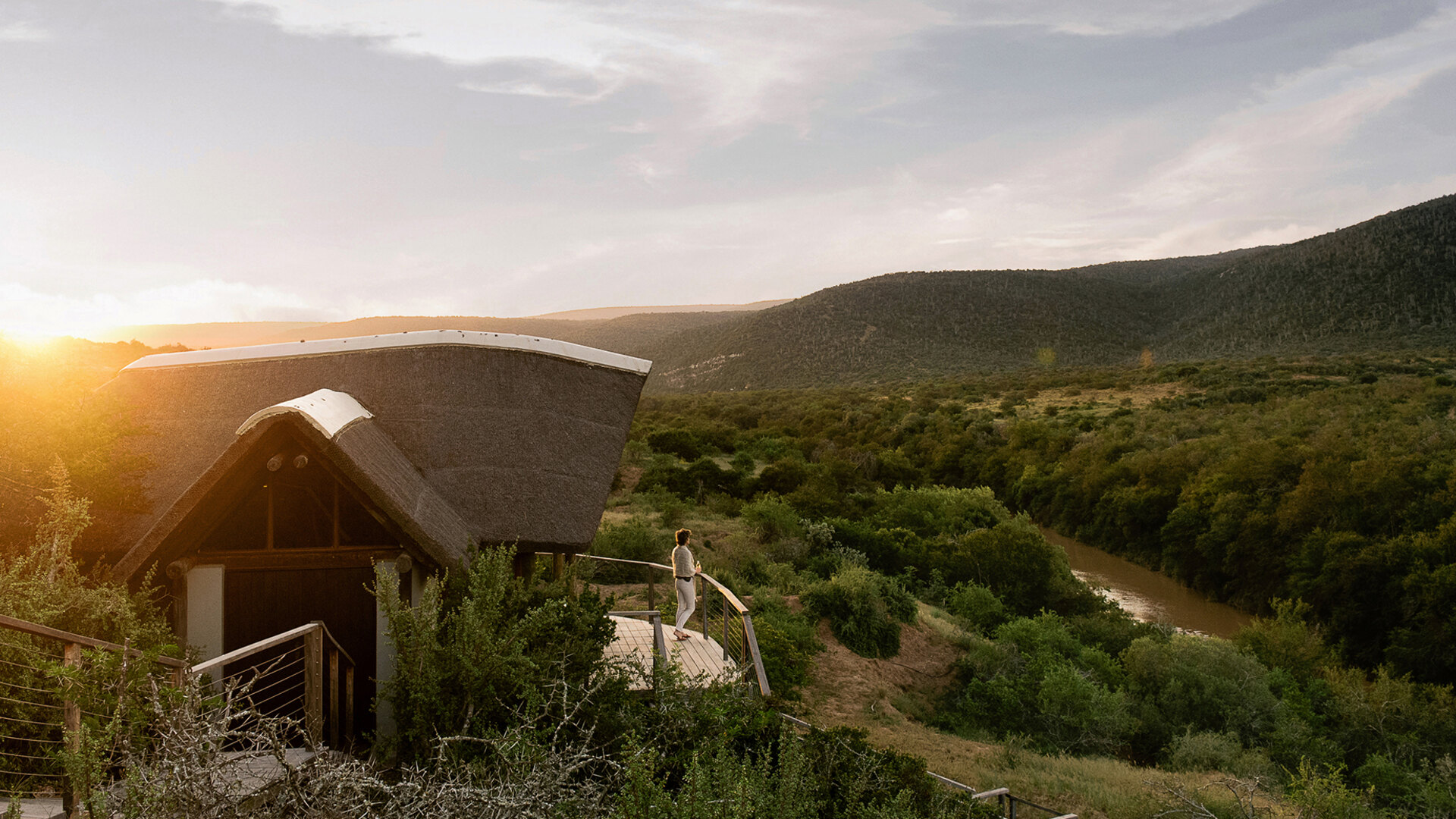
- Eagles Crag — the romantic flagship: contemporary glass-and-stone suites tucked against a forested cliff, each with a private plunge pool. The choice for honeymooners and couples.
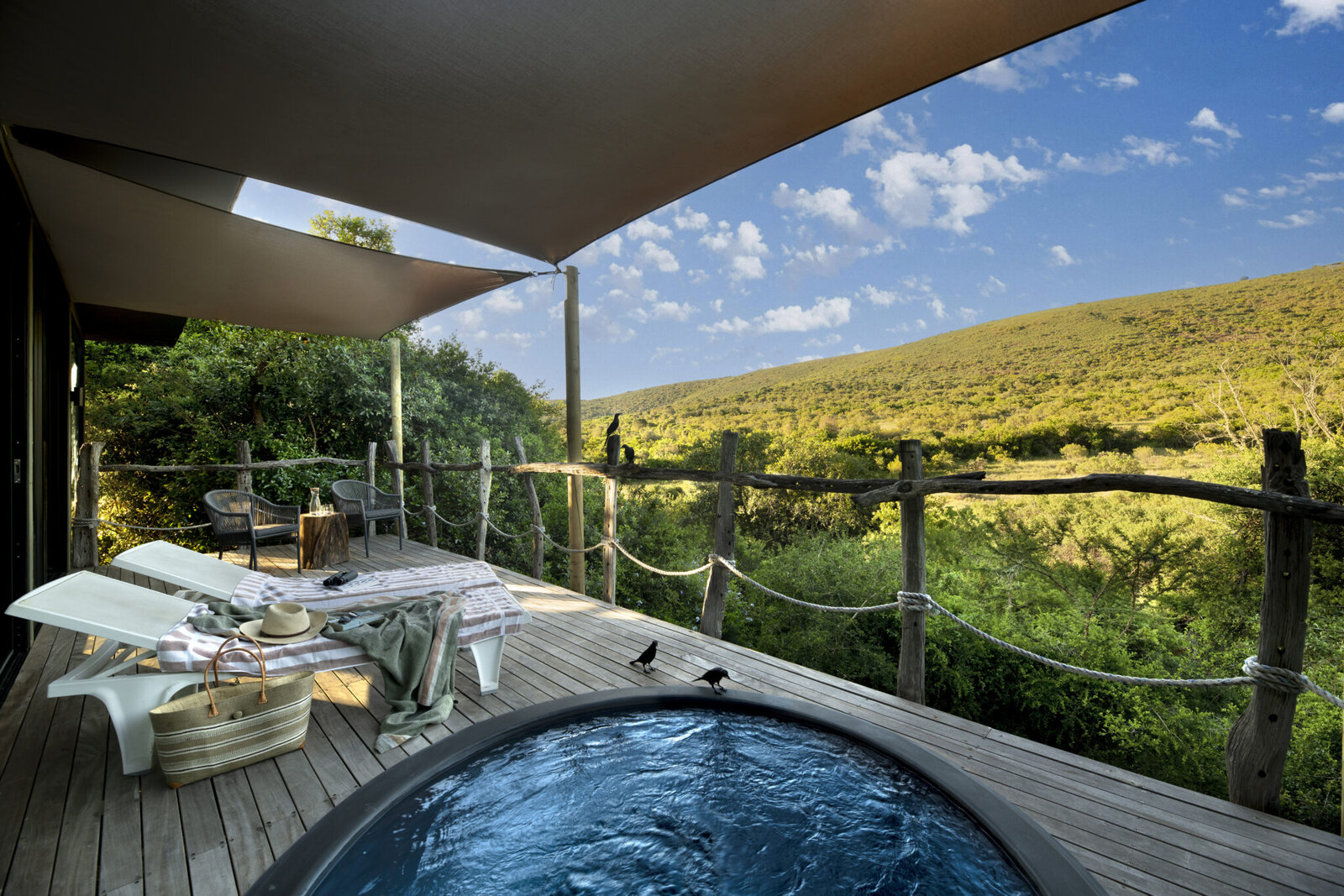
- Bayethe Tented Lodge — barefoot-luxury safari tents with private decks and pools, hidden in riverine bush. Wonderfully atmospheric and our frequent all-round pick.
- Sindile — an exclusive, contemporary tented lodge in a secluded corner of the reserve, all sweeping views and quiet privacy.
- Long Lee Manor — a grand Edwardian manor house overlooking the Bushmans River Valley, elegant and classic, ideal for larger parties.
- Riverdene Family Lodge — the family specialist, home to the "Kids on Safari" programme, with interconnecting rooms and a genuinely child-friendly rhythm.
- Sarili Private Villa — a fully staffed, sole-use villa for families or groups wanting complete exclusivity and their own vehicle and guide.
- Explorer Camp — a seasonal, rustic walking-safari camp for those who want to trade vehicles for the intimacy of the bush on foot.
Whichever you choose, the daily rhythm is the timeless one: an early-morning game drive as the light turns gold, a leisurely brunch, downtime through the heat of the day, and an afternoon drive rolling into sundowners and, if you wish, a night drive back to camp. For the wider category, browse our roundup of Eastern Cape private game reserves.
Best Time to Visit Shamwari
Shamwari is a genuine year-round destination, and being malaria-free means no month carries a health penalty. The dry winter (May to September) is prime game-viewing time: the bush thins, animals gather at water, and cool, clear days make for superb sightings — pack warm layers for frosty early-morning drives. The green summer (October to April) brings lush landscapes, newborn animals and excellent birding, with warm days ideal for the lodge plunge pools; game viewing remains very good throughout. Spring and autumn shoulders offer a fine balance of comfortable temperatures and good visibility.
Because the Eastern Cape's climate is milder than the lowveld, Shamwari avoids the extreme summer heat of Kruger, making it comfortable for families in every season. For the national picture, see when to visit South Africa for safari, and for the regional angle, our Eastern Cape malaria-free family safari guide.
Plan Your Shamwari Safari
We know Shamwari's lodges intimately and build every stay by hand — the right lodge for your group, the right season, and a seamless transfer from Gqeberha. Tell us your dates and who's travelling, and we'll design it.
Plan My Shamwari Safari Browse Safari Packages WhatsApp UsHow to Book Shamwari — and What It Costs
Because Shamwari is a single private reserve with seven very different lodges, the smartest way to visit is with an operator who can match the right lodge to your group, secure availability in peak season, and arrange your transfer from Gqeberha. As a guide, Shamwari's lodges run from around US$550 per person per night at the more accessible camps to US$1,500 or more at the flagship Eagles Crag and the sole-use villas, all fully inclusive of meals, drinks and twice-daily game activities. Most guests stay two to three nights — enough for an excellent Big Five experience and a visit to the conservation facilities.
We build bespoke Shamwari stays and fold them into wider South African journeys — Cape Town, the Winelands and the Eastern Cape and Garden Route. If you are comparing reserves, our roundup of Eastern Cape private game reserves puts Shamwari alongside Kwandwe, Kariega and Pumba, while the best malaria-free safari destinations guide sets it in national context. Whatever you choose, Shamwari remains the benchmark: the reserve that brought the Eastern Cape back to life, and still does it best.