Key Takeaways
- Not a Big Five lodge — and proud of it: Bushmans Kloof is a wellness and wilderness retreat, not a predator-and-prey game park. You come for rock art, mountain scenery, quiet and restoration, not lion sightings.
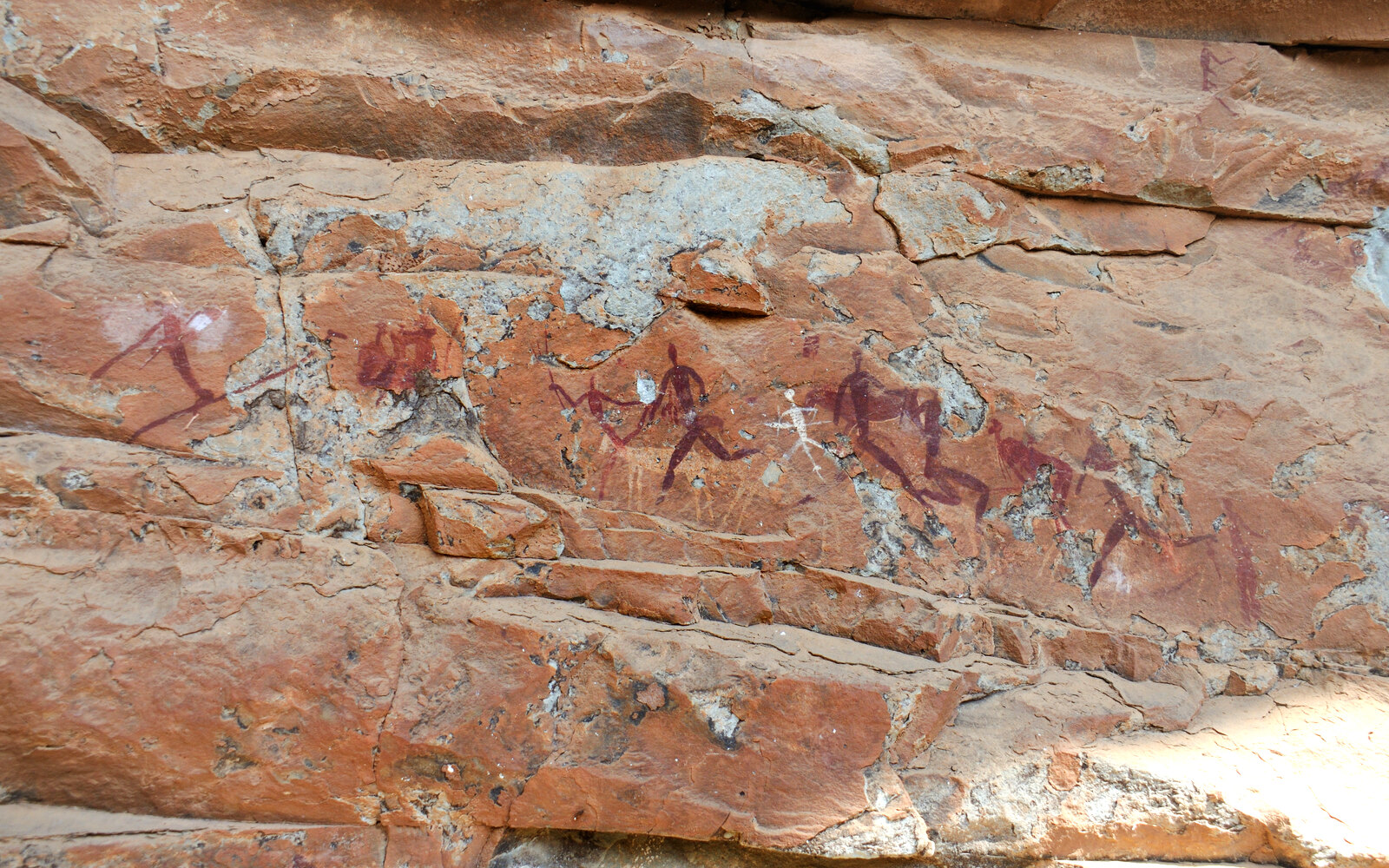
- Custodian of living history: the reserve protects more than 130 ancient San rock-art sites, some of the paintings up to 10,000 years old, with guided walks led by trained guides.
- Cederberg setting, malaria-free: 7,500 hectares of sandstone peaks, clear streams and fynbos in the Cederberg Mountains near Clanwilliam — no anti-malarial tablets needed.
- Reachable from Cape Town by road: roughly 270km, around 3 to 3.5 hours' drive up the N7 — no flight required.
- Five-star pedigree: owned by the family-run Red Carnation Hotels and a member of Relais & Châteaux, with a spa, heated pools, and fynbos-influenced cooking at the Makana restaurant.
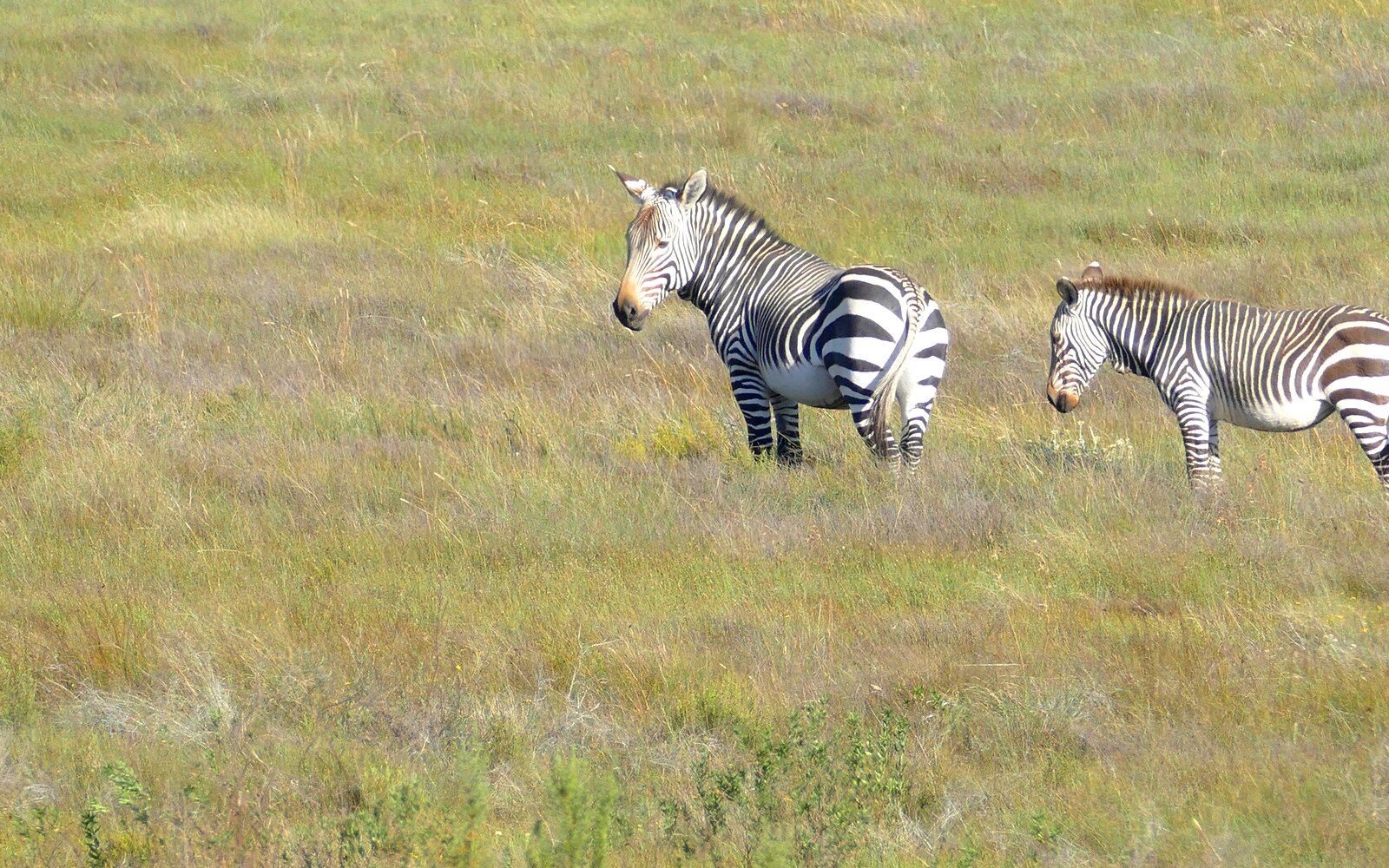
- Mountain wildlife, not savanna herds: Cape mountain zebra, eland, red hartebeest, gemsbok, bontebok, springbok, bat-eared fox and more than 150 bird species.
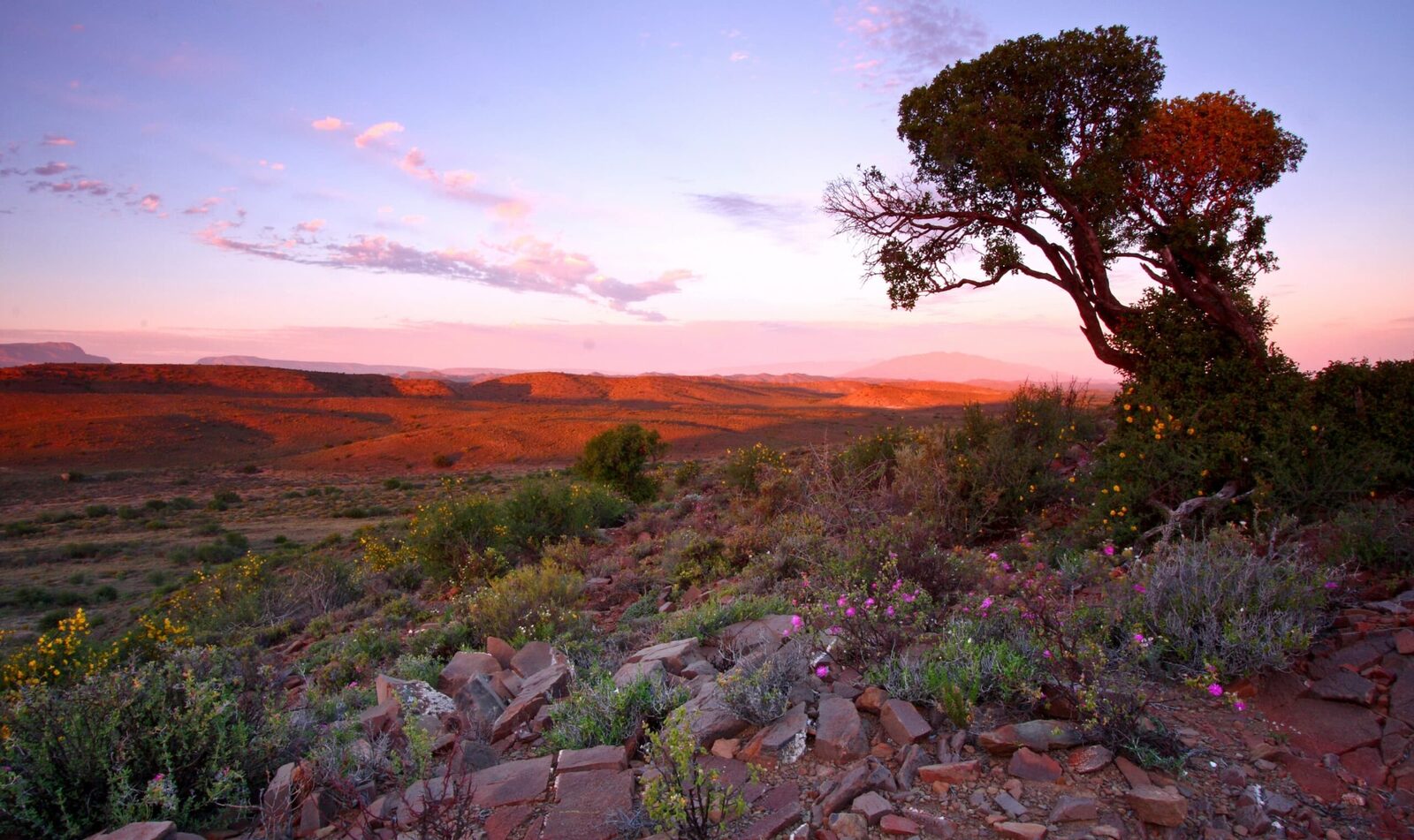
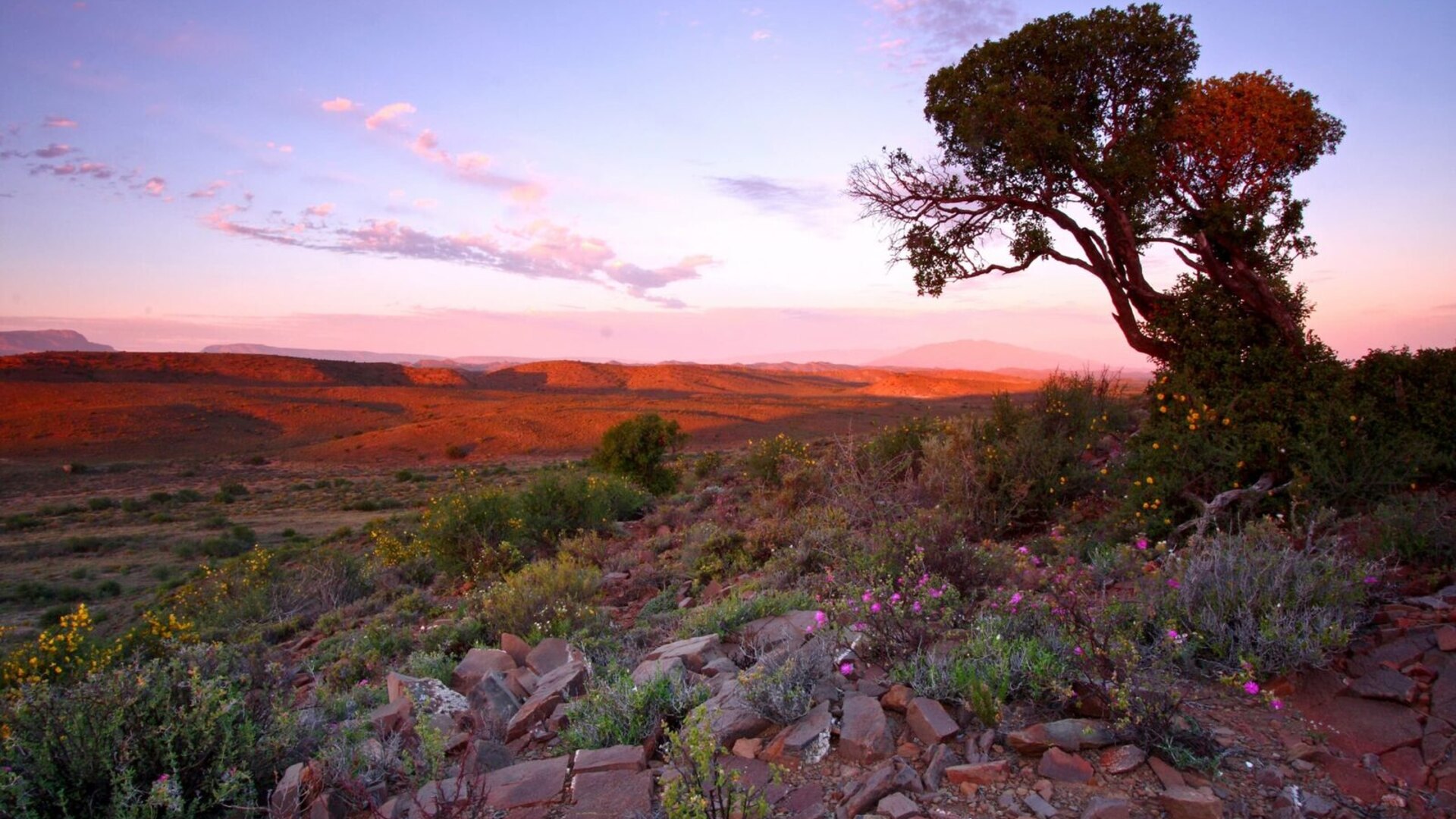
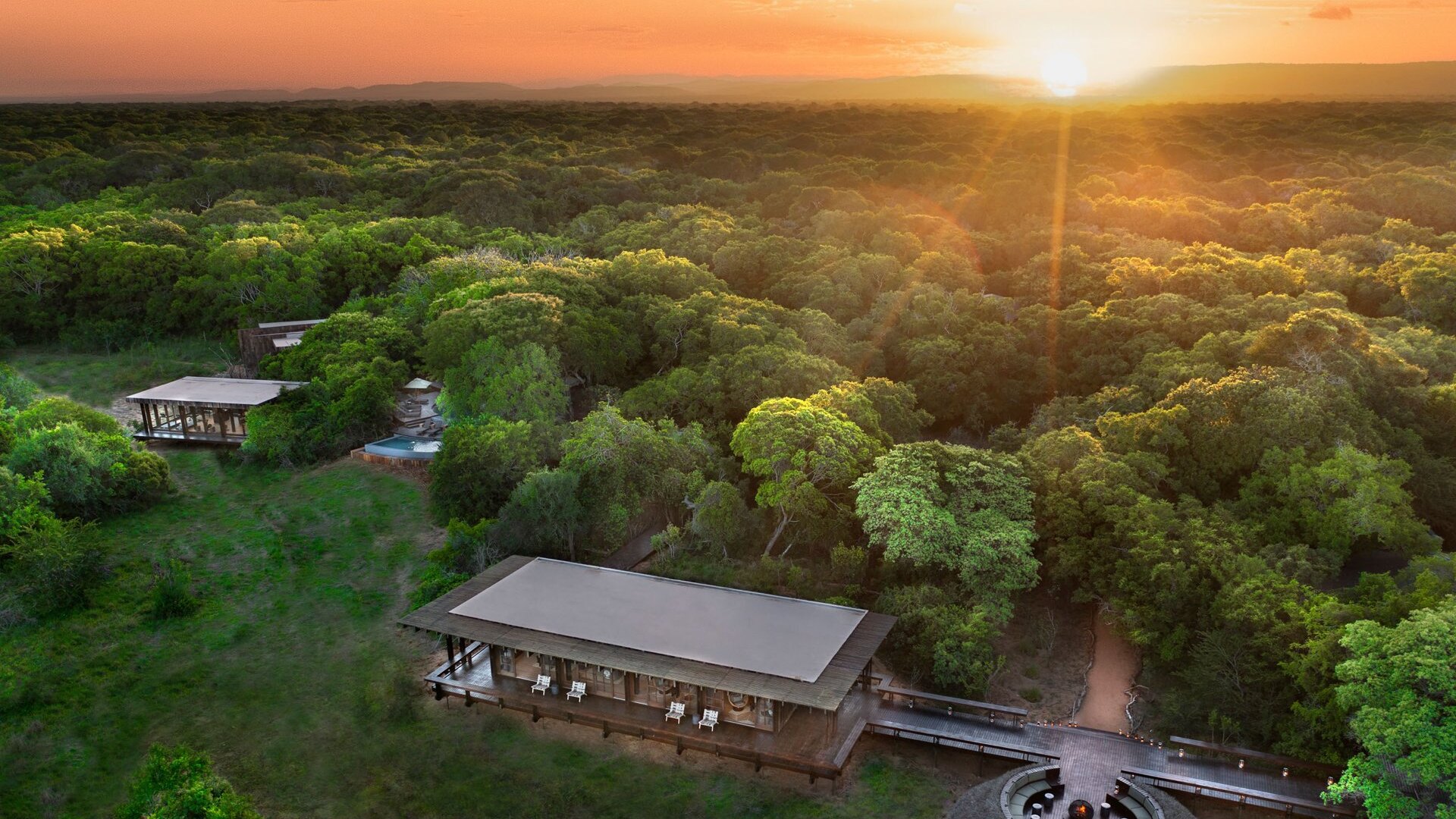
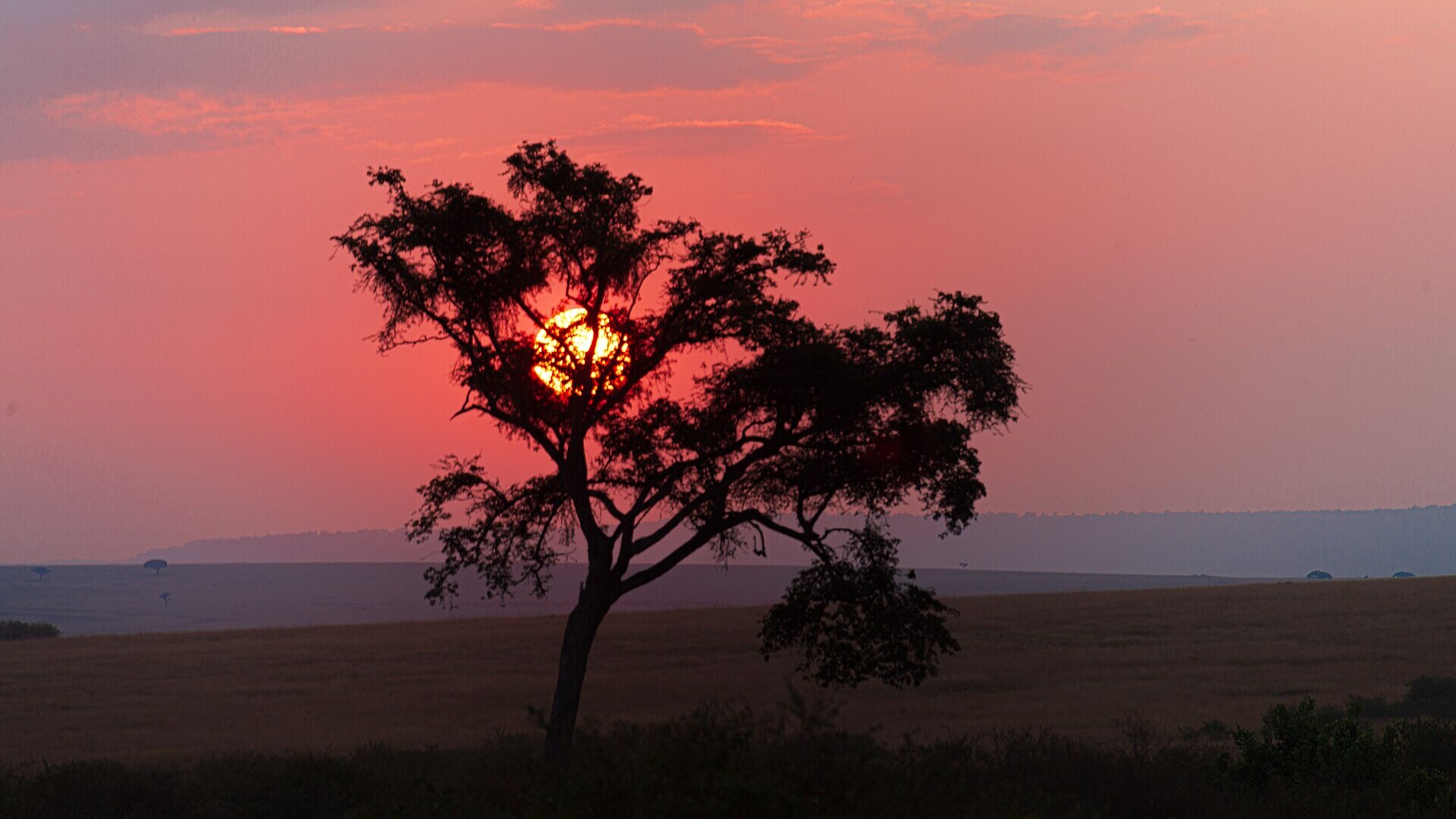
Golden light over the Cederberg sandstone and fynbos slopes that surround Bushmans Kloof.
Why This Review Matters
Most people searching for a "safari near Cape Town" are picturing lions and leopards. Bushmans Kloof is a deliberate counter-argument — a place that trades the Big Five for something rarer in the modern world: deep quiet, ancient art, clean mountain water and time to slow down. This review sets honest expectations. If you want a predator-packed game drive, look at Sanbona or the Garden Route reserves. If you want the finest wellness-and-wilderness retreat in the Western Cape, with a genuine claim to be one of the great cultural hideaways in Africa, read on.
Location & Setting: The Cederberg, Not the Bushveld
Bushmans Kloof Wilderness Reserve & Wellness Retreat sits in the Cederberg Mountains of the Western Cape, near the small town of Clanwilliam and the rooibos-farming country around it. It is roughly 270km from Cape Town — about a 3 to 3.5-hour drive north on the N7, then a short stretch of gravel into the reserve. No domestic flight is required, which makes it one of the easiest true wilderness escapes to reach from the city.
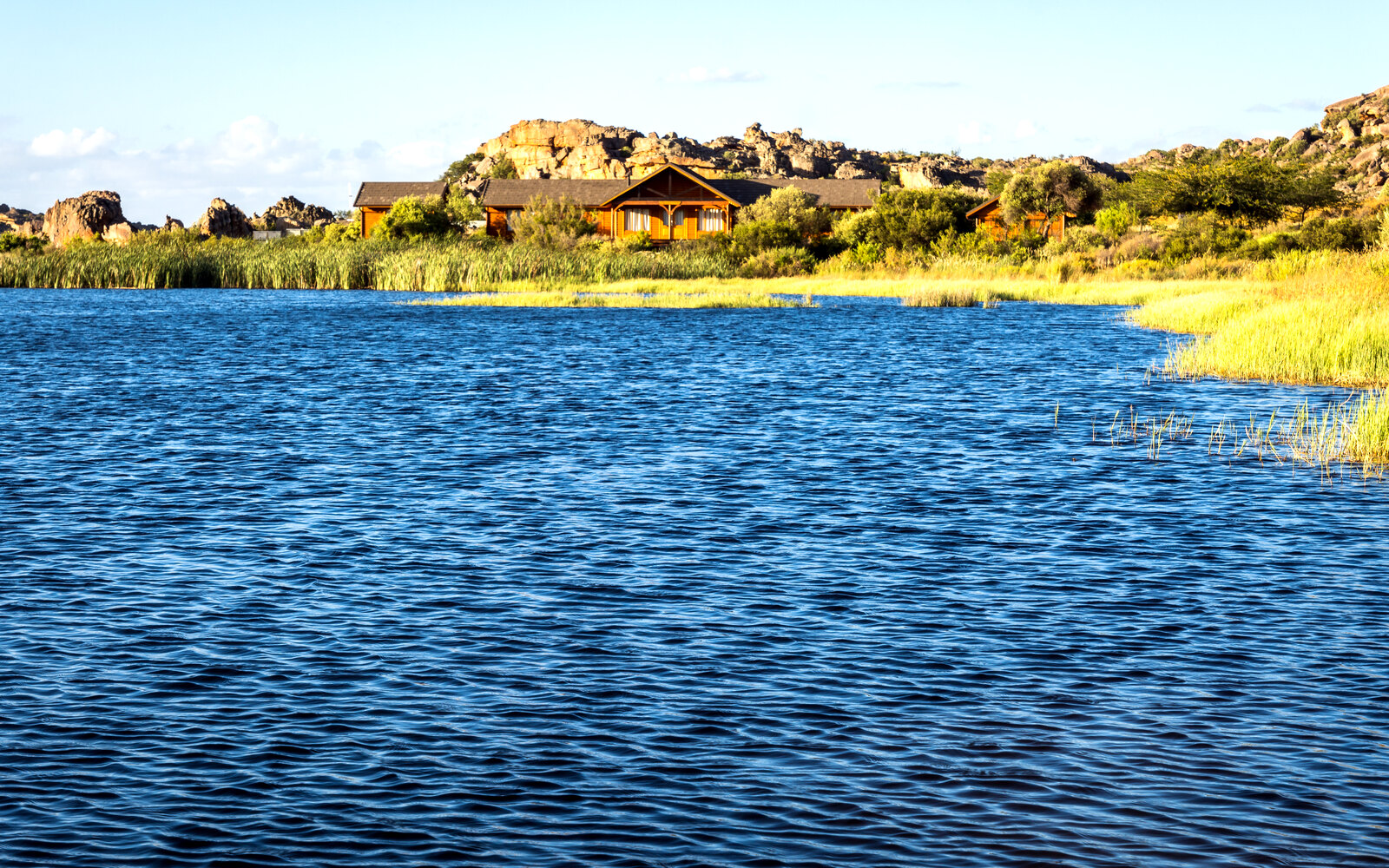
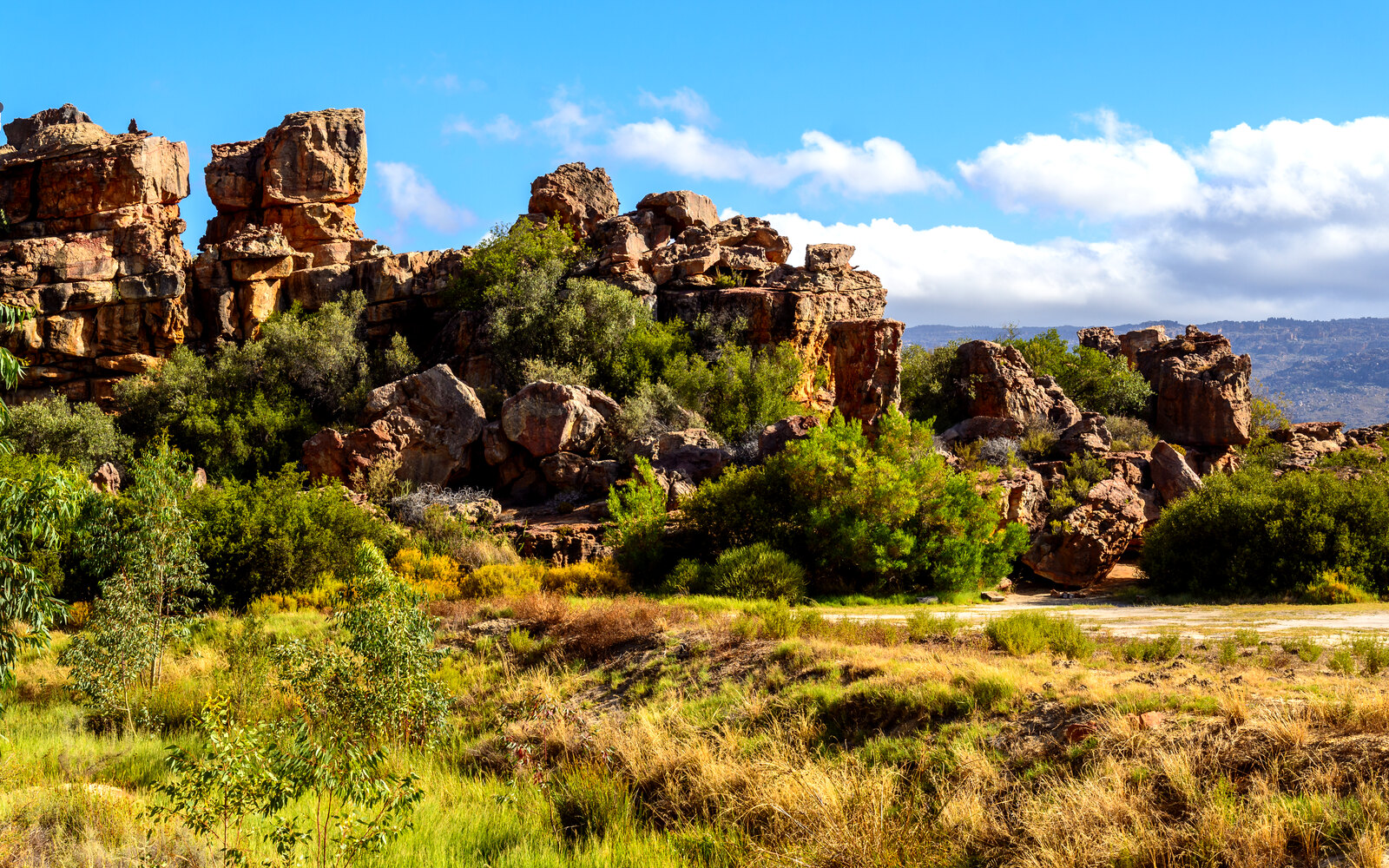
The landscape here is unlike the flat thornveld most first-time visitors picture. The Cederberg is a range of weathered sandstone — burnt-orange cliffs, balancing boulders, wind-carved arches and hidden gorges, broken by clear streams and pockets of fynbos. The reserve covers about 7,500 hectares at the western edge of the range, with the property's dams and river adding water to a semi-arid setting. The light is the thing people remember: at dawn and dusk the rock faces glow copper and rose, and after dark the sky fills with stars because there is almost no light pollution for miles.
This setting makes Bushmans Kloof a natural fit for:
- Cape Town extensions — a two or three-night wilderness add-on without a flight or malaria tablets
- Spring wildflower trips — the wider Namaqualand and Cederberg region is famous for its August–September blooms
- Wellness and slow-travel escapes — honeymoons, anniversaries and time to switch off
- Cultural and photography-minded travellers drawn to rock art, geology and big skies
The San Rock Art: Bushmans Kloof's Singular Claim
Let's start with the reason the reserve carries the name it does. Bushmans Kloof is the custodian of more than 130 documented San (Bushman) rock-art sites, making it one of the most important privately protected rock-art collections in Southern Africa. Some of the paintings are estimated to be up to 10,000 years old — human hands recording eland, elephants, hunters, dancers and fine geometric marks on the sandstone long before the pyramids were built.
What sets the experience apart is access and interpretation. Guests visit the sites on guided walks led by trained guides who explain the meaning, the pigments, the spiritual context of the trance dance, and the story of the San people who painted them. You are not looking at a museum reproduction behind glass; you are standing in the shelter where the art was made, reading it in the same light the painters knew. For many guests this is the single most memorable part of the stay — a quiet, humbling counterpoint to the usual safari adrenaline.
An honest note: the rock art is delicate and access is carefully managed to protect it. Which specific sites you visit depends on conditions, guide availability and how the reserve is rotating access to preserve the paintings. Treat it as a cultural privilege rather than a checklist — and bring a genuine curiosity, because the guiding is what turns faint ochre marks into a window on a vanished world.
The Wildlife Reality: What You'll Actually See
Here is where honest expectation-setting matters most. Bushmans Kloof is not a Big Five reserve. There are no lion, leopard, elephant, rhino or buffalo here. If a predator-focused game drive is your priority, this is not the property for you, and any review that pretends otherwise is doing you a disservice.
What Bushmans Kloof offers instead is gentle, free-roaming mountain and plains wildlife across a malaria-free reserve — animals you can watch at a relaxed pace on nature drives and walks, without the crowding of a busy park. The honest breakdown:
Cape Mountain Zebra & Antelope
The reserve is home to the endangered Cape mountain zebra — a conservation success story in its own right — alongside eland (the largest antelope and a central figure in San painting), red hartebeest, gemsbok, bontebok and springbok. Sightings are calm and unhurried; you are as likely to be watching a herd graze against a sandstone backdrop as ticking off a species list.
Smaller Predators & Nocturnal Life
Instead of big cats you look for the smaller, subtler residents: bat-eared fox, Cape fox, caracal, aardwolf and aardvark, plus the occasional porcupine on a night drive. These are the animals a great guide gets excited about, and finding them feels earned.
Birds & the Cedar Trees
More than 150 bird species have been recorded, from black eagles riding the thermals over the cliffs to sunbirds working the fynbos. The reserve is also part of the effort to protect the rare, slow-growing Clanwilliam cedar that gives the mountains their name, along with the region's famous rooibos plant.
Wellness: The Retreat Half of the Name
The "Wellness Retreat" in the title is not marketing filler. Bushmans Kloof is built around the idea of restoration, and the facilities back it up. There is a dedicated spa offering massages and treatments that draw on local fynbos and rooibos, heated swimming pools, a gym, and space for yoga and quiet time. Several suites have their own fireplaces and private plunge pools, so the sense of slowing down follows you back to your room.
The rhythm of a stay is deliberately unhurried: an early nature drive or rock-art walk, a long breakfast, a treatment or a swim through the heat of the day, then an afternoon outing and sundowners as the cliffs turn gold. For travellers who find a dawn-to-dusk Big Five schedule exhausting, this balance of activity and rest is the whole point.
Activities: More Than Game Drives
Because it is not tied to predator viewing, Bushmans Kloof offers a wider spread of things to do than a classic safari lodge:
- Guided rock-art excursions — the signature experience, on foot with an expert guide
- Nature drives — morning and evening, for mountain wildlife, scenery and sundowners
- Guided and self-guided hiking — trails for a range of fitness levels through the gorges and fynbos
- Canoeing and fly-fishing — on the reserve's dams, water and season permitting
- Swimming, archery and mountain biking — plus stargazing under some of the clearest skies in the country
- Spa and wellness — treatments, heated pools and quiet corners to read and rest
This range is exactly why the reserve suits families, couples with different interests, and anyone who wants a wilderness stay that isn't built solely around two game drives a day.
The Lodges & Rooms
Accommodation at Bushmans Kloof is five-star and understated, styled to sit quietly in its mountain setting rather than shout for attention. The reserve is owned by the family-run Red Carnation Hotels and is a member of Relais & Châteaux, and the standard of finish, service and food reflects that pedigree.
Luxury Rooms & Suites
The main lodge holds a limited number of Luxury Rooms and Suites, several with fireplaces, private verandas and, in the top suites, their own plunge pools looking out over the reserve. Interiors lean towards comfortable country elegance — natural fabrics, art on the walls, deep beds — rather than safari kitsch. Because guest numbers are kept low, the property rarely feels busy.
Koro Lodge
For families and groups wanting total privacy there is Koro Lodge, an exclusive-use homestead set apart from the main lodge, with its own pool, living spaces and the option of a dedicated host and vehicle. It is the natural choice for a multi-generational stay or a small group who want the reserve experience with the run of their own house.
Dining at Makana
Food is a highlight rather than an afterthought. The Makana restaurant serves menus that lean on local produce — fynbos herbs, rooibos, regional meats and Cape wines from a well-stocked cellar. A signature of the stay is dining in changing settings across the reserve: on the wooden veranda over the water, out among the rocks, or beside a fire under the stars. Special dietary needs are handled with the care you would expect at this level.
Honest Pricing & Value
Bushmans Kloof sits firmly in the luxury bracket. Rates are fully inclusive — accommodation, meals, teas, most activities including rock-art walks and nature drives, and use of the wellness facilities — and they move with the season, so it is best to confirm current figures at the time of booking. As a broad guide, expect rates in the range of South Africa's top five-star reserves, from roughly R7,500 per person per night sharing upwards depending on room category and season.
Is it worth it? For the right traveller, yes. You are paying for exclusivity, a genuinely important cultural site, a serious wellness offering and Red Carnation-level service in a landscape you cannot find anywhere else. What you are not paying for is Big Five game viewing — so if your budget is finite and your heart is set on predators, the Garden Route and Klein Karoo reserves deliver that for less. The value here is in the quiet, the art and the restoration, not the sighting count.
✅ Ideal For:
- Wellness and slow-travel seekers who want to genuinely switch off in nature
- Culture and history lovers drawn to one of Africa's great rock-art collections
- Couples and honeymooners wanting quiet, scenery and privacy near Cape Town
- Families and groups (Koro Lodge) wanting a malaria-free base with varied activities
- Photographers and hikers who value dramatic mountain landscapes and dark skies
❌ Perhaps Not For:
- Big Five hunters — there are no lion, leopard, elephant, rhino or buffalo here
- Budget-first travellers — this is a premium, fully inclusive luxury rate
- Those who want a fast, action-packed schedule over rest and scenery
- Anyone unwilling to drive 3 to 3.5 hours from Cape Town
Practical Booking & Visit Information
Best Time to Visit
- Spring (Aug–Oct): Our pick — mild days and, in a good year, the wider region's wildflower season, with fynbos and Namaqualand blooms.
- Autumn (Mar–May): Warm, settled weather, clear light and comfortable walking conditions.
- Winter (Jun–Aug): Cold, crisp mornings and the chance of snow on the high peaks; fireplaces and heated pools come into their own.
- Summer (Dec–Feb): Hot and dry in the Cederberg; early and late outings avoid the midday heat, and the dams are at their most inviting.
Getting There
- Self-Drive: Approximately 270km / 3–3.5 hours from Cape Town via the N7 toward Clanwilliam, then gravel into the reserve. A standard car is fine in normal conditions.
- Transfers: Private road transfers from Cape Town can be arranged; the reserve can advise on the final gravel approach.
- Combine it: Pairs naturally with a Cape Town stay, the West Coast, or a wider Western Cape loop.
Health & Safety
- Malaria-free — no prophylaxis required
- Bring warm layers year-round — Cederberg mornings and evenings are cold even in summer
- The nearest town, Clanwilliam, has basic facilities; larger hospitals are in the Cape Town area
Getting the Most From Your Rock-Art Walk
A rock-art walk here is not a quick photo stop, and it rewards a little preparation. Wear proper closed shoes with grip — some shelters sit a short scramble above the valley floor — and carry water, a hat and sunscreen. Go with questions rather than a checklist: ask your guide about the pigments, the layering of images painted centuries apart, and the difference between the fine-line "eland" tradition of the south and the cruder later marks. The more you engage, the more the faded ochre resolves into figures, story and meaning.
Timing matters too. Early morning and late afternoon light slants into the shelters and lifts the paintings off the stone; the flat glare of midday washes them out. If photography is important to you, say so when you book your walk so the reserve can pick a site and a time that shows the art at its best — always without flash, which damages the pigments. And resist the temptation to wet or touch the paintings to "bring out" the colour, a myth that has destroyed countless panels elsewhere. Part of what makes Bushmans Kloof special is that its art has been protected from exactly that kind of harm.
A Day at Bushmans Kloof: The Rhythm of a Stay
To understand whether this reserve suits you, it helps to picture an ordinary day rather than a highlight reel. Mornings begin gently — earlier in summer to beat the heat, a little later in winter when the cold holds on. You might set out on a guided rock-art walk while the light is still soft, climbing a short way into a shelter where an ochre eland gallops across the stone above your head, and your guide talks you through what the San painter may have been recording.
Back at the lodge, breakfast is unhurried and generous — the kind of long table that invites conversation rather than a quick refuel before rushing out again. Through the middle of the day, when the sun is high and the wildlife is resting in shade, the reserve encourages you to do the same: a treatment in the spa, a swim in a heated pool, a book in the shade, or a quiet hour watching weavers work the reeds by the water. This built-in pause is exactly what a hard-charging Big Five schedule never allows.
As the afternoon cools, a nature drive heads out to look for Cape mountain zebra on the plains, or you take a canoe onto one of the dams while the cliffs turn from gold to deep red. Sundowners are a ritual here — a drink set up on a rock ledge or a riverbank as the first stars appear. Dinner might be in the Makana dining room, out on the veranda over the water, or beside a fire under a sky so dark the Milky Way throws shadows. Then the quiet takes over, broken only by the call of an owl or the far-off yip of a jackal.
The San Story: People of the Paintings
You cannot understand Bushmans Kloof without understanding the people who gave it its name. The San — also called Bushmen — are among the oldest continuous human cultures on Earth, hunter-gatherers whose ancestors lived across Southern Africa for tens of thousands of years. The paintings on the reserve are their record: not idle decoration, but a spiritual language tied to the trance dance, healing, rain-making and the animals they lived alongside.
The eland appears again and again in the art, and for good reason — it was the most spiritually charged animal in San belief, linked to potency, healing and the trance experience of the shaman. Seeing living eland on a nature drive and then, hours later, standing before a 6,000-year-old painting of the same animal is a connection few places on Earth can offer. The reserve's guides are trained to explain this respectfully and accurately, drawing on the research of rock-art scholars rather than tourist myth.
This cultural weight is also why access is handled so carefully. Pigments made from ochre, charcoal and blood are fragile; a single careless touch or a change in humidity can damage what has survived for millennia. When you visit, you are being trusted with something irreplaceable — a responsibility the reserve takes seriously through controlled group sizes, managed routes and ongoing conservation of the sites.
Conservation: Cedars, Rooibos and the Land Itself
The Cederberg is named for the Clanwilliam cedar, a slow-growing, endangered tree that clings to the high, rocky slopes and can live for a thousand years. Centuries of harvesting and fire pushed it to the edge, and today it survives in scattered stands that conservation efforts across the range are working to protect. Bushmans Kloof forms part of this wider picture — a privately held piece of protected Cederberg where indigenous plants, the rare cedar and the fynbos of the Cape Floral Kingdom are given room to recover.
This is also rooibos country. The red-bush tea that South Africa exports around the world grows only in this corner of the Western Cape, and the reserve's fynbos-influenced menus and spa treatments lean on it as a signature of place. Add the reintroduction and protection of the Cape mountain zebra — a species that once teetered close to extinction — and the conservation story here is quiet but real: less about dramatic anti-poaching headlines than about patient stewardship of a fragile mountain ecosystem.
How Bushmans Kloof Compares to Other Western Cape Reserves
Because it is so different from a Big Five reserve, the fairest way to judge Bushmans Kloof is against the other reasons people head out of Cape Town. Here is an honest side-by-side of what each is best at:
| Reserve | Best For | Big Five? | Drive from Cape Town |
|---|---|---|---|
| Bushmans Kloof | Rock art, wellness, mountain scenery, quiet | No | ~3.5 hrs (Cederberg) |
| Kagga Kamma | Cave suites, star beds, stargazing, rock formations | No | ~3.5 hrs (Cederberg) |
| Sanbona | Free-roaming white lions, Big Five, Karoo scale | Yes | ~3.5 hrs (Klein Karoo) |
| Aquila | Closest Big Five, easy day-trip or overnight | Yes | ~2 hrs |
| Gondwana | Big Five in fynbos, Garden Route pairing, families | Yes | ~4 hrs (Garden Route) |
The takeaway is simple. If your must-have is predators, choose Sanbona, Aquila or Gondwana. If your must-have is cave rooms and star beds, its Cederberg neighbour Kagga Kamma is the answer. If your must-have is rock art, wellness and the finest do-nothing-in-nature stay in the province, Bushmans Kloof stands alone. Many of our guests pair two of these — a wellness stay at Bushmans Kloof followed by a Big Five night at Sanbona makes a superb malaria-free week out of Cape Town.
Photography & What to Pack
The Cederberg rewards photographers who work the edges of the day. The low sun rakes across the sandstone and lifts every texture; midday flattens it. Bring a wide lens for the landscapes and rock formations, a longer lens for zebra and eland at a respectful distance, and, if you have one, a tripod and fast lens for the astonishing night sky. The rock-art shelters are dim and delicate — never use flash, and follow your guide's guidance on what may be photographed.
For the stay itself, pack for a mountain climate that swings hard between day and night: warm layers and a windproof jacket even in summer, a hat and high-SPF sunscreen for the fierce daytime sun, closed walking shoes for rock-art trails and hikes, swimwear for the pools and dams, and binoculars for wildlife and birds. Winter visitors should be ready for genuine cold and the occasional dusting of snow on the peaks.
Combining Bushmans Kloof With the Rest of the Western Cape
Few people travel all the way to the Cederberg for a single night, and the reserve works best as part of a wider loop. From Cape Town, the classic pairing is a few city days — Table Mountain, the Winelands, the Cape Peninsula — followed by a two or three-night wilderness reset at Bushmans Kloof. Spring travellers can extend north into Namaqualand for the wildflower season, or drop back down the West Coast for seafood and empty beaches on the return.
For travellers who want both wellness and wildlife, we build itineraries that link Bushmans Kloof with a Big Five reserve such as Sanbona in the Klein Karoo, or run the whole thing on toward the Garden Route and its fynbos safari at Gondwana. Because everything here is malaria-free and reachable by road, it all stitches together into a family-friendly trip that never needs a bush flight or a course of tablets.
Our Verdict
Bushmans Kloof is one of the most distinctive places to stay in South Africa, and it succeeds precisely because it refuses to be a Big Five lodge. It knows exactly what it is: a five-star wellness and wilderness retreat built around one of the great rock-art collections on the continent, in a mountain landscape that most visitors to the Cape never see. The guiding is thoughtful, the food is genuinely good, the service carries the polish you expect from Red Carnation and Relais & Châteaux, and the sense of quiet is the real luxury on offer.
The honest caveats are just as clear. This is a premium price for a stay with no predators, a long drive on the final gravel, and a slower pace that will frustrate anyone chasing a packed sighting list. Go in expecting lions and you will be disappointed; go in wanting rock art, dark skies, clean water, mountain air and time to breathe, and it is close to unbeatable. We rate it 4.8 out of 5 for the traveller it is built for — and we happily place it at the top of our list of restorative escapes within reach of Cape Town.
For most guests the smartest move is to treat Bushmans Kloof as one half of a wider Western Cape plan: a wellness and culture stay here, then a Big Five night at a reserve like Sanbona, all knitted together malaria-free by road. That combination gives you the best of both worlds — the ancient art and mountain silence of the Cederberg, and the thrill of tracking wild animals across the Karoo — without a single bush flight or anti-malarial tablet.
Ready to Escape to the Cederberg?
Let our specialists build your Bushmans Kloof stay — the right room or Koro Lodge, rock-art walks, wellness time and easy transfers from Cape Town.
💬 Enquire Now — Get a Custom Quote📞 WhatsApp us 24/7: +27 83 628 0850
🏔️ Explore More Western Cape Wilderness
Bushmans Kloof is one of the Cederberg's two great retreats. For cave suites and star beds under the Milky Way, read our Kagga Kamma review. For free-roaming white lions and Big Five near Cape Town, see our Sanbona review, and compare every option in our Western Cape safari packages guide.