Quick Answer
A luxury gorilla trekking safari combines permit-based gorilla tracking in Rwanda's Volcanoes National Park or Uganda's Bwindi Impenetrable Forest with stays at ultra-luxury eco-lodges. Gorilla permits cost $1,500 in Rwanda, $800 in Uganda. Luxury lodges run $800–$2,500 per night. The trek itself takes 1–6 hours through rainforest to find a habituated gorilla family, then you spend one hour observing them. Best time: June–September and December–February (dry seasons). Most travellers combine 3 days of gorilla trekking with a classic Big Five safari in Tanzania, Kenya or Rwanda's Akagera.
Why Gorilla Trekking Is the Ultimate Luxury Safari Experience
Mountain gorillas exist in only three countries on Earth — Rwanda, Uganda and the Democratic Republic of Congo. There are fewer than 1,100 left in the wild, all living in the montane rainforests of the Virunga Massif and Uganda's Bwindi Impenetrable Forest.
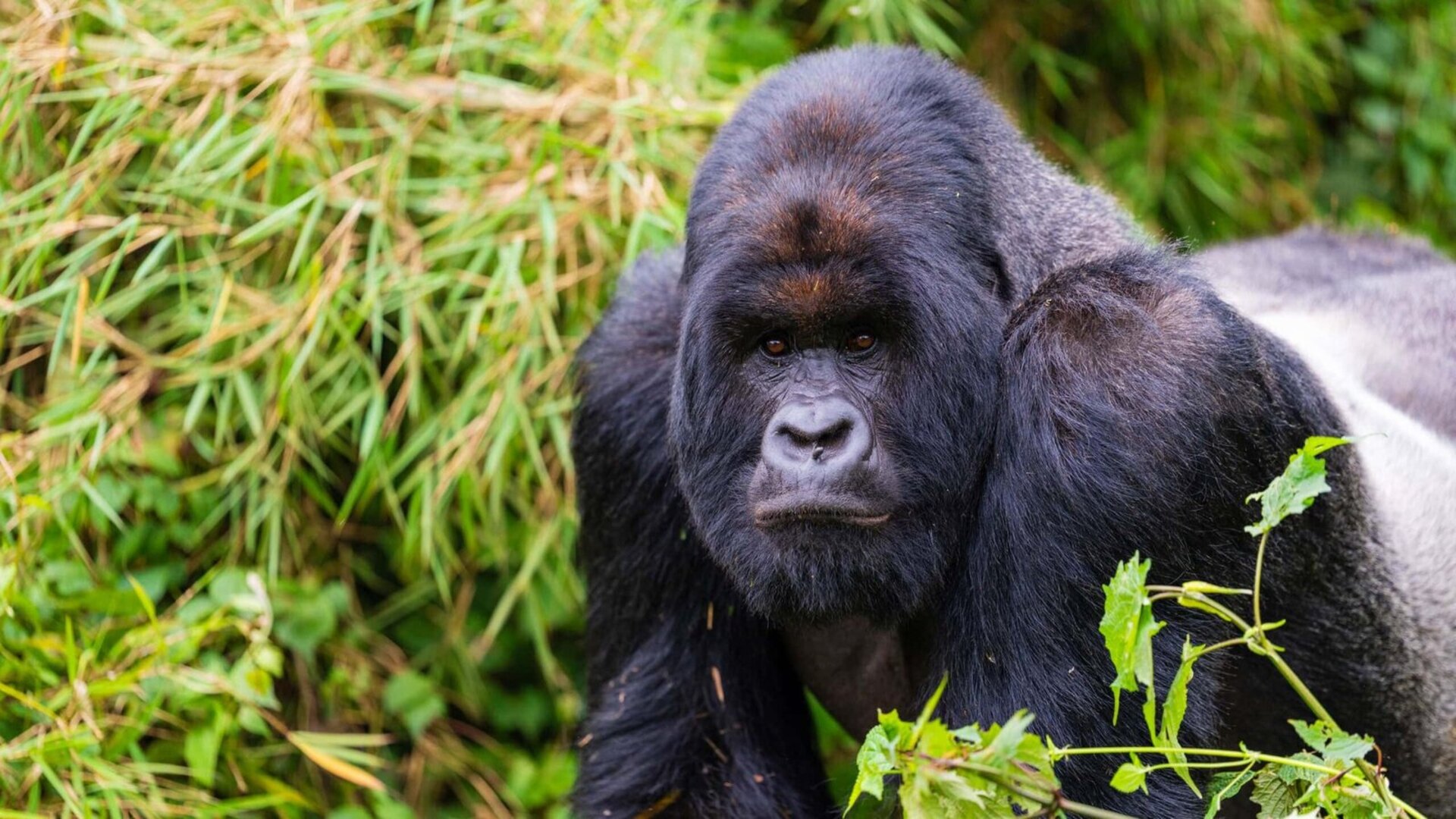
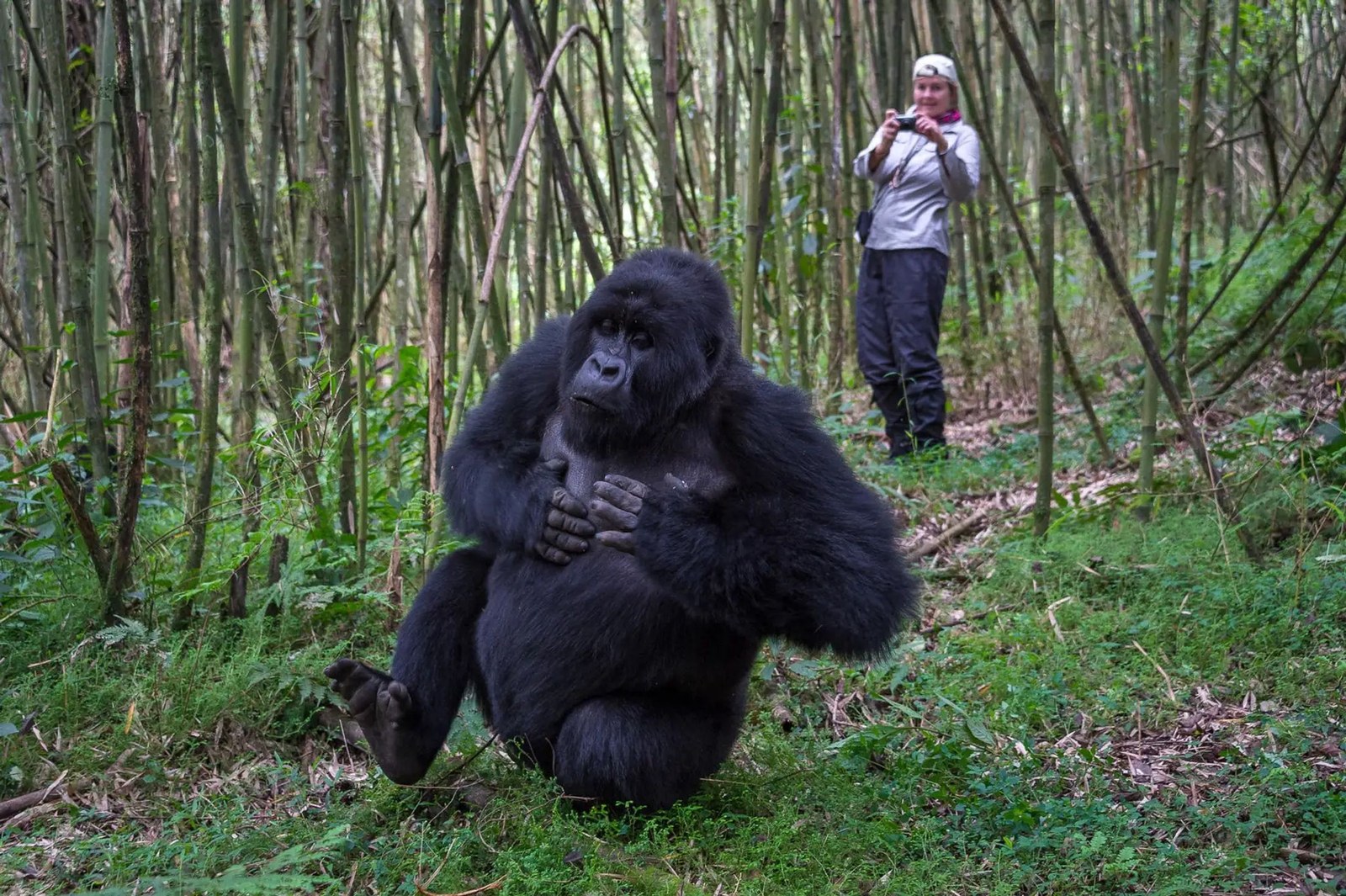
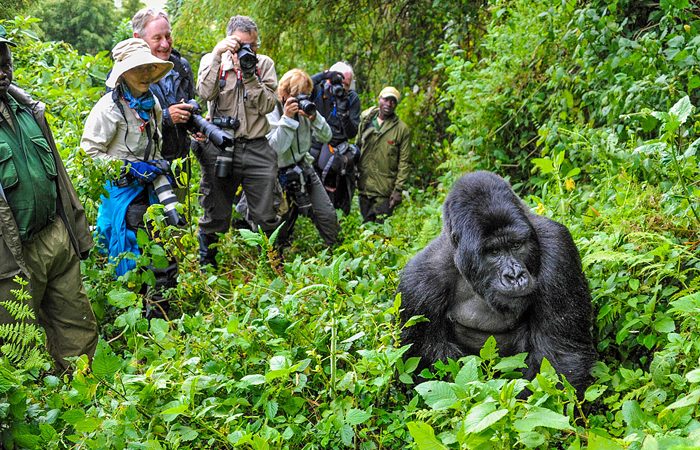
Trekking to find them is not a zoo visit. You hike through dense jungle, guided by trackers who locate the gorilla family that morning via radio. When you find them — a silverback lounging in the bamboo, juveniles playing, a mother cradling her infant — you're standing five metres away from one of our closest genetic relatives. It's primal, humbling, and unlike anything else in African wildlife.
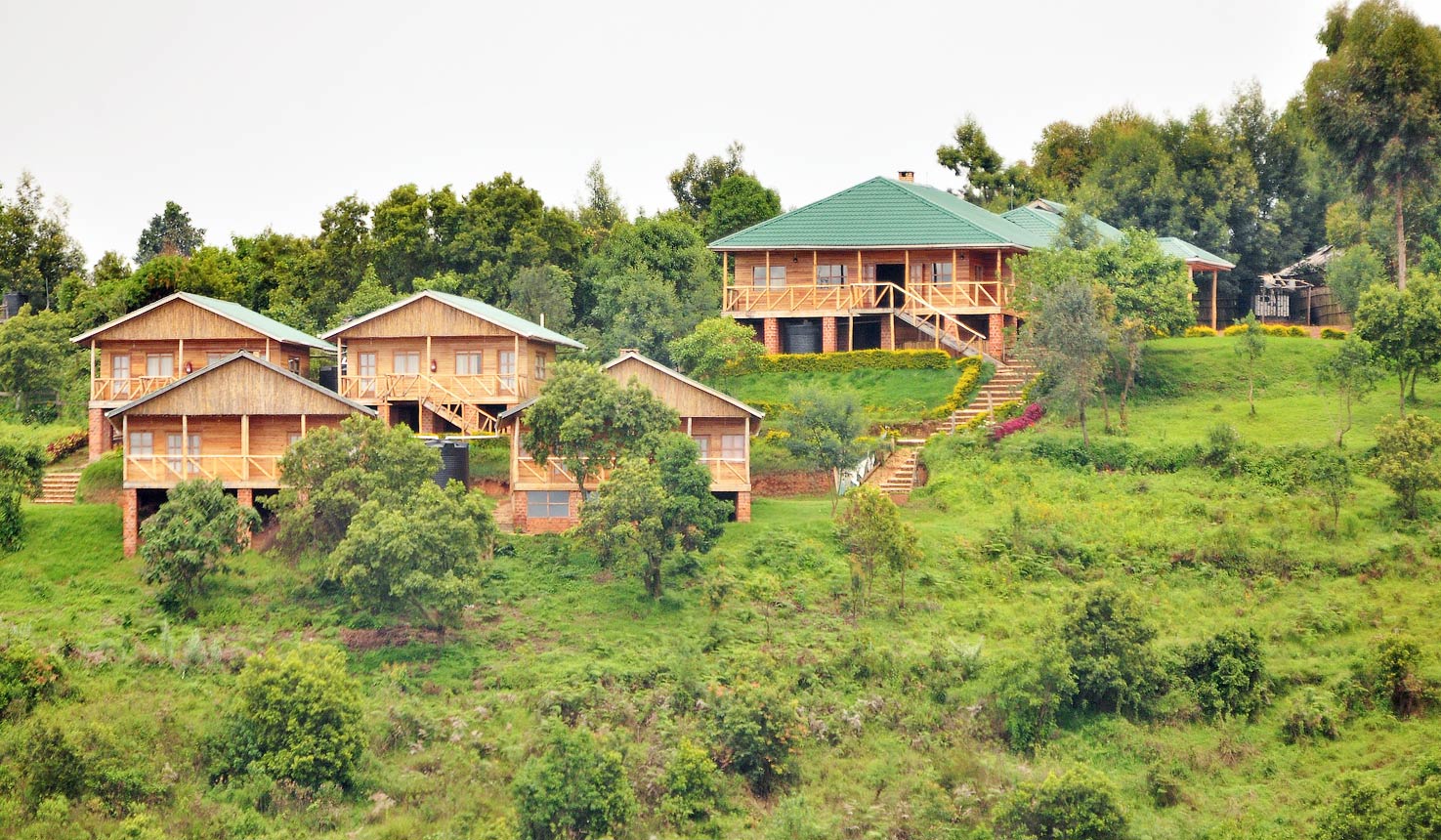
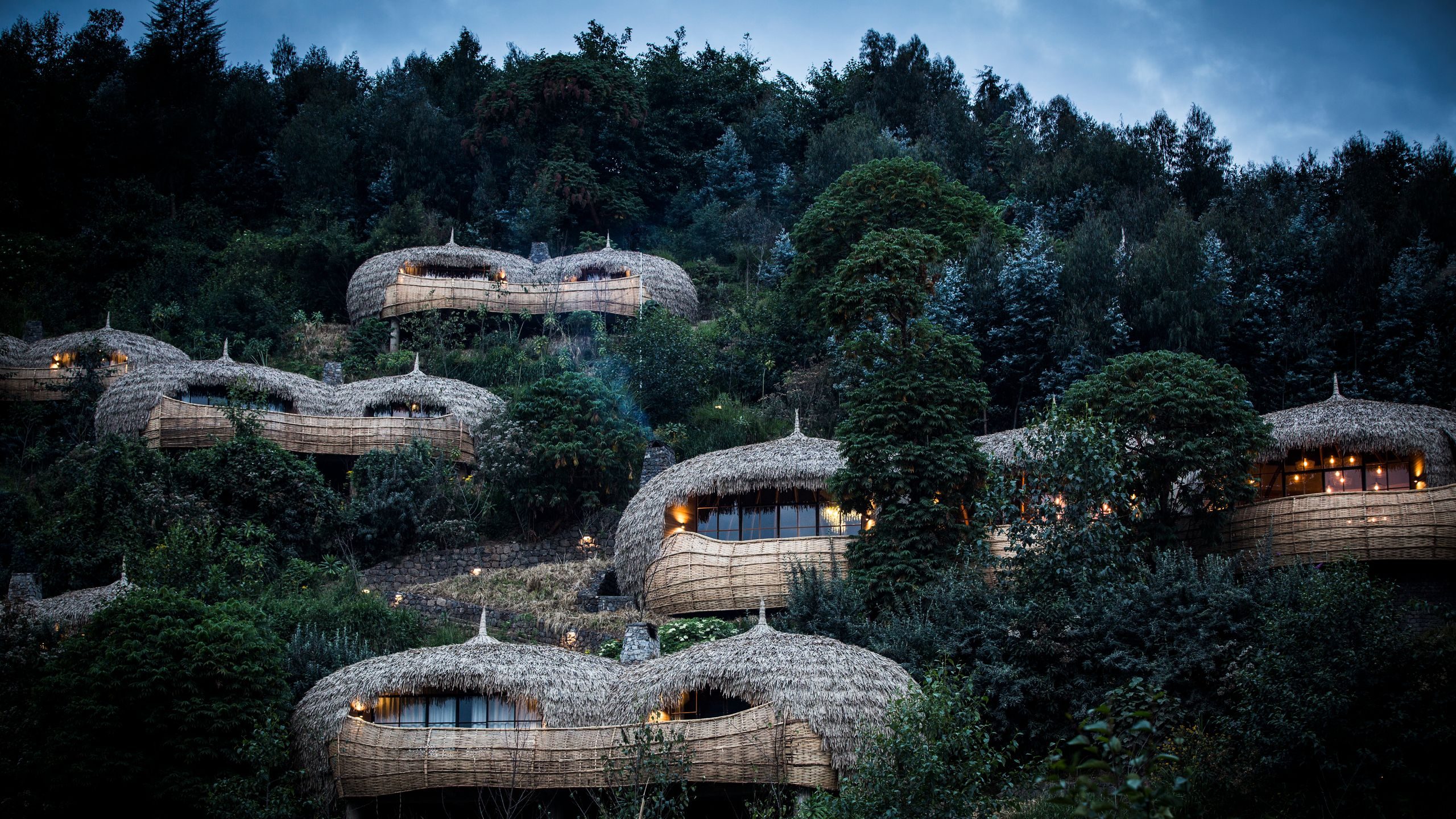
The luxury safari version pairs this once-in-a-lifetime experience with lodges that belong on magazine covers: Bisate Lodge's thatched villas overlooking the Virunga volcanoes, Singita Kwitonda's farm-to-table cuisine and conservation legacy, One&Only Gorilla's Nest's private suites with volcano views. You trek in the morning, return for a massage and gourmet lunch, then sip wine by the fire as the mist rolls in.
Rwanda vs Uganda — Which Is Better for Gorilla Trekking?
Both countries offer phenomenal gorilla trekking, but they're different experiences:
Rwanda: Volcanoes National Park
Pros:
- Accessibility: 2.5-hour drive from Kigali (capital). You can fly into Kigali in the morning and trek the next day.
- Easier terrain: Volcanoes National Park sits at 2,400–4,500m altitude. Treks are often shorter and less physically demanding than Bwindi (though altitude can be tough).
- Luxury lodge density: Bisate Lodge, Singita Kwitonda, One&Only Gorilla's Nest, Virunga Lodge, Sabyinyo Silverback Lodge — all within 20 minutes of the park gate.
- Infrastructure: Rwanda is spotless, organised, efficient. Roads are excellent. Tourism is streamlined.
- Golden monkey trekking: Also available in Volcanoes NP — a bonus activity.
Cons:
- Permit cost: $1,500 per person (double Uganda's price).
- Crowds: Volcanoes NP is more popular — you'll share the park entrance with other groups (though once you're trekking, you're assigned to a specific gorilla family).
Uganda: Bwindi Impenetrable Forest & Mgahinga Gorilla National Park
Pros:
- Permit cost: $800 per person (half the price of Rwanda).
- Gorilla population: Bwindi alone has ~460 gorillas (nearly half the world's population). More habituated families to choose from.
- Gorilla habituation experience: Uganda offers a unique 4-hour gorilla habituation trek (instead of the standard 1-hour visit) — you join researchers as they habituate a wild family. Permit: $1,500.
- Wilderness feel: Bwindi is remote, rugged, ancient. The forest is vast and untamed.
Cons:
- Accessibility: Bwindi is 8–9 hours' drive from Entebbe (or a short flight to Kihihi/Kisoro airstrip + transfer). It's a journey.
- Terrain: Bwindi is steep, muddy, dense. Treks can be 1–6 hours of hard hiking. It's called "Impenetrable" for a reason.
- Fewer ultra-luxury lodges: Sanctuary Gorilla Forest Camp and Bwindi Lodge are excellent, but the lodge scene is smaller than Rwanda's.
The verdict: If you want easier logistics, shorter drives, more luxury lodge choices and don't mind paying extra for the permit, choose Rwanda. If you want to save $700 per permit, experience a wilder forest and don't mind a longer transfer, choose Uganda. Or do both — it's possible to trek in Volcanoes NP (Rwanda) and Bwindi (Uganda) on the same trip.
The Best Luxury Gorilla Lodges
Rwanda: Volcanoes National Park
1. Bisate Lodge (Wilderness Safaris)
Price: $1,400–$2,200 per person per night (all-inclusive).
Why it's special: Six thatched villas built into an eroded volcanic cone, overlooking the Virunga volcanoes. Floor-to-ceiling windows, private decks with daybeds, in-room fireplaces. The lodge funds reforestation (60,000+ indigenous trees planted) and anti-poaching. Gourmet farm-to-table dining. Intimate, sustainable, iconic.
2. Singita Kwitonda Lodge
Price: $1,800–$2,800 per person per night (all-inclusive).
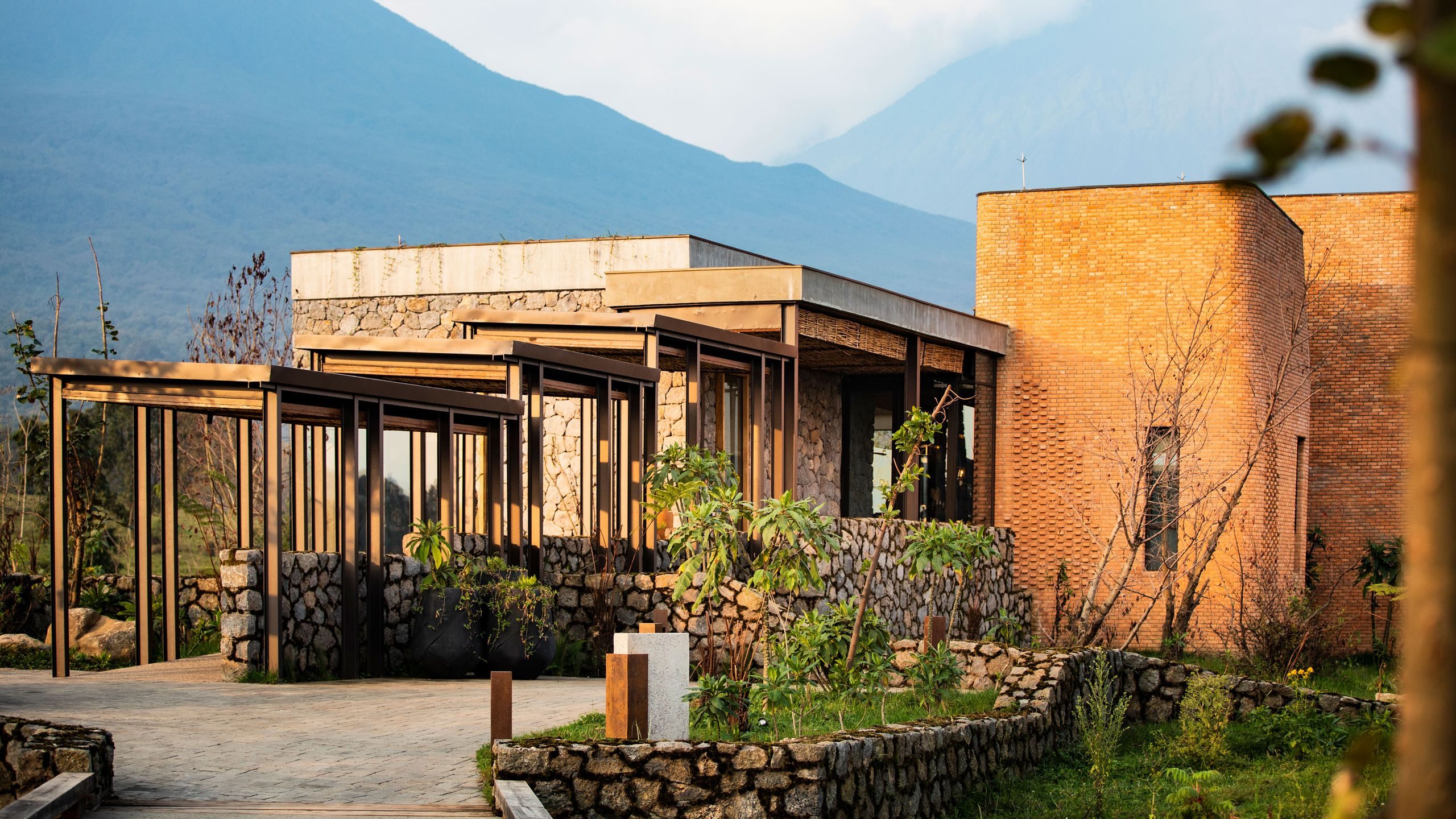
Why it's special: Singita's first lodge outside South Africa and Tanzania. Eight suites with volcanic-rock fireplaces, freestanding tubs, private terraces. The property includes a working farm (vegetables and herbs for the kitchen), a nursery growing indigenous saplings, and the Singita Community Culinary School. Unparalleled design, conservation mission and service.
3. One&Only Gorilla's Nest
Price: $950–$1,600 per person per night (all-inclusive).
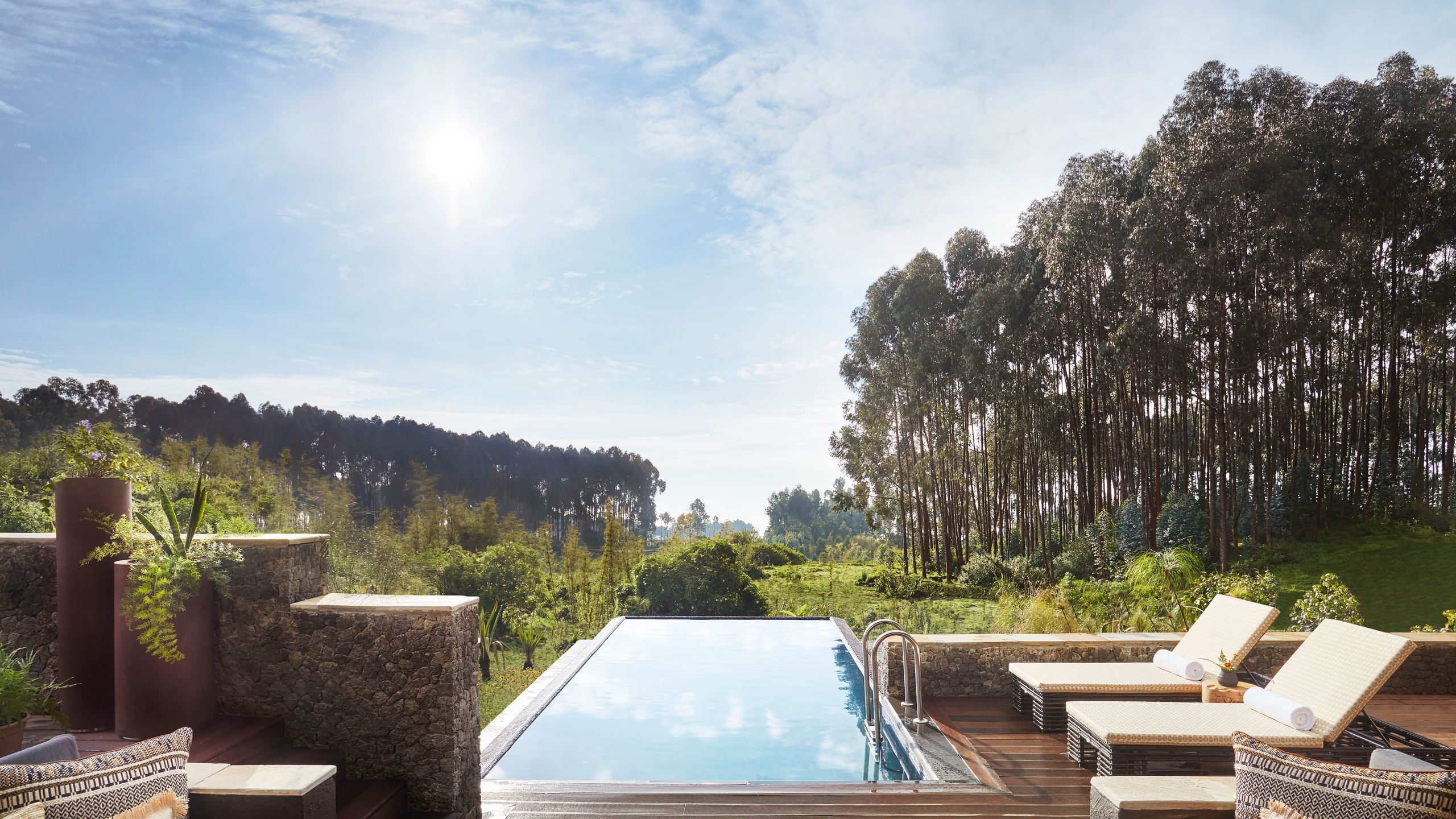
Why it's special: 21 rooms and suites in eucalyptus-forested grounds. Volcano views from every room. Spa, heated pool, curated Rwandan art collection. One&Only's signature service standards. Close to the park gate (15-minute drive).
4. Virunga Lodge
Price: $650–$950 per person per night (all-inclusive).
Why it's special: Perched on a ridge with panoramic views of the Virunga volcanoes and twin lakes (Bulera and Ruhondo). Ten bandas (cottages) with fireplaces and private terraces. More intimate and affordable than Bisate or Singita, but still high-end.
Uganda: Bwindi Impenetrable Forest
1. Sanctuary Gorilla Forest Camp
Price: $850–$1,200 per person per night (all-inclusive).
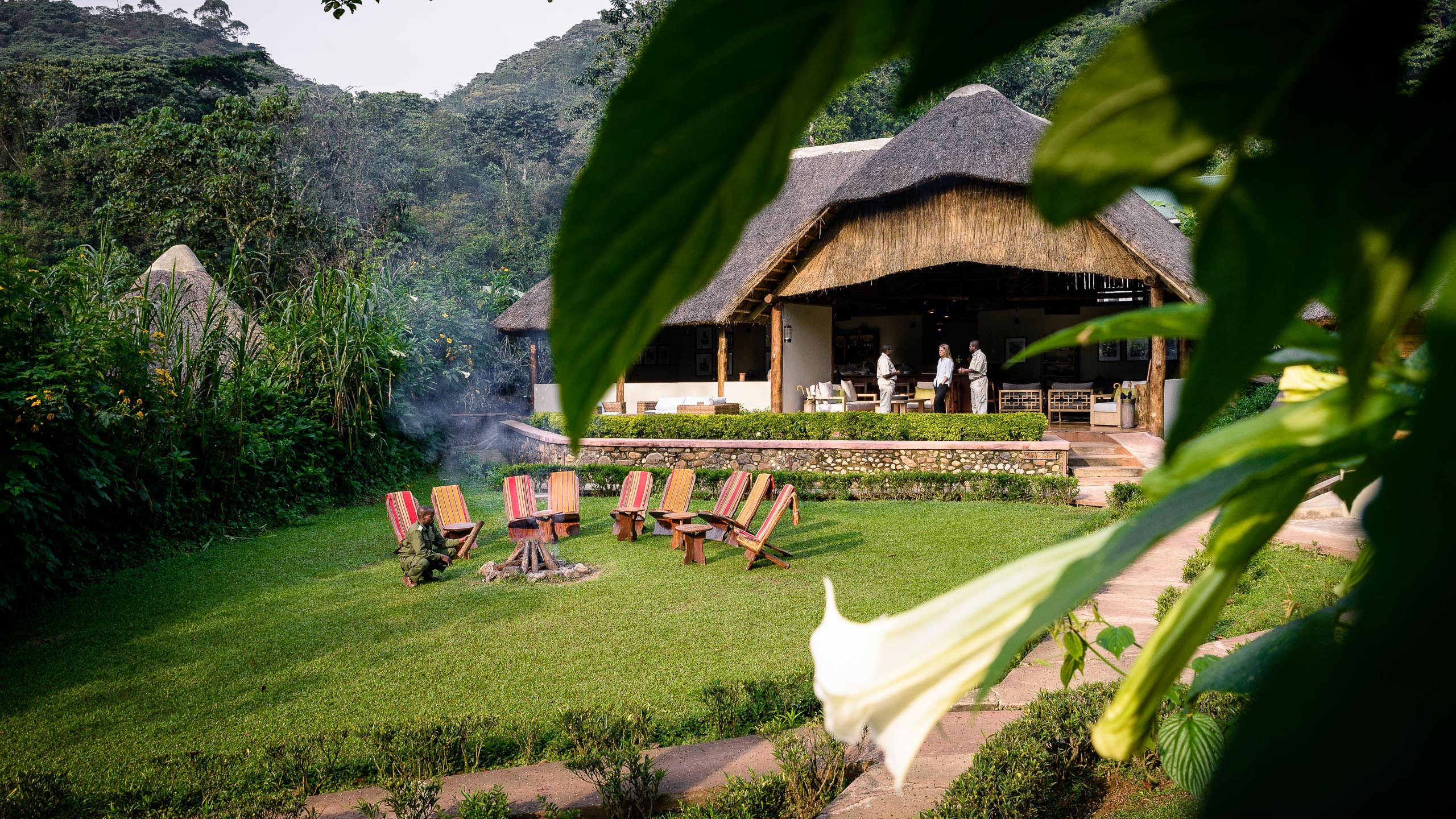
Why it's special: The only lodge actually inside Bwindi Impenetrable Forest National Park. Eight tented suites with private verandas, en-suite bathrooms, and forest soundscapes (colobus monkeys, forest hornbills). You can walk from your tent to the trek starting point. Rustic luxury, total immersion.
2. Bwindi Lodge
Price: $700–$1,000 per person per night (all-inclusive).
Why it's special: Twelve bandas on the edge of Bwindi Forest in the Buhoma sector. Panoramic forest views, solar-powered, community-focused. Excellent guides, intimate atmosphere.
3. Clouds Mountain Gorilla Lodge
Price: $600–$850 per person per night (all-inclusive).
Why it's special: Stone-and-thatch cottages at 2,300m altitude overlooking the forest canopy. Fireplaces, butler service, wraparound views. Nkuringo sector (southern Bwindi) — quieter, fewer tourists.
How Gorilla Trekking Works — What to Expect
Step 1: Secure Your Permit (Book 6–12 Months Ahead)
Permits are limited to protect the gorillas — only 8 visitors per habituated family per day. In peak season (June–September, December–February), permits sell out months ahead.
- Rwanda: $1,500 per person. Book through the Rwanda Development Board (RDB) or via a tour operator (we handle this for clients).
- Uganda: $800 per person. Book through Uganda Wildlife Authority (UWA) or via an operator.
Your permit is issued for a specific date, park and gorilla family group.
Step 2: Briefing at the Park Headquarters (Morning of Your Trek)
You arrive at the park gate around 7:30am. Rangers brief you on gorilla etiquette (no flash photography, keep 7 metres distance, no touching, cover your mouth if you cough). You're assigned to a gorilla family based on your fitness level:
- Easier treks: Families closer to the park boundary (1–2 hours hiking).
- Harder treks: Families deep in the forest or at high altitude (4–6 hours).
If you have mobility concerns, request an easier group when booking your permit. Porters are available to hire ($15–$20) — they carry your daypack, offer a hand on steep slopes, and provide local employment.
Step 3: The Trek
You hike through bamboo forest, stinging nettles, muddy trails and dense vegetation. The terrain varies wildly — some treks are gentle forest walks; others are steep, slippery scrambles. Trackers go ahead to locate the gorillas (they move overnight), then radio your group when they're found.
When you reach the family, you drop your bags and trekking poles. The guide signals silence. You step into the clearing — and there they are.
Step 4: One Hour With the Gorillas
You have exactly 60 minutes. You'll watch them eat bamboo shoots, groom each other, play, nap. The silverback (dominant male, 180+ kg) might beat his chest or move closer out of curiosity. Juveniles somersault past you. A mother nurses her infant. It's impossibly intimate.
The guide keeps time and monitors gorilla behaviour. If the silverback charges (rare — it's usually a bluff), you crouch and avert your eyes. After an hour, you leave. The trek back to the park gate is usually faster (downhill).
Step 5: Debrief & Certificate
Back at headquarters, you receive a certificate confirming your trek. Most lodges organise champagne and snacks for your return.
Best Time to Go Gorilla Trekking
Gorillas are habituated and present year-round, but the dry seasons make trekking easier:
June to September (Main Dry Season)
- Weather: Drier trails, less mud, clearer skies. Cooler temperatures (10–20°C at altitude).
- Permits: High demand. Book 8–12 months ahead.
- Crowds: Peak season. More trekkers (though you're still limited to 8 per family).
December to February (Short Dry Season)
- Weather: Warm, mostly dry. Occasional short rains.
- Permits: High demand (festive season). Book well ahead.
March to May & October to November (Wet Seasons)
- Weather: Rainforest = rain. Trails are muddy, slippery, leeches appear. But the forest is lush and dramatically green.
- Permits: Easier to secure. Some lodges offer discounts.
- Trekking: Harder physically, but the gorillas are still there and often closer to the park boundary (they move to lower altitudes in the rains).
Our pick: June–July or January–February for optimal conditions. But if you can only go in April or November, don't skip it — bring good rain gear and gaiters, and the experience is just as powerful.
How Fit Do You Need to Be?
It varies. Some gorilla families are a 45-minute walk from the park gate. Others require 4–6 hours of steep, muddy, high-altitude hiking.
Moderate fitness is enough if you request an easier group when booking your permit. You don't need to be an athlete. That said, the altitude (2,400–3,700m), humidity and uneven terrain make it physically demanding. If you have knee or hip issues, hire a porter and take it slow.
Age limits: Minimum age is 15 years (to protect the gorillas from disease transmission and ensure trekkers can follow rules). No upper age limit — we've had clients in their 70s trek successfully.
Sample Itineraries — How to Structure Your Gorilla Safari
Option 1: 4-Day Rwanda Gorilla Safari
- Day 1: Fly into Kigali. City tour (Kigali Genocide Memorial). Drive 2.5 hours to Volcanoes National Park. Overnight Bisate Lodge or Singita Kwitonda.
- Day 2: Gorilla trek (morning). Afternoon at leisure (spa, guided forest walk, visit to Dian Fossey's grave).
- Day 3: Optional second gorilla trek or golden monkey trek. Afternoon at the lodge.
- Day 4: Drive back to Kigali, depart.
Cost: $6,000–$10,000 per person (permits, luxury lodge, transfers, one gorilla trek).
Option 2: 7-Day Uganda Gorilla & Chimpanzee Safari
- Day 1: Fly into Entebbe. Overnight in Entebbe.
- Days 2–3: Fly to Kibale Forest. Chimpanzee trekking. Overnight luxury tented camp.
- Days 4–6: Fly to Bwindi Impenetrable Forest. Two gorilla treks. Overnight Sanctuary Gorilla Forest Camp.
- Day 7: Fly back to Entebbe, depart.
Cost: $8,500–$13,000 per person (internal flights, permits, luxury lodges, two gorilla treks, chimp trek).
Option 3: 10-Day Rwanda Gorillas + Tanzania Safari Combo
- Days 1–4: Rwanda gorilla trek (as per Option 1).
- Days 5–9: Fly to Tanzania. 5 days in Serengeti & Ngorongoro Crater (Big Five, Great Migration). Luxury tented camps.
- Day 10: Fly out of Arusha or Kilimanjaro.
Cost: $12,000–$20,000 per person (permits, luxury lodges, internal flights, full-service safari).
Gorilla Trekking vs Chimpanzee Trekking
Both are primate experiences, but they're wildly different:
- Gorillas: Calm, ground-dwelling, slow-moving. You sit quietly and watch them eat, groom, rest. Intimate, contemplative, profoundly peaceful.
- Chimpanzees: High-energy, tree-swinging, loud. Chases, screaming, fighting, mating displays. Exciting, chaotic, harder to photograph (they're in the canopy).
Chimp permits are cheaper ($250 in Uganda's Kibale Forest, $100 in Rwanda's Nyungwe) and physically easier. Many travellers do both on the same trip — chimps in Kibale or Nyungwe, then gorillas in Bwindi or Volcanoes NP.
Can You Combine Gorilla Trekking with a Classic Safari?
Absolutely — and it's one of the most popular luxury safari combinations. Gorilla trekking gives you primates, rainforest and mountain landscapes. A classic Big Five safari gives you savanna, predators and the Great Migration.
Best pairings:
- Rwanda gorillas + Tanzania (Serengeti/Ngorongoro): Fly Kigali–Arusha. 3 days gorillas, 5–6 days Serengeti.
- Rwanda gorillas + Kenya (Masai Mara): Fly Kigali–Nairobi. 3 days gorillas, 4–5 days Mara.
- Uganda gorillas + Rwanda's Akagera National Park: Akagera is Rwanda's only Big Five park (lions, elephants, rhinos reintroduced). A 2-day add-on before or after gorilla trekking.
- Uganda gorillas + Queen Elizabeth National Park: Tree-climbing lions, boat safaris on the Kazinga Channel. A 3-day add-on.
What to Pack for Gorilla Trekking
- Waterproof hiking boots with ankle support. Trails are muddy, steep, uneven.
- Gaiters (cover your boots and lower legs — protects against stinging nettles, mud, ants).
- Waterproof rain jacket and trousers (it can pour without warning).
- Lightweight long-sleeved shirt and trousers (neutral colours — khaki, olive, brown). Protects from nettles and biting insects.
- Gardening gloves (for grabbing vegetation on steep sections).
- Daypack (carry water, snacks, camera). Hire a porter to carry it.
- Insect repellent (forest = bugs).
- Camera with a fast lens (forest light is dim — no flash allowed). Gorillas move; you need a decent shutter speed.
Conservation — Where Your Permit Money Goes
Gorilla permits are expensive for a reason. The fees fund:
- Anti-poaching patrols (armed rangers protect gorilla families 24/7).
- Veterinary care (gorillas share 98% of our DNA — they're vulnerable to human diseases; vets monitor and treat injuries or illness).
- Habitat protection (preventing logging, agriculture encroachment).
- Community revenue sharing (10–20% of permit fees go to local villages, incentivising conservation over poaching).
In 1981, there were 254 mountain gorillas left. Today: over 1,000. Tourism-funded conservation saved them.
Ready to Trek With the Gorillas?
We design custom gorilla trekking safaris in Rwanda and Uganda, combining permits, luxury lodges, internal flights and optional add-ons like chimpanzee trekking or classic Big Five safaris. Whether you want a short 4-day Rwanda gorilla trip or a grand 12-day East Africa primate-and-plains adventure, we handle every detail.
Get in touch with your dates and preferences, and we'll send you a personalised itinerary and quote within 24 hours.
Or explore our luxury safari packages for ready-to-book African adventures.