Etosha National Park is the crown jewel of Namibian safari — a vast, otherworldly landscape dominated by an enormous salt pan so large it is visible from space. Etosha's genius lies in its waterholes: during the dry season, wildlife congregates around them in extraordinary numbers, allowing visitors to simply park and watch the parade of elephants, lions, rhino and antelope come to drink. This 2026 guide covers when to go, what to see and how to plan your Etosha safari.
The Great Etosha Pan
The Etosha Pan is a 4,800-square-kilometre salt flat, the shimmering white heart of the park. For most of the year it is bone dry, a vast silvery expanse that mirages in the heat, but after good rains it can hold shallow water that attracts flamingos in their thousands.
Surrounding the pan are grassy plains, mopane woodland and the waterholes that make Etosha one of the most rewarding and accessible safari destinations in southern Africa.
Waterhole Game Viewing
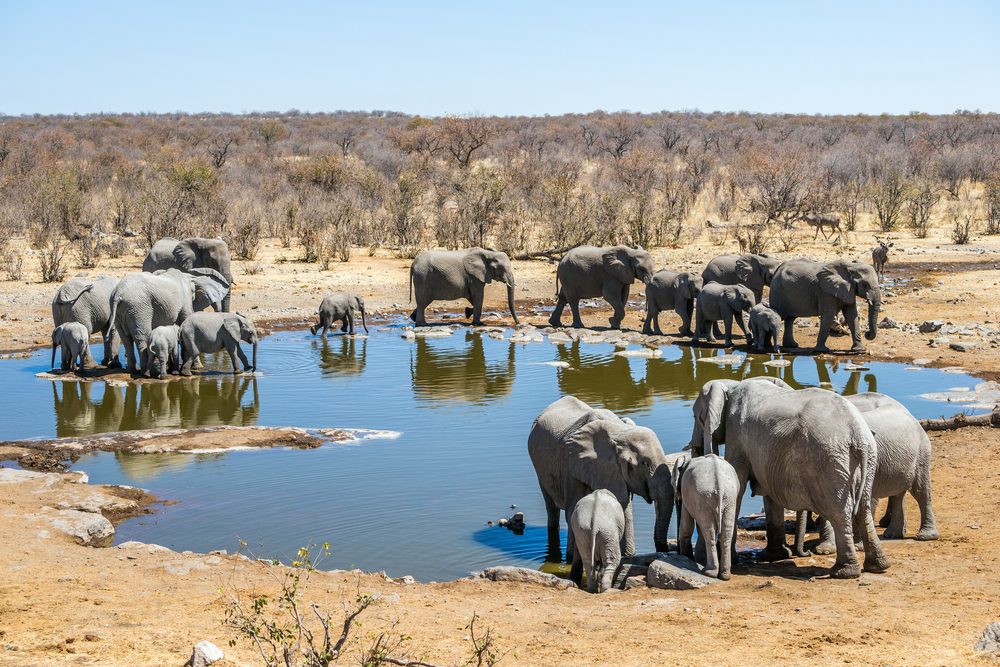
Etosha's waterholes are the key to its magic. In the dry season, animals must come to drink, so rather than searching for wildlife you simply wait at a waterhole and watch it come to you — often several species at once in dramatic interaction.
Several rest camps have floodlit waterholes where you can watch black rhino, elephant and even lion drinking after dark — an unforgettable and uniquely Etosha experience.
Wildlife & When to Go
Etosha is home to elephant, lion, leopard, black rhino, giraffe, zebra and large herds of springbok, oryx and the endemic black-faced impala. It is one of the best places in Africa to see endangered black rhino, especially at floodlit waterholes.
The dry season (May to October) is the prime time, when sparse water concentrates wildlife at the waterholes. The green season brings lush scenery, newborn animals and superb birding, but game disperses across the park.
Where to Stay & Planning
Etosha offers government rest camps inside the park — several with floodlit waterholes — as well as luxury private lodges on the park's borders. Staying inside the park lets you enjoy the waterholes at dawn, dusk and after dark.
Allow two to three nights to explore the park's different sections and waterholes at a relaxed pace. Etosha combines superbly with Sossusvlei, Damaraland and Swakopmund on a classic Namibia itinerary.
Etosha Safari Tips
- Visit in the dry season (May–October) when game crowds the waterholes.
- Stay at a camp with a floodlit waterhole for incredible after-dark rhino sightings.
- Patience pays — park at a waterhole and let the wildlife come to you.
- Etosha is excellent for self-drive, with good gravel roads and clear maps.
- Combine Etosha with Sossusvlei and Damaraland for a complete Namibia trip.
Frequently Asked Questions
When is the best time to visit Etosha National Park?
The dry season from May to October is the best time, when scarce water concentrates wildlife around the waterholes for spectacular game viewing. The green season from November to April brings lush scenery, newborn animals and excellent birding, but wildlife disperses across the park, making sightings less predictable.
What wildlife can you see in Etosha?
Etosha is home to elephant, lion, leopard, black rhino, giraffe, zebra, and large herds of springbok, oryx and the endemic black-faced impala. It is one of the best places in Africa to see endangered black rhino, particularly at the floodlit waterholes of the rest camps. Rhino, elephant and lion are regularly seen drinking after dark.
Can you self-drive in Etosha?
Yes. Etosha is one of Africa's best self-drive safari parks, with good gravel roads, clear signage and well-marked waterholes. Many visitors explore independently, parking at waterholes to watch wildlife come to drink. Guided safaris are also available for those who prefer expert interpretation and to focus on photography.
How many days do you need in Etosha?
Allow two to three nights to explore Etosha's different sections and waterholes at a relaxed pace. The park is large, and spending time at multiple waterholes greatly increases your sightings. Etosha is usually combined with Namibian highlights such as Sossusvlei, Damaraland and Swakopmund on a longer itinerary.
Why are the waterholes so important in Etosha?
During the long dry season, the waterholes are the only reliable water source, so wildlife must come to them to drink. This means visitors can simply wait at a waterhole and watch a parade of species arrive — often several at once. Floodlit waterholes at the rest camps even allow remarkable wildlife viewing after dark.
Tours & Safaris in Etosha, Namibia
Hand-picked private experiences our local team can book for you — skip the planning and travel like an insider.
Luxury Namibia Highlights
Dunes, Coast & Etosha in Eight Days
Namibia & Etosha Self-Drive Safari
The Classic Desert-to-Pan Loop — Sossusvlei, the Coast, Damaraland & Etosha
Swakopmund Ultimate Safari
Where the Desert Meets the Atlantic
Damaraland Ultimate Safari
Land of Desert Elephants and Ancient Rock Art
Fish River Canyon Ultimate Safari
Africa's Grand Canyon
The Namib Desert Ultimate Safari
The World's Oldest Desert
Ready to Experience Etosha, Namibia?
Let our local experts craft your perfect private journey.