Sossusvlei is the postcard image of Namibia — a sea of towering, rust-red sand dunes rising from the ancient Namib Desert, the oldest desert on Earth. Home to some of the tallest dunes in the world and the hauntingly beautiful clay pan of Deadvlei, it is one of the most surreal and photogenic landscapes on the planet. This 2026 guide covers when to go, what to see and how to plan your Sossusvlei adventure.
The Dunes of Sossusvlei
The dunes here are among the highest on Earth, with giants like Big Daddy rising over 300 metres. Their colour shifts from apricot to deep crimson as the sun moves, and climbing one at dawn for sunrise over the dune sea is an unforgettable experience.
Dune 45, named for its position 45km from the gate, is the most accessible and famous, while the more remote dunes around the vlei reward those who venture further into this ancient landscape.
Deadvlei
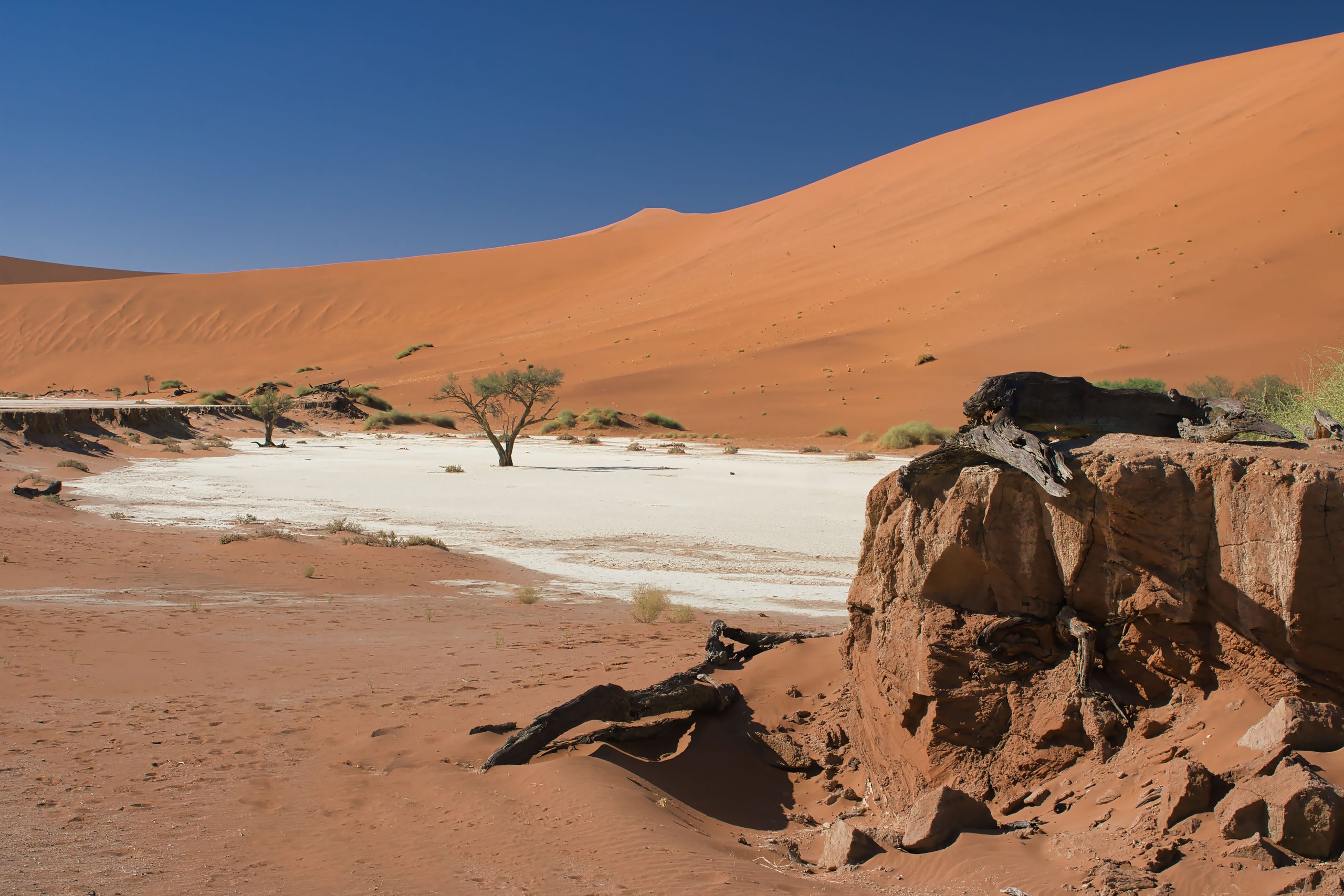
Deadvlei is a white clay pan studded with the blackened skeletons of 900-year-old camel thorn trees, framed by towering orange dunes and a cobalt sky. The surreal contrast of colours makes it one of the most photographed natural sites in Africa.
Reaching Deadvlei involves a short walk across the pan from the 2WD car park, or a 4WD transfer over the final sandy stretch. Arrive at first light for the best photography and cooler temperatures.
When to Go
Sossusvlei is a year-round destination, but the cooler months from May to September offer the most comfortable temperatures for climbing dunes and exploring. Days are warm and sunny, nights crisp and clear.
Summer (November to March) brings intense heat and occasional dramatic desert thunderstorms. Whatever the season, the gates open at sunrise — an early start is essential to beat the heat and capture the magical light.
Where to Stay & Planning
Accommodation ranges from the park's own gate-side lodge to luxury desert camps just outside, offering quick access to the dunes at dawn. Staying close means you can be at the gate as it opens.
Most visitors spend two nights at Sossusvlei, allowing a full sunrise dune excursion and time to explore nearby Sesriem Canyon. Sossusvlei pairs beautifully with Swakopmund, Damaraland and Etosha on a wider Namibia self-drive or guided tour.
Sossusvlei Tips
- Be at the gate at sunrise — the light, temperature and photography are best at dawn.
- Climb Big Daddy or Dune 45 early; the sand gets scorching by mid-morning.
- A 4WD or shuttle is needed for the last 5km of soft sand to the vlei.
- Bring plenty of water, sun protection and a hat — the desert is unforgiving.
- Stay two nights and combine with Swakopmund, Damaraland and Etosha.
Frequently Asked Questions
What is the best time to visit Sossusvlei?
The cooler months from May to September offer the most comfortable conditions for climbing dunes and exploring, with warm sunny days and crisp nights. Summer (November to March) is very hot but brings dramatic desert skies. Whatever the season, arrive at the gate at sunrise for the best light and temperatures.
What is the difference between Sossusvlei and Deadvlei?
Sossusvlei is the broader area of towering red dunes and a salt-and-clay pan within the Namib-Naukluft Park. Deadvlei is a specific white clay pan nearby, famous for its 900-year-old blackened camel thorn trees set against orange dunes and blue sky — one of Africa's most photographed scenes. Most visitors see both in one morning.
How do you get to Deadvlei?
From the 2WD car park, the final stretch to Deadvlei is reached by a 4WD shuttle or your own 4WD over soft sand, followed by a short walk across the pan. Arrive at first light for cooler temperatures and the best photographic conditions, as the walk is exposed and the sand heats quickly.
How many days do you need at Sossusvlei?
Two nights is ideal, allowing a full sunrise dune excursion, time to explore nearby Sesriem Canyon, and a relaxed pace in the heat. Sossusvlei is usually combined with other Namibian highlights such as Swakopmund, Damaraland and Etosha on a week- to two-week itinerary.
Can you climb the dunes at Sossusvlei?
Yes. Big Daddy, one of the tallest dunes in the world at over 300 metres, and the popular Dune 45 can both be climbed. Start early before the sand becomes too hot, wear sun protection, carry plenty of water, and take your time — the climb is strenuous but the views over the dune sea are spectacular.
Tours & Safaris in Sossusvlei, Namibia
Hand-picked private experiences our local team can book for you — skip the planning and travel like an insider.
Luxury Namibia Highlights
Dunes, Coast & Etosha in Eight Days
Namibia & Etosha Self-Drive Safari
The Classic Desert-to-Pan Loop — Sossusvlei, the Coast, Damaraland & Etosha
Swakopmund Ultimate Safari
Where the Desert Meets the Atlantic
Damaraland Ultimate Safari
Land of Desert Elephants and Ancient Rock Art
Fish River Canyon Ultimate Safari
Africa's Grand Canyon
The Namib Desert Ultimate Safari
The World's Oldest Desert
Ready to Experience Sossusvlei, Namibia?
Let our local experts craft your perfect private journey.