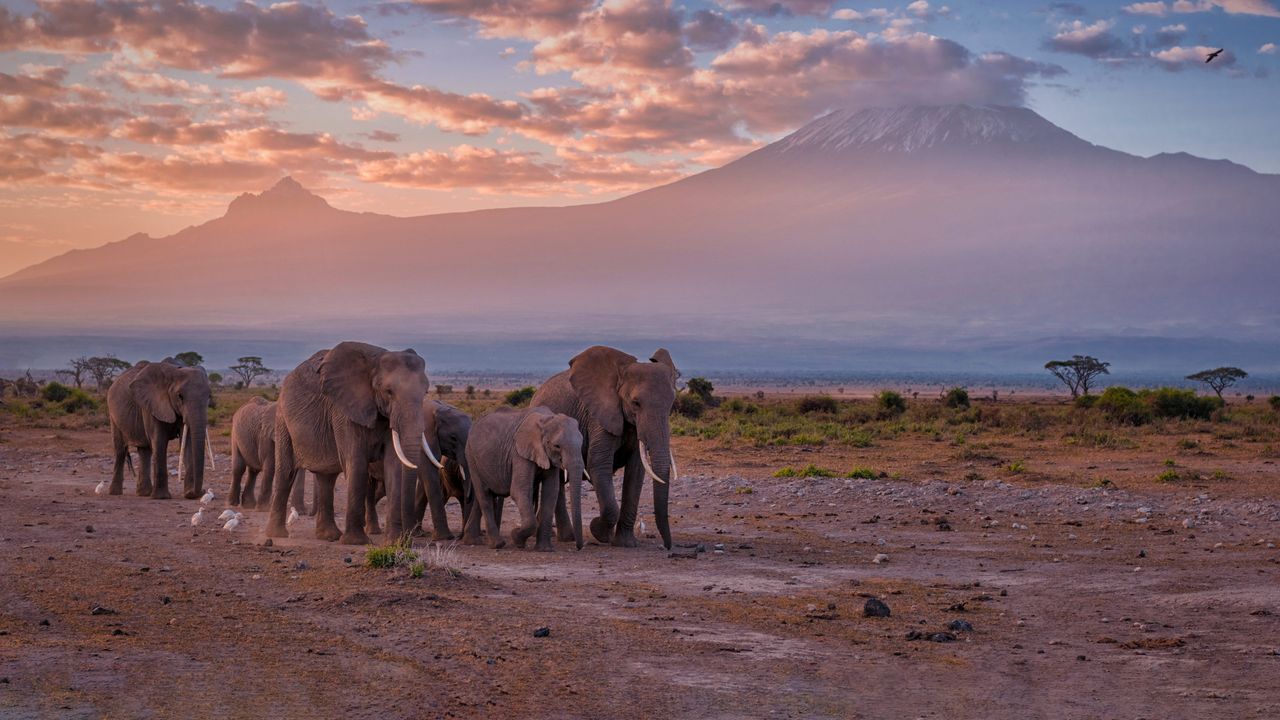
Amboseli National Park is Kenya's elephant kingdom — a compact, wildlife-rich reserve at the foot of Mount Kilimanjaro, where herds of great tuskers move across shimmering plains against the backdrop of Africa's highest peak. Few images capture the continent like a line of elephants crossing golden grass beneath Kilimanjaro's snows. Beyond the postcard, Amboseli is one of the finest places on Earth to observe elephant behaviour up close, thanks to decades of pioneering research. This 2026 guide covers when to go, what to see and how to plan your Amboseli safari.
Elephants & the Kilimanjaro Backdrop
Amboseli is famous for its large, relaxed elephant herds, including some of the last great tuskers in Africa — bulls whose ivory sweeps almost to the ground. The park's open terrain and habituated families make it possible to watch elephants at extraordinarily close range as they feed, bathe and interact.
On clear mornings, Mount Kilimanjaro floats above the plains, its glaciers glowing pink at dawn. The classic Amboseli photograph — elephants against the mountain — is best captured in the early hours before cloud gathers over the summit.
The Wildlife Beyond Elephants
While elephants are the headline, Amboseli also delivers lion, cheetah, spotted hyena, giraffe, buffalo, wildebeest and zebra across its swamps and plains. The permanent wetlands, fed by Kilimanjaro's snowmelt, draw wildlife even in the driest months.
Birdlife is exceptional — over 400 species, including flamingos, pelicans and African fish eagles around the swamps. The dried lake bed and rising dust create some of the most atmospheric light for photography anywhere in East Africa.
Wildlife & When to Go
The dry seasons — June to October and January to February — are the prime times to visit, when wildlife concentrates around the swamps and the skies are clearest for Kilimanjaro views. Roads are firm and game viewing is reliable.
The green season (November to May) brings lush plains, newborn animals and superb birding, though afternoon cloud often hides the mountain and some tracks become muddy. For the iconic elephant-and-Kilimanjaro shot, plan a dry-season dawn game drive.
Where to Stay & Planning
Amboseli offers everything from classic tented camps inside the park to luxury lodges in the surrounding Maasai group ranches, where night drives and guided walks are permitted. Staying just outside the park often means richer, more exclusive game viewing and cultural encounters with Maasai communities.
Allow two nights to enjoy Amboseli at an unhurried pace. It combines beautifully with the Masai Mara, Tsavo or Kenya's Rift Valley lakes, and pairs naturally with a Tanzania extension to the Serengeti and Ngorongoro.
Amboseli Safari Tips
- Head out at dawn for the clearest Kilimanjaro views before cloud gathers over the summit.
- Base yourself at a Maasai group-ranch conservancy for night drives and guided walks.
- Bring a telephoto lens for the great tuskers and a wide lens for the mountain backdrop.
- Pack for dust — a light scarf and lens covers protect against Amboseli's fine soil.
- Combine Amboseli with the Masai Mara or a Tanzania extension for a complete East Africa safari.
Frequently Asked Questions
When is the best time to visit Amboseli National Park?
The dry seasons from June to October and January to February are the best times, when wildlife gathers around the permanent swamps and skies are clearest for views of Mount Kilimanjaro. The green season from November to May brings lush scenery, newborn animals and excellent birding, but the mountain is often hidden by afternoon cloud and some roads become muddy.
Why is Amboseli famous for elephants?
Amboseli is home to some of the largest and most relaxed elephant herds in Africa, including rare great tuskers whose ivory almost touches the ground. Decades of pioneering elephant research have made its families exceptionally habituated, so visitors can observe natural elephant behaviour at very close range against the iconic backdrop of Mount Kilimanjaro.
Can you see Mount Kilimanjaro from Amboseli?
Yes. On clear days, Mount Kilimanjaro dominates the southern horizon, its snow-capped summit rising above the plains. The mountain is best seen at dawn and dusk before cloud gathers over the summit, which is why early-morning game drives offer the classic photograph of elephants crossing beneath the peak.
How many days do you need in Amboseli?
Two nights is ideal to enjoy Amboseli's wildlife and Kilimanjaro views at a relaxed pace across several game drives. The park is compact, so game viewing is efficient. Amboseli is usually combined with the Masai Mara, Tsavo or a Tanzania extension to the Serengeti and Ngorongoro on a longer East Africa itinerary.
What wildlife can you see in Amboseli besides elephants?
Beyond its famous elephants, Amboseli is home to lion, cheetah, spotted hyena, giraffe, buffalo, wildebeest and zebra, along with more than 400 bird species around its swamps, including flamingos, pelicans and fish eagles. The Kilimanjaro-fed wetlands keep wildlife present even in the driest months.
Ready to Experience Amboseli, Kenya?
Let our local experts craft your perfect private journey.