Key Takeaways — Fishing Safari Africa in 60 Seconds
- ◆The ultimate freshwater predator: The tigerfish (Hydrocynus vittatus) is Africa's answer to the tarpon — explosive strikes, aerial leaps, razor teeth and a fight that will test every rod you own.
- ◆Three world-class destinations: The Okavango Delta (crystal channels, fly-fishing paradise), the Lower Zambezi (broad hippo pools, vundu giants) and Lake Tanganyika (Goliath tigerfish, deep-water frontier).
- ◆Prime season Oct–Mar: Warm water temperatures drive aggressive feeding — the Okavango peaks Sep–Dec, the Zambezi Sep–Nov, Tanganyika fishes year-round.
- ◆Catch-and-release conservation: Barbless hooks, wet-hand handling, swift release — Africa's premier lodges protect the resource for generations.
- ◆Safari-fishing combos: Fish tigerfish at dawn, track lions at dusk — the Okavango and Lower Zambezi deliver both passions in a single trip.
Why Africa Is the Last Great Fishing Frontier
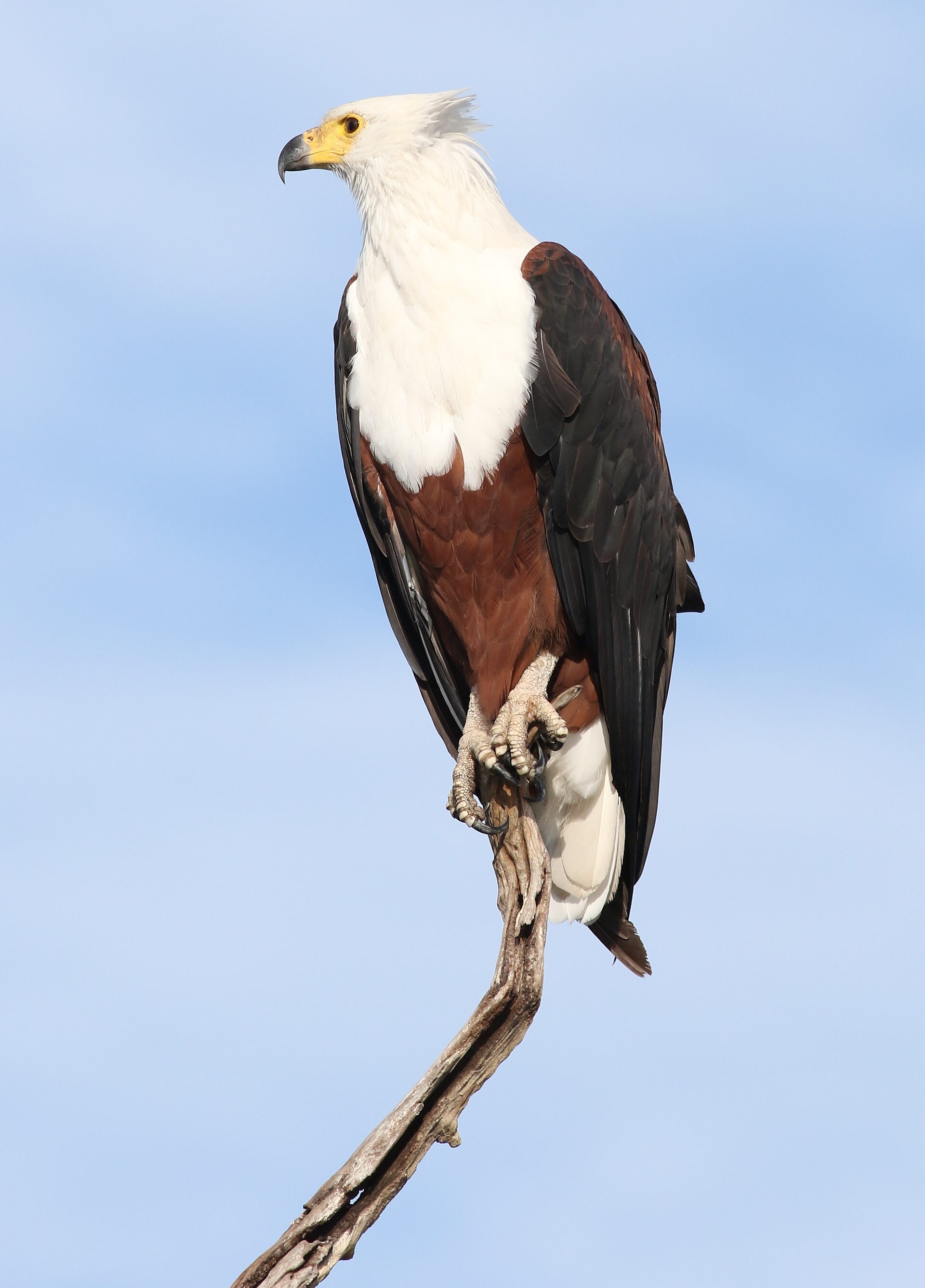
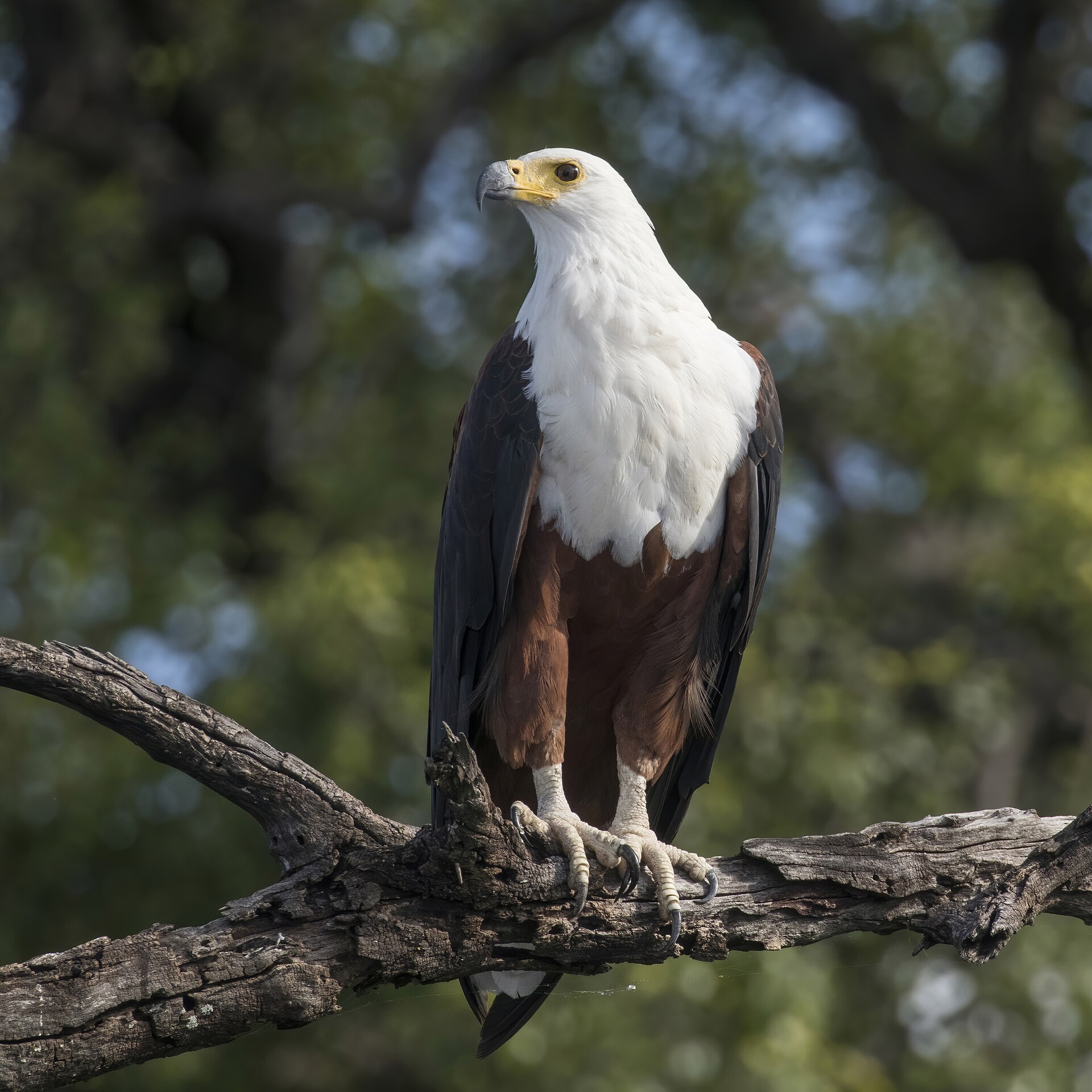
Every serious angler reaches a point where the predictable waters lose their hold. You have caught permit on the flats of Belize, stalked brown trout on New Zealand spring creeks, thrown poppers at GTs in the Seychelles. And then someone mentions Africa, and the conversation changes. Because Africa does not offer another variation on a familiar theme. It offers something fundamentally different: water that has never seen a fly line, fish that have never been pressured by catch-and-release programmes, and a wilderness context — hippos surfacing beside your boat, elephants crossing the channel ahead, a fish eagle screaming from the canopy — that exists nowhere else on earth.
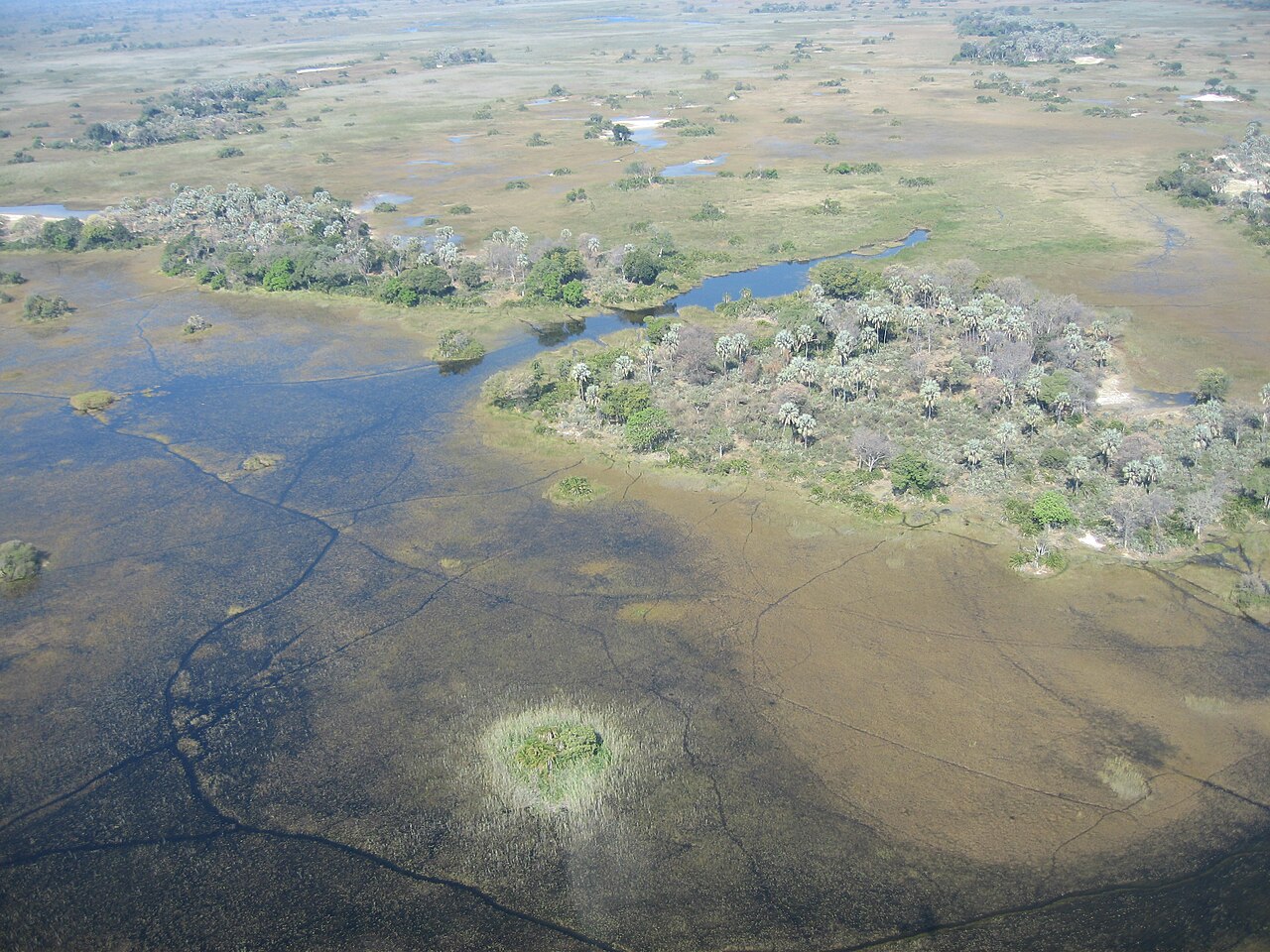
The continent's freshwater systems are staggering in scale. The Okavango Delta alone covers roughly sixteen thousand square kilometres of labyrinthine channels, lagoons and floodplains in northern Botswana — the world's largest inland delta, fed by rains that fall in Angola's highlands and arrive in Botswana months later, spreading across the Kalahari sand in a slow, crystalline flood. The Zambezi River runs nearly three thousand kilometres from its source in north-western Zambia to the Indian Ocean in Mozambique, passing through or bordering eight countries, feeding Victoria Falls, and creating some of the most productive tigerfish water on the planet. Lake Tanganyika, the world's second-deepest lake at over fourteen hundred metres, holds an estimated sixteen percent of the earth's available fresh surface water and harbours the monstrous Goliath tigerfish — Hydrocynus goliath — a fish that can exceed thirty kilograms and has jaws that belong in a horror film.
What makes Africa's fishing truly extraordinary, though, is not just the fish or the water. It is the fact that you are fishing in a genuine wilderness — not a stocked reservoir, not a managed beat, not a river corridor hemmed by agriculture. When you cast a fly into the Okavango's papyrus-lined channels, you are casting into a system where the food chain runs from microscopic diatoms through bream and barbel to tigerfish to crocodile to fish eagle, entirely unbroken, entirely wild. That is the promise, and it delivers every single time.
The Tigerfish: Africa's Apex Freshwater Predator
Before we talk about where to fish, we need to talk about what you are fishing for — because the tigerfish deserves its own chapter. Hydrocynus vittatus, the African tigerfish, is a member of the family Alestidae, an order of characins related distantly to the piranhas of South America. The name Hydrocynus translates roughly as "water dog," and vittatus means "striped" — a fair description of the dark horizontal bands that run along the silver flanks of a fish built entirely for speed and violence.
The tigerfish's defining feature is its dentition. The jaws carry a set of interlocking, conical teeth that are proportionally among the largest of any freshwater fish on earth — visible even when the mouth is closed, giving the fish a permanently aggressive expression that is entirely earned. These teeth are replaced continuously throughout the fish's life, rotating forward from reserve rows like a conveyor belt of enamel, ensuring that the cutting edges remain razor-sharp at all times. A tigerfish does not nibble. It strikes with a force that can sever steel wire, and its first run after the hook-set is a detonation — a gill-rattling, rod-bending explosion of speed that launches the fish clear of the water in a series of head-shaking leaps designed to throw the hook.
Trophy tigerfish on the Okavango Delta and Zambezi systems typically weigh between three and six kilograms, with exceptional fish exceeding eight to ten kilograms. The closely related Goliath tigerfish (Hydrocynus goliath) — found in the Congo River system and the northern reaches of Lake Tanganyika — is a different beast altogether: a fish that can reach one and a half metres in length and thirty kilograms in weight, with teeth the size of a great white shark's. Catching a Goliath on fly or lure is considered one of the rarest achievements in freshwater angling, and expeditions to the Congo specifically targeting Goliath tigerfish remain among the most adventurous fishing trips available anywhere on earth.
Fly-Fishing vs Spin-Fishing for Tigerfish
Both methods are effective, and the choice depends on your experience, your preference, and the water you are fishing. Fly-fishing for tigerfish is the purist's dream: a nine-weight rod, a fast-sinking line, and a large, flashy streamer — typically a Clouser Minnow, a Deceiver variant, or one of the locally tied "brush fly" patterns that imitate the small bream and minnows on which tigerfish feed. The fly is cast into current seams, channel junctions and drop-offs, stripped fast with aggressive, foot-long pulls that trigger the tigerfish's predatory instinct. The take on fly is unforgettable — a sudden, savage stop followed by an immediate run and jump. Fly-fishing is most productive in the clear, relatively shallow channels of the Okavango Delta, where you can sight-cast to cruising fish in water so clear you can see the sandy bottom three metres below.
Spin-fishing with lures — small spoons, spinners, Rapalas, soft plastics and topwater poppers — is equally exciting and generally more accessible for beginners. Spinning tackle allows you to cover more water, cast further, and fish deeper structure that is difficult to reach on fly. On the broader, deeper reaches of the Zambezi, spinning is often the primary method, particularly for larger fish holding in deep pools and eddies behind mid-river boulders. Many lodges offer both options, and a typical day might start with fly-fishing the shallow channels at dawn, switch to spinning in the deeper water during the heat of the day, and return to fly in the golden hour before sunset.
✅ Catch-and-Release: The Conservation Standard
Every premier fishing lodge in Botswana, Zambia and Zimbabwe operates strict catch-and-release for tigerfish. Barbless hooks (or pinched barbs) are mandatory. Fish are handled with wet hands, kept in the water during unhooking, held briefly for a photograph, and released immediately. This ethic is non-negotiable — it is why Africa's tigerfish populations remain healthy, the average size is exceptional, and the sport is sustainable for generations. If you are booking through us, every lodge we recommend adheres to this standard without exception.
The Okavango Delta: Fly-Fishing Paradise
If you forced every serious tigerfish angler on earth to name one destination, the majority would say the same thing: the Okavango Delta. And they would be right. The Okavango is not merely good tigerfish water — it is the defining tigerfish water, the place where the species reaches its aesthetic and sporting peak, set against a backdrop of such pristine, untouched wilderness that every cast feels like a privilege.
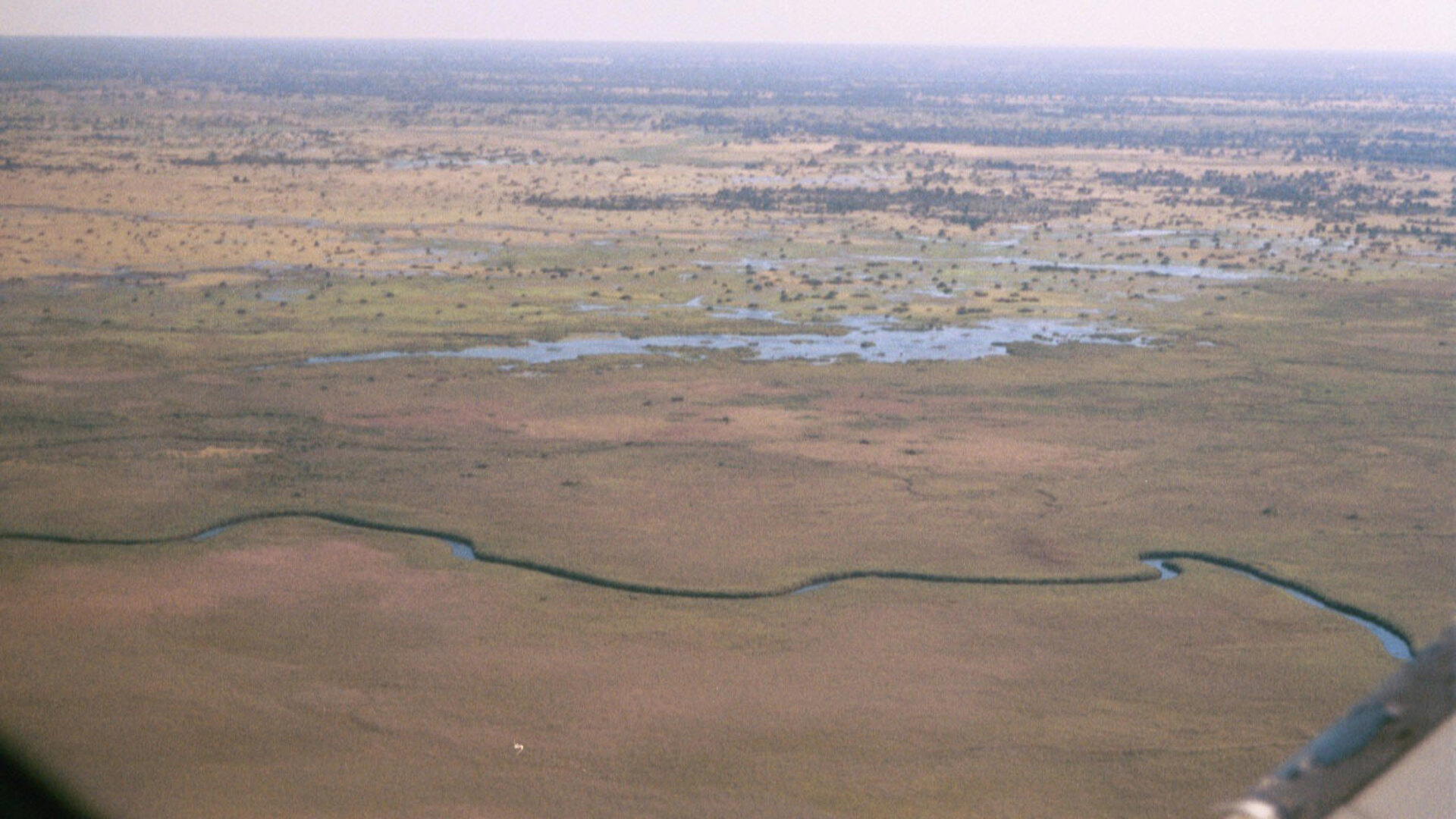
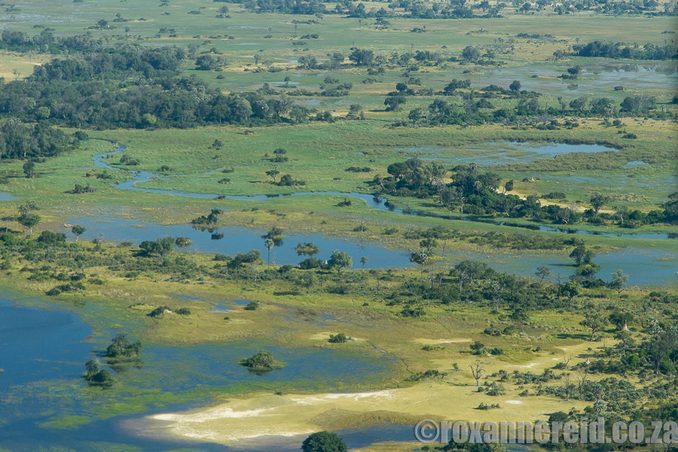
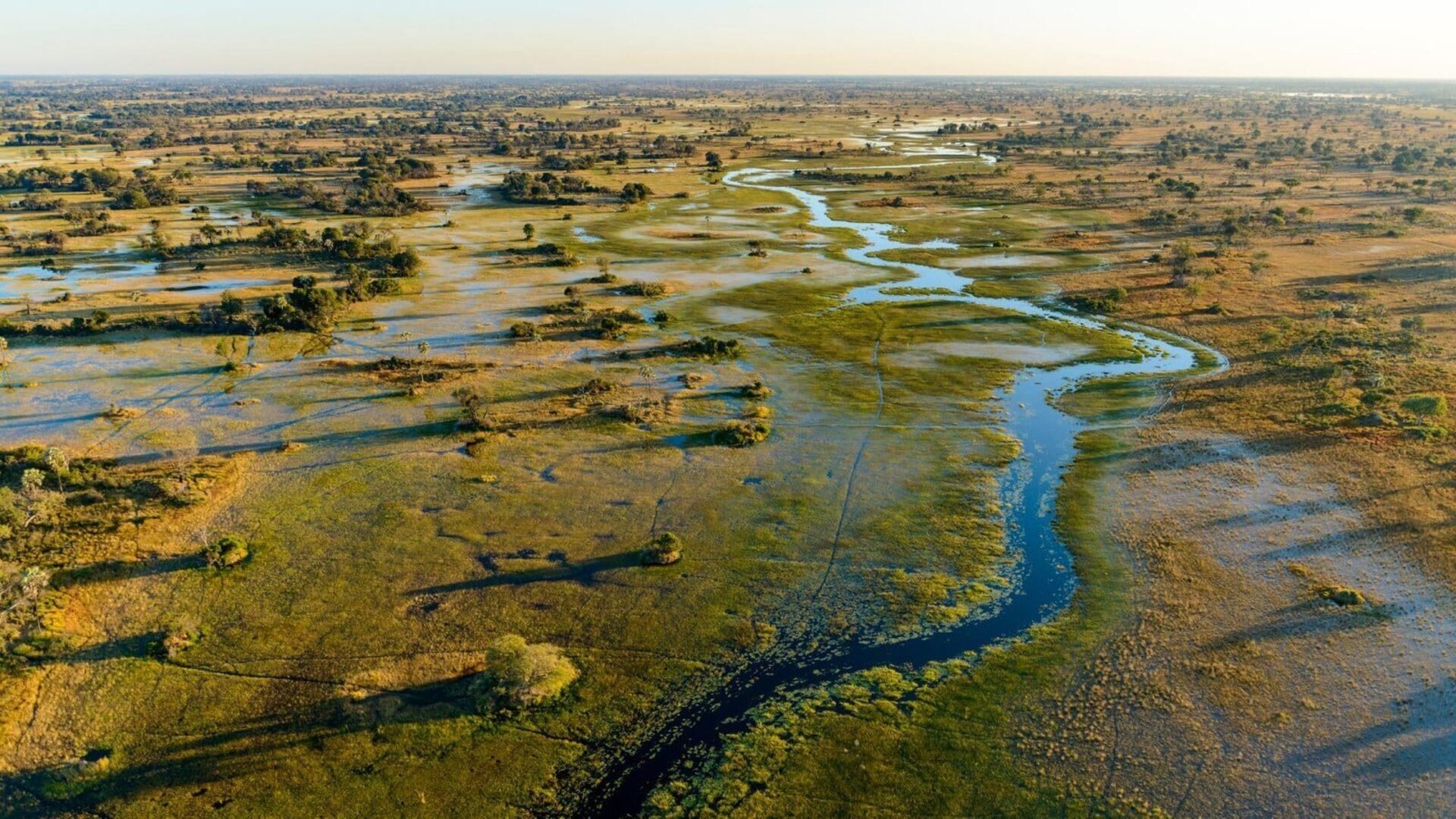
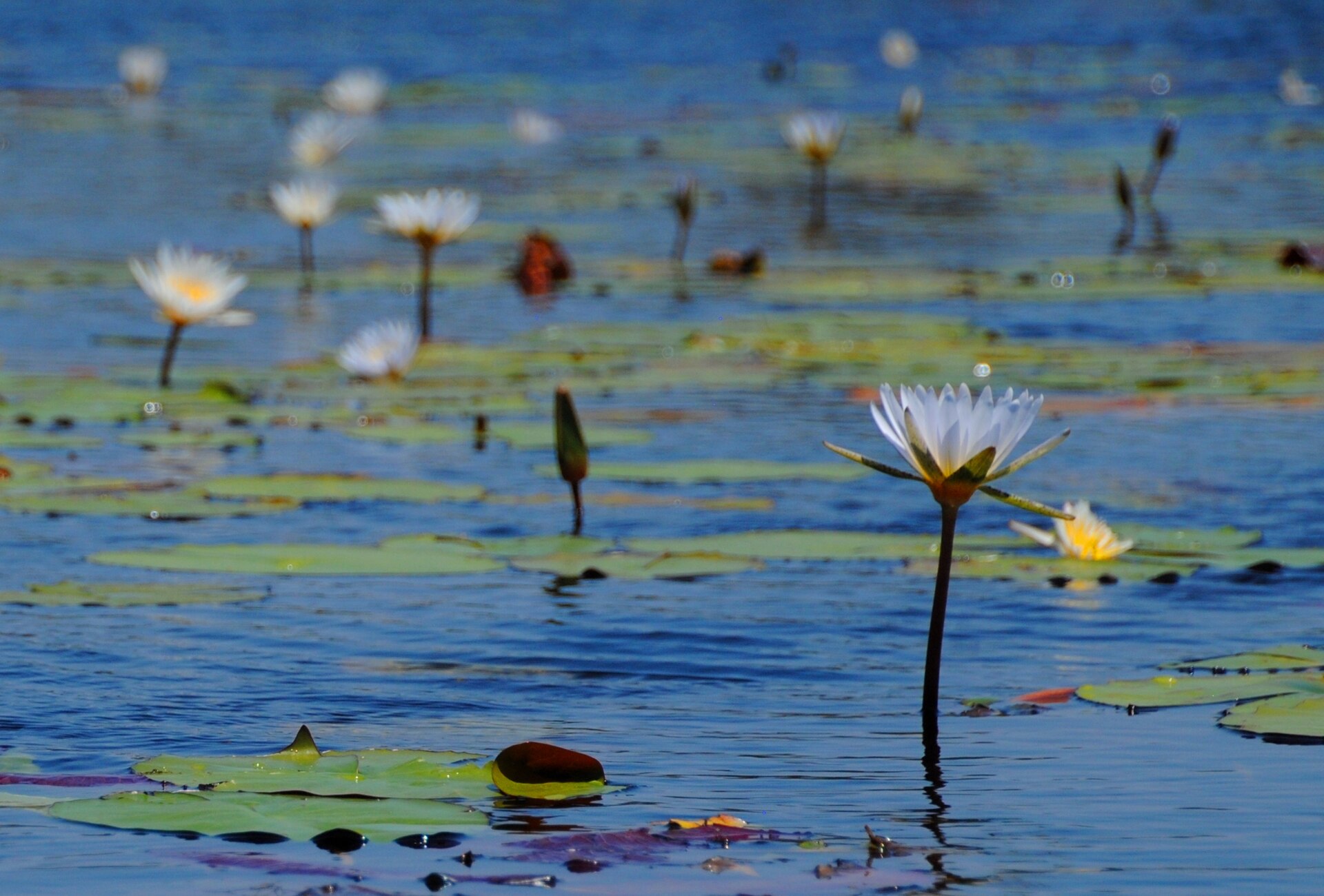
The Delta's appeal for anglers is structural. The Okavango River enters Botswana from Namibia's Caprivi Strip and fans out across the Kalahari sand into a vast, shallow alluvial fan — a maze of papyrus-lined channels, reed-fringed lagoons, palm-dotted islands and open floodplains that shift and change with each annual flood cycle. The water in the upper reaches (the "panhandle") and the permanent channels is extraordinarily clear — gin-clear in the dry season, with visibility of three metres or more — allowing sight-fishing to cruising tigerfish in a way that is simply not possible on the murkier Zambezi or Congo systems.
The prime fishing season on the Okavango runs from September to December, when the annual flood has receded from the southern reaches, the permanent channels have dropped to fishable levels, water temperatures have risen above twenty degrees, and the tigerfish are feeding aggressively in preparation for their upstream spawning migration. September and October are generally considered peak months — the water is at its clearest, the fish are concentrated in the deepest channels and lagoon junctions, and the catch rates are at their highest.
Best Okavango Fishing Camps & Channels
The Okavango's fishing is concentrated in three main areas, each with its own character and lodge options.
The Panhandle — the long, narrow upper reach of the Delta between Shakawe and Seronga — is the traditional heartland of Okavango tigerfish fishing. The channels here are deep, the current is steady, and the tigerfish grow larger on average than in the inner Delta. Lodges like Xugana Island Lodge and camps along the panhandle waterways have been hosting anglers for decades and offer dedicated fishing boats, experienced guides and tackle for both fly and spin.
The Kwara/Vumbura Channel System — in the north-eastern Delta — offers a superb combination of fishing and wildlife. The channels running through the Kwara and Vumbura concessions hold excellent tigerfish, and the surrounding floodplains are prime Big Five country. This is the sweet spot for anglers who want to combine serious fishing with serious game viewing: fish the channels at dawn, drive for leopard in the afternoon.
The Xugana/Godikwe Lagoon System — in the central inner Delta — provides some of the most spectacular sight-fishing opportunities. The lagoons here are broad, clear and shallow enough to wade in places, and the tigerfish cruise the sandy margins in small packs, hunting bream and robbing fish eagles of their catches. Fly-fishing here is as close to bonefishing as freshwater gets — stalking, spotting, casting to visible fish.
The Zambezi: Lower Zambezi & Mana Pools
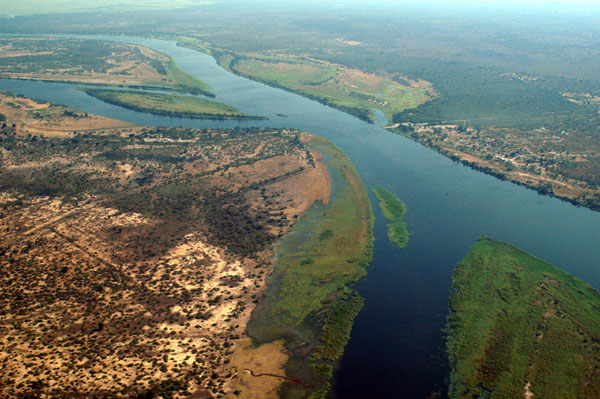
If the Okavango is the fly-fisher's paradise, the Zambezi is the all-rounder's playground — a vast, powerful river system that offers tigerfish, vundu catfish (Africa's largest catfish, exceeding fifty kilograms), bream species, and some of the most dramatic fishing backdrops in the world. The two premier fishing reaches are the Lower Zambezi National Park in Zambia and Mana Pools National Park in Zimbabwe, which face each other across the river in one of Africa's last great wilderness corridors.
The Lower Zambezi is a broad, braided river here — between five hundred metres and a kilometre wide in places — flowing through a valley flanked by the Zambezi Escarpment on both sides. The fishing is done from aluminium boats or canoes, drifting the channels between islands, casting into the eddies behind mid-river boulders, and working the deep pools where tigerfish and vundu hold in the cooler water below the thermocline. The tigerfish on the Zambezi tend to be larger on average than those on the Okavango — fish of five to eight kilograms are realistic targets, and double-digit fish are caught every season.
The vundu catfish (Heterobranchus longifilis) is the Zambezi's other great prize. These enormous fish — olive-green, broad-headed, with a mouth like a dustbin lid — inhabit the deepest pools and are caught on heavy tackle, either on cut bait or large lures fished deep. A vundu of twenty to thirty kilograms will test any angler's stamina in a fight that is more endurance contest than sprint, and trophy fish exceeding forty kilograms are landed on the Lower Zambezi every year.
Best Zambezi Fishing Lodges
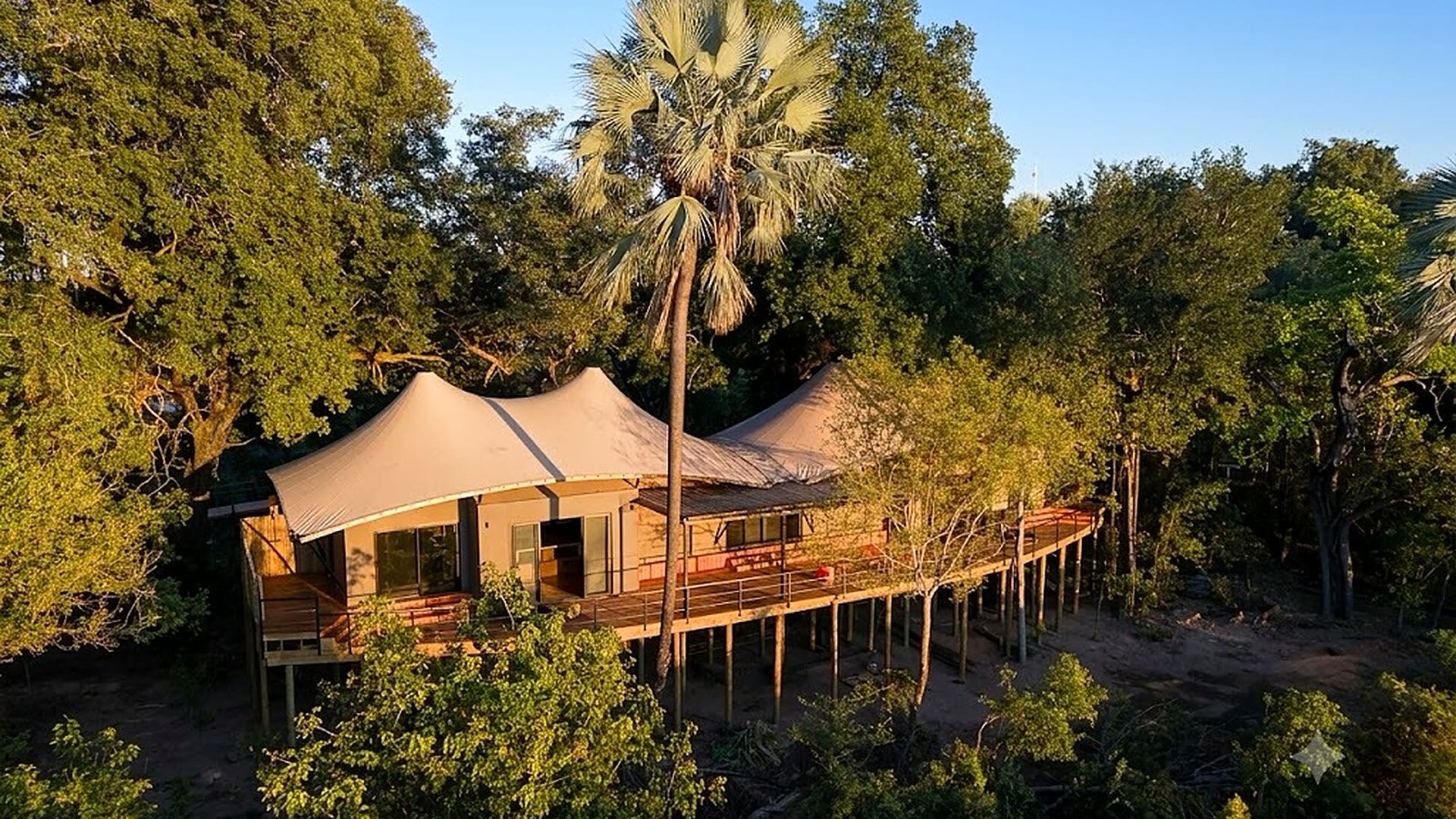
Chiawa Camp — one of the Lower Zambezi's original luxury camps — is the gold standard for fishing-safari combinations. The camp sits on a private stretch of river frontage within the Lower Zambezi National Park, with dedicated fishing boats, expert guides, and a catch-and-release programme that has been running for over two decades. Between fishing sessions, the game viewing is outstanding: elephant herds wade the shallows in front of camp, lions patrol the riverine forest, and leopards are regularly spotted on night drives.
Old Mondoro Bush Camp — also within the Lower Zambezi National Park — offers an even more remote, intimate fishing experience. The camp is smaller (just four rooms), the stretch of river is wilder, and the fishing pressure is virtually zero. Old Mondoro is the choice for purists who want to feel genuinely alone on the river.
Chongwe River Camp — at the confluence of the Chongwe and Zambezi rivers — is another superb option, particularly for families and mixed groups. The confluence itself is prime tigerfish water, and the camp offers canoeing safaris downriver that combine fishing with walking and game viewing along the bank.
Lake Tanganyika: The Deep-Water Giant
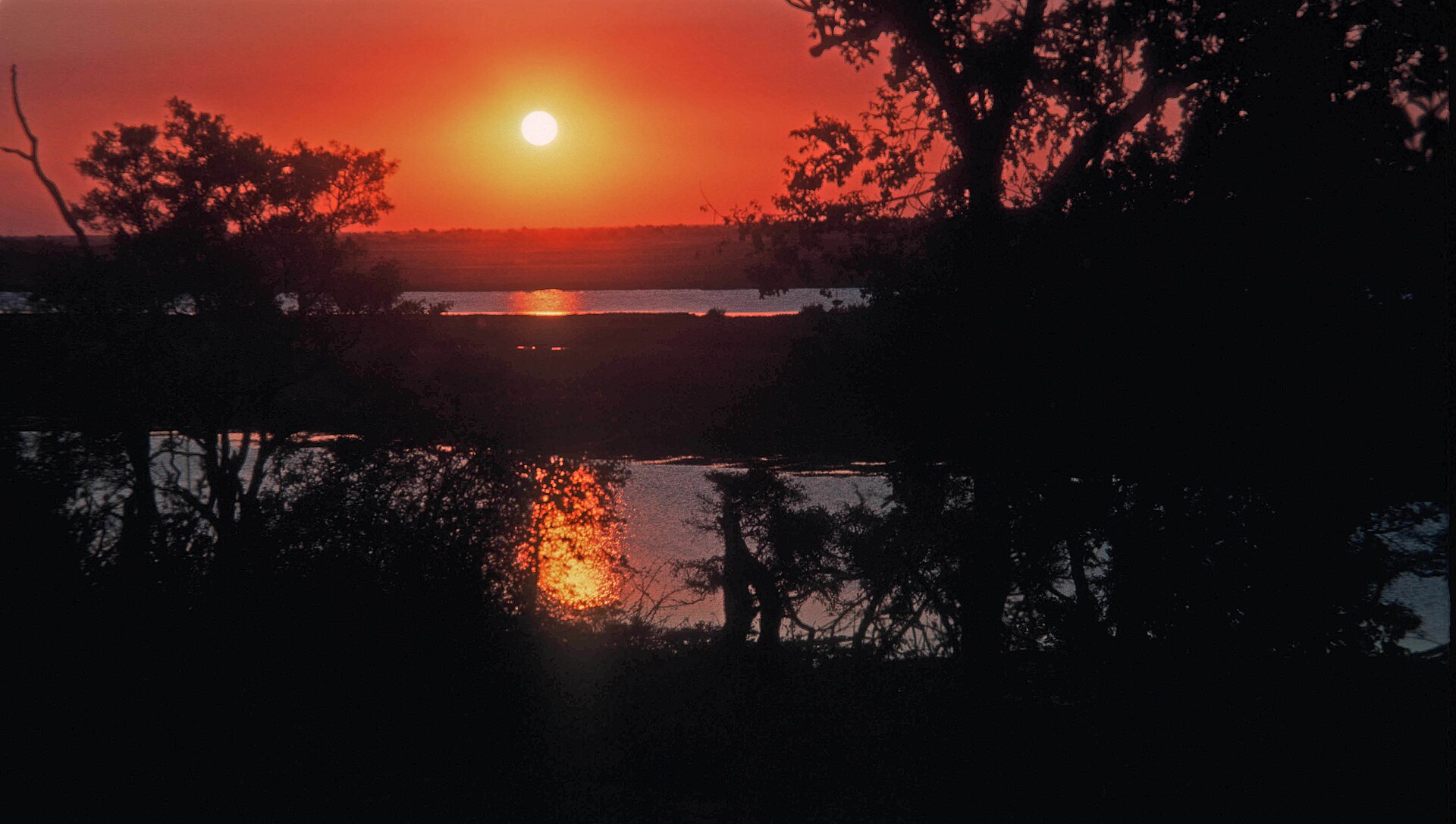
Lake Tanganyika is not for the casual angler. It is a place for adventurers, for anglers who have exhausted the conventional destinations and want something genuinely remote, genuinely wild, and genuinely unlike anything else on the planet. The lake is over six hundred and seventy kilometres long, up to seventy-two kilometres wide, and plunges to depths exceeding fourteen hundred metres — the second-deepest lake on earth after Siberia's Lake Baikal. Its waters hold an estimated two hundred and fifty endemic cichlid species, along with the legendary Goliath tigerfish (Hydrocynus goliath), Nile perch (in the northern reaches), and a variety of catfish and other predatory species.
The Goliath tigerfish is the lake's ultimate prize. Where the standard tigerfish (H. vittatus) of the Okavango and Zambezi maxes out at perhaps ten to twelve kilograms, the Goliath routinely exceeds fifteen kilograms and has been recorded at over thirty — a fish with teeth that would not look out of place in a dinosaur's jaw and a fighting style that combines the power of a GT with the aerial acrobatics of a tarpon. Catching one on rod and line is a genuine lifetime achievement.
The best access to Tanganyika for anglers is through western Tanzania — specifically the Mahale Mountains National Park region, where the forested mountains plunge directly into the lake and wild chimpanzees inhabit the slopes above the shore. Greystoke Mahale, the Nomad Tanzania camp on the lake's eastern shore, offers fishing excursions for Goliath tigerfish, yellowbelly (kuhe), and other species, combined with chimpanzee trekking in the mountain forest — a pairing of experiences that exists nowhere else on earth.
From the Zambian side, the southern tip of the lake near Kasanka National Park and the town of Mpulungu offers access to excellent tigerfish and Nile perch fishing, though the infrastructure is more basic and the experience is more expedition-style than lodge-luxury. For the truly adventurous, the Congo side of the lake — particularly the area around Kalemie — holds the densest Goliath populations, but access is logistically challenging and security considerations require careful planning.
Best Fishing Destinations at a Glance
| Destination | Country | Target Species | Best Season | Method | Top Lodge |
|---|---|---|---|---|---|
| Okavango Panhandle | Botswana | Tigerfish, bream, pike | Sep – Dec | Fly & spin | Xugana Island Lodge |
| Okavango Inner Delta | Botswana | Tigerfish, bream | Sep – Nov | Fly (sight-fishing) | Kwara / Vumbura camps |
| Lower Zambezi NP | Zambia | Tigerfish, vundu catfish | Sep – Nov | Spin & fly | Chiawa Camp |
| Mana Pools NP | Zimbabwe | Tigerfish, bream, vundu | Sep – Nov | Spin & fly | Ruckomechi Camp |
| Lake Tanganyika (Mahale) | Tanzania | Goliath tigerfish, kuhe | May – Oct | Heavy spin & trolling | Greystoke Mahale |
| Upper Zambezi / Caprivi | Namibia | Tigerfish, bream, pike | Aug – Dec | Fly & spin | Nkasa Lupala Tented Lodge |
| Chobe River | Botswana | Tigerfish, bream, catfish | Sep – Dec | Spin & fly | Chobe Game Lodge |
Best Fishing Lodges, Seasons & Combo Itineraries
When to Go: The Fishing Calendar
Africa's fishing seasons are governed by water temperature, flood cycles and spawning behaviour. The general rule is simple: warm water equals active fish. As water temperatures rise above twenty degrees Celsius — typically from September or October onwards — tigerfish switch from a sluggish, deep-water holding pattern to aggressive, surface-oriented feeding that is ideal for both fly and spin fishing. The table below summarises the peak windows for each destination.
| Destination | Jun | Jul | Aug | Sep | Oct | Nov | Dec | Jan | Feb | Mar |
|---|---|---|---|---|---|---|---|---|---|---|
| Okavango Delta | ○ | ○ | ◑ | ● | ● | ● | ◑ | ○ | ○ | ○ |
| Lower Zambezi | ◑ | ◑ | ◑ | ● | ● | ● | ○ | ✕ | ✕ | ✕ |
| Lake Tanganyika | ● | ● | ● | ● | ◑ | ◑ | ◑ | ◑ | ◑ | ◑ |
| Chobe / Upper Zambezi | ○ | ○ | ◑ | ● | ● | ● | ◑ | ○ | ○ | ○ |
● Peak ◑ Good ○ Off-season ✕ Closed (flood)
Essential Tackle & What to Pack
Most fishing lodges provide all tackle, but if you prefer to bring your own, here is the standard rig for tigerfish across all destinations:
- Fly rod: 9-weight, fast-action, with a quality large-arbour reel loaded with a tropical intermediate or fast-sinking line. Leaders: 30–40lb fluorocarbon with a short wire trace (20–30cm of single-strand titanium or knottable wire) to survive the teeth.
- Spin rod: Medium-heavy 6–7ft spinning rod with a 4000-class reel loaded with 30lb braid. Wire trace mandatory — a tigerfish will sever monofilament or fluorocarbon leader in an instant.
- Flies: Large Clouser Minnows (chartreuse/white, olive/white), Deceivers, EP Baitfish patterns, and locally tied "brush flies" in sizes 2/0–4/0. Flash is essential — tigerfish are attracted to sparkle.
- Lures: Small Rapalas (5–9cm, silver/blue), spoons (15–25g, silver or gold), soft-plastic jerkbaits, and surface poppers for spectacular topwater strikes.
- Clothing: Long-sleeved sun shirts (UPF 50+), buff/neck gaiter, polarised sunglasses (essential for sight-fishing), wide-brimmed hat, quick-dry shorts, and reef shoes or wading sandals for boat fishing.
Safari-Fishing Combo Itineraries
The genius of an African fishing safari is that you never have to choose between the rod and the rifle (binoculars, in our case). The best destinations sit inside or adjacent to world-class wildlife reserves, and the lodges are designed to offer both experiences seamlessly. Here are three proven itineraries we plan regularly for our clients.
🎣 Itinerary 1: Okavango Fishing & Big Five (10 Nights)
Nights 1–3: Okavango Panhandle fishing camp — dedicated tigerfish fishing, dawn and dusk sessions, fly and spin. Boat-based with experienced local guides.
Nights 4–6: Moremi Game Reserve — Big Five game drives, mokoro excursions, walking safaris. Leopard, lion, elephant, wild dog, buffalo.
Nights 7–9: Linyanti / Chobe — elephant herds, river-front game viewing, sunset boat cruises with fishing options on the Chobe.
Night 10: Victoria Falls — one night, helicopter flight, spray and thunder, farewell dinner. From USD 8,500 pp sharing.
🎣 Itinerary 2: Lower Zambezi Fishing & Walking Safari (8 Nights)
Nights 1–4: Lower Zambezi National Park — Chiawa or Old Mondoro. Tigerfish and vundu by day, lion and leopard on night drives, walking safaris along the river.
Nights 5–7: South Luangwa National Park — legendary walking safari country. Leopard density rivals the Sabi Sands, and the Luangwa River holds its own tigerfish population.
Night 8: Lusaka — depart. From USD 7,200 pp sharing.
🎣 Itinerary 3: Tanganyika Fishing & Chimpanzee Trek (7 Nights)
Nights 1–4: Greystoke Mahale, Lake Tanganyika — Goliath tigerfish and kuhe fishing on the lake, chimpanzee trekking in the Mahale Mountains, kayaking, snorkelling cichlids.
Nights 5–6: Katavi National Park — remote, unvisited, raw Big Five wilderness. Hippo pods of hundreds, lion prides, buffalo herds in the thousands.
Night 7: Dar es Salaam — depart. From USD 9,800 pp sharing.
Beyond Tigerfish: Other Fishing Destinations in Africa
While tigerfish dominates the conversation, Africa's fishing portfolio extends far beyond a single species. Nile perch — the freshwater giant that can exceed one hundred kilograms — is the target on Lake Victoria (Uganda, Kenya, Tanzania) and Lake Nasser (Egypt), where trolling with heavy tackle produces fish that test boat and angler alike. Yellowfish — the Vaal and Orange River system's endemic trout-like species — offers superb fly-fishing in South Africa's Highveld, with the Vaal River near Johannesburg producing fish of five kilograms on dry fly. Trout fishing in the mountain streams of South Africa's Drakensberg, Mpumalanga, and the Western Cape rivals anything in the Northern Hemisphere, with wild brown and rainbow trout in crystal streams surrounded by protea-covered peaks.
For saltwater anglers, the options are equally extraordinary. Mozambique's coast offers marlin, sailfish, giant trevally and wahoo from the warm Mozambique Channel. Zanzibar and the Tanzanian coast produce yellowfin tuna, dorado and kingfish. Kenya's Watamu and Malindi are world-renowned billfish destinations. And the Seychelles — while technically an island nation — offer arguably the finest permit and bonefish flats-fishing on earth, in addition to GTs that can exceed sixty kilograms. Each of these destinations pairs naturally with a bush safari, creating multi-day itineraries that span savanna and sea.
Conservation & the Future of African Fishing
Africa's freshwater fisheries face genuine threats — gill netting, overfishing by commercial operators, habitat degradation from deforestation and agriculture, and the creeping effects of climate change on water levels and temperatures. The tigerfish is not yet endangered, but localised populations have declined sharply in rivers where unregulated netting is permitted, and the Goliath tigerfish of the Congo remains virtually unstudied and potentially vulnerable.
Sport fishing, practised responsibly, is a powerful conservation tool. The revenue generated by catch-and-release fishing lodges — in the form of concession fees, community levies, employment and tourist spending — gives governments and local communities a direct financial incentive to protect river systems and enforce anti-poaching measures. In the Lower Zambezi, for example, the presence of tourism operators along the river has been credited with significantly reducing illegal gill-netting, and tigerfish populations in the national park section are healthier than in unprotected stretches upstream.
As anglers, our responsibility is clear: fish catch-and-release, use barbless hooks, handle fish quickly and gently, support lodges that invest in conservation, and advocate for the protection of the wild rivers that make this experience possible. Africa's fishing frontier is extraordinary precisely because it remains wild. Keeping it that way requires every angler who visits to leave the water in better condition than they found it.
Planning Your Fishing Safari: What You Need to Know
Visas & Entry
Botswana, Zambia and Zimbabwe all offer visa-on-arrival or eVisa access for most Western passport holders. Tanzania requires an eVisa (applied online, typically approved within 48 hours). South Africa grants visa-free entry to many nationalities. We handle all visa guidance as part of your booking.
Health & Malaria
All prime fishing destinations — the Okavango Delta, the Lower Zambezi, the Chobe, Lake Tanganyika — fall within malaria zones. Prophylaxis is essential, and we recommend consulting a travel-health specialist at least six weeks before departure. Atovaquone/proguanil (Malarone) or doxycycline are the most commonly prescribed options. Insect repellent (DEET 30%+) and long sleeves at dawn and dusk provide additional protection.
Getting There
The Okavango Delta is accessed via Maun (MUB) in Botswana, with connecting flights from Johannesburg (2 hours). The Lower Zambezi is reached via Lusaka (LUN) or the Lower Zambezi airstrip (Jeki), with charter flights from Lusaka (approximately 45 minutes). Lake Tanganyika's Mahale region is accessed by charter flight from Dar es Salaam or Arusha to the Mahale airstrip, followed by a boat transfer. The Chobe is accessed via Kasane (BBK), a short hop from Victoria Falls or Maun. We arrange all internal transfers as part of your itinerary.
Booking & Budget
Dedicated fishing lodges on the Okavango and Lower Zambezi typically range from USD 500 to 1,200 per person per night fully inclusive. A seven- to ten-night fishing-safari combo — combining fishing camps with Big Five game-drive lodges — runs roughly USD 6,000 to 12,000 per person depending on the destination, lodge tier and season. We plan direct with every lodge, so there are no middleman mark-ups, and we match your budget, dates and fishing ambitions to the right itinerary from the start.
The Final Cast: Why This Trip Will Change You
Every angler has a mental image of the perfect fishing trip. A river nobody else has fished. A fish that fights like nothing you have hooked before. A setting so wild, so untouched, so achingly beautiful that the fishing almost becomes secondary to the experience of simply being there. Africa delivers all of this, and it delivers it with a rawness, an authenticity and a generosity that humbles even the most travelled anglers on earth.
The tigerfish does not care about your tournament record or your custom-built rod. It will test you on its own terms — explosive, violent, unapologetic — and when it leaps clear of the Okavango's crystal water with the morning sun catching its silver flanks and the African fish eagle screaming overhead, you will understand why anglers who have fished every ocean and every river on the planet keep coming back to Africa. This is the last great fishing frontier. Come and fish it before the secret gets out.
Ready to Cast Your Line into Africa's Wildest Water?
We plan every fishing safari direct with the lodges — Okavango, Zambezi, Tanganyika, Chobe. No middlemen, no mark-ups, just the right water, the right season and the right guide for your fishing ambitions. Contact Beyond Africa Safaris to start planning your tigerfish adventure.