The quick take
Fumba Beach Lodge is a 26-cottage lodge on the Fumba Peninsula, in the southwest corner of Zanzibar that the package crowd drives straight past on its way to the north. It is not a big all-inclusive resort and it is not trying to be one. It is a low-built, barefoot sort of place — thatched cottages spread across forty acres of garden and beach, a dive centre on the sand, a bar made out of an old dhow, and one of the best day trips on the island leaving from the water in front of it.
What you are paying for here is space and quiet, a reef that is still in good shape because the bay around it is protected, and a location 25 kilometres from both Stone Town and the airport — close enough that the transfer is half an hour, far enough that you have the beach largely to yourself. For couples who want the island without the crowds, and for families who want room to spread out, it is one of the better-judged properties on Zanzibar.
Where it is, and why the southwest is different
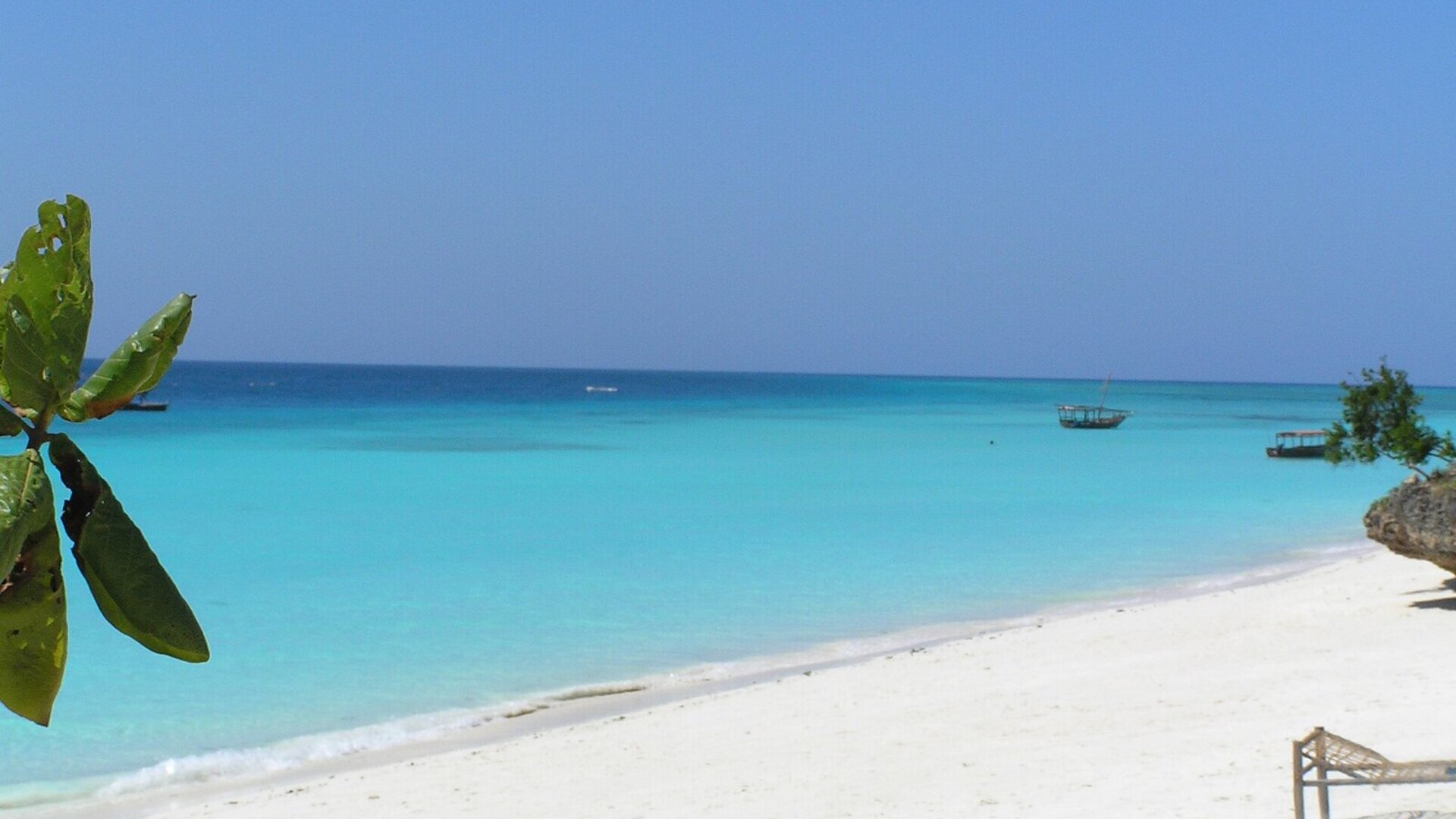
Most people picture Zanzibar as the north — Nungwi and Kendwa, the deep-water beaches, the long strip of resorts and the nightlife. Fumba is the opposite end, in both geography and feel. The Fumba Peninsula points southwest off the island, into the Menai Bay Conservation Area, a protected stretch of mangroves, reefs and sandbanks that is home to dolphins and some of the island's healthiest coral.
The practical upside is the airport. Zanzibar's international airport and Stone Town are both about 25 kilometres away, a 20 to 30 minute drive. Compare that with the hour-plus run up to the northeast beaches and the difference matters, especially on a tight arrival or departure day. The trade-off is a tidal beach — the water goes a long way out at low tide, as it does across much of Zanzibar — but the lodge has a pool for those hours and the tide chart is easy to plan a swim around.
The cottages and suites
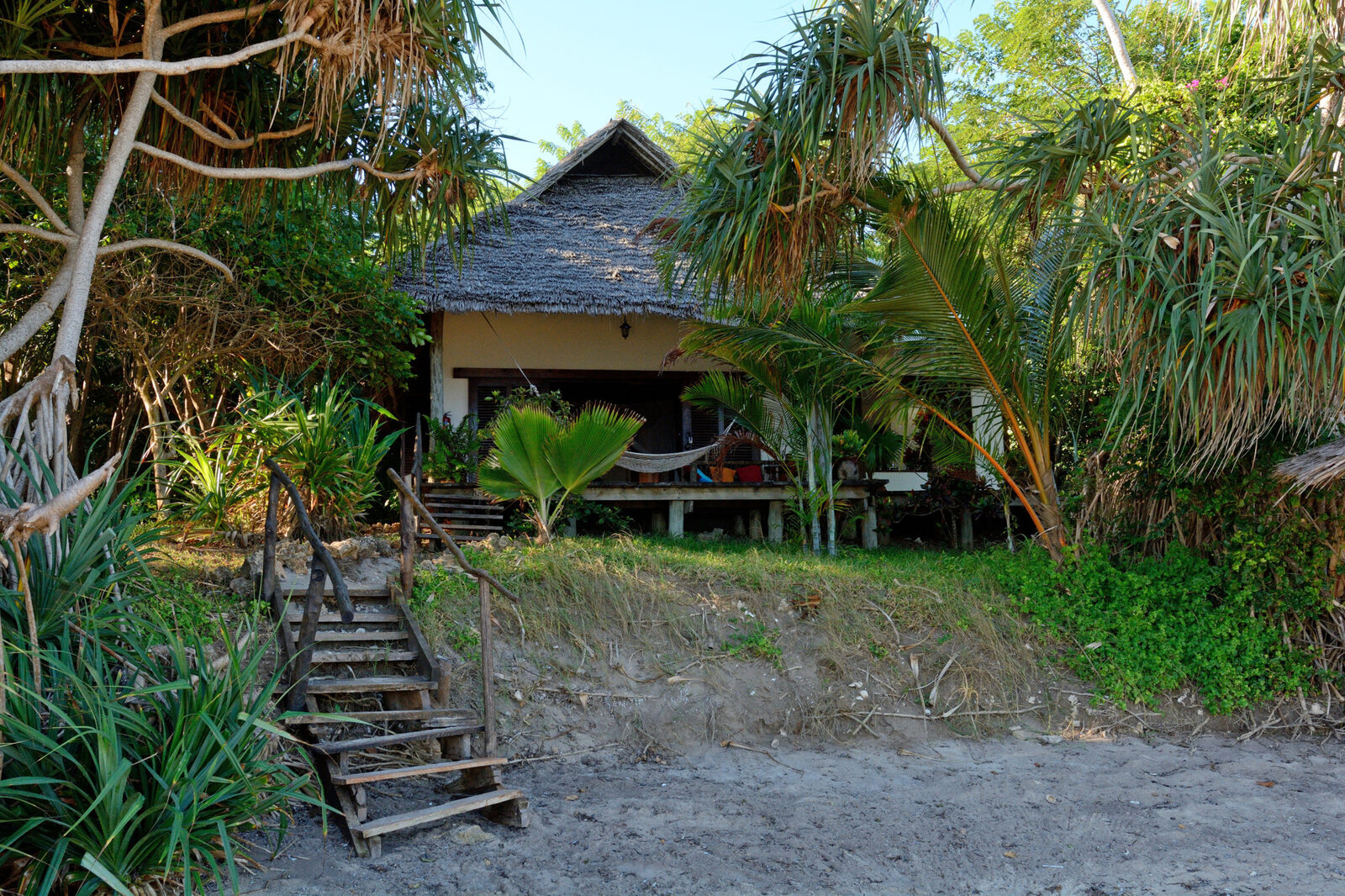
There are 26 free-standing cottages and suites, which is the first thing to understand about the place. Nothing is in a block. Each room is its own small thatched building set in the garden, so you get privacy and a cross-breeze, and the whole lodge never feels full even when it is.
Deluxe Rooms
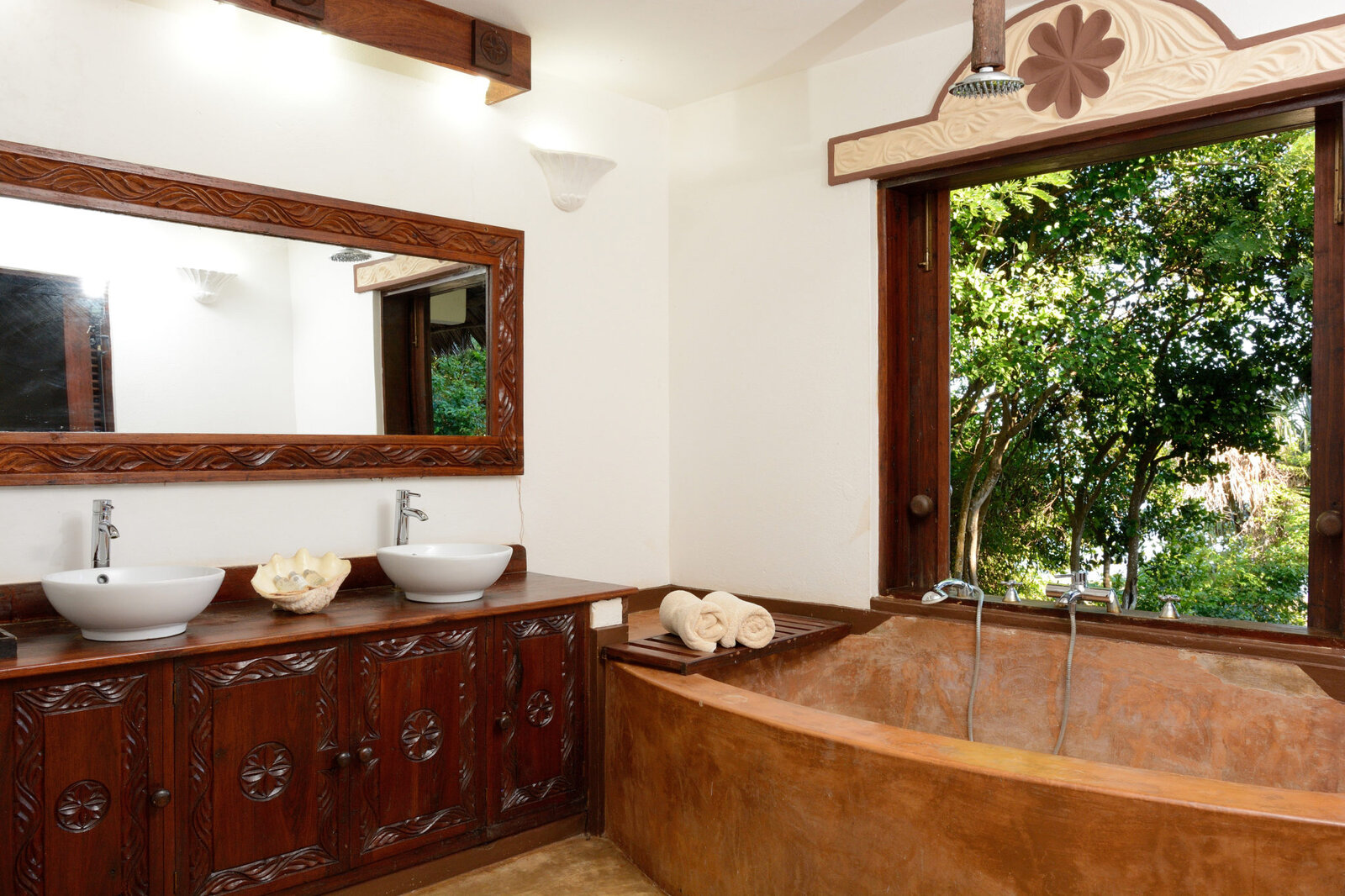
The bulk of the rooms are Deluxe, split between sea-view and garden-view. They are generous, simply done in Zanzibari hardwood with a big net over the bed, a veranda, a ceiling fan and air conditioning for the hot months. Several interconnect, which is what makes the lodge work for families. If you want to wake up to the water, pay up for the sea-view cottages — they are worth the gap.
Luxury Suites
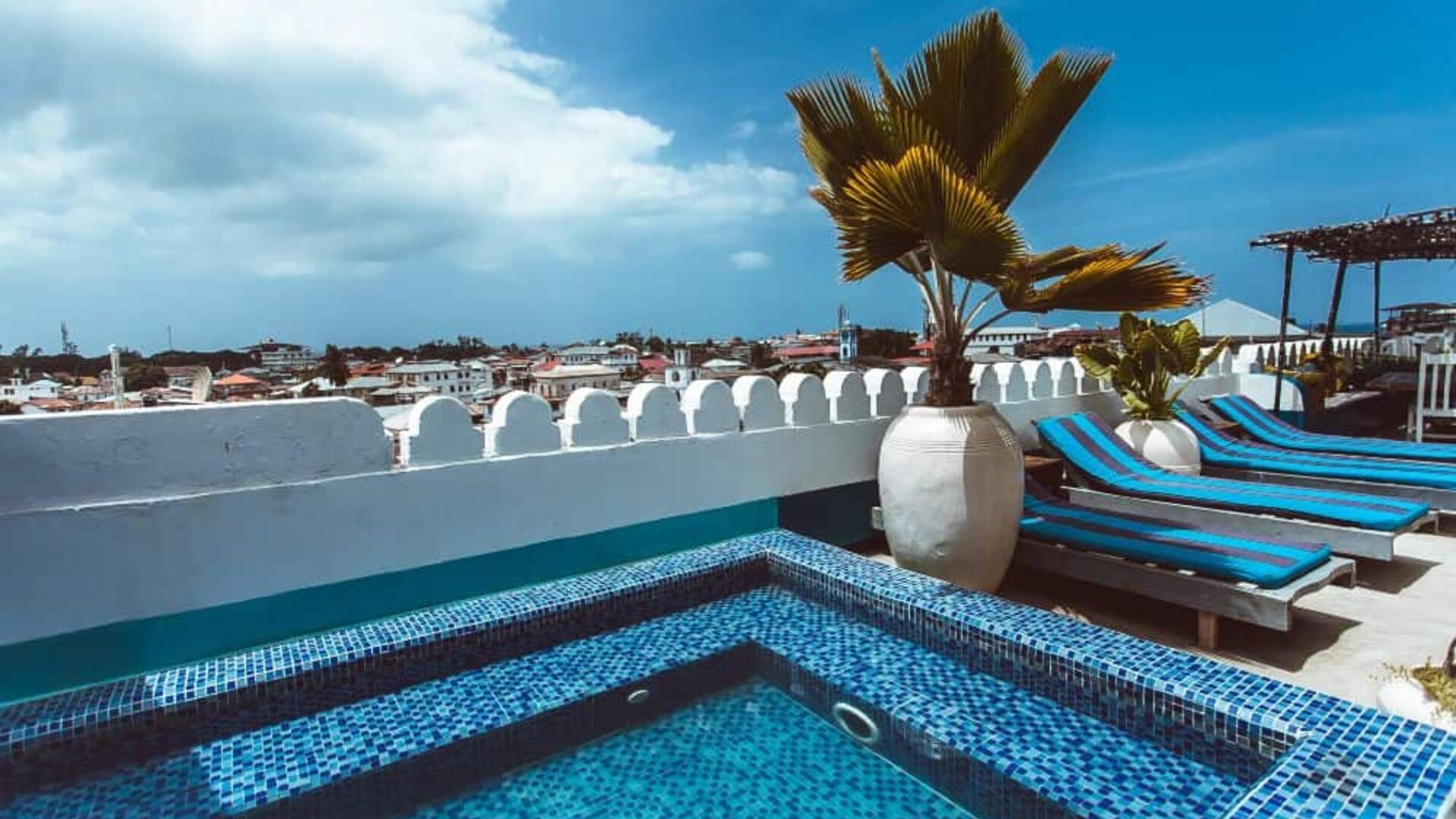
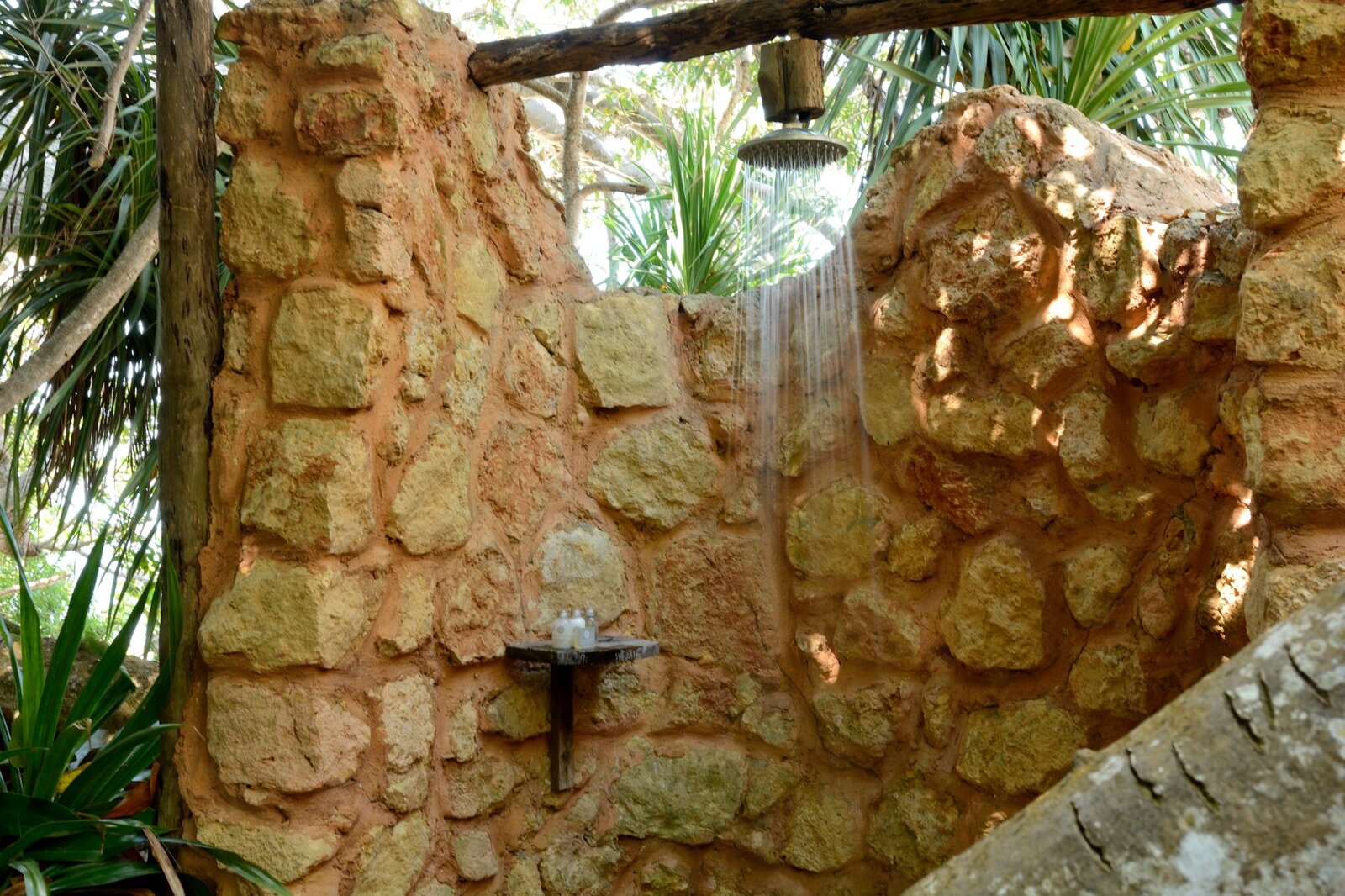
The four Luxury Suites step things up: a king bed, a larger indoor bathroom plus an outdoor shower, and — the good part — a private roof terrace with a deck and a hammock, and a short private path down to the beach. For a couple who want a bit more room and their own corner of sky for a sundowner, this is the room to pick.
Baobab Suites
At the top are the two Baobab Suites, the honeymoon rooms, each built around a baobab tree the lodge puts at around 900 years old. They have an open-air bathroom, direct beach access and the most privacy on the property. If you are coming for an anniversary or a honeymoon and you want the room to be part of the memory, these are it.
The food and the Dhow FumBar
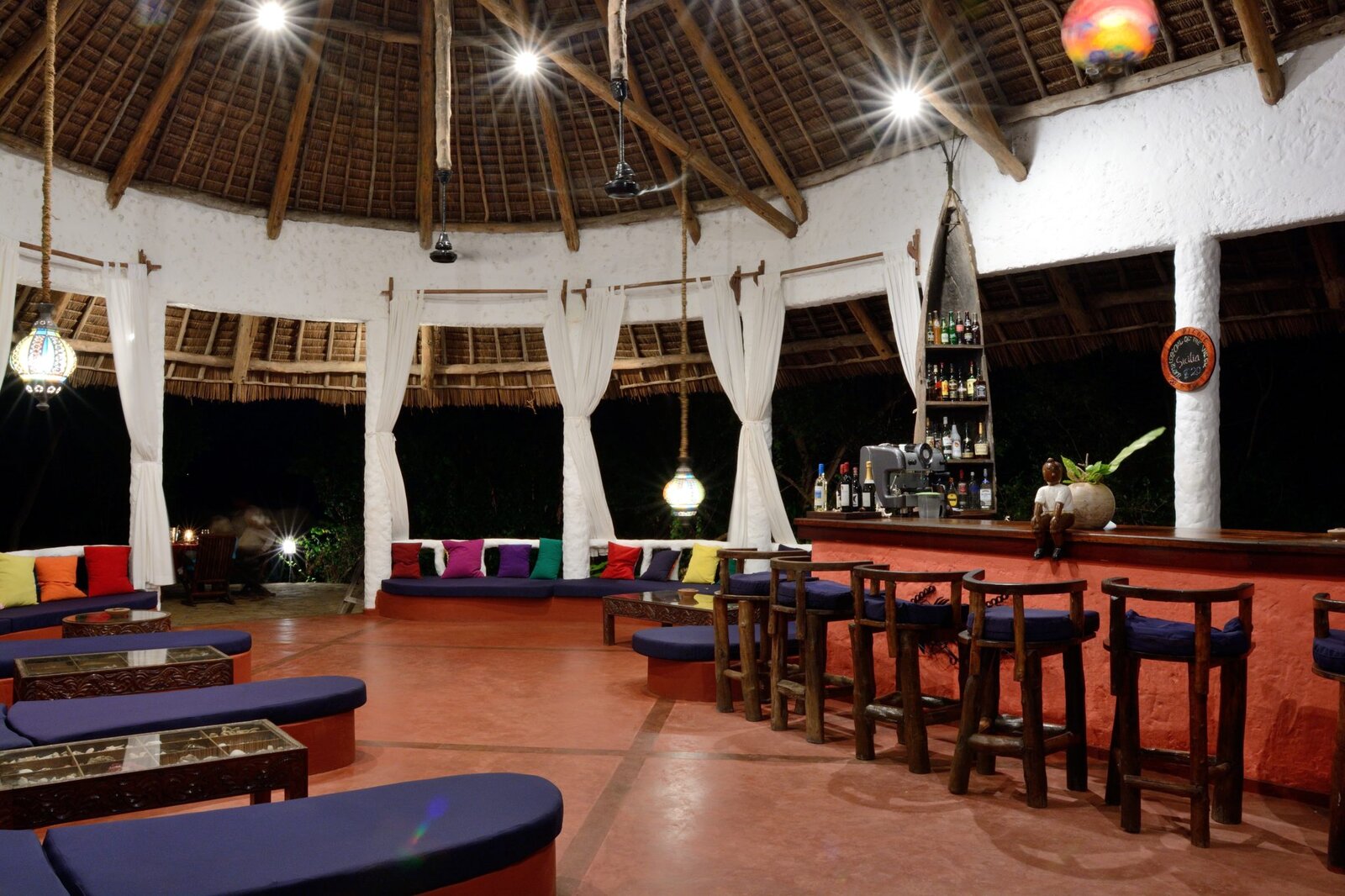
Dining is open-air, under thatch, looking out at the garden and the water. The kitchen leans on what the island does well — seafood off the local boats, Swahili spicing, and a garden-to-table streak, with herbs and some of the vegetables grown on site. Breakfast and dinner are the anchors; the meal plans run from bed and breakfast up to full board, and most people take at least half board here because the nearest alternative is a drive away.
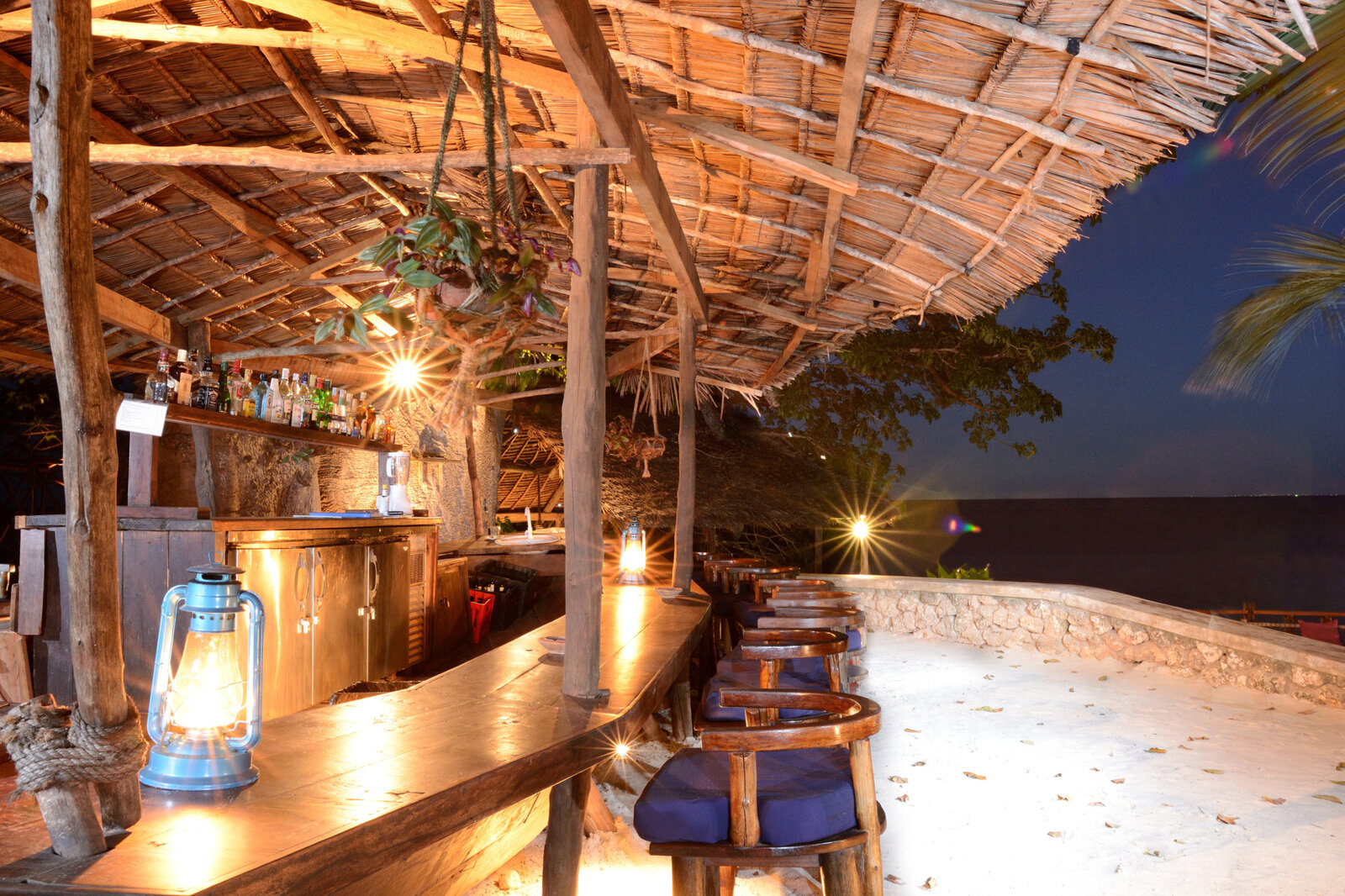
The social heart of the place is the Dhow FumBar — a bar built from a retired Zanzibari dhow, set under a baobab a few steps back from the sand, with lanterns on at dusk. It is where the day ends: a cold Kilimanjaro or a cocktail, the sun going down over Menai Bay, and the dhows coming in. It is the kind of detail that tells you the lodge was built by people who know the island rather than dropped in from a brochure.
Diving, snorkelling and the water
Fumba takes its diving seriously, which not every beach lodge does. There is a PADI dive centre on the beach, run by the Blue World team, covering the full range — a first try-dive for people who have never been under, open-water and advanced courses, and guided dives for the already-certified. Because Menai Bay is a conservation area, the reefs here have been spared a lot of the pressure the busier dive sites get, so there is more to see.
If scuba is not your thing, the snorkelling is excellent and easier to reach — boats run out to the sandbanks and coral gardens most days, and on the right tide you can get to a house reef. From the beach itself there are kayaks, stand-up paddleboards, and windsurfing and kitesurfing when the wind is up. Menai Bay's calm, shallow water is a good place to learn.
The spa, the pool and the grounds
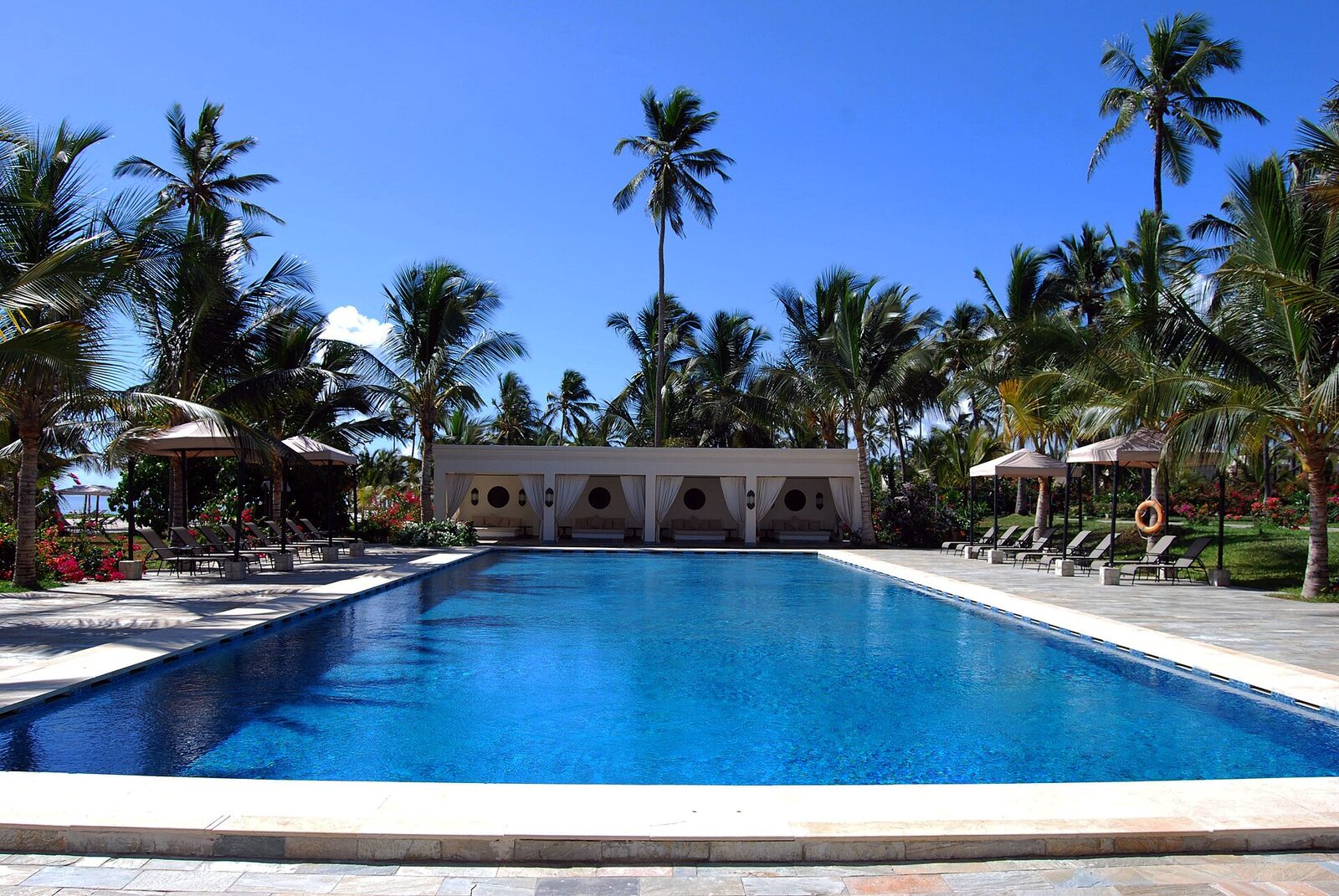
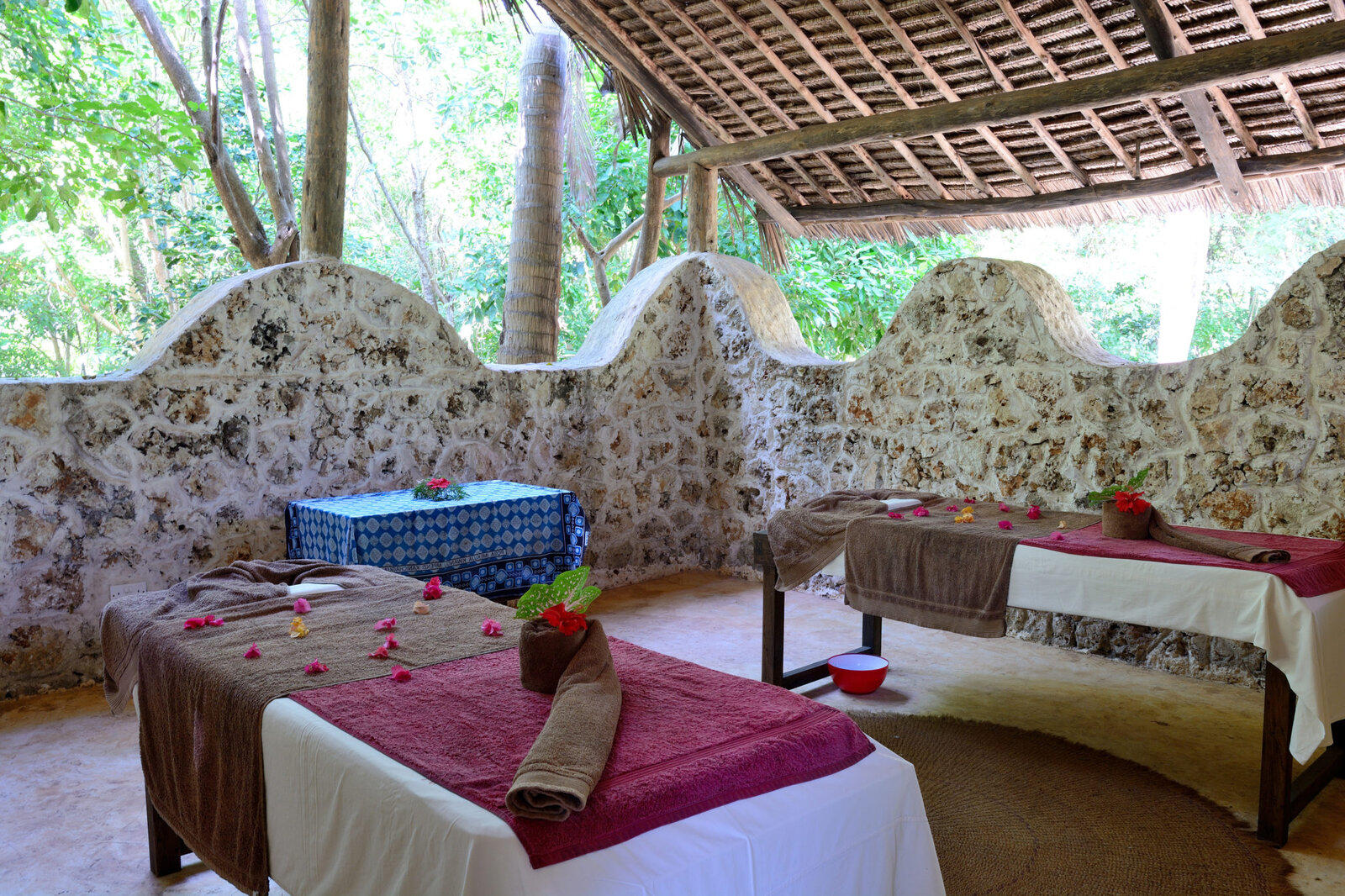
The Baobab Spa is tucked into the garden, away from the beach, with twin tables for a couple's massage and a short treatment list that does the basics well after a day in the sun or a week in the bush. The infinity pool looks out toward the ocean and earns its keep at low tide, when the sea has pulled back across the flats. And then there is the space itself: forty acres means lawns, palms, shade, and room for the baobabs the whole lodge is built around. It never feels crowded.
Excursions — Safari Blue and beyond
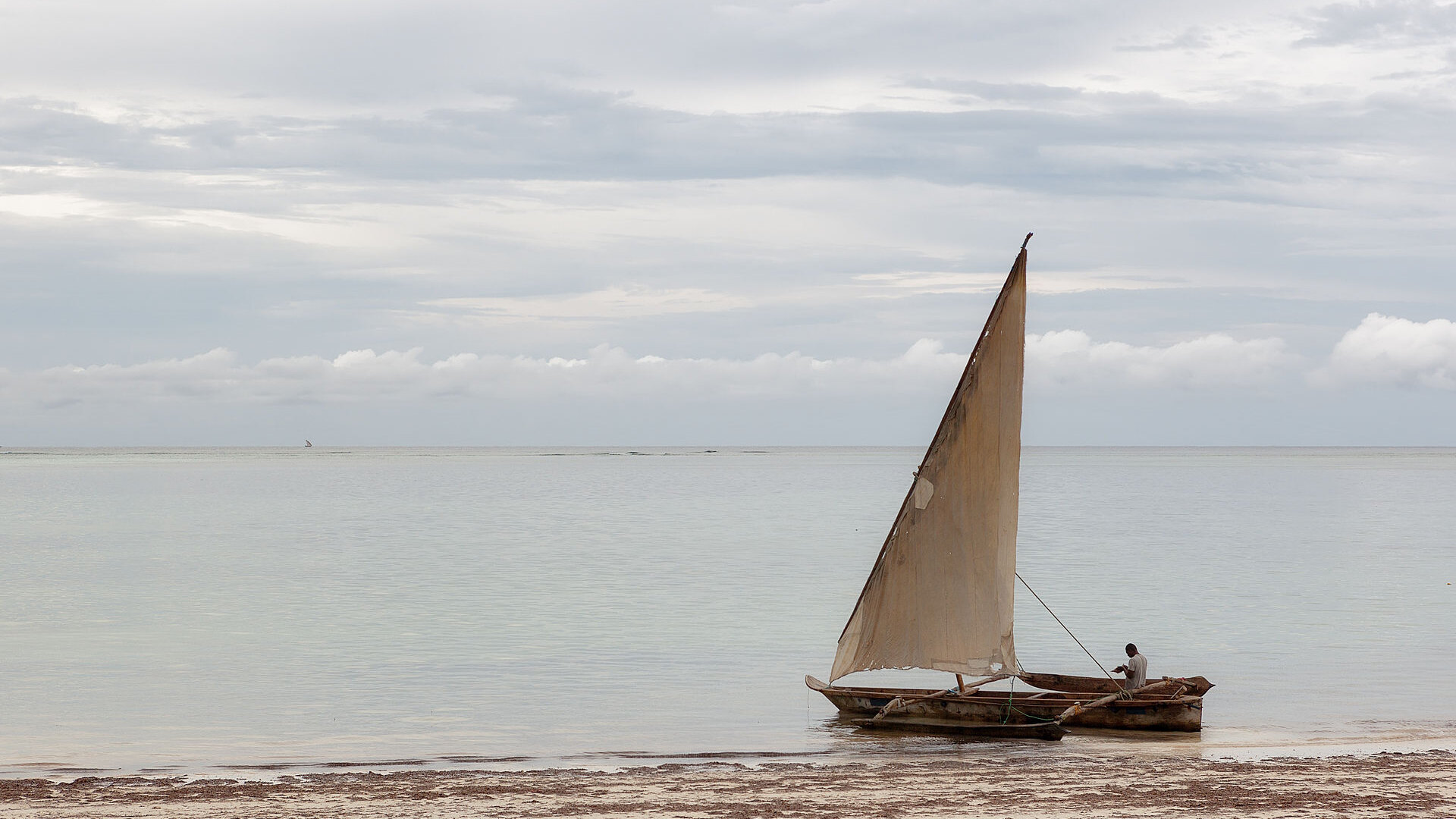
The standout is Safari Blue, and it is a real reason to stay on this side of the island. It is a full day on a traditional dhow out into Menai Bay: sailing to a sandbank for snorkelling over the coral, time spent looking for the bay's dolphins, a grilled seafood lunch laid out on the beach, and fruit and fresh coconut on the sail home. Because it departs from the beach in front of the lodge, you skip the long transfer that guests staying elsewhere have to make to join it.
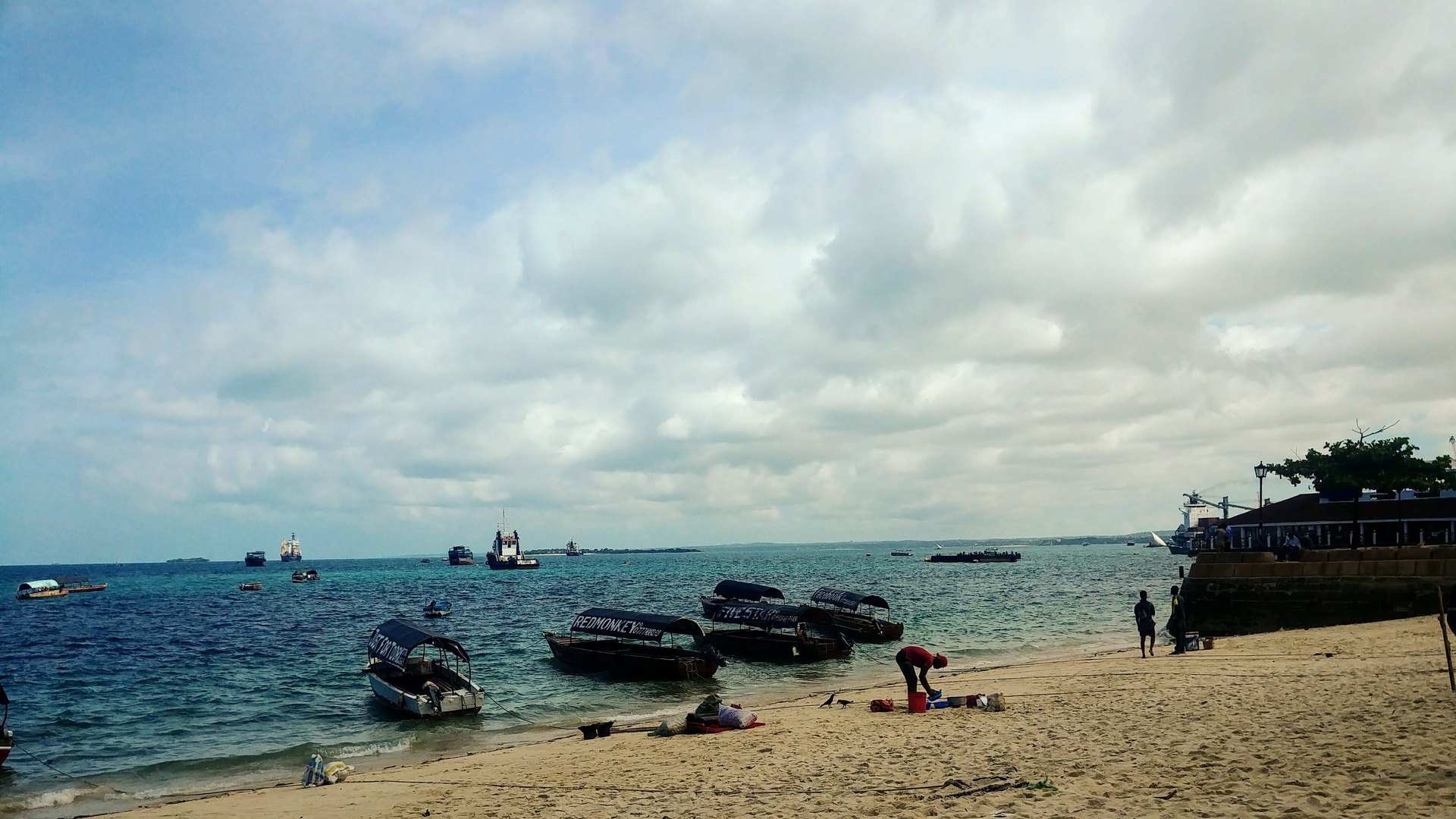
Beyond that, the dolphin trips go out early, when the sea is flat and the chances are best. Jozani Forest — the island's only national park and the home of the endangered Zanzibar red colobus — is about an hour's drive. Stone Town, with its old quarter, the old slave market and the spice history, is a half-hour run and an easy half-day. Closer to home there are spice-farm visits and walks into the neighbouring Fumba village, where the lodge supports a number of local projects.
Who it suits, and who it does not
It suits couples who want Zanzibar without the resort strip, honeymooners who want a baobab suite and a quiet beach, families who need interconnecting cottages and space, and divers who want a protected reef and a proper dive centre on site. It suits the back half of a bush-and-beach trip perfectly: come off the Serengeti or the Selous, fly across, and wind down here for a few days.
It does not suit someone who wants a big all-inclusive with buffets, bars and entertainment running all day — that is the north of the island, not here. It does not suit anyone who needs deep water off the beach at every hour; the tide goes out a long way, as it does across much of Zanzibar, and you plan your swims around it or use the pool. And if nightlife is the point of the holiday, Fumba is the wrong corner of the island.
Rates — 2026 and 2027 guide
Rates are per room per night for two people and depend on the room type, the season and the meal plan. As a guide for 2026, a Deluxe Room on bed and breakfast runs from roughly USD 200 in the quiet months to about USD 320 in peak season, with the Luxury and Baobab suites above that. Half board and full board are available and usually worth taking given the drive to the nearest village restaurants. July to October and the festive weeks are the busiest and dearest; the long rains in April and May are the quietest and cheapest. For 2027, expect rises of about 7 to 10 percent.
Check-in is from 14:00 and check-out is 10:00. Children under three stay free and those aged four to twelve are around half price when sharing with parents. One thing to budget for that is not the lodge's doing: Zanzibar charges a government infrastructure tax of USD 5 per person per night, payable in cash at check-in. We hold trade rates that often sit below the public online price, so it is worth asking us for a quote on your exact dates.
How to book Fumba Beach Lodge through Beyond Africa Safaris
We book Fumba most often as the beach end of a mainland safari — the Serengeti, the Ngorongoro Crater or the Selous first, then a few nights here to wind down. Tell us your dates, how many of you there are, and if you want a bush trip before the beach, and we will quote the right room, book the Safari Blue trip and any diving, arrange the flight into Zanzibar and the transfer down to Fumba, and handle the whole thing end to end. If you only want the lodge on its own, we can do that too.
Send us a message on WhatsApp or email reservations@privatetourscapetown.com. Tell us your dates and what you are after — a honeymoon, a family week, a diving trip, or the beach half of a safari — and we will build it around you.