The quick take
The Swahili House is a 22-room boutique hotel in a restored merchant's townhouse in the old quarter of Stone Town, the historic centre of Zanzibar City. It is not a resort and it is not a beach hotel. It is a tall, narrow building from the eighteen hundreds — five floors of cool stone and carved teak wrapped around a courtyard — turned into a place to stay while you are in the old town for its own sake.
What you are paying for is the building and the position: a genuine piece of Stone Town history to sleep in, a rooftop restaurant and plunge pool with a clear line to the harbour, and the Old Fort, the House of Wonders and the Darajani market a few minutes' walk from the door. For a couple who want two or three nights in the old town before the beach, it is one of the more characterful addresses on the island.
Where it is, and what Stone Town is for
Stone Town is the old heart of Zanzibar City, a UNESCO World Heritage site of narrow lanes, carved doors and layered Swahili, Arab, Indian and European history. It is a place you come to walk, to eat, and to take in the weight of the island's past — the spice trade, the sultans, the old slave market — rather than to lie on sand. The Swahili House sits down one of those lanes, central enough that most of the town is on foot from the door.
The practical note is distance to everything else. The airport and the south-coast beaches are both roughly 25 kilometres away, a drive of 30 to 45 minutes depending on traffic through town. That makes the house an easy first or last night of a trip, and a natural pairing with a beach lodge: the town for the history, the coast for the water.
The building and its history
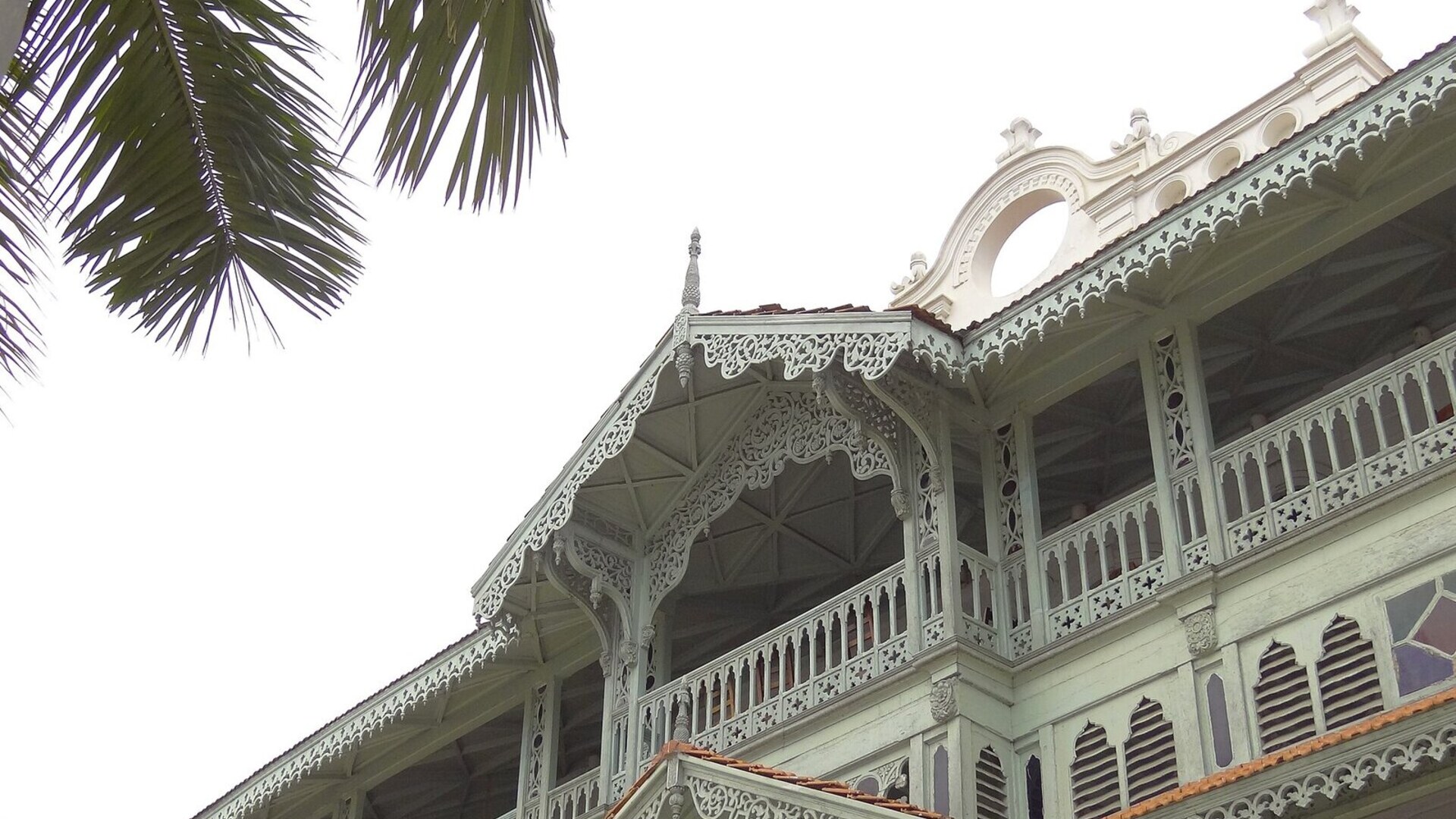
The house was built in the nineteenth century as the home of an Indian merchant, one of the grand private townhouses that trade money put up in Stone Town's heyday. For much of the following century it was lived in by one of the Sultan's families. When it was restored as a hotel the work was done with a light hand: the five floors, the central courtyard, the high ceilings, the thick stone walls and the carved teak doors were all kept, and the rooms furnished with Zanzibari beds, antique chests and local fabric.
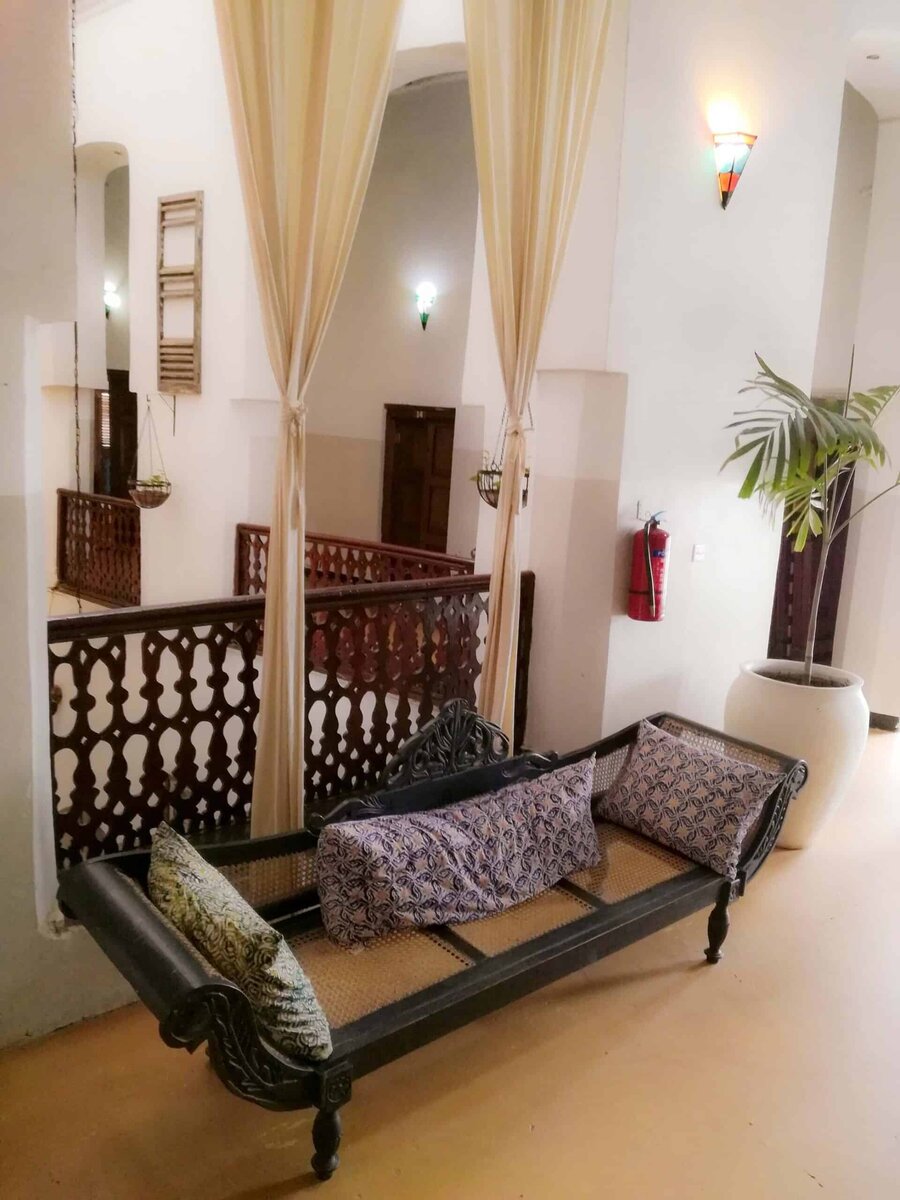
The result feels like staying in a restored family house rather than a hotel. Stone stays cool without much help from the air conditioning, the courtyard keeps the noise of the lane at bay, and the passages between floors are hung with the kind of carved detail that the old quarter is known for. It is an honest building, worn in the right places, and that is the point of staying here.
The rooms
There are 22 rooms spread up through the floors, in three grades, and because it is an old building no two are quite the same.
Deluxe Rooms
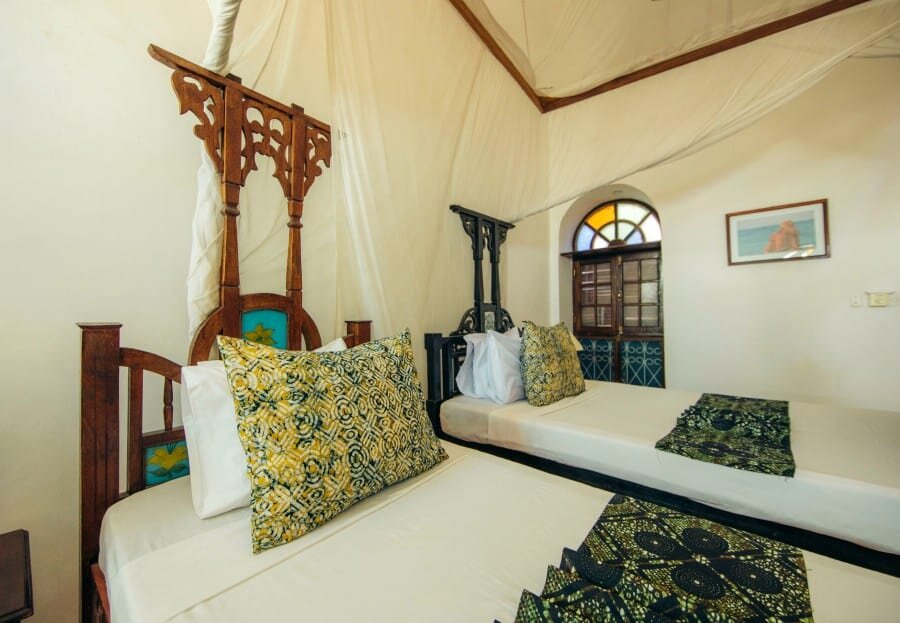
The entry-level rooms are the Deluxe, at around 21 square metres — double or twin, en-suite, with air conditioning, a ceiling fan and a net over the bed. They are comfortable and full of character, with the thick walls keeping them cool, though like the whole house they come with the trade-off of stairs. If you want the most space, book up a grade.
Suites
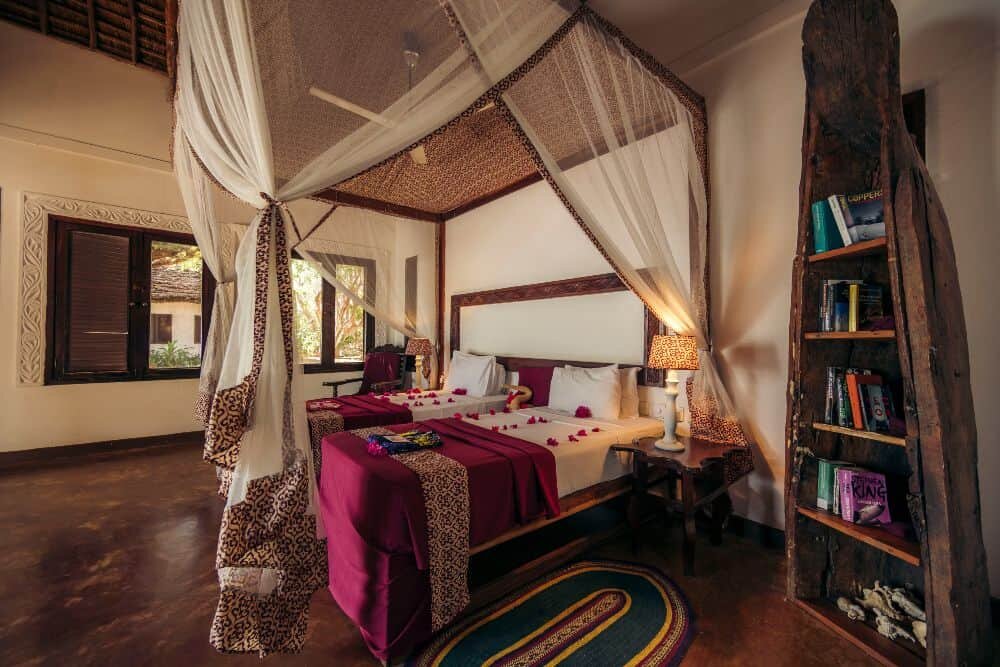
The Suites are larger at about 33 square metres, with more room to spread out and, in some cases, a small balcony over the lane. These are the middle option and a sensible pick for a couple who want a bit more space without going to the top rooms.
Sultan Suites
The Sultan Suites are the best rooms in the house at around 45 square metres, the most spacious and the most generously furnished, several with a balcony. They are the ones to book for an anniversary or a special stay, when the room itself is part of the reason you came.
The rooftop — restaurant, bar and pool
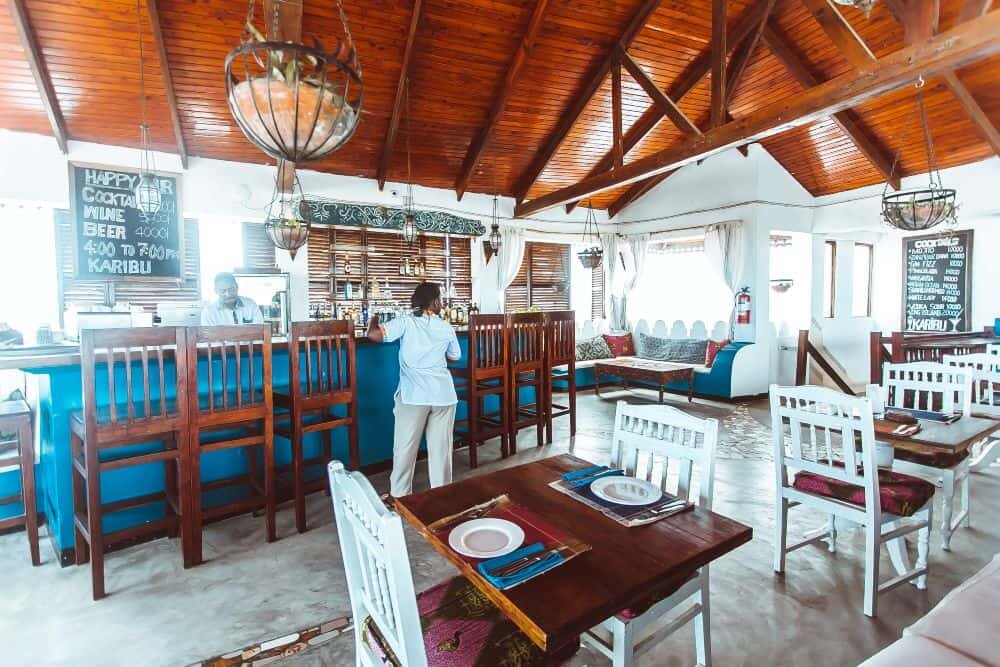
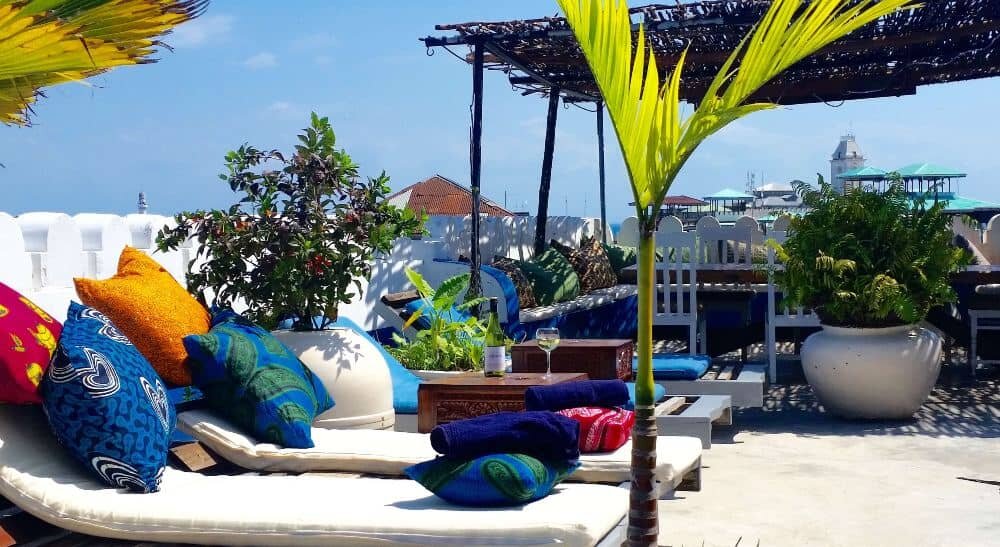
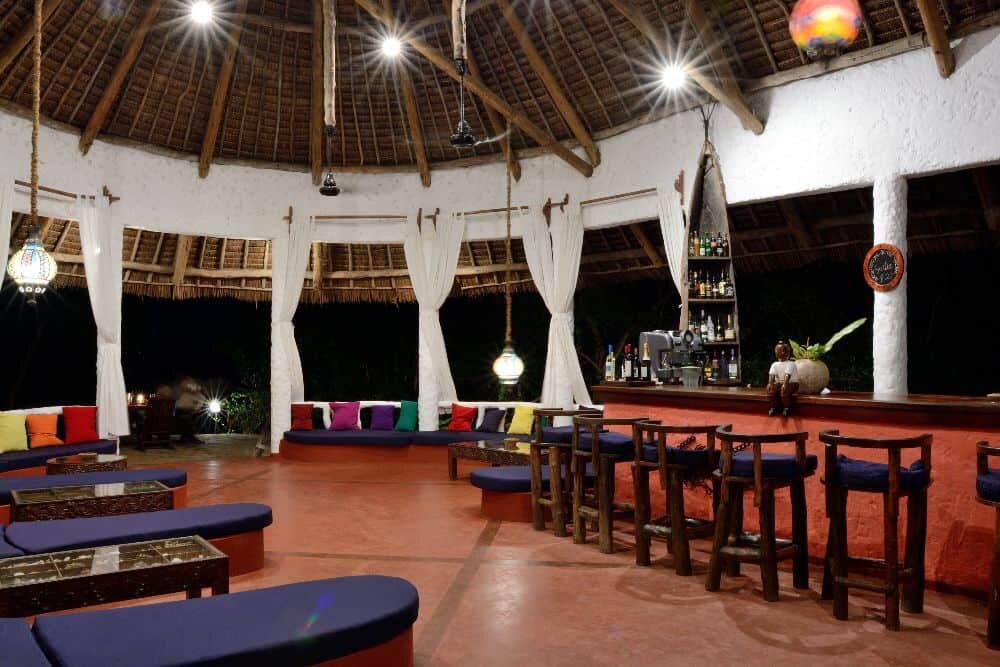
If the building is the reason to book, the rooftop is where you spend your time. It sits above the old town with a 360-degree outlook over the rooftops toward the harbour and the sea, and it carries the restaurant, the bar, a sun deck, a small plunge pool and a Jacuzzi. In the heat of the day it is a place to cool off and read; in the evening it is where the house gathers.
Breakfast is served up there to start the day gently. Dinner is the kitchen's strength — local seafood done well, lobster and prawns and the day's catch, with a short international list alongside — and the setting does a lot of the work, with the lights of the town coming on below and the call to prayer carrying across the roofs at dusk. It is open to non-residents too, so it is worth booking a table even if you are staying elsewhere.
Eating and the practical side
The house runs on bed and breakfast, with lunch and dinner available on the roof when you want them. Given the setting, most guests eat dinner in at least once or twice, and then range out into Stone Town the rest of the time — there is good eating within a short walk, from the Forodhani seafront food gardens in the evening to the small restaurants tucked through the lanes. Wi-Fi reaches the public areas; payment is easiest in cash, with cards accepted and a surcharge, which is normal for Stone Town.
Two honest caveats. The first is the stairs, covered above — there is no lift, and this is a building you climb. The second is that this is a town hotel, so you hear the town: the call to prayer before dawn, the life of the lanes. For most people that is exactly what they came for, but if you are a light sleeper, ask us about the quieter rooms off the lane.
What to do on foot
The joy of staying central is that the old town is your front garden. The Old Fort and the House of Wonders are minutes away. The Darajani market is close by for spices, fruit and the morning fish auction. The old Anglican cathedral, built on the site of the former slave market, is a short walk and an important, sobering stop that puts the rest of the island in context. Add the Forodhani food gardens in the evening, a spice-farm trip out of town, and a boat across to Prison Island, and you have two or three full days without moving the car.
We usually set guests up with a good local guide for a half-day walk on the first morning. The lanes are a maze by design, and an hour or two with someone who knows the history — the doors, the trade, the architecture — turns a pretty walk into something you understand.
Who it suits, and who it does not
It suits travellers who want to stay inside the history rather than look at it from a resort: couples on a town-and-beach trip, culture-minded visitors who want to walk the lanes and eat well, and anyone using Stone Town as the first or last night of a safari. It suits people who like character, old buildings and a rooftop sundowner, and who are happy to trade a few flights of stairs for the real thing.
It does not suit someone who wants a beach on the doorstep, a lift, a big pool or resort facilities — that is the coast, not the old town. It is not the easiest choice for guests who struggle with stairs, and it is not the place for anyone who wants to be sealed away from noise; a town hotel is part of the town. Pair it with a beach lodge and you get both sides of Zanzibar without compromising on either.
Rates — 2026 and 2027 guide
Rates are per room per night for two people and depend on the room grade and the season. The house runs on bed and breakfast, with lunch and dinner on the roof charged on top. As a guide for 2026, a Deluxe Room on bed and breakfast runs from roughly USD 150 in the quiet months to about USD 230 in peak season, with Suites and Sultan Suites above that. July to October and the festive weeks are the busiest and dearest; the long rains in April and May are the quietest and cheapest. For 2027, expect rises of about 7 to 10 percent.
One thing to budget for that is not the hotel's doing: Zanzibar charges a government infrastructure tax of USD 5 per person per night, payable in cash at check-in. We hold trade rates that often sit below the public online price, so it is worth asking us for a quote on your exact dates and room grade.
How to book The Swahili House through Beyond Africa Safaris
We book The Swahili House most often as the Stone Town half of a Zanzibar trip — a couple of nights in the old town for the history and the food, then down to the coast for the beach. It shares its ownership with Fumba Beach Lodge on the quiet southwest shore, about half an hour away, which makes the two an easy and well-priced pairing. Either can also be the Zanzibar end of a mainland safari.
Tell us your dates, how many of you there are, and if you want the beach or a bush trip on either side, and we will quote the right room grade, book your rooftop table and a good town guide, arrange the flights and transfers, and handle the whole itinerary. Send us a message on WhatsApp or email reservations@privatetourscapetown.com, and we will build it around you.