Key Takeaways
- Seven days is the ideal length for the Garden Route: time for the coast, the forest, the lagoons and a safari finale at Addo without racing.
- The classic direction is west to east — Mossel Bay to Addo — usually starting from George or driving out from Cape Town.
- Base-hop in two or three towns (Wilderness or Knysna, Plettenberg Bay, then near Addo) rather than changing hotel every night.
- Build in the inland detour to Oudtshoorn's Cango Caves and ostrich farms — it adds wonderful variety to the coastal drive.
- Whales pass the coast from June to November; the warmest beach weather is over the summer (December to March).
- The route is easy to self-drive, but a private guide removes the logistics and adds context — and Addo is best with an expert.
Why a Week Is the Garden Route's Sweet Spot
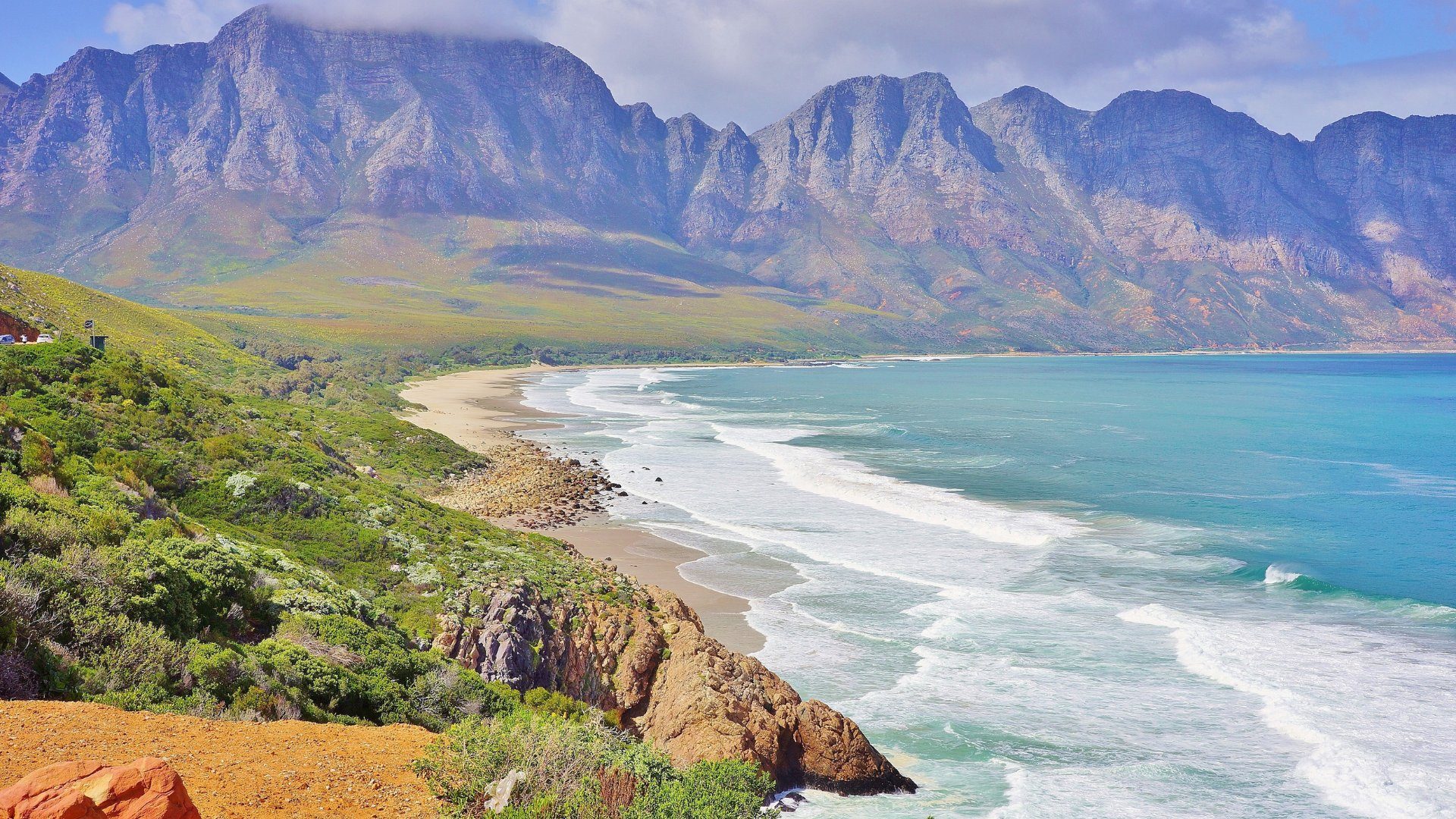
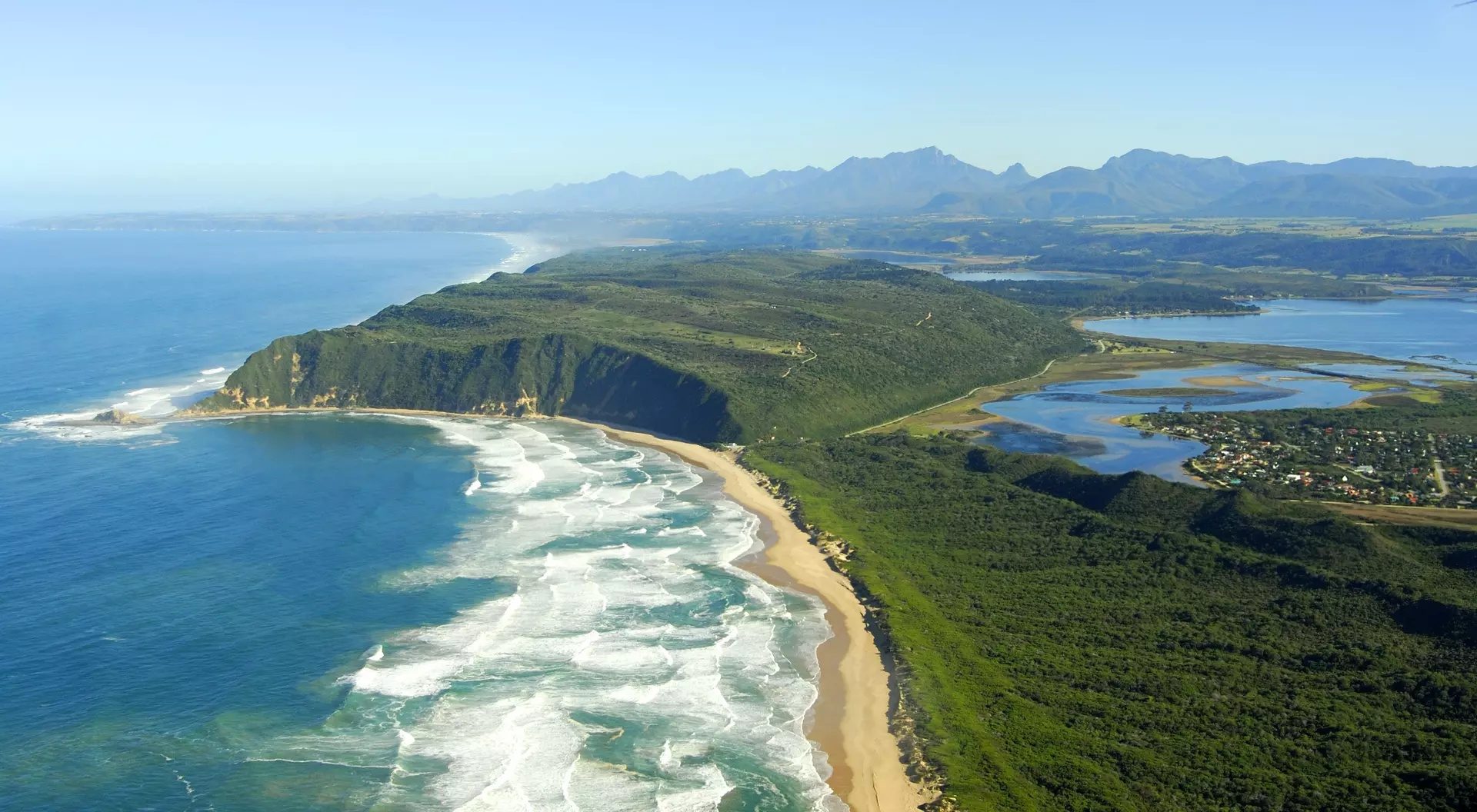
The Garden Route is South Africa's most beloved road trip — a ribbon of coast, forest, lagoon and mountain running east from Mossel Bay to the Tsitsikamma and beyond, backed by the Outeniqua and Tsitsikamma ranges. People try to rush it in three days and spend the whole time driving; they linger for two weeks and run out of coast. Seven days is the sweet spot: enough to slow down, sleep in two or three bases rather than a different bed each night, and add the two things that turn a pretty drive into a complete journey — the inland detour to the Cango Caves, and a Big Five safari finale at Addo.
The classic direction is west to east, most often starting from George (which has an airport and car hire) or driving out from Cape Town along the N2. Going this way, the landscape builds beautifully: gentle coastal towns first, then the lakes of Wilderness, the lagoon and forests of Knysna, the beaches of Plettenberg Bay, the drama of the Tsitsikamma, and finally the elephants of Addo in the Eastern Cape. It is a journey with a satisfying arc rather than a series of stops.
The itinerary below is built around comfortable driving days — rarely more than two hours between stops — so you spend your time on beaches, forest trails and viewpoints, not behind the wheel. Here is how the perfect Garden Route week unfolds.
Days 1-2: Mossel Bay & Oudtshoorn's Cango Caves
Begin at the western gateway. Mossel Bay is where the Garden Route officially starts, a relaxed seaside town with good beaches, a maritime history and gentle introduction to the coast. Settle in, walk the St Blaize trail along the cliffs, and ease into holiday pace. It is the ideal first night after a flight into George or the drive out from Cape Town.
Day two takes a rewarding detour inland to Oudtshoorn, over the Outeniqua Pass into the semi-arid Little Karoo. The star attraction is the Cango Caves, a vast system of limestone chambers and dripstone formations that ranks among the finest show caves in the world — take a guided tour through the illuminated halls. Oudtshoorn is also the ostrich capital of the world, and a visit to an ostrich farm is a fun, family-friendly add-on. Return to the coast, or overnight in the Karoo, before rejoining the route east.
This inland loop is what separates a great Garden Route week from a merely good one: it swaps the coastal palette for dramatic mountain passes and Karoo landscapes, and delivers one of South Africa's true natural wonders in the Cango Caves. Do not skip it.
Days 3-4: Wilderness & Knysna
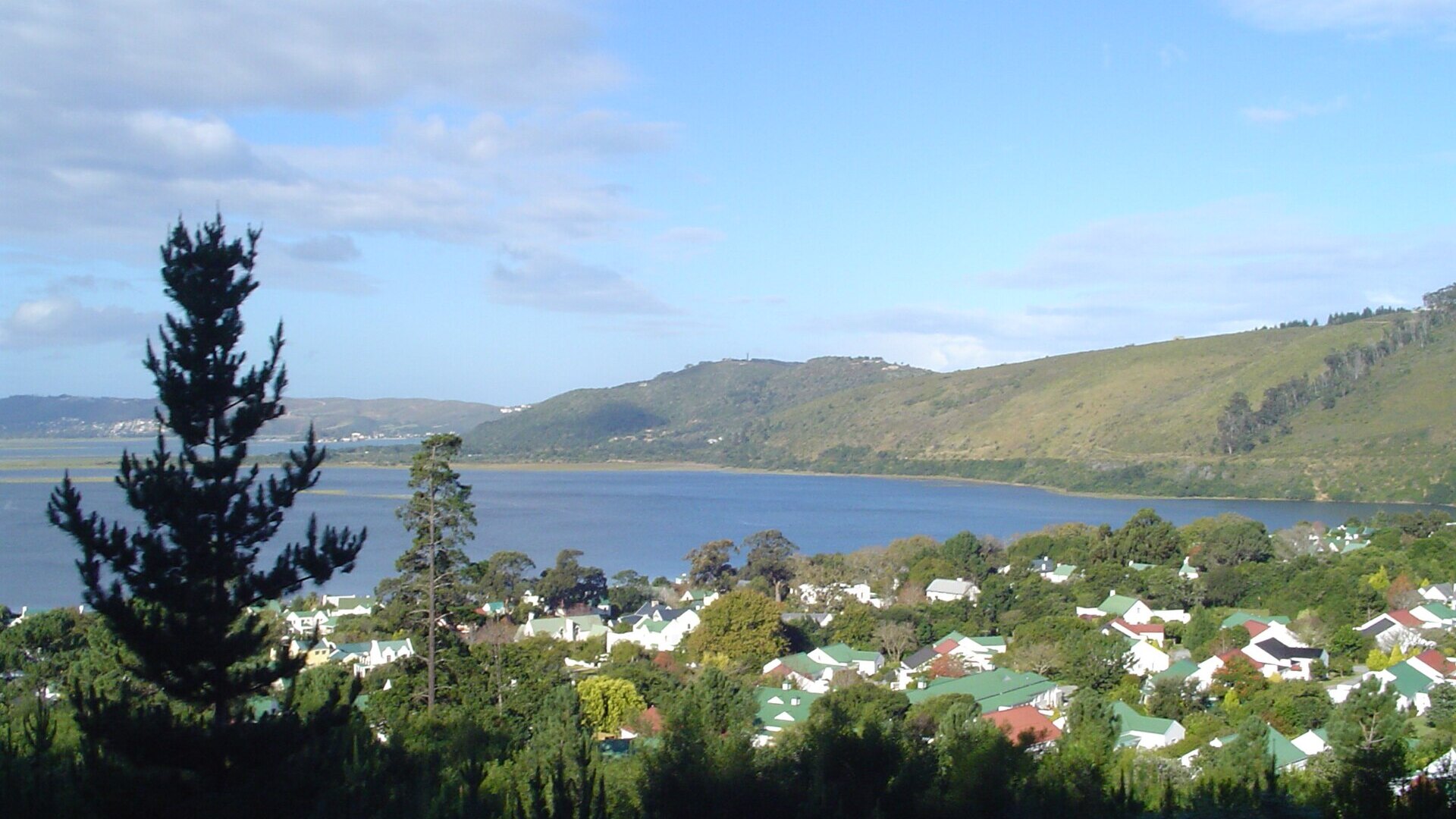
Back on the coast, Wilderness is the Garden Route at its most idyllic — a village where a chain of lakes and lagoons meets a long, wild beach, backed by indigenous forest. Paddle a canoe up the Touw River, walk the forest trails to waterfalls, or simply spread out on the beach. It is a place to exhale, and a lovely two-night base for exploring this stretch of the route.
Knysna, the unofficial capital of the Garden Route, sits on a spectacular lagoon guarded by the towering cliffs of the Knysna Heads. Cruise the lagoon, feast on the town's famous oysters, ride the Featherbed ferry to the private nature reserve on the western head, and explore the surrounding indigenous forests — home to giant yellowwood trees and the legend of the Knysna elephants. Knysna's blend of natural beauty, good food and easygoing charm makes it many travellers' favourite stop on the whole route.
Day 5: Plettenberg Bay & Robberg
A short hop east brings you to Plettenberg Bay, the coast's glamorous beach resort — long white beaches, warm(er) water and a string of excellent lodges and restaurants. This is the day to slow right down: swim, walk the sand, and if the season is right (June to November), scan the bay for southern right and humpback whales, which pass close to shore.
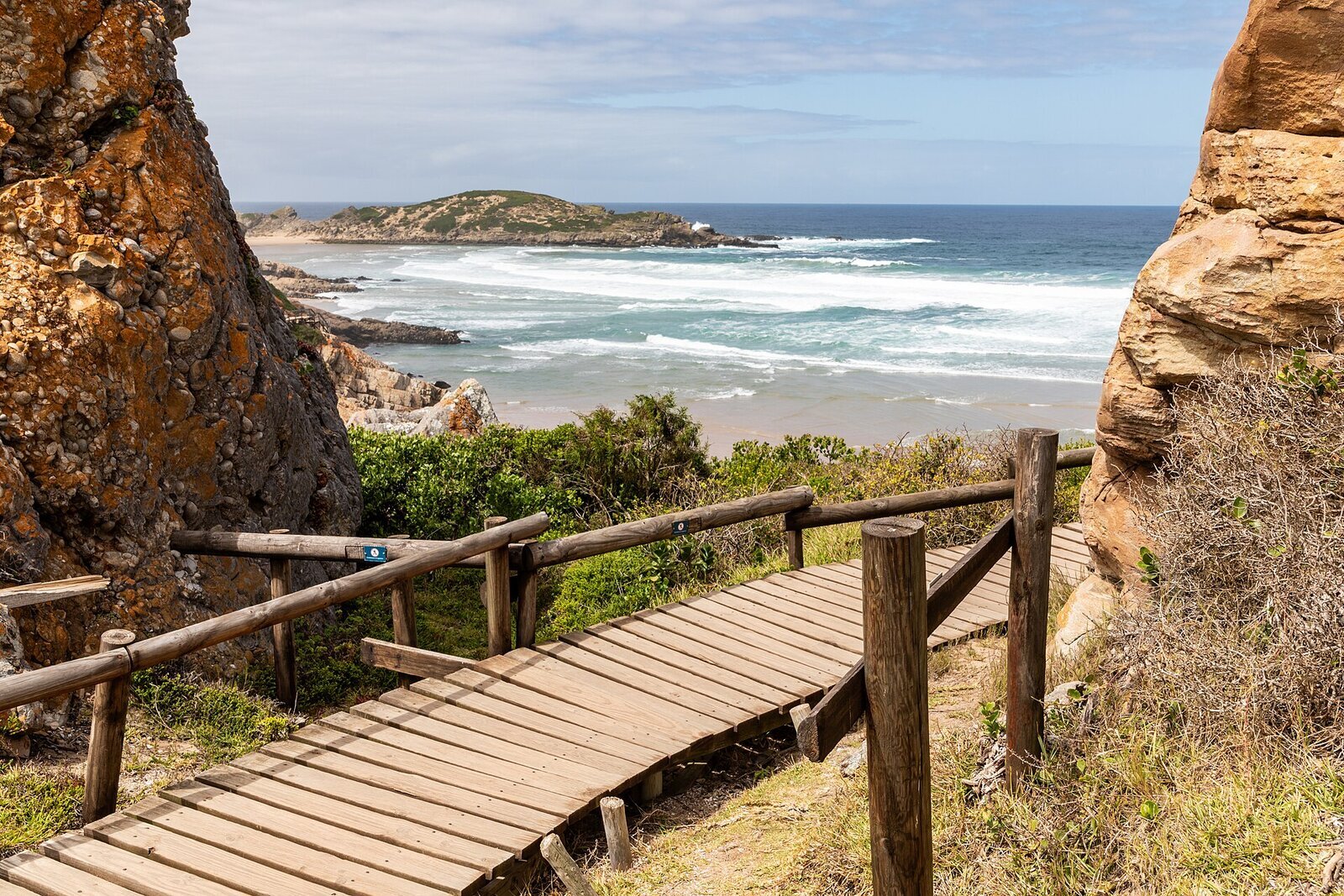
The highlight for active travellers is the Robberg Nature Reserve, a rocky peninsula jutting into the sea just south of town. The circular walk out along its spine is one of the great coastal hikes in South Africa — dramatic cliffs, a seal colony, crashing surf and enormous ocean views. Whether you do the full loop or a shorter section, it is an unforgettable few hours. Round off the day with a sundowner overlooking the bay before an early night.
Days 6-7: Tsitsikamma & Addo Elephant Park
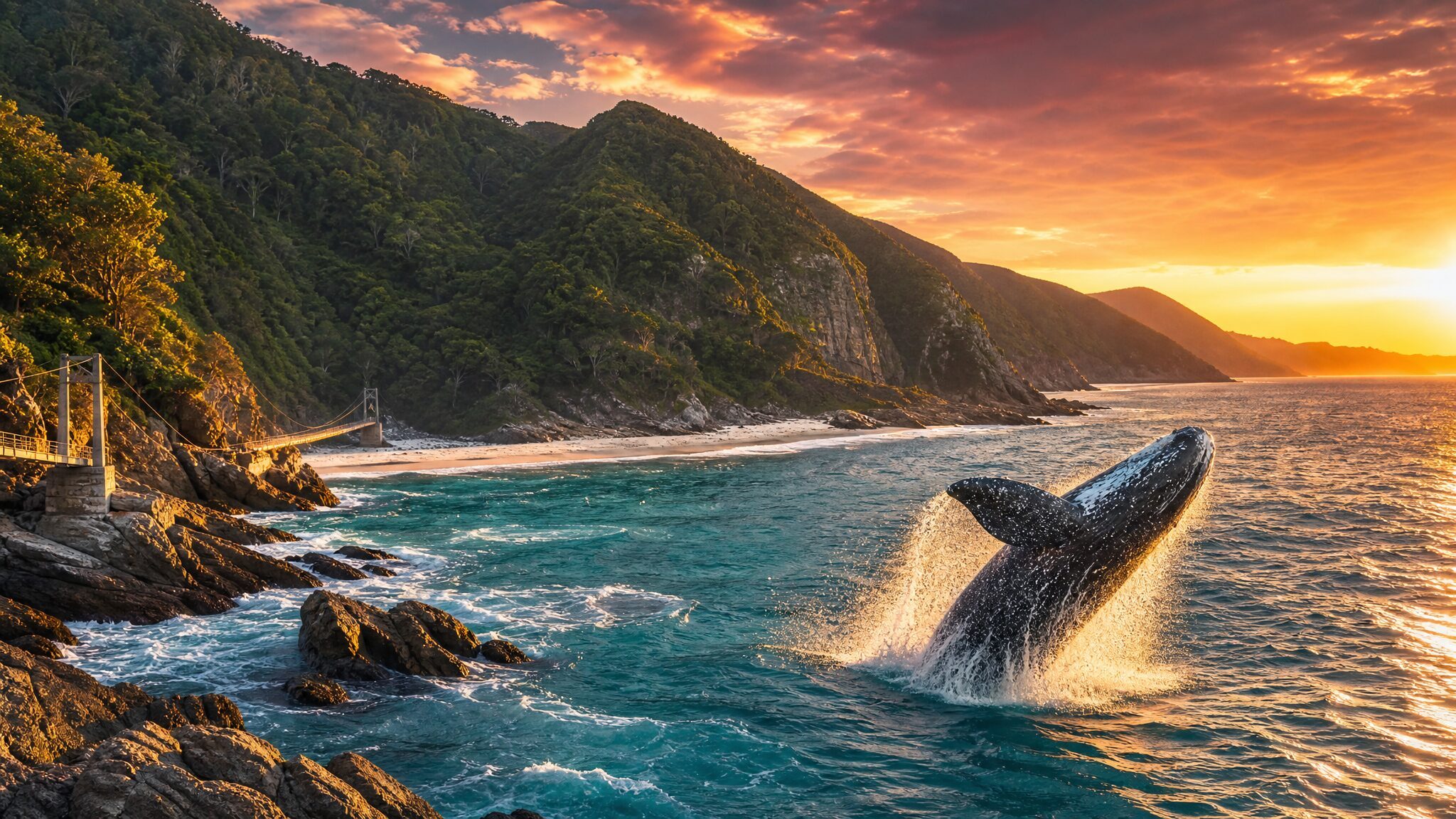
Day six enters the Tsitsikamma, the wild, forested heart of the Garden Route. Tsitsikamma National Park protects a coastline of sheer cliffs, deep river gorges and ancient forest, and its icon is the suspension bridge over the Storms River mouth — a thrilling walk high above the churning water. This is also adventure country: the world's highest commercial bungee jump at Bloukrans, canopy tours through the treetops, and forest trails among giant trees. Do as much or as little as you like, then overnight nearby.
Your final day delivers the safari finale. Addo Elephant National Park, near Gqeberha (Port Elizabeth) in the Eastern Cape, is a malaria-free Big Five reserve famous for its huge elephant population — herds gather at the waterholes in numbers that rival anywhere in Africa. A game drive here, whether self-driven or guided, is the perfect climax to a week that has run from coast to forest to bush. Fly home from the nearby airport, or continue into the Eastern Cape's private reserves for a longer safari.
This coast-to-safari arc is what makes seven days so satisfying: you end not with another beach but with elephants, lions and rhino, a genuine Big Five experience bolted onto the prettiest drive in the country.
Self-Drive vs Guide, When to Go & Booking
The Garden Route is one of the easiest parts of Africa to self-drive: the N2 is a good road, distances are short, signage is clear and the towns are well set up for visitors. Many travellers happily hire a car in George or Cape Town and drive it themselves. That said, a private guide-driver adds real value — handling the routing, the bookings and the daily logistics, adding context on the forests, wildlife and history, and letting everyone relax and enjoy the scenery rather than navigate. Addo in particular rewards an expert guide who knows where the elephants gather.
On timing: the Garden Route is a year-round destination, but the warmest beach weather is over the South African summer (December to March). Whale season runs from roughly June to November, best around Plettenberg Bay and Hermanus. Spring (September to November) is a beautiful all-rounder — wildflowers, mild temperatures and whales offshore. The route is evergreen, so it rarely looks anything less than lush.
Whether you want a self-drive with everything booked, or a fully guided private journey, we build tailor-made Garden Route weeks around this framework — choosing the bases, securing the lodges and adding the Cango Caves, Robberg, Tsitsikamma and Addo in the right order. Tell us your pace and we will craft the perfect coastal week.
Ready to explore? Browse our Garden Route tours and safari packages →