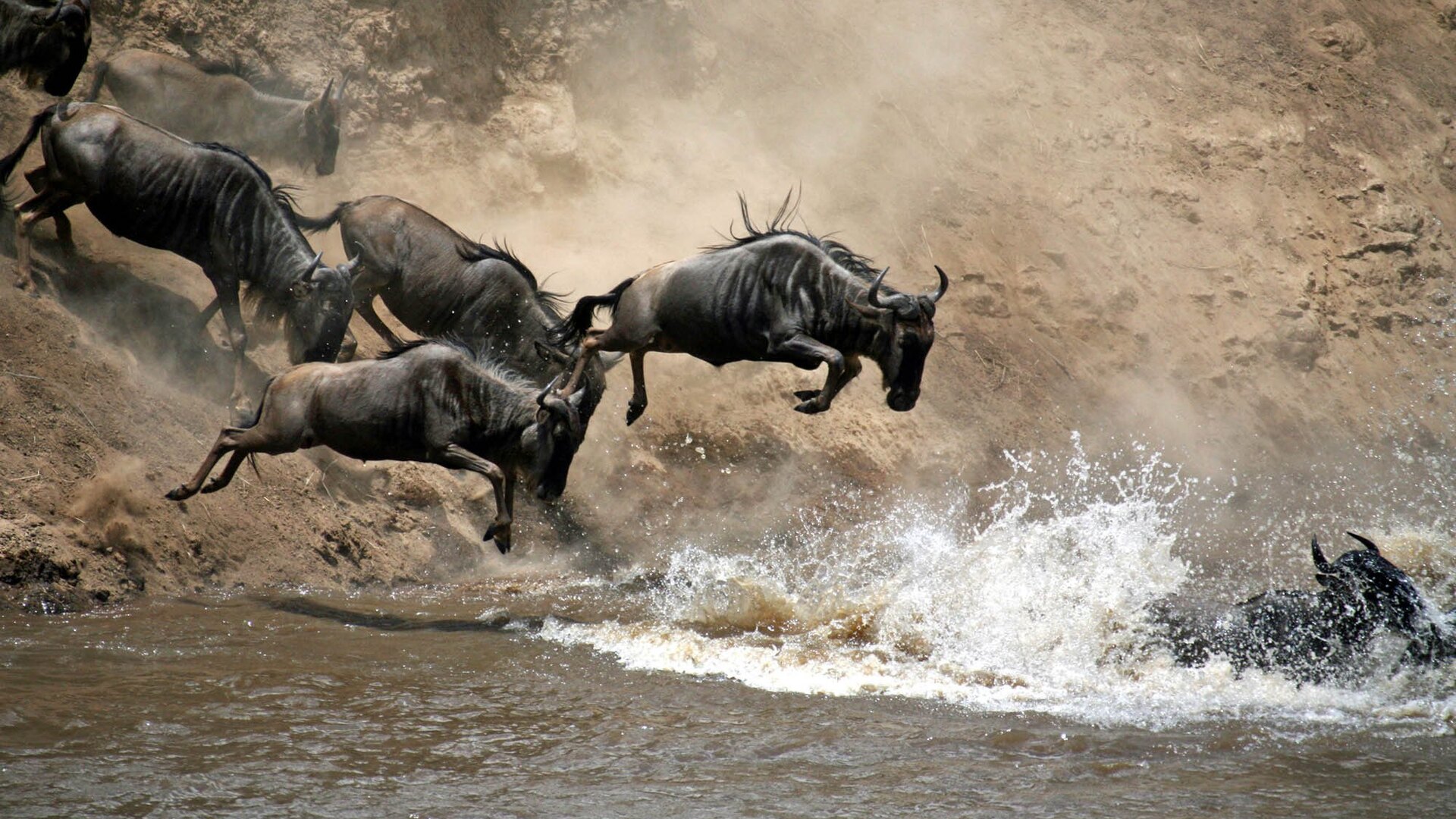
Ask most people about the Great Migration and they picture one thing: a churning river, a wall of wildebeest, and a crocodile exploding out of the water. That moment is real, and it is unforgettable — but it is a single scene in a story that never stops. The migration is a continuous, year-round journey of close to two million wildebeest, several hundred thousand zebra and gazelle, and the great cast of predators that follows them, turning slowly in a vast clockwise circle through the Serengeti in Tanzania and the Masai Mara in Kenya.
There is no off-season. There is only knowing where to be. The herds follow the rains and the fresh grass, so the exact timing shifts by a few weeks from year to year — but the pattern is remarkably reliable. This is the honest, practical, month-by-month guide to the Great Migration for 2026 and 2027: where the herds are each month, when the calving and the crossings happen, where to stay to be closest to the action, and how to plan a safari that puts you in the right place at exactly the right time.
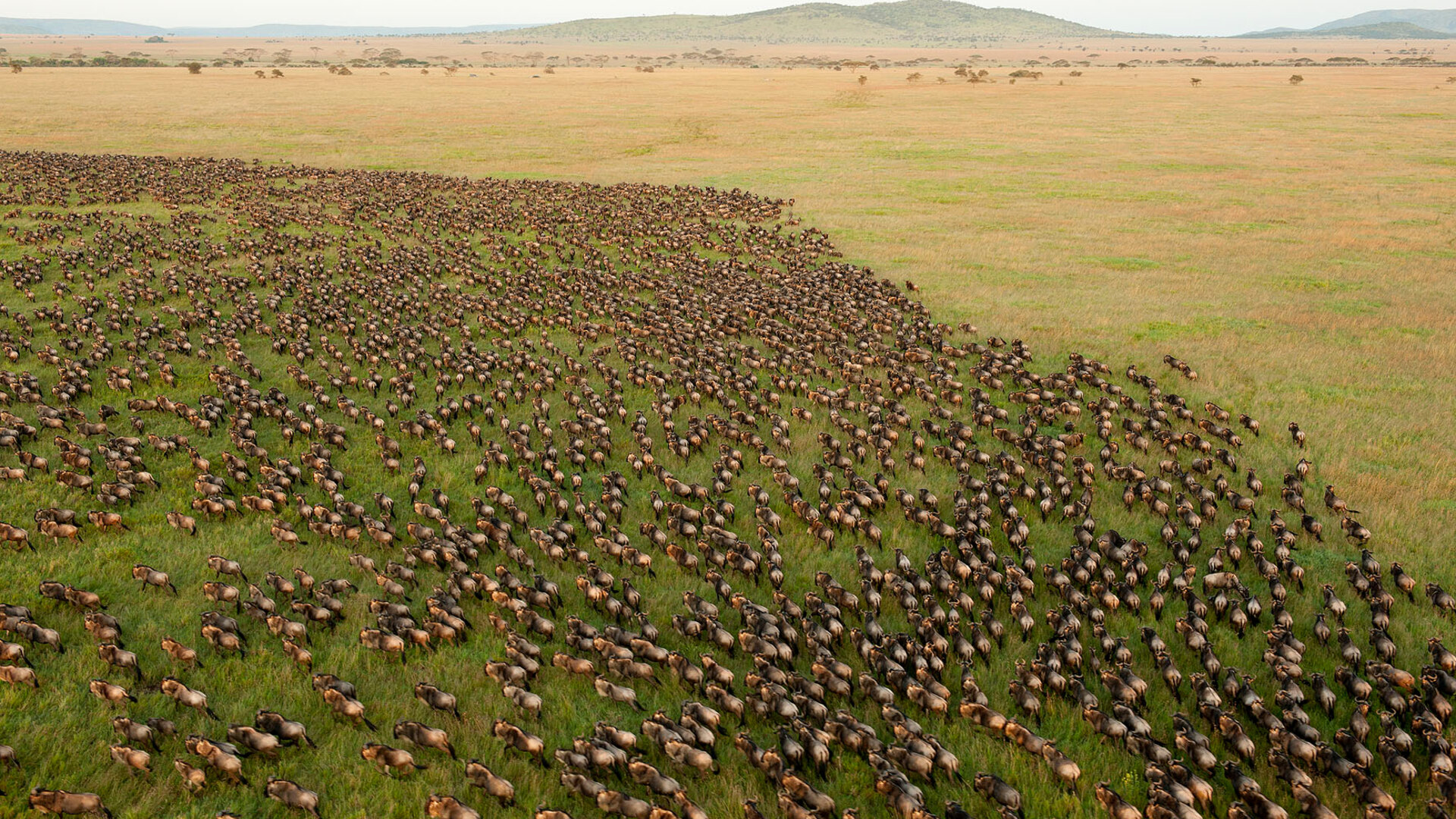
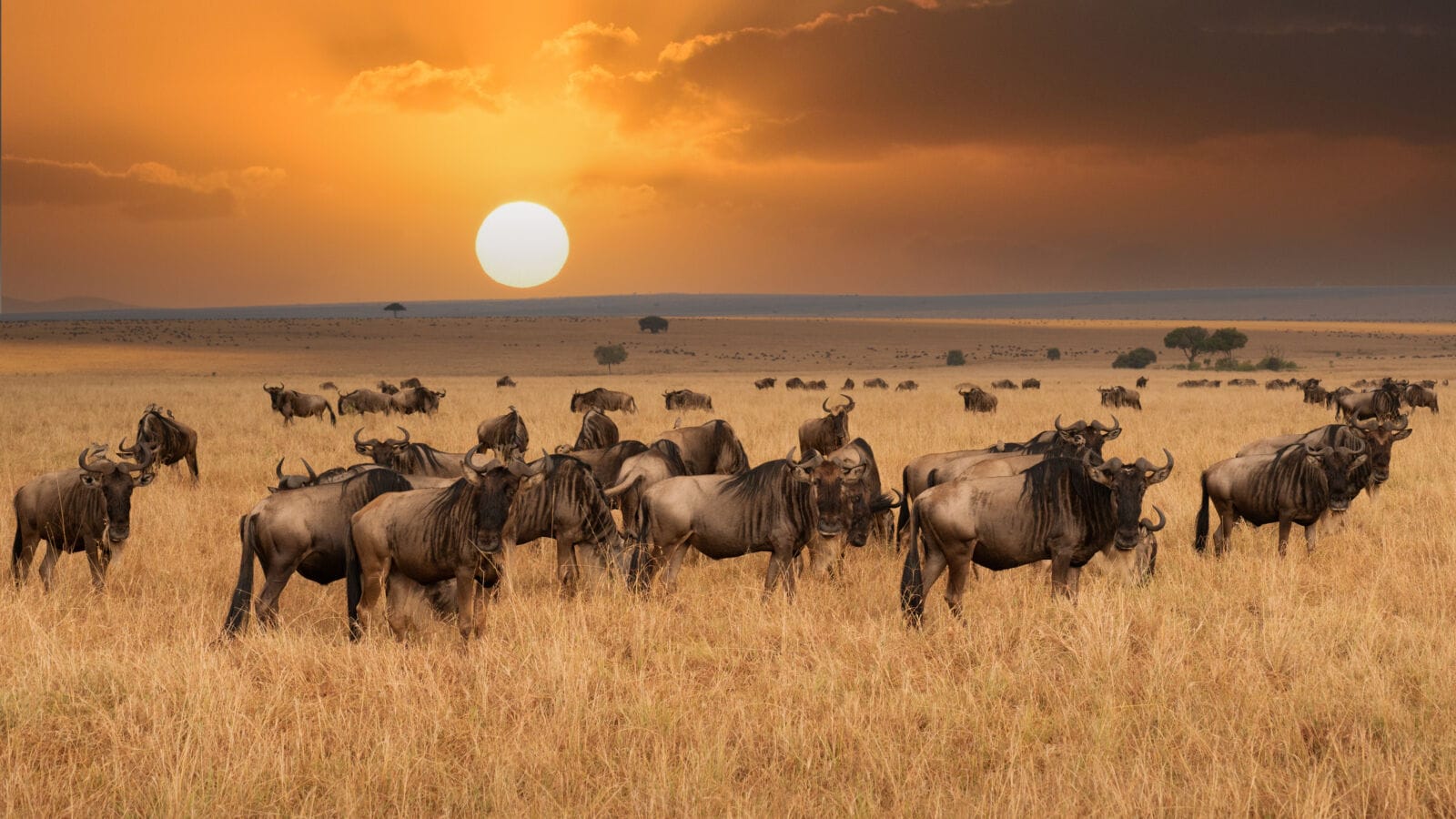
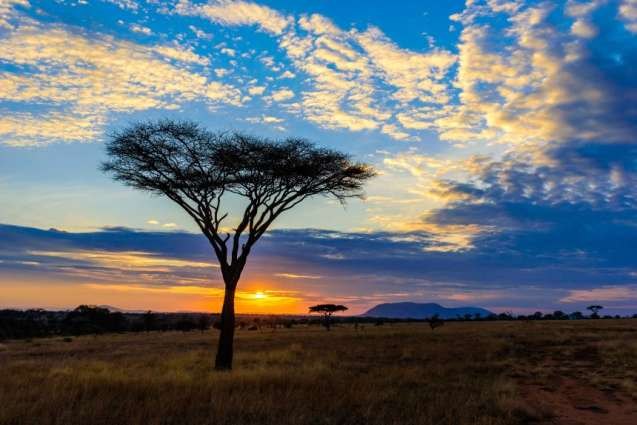
The Serengeti — the stage for the greatest wildlife spectacle on earth, unfolding month by month across an endless landscape.
🦓 Planning a Great Migration Safari?
Location is everything with the migration. Our specialists track the herds in real time through our camps on the ground, so we place you in exactly the right part of the ecosystem for your travel dates. Explore our Tanzania and Kenya safari resources, then let us build a fully private, tailor-made migration journey around you.
Explore the Tanzania Safari Hub →The Migration Is a Circle, Not a Date
The single most important thing to understand is that the migration is a loop driven by rainfall. The herds are always somewhere, always moving, always chasing the greenest grass. When people ask "when is the migration?" the honest answer is: it is happening every day of the year — the real question is which chapter you want to witness, and therefore which month you should travel and which camp you should choose.
Broadly, the year breaks into four great acts: the calving on the southern plains (roughly December to March), the trek north through the central and western Serengeti (April to June), the river crossings in the north and the Mara (July to October), and the return south through the east (November to December). Here is how it unfolds, month by month.
January — Calving Begins on the Southern Plains
The new year opens with the herds spread across the short-grass plains of the southern Serengeti and the Ndutu region, on the edge of the Ngorongoro Conservation Area. The rains have greened the plains, and the grass here is rich in the minerals that pregnant wildebeest need. The first calves begin to drop. Game viewing is superb, crowds are modest, and the light on the open plains is magnificent. This is a wonderful, better-value time to travel.
Where to be: Southern Serengeti / Ndutu. Highlight: the plains filling with heavily pregnant herds and the first newborns.
February — Peak Calving & the Predator Spectacle
February is the crescendo of the calving season. In the space of just a few weeks, around half a million calves are born on the Ndutu and southern Serengeti plains. Within minutes of birth a calf is on its feet and running — it has to be. Where there is that much vulnerable prey, there are predators: this is arguably the finest month of the year for big-cat action, with lions, cheetahs and hyenas hunting in the open. For photographers and wildlife lovers, February is a secret weapon — enormous drama, gorgeous light, and far fewer vehicles than the crossing season.
Where to be: Ndutu / southern Serengeti. Highlight: mass calving and exceptional predator sightings.
A cheetah on the open plains — February's calving season brings predators hunting vulnerable newborn wildebeest calves.
March — The Plains Still Full, the Rains Building
Through March the herds remain on the southern plains, the calves growing stronger by the day. The long rains begin to build towards month's end. It is still an excellent time to visit — green, dramatic and quiet — and often the last reliable window for the calving-plains experience before the herds begin to stir northwards.
Where to be: Southern / south-central Serengeti. Highlight: green-season landscapes and growing herds massing before the move.
April — The Great Trek North Begins
As the southern plains dry and the grass is grazed down, the herds begin to move. Long columns form and flow north and west into the central Serengeti (the Seronera region). April is the heart of the long rains, so expect afternoon showers and lush, emerald scenery — and lower rates. This is a beautiful, romantic, uncrowded time to see the herds on the move, provided you do not mind some rain and prefer value and solitude to guaranteed dry days.
Where to be: Central Serengeti (Seronera). Highlight: the herds streaming north in long ribbons across green country.
May — Columns Through the Central & Western Serengeti
By May the migration is in full northward flow through the central Serengeti and beginning to push into the Western Corridor. This is the month of the great rutting season, when the plains echo with the grunting of males and the herds stretch to the horizon in vast, moving columns — one of the most underrated spectacles of the whole year. The rains are easing, the crowds are thin, and the value is excellent.
Where to be: Central Serengeti moving into the Western Corridor. Highlight: massed columns and the rut.
June — The Grumeti River & the First Crossings
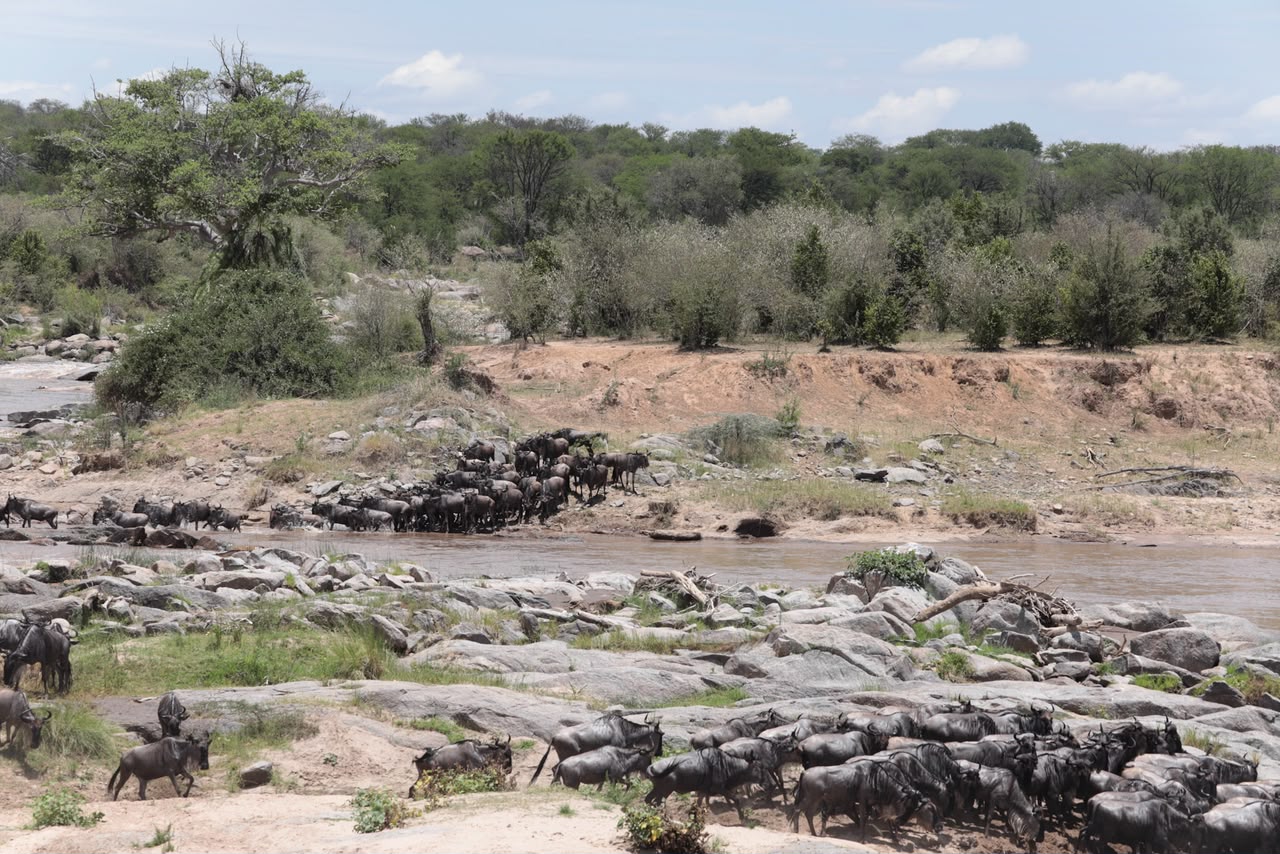
June marks the start of the dry season and the first great obstacle: the Grumeti River in the Western Corridor. Here the herds face resident crocodiles as they push north and west. The Grumeti crossings are less famous and less predictable than the Mara crossings to come, but they are dramatic and far less crowded. June is a superb, slightly-ahead-of-the-crowd month for travellers who want crossing drama without peak-season prices.
Where to be: Western Corridor / Grumeti. Highlight: the first river crossings of the year.
July — The Herds Reach the North: Crossing Season Opens
July is when the migration reaches the northern Serengeti and the drama the world associates with it begins in earnest. The herds mass along the Mara River, and the first great crossings take place. Some herds begin pushing across the border into Kenya's Masai Mara. This is peak season: dry, reliable weather, superb game viewing, and the highest demand of the year. Book early — the best camps near the river sell out a year or more ahead.
Where to be: Northern Serengeti (and the first arrivals in the Masai Mara). Highlight: the season's first Mara River crossings.
August — Peak River Crossings, North Serengeti & Masai Mara
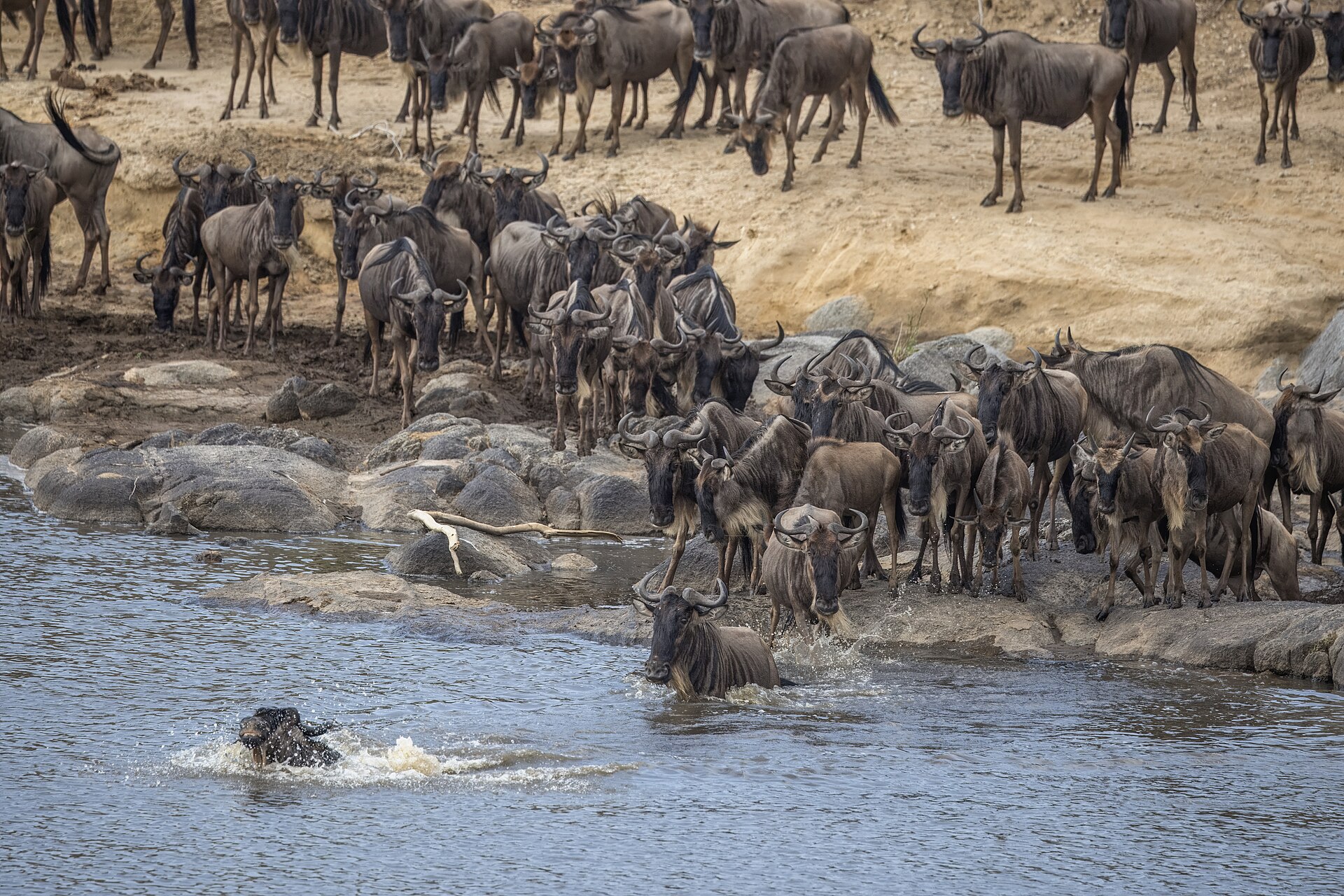
August is the classic month. The herds are strung across the northern Serengeti and the Masai Mara, and the Mara River crossings are at their most frequent and dramatic. This is the scene from the documentaries — the tension on the banks, the plunge, the crocodiles, the survivors scrambling up the far side. It is also the busiest and most expensive month, so a private guide and a well-placed camp make all the difference between watching from a scrum of vehicles and having a crossing largely to yourself.
Where to be: Northern Serengeti / Masai Mara, close to the river. Highlight: peak Mara River crossings.
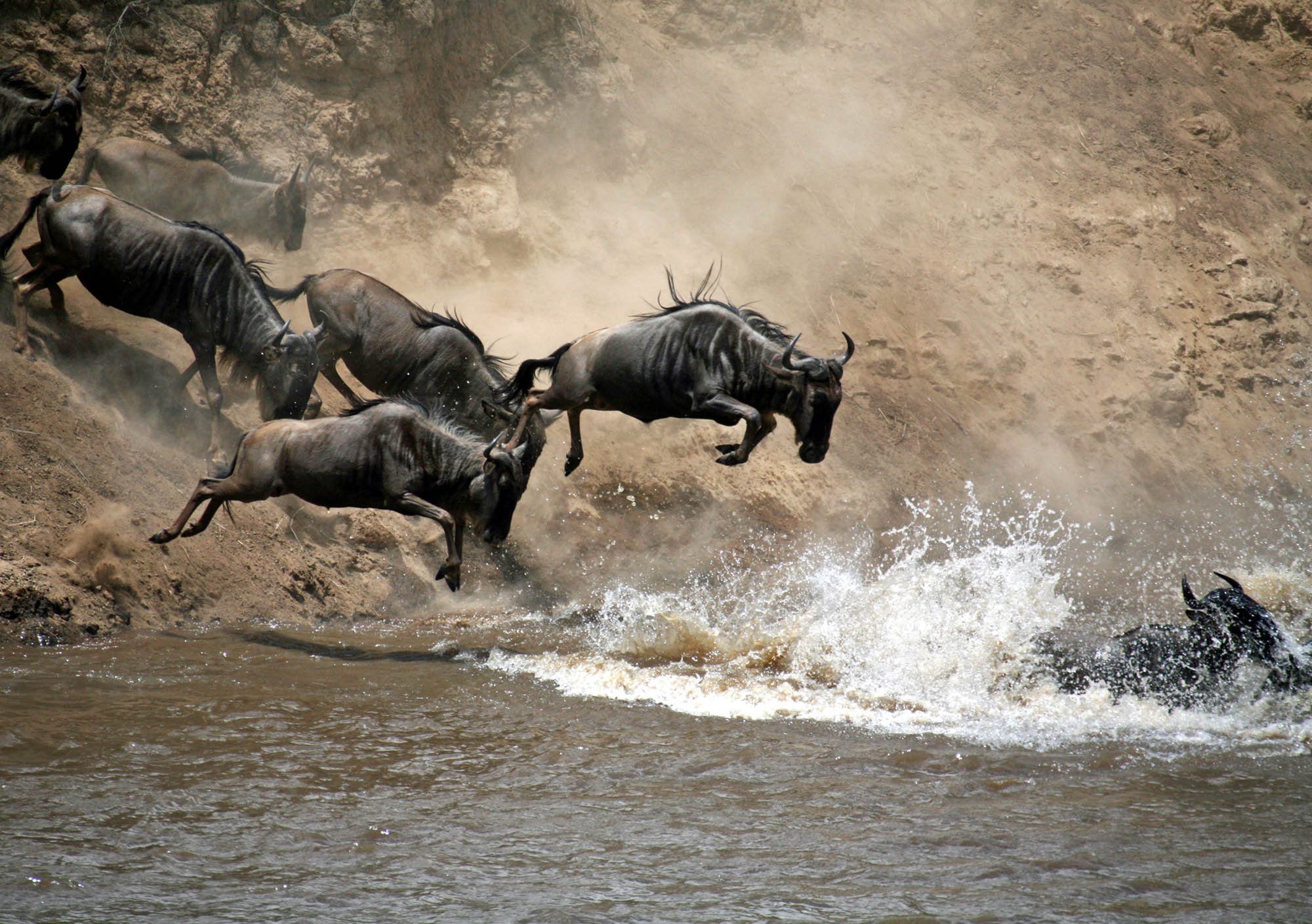
The iconic Mara River crossing — August brings the most dramatic wildebeest crossings of the year, with crocodiles waiting.
September — Crossings Continue, Slightly Quieter
The crossings continue through September, and many seasoned travellers consider it the sweet spot: the drama of August with slightly fewer visitors as the peak-summer holiday crowds thin. The herds move back and forth across the Mara River chasing grass, so multiple crossings are still very much on the cards. Weather is dry and beautiful.
Where to be: Northern Serengeti / Masai Mara. Highlight: continued crossings with a touch more space.
October — The Last Crossings & the Turn South
By October the short rains are approaching and the herds begin to sense the change. There are still crossings — often the return crossings back towards the Serengeti — and October can be wonderfully rewarding and quieter than the August peak. Towards month's end the great circle begins to swing south again.
Where to be: Northern Serengeti / Masai Mara, drifting south. Highlight: late and return crossings, thinner crowds.
November — The Return South Through the East
The short rains arrive and pull the herds south again, this time down through the eastern Serengeti and the Lobo area. The plains green up, migratory birds arrive in their millions, and the landscape is transformed. November is a green-season month — expect short afternoon showers rather than all-day rain — and it offers lovely game viewing, excellent value and very few vehicles.
Where to be: Eastern Serengeti / Lobo. Highlight: the herds flowing south, superb birding, green landscapes.
December — Back to the Southern Plains
The circle closes. By December the herds are back on the southern Serengeti and Ndutu plains, grazing the fresh grass and preparing for the next calving. Early-December travel is quiet and green; the festive-season fortnight is busier and pricier but still magical. And then, in the new year, it all begins again.
Where to be: Southern Serengeti / Ndutu. Highlight: herds regathering on the calving plains as the cycle resets.
The Great Migration Calendar at a Glance
| Month | Where the Herds Are | The Main Event |
|---|---|---|
| Jan | Southern Serengeti / Ndutu | Calving begins |
| Feb | Ndutu / southern plains | Peak calving & predators |
| Mar | Southern Serengeti | Herds massing, rains build |
| Apr | Central Serengeti | Trek north begins (green) |
| May | Central / Western Corridor | Massed columns & the rut |
| Jun | Western Corridor / Grumeti | First river crossings |
| Jul | Northern Serengeti / Mara | Crossing season opens |
| Aug | North Serengeti / Masai Mara | Peak Mara crossings |
| Sep | North Serengeti / Masai Mara | Crossings, slightly quieter |
| Oct | North, turning south | Last & return crossings |
| Nov | Eastern Serengeti / Lobo | Return south, birding |
| Dec | Southern Serengeti / Ndutu | Back on calving plains |
How to Actually Catch the Herds: Three Rules
1. Choose your camp for its location, not its logo
With the migration, a beautiful camp in the wrong place is worthless. The herds might be a hundred kilometres away. The finest migration operators run mobile tented camps that pack up and relocate several times a year to stay with the herds. For crossing season we place you within striking distance of the Mara River; for calving we place you on the Ndutu plains. Location first, always.
2. Build in time — crossings do not run to a timetable
A crossing can happen in five minutes or after a two-day wait on the bank. Three to four nights in the right area dramatically improves your odds. A one-night dash is a gamble; patience is the price of the greatest wildlife show on earth.
3. Travel with a private guide and real-time intelligence
Because the movement follows the rains, last week's reports are worth more than any calendar. Our guides and camps share daily ground intelligence, so we can pivot your route to where the herds actually are — not where a brochure says they should be.
🗓️ Tell Us Your Dates — We'll Tell You Where the Herds Will Be
Give us your travel window and we will design a private migration safari that places you in exactly the right chapter of the story — calving, columns or crossings — with the best-placed camps and a guide who tracks the herds daily.
Start Planning Your Migration Safari →Serengeti or Masai Mara? Which Side of the Border
Because the herds spend the majority of the year in Tanzania, the Serengeti offers by far the longest migration window and the exclusive calving spectacle. Kenya's Masai Mara hosts the herds and the most photographed crossings for a shorter, intense window from roughly August to October. If your dates fall in that window, the Mara is glorious; outside it, the Serengeti is the answer. Many travellers who want it all combine both countries in a single journey — and our specialists build exactly that. For the wider picture, see our complete Great Migration guide and our head-to-head on the Serengeti versus the Masai Mara.
Plan Your Great Migration Safari
The migration rewards travellers who plan around the herds rather than the calendar. Whether you dream of the newborn drama of the February calving, the massed columns of May, or the heart-stopping Mara crossings of August, the secret is the same: be in the right place, with the right camp, guided by people who track the herds every day. Explore our Tanzania safari hub and Kenya safari hub, browse our Serengeti migration packages, use the trip planner, or contact our specialists for a fully private, tailor-made migration journey built around your dates.