The Great Migration is a year-round loop of roughly two million wildebeest and zebra around the Serengeti–Mara ecosystem. The two headline moments are the calving season (late January to March, southern Serengeti) and the Mara River crossings (roughly July to October, northern Serengeti and Masai Mara). Both are extraordinary — the right one depends on your travel dates.
January to March — the calving
On the short-grass plains of the southern Serengeti and Ndutu, hundreds of thousands of calves are born within a few weeks. It is the most concentrated predator action of the year — lions, cheetahs and hyenas everywhere — and far less crowded than the crossings. For drama and value, the calving is our quiet favourite.
April to June — the trek north
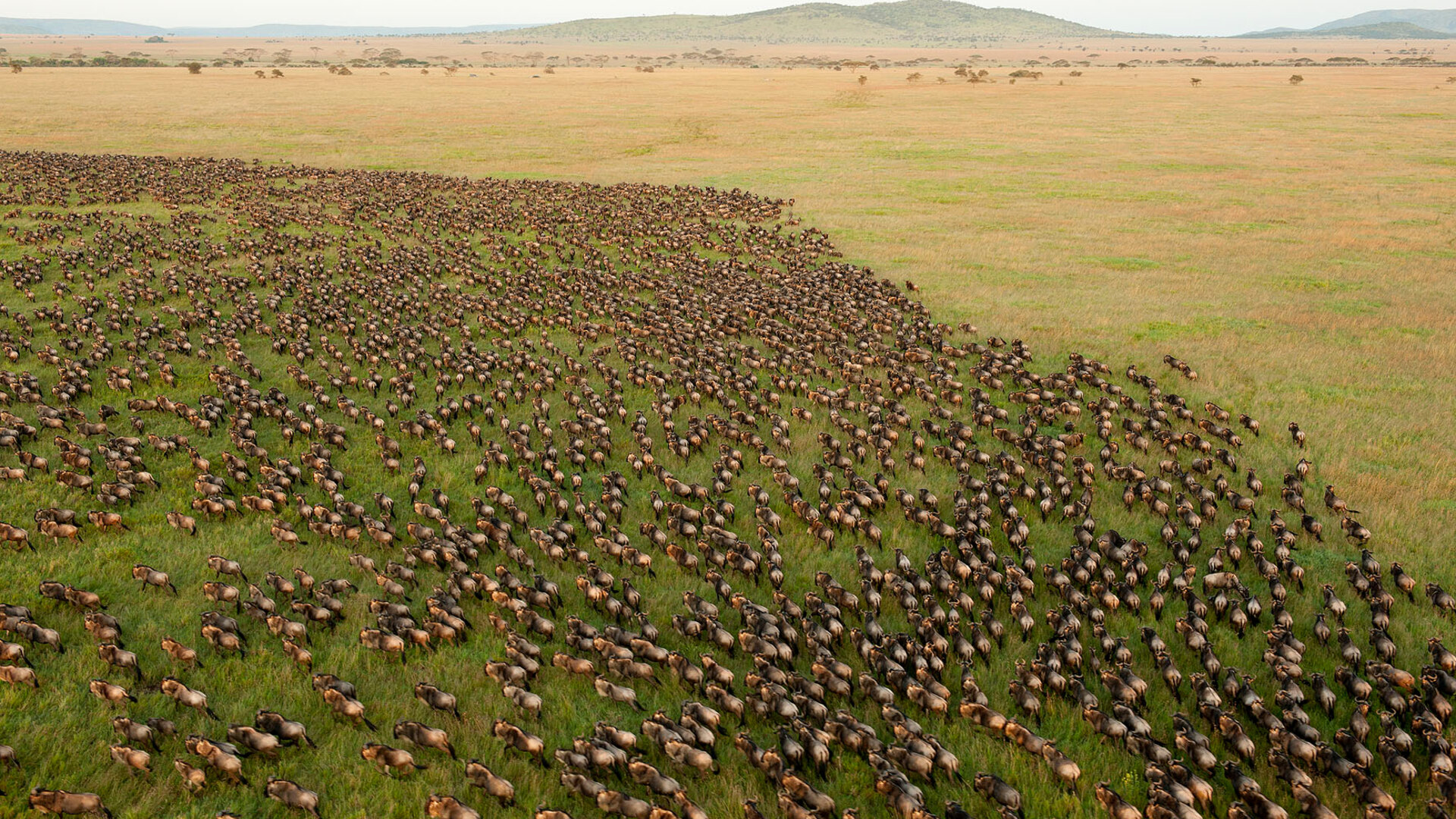
As the plains dry, the herds mass into columns and move north-west through the central and western Serengeti. May sees the rut; June brings the first Grumeti River crossings in the west. This is a lovely, quieter window with good value and the migration on the move, ahead of the peak-season crowds.
July to October — the Mara crossings
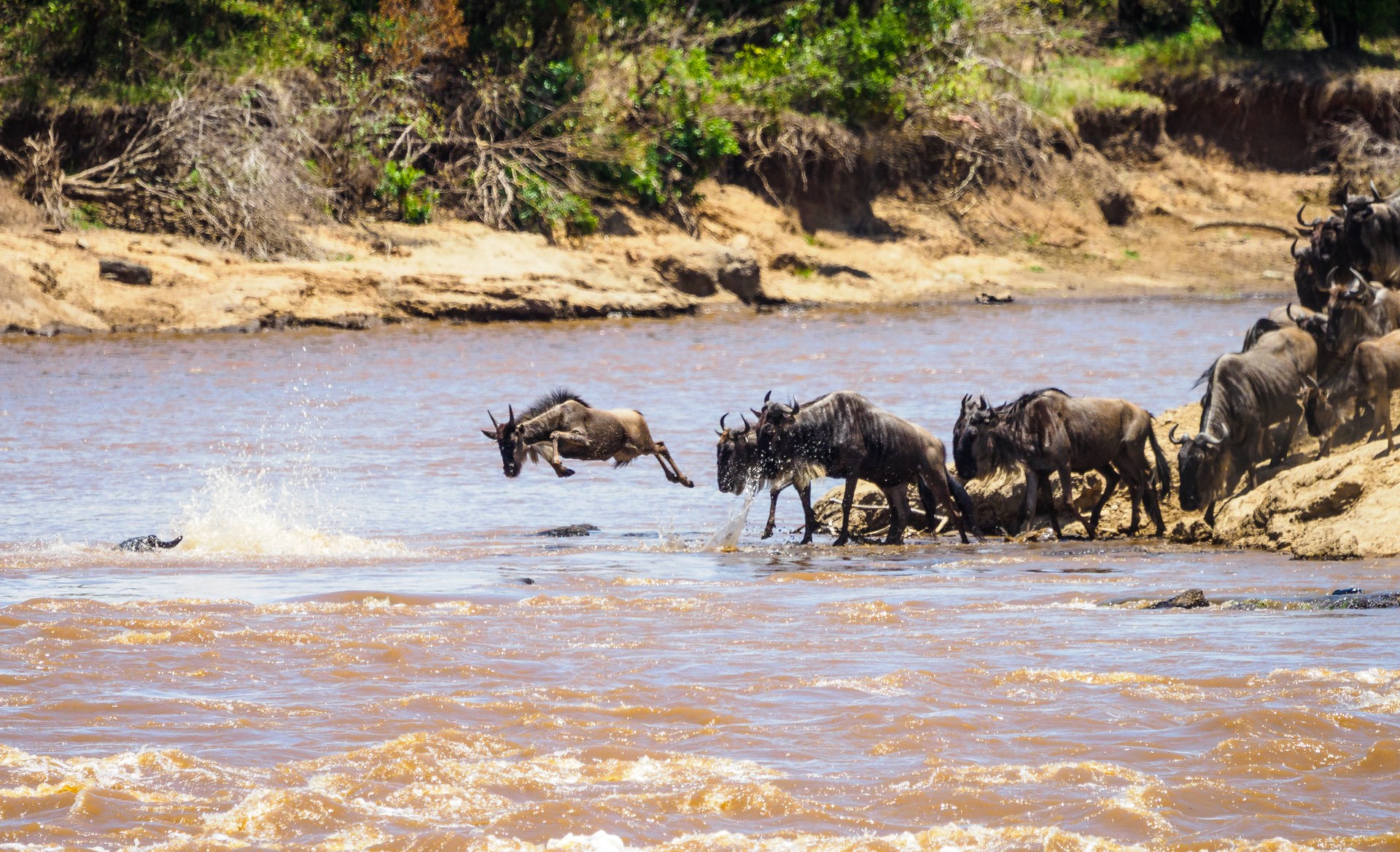
The famous chapter: the herds reach the northern Serengeti and the Masai Mara, and the heart-stopping Mara River crossings unfold, with crocodiles waiting below. This is the busiest and priciest window, and camps in the north and the Mara book out a year ahead — but the spectacle is one of the greatest on earth.
November to December — the return
The short rains draw the herds back south toward the calving grounds, moving through the eastern and central Serengeti. It is a transitional, uncrowded time with green landscapes and good value — a fine window to catch the migration between its headline acts.
Where to be, month by month
Because the herds follow the rain, exact timing shifts each year, so flexibility and expert positioning matter. As a rule: southern Serengeti / Ndutu for January–March, central and western Serengeti for April–June, northern Serengeti and the Masai Mara for July–October, and eastern / central Serengeti for November–December. We position our camps to match the herds' likely location.
| Months | Phase | Where | Crowds | Best for |
|---|---|---|---|---|
| Jan–Mar | Calving | South Serengeti / Ndutu | Moderate | Newborns, predators |
| Apr–Jun | Moving north | Central / western Serengeti | Low | Value, Grumeti |
| Jul–Oct | River crossings | North Serengeti / Masai Mara | Very high | The crossings |
| Nov–Dec | Return south | Eastern / central Serengeti | Low | Quiet, green |
Explore these safari destinations
Discover the parks and reserves behind this guide:
Safaris to plan around the season
Private journeys we tailor to your dates and budget:
- Serengeti Great Migration Safari — 7 days, from $5,000 pp
- Ultimate Great Migration Safari — 7 days, timed to the herds
- Kenya Big Cats Experience — 5 days, Masai Mara crossings
- Serengeti & Ngorongoro Ultimate — 8 days, the grand circuit
Related Reading
Start Planning
Every safari we craft is private and built entirely around you — your dates, your pace, your budget and the wildlife you most want to see. Our specialists have travelled this ground themselves and design each itinerary by hand. Speak to our team to begin, or browse our safari packages for inspiration.