Key Takeaways
- There is no single "best" time — there is a best time for you. The herds are in Tanzania's Serengeti all year; the perfect month depends on whether you want calving, the rut, or the river crossings.
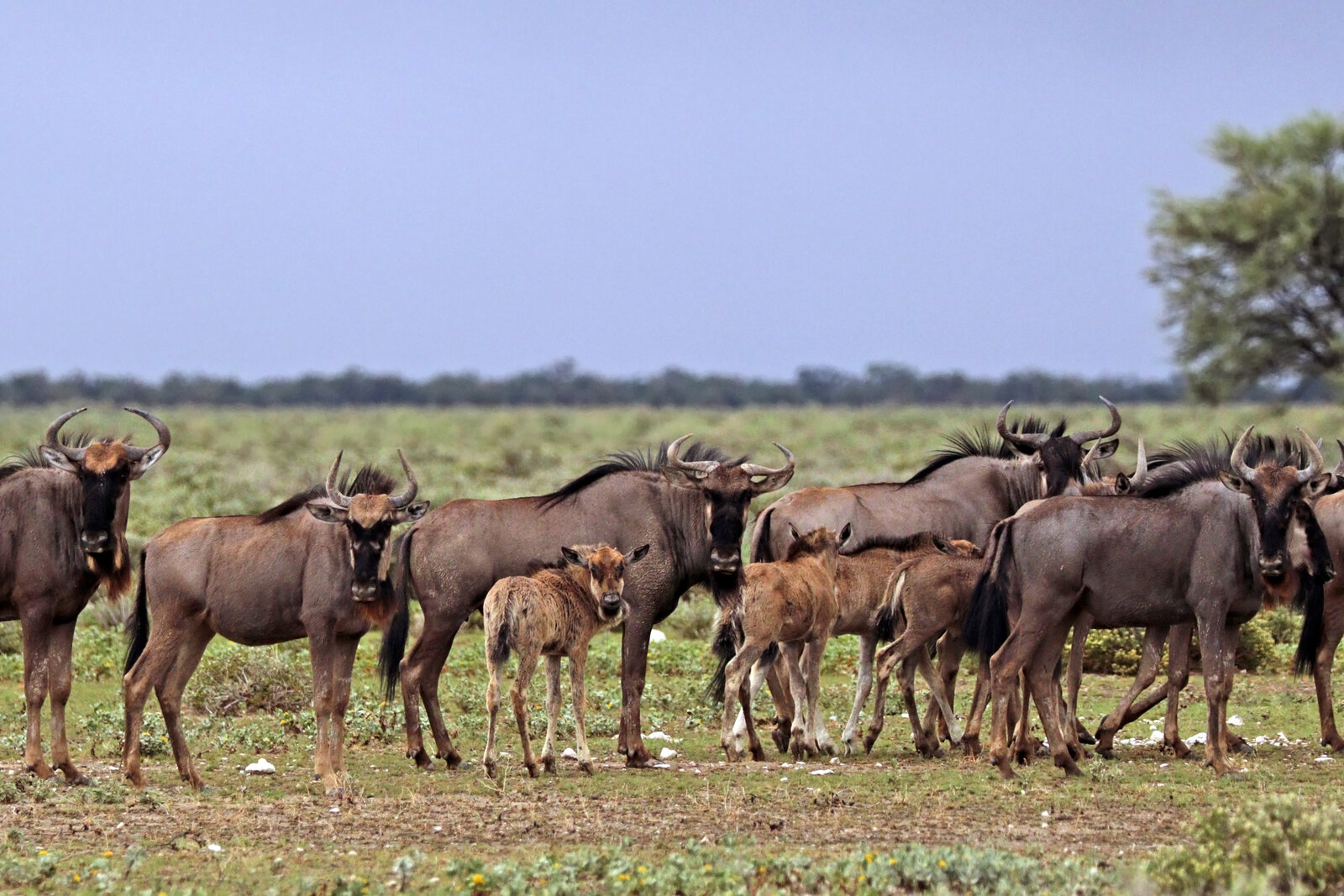
- January–March is calving season on the southern plains and Ndutu. Around half a million calves are born, drawing extraordinary predator action — and far fewer crowds than the crossing season.
- June is the Grumeti River crossing in the Western Corridor. The forgotten first crossing of the year, with a fraction of the vehicles you'll find up north.
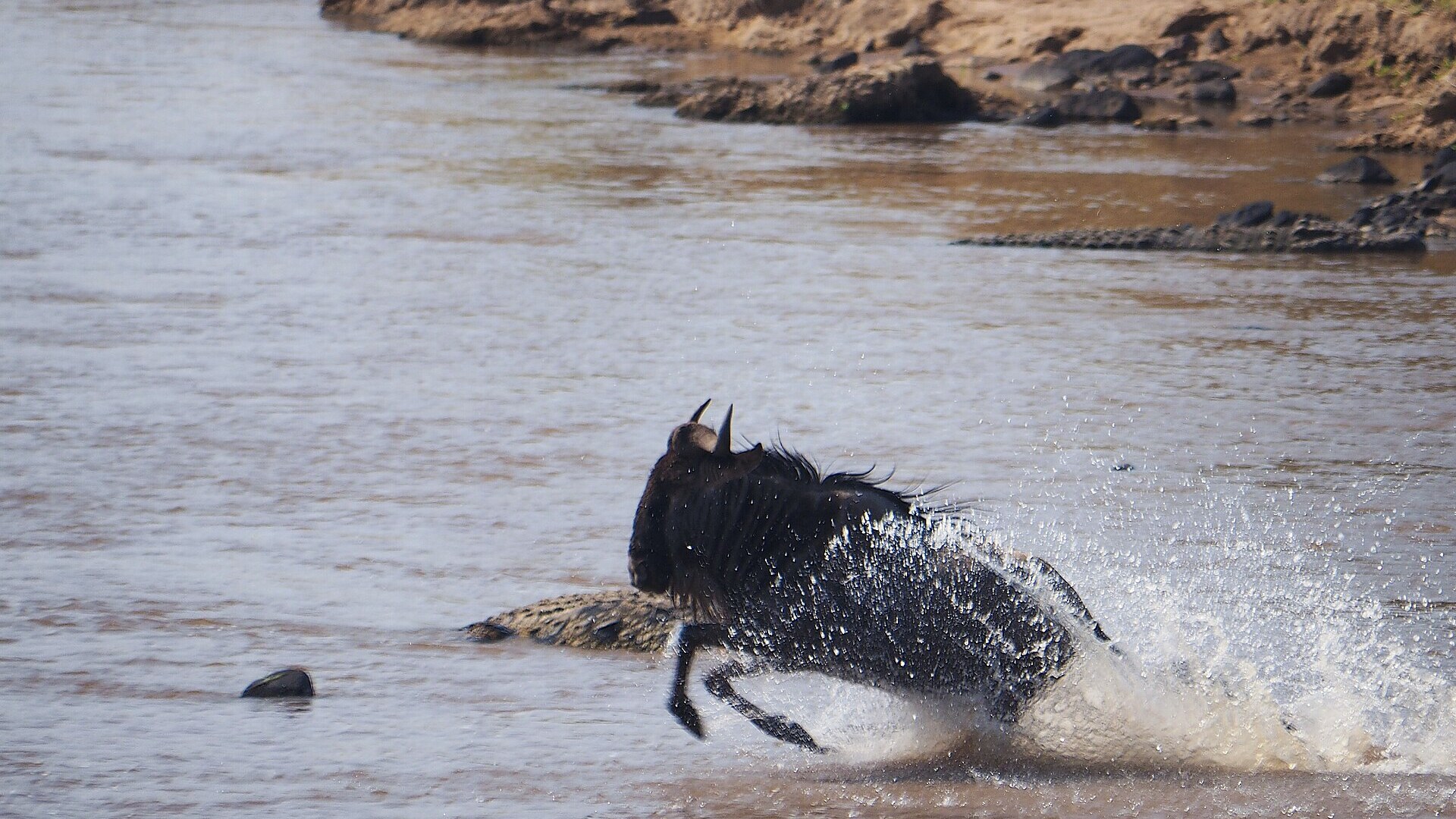
- July–October is peak Mara River crossing season in the northern Serengeti (Kogatende). The iconic, crocodile-and-current drama — and the busiest, priciest window.
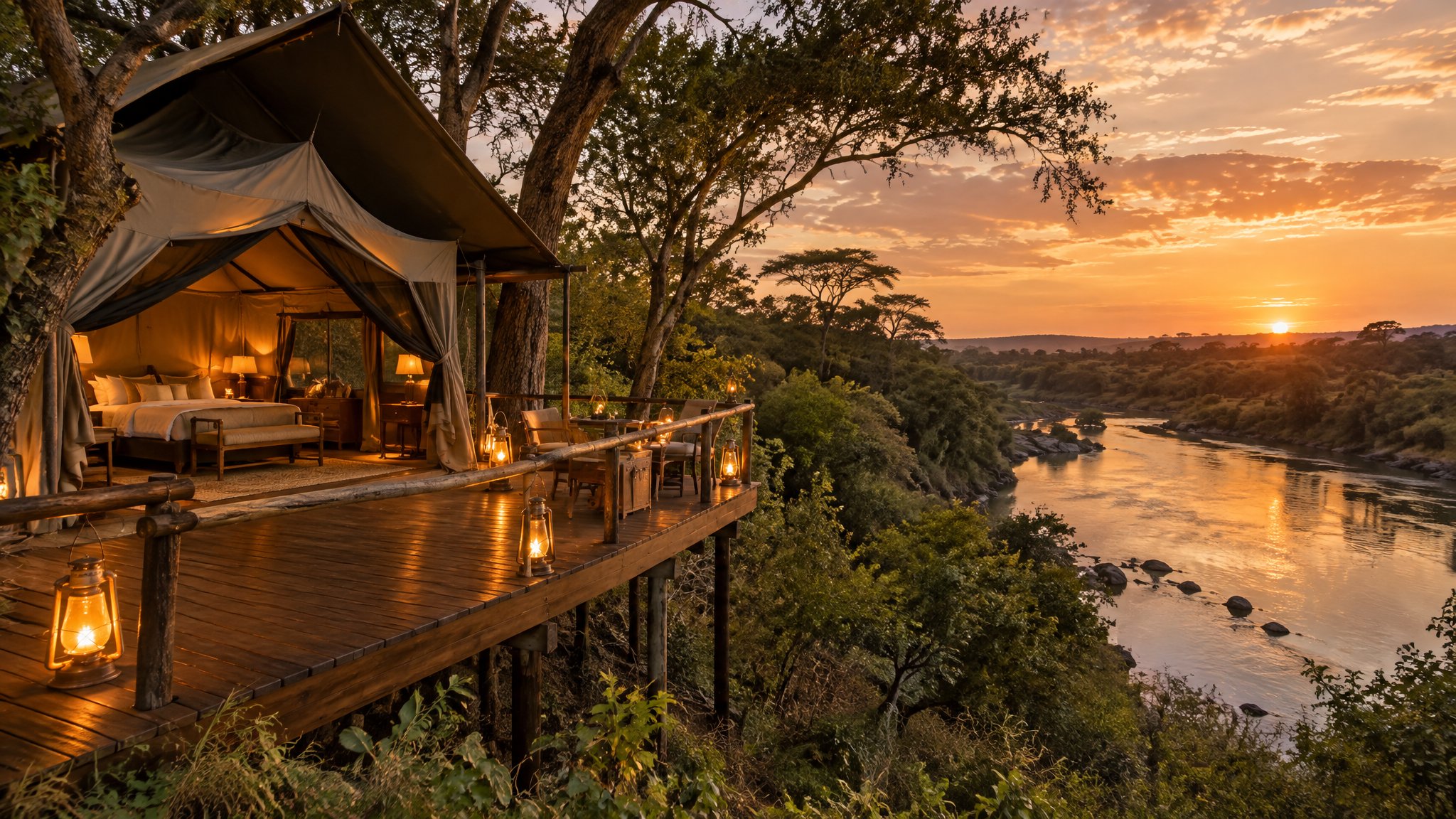
- Timing plus the right camp is everything. Because crossings are triggered by rain, the travellers who see the best of it stay in a mobile or crossing-front camp, on the right river, in the right week — which is exactly how we build these trips.
Ask ten safari companies for the "best time to see the Great Migration in Tanzania" and most will give you the same three words: July to October. They are not wrong — but they are not telling you the whole story either. The truth is far more interesting, and it will save you money, crowds and disappointment: the Great Migration is happening in Tanzania every single day of the year. The herds never leave the Serengeti ecosystem. What changes, month by month, is where they are and what they are doing — and that is the real key to timing your trip.
This is our honest, ground-truth guide to timing the migration, written by a South African team who build these journeys for a living. We are going to walk you through the year one chapter at a time — the calving, the rut, the trek, the Grumeti and the great Mara River crossings — and tell you where the herds will be, what the weather and crowds are really like, what it honestly costs in 2026, and the exact camps to base yourself in. By the end you won't be asking "when is the best time?" You'll know precisely which week matches the migration you have always dreamed of.
Why timing is everything (and why the crowds get it half-wrong)
The Great Migration is a continuous, clockwise loop of roughly two million wildebeest, plus hundreds of thousands of zebra and gazelle, chasing fresh grass and rain around the Serengeti–Mara ecosystem. It is not a race with a start and finish line; it is a slow, endless circle driven by the seasons. Because it is driven by rainfall, the exact position of the herds shifts a week or two from year to year — which is precisely why no honest operator can promise you a specific river crossing on a specific date.
Here is what most timing guides miss: each month offers a completely different — and equally spectacular — face of the migration. The calving season in February is every bit as dramatic as the river crossings in August; it is simply a different kind of drama. The traveller who understands this can pick the exact experience they want, often for far less money and with far fewer vehicles around them. So before you book July, ask yourself what you actually want to see. This guide will help you answer that.
The quick answer — best time by what you want to see
If you only read one section, read this. Match the experience you're dreaming of to the month, and you'll be in the right place.
| If you want… | Best months | Where to be |
|---|---|---|
| The Mara River crossings (the iconic drama) | July – October | Northern Serengeti (Kogatende) |
| Calving & big-cat action | Late Jan – March | Southern Serengeti & Ndutu |
| The Grumeti crossing (crowd-free) | June | Western Corridor |
| Fewest crowds & best value | April – May, November | Central & Southern Serengeti |
| Lush green scenery & birdlife | December – March | Southern plains |
| The rut (mating) & the trek | April – June | Central & Western Serengeti |
Notice that the two headline experiences — the calving and the river crossings — happen at opposite ends of the year and opposite ends of the park. You cannot see both on one week-long trip, which is why deciding what you want first is the single most important planning decision you'll make.
The migration month by month in Tanzania
This is the honest month-by-month of where the herds actually are, what's happening, and how busy it is. Treat the locations as a strong guide rather than a guarantee — the rain writes the final script each year.
| Month | Where the herds are | The highlight | Crowds |
|---|---|---|---|
| Jan – Feb | Southern Serengeti & Ndutu | Peak calving, predators | Low–Medium |
| March | Southern plains | Late calving, green season | Low |
| Apr – May | Central Serengeti, moving west | The trek & the rut; long rains | Very Low |
| June | Western Corridor | Grumeti River crossings | Low–Medium |
| July | Moving to northern Serengeti | First Mara River crossings | High |
| Aug – Sep | Northern Serengeti (Kogatende) | Peak Mara River crossings | Very High |
| October | Northern Serengeti, starting south | Return crossings | High |
| Nov – Dec | Central, returning south | The return; short rains | Low–Medium |
January to March — calving season on the southern plains & Ndutu
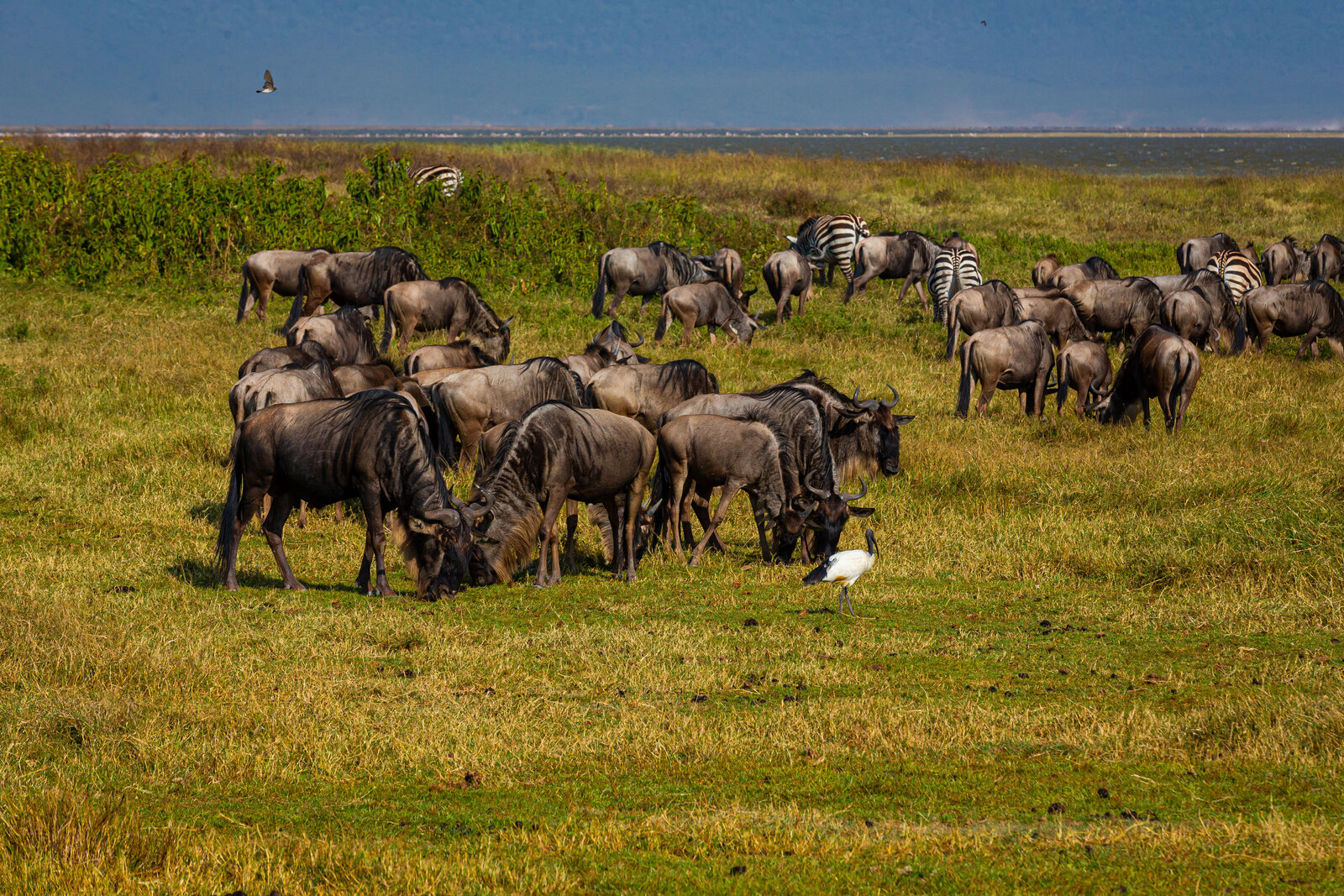
For many seasoned safari-goers, this — not the river crossings — is the finest time to see the migration. From late January through March, the herds gather on the mineral-rich short-grass plains of the southern Serengeti and the Ndutu area (technically in the Ngorongoro Conservation Area) to give birth. Around half a million wildebeest calves are born in a concentrated few weeks, typically peaking in February, with as many as 8,000 born on a single day.
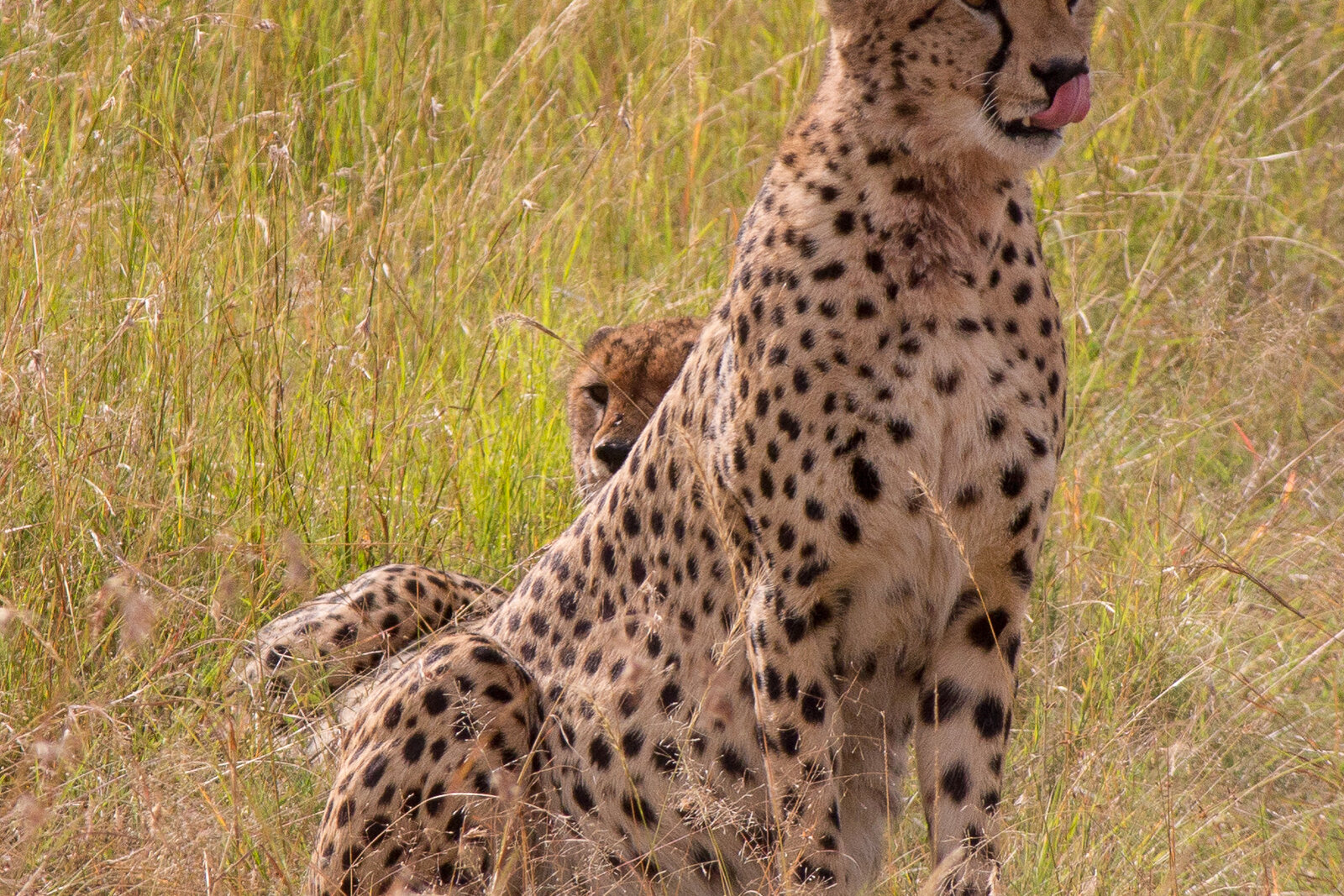
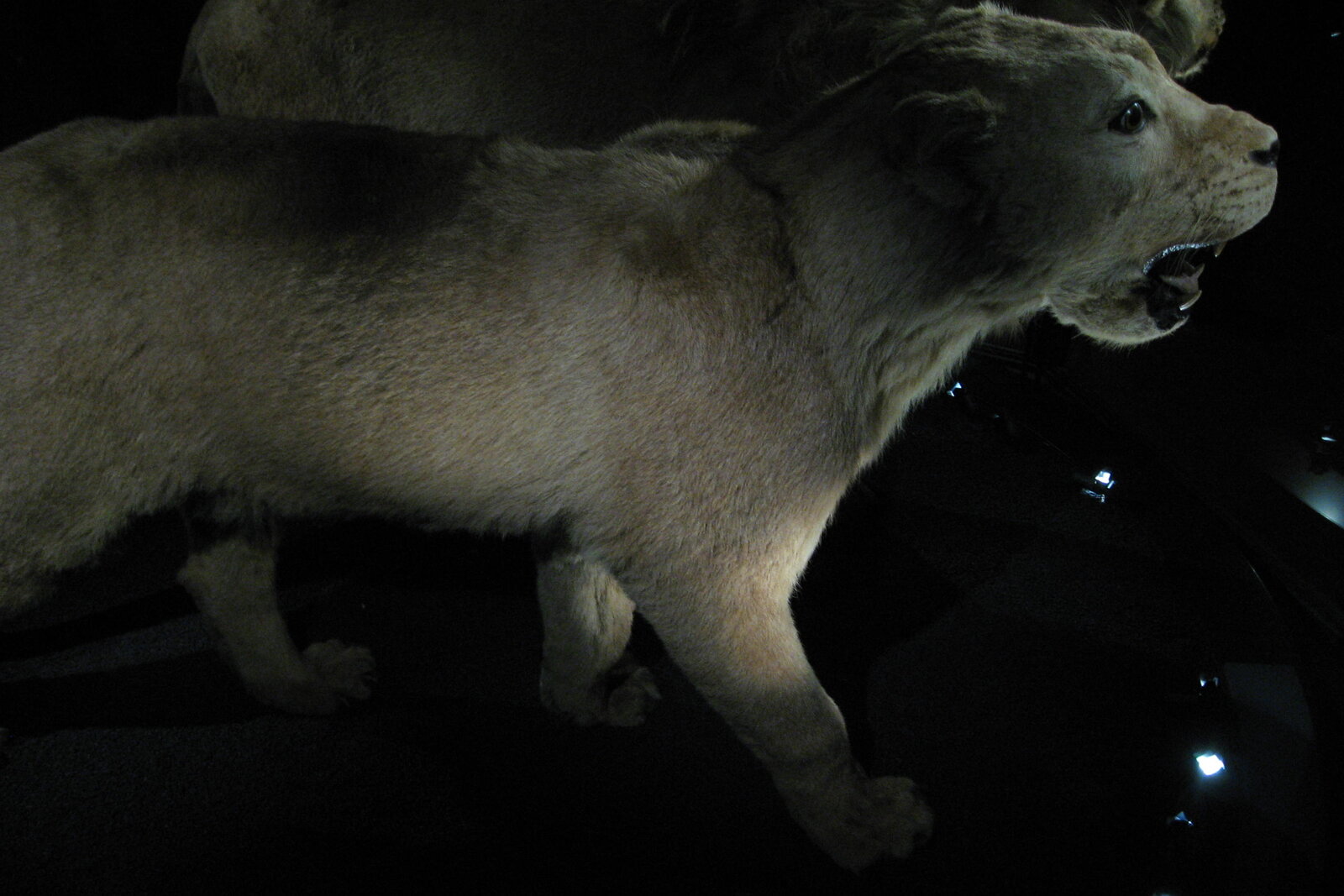
Where there are newborns, there are predators. This is the season of high drama on the plains — lion, cheetah and hyena are exceptionally active, and because the grass is short and the plains are open, the hunting is visible in a way it simply isn't during the crossing season. The landscape is lush, green and dotted with wildflowers, the light is superb for photography, and the crowds are a fraction of those in August. For calving, cats and value, February is our quiet favourite.
April to June — the long rains, the rut & the trek west
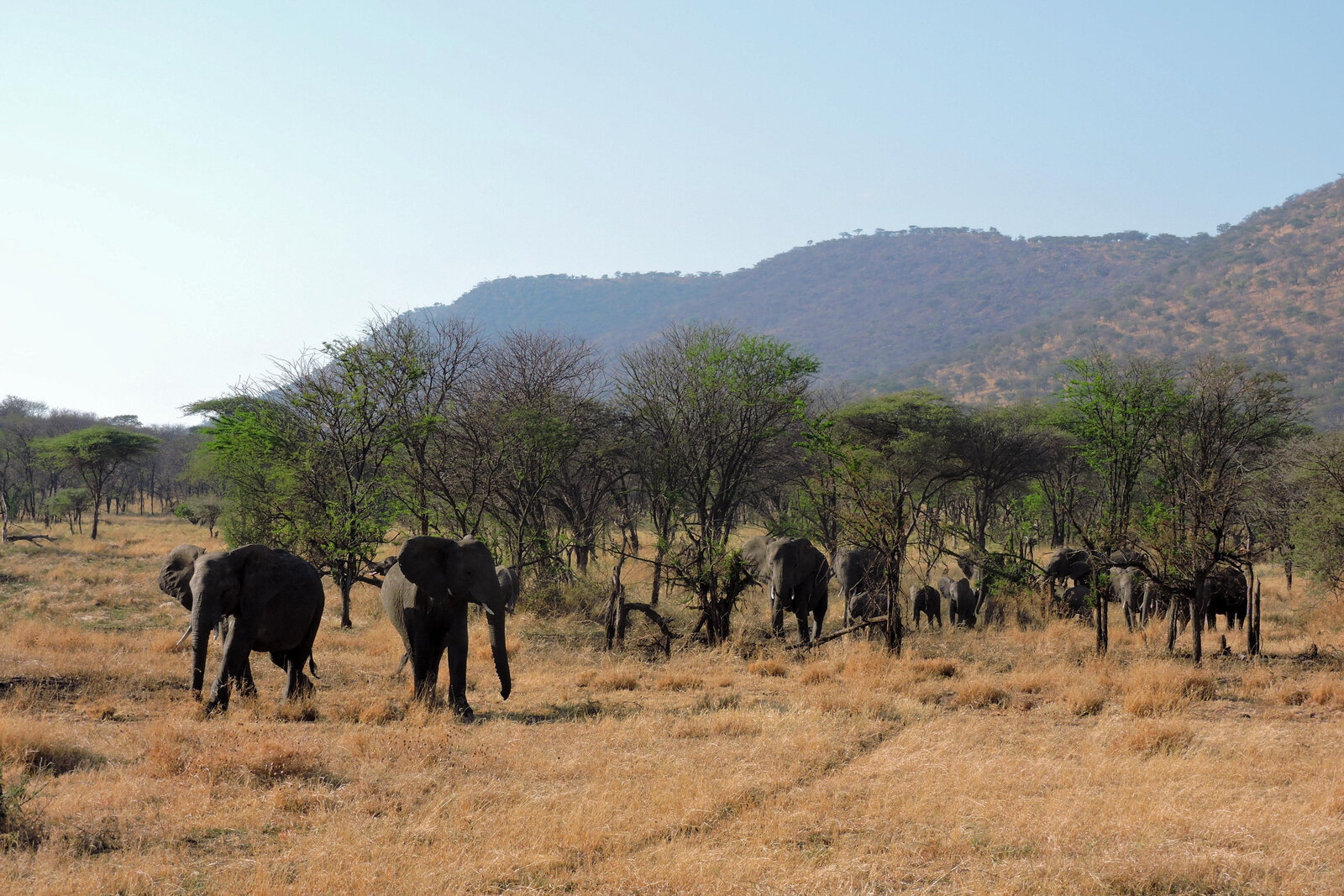
As the southern plains dry out, the herds begin their great push north and west through the central Serengeti. April and May bring the "long rains" — the greenest, quietest and cheapest time to be in the park. Yes, there can be afternoon downpours and some muddy tracks, but the reward is dramatic skies, emerald plains, newborn survivors finding their legs, and often no other vehicles at all. For photographers and budget-conscious travellers who don't mind a shower, this is a genuinely underrated window.
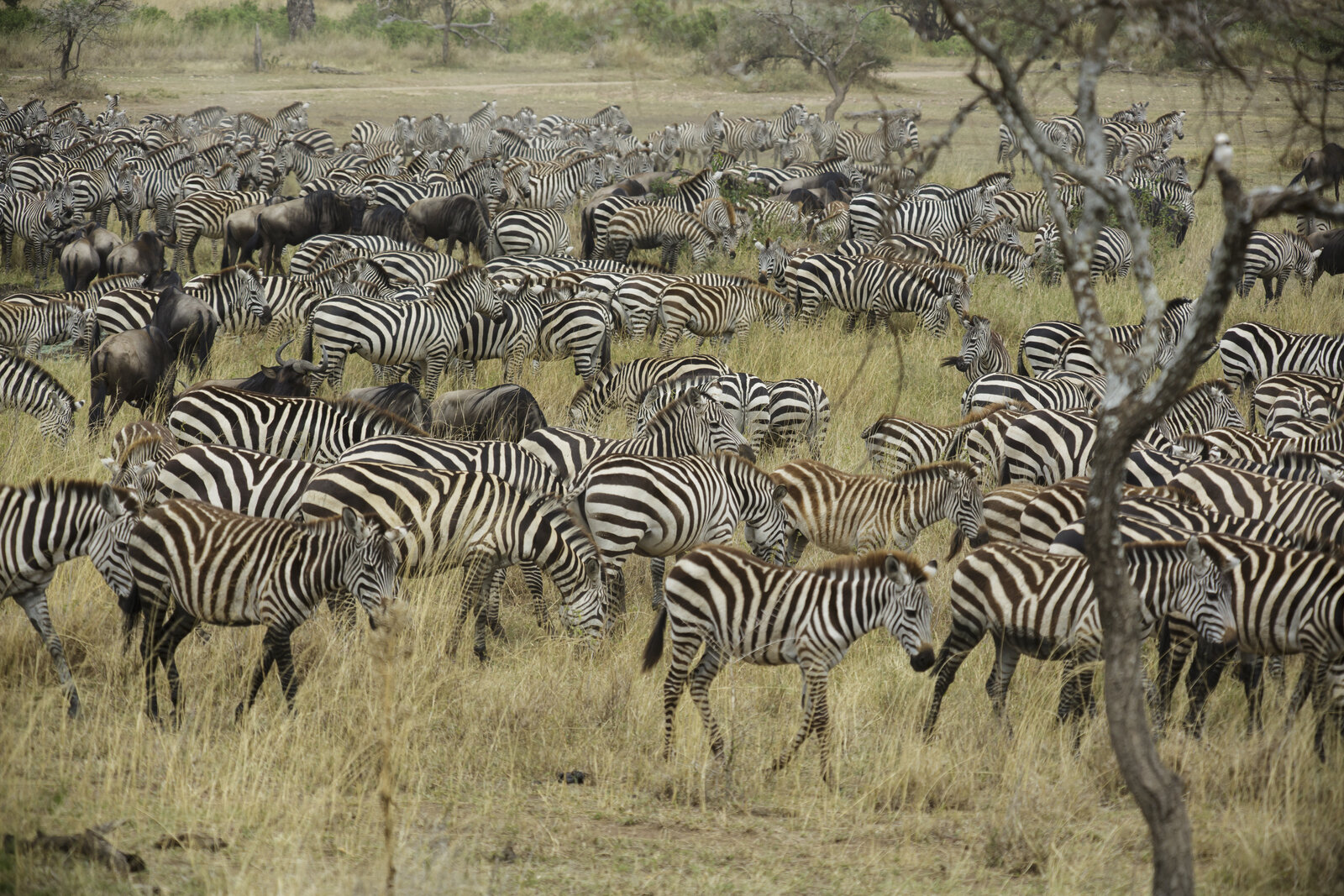
Late May and June bring two events. First, the rut — the wildebeest mating season, when the plains echo with the grunting of half a million males competing for mates in a swirling, testosterone-charged spectacle. Second, the herds reach the Western Corridor and the year's first great obstacle: the crocodile-rich Grumeti River.
June's secret: the Grumeti River crossing
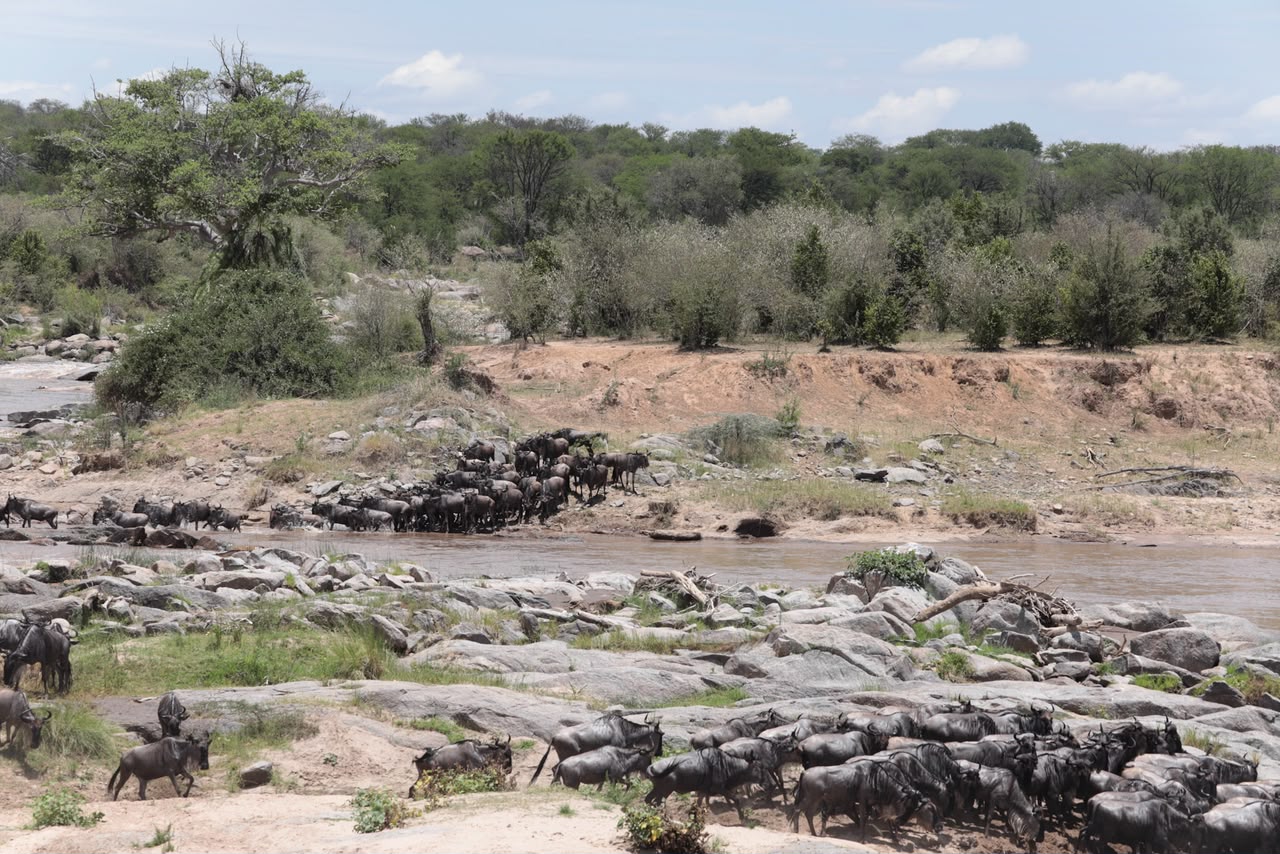
The Grumeti crossings are the migration's best-kept secret. In June, the herds pour through the deep, crocodile-choked channels of the Grumeti near the Kirawira area — genuine, heart-in-mouth river-crossing drama, but with a fraction of the vehicles you'll find at the famous Mara crossings later in the year. If you want to witness a crossing without the crowds, June in the Western Corridor is one of the smartest choices on the entire calendar, and it pairs beautifully with the rut.
July to October — the Mara River crossings in the northern Serengeti
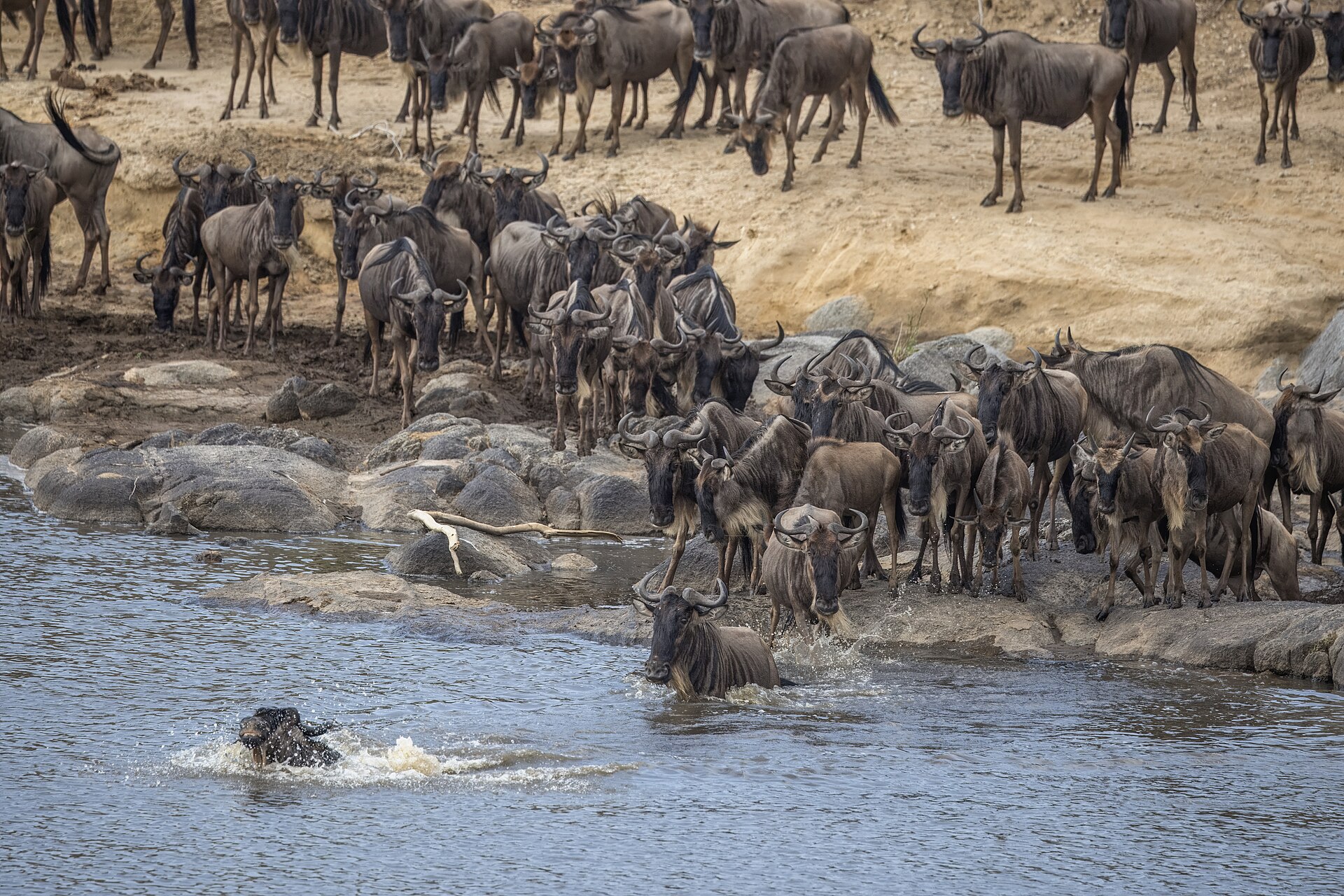
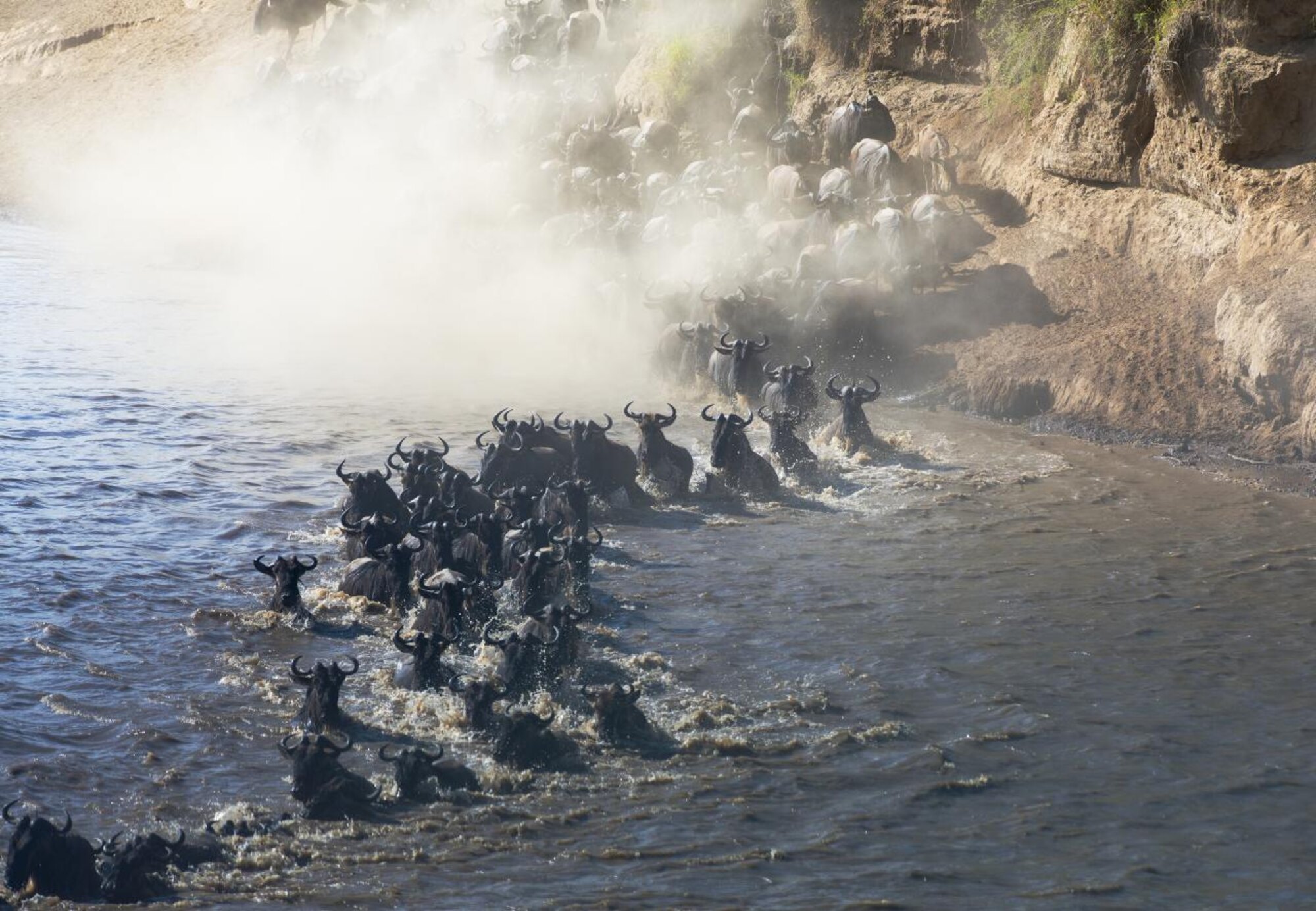
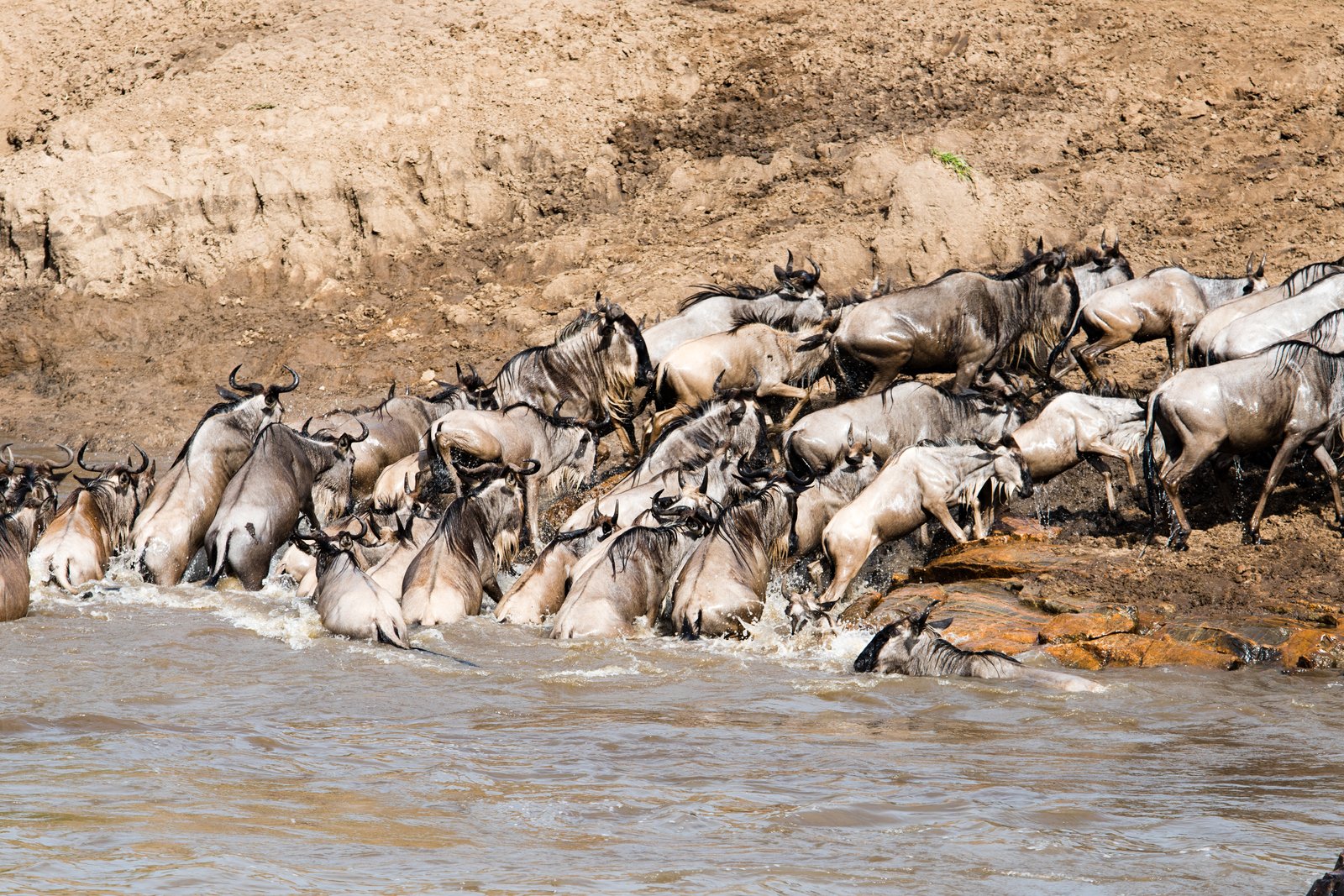
This is the migration most people picture, and the answer you'll hear most often to "when should I go." From July to October, the herds concentrate in the far northern Serengeti, in a sector called Kogatende, where they must cross the Mara River — a churning barrier of steep banks, powerful currents and enormous crocodiles. The crossings are chaotic, thunderous and utterly unforgettable: the single most dramatic wildlife spectacle on Earth.
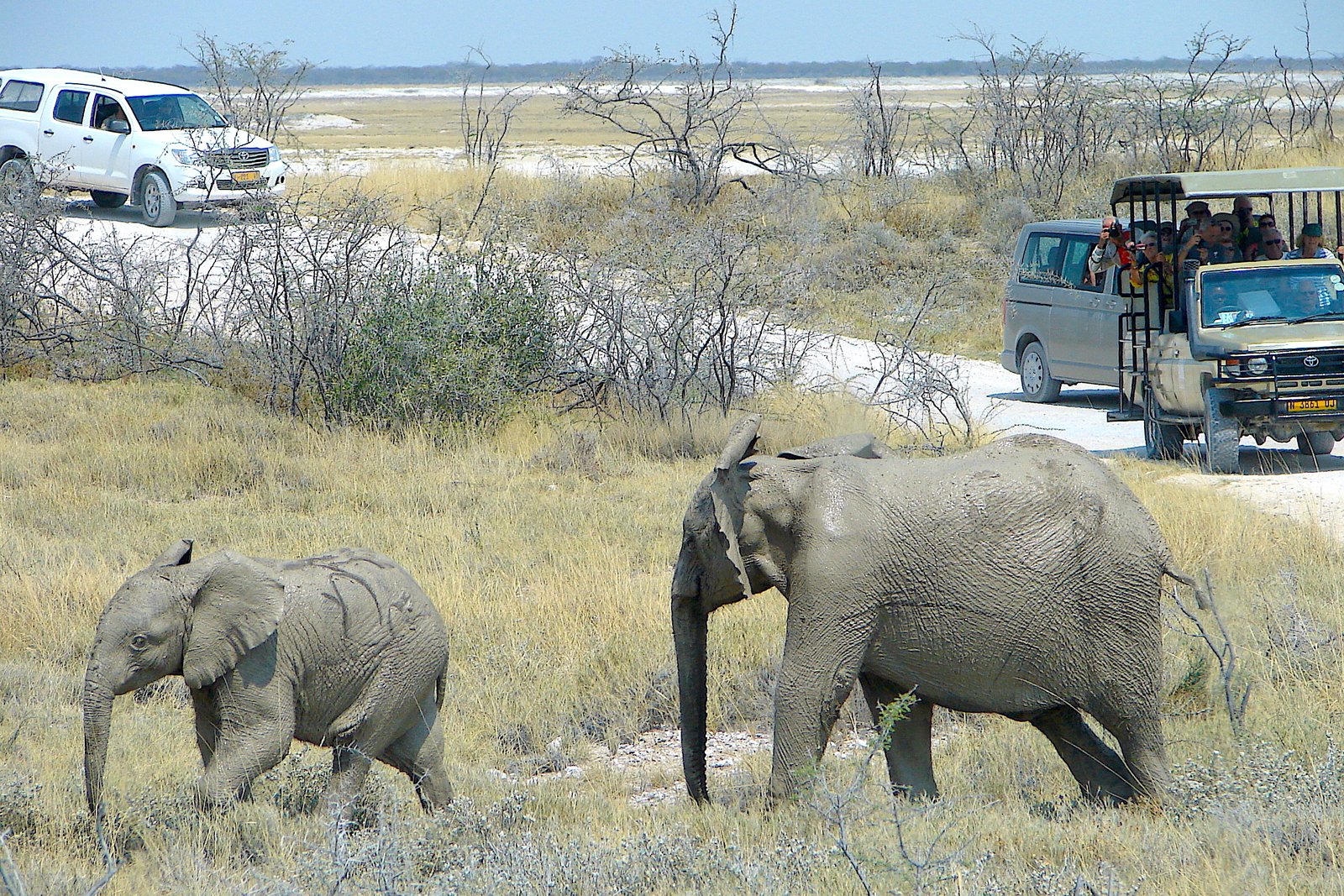
August and September are the peak, when crossings are most frequent. July sees the first crossings as the herds arrive; October often brings "return" crossings as the animals begin drifting back south. The catch is obvious: this is high season. Camps book out 6–12 months ahead, prices peak, and the famous crossing points can gather dozens of vehicles. The solution is not to avoid the north — it is to stay on the river in a mobile or crossing-front camp with a private vehicle and a crossing-specialist guide, so you can be at a quieter bend at dawn while others are still driving in.
November to December — the return south
When the short rains arrive in November, they call the herds home. The great columns turn and flow back down through the eastern and central Serengeti toward the southern plains, arriving in time to fatten up before the cycle begins again with calving. November and early December are a lovely, underrated window: the landscape greens up, the light is beautiful, the crowds thin out, and prices soften before the festive-season peak. It's a fine time for a first-timer who wants good general game-viewing plus a genuine chance of catching the herds on the move.
Weather, crowds & value — the honest trade-offs
Timing the migration is always a balance between three things: the wildlife event you want, the weather, and how many other people (and how much money) you're willing to share the experience with. Here's the honest picture.
| Season | Weather | Crowds & price | Best for |
|---|---|---|---|
| Dry season (Jun–Oct) | Warm days, cool nights, little rain, superb visibility | Highest crowds & prices (esp. Aug–Sep) | River crossings, classic conditions |
| Green / calving (Dec–Mar) | Lush, warm, short afternoon showers | Moderate crowds, better value | Calving, predators, photography |
| Long rains (Apr–May) | Greenest, dramatic skies, some mud | Fewest crowds, lowest prices | Value, solitude, the trek & rut |
What a Tanzania migration safari costs in 2026
Timing affects price as much as it affects the wildlife. Peak crossing season (Aug–Sep) commands the highest rates; green and shoulder seasons offer the best value for the same magnificent ecosystem. These are honest 2026 guide ranges, per person sharing, land-only (excluding international flights):
| Tier | Per night (pp) | A 7-night trip (pp) |
|---|---|---|
| Classic mobile-camp | ~US$550–850 | ~US$4,500–7,500 |
| Premier crossing-front camp | ~US$850–1,400 | ~US$7,500–12,000 |
| Luxury fly-in | ~US$1,400–2,200+ | ~US$12,000–20,000+ |
Green-season calving trips (Feb) and the Grumeti in June frequently deliver the best value of all — the same world-class wildlife, meaningfully lower rates, and far fewer vehicles. Every trip we build folds flights, park fees, transfers and a private guide into one clear price, so you always know exactly what you're paying.
Following the herds into Kenya's Masai Mara
One more timing secret: the migration doesn't stop at the border. From the northern Serengeti, the herds flow across the Mara River into Kenya's Masai Mara, where the crossings continue from roughly August to October. That opens a wonderful option — a two-country journey that follows the migration across the whole ecosystem, catching crossings from both the Tanzanian and Kenyan sides. If your dates fall in that late-season window, combining the northern Serengeti with the Mara can dramatically raise your chances of witnessing a crossing.
The verdict — your perfect month
So, when is the best time to see the Great Migration in Tanzania? The honest answer is: whenever matches the migration you've dreamed of. Come in February for the calving, the newborns and the electric cat-and-calf drama on the green southern plains. Come in June for the Grumeti's crowd-free crossings and the roar of the rut. Come in August and September for the world-famous Mara River crossings in the north. Come in April, May or November for solitude, dramatic skies and the best value of the year.
What matters more than the month is being in the right place, in the right camp, in the right week — and that is exactly what we do. We are an owner-run South African team on the ground; we choose the camps, guides and vehicles ourselves, we watch where the herds are massing, and we fold every flight and detail into one clear price. Tell us when you can travel and what you long to witness, and we'll build you the perfectly-timed private journey to put you exactly where the wild is moving.