Key Takeaways
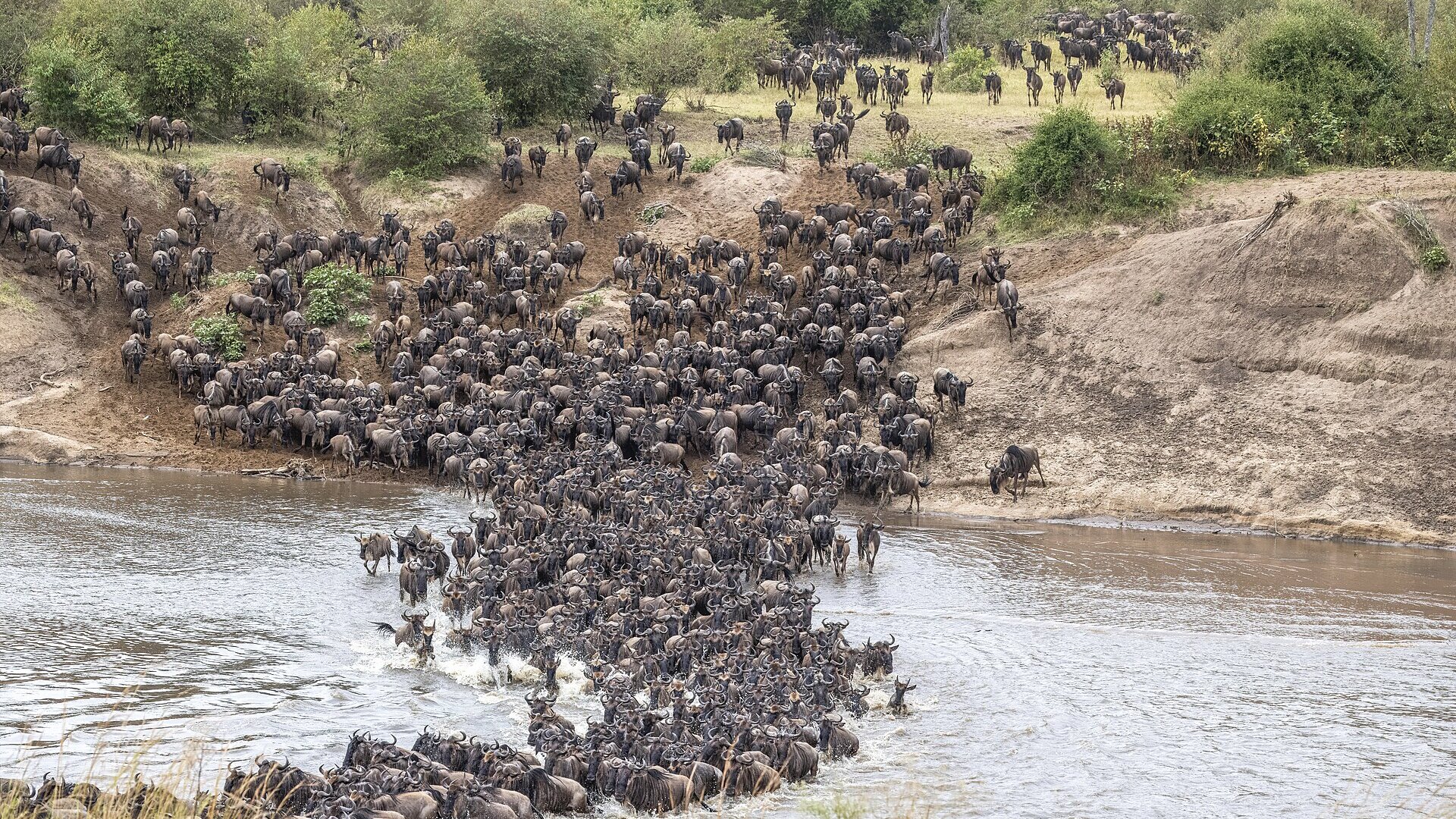
- The best time to visit Kenya for the Great Migration is July to October, when over 1.5 million wildebeest and 200,000 zebra fill the Masai Mara and the legendary Mara River crossings reach peak frequency
- August and September are the all-round peak — crossings happen almost daily, predator action is at its most intense, and the Mara's big-cat density is the highest on the continent
- July and October offer excellent migration sightings with 30–40% fewer crowds and better value than the August–September crush
- Private conservancies like Olare Motorogi, Naboisho and the Mara Triangle enforce strict vehicle limits, offer night drives and walking safaris, and provide an exclusive alternative to the busier national reserve sectors
- Stay a minimum of 4–5 nights to maximise your chances of witnessing a crossing — the herds are unpredictable and may wait days before plunging into the river
TL;DR: The best time to visit Kenya for the Great Migration is July to October, when the herds occupy the Masai Mara and the famous Mara River crossings peak. August and September deliver the most frequent crossings and the most dramatic predator–prey encounters, but also the highest crowds and lodge rates. July and October are the smart-money months — excellent migration sightings, fewer vehicles and better pricing. For the year-round migration picture across the Serengeti–Mara ecosystem, read this alongside our Tanzania migration timing guide. Below you will find a month-by-month calendar, a conservancy timing matrix, Kenya-vs-Tanzania comparison, traveller-type recommendations, weather and packing advice, and strategies to maximise your crossing chances.
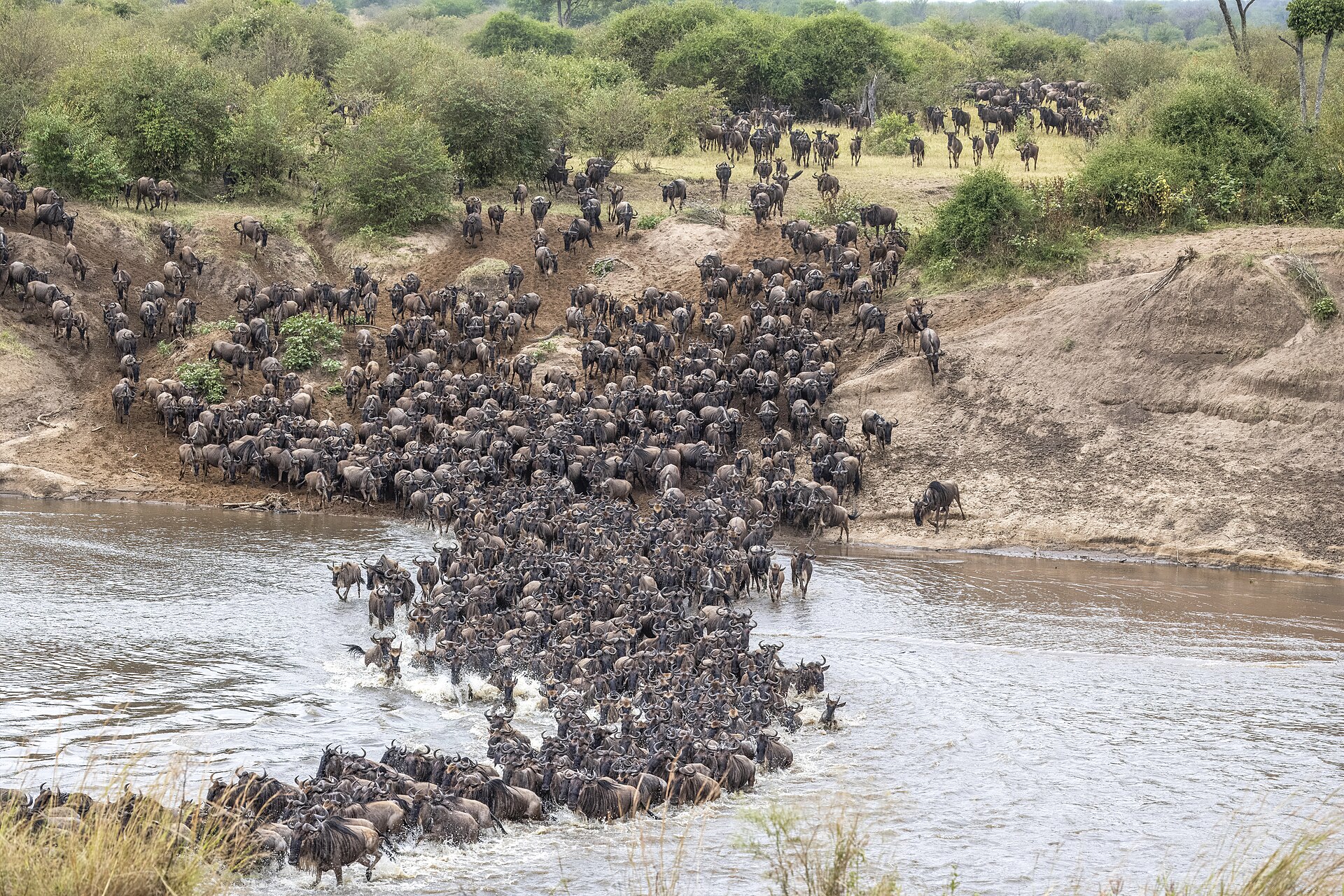
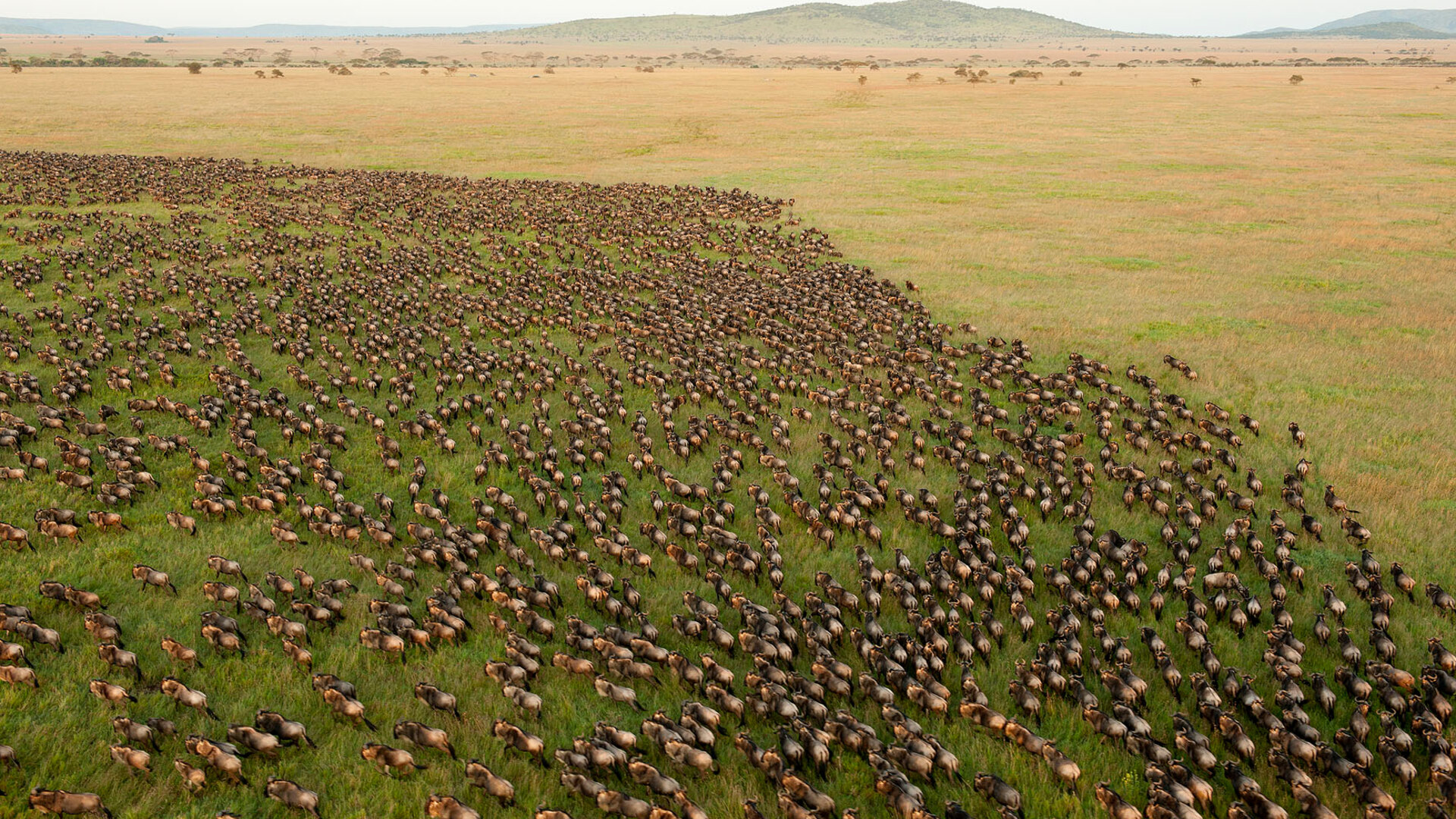
The Great Migration is the largest overland wildlife movement on Earth — a continuous, circular journey of over 1.5 million wildebeest, 200,000 zebra and hundreds of thousands of gazelle across the Serengeti–Mara ecosystem. It never stops. But the chapter that draws the world's cameras — the one that defines the migration in most travellers' minds — happens in Kenya's Masai Mara, from roughly July to October, when the herds cross the Mara River in scenes of raw, primal drama that nothing else in nature quite matches.
This guide is about timing that Kenya chapter perfectly. We will walk you through exactly when the herds arrive and leave, which months deliver the most crossings, how the Mara's conservancies change the equation, how Kenya compares to Tanzania, and what to pack, expect and book so that when you are standing on the banks of the Mara River, you are in exactly the right place at exactly the right time.
Cinematic aerial and ground-level footage of the Great Migration's Mara River crossings — the wildlife spectacle that defines Kenya's dry season.
Quick-Answer Priority Table
| Month | Crossing Probability | Crowds | Weather | Value |
|---|---|---|---|---|
| June | Pre-arrival — herds entering from Serengeti | Low | Hot & dry | Best value |
| July | Arriving — first crossings begin | Medium | Warm & dry | Excellent |
| August | Peak — crossings almost daily | Very High | Warm & dry | Premium rates |
| September | Peak — crossings frequent, herds spread wide | High | Warming | High |
| October | Departing — late crossings, herds head south | Medium | Hot | Good |
Keep this table in mind as we unpack the full story below — when the herds arrive, where they go, and how every month of the Kenya migration season plays out on the ground.
Month-by-Month Kenya Migration Calendar
June — The Advance Guard
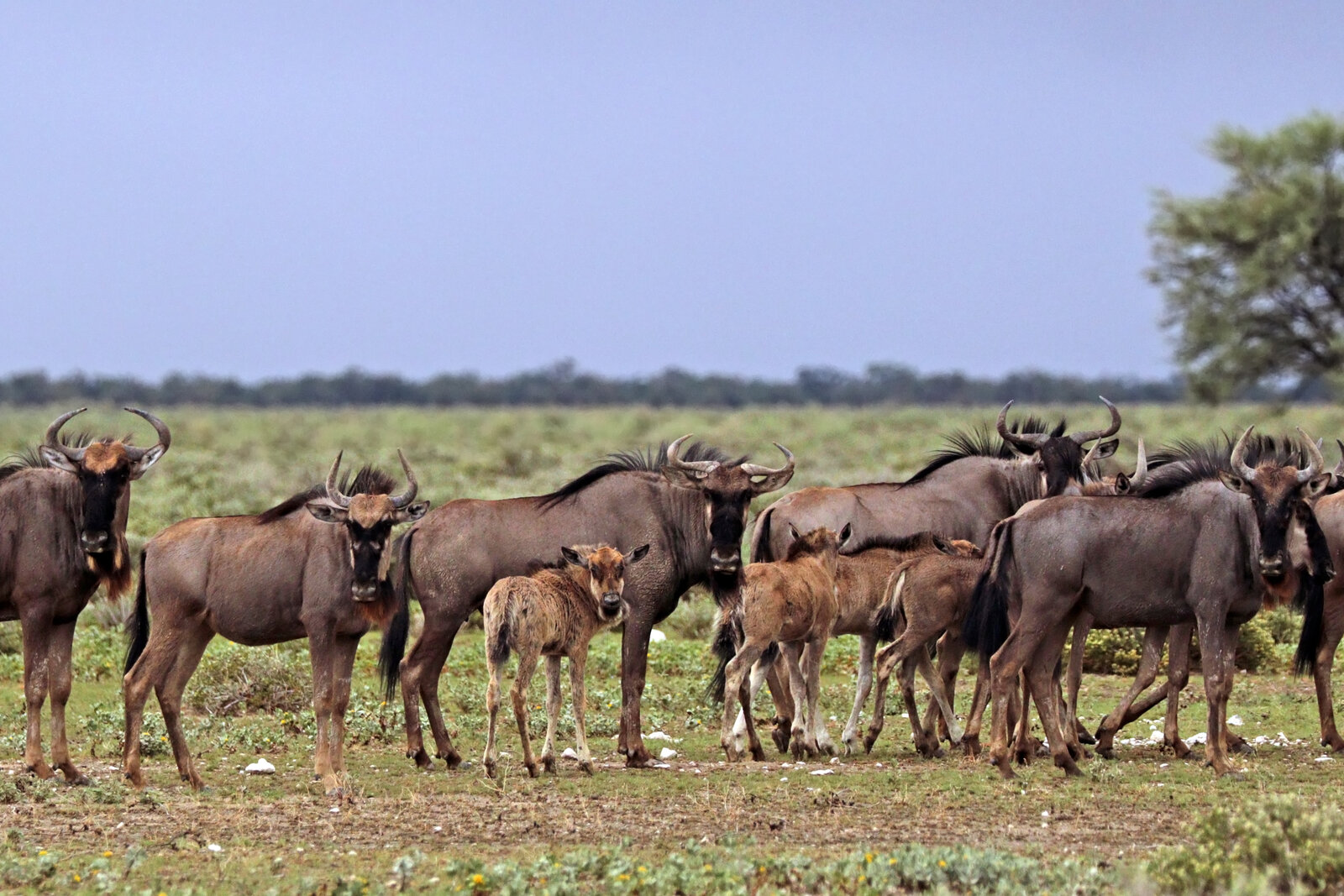
In June, the first scouts of the great herds begin crossing the Sand River from Tanzania's northern Serengeti into Kenya's Masai Mara. These are the outriders — smaller groups feeling their way north, drawn by the promise of the Mara's lush grasslands after the Serengeti's dry season has browned its own plains. The bulk of the herds is still in Tanzania, moving through the northern Serengeti's Lamai wedge and the Mara River's Tanzanian tributaries. Inside the Mara itself, June is dry, hot and relatively quiet: resident wildlife — the big cats, elephants, hippos — is at its most visible around shrinking waterholes, and the light is golden and low. It is an outstanding month for big-cat photography and general game viewing with very few other vehicles, even if the main migration columns have not yet arrived in force. Lodge rates are at their lowest migration-season levels, making June a sharp-value window for travellers who want the Mara's year-round wildlife without the July–September crush.
July — The Herds Pour In
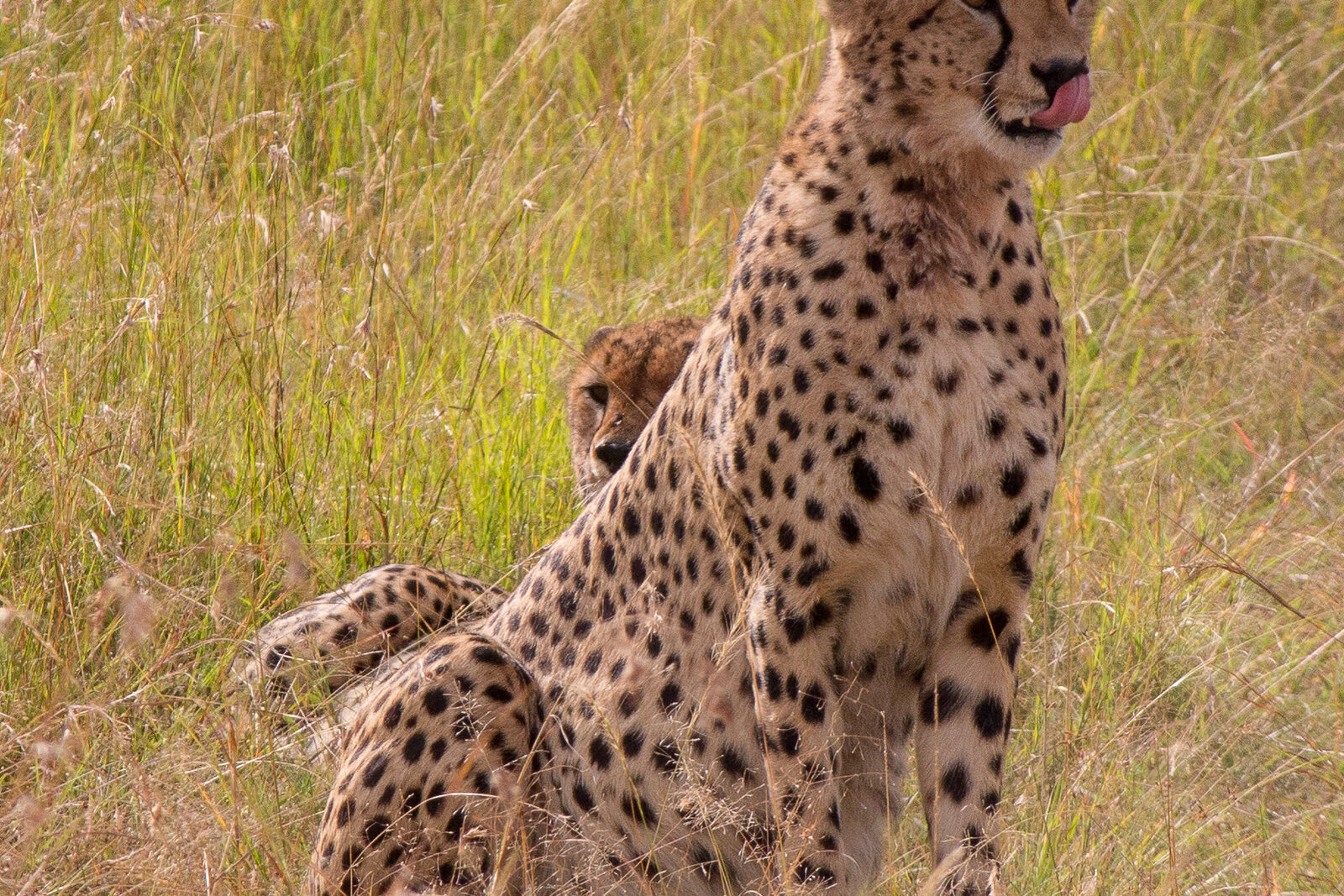
July is when the Mara comes alive. The main columns of wildebeest and zebra cross the border in growing numbers, streaming north across the Mara's southern plains and fanning out towards the river. The first Mara River crossings of the season typically begin in the second or third week of July, though timing varies year to year depending on rainfall and grazing patterns. The northern Mara sectors — around the Mara River loop, Kichwa Tembo, and the Mara Triangle — start to fill. Predators lock in: the Mara's lion prides, leopards and cheetahs begin to feast. July is a superb month to visit — migration energy is building, crossings are starting, and crowds are building but not yet at the August peak. Rates are lower than August–September, and availability at top camps is better. It is arguably the best value-to-spectacle ratio in the entire season.
August — Peak Crossing Month
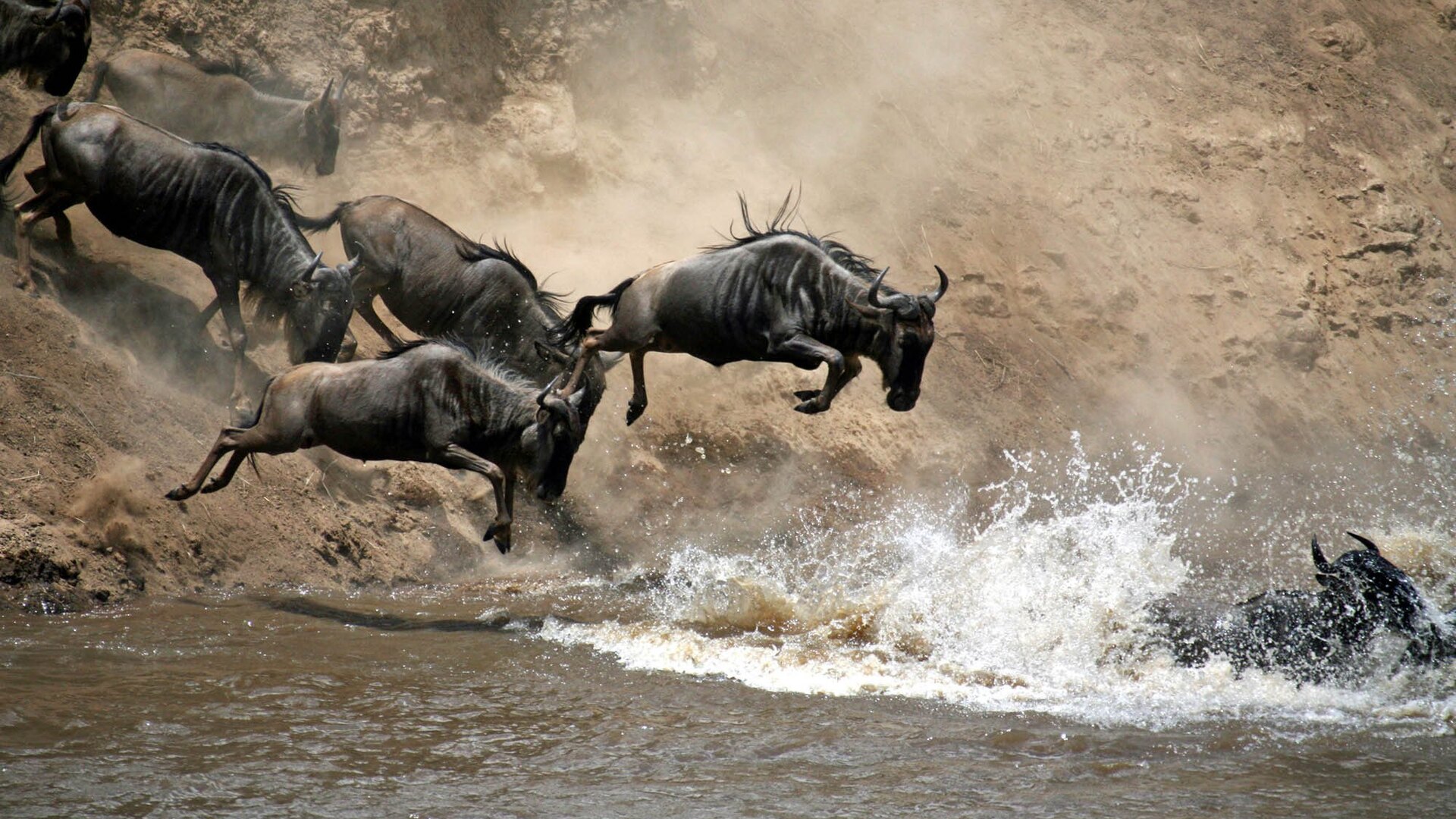
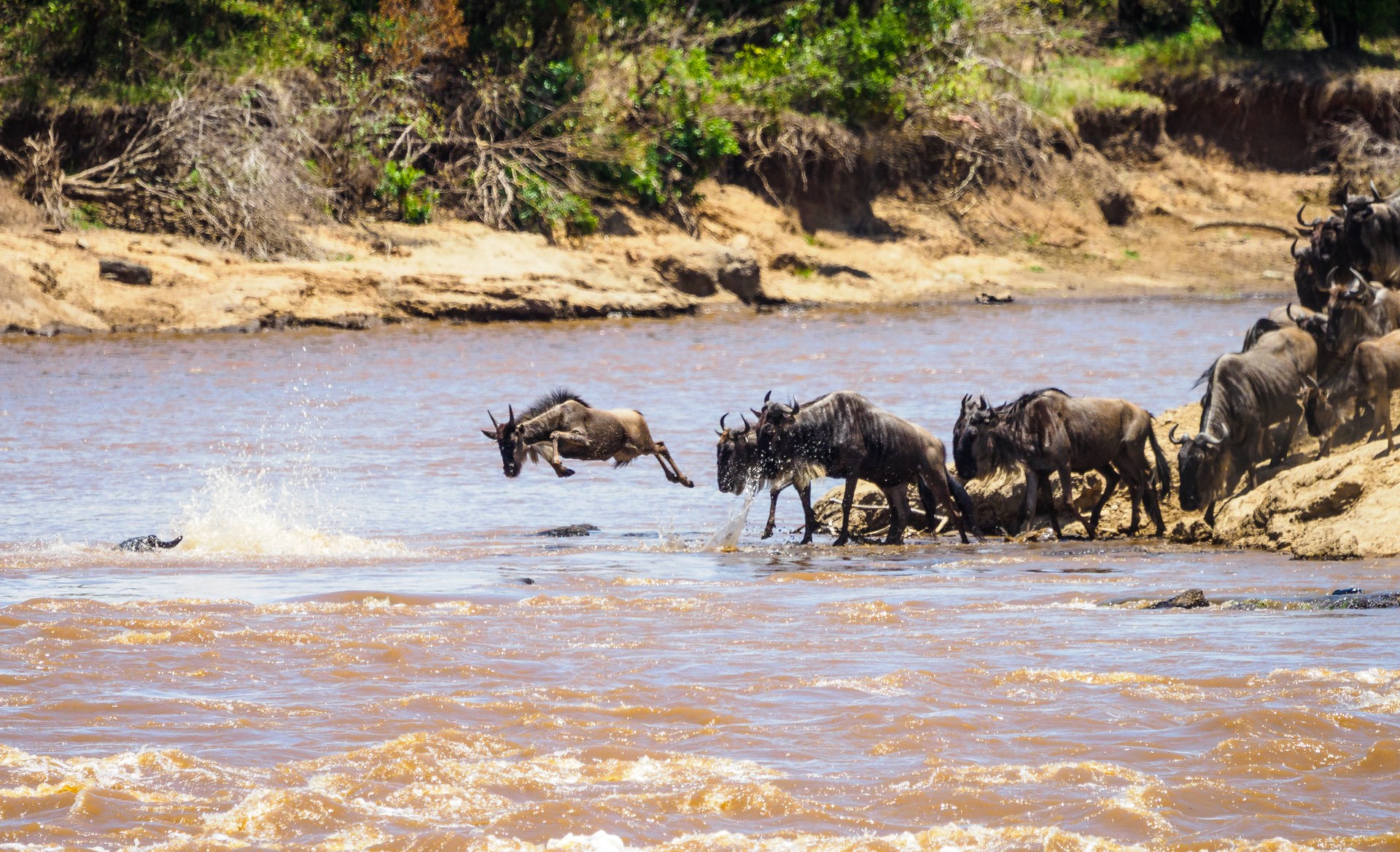
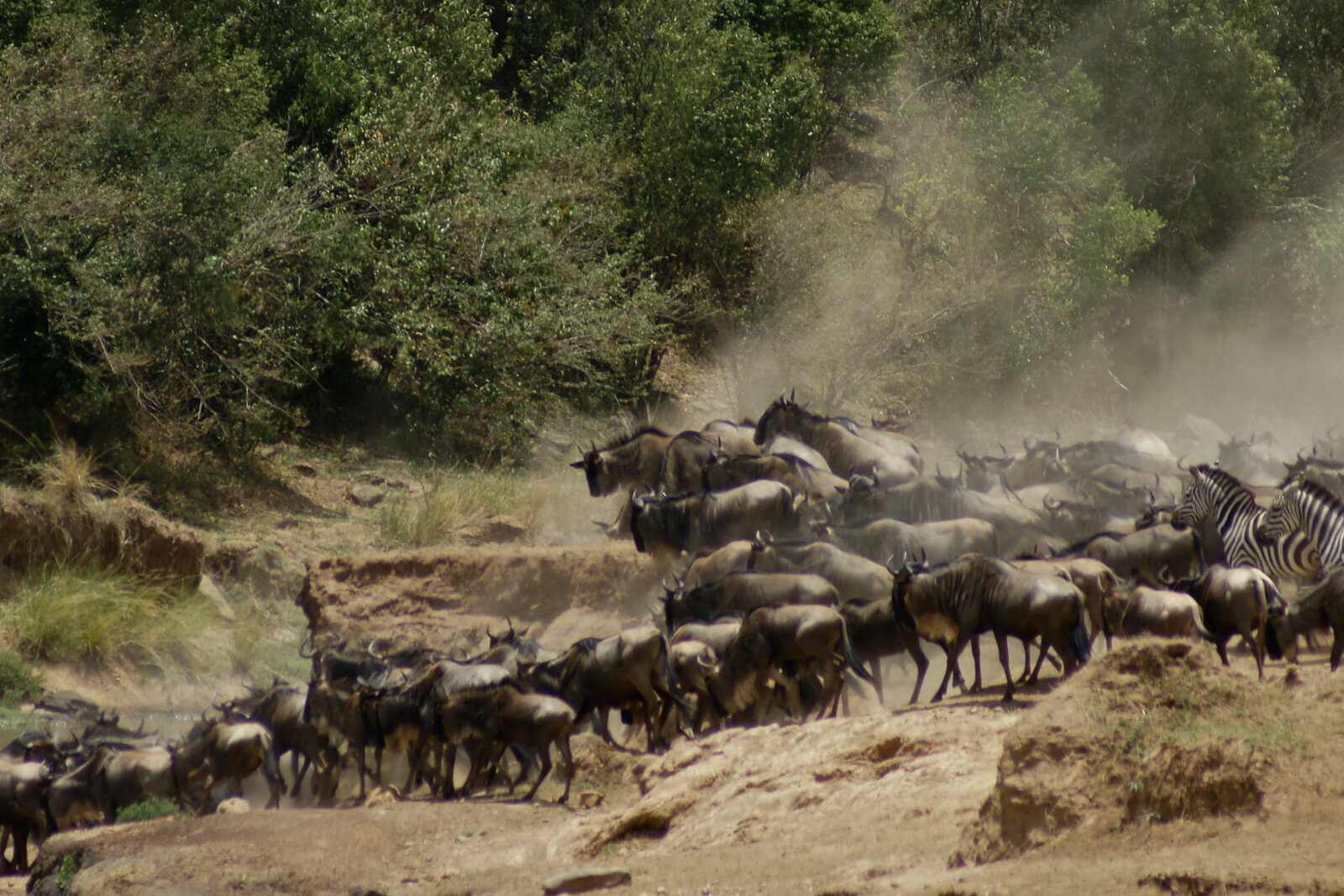
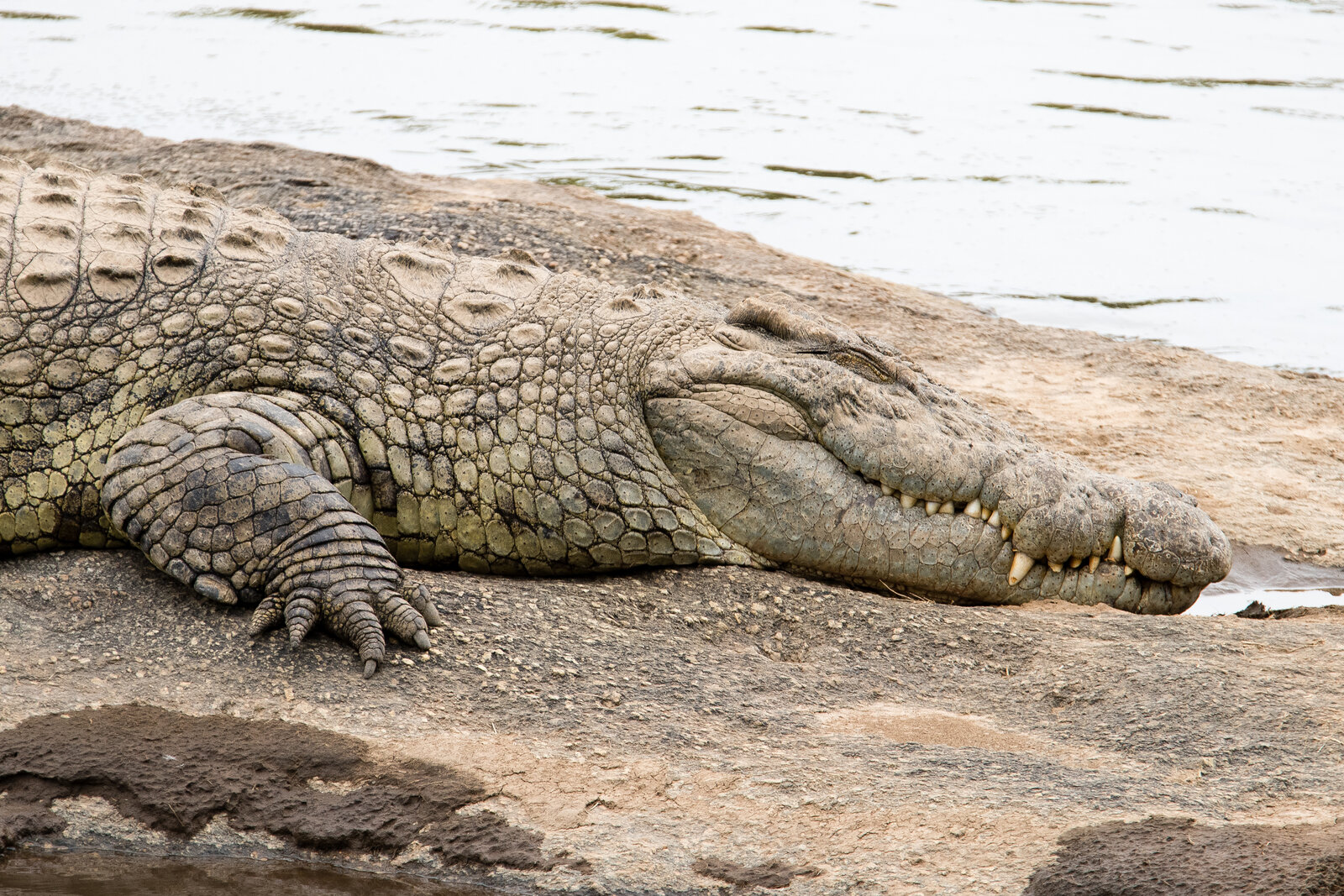
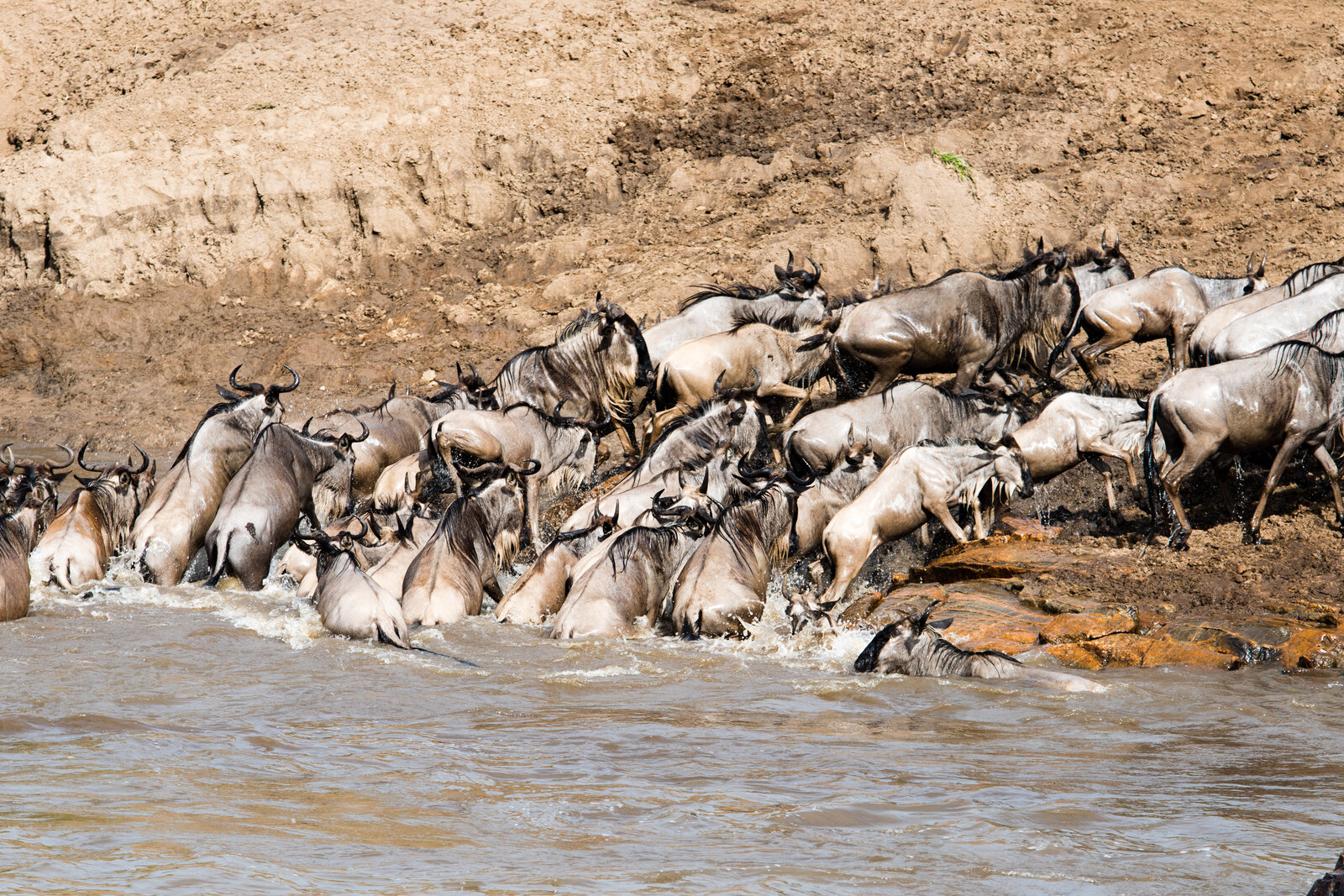
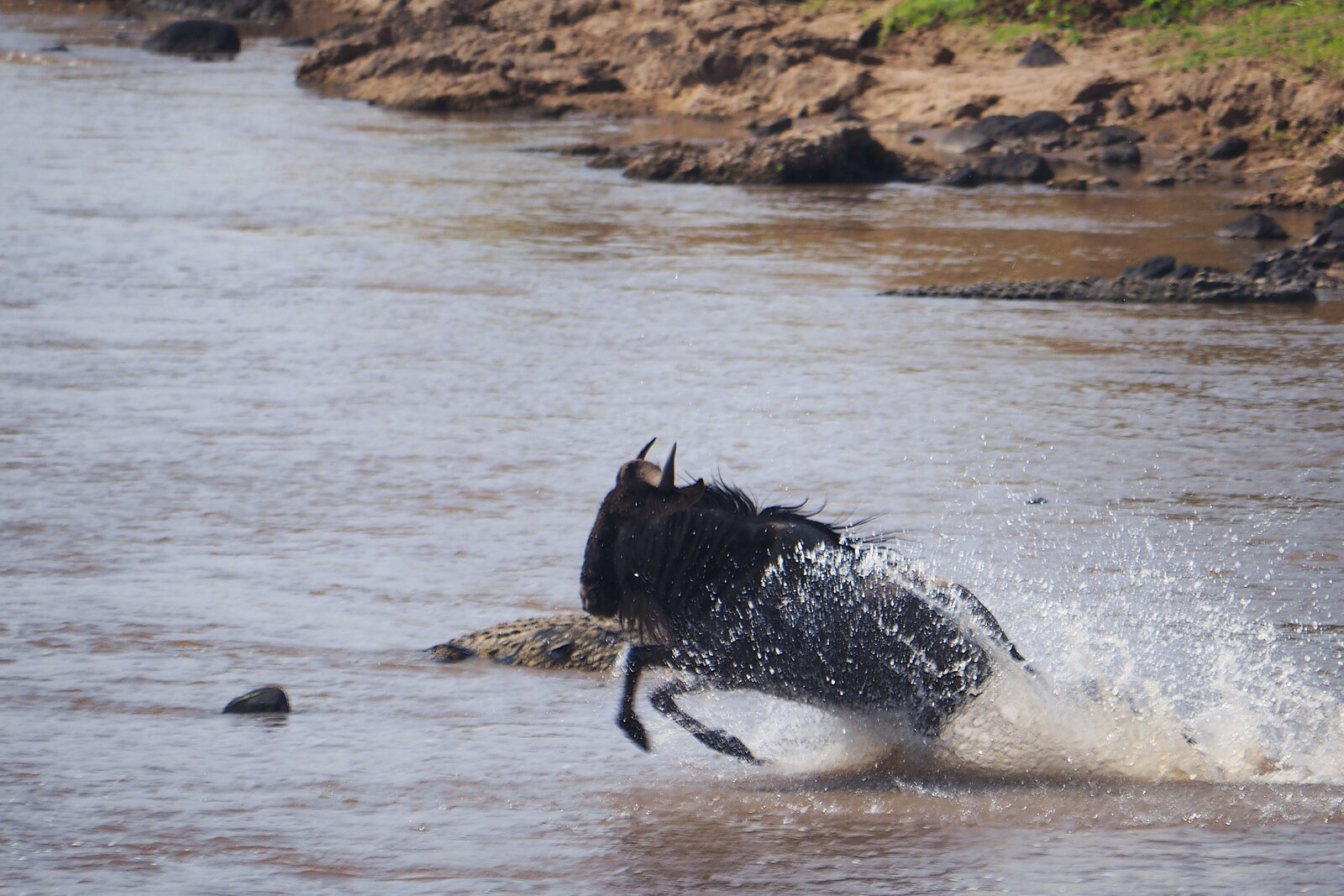
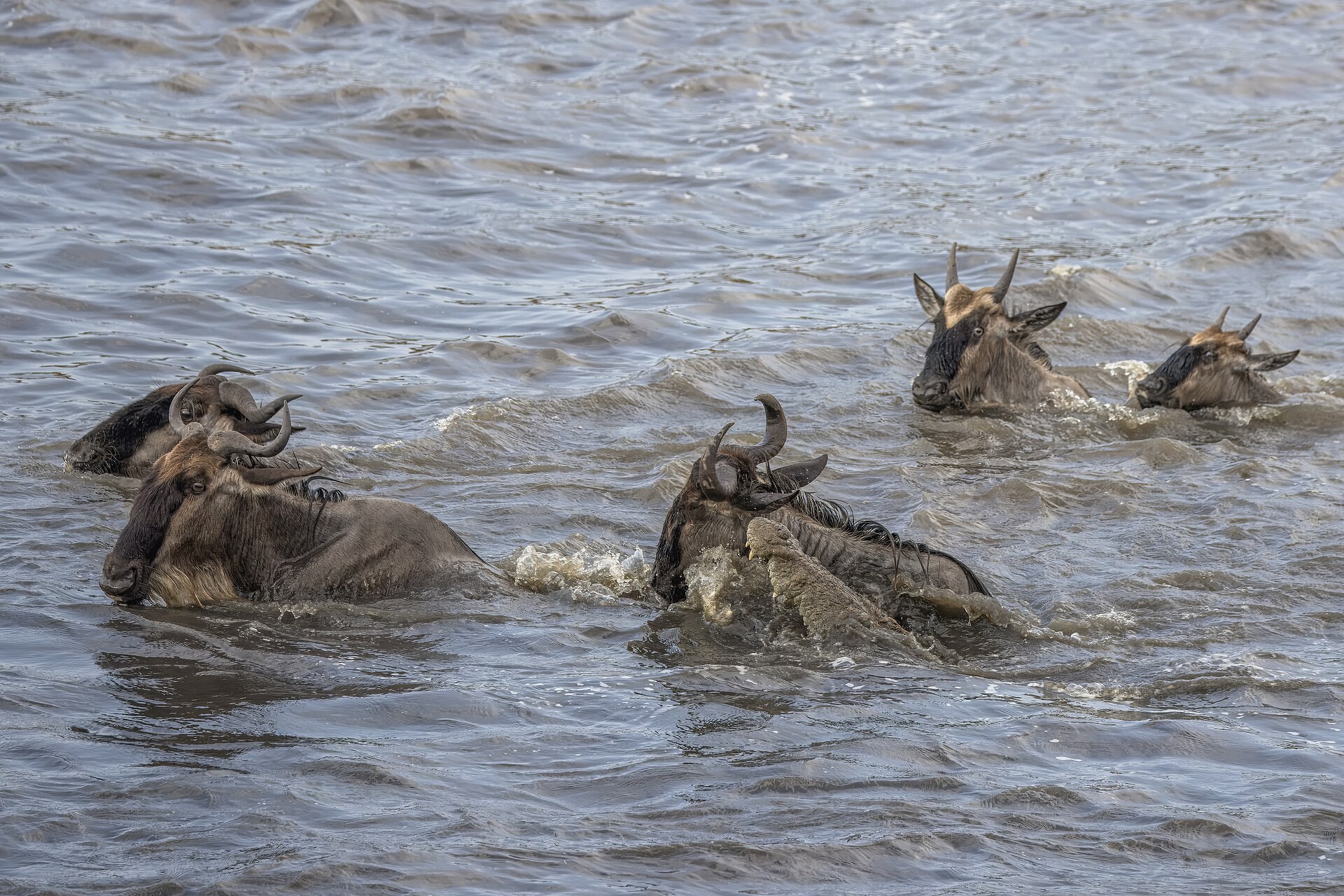
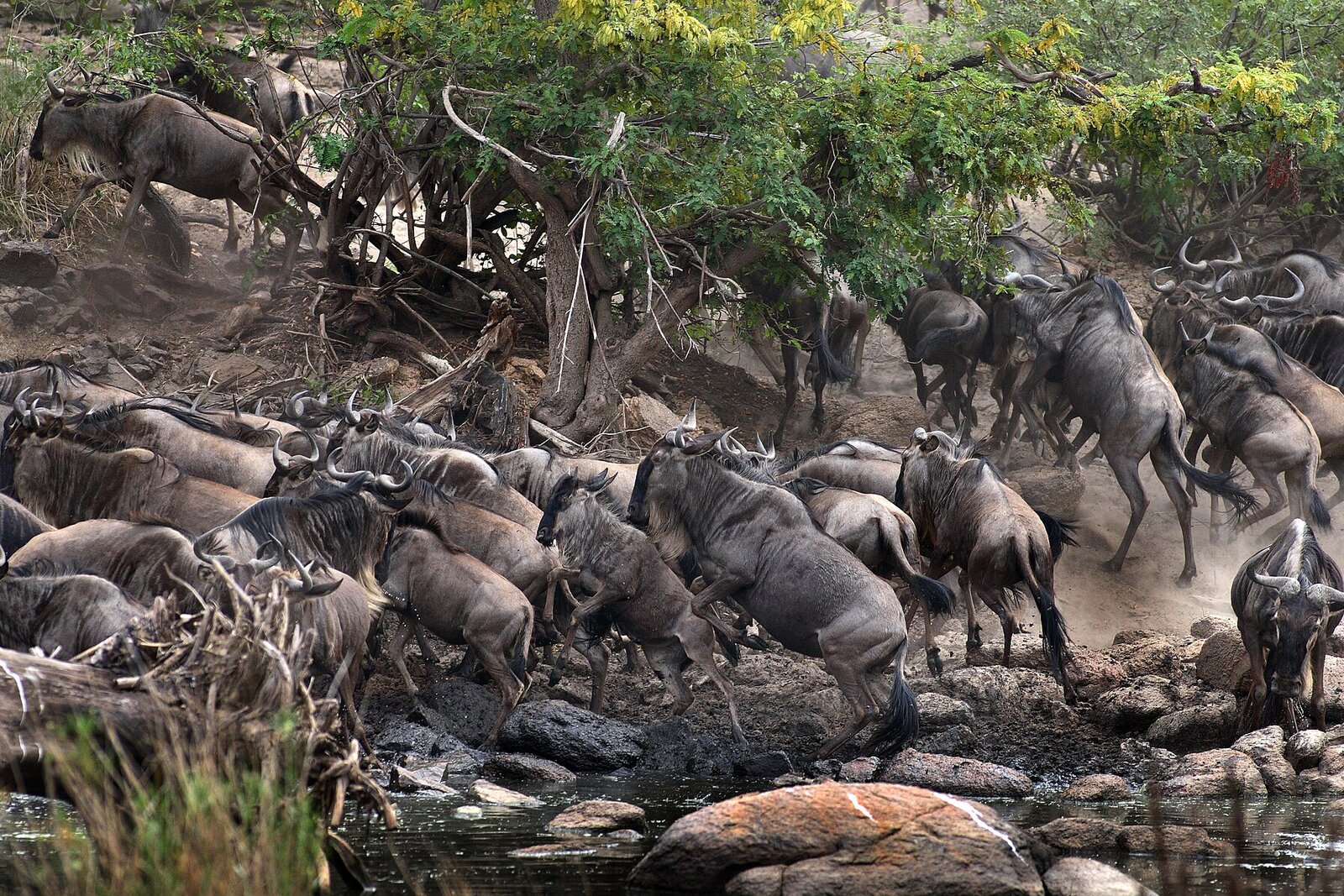
August is the Great Migration's main event in Kenya. The herds are now fully established across the Masai Mara — over a million animals spread across the reserve and its surrounding conservancies — and the Mara River crossings are at their most frequent and dramatic. At the main crossing points, tens of thousands of wildebeest can funnel down steep, dusty banks into the crocodile-filled river in a single day, creating scenes of extraordinary chaos and intensity. Crossings happen almost daily during peak August, sometimes multiple times at different points along the river.
This is the month of maximum spectacle — and maximum crowds. Popular crossing points like the Lookout, Purungat Bridge and the main Mara Triangle crossing can attract 50 or more safari vehicles jockeying for position. The Mara Triangle, the Talek–Sekenani gate corridor and the northern sector are all active. Lodge rates hit their annual peak, and the best camps sell out many months in advance. Despite the crowds, the sheer scale of what unfolds at the river is worth it — there is nothing else like it in the natural world. For the best August experience, book a camp in a private conservancy with exclusive traverse rights and easy access to the reserve for crossing days.
September — Still Peak, Herds Spread Wide
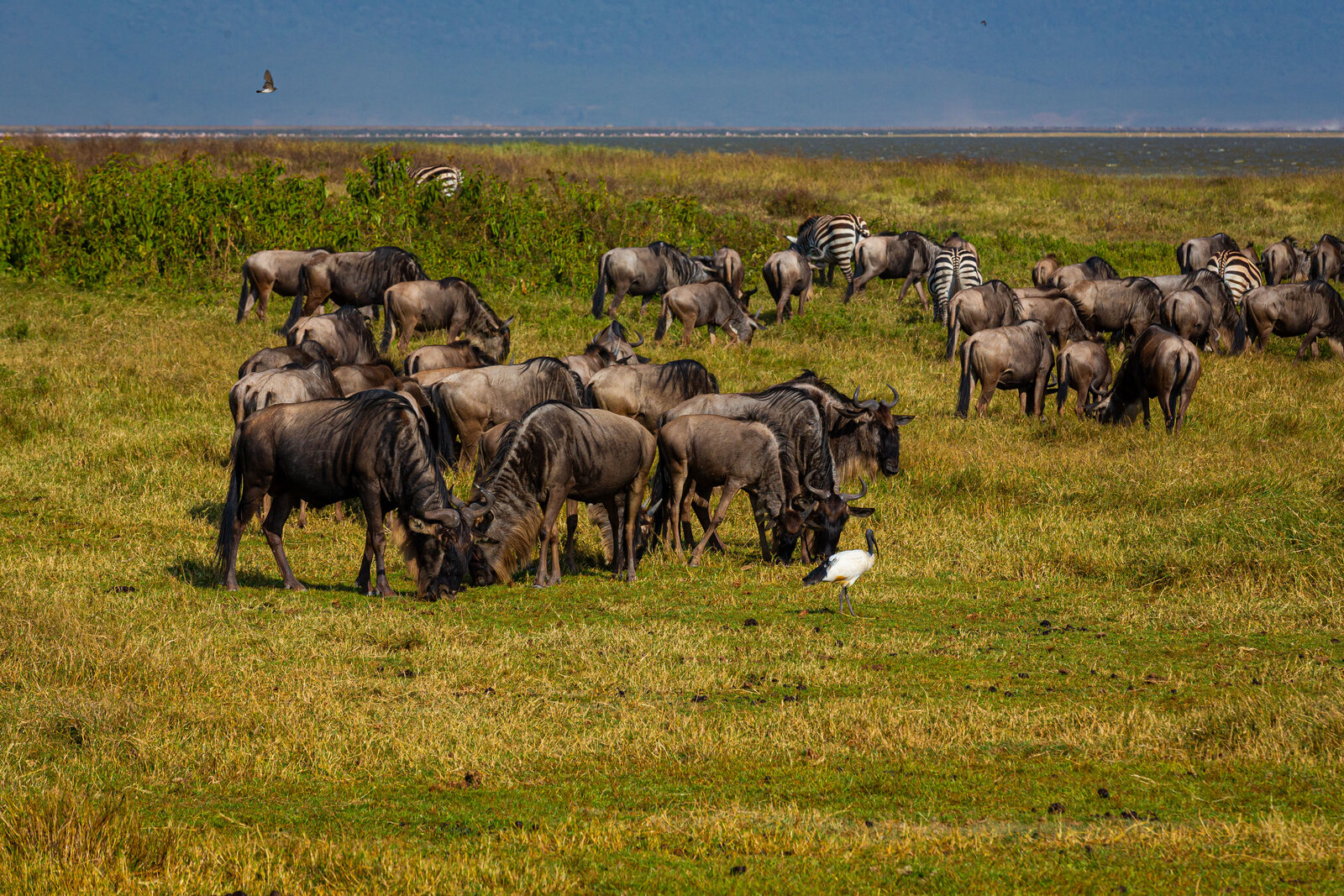
September delivers a continuation of the August peak, with crossings still frequent and the herds spread across the full width of the Mara. By now the wildebeest are grazing through every sector — the Triangle, the central plains, the northern river loop and the surrounding conservancies — and crossings continue at multiple points along the Mara River. The quality of predator action is at its zenith: lions, leopards, cheetahs and hyenas are all well-fed and active, and the interactions between predators and the vast herds make for some of the best wildlife photography on Earth.
September's advantage over August is a slight easing of the crowds — some of the peak-season rush has passed — while the migration intensity remains just as high. The weather is warming, skies are clear, and the light is exceptional. It is a marginally more comfortable month for the overall experience, and lodge rates begin to soften slightly from the August ceiling. For photographers and serious wildlife enthusiasts, September may be the single best month for the full Mara migration package.
October — The Departure Begins
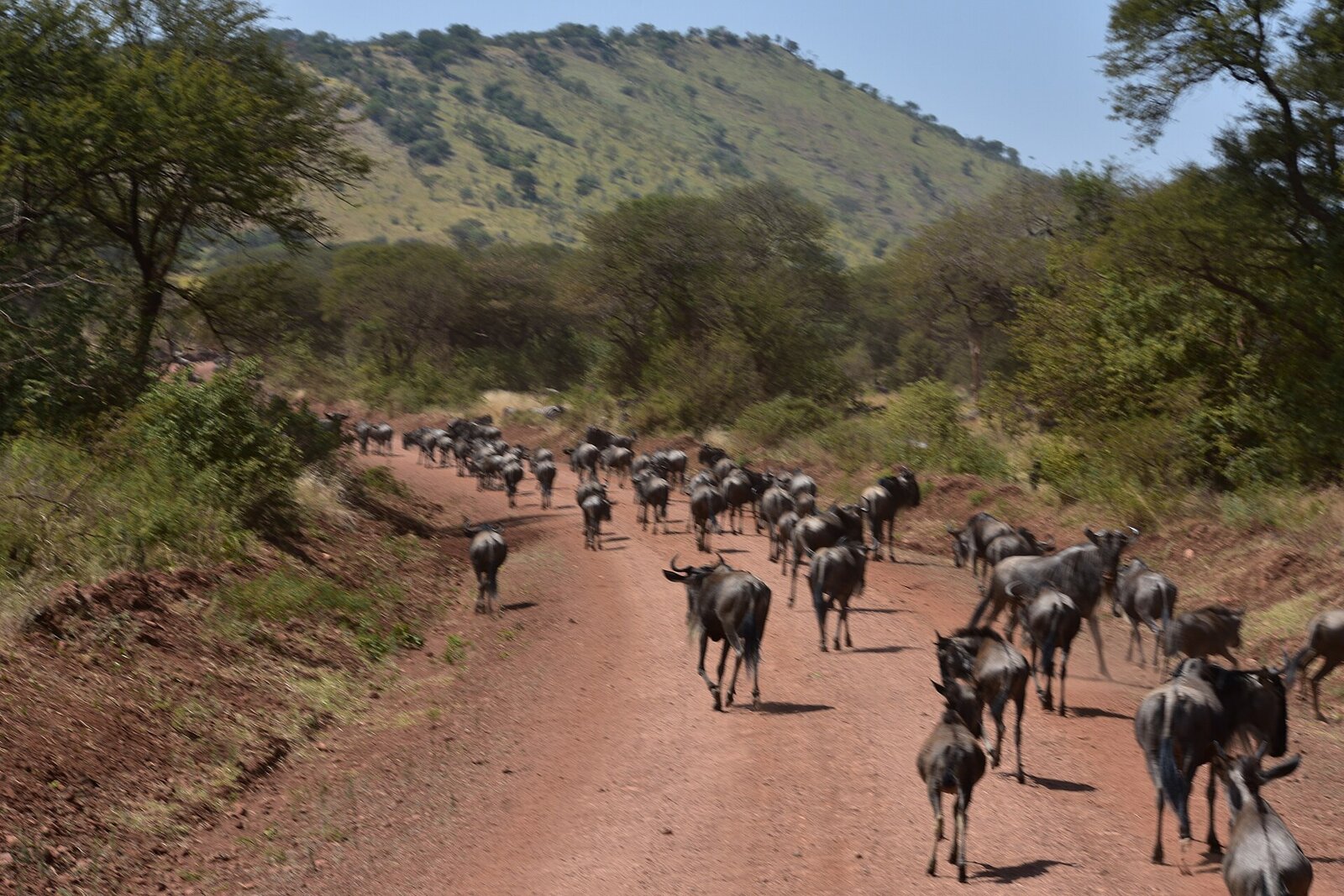
October marks the transition. The herds begin their return south towards the Serengeti, drawn by the first short rains that green up Tanzania's southern plains. Early October still delivers very good crossing activity — the herds are crossing back south across the Mara River, which creates its own drama, sometimes with enormous volumes of animals moving in a single day. But as the month progresses, the crossings thin out, the herds disperse, and by late October most of the wildebeest have left Kenya, though stragglers may linger into early November.
October is the smart traveller's window: still-excellent migration sightings (especially in the first two weeks), noticeably fewer vehicles, better lodge availability and more competitive rates. The weather is warm and mostly dry, though the short rains can arrive late in the month. If you are flexible enough to travel early-to-mid October, you get a beautiful balance of migration spectacle, relative solitude and value.
January–May: The herds are in Tanzania. From January to June, the migration is in the Serengeti — the famous calving season on the Ndutu plains (January–February), then the western corridor and Grumeti River crossings (April–June). The Masai Mara's resident wildlife is still outstanding year-round, but for the migration itself you need the Serengeti side of the border. See our Tanzania migration timing guide for the full calendar.
Mara Conservancy Timing Matrix
The Masai Mara is not a single uniform block — it is a mosaic of the national reserve itself plus a ring of private conservancies, each with different rules, vehicle limits and seasonal patterns. Understanding this mosaic is the key to a great migration trip.
Mara Triangle (Western Mara)
Managed by the Mara Conservancy, the Triangle is one of the first areas to receive the herds as they cross from the Serengeti. The main Mara River crossing points on the western side of the reserve sit here, making the Triangle a prime crossing zone from mid-July onwards. Vehicle management is tighter than in the eastern reserve, and the landscape — rolling escarpment grasslands dropping to the river — is among the Mara's most photogenic. Camps in and around the Triangle are a top choice for crossing-focused trips in July and August.
Talek & Sekenani Gate Area (Central–Eastern Reserve)
The most accessible and busiest part of the Mara, the Talek and Sekenani gate corridors see the highest vehicle traffic during peak August and September. The herds pass through in huge numbers, and popular crossing points along the Talek River draw crowds. The game viewing is extraordinary, but so is the vehicle congestion at peak times. It is the Mara at its most visceral — and most crowded. If you stay here, choose a camp with good guide quality to find quieter crossing spots and avoid the main vehicle clusters.
Olare Motorogi & Naboisho Conservancies (Western and Eastern Borders)
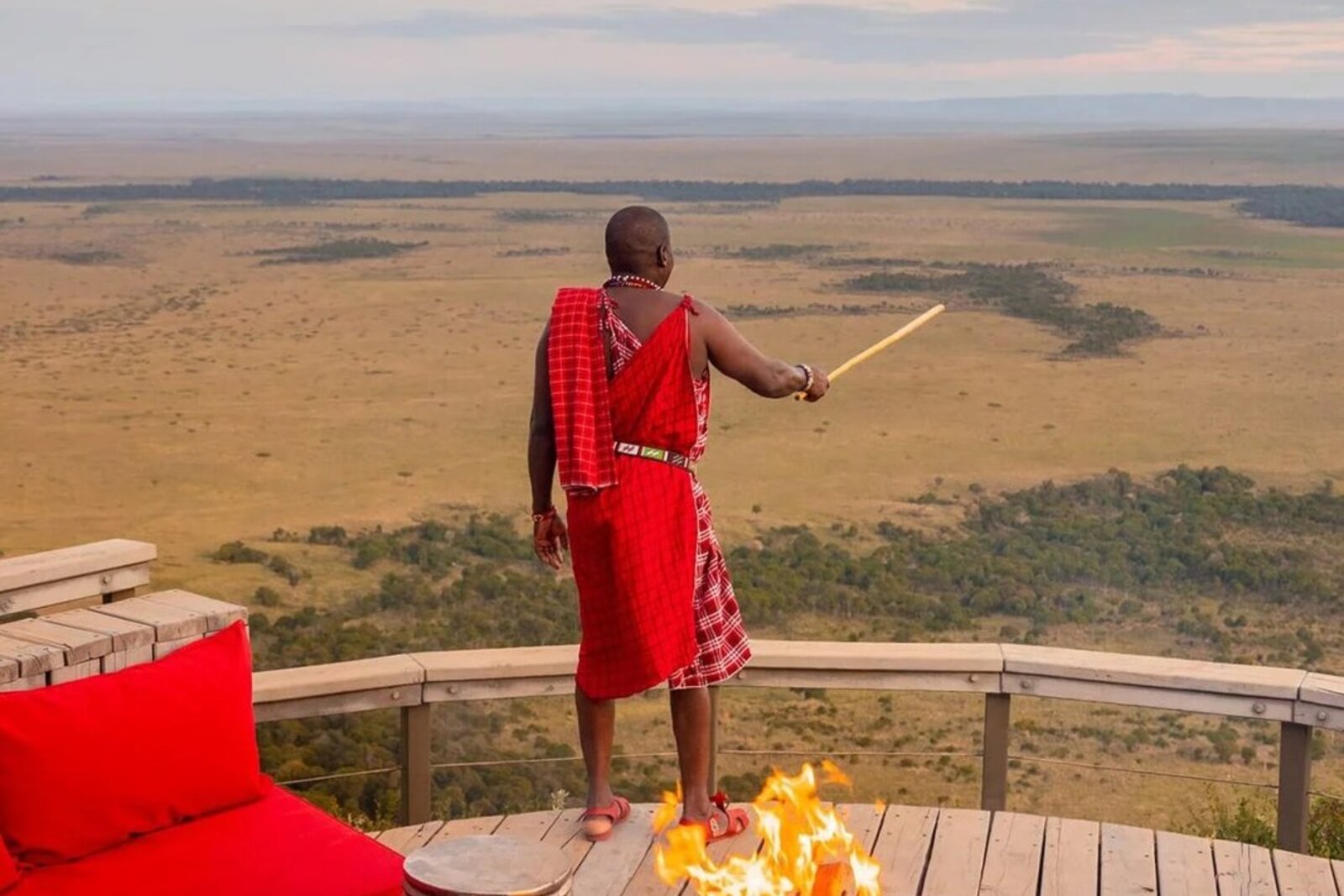
These private conservancies enforce strict vehicle limits (typically no more than five vehicles per sighting) and offer exclusive privileges: off-road driving, walking safaris with Maasai guides, and night drives — none of which are permitted inside the national reserve. They do not have their own Mara River crossings, but they share unfenced borders with the reserve, so game moves freely, and camps arrange crossing excursions into the reserve. For the full migration season (July–October), these conservancies offer the best balance of migration access and exclusive, uncrowded game viewing. They are particularly outstanding for photographers and travellers who value quality of experience over sheer crossing frequency.
Northern Sector (Mara River Loop, Kichwa Tembo Area)
The northern sector sits along the Mara River's main loop — the epicentre of August and September crossing activity. The river narrows and steepens here, creating the most dramatic crossing points (the Lookout, Serena crossing, Purungat Bridge). This is where many of the iconic crossing photographs are taken. Camps in this zone — Governor's Camp, Kichwa Tembo, Rekero — are among the most sought-after during peak migration, and they book out the earliest. Reserve six to nine months ahead for August dates.
Kenya vs Tanzania: Migration Timing Comparison
The Great Migration is a single, circular ecosystem event shared between Kenya and Tanzania. Choosing which country — or both — to visit depends on what chapter of the migration you want to witness.
| Aspect | Kenya (Masai Mara) | Tanzania (Serengeti) |
|---|---|---|
| Best months | July – October | January – February (calving) + year-round in different sectors |
| Highlight | Mara River crossings — the migration's most iconic spectacle | Calving season (500,000+ calves in weeks) + Grumeti crossings |
| Crowds | High in August–September; manageable in conservancies | Moderate overall; lower outside Ndutu calving peak |
| Weather | Dry season Jul–Oct: warm days, cool mornings, minimal rain | Varies by sector and month; calving season is warm & green |
| Value | Premium pricing Aug–Sep; better value Jul & Oct | Generally better value; wide range of camp tiers |
| Big cats | Highest density in Africa — lion, leopard, cheetah all concentrated | Excellent, especially southern Serengeti and central plains |
| Exclusive options | Private conservancies with vehicle limits, walking, night drives | Fewer exclusive-access options; Serengeti is all national park |
For most first-time migration travellers, Kenya's Masai Mara (July–October) delivers the single most dramatic, concentrated spectacle. For the full year-round picture, or for the utterly different magic of the calving season, explore the Tanzania side of the story. The ultimate trip? Combine both — a northern Serengeti start with a Mara River crossing finish.
Best Time by Traveller Type
Photographers
August and September — peak crossing frequency, highest predator action, dramatic riverbank light at dawn and dusk. Expect crowds at popular crossing points, but the photographic opportunities are unmatched anywhere on Earth. For fewer vehicles in the frame, book a private conservancy camp with reserve access for crossing days. A long lens (400mm+), dust protection and a beanbag for the vehicle roof are essential.
Families
September — still peak migration, but the August crush eases slightly, and many top family-friendly camps offer school-holiday programmes. The weather is warm and settled, the game viewing is relentless, and children old enough to sit still on a game drive (most camps require age 7+) will be utterly mesmerised. Conservancy camps with swimming pools and nature walks between drives help burn off young energy.
Honeymooners
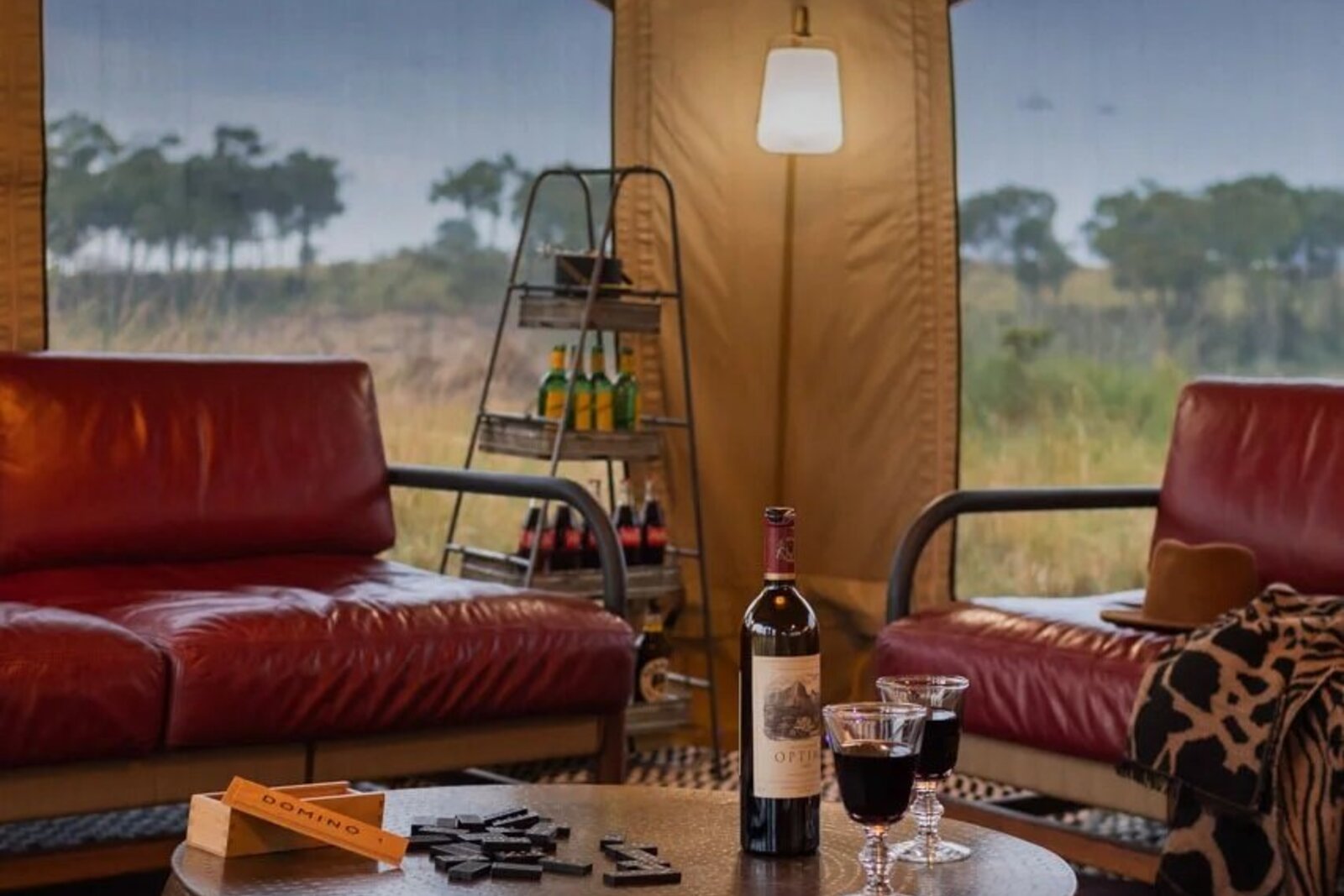
Any month July to October, booked into an exclusive private conservancy camp — Olare Motorogi and Naboisho are the standouts. The migration is the backdrop, but the real draw is intimacy: private bush dinners, walking safaris, balloon flights and guaranteed low vehicle density. August crossings plus a conservancy sundowner is a honeymoon story for the ages. See our luxury Masai Mara guide.
Budget Travellers
July and October — excellent migration sightings at 30–40% lower lodge rates than the August–September peak. October in particular offers strong value with good crossing chances in the first half of the month. Budget and mid-range camps on the reserve borders offer a more affordable Mara base; pair with a shared-vehicle option if available. Explore our Masai Mara safari packages for curated options at every budget.
First-Timers
August or September — if this is your once-in-a-lifetime Great Migration trip, come when the spectacle is at its absolute zenith. Yes, it is the busiest and priciest window, but the density of wildlife, the frequency of crossings and the sheer sensory overload of the Mara in peak season is the experience that will stay with you forever. Book well ahead, trust your guide, and prepare to have your understanding of the natural world fundamentally recalibrated.

Weather & Packing for Migration Season
The migration months (July to October) fall squarely in Kenya's dry season, delivering some of the most reliable safari weather on the continent.
Temperatures: Warm, sunny days averaging 25–28°C, with cool mornings and evenings dropping to 10–15°C. Early-morning game drives, especially in open-sided vehicles, can feel genuinely cold — a fleece and a windproof layer are not optional. By mid-morning the sun warms quickly, and afternoons are pleasantly warm.
Rainfall: Minimal through the core July–September window. October can see the start of the short rains, particularly late in the month, but showers are usually brief and localised. The dry-season Mara is dusty — game-drive tracks kick up fine red dust, especially in August and September.
Packing essentials:
- Layers: A warm fleece or soft-shell jacket for dawn and dusk drives, a light long-sleeved shirt for midday sun protection
- Neutral colours: Khaki, olive, tan, brown — avoid bright colours and white (dust stains instantly, and white can spook animals)
- Dust protection: A camera rain cover doubles as a dust shield; a microfibre cloth for lenses; a buff or bandana for your face on dusty tracks
- Sun protection: High-factor sunscreen, a wide-brimmed hat, quality sunglasses with UV protection
- Binoculars: Essential for scanning the far bank of the Mara River for herd build-ups before a crossing
- Comfortable, closed shoes: For walking safaris in conservancies; sturdy sandals are fine around camp
Crowds & Pricing Intel
August = peak everything. The Mara's most popular crossing points can attract 50 or more vehicles during a major crossing event, and top camps charge their highest annual rates — expect to pay a significant premium over July or October. Flights into the Mara's airstrips fill up, and transfers can be tight. If August is your only option, book six to nine months in advance and choose a conservancy-based camp to escape the crowds between crossing excursions.
July and October = the smart windows. Both months offer 30–40% fewer crowds than August and noticeably better lodge rates. July catches the herds arriving and the first crossings beginning; October catches the departure crossings and the last big movements south. Both deliver outstanding game viewing and genuine migration action without the August scrum.
Conservancies = the crowd escape valve. Even in peak August, camps inside private conservancies enforce strict vehicle limits — typically five vehicles per sighting. You will still encounter crowds when you enter the national reserve for a crossing, but your mornings and afternoons in the conservancy will feel exclusive. Night drives, walking safaris and off-road tracking are conservancy-only privileges that the national reserve does not permit.
Booking timeline: For August and September peak dates, book your preferred camp six to nine months ahead — top camps like Angama Mara, Rekero, Sala's Camp and Olare Motorogi's tented camps sell out by January for the following season. July and October offer more flexibility, but popular camps still fill three to six months in advance. A deposit typically secures the booking; most camps require full payment 60–90 days before arrival.
How to Maximise Your Crossing Chances
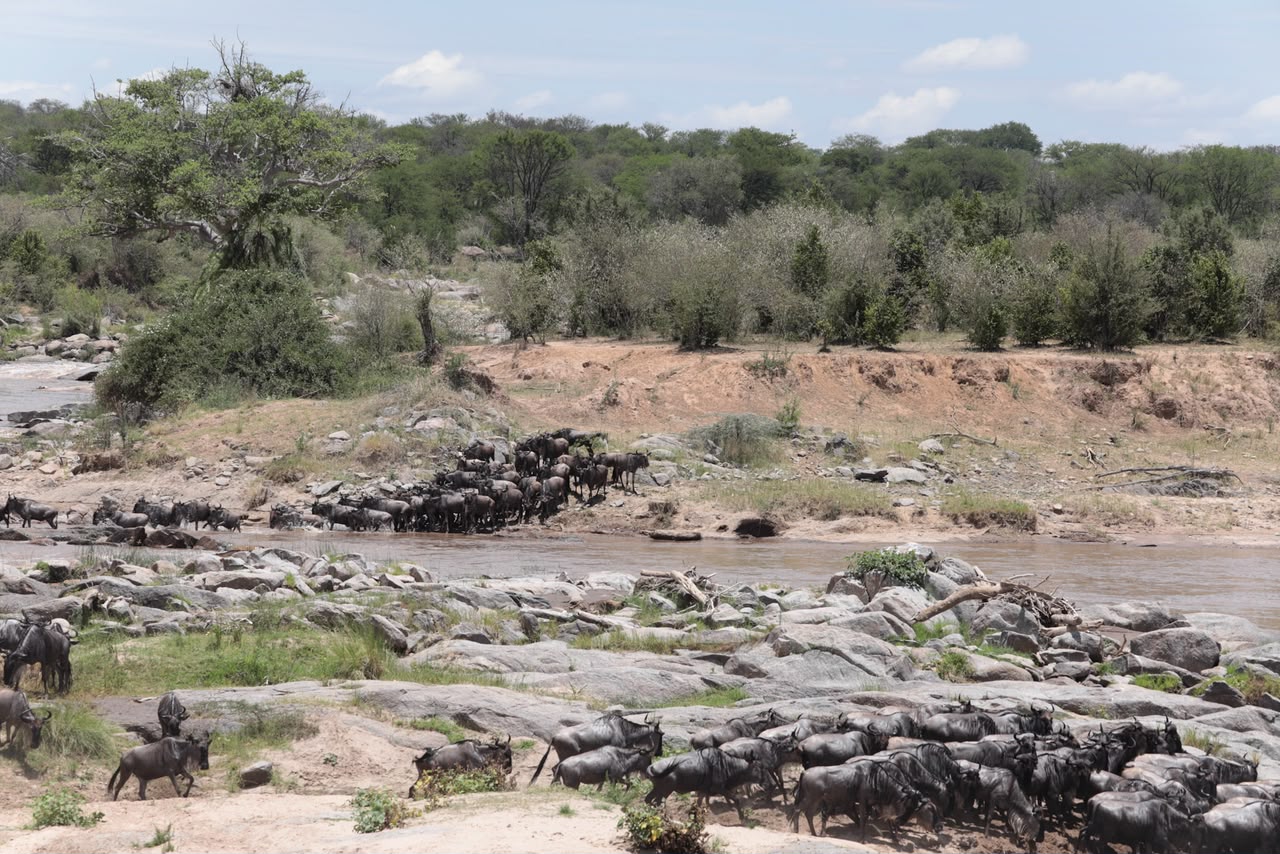
Mara River crossings are the migration's crown jewel — and the most unpredictable element of any trip. The herds have no schedule. They may approach a crossing point and stand on the bank for hours, sometimes days, before one animal commits and the rest follow in a thundering rush. Or they may turn around and walk away. No guide, no camp and no amount of money can guarantee a crossing. But you can stack the odds heavily in your favour.
- Stay a minimum of 4–5 nights. This is the single most important variable. With four or more full game-drive days, the probability of witnessing at least one major crossing during peak season (August–September) is very high — most guides estimate upwards of 90%. A two-night stay is a gamble; a five-night stay is a near-certainty.
- Choose the right zone. The main crossing points sit along the Mara River in the northern sector and the Mara Triangle. Camps like Governor's Camp, Rekero, Kichwa Tembo, Sala's Camp and the Mara Triangle's Angama Mara and Ololo Camp are all within striking distance of major crossing points. If crossings are your priority, position yourself close to the river.
- Work with experienced guides. The Mara's best guides have decades of experience reading herd behaviour, monitoring the river and communicating with other guides via radio. They know when a herd is building to cross and when it is going to turn back. Trust their judgement — a great guide is worth more than any piece of equipment.
- Use real-time tracking. Our live Migration Tracker provides real-time intel on herd positions across the Serengeti–Mara ecosystem, updated by guides and travellers on the ground. Use it to plan your visit timing and discuss positioning with your camp ahead of arrival.
- Be patient and present. The wait on the riverbank — sometimes hours in the heat, watching thousands of animals gather their courage — is part of the experience. When the crossing finally erupts, it will be over in minutes. Be ready, be patient, and surrender to the rhythm of the wild.
When to Book & Pricing Windows
Migration season is the Mara's high season, and planning ahead is essential — especially for the best camps.
- August–September peak: Book by January–February for the same year. Top-tier camps (Angama Mara, Sala's Camp, Rekero, &Beyond Kichwa Tembo) sell out of August dates first. If your dates are flexible, mid-September offers almost identical migration action with slightly better availability.
- July: Better availability than August. Book three to six months ahead for top camps. Excellent value window — the herds are arriving, first crossings are starting, and rates are 20–30% lower than August.
- October: The most flexible month for booking. Three months' notice is usually sufficient for most camps, and rates drop further. Early October still delivers strong migration sightings; late October transitions to resident-game-only mode.
- Conservancies: Private conservancy camps command a premium (typically 20–40% above same-tier reserve camps) but include conservancy fees, exclusive traversing rights, walking safaris and night drives. The premium is worth it for the exclusivity, especially during the crowded August peak.
For curated, ready-to-book migration itineraries at every budget, explore our Masai Mara safari packages or our dedicated Ultimate Great Migration Safari (7 days).
The Verdict
| Category | Best Pick |
|---|---|
| Best Overall | August — peak crossings, peak predator action, peak spectacle |
| Best Value | July or October — excellent sightings, 30–40% fewer crowds, lower rates |
| Best for Exclusivity | Private conservancies (Olare Motorogi, Naboisho) any month Jul–Oct |
| Best Weather | June – September — warm, dry, clear skies, minimal rain |
| Fewest Crowds | July or October — the smart shoulder months of migration season |
The Great Migration's Kenya chapter is the single most powerful wildlife spectacle on Earth. There is no wrong month between July and October — only the right month for your priorities. If drama and frequency are everything, come in August or September and stay five nights. If value and solitude matter as much as the wildlife, choose July or October and enjoy the Mara at a gentler pace. And wherever you stay, let a private conservancy be your base — the exclusivity, the walking, the night drives and the escape from the midday crowds will define your trip as much as any river crossing.
When you are ready to turn a date into a journey, explore our Ultimate Great Migration Safari (7 days), browse our full range of Masai Mara packages, or contact our team to build a privately guided migration trip around the perfect dates for you. And between now and then, track the herds in real time with our live Migration Tracker.