Key Takeaways
- The migration is one journey across one ecosystem — not two separate safaris. The Serengeti and the Masai Mara are a single, unbroken system of grasslands; the herds simply walk from one country into the other.
- The route is a clockwise loop of roughly 800–1,000 km a year. It runs south → west → north through Tanzania, then across the border into Kenya, then back south again as the rains turn.
- The herds cross into Kenya's Masai Mara from roughly July, peaking August–September, and drift back south around October–November.
- The Mara River crossings happen on both sides of the border. The most dramatic crossings are in the northern Serengeti (Kogatende) and in Kenya's Mara Triangle and reserve.
- The finest way to see it is to follow, not wait. A two-country journey that moves with the herds — Tanzania one week, Kenya the next — dramatically raises your odds of witnessing a crossing, and that is exactly how we build it.
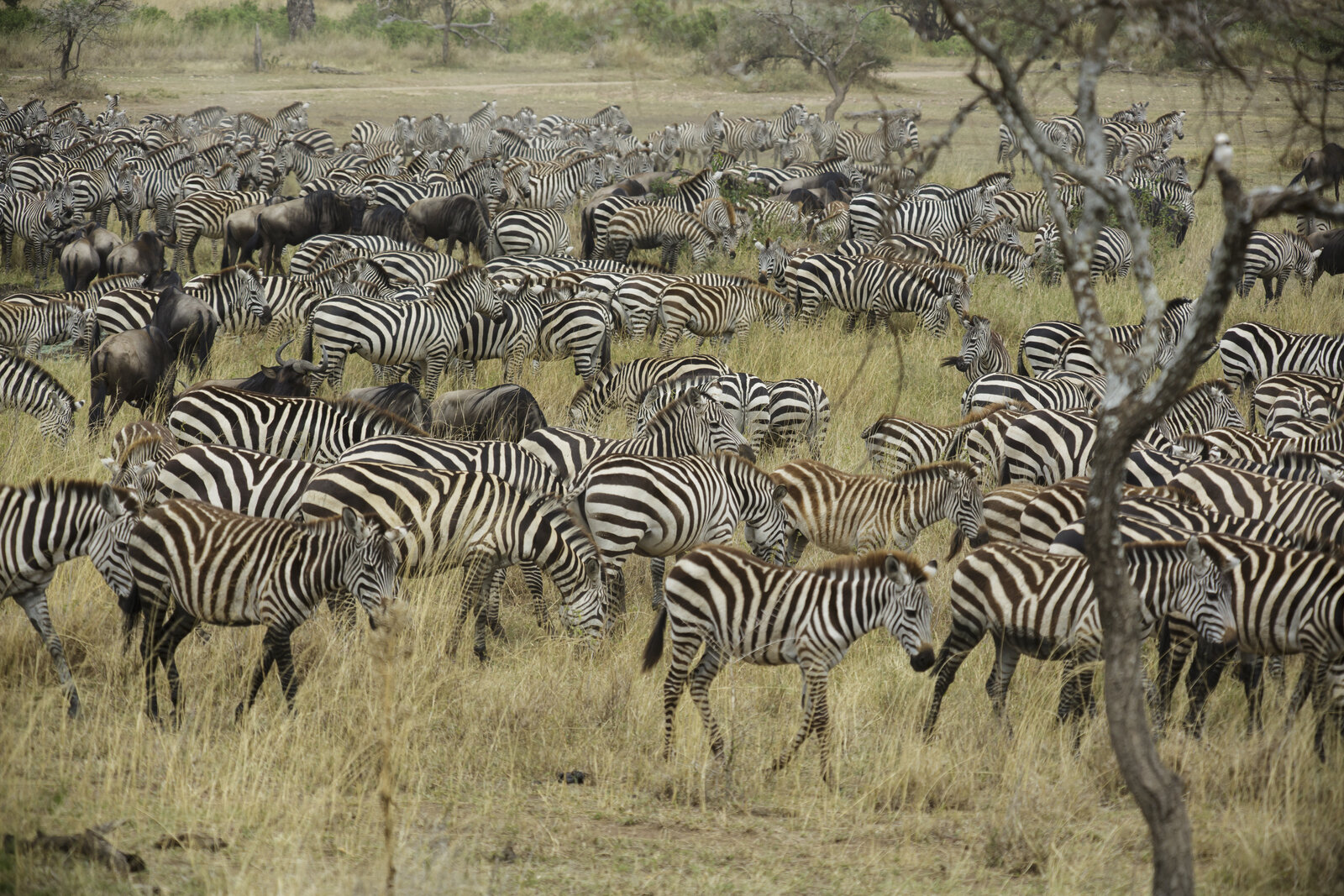
There is a moment, out on the northern plains, when you finally understand what the Great Migration really is. It is not a stampede. It is not a single river crossing you catch on a lucky morning. It is a journey — slow, ancient and unstoppable — in which more than a million and a half wildebeest, together with hundreds of thousands of zebra and gazelle, move as one living body across a landscape so vast it spills over an international border without ever noticing it is there. To truly experience the migration is not to stand in one place and hope. It is to follow the herds along their route — from the birthing grounds of the southern Serengeti to the golden hills of Kenya's Masai Mara — and to move as they move.
This is our honest, ground-truth guide to that route, written by a South African team who build these journeys for a living. We are going to walk the whole loop with you, one chapter at a time: where the calves are born, how the columns push north and west, why the herds mass in their tens of thousands on the banks of the Mara River, exactly where and when they cross the border into Kenya, and how the great circle finally turns for home. And we will show you the thing most guides never explain — how to follow the herds across both countries on a single, seamless private journey, so you are always in the right country, in the right week.
One ecosystem, one journey (why the border doesn't matter to the herds)
The first thing to unlearn is the idea that the Serengeti and the Masai Mara are two different places. To the wildebeest, they are one — a single, continuous sea of grass covering roughly 30,000 square kilometres across northern Tanzania and south-western Kenya. The line on the map that separates the two countries is meaningless to an animal following the rain. The Serengeti–Mara ecosystem is the stage; the migration is the drama that plays out across the whole of it, all year round.
What drives the journey is beautifully simple: grass and rain. Wildebeest are grazers with an insatiable need for fresh, mineral-rich grass, and they will walk endlessly to find it. As the rains sweep across the ecosystem in a predictable annual pattern, the herds follow the green — south for the calving rains, north and west as the plains dry out, across the border in search of the Mara's reliable pasture, then home again when the short rains call them back. It is the same loop their ancestors have walked for over a million years. Understanding that single fact — that this is one journey around one ecosystem — is the key to everything that follows.
The route in brief — the clockwise loop at a glance
Before we walk it chapter by chapter, here is the whole route in one view. The herds move in a rough clockwise circle through the year. Because it is driven by rainfall, the timing shifts a week or two each year — which is exactly why no honest operator can promise you a crossing on a fixed date.
| Rough timing | Where the herds are | The chapter |
|---|---|---|
| Dec–Mar | Southern Serengeti & Ndutu | Calving on the short-grass plains |
| Apr–Jun | Central Serengeti → Western Corridor | The trek north-west, the rut & the Grumeti |
| Jul–Oct | Northern Serengeti (Kogatende) & the Mara River | The famous river crossings begin |
| Aug–Oct | Across the border into Kenya's Masai Mara | The herds spill into the Mara Triangle & reserve |
| Nov–Dec | Back south through the eastern Serengeti | The short rains call them home — the loop closes |
Chapter 1 — the beginning: calving on the southern Serengeti
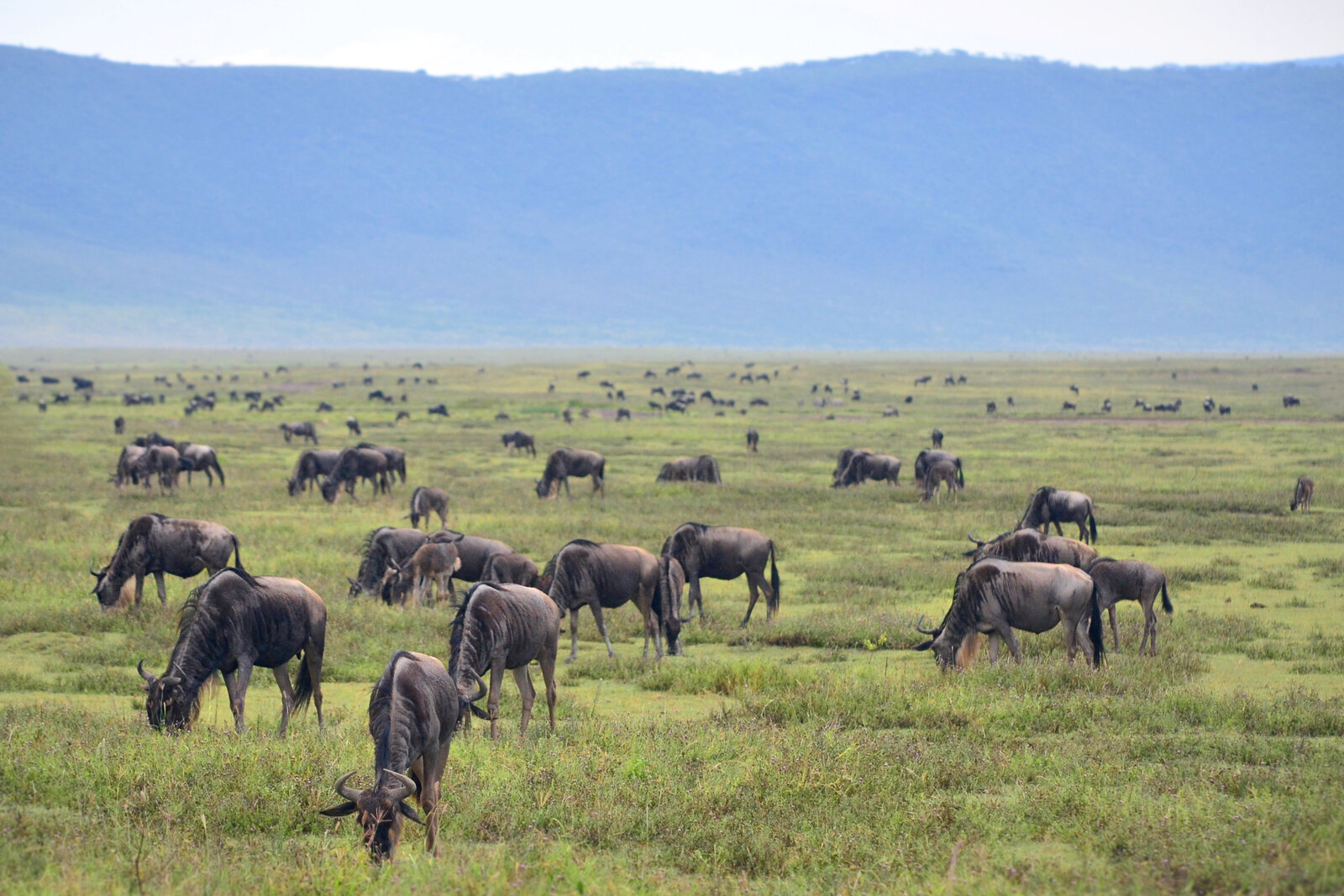
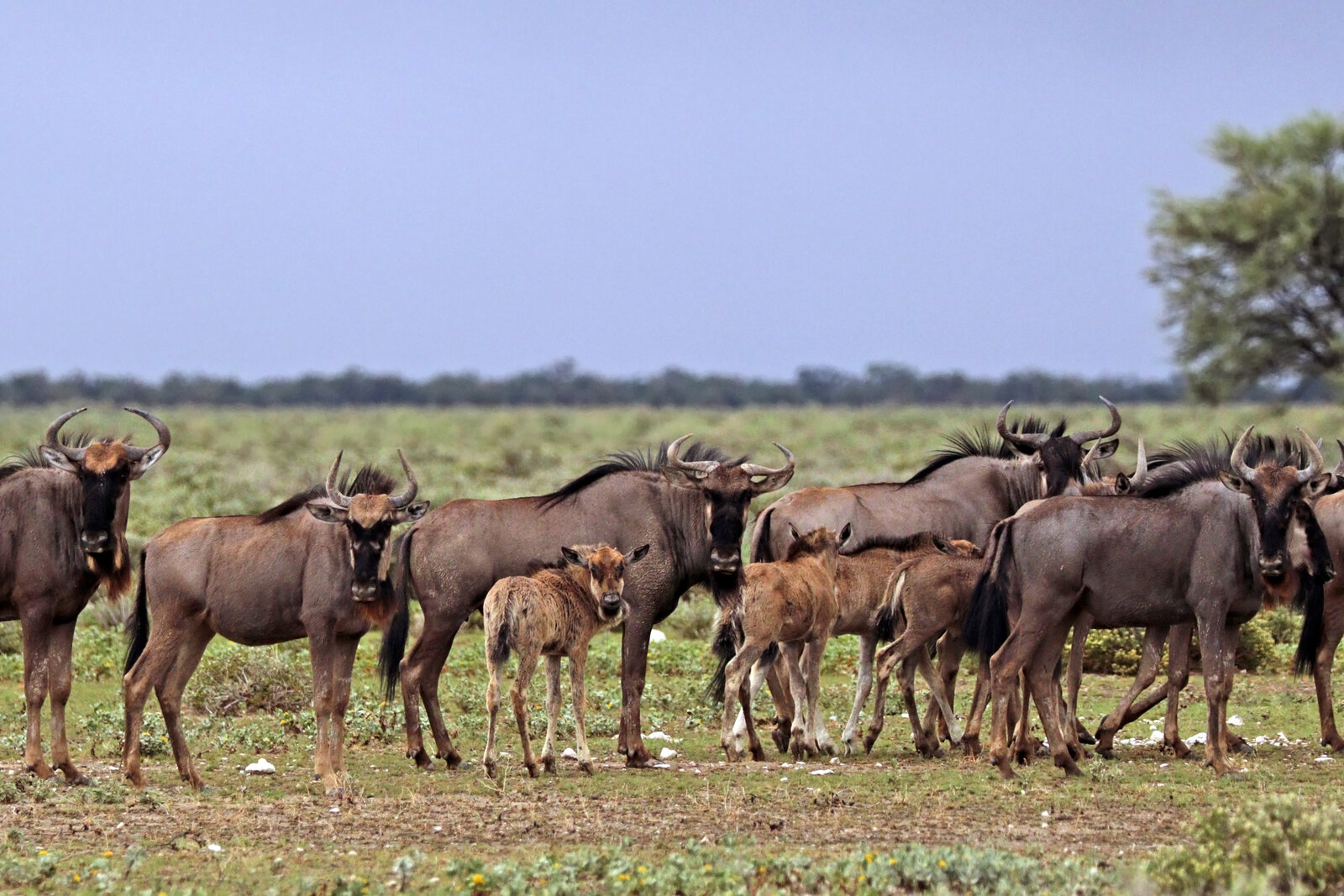
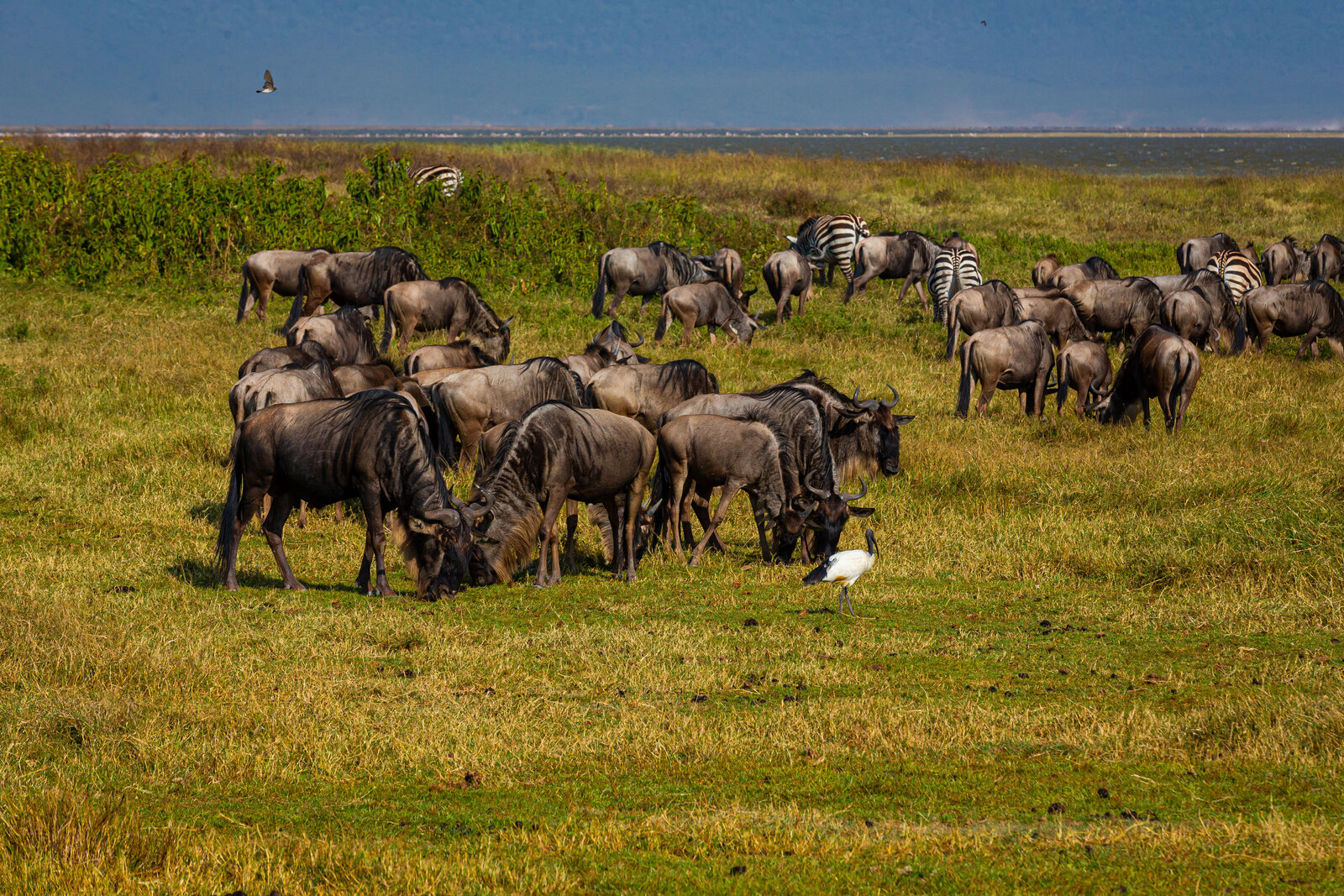
Every journey needs a beginning, and the migration's is birth. From roughly December to March, the herds gather on the mineral-rich short-grass plains of the southern Serengeti and the Ndutu area, drawn by the nutritious grass that the calcium-rich volcanic soil produces after the short rains. Here, in a window of just a few weeks around February, around half a million wildebeest calves are born — sometimes as many as 8,000 in a single day. It is the great replenishment, the moment the herds gather the strength for the year ahead.
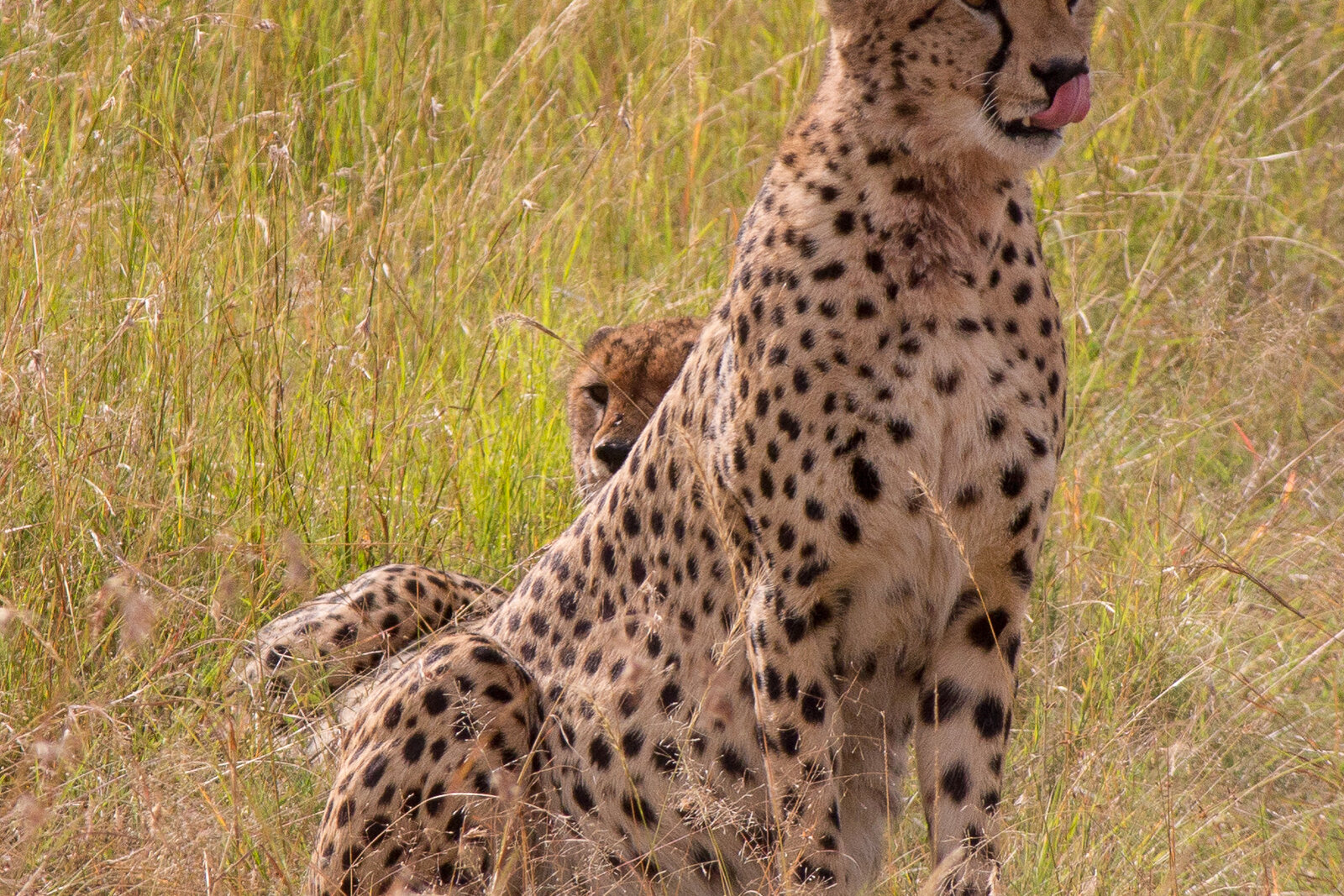
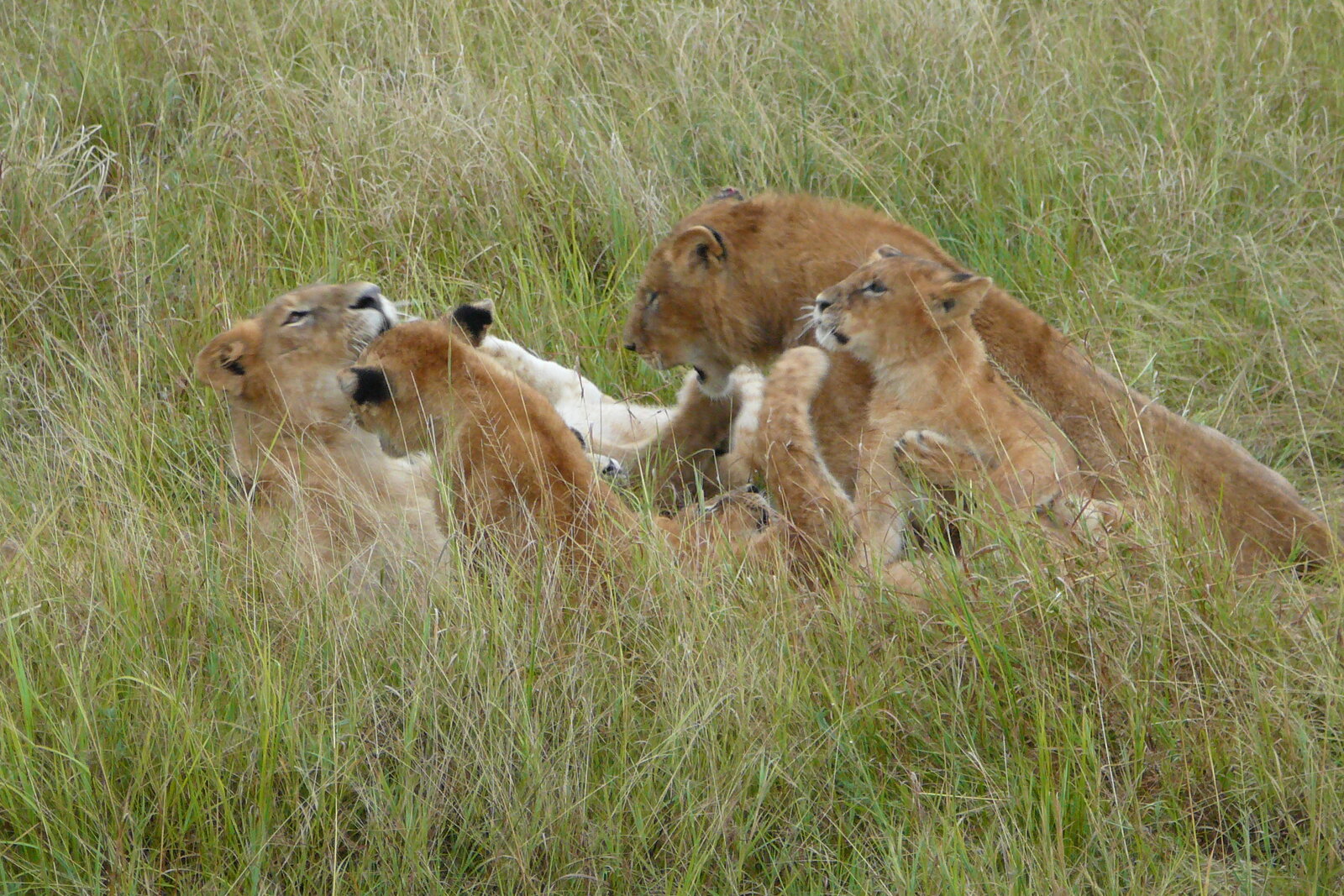
This is the quietest, greenest, most affordable chapter of the whole route, and one of the most dramatic. Where there are newborns, there are predators — the calving plains draw exceptional big-cat action, with lion, cheetah and hyena following the herds. If your journey is about beginnings, life and predator drama on lush green plains, this is where the route starts.
Chapter 2 — the trek north-west: the Western Corridor & the Grumeti
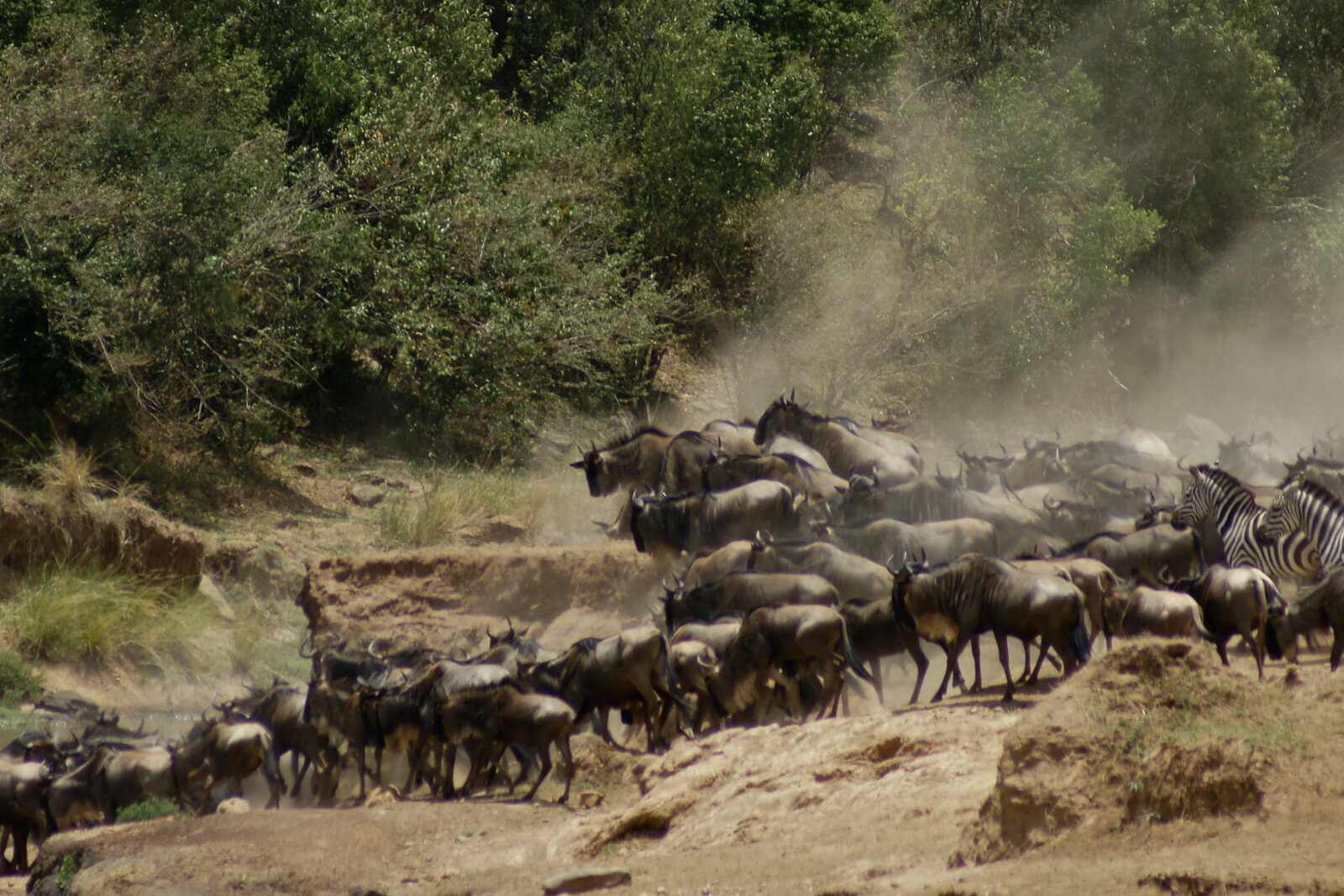
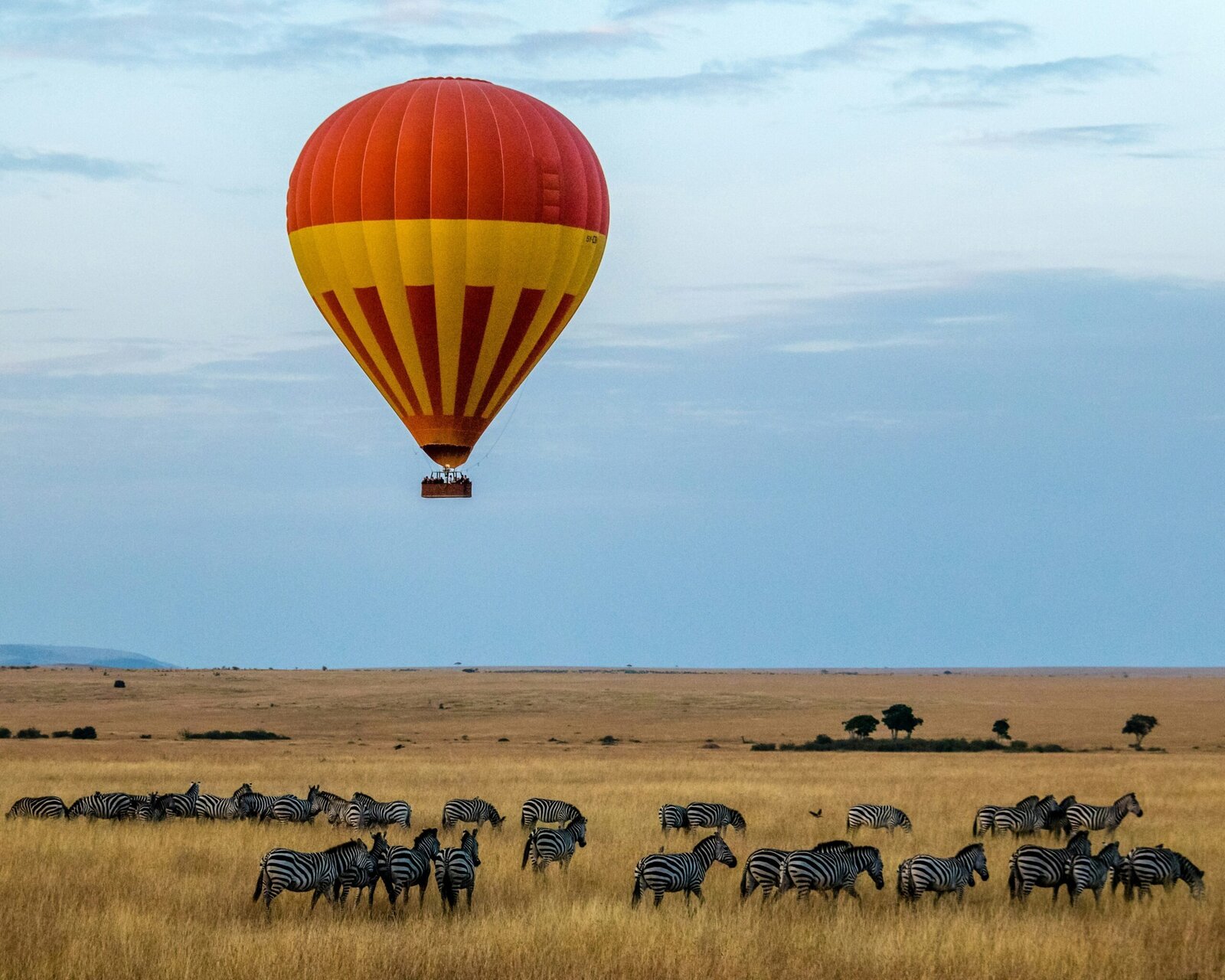
As the short-grass plains dry out from around April, the great columns begin to form and the herds start moving — first into the central Serengeti (the Seronera), then swinging north-west into the Western Corridor. This is the trek, and it is a spectacle in its own right: mile upon mile of wildebeest strung across the golden grass in long, dust-hazed lines, moving with a purpose that never seems to tire.
April to June is also the season of the rut — the mating frenzy, when the plains echo with the grunting of half a million males and the air fills with dust and testosterone. And in June comes the forgotten first river crossing of the year: the Grumeti River, in the Western Corridor. The Grumeti's crossings are smaller and less predictable than the Mara's, but they carry the same drama — and a fraction of the vehicles. For travellers who want to catch the herds on the move, mid-journey, with the plains almost to themselves, this is a superb and under-appreciated chapter of the route.
Chapter 3 — the great gathering: the northern Serengeti & the Mara River
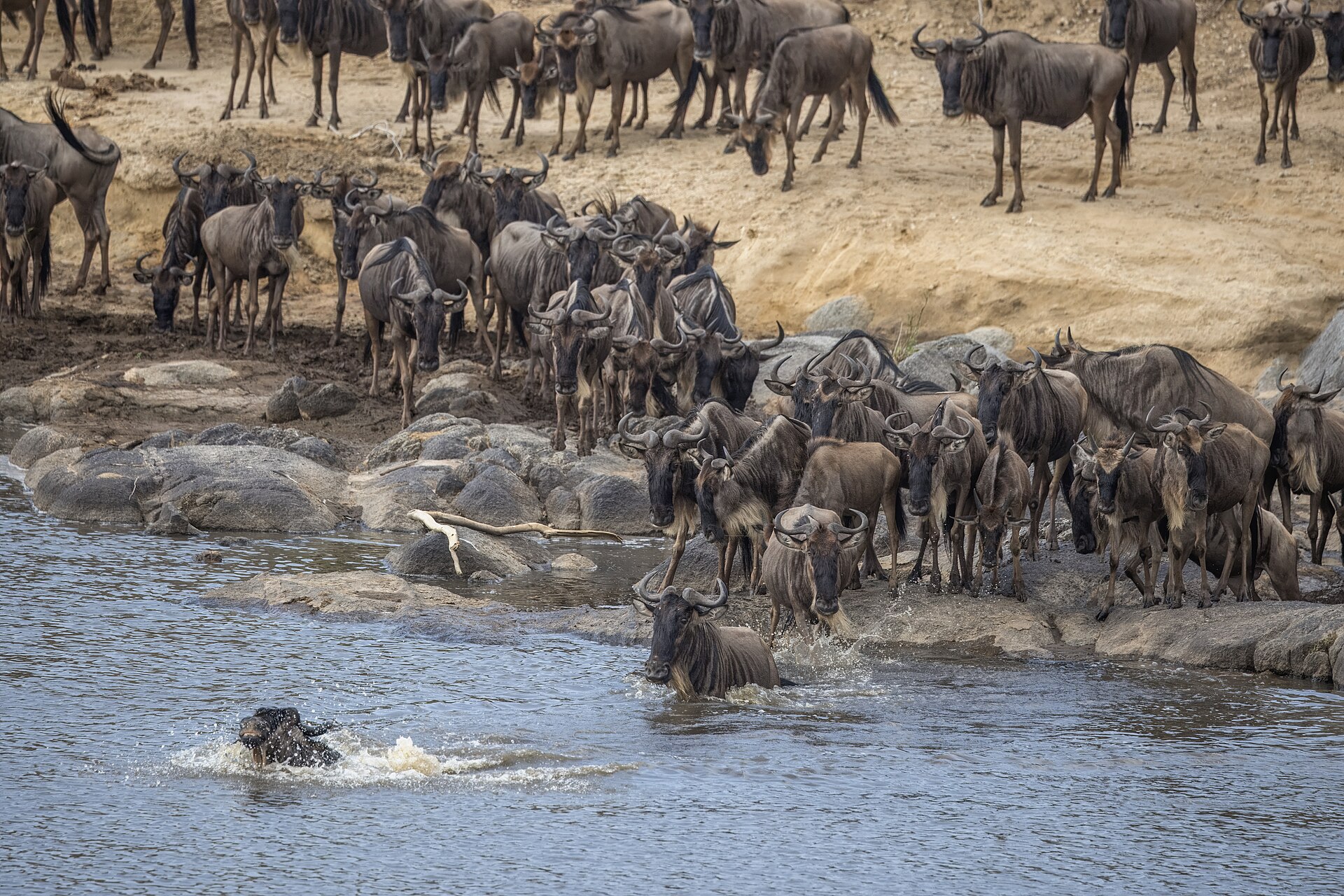
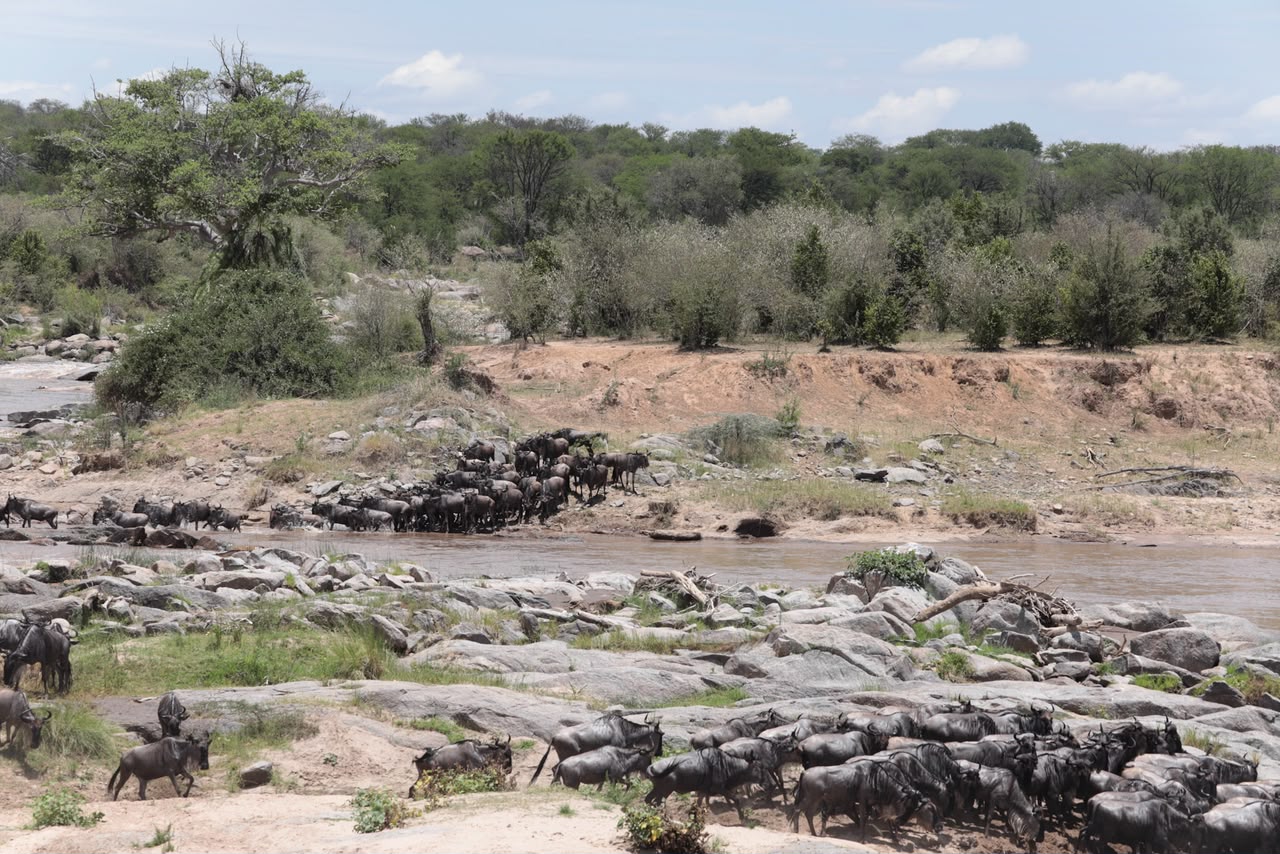
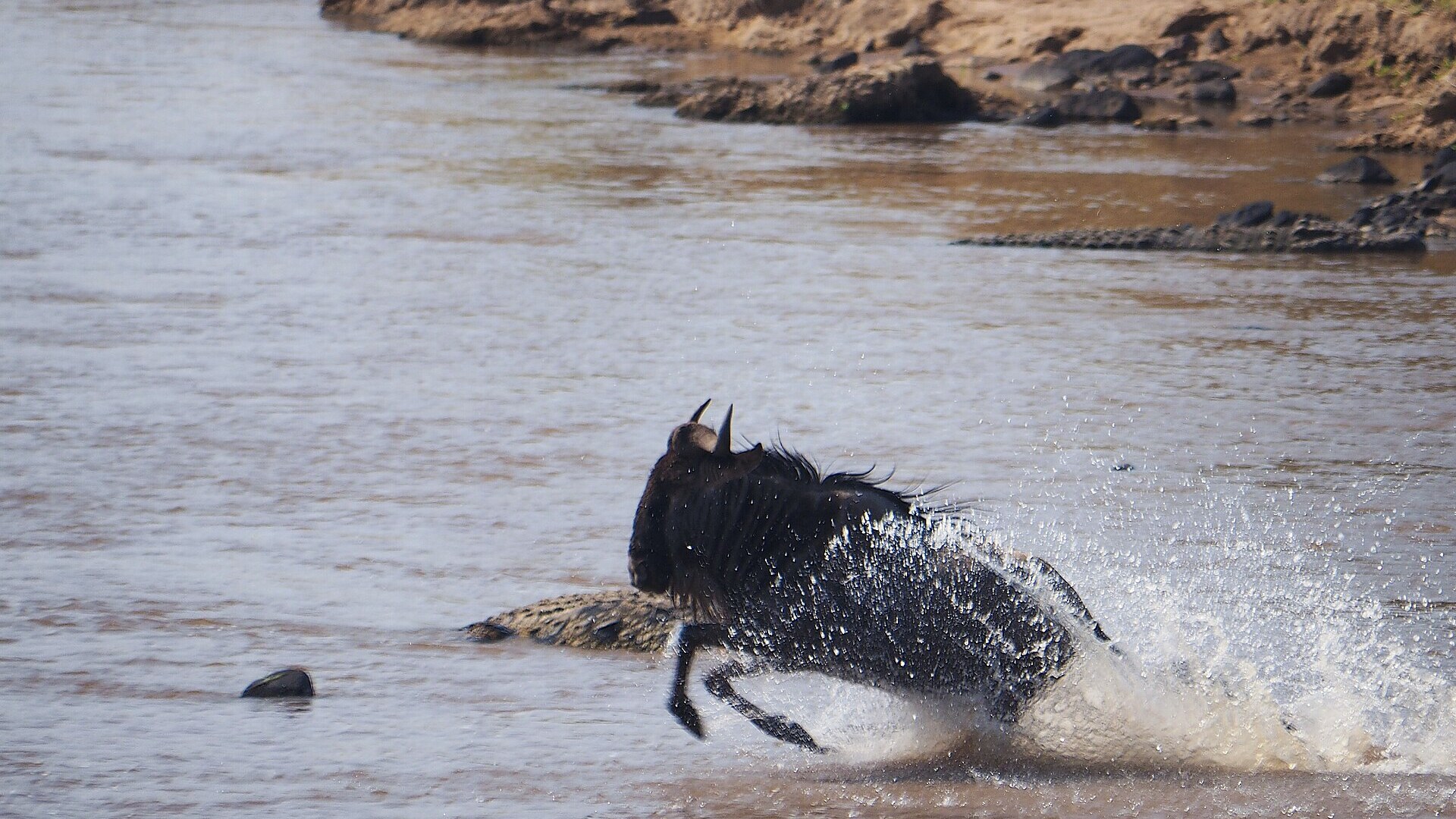
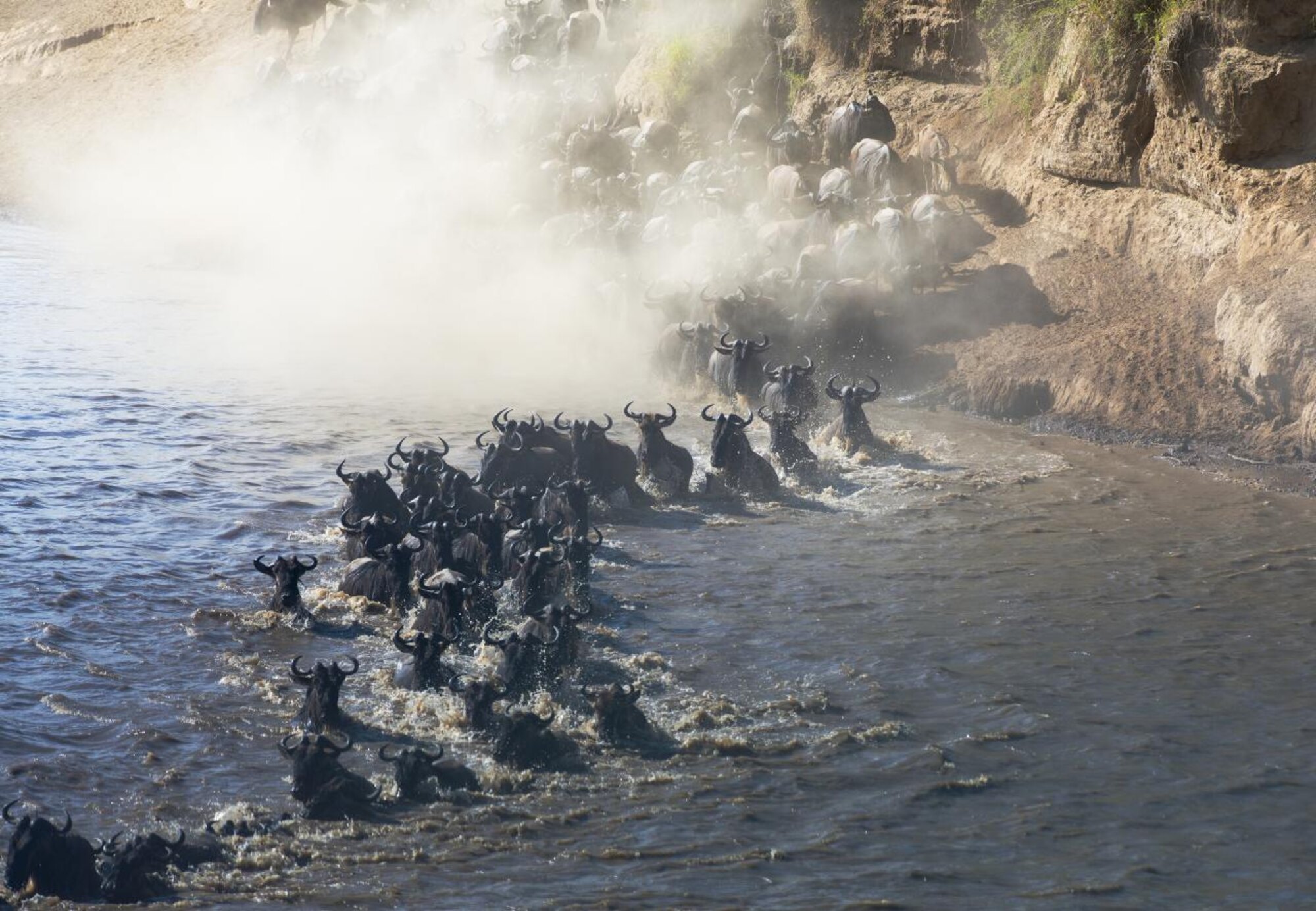
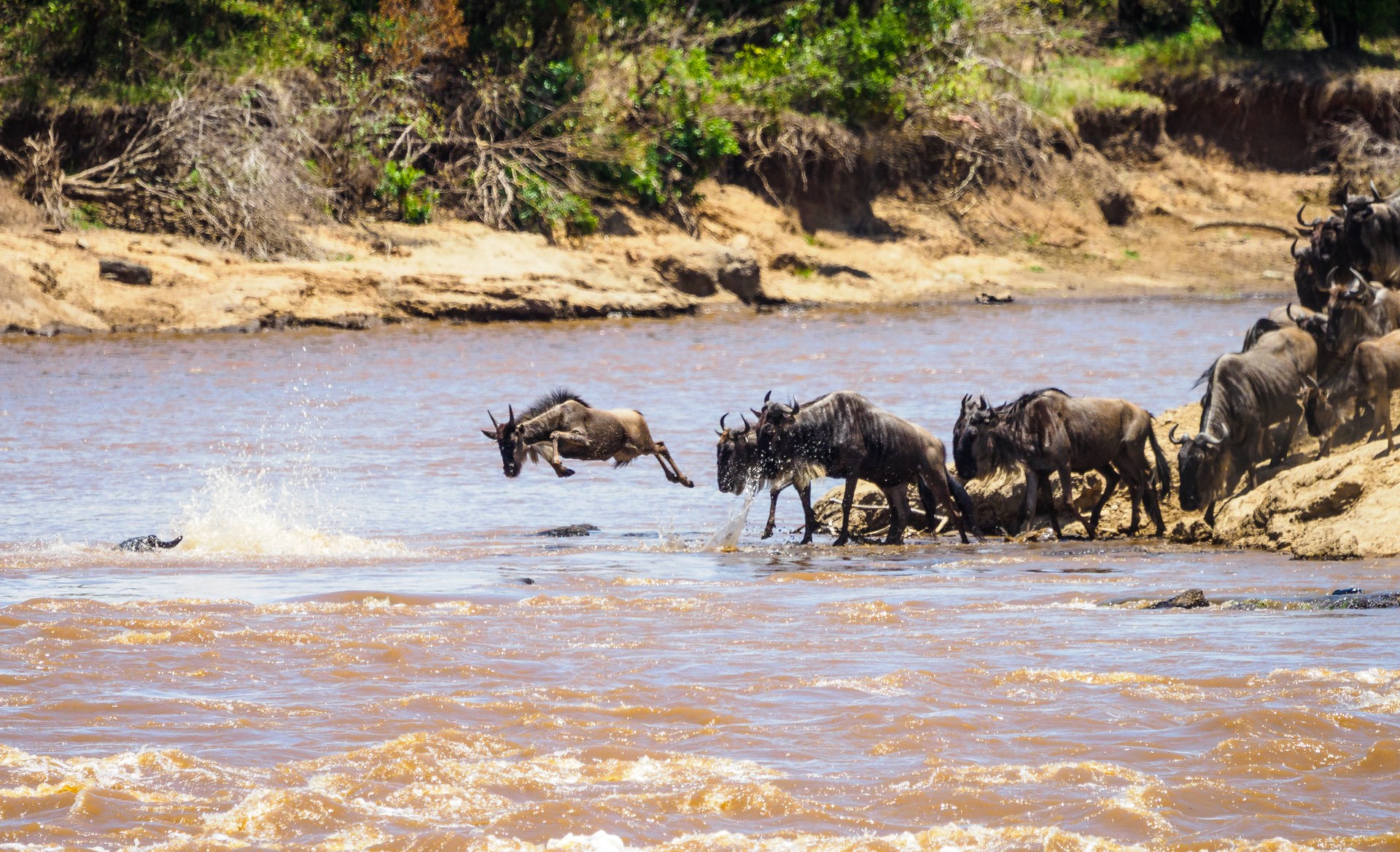
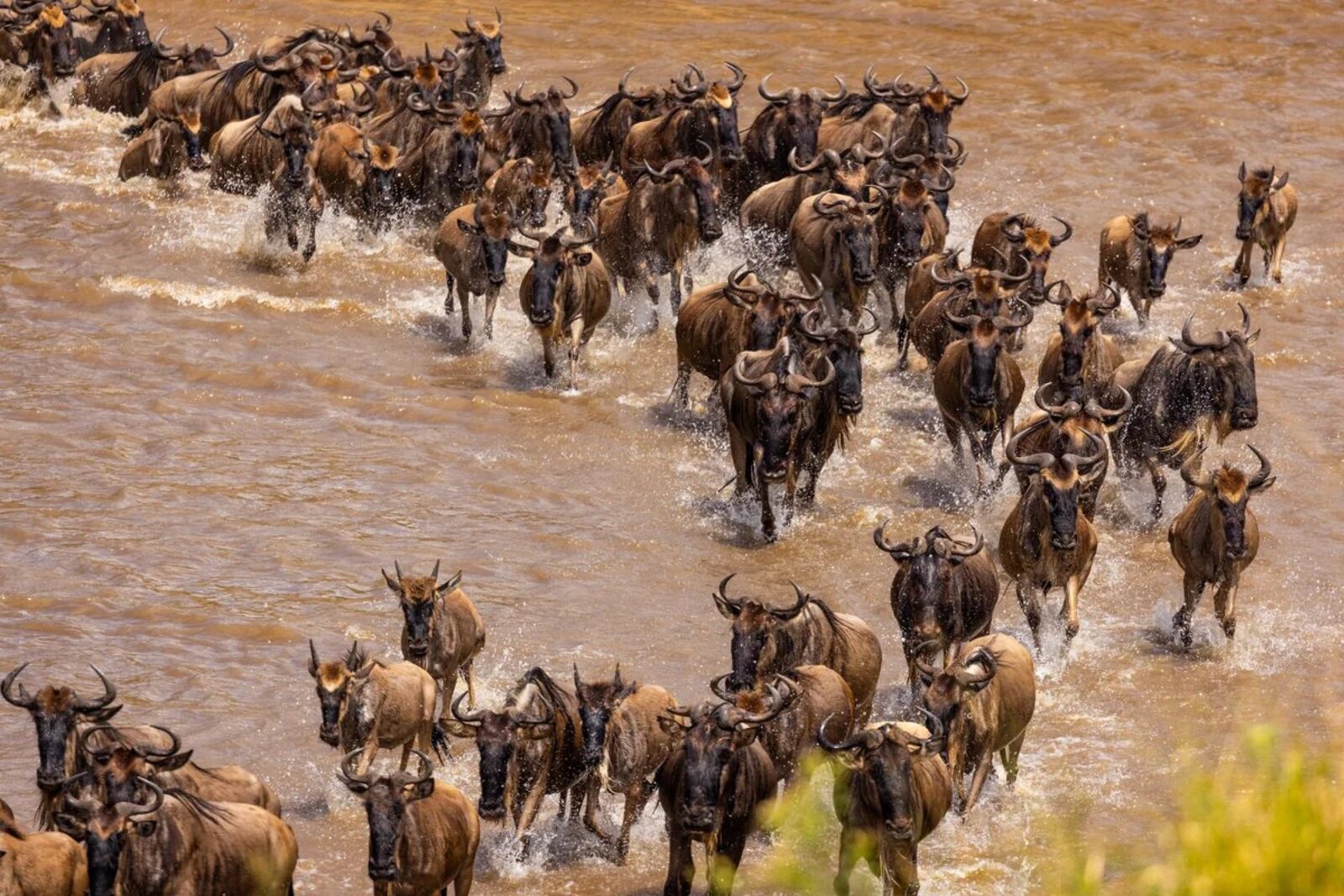
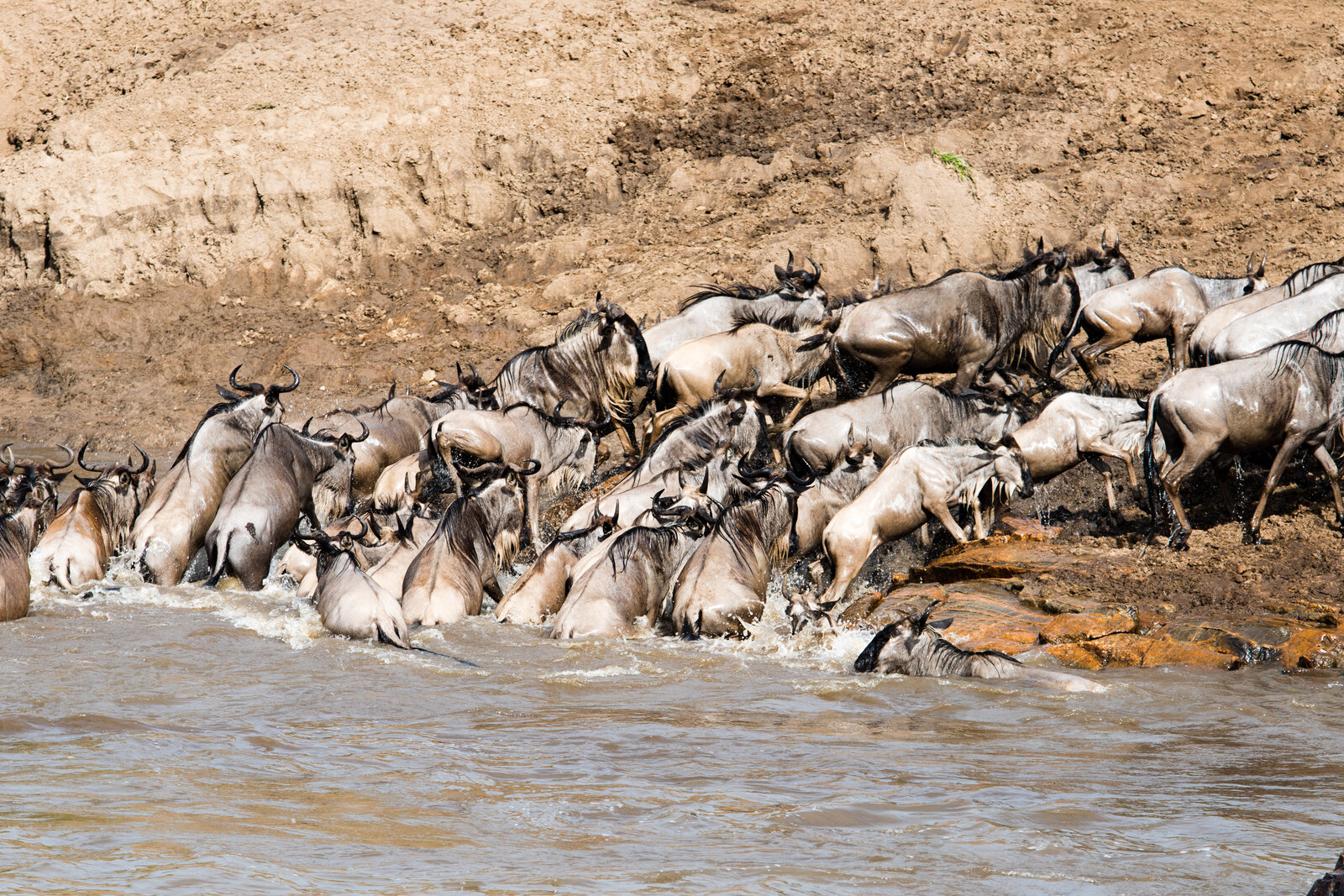
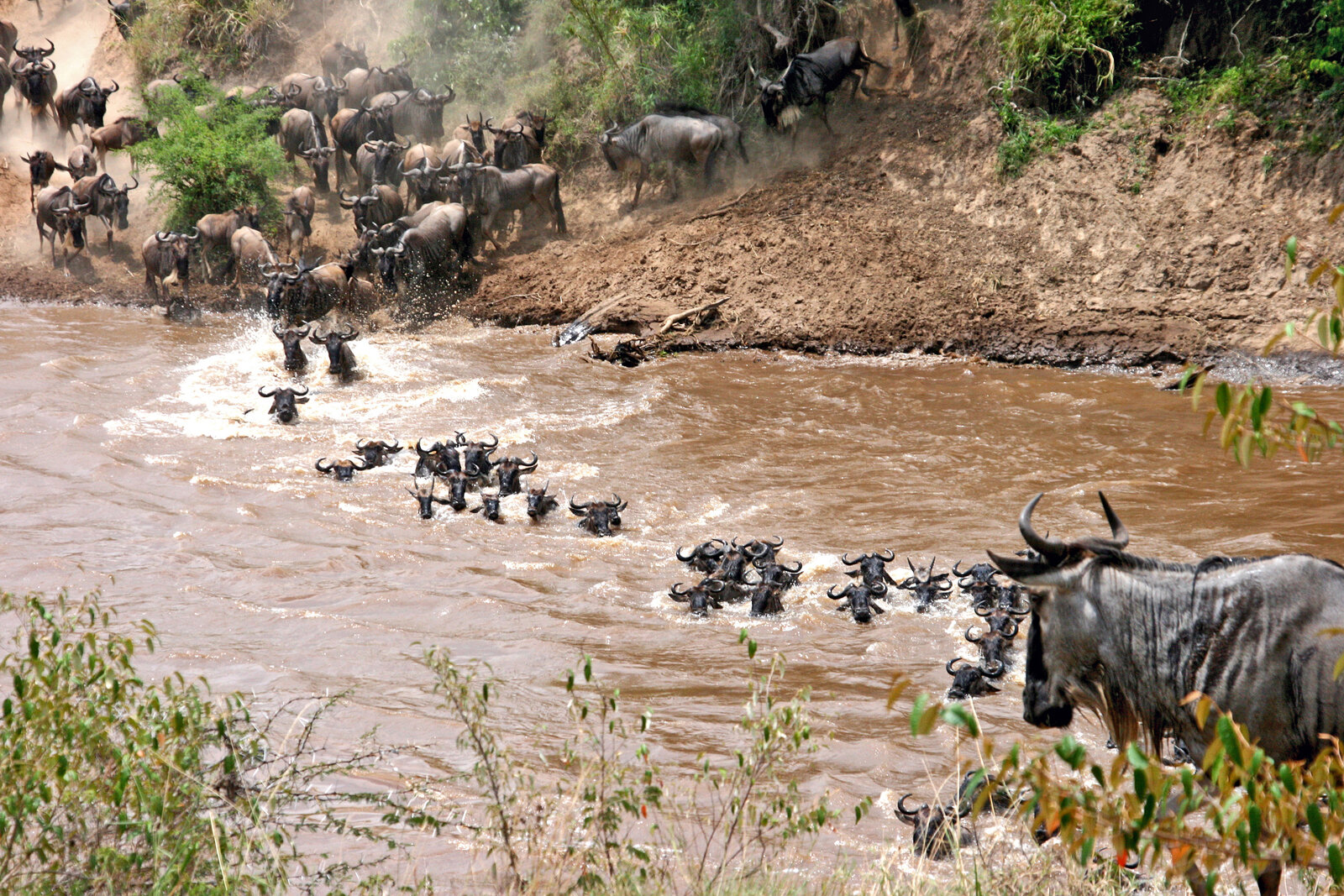
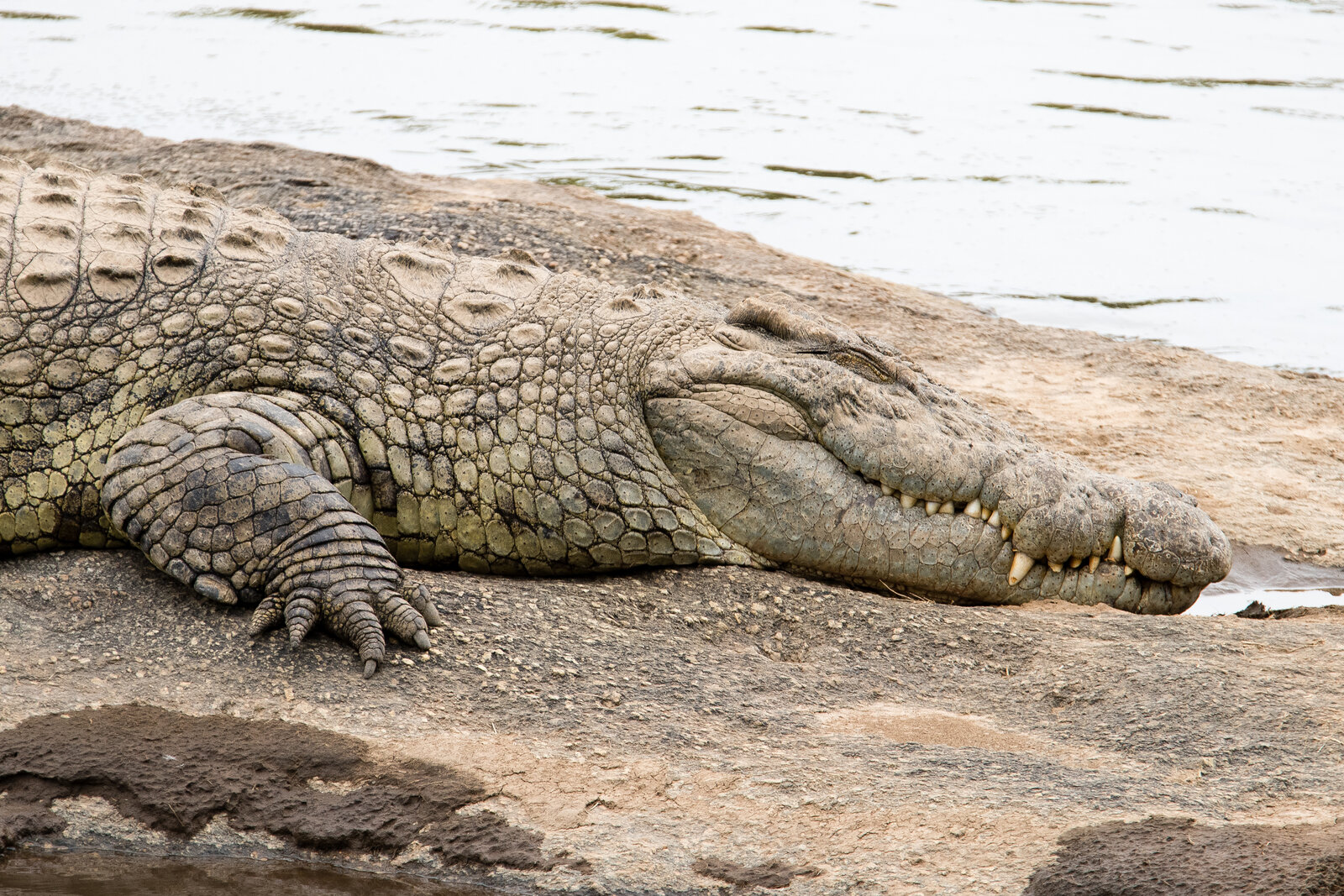
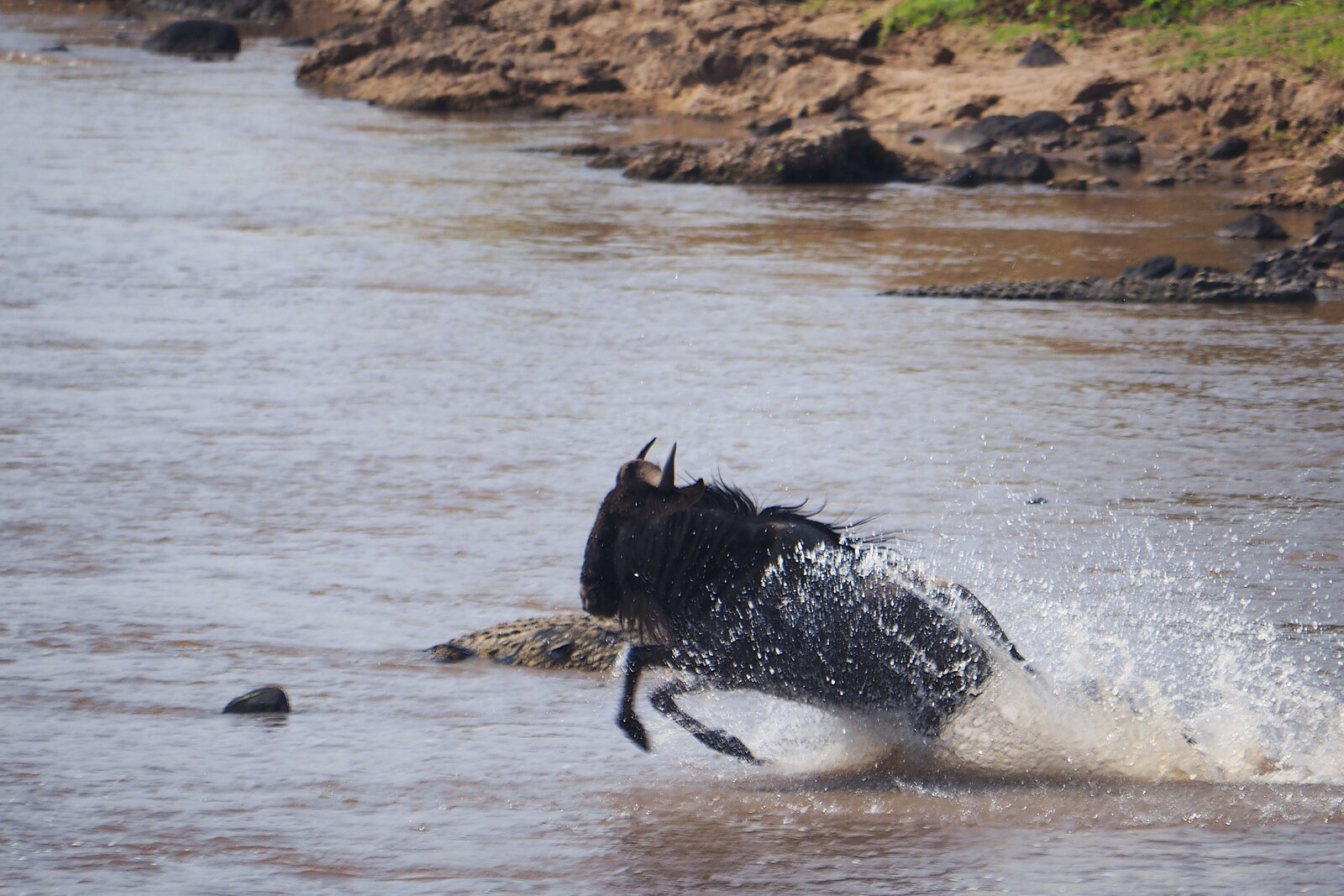
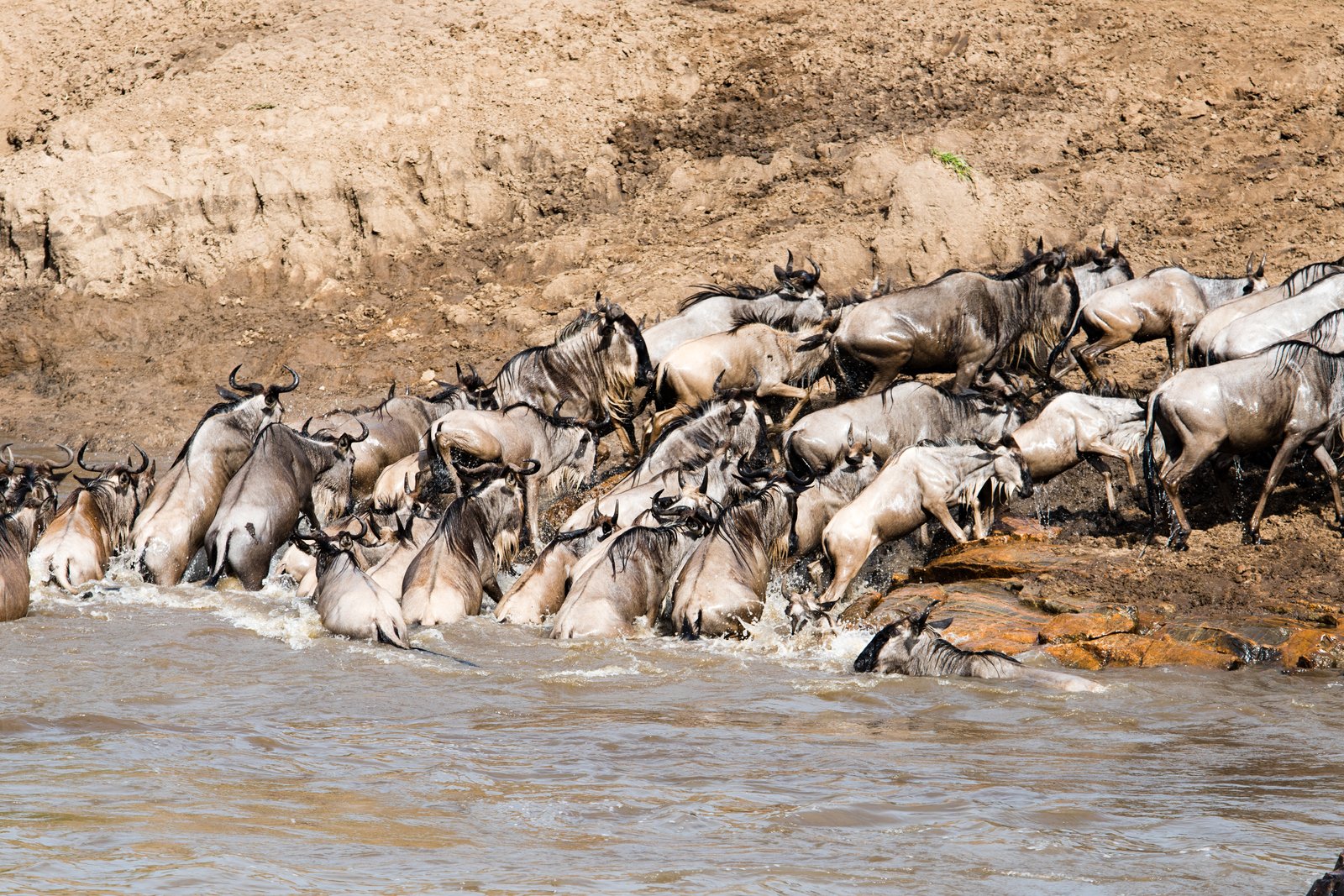
By July, the vanguard of the migration reaches the far north of the Serengeti — the Kogatende and Lamai Wedge region — and here the route meets its most famous obstacle: the Mara River. This is the chapter the whole world pictures when it hears the words "Great Migration." The herds mass in their tens of thousands on the southern bank, hesitating, building, until some unknowable trigger sends them plunging into the current in a churning, thunderous torrent — while crocodiles wait and the far bank crumbles under a hundred thousand hooves.
What most people don't realise is that these crossings happen on the Tanzanian side of the border first. The northern Serengeti's crossings, from July through October, are every bit as dramatic as the Kenyan ones — and, based in a mobile or crossing-front camp right on the river at Kogatende, you can witness them with fewer vehicles than across the border. This is the pivot point of the entire route: the moment the migration stops being a trek and becomes the greatest wildlife show on Earth.
Chapter 4 — across the border: into Kenya's Masai Mara
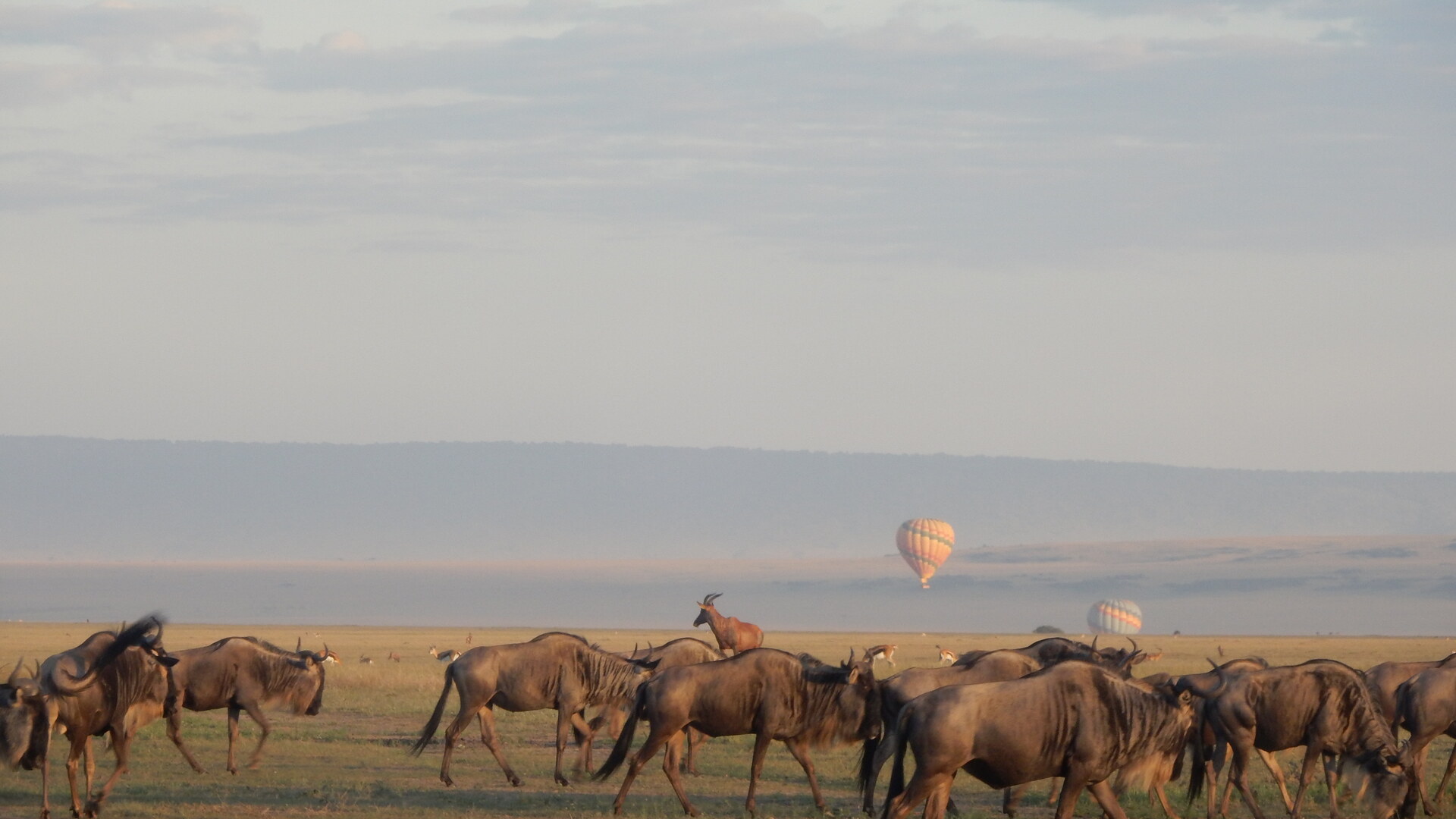
And then, sometime around August, the herds do the thing that gives this whole route its name: they cross the invisible line and pour into Kenya's Masai Mara. There is no fence, no checkpoint, no ceremony — just an unbroken flood of animals walking from one country into the next in search of the Mara's reliably green pasture. From August to October, the Masai Mara holds the greatest concentration of the migration anywhere, and the river crossings continue on the Kenyan side — most famously in the Mara Triangle and along the main reserve's stretch of the river.
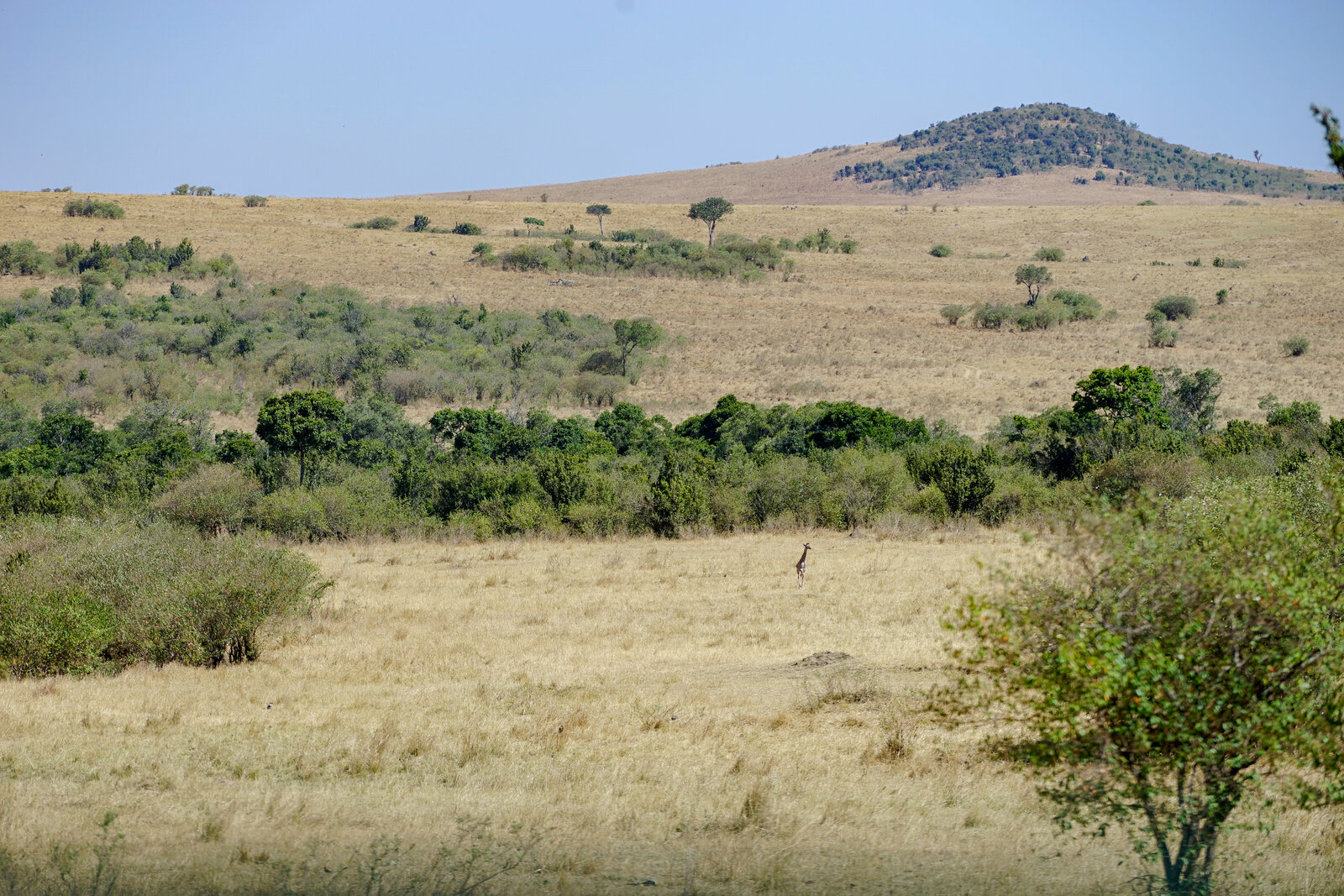
The Kenyan chapter has its own distinct character. The Mara's rolling grasslands and open horizons make for classic, cinematic game-viewing; its resident predator populations are extraordinary; and the surrounding private conservancies — Mara North, Naboisho, Olare Motorogi and others — let you experience the migration away from the crowds of the main reserve, with off-road access and night drives the reserve doesn't allow. If Tanzania is the trek and the gathering, Kenya is the golden arrival — and the crossings you may have missed on one side of the border, you can still catch on the other.
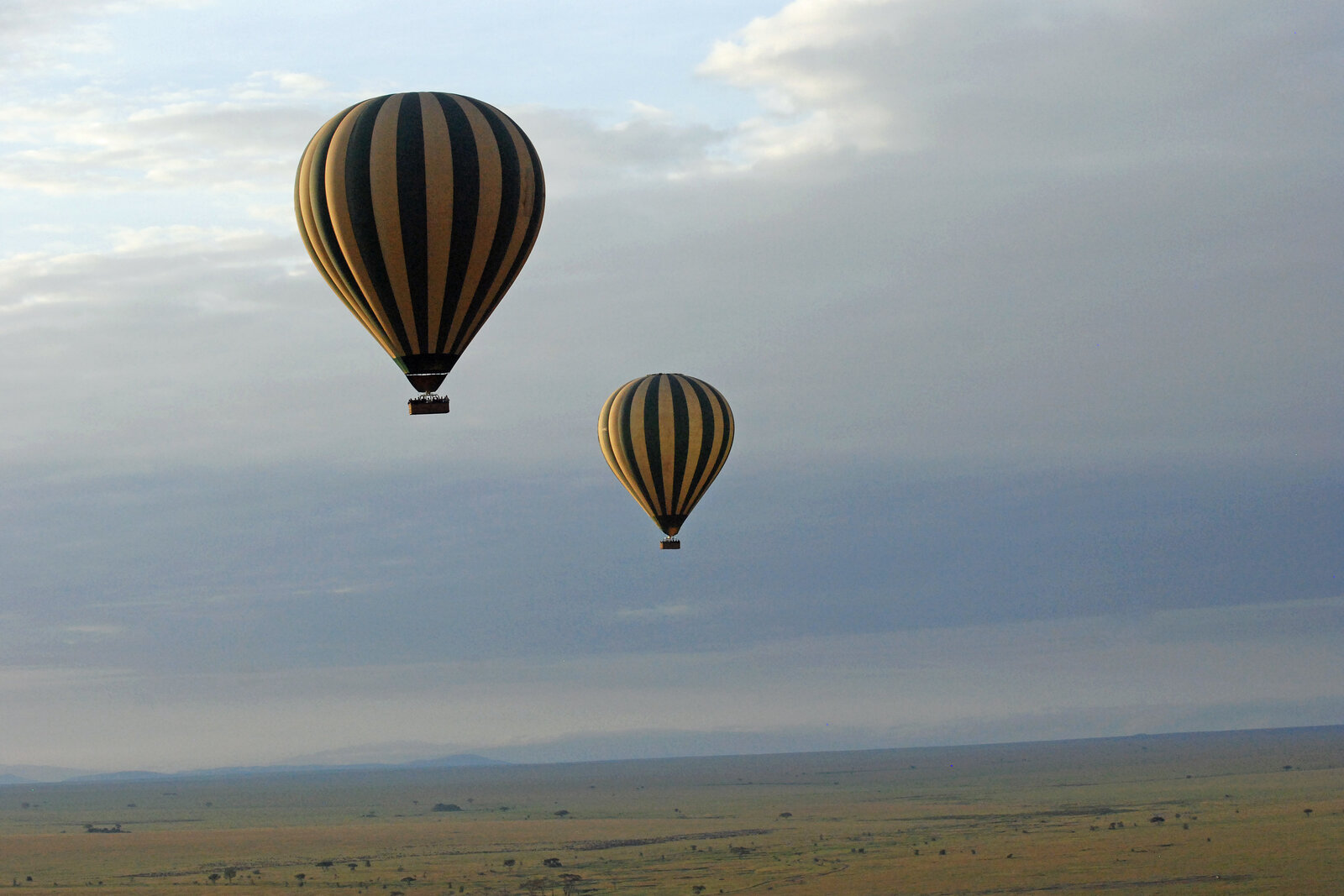
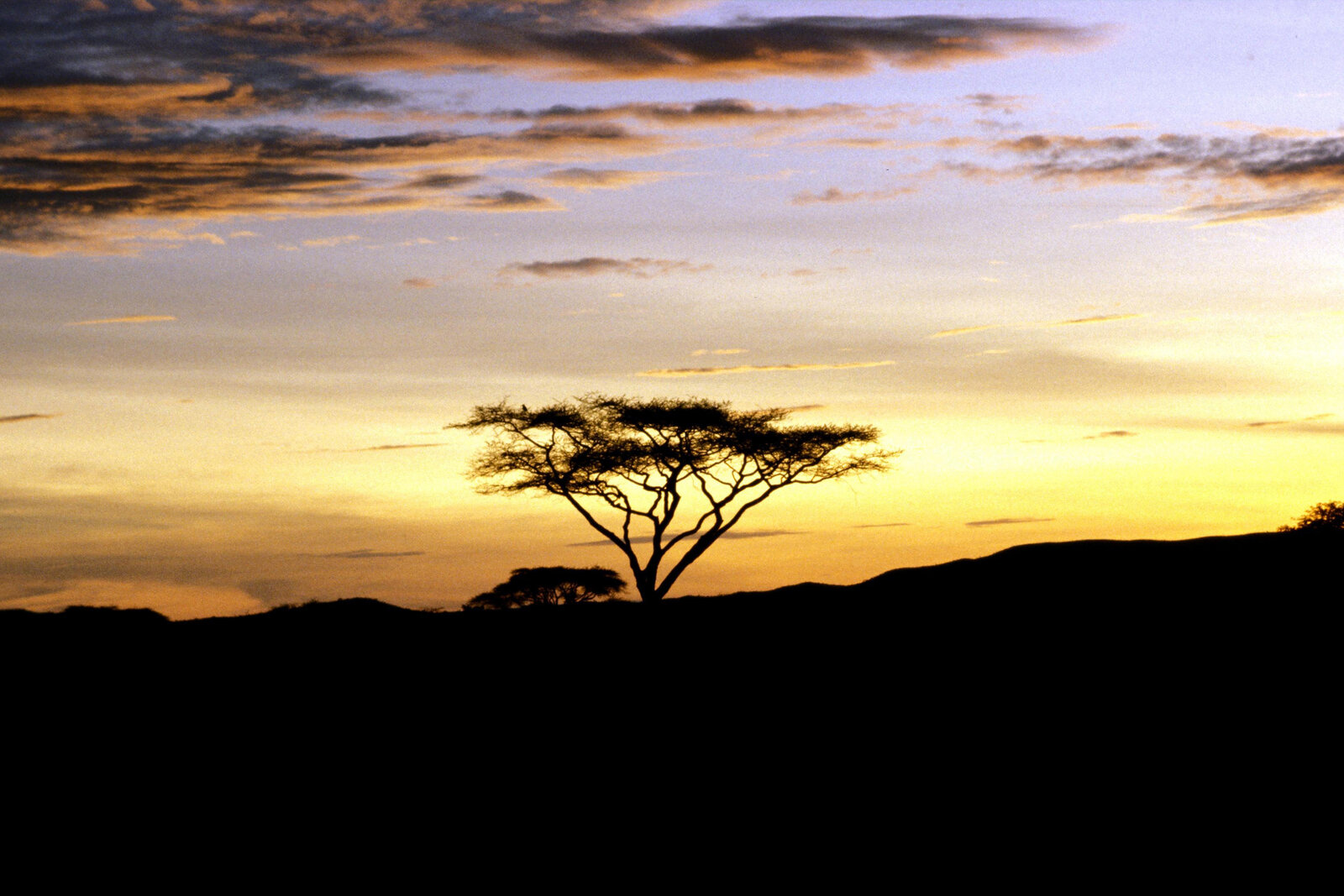
Chapter 5 — the loop closes: the return south
Nothing in the migration stays still, and by late October and into November, the pull of the season reverses. As the short rains begin to fall over the southern Serengeti, the herds sense the coming green and turn for home. They drift back south — often down the eastern side of the Serengeti, past Namiri and the Gol Kopjes — recrossing the Mara River on their way and flowing back toward the very plains where the journey began. By December they are gathering once more on the short-grass plains of the south, ready for the calving to begin again.
This is the chapter that reveals the migration's deepest truth: there is no end. The route is a circle. The calves born in February will walk the entire loop before they are a year old, and their calves will walk it after them. To follow the herds is to step, for a week or two, into a rhythm older than humankind — and that is why, once you have seen it, the migration never quite lets you go.
How to see it — following the herds vs waiting for them
There are really only two strategies for experiencing the migration route, and the difference between them decides everything about your trip.
Waiting means basing yourself in one excellent camp in one region and letting the herds come to you. It is simpler and can be wonderful — if your dates align with where the herds happen to be. Following means moving with the migration: a mobile camp that relocates through the year, or a multi-stop journey that places you in the southern Serengeti one week and the northern crossings or the Masai Mara the next. Following is how the serious migration travellers do it, because it dramatically raises your odds of witnessing the herds on the move — and the crossings that everyone dreams of.
The single most reliable way to follow the herds during the crossing season is a two-country journey that spans the border: the northern Serengeti while the crossings build on the Tanzanian side, then across into Kenya's Masai Mara as the herds spill over. You are never betting everything on one river, one region or one week — you are moving with the wild itself.
The two-country journey — how we build a trip that follows the whole route
Crossing the border on safari sounds complicated. In our hands, it isn't. We build seamless Tanzania-and-Kenya migration journeys that follow the herds across the ecosystem — and we handle every seam so you never feel one. A typical late-season route might place you in a crossing-front camp in the northern Serengeti (Kogatende) for the first leg, then fly you across the border — via the Migori or a Nairobi connection — into a private conservancy camp in Kenya's Masai Mara for the second, so you have two shots at the crossings on two stretches of the same river.
Because we are an owner-run South African team on the ground, we watch where the herds are massing and place you where the action is most likely, in mobile and crossing-front camps with private vehicles and crossing-specialist guides. Every flight, park fee, transfer and border formality is folded into one clear price, so following the greatest journey on Earth feels as effortless as it is unforgettable.
What a Serengeti-to-Masai Mara journey costs in 2026
Following the migration across both countries is a premium trip, but it spans a wide range depending on your style of camp and how much you fly versus drive. These are honest 2026 guide ranges, per person sharing, land-only (excluding international flights):
| Tier | Per night (pp) | A 9–10 night two-country trip (pp) |
|---|---|---|
| Classic mobile-camp | ~US$600–900 | ~US$6,500–9,500 |
| Premier crossing-front & conservancy | ~US$950–1,500 | ~US$9,500–15,000 |
| Luxury fly-in (both countries) | ~US$1,500–2,400+ | ~US$15,000–24,000+ |
Cross-border flights and park fees make the two-country journey a little more than a single-country trip, but the pay-off is significant: two stretches of the Mara River, two countries' worth of the ecosystem, and far better odds of witnessing a crossing. Every journey we build folds flights, park fees, transfers, border logistics and a private guide into one clear price.
The verdict — follow the whole journey
The Great Migration from the Serengeti to the Masai Mara is not a sight to be ticked off in a single morning. It is a journey to be followed — a thousand-kilometre circle of birth, trek, crossing and return that pays no attention to the border it crosses twice a year. See only one region and you see one chapter; follow the route across both countries and you witness the whole living story.
That is exactly what we do. We are an owner-run South African team; we choose the camps, guides and vehicles ourselves, we watch where the herds are moving, and we build seamless two-country journeys that put you in the right country in the right week, with every flight and border formality handled for you. Tell us when you can travel and how far you want to follow the herds, and we'll build you the perfectly-routed private journey to move with the greatest migration on Earth.