Key Takeaways
- One ecosystem, two countries: The Masai Mara (Kenya) and Serengeti (Tanzania) form a single, continuous ~40,000 km² ecosystem. The animals move freely across the border; tourism fees, regulations and infrastructure differ.
- Migration route: The great wildebeest migration follows a roughly clockwise loop: calving in the southern Serengeti (Jan–Mar) → western corridor & Grumeti (May–Jun) → northward to the Mara (Jul–Oct) → south again (Nov–Dec).
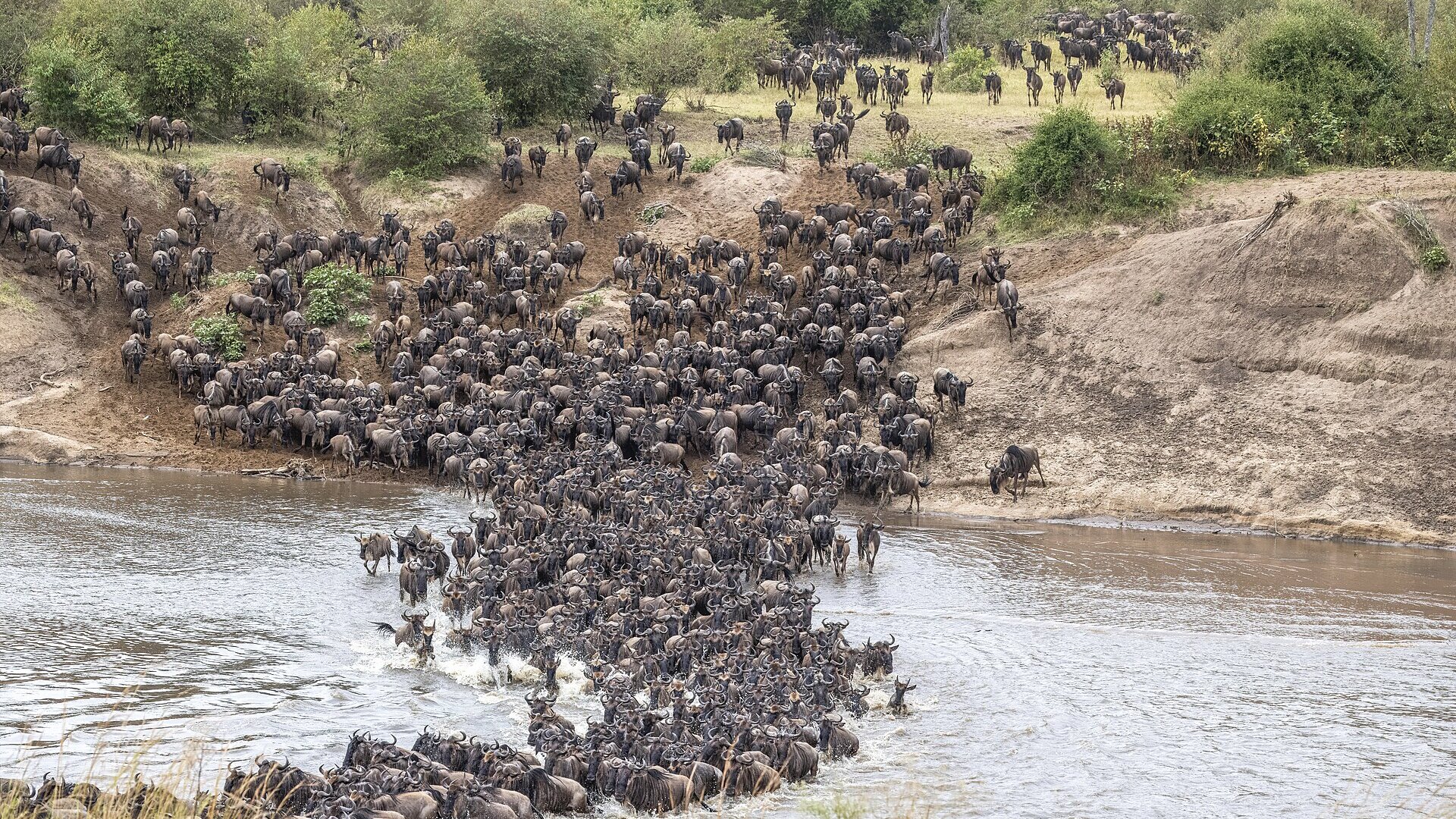
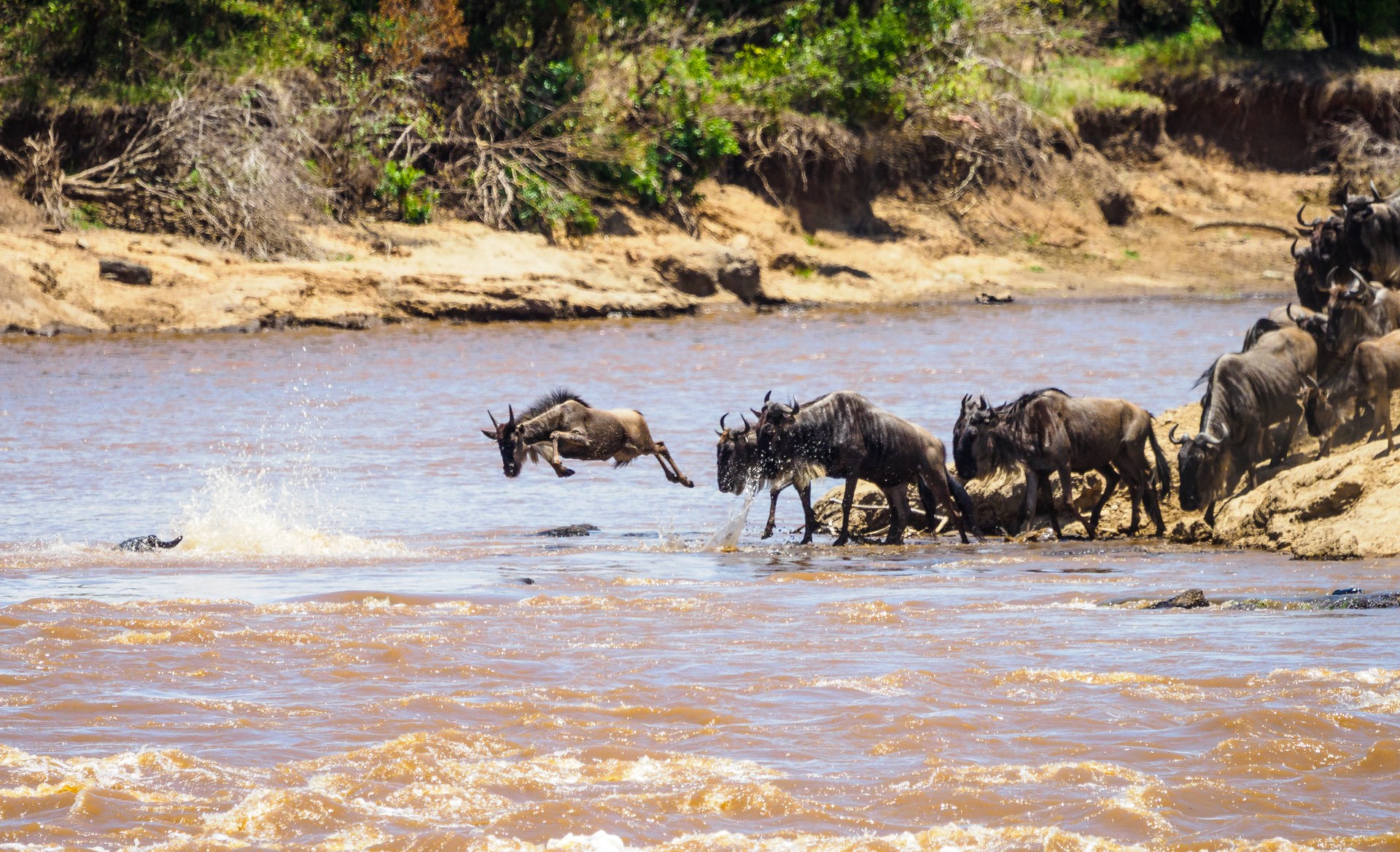
- Mara River crossings: The migration's most dramatic moments occur at specific crossing points along the Mara River, primarily July–October. Key spots: Lookout Hill, Crossing Points 1–7, the Serena crossing.
- Kenya gate fees: Masai Mara National Reserve entry is $80/adult/day for non-residents (2026). Conservancy fees vary ($80–150/day, usually included in lodge rates).
- Tanzania gate fees: Serengeti National Park entry is $60/adult/day (July–March peak) or $50/day (April–June low season) for non-residents, plus a vehicle fee.
- Year-round game: Seronera (central Serengeti) and the Mara Triangle offer excellent resident wildlife year-round — you don't need the migration to have an outstanding safari.
- Border crossing: Combining Mara + Serengeti in one trip requires crossing the Kenya-Tanzania border via Isebania/Sirari or Namanga. East Africa tourist visas and one-stop border posts make this smoother than ever.
TL;DR: The Masai Mara and Serengeti are one ecosystem, two countries. The migration follows a clockwise loop — calving in the south (Jan–Feb), Grumeti crossings (Jun), Mara crossings (Jul–Oct), return south (Nov–Dec). Kenya side: $80/day entry, Mara Triangle for crossings, conservancies for exclusivity. Tanzania side: $60–71/day, Seronera for year-round game, Kogatende for northern crossings, Ndutu for calving. The map below shows exactly where everything is.
The Masai Mara and Serengeti are names that need no introduction — together they form the most famous wildlife ecosystem on Earth, home to the great wildebeest migration and a permanent cast of predators, plains game and birdlife that makes this the standard against which all other safari destinations are measured. But for all their fame, the Mara-Serengeti ecosystem is surprisingly complex to navigate. It is not one park but a mosaic of national reserves, national parks, conservancies, concessions and buffer zones, each with its own management, fees, rules and character.
This guide puts the map at the centre. We plot the migration routes, the river crossing hotspots, the lodge locations, the park gates and the border crossing points — and then explain what each zone offers, when to visit it, and how much it costs. Whether you are planning a Mara-only crossing safari, a Serengeti calving trip, or a grand combined circuit, this is the spatial intelligence you need.
Understanding the Ecosystem: One Wilderness, Two Countries
The Mara-Serengeti ecosystem covers approximately 40,000 square kilometres — roughly the size of Switzerland. The Kenya-Tanzania border runs through the middle of it, but the animals don't carry passports. The great wildebeest migration, roughly 1.5 million wildebeest, 400,000 zebra and 200,000 Thomson's gazelle, moves freely between the two countries following the rains and the grass.
On the Kenya side:
- Masai Mara National Reserve (1,510 km²): The core protected area, managed partly by the Mara Conservancy (the Mara Triangle, western sector) and partly by Narok County (the eastern sector, accessed via Talek and Sekenani gates).
- Private conservancies: Surrounding the reserve — Olare Motorogi, Naboisho, Mara North, Mara Naboisho, Siana, Lemek — these community-owned conservancies offer exclusive-use game viewing with limited vehicle numbers, night drives and walking safaris that are not permitted in the national reserve itself.
On the Tanzania side:
- Serengeti National Park (14,763 km²): Tanzania's most famous park, divided into distinct zones — Seronera (central), the Western Corridor, the Northern Serengeti (Kogatende/Lamai), and the Southern Plains (Ndutu/Ngorongoro interface).
- Ngorongoro Conservation Area: Adjacent to the Serengeti's southern boundary, this UNESCO World Heritage Site includes the Ngorongoro Crater and the Ndutu calving plains.
- Game Controlled Areas and concessions: Buffer zones like Grumeti Reserves (managed by Singita) and Ikorongo, which connect to the main park.
🗺️ Interactive Map: Masai Mara & Serengeti Ecosystem
Migration routes • River crossing points • Lodge locations • Park gates • Park boundaries
Migration Route Map: The Great Clockwise Loop
The great wildebeest migration is not a single journey from A to B — it is a continuous, roughly clockwise loop that never stops. The herds are always moving, always following the rains and the grass, and the "start" and "end" are human constructs imposed on a perpetual cycle. That said, the loop has predictable phases:
The Migration Calendar
- January–March (Southern Serengeti / Ndutu): Calving season. The herds settle on the short-grass plains around Ndutu and the Ngorongoro Conservation Area, where volcanic minerals enrich the grass. Up to 8,000 calves born daily in February. Peak predator action — lion, cheetah, hyena, wild dog.
- April–May (Central Serengeti / Seronera): The long rains push the herds north through the central Serengeti. The Seronera Valley sees massive herds passing through — excellent game viewing with fewer vehicles than the crossing season.
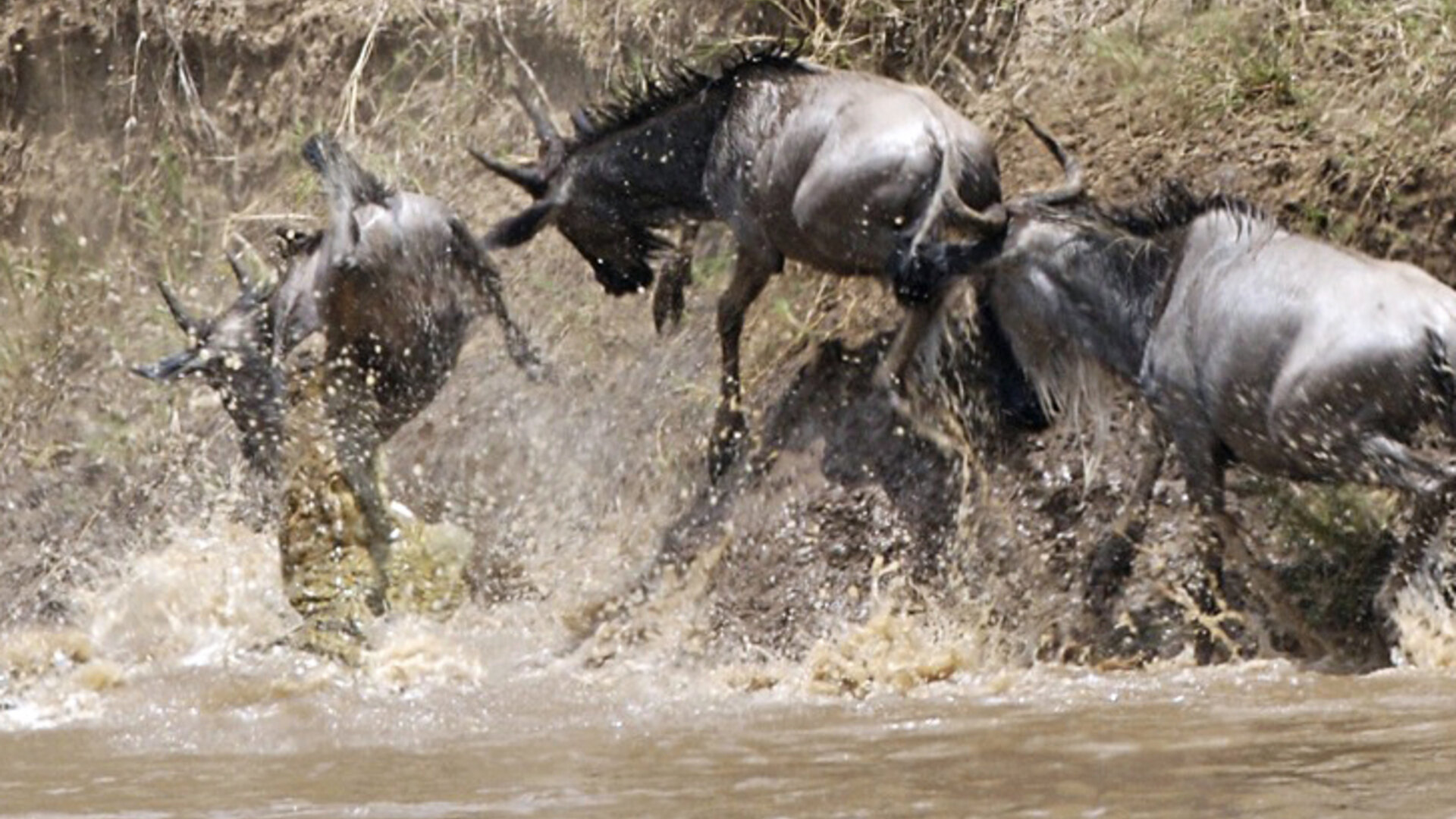
- May–June (Western Corridor / Grumeti): The migration reaches the Grumeti River. The first dramatic water crossings of the year — massive Nile crocodiles, frenzied crossings, fewer tourists than the Mara. Singita Grumeti and Grumeti Serengeti Tented Camp are perfectly positioned.
- July–August (Northern Serengeti → Masai Mara): The herds cross the Sand River into Kenya and reach the Mara River. The Mara River crossings begin — the single most famous wildlife spectacle on Earth. Kogatende (Tanzania) and the Mara Triangle / Mara North (Kenya) are the prime locations.
- September–October (Masai Mara): The herds spread across the Mara and its conservancies. Crossings continue — some of the year's biggest occur in September. Resident predators are at peak hunting success. This is the Mara's premium month.
- November–December (Return south): The short rains green up the Serengeti, and the herds begin drifting south. The return is more dispersed and less dramatic, but the northern and central Serengeti see excellent game. By late December the herds are back on the southern plains.
River Crossing Hotspots: Where the Drama Happens
The Mara River crossings are the most photographed, most dramatic, most anticipated moments in the entire migration cycle. But they are not random — the crossings happen at specific points along the river where the banks are accessible, the water is (relatively) shallow, and the herds have learned over millennia to cross.
Key Mara River Crossing Points (July–October)
- Lookout Hill / Main Crossing: The most famous crossing point, in the Mara Triangle. High banks on both sides create the dramatic plunge shots that define migration photography. Angama Mara and Governors' camps are closest.
- Crossing Points 1–7: A series of numbered crossing points along the Mara River's course through the reserve. The specific points that see action shift from year to year depending on water levels and herd movements. Guides monitor daily.
- Serena Crossing: Near the Serena Safari Lodge, this is another reliable crossing area, particularly in August and September. The terrain is slightly more gradual, which can produce longer, more sustained crossings.
- Purungat Bridge area: North of the main reserve, near the Mara North Conservancy. This area sees crossings later in the season (September–October) as herds move further north.
Grumeti River Crossing Points (June–July)
The Grumeti crossings in the western Serengeti are the migration's "opening act" — less famous than the Mara but equally intense. The Grumeti's enormous Nile crocodiles (some over 5 metres long) have been waiting all year. The crossings here tend to be quicker and more concentrated than the Mara's, and you'll share them with far fewer vehicles. Singita Grumeti's concession controls access and limits vehicle numbers.
Kenya Side: Mara Triangle, Talek & Sekenani Gates
Mara Triangle (Western Sector)
The Mara Triangle is the western sector of the Masai Mara National Reserve, managed by the non-profit Mara Conservancy. It covers approximately 510 km² between the Mara River and the Oloololo (Siria) Escarpment. The Triangle is widely regarded as the best-managed sector of the Mara — better roads, stricter vehicle limits at sightings, less crowding, and a more consistent visitor experience.
The Mara River runs along its eastern boundary, which means the Triangle's lodges — Angama Mara (perched on the escarpment rim with panoramic views), Governors' camps (Il Moran, Governors', Little Governors'), and Sala's Camp — are perfectly positioned for river crossings during migration season. Even outside the migration, the Triangle's resident game (lion, cheetah, elephant, hippo, giraffe, topi) is excellent year-round.
Entry fee (2026): $80/adult/day, $40/child (non-resident). Payable by card or mobile money at the gate. The Mara Conservancy has introduced an online booking system — check current availability and fees at MaraConservancy.com.
Eastern Sector (Talek & Sekenani)
The eastern sector of the Masai Mara, managed by Narok County, is accessed via the Talek and Sekenani gates. It is larger than the Triangle and historically more crowded, particularly during peak migration season when vehicle numbers at crossings and big-cat sightings can be high. Recent reforms (2024–2025) have introduced vehicle limits and improved road maintenance.
Talek Gate: The busiest entry point, closest to Nairobi (approximately 5 hours by road). Many mid-range camps and lodges are clustered along the Talek River.
Sekenani Gate: The most common entry for visitors driving from Nairobi or flying into the Mara's airstrips. Slightly less congested than Talek.
Private Conservancies
Surrounding the national reserve, the private conservancies offer what many consider the premium Mara experience:
- Olare Motorogi: Exclusive, low-density game viewing with some of the Mara's best big-cat territory. Night drives and walking safaris permitted. Home to camps like Mahali Mzuri (Richard Branson's), Kicheche Valley, and Olare Mara Kempinski.
- Naboisho: One of the largest conservancies (50,000 acres), with exceptional leopard and cheetah sighting rates. Fewer vehicles per square kilometre than any other sector. Basecamp, Encounter Mara, and Naboisho Camp.
- Mara North: Borders the northern Mara River — excellent for later-season crossings and resident game. Elephant Pepper Camp, Kicheche Mara.
Tanzania Side: Seronera, Northern & Western Serengeti
Seronera (Central Serengeti)
The Seronera Valley is the Serengeti's wildlife-rich central hub and the best year-round game-viewing area in the entire ecosystem. The Seronera River provides permanent water, and the surrounding kopjes (rocky outcrops) harbour lion prides, leopards, and an astonishing density of resident game regardless of migration position.
Seronera is where the Serengeti's famous kopje leopards live — individuals habituated to vehicles over decades, offering some of Africa's best leopard photography outside Sabi Sand. The valley also sits on the migration's route through the central Serengeti (April–May), so for a few weeks each year the resident game is joined by the passing millions.
Northern Serengeti (Kogatende / Lamai)
The northern Serengeti — centred on Kogatende airstrip and the Lamai Wedge (the triangle of land between the Mara River and the Kenya border) — is the Tanzania-side equivalent of the Mara Triangle for migration viewing. The Mara River crossings seen from the Tanzanian bank (July–October) are identical to those on the Kenyan side, but with typically fewer vehicles and lower camp densities.
Camps here — Lamai Serengeti, Sayari Camp, Mara River Tented Camp, Ubuntu Migration Camp — are seasonal or small, and the experience is more remote and exclusive than the Kenyan Mara. The trade-off is access: Kogatende requires a charter flight from Arusha or Seronera.
Western Corridor (Grumeti)
The Serengeti's western arm stretches towards Lake Victoria and is defined by the Grumeti River. The migration passes through May–July, and the Grumeti crossings are the first major water drama of the year. Singita Grumeti (luxury lodges on a 350,000-acre private concession) dominates the area and limits vehicle numbers to deliver an ultra-exclusive experience.
Southern Plains (Ndutu / Ngorongoro Interface)
The southern Serengeti's short-grass plains — technically within the Ngorongoro Conservation Area around Ndutu — are the calving grounds (January–March). This open, treeless landscape makes game viewing easy: you can see herds stretching to every horizon. Ndutu Safari Lodge, Lemala Ndutu, and mobile camps position themselves here for calving season.
Serengeti entry fees (2026):
- Non-resident adult: $60/day (peak: July–March) or $50/day (low season: April–June)
- Non-resident child (5–15): $20/day
- Vehicle fee: $40/vehicle/24 hours (foreign-registered)
- All fees payable at the gate or via TANAPA's online system
Lodge Location Map: Where You Stay Determines What You See
In the Mara-Serengeti ecosystem, location is everything. A lodge 30 km from the Mara River during crossing season means arriving after the action is over. A camp in the northern Serengeti during calving season means a 6-hour drive from the births. Understanding the lodge map is as important as understanding the migration map.
Lodge Positioning by Season
- Mara crossings (Jul–Oct): Angama Mara, Governors' Il Moran, Sala's Camp (Mara Triangle); Kogatende camps (Tanzania northern bank)
- Grumeti crossings (Jun–Jul): Singita Sasakwa/Faru Faru/Sabora, Grumeti Serengeti Tented Camp
- Calving (Jan–Mar): Ndutu Safari Lodge, Lemala Ndutu, &Beyond Under Canvas (mobile)
- Year-round game: Four Seasons Serengeti, Serena Safari Lodge (Seronera); Mara Intrepids, Basecamp Masai Mara (eastern Mara)
- Exclusive conservancy: Mahali Mzuri (Olare Motorogi), Encounter Mara (Naboisho), Elephant Pepper (Mara North)
Best Viewing Months by Zone
| Zone | Peak Months | What You See |
|---|---|---|
| Southern Serengeti / Ndutu | Jan–Mar | Calving, predator hunts, vast herds on short-grass plains |
| Central Serengeti / Seronera | Year-round (Apr–May migration transit) | Resident big cats, kopje leopards, year-round wildlife |
| Western Corridor / Grumeti | May–Jul | Grumeti River crossings, Nile crocodiles, first crossing drama |
| Northern Serengeti / Kogatende | Jul–Oct | Mara River crossings (Tanzania bank), exclusive low-density |
| Mara Triangle | Jul–Oct (year-round resident game) | Mara River crossings (Kenya bank), big cats, escarpment views |
| Eastern Mara (Talek/Sekenani) | Jul–Oct | Migration herds, lion prides, cheetah on open plains |
| Mara Conservancies | Year-round (peak Jul–Oct) | Exclusive game viewing, night drives, walking safaris, big cats |
Border Crossing Guide: Combining Kenya and Tanzania
A combined Masai Mara + Serengeti safari is the ultimate Mara-Serengeti experience — you follow the migration across the full ecosystem. But it requires crossing the Kenya-Tanzania border, which adds logistical complexity.
Border Crossing Options
- Isebania/Sirari border post: The most commonly used crossing for Mara-to-Serengeti road transfers. It is a one-stop border post (OSBP) — you clear both Kenya exit and Tanzania entry in a single stop. From the Mara lodges, the drive to Isebania takes approximately 3–4 hours; from there, the drive to the northern Serengeti (Kogatende) is another 3–4 hours.
- Namanga border post: On the main Nairobi–Arusha highway. More commonly used for travellers combining Nairobi with Arusha-based Serengeti/Ngorongoro itineraries rather than direct Mara–Serengeti transfers.
- Charter flights: The most comfortable (and most expensive) option. Light aircraft from the Mara's airstrips to Kogatende, Seronera or Arusha bypass the border entirely — customs and immigration are handled at the airstrips. Flight time: Mara to Kogatende ~30 minutes; Mara to Seronera ~75 minutes.
Visa Requirements
Most nationalities require separate visas for Kenya and Tanzania. The East Africa Tourist Visa ($100, valid 90 days) covers Kenya, Uganda and Rwanda but does not include Tanzania. For a combined Kenya + Tanzania trip, you typically need:
- Kenya e-Visa ($50, apply online at evisa.go.ke)
- Tanzania e-Visa ($50, apply online at visa.immigration.go.tz)
- Both can usually be obtained within 48–72 hours
For detailed guides to the individual Kenya and Tanzania safari circuits, see our Masai Mara great migration packages, our great wildebeest migration safari Kenya guide, the Kenya safari tours guide for 2026, and the Tanzania safari tours guide for 2026. For a month-by-month breakdown of where the migration is at any given time, see our African safari month-by-month guide. And for the broader East Africa circuit, including gorilla trekking and beach extensions, explore our great migration safari guide.
Plan Your Masai Mara & Serengeti Safari
Beyond Africa Safaris designs private migration safaris across both the Masai Mara and Serengeti — from crossing-season lodges in the Mara Triangle to calving camps on the Ndutu plains, with seamless border transfers and charter flights. Tell us your dates and we'll position you exactly where the action is.