Key Takeaways
- The Masai Mara's river crossings run roughly July to October, peaking in August and September — this is the window every migration package is timed around.
- Crossings are unpredictable by the hour, so the winning formula is a well-placed camp, a private guide reading the herds daily, and at least three to four nights on the ground.
- The finest migration camps — Angama Mara, Governors' Camp and Mara Plains — are shown here suite, bed and surrounds so you can see exactly where you will sleep.
- Expect roughly US$450–1,600+ per person per night depending on tier, plus the fly-in from Nairobi that saves you a long road day.
- The private conservancies bordering the reserve offer the same herds with a fraction of the vehicles — off-road viewing, night drives and walking.
Why the Masai Mara Crossings Are the Migration's Greatest Act
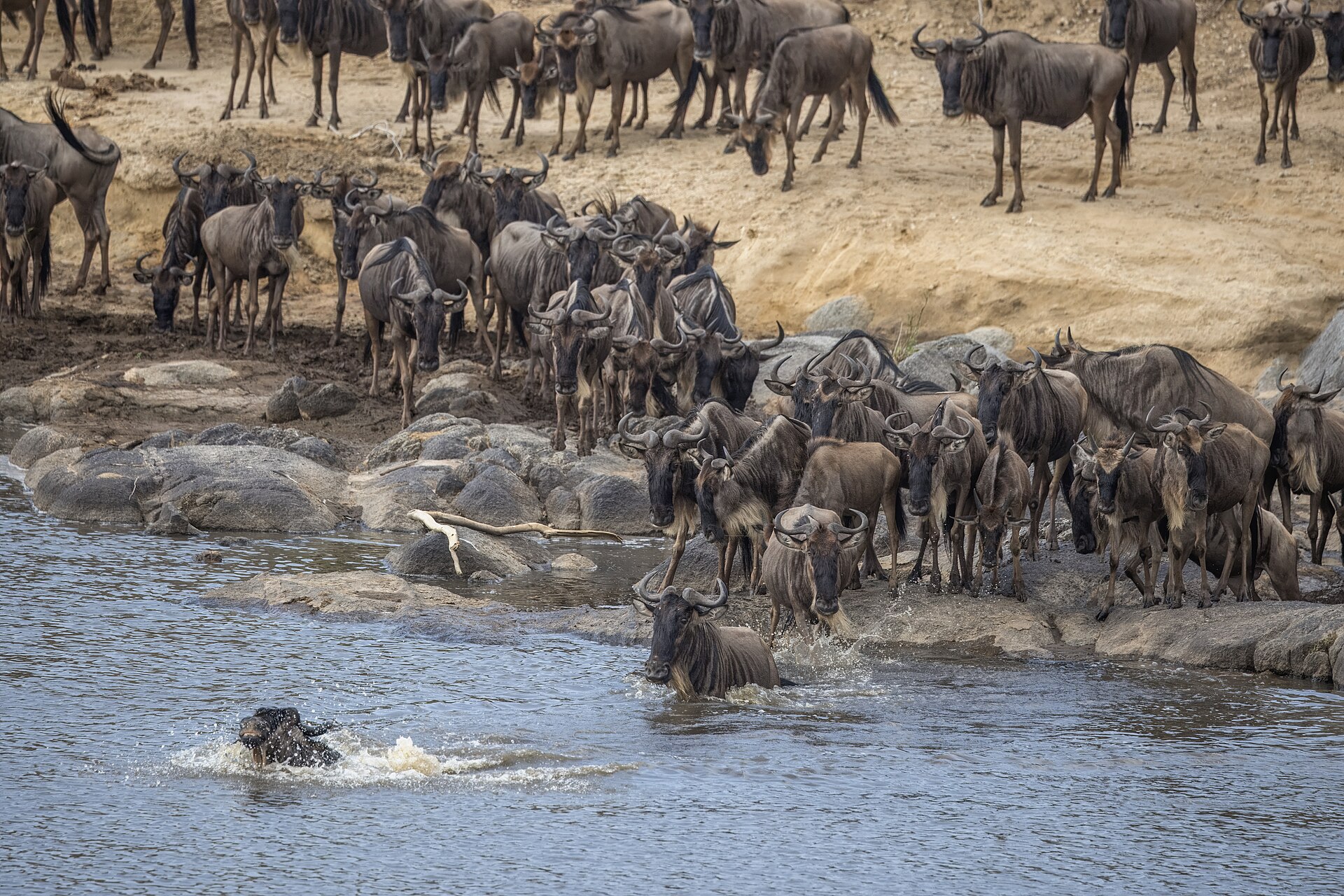
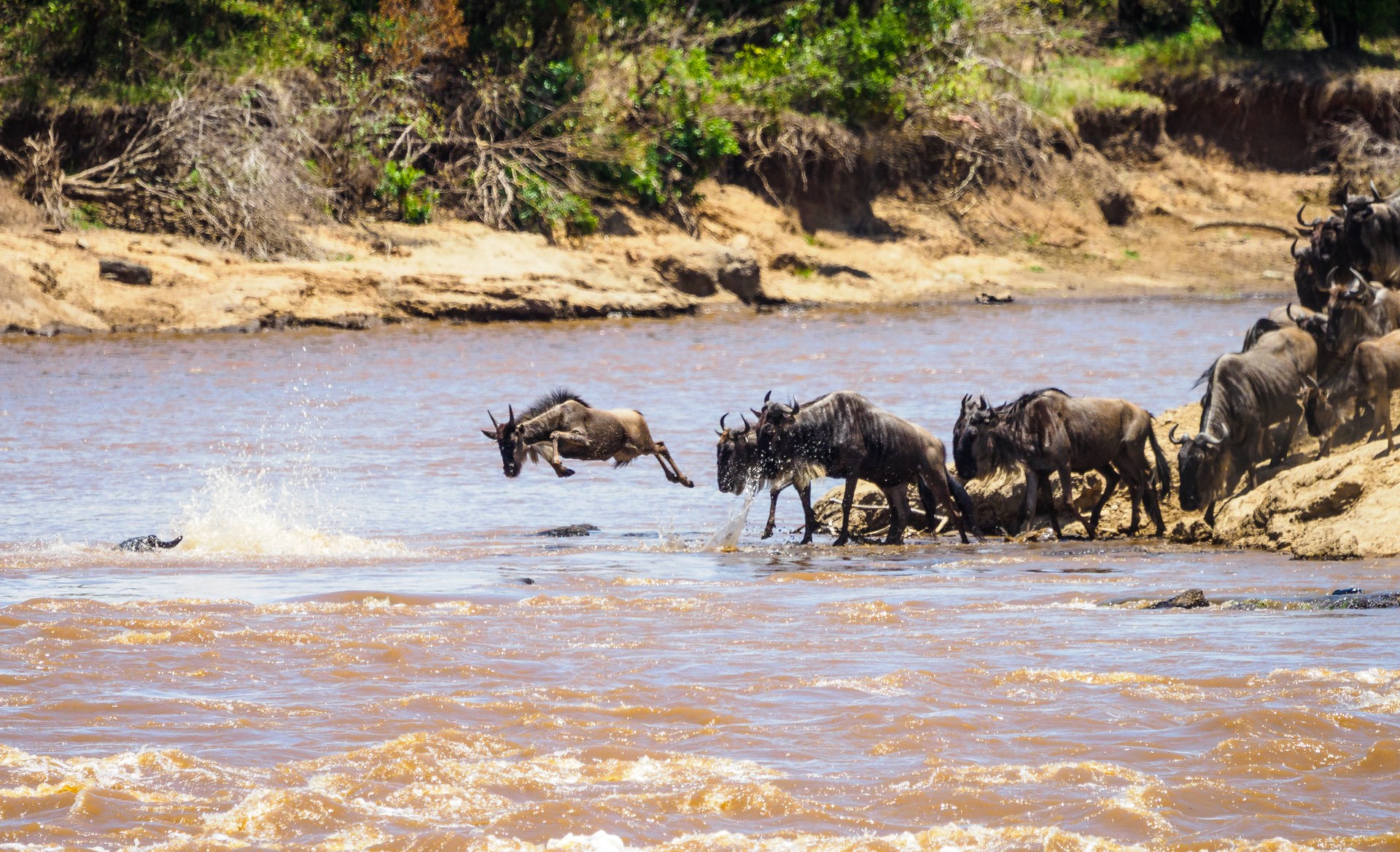
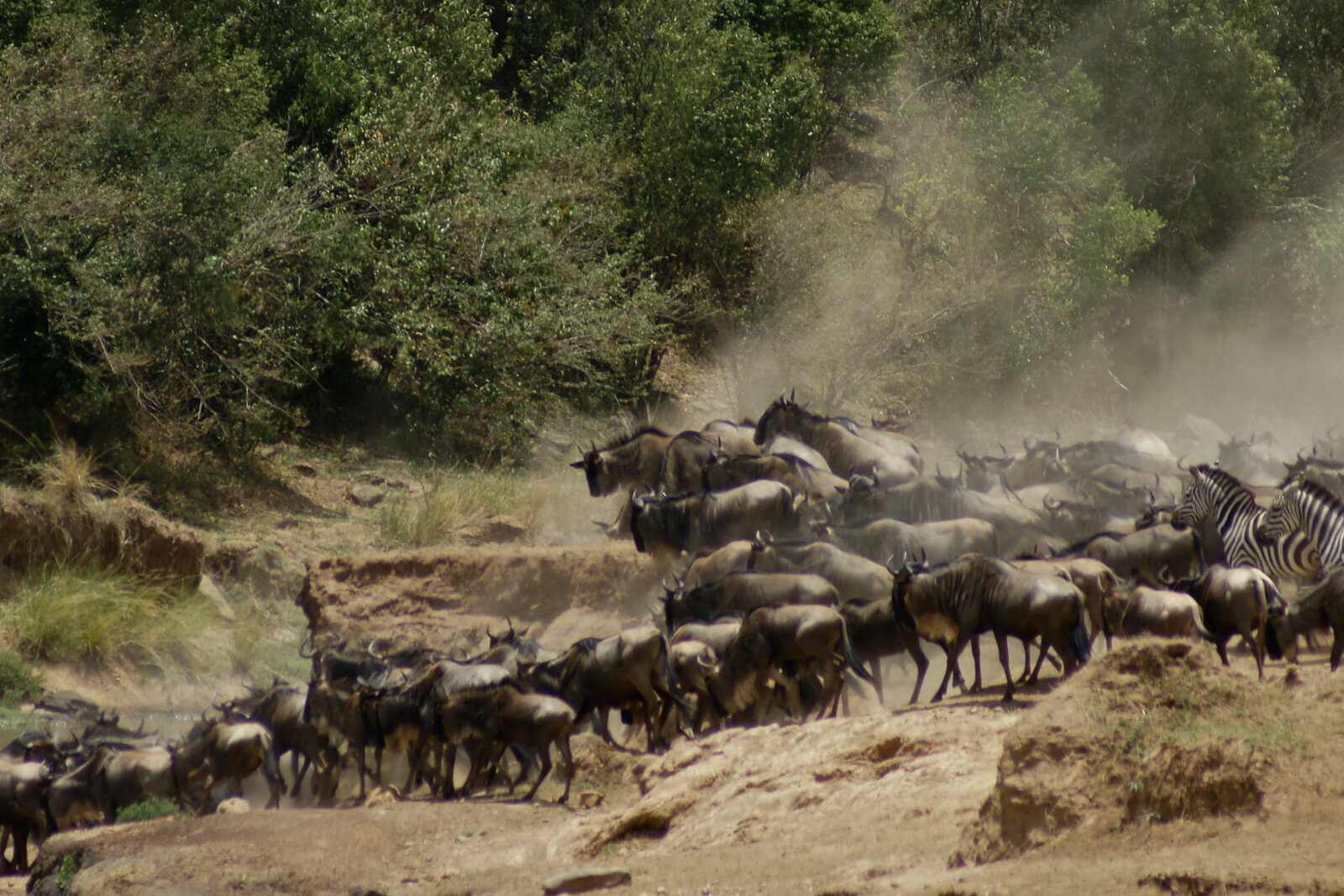
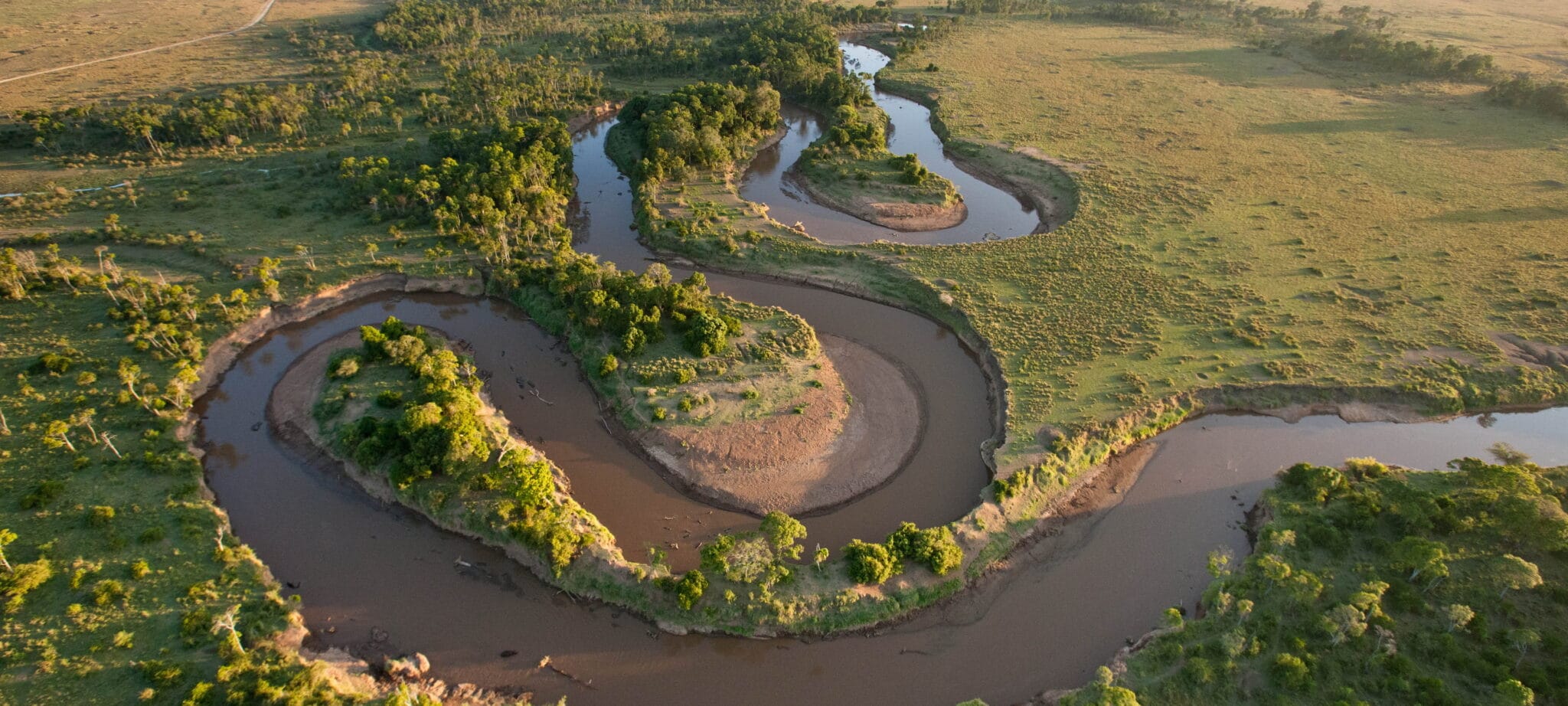
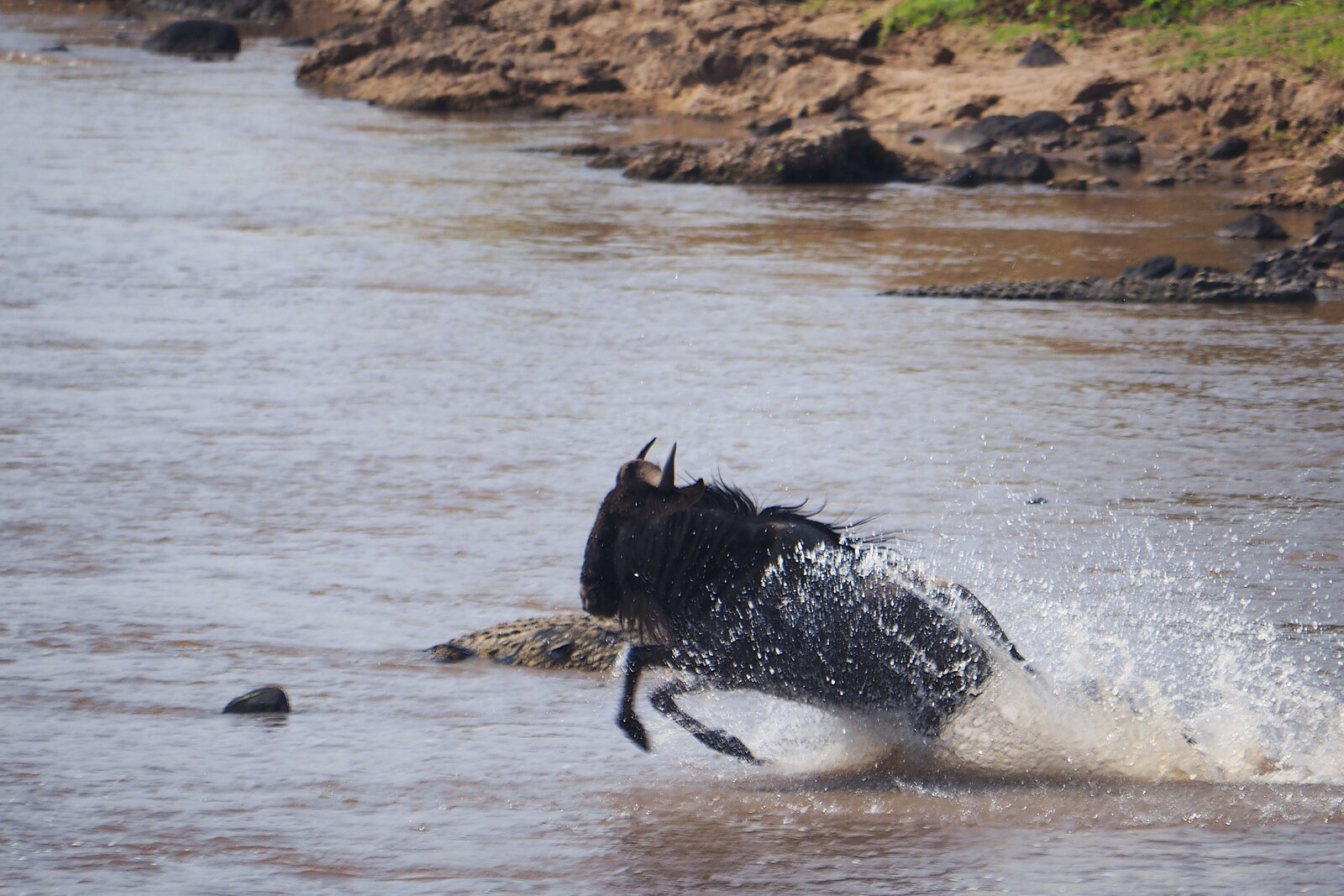
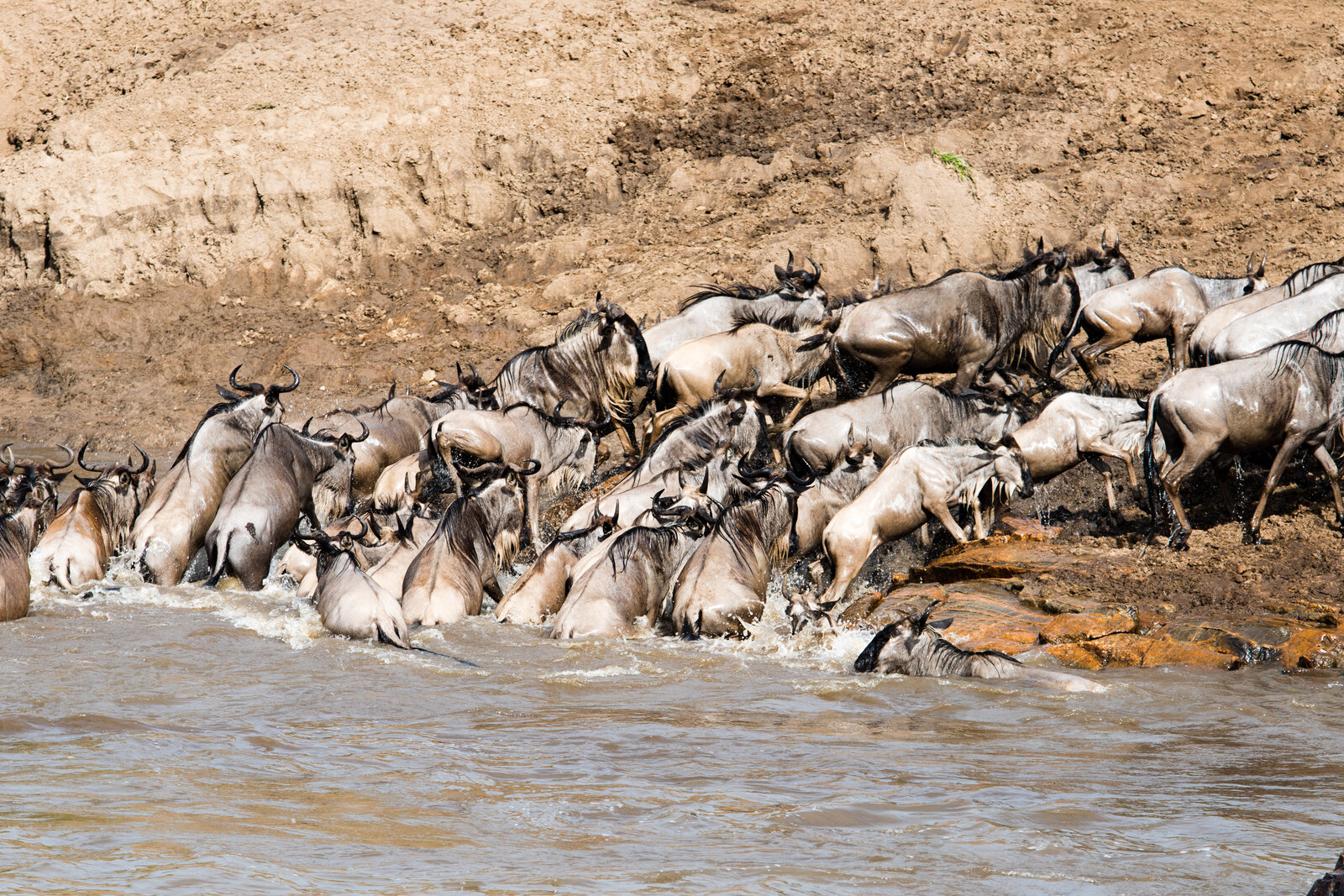
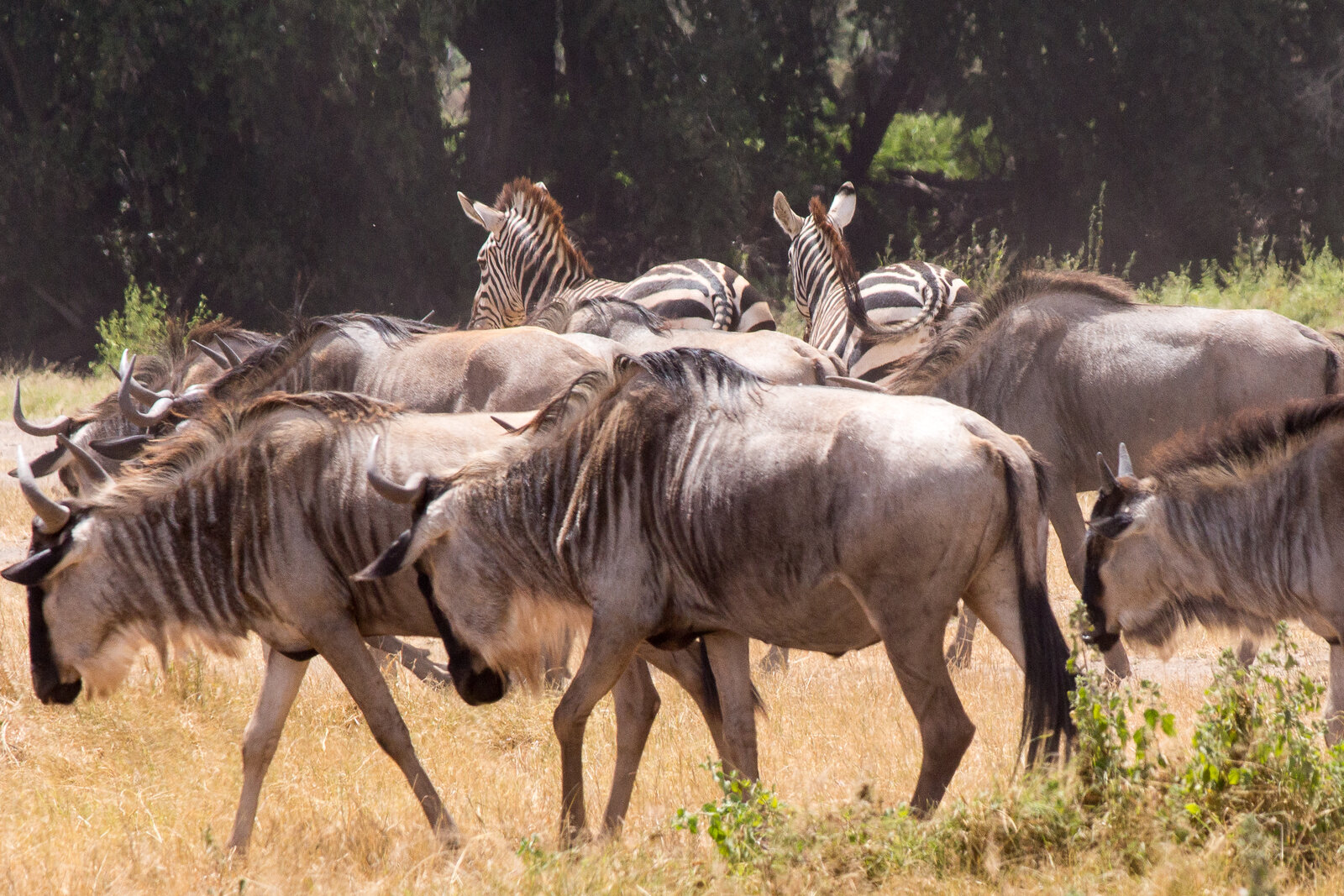
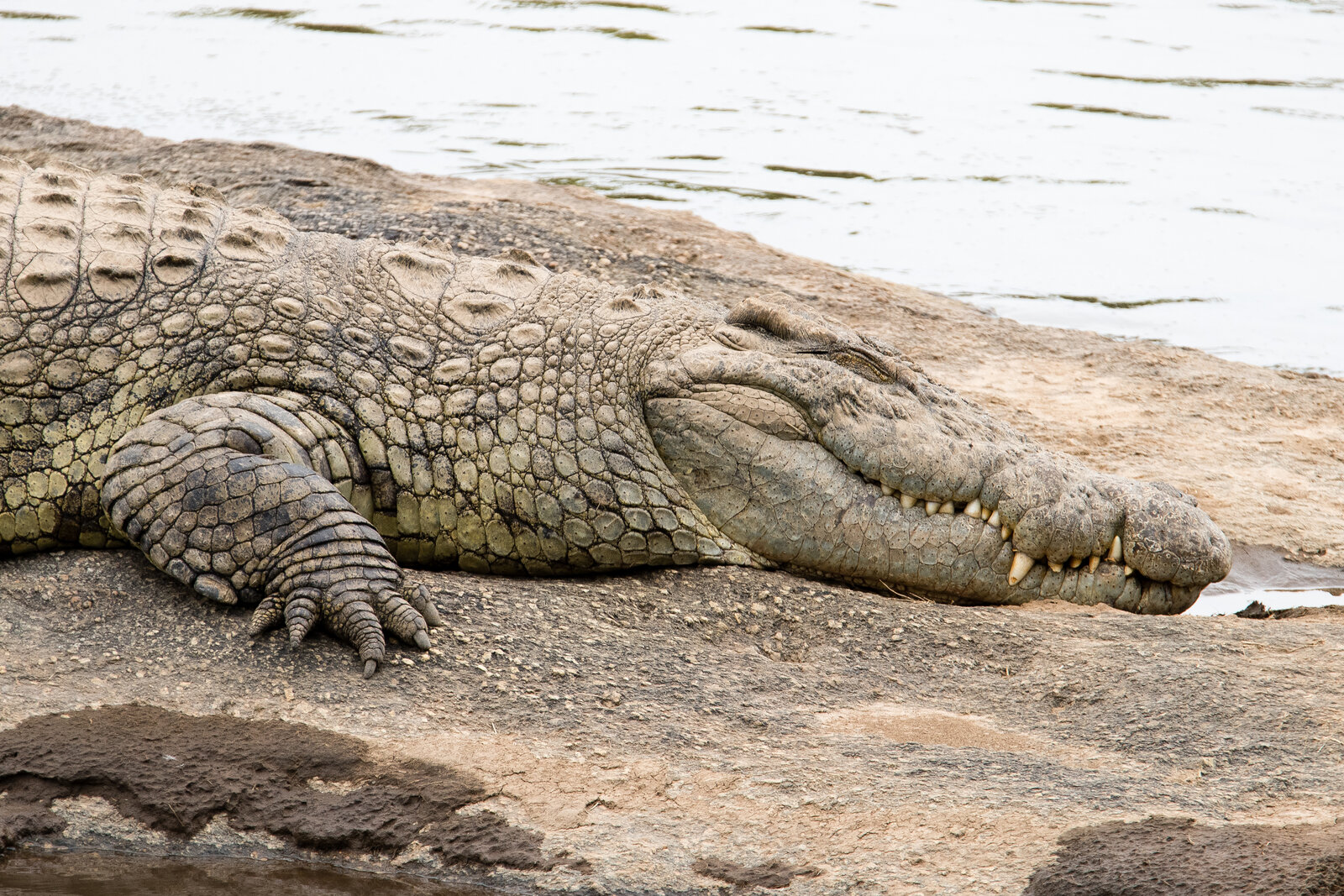
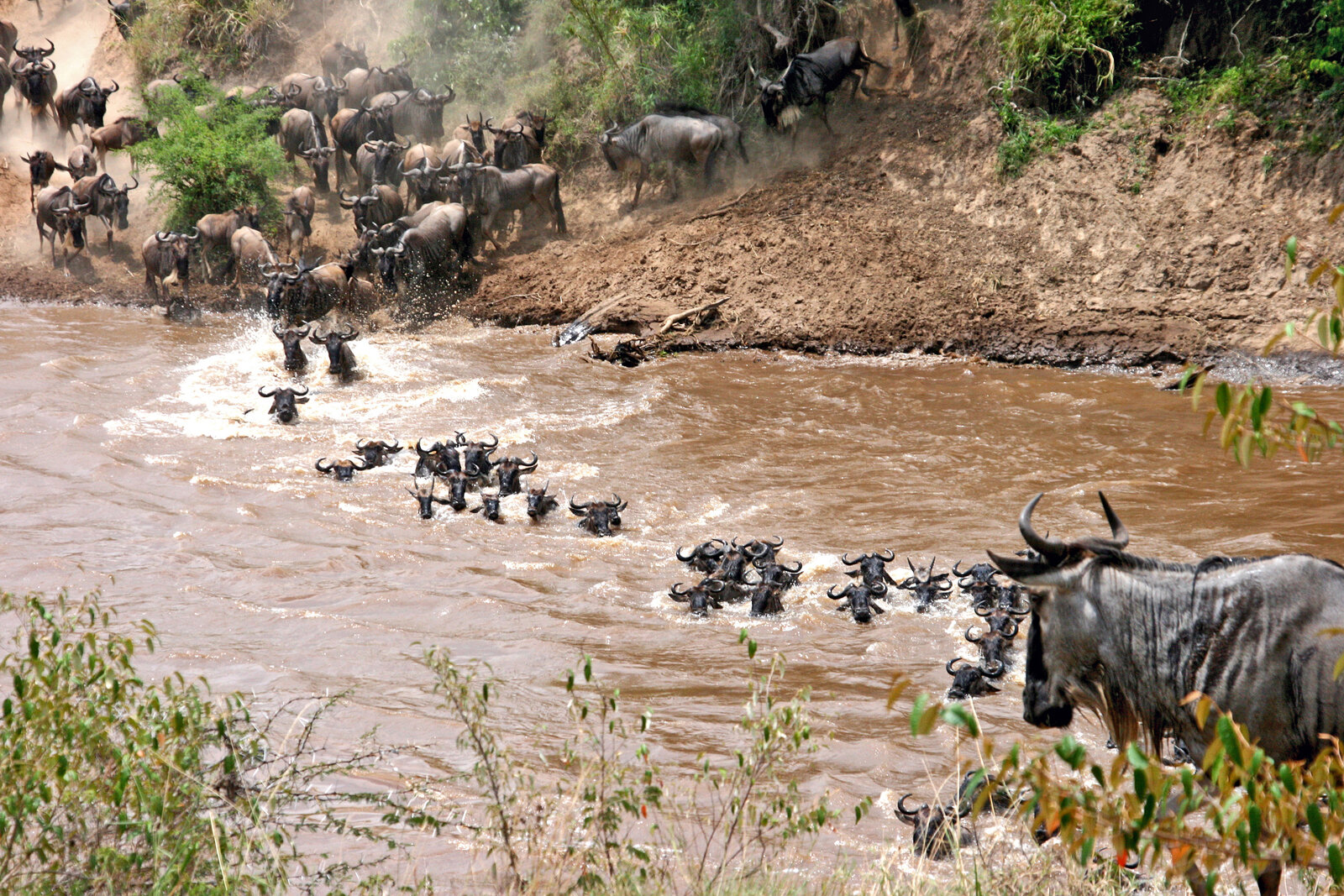
The Great Migration is a year-round loop, but its most heart-stopping chapter happens in the Masai Mara. From roughly July, the herds push north out of Tanzania's Serengeti and reach the Mara River — a barrier of fast brown water patrolled by some of the largest crocodiles in Africa. What follows is one of the rawest spectacles on earth: thousands of wildebeest and zebra bunch on the bank, tension building for minutes or hours, until one animal leaps and the whole mass follows in a thundering, dust-and-spray stampede across the water.
No two crossings are the same, and none can be scheduled. A herd may gather for hours and then turn back; it may cross at dawn or in the searing heat of afternoon; it may pour over at one bend while a mile downstream the water stays still. That unpredictability is exactly why a migration package matters — the point is not simply to visit the Mara, but to be positioned, guided and given enough time to witness a crossing when it finally breaks. Below we walk you package by package through the camps that put you in the front row.
The Best Camps for a Masai Mara Migration Package
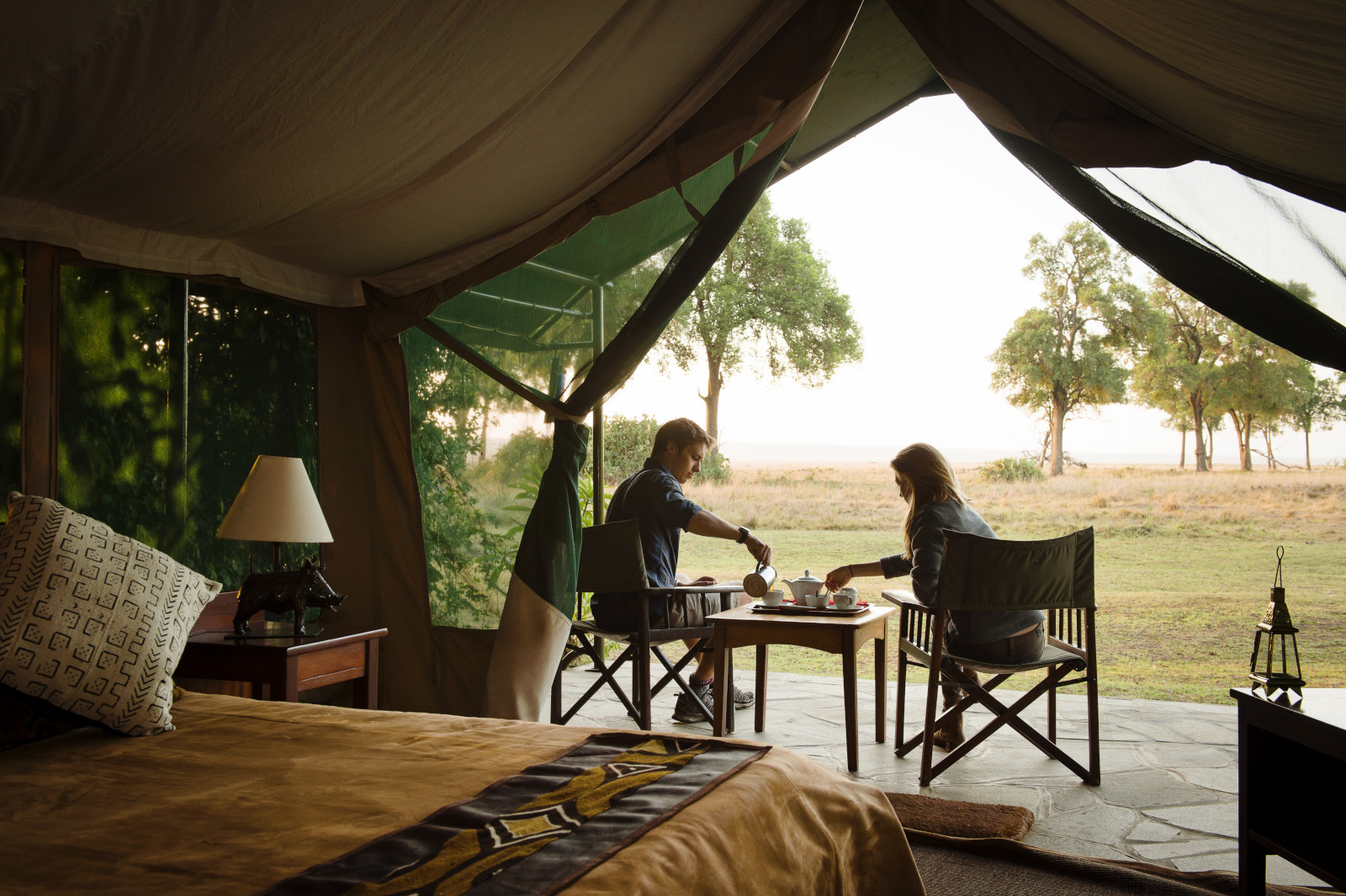
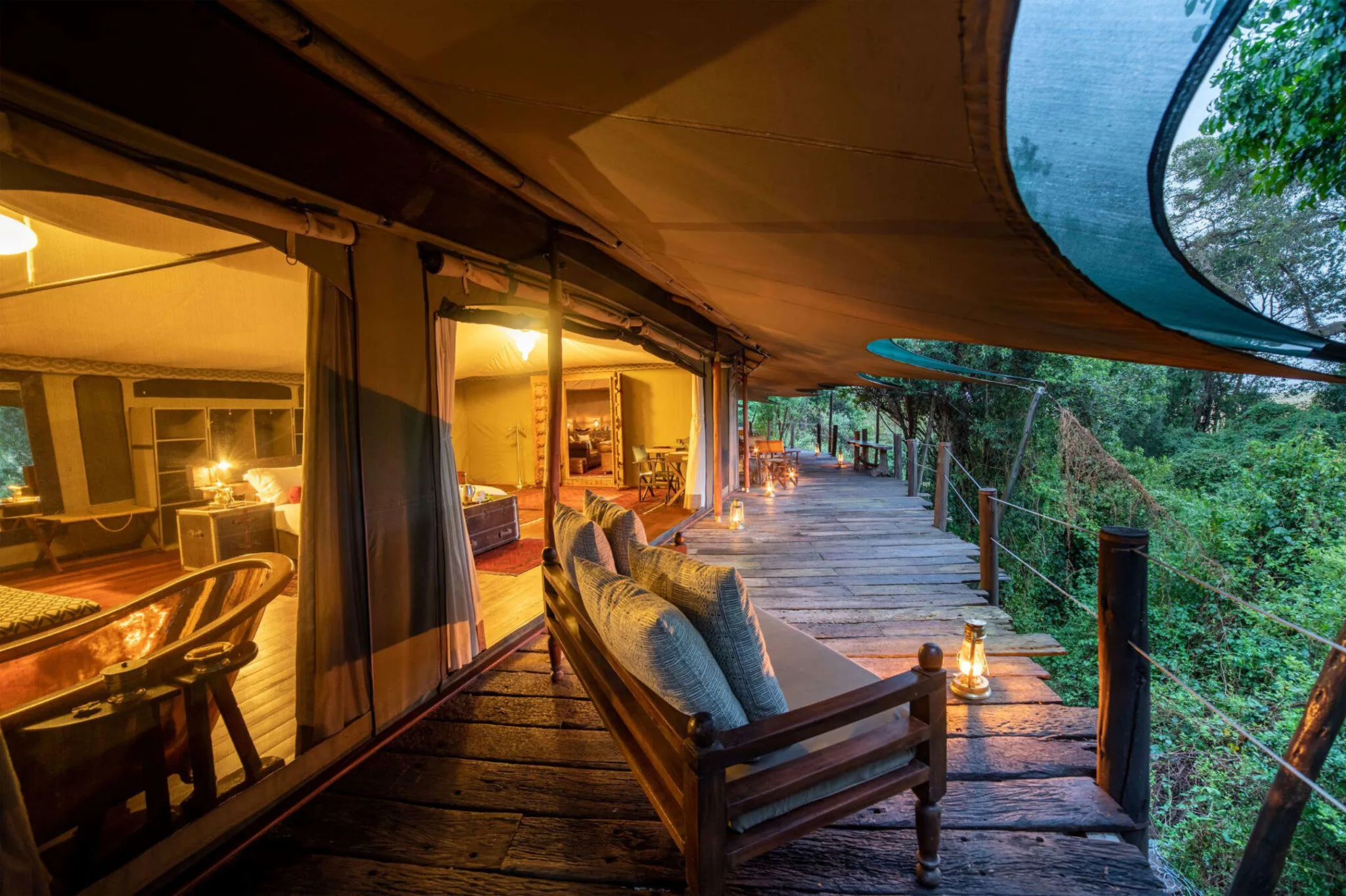
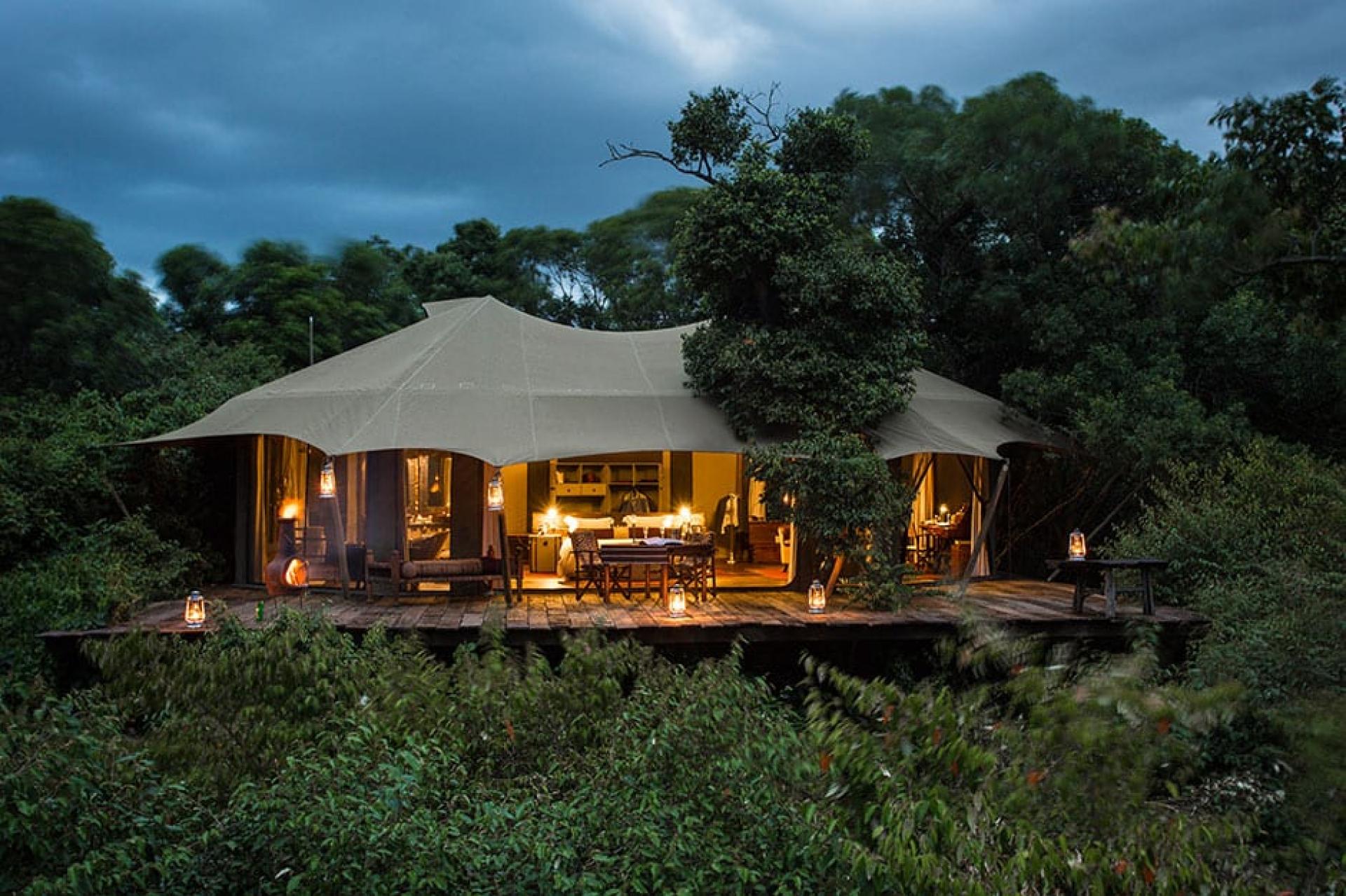
These are the camps we build our migration packages around — each one real, superbly guided, and positioned within striking distance of the classic crossing points on the Mara and Talek rivers. Slide through each gallery to step inside the suites, the beds and the surrounds. Rates are fully inclusive of meals, game drives and most activities.
1. Angama Mara — Above the Great Rift
Perched high on the Oloololo Escarpment with the whole Mara Triangle unrolling below, Angama Mara is the view that defined Out of Africa. Its glass-fronted tented suites hang on the edge of the Rift, each with a bed positioned to wake to the plains and a private deck suspended over the drop. Below the escarpment lie some of the Triangle's finest crossing points, and the camp's guiding — plus a picnic on the very spot the film was shot — is faultless. For the migration, few camps combine drama and comfort so completely.
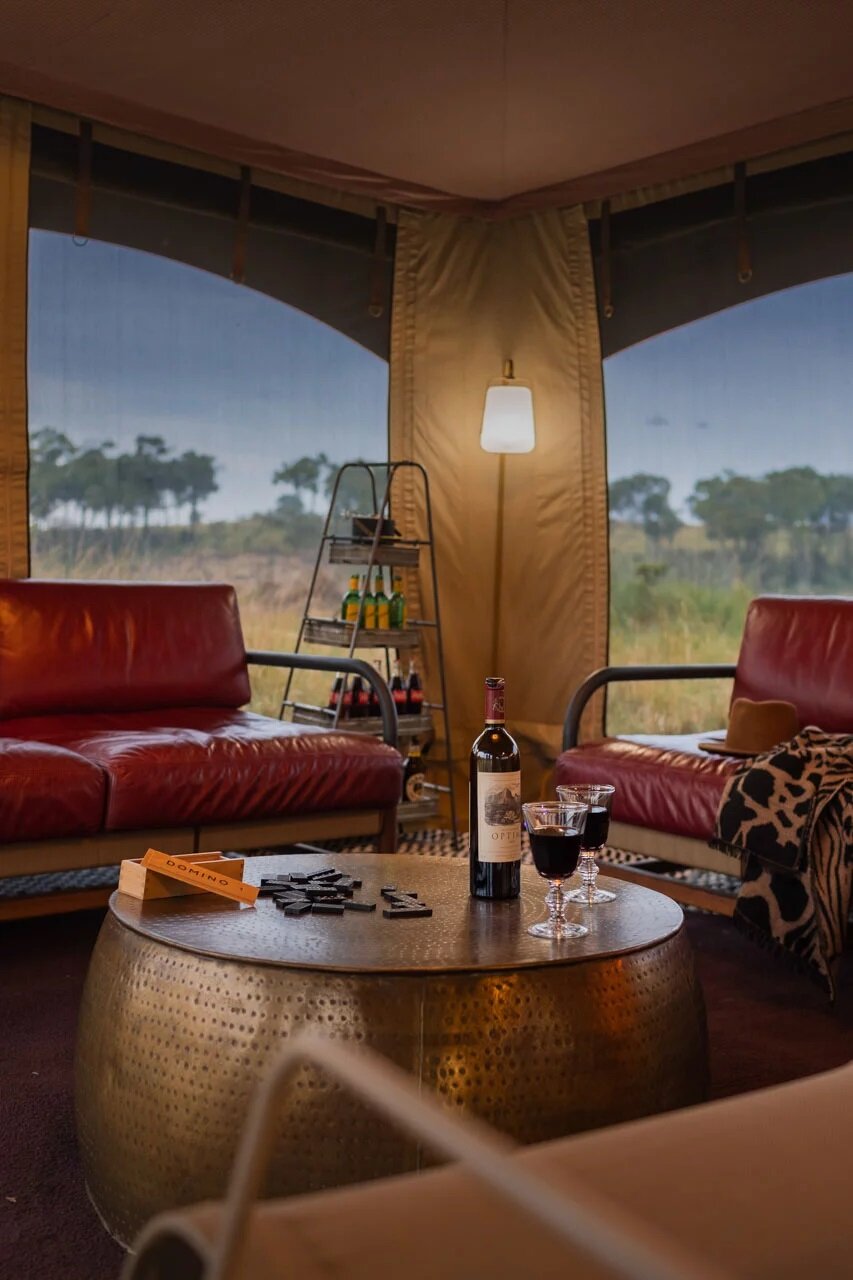
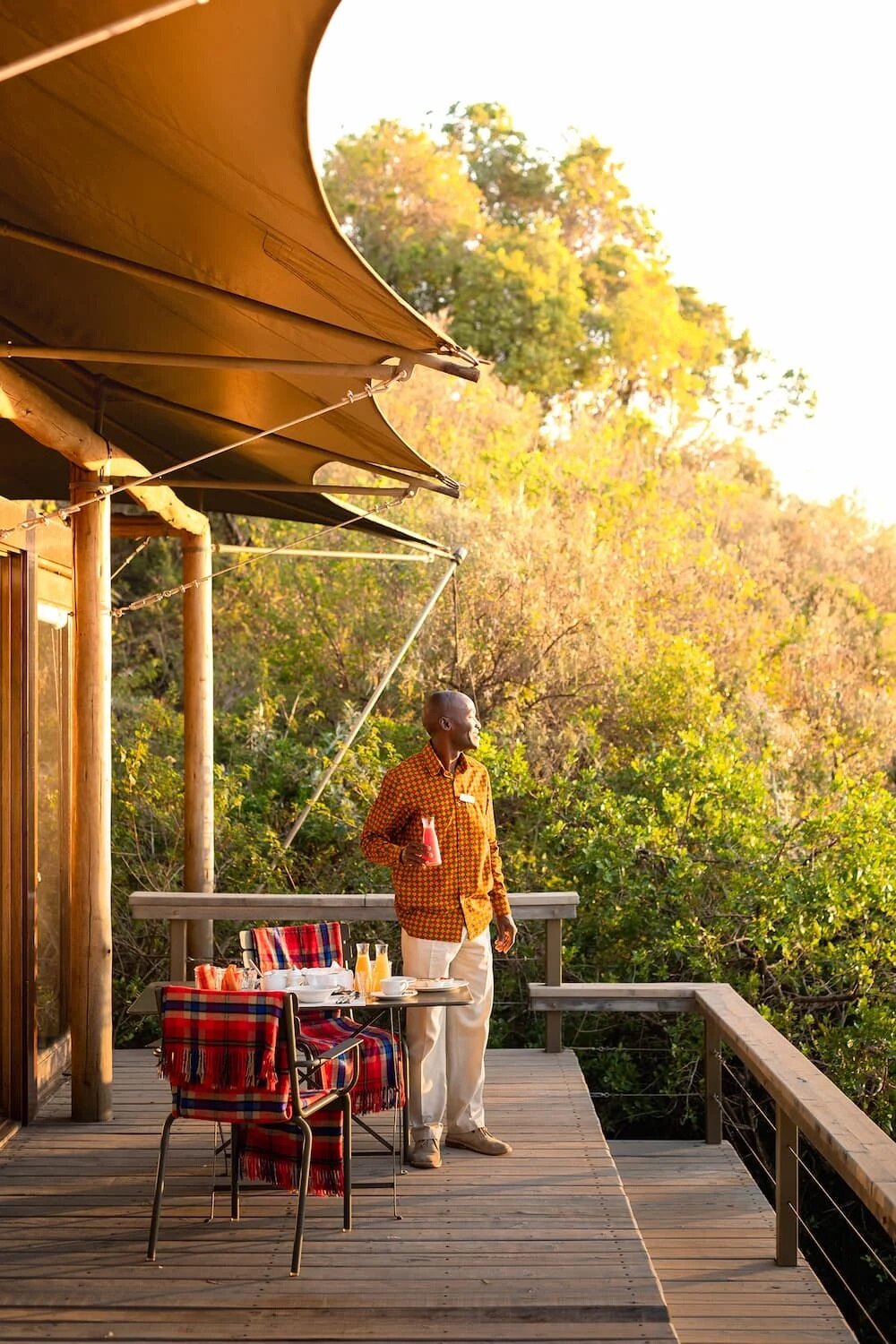
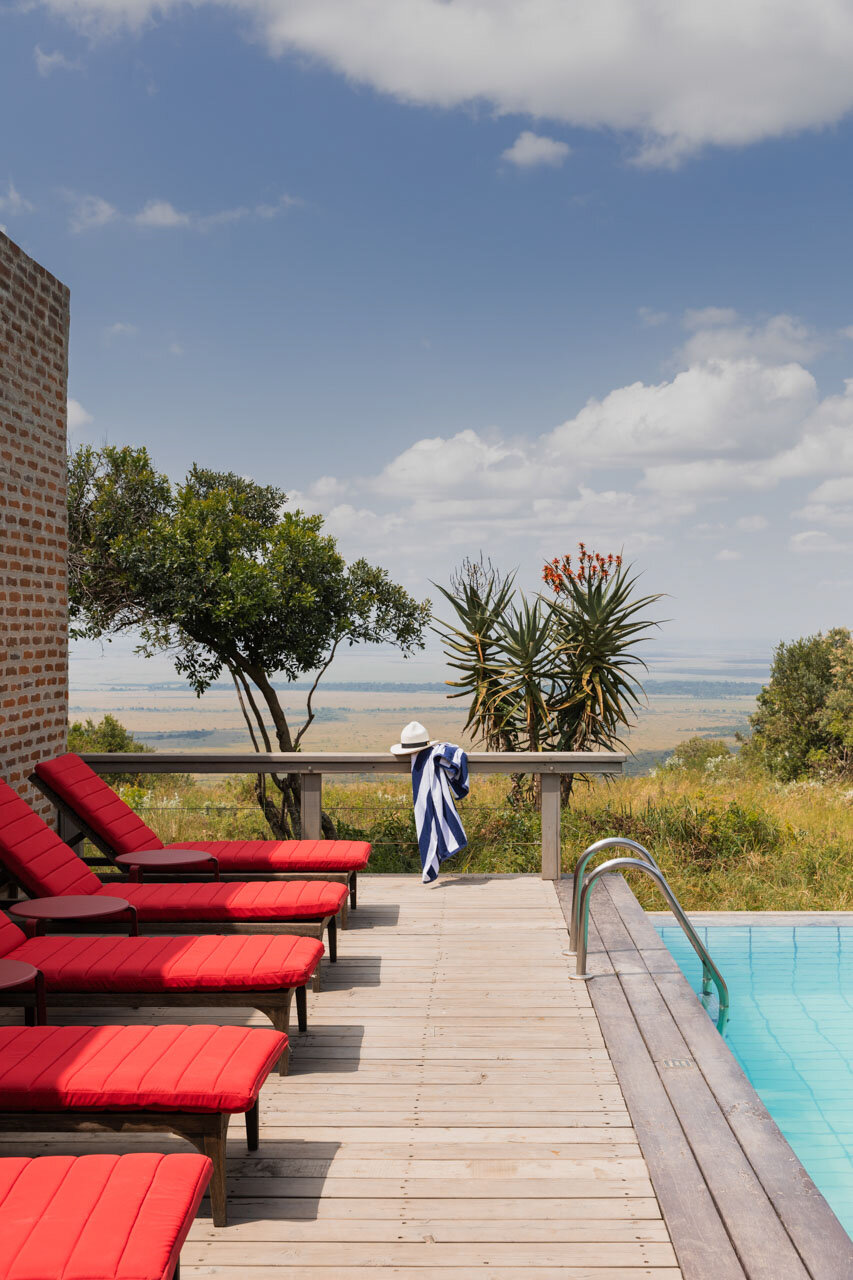
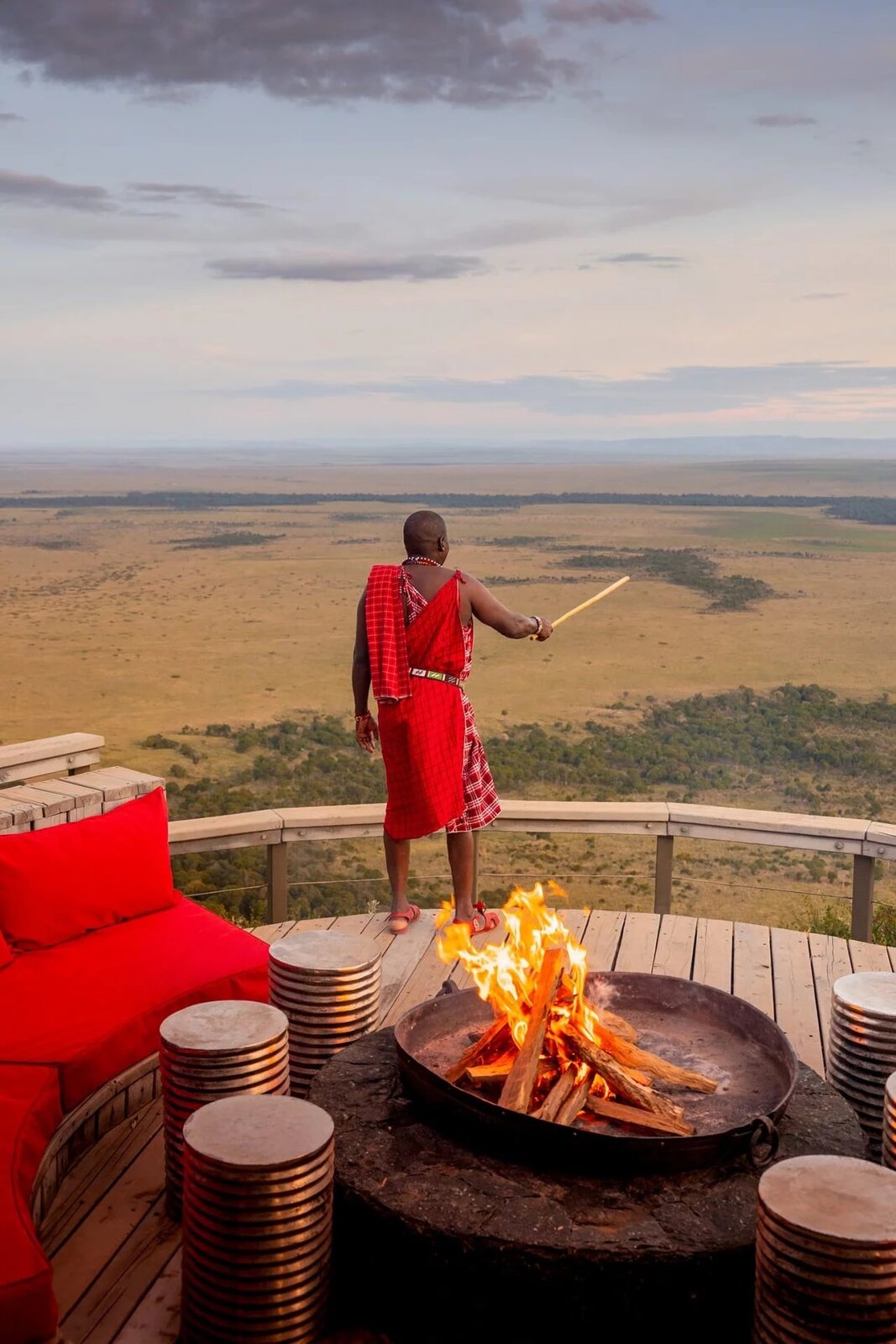
2. Governors' Camp — On the Mara River Itself
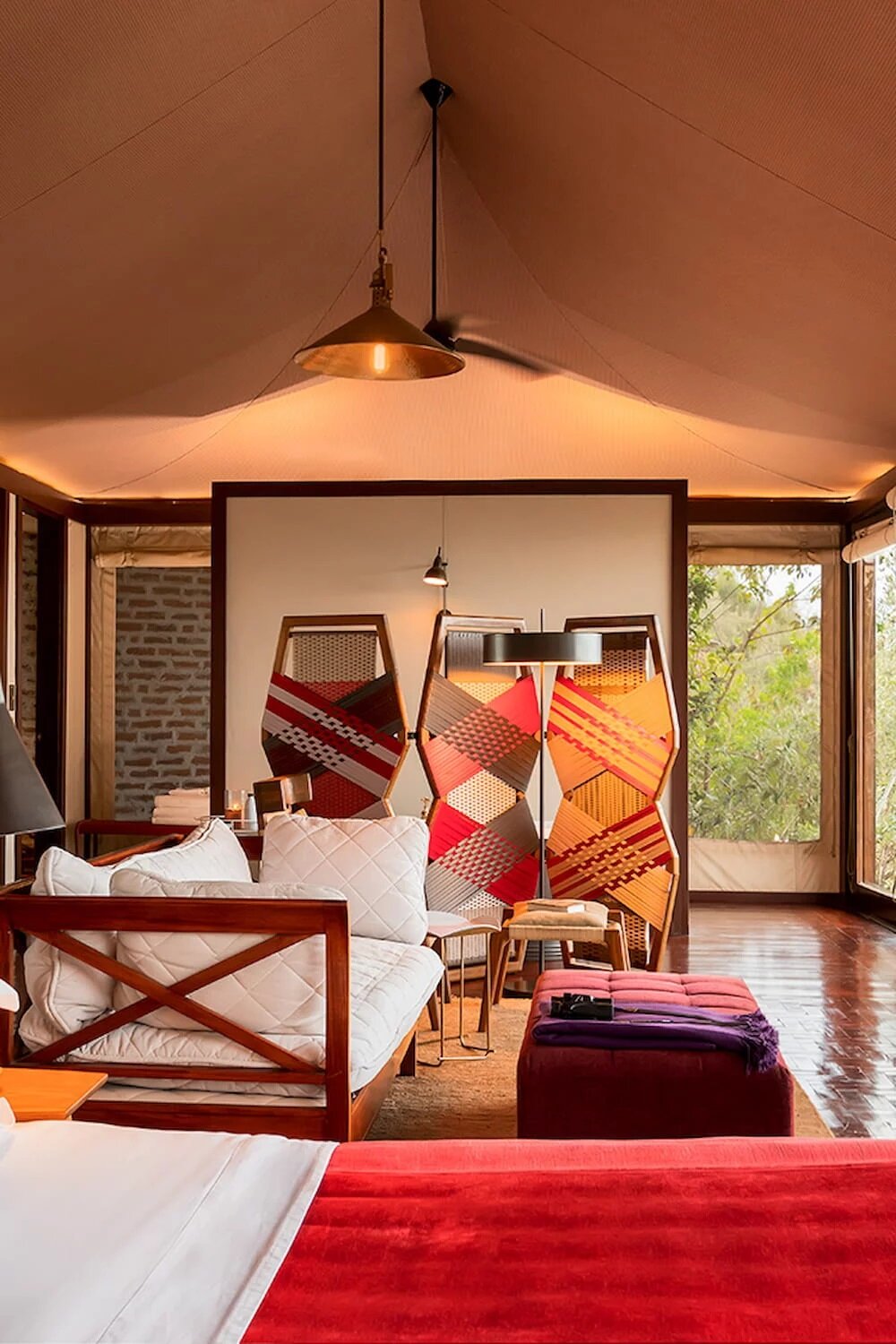
Set in a riverine forest along a prime bend of the Mara River in the heart of the reserve, Governors' Camp is Kenya's most storied safari address — the camp of the Big Cat Diary and generations of wildlife filmmakers. Classic canvas tents open straight onto the riverbank where hippo grunt through the night, and the location puts you minutes from the Marsh Pride and the main-reserve crossing points. This is old-school Mara safari at its most authentic, with guiding honed over half a century.
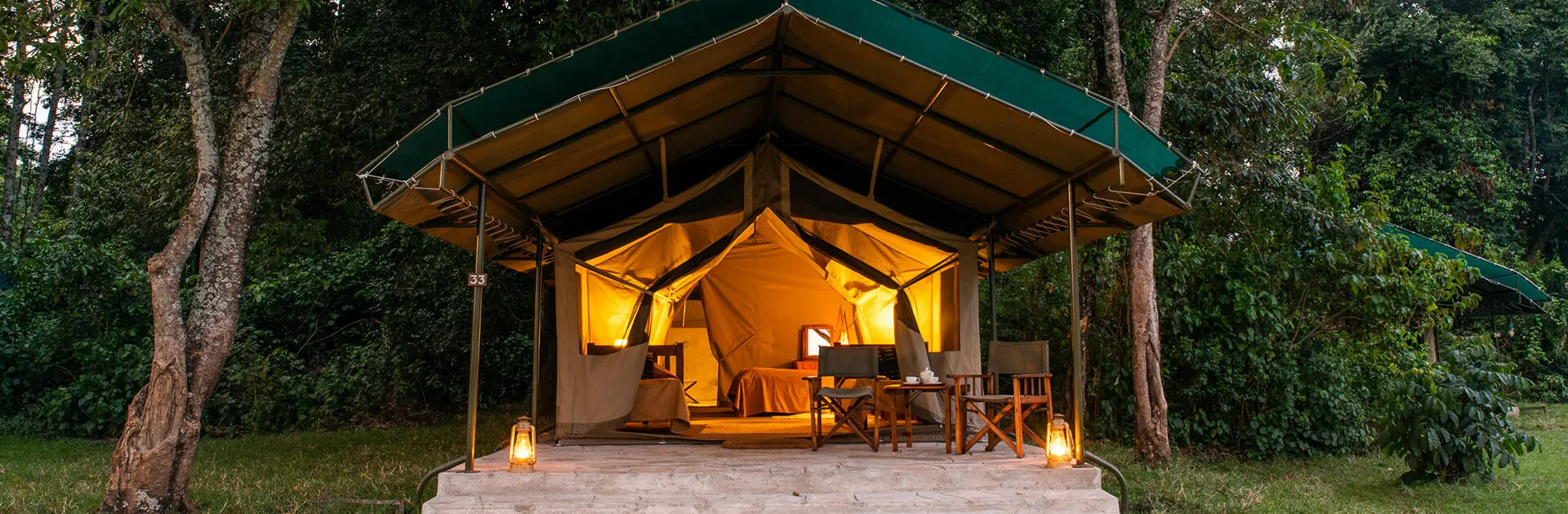
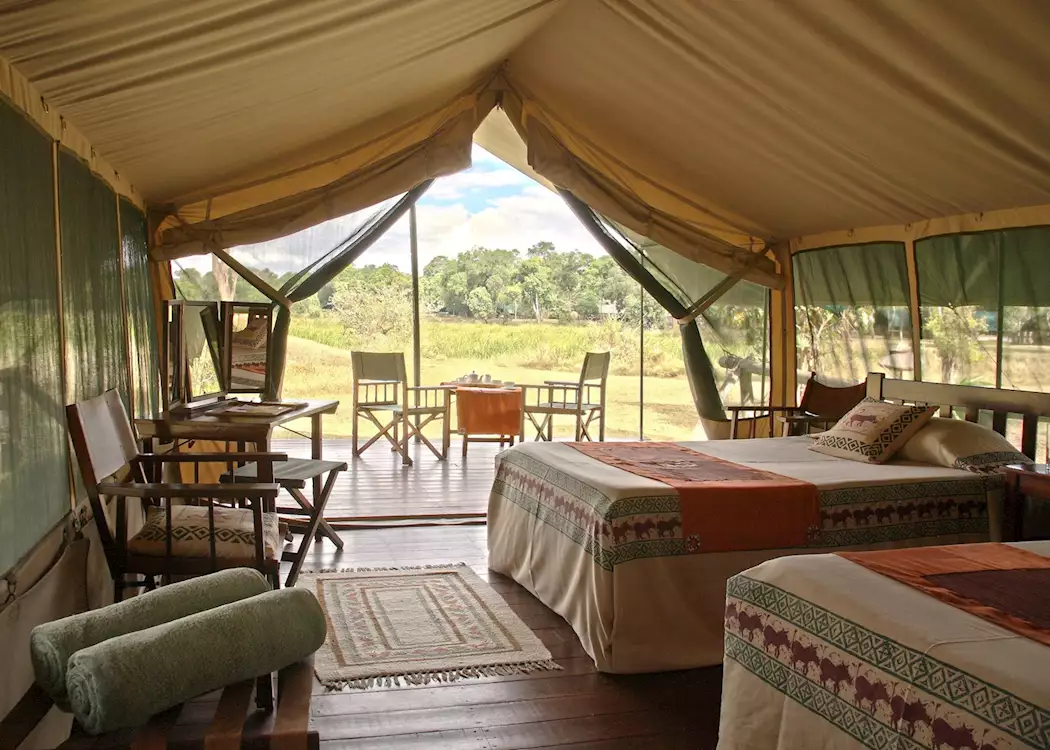
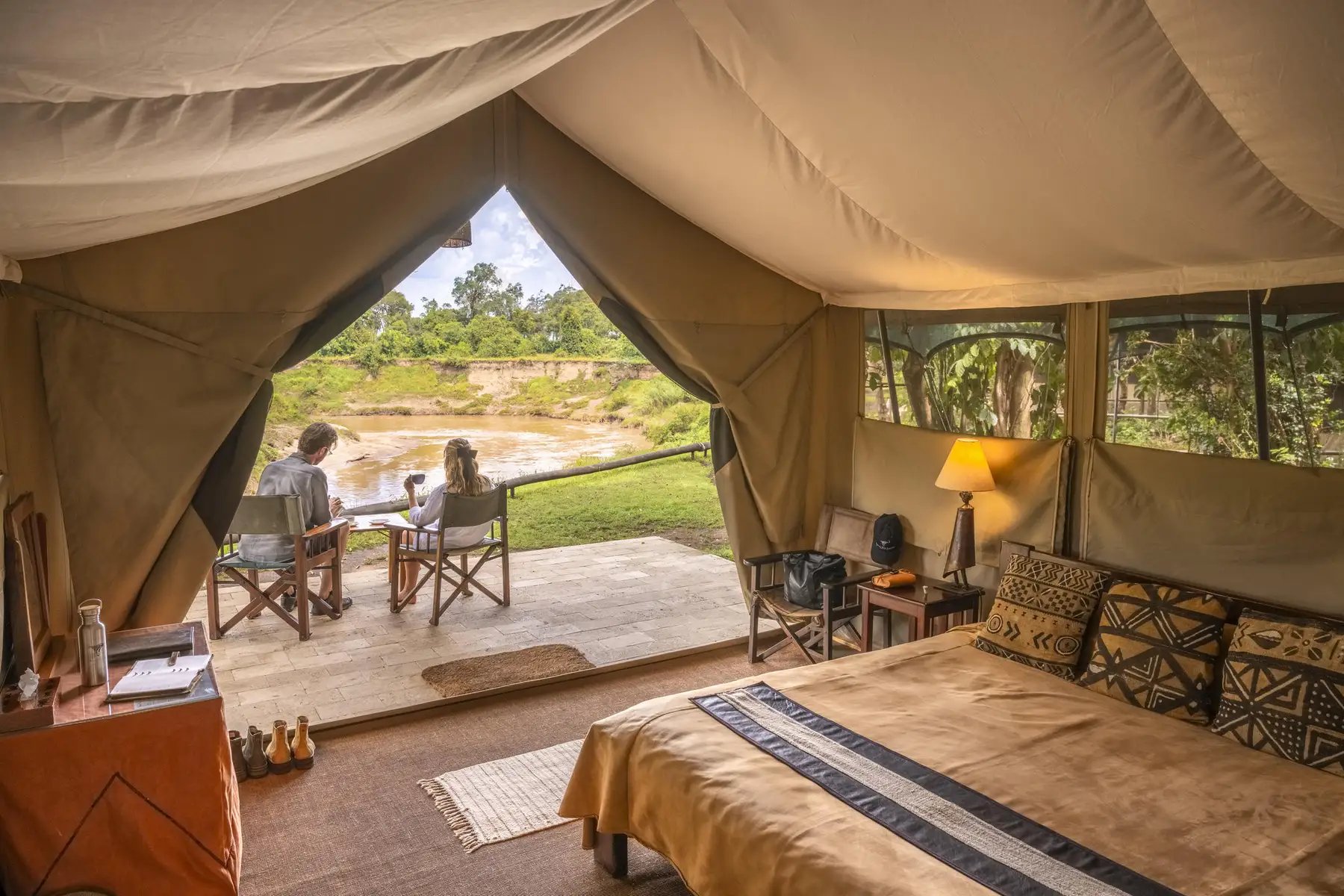
3. Mara Plains Camp — Olare Motorogi Conservancy
Small, low-impact and beautifully designed, Mara Plains sits on the Olare Motorogi Conservancy along the reserve's northern boundary — the same herds, a fraction of the vehicles. Just seven raised tented suites, dressed in copper, brass and Lamu antiques, look over a bend of the Ntiakitiak River; the guiding is among the best in Kenya, and the conservancy setting unlocks off-road viewing, night drives and walking that the main reserve does not allow. For a migration package that pairs the crossings with true exclusivity, it is hard to beat.
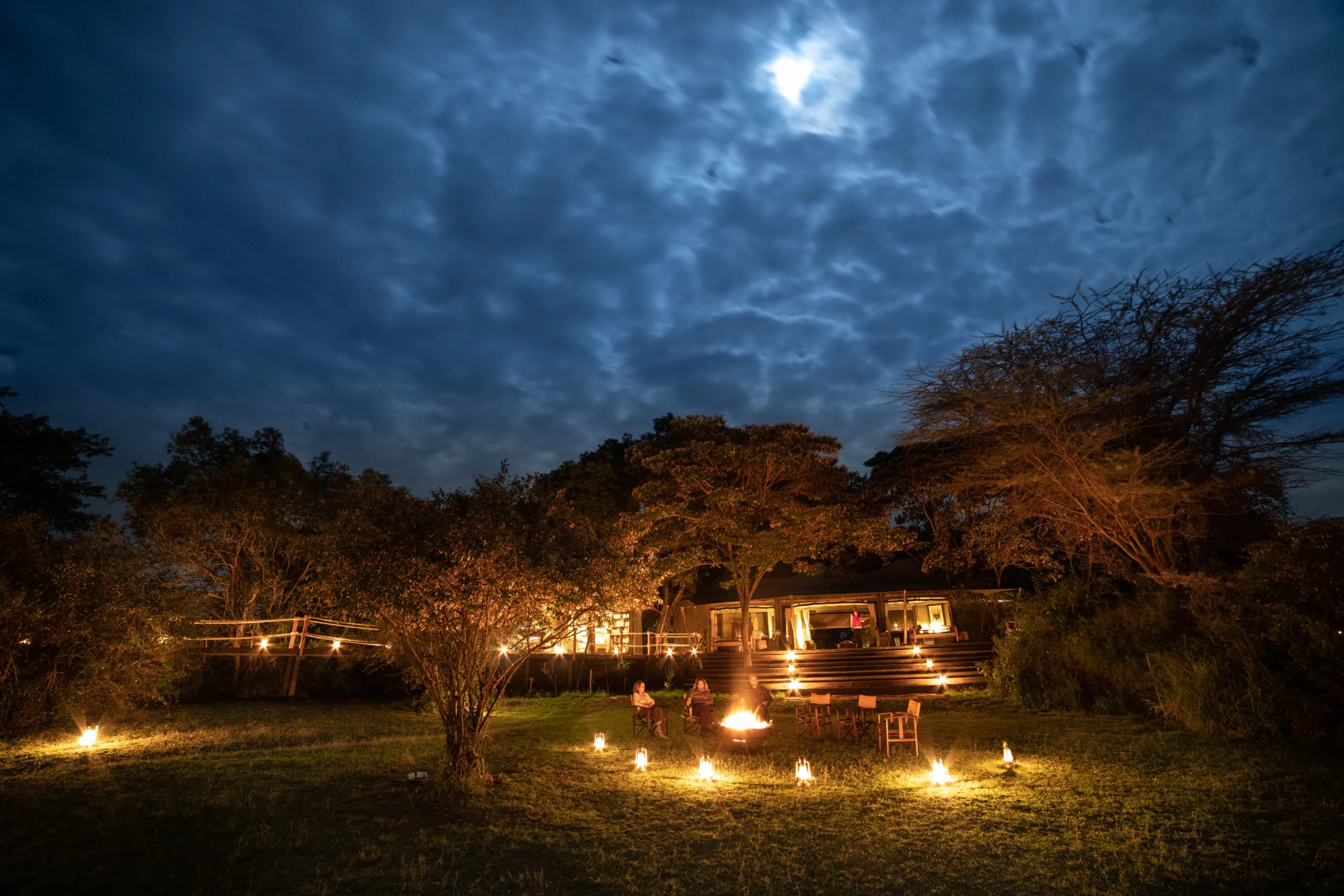
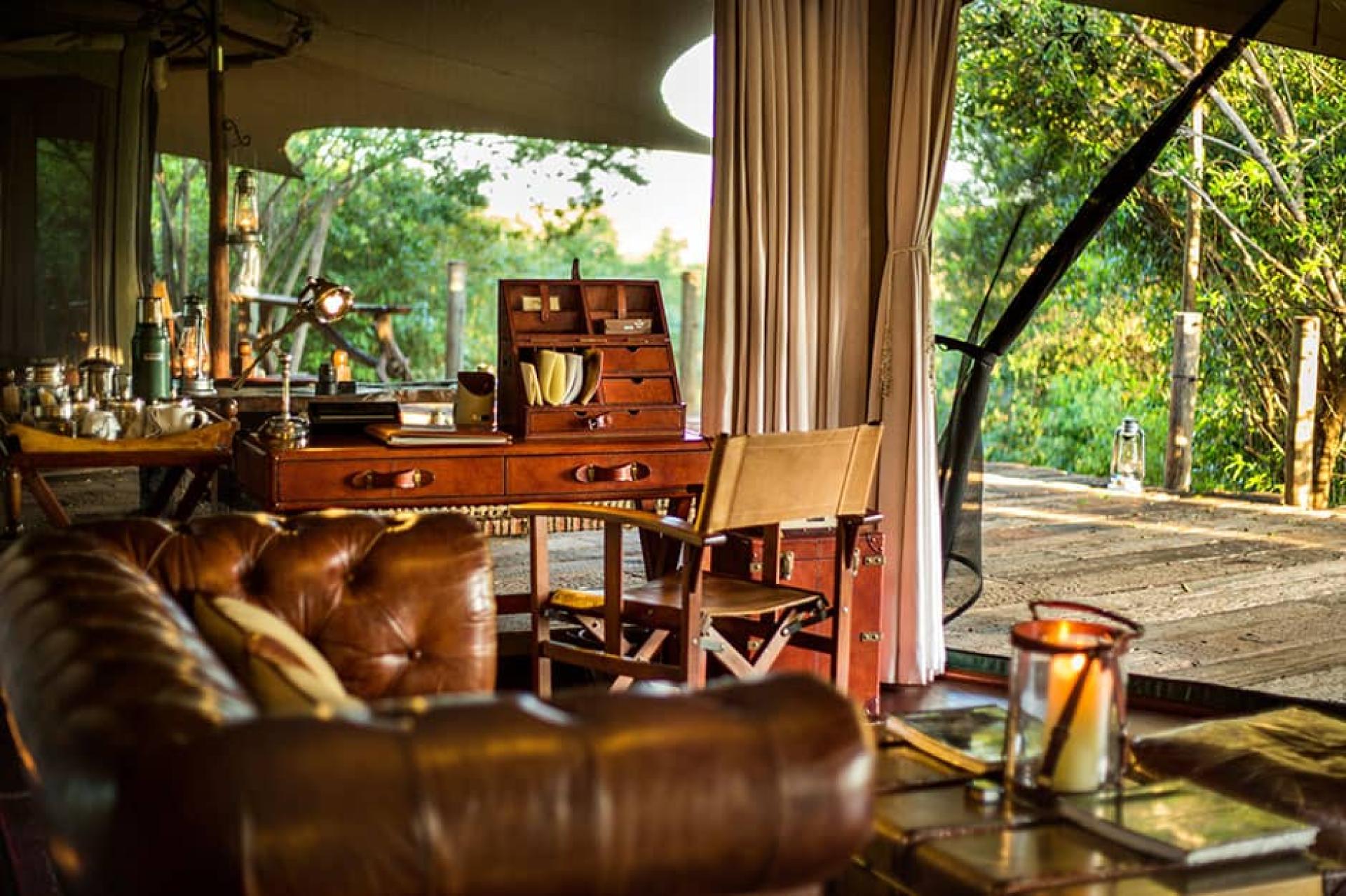
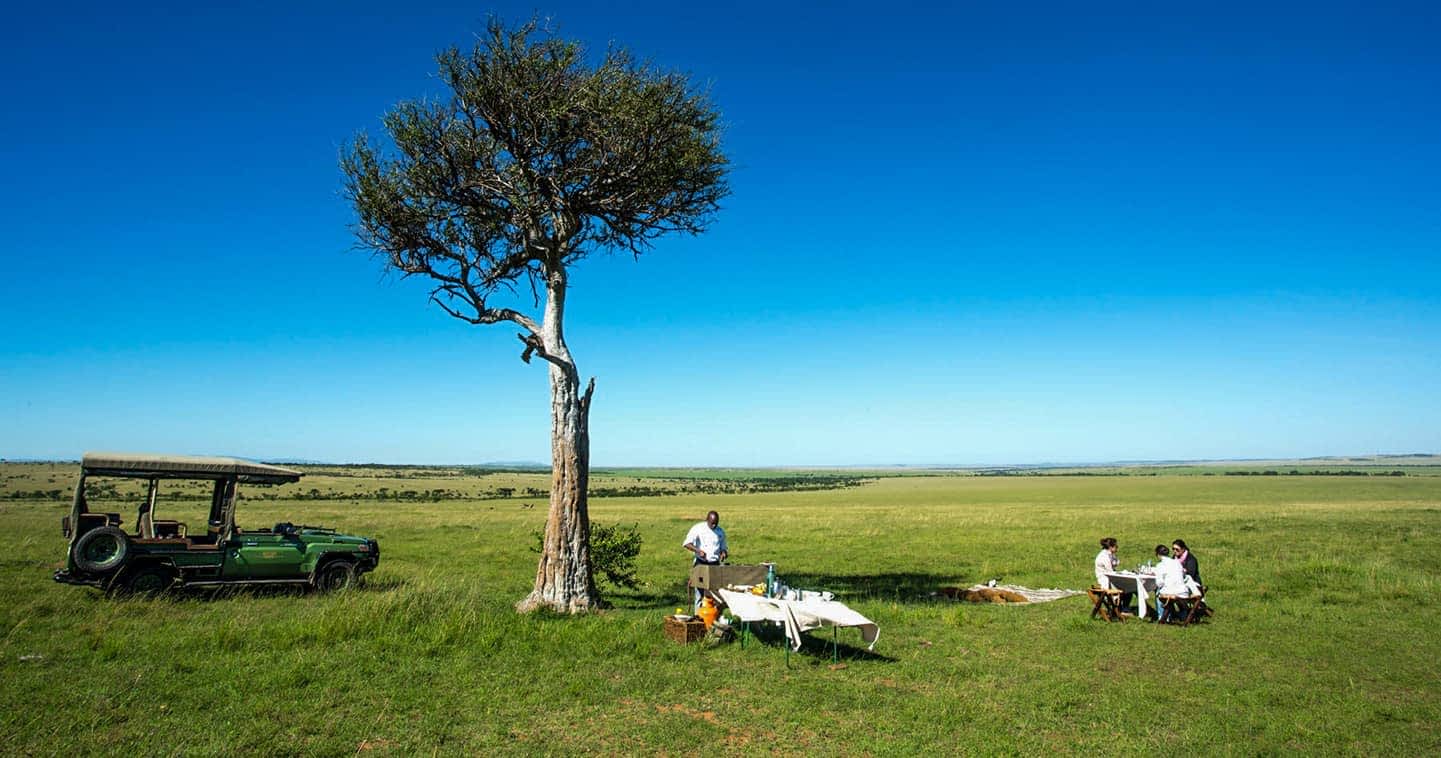
The Mara River Crossings — What You Are Actually Watching
Understanding the crossing helps you read the day and know when to hold your position. Wildebeest are creatures of grass and instinct: they follow the rains and the green flush, and the Mara River simply happens to lie across their path north. They gather in vast, nervous columns on the bank, driven by the herd behind and held back by the fear of the water and the crocodiles in it. When one animal commits, the dam breaks — and for a few extraordinary minutes the river becomes a churning mass of horns, hooves and spray, with crocodiles striking and the far bank a scramble of mud and survival.
Slide through the sequence below — the columns gathering, the leap, the stampede and the drama at the water's edge — the arc of a Mara crossing from tension to thunder.
Month-by-Month: When the Crossings Happen (July–October)
The river-crossing season is roughly July to October, and each month has its own character. These are guidelines, not guarantees — the herds move on rain, not the calendar — but they are the pattern we time packages around:
| Month | What to expect | Crossing odds |
|---|---|---|
| July | First herds arrive from the Serengeti; early crossings begin on the Sand and Mara rivers. | Building |
| August | Peak season — herds are in the Mara in force and crossings are frequent. Book far ahead. | Excellent |
| September | Often the finest of all — big crossings continue with slightly thinner crowds than August. | Excellent |
| October | Late crossings as the herds begin drifting back south; quieter, with good value and dramatic skies. | Good |
For the strongest odds of a river crossing, aim for August or September, and give yourself at least three or four nights so the timing works in your favour. July and October carry a little more risk but reward you with fewer vehicles and, often, better rates.
What a Masai Mara Migration Package Costs (2026 & 2027)
Migration season is peak season, so rates run higher than the rest of the year — but there is a package for every level. Rates below are per person per night, sharing, and include accommodation, meals, game drives and most activities; a fly-in from Nairobi's Wilson Airport (about one hour, versus a five- to six-hour road transfer) and Mara park or conservancy fees are added on top. As a guide for the 2026 and 2027 seasons:
| Tier | Per person / night | What the package delivers |
|---|---|---|
| Classic | US$450–750 | Well-run tented camps in or near the reserve, shared game drives, all meals — excellent value in the crossing season. |
| Premium | US$750–1,200 | Storied camps such as Governors' on the Mara River, a private guide and vehicle, fly-in and superb food. |
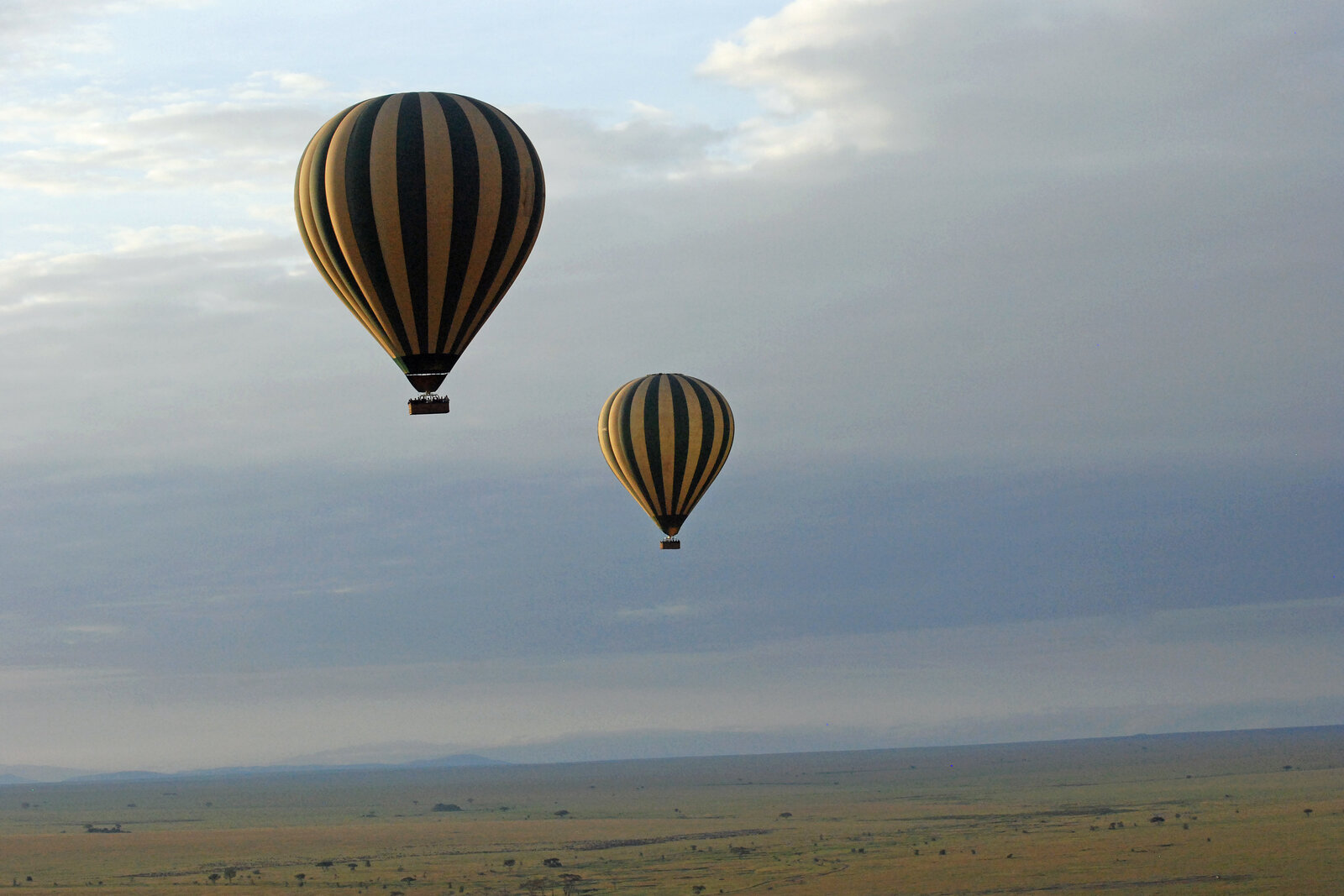
| Luxury | US$1,200–1,600+ | Flagship camps like Angama Mara and Mara Plains, exclusive conservancy access, private guiding and helicopter or balloon add-ons. |
Pricing from 2026 into 2027: The finest Mara camps lock their migration-season rates roughly 12 to 18 months ahead, which means the 2027 July–October window is pricing now at or very close to the 2026 figures above. There will be modest adjustments — typically 3 to 6 percent annually — but nothing that changes the tier or the value equation. If you are booking for the 2027 migration season, securing your camp today usually locks in today's rate or very close to it, and guarantees your first-choice suite at the peak of the crossings when availability is tightest. The camps sell out fastest in August and early September, so forward planning pays twice over.
A note on fees: non-resident Masai Mara reserve entry runs about US$200 per person per day in the high season (July–December); the private conservancies charge their own conservancy fee, usually bundled into the camp rate. We build all of this into a single, clear per-person price so there are no surprises.
Sample Masai Mara Migration Packages
These are shapes, not templates — every package we build is timed around the herds and tailored to you. Two of our favourites for the crossing season:
The 4-Night Mara Crossing Package
- Day 1: Fly Nairobi Wilson to the Mara; afternoon game drive as you settle in and the guide starts tracking herd movement.
- Days 2–3: Full days chasing the crossings — early starts on the river, packed breakfasts in the bush, and the flexibility to hold position for hours when a herd is gathering.
- Day 4: A final dawn drive, then fly back to Nairobi. Ideal as a focused crossing add-on to a beach or wider Kenya trip.
The 7-Night Mara Migration Package
- Nights 1–3 — Main reserve: Governors' Camp on the Mara River, in the thick of the crossings and the big-cat action.
- Nights 4–6 — Private conservancy: Mara Plains or a conservancy camp for off-road viewing, night drives and walking, the same herds with far fewer vehicles.
- Night 7 — Escarpment finale: Angama Mara for the Rift-edge view, a dawn balloon over the plains and a picnic on the Out of Africa koppie.
Both can flex up or down in comfort, and either can be paired with Amboseli, Samburu or the Kenyan coast for a longer journey.
Reserve or Conservancy? Getting the Most From Your Package
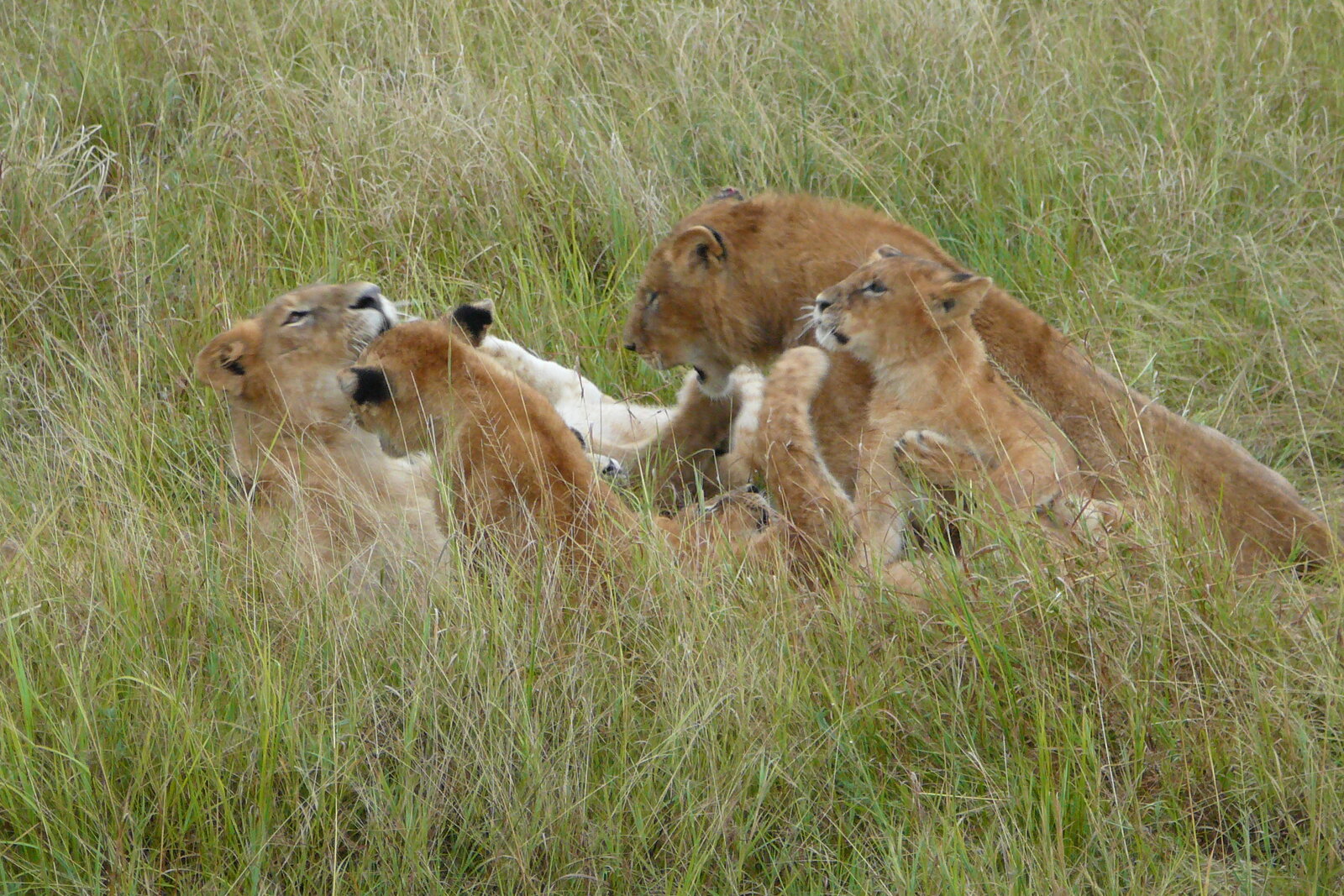
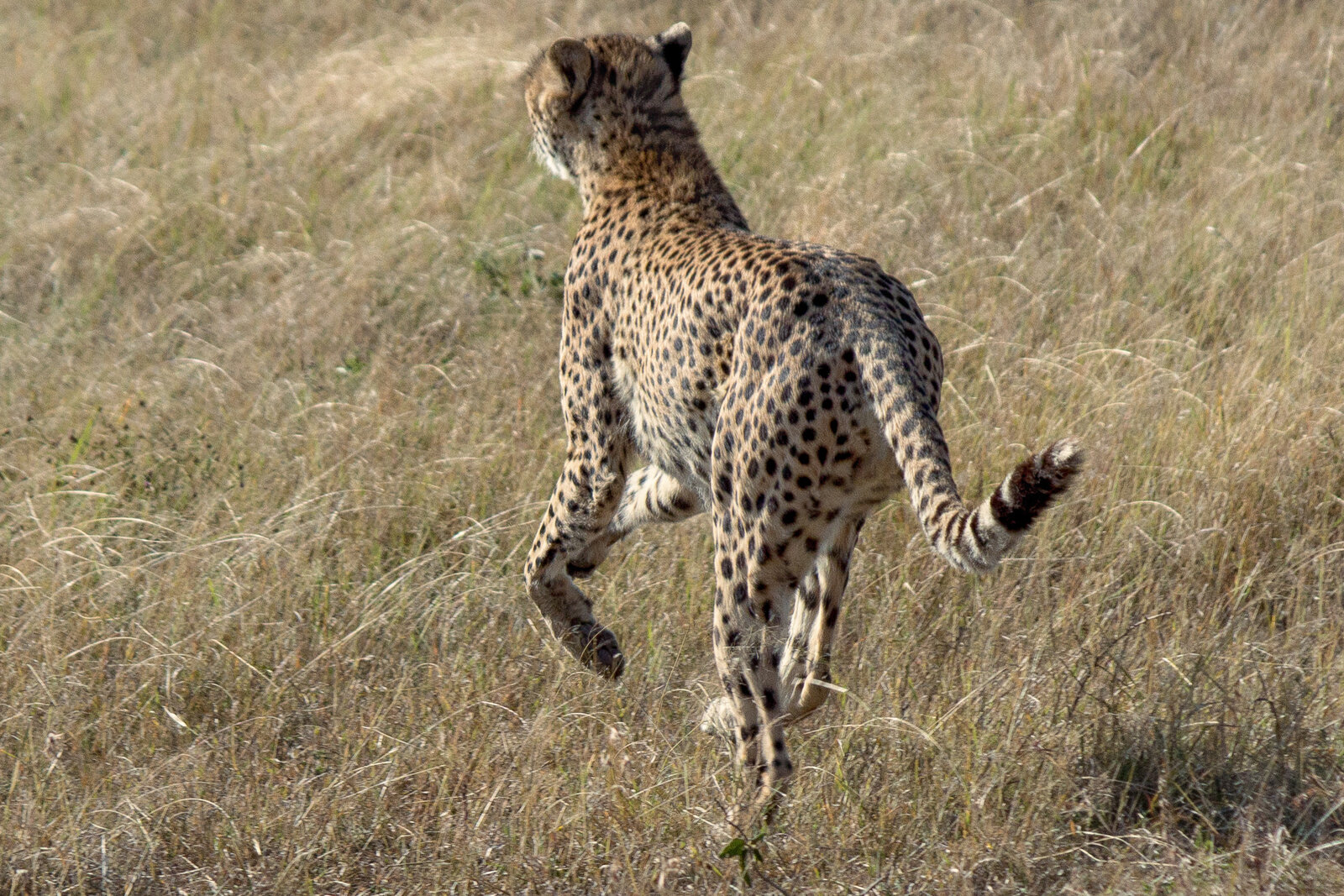
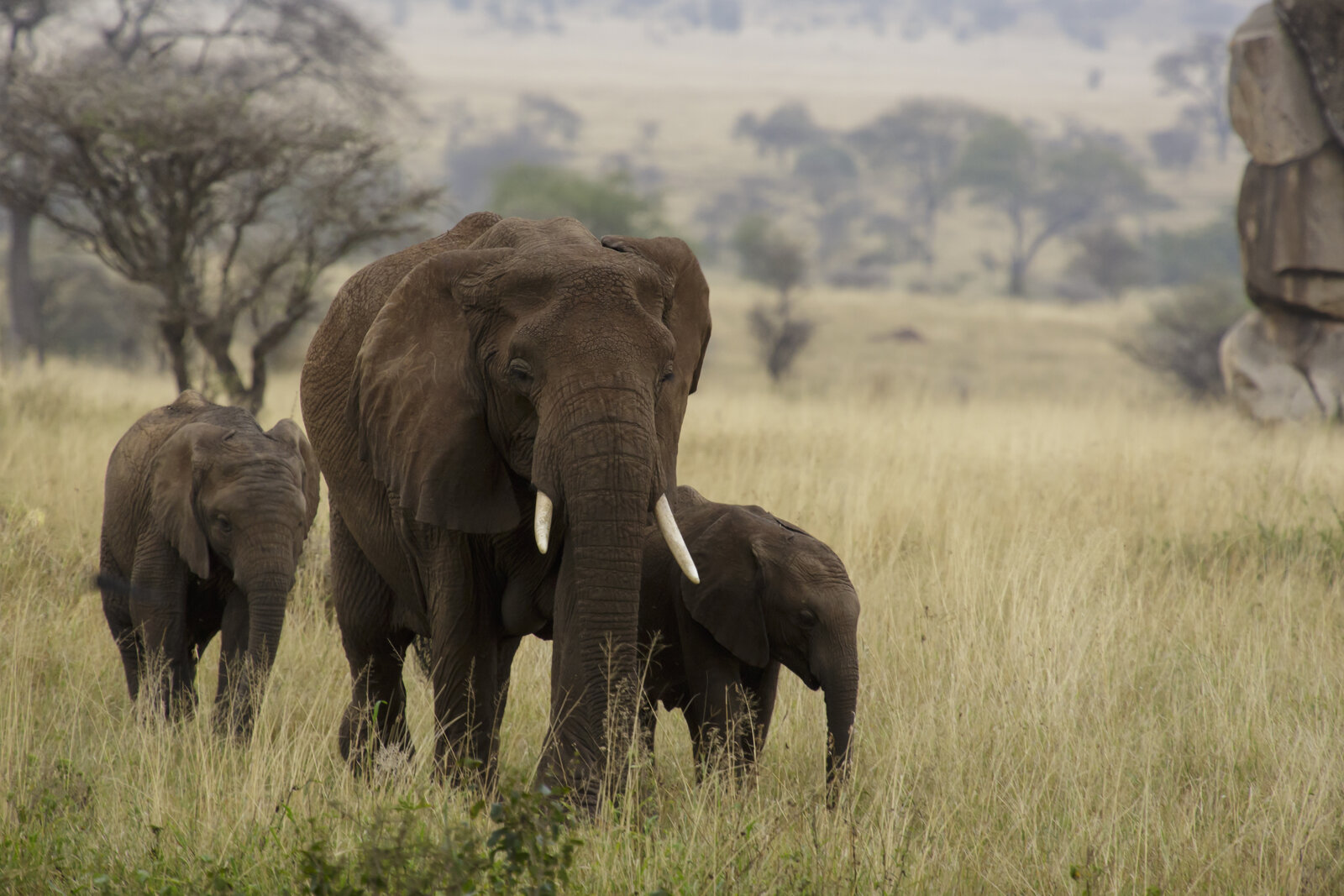
The crossings themselves happen on the Mara River, which lies inside the national reserve — but the private conservancies that ring the reserve transform the rest of your safari. In the main reserve you are on the river for the crossings but sharing sightings with more vehicles, and you must stay on the tracks. In the conservancies — Olare Motorogi, Mara North, Naboisho — vehicle numbers are strictly capped, and off-road driving, night drives and guided walks are allowed, so your big-cat and general game viewing is more intimate. The strongest migration packages combine both: reserve nights for the crossings, conservancy nights for exclusivity.
Plan Your Masai Mara Migration Package With Beyond Africa
We are a Cape Town-based, tailor-made safari house, and the Mara crossings are one of the journeys we love most. We know these camps and their guides personally, we watch the herd movement reports as your dates approach, and we build the flying, the timing and the reserve-and-conservancy mix so you have the best possible chance of standing on a riverbank when a crossing breaks. You travel with a private guide who reads the Mara each morning and enough time on the ground to let the drama come to you.
Ready to plan your Masai Mara Great Migration package? 👉 Request a tailor-made Mara migration quote → 👉 Browse our Kenya safari packages → 👉 WhatsApp us: +27 78 471 4852