Key Takeaways
- January–February: Serengeti calving season — the greatest wildlife birth event on Earth. Up to 8,000 calves born daily on the Ndutu plains, with peak predator action. Botswana enters its affordable green season.
- March–May: Africa's quietest, cheapest months. Long rains in East Africa, shoulder/low season pricing across the continent. Surprisingly good game viewing in reserves that remain open.
- June–July: The great migration reaches the Grumeti River (June) and crosses into Kenya (July). South Africa's dry season begins. Botswana's Okavango flood peaks. Victoria Falls at full thunder.
- August–October: Peak season everywhere. Mara River crossings (Aug–Sep), Okavango mokoro (Aug–Sep), South Luangwa walking safaris (Sep–Oct), Kruger dry season. The best — and most expensive — months for safari across the continent.
- November–December: Short rains return to East Africa. Southern Africa's wet season begins but festive season (mid-Dec) brings peak pricing and family celebrations. The Serengeti migration drifts south for calving again.
- Year-round options: South Africa's Eastern Cape (malaria-free), gorilla trekking in Uganda/Rwanda, and Zanzibar beach extensions work in every month.
TL;DR: There is no single "best month" for an African safari — every month has a destination at its peak. January–February = Serengeti calving. June–July = Grumeti crossings + Okavango flood. August–September = Mara River crossings + continental peak. April–May = lowest prices, emptiest camps. Year-round = South Africa's Eastern Cape, Uganda/Rwanda gorilla trekking. The "worst" time is the month you didn't book.
The question "when is the best time for an African safari?" is the most common — and most misleading — question in safari planning. It implies there is one correct answer, when in reality Africa's safari calendar is a rolling, continent-wide sequence of wildlife spectacles that never stops. While the Masai Mara fills with wildebeest in August, Botswana's Okavango Delta is at peak flood. While South Africa's Kruger enters dry-season prime in June, the Serengeti's calving season is a distant memory and its western corridor is alive with river crossings. Every month has a destination at its absolute best.
This guide flips the usual approach. Instead of asking "when should I go?" and getting a vague "July to October," we answer the more useful question: "What is happening where, right now?" — month by month, destination by destination, with the wildlife events, weather patterns, crowd levels and pricing signals you need to make a smart booking for 2026.
| Month | Best Destinations | Wildlife Highlights | Weather | Crowds | |
|---|---|---|---|---|---|
| January | Southern Serengeti, Ngorongoro, South Africa | Calving season, predator hunts, summer birdlife | Warm/hot | Medium | |
| February | Serengeti Ndutu, Botswana, Namibia | Peak calving, green season birdlife, Kalahari meerkats | Hot/wet | Low–Med | |
| March | Kenya (pre-rains), Uganda, Rwanda | Quiet Mara, gorilla trekking shoulder, migration moving | Warm/showers | Low | |
| April | South Africa, Namibia (end of green) | Long rains East Africa, SA autumn game viewing | Rainy (EA) | Lowest | |
| May | South Africa (Kruger), Western Serengeti | Kruger dry season starts, migration enters western corridor | Cooling | Low | |
| June | Tanzania (Grumeti), South Africa, Botswana | Grumeti River crossings, Okavango flood arrives, Kruger peak | Dry/cool | Medium | |
| July | Kenya (Mara), Botswana, Victoria Falls, Zambia | Migration enters Kenya, Okavango peak, Vic Falls peak flow | Dry/cool | High | |
| August | Kenya (Mara crossings), Botswana, SA, Tanzania | Mara River crossings, continent-wide peak game viewing | Dry | Highest | |
| September | Kenya, Zambia, Zimbabwe, Botswana, SA | Mara crossings continue, walking safaris, dry-season climax | Dry/warming | High | |
| October | Zambia, Zimbabwe, Namibia, Northern Tanzania | South Luangwa climax, Etosha waterholes, migration drifts south | Hot/dry | Medium–High | |
| November | Tanzania (northern), South Africa, Uganda | Short rains, migrant birds, shoulder pricing returns | Warm/showers | Low–Med | |
| December | Southern Serengeti, South Africa, Botswana | Migration returns south, festive family safaris, summer birdlife | Hot/wet (SA) | High (festive) |
January: Serengeti Calving Season — The Greatest Wildlife Birth Event on Earth
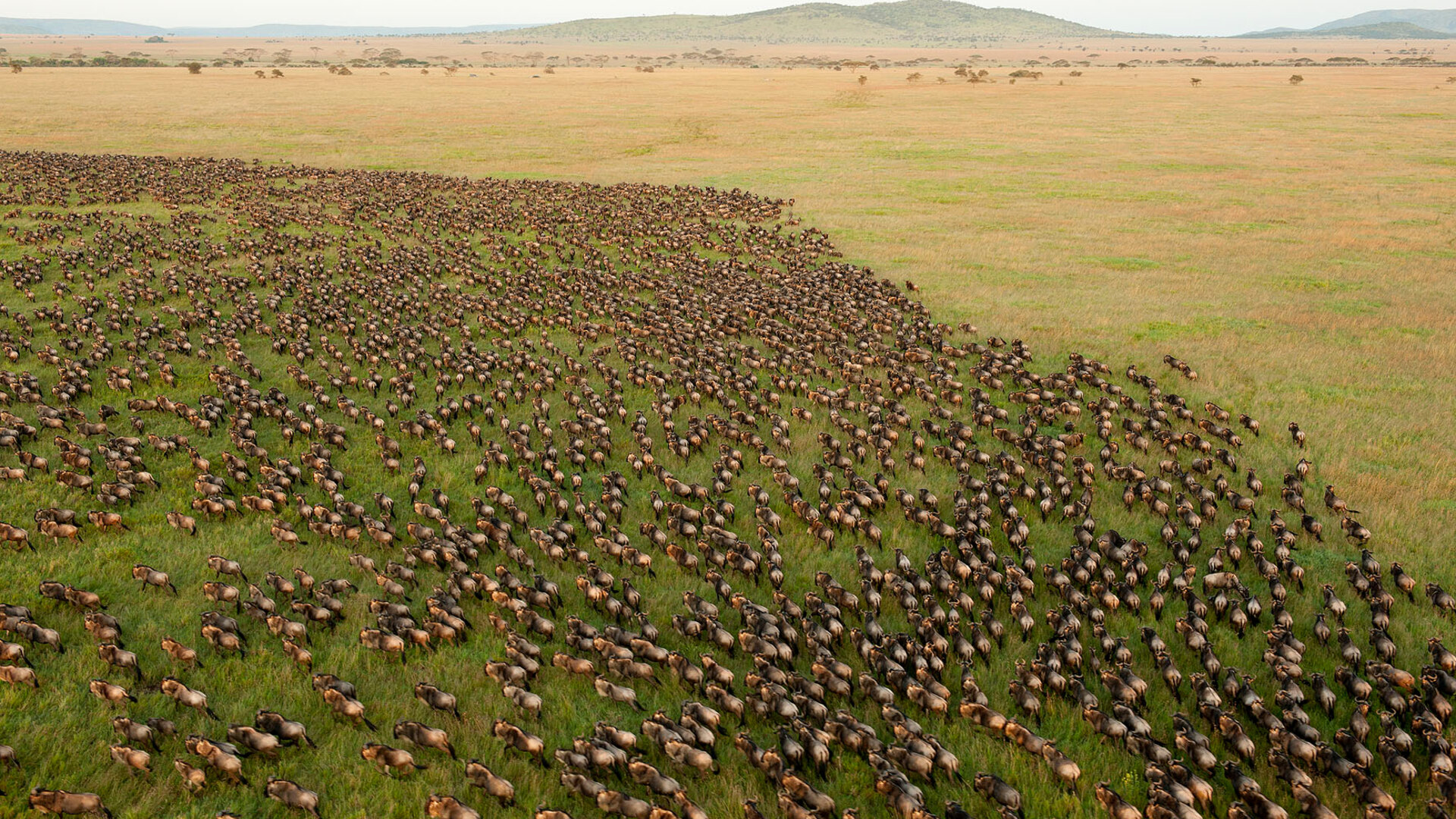
January in the Serengeti is one of the most extraordinary wildlife experiences on the planet. The great wildebeest migration — roughly 1.5 million wildebeest, 400,000 zebra and 200,000 gazelle — has settled on the southern Serengeti's Ndutu plains and the adjacent Ngorongoro Conservation Area, drawn by the short-grass pastures fertilised by volcanic minerals from the nearby crater highlands. This is where they calve.
The numbers are staggering: up to 8,000 calves are born every day during the peak calving window (late January through February), and within minutes of birth each calf is on its feet and running. The predators know this. Lion prides, cheetah, hyena, leopard, wild dog and jackals all converge on the calving grounds, and the hunting action is relentless. For wildlife photographers and serious safari enthusiasts, this is arguably the most dramatic wildlife spectacle after the Mara River crossings themselves.
Where to stay: Ndutu Safari Lodge, &Beyond Ndutu Under Canvas, Serengeti Safari Camp (mobile), Lemala Ndutu. Book early — the calving camps are small and fill 6–12 months in advance.
Also in January: South Africa is in full summer — green, hot, with excellent birdlife in Kruger and the Eastern Cape but denser vegetation. Zambia's emerald season continues with dramatic thunderstorms and the lowest prices. Victoria Falls builds towards peak flow.
February: Botswana Green Season & Serengeti Calving Continues
The Serengeti calving season reaches its crescendo in February, with the highest daily birth rates and the most intense predator-prey dynamics. If January is Act One, February is the climax.
Meanwhile, Botswana enters its green season — the Okavango Delta, Chobe and the Kalahari receive their summer rains, and the landscape transforms into an emerald-green wilderness. This is the cheapest time to visit Botswana, with lodge rates dropping 30–50% from peak season. The game viewing is different — animals are more dispersed across the landscape — but the birdlife is extraordinary, with European and intra-African migrants swelling the species count. The Kalahari's Makgadikgadi Pans see zebra migration and meerkat activity.
Namibia's Etosha fills with summer water, and the park's waterholes — normally the dry-season magnets — are less critical, but the greenery brings calving and birdlife. Ngorongoro Crater is excellent in February, with the short grass making game easy to spot and the flamingo population on the crater lake peaking.
March: Kenya Shoulder Season & Gorilla Trekking
March is the Masai Mara's quiet month — the migration is still in Tanzania, the long rains are approaching but haven't fully arrived, and the reserve is at its greenest and emptiest. For visitors who want the Mara without the August crowds (and at 30–40% lower lodge rates), March is a genuine sweet spot. The resident wildlife — lion prides, cheetah families, elephant, hippo, giraffe — is still excellent. The grass is long, which makes photography more challenging but the landscape more beautiful.
Uganda and Rwanda gorilla trekking enters shoulder season. March is one of the two "inter-rain" months (along with September) that offer relatively dry conditions at slightly reduced permit and lodge prices. Rwanda's Volcanoes National Park and Uganda's Bwindi Impenetrable Forest are both excellent. Gorilla permits should be booked months in advance regardless of season — Rwanda is $1,500 per permit, Uganda $800.
The Serengeti's migration herd begins to drift northward from the Ndutu plains, heading through the central Seronera valley. This mid-migration movement is often overlooked but offers excellent game viewing with far fewer vehicles than the July–September crossing season.
April–May: The Quietest Months — And the Best Deals
April and May are Africa's low season, and they are dramatically underrated. East Africa's long rains arrive in earnest — particularly in Kenya and Tanzania — and many lodges close or offer skeleton service. But the rains are rarely all-day affairs; more typically, mornings are clear and bright, with heavy afternoon showers that last an hour or two. The bush is at its most photogenic: vivid green, dramatic thundercloud skies, and baby animals everywhere.
South Africa in May is exceptional value. The wet season has ended, autumn colours touch the bushveld, and Kruger's dry season begins. Temperatures cool to comfortable levels (daytime 22–26°C), vegetation starts to thin, and wildlife begins concentrating around remaining water. May lodge rates in the Greater Kruger are 20–30% below peak (August–September) prices. The Eastern Cape, being year-round, is equally strong.
The migration enters the western Serengeti corridor in May, heading towards the Grumeti River. This is a little-known sweet spot — the herds are moving through beautiful acacia country, predators are active, and the camps in the western corridor (Grumeti Serengeti Tented Camp, Singita Grumeti) are less crowded than the Mara in August.
June: Mara Build-Up, Grumeti Crossings & Southern Africa's Dry Season
June is a pivotal month. The great migration reaches the Grumeti River in the western Serengeti, and the first dramatic water crossings of the year begin. The Grumeti's enormous Nile crocodiles are waiting, and though these crossings are smaller in scale than the Mara's, they are equally intense — and you'll share them with far fewer vehicles.
South Africa's dry season begins in earnest. Kruger, Sabi Sand, Timbavati, and the Klaserie private reserves enter their prime game-viewing window — vegetation thins daily, and animals are increasingly tied to water. The Eastern Cape's temperate climate means it barely notices the seasonal shift; it remains excellent. June is a sweet spot for South Africa: peak wildlife, slightly lower prices than July–September, and fewer school-holiday crowds.
Botswana's annual Okavango flood — fed by Angolan highland rains from months earlier — reaches the Delta in June, transforming dry floodplains into a glittering aquatic wilderness. Mokoro (dugout canoe) safaris begin, water-based game viewing opens up, and the contrast between the flooded Delta and the dry surrounding Kalahari concentrates wildlife along the water's edge.
July: Peak Season Begins — Migration Crosses into Kenya
July marks the beginning of peak season across the continent. The great migration crosses the Sand River and enters Kenya's Masai Mara, drawn by the Mara's year-round green pastures. The timing varies by year — sometimes late June, sometimes mid-July — but by the end of July, hundreds of thousands of wildebeest and zebra are in the Mara ecosystem.
Botswana's Okavango Delta reaches peak flood — the highest water levels of the year, the best mokoro and boat safaris, and the most concentrated wildlife along the permanent channels. Chobe National Park is in full dry-season mode, with massive elephant herds along the Chobe River. This is Botswana's premium month, with lodge rates at their highest.
Victoria Falls is at or near peak flow in July — the spray cloud rises hundreds of metres, the thunder is audible from kilometres away, and the "smoke that thunders" lives up to its Kololo name. The Zambian and Zimbabwean sides both deliver spectacular views, though the spray can be so thick that you see more mist than falls. For the clearest photo opportunities, September–November (lower water) is actually better.
South Africa, Zambia and Zimbabwe are all in prime dry-season condition. South Luangwa's walking safaris are underway, Hwange's waterholes draw massive herds, and Kruger's bush is thinning beautifully.
August: Mara River Crossings — The Most Spectacular Wildlife Event on Earth
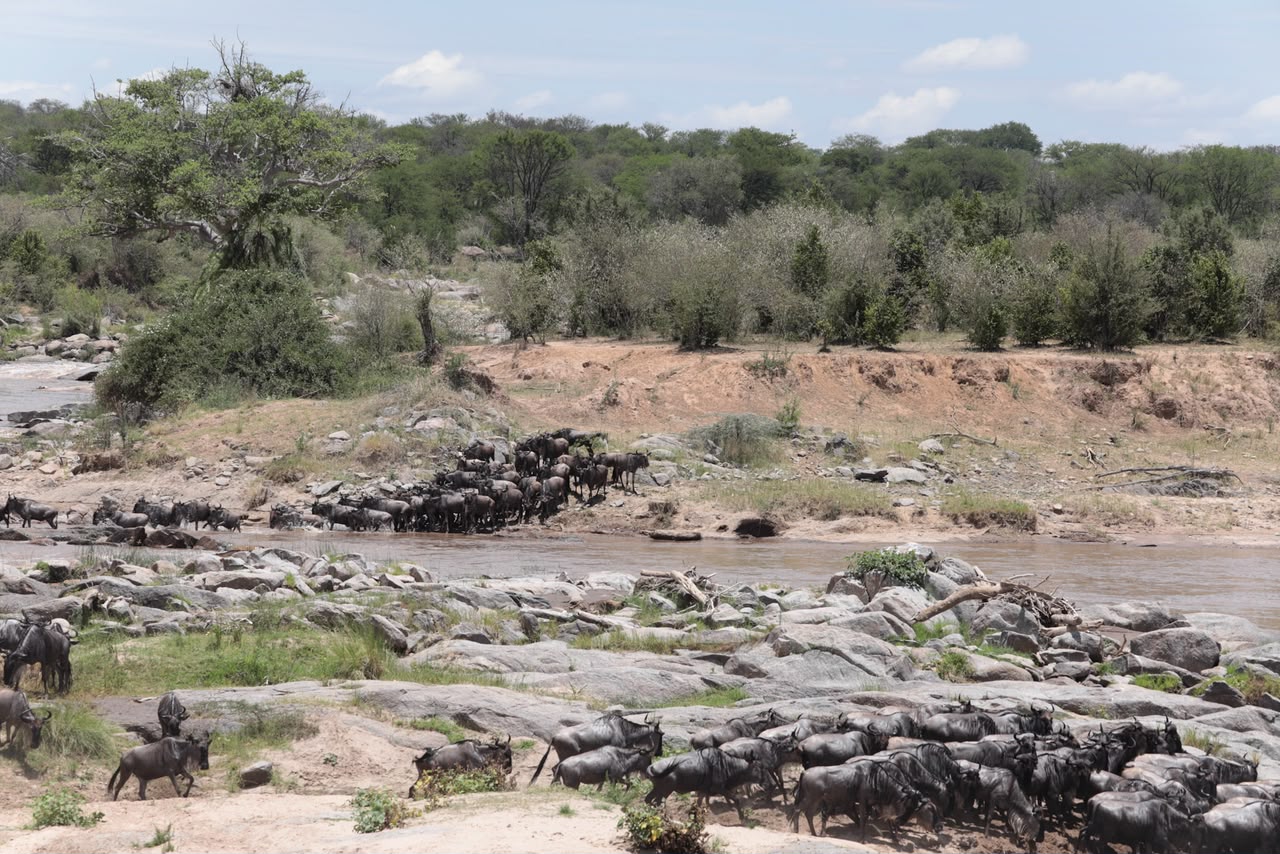
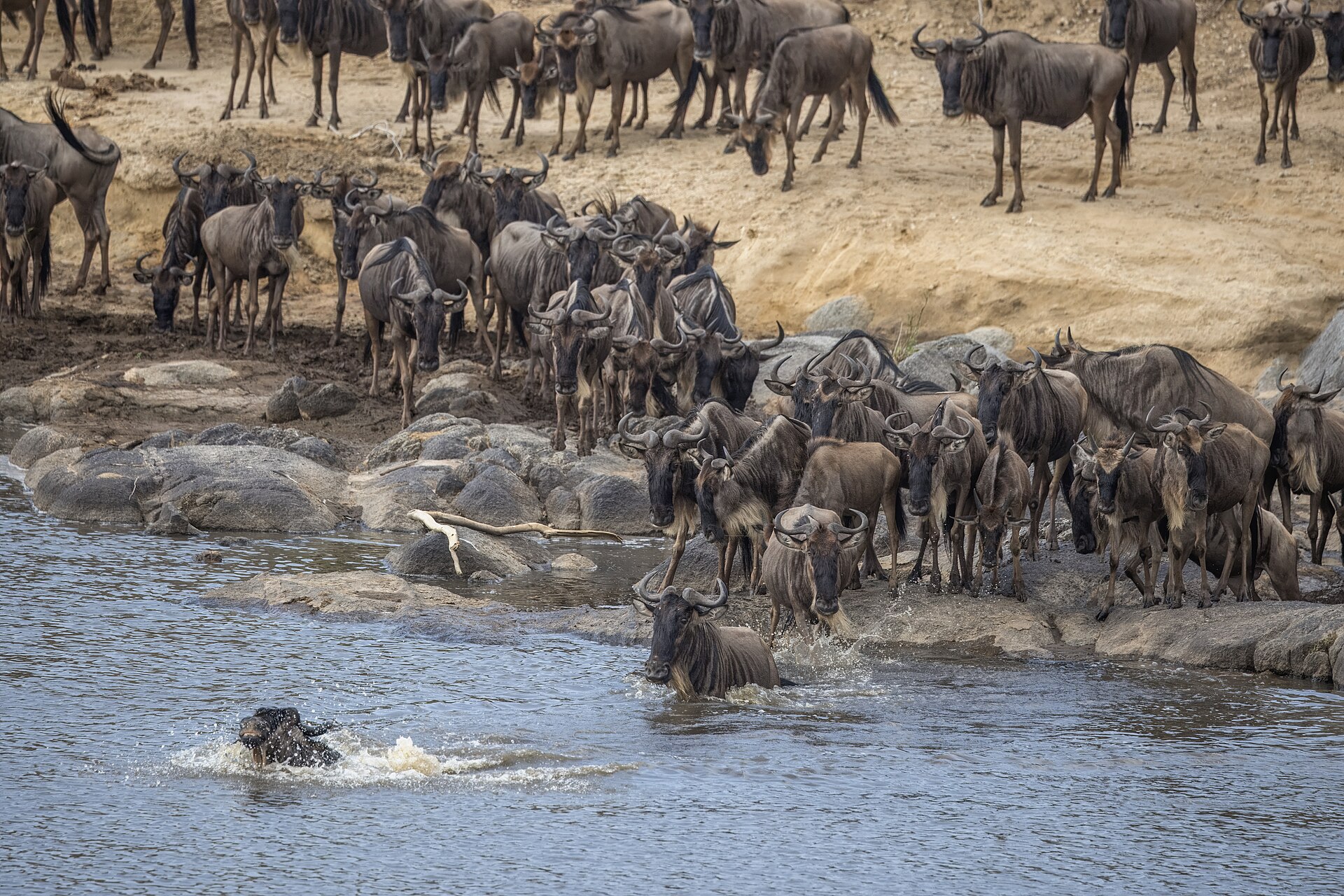
August is Africa's marquee safari month. The great migration's Mara River crossings — where columns of wildebeest in their tens of thousands plunge into the crocodile-infested river, scramble up the far bank, and continue their relentless northward push — are widely regarded as the single most dramatic wildlife spectacle on Earth. The energy, noise, dust and danger of a major crossing are visceral. Herds build on the banks for hours, sometimes days, before one animal leads the plunge, and then the flood begins.
The crossings are not a single event but a rolling phenomenon — herds cross and re-cross the Mara River at multiple points throughout August and into September, and the timing is unpredictable. The classic crossing points (Lookout Hill, Crossing 1–7, Serena crossing) are well known, but patient guides who know the herds' current patterns make the real difference.
August is also peak season across the entire continent: Okavango at peak flood, South Luangwa walking safaris, Kruger dry season, Hwange waterholes, Etosha pan-edge game drives. Demand is at its highest, prices at their premium, and booking 6–12 months in advance is essential for the best camps.
September: Peak Everywhere — The Best Month for an 'Anywhere in Africa' Safari
If you had to pick a single month for an African safari without knowing your destination, September would be the answer. Every major safari country is in excellent form:
- Kenya: Mara River crossings continue, some of the year's biggest
- Tanzania: Northern Serengeti herds, Seronera resident game
- Botswana: Okavango flood receding but still high, Chobe elephants
- South Africa: Kruger, Sabi Sand, Eastern Cape all at dry-season peak
- Zambia: South Luangwa and Lower Zambezi approaching their most dramatic
- Zimbabwe: Hwange, Mana Pools, Victoria Falls (lower water = clearer views + Devil's Pool)
- Namibia: Etosha, Damaraland, Sossusvlei — dry, clear, excellent game
- Uganda/Rwanda: Gorilla trekking inter-rain sweet spot
September is also when Victoria Falls' water level drops enough to open Devil's Pool on Livingstone Island — the natural infinity pool at the very edge of the falls. It is one of Africa's most iconic experiences and is only accessible from approximately mid-August to mid-January (water-level dependent).
October: Zambia & Zimbabwe Peak — Walking Safaris & Waterhole Drama
October is the climax of Zambia's safari season. The South Luangwa Valley has had no rain for five months; the Luangwa River has shrunk to a fraction of its wet-season width; and every hippo pod, elephant herd and predator in the valley is squeezed into an ever-narrowing strip of remaining water and green vegetation. The game viewing is extraordinary — and the valley's famous walking safaris reach their most intense.
Zimbabwe's Mana Pools — a UNESCO World Heritage Site on the Zambezi floodplain — is at its most spectacular in October. The albida trees have dropped their protein-rich pods, drawing elephants that stand on their hind legs to reach the branches, and the dry Zambezi channels create natural amphitheatres for game viewing. Mana Pools allows walking without a guide (for experienced safari-goers) and canoeing — experiences available almost nowhere else in Africa.
The Serengeti migration begins to drift south from the Mara, heading back through the northern and central Serengeti towards the southern plains. The return journey is less dramatic than the July–September northward push but still offers excellent game viewing with fewer vehicles.
November: Short Rains & Shoulder-Season Value
East Africa's short rains arrive in November, greening the Mara and the northern Serengeti. The migration continues its southward return. Many lodges shift to shoulder-season pricing, and the combination of good wildlife, green landscapes and 20–30% lower rates makes November an underrated choice for experienced safari travellers.
Southern Africa's wet season begins. The first rains hit Botswana, Zambia and Zimbabwe, and some remote camps close for their annual maintenance break. South Africa's December–January peak hasn't yet kicked in, so November represents the last window of moderate pricing before festive-season premiums. Kruger's vegetation starts to green up, but wildlife remains good — the first rains often trigger dramatic movements as animals spread out across the newly watered landscape.
Birdwatching peaks: November is arguably Africa's best birdwatching month. Palearctic migrants from Europe and Asia arrive in huge numbers, joining Afrotropical species in full breeding plumage. The Okavango, Kruger, and the East African lakes are particularly rich.
December: Festive Season Safaris — Family Celebrations Under the Stars
December is two seasons in one. The first half offers shoulder-season pricing and increasingly green landscapes across Southern and East Africa. The second half — from roughly December 15 — is festive season, and pricing jumps to peak or super-peak levels across the continent, particularly in South Africa, Botswana, Kenya and Tanzania.
The Serengeti's migration herd completes its return to the southern plains, arriving on the Ndutu short-grass pastures in time for the calving season to begin again in late December and early January. The circle is complete.
South Africa's festive season is the biggest holiday period of the year. Families flood into Kruger, the Eastern Cape, KwaZulu-Natal and the Cape Winelands. Lodges offer special festive programmes — bush Christmas dinners, New Year's Eve under the stars, children's safari clubs, and multi-generational family packages. Booking 6–12 months ahead is essential; the best lodges sell out by January of the preceding year.
Zanzibar and the Indian Ocean islands (Mozambique's Bazaruto and Quirimbas archipelagos, Seychelles, Mauritius) pair beautifully with a December safari for a bush-and-beach finale. The water is warm, the diving is excellent (visibility peaks December–March in Zanzibar), and the festive atmosphere extends to the coast.
For detailed destination guides covering each country's best parks, lodges and logistics, see our individual pillar guides: Kenya safari guide, Tanzania safari guide, Botswana safari guide, South Africa luxury safari guide, Zambia safari guide, and Namibia safari guide.
Plan Your African Safari — Any Month, Any Destination
Beyond Africa Safaris designs private safaris across every destination in this calendar — from Serengeti calving camps to Mara River crossing lodges, Okavango mokoro experiences to South Africa's malaria-free Eastern Cape. Tell us your month and we'll tell you the perfect destination.