Key Takeaways
- The Great Migration happens all year — the herds move in a continuous circle across the Serengeti and Masai Mara, so there is no month when it is not happening somewhere
- Calving: late January to March on the southern Serengeti and Ndutu plains, with around half a million calves born in roughly three weeks around February
- Grumeti and western corridor crossings: roughly late May to June
- Mara River crossings: July to October in the Masai Mara and northern Serengeti, with August and September the most reliable months for a crossing
- The exact dates shift by a few weeks each year because the herds follow the rain, not a calendar — so plan a window, not a single day, and leave yourself four or five nights on the ground
Short answer: the Great Migration runs year-round. If you want the river crossings, come July to October. If you want the calving, come late January to March. Everything in between is the herds walking the circle between those two chapters. Below you will find the plain dates for 2026 and 2027, the full loop month by month, and links to our deeper guides for whichever part you choose.
When Is the Great Migration?
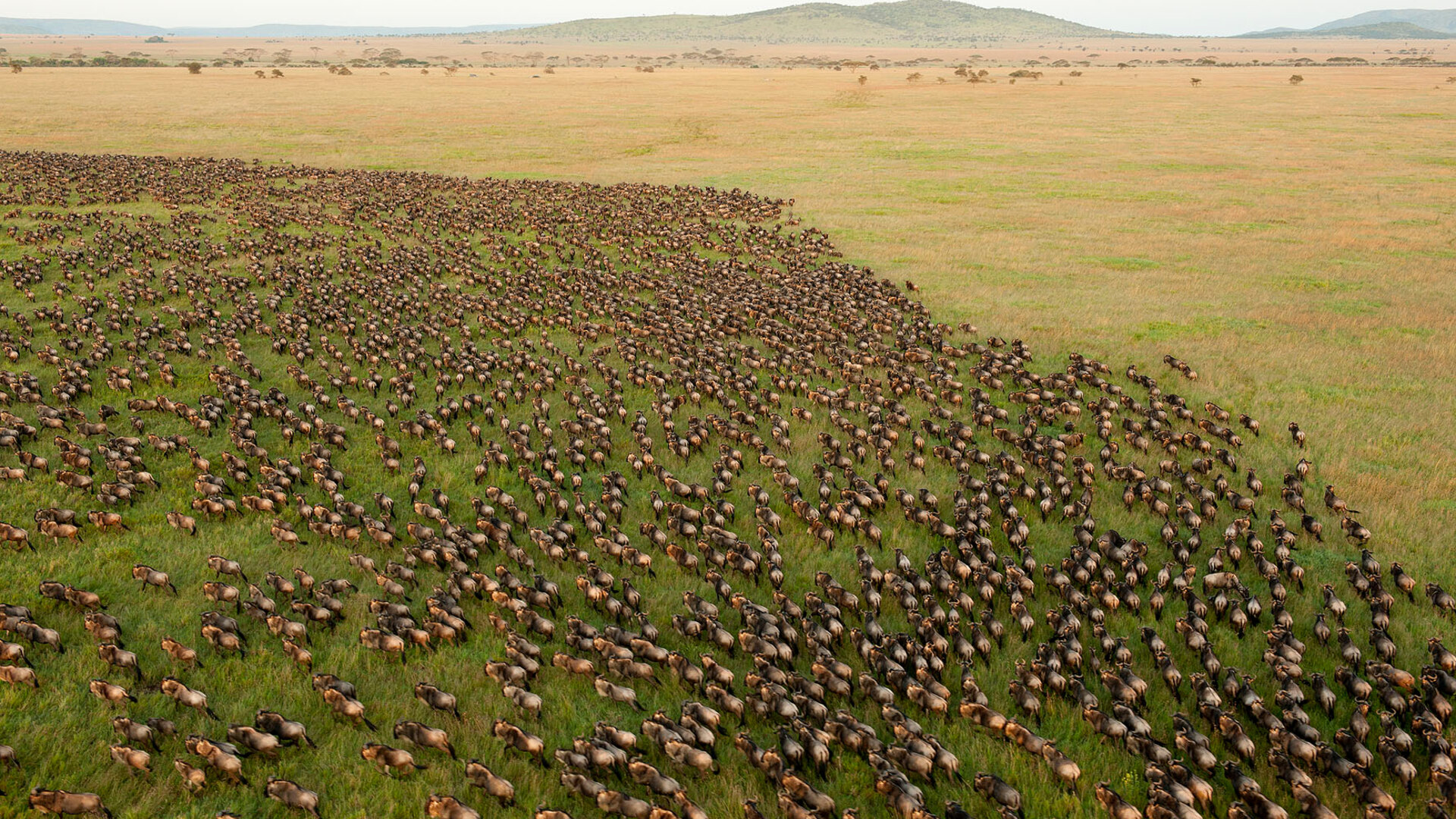
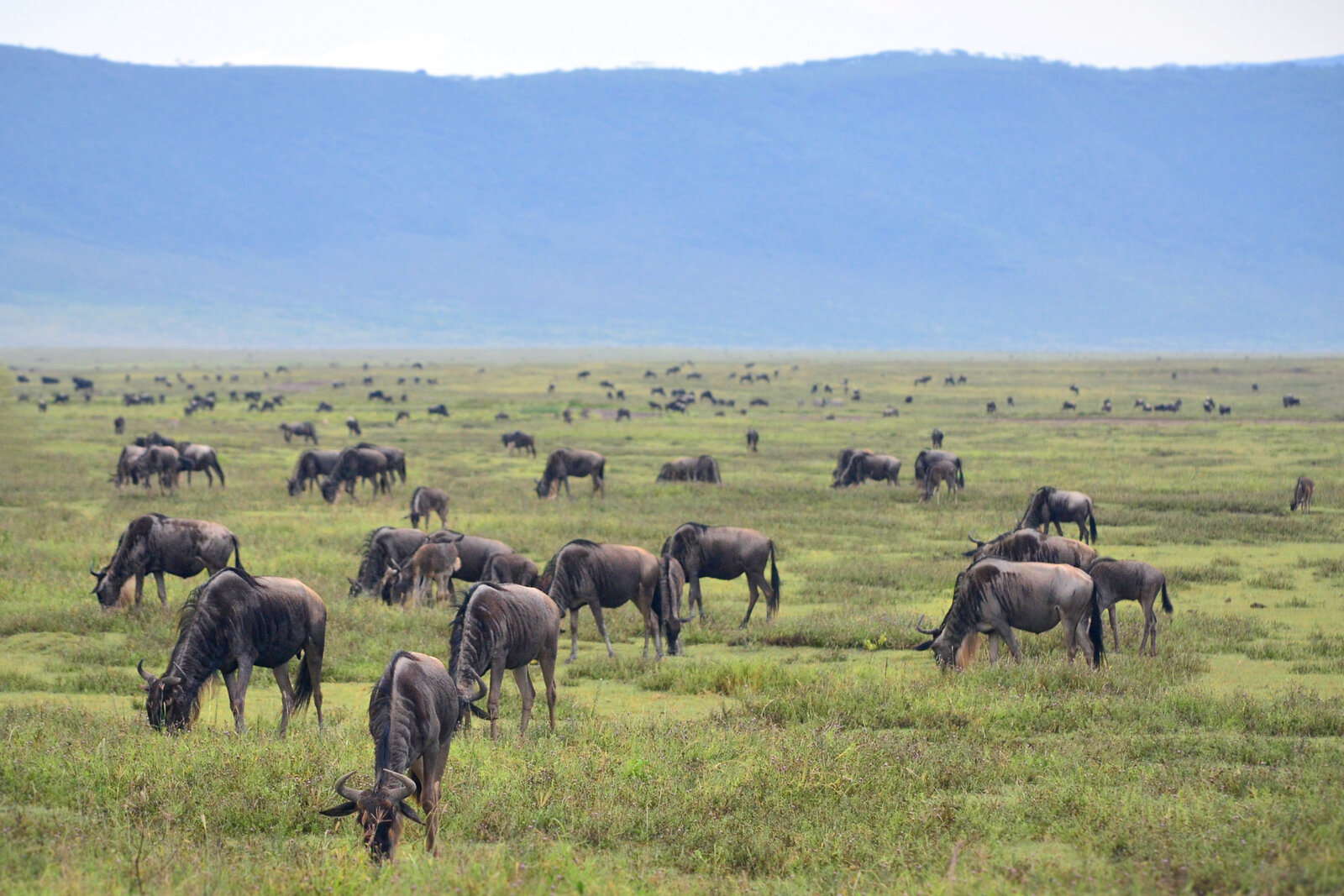
People ask the question as if the migration were an event with a start and a finish, like a festival you could miss. It is not. The Great Migration is a permanent, moving thing — a herd of more than 1.5 million wildebeest, together with roughly 200,000 zebra and large numbers of gazelle, walking a rough circle across the Serengeti in Tanzania and the Masai Mara in Kenya. It is happening right now, as you read this, and it will still be happening next month and next year. The animals never stop, because the grass they live on greens up in different places at different times, and they follow it.
So the real question is not whether the migration is on — it always is — but where the herds are and what they are doing in the month you can travel. Two chapters stand out above the rest. The first is the calving, from late January to March, when the herds gather on the short-grass southern plains and drop their young in an enormous, concentrated birth. The second is the river crossings, from July to October, when the herds reach the swollen Mara River and have to swim it to reach fresh grazing. These are the two moments most people mean when they picture the migration, and they fall at opposite ends of the year.
Everything else — April, May, June, November, December — is the herds moving between those two chapters. Those months are quieter, often greener, usually better value, and far less crowded, and the game viewing across the ecosystem stays extraordinary throughout. If your dates are fixed, there is a good migration trip to be had in almost any month. If your dates are open, pick the chapter you most want to witness and build the trip around it.
Great Migration Dates 2026
These are the broad windows for 2026. Treat them as a planning guide rather than a timetable — the herds move on the rain, so each phase can arrive a week or two early or late.
| Phase | Dates (2026) | Where |
|---|---|---|
| Calving | Late January – March (peak around mid-February) | Southern Serengeti & Ndutu plains |
| Herds move north-west | April – May | Central Serengeti |
| Grumeti crossings | Late May – June | Western corridor, Grumeti River |
| Mara River crossings | July – October (peak August – September) | Northern Serengeti & Masai Mara |
| Return south | Late October – November | Eastern Serengeti back towards the south |
| Gathering for calving | December | Southern plains |
If August 2026 is your target for the crossings, book your camp by early in the year — the best river-front camps in the Mara and northern Serengeti fill their August and September dates six to nine months ahead. For the calving in February 2026, you have a little more room, but the handful of mobile camps that follow the herds onto the Ndutu plains still sell out early.
Great Migration Dates 2027
The pattern repeats in 2027 — the circle is the same every year, only the precise timing drifts with the rains. Use these windows to start planning a trip a year or more out.
| Phase | Dates (2027) | Where |
|---|---|---|
| Calving | Late January – March (peak around mid-February) | Southern Serengeti & Ndutu plains |
| Herds move north-west | April – May | Central Serengeti |
| Grumeti crossings | Late May – June | Western corridor, Grumeti River |
| Mara River crossings | July – October (peak August – September) | Northern Serengeti & Masai Mara |
| Return south | Late October – November | Eastern Serengeti back towards the south |
| Gathering for calving | December | Southern plains |

The Year-Round Loop, Month by Month
Here is the whole circle in order, so you can see exactly where the herds sit in any month. For a deeper month-by-month calendar with herd positions and where-are-they-now notes, our month-by-month migration calendar goes further than this overview does.
January and February — the herds are down on the short-grass plains of the southern Serengeti and the Ndutu area. Grazing is rich after the short rains, and this is where the calving happens. Around half a million calves are born in a tight three-week burst, usually peaking in mid-February, and the predators of the southern plains gather for the easiest hunting of their year.
March — calving tails off and the plains begin to dry. The herds start to drift, still in the south but beginning to think about moving.
April and May — the long rains. The herds move north and west through the central Serengeti in long, strung-out columns, grazing as they go. Fewer travellers come at this time, the land is green, and the camps are at their quietest and most affordable.
Late May and June — the leading herds reach the western corridor and the Grumeti River. The Grumeti crossings are smaller and less famous than the Mara ones, but they are the first real river drama of the year, and the western corridor is far less crowded than the Mara will be in August.
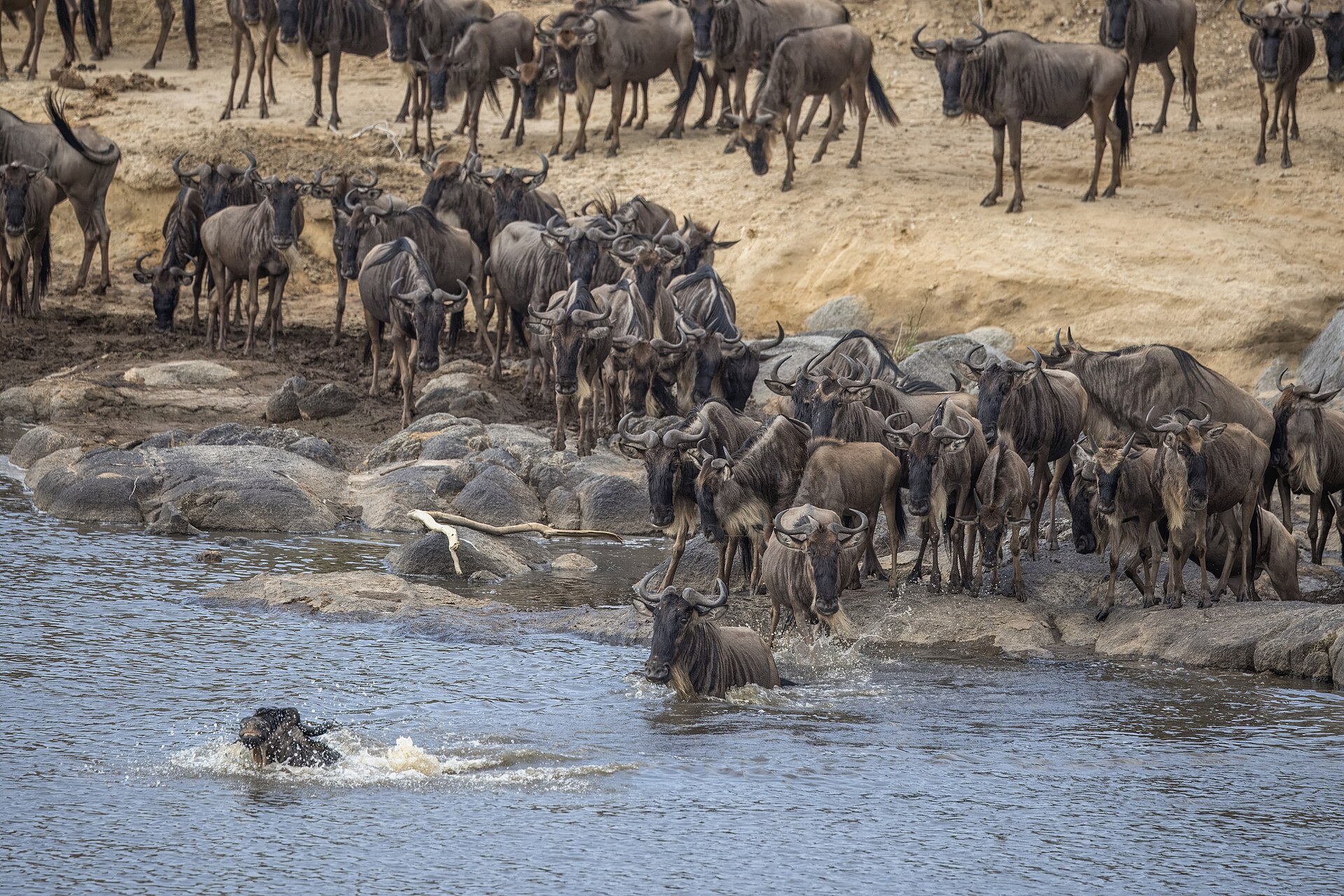
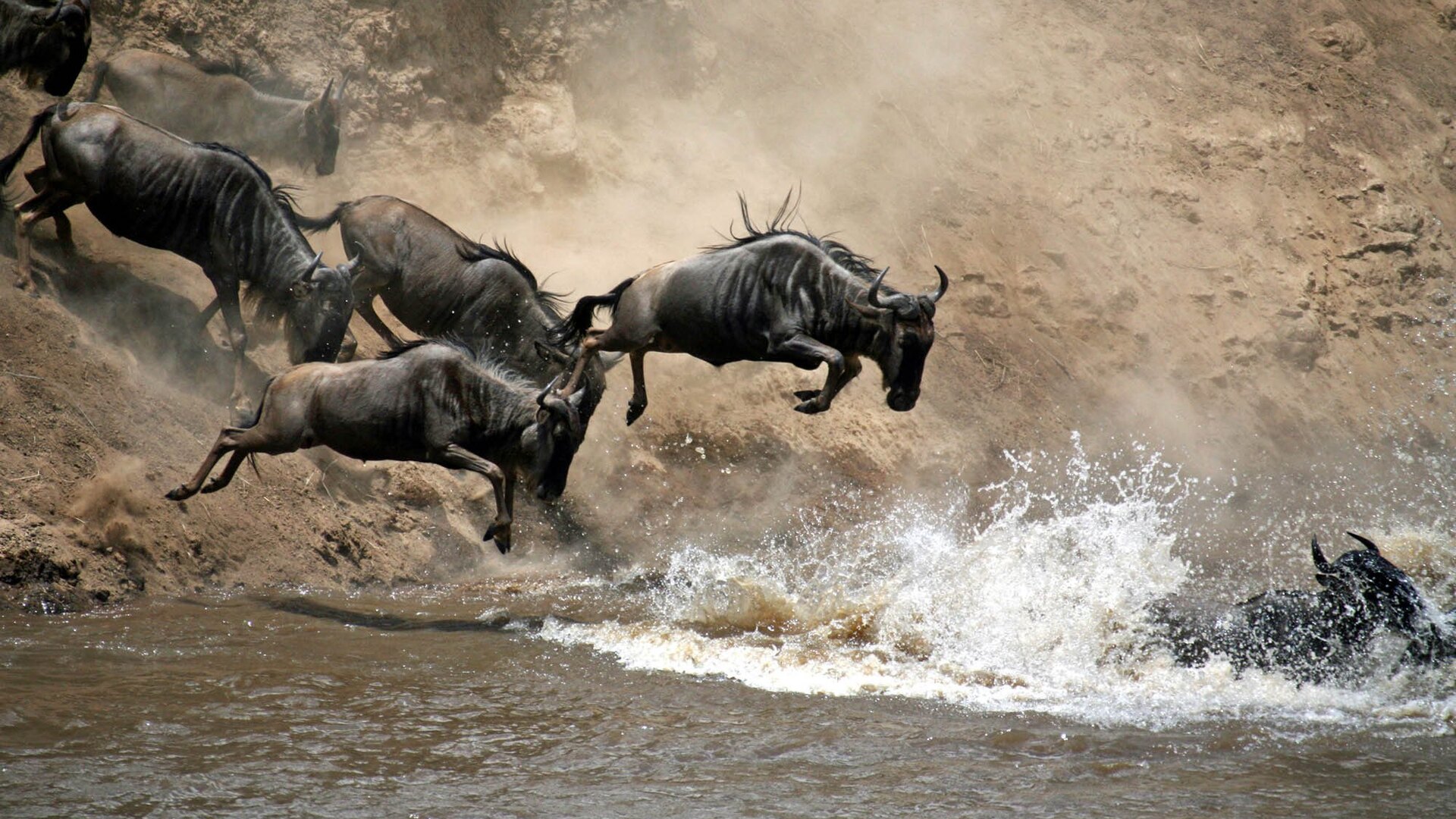
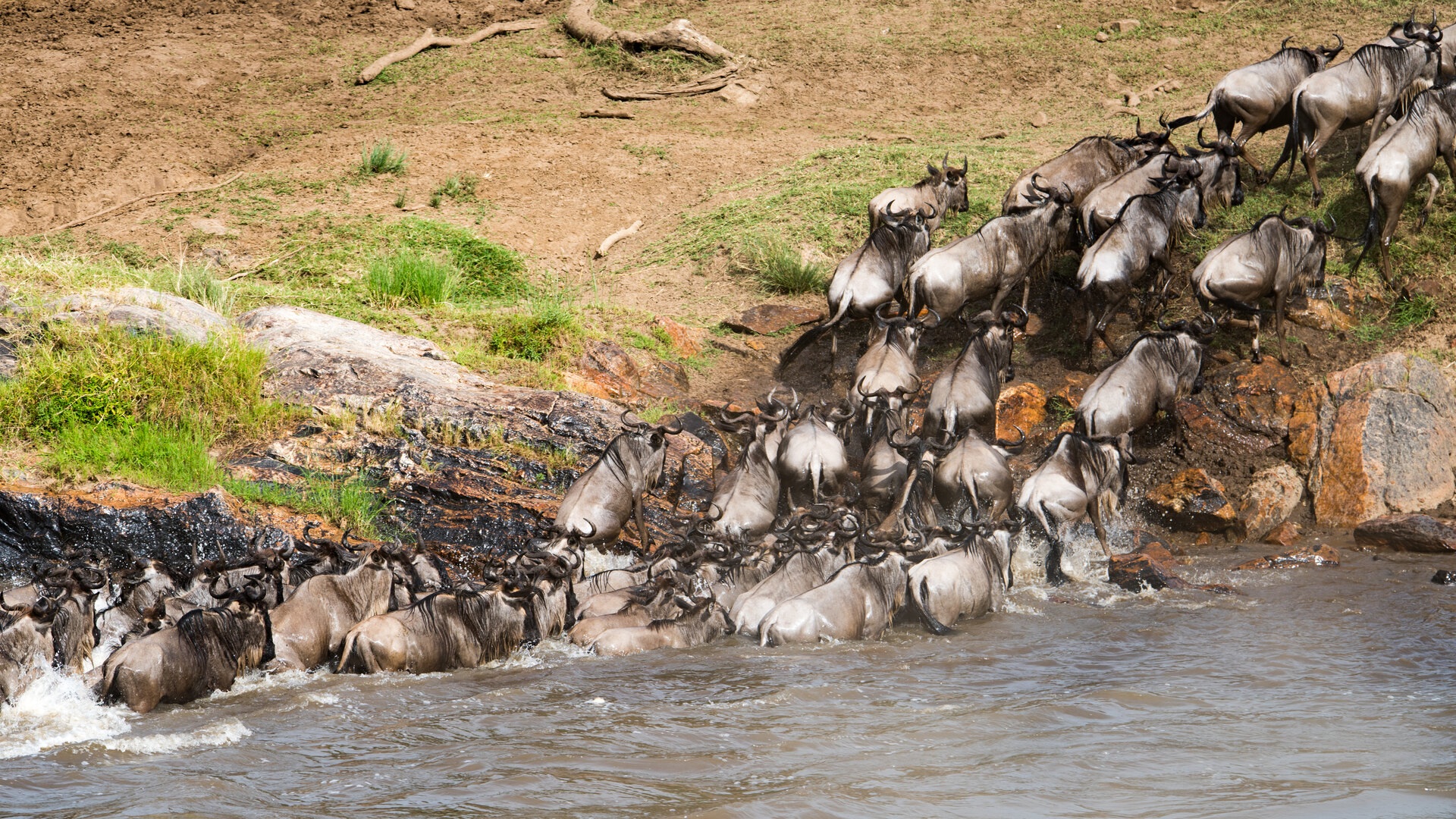
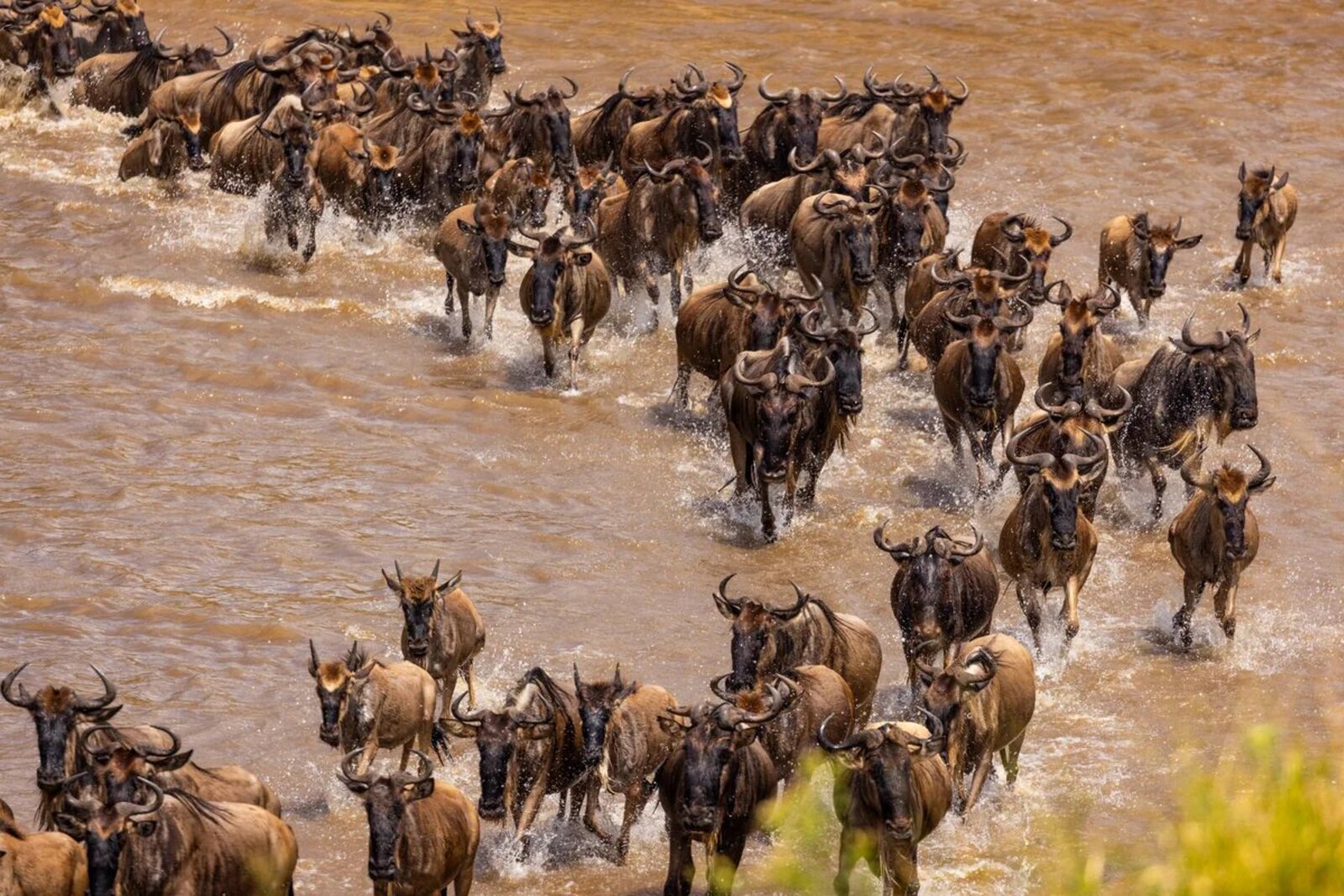
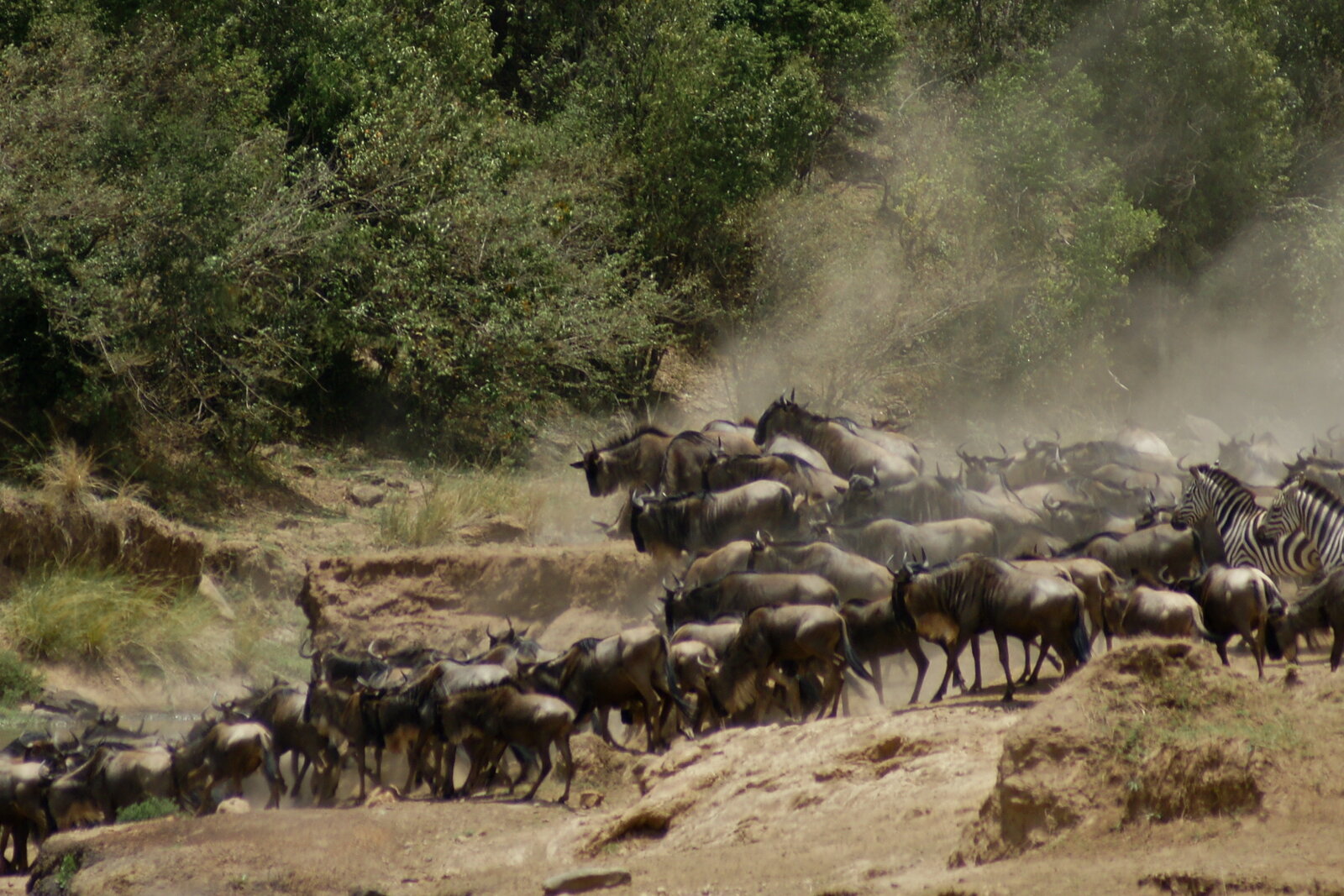
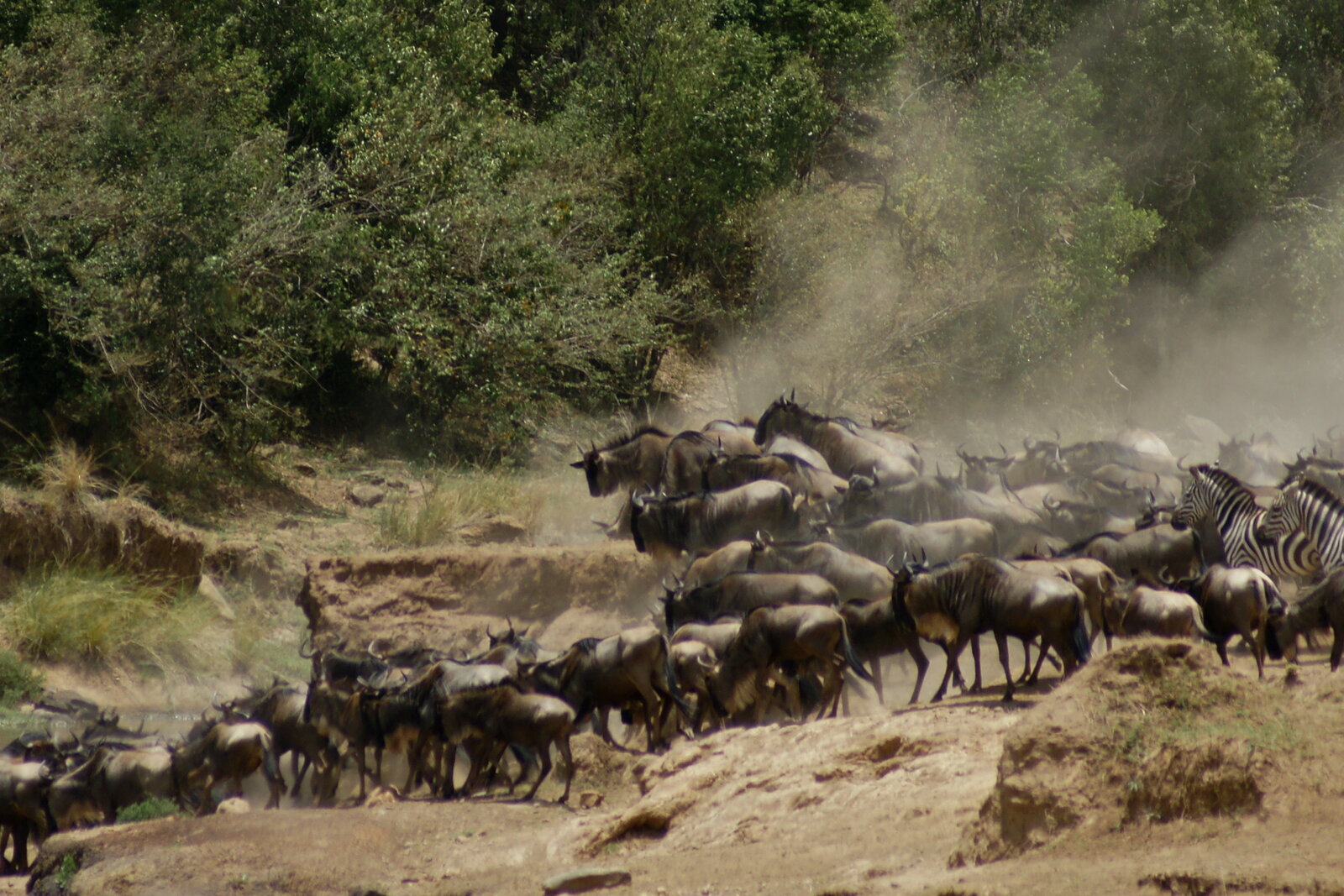
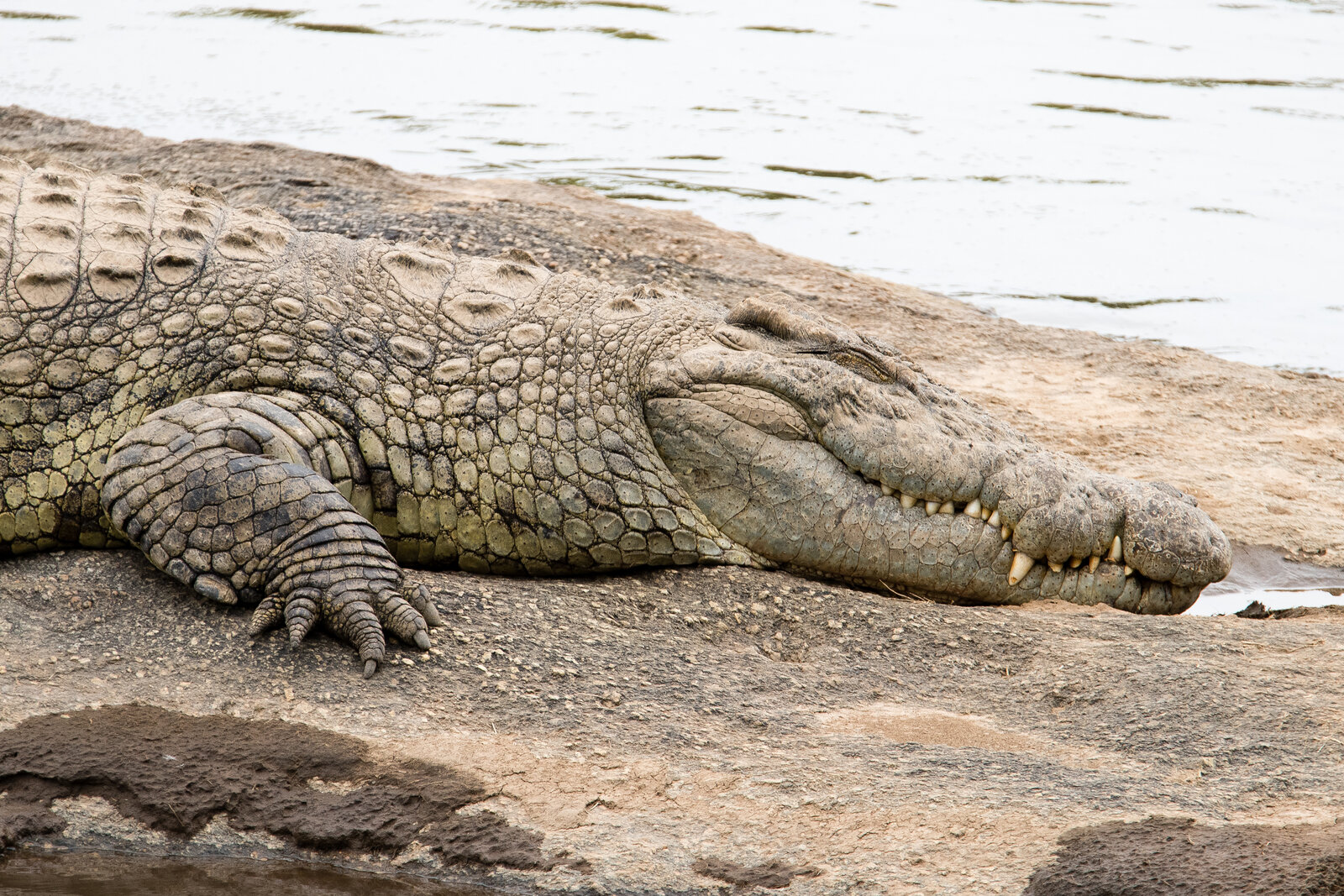
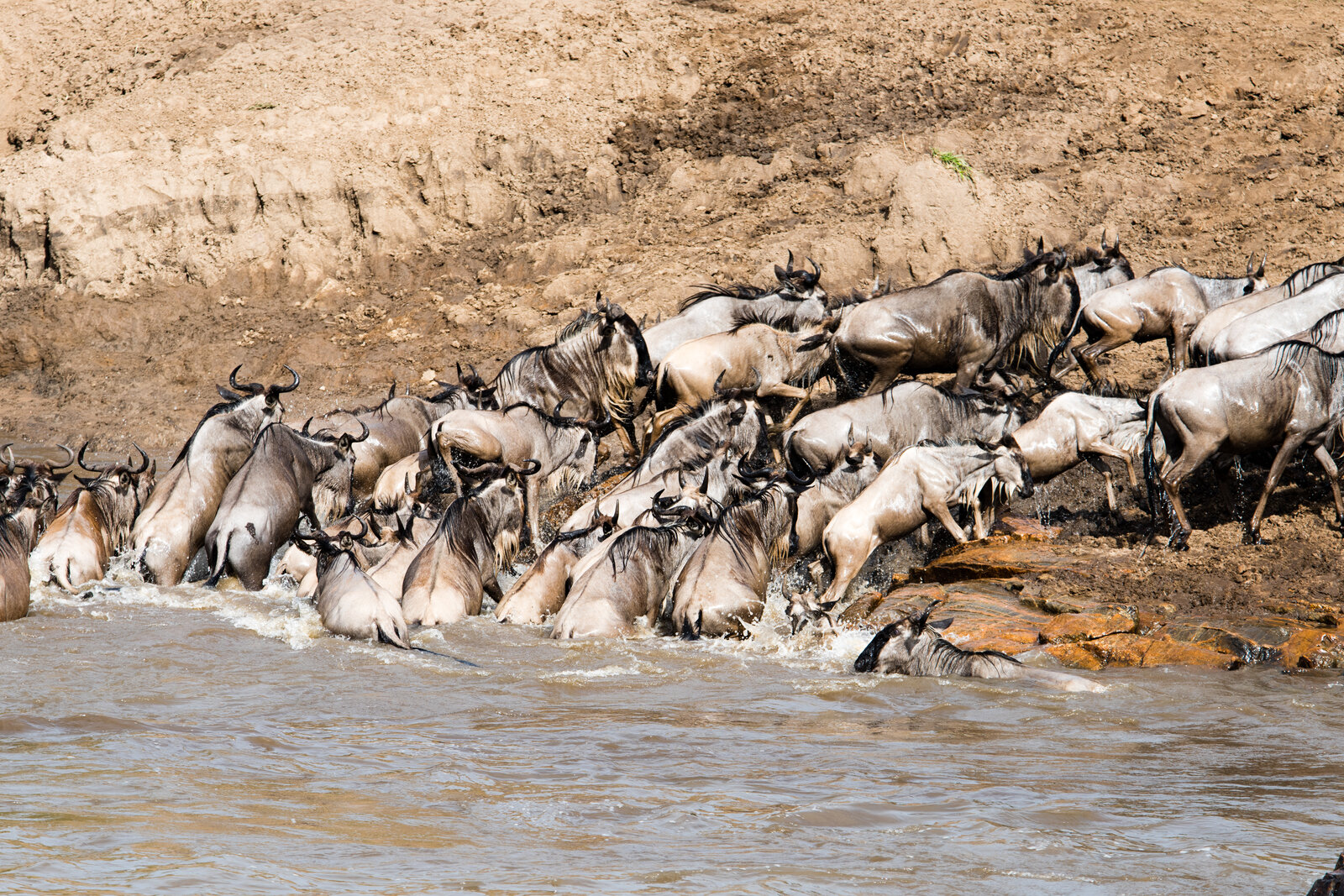
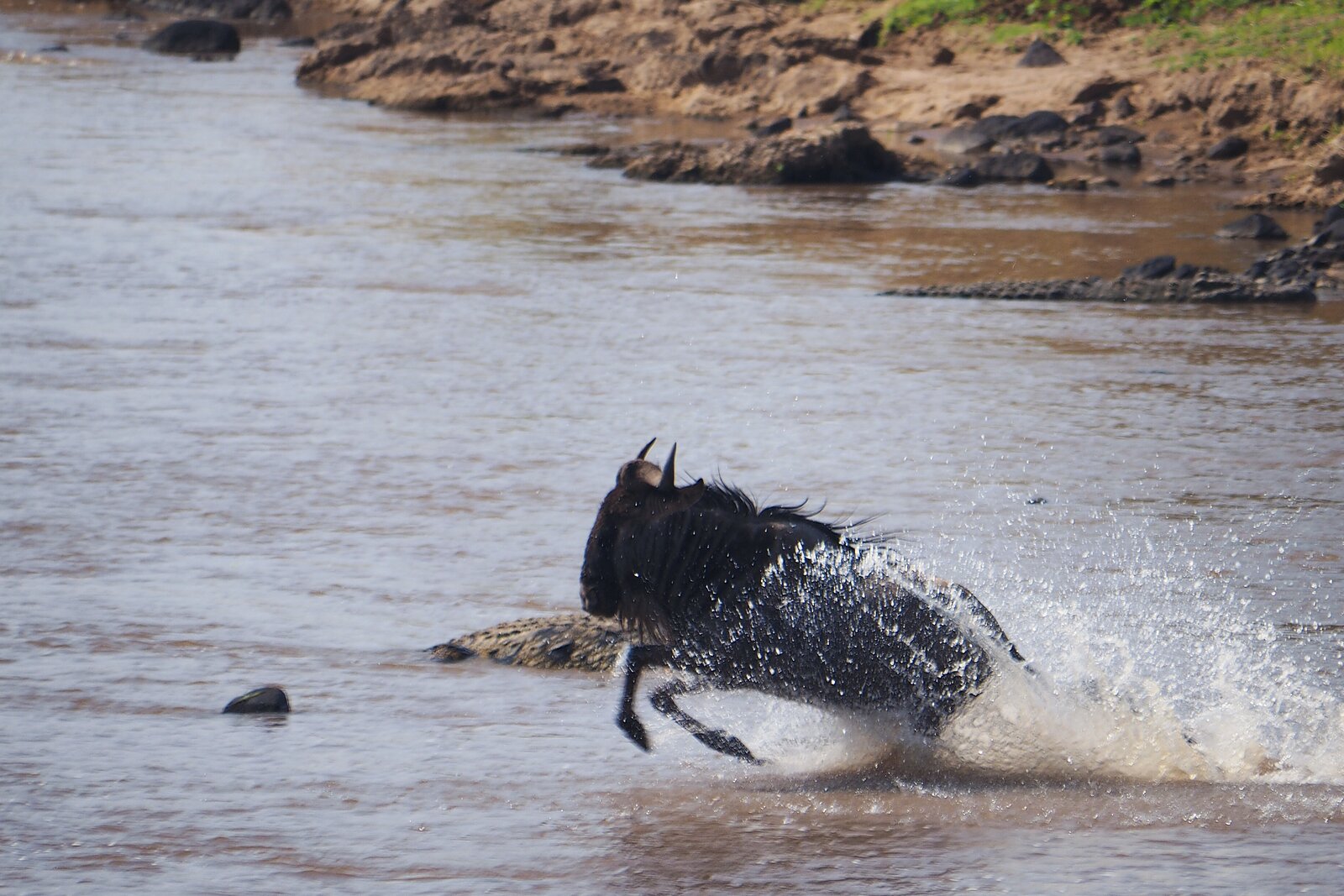
July to October — the herds reach the northern Serengeti and push across the border into the Masai Mara, and this is the season of the Mara River crossings. The herds mass on the banks, sometimes for hours, before one animal commits and the rest follow in a thundering, dust-filled rush through crocodile-filled water. August and September are the most reliable months to see a crossing, with the herds spread across the Mara and the northern Serengeti and crossings happening somewhere along the river almost every day.
Late October and November — the short rains return to the south, and the herds turn and begin walking back down the eastern side of the Serengeti. Early October still delivers strong crossing activity; by November most of the animals have left the Mara and are heading home.
December — the herds are back on the southern plains, gathering, grazing and getting ready to calve again. The circle closes, and the whole thing begins once more.
Where to Read More on Each Chapter
This page is the overview — the dates and the shape of the year. When you have settled on a chapter, each one has its own detailed guide written for exactly that part of the journey:
- The Mara River crossings in Kenya — for the timing of the crossings, the conservancy map and the best months in the Masai Mara, read our guide to the best time to visit Kenya for the Great Migration and our focused Masai Mara migration dates guide.
- The calving and the Serengeti chapters — for the southern-plains calving, the Grumeti crossings and the full Tanzania calendar, read our guide to the best time for the Great Migration in Tanzania.
- The month-by-month detail — for herd positions through every month of the year, see our month-by-month migration calendar.
- The timing overview across both countries — our best time for a Great Migration safari guide weighs Kenya against Tanzania for first-time planners.
Which Chapter Should You Plan Around?
If you can travel at any time of year, let the thing you most want to witness decide your dates.
You want the river crossings
Come in August or September and base yourself in the Masai Mara or the northern Serengeti, close to the river. This is the most dramatic and the most reliable window for a crossing, and it is also the busiest and priciest. Give yourself four or five nights so the herds have time to oblige you — no guide can promise a crossing on any single day.
You want the calving and the newborns
Come in February to the southern Serengeti and Ndutu. The plains are green, the light is soft, and the sight of thousands of calves finding their feet while predators circle is every bit as powerful as the crossings — and far fewer travellers plan for it.
You want fewer people and better value
Come in April, May or November. These are the in-between months, when the herds are walking the circle rather than performing at a river. The game viewing stays superb, the land is green, the crowds thin out and the camp rates drop.
You want the best chance of a crossing without the August crush
Consider early July or early October, the shoulders of the crossing season. You trade a little crossing frequency for noticeably fewer vehicles and better rates, and you still have a real shot at the river.
Why the Dates Shift Each Year
No two years run to exactly the same schedule, and anyone who gives you a single fixed date for a crossing is guessing. The herds move for one reason: grass. When the rains come, the plains green up, and the animals walk to the new grazing. When the rains are early, the herds move early; when the rains are late or patchy, the whole circle slides by a week or two.
This is why we plan trips around windows rather than days, and why length of stay matters so much. A two-night visit during the crossing season is a gamble. Four or five nights, in the right place, with a guide who reads the river and talks to the other guides, turns a gamble into a strong likelihood. To watch the herds move in real time while you plan, our live Migration Tracker follows their positions across the ecosystem.
How to Lock In the Right Dates
Once you know your chapter, the booking rhythm is straightforward:
- For August and September crossings: book six to nine months ahead. The best river-front camps sell out first, and they sell out early.
- For the February calving: book four to six months ahead. The mobile camps that follow the herds onto the southern plains are small and fill fast.
- For the green shoulder months: you have more room — three months is often enough — but the best-value camps still reward early planning.
- For a two-country trip: a northern Serengeti start with a Masai Mara finish lets you catch the crossings from both sides of the river in one journey. These take the most planning, so start a year out.
When you are ready to turn a window into a trip, see our Ultimate Great Migration Safari (7 days), browse our Masai Mara safari packages, or talk to our team and we will build a privately guided migration trip around the dates that suit you. And between now and then, keep an eye on the herds with our live Migration Tracker.