Key Takeaways
- The ideal one-week flow is Victoria Falls (2 nights) to Chobe (2 nights) to the Okavango Delta (2–3 nights) — three icons, no wasted days.
- The legs connect beautifully: falls to Chobe is a short road transfer and border crossing; Chobe to the Delta is a scenic light-aircraft flight via Kasane and Maun.
- Victoria Falls delivers the thunder, both sides on a KAZA UniVisa, and a Zambezi sunset cruise; Chobe delivers elephants and the famous river cruise.
- The Okavango Delta is the grand finale — mokoro trips, water and land safaris, and remote fly-in camps in one of Africa's last great wildernesses.
- The best time is the dry season (roughly May to October), which coincides with the Okavango flood — peak game viewing and mokoro conditions.
- A private, tailor-made version handles all the flights, transfers, border crossings and the UniVisa so the week runs seamlessly.
The Route at a Glance
Victoria Falls, Chobe and the Okavango Delta are three of the most sought-after experiences in Africa, and one of travel's happy accidents is that they sit close enough to link into a single, beautifully paced week. The natural direction of travel is north to south: start with the drama of Victoria Falls on the Zambezi, move to the elephant-thronged riverfront of Chobe in northern Botswana, then fly deep into the water-wilderness of the Okavango Delta to finish. Each leg is distinct, and each raises the stakes on the last.
The genius of the route is how efficiently it connects. Victoria Falls to Chobe is a short road transfer of around 75km plus the Kazungula border crossing — an hour or two, not a travel day. Chobe to the Okavango is a scenic light-aircraft flight from Kasane via Maun into the Delta's remote airstrips, turning the longest leg into a highlight in itself as the channels and islands unfold beneath you. Nothing about the week feels like a slog.
Seven days is the sweet spot: long enough to give each destination real time — two nights at the falls, two in Chobe, two or three in the Delta — without the cost and fatigue of a longer trip. It is the itinerary we build again and again for travellers who want the definitive Southern African safari in one focused, unforgettable week. Here is how it unfolds, day by day.
Days 1–2: Victoria Falls
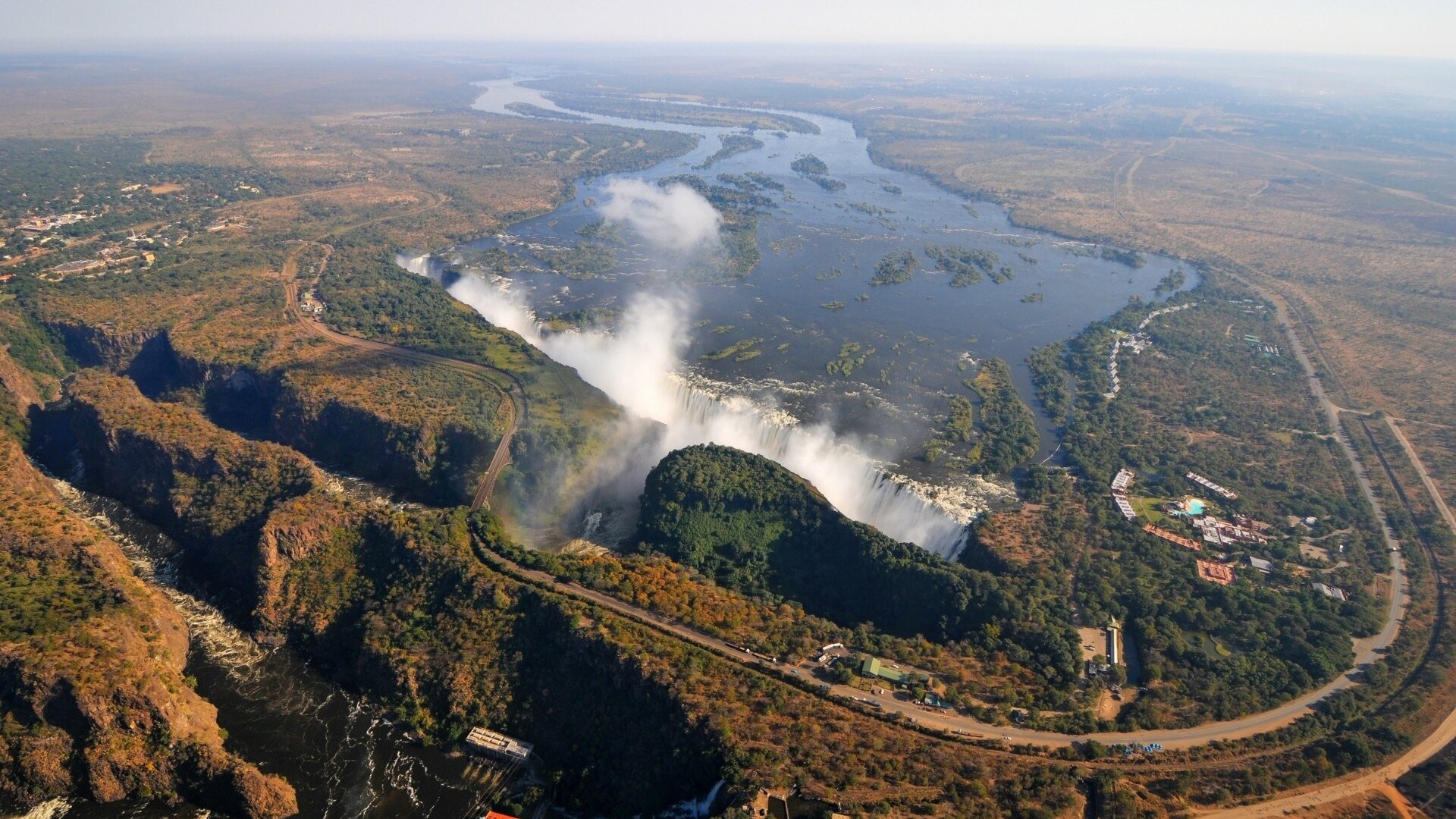
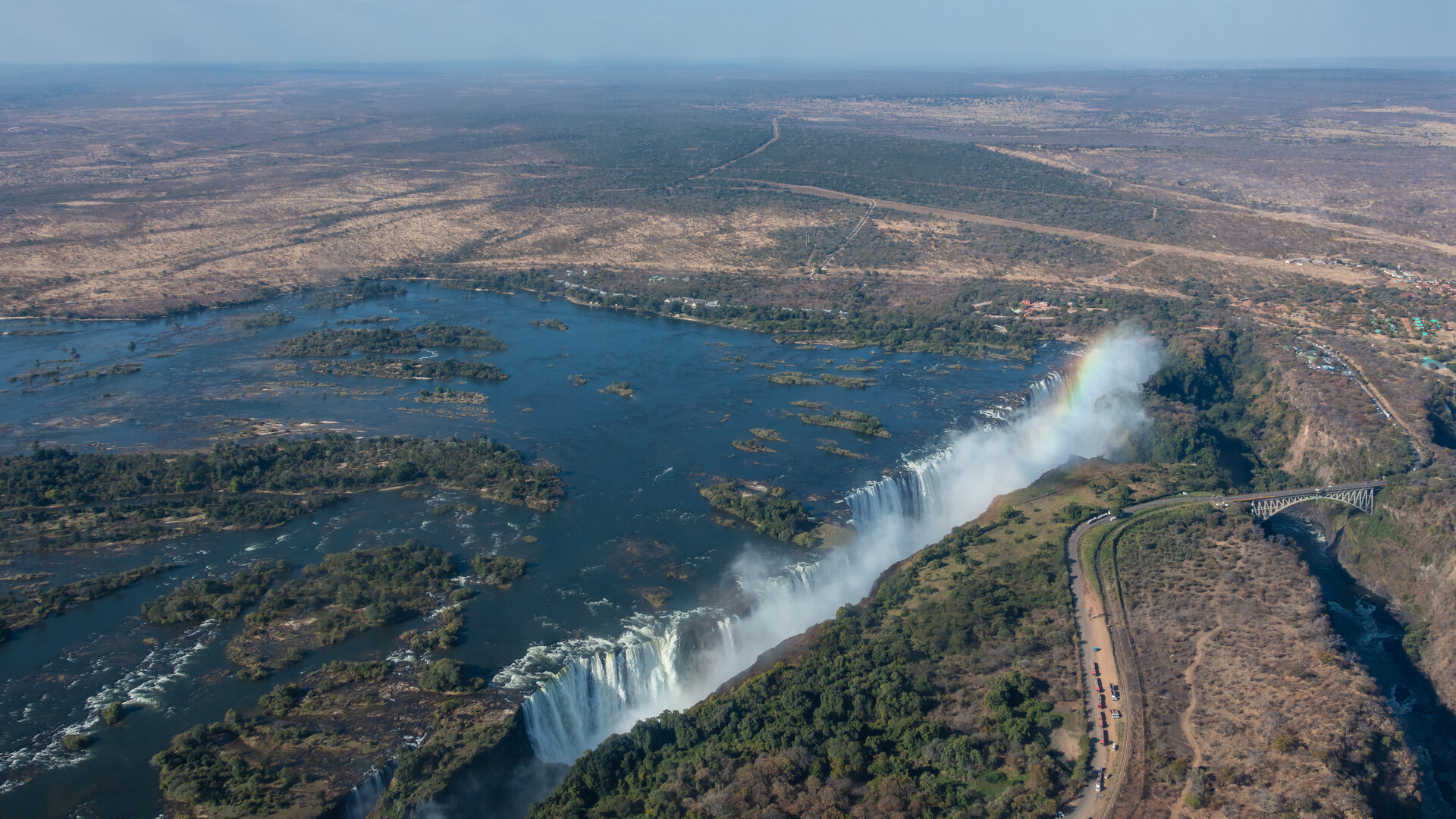
Your week begins at Victoria Falls, one of the Seven Natural Wonders of the World. Fly into either Victoria Falls (Zimbabwe) or Livingstone (Zambia) airport, buy a KAZA UniVisa on arrival, and settle into your hotel. Day one is usually about arrival and easing in — a first look at the falls, perhaps a Zambezi sunset cruise gliding past hippos and elephants as the sky turns to fire, and dinner overlooking the gorge.
Day two is your full falls day. Walk the rainforest viewpoints on the Zimbabwe side for the panoramic, face-on views, then cross the bridge on your UniVisa to experience the Zambian side up close — the Knife-Edge Bridge and, in the low-water season, the legendary Devil's Pool swim on the very lip of the falls. Thrill-seekers can add the bungee jump, gorge swing or zip line at the bridge, or take a scenic helicopter flight for the aerial "Flight of Angels" perspective.
Two nights is the right amount of time here: enough to see both sides, do a signature activity and a sunset cruise, without lingering once you have had your fill of the falls. By the morning of day three, you are ready for the wildlife to begin — and it is only a short transfer away.
Days 3–4: Chobe National Park
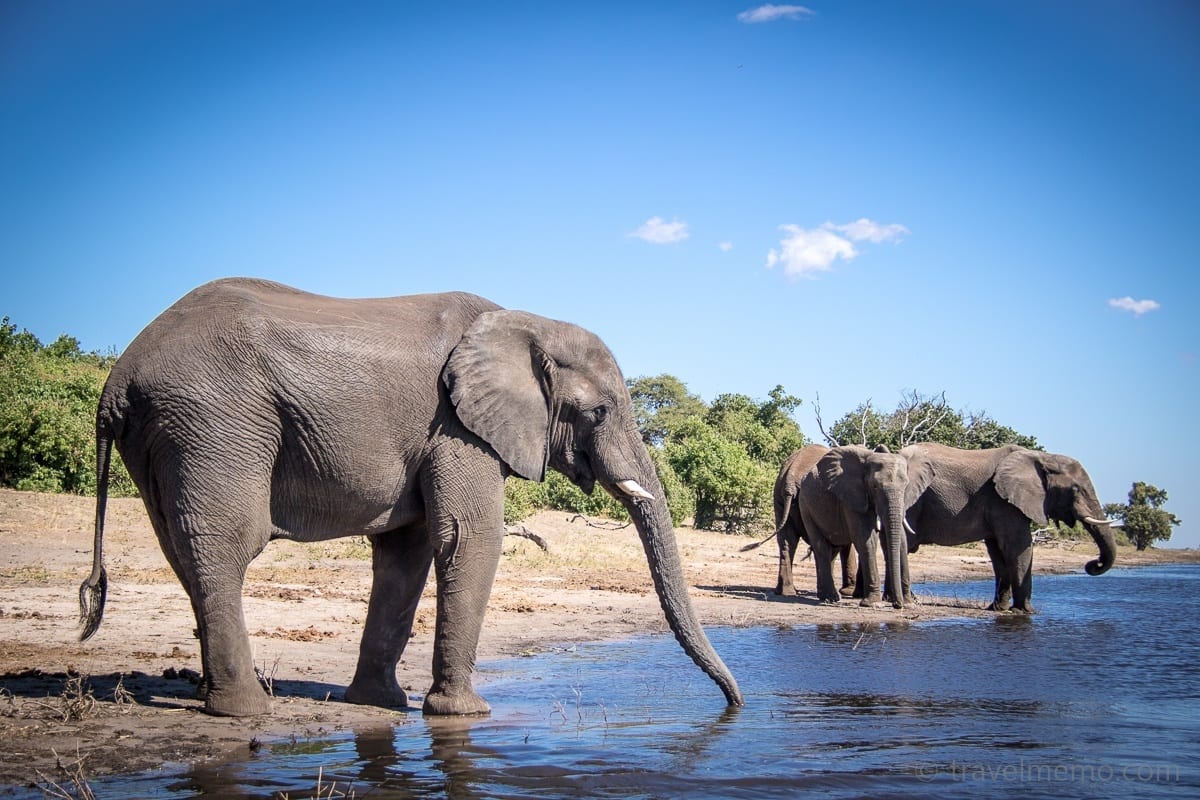
On the morning of day three you transfer from Victoria Falls to Kasane, the gateway town to Chobe National Park, crossing into Botswana at the Kazungula border — a short journey that your UniVisa's day-provision and a good operator make painless. Chobe is famous for one thing above all: the largest concentration of elephants in Africa, tens of thousands of them drawn to the Chobe River, especially in the dry season.
Your two nights here revolve around two signature activities. The game drives work the riverfront circuit in open 4x4s, delivering lion, buffalo, giraffe, sable and endless elephant against a backdrop of floodplain and forest. The afternoon Chobe River cruise is the highlight — a low boat drifting among wading elephants, hippo pods and basking crocodiles, with prolific birdlife and some of the finest golden-hour photography in Africa. Staying overnight, rather than day-tripping, gives you the quiet early mornings and late evenings when the park is at its best.
Chobe is the perfect middle act: it delivers the classic big-game, big-numbers safari that the falls cannot, and it sets you up for the very different, more intimate wilderness of the Delta to come. On the morning of day five, you swap the vehicle for a light aircraft.
Days 5–7: The Okavango Delta
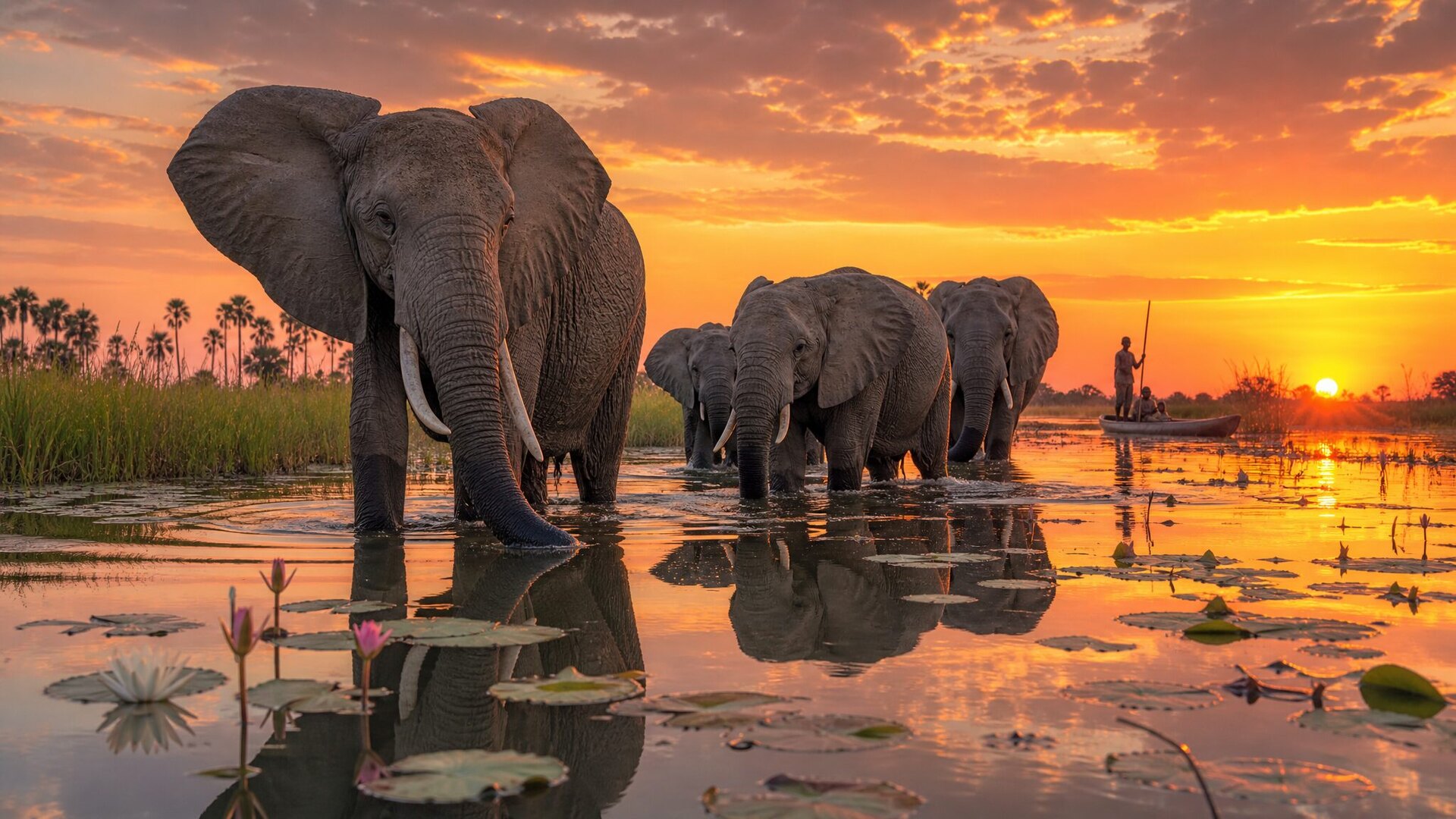
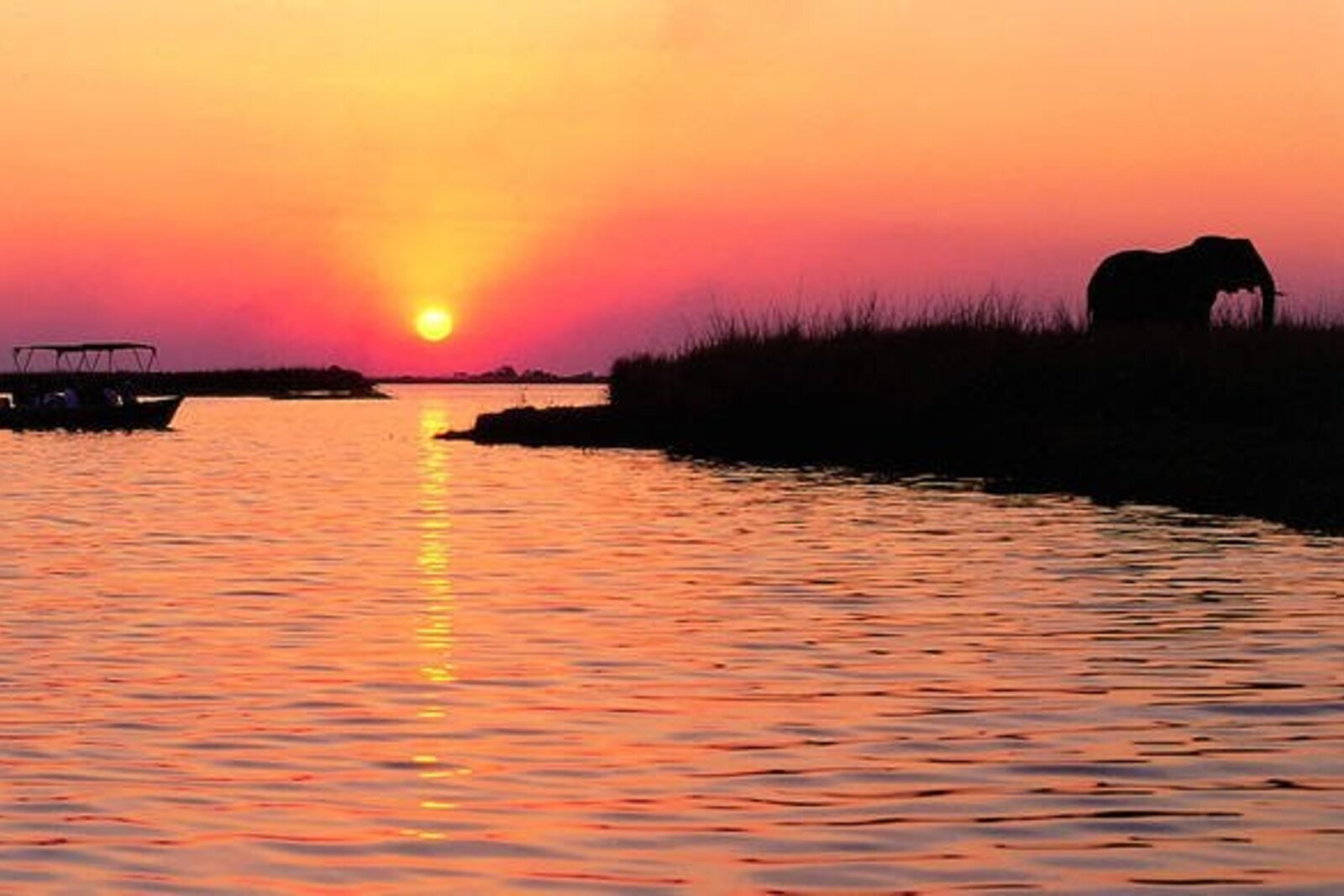
The finale is the Okavango Delta, one of the last great wildernesses on Earth — a vast inland delta where the Okavango River spreads into a maze of channels, lagoons and islands rather than reaching the sea. You fly from Kasane via Maun on a light aircraft, landing on a remote bush airstrip and transferring to your camp. The Delta is a place of profound quiet and staggering wildlife density, and arriving by air, watching the water-world unfold beneath you, is part of the magic.
Over two or three nights you experience the Delta's signature blend of water and land safaris. The mokoro — a traditional dugout canoe, poled silently through the reed-lined channels — is the quintessential Okavango experience, gliding you past lily pads, frogs, birds and the occasional elephant at eye level. Game drives and guided walks on the islands seek out the Delta's superb predators: lion, leopard and the endangered African wild dog, for which the region is one of the best places on the continent. Evenings are sundowners on the floodplain and dinners under a blaze of stars.
Ending in the Delta is deliberate: after the thunder of the falls and the big-game spectacle of Chobe, the Okavango offers something more soulful and remote — luxury camps with just a handful of tents, expert guides, and a sense of being utterly immersed in wild Africa. On day seven you fly back to Maun for your onward connection, having experienced three of the continent's greatest landscapes in a single week.
Getting Around — Flights & Transfers
The logistics of this route are more straightforward than they look, because the legs are designed to flow. You arrive by international flight into Victoria Falls or Livingstone. The falls-to-Chobe leg is a road transfer of around 75km with the Kazungula border crossing — comfortably under two hours with formalities. The Chobe-to-Okavango leg is a light-aircraft flight from Kasane, usually routing through Maun, the safari hub, and on to your Delta camp's airstrip.
Those light-aircraft flights are a hallmark of Botswana safari travel and come with strict luggage rules: typically 15–20kg per person in soft-sided bags only, as the small Cessnas have limited space. Pack light, in a squashable holdall rather than a hard suitcase, and leave anything surplus in storage in Maun. The flights are scenic highlights in their own right, with aerial views over the Delta's channels and wildlife.
Because the week involves two countries, a border crossing and multiple air transfers timed to connect, it is the kind of trip that rewards being professionally arranged. A tailor-made private itinerary sequences every flight, transfer and check-in so the connections work, handles the UniVisa and border assistance, and matches your camps to your budget and travel style. That is precisely the sort of seamless week we specialise in building.
Best Time, Visa & Budget
The best time for this itinerary is the dry season, roughly May to October. This is peak game-viewing across Chobe and the Delta — water sources shrink, vegetation thins, and wildlife concentrates dramatically. Crucially, it also coincides with the Okavango flood: the annual pulse of water arriving from the Angolan highlands fills the Delta's channels between about May and September, which is exactly when the mokoro trips are at their best. July to September is the classic peak window, with warm days, cool nights and superb wildlife.
On visas, the KAZA UniVisa is your key document at the falls: US$50, valid 30 days, covering both Zambia and Zimbabwe with a day-trip provision into Botswana. For your Chobe and Okavango nights in Botswana proper, many nationalities enter visa-free for tourism — confirm your passport's status when you plan. Take crisp US dollars in cash for the UniVisa and tips.
Budget varies enormously with your choice of camps, from comfortable mid-range to ultra-luxury, and the Okavango in particular commands premium prices because of Botswana's low-volume, high-value conservation model and the fly-in access. As a guide, this is a bucket-list trip rather than a budget one — but it delivers three world-class experiences in a week, and the value for what you see is exceptional. We tailor the exact camps, season and pace to your priorities and budget, and take care of every connection in between.
Ready to explore? Browse our Victoria Falls, Chobe & Okavango safari packages →