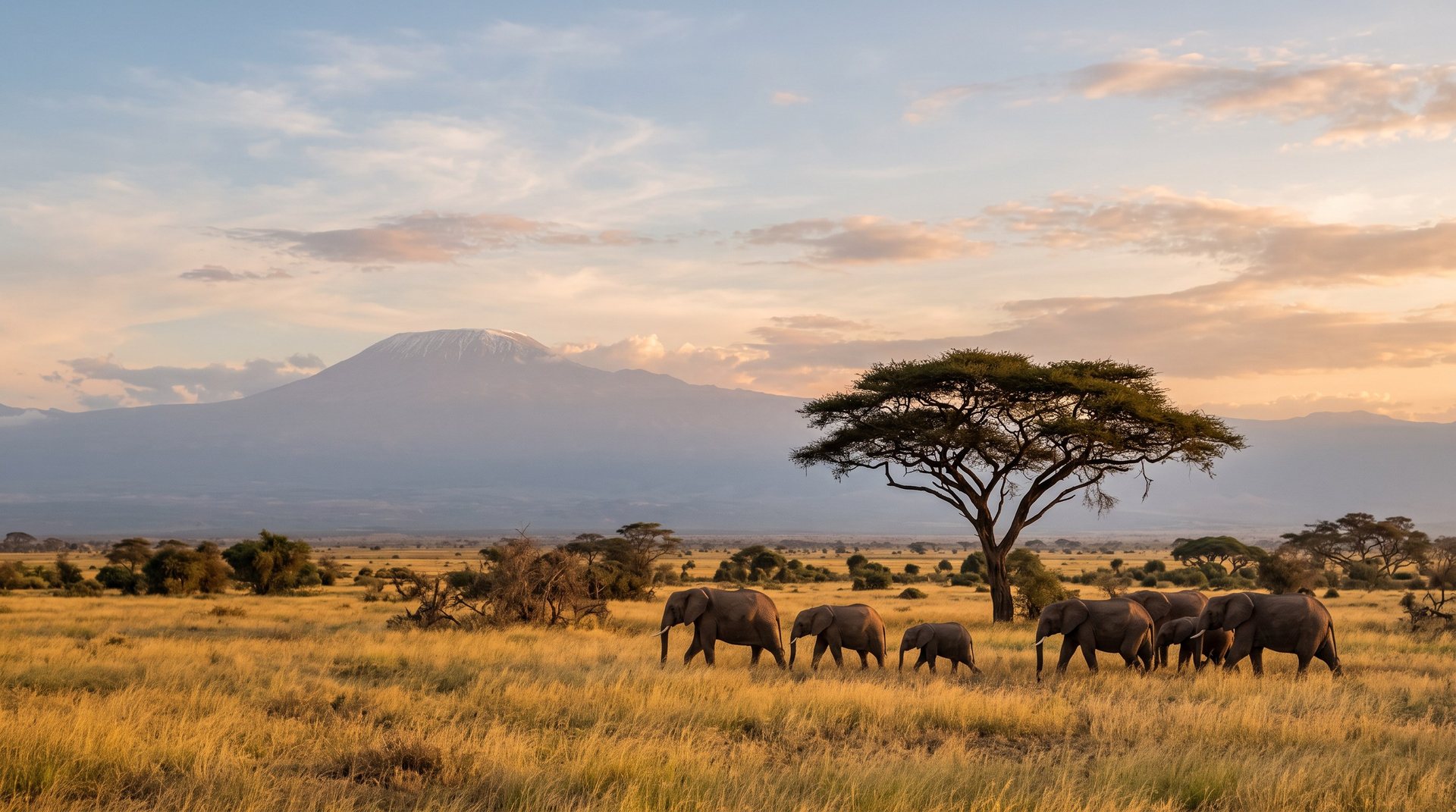
Key Takeaways
- Africa’s five greatest horseback safari destinations are the Okavango Delta (Botswana), Masai Mara (Kenya), Lewa Wilderness (Kenya), Ant’s Nest & Ant’s Hill (South Africa’s Waterberg), and Kambaku Safari Lodge (Namibia’s Waterberg)
- Riding requirements vary dramatically: Macatoo and Offbeat demand experienced, fit riders confident at gallop; Ant’s Nest and Kambaku welcome absolute beginners and families
- A seven-night Offbeat Masai Mara expedition costs approximately USD 12,550 per person for 2027, including internal charter flights and park fees
- Weight limits range from 90 kg (Lewa) to 110 kg (Ant’s Nest) — these are non-negotiable horse-welfare controls
- The Okavango’s iconic floodplain canters depend on seasonal water levels (typically peaking June–September); dry-season rides focus on firmer terrain and concentrated wildlife
- Three bookable packages: Okavango Delta Horseback 7 Days from USD 8,900, Tswalu Kalahari Riding 5 Days from USD 7,500, and Ultimate African Riding 12 Days from USD 18,900 across multiple countries
- A personal, correctly fitted riding helmet is essential at every destination — bring your own rather than relying on camp stock
Introduction — Why Africa on Horseback Changes Everything
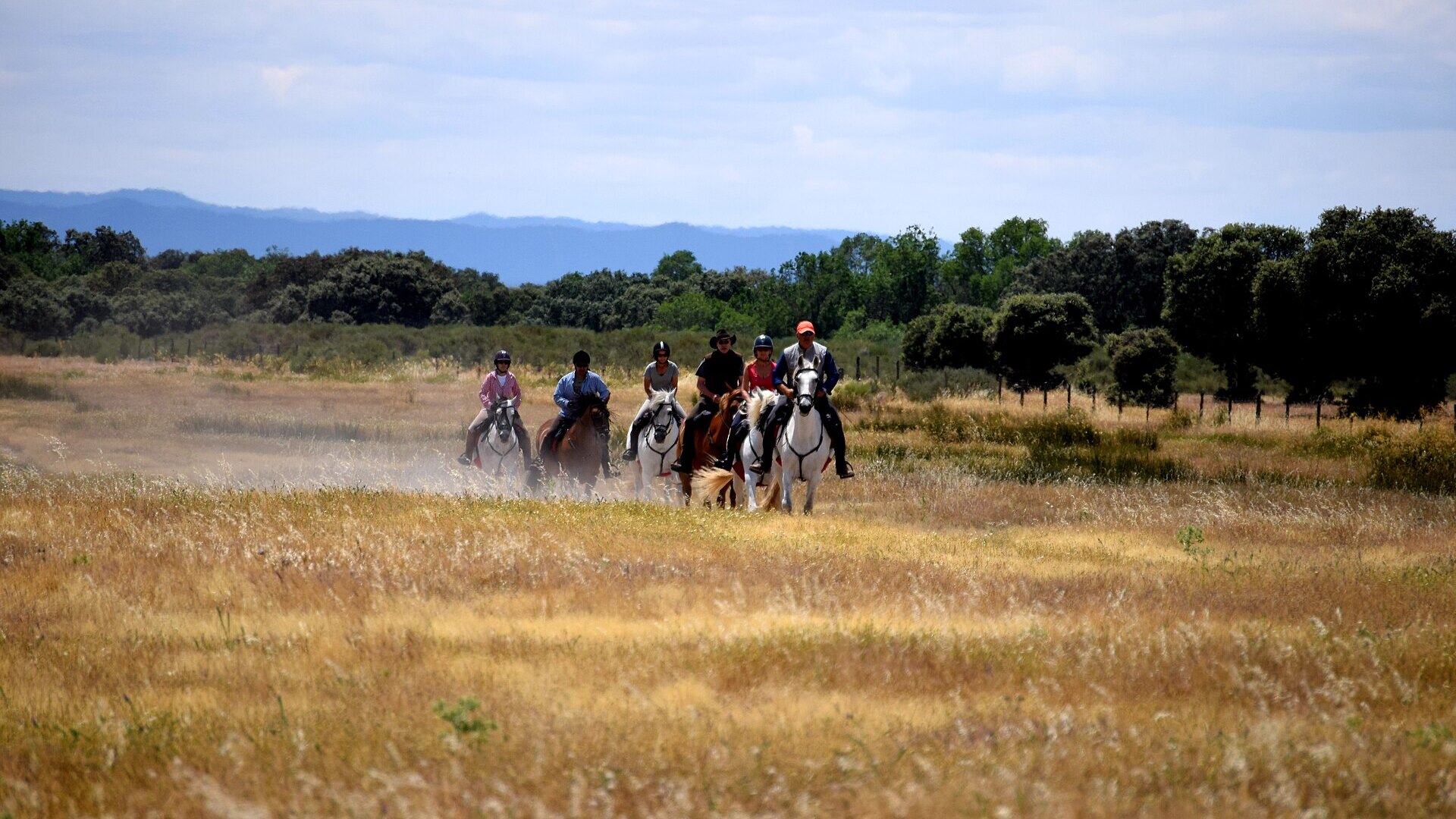
There is a moment on every horseback safari when the world tilts and what you thought you knew about Africa rearranges itself. You are riding at a collected canter across an Okavango floodplain, water spraying from your horse’s hooves in a silver arc, and a herd of red lechwe parts around you like a school of fish around a reef. Or you are walking your mount through a stand of fever trees in the Masai Mara, the morning so still you can hear a giraffe pulling acacia leaves a hundred metres away. Or you are cresting a ridge in the Waterberg at dusk, the last light catching a tower of giraffe silhouetted against the escarpment, and your horse’s ears are pricked forward because she has seen them before you have.
These are the moments that separate a horseback safari from every other way of experiencing wild Africa. A vehicle is fast, safe, and efficient — and on predator sightings, it is usually better. But a horse offers something a Land Cruiser never can: intimacy without intrusion. Wildlife may interpret horse and rider as a single, non-threatening herbivore rather than a loud mechanical predator, and the result, reported consistently across decades of mounted safari, is that animals often tolerate a closer, calmer approach. You move at the pace of the bush. You smell the sage after rain. You feel the terrain through the horse’s stride. The silence is not the absence of engine noise — it is the presence of everything a motor drowns out.
This guide is the definitive resource for anyone considering a horse riding safari in Africa in 2027. We have reviewed five destinations that represent the full spectrum of mounted safari — from the legendary floodplain gallops of the Okavango Delta and the demanding seven-night expeditions of Offbeat Safaris through Kenya’s big-game country, to the family-friendly trails of Ant’s Nest in South Africa’s Waterberg and the accessible savannah rides of Kambaku Safari Lodge near Namibia’s Waterberg Plateau. For each, we provide the detail that matters: which lodge or operator, what riding standard is genuinely required, what wildlife to expect (and what not to expect), what it costs, and who the destination truly suits.
We have also assembled three bookable safari packages — a seven-day Okavango Delta horseback safari, a five-day Tswalu Kalahari riding experience, and a twelve-day multi-country ultimate riding expedition — each with transparent pricing, detailed itineraries, and honest assessments of difficulty. Whether you are a seasoned rider who has galloped across Patagonia and the Mongolian steppe and now wants Africa’s wildest terrain, or a family with a horse-mad ten-year-old looking for a safe, gentle introduction to mounted wildlife encounters, this guide will match you with the right destination, the right lodge, and the right saddle.
Two principles have governed every word. First, accuracy over romance: we have fact-checked every claim against operator evidence, corrected common myths (no, Ant’s Nest is not at Tswalu; no, riding among the Great Migration cannot be guaranteed), and distinguished between what wildlife occurs in a destination and what you will realistically see from horseback. Second, safety over spectacle: every rider requirement, weight limit, and helmet recommendation in this guide is a non-negotiable welfare and safety standard, not a suggestion to be negotiated away in exchange for a booking.
Africa on horseback is not a luxury add-on. It is a fundamentally different way of being in the wilderness — older, slower, more physically demanding, and more rewarding than anything with an ignition key. This is how the continent was first explored, and for those willing to earn the experience in the saddle, it remains the most intimate way to meet it.
Why Choose a Horseback Safari Over a Traditional Game Drive?
The question is fair. A conventional game drive in an open 4x4 is safe, comfortable, requires no special skill, and delivers extraordinary wildlife sightings. Why would anyone choose something harder, more physically demanding, and more dependent on personal competence? The answer lies in what a horseback safari adds — and what it subtracts.
The Sensory Difference
A vehicle safari is primarily visual. You see wildlife through a frame of metal and glass, you hear it over the diesel idle, and you photograph it from a fixed, elevated platform. A horseback safari engages every sense. You feel the terrain through your horse’s gait — the soft give of a flooded plain, the crunch of dry savannah grass, the careful placement of hooves on rocky ground. You smell the bush: the musty sweetness of elephant dung, the peppery scent of wild sage, the clean mineral tang of Delta water. You hear what the engine masks — the alarm call of a francolin, the deep rumble of an elephant’s stomach, the rhythmic tearing of grass as a zebra herd feeds. And you experience the silence that gives those sounds their power.
The Wildlife Relationship
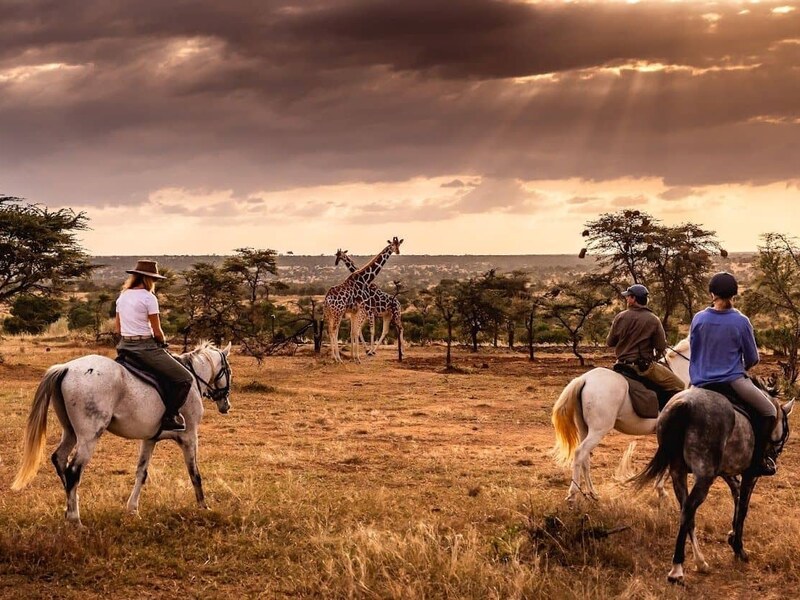
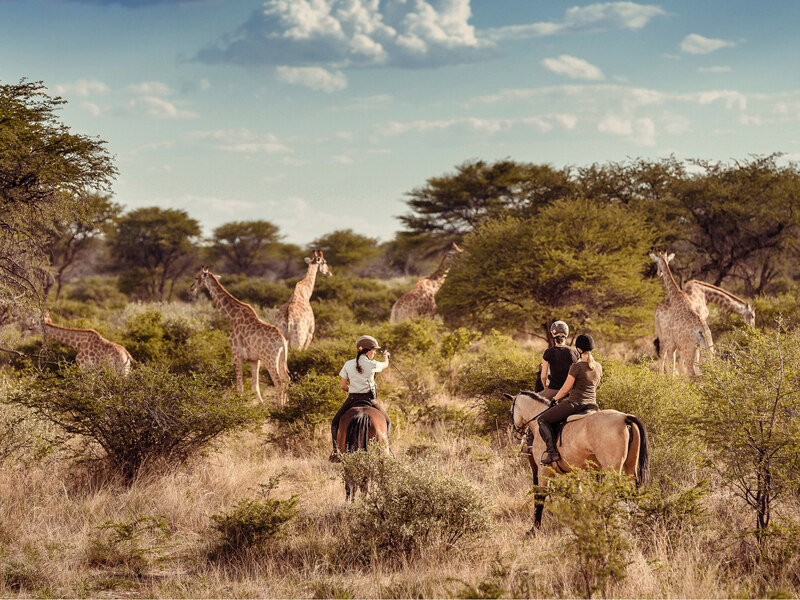
Several operators and experienced guides report that wildlife may respond differently to a horse and rider than to a vehicle. The widely cited explanation is that many prey species interpret the combined silhouette as another large herbivore rather than a predator. This may allow calm, close observation of plains game, giraffe, and sometimes elephant that a vehicle approach would disturb. The emphasis here is on “may” and “can” — wildlife behaviour is never guaranteed, encounters depend on guide judgment and animal mood, and predator viewing is almost always safer and more controlled from a vehicle. But on those mornings when a giraffe stands ten metres away, chewing slowly, entirely unbothered by your presence, or when a herd of zebra flows around your group as if you were part of the landscape, the difference is not incremental. It is a different category of experience.
The Physical and Emotional Dimension
A horseback safari is earned, not consumed. You arrive riding-fit or you struggle. You manage your own balance, your own nerves, and your own horse. You feel the sun and the wind without the mediation of a roof. And at the end of a day — four, six, sometimes eight hours in the saddle — you feel it in your legs, your core, and your sense of accomplishment. There is a camaraderie between riders who have shared a fast canter through big-game country that is different from the camaraderie of a game-drive vehicle. It is the bond of shared physical effort and shared vulnerability.
What You Trade
Honesty matters. A horseback safari is not always better. You trade comfort for immersion. You trade the guide’s ability to drive towards a radio-reported leopard sighting for the serendipity of what the trail delivers. You trade large telephoto lenses (impractical from the saddle) for eye-level encounters you photograph with your memory. You trade accessibility — anyone can sit in a vehicle — for exclusivity, because a mounted safari requires genuine riding competence at most destinations. And you trade predator-viewing quality: lions, leopards, and hyenas are better observed from a vehicle, and any guide worth their certification will increase distance or change route when a dangerous-game encounter develops on horseback.
| Factor | Traditional Game Drive | Horseback Safari |
|---|---|---|
| Wildlife proximity | Excellent for all species including predators; controlled approach | May allow calm, close observation of plains game and herbivores; predators viewed at greater distance |
| Sensory immersion | Primarily visual; engine noise masks natural sound | Full sensory engagement — sound, scent, touch, silence |
| Physical demand | Minimal — sit comfortably, no special fitness required | Moderate to high — 4–8 hours in the saddle, core and leg endurance essential |
| Skill required | None | Varies: beginner-friendly at some lodges, experienced rider mandatory at others |
| Accessibility | Universal — all ages, no fitness or weight limits | Restricted — weight limits (90–110 kg), age minimums, riding proficiency requirements |
| Photography | Ideal platform for telephoto lenses, tripods, and long exposures | One-handed, compact camera only; stunning eye-level perspectives but technically demanding |
| Terrain coverage | Road-dependent; limited to established tracks | Off-road, through water, over mountains — anywhere a horse can walk |
| Cost | Included in most safari lodge rates | Dedicated riding safaris typically USD 800–1,800+ per person per night at specialist operators |
The comparison is not a competition. The best African safari often combines both: vehicle drives for predator tracking and night safaris, horseback for the immersive daytime experience. Several of the destinations in this guide offer exactly that blend, and our packaged itineraries build on the principle that mounted and motorised safaris complement rather than replace each other.
The Top 5 Horse Riding Safari Destinations in Africa
These five destinations represent the gold standard of mounted safari in Africa. Each has been selected for the quality of its riding operation, the calibre of its wildlife, the integrity of its safety standards, and the honesty of its marketing. They are not ranked in a single hierarchy because they serve fundamentally different riders: Macatoo and Offbeat demand expert equestrians, Lewa bridges the intermediate gap, and Ant’s Nest and Kambaku welcome the broadest possible range. The right destination is the one that matches your riding ability, your budget, and your definition of adventure.
1. Okavango Delta, Botswana — African Horseback Safaris & Okavango Horse Safaris
The Okavango Delta is where horseback safari mythology was born. The image of riders cantering through shin-deep floodwater, spray catching the morning light, red lechwe leaping alongside and elephant herds visible on the treeline — this is the photograph that launched a thousand riding holidays. And unlike most marketing imagery, it is grounded in a real, repeatable experience, provided the water cooperates and you can ride.
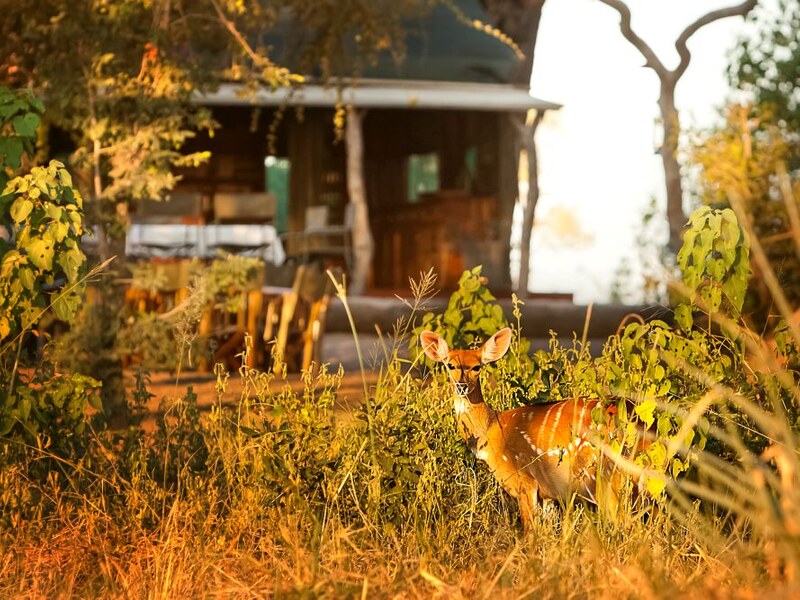
Two principal specialist operators work this landscape. African Horseback Safaris is based at Macatoo Camp in the Abu Concession (NG26), a luxury tented bush camp with eight rooms on raised decks and access to approximately 450,000 acres of wilderness. The operation maintains a herd of nearly 50 horses — Thoroughbreds, Namibian Hanoverians, and Kalahari-Arab crosses — and guests may rotate between two or three mounts during a stay. Macatoo’s defining feature is flexibility: there are no fixed arrival or departure dates, no rigid daily schedules, and riding can be calibrated to conditions, wildlife, and group ability.
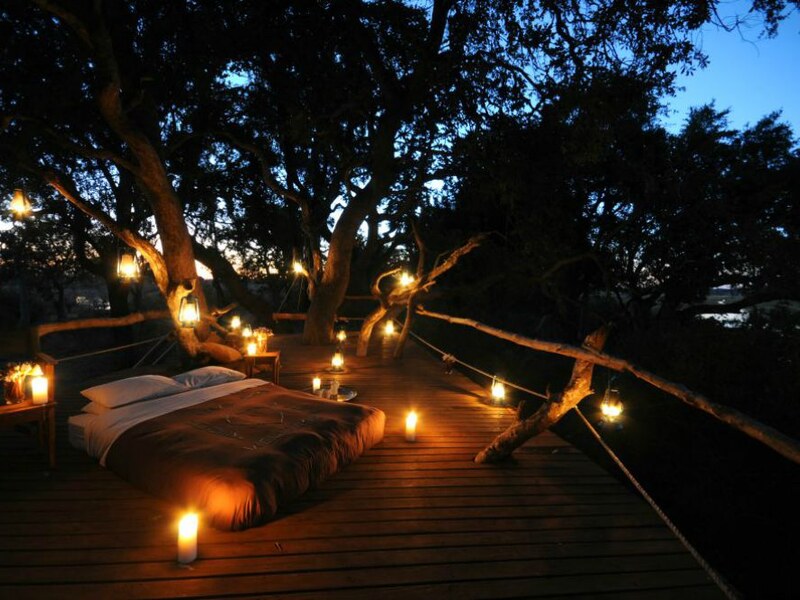
Okavango Horse Safaris operates from Kujwana Camp in a private concession of approximately 90,000 hectares. Rides are limited to a maximum of eight guests, and the product offers permanent-camp stays, fly-camping (typically April to November), and sleep-out platforms. Where Macatoo is a flexible camp-based operation, Kujwana adds a more expeditionary dimension: mobile elements that let riders cover broader territory, supported by mokoros and donkeys for equipment transport in high-water conditions.
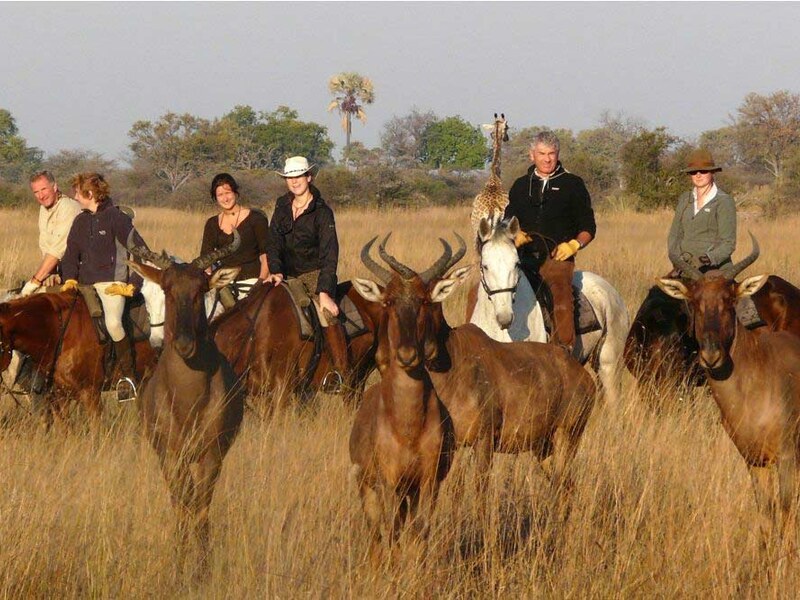
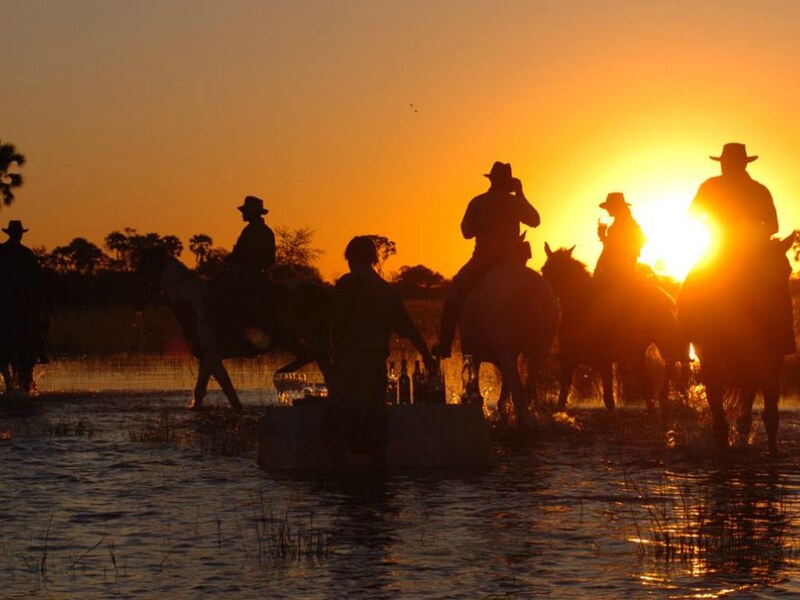
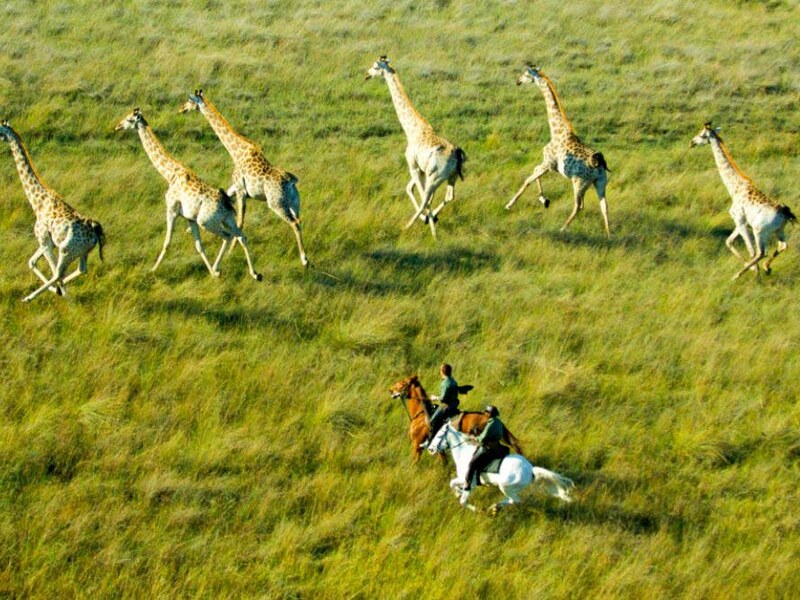
Wildlife
The Delta riding environment includes seasonal floodplains, palm-fringed islands, riverine forest, open grassland, game paths, water crossings, and mopane woodland. Reported wildlife possibilities include elephant, giraffe, zebra, buffalo, red lechwe and other antelope, with lions, leopards, and hyenas present in the wider wilderness. The key distinction is between species occurring in the destination and species you will reliably see from horseback — only the former is guaranteed by geography. Guides may choose distance, direction, or pace based on animal behaviour, and predator viewing is typically safer from the vehicle activities that Macatoo also offers.
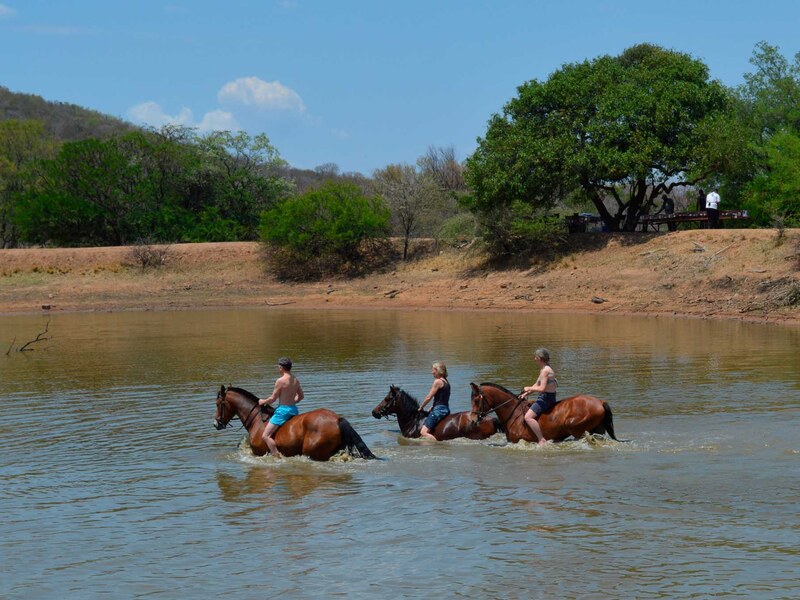
Water level changes materially alter the riding experience. In higher-water periods (floodwaters commonly rise from March and may peak between June and September), shallow floodplains permit the iconic splashy canters, and deeper channels may involve fording or, on selected itineraries, swimming horses. In the late dry season (October), receding water can concentrate animals near remaining water and expose firmer terrain. Green season (November to April) brings greener landscapes but classic floodwater riding is less reliable. The article’s honest position: there is no universally “best” month. High water favours the visual wetland experience; lower water can favour firmer ground and different wildlife concentrations.
Riding Requirements
Macatoo is an experienced-rider product. Novice riders are not accepted. You must be able to rise to the trot, control a horse at canter, and remain secure at all paces. You may need to gallop in response to a guide’s instruction — not for thrills, but because wildlife encounters occasionally require a swift, controlled change of pace. A useful self-assessment: can you maintain a light seat at canter for up to five minutes without losing balance or pulling on the horse’s mouth? If the honest answer is no, Macatoo is not the right starting point.
A typical day involves four to six hours in the saddle. Riding ranges from walking through denser habitat to long trots, canters, and gallops in suitable open country. English and Western-style trail saddles are available. The minimum age is generally 12. The stated weight ceiling is 95 kg; exceptional consideration above that level requires prior agreement and applies only to advanced riders. Riders may need to complete an experience questionnaire before acceptance.
Kujwana applies similar standards: experienced, independent riders who are fit for sustained hours in varied terrain. The exact age, helmet, and weight policies should be confirmed directly with Okavango Horse Safaris, as they may differ from Macatoo’s.
Pricing
No exact, operator-verified nightly rate for Macatoo or Kujwana appears in current published evidence. Multi-day Okavango riding products are broadly positioned from approximately USD 3,200 to above USD 9,900 for multi-night stays, but without a consistent duration, season, or inclusion set, this cannot support a precise per-night comparison. African Horseback Safaris publishes rates in GBP, applies a reported 50% single supplement in some circumstances, and charges camp transfer flights separately from daily rates. A direct enquiry is essential before budgeting.
Who It’s For
Honeymooners: Exceptional for couples who both ride confidently — intimate tented camp, flexible schedule, option to split activities if one partner is less experienced. Experienced riders: One of the world’s strongest matches because riding is central, fast work is available, and the terrain is unmatched. Photographers: Outstanding, but you must be skilled enough to manage reins, balance, and equipment without compromising control; waterproof protection is essential. Families: Suitable only for families with competent riders aged 12+; this is not an introductory riding holiday for children.
2. Ant’s Nest & Ant’s Hill, South Africa — The Waterberg’s Family-Friendly Equestrian Safari
Important correction: Ant’s Nest and Ant’s Hill are in the Waterberg region of South Africa, approximately three hours by road from Johannesburg. They are not at Tswalu Kalahari. Tswalu is a separate reserve, brand, and operation in the southern Kalahari. These two products should never be conflated.
If Macatoo is the horseback safari for accomplished riders seeking wild intensity, Ant’s Nest and Ant’s Hill are the horseback safari for everyone else — and for many of the accomplished riders too. Operated by Ant Africa Safaris on a private, malaria-free reserve of approximately 12,500 acres in South Africa’s Waterberg, this is the destination that proves you do not need to be an expert to experience Africa from the saddle.
The reserve spans 12 ecological zones — open plains, rocky bluffs, gorges, and varied bushveld — and notably lacks lions and elephants. That absence is not a weakness; it is a defining product characteristic that enables greater flexibility for mounted, walking, and cycling activities. Riders at all levels can explore more freely because the big-game risk profile is fundamentally different from the Okavango or Masai Mara.
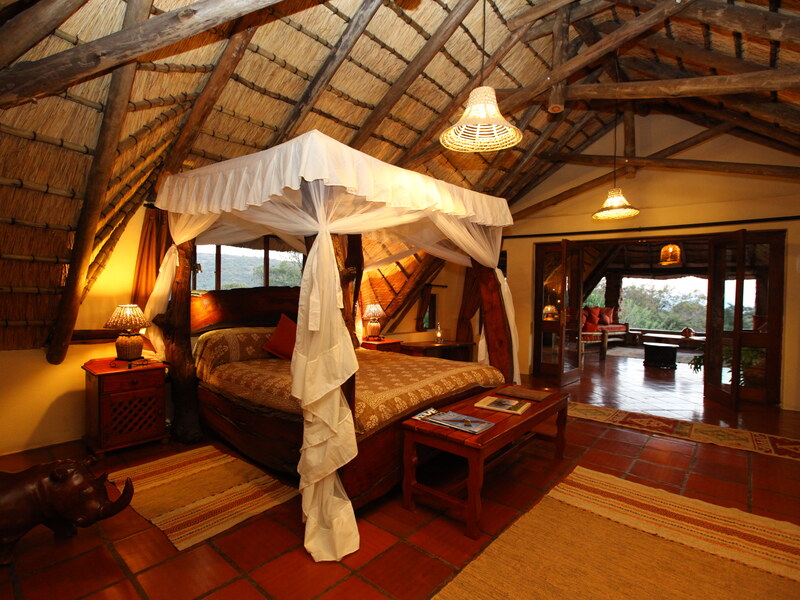
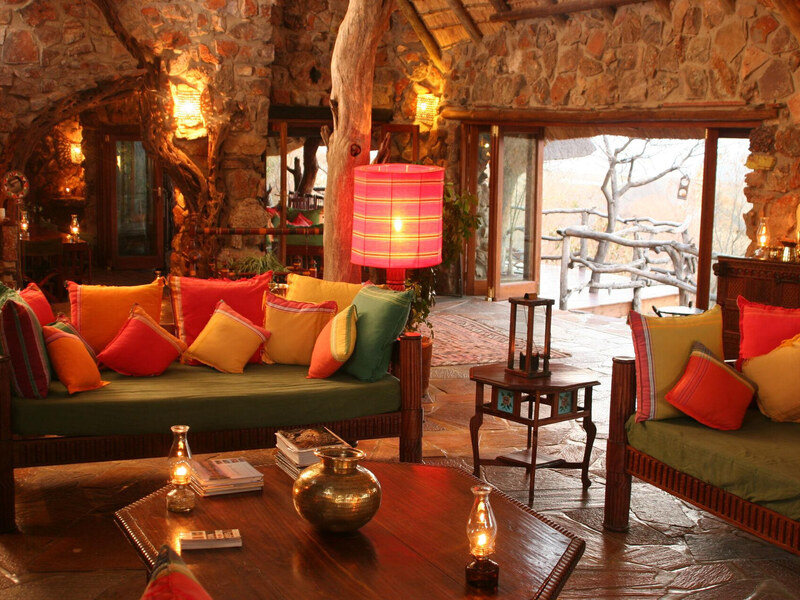
Ant’s Nest is the original homestead, set in a natural amphitheatre with a maximum occupancy of approximately 12–14 guests. Ant’s Hill perches on the edge of a cliff with sweeping Waterberg views, accommodating up to 16 guests. Both are permanent luxury “bush homes” rather than mobile camps — think private suites with proper beds, en-suite bathrooms, and the warmth of a family-run operation where meal times flex around riding schedules and children are genuinely welcome.
Wildlife
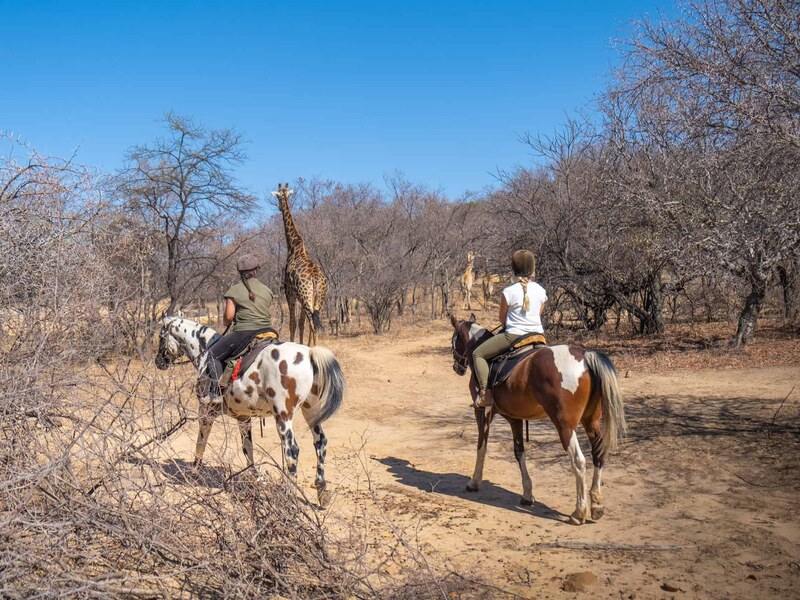
The riding focuses on plains game: giraffe, zebra, wildebeest, kudu, waterbuck, sable, and numerous antelope species, all accustomed to the farm’s horses and therefore often tolerant of close, calm mounted observation. The absence of lions and elephants should be stated openly as a safety and product characteristic. Optional off-property Big Five drives are available at extra cost for guests who want the full predator experience alongside their riding.
Riding Requirements
This is where Ant’s stands apart from every other destination in this guide. The stable maintains more than 100 horses — Thoroughbreds, Boerperds, Arab crosses, and children’s ponies — enabling precise ability-matching that no smaller stable can replicate. Rides are limited to six guests with two guides, and the daily programme is entirely flexible: no fixed itinerary, morning and afternoon riding arranged around guest preferences.
Absolute beginners are welcome. Children under 12 require parental supervision on rides; children under five are limited to pony walks near the lodge. But “suitable for all levels” does not mean every guest joins every ride. Fast riders and beginners ride different horses, different routes, and often different groups. The maximum rider weight is 110 kg — the most generous in this comparison — and helmets are compulsory. McLellan saddles are standard, with some English and endurance saddles available.
Pricing
Rates are quoted per person per night and generally include accommodation, meals, local drinks, and in-house activities including riding, drives, and guided walks. Exclusions include gratuities, shop purchases, transfers, and premium off-property activities such as Big Five excursions and helicopter flights. No published numeric nightly rate is available in current evidence; a direct enquiry through the official domain (waterberg.net) is required. A 20% deposit is reported, with the balance due 30 days before arrival.
Who It’s For
Honeymooners: Excellent — permanent suites, flexible schedules, and the option to combine riding with spa-like relaxation. Experienced riders: Strong where private or fast groups can be formed, though the wildlife profile differs from predator-rich destinations. Photographers: Exceptional for controlled plains-game observation and a less pressured riding environment. Families: One of the strongest family equestrian safari options in all of Africa — all ages welcomed, pony experiences for the youngest, and a malaria-free location three hours from Johannesburg.
3. Masai Mara, Kenya — Offbeat Safaris
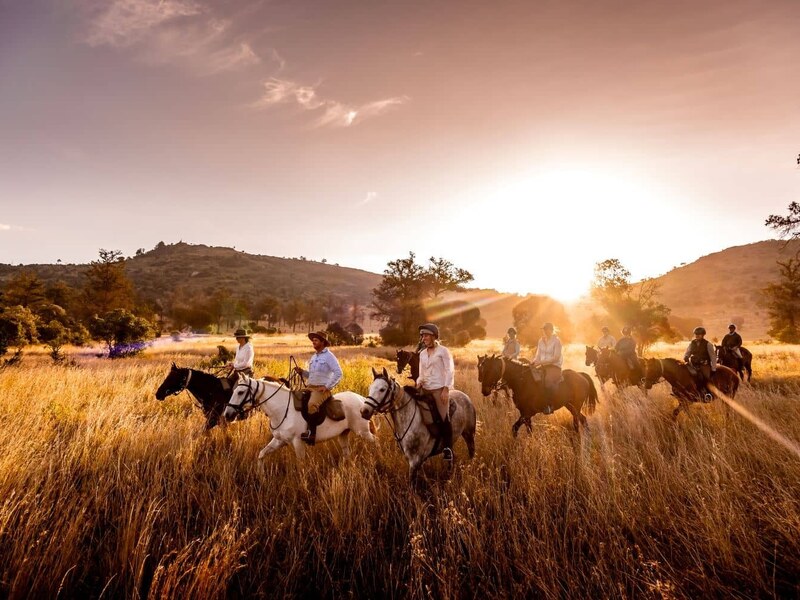
If Macatoo is the horseback safari of dreams and Ant’s is the horseback safari of welcome, Offbeat Safaris is the horseback safari of reckoning. This is the most physically demanding, most logistically ambitious, and most wildlife-intense mounted expedition in Africa — a seven-night, 250-kilometre point-to-point ride through some of the continent’s densest big-game country, sleeping in mobile canvas camps that move ahead of you each day.
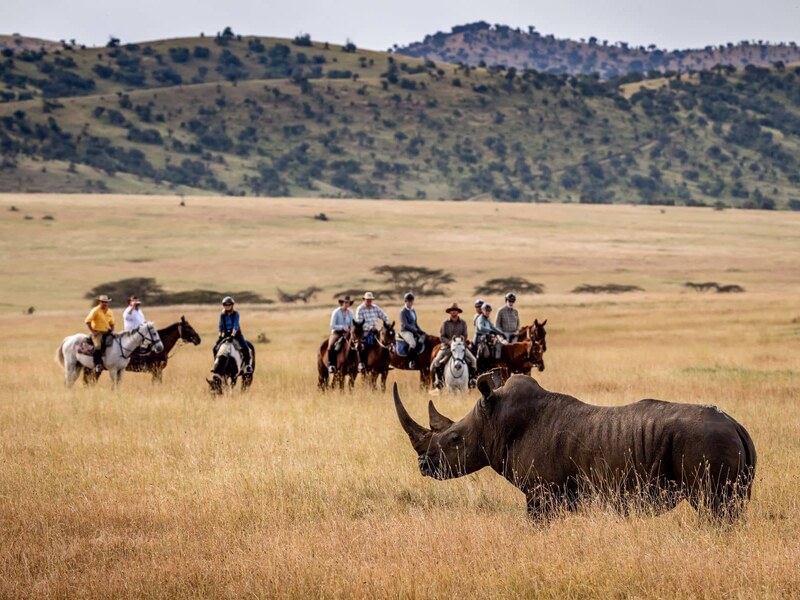
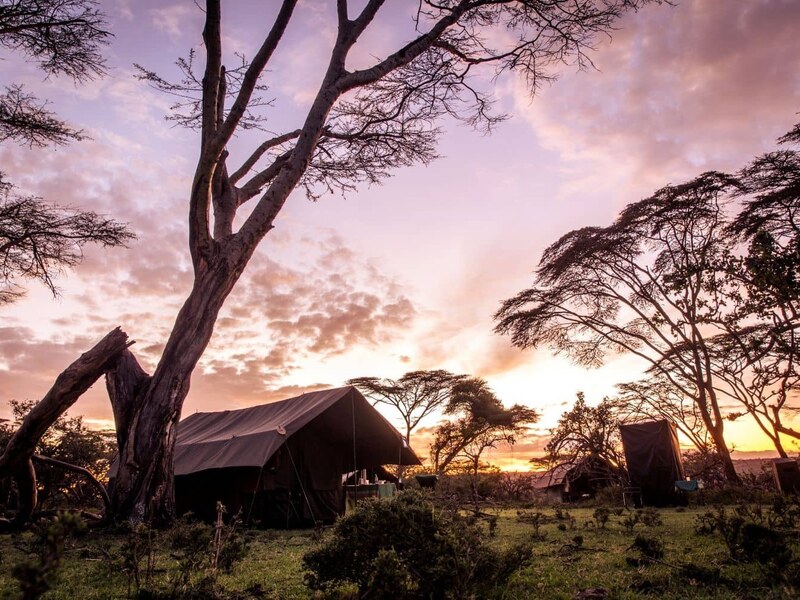
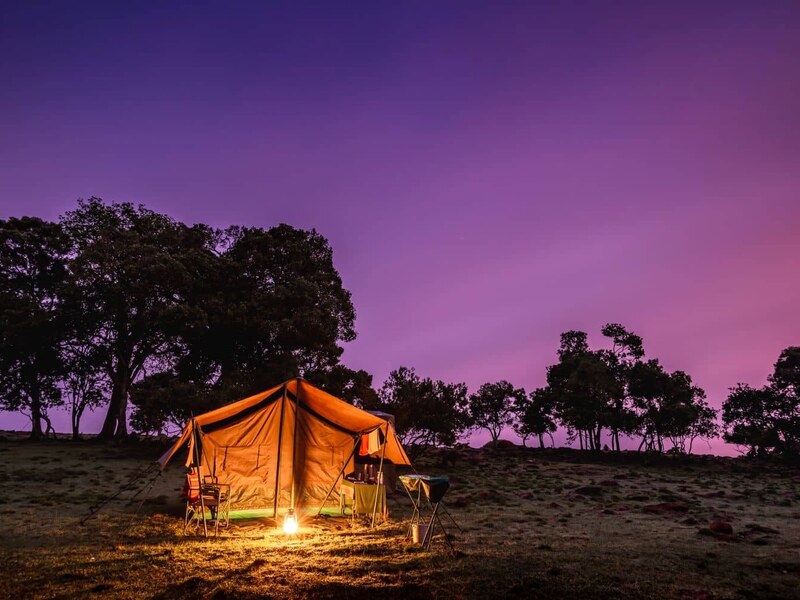
Offbeat has operated mobile riding safaris in Kenya since 1990. The flagship product is a seven-night Masai Mara expedition for up to 12 experienced riders on set departure dates. The route crosses varied conservancy and reserve landscapes, and the camp — canvas tents approximately nine by ten feet, camp beds with proper linens, private long-drop toilets, hot bucket showers, and three-course dinners prepared by a dedicated crew — moves on a lorry supported by Land Rovers. This is well-supported traditional mobile camping, not conventional en-suite luxury. The physical details are more informative than the marketing phrase “five-star camping.”
Wildlife
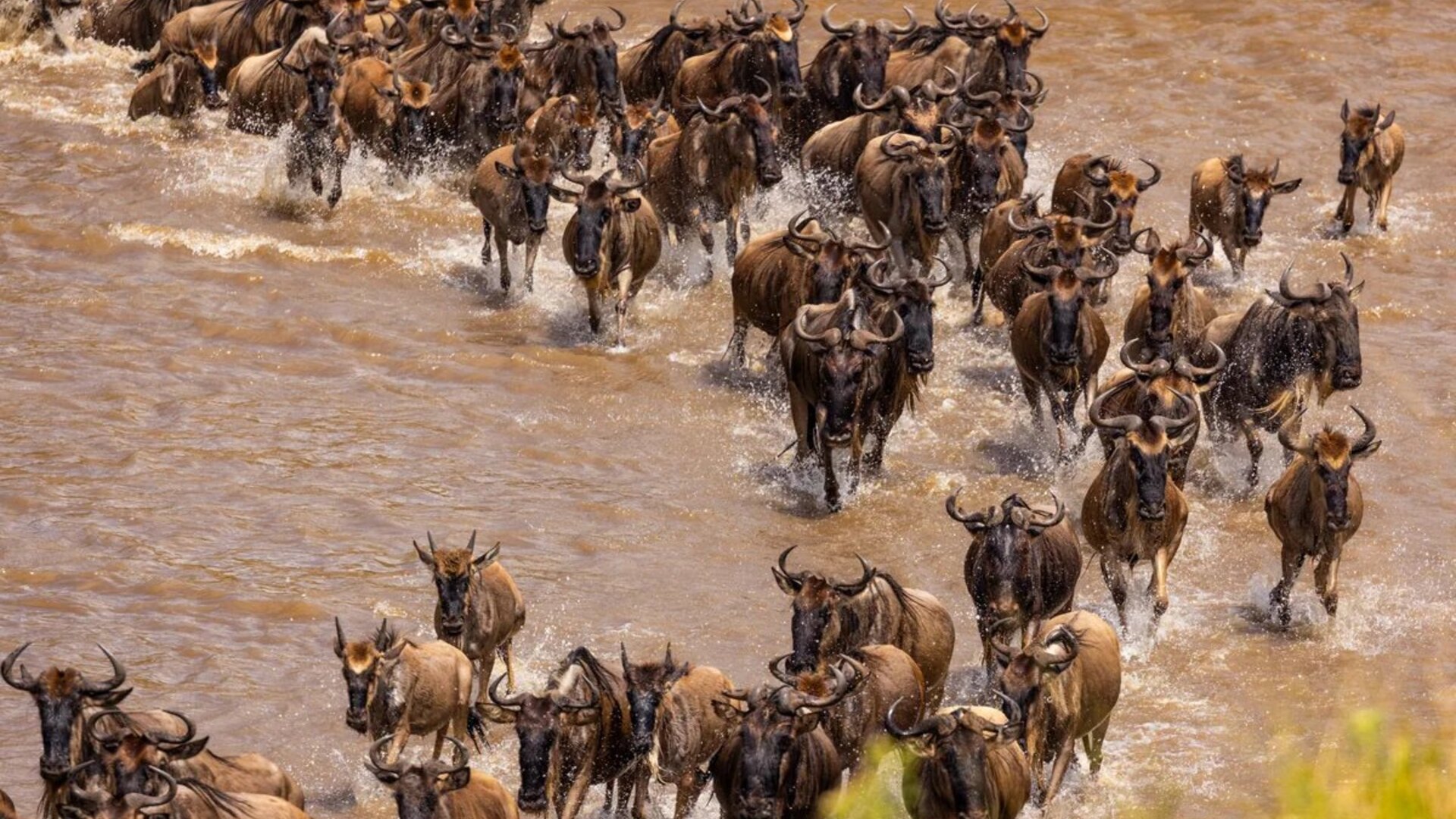
The Mara route is in serious big-game country. Elephant, lion, buffalo, hippo, wildebeest, zebra, and giraffe are all reported possibilities. But the article’s most important sentence about the Masai Mara is this: riding among the Great Migration cannot be guaranteed. Late July to mid-September may improve the chance of encountering migratory herds, but herd location depends on rainfall and movement, and Offbeat’s own evidence explicitly states that riding among them is not promised. Use: “Departures in the migration season may encounter large wildebeest and zebra herds.” Never: “Riders will gallop alongside the Great Migration.”
Riding Requirements
This is the most demanding riding destination in this guide. You must be secure and balanced at walk, trot, canter, and gallop; have an independent seat; react calmly at speed; be fit for approximately four to eight hours in the saddle on varied terrain; and be capable of controlling a responsive Thoroughbred, Thoroughbred-cross, or polo-type horse around big game. The standard maximum weight is 95 kg. Set departures may accept competent teenagers from around age 14, but this is conditional on the rider assessment.
English General Purpose saddles are standard, with some Australian stock saddles potentially available on request. Prospective guests submit a rider form before confirmation. Deloraine House is identified as an equestrian base where riders may tune up before departure — but this should not be mistaken for a route that turns beginners into expedition-ready riders in a few days.
Pricing
A seven-night Mara ride is quoted at approximately USD 11,950 per person sharing for 2026 and USD 12,550 per person sharing for 2027. This derives to approximately USD 1,707–1,793 per person per night and typically includes riding and guiding, mobile accommodation, meals, local drinks (excluding champagne and premium spirits), park and conservation fees, internal charter flights, ground transfers, and some game-drive support. Exclusions include international flights, insurance, visas, gratuities, and personal expenses.
Short two-hour rides elsewhere in the wider Mara ecosystem are available from approximately USD 200, sometimes with breakfast or sundowners. These are not the Offbeat seven-night mobile safari and should not be compared in the same price row.
Who It’s For
Honeymooners: Exceptional for two accomplished riders who value shared adventure and accept mobile-camp facilities; poor fit if one partner is a beginner. Experienced riders: Among the strongest products in Africa because distance, pace, and camp movement make riding the journey itself. Photographers: Strong but technically demanding from the saddle; larger equipment is better used during vehicle or camp-based sessions. Families: Weak for young children; selected competent teenagers may qualify.
4. Lewa Wilderness, Kenya — Riding Among Rhinos and Grevy’s Zebra
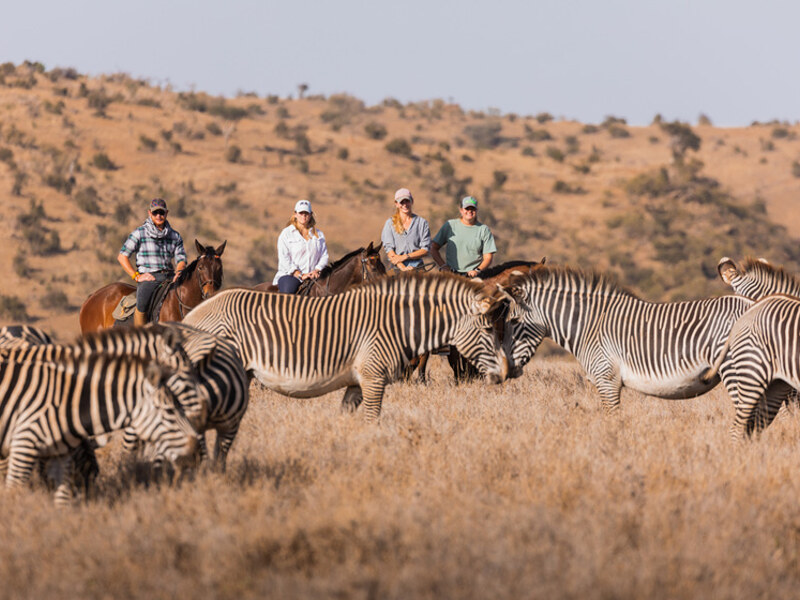
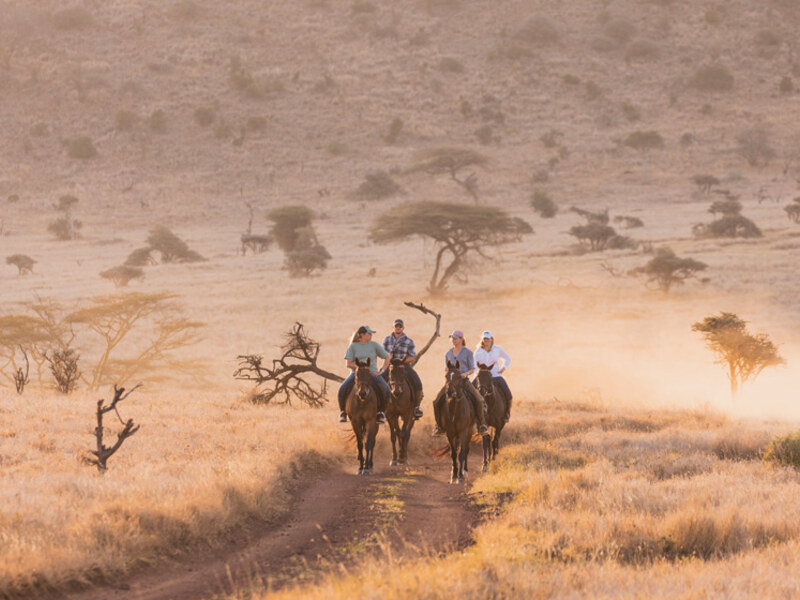
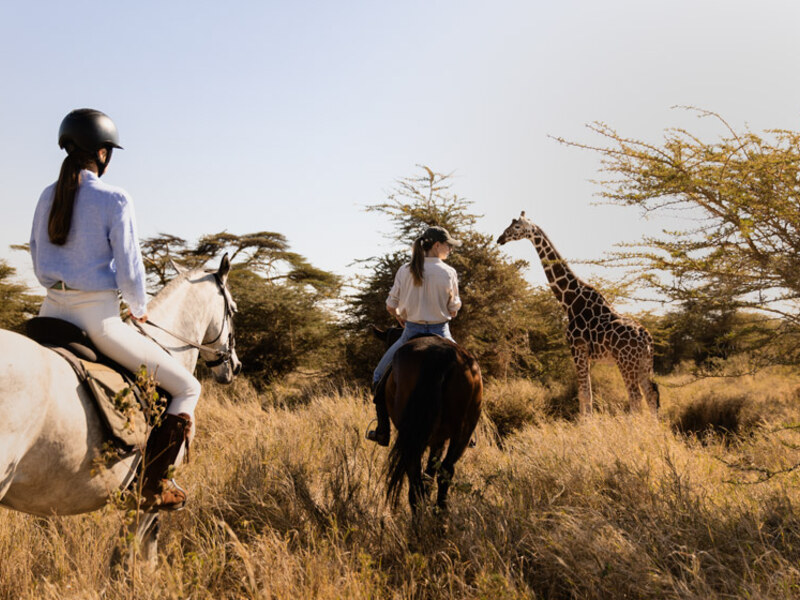
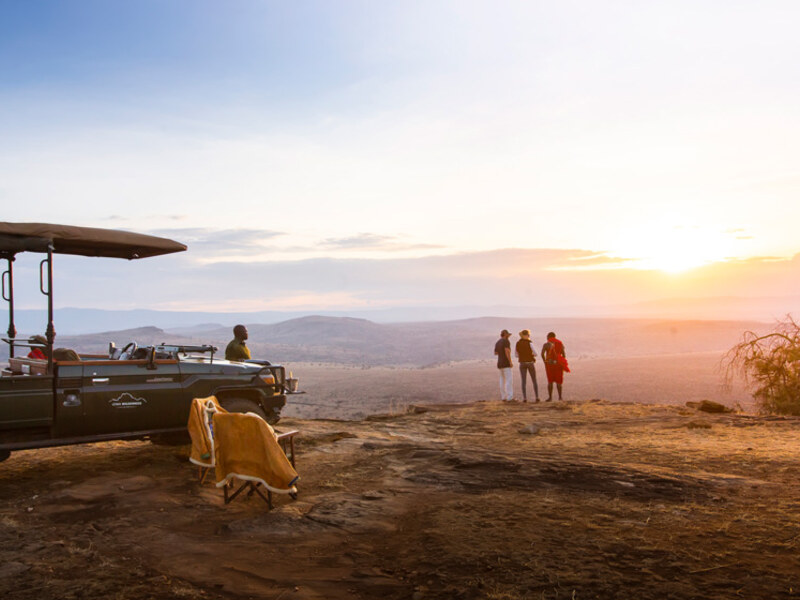
Lewa Wilderness occupies a position in this guide that no other destination fills: it is a luxury lodge with a substantial, serious riding programme that bridges the gap between the accessible warmth of Ant’s Nest and the expeditionary intensity of Offbeat. Set within Lewa Wildlife Conservancy — a UNESCO World Heritage Site and Man and Biosphere Reserve of approximately 65,000 acres, expanded to a 93,000-acre ecosystem through integration with neighbouring Borana — this is a landscape defined by conservation. More than 215 black and white rhinos inhabit the Lewa context, alongside a significant population of endangered Grevy’s zebra. The riding takes you into their world.
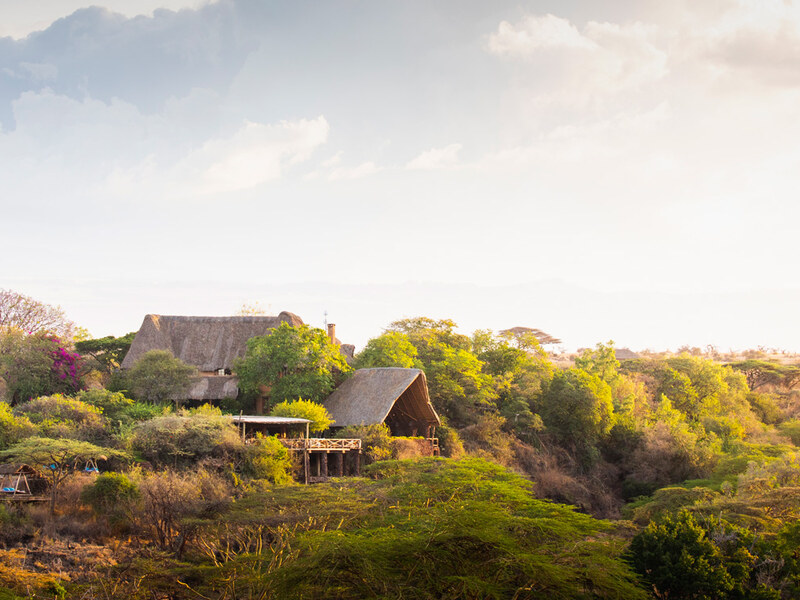
The lodge itself contains nine accommodation units — six thatched hillside cottages overlooking the Eastern Marania Valley and three garden cottages near the main house — plus a Hillside Suite with two bedrooms and a private plunge pool. Private Wilderness, approximately two kilometres away, offers exclusive-use accommodation for up to ten guests with a three-night minimum. The stables are a short walk from the lodge and contain more than 30 horses and ponies.
Wildlife
Lewa’s riding traverses conservancy plains and more rugged surrounding valleys. The Lewa-Borana landscape provides connectivity between Mount Kenya’s forest ecosystem and the northern rangelands. Mounted opportunities around giraffe, zebra, and impala are regularly reported. Rhino abundance in the conservancy should not, however, be converted into a promise of close mounted rhino encounters — guide decisions and animal behaviour remain decisive. Elephant and lion use the connected landscape but are not riding-focused sighting targets.
Riding Requirements
Lewa’s riding programme is tiered, which makes it more nuanced than a simple “all levels” or “experienced only” label. Introductory plains riding may be available to novices after assessment. General faster riding requires established competence — the lodge’s own benchmarks include rising trot, two-point canter, soft hands, and an independent seat. Advanced valley excursions require control of a fit horse on rugged terrain. Fly camping in big-game country requires confidence at all paces, balance, quick reactions, and an independent seat.
The strict maximum rider weight is 90 kg / 200 lb — the lowest in this comparison. Horses are trained for English-style riding. The lodge generally closes during April, May, and November, with peak periods around July to mid-September and mid-December to early January.
Pricing
Lewa Wilderness does not provide a static public rate sheet; a direct enquiry through reservations@lewawilderness.com is required. Third-party evidence indicates an indicative planning band of USD 1,100–1,900+ per person per night before or after applicable conservancy fees (approximately USD 105–200 extra), explicitly labelled as third-party and indicative. Rates vary by room category, season, and party structure. Fly camping costs extra. Typical inclusions cover full-board accommodation, soft drinks, beer, spirits and non-premium wine, laundry, shared drives, and standard activities including riding.
Who It’s For
Honeymooners: Outstanding — riding combined with private cottages, plunge pools, and conservation romance. Experienced riders: Exceptional for advanced valley routes and fly camping, though less riding-intensive than Offbeat unless a custom programme is confirmed. Photographers: Superb because mounted outings can be supplemented by electric-vehicle drives and flexible activities. Families: One of the best options — the lodge welcomes children, garden cottages suit families, and ponies exist for younger riders.
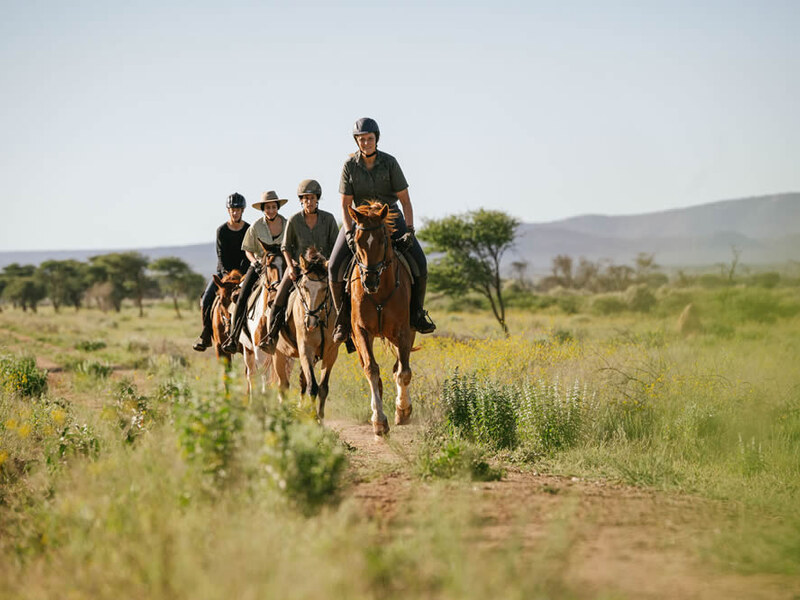
5. Kambaku Safari Lodge, Namibia — Accessible Waterberg Riding
Honest positioning: The Namibian Waterberg should not be presented as containing a direct equivalent to African Horseback Safaris or Offbeat. The riding here is lodge-based with guided savannah outings, not a multi-day expedition. We include Kambaku because it represents an excellent, accessible entry point for riders who want a genuine mounted wildlife experience without the fitness, skill, or budget demands of the specialist operators.
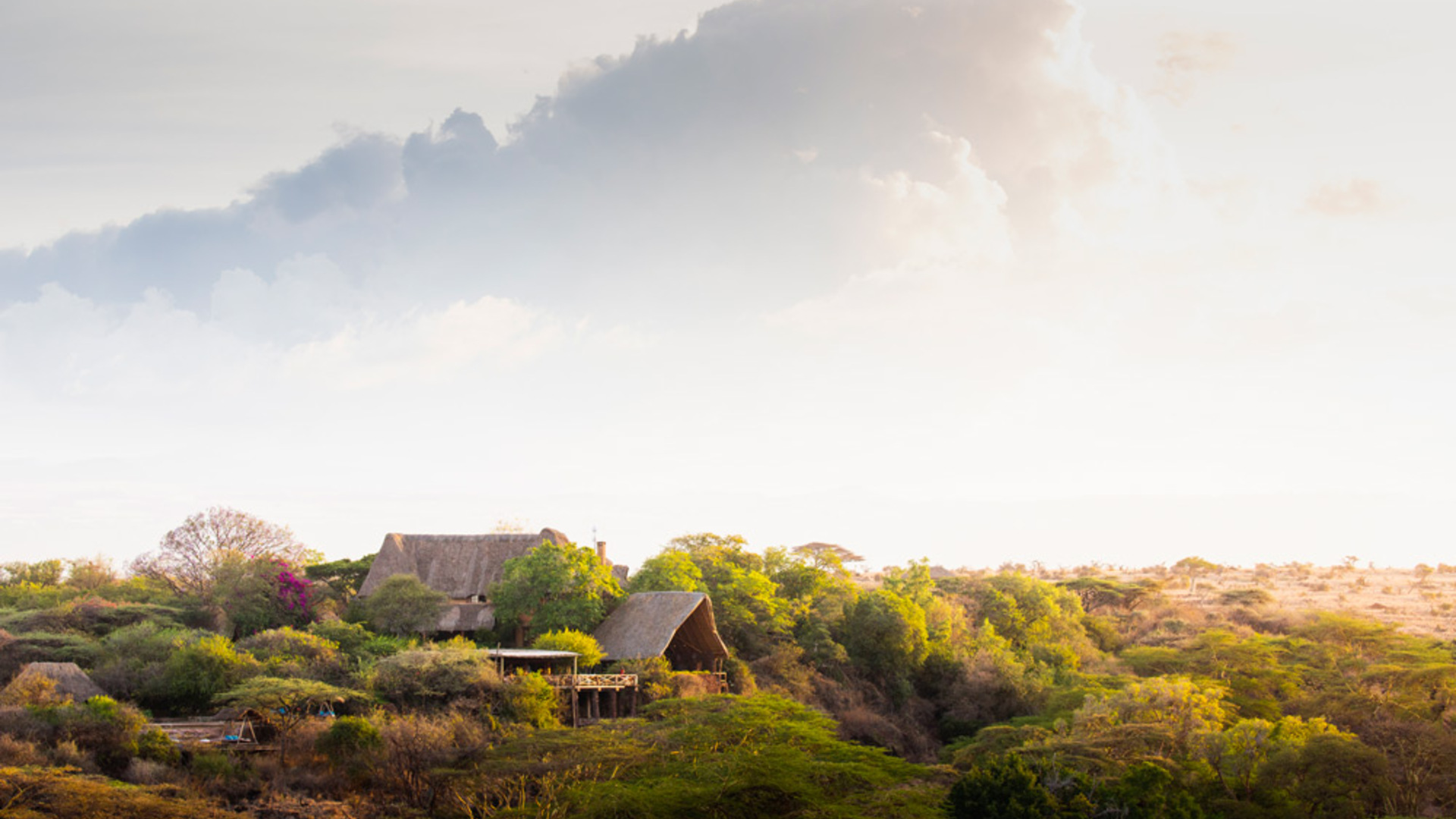
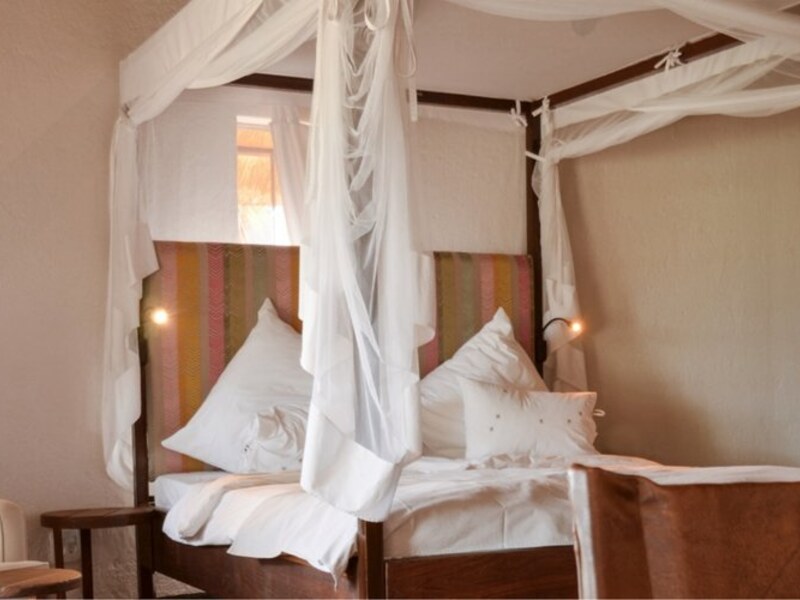
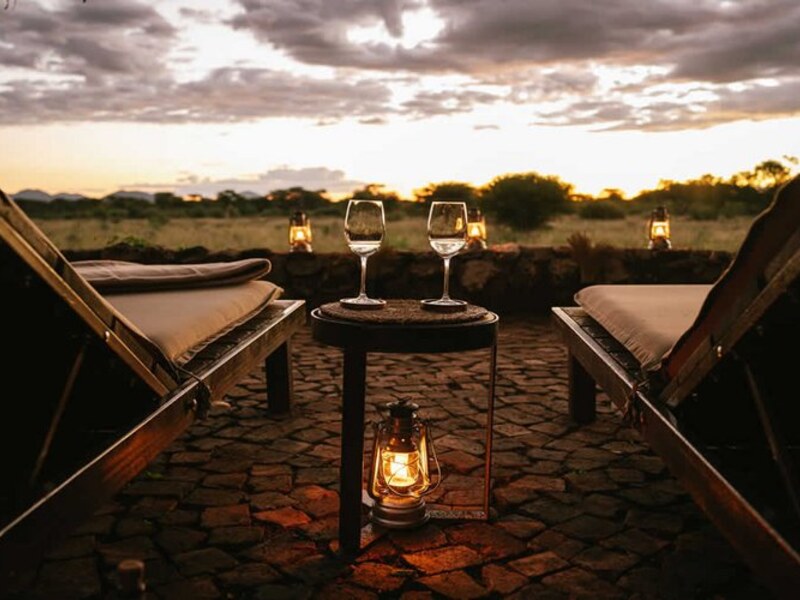
Kambaku Safari Lodge occupies an 8,000-hectare private wildlife reserve near the Waterberg Plateau in Namibia, approximately two hours from Etosha National Park. It is the strongest substantiated equestrian lodge in the Namibian Waterberg region — a four-star permanent lodge with comfortable rooms, a pool and gardens, a waterhole outlook, and a bush spa.
The stable maintains approximately 30 horses, offering guided savannah rides of about 2.5 hours, relaxed beginner rides, faster canters and gallops for capable riders, and 45-minute private lessons in dressage, jumping, or seat work. This is not a multi-day expedition; it is a lodge stay with riding as a central, quality-controlled activity alongside game drives and guided walks.
Wildlife
The reserve contains giraffe, zebra, wildebeest, impala, and other antelope accustomed to horses, which may permit calm observation. The evidence does not establish mounted access to dangerous predators or rhinos at Kambaku. This is plains-game riding in an honest, well-managed setting.
Riding Requirements
Kambaku accommodates beginner through advanced riders. Children’s beginner riding is reported from age four — the youngest starting point in this comparison. The maximum rider weight is 95 kg, linked to horse welfare on hard, uneven savannah terrain. Guests typically select two daily activities, so riding can be combined with drives and walks within a single stay.
Pricing
Published 2026 activity rates are EUR 80 per adult and EUR 50 per child for a guided 2.5-hour safari ride, with the same rates for a private riding lesson. These are activity prices, not accommodation rates; no defensible full-stay per-person-per-night rate is available in current evidence. The lodge operates year-round and reports no single supplement for standard occupancy in some descriptions, though this should be confirmed directly. A direct enquiry through kambaku.com is recommended.
Who It’s For
Honeymooners: Strong for a flexible lodge stay with spa, mixed activities, and sunset rides. Experienced riders: Moderate to strong for repeated local rides and lessons, but not an expedition-mileage destination. Photographers: Solid for plains game, supplemented by vehicle outings. Families: One of the strongest family options because beginner rides start at age four and the lodge atmosphere is welcoming.
Tswalu Kalahari Reserve — A Note on Riding Within a Luxury Safari
Tswalu Kalahari Reserve warrants a dedicated mention because it appears in many horseback safari lists despite operating a fundamentally different model. Covering more than 1,200 square kilometres on the edge of the southern Kalahari, Tswalu is South Africa’s largest private reserve — and horse riding is one included activity within a fully inclusive private safari, not the property’s sole or primary product.
Every Tswalu booking receives a private 4x4 vehicle with a dedicated guide and tracker. Riding sits alongside drives, walks, meerkat encounters, rock-art visits, and the Malori sleep-out deck under open Kalahari sky. The riding traverses golden grasslands and rolling red dunes, typically framed as gentle, immersive exploration rather than high-speed work. Longer rides may travel west across the dunes for sunset drinks.
The reserve’s wildlife inventory is extraordinary — black-maned lions, cheetahs, African wild dogs, desert black rhinos, meerkats, and the elusive nocturnal mammals (aardvark, pangolin, aardwolf, bat-eared fox) that make Tswalu legendary. But this is a reserve inventory, not a list of animals reliably encountered on horseback. Predators and nocturnal species should not be expected as riding sightings.
Rider eligibility: Official Tswalu material characterises riding as suitable for intermediate-to-expert guests. Some secondary sources suggest novices can be accommodated, but the operator evidence should take precedence. Families and less experienced riders should obtain written confirmation of current eligibility. Weight limits, child riding policies, and the precise ride format must be confirmed directly with Tswalu before booking.
We include Tswalu in our Tswalu Kalahari Riding 5-Day package because it represents the finest way to add horseback exploration to an ultra-luxury Kalahari safari — but we position it honestly: this is a luxury safari with riding included, not a dedicated riding expedition comparable to Macatoo or Offbeat.
Beyond the Five — Other Destinations Worth Knowing
Africa’s horseback safari map extends well beyond our primary five. A few additional operations merit brief mention:
Ride Botswana operates mobile itinerant safaris in the Okavango. The evidence is less extensive than for Macatoo and Kujwana, but it represents a third riding option in the Delta for those seeking different departure dates or group sizes. Verify directly through ridebotswana.com.
Waterberg Guest Farm, Namibia (waterbergnamibia.com) is a working cattle and guest farm at the foot of the Waterberg Plateau, offering one- to three-hour rides, sundowner rides, and led walks for beginners. The “Schneider” horses are an Arab-mix line developed in the 1950s and 1960s. This is best described as a guest-farm riding experience rather than a wildlife safari, but it represents an affordable and gentle introduction to mounted exploration in Namibia.
Namibia Horse Safari Company operates demanding multi-day desert expeditions along the Skeleton Coast, through Damaraland, and across the Namib Desert. These are serious endurance rides for accomplished riders and should not be confused with the Waterberg lodge-based products. They offer a radically different landscape — desert, not savanna — and represent some of the most physically challenging mounted travel anywhere in Africa.
Wait a Bit Safari Camp, Botswana and several other Tuli Block operations in eastern Botswana offer horseback safaris in a different ecosystem — riverine bush, sandstone formations, and elephant-dense terrain along the Limpopo confluence. These are emerging alternatives for riders who want a Botswana horseback experience outside the Okavango price band.
A Typical Day in the Saddle — Three Patterns
There is no universal horseback-safari schedule, but across the five destinations and two additional properties reviewed in this guide, daily life in the saddle falls into three distinct patterns. Understanding these patterns before you book will do more for your preparation and enjoyment than any amount of wildlife research.
Pattern One: The Permanent Riding Camp — Macatoo or Kujwana
You wake before dawn. The air is cool, the Delta still. Coffee and rusks are waiting under canvas. By six o’clock you are at the stables, your horse already saddled, ears pricked. The guides have assessed overnight wildlife movement — a breeding herd of elephant crossed the floodplain, a pair of lions were heard to the north — and the morning route is calibrated accordingly.
The first ride lasts three to four hours. It may begin with a quiet walk through mopane woodland, transition to a brisk trot on open grassland, and build to a canter — or even a controlled gallop — across the shallow floodplain. Wildlife encounters shape the pace: a tower of giraffe grazing on an island calls for a slow approach at walk; a large open pan invites faster work. You ford channels waist-deep on the horse, spray arcing from the chest-plate, red lechwe bounding ahead. When the sun climbs and the heat builds, you turn back.
Lunch is served at camp — substantial, unhurried. The middle of the day belongs to rest, reading, or a dip in the plunge pool. Some guests opt for a mokoro (dugout canoe) excursion or a guided walk. By three-thirty, the horses are ready again. The afternoon ride is typically shorter — two to three hours — and often ends with sundowners on an island as the Delta turns gold and the fish eagles call. Dinner is a communal affair under stars, camp lanterns flickering, and the day’s sightings relived over wine.
Total riding time: four to six hours. The rhythm is flexible — if a particular morning’s wildlife rewards patience rather than miles, the guides extend the walk and shorten the canter. No two days are the same, which is Macatoo’s greatest strength.
Pattern Two: The Mobile Expedition — Offbeat’s Masai Mara
The day begins early — typically before six — with a full breakfast at the mobile camp. By six-thirty you are mounted and riding. The camp behind you is already being broken down: the crew will pack every tent, bed, table, and kitchen element onto lorries that will leapfrog to the next campsite while you ride.
Morning riding lasts four to five hours through varied terrain: open plains where sustained canters are possible, thick bush that demands single-file at walk, rocky hillsides where the horses pick their way carefully, and riverine corridors alive with hippo grunts and crocodile slides. A picnic lunch appears in the field — the backup vehicle has set up a table and chairs under an acacia tree, cold drinks in a cooler, fresh food prepared that morning.
The afternoon may bring another two to three hours of riding or, depending on the route and camp placement, an early arrival that allows a late-afternoon vehicle drive or walk. Some days are six hours in the saddle; others stretch to eight. The physical demand is cumulative — by day four, your core burns at the trot and your inner thighs have stories to tell. By day six, your body has adjusted and the riding feels natural, as if you were built for it. On day seven, you do not want to get off.
Camp arrives like a gift: canvas walls already pegged, bucket showers heated, cold drinks poured. The night sounds of the Mara — hyenas whooping, lions calling, hippos honking from a nearby pool — replace music. Sleep comes fast, earned by miles.
Total riding time: approximately four to eight hours, depending on the day, terrain, and wildlife. This is not a holiday with riding. It is a riding journey through wild Africa.
Pattern Three: The Flexible Safari Lodge — Ant’s Nest, Lewa, Kambaku
The lodge-based model is the most accommodating. Guests typically choose two activities per day from a menu that might include morning riding, afternoon riding, a game drive, a guided bush walk, mountain biking, archery, or a conservation visit. The specific combination varies by property, but the pattern is consistent: you are not locked into riding all day unless you want to be.
At Ant’s Nest, a morning ride might depart at seven, cover two to three hours through varied bushveld — rocky bluffs, gorges, open grassland — and return for a poolside brunch. The afternoon ride leaves at three and may focus on a different part of the 12,500-acre reserve, returning for sundowners on the escarpment. Fast riders and beginners go out in separate groups with different guides and different horses. Children might do a pony walk near the lodge while parents gallop. The flexibility is genuine, not performative.
At Lewa, the lodge’s riding programme is tiered. A novice might take a gentle one-hour plains ride in the morning and opt for an electric-vehicle game drive in the afternoon. An experienced rider might ride four hours into the surrounding valleys, encounter rhino at a distance, and return for a fly-camp preparation briefing. At Kambaku, the standard 2.5-hour guided savannah ride fills a morning slot, and a private dressage or jumping lesson fills the afternoon if riding is your focus.
Total riding time: two to six hours, entirely at the guest’s discretion. This pattern is the best match for mixed-interest couples, families with children of different ages, and photographers who want both mounted and vehicle-based sessions in a single day.
Photography from the Saddle — Honest Advice
Horseback safari photography is some of the most rewarding and most technically demanding work you will do with a camera. The mounted perspective offers angles no vehicle can replicate — eye-level with a giraffe, low across a flooded plain, silhouetted against a Mara sunrise with nothing between you and the horizon. But the constraints are severe, and pretending otherwise serves no one.
What Works
A compact mirrorless camera with a moderate zoom (24–200 mm equivalent) is the practical maximum for most riders. It must be operable one-handed, because your other hand holds the reins. A secure body strap or chest harness that holds the camera against your torso when not in use is essential — anything that swings freely risks hitting the horse, spooking it, or catching on tack. Waterproof protection is mandatory in the Okavango; dust covers matter everywhere else.
The best mounted photographs happen at a halt, when the guide has positioned the group and the wildlife is calm. Ask before you raise the camera — the guide needs to know you are about to change your hand position. Photograph during walks and halts, not during canters. No photograph is worth losing your balance, dropping the reins, or alarming your horse.
What Does Not Work
Heavy telephoto lenses (400 mm and above) unbalance the rider and are impractical to deploy from horseback. Lens changes introduce dust and distraction — you will not swap a 70–200 for a wide-angle while mounted. Tripods are impossible. Low-light photography is compromised by the horse’s constant subtle movement. And any time wildlife behaviour shifts suddenly, both hands must return to the reins immediately. The photograph you did not take because you maintained control is always the right choice.
The Best Strategy
Combine mounted sessions with vehicle-based drives for serious photographic work. Use the horse for the immersive, eye-level, intimate images that define horseback safari photography. Use the vehicle for the telephoto predator portraits, the long-exposure landscapes, and the technical shots that require a stable platform. Macatoo, Lewa, Ant’s Nest, and Kambaku all offer vehicle activities alongside riding, making this dual approach practical within a single stay. Offbeat’s mobile safari includes backup vehicle access on some days for precisely this reason.
Wildlife Ethics and Etiquette on Horseback
A horseback safari places you closer to wildlife than most other safari formats — and with that proximity comes a heightened responsibility. The ethics of mounted wildlife viewing are not abstract principles filed away in a policy document. They are the second-by-second decisions your guide makes with every change of animal posture, every flick of an elephant’s ear, every stiffening of a buffalo’s stance.
Distance Is Determined by Behaviour, Not by Your Camera
The guide sets the distance. Riders must never pressure a guide to approach closer for a better photograph or a more dramatic encounter. Ethical practice requires avoiding pursuit, keeping escape routes open for the animal, never surrounding wildlife, reducing noise, not separating adults from young, and accepting immediate withdrawal when an animal changes posture, vocalisation, or direction. A gallop beside wildlife is a gift when offered by circumstances and guide judgment — it is never an entitlement to be demanded.
Horse Welfare Is Non-Negotiable
The horses that make these safaris possible deserve the same ethical consideration as the wildlife you have come to see. Weight limits protect their backs. Rest days protect their legs. Rotation between riders protects their mouths and their temperament. Controlled pace protects their joints on hard ground. Refusing riders whose declared ability is inadequate protects the entire herd from the damage caused by heavy hands, unbalanced seats, and panicked gripping. When an operator tells you that you are too heavy, too inexperienced, or too unfit, they are prioritising the welfare of a partner who cannot speak for itself. Respect the refusal.
No Encounter Is Guaranteed
This guide has emphasised the point repeatedly because marketing throughout the horseback safari industry routinely implies otherwise. You may encounter elephants. The reserve supports rhinos. Riders sometimes witness the Great Migration. Water levels permitting, you may canter through the Delta’s floodplains. None of these are contractual deliverables. A horseback safari is an exploration, not a theme-park ride with scheduled animal appearances. The days when wildlife is sparse and the riding is quiet are as much a part of the honest African experience as the days when a herd of zebra flows around you like water around stone.
Head-to-Head Comparison — Choosing Your Perfect Horseback Safari
Five destinations, five fundamentally different propositions. This table distils the essential differences so you can match your riding ability, budget, travel party, and adventure appetite to the right saddle.
| Destination | Product Type | Rider Level | Weight Limit | Min. Age | Indicative Cost | Best For |
|---|---|---|---|---|---|---|
| Okavango Delta Macatoo / Kujwana |
Dedicated riding safari, permanent luxury camp | Experienced, riding-fit, confident at all paces | 95 kg | 12 | Enquiry-based; multi-day from ~USD 3,200–9,900+ | Riders seeking the iconic floodplain canter |
| Ant’s Nest / Hill Waterberg, South Africa |
Dedicated lodge-based equestrian safari | Beginner through experienced, ability-matched | 110 kg | 5 (pony walks); all ages on rides with supervision | Enquiry-based; fully inclusive per night | Families, mixed-ability groups, beginners |
| Masai Mara Offbeat Safaris |
Mobile, point-to-point riding expedition | Experienced, fit, confident, independent seat | 95 kg | ~14 (conditional) | ~USD 12,550pp sharing for 7 nights (2027) | Accomplished riders seeking expedition intensity |
| Lewa Wilderness Lewa Conservancy, Kenya |
Luxury lodge with substantial riding programme | Tiered: novice plains rides through advanced valley / fly camp | 90 kg | 6 (Private Wilderness) | Indicative USD 1,100–1,900+/night (third-party) | Conservation-focused riders, honeymooners, families |
| Kambaku Lodge Waterberg, Namibia |
Equestrian-friendly lodge with riding activities | Beginner through advanced | 95 kg | 4 | EUR 80/ride (activity); accommodation separate | Budget-conscious families, beginner riders, Namibia itineraries |
| Destination | Honeymooners | Experienced Riders | Photographers | Families | Non-Riders |
|---|---|---|---|---|---|
| Okavango Delta | ⭐⭐⭐⭐ | ⭐⭐⭐⭐⭐ | ⭐⭐⭐⭐ | ⭐⭐ | ⭐⭐⭐ |
| Ant’s Nest / Hill | ⭐⭐⭐⭐ | ⭐⭐⭐⭐ | ⭐⭐⭐⭐ | ⭐⭐⭐⭐⭐ | ⭐⭐⭐⭐⭐ |
| Masai Mara | ⭐⭐⭐ | ⭐⭐⭐⭐⭐ | ⭐⭐⭐⭐ | ⭐ | ⭐⭐ |
| Lewa Wilderness | ⭐⭐⭐⭐⭐ | ⭐⭐⭐⭐ | ⭐⭐⭐⭐⭐ | ⭐⭐⭐⭐⭐ | ⭐⭐⭐⭐⭐ |
| Kambaku Lodge | ⭐⭐⭐⭐ | ⭐⭐⭐ | ⭐⭐⭐ | ⭐⭐⭐⭐⭐ | ⭐⭐⭐⭐ |
The Complete Practical Guide to Horse Riding Safaris
Booking a horseback safari is not like booking a beach holiday. The variables are more consequential, the preparation more important, and the stakes — both for your safety and your enjoyment — are higher. This section covers everything you need to know before you commit.
Understanding Rider Proficiency Levels
Terms like “intermediate,” “advanced,” and “experienced” are not standardised across operators. A rider comfortable in an arena may not be ready for open-country gallops on unfamiliar horses through water crossings in big-game territory. Here is what the levels actually mean in the context of African horseback safari:
Introductory / Novice (accepted at Ant’s, Kambaku, selected Lewa plains rides): Quiet horse, slow pace, short duration, close guide supervision, terrain and wildlife selected for lower risk. This level is not accepted at Macatoo or Offbeat.
Competent Intermediate (Lewa’s general riding, Ant’s faster groups, Tswalu): Mount and dismount without assistance, maintain balance at rising trot, ride in a two-point or light seat at canter, control speed and direction independently, stop and move away from the group without panic, remain secure on uneven ground, follow rapid guide instructions.
Experienced / Advanced (required for Okavango and Offbeat’s Mara expedition): Confident at all paces, fit for sustained riding (4–8 hours), secure on responsive horses in open country, calm around big game, able to maintain position in a group, able to react quickly without pulling, freezing, or overtaking the guide.
Physical Preparation
Arrive riding-fit. The safari will not rebuild your fitness — it will test it. Preparation should focus on regular riding at trot and canter (not just walking hacks), extended time in a light seat, longer trail sessions rather than arena-only lessons, core and leg endurance work, and practice on more than one horse. For Offbeat’s four-to-eight-hour days or Macatoo’s four-to-six-hour rides, last-minute preparation is inadequate. A good benchmark: if you cannot ride comfortably for three hours on varied terrain without significant fatigue, you are not yet ready for the specialist operators.
Weight Limits — Non-Negotiable
Weight limits are horse-welfare controls, not customer-service inconveniences. They reflect horse build, terrain difficulty, ride duration, and daily workload. The limits across our five destinations range from 90 kg (Lewa) to 110 kg (Ant’s Nest). Some operators use “dressed riding weight” — meaning your weight in riding clothes and boots — so ask for the exact interpretation. These limits cannot be treated as targets to negotiate.
Safety Protocols
Horse safaris combine normal equestrian hazards with wilderness variables: falls and kicks, unfamiliar horses and tack, fatigue, heat, rough terrain, wildlife reactions, delayed medical access, light-aircraft luggage constraints, and water crossings. Key safety principles apply everywhere:
- Follow guide instructions immediately — in dangerous-game country, guide authority overrides your photography, your preferred pace, and your chosen route
- Stay behind the lead guide and maintain assigned group order
- Report horse or tack concerns immediately — do not ride through discomfort or uncertainty
- Disclose current, not historical, riding ability — years of childhood riding are not equivalent to current fitness
- Accept route changes or cancellations if guides judge conditions unsafe
Helmets — Essential, Not Optional
The evidence across all five destinations strongly supports bringing a personal, correctly fitted riding helmet. Ant’s Nest makes helmets compulsory. Macatoo tells guests to bring their own, and insurance policies may require use. The editorial position of this guide is unequivocal: treat a certified, properly fitted personal helmet as essential at every destination. Do not rely on camp stock for fit, and do not assume that experience makes you immune to falls.
Insurance
Policies must expressly cover recreational horseback riding in remote wilderness, emergency evacuation, medical repatriation, trip cancellation and interruption, and all declared medical conditions. Standard leisure travel policies may exclude galloping, wildlife areas, or expedition-style riding. Ant’s and Macatoo explicitly require adequate riding and evacuation coverage. Some Offbeat packages include AMREF Flying Doctors membership, but this covers transport only and is not a replacement for comprehensive medical and travel insurance.
Medical Planning
African Horseback Safaris advises travellers to consult a doctor concerning antimalarial medication and inoculations before travel. This guide does not provide destination-specific medical prescriptions because recommendations change by itinerary, season, and individual traveller health profile. Medical guidance must come from a qualified travel-health clinician or an authoritative official source such as the CDC or WHO travel advisories.
Before booking, disclose to both your doctor and your operator any conditions that may affect balance, heat tolerance, consciousness, allergic response, cardiovascular exertion, ability to mount or dismount, or the need for emergency medication. This is not administrative box-ticking. A rider who faints, seizes, or experiences a severe allergic reaction in big-game country, hours from the nearest clinic, presents a life-threatening situation for the entire group. Honest disclosure is a safety obligation, not a privacy invasion.
Key medical considerations for horseback safari include: malaria prophylaxis (essential for Okavango, Masai Mara, and Lewa; not required for malaria-free Ant’s Nest and Kambaku); yellow fever vaccination (required or recommended for Kenya entry); routine immunisations reviewed and updated; a personal medical kit including prescription medications, antihistamines, anti-diarrhoeals, electrolyte sachets, and any epipen or emergency medication specific to known conditions; and a clear, written summary of your medical history in English that can be handed to an emergency responder.
Trip Preparation Timeline
Booking a horseback safari is not a last-minute decision. The preparation timeline begins months before departure, and the riders who arrive best prepared are invariably the riders who enjoy the experience most.
12–18 months before departure: Begin your riding fitness programme. If you have not ridden regularly in the past year, start with weekly lessons focusing on trot, canter, and light-seat work. Book your safari early — specialist operators like Offbeat have limited set departures that fill months in advance, and peak-season Okavango and Lewa availability can be reserved a year or more ahead.
6–9 months before departure: Increase riding frequency to twice weekly if possible. Include trail riding on varied terrain, not just arena work. Begin core-strength and leg-endurance exercises: squats, lunges, planks, and hip-flexor stretches are particularly relevant. Book flights and arrange travel insurance. Ensure your policy explicitly covers recreational horseback riding in remote wilderness, emergency medical evacuation by air, and trip cancellation.
3–4 months before departure: Complete your rider assessment form honestly. Submit it to your operator. If the operator suggests you are not yet ready, listen — and use the remaining months to close the gap. Visit a travel-health clinic for vaccinations and antimalarial prescriptions. Purchase or fit-check your riding helmet. Order any specialist riding clothing you do not already own.
4–6 weeks before departure: Ride at least three times per week, including one session of three or more hours on varied terrain. Your body should be accustomed to sustained time in the saddle without significant next-day soreness. Confirm all lodge, flight, and transfer bookings. Check passport validity (six months beyond return date for most African destinations). Arrange appropriate travel currency.
1–2 weeks before departure: Final equipment check. Pack according to the operator’s luggage limits (remember: Macatoo is strictly 20 kg total in soft bags). Print or save digital copies of all booking confirmations, insurance documents, medical summaries, and emergency contacts. Inform your bank of travel dates to prevent card blocks. A final short ride three to four days before departure keeps muscles warm without risking injury.
What to Pack
| Category | Essential Items | Notes |
|---|---|---|
| Riding gear | Properly fitted riding helmet, riding boots or lightweight shoes with heel, half chaps or long boots, riding gloves, comfortable jodhpurs or riding trousers | Macatoo recommends two pairs of riding shoes (one may get wet); neutral colours (khaki, brown, green) |
| Sun protection | Sunglasses with strap, brimmed hat with retention strap (off-horse use), high-SPF sunscreen | You are exposed to sun for 4–8 hours with no shade |
| Camera | Compact camera operable one-handed, secure strap or holster, waterproof cover (Okavango), dust protection (dry destinations), spare batteries | No unsecured heavy telephoto while mounted; some operators provide saddlebags |
| Camp essentials | Torch or headlamp, binoculars, quick-drying clothing, lightweight layers, personal medication, compact first-aid supplies | Soft-sided luggage only for light-aircraft transfers (Macatoo: strict 20 kg total, 35×70 cm max) |
When to Go — Seasonal Guidance
Okavango Delta: Floodwaters typically peak June–September for the iconic water-based riding. Late dry season (October) brings heat but concentrated wildlife. Green season (November–April) offers lush scenery but less reliable flood riding.
Masai Mara (Offbeat): Operating pattern excludes April, May, and November. Common windows are December–March and June–October. Migration-season departures (late July–mid-September) may encounter large herds but this is not guaranteed.
Lewa Wilderness: Generally closes April, May, and November. Peak periods around July–mid-September and mid-December–early January.
Ant’s Nest: No confirmed annual closure in evidence. South African Waterberg has mild winters (May–August) and warm, wet summers (November–March). Confirm any rain-related trail limits directly.
Kambaku: Reports year-round operation. The Namibian Waterberg has hot summers and mild winters. Confirm heat-related scheduling directly.
Booking Disclosures — What to Tell Your Operator
A rider form should describe recent experience honestly. Provide: frequency of riding in the last year, ability on unfamiliar horses, your most recent longest ride, current confidence at gallop, experience on uneven terrain, any falls or injuries, weight in riding clothing, and preferred saddle and tack limitations. Years of riding in childhood are not equivalent to current riding fitness. Overstating ability risks your safety and the safety of the group.
How to Book Your Horse Riding Safari
The distance between wanting a horseback safari and being on one is shorter than most people think — but the booking process requires more care than a standard holiday. You are not choosing a hotel room; you are matching your body, your skills, and your expectations to a living operation that depends on horses, weather, wildlife, and guide judgment. Here are three routes to the saddle, each with its advantages:
1. Book through Beyond Africa Safaris. We operate as a specialist safari consultancy with contracted relationships across all five destinations. We handle logistics, negotiate rates, coordinate transfers, match you with the right operator based on your riding ability, and provide ongoing support from enquiry to departure. Our three packaged itineraries (below) are ready to book with transparent pricing and detailed day-by-day plans.
2. Book directly with operators. African Horseback Safaris (africanhorseback.com), Offbeat Safaris (offbeatsafaris.com), Lewa Wilderness (lewawilderness.com), Ant Africa Safaris (waterberg.net), and Kambaku Safari Lodge (kambaku.com) all accept direct enquiries. You manage your own logistics, transfers, and insurance.
3. Build a custom itinerary. Contact our team with your riding ability, travel dates, budget, and party composition (including ages and weights of all riders). We will design a bespoke horseback safari that may combine multiple destinations, add vehicle-based game drives, or integrate beach or city extensions.
Our Three Bookable Horse Riding Safari Packages
- Okavango Delta Horseback Safari — 7 Days from USD 8,900pp — Macatoo Camp, floodplain canters, Big Five game drives, mokoro excursions
- Tswalu Kalahari Riding Experience — 5 Days from USD 7,500pp — private Kalahari reserve, dune rides, meerkat encounters, Malori sleep-out
- Ultimate African Riding Safari — 12 Days from USD 18,900pp — Okavango + Lewa + Masai Mara, three countries, the definitive mounted African journey
Final Verdict — The Horseback Safari That Matches You
There is no single “best” horseback safari in Africa. There is only the best one for you. Here is the honest match:
If you are an experienced rider seeking the ride of a lifetime: Offbeat’s seven-night Masai Mara expedition is unmatched for distance, intensity, and wildlife. Macatoo in the Okavango is its only rival for sheer riding quality, with the added dimension of seasonal floodwater. Choose Offbeat for the journey, Macatoo for the terrain.
If you want luxury and riding without the expedition commitment: Lewa Wilderness delivers world-class riding within a conservancy that defines African conservation, wrapped in lodge comfort that does not compromise the wildlife experience. You ride among rhinos. The backdrop is Mount Kenya. The lodge is beautiful.
If you are a family or a mixed-ability group: Ant’s Nest is the answer. Over 100 horses, malaria-free, three hours from Johannesburg, children from age five, beginners and experts riding the same landscape on different itineraries. No other destination in Africa matches its breadth of welcome.
If you are new to riding or budget-conscious: Kambaku Safari Lodge in Namibia offers the gentlest, most accessible introduction to mounted wildlife viewing, with the bonus of proximity to Etosha and a lodge atmosphere that works for couples, families, and solo travellers alike.
If you want it all: Our twelve-day Ultimate African Riding Safari crosses three countries, three ecosystems, and three riding styles — the Okavango’s water, Lewa’s conservation heartland, and the Mara’s big-game intensity. It is the most comprehensive mounted safari experience available on the continent.
Whatever you choose, bring a properly fitted helmet, an honest assessment of your riding ability, and the willingness to let the horse set the pace.
A word about expectations. The Instagram version of a horseback safari is a perpetual golden-hour canter through waist-deep water with elephants in the background and your hair catching the wind. The reality includes mornings when the wildlife is elsewhere, afternoons when the heat flattens every ambition to ride, saddle soreness that wakes you at three in the morning, and the occasional day when your horse decides it would rather not. These are not failures of the safari. They are the texture of a genuine wilderness experience. The days that test your patience make the days that take your breath away incomparably richer.
Africa from the saddle is not a spectacle to be consumed. It is a conversation between rider, horse, and wilderness — and when that conversation is honest, it is the most intimate way to meet this continent.