A Letter Before You Read
I was born on the Cape Flats, a few minutes from Table Mountain, and I have spent my whole career learning the Africa that stretches north and east from my front door. People often ask me where on this continent they should go. The honest answer is that it depends on who you are. So instead of a ranking, here is a portrait: seven regions, each described as I know it, with the guides we have written for each one when you are ready to go deeper.
Remondy Clementia Kabura, African Safari Specialist
Africa is not a country, and she is not a single safari. She is fifty-four nations and a land mass that would swallow the United States, China, India and most of Europe with room to spare. Even the part of her that most travellers mean when they say "safari", the savanna and forest country from the Cape to the equator, holds deserts and deltas, volcanoes and coral islands, and some of the oldest human stories on earth. When a traveller tells me they want to "do Africa", I smile, because I have been doing her my whole life and I am not finished.
What follows is not a list of the best parks. We have written those guides, and you will find them linked along the way. This is the continent as my team and I know her from years of building journeys across her, told region by region from the south, where I was born and where our company lives, to the equator and beyond. If it helps you find the one corner of her that is yours, it has done its work.
| Region | Her character | Finest months |
|---|---|---|
| The Cape | Mountain, ocean, wine and the long coast road | Nov–Mar (whales Jun–Nov) |
| The Eastern Cape | Malaria-free Big Five, easy for families | All year |
| Kruger, Sabi Sand & Madikwe | Classic bushveld, leopards, wild dogs | May–Oct |
| Botswana, Namibia, Zambia & Zimbabwe | Remote, wild, water and desert | May–Oct |
| Kenya & Tanzania | Open plains, the Great Migration | Jul–Oct; Jan–Feb for calving |
| Uganda, Rwanda, Congo & Burundi | Rainforest, gorillas, chimpanzees, great lakes | Jun–Sep; Dec–Feb |
| Mozambique, Madagascar & Malawi | Islands, reefs, lemurs, a freshwater sea | May–Nov |
I. The Cape: where our journeys begin
Table Mountain never looks the same twice. Some days the cloud pours over the top like a tablecloth being laid; some days it stands bare against a sky so clear you can see the ridges of the Twelve Apostles running south along the Atlantic. The Cape is the oldest corner of the country in its modern story and one of the youngest in its ease: you can stand at Cape Point in the morning, watch the penguins of Boulders Beach before lunch, and sit down to dinner in Franschhoek among vineyards that have been planted for more than three hundred years.
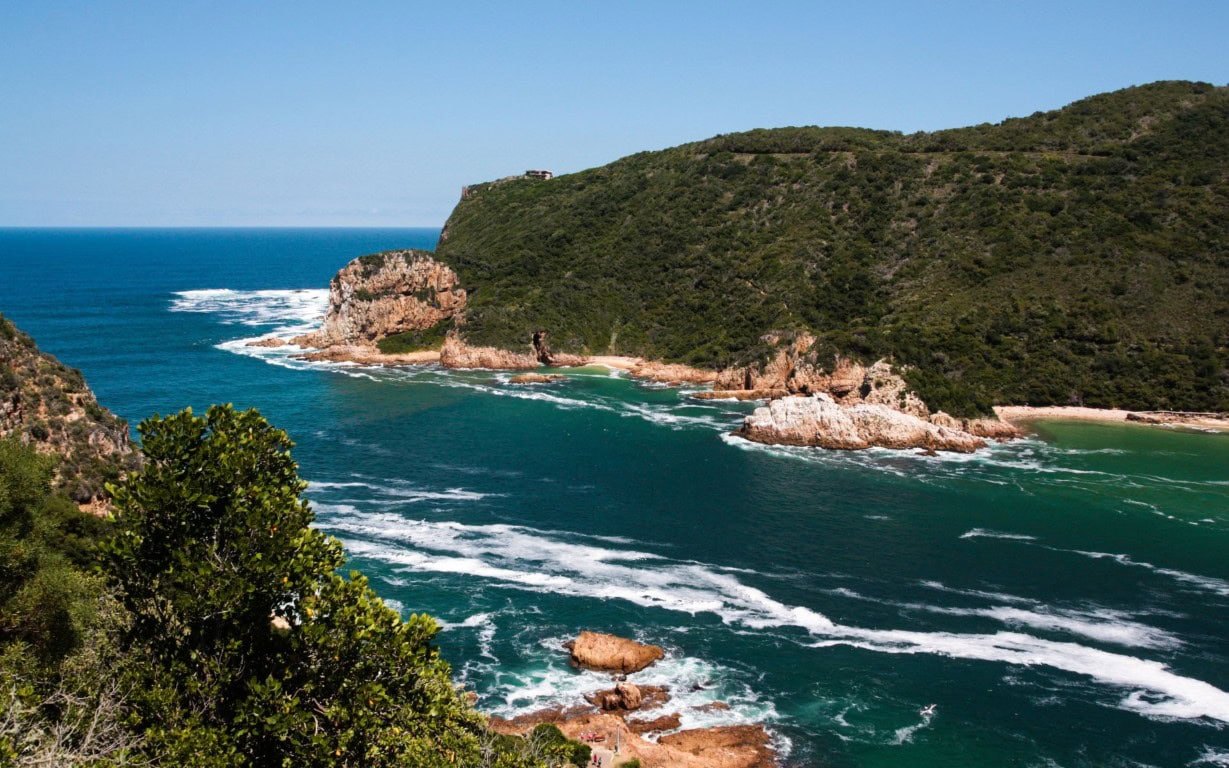
Few people realise that the Cape holds an entire floral kingdom of its own. The fynbos that covers the mountains and the coast is one of only six floral kingdoms on earth, and by far the smallest, yet it carries thousands of plant species found nowhere else. From June to November the southern right whales come in close to the shore at Hermanus and De Kelders. Further east the Garden Route unwinds between mountains and sea, through forest and lagoon towns, towards the Eastern Cape.
We begin so many journeys here because the Cape eases you into Africa. It is beautiful, comfortable and unhurried, and it pairs naturally with a safari to the north or east. Our Cape Town tours and packages guide sets out the ways to see it, and our Garden Route tours and packages guide follows the coast road onward.
II. The Eastern Cape: the Big Five without the malaria
An hour's flight east of Cape Town, the land changes. The fynbos gives way to thicket, grassland and river valleys, and here, in country that was farmed for generations, a remarkable piece of restoration has taken place. Addo Elephant National Park was proclaimed to protect the last few elephants of the region and now holds hundreds. Around it, private reserves have returned lion, rhino, buffalo and cheetah to land they had not walked for more than a century.
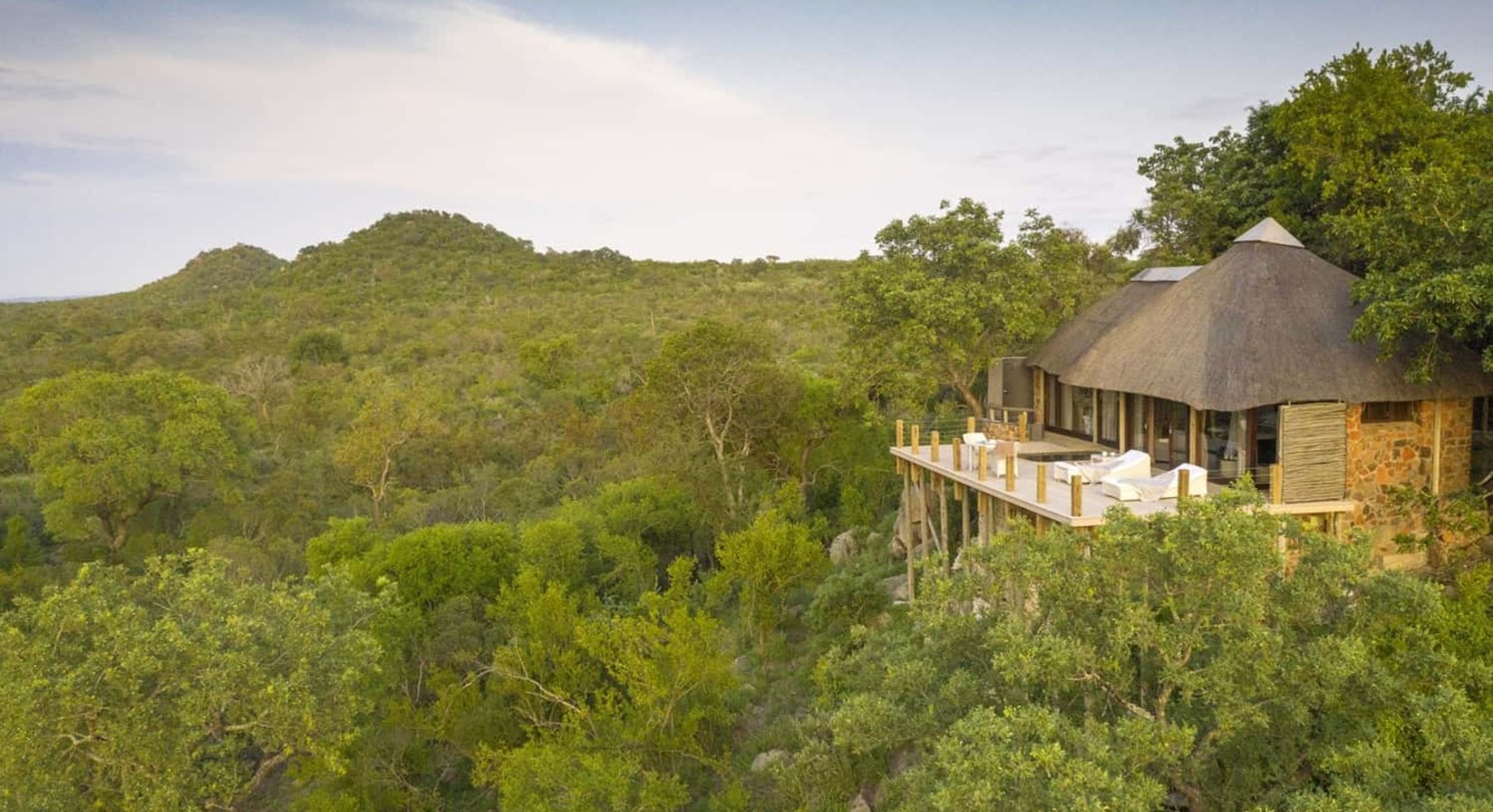
The Eastern Cape's gift is simplicity. It is malaria-free, so families with young children and travellers who would rather not take prophylactics can go on a true Big Five safari without a second thought. It is close to the Garden Route and to Cape Town, so a week in the south can hold mountain, coast and bush together. The lodges range from intimate family-run camps to some of the finest in the country. Our Eastern Cape safari guide covers the reserves and how to choose between them.
III. Kruger, the Sabi Sand and Madikwe: the great bushveld
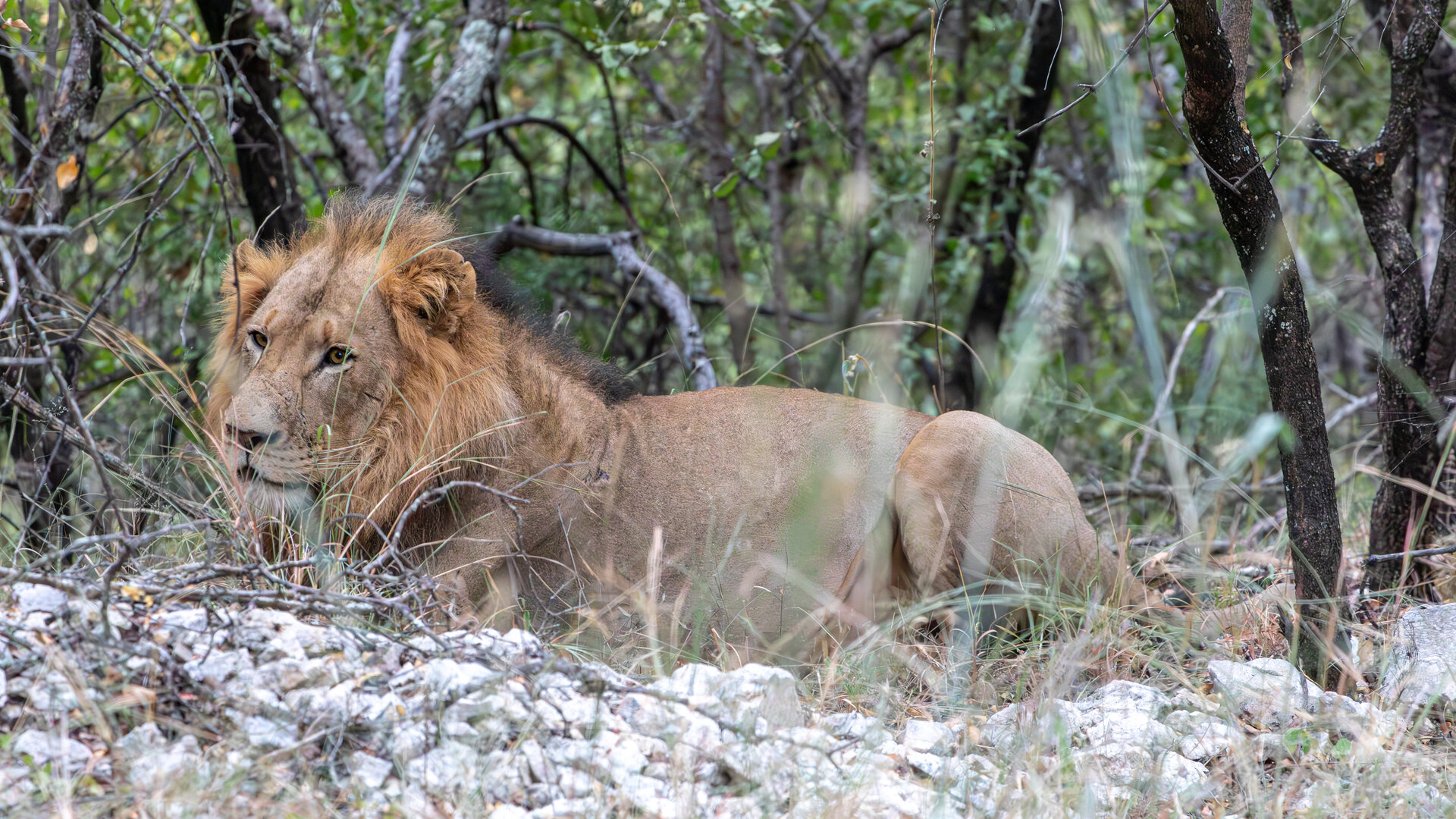
If the Cape is where our journeys begin, the north-east is where most of them come alive. Kruger National Park covers almost two million hectares of lowveld, threaded with rivers and studded with granite koppies, and it carries more species of large mammal than any other park in South Africa. Along its western edge lie the private reserves of the Greater Kruger, the Sabi Sand foremost among them, where there are no fences between reserve and park and the lodges can drive off-road, walk with you, and run night drives. For leopard, I know of nowhere better.
Three hundred kilometres to the west, near the Botswana border, Madikwe Game Reserve tells a different story. In the early 1990s, in a relocation programme known as Operation Phoenix, thousands of animals were brought back to old farmland, and today Madikwe is malaria-free, quiet, and one of the most reliable places in the country to see African wild dogs. It is an easy drive or short flight from Johannesburg.
Together these three are South Africa's classic safari country, and they are where we send more travellers than anywhere else. Our South Africa safari packages guide covers the whole country; for the bushveld itself, see our Kruger safari packages, our Sabi Sand safari packages, our Madikwe Game Reserve guide and our pick of the luxury safari lodges of South Africa. For a short trip that has both the park and the private reserve, our 5-day Kruger and Sabi Sand safari lays out the plan day by day.
IV. Botswana, Namibia, Zambia and Zimbabwe: the wild interior
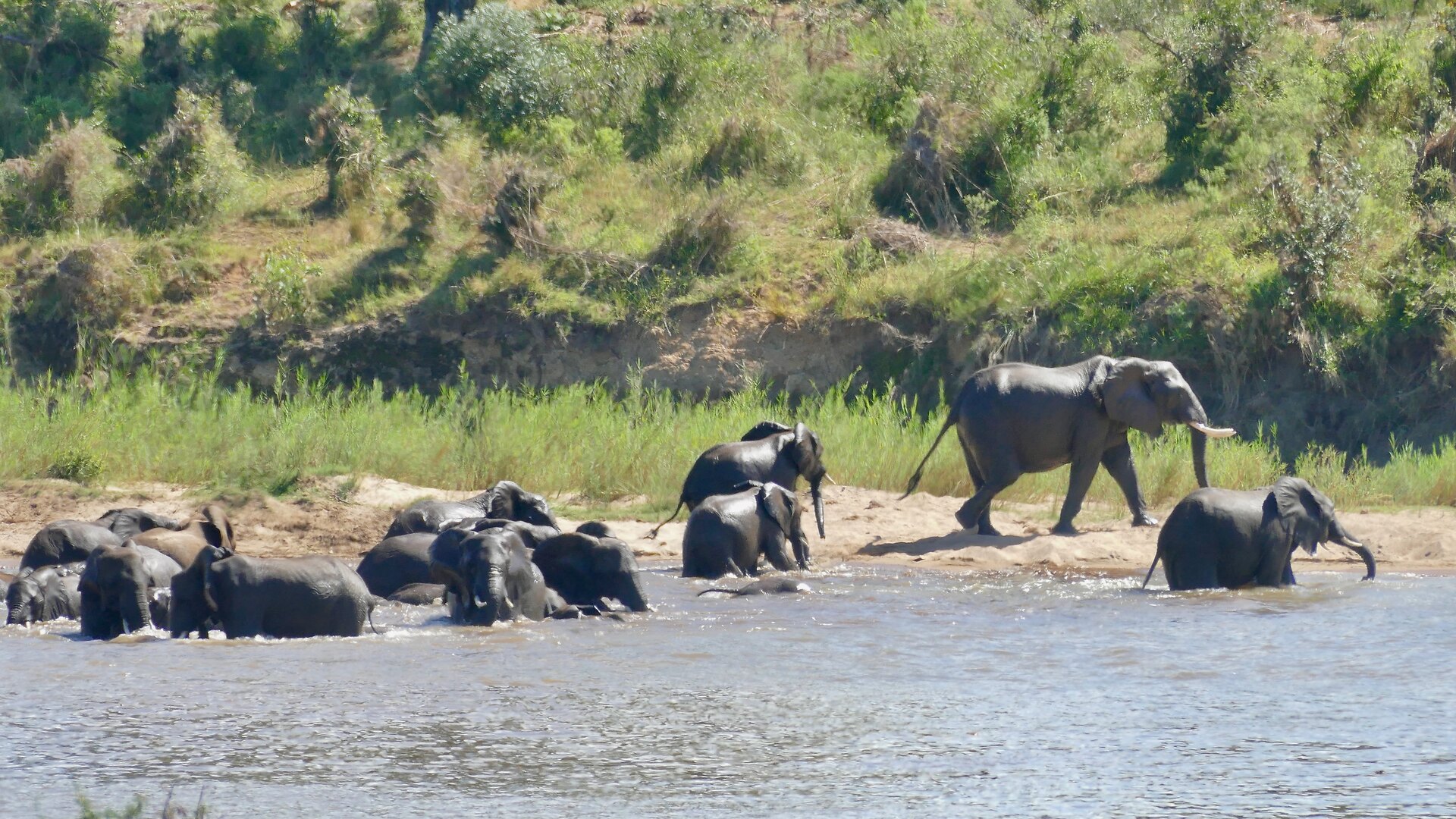
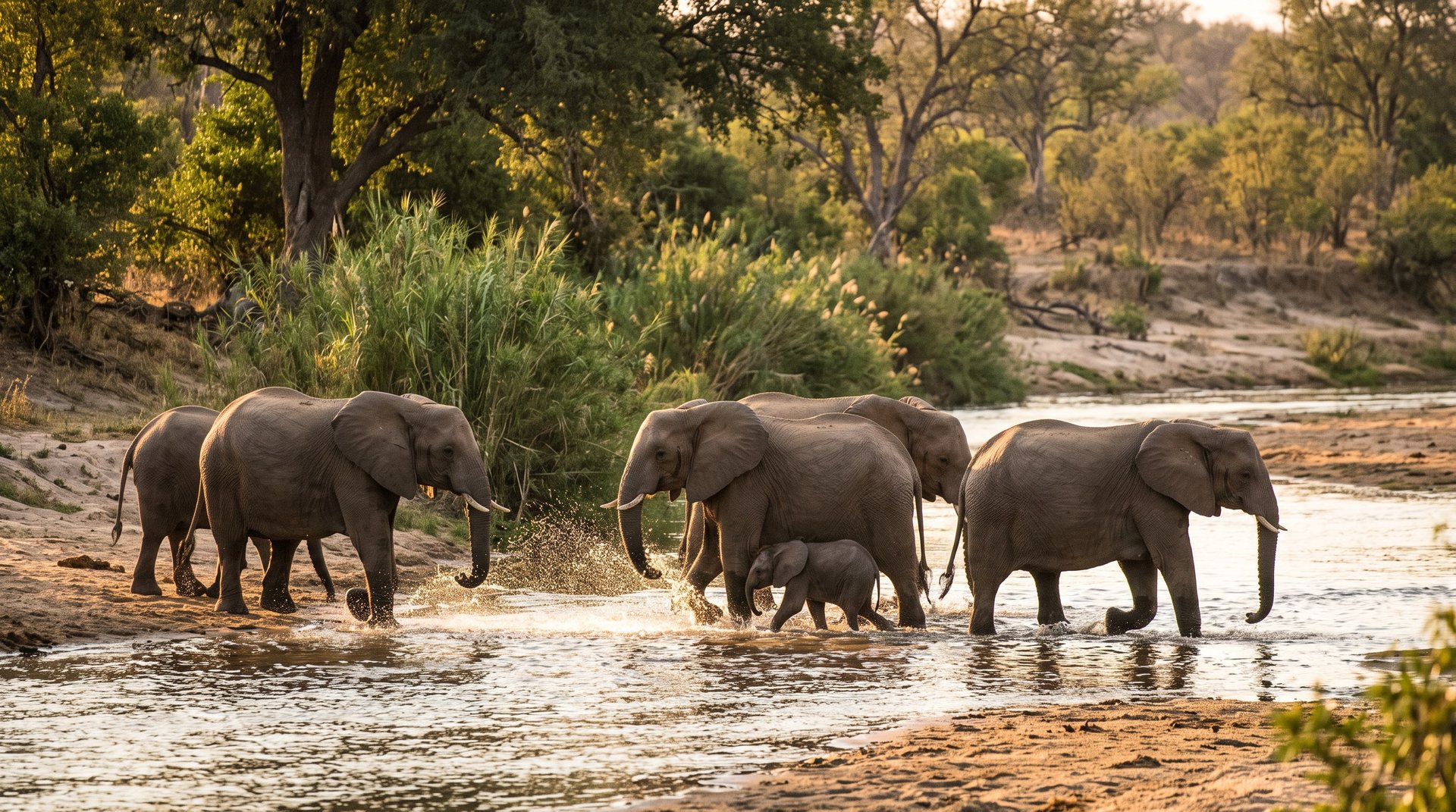
North of South Africa the roads thin out and the country opens. Botswana chose, long ago, to keep its wild places for few visitors paying well rather than many paying little, and the Okavango Delta is the result: a river that flows from the Angolan highlands into the Kalahari and spreads into a maze of channels, lagoons and islands before it ever reaches the sea. The flood arrives in the dry months, in the middle of the year, which is the Delta's quiet miracle. You glide through it in a mokoro, poled by a guide standing at the stern, with nothing but the sound of water and reed frogs. To the north, the Chobe River draws some of the largest elephant herds on the continent.
West of Botswana lies Namibia, the oldest desert in the world and some of its most beautiful emptiness: the red dunes of Sossusvlei, the white pan of Etosha with its waterholes full of game, the desert-adapted elephants of Damaraland and the fog-bound Skeleton Coast. To the north-east, Zambia gave the world the walking safari in the South Luangwa valley, and its Lower Zambezi is one of the finest places to canoe past elephants and hippos. Across the river, Zimbabwe holds Mana Pools, Hwange, and Victoria Falls, which the local people have always called Mosi-oa-Tunya, the smoke that thunders. At full flood its spray rises high enough to be seen from far across the bush.
This is the Africa for the traveller who wants wilderness above all. Our Botswana safari packages and Okavango Delta packages begin the story; our Namibia, Zambia and Zimbabwe guides continue it, and our Victoria Falls safari packages show how the falls fit into a longer journey.
V. Kenya and Tanzania: the plains of the Migration
When most people close their eyes and picture a safari, they are picturing East Africa. The plains of the Serengeti and the Masai Mara run together across the border between Tanzania and Kenya, one ecosystem with two names, and across it moves the Great Migration: well over a million wildebeest, with hundreds of thousands of zebra and gazelle, following the rains in a great loop through the year. The calves are born in the southern Serengeti around January and February. From about July to October the herds reach the Mara River, where the crossings, with crocodiles waiting below the banks, are among the most dramatic sights in nature.
There is more here than the herds. The Ngorongoro Crater holds a world of its own inside its rim. Kilimanjaro, the highest mountain in Africa, rises above the elephants of Amboseli. In Kenya, the private conservancies bordering the Mara offer the same wildlife with far fewer vehicles, and the Maasai who own that land are partners in its protection. East Africa is where safari began as a word, from the Swahili for a journey, and it still feels like the heart of the idea.
Our Kenya safari packages and Tanzania safari packages guides set out the options, and our Serengeti and Masai Mara guides follow the herds month by month.
VI. Uganda, Rwanda, Congo and Burundi: the green heart of the continent
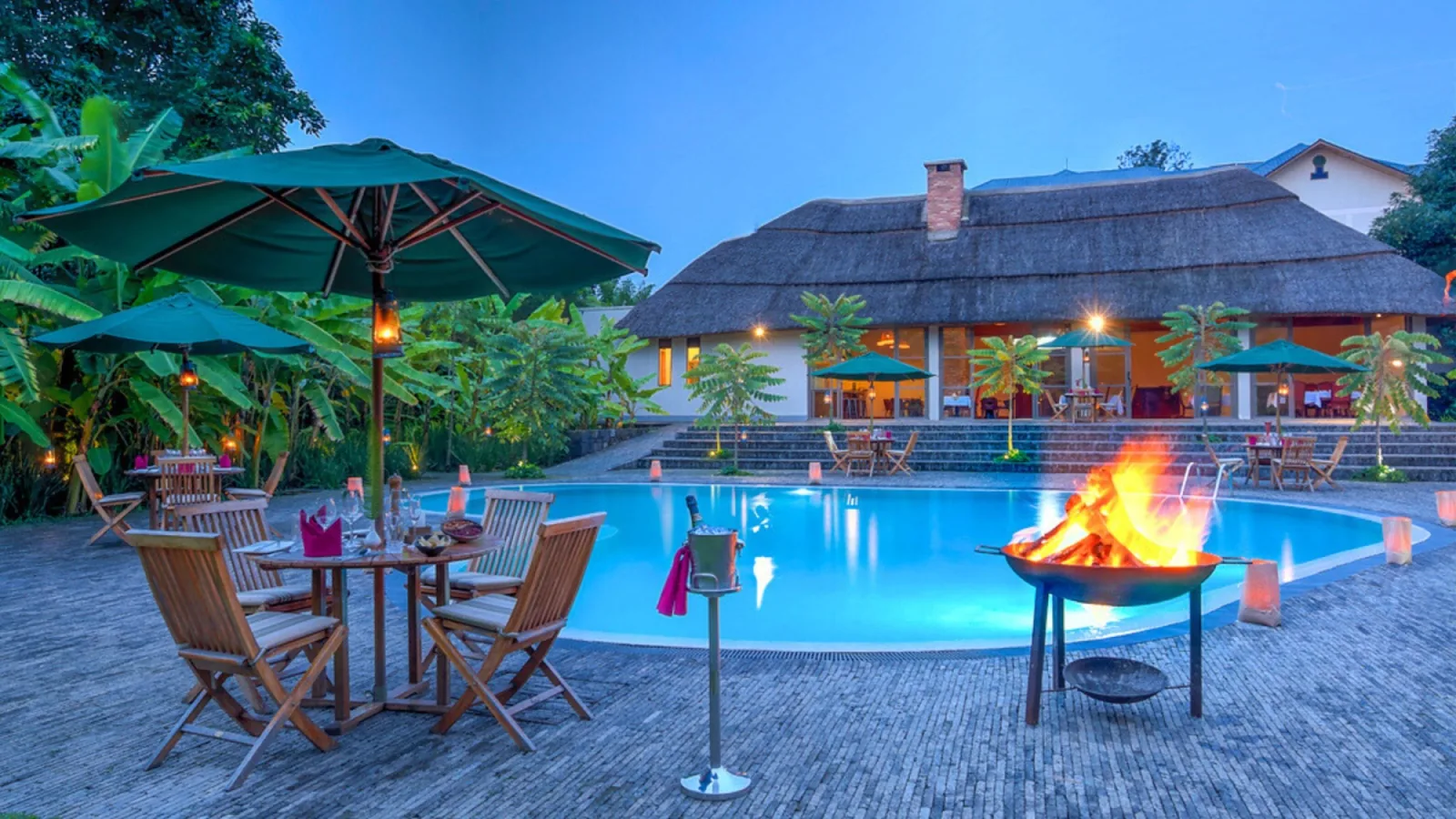
West of the plains the land rises and turns green. On the volcanic slopes where Uganda, Rwanda and the Democratic Republic of Congo meet, and in Uganda's Bwindi Impenetrable Forest, live the mountain gorillas. There are only around a thousand of them in the world, and spending an hour with a habituated family, after a climb through bamboo and nettle, is something no one I have sent there has ever forgotten. Uganda adds chimpanzees in Kibale, tree-climbing lions in Queen Elizabeth National Park and the Nile forcing itself through a narrow gorge at Murchison Falls. Rwanda, small and beautifully kept, makes gorilla trekking easy to combine with a few days elsewhere.
Further west, in the Republic of Congo, Odzala-Kokoua National Park protects rainforest where western lowland gorillas live in clearings and swamps that very few travellers will ever see. And to the south of Rwanda lies Burundi, small, green and steep, set beside Lake Tanganyika, the longest freshwater lake on earth and the second deepest. It has chimpanzees in the Kibira forest, hippos in the Rusizi delta, and the Royal Drummers of Gishora, whose drumming UNESCO has recognised as part of the heritage of humanity. Burundi is not a first safari for most people, and we will always tell you so. But for those who want the continent's quieter, wilder places, it is waiting.
Our Uganda safari packages, Rwanda safari packages and Congo safari packages guides cover the forests in depth. Our Burundi safari packages and ultimate Burundi travel guide are written with particular care.
VII. Mozambique, Madagascar and Malawi: where Africa meets the Indian Ocean
Every journey needs an ending, and for many of our travellers the ending is the sea. Mozambique has one of the longest coastlines in Africa, warm water, coral reefs and the islands of the Bazaruto Archipelago, where dhows still sail and dugongs graze the seagrass beds. Inland, Gorongosa National Park is one of the great recovery stories of modern conservation. Mozambique is, I confess, a favourite of mine: after a week of early game drives, nothing restores a traveller like its quiet beaches.
Across the channel, Madagascar is the island that went its own way. Most of its wildlife is found nowhere else on earth: lemurs leaping through the forests of Andasibe, chameleons of every size, the stone forests of the Tsingy and the Avenue of the Baobabs glowing at sunset. And inland from Mozambique, Malawi, the warm heart of Africa, holds a freshwater sea of its own, Lake Malawi, with more species of fish than any other lake in the world, and the river safaris of Liwonde.
Our Mozambique safari packages, Madagascar safari guide and Malawi safari packages guides show how each one fits after a safari, or as a journey in its own right.
How to choose your Africa
After all these years, I have come to believe that the right part of Africa is the one that matches the traveller, not the one that tops a list. If you want ease, comfort and the classic Big Five, South Africa will give you that beautifully. If you dream of the herds, go east. If you want to feel very small in very wild country, go to Botswana, Zambia or Namibia. If you want an encounter that changes how you see the natural world, climb into the gorilla forests. And if you want to finish with your feet in warm sand, the Indian Ocean is waiting.
Most of our longer journeys join two or three of these regions together. Our guide to the types of African safari explains the different ways to travel, our first-time safari guide helps if this is your first visit, our African safari tours guide shows how the regions combine, and our selection of the luxury safari lodges of Africa spans the whole continent.
A last word, from Cape Town
I have known this continent my whole life, from the Cape Flats where I grew up to the furthest corners I have sent travellers to, and Africa is still teaching me something new today. She is generous to those who come to her with patience. She does not perform on cue; the leopard will appear when it chooses, and the herds will cross when the rains say so. But give her time and a good guide, and she will give you mornings you remember for the rest of your life.
If you would like us to help you find your part of her, send us your dates, your rough budget and who is travelling. My team and I will reply with an honest, itemised proposal and no hard sell. You can use our safari planning form, or reach Remondy on WhatsApp at +27 78 471 4852. We would be glad to show you Africa, as we know her.
Remondy Clementia Kabura
African Safari Specialist, Beyond Africa Safaris