Key Takeaways
- A multi-country safari delivers contrast and variety a single destination cannot — different ecosystems, wildlife and moods in one journey.
- The logistics — charter flights, visas, conservation fees and baggage limits — are what make or break the trip.
- Light-aircraft transfers are the backbone of the itinerary; soft-sided bags and a strict weight limit are essential.
- Allow at least 2–3 nights per camp and build in sensible connection buffers so nothing feels rushed.
- We handle every border, transfer and detail so several countries feel like one seamless journey.
Why Cross Borders at All?
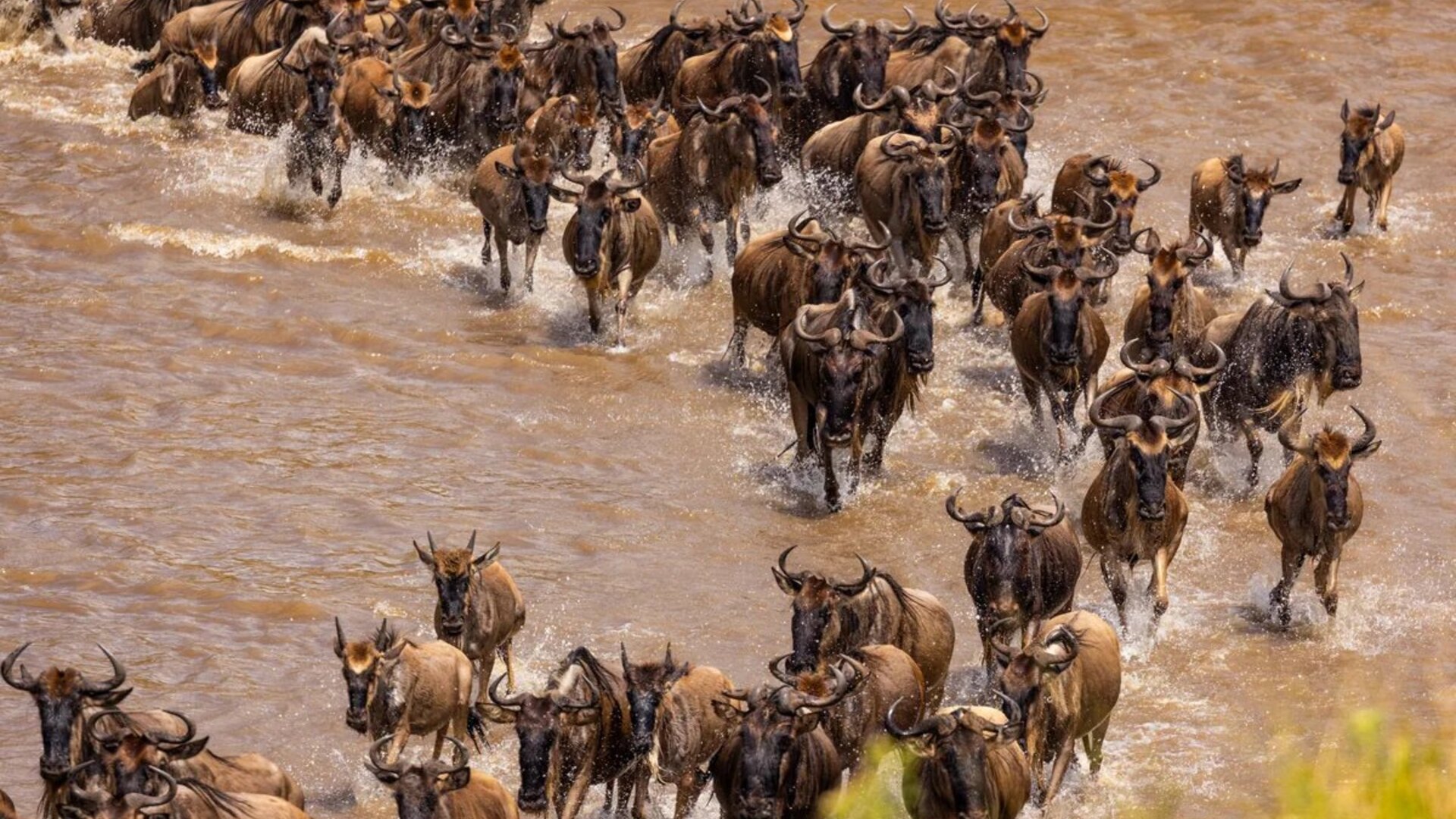
Because no single country has everything. Each of Africa's great safari nations has a signature: South Africa for Big Five convenience and the Cape; Botswana for the water wilderness of the Okavango and the Kalahari; Kenya and Tanzania for the sheer spectacle of the Great Migration; Zambia and Zimbabwe for walking safaris and Victoria Falls; the Indian Ocean islands for a beach finish. A multi-country journey lets you pair complementary experiences — plains and delta, big cats and beach, desert and falls — so each stop feels fresh and the whole is far greater than the sum of its parts.
The trade-off is complexity. More countries means more flights, more borders and more moving parts — which is precisely why a multi-country safari rewards expert planning more than any other kind of trip.
1. Choose a Logical Route
Great routes flow; they do not zig-zag. The first rule is geography: chain destinations that connect naturally so you are always moving forward, not doubling back. Classic flowing routes include South Africa to Botswana to Victoria Falls; Kenya to Tanzania across the Migration ecosystem; or a safari country paired with an Indian Ocean island for a beach finish. A logical route saves hours of transit, reduces cost, and means each leg builds on the last rather than backtracking across the continent.
2. Master the Charter & Light-Aircraft Flights
Small planes are the backbone of a luxury safari. Most remote camps are reached by light aircraft on scheduled or private charter hops between bush airstrips. These flights are part of the magic — low passes over the delta and plains — but they run to strict rules: tight baggage limits (typically 15–20kg in soft-sided bags), small cabins, and schedules that dictate your camp check-in and check-out times. Understanding the flight network is central to routing, and it is where expert planning earns its keep, sequencing camps so the transfers connect smoothly.
3. Handle Visas & Border Crossings
Every country has its own rules — and they change. A multi-country safari may involve several visas, some available on arrival, some requiring advance application, and some covered by regional arrangements such as the Kenya–Tanzania or the KAZA (Zambia–Zimbabwe) systems. Passport validity, blank pages and onward-travel proof all matter. Border crossings between camps must be timed to the flight schedule and the border's operating hours. This is fiddly, country-specific detail that we manage end to end, so you simply travel.
4. Budget for Conservation & Park Fees
Fees stack up across borders — plan for them. Each country and reserve charges its own daily conservation and park fees, and on a multi-country trip these add up. They are almost always built into your all-inclusive rate, but knowing they are there helps you understand the cost of crossing borders versus staying in one country. Some destinations — gorilla permits in particular — carry significant separate fees. We break every fee out transparently so there are no surprises, and so you can weigh where the extra spend is truly worth it.
5. Pace It — Don't Rush
The most common mistake is trying to see too much. A multi-country safari is seductive precisely because there is so much on offer, but cramming in too many stops turns a dream trip into a blur of airstrips. Our firm advice: at least two, ideally three nights per camp, so you can settle, relax and actually experience each place. Three or four well-chosen stops across two or three countries, over ten to fourteen nights, is far richer than six rushed ones. Build in a buffer day where connections are tight.
6. Pack Smart for Small Planes
Light-aircraft limits shape what you bring. Soft-sided bags are compulsory on most bush flights, and the weight limit (often 15–20kg including hand luggage) is strictly enforced. The good news is that camps offer daily laundry, so you need far less than you think — neutral, layered clothing, a warm fleece for early drives, a good camera, sun protection and any medication in your hand luggage. We provide a precise, camp-specific packing list so you arrive with exactly what you need and nothing that will not fly.
7. Add a Beach or City Finish
The perfect way to decompress after the bush. Many of the finest multi-country journeys end not with more game drives but with contrast — a few days on an Indian Ocean island such as Zanzibar, the Seychelles or Mozambique, or a stay in a vibrant city like Cape Town. After the early mornings and adrenaline of safari, a beach or city finish lets you relax, reflect and let it all sink in. It also balances the trip beautifully, giving you wilderness, wildlife and downtime in one seamless arc.
8. Let One House Handle Everything
The single most important decision you will make. A multi-country safari touches many operators, airlines, camps and borders — and the only way it feels effortless is if one expert house holds the whole thing together. A single point of contact, one itinerary, one invoice, one team watching every connection and ready to solve any hiccup in real time. That is the difference between a trip that flows like a dream and one that unravels at the first delayed flight. It is exactly what we do.
Classic Multi-Country Routes — At a Glance
| Route | Best For | Ideal Length |
|---|---|---|
| South Africa & Botswana & Victoria Falls | Big Five, delta & falls | 10–14 nights |
| Kenya & Tanzania | The Great Migration | 10–12 nights |
| Safari & Indian Ocean island | Bush & beach | 9–12 nights |
| Cape Town & Kruger & Falls | First-timers, variety | 10–14 nights |
| Rwanda & Kenya | Gorillas & plains | 9–12 nights |
How Much Does a Multi-Country Safari Cost?
A tailor-made multi-country luxury safari typically starts around US$1,000–1,500 per person per night at the lodges, plus the internal charter flights, which are a significant additional cost on a cross-border trip. As a rough guide, a ten-to-fourteen-night journey across two or three countries, staying in fine camps throughout, generally lands between US$15,000 and US$35,000 per person, depending on the season, the camps and the flying involved. Gorilla trekking adds permit fees on top. We always build a transparent, itemised quote so you can see exactly where every dollar goes and adjust to your budget.
The Best Time to Go
Timing a multi-country trip means balancing the seasons of several destinations at once. The Great Migration, the Okavango flood, the dry-season game viewing of Southern Africa and the ideal beach months of the Indian Ocean all peak at different times. The general sweet spot for a Southern and East African combination is the dry winter, roughly June to October, which delivers excellent game viewing across most regions and good beach weather. We plan the route around the seasons so each leg is timed for its very best.
Why Plan Your Multi-Country Safari With Us
- Seamless logistics — one team handles every flight, border and connection.
- One point of contact — a single itinerary and single invoice across all countries.
- Expert routing — flowing routes timed to the seasons and the flight network.
- Total transparency — every fee, flight and rate itemised before you commit.
- 24/7 support — real-time help the moment anything needs solving en route.
Let Us Weave Your Journey Together
We are a private, tailor-made travel house based in Cape Town, and a seamless multi-country safari is one of the most rewarding journeys we craft. Tell us the countries and experiences you dream of, and we will design a flowing, flawless route that feels like one effortless adventure from first landing to final sunset.
Ready to cross borders in style? 👉 Request a multi-country safari quote → 👉 Browse our tours & safari packages → 👉 WhatsApp us: +27 78 471 4852