Key Takeaways
- 🐘 KAZA — the Kavango-Zambezi Transfrontier Conservation Area — spans about 520,000 square kilometres across Botswana, Namibia, Zambia, Zimbabwe and Angola, making it the largest conservation area on the planet.
- 🐘 It holds the single largest elephant population on Earth, somewhere around 220,000 animals, most of them moving through northern Botswana and the Chobe-Linyanti-Hwange belt.
- 🐘 The two rivers that give it its name — the Kavango (Okavango) and the Zambezi — are the reason it works: they carry the water and the wildlife across borders that mean nothing to an elephant.
- 🐘 Its anchors read like the whole wish-list of a southern Africa safari: Chobe, Victoria Falls, the Okavango Delta, Linyanti and Selinda, Hwange and the Lower Zambezi.
- 🐘 A single trip can cross two or three of its countries in a week, helped by short light-aircraft hops and the KAZA UniVisa, which covers Zambia and Zimbabwe on one document.
Draw a rough circle around the point where Botswana, Namibia, Zambia and Zimbabwe almost touch — the only place on the map where four countries meet at nearly a single point — and you have the heart of KAZA. The full name is the Kavango-Zambezi Transfrontier Conservation Area, and the short version has become shorthand for something genuinely hard to picture: a single, joined-up wilderness roughly the size of France, shared across five national borders and built around two great rivers.
Most people arrive inside KAZA without knowing they are in it. They fly to Victoria Falls, cross to Chobe for the elephants, maybe fly on to the Okavango, and think of these as separate trips to separate places. They are not. They are rooms in the same house. This guide is the floor plan — what KAZA is, which countries hold which parts, the wildlife that moves between them, and how to plan a journey that treats the whole landscape as one.
What KAZA actually is
KAZA was signed into being in 2011, when the five governments agreed to manage a block of land around the Okavango and Zambezi basins as one connected conservation area rather than a scatter of parks that stopped at each fence line. On paper it joins more than thirty existing protected areas — national parks, game reserves, forest reserves, community conservancies and game-management areas — into a mosaic of about 520,000 square kilometres. That makes it the largest conservation area in the world.
The idea behind it is simple and old: wildlife does not recognise borders. An elephant herd that feeds in Hwange in Zimbabwe may drink on the Chobe in Botswana and calve in the Zambezi Region of Namibia, all in one year. For a century those movements were cut by fences, farmland and veterinary cordons. KAZA is the long project of re-opening the corridors between the strongholds so that the animals can move the way they always did — and so the water, which falls far to the north and flows south, keeps carrying life across the whole system.
The five countries, and what each one holds
Each country brings a different face of the same wilderness. Botswana holds the richest share — the Chobe riverfront, the Linyanti and Selinda, the Savute, and the northern reach of the Okavango Delta — and with it the largest elephant numbers anywhere. Zimbabwe brings Victoria Falls and Hwange, its biggest park, a vast dry-land elephant country of teak forest and pumped waterholes. Zambia holds the northern bank of the Zambezi above and below the falls, the Lower Zambezi downstream, and Sioma Ngwezi in the west.
Namibia contributes the Zambezi Region — the long finger of land once called the Caprivi Strip — a green, river-laced corridor of Bwabwata, Mudumu and Nkasa Rupara that links the Okavango to the Zambezi. Angola holds the source: the highlands of the southeast where the Kavango and Cuando rivers rise, feeding the whole system downstream. Angola's parks are the least developed for visitors, but they are the water tower that makes the rest possible, and the reason conservation attention is moving north.
Chobe: the elephant capital of the planet
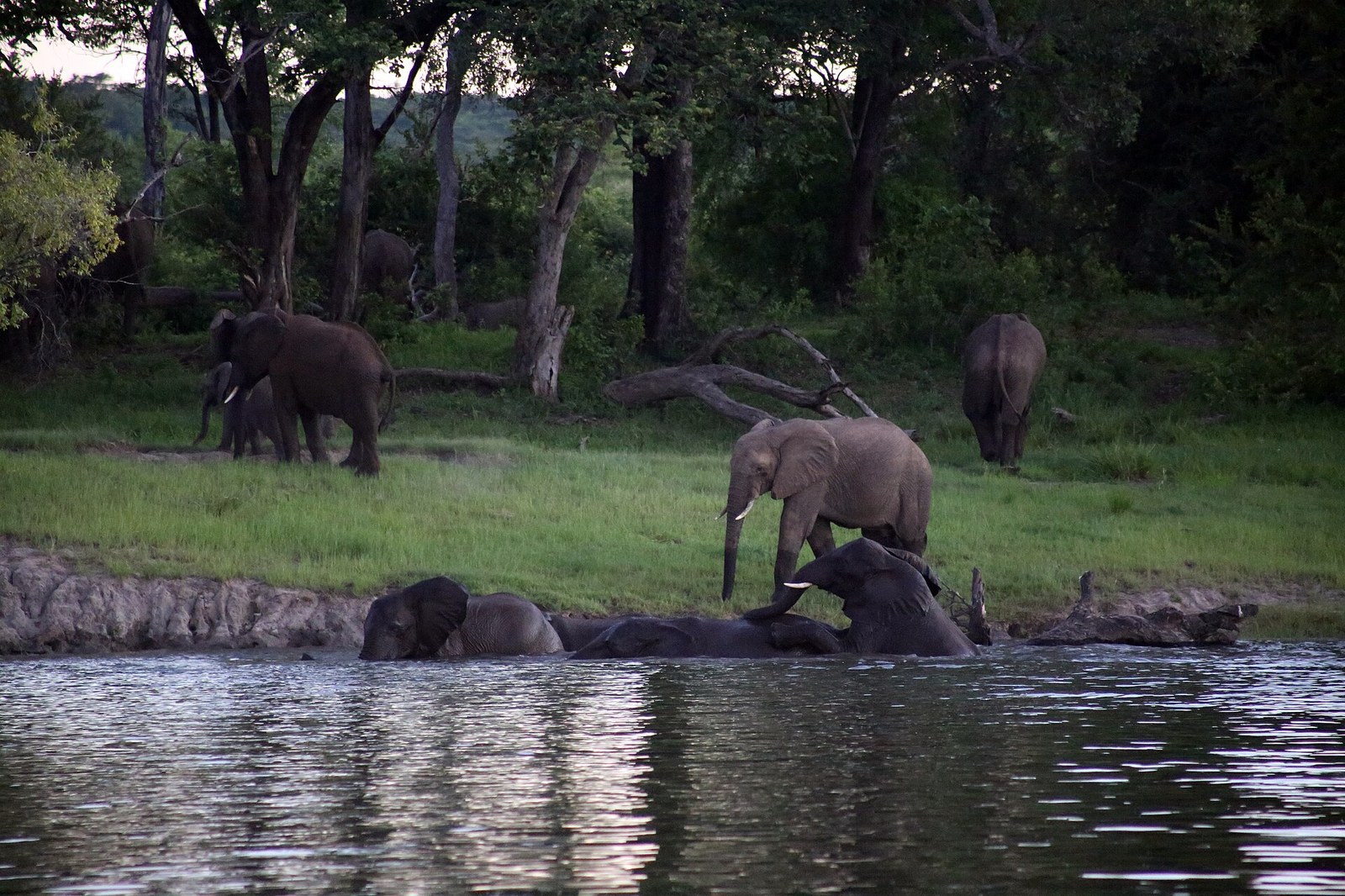
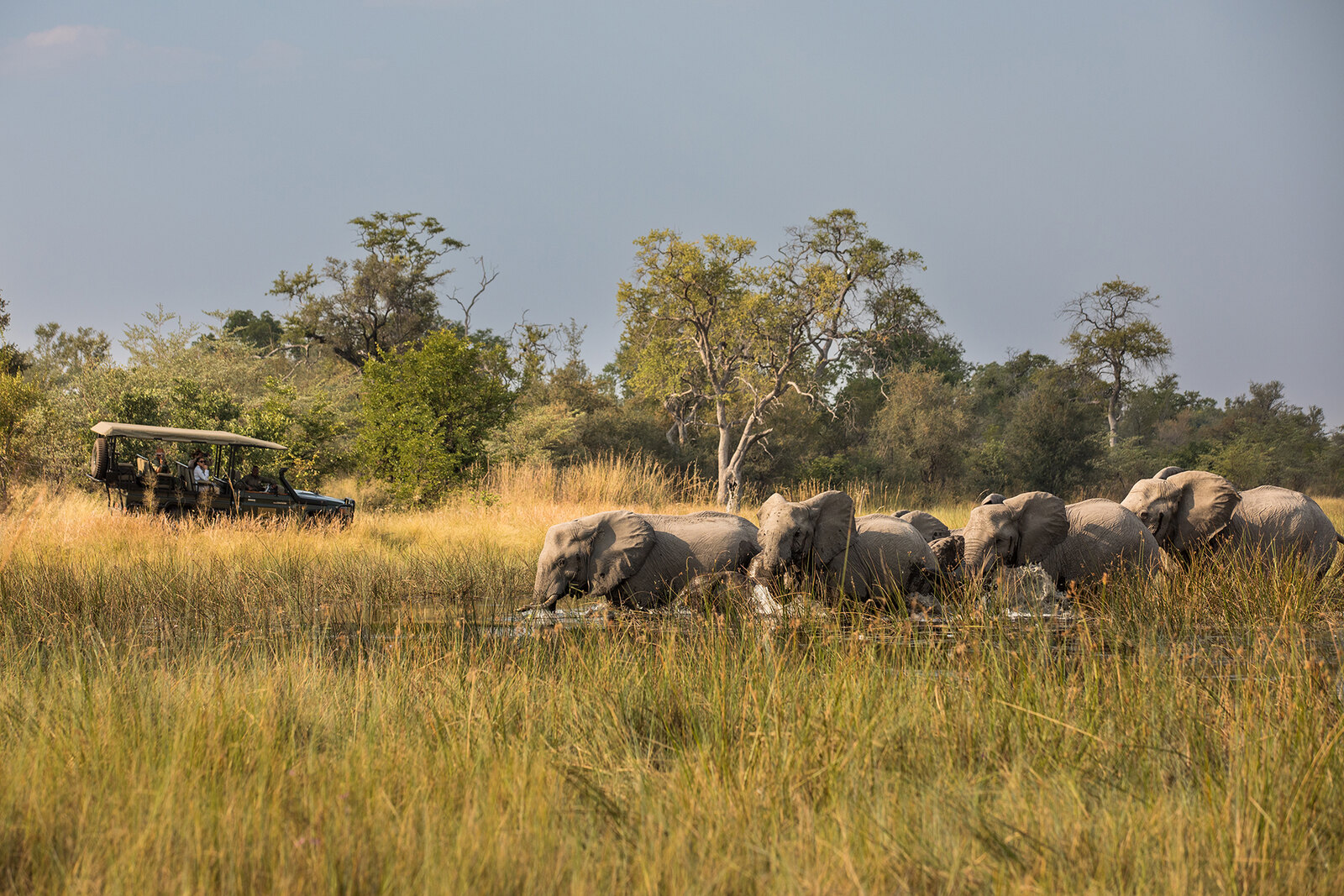
If KAZA has a single centre of gravity, it is the Chobe River. Northern Botswana carries the largest elephant population in Africa, and in the dry season a great many of them walk to the Chobe to drink. By late afternoon the riverfront near Kasane runs with elephants — breeding herds coming down in long grey lines, calves pushed along in the middle, old bulls drinking apart. Watched from a boat, at eye level and quiet, it is one of the most reliable large-mammal gatherings on the continent.
Chobe sits at the junction that defines KAZA: from Kasane you can stand almost at the four-country meeting point, with Namibia across one channel and Zambia and Zimbabwe a short way off. It is the natural hinge of a multi-country trip — an hour and a half by road from Victoria Falls, a short flight from the Okavango, and the easiest place to understand why this landscape had to be managed as one.


Victoria Falls and the Zambezi
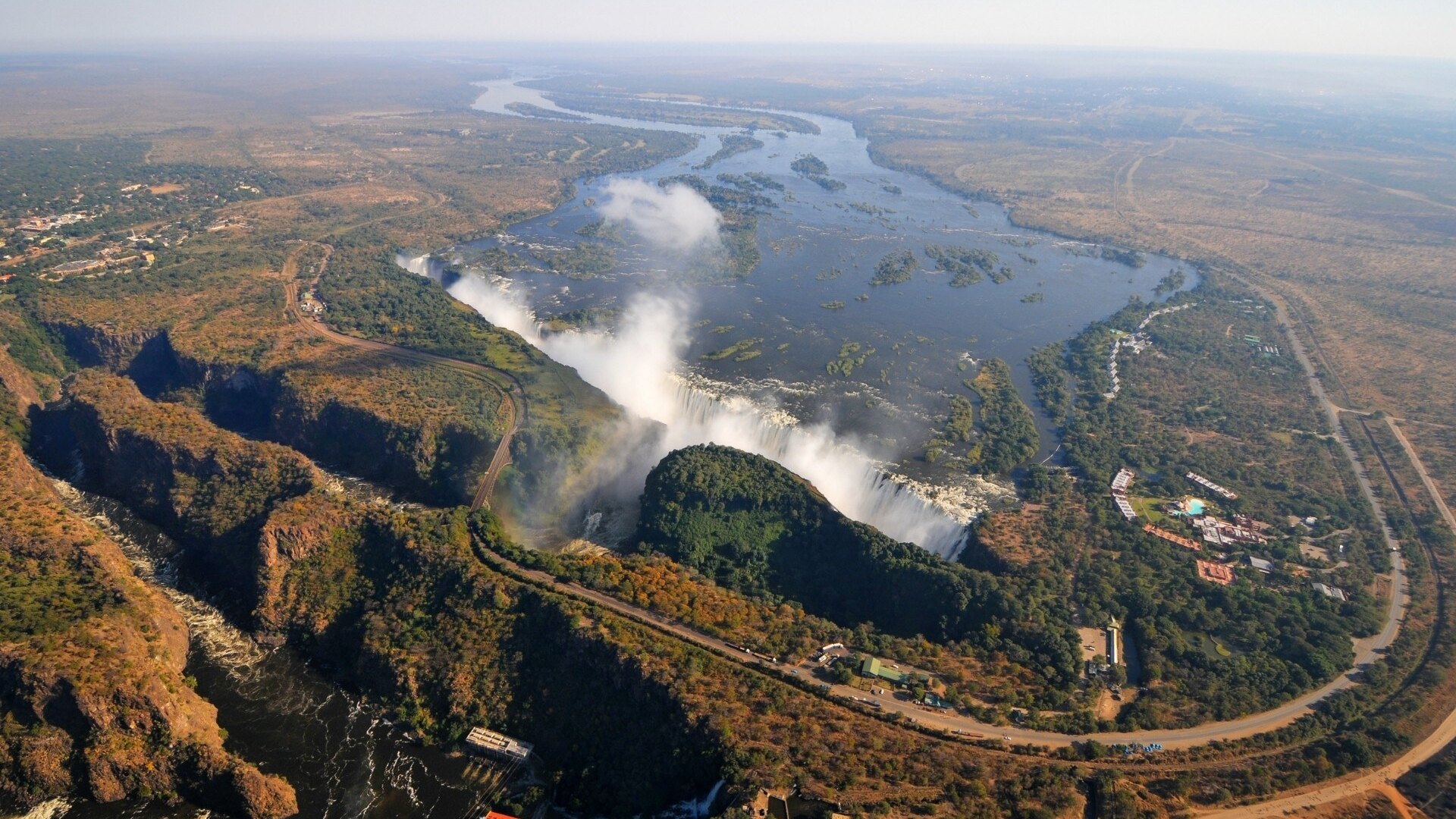
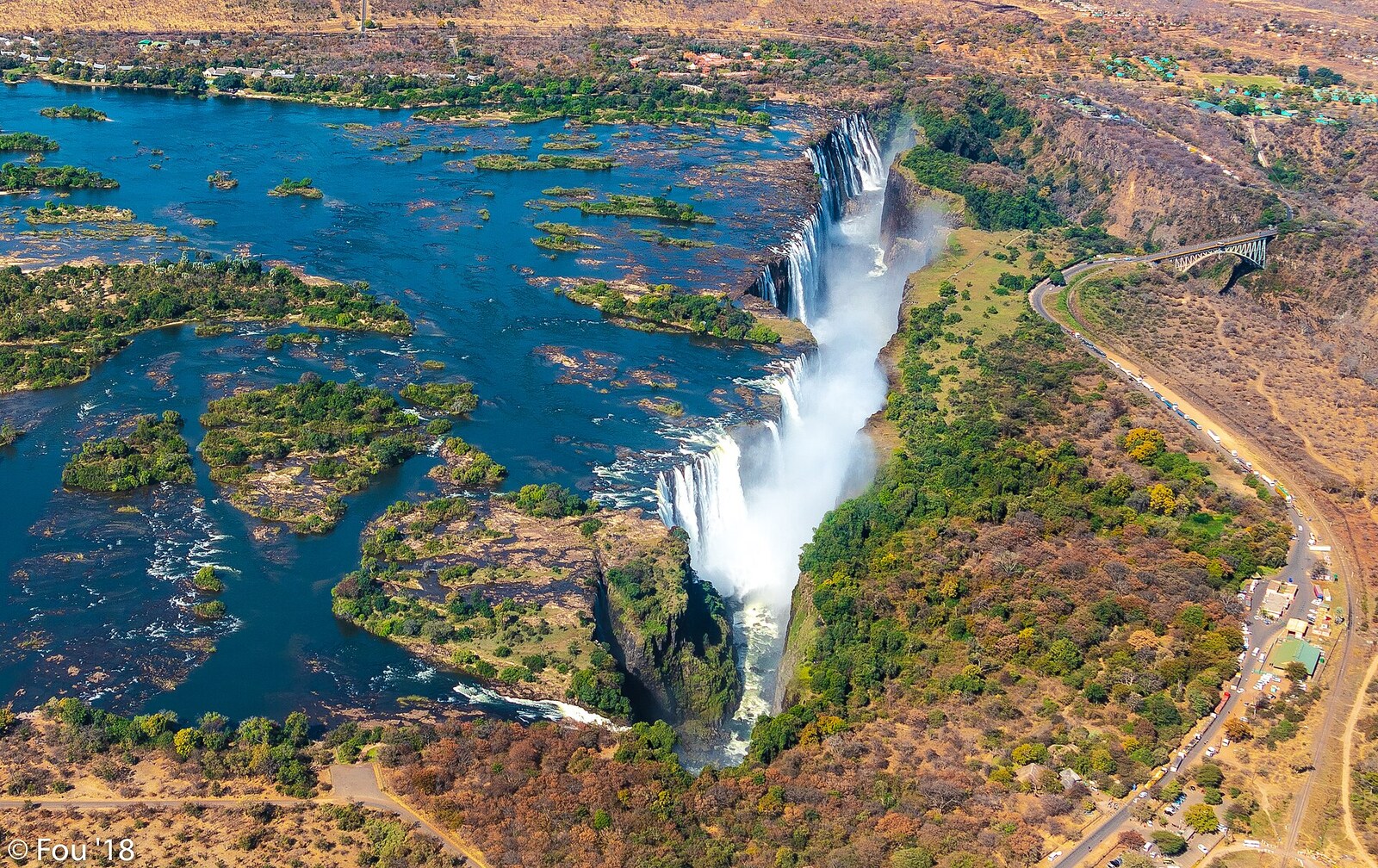
The Zambezi is the second of KAZA's two great rivers, and at Victoria Falls it does the loudest thing water does anywhere on the continent — drops more than a hundred metres into a basalt gorge along a front nearly two kilometres wide. The local name, Mosi-oa-Tunya, the smoke that thunders, is the better description: in full flood the spray climbs hundreds of metres and is visible from far off. The falls sit on the border, shared between Zimbabwe and Zambia, and most KAZA journeys either start or end here.
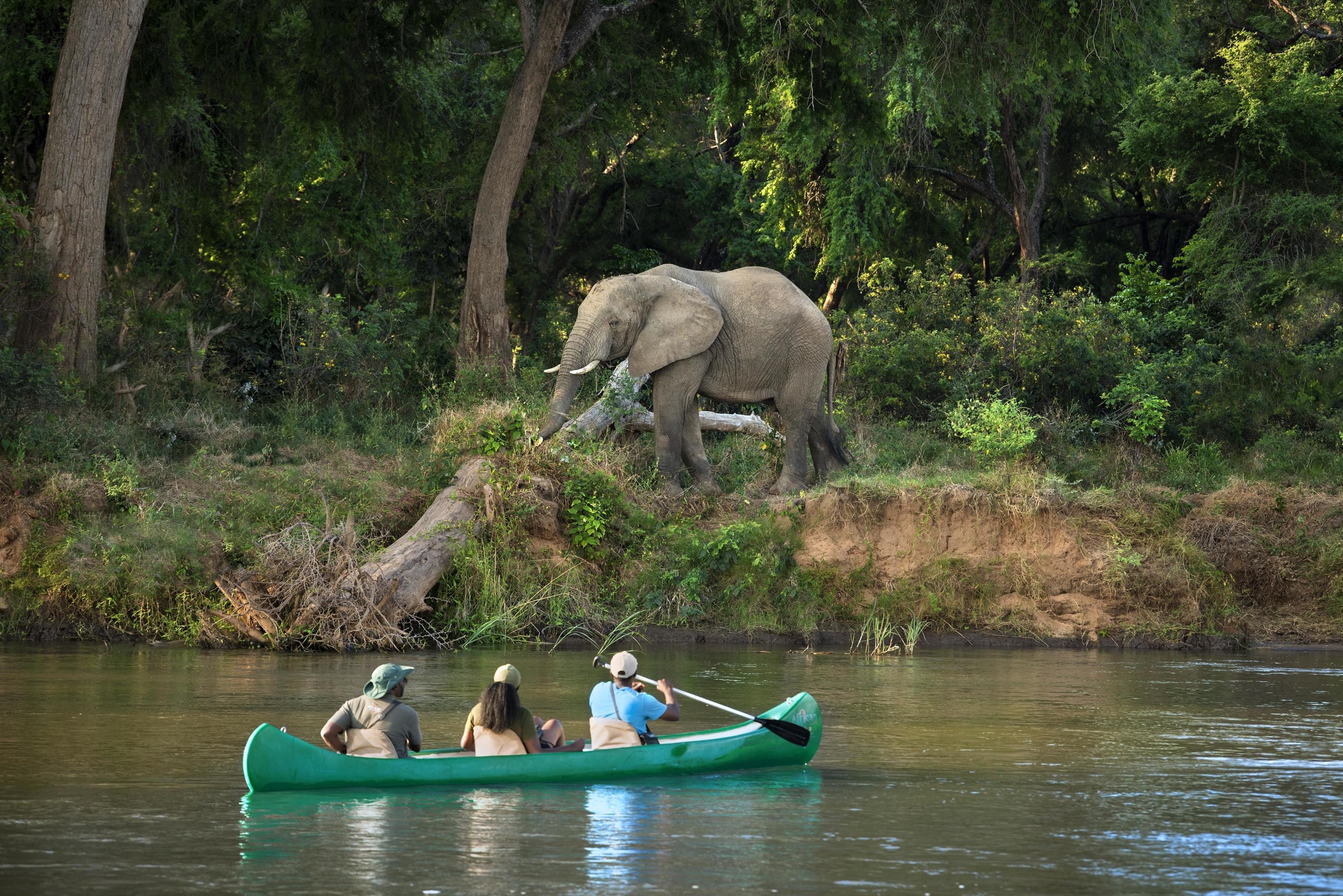
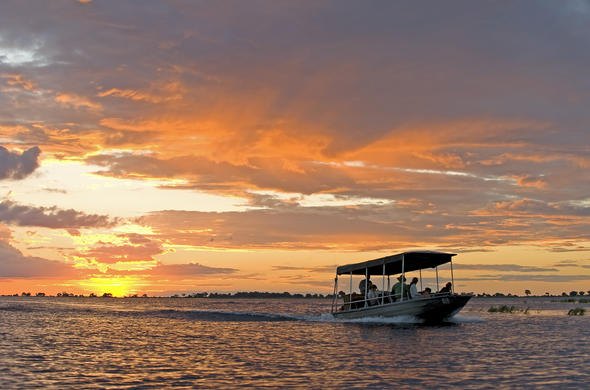
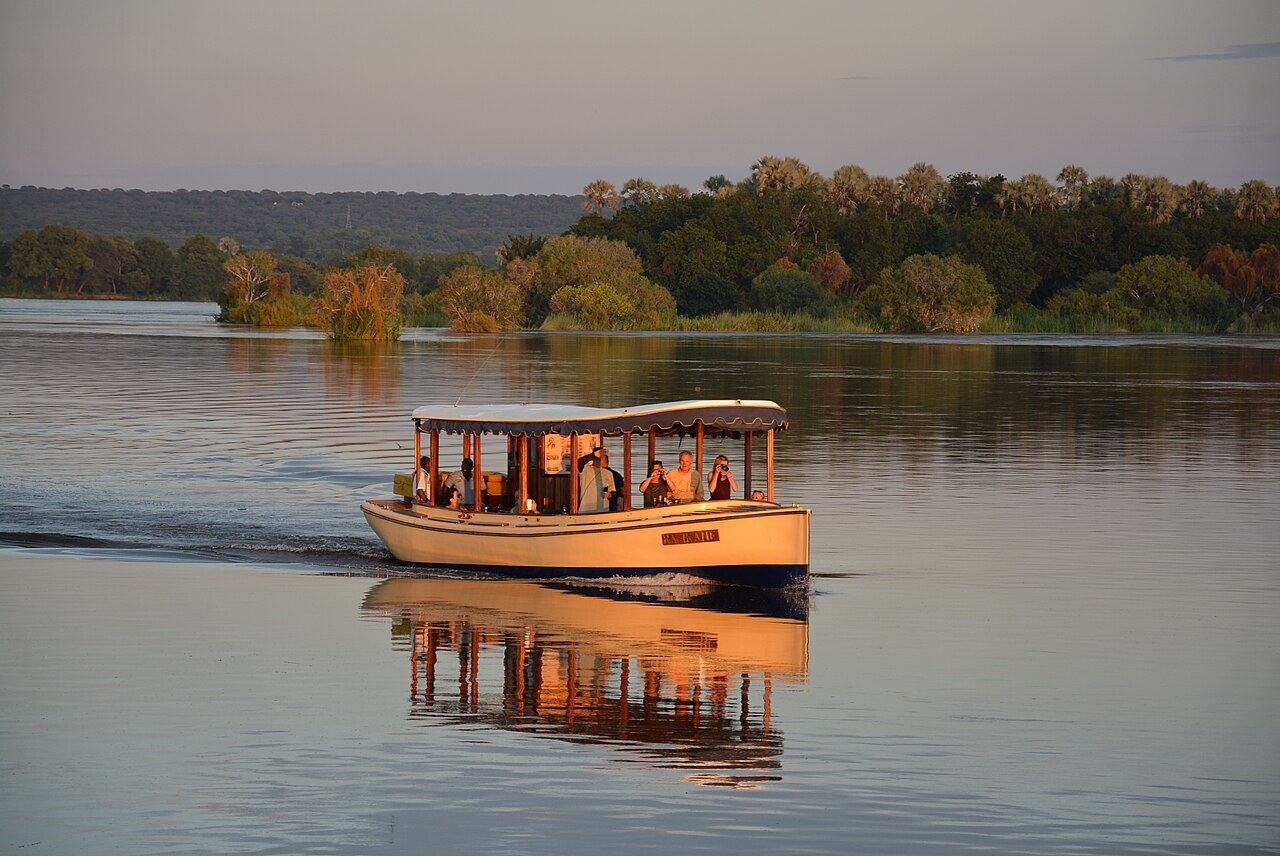
Above the falls the Zambezi runs wide and slow past winterthorn and ebony, good for a sundowner cruise with elephant on the banks. Below them, the Lower Zambezi opens into a floodplain of channels and islands where you can canoe past drinking elephant and track leopard on the same day. The falls are the set-piece; the river on either side is the quieter reward, and the reason to give this corner more than a single night.
The Okavango and the Linyanti
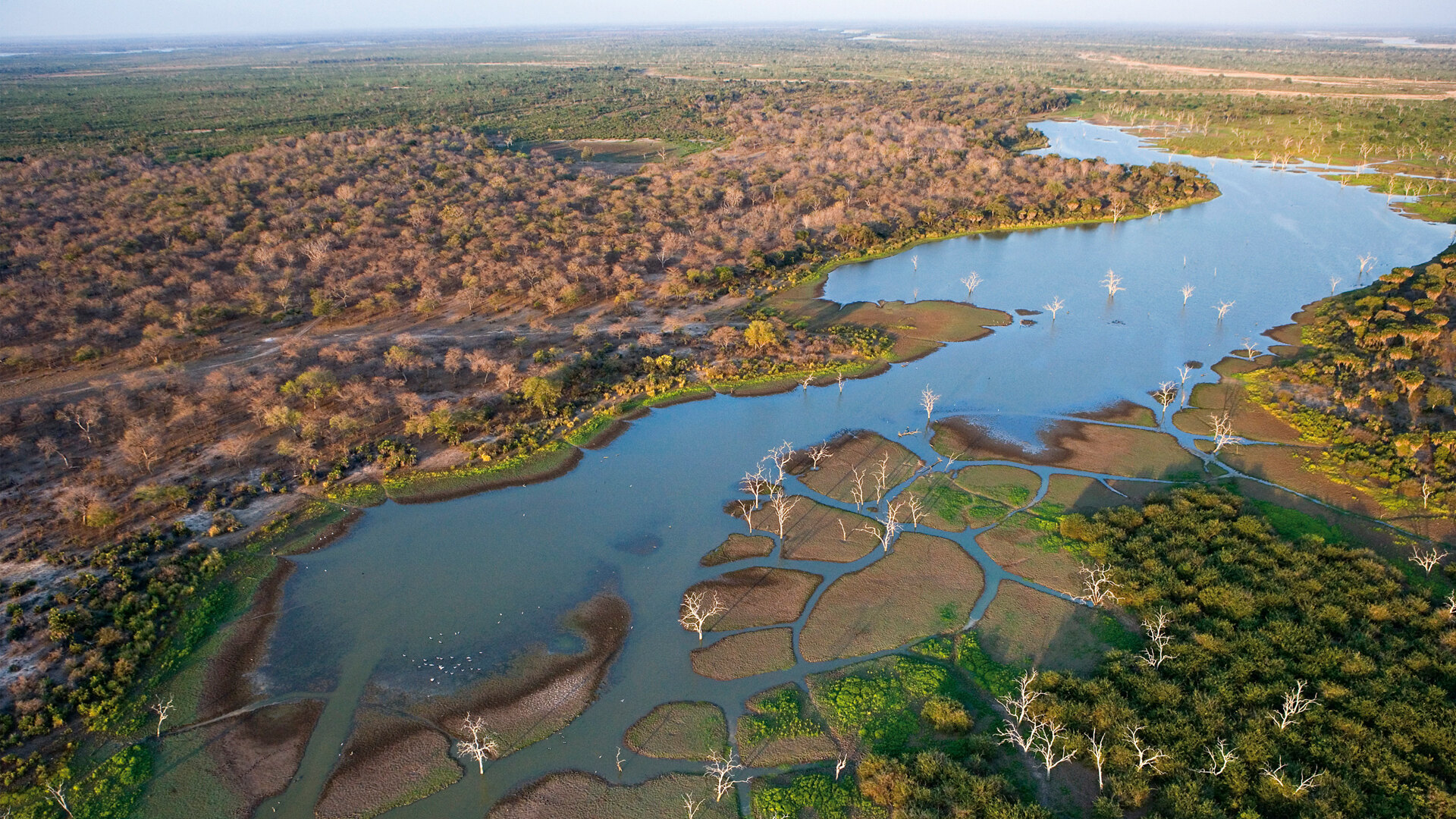
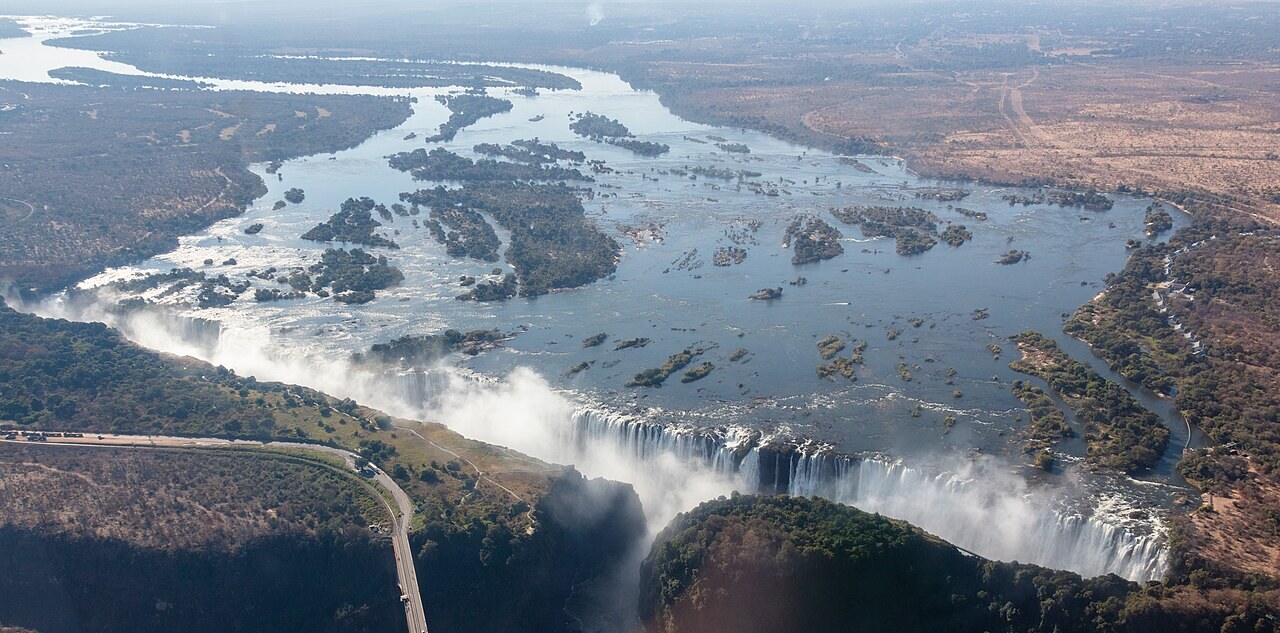
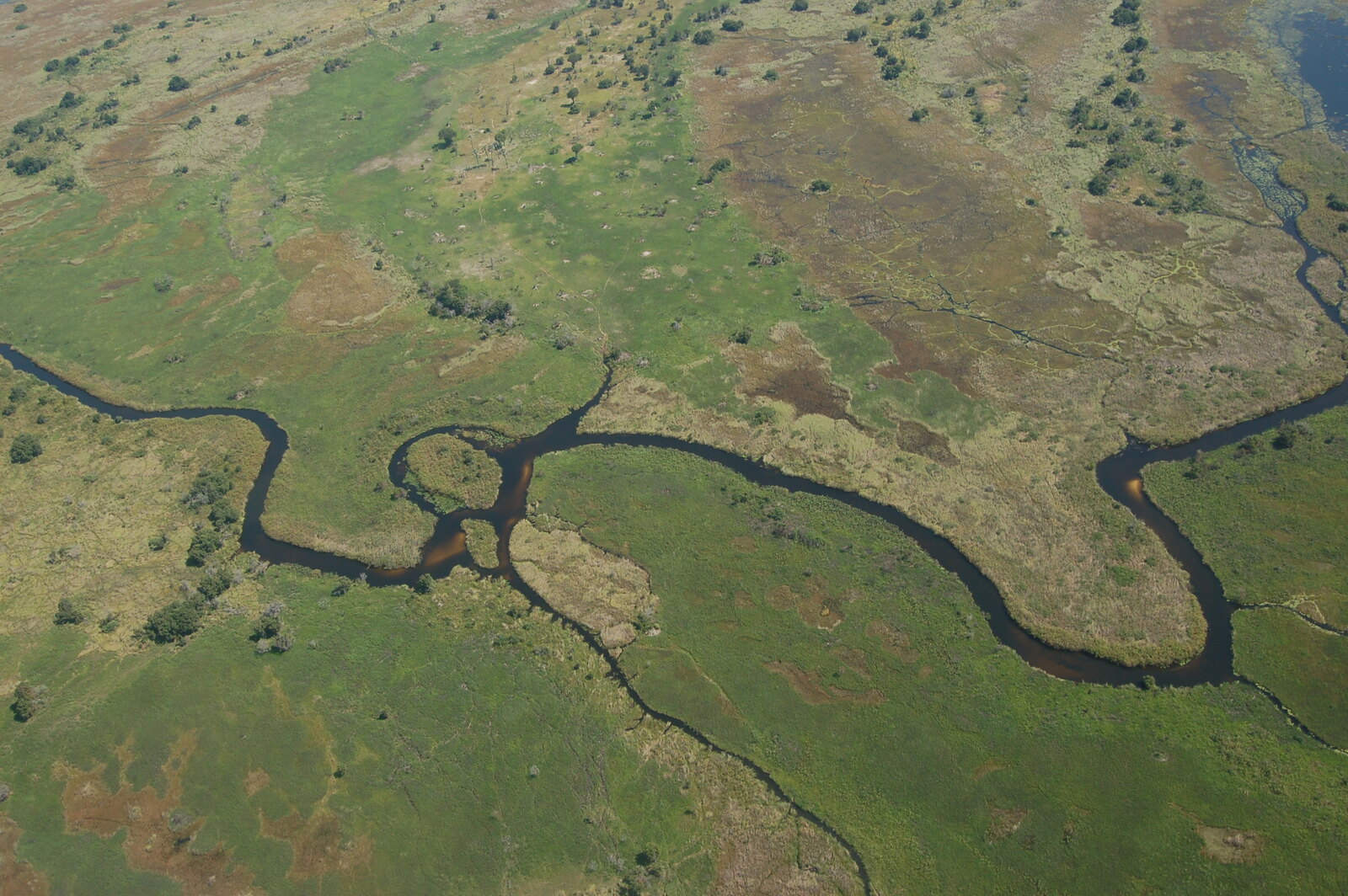
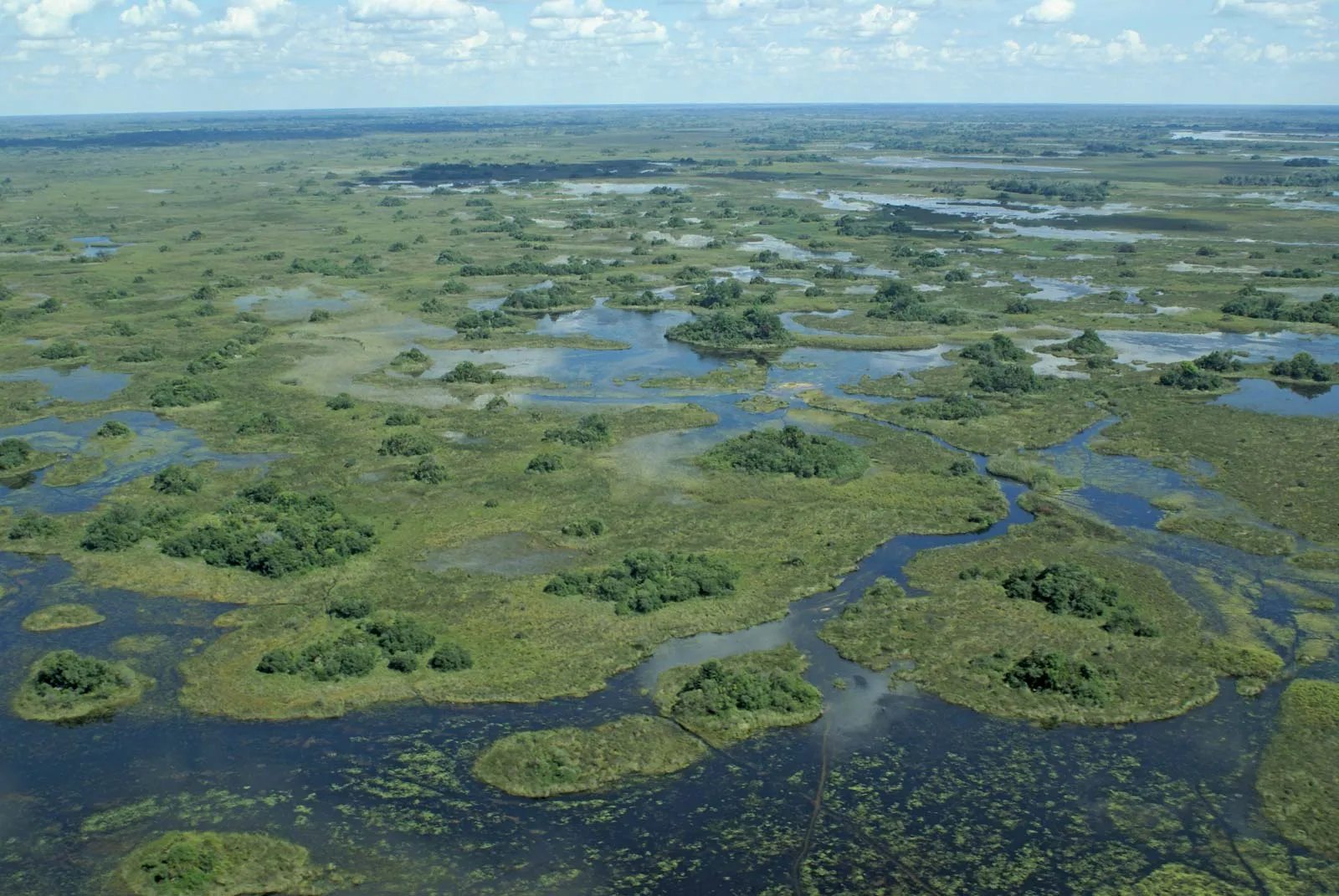
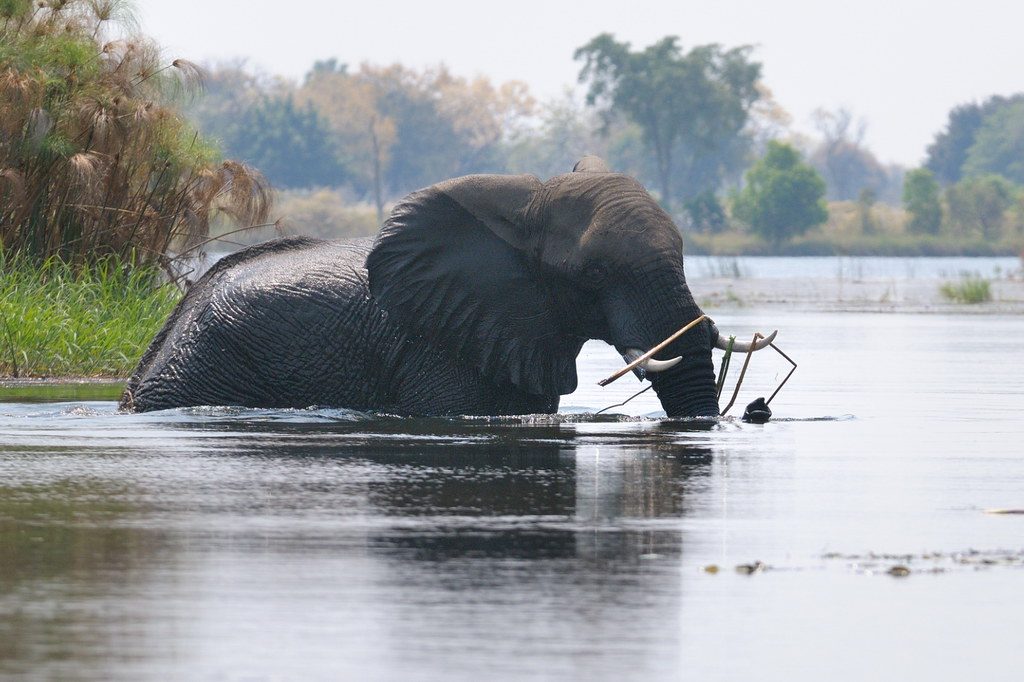
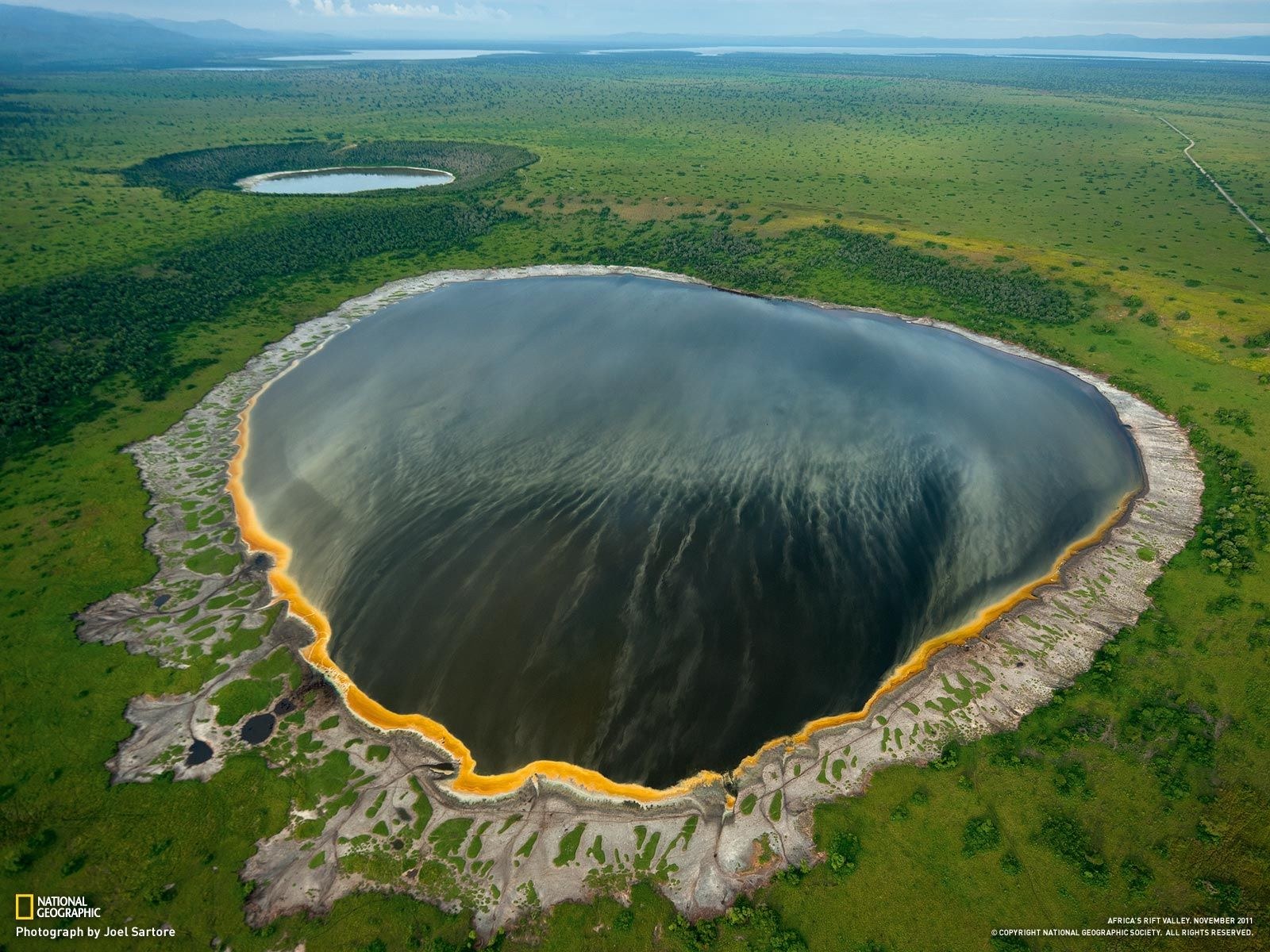
The Kavango — the Okavango downstream — is the other river that gives KAZA its name, and it does the strangest thing a river can do: it never reaches the sea. It rises in Angola, flows south into Botswana, and fans out across the flat Kalahari sand into a maze of channels and islands until the last of it sinks into the desert. Because the floodwater takes months to arrive, the delta fills at the height of the dry season, around June and July, when every thirsty animal for a long way knows exactly where the water is.
East of the delta, the Linyanti and Selinda systems carry the same logic into quieter country. These are private concessions along the Linyanti River and the Selinda Spillway — low vehicle numbers, big elephant and buffalo herds in the dry months, and some of the best predator viewing in Botswana. Together the Okavango and the Linyanti are the water-world side of KAZA, reached by low flight over green channels pressed into brown sand, and worked by mokoro and boat as much as by vehicle.
Hwange and the dry-land parks
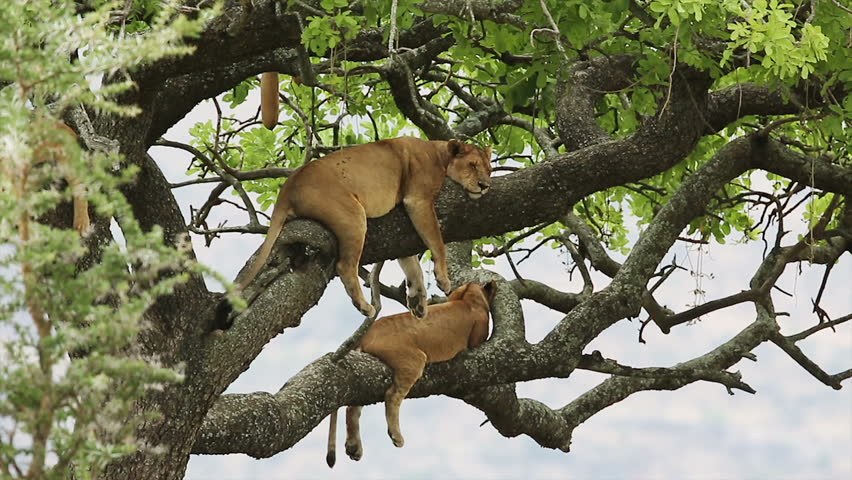
Not all of KAZA is river country. Hwange, Zimbabwe's largest park, is the opposite kind of place — a vast dry land of Kalahari sand, teak and mopane woodland and open pans, with no permanent river running through it. Its wildlife survives the dry season on waterholes, many of them pumped, and in the late dry months those pans become the stage: elephant herds hundreds strong, buffalo, sable and roan antelope, and the lion prides that have made Hwange famous. It lies a short drive from Victoria Falls, which makes it the easy dry-land counterpoint to the rivers.
Hwange matters to KAZA for more than its game. It is a cornerstone of the elephant corridor that runs from Botswana through the Zambezi Region and on into Zimbabwe and Zambia. Herds move between Hwange, Chobe and the Linyanti with the seasons, which is exactly the kind of cross-border movement KAZA exists to protect. Stand at a Hwange pan in October and you are watching animals that may have drunk on the Chobe a month before.
The corridors, and why KAZA exists
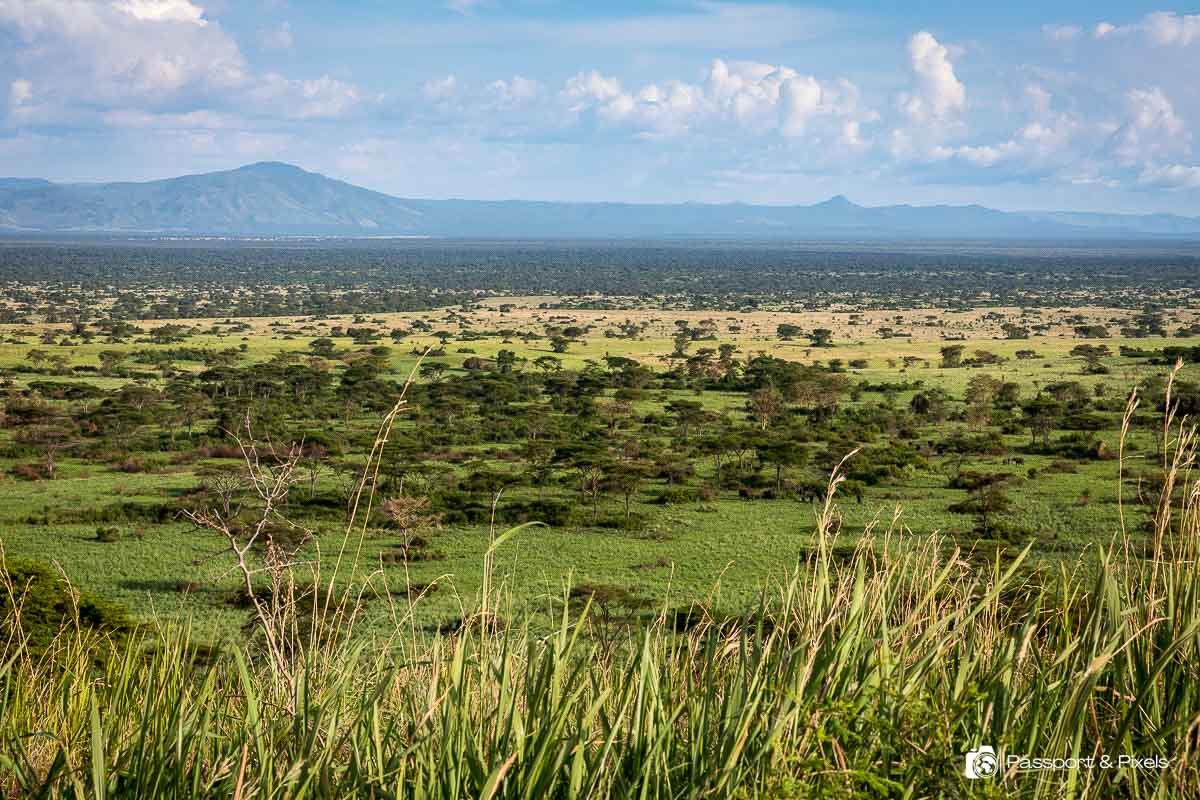
The whole point of KAZA is the space between the famous places. An elephant does not live in Chobe or Hwange; it lives in a home range that crosses both, and the land it walks to get from one to the other is as important as either park. Those linking strips — community conservancies, forest reserves, the Zambezi Region's river corridors — are where KAZA does its quiet, difficult work: keeping the routes open, reducing the conflict where elephants cross farmland, and giving villages a reason to keep the corridors wild.
It is not a finished project, and it is honest to say so. Some corridors are still cut by fences, settlement and old veterinary lines; human-wildlife conflict along the edges is real and hard; and Angola's share needs years of work. But the direction is set, and it is the right one. For a traveller, the practical meaning is this: the money a private safari spends inside KAZA helps fund the conservancies that keep the corridors open. Where you choose to sleep is part of how the landscape holds together.

When to go
KAZA runs on the same dry-season logic across all five countries. The dry months, roughly May to October, are the heart of the safari year: water shrinks to the permanent rivers and pans, the game concentrates, and river and waterhole viewing is at its best. September and October are the peak for sheer numbers on the Chobe and at the Hwange pans, though they are also the hottest. The Okavango is the exception that proves the rule — its flood arrives around June and July, so the delta is at its fullest just as the land around it dries out.
The green season, November to April, brings the rains, scattered game, dramatic skies and the best birding, with migrants in and many animals calving. Victoria Falls is a special case of its own: the Zambezi is in full flood around March to May, when the spray is heaviest and the sight is at its biggest but can obscure the face of the falls, while September to December shows more of the rock and opens the Devil's Pool on the Zambian side. For a first KAZA trip built around wildlife, aim for June to October.
How to travel across KAZA
The great advantage of KAZA for a visitor is how close its anchors sit. Victoria Falls to Kasane and Chobe is about ninety minutes by road. The Okavango, Linyanti and Hwange are short light-aircraft hops of well under an hour. A classic week might read: two nights at Victoria Falls, two or three on the Chobe, then a flight into the Okavango or Linyanti — three countries, one trip, very little of it spent in transit.
The border-crossing side is easier than it used to be, which is part of KAZA's design. The KAZA UniVisa covers both Zambia and Zimbabwe on a single document and allows day trips into Botswana at Kasane, which takes the friction out of the Victoria Falls and Chobe corner. Our KAZA UniVisa guide covers who is eligible, where to get it and the current rules in detail. Private light-aircraft transfers handle the rest, and a single operator can hold the whole itinerary — flights, transfers and camps — across all the countries so you cross each border with someone expecting you.
Choosing your corner of KAZA
You cannot see all of KAZA in one trip, and you should not try. The art is choosing two or three anchors that play off one another. For a first journey, the Victoria Falls–Chobe–Okavango line is hard to beat: the great waterfall, the elephant river and the inland delta, each a short hop from the last. Add the Lower Zambezi for canoeing, or swap the delta for the Linyanti and Selinda concessions if you want fewer vehicles and stronger predators.
Deeper reading on each corner will help you weigh it up: the best Chobe lodges, the best Okavango Delta lodges, the Victoria Falls, Chobe and Okavango packages that join them, and our field essay on the great rivers of Africa that run through the whole system. Tell us which corner of KAZA you want to wake up in, and we will build the crossing around it.