The quick take
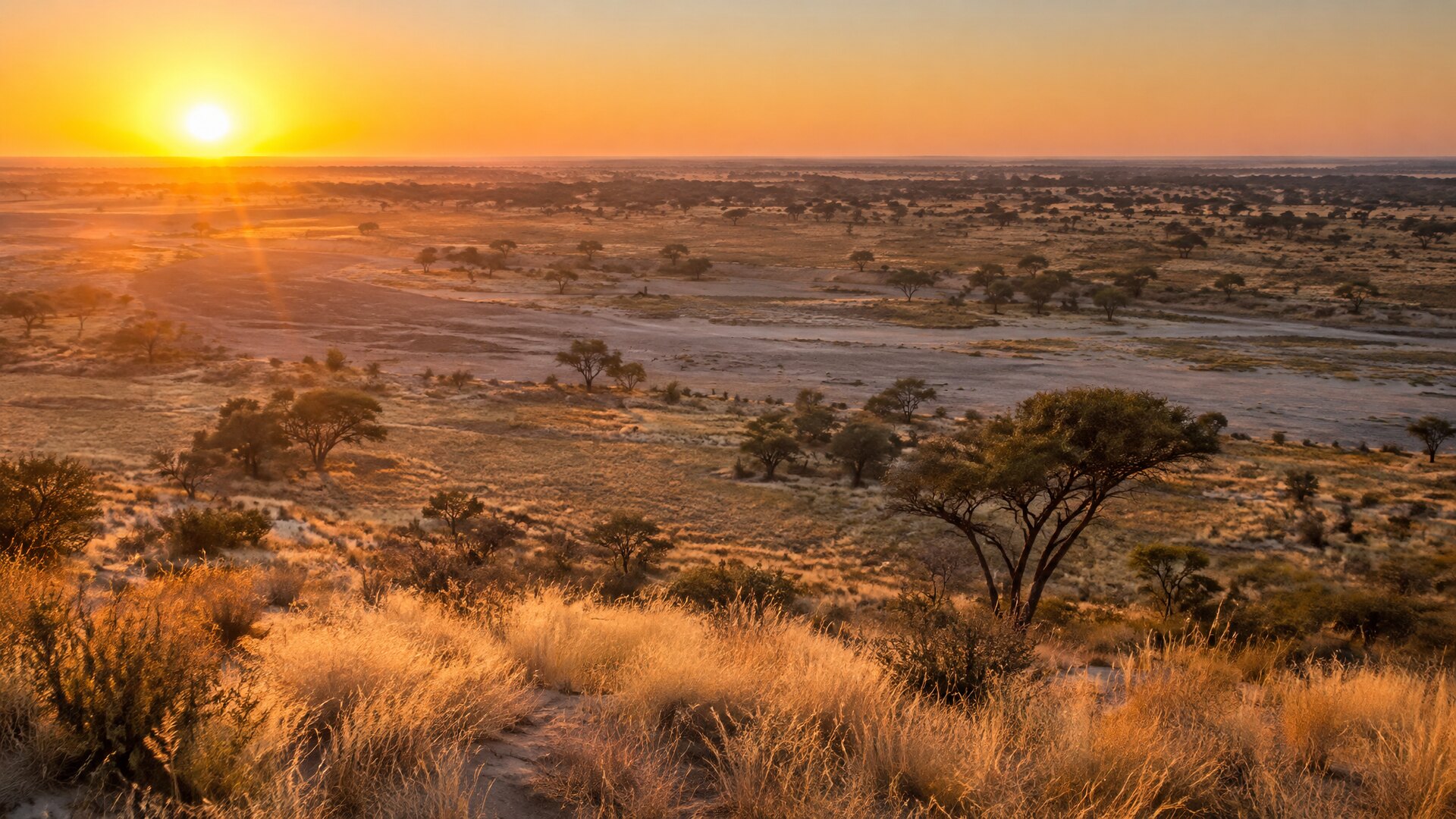
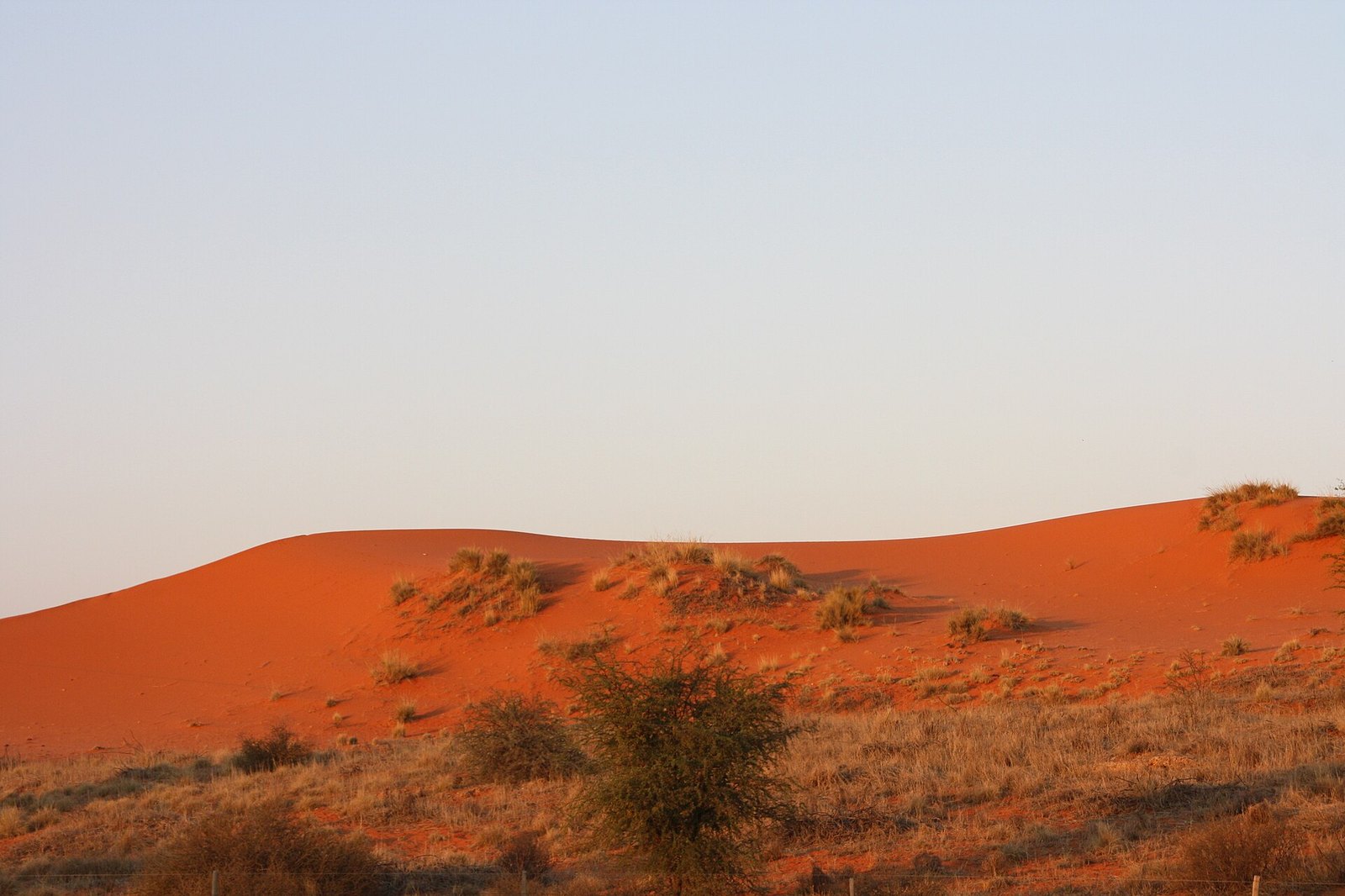
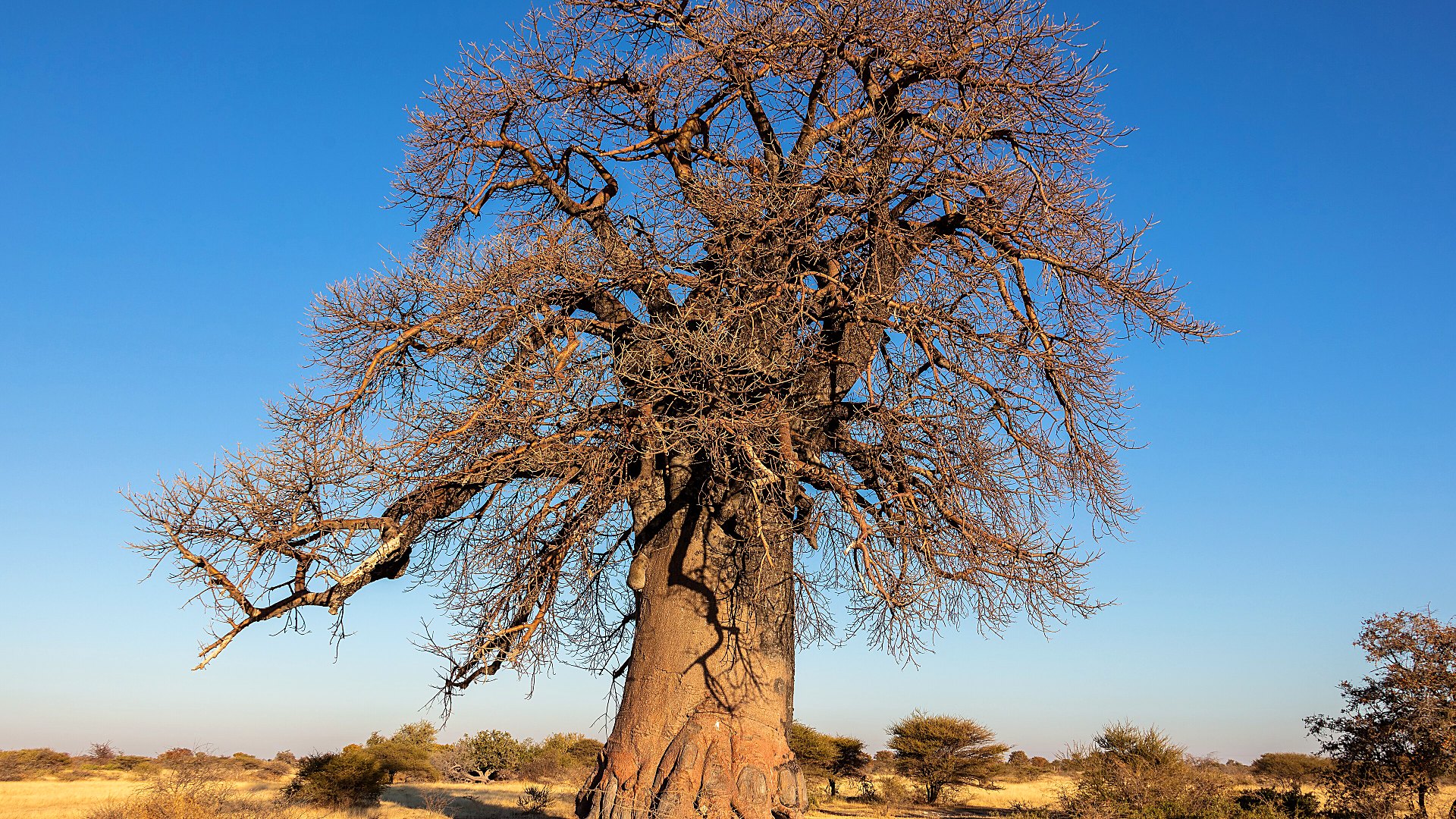
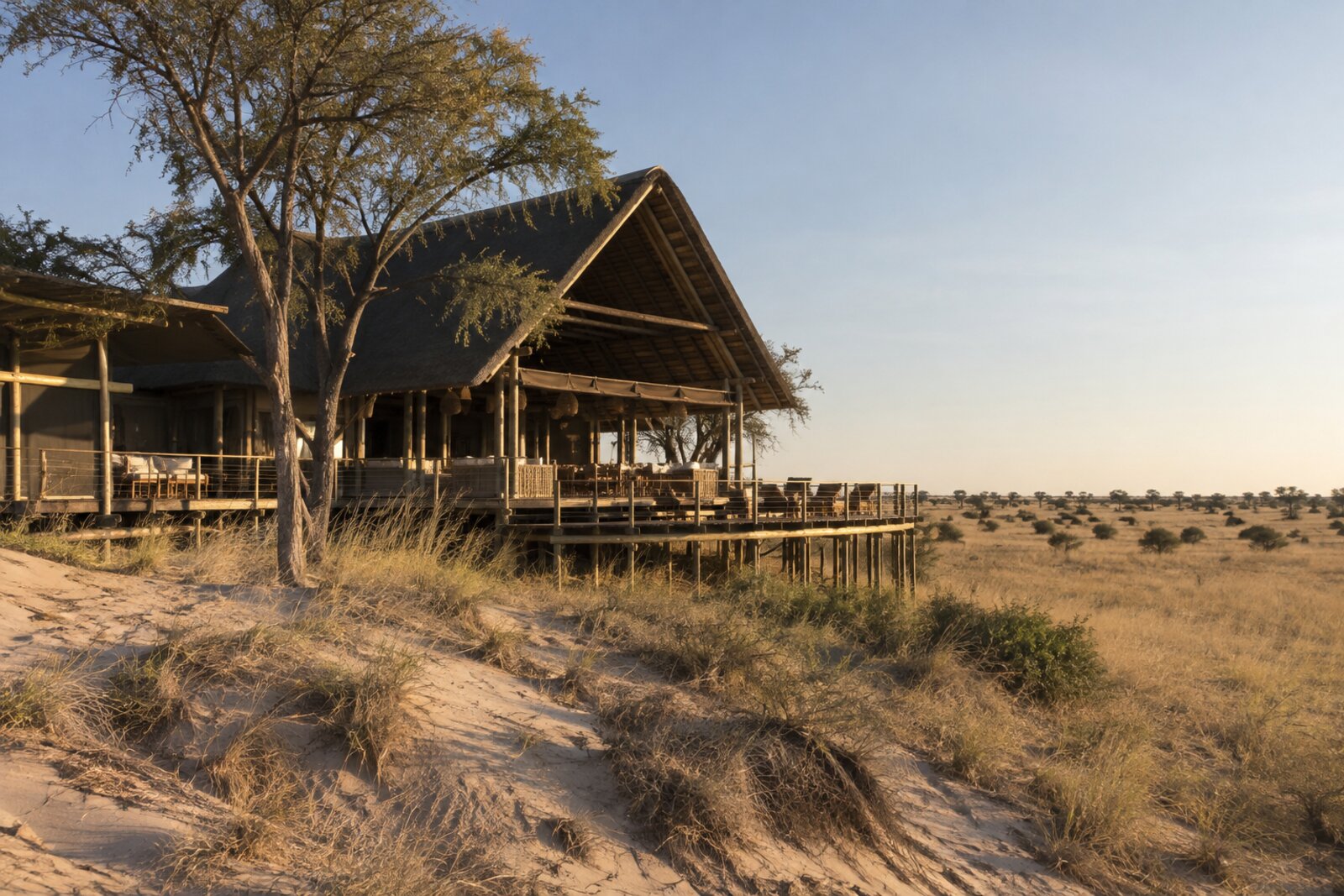
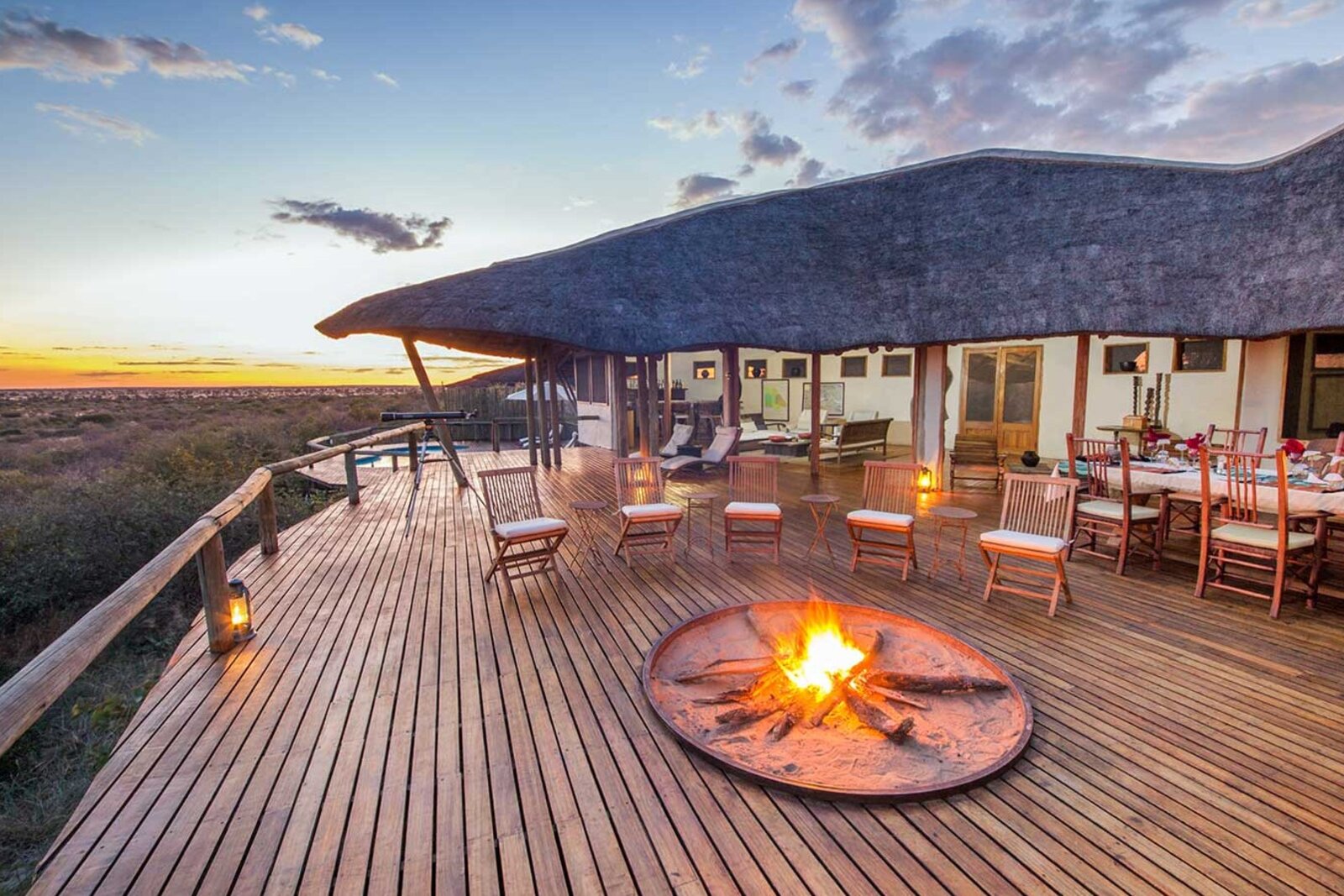
Tau Pan Camp is the one most people picture when they think of the Central Kalahari, and for good reason. It sits on an ancient sand dune — one of the highest points for miles — looking out over the Tau Pan it is named for, with nothing but grass and sky in every direction. This is as remote as Botswana gets. The nearest other camp is a long way off, and once you fly in from Maun and the aircraft lifts away, it is you, the camp and the desert.
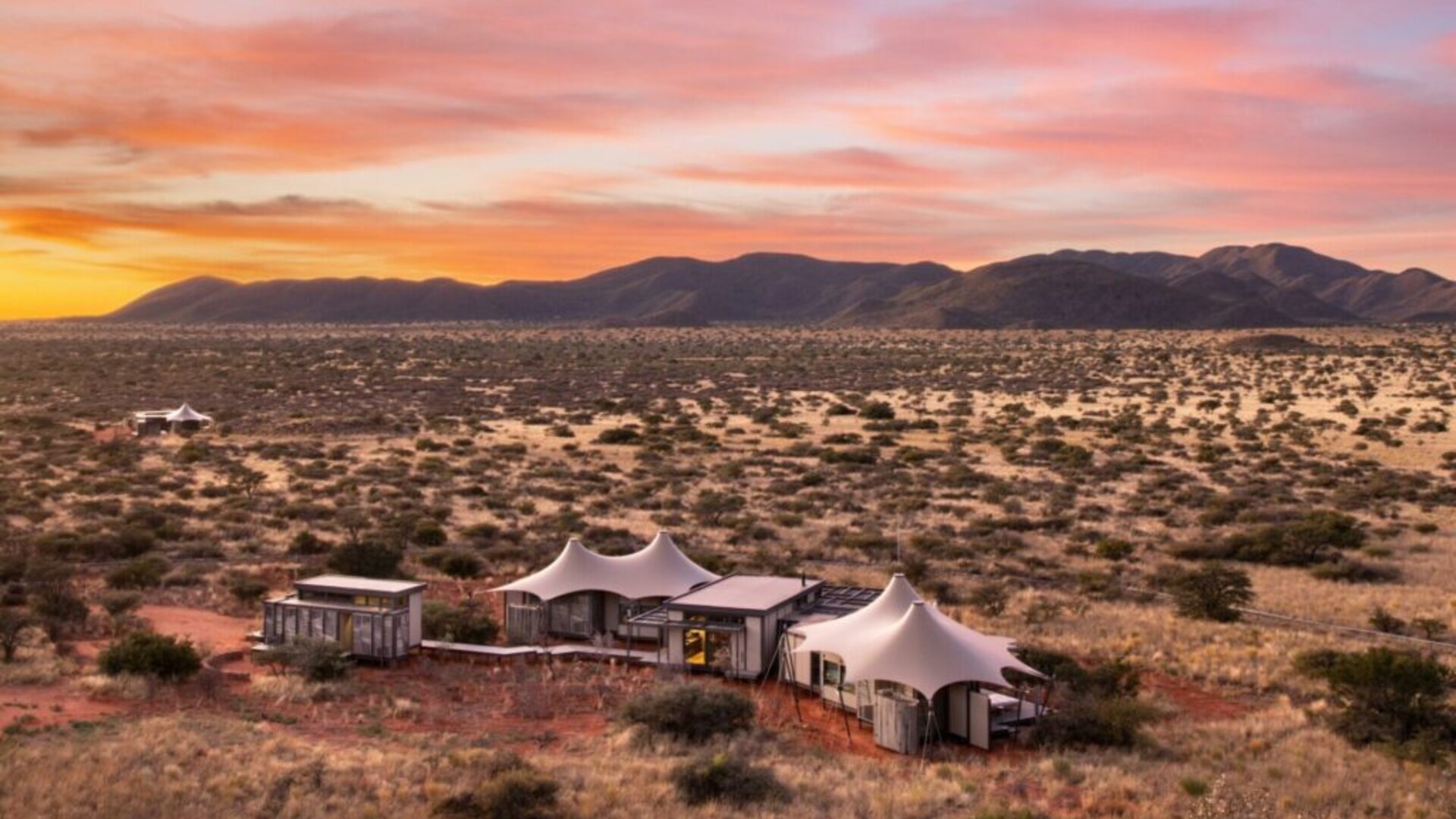
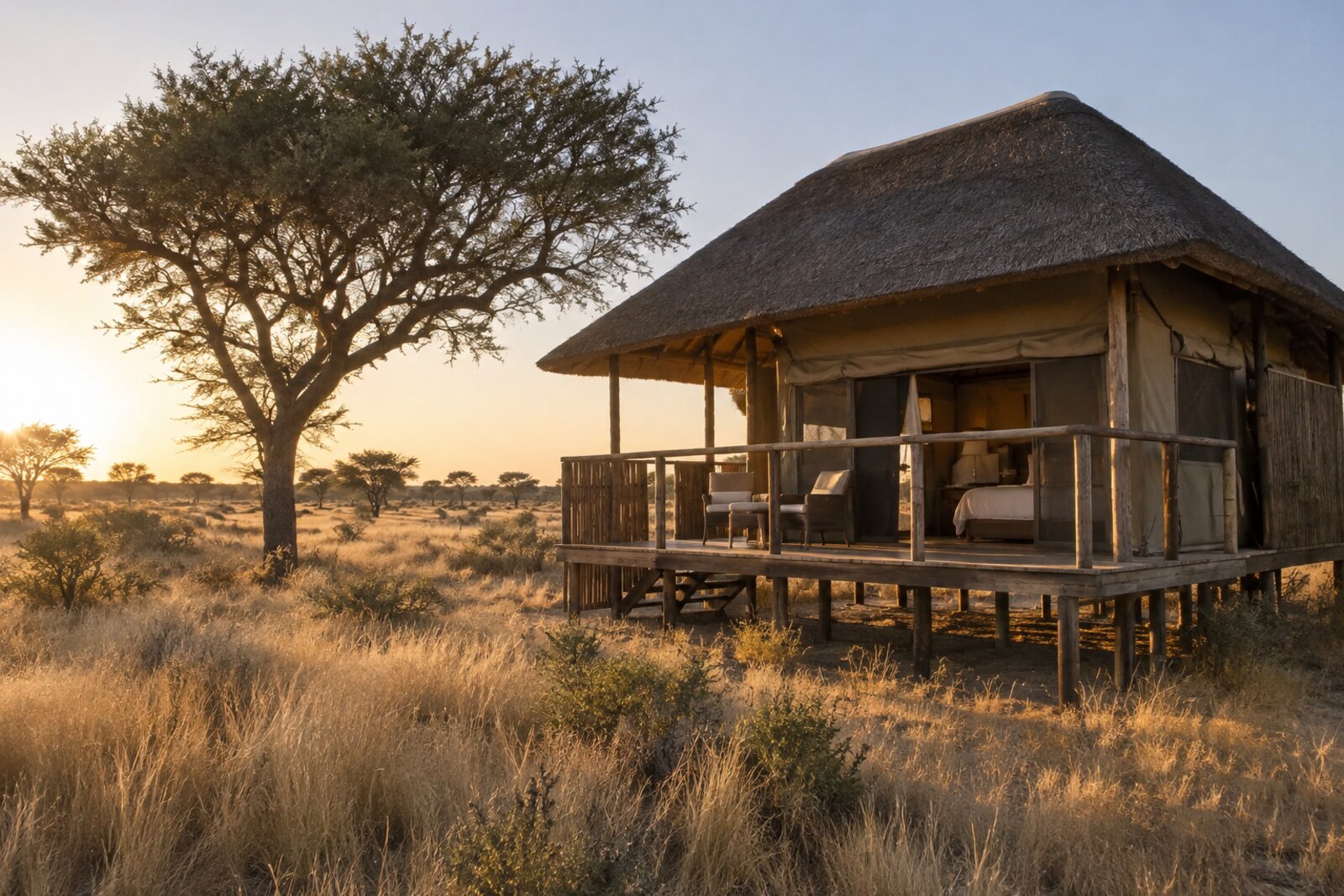
Run by Kwando Safaris, Tau Pan is eight raised rooms and a family unit, built of canvas, timber and thatch and running on solar power. "Tau" means lion, and this is black-maned lion country; the Tau Pan pride is often on the plains below camp. What sets the place apart, though, is the guiding — Kwando's own guides on the drives, and San trackers from the nearby community on the morning walks, reading the sand in a way no one else can.
What you are buying here is space and silence, the kind of desert most people never reach, and a camp small enough that the staff know your name by the second morning.
The rooms
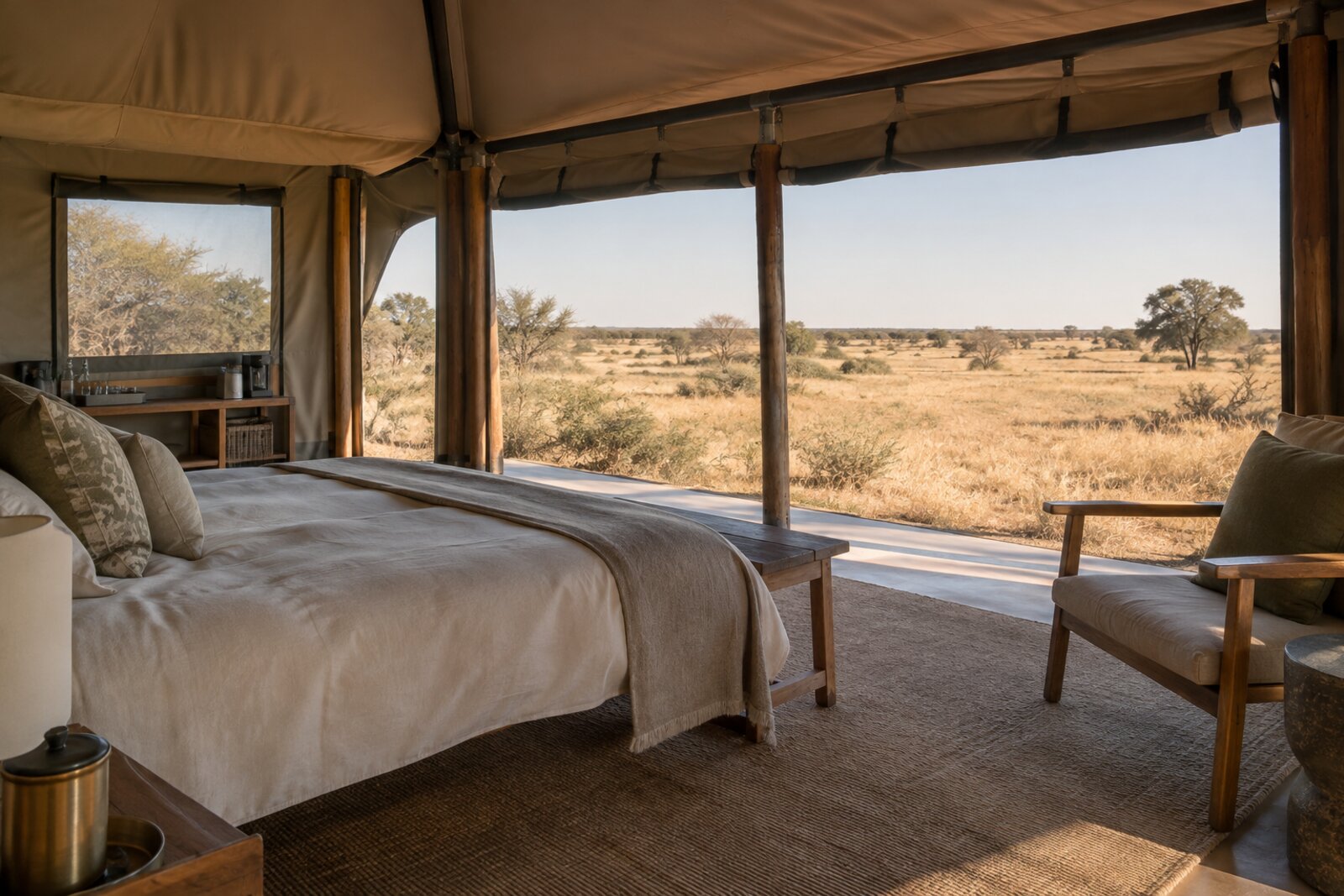
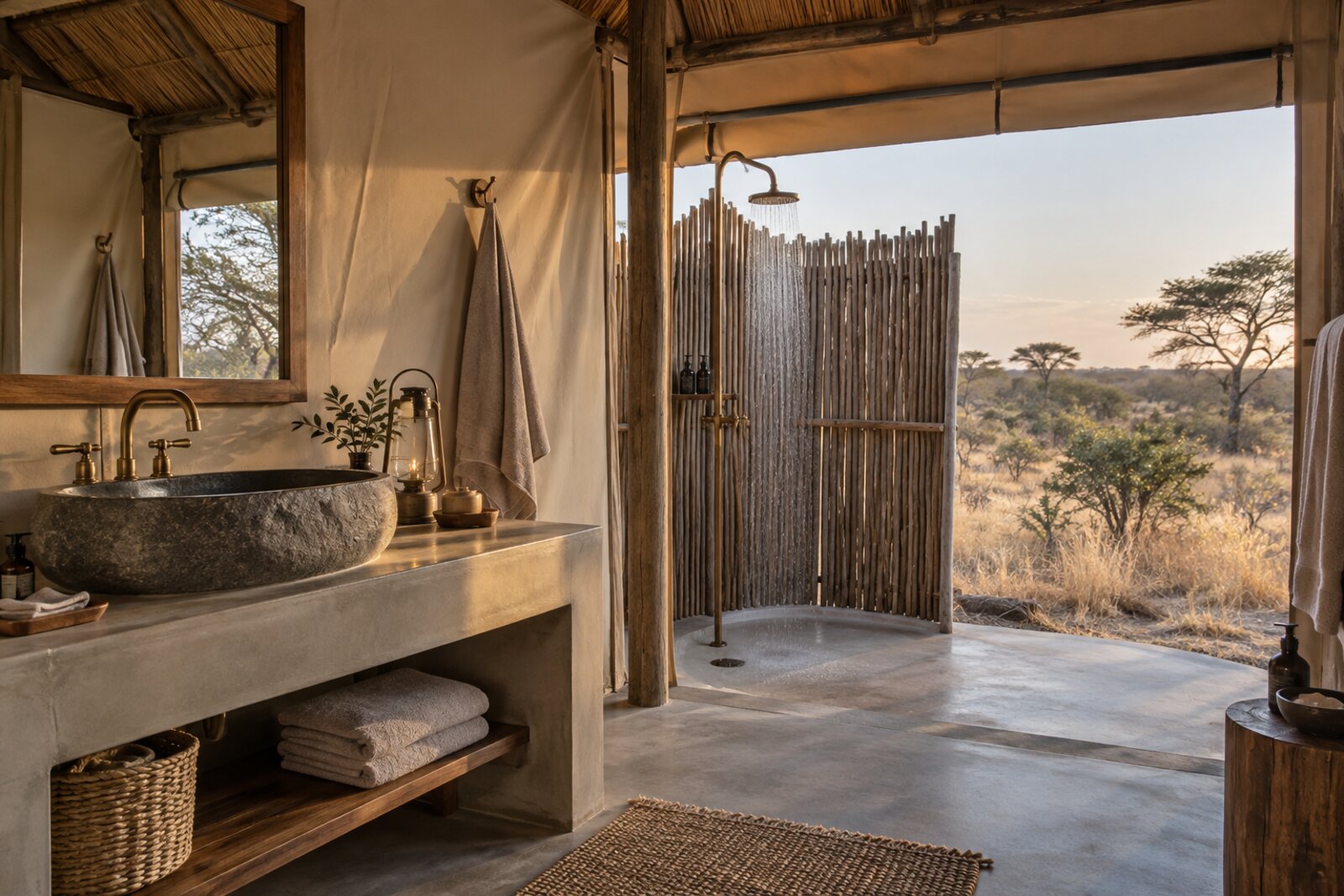
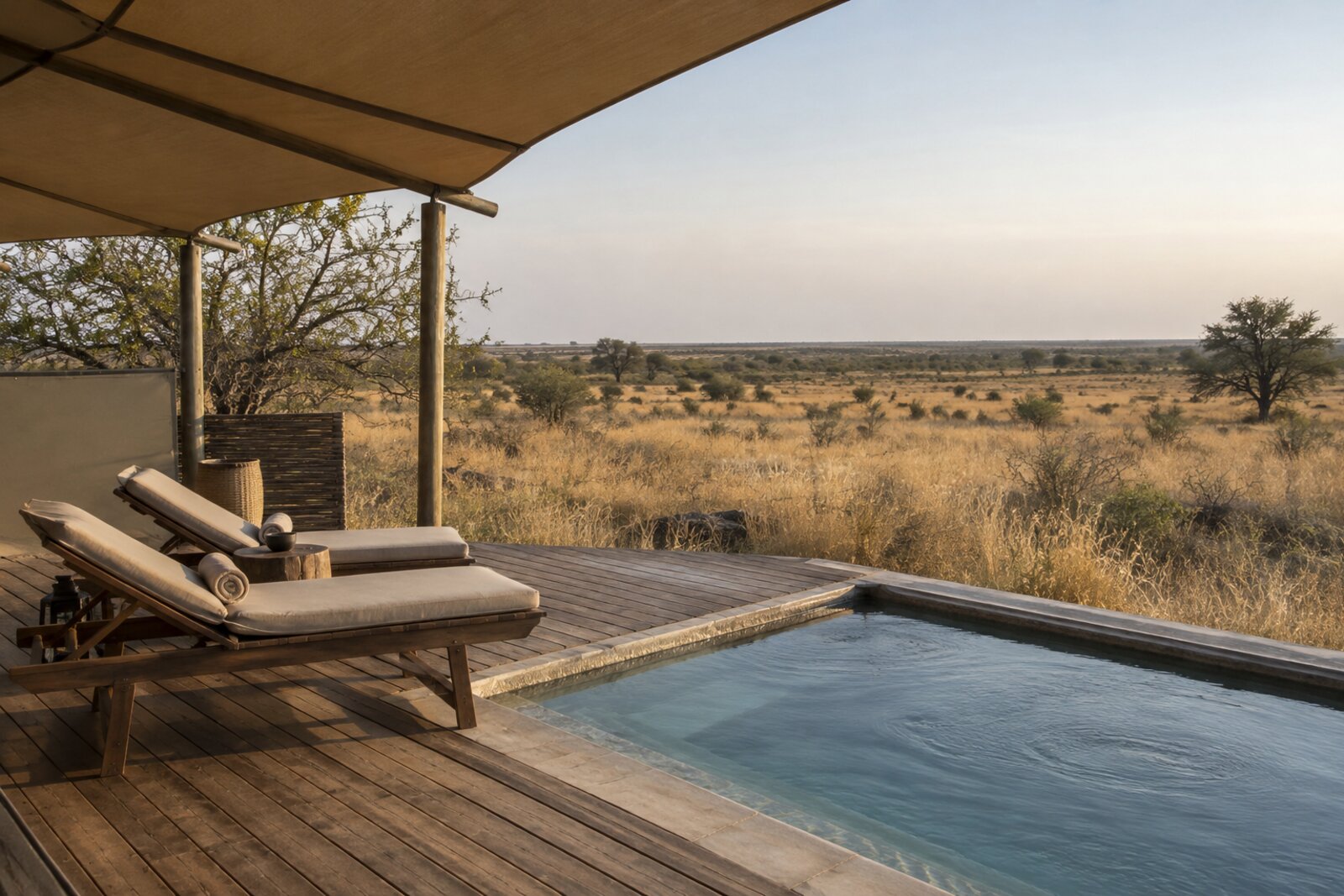
There are eight en-suite rooms and a two-bedroom family unit, all raised on timber decks a step up from the dune. Each is built of canvas walls, a timber frame and a thatched roof, with a private deck facing out over the grass plains — the sort of view you leave the flaps open for. Inside, the rooms are simple and comfortable rather than showy: a good bed, space to spread out, and a fan for the heat of the day. The camp runs on solar power, so the feel is quiet and low-impact, in keeping with where it is.
Every room is en-suite, with an indoor shower and an outdoor shower that opens to the grass and scrub behind camp. The family unit works well for parents travelling with children, with its own configuration and a little more room to breathe. There is a swimming pool on the main deck, which earns its keep in the middle of a Kalahari day.
The main area and the food
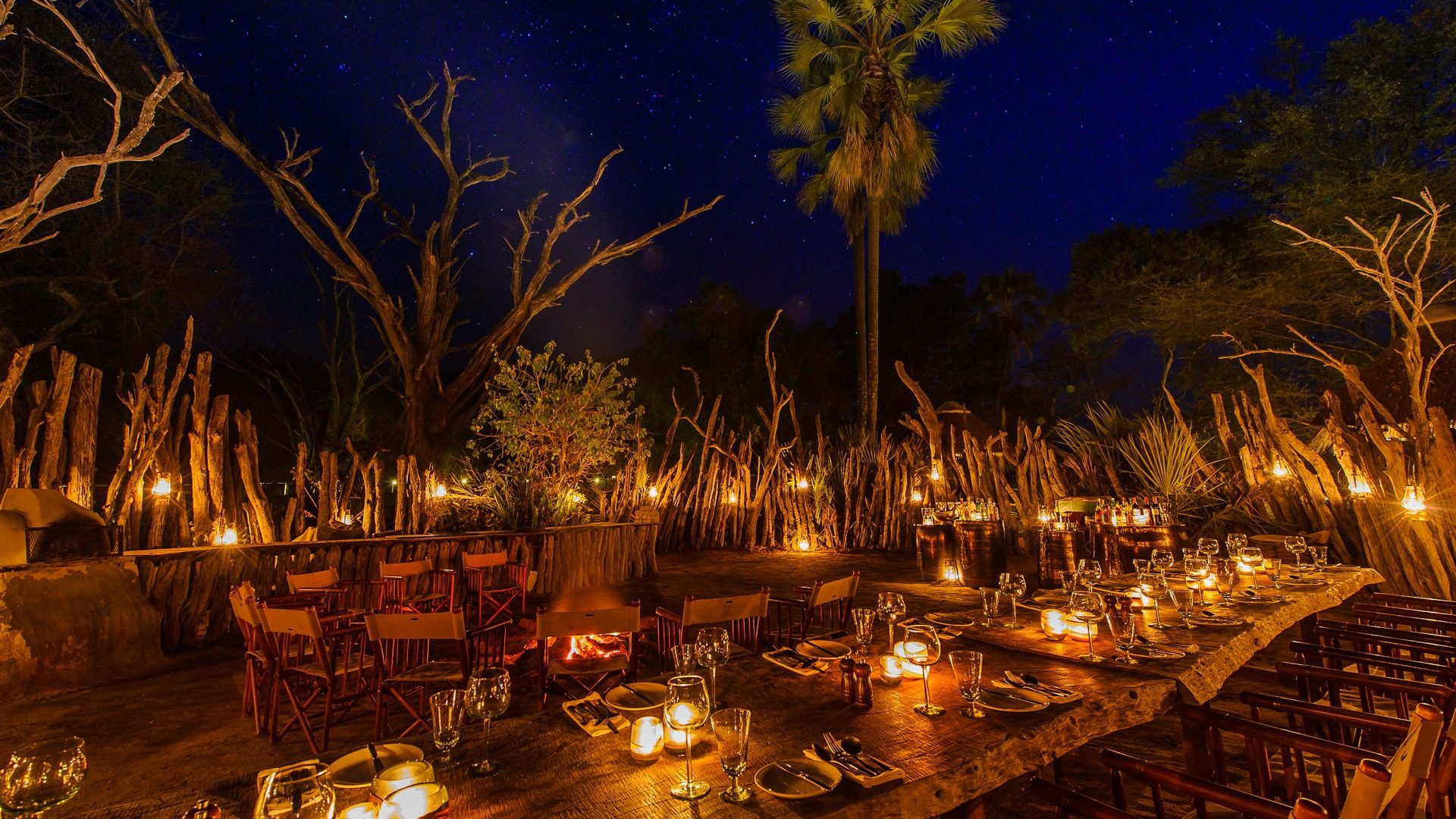
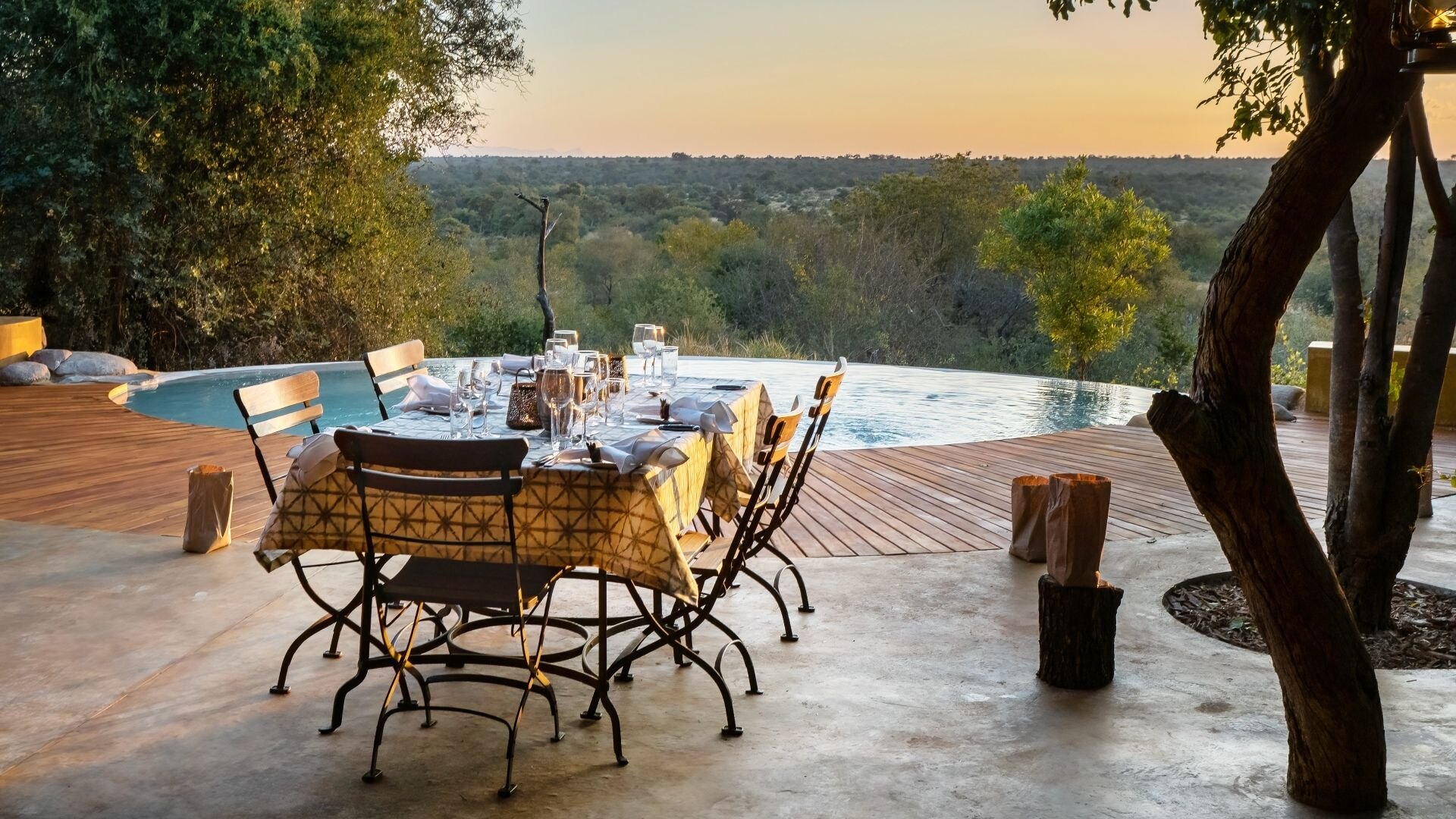
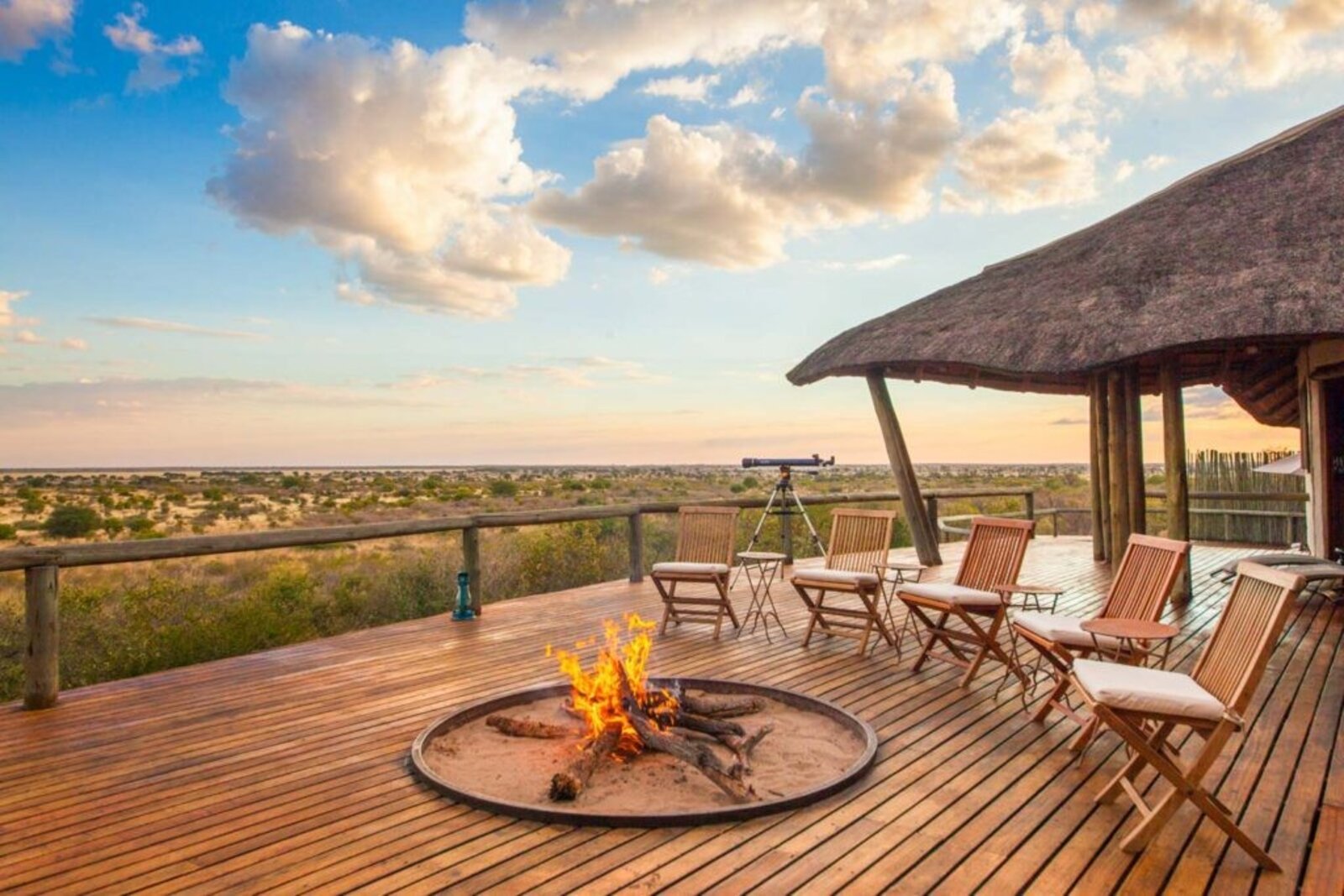
The main area sits high on the dune, open on every side, with a lounge, a dining space, a bar and the pool running off it, and a fire pit a step down where the day ends. Meals are hearty and home-style rather than fine-dining — a cooked breakfast before or after the morning drive, lunch in the shade of the deck, and a proper dinner around the fire once the dark comes in. With so few guests in camp, the kitchen cooks close to what you like, and dietary needs are easy to arrange with notice.
The best part of camp is simply sitting on the deck between activities. There is a waterhole within view that draws gemsbok, springbok and the occasional lion through the heat of the day, so even the downtime here is time spent watching the desert.
Game drives and the wildlife
Drives run twice a day in open vehicles with a Kwando guide — out before first light and again in the late afternoon into the dark, when night drives with a spotlight pick up the Kalahari's nocturnal cast of brown hyena, aardwolf, bat-eared fox, porcupine and the occasional aardvark. The drives range over Deception, Sunday and Passarge valleys, the fossil river valleys north of camp where the game concentrates, especially after the rains.
The headline animal is the black-maned Kalahari lion, bigger-maned and leaner than its bushveld cousins, and the Tau Pan pride is a near-resident of the plains below camp. Cheetah do well on the open ground, and leopard, brown hyena and both honey badger and the smaller cats are all here for those who look. Gemsbok, springbok, red hartebeest, eland and giraffe are the standing plains game, and in the green season from December to April the valleys fill with large herds and their newborns. Birdlife is excellent after the rains, with raptors, bustards and the desert specials.
Alongside the drives, the guided walks with San trackers are what people remember most — a slow morning on foot reading tracks, plants and the signs of a way of life that has lasted in this desert for thousands of years. Near camp, habituated meerkat groups go about their morning, and if you sit still and low they will sometimes climb a quiet guest to use as a lookout.
Beyond the drives
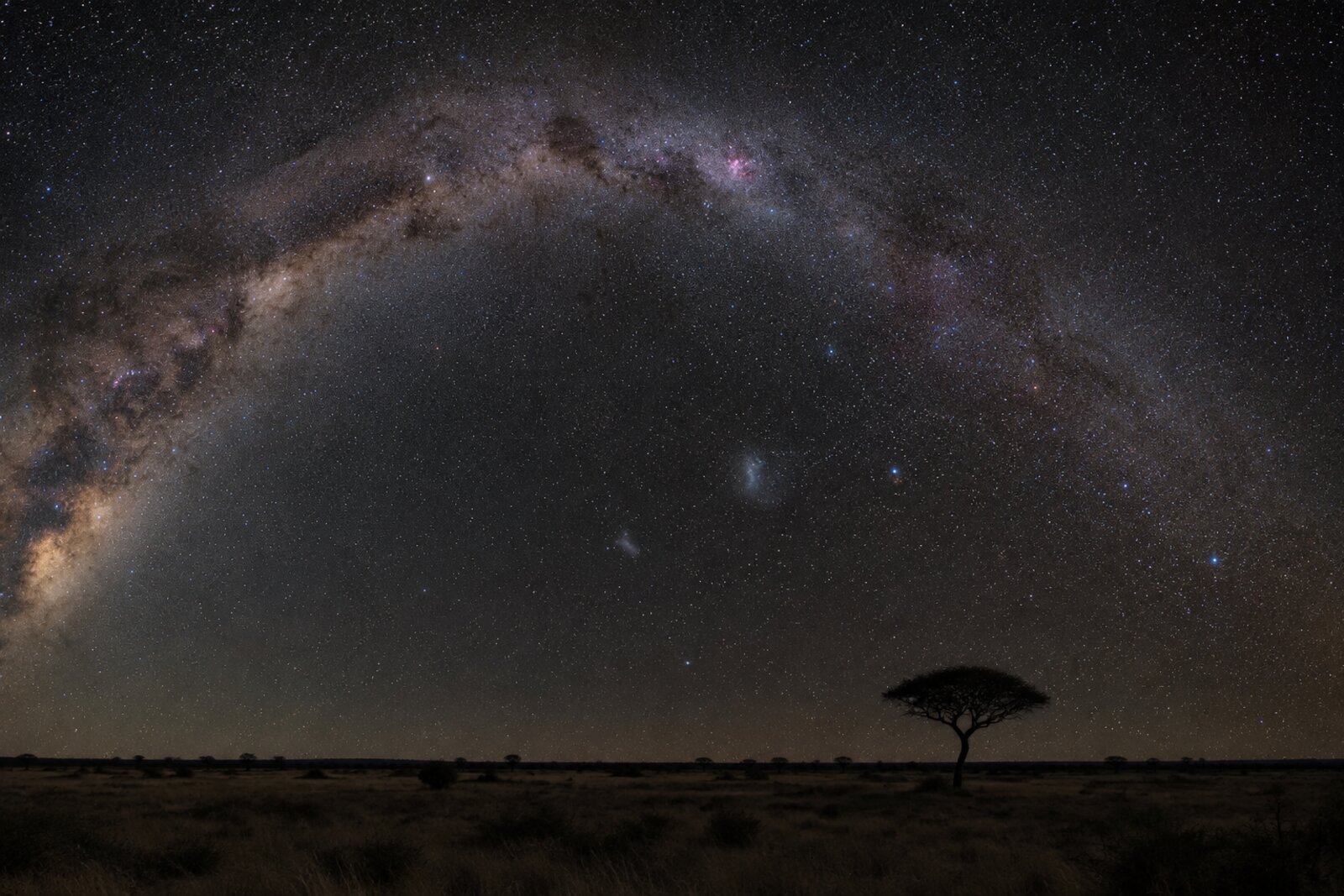
Days here are deliberately unhurried. Between the two drives there is the pool, the deck and the waterhole to watch, and the simple pleasure of being somewhere this empty. The night skies are among the best in Africa — no towns for hundreds of kilometres means the stars come right down to the horizon, and a late night by the fire with the Milky Way overhead is part of the experience, not an extra.
Conservation and the setting
The Central Kalahari Game Reserve is the second-largest protected area in Africa, a vast, flat wilderness of grassland, fossil valleys and low dunes. Tau Pan's low footprint — solar power, a small bed count, careful water use — is part of how a camp operates responsibly in a place this fragile and remote. Kwando's long-standing presence in the reserve, and its work with the local San community on the walking safaris, keeps both the wildlife and the human heritage of the Kalahari part of what guests take home.
Getting there
Tau Pan is reached by scheduled light-aircraft flight from Maun, roughly an hour over the desert, with a short game-drive transfer from the airstrip to camp. Maun is the gateway for Botswana's safari circuit, with air links to Johannesburg, Cape Town, Kasane and the Okavango Delta, so Tau Pan fits neatly into a wider trip. We arrange the flights, the transfer and the timing as part of the booking.
Combining Tau Pan with the rest of Botswana and beyond
Because everything runs through Maun, Tau Pan pairs easily with the rest of a Southern African journey. The routes below are the ones guests ask for most, and we tailor each to your dates and taste:
- Kalahari & Okavango Delta — around seven nights, desert first and then the water, the classic Botswana contrast.
- Kalahari, Delta & Chobe — roughly ten nights across three of Botswana's great wildernesses.
- Botswana & Victoria Falls — about eight nights, ending at the Zambezi and the Falls.
- Kalahari & Makgadikgadi pans — a week of pure desert, the Central Kalahari paired with the salt pans to the east.
- Cape Town & Botswana — a longer journey opening in the city before the quiet of the Kalahari and the Delta.
These are starting points, not fixed packages. We adjust the camps, the order and the length to suit how you like to travel.
Rates
Tau Pan Camp is an all-inclusive camp, and rates are quoted on request for your dates. As a 2026/2027 guide, expect from around US$850 per person per night sharing in the shoulder and green seasons, rising in the peak months, which covers your room, all meals and drinks, two daily activities and park fees for the Central Kalahari. Light-aircraft transfers to and from Maun are charged separately. Green-season rates (roughly December to April) can offer real value for the best plains-game viewing of the year. These figures are indicative; we confirm the exact rate and what each stay includes when we quote your dates.
How to book Tau Pan Camp through Beyond Africa Safaris
Tell us your dates, your group and the room you want — a standard room or the family unit, and we handle the rest — the booking, the light-aircraft flights from Maun, the transfer in and any onward camps you would like to add. If you want Tau Pan as part of a longer trip through the Okavango Delta, Chobe or Victoria Falls, we build the whole itinerary end to end. Send us a note and we will come back with a plan and a price for your dates.
Planning the wider desert? See our guide to the best Kalahari safari lodges and camps for 2026/2027, where Tau Pan sits alongside Tswalu, Kalahari Plains, Dinaka and Jack's Camp.