The quick take
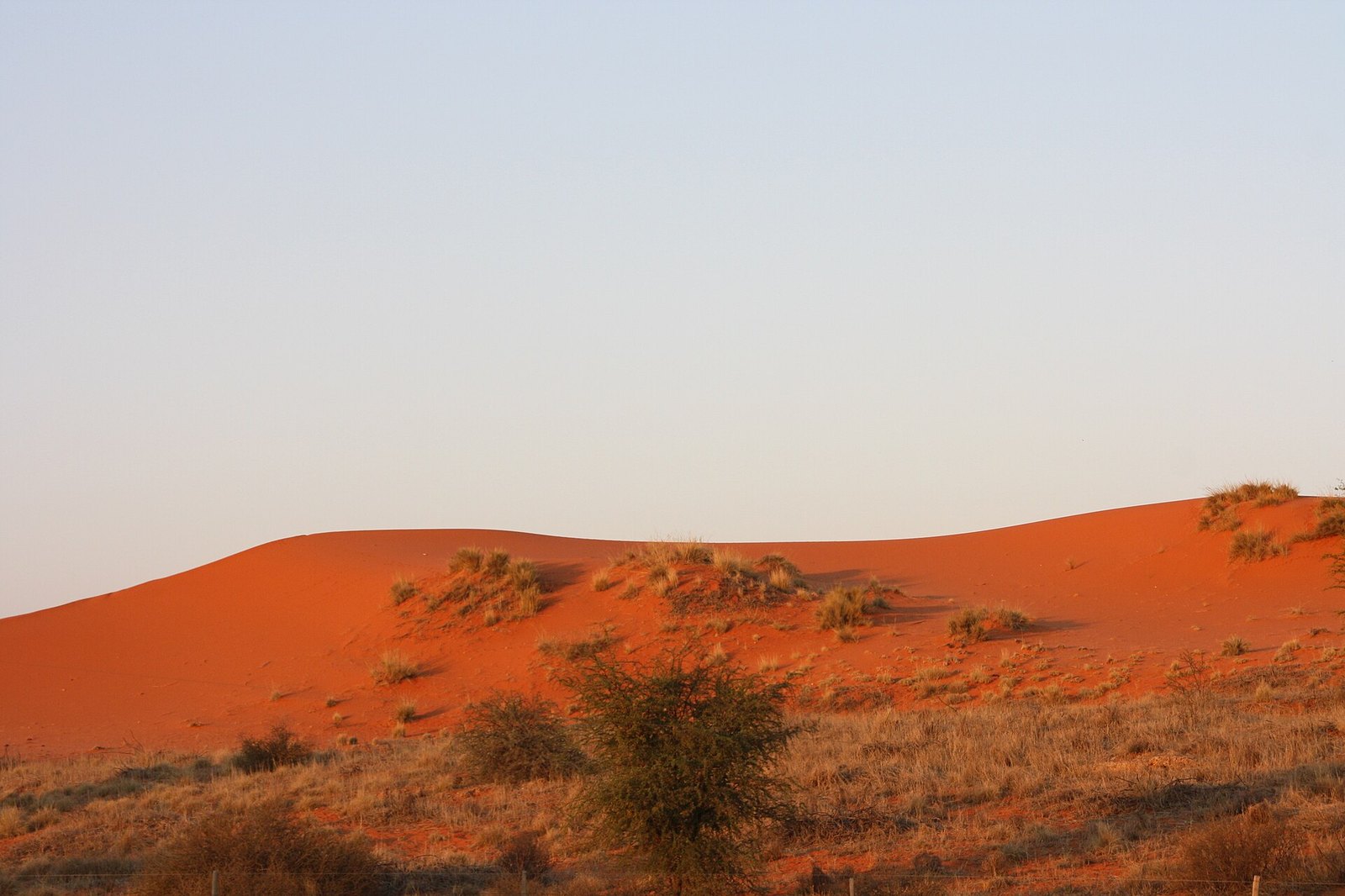
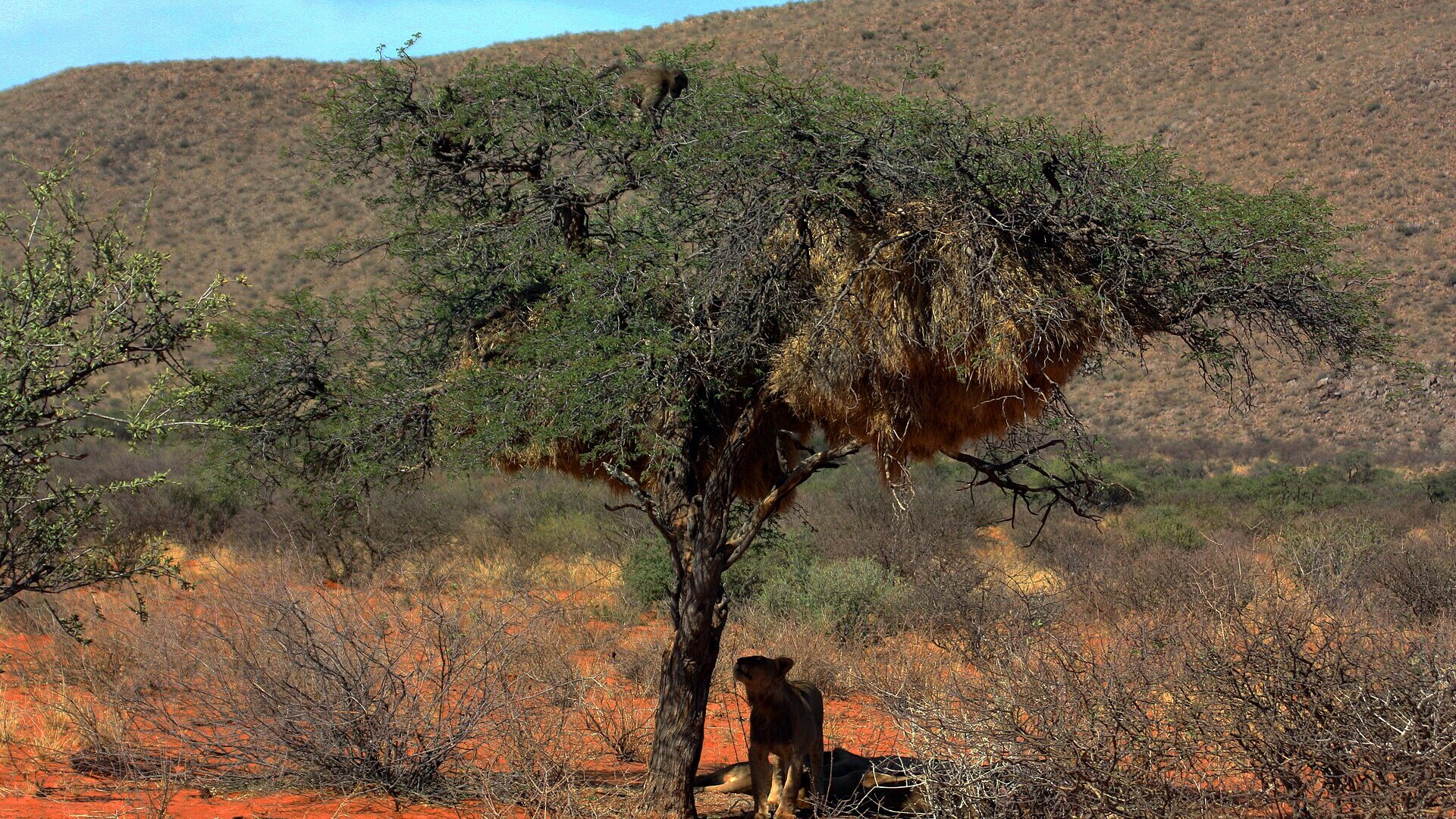
The Kalahari is the desert that is not quite a desert — a vast semi-arid savanna of golden grass, fossil river valleys and old red dunes spread across the heart of Botswana and over the border into South Africa's Northern Cape. Where the Okavango gives you water and wildlife density, the Kalahari gives you space, silence and a particular cast of animals: the heavy black-maned lion, the meerkat standing sentry on a termite mound, the gemsbok that goes weeks without drinking. It is a safari about quality of light and quality of stillness rather than a long Big Five checklist.
The lodges below are the ones we send our own clients to. They range from the most exclusive private reserve on the continent to small solar camps deep in the Central Kalahari Game Reserve and a camp of 1940s expedition style out on the salt pans. All of them are genuinely in the Kalahari system — no delta camps borrowing the name — and each one is ranked for what it does best, with rooms, wildlife, rates and the right season spelled out so you can choose with your eyes open.
A quick orientation before the lodges. The Central Kalahari Game Reserve (CKGR) is the giant at the centre, the second-largest protected area in the world, with Deception Valley at its heart. The Kgalagadi Transfrontier Park runs along the South Africa–Botswana border, red-dune country famous for its predators. The Makgadikgadi salt pans sit to the east, an ancient super-lake turned to white. And Tswalu is a private reserve in the southern Kalahari, a world of its own.
How we ranked them
We weighted four things: the quality of the rooms and the camp itself; the wildlife on the traverse and how reliably you see it; the activities that make the Kalahari different — San-guided walks, meerkat time, night drives on private ground, horseback riding; and value for what you pay. Location mattered too. A camp inside the CKGR or on a private concession beside it will always give you more than a lodge on the fringe. Here is how they stack up.
1. Tswalu Kalahari — the most private reserve in Africa
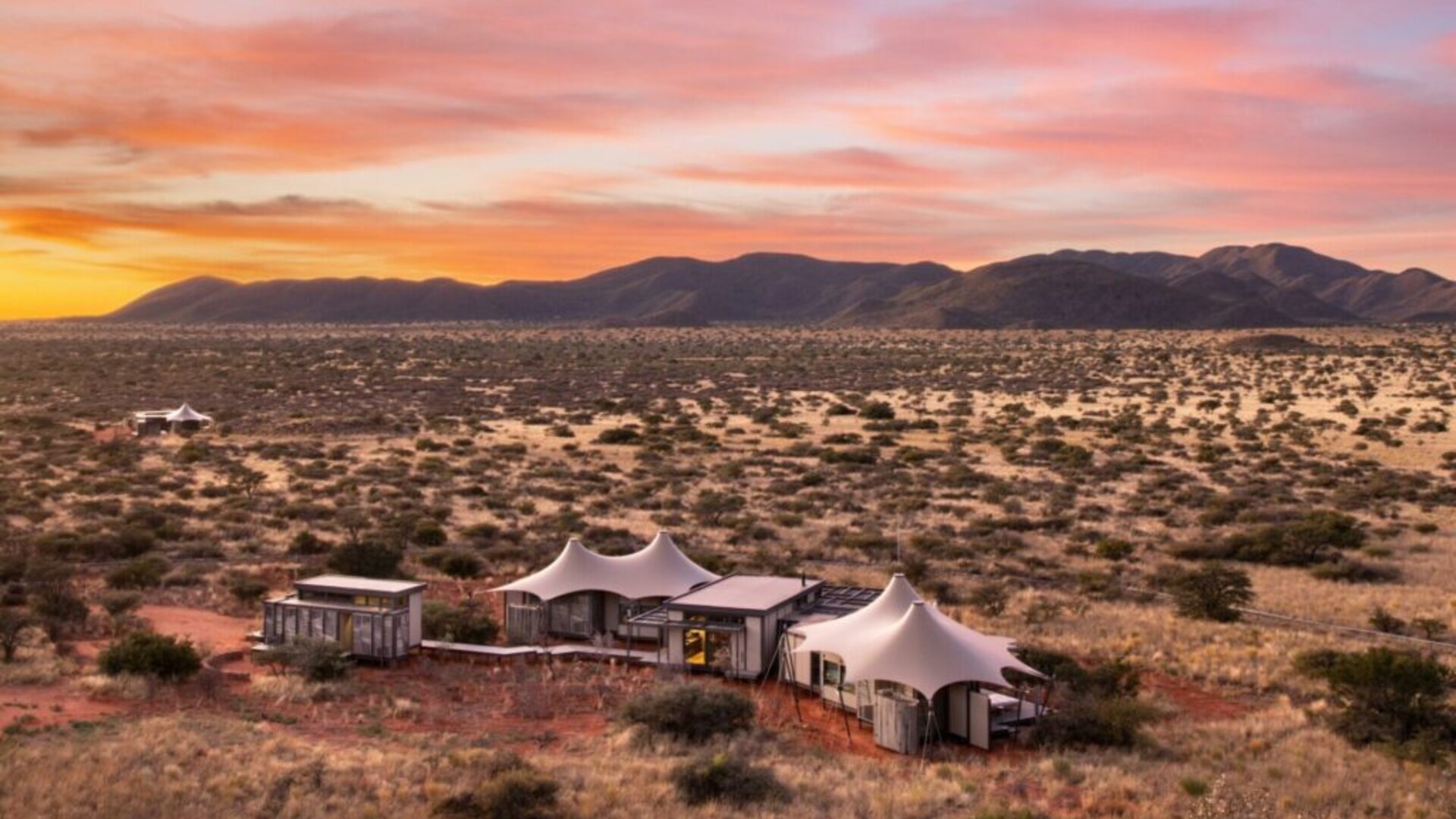
Tswalu is in a league of its own. It is South Africa's largest private game reserve, around 1,140 square kilometres of the southern Kalahari in the Northern Cape, owned and rewilded by the Oppenheimer family over three decades. You do not share your guide, your tracker or your vehicle with anyone outside your party, and there is no fixed timetable — you go out when you want, stay out as long as the sighting holds, and the day is built around you. It is malaria-free, which makes it a rare luxury option for families with young children.
Accommodation is split between The Motse, a small camp of spacious legae suites looking over a waterhole, and Tarkuni, a private five-suite homestead taken on an exclusive-use basis with its own chef and guiding team. For a single night in the open there is Loapi, a set of tented camps, and the Malori sleep-out deck under the stars. The wildlife is the draw a serious safari-goer comes for: Tswalu is one of the best places on earth to see pangolin and aardvark, along with meerkats, black-maned lions, cheetah, desert-adapted black rhino and wild dog. Expect from around US$1,900 per person per night. Read our full Tswalu Kalahari review.
2. Tau Pan Camp — the classic Central Kalahari camp
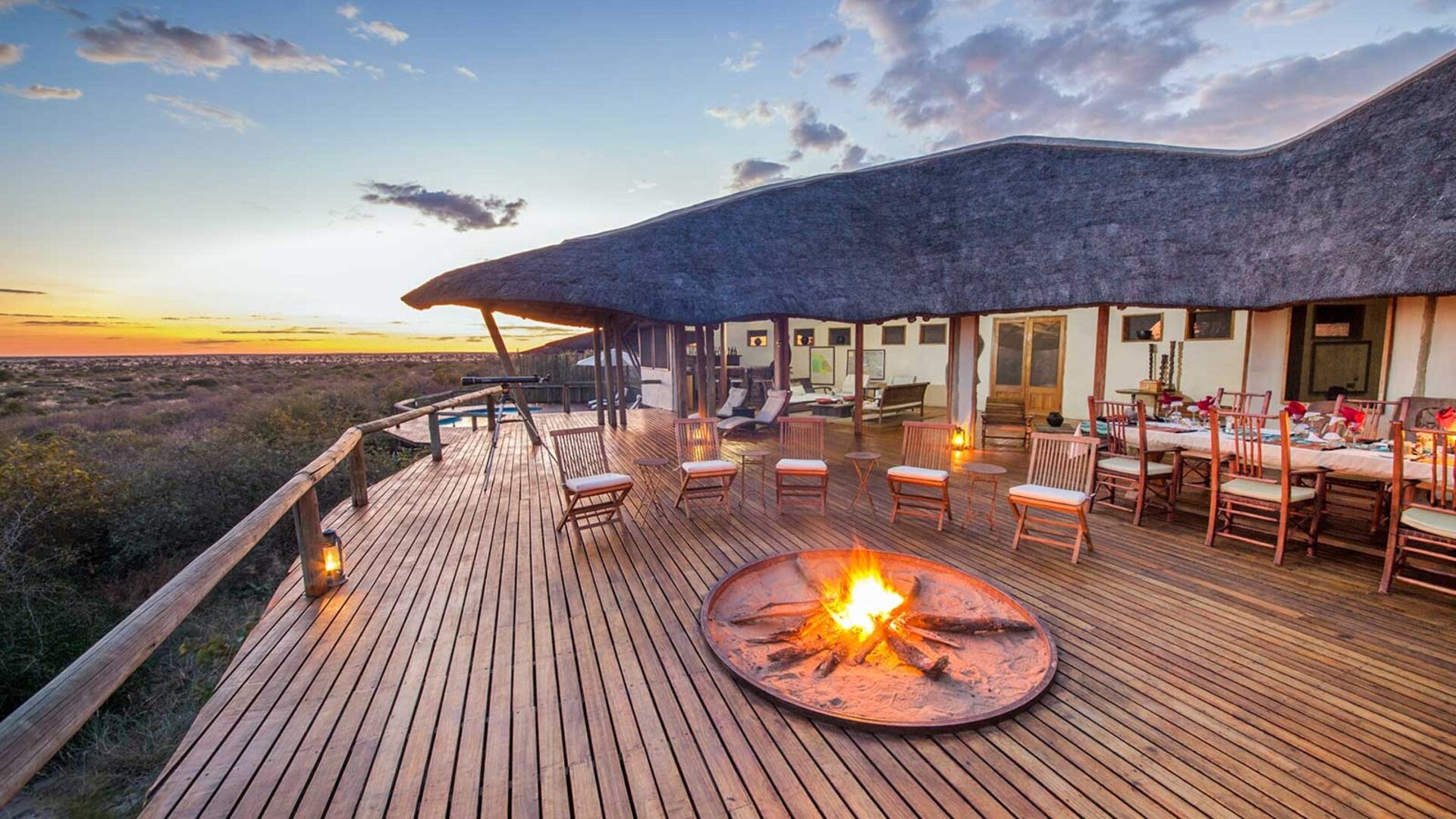
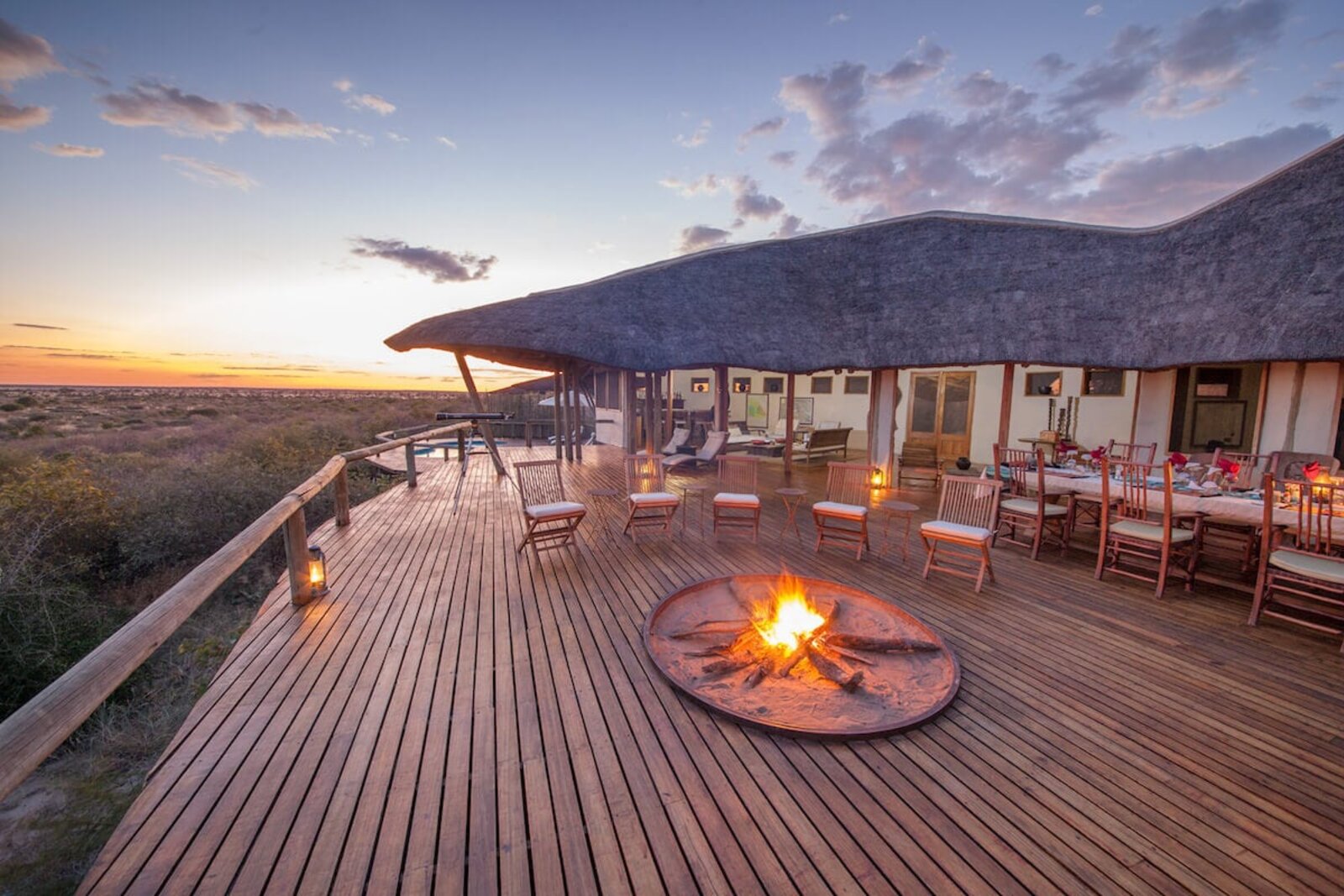
Tau Pan, run by Kwando Safaris, is the camp most people picture when they think of the Central Kalahari. It sits on an ancient sand dune — one of the highest points for miles — looking out over the Tau Pan the camp is named for, with Deception Valley within reach to the north. “Tau” means lion, and this is black-maned lion country; the Tau Pan pride is often seen on the plains below camp. Eight raised, en-suite rooms and a family unit are built of canvas, timber and thatch, with plunge-cool shade and a pool to see out the heat of the day. The camp runs on solar power.
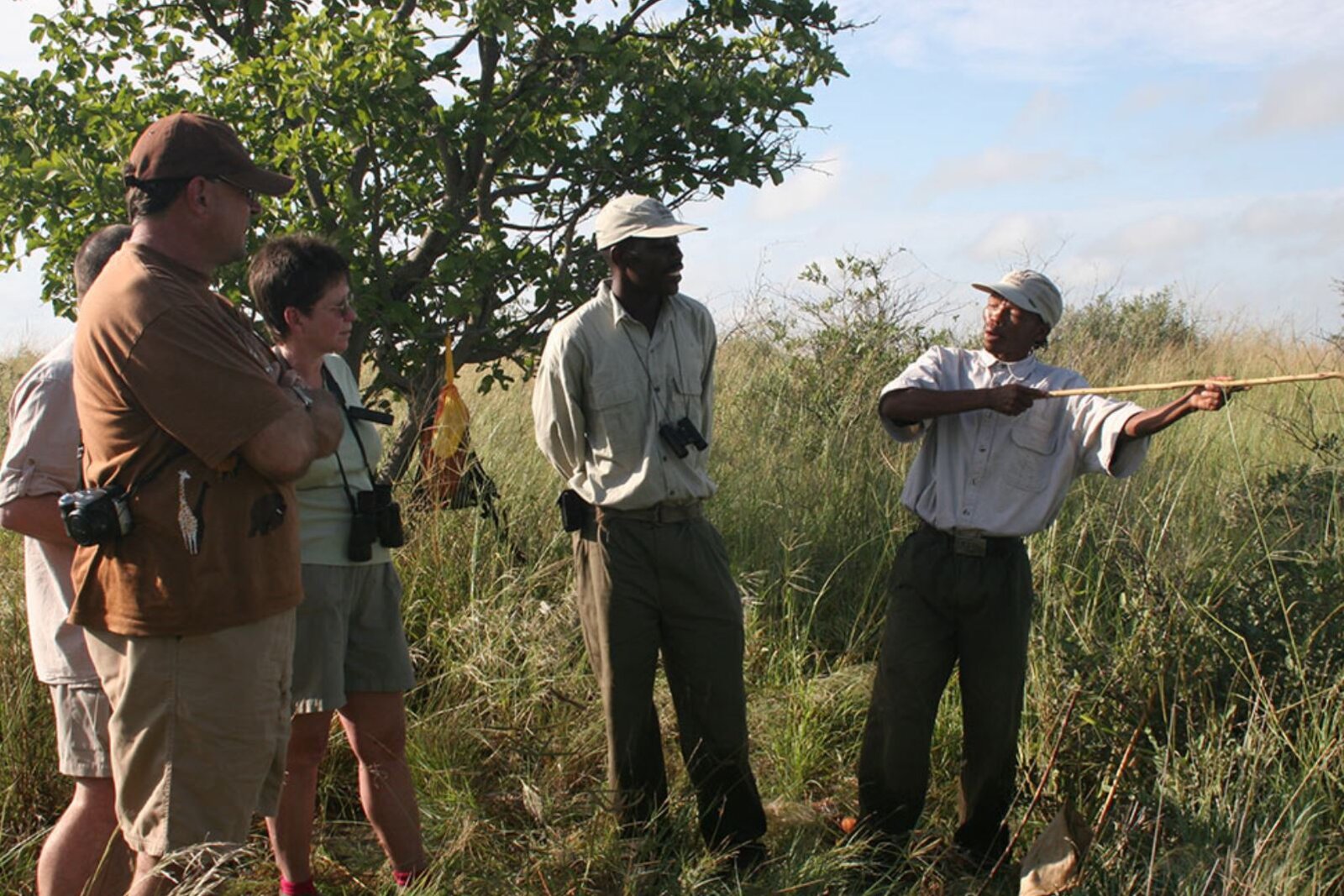
What sets Tau Pan apart is the guiding and the walks. The camp works with San trackers from the nearby community, and a morning walk reading the sand — tracks, medicinal plants, water-holding roots — is one of the most memorable things you will do in the desert. Game drives cover Deception, Sunday and Passarge valleys for lion, cheetah, leopard, brown hyena, gemsbok and huge herds in the green season. Read our full Tau Pan Camp review for the rooms, rates, food and game drives in detail.
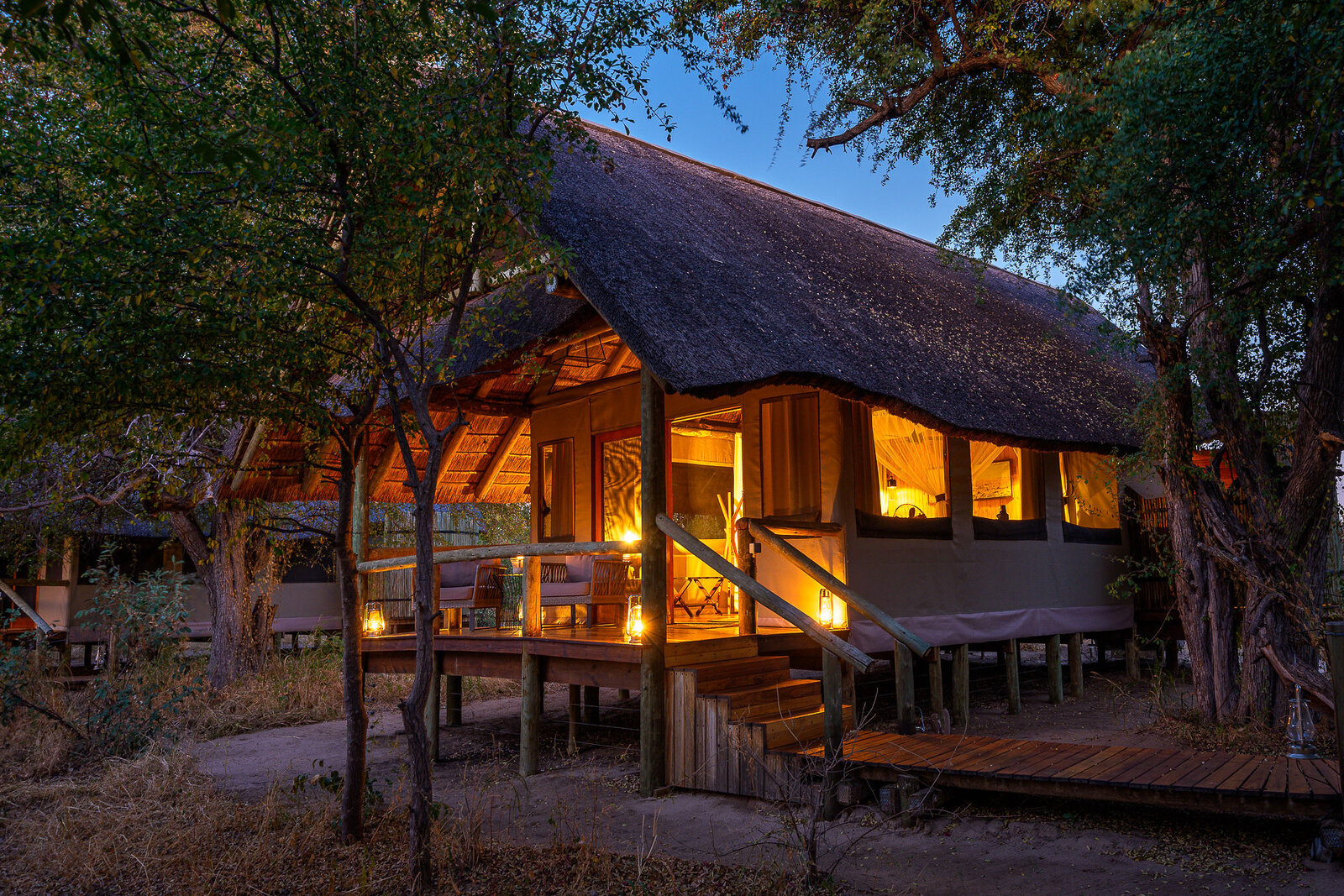
3. Kalahari Plains Camp — Deception Valley grasslands and star beds
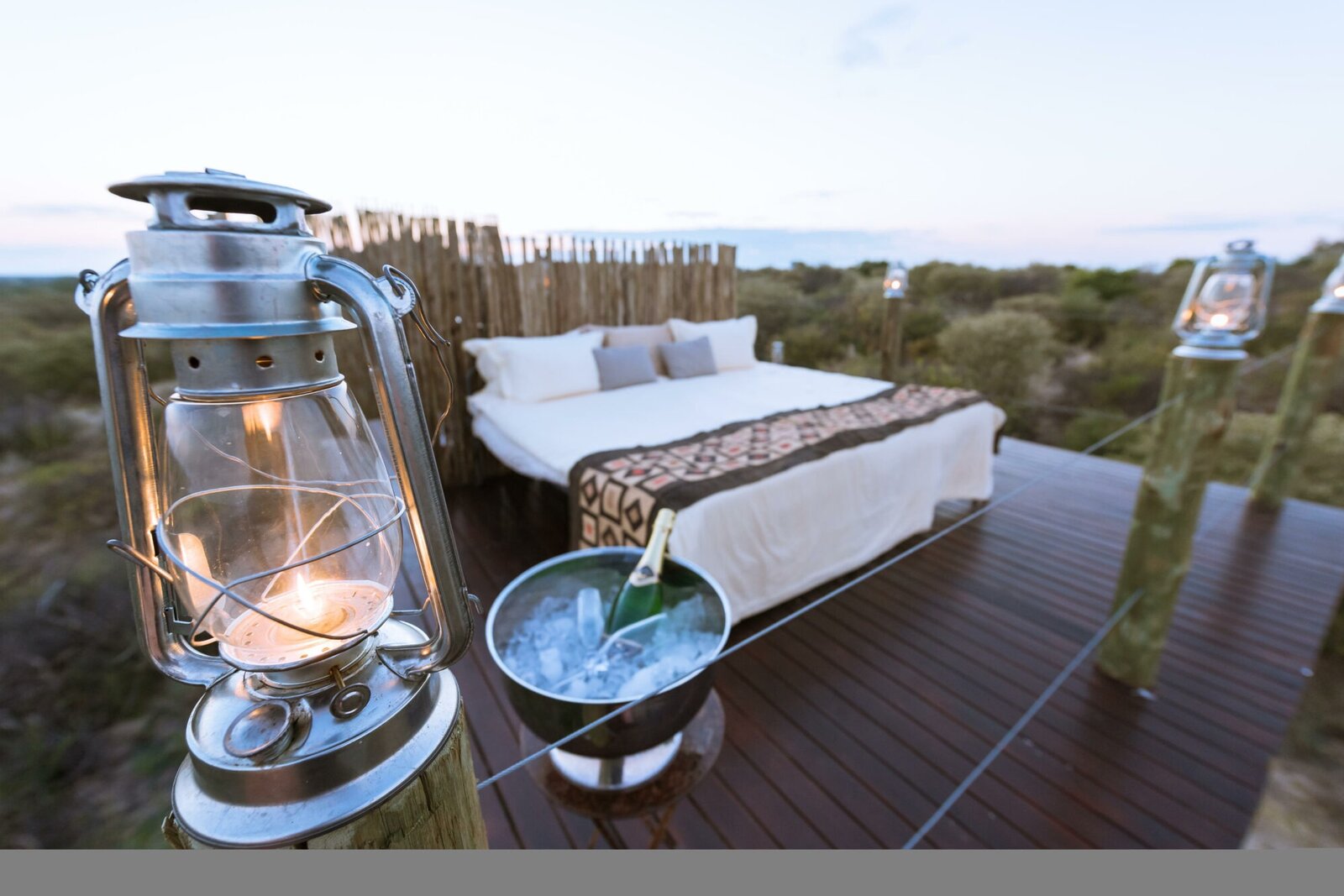
Kalahari Plains, run by Wilderness, sits on the open grasslands within reach of Deception Valley, in the same CKGR but with a character of its own. Ten light, canvas-walled rooms are raised off the ground and topped with a flat roof that doubles as a star bed — you can have your bedding carried up and sleep out over your own tent under one of the darkest skies in Africa. The camp is fully solar-powered, a genuinely off-grid base in the middle of the reserve.
This is prime green-season country. When the December-to-April rains green the plains, the game that gathers on the Deception and Letiahau valleys is the reason to come: springbok and gemsbok in numbers, the oryx and the lion that follow them, bat-eared fox, cheetah on the open ground and meerkats near camp. In the dry months the focus shifts to the waterholes and the big desert skies. Read our full Kalahari Plains Camp review for the rooms, star beds, rates and green-season game in detail.
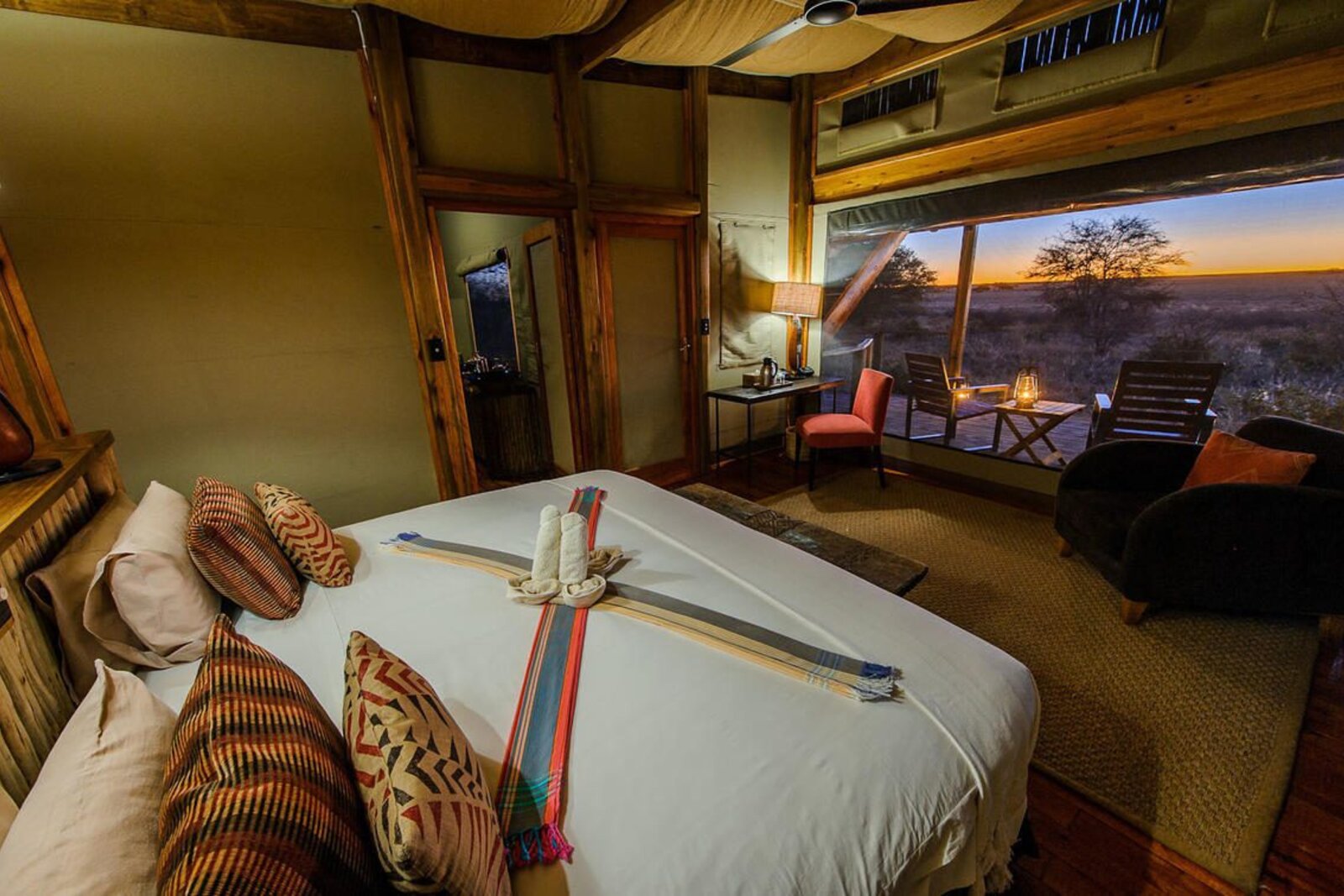
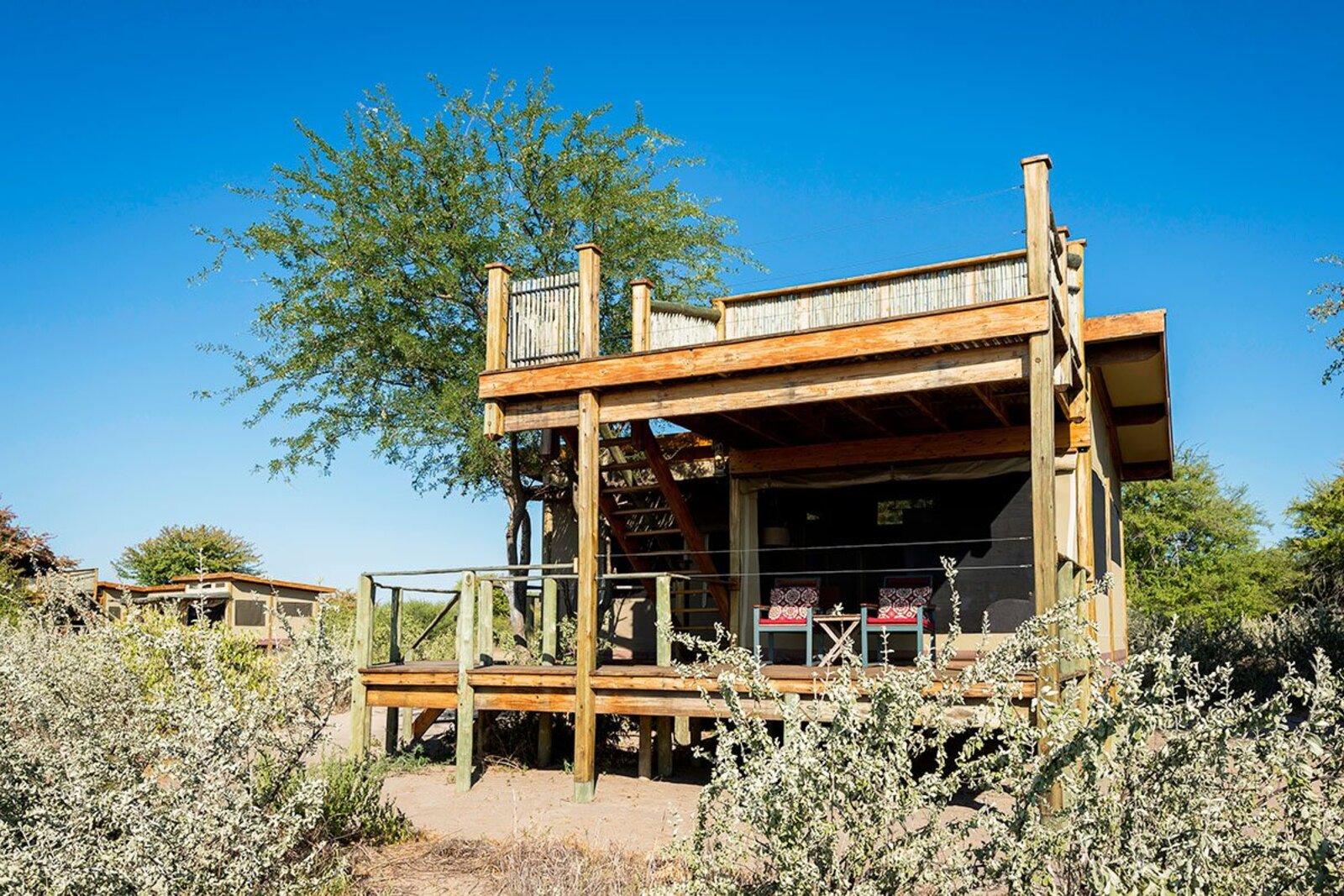
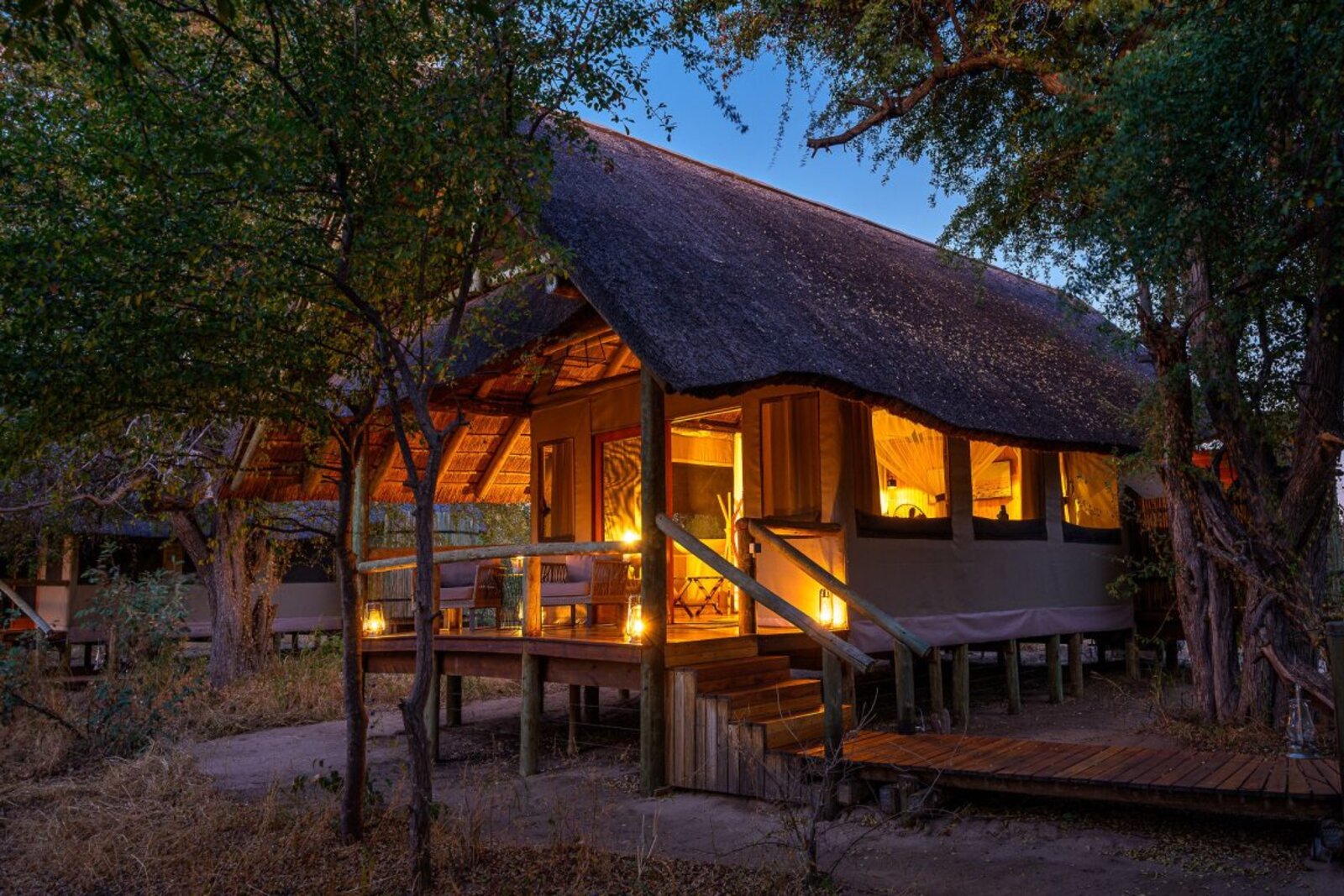
4. Dinaka Safari Lodge — a private concession with hides and horses
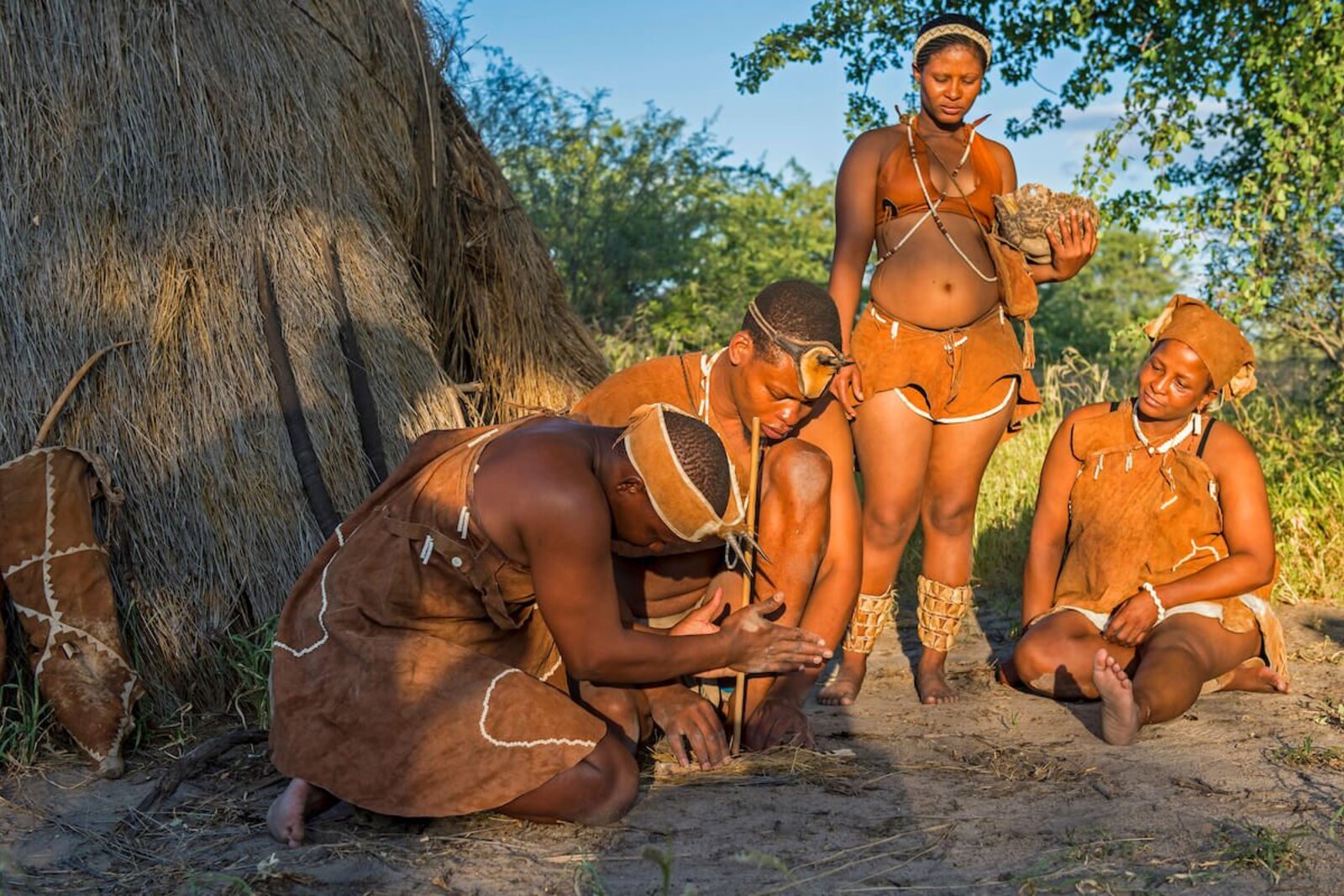
Dinaka sits on a private concession on the northern edge of the Central Kalahari, and that private status is the whole point: outside the national reserve, the lodge can run night drives, go off-road to a sighting and offer activities the CKGR itself does not allow. There is a sunken photographic hide at the waterhole in front of camp, where you sit at eye level with gemsbok, elephant and whatever else comes down to drink; there are San-guided bush walks; and there is horseback riding across the plains for experienced riders, a rare thing in the Kalahari.
The lodge itself is comfortable and unshowy — canvas-and-timber rooms, a pool, a deck over the waterhole — and it works beautifully as the first or last leg of a Kalahari trip, a softer, more active counterpoint to the deep-reserve camps. We will have a full Dinaka review up shortly; in the meantime we hold allocation here and can quote right away.
5. Jack's Camp — 1940s style on the Makgadikgadi pans
Out on the eastern edge of the Kalahari, where the grass gives way to the blinding white of the Makgadikgadi salt pans, Jack's Camp is a safari legend. Run by Natural Selection, it keeps the look of a 1940s East African expedition — green canvas tents, Persian rugs, campaign furniture and a museum tent of natural history — and the experience out on the pans is like nowhere else in Africa. In the dry season you ride quad bikes across the cracked white crust to sleep out under the stars; in the green season the zebra and wildebeest migrate onto the grasslands and the pans fill with flamingos.
The standouts are the meerkats, a habituated colony that will climb a guest for a better view, and the San walks with Zu/'hoasi Bushmen who show you how they have lived in this country for millennia. It is one of the more expensive camps on this list, and worth every rand for its singularity. Read our full Jack's Camp review, and see our wider Makgadikgadi pans guide.
A note on the Kgalagadi
Along the South Africa–Botswana border, the Kgalagadi Transfrontier Park is the red-dune Kalahari of photographers' dreams, famous for predators strung along its two dry riverbeds. The community-run !Xaus Lodge, deep in the dunes on the South African side, is the standout stay inside the park, with twelve chalets overlooking a salt pan and a share of its revenue going to the ǃKhomani San and Mier communities who own the land. For a self-drive version of the same country, see our Kgalagadi self-drive guide.
The lodges at a glance
| Lodge | Where | Style | Best for | Guide rate pp/night |
|---|---|---|---|---|
| Tswalu Kalahari | Southern Kalahari, South Africa | Ultra-luxury private reserve | Privacy, pangolin & aardvark, families (malaria-free) | from ~US$1,900 |
| Tau Pan Camp | Central Kalahari (CKGR) | Classic solar bush camp | Black-maned lions, San walks, Deception Valley | from ~US$850 |
| Kalahari Plains Camp | Central Kalahari (CKGR) | Off-grid solar camp, star beds | Green-season plains game, sleeping out | from ~US$800 |
| Dinaka Safari Lodge | Northern Central Kalahari concession | Active private concession | Night drives, waterhole hide, horse riding | from ~US$600 |
| Jack's Camp | Makgadikgadi pans | 1940s expedition style | The pans, meerkats, quad biking | from ~US$1,500 |
Rates are 2026/2027 guides, all-inclusive of meals and activities and quoted per person sharing. We confirm the exact figure, and what it does and does not cover, when we price your dates.
When to go
The Kalahari rewards travellers who get its seasons the right way round. The green season, December to April, is the one the desert is built for. The rains draw springbok, gemsbok and wildebeest onto the Deception Valley grasslands in their thousands, the young are born, the black-maned lions and cheetah follow the herds into the open, the meerkats are busy and the migratory birds pour in. It is hot by day and the light after a storm is extraordinary.
The dry season, May to October, is cooler and sparser. Game concentrates around the pans and the few waterholes, which suits predators and photographers, and the days are comfortable — but desert nights drop close to freezing in June and July, so pack real warm layers for early drives. For the pans and quad-biking at Jack's Camp, the dry months are the time to go; for the CKGR grasslands, the green season wins.
Getting there
Most Central Kalahari camps — Tau Pan, Kalahari Plains and Dinaka — are reached by light aircraft from Maun, about an hour over the desert, with a short game-drive transfer from the airstrip to camp. That same Maun hub serves the Okavango Delta, which is why the two pair so naturally. Tswalu runs its own scheduled flight from Johannesburg direct to its private airstrip. Jack's Camp connects through Maun by air and road across the pans. The Kgalagadi and !Xaus are reached by road, or by air to Upington on the South African side. We arrange every flight, transfer and timing as part of the booking.
Pairing the Kalahari with the rest of your trip
The Kalahari is at its best as the quiet half of a two-part Botswana journey. The routes below are the ones guests ask for most, and we tailor each to your dates:
- Okavango & the Kalahari — around six nights, three or four in the water and wildlife of the delta, two or three in the space of the desert.
- Kalahari, Okavango & Victoria Falls — roughly nine nights across desert, delta and the Zambezi.
- Tswalu & Cape Town — about seven nights, the southern Kalahari paired with the city and the Cape Winelands, all malaria-free.
- The pans & the delta — around eight nights, Jack's Camp on the Makgadikgadi before the Okavango.
These are starting points, not fixed packages. We adjust the lodges, the order and the length to suit how you like to travel.
How to book a Kalahari safari through Beyond Africa Safaris
Tell us your dates, your group and the kind of desert trip you have in mind — the deep quiet of the CKGR, the pans, the private luxury of Tswalu, or a mix — and we handle the rest: the camps, the light-aircraft flights across the desert, the transfers and any add-ons like a sleep-out or a photographic hide. If you want the Kalahari as part of a longer journey through the Okavango, Victoria Falls or Cape Town, we build the whole itinerary end to end. Send us a note and we will come back with a plan and a price for your dates.