Key Takeaways
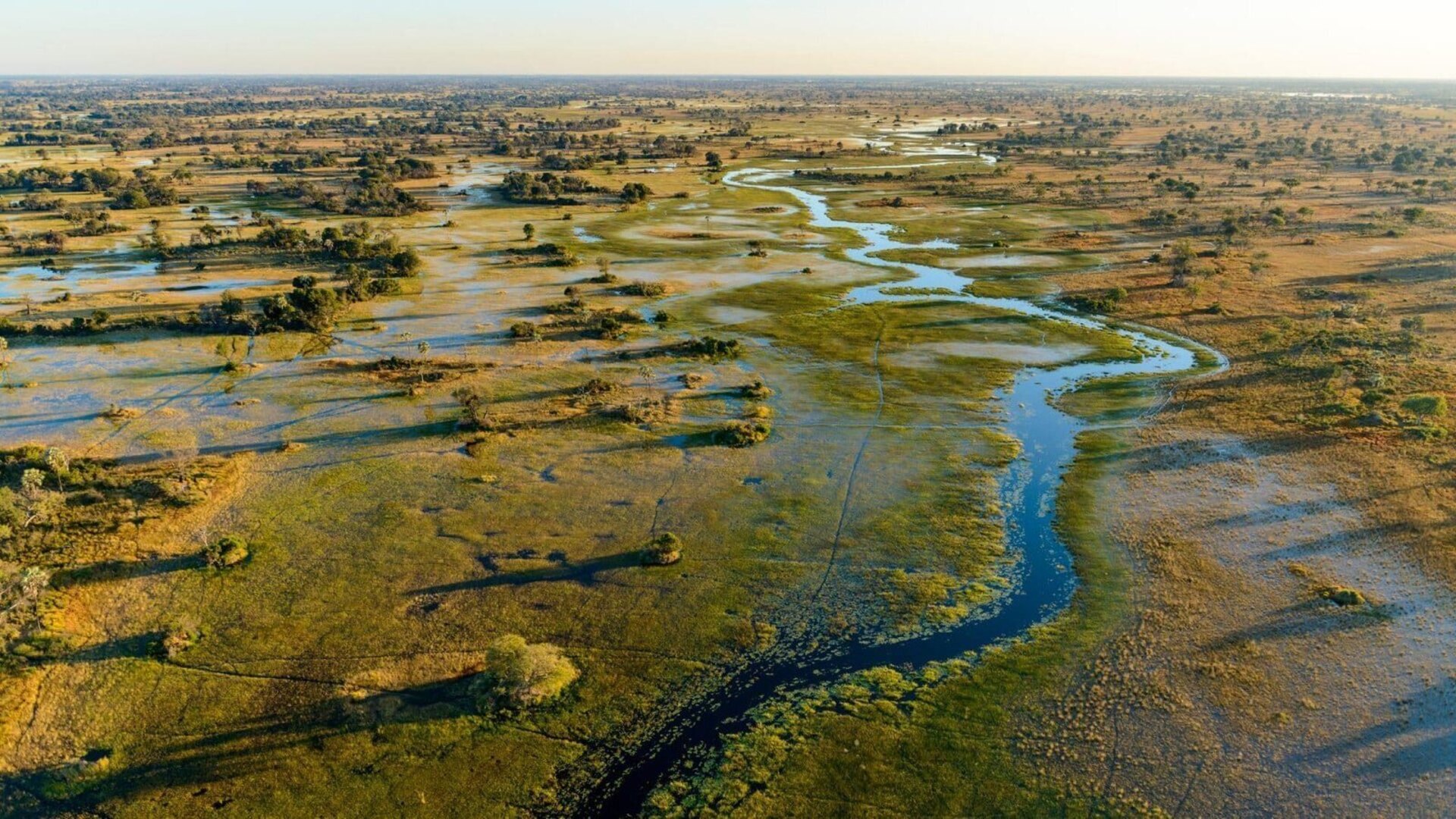
- The Okavango Delta is Botswana's crown jewel. A vast water wilderness explored by mokoro, boat and 4x4 - the country's single unmissable place to visit.
- Chobe and the salt pans complete the picture. Chobe's elephant herds and the surreal Makgadikgadi Pans are the two most distinctive experiences beyond the delta.
- There is more than safari. The Tsodilo Hills rock art, the gateway town of Maun, Kubu Island and the Khama Rhino Sanctuary add culture, landscape and variety.
- Fly between places. Botswana is Africa's premier fly-in destination - light aircraft link remote areas across vast, roadless country. Mobile safaris are the great-value alternative.
- Best time: May to October for wildlife around the water; the green season (November to April) is best for the Kalahari, the pans and the zebra migration.
Botswana is a country of superlatives. It holds the largest inland delta on Earth, the greatest concentration of elephant in Africa, salt pans so vast they are visible from space, and rock paintings that have watched over the desert for tens of thousands of years. It is also one of the least-crowded, best-protected wildernesses on the continent - a place where space, silence and pristine wildlife define every journey.
This guide ranks the ten best places to visit in Botswana - the safari icons, the salt pans, the cultural landmarks and the gateway towns that together make up an unforgettable trip. For each, we tell you what makes it special, when to go, how to reach it, and how it fits into a wider itinerary. For the comprehensive country overview, see our Ultimate Botswana Travel Guide. If you want to focus purely on the wildlife regions and how to route between them, see our companion Top 10 Best Safari Destinations in Botswana. This article takes the wider view: the best places to visit across the whole country.
How to Plan Botswana: Three Kinds of Place
Botswana's best places fall into three broad kinds, and knowing them makes planning simple - most great trips blend at least two.
| Kind of Place | Headline Examples | Best For |
|---|---|---|
| Water & Wildlife | Okavango Delta, Chobe, Moremi | Mokoro glides, elephant herds, big cats and wild dogs - the classic Botswana experience |
| Desert & Salt Pans | Makgadikgadi, Central Kalahari, Nxai Pan, Kubu Island | Desert lions, the zebra migration, meerkats, baobabs, salt-flat landscapes and dark skies |
| Culture & Gateways | Tsodilo Hills, Maun, Khama Rhino Sanctuary | Ancient rock art, safari-town culture, rhino conservation and the human story of Botswana |
Most first-time visitors combine the Okavango Delta + Chobe + one desert or salt-pan destination into a single fly-in journey. Those with more time, or a second visit, add cultural landmarks such as the Tsodilo Hills or the wildlife of the Khama Rhino Sanctuary. Below, the ten places that should shape your trip - ranked by how much they deserve your time.
The 10 Best Places to Visit in Botswana
1. Okavango Delta - The World's Greatest Water Wilderness
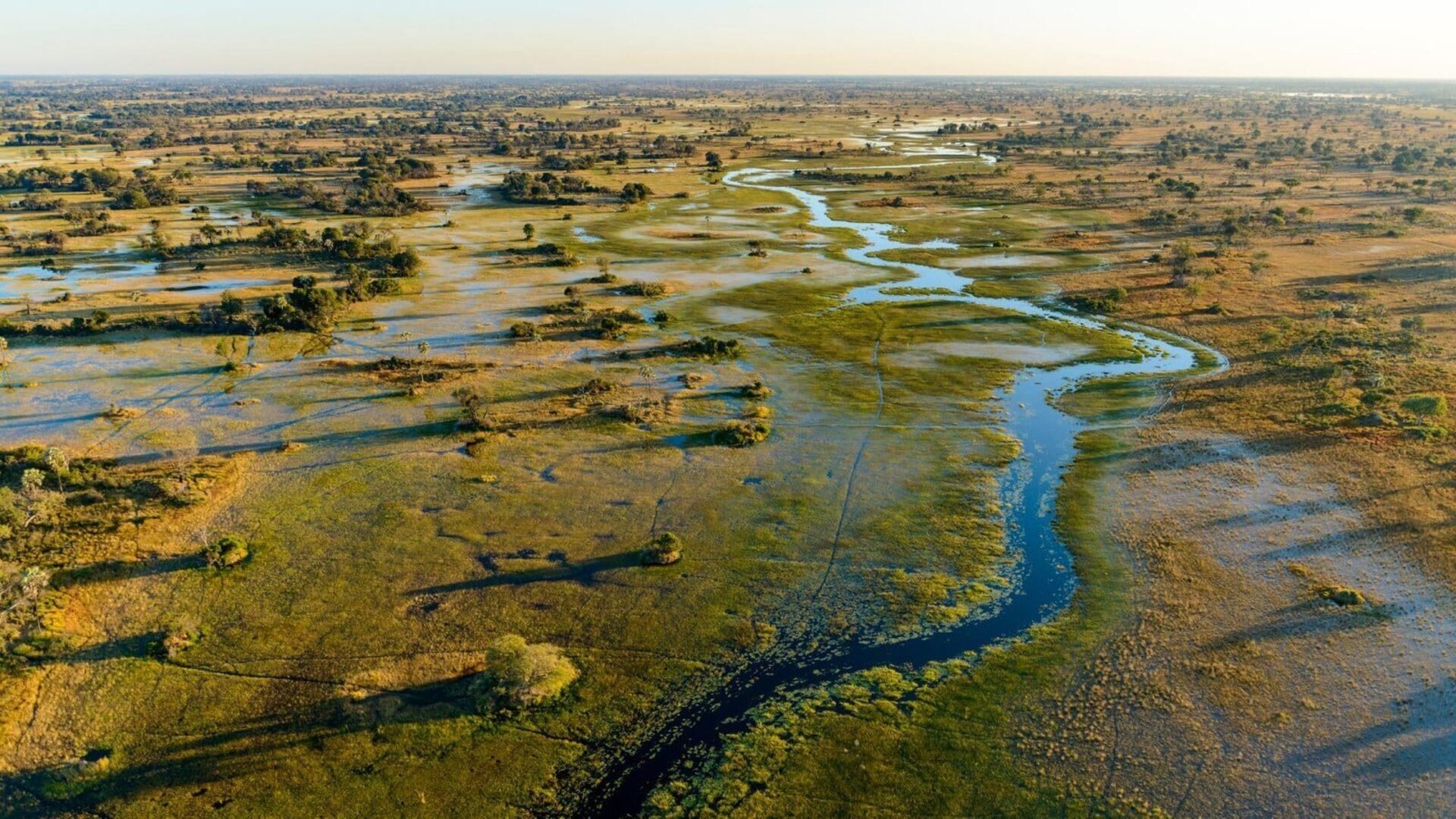
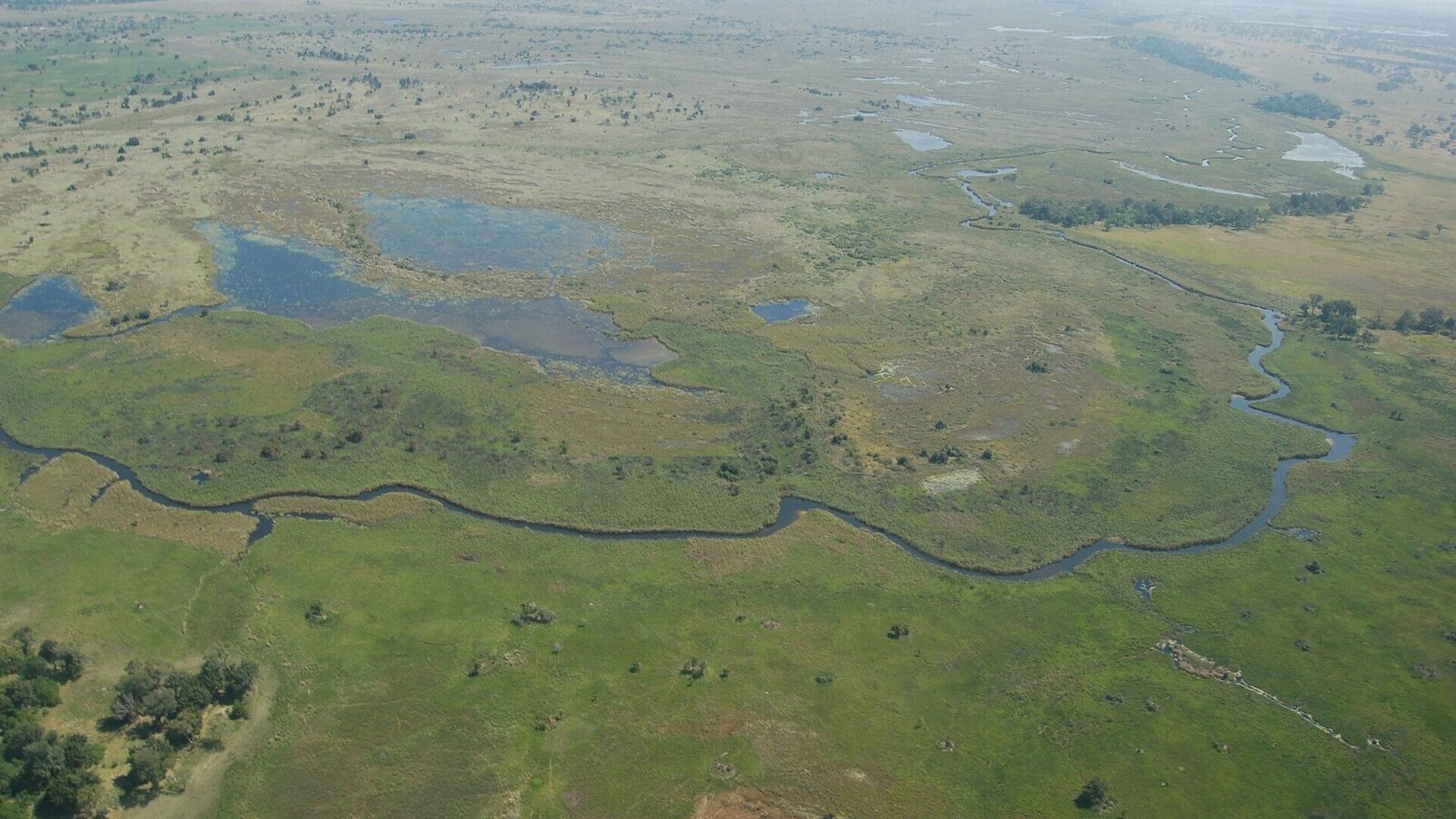
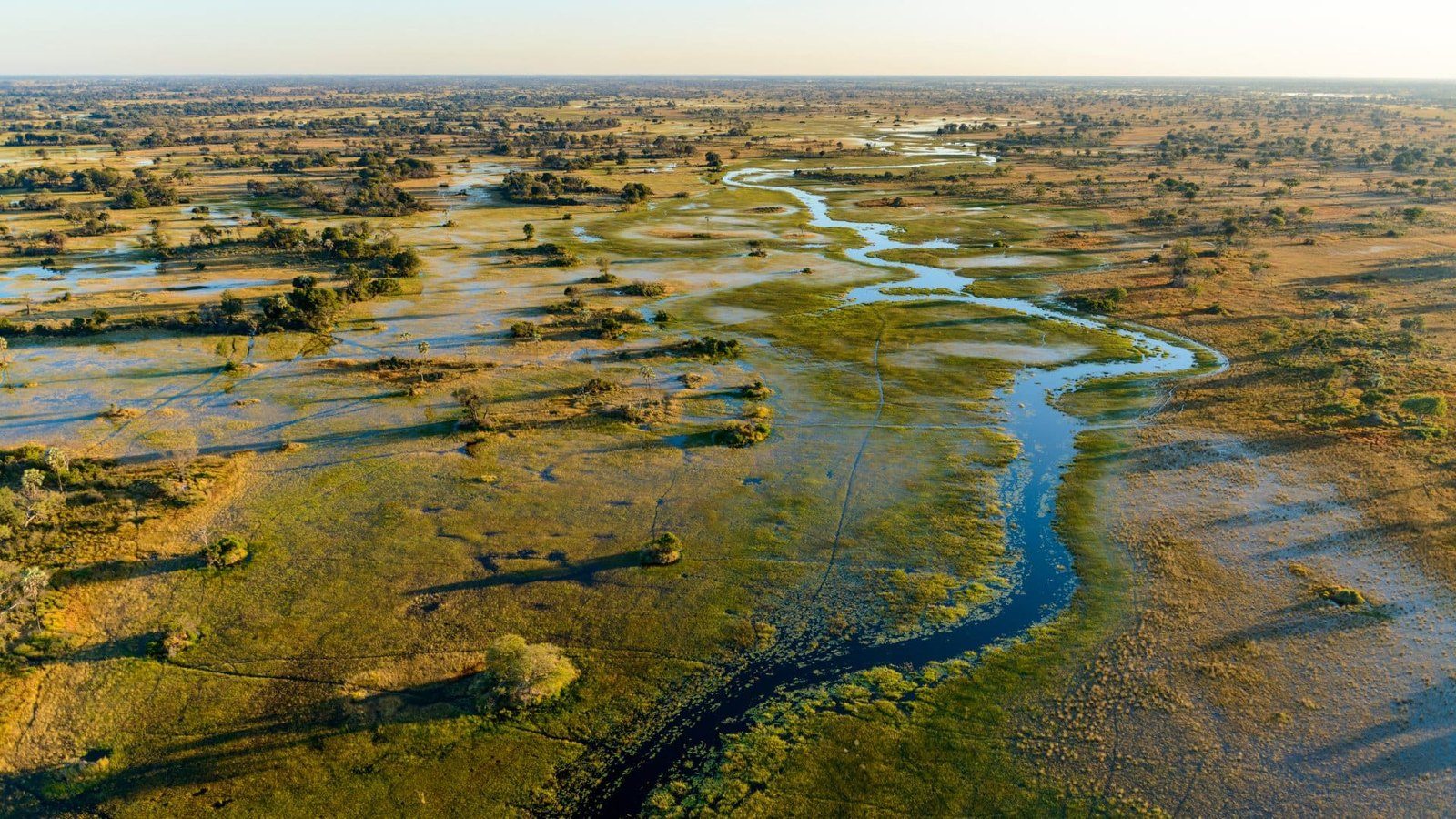
Nothing prepares you for the Okavango Delta. Each year, floodwaters from the Angolan highlands pour south and spread across the flat Kalahari sands, creating a vast, ever-shifting oasis of channels, lagoons and palm-fringed islands in the middle of the desert - a river that never reaches the sea. It is the largest inland delta on Earth, a UNESCO World Heritage Site, and the single unmissable place to visit in Botswana.
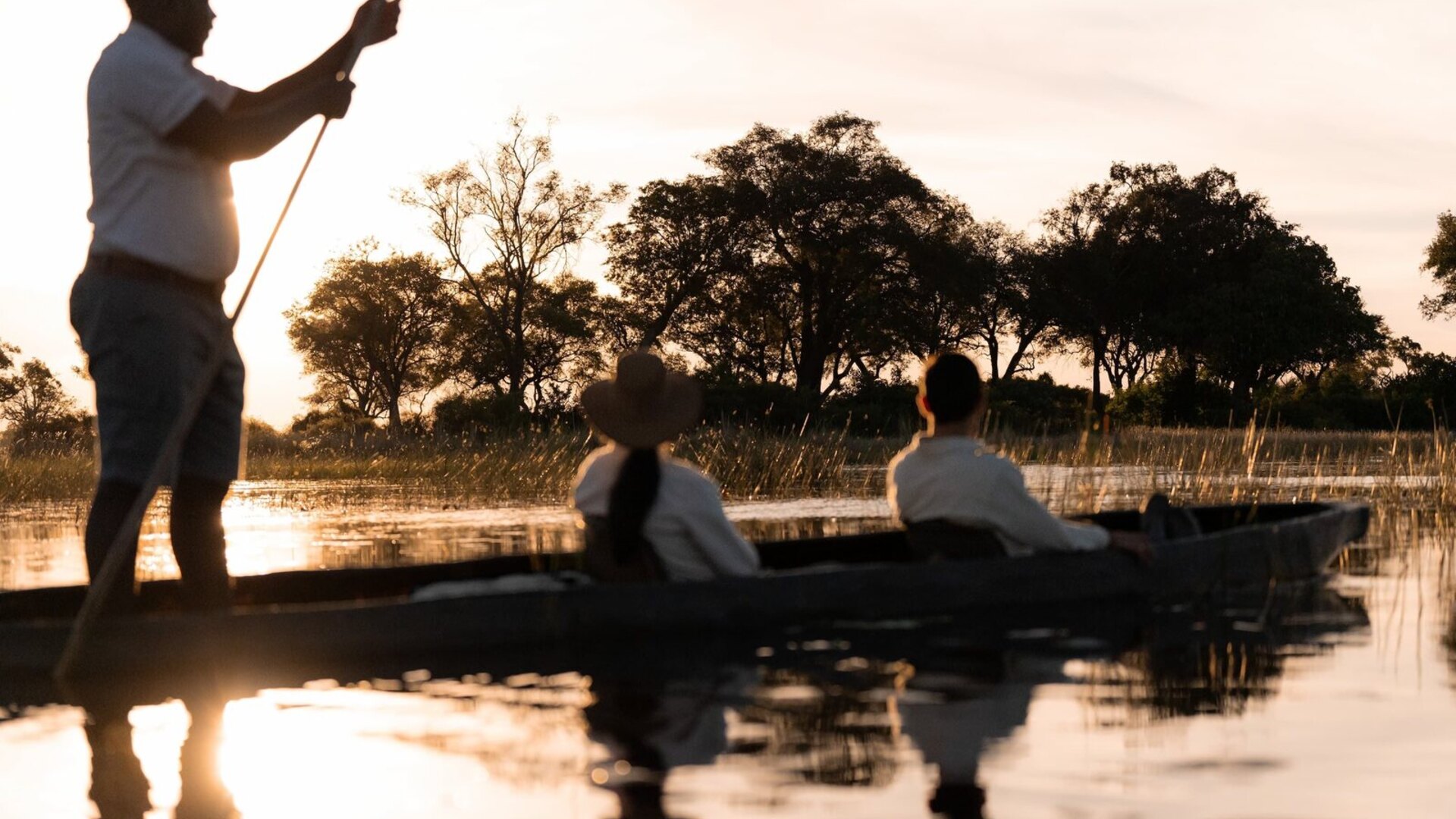
Here you explore by water as much as by land - gliding silently through the reeds in a mokoro (dugout canoe), cruising the channels by boat, and tracking big game by 4x4 on the islands. Elephant wade the floodplains, red lechwe splash through the shallows, and the delta's islands hold lion, leopard and one of Africa's healthiest populations of wild dog. It is safari at its most exclusive and most beautiful.
- Best for: Water safaris, mokoro and boat trips, big cats and wild dogs, the essential Botswana experience.
- When to go: June-August for peak floodwaters and water activities; May-October for excellent all-round game viewing.
- Access: Fly-in by light aircraft from Maun to the camp airstrips.
- Reality check: Water levels vary by camp and season - some camps are 'wet' (mokoro country), others 'dry' (4x4 country). Choose to match the experience you want.
2. Chobe National Park - The Elephant Capital of Africa
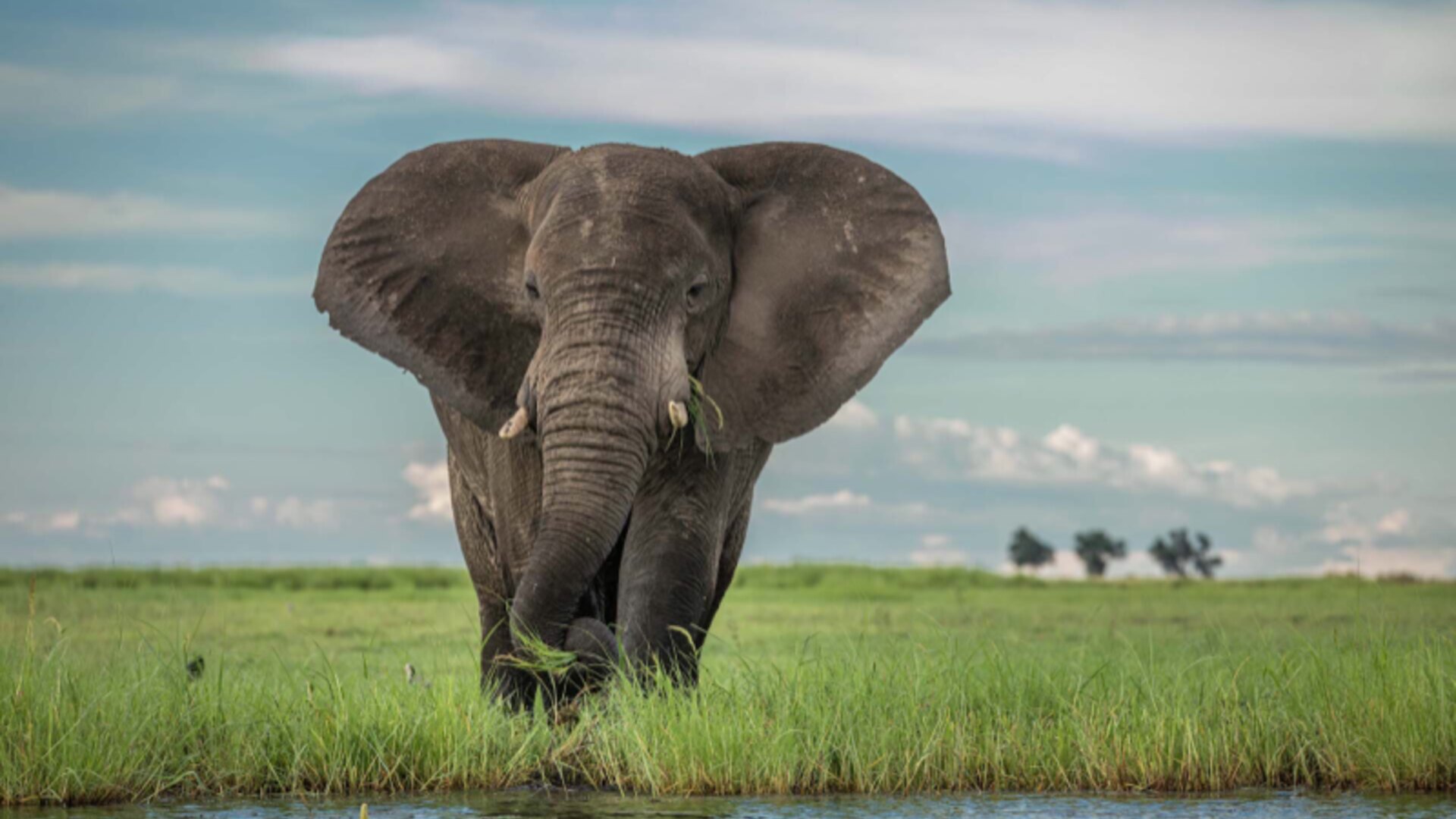
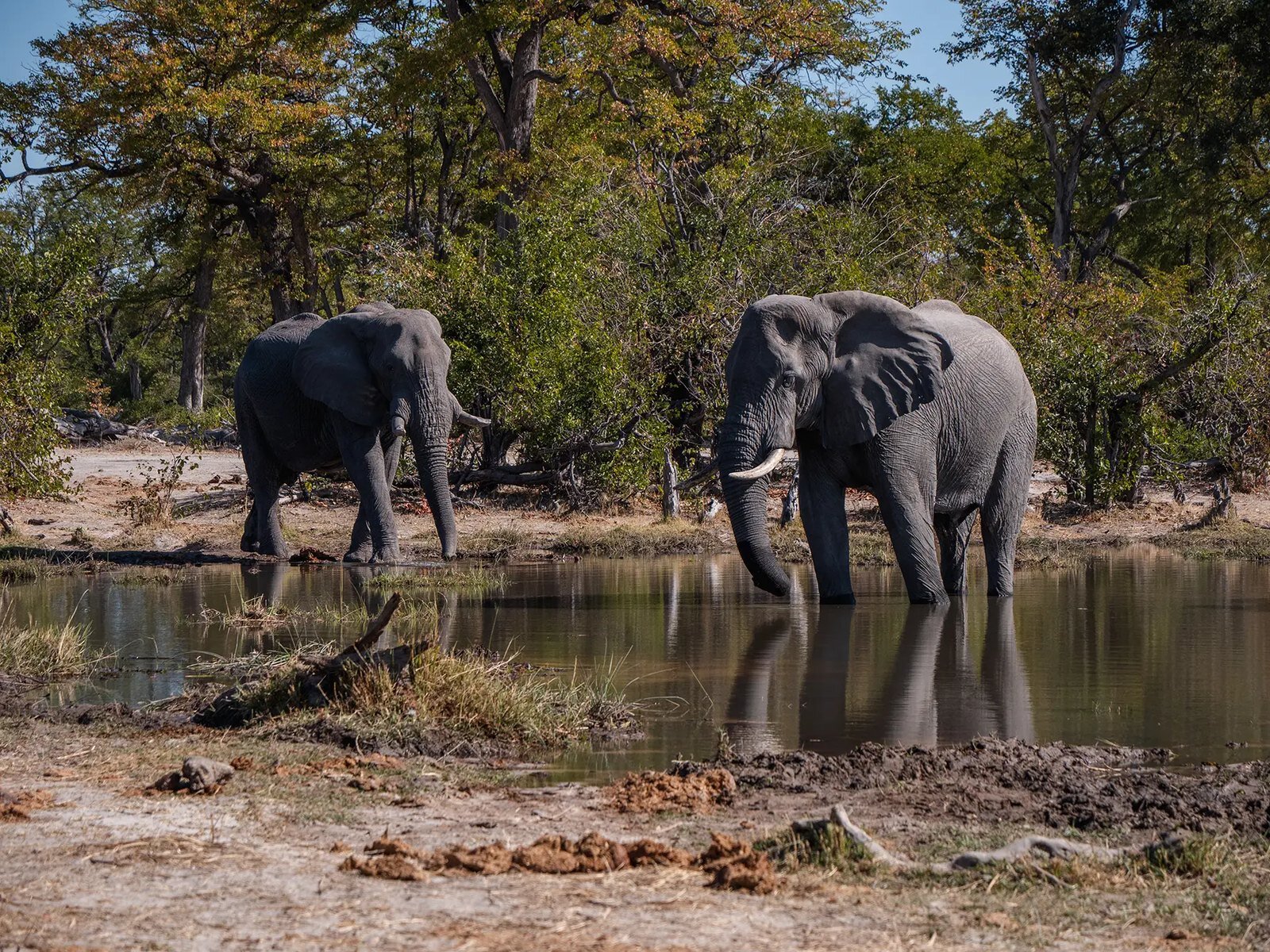
Chobe National Park holds the greatest concentration of elephant on the continent - estimates run to tens of thousands - and nowhere is the spectacle more accessible than along the Chobe riverfront. In the dry season, herds pour down to the water to drink, bathe and cross, often within metres of your vehicle or boat. A sunset river cruise here, gliding past drinking elephant, wallowing hippo and basking crocodile, is one of the great experiences in Africa.
Beyond the elephants, the riverfront teems with buffalo, giraffe, lion, sable and huge numbers of birds. Chobe's easy access - close to Kasane and just a short transfer from Victoria Falls - makes it a natural start or finish to a Botswana journey, combining big numbers with genuine comfort.
- Best for: Elephant, river cruises, easy game viewing, combining with Victoria Falls.
- When to go: May-October (dry season), peaking August-October when elephant crowd the river.
- Access: Drive or fly to Kasane; a short transfer from Victoria Falls (Zambia or Zimbabwe).
- Reality check: The main riverfront can get busier than Botswana's private concessions. For solitude, stay in a private area or visit the quieter Savuti sector.
3. Makgadikgadi Pans - Salt, Stars & the Zebra Migration
The Makgadikgadi Pans are the ghostly remains of a super-lake that once covered much of Botswana - a vast expanse of mirage-white salt flats so large they are visible from space. In the dry season the pans are a surreal, empty moonscape where you can quad-bike to the horizon and sleep out under a blaze of stars. Then the rains come, and everything changes.
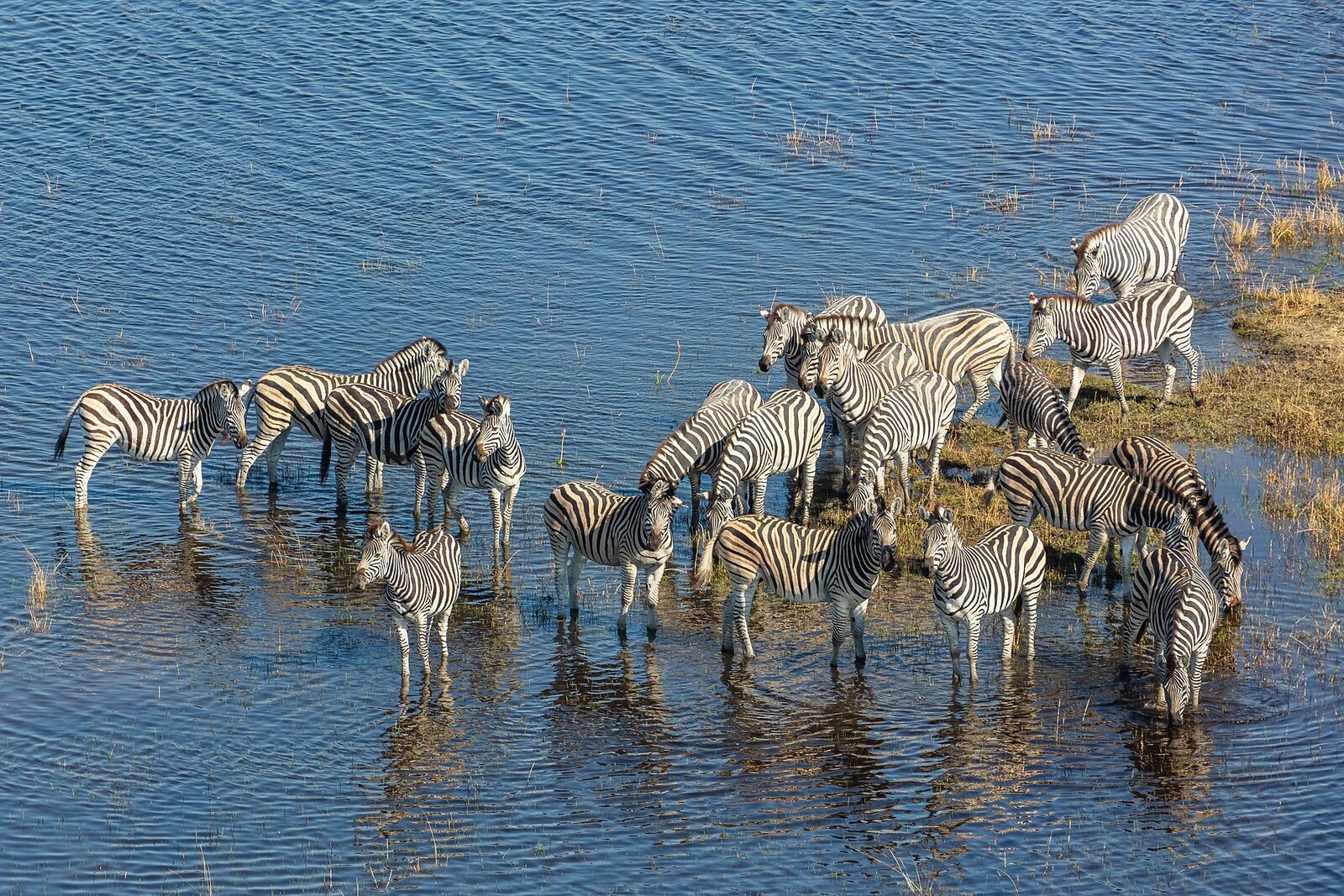
The green season transforms the surrounding grasslands into a nursery for one of Africa's great and least-known events - the Makgadikgadi and Nxai zebra migration, the longest land-mammal migration on the continent. Add habituated meerkats, desert-adapted wildlife and the eerie beauty of the pans themselves, and you have one of Botswana's most distinctive places to visit.
- Best for: Salt-pan landscapes, the zebra migration, meerkats, quad-biking, sleep-outs and stargazing.
- When to go: Green season (December-April) for the migration and wildlife; dry season for the surreal empty pans and star beds.
- Access: Fly-in or drive from Maun; often combined with the delta.
- Reality check: A place of two totally different faces - decide whether you want the migration (wet) or the empty-pan magic (dry) before you book.
4. Moremi Game Reserve - The Predator Heart of the Delta
Moremi Game Reserve protects the eastern third of the Okavango Delta and is widely regarded as one of the finest reserves in Africa - a superb mosaic of permanent water, floodplains, mopane forest and grassland. It is the only officially protected core of the delta, and its wildlife density is extraordinary: prime territory for lion, leopard, cheetah and wild dog, alongside elephant, buffalo and huge herds of plains game.
Moremi combines land and water beautifully - morning game drives across the islands, afternoon boat trips through the lagoons - and its legendary areas such as Chief's Island deliver some of the most reliable big-cat and wild-dog sightings on the continent. For wildlife-rich delta viewing without a private-concession price tag, Moremi is a highlight of any trip.
- Best for: Big cats, wild dogs, mixed land-and-water game viewing, serious wildlife enthusiasts.
- When to go: May-October for the best predator viewing and comfortable conditions.
- Access: Fly-in to the reserve's airstrips, or by 4x4 on a mobile safari from Maun.
- Reality check: As a national reserve, off-road driving and night drives are restricted - the adjacent Khwai concession allows both.
5. Central Kalahari Game Reserve - Desert Lions & Endless Space
The Central Kalahari Game Reserve is one of the largest protected areas on Earth - a vast, remote wilderness of grass plains, ancient riverbeds and fossil valleys where the silence is total and the horizons endless. This is the land of the famous black-maned Kalahari lion, of cheetah on the open pans, of gemsbok, springbok and habituated meerkats that will use a standing human as a lookout post.
The Kalahari transforms with the seasons. In the green season (December to April), rain brings a flush of grass to Deception Valley and draws thousands of animals - and the predators that follow them - onto the plains, in one of Africa's great and least-known wildlife spectacles. By night, the desert delivers some of the darkest, starriest skies on the continent.
- Best for: Desert lions, cheetah, meerkats, green-season game, solitude and dark skies.
- When to go: December-April (green season) for the best wildlife in Deception Valley; year-round for desert atmosphere.
- Access: Fly-in to the camp airstrips, or a serious self-sufficient 4x4 expedition.
- Reality check: Wildlife is seasonal and spread out - the green season is prime, and the dry months are quieter for game but superb for solitude.
Botswana's Landmarks & Landscapes



6. Tsodilo Hills - The Louvre of the Desert
Rising abruptly from the flat Kalahari sands in Botswana's remote northwest, the Tsodilo Hills are one of the most important cultural sites in Africa - a UNESCO World Heritage Site holding one of the highest concentrations of rock art in the world. More than 4,500 paintings, some many thousands of years old, adorn the rock faces, recording the beliefs and daily life of the people who have revered this place across the ages.
Sacred to the San and Hambukushu people, who call the hills the "Mountains of the Gods," Tsodilo is a place of quiet power - four ancient quartzite hills known as the Male, the Female, the Child and the Grandchild. Guided walks reveal galleries of eland, giraffe, rhino and abstract symbols, and the spiritual atmosphere is unforgettable. It is Botswana at its most profound.
- Best for: Ancient rock art, cultural heritage, guided walks, history and spirituality.
- When to go: May-September for cooler, comfortable walking conditions.
- Access: Remote - reached by 4x4 or charter flight from Maun; best built in as a dedicated cultural leg.
- Reality check: This is a cultural and archaeological site, not a wildlife destination - come for the art, the history and the atmosphere.
7. Maun - The Safari Capital & Gateway to the Delta
Maun is where almost every Botswana adventure begins. Once a dusty frontier outpost, this lively town on the edge of the Okavango Delta is now the country's safari capital - a bustling hub of air-charter companies, safari operators, lodges and markets, with the busy little airport that serves as the launchpad for flights into the delta and beyond.
While most travellers pass through quickly on their way to the camps, Maun rewards those who pause. You can take a scenic helicopter or light-aircraft flight over the delta for an unforgettable aerial perspective, enjoy a relaxed day on the Thamalakane River, and get a genuine feel for modern Botswana life. It is the practical heart of any trip and a place with real character of its own.
- Best for: Trip logistics, scenic delta flights, riverside relaxation, experiencing everyday Botswana.
- When to go: Year-round as a gateway; the dry season is busiest with safari traffic.
- Access: Maun Airport is served by regional flights; it is the main hub for delta charters.
- Reality check: Maun is a working town rather than a scenic destination - most visitors treat it as a launchpad, but a scenic flight over the delta is well worth the stop.
8. Nxai Pan & Baines' Baobabs - Fossil Plains & Ancient Trees
Just north of the Makgadikgadi lies Nxai Pan National Park, a fossil lakebed of open grassland dotted with the iconic cluster of ancient trees known as Baines' Baobabs, immortalised by the Victorian painter Thomas Baines - who captured them so precisely that today's visitors can stand where he sat more than 150 years ago. In the dry season Nxai is quiet and starkly beautiful; in the green season it becomes one of Botswana's finest wildlife stages.
After the rains, the plains fill with zebra, springbok, wildebeest and giraffe - and the lion, cheetah and wild dog that hunt them. Nxai's open terrain makes for superb, unobstructed game viewing and photography, and its combination with the Makgadikgadi Pans creates a rewarding desert-and-pans leg away from the delta crowds.
- Best for: Baobabs, green-season wildlife, open-plain photography, quiet desert travel.
- When to go: December-April (green season) for the best wildlife; year-round for the baobabs and landscapes.
- Access: Fly-in or 4x4 from Maun; naturally paired with the Makgadikgadi Pans.
- Reality check: Very seasonal for wildlife - the green season is the time to come. In the dry months it is more about landscape than big game.
9. Kubu Island - A Sacred Baobab Isle on the Salt
Kubu Island (Lekhubu) is one of the most surreal and sacred places in Botswana - a low, ghostly granite outcrop studded with ancient baobab trees, rising from the blinding white emptiness of the Sowa Pan in the Makgadikgadi. When the pans are dry, this crescent of grey rock and gnarled trees seems to float on a sea of salt, and the silence is absolute.
A National Monument and a site of deep spiritual significance to local people, Kubu is dotted with the remains of ancient stone walls and rewards visitors with some of the most extraordinary sunsets and star-filled skies in the country. Camping here, surrounded by baobabs on the empty pan, is a bucket-list experience for the adventurous traveller.
- Best for: Surreal landscapes, baobabs, photography, camping, sunsets and dark skies.
- When to go: May-October (dry season) when the pans are firm and accessible.
- Access: Remote 4x4 expedition across the salt pans - reached on a self-sufficient or guided overland trip.
- Reality check: Genuinely off-grid - there are no facilities beyond basic camping, and the pans are impassable when wet. This is for adventurous travellers.
10. Khama Rhino Sanctuary - Botswana's Rhino Refuge
Near the town of Serowe in eastern Botswana, the Khama Rhino Sanctuary is a community-run conservation success story and one of the best places in the country to see rhino in the wild. Established to protect Botswana's dwindling rhino population, this well-managed reserve is now home to healthy numbers of white rhino and a smaller population of the rarer black rhino, along with zebra, giraffe, wildebeest and more than 230 bird species.
Easily accessible on the main route between Gaborone and the northern parks, Khama makes an excellent and worthwhile stop - a chance to see one of Africa's most endangered animals up close while supporting a genuine community conservation project. Game drives, guided walks and comfortable camping make it a rewarding break from the road.
- Best for: Rhino sightings, community conservation, an accessible wildlife stop, family travel.
- When to go: May-September for cooler, comfortable conditions and good game viewing.
- Access: Easy road access near Serowe, on the route between Gaborone and the north.
- Reality check: A sanctuary rather than a vast wilderness - the appeal is reliable rhino viewing and conservation, not big-wilderness solitude.
Wildlife & Wilderness of Botswana


How to Combine Botswana's Best Places Into One Trip
Botswana rewards contrast. The classic 7-10 day trip pairs the Okavango Delta (for mokoro and lagoons) with Moremi or a private concession (for big cats), then finishes on the Chobe riverfront for elephant - often continuing to Victoria Falls. Every leg is a short, scenic light-aircraft hop, so you spend your time in the wilderness rather than on the road.
With more time, or on a return visit, add the Makgadikgadi Pans or Central Kalahari for desert magic and the zebra migration, or build in cultural landmarks such as the Tsodilo Hills and the Khama Rhino Sanctuary for a richer, more rounded journey. For help mapping the logistics and pacing, our Private Safari Tours Botswana guide and Ultimate Botswana Travel Guide are the place to start, and our Best Time to Visit Botswana guide helps you time it right.
Planning tip: Botswana's wildlife places and its cultural and desert landmarks lie in different corners of the country and peak at different times of year. The Okavango and rivers are best May-October, while the Kalahari and the pans shine in the green season (November-April). If you want both the delta and the desert at their finest, allow more time - or focus on the shoulder months for a fair balance across regions.
Best Time to Visit Botswana
Botswana is a year-round destination, but the experience changes dramatically with the seasons. Here is the quick view - for the full month-by-month breakdown, see our Best Time to Visit Botswana guide.
| Season | Months | What to Expect |
|---|---|---|
| Peak Dry Season | July-October | Best wildlife around the delta and rivers - elephant crowd Chobe, predators hunt hard. Peak Okavango flood June-August. Prime time. |
| Early Dry Season | May-June | Fresh green fading to gold, rising floodwaters, fewer visitors, superb value. Excellent all-round. |
| Green Season | November-April | The Kalahari and pans come alive - zebra migration, newborns, migratory birds, dramatic skies and lower rates. Some rain, lush landscapes. |
| Shoulder Months | April & November | A fine balance of decent wildlife across regions, green landscapes and fewer visitors. Good value. |
Ready to Plan Your Botswana Trip?
Our specialists design private, tailor-made Botswana journeys - fly-in or mobile - across every place in this guide.
Explore Botswana Safari PackagesFrequently Asked Questions
What is the best place to visit in Botswana?
The Okavango Delta is Botswana's single unmissable destination - a vast water wilderness explored by mokoro, boat and 4x4, and unlike anywhere else on Earth. For most visitors it is the highlight of any trip. Close behind is Chobe National Park for its extraordinary elephant herds, and the Makgadikgadi Pans for their surreal salt-flat landscapes. The best Botswana trips combine two or three of these places into one journey.
What are the top tourist attractions in Botswana?
Botswana's headline attractions are the Okavango Delta, Chobe National Park's elephant herds, the Makgadikgadi and Nxai salt pans, Moremi Game Reserve and the Central Kalahari. Beyond the wildlife, the Tsodilo Hills rock art (a UNESCO World Heritage Site), the safari-gateway town of Maun, and the eerie beauty of Kubu Island are among the country's most rewarding places to visit. Khama Rhino Sanctuary is the best spot to see rhino.
Is Botswana worth visiting?
Absolutely. Botswana offers some of the most pristine, uncrowded wilderness in Africa, exceptional wildlife, and a stable, welcoming country with a strong conservation ethos. Its low-volume, high-value tourism model means fewer crowds and more space than almost anywhere else on the continent. From the Okavango Delta to the Kalahari, it is one of the world's great travel destinations.
How many days do you need to visit Botswana?
A focused trip to two places - typically the Okavango Delta and Chobe - works well in 6-7 days. A fuller journey adding Moremi, the Makgadikgadi Pans or the Central Kalahari benefits from 8-12 days. Because most travel between remote areas is by light aircraft, Botswana packs a great deal into relatively few days. If you want to include cultural sites like the Tsodilo Hills, allow extra time as they lie away from the main safari circuit.
What is there to do in Botswana besides safari?
While wildlife is the main draw, Botswana offers far more. You can explore the ancient rock art of the Tsodilo Hills (a UNESCO World Heritage Site), quad-bike across the Makgadikgadi salt pans, visit the surreal baobab-studded Kubu Island, spend time with habituated meerkats, see rhino at the Khama Rhino Sanctuary, and experience the culture of the safari-gateway town of Maun. Star-gazing, walking safaris and cultural visits round out the experience.
When is the best time to visit Botswana?
The dry season (May to October) is best for wildlife, as animals concentrate around the Okavango's water and the Chobe and Linyanti rivers - July to October is exceptional. The Okavango's annual flood peaks June to August. The green season (November to April) brings the Kalahari and pans to life with the zebra migration, newborn animals and migratory birds, at lower rates.
How do you get around Botswana?
Botswana is a fly-in destination. Because its wilderness areas are remote and roadless, most visitors travel between camps by scheduled light aircraft from Maun or Kasane - efficient, scenic and time-saving. Mobile (overland) safaris, where a private crew moves camp with you by 4x4, are a superb and more affordable alternative that connects the delta, Moremi, Savuti and Chobe. Self-drive is possible but requires serious 4x4 experience and full self-sufficiency.
Is Botswana safe for tourists?
Yes - Botswana is one of Africa's safest, most stable and best-run destinations, with a long record of political stability and a strong conservation ethos. Its camps are professionally operated and its guides are among the best trained on the continent. Standard travel precautions apply. Malaria is present in the northern safari areas, so anti-malarial prophylaxis is recommended - your operator will advise.
The Verdict: Botswana's Best Places to Visit
Botswana is not a single experience - it is a country of contrasts so distinct they feel like different worlds. The water labyrinth of the Okavango Delta, the elephant multitudes of Chobe, the surreal salt flats of the Makgadikgadi, the desert lions of the Kalahari and the ancient art of the Tsodilo Hills together form one of the most extraordinary journeys in Africa. Combine water and desert, wildlife and culture, and let Botswana's space and silence do the rest.
When you are ready to turn this list into a route, our specialists will design a private, tailor-made Botswana journey - fly-in or mobile - around exactly the places that speak to you. For the wildlife regions and how to route between them, see our Top 10 Best Safari Destinations in Botswana, and to see the full range of trips, browse our Top 10 Best Safari Tours in Botswana.