Key Takeaways
- Botswana is the connoisseur's safari. A low-volume, high-value wilderness of flooded deltas, elephant-thronged rivers, salt pans and desert lions - some of the least-crowded, most pristine wildlife country in Africa.
- Start with the Okavango Delta and Chobe. The delta's water wilderness and Chobe's legendary elephants are the two pillars of every first Botswana trip.
- Add Moremi, the Linyanti or the Kalahari. For big cats and wild dogs, add Moremi or the Linyanti; for desert lions and green-season drama, the Central Kalahari or Makgadikgadi Pans.
- Fly, don't drive. Botswana is Africa's premier fly-in destination - light aircraft link remote camps across vast, roadless concessions. Mobile safaris are the great-value alternative.
- Best time: May to October for wildlife around the water; the Okavango flood peaks June to August. Green season (November to April) is best for the Kalahari and the pans.
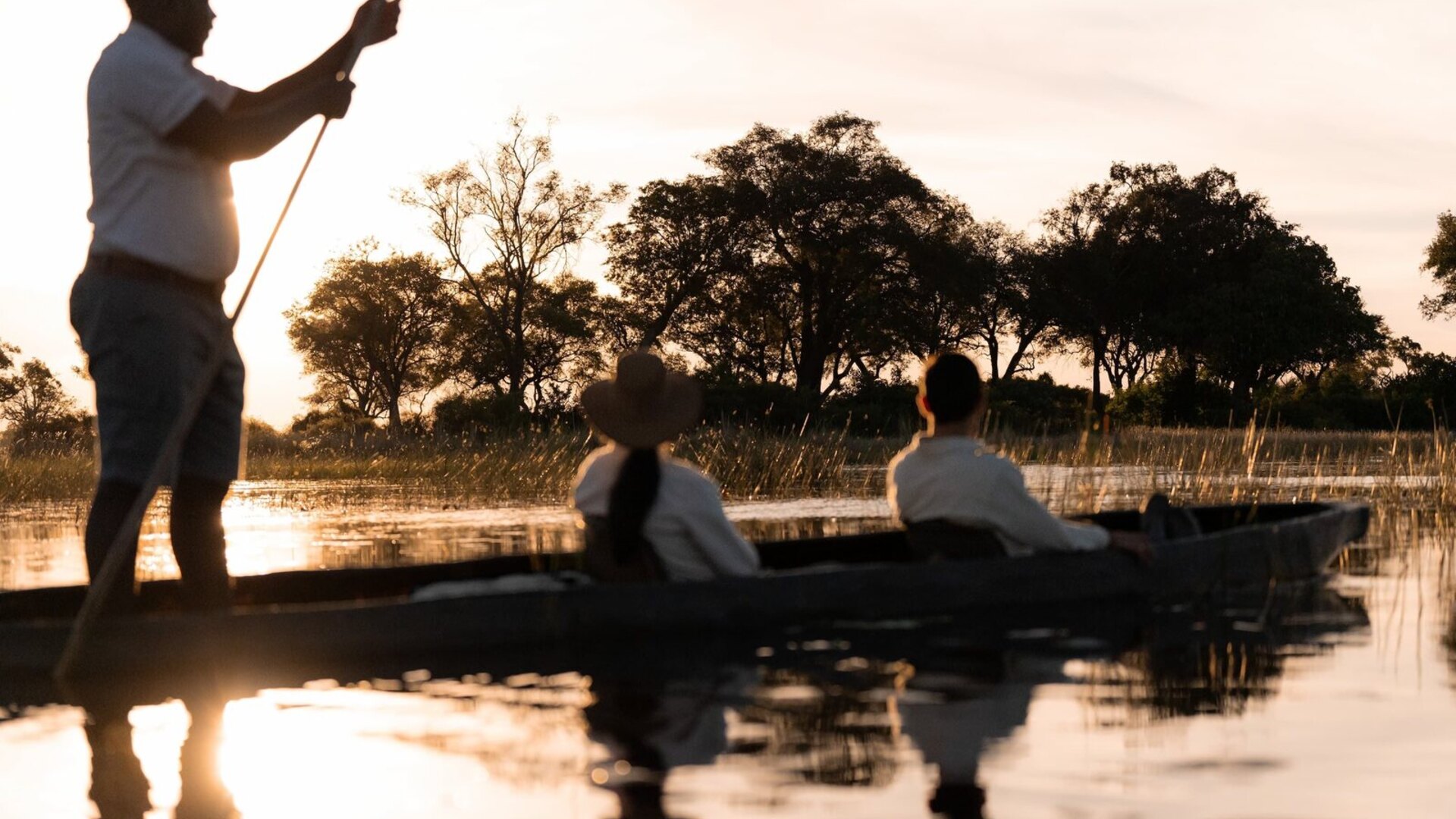
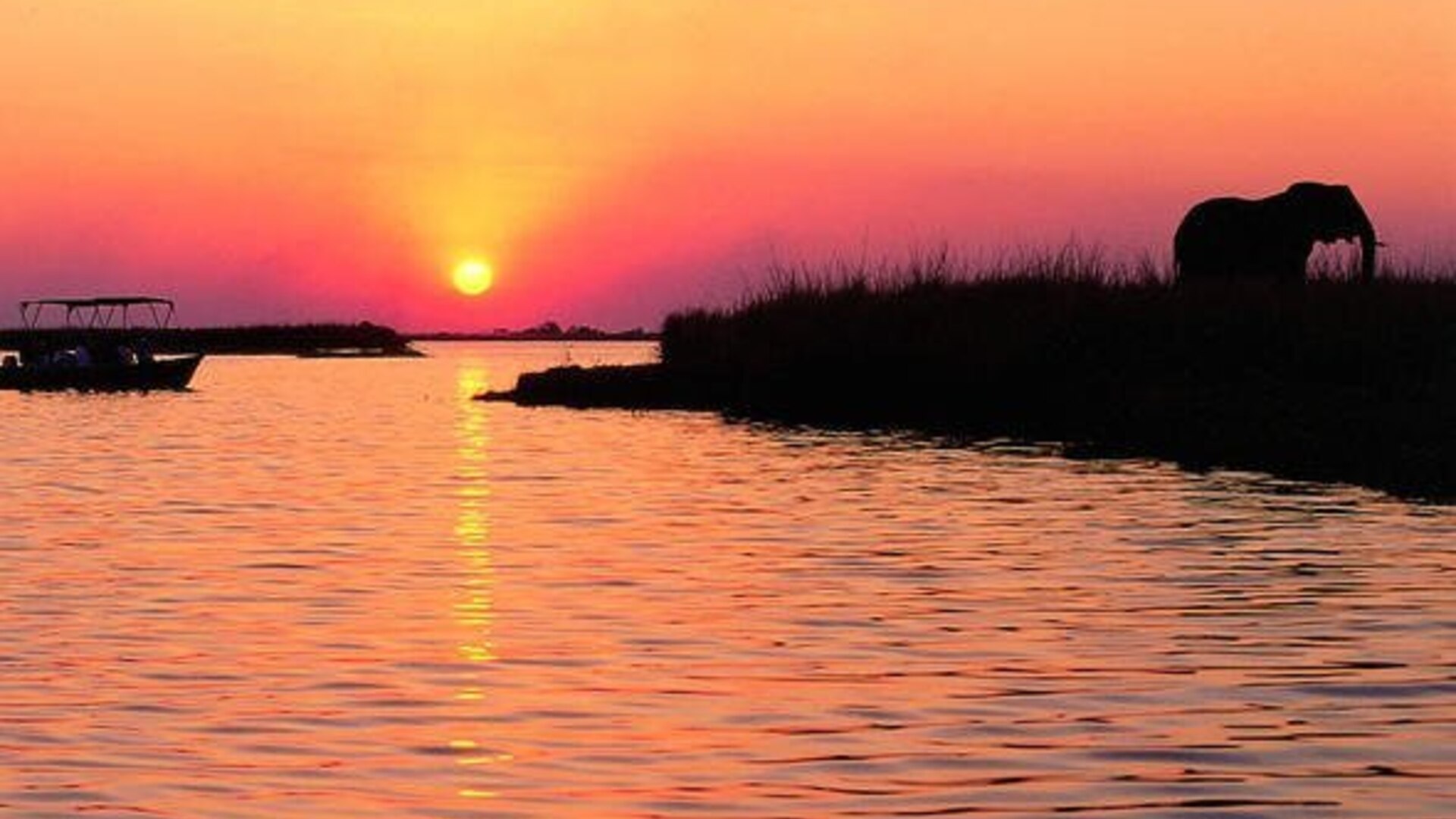
Botswana is the safari for travellers who want wilderness without the crowds. Here a river spills into the Kalahari and simply vanishes into the sand, creating the Okavango Delta - a shifting maze of channels and islands where you drift past elephant in a dugout canoe. On the Chobe riverfront, thousands of elephant gather at dusk. In the Kalahari, black-maned lions patrol grass plains under the biggest skies in Africa. This is safari at its most exclusive and most pristine.
This guide ranks the ten safari destinations in Botswana worth building a trip around - deltas, rivers, deserts, salt pans and private concessions - and the routes that stitch them together. For each, we tell you what it is genuinely best for, when to go, how to reach it, and how it fits into a broader itinerary. For the comprehensive country overview, see our Ultimate Botswana Travel Guide. If you want accommodation detail, our Best Botswana Safari Lodges & Camps guide goes property by property. For the Big Five species story, see Big Five Safari Botswana. This article answers the bigger question: where should you go, and in what order?
How to Read Botswana: Three Safari Regions
Before choosing destinations, understand the geography. Botswana's safari areas fall into three broad regions, and knowing them makes every other decision simple.
| Region | Headline Destinations | Best For |
|---|---|---|
| The Okavango & Delta Core | Okavango Delta, Moremi, Khwai | Water safaris, mokoro glides, big cats and wild dogs, the classic Botswana experience |
| The Rivers & North | Chobe, Linyanti, Selinda, Savuti | Elephant herds, riverfront game viewing, predator concessions, the gateway to Victoria Falls |
| The Kalahari & Salt Pans | Central Kalahari, Makgadikgadi, Nxai Pan, Tuli Block | Desert lions, the zebra migration, meerkats, baobabs, green-season drama and dark skies |
Most first-time Botswana safaris combine the Okavango Delta + Moremi or the Linyanti + Chobe in a single fly-in journey that often ends at Victoria Falls. Return visitors add the Central Kalahari or Makgadikgadi Pans for desert and salt-pan magic, best in the green season. Below, the ten destinations that make each region sing - ranked by how much they should shape your trip.
The 10 Best Safari Destinations in Botswana
1. Okavango Delta - The World's Greatest Water Wilderness
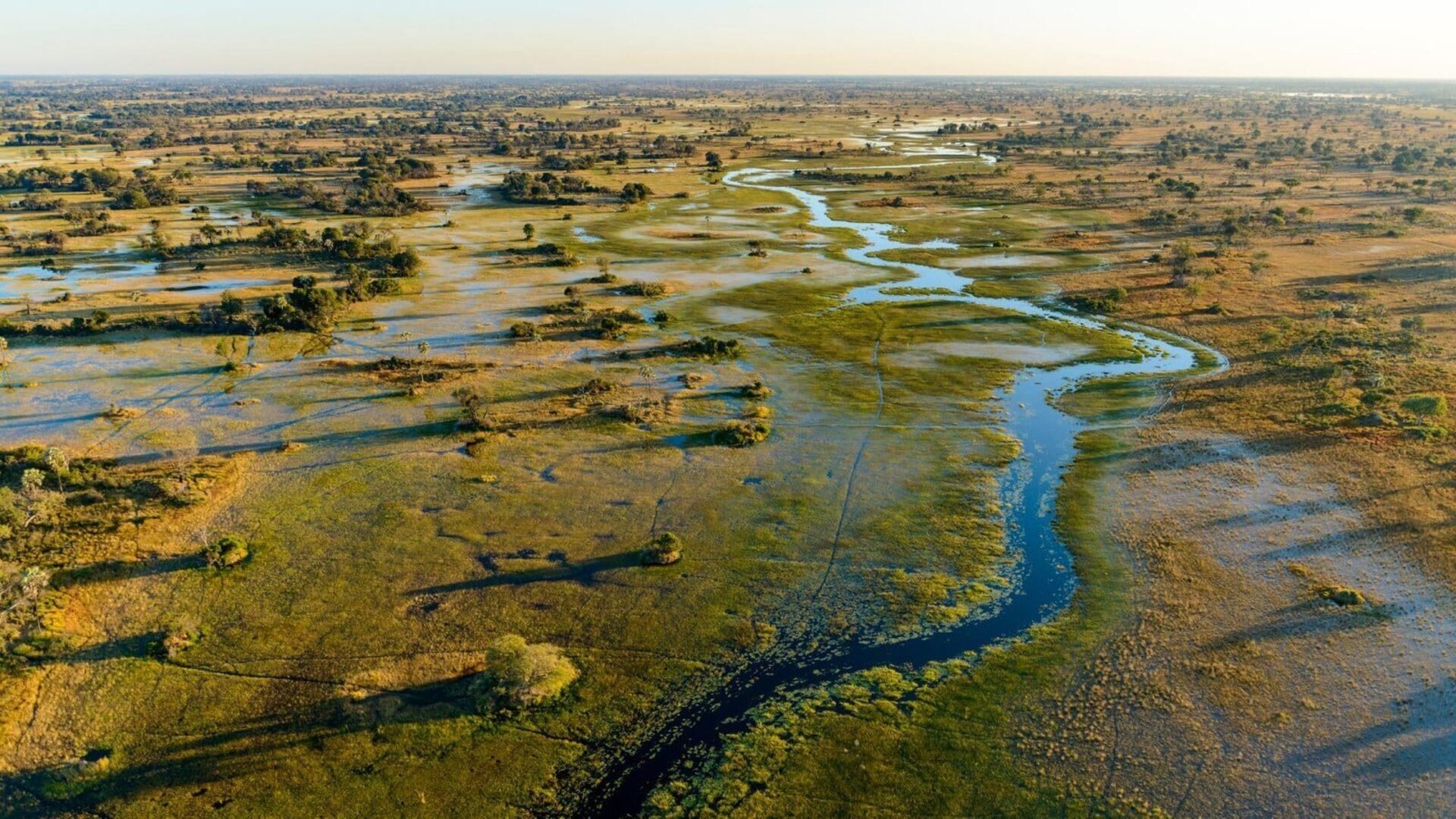
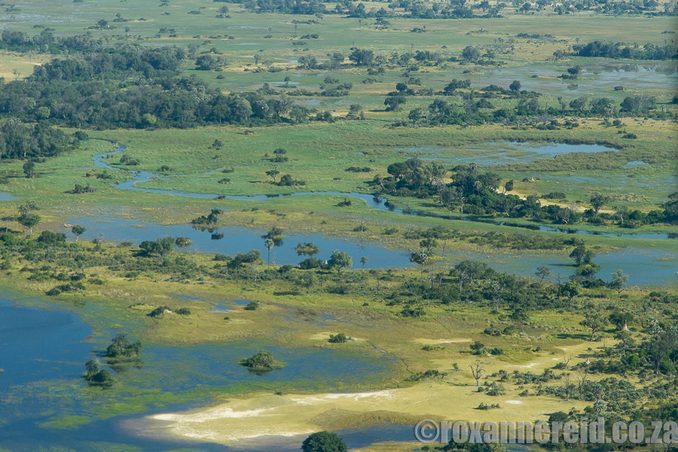
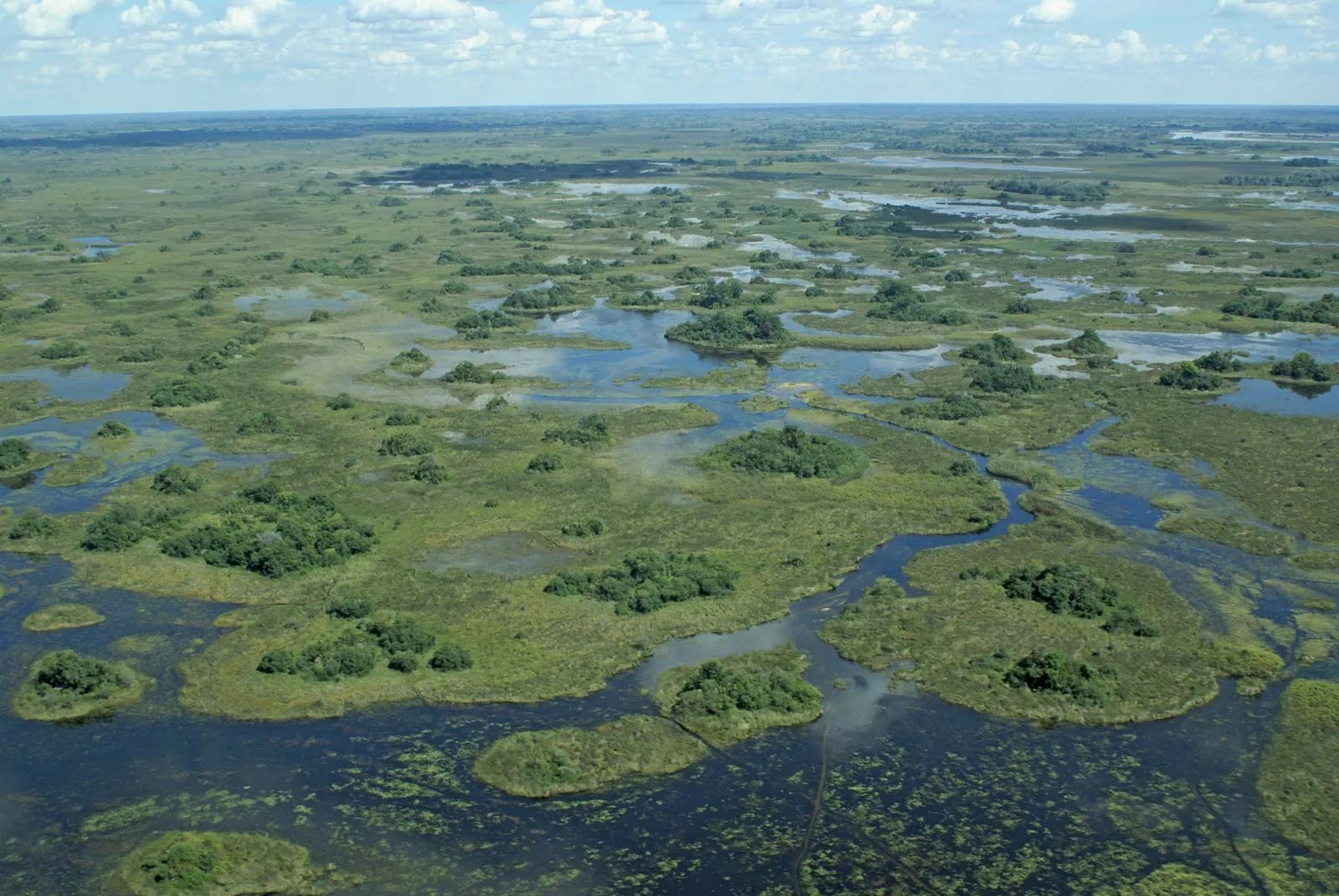
Nothing prepares you for the Okavango Delta. Each year, floodwaters from the Angolan highlands pour south and spread across the flat Kalahari sands, creating a vast, ever-shifting oasis of channels, lagoons and palm-fringed islands in the middle of the desert - a river that never reaches the sea. It is the largest inland delta on Earth and, without question, the crown jewel of Botswana safari.
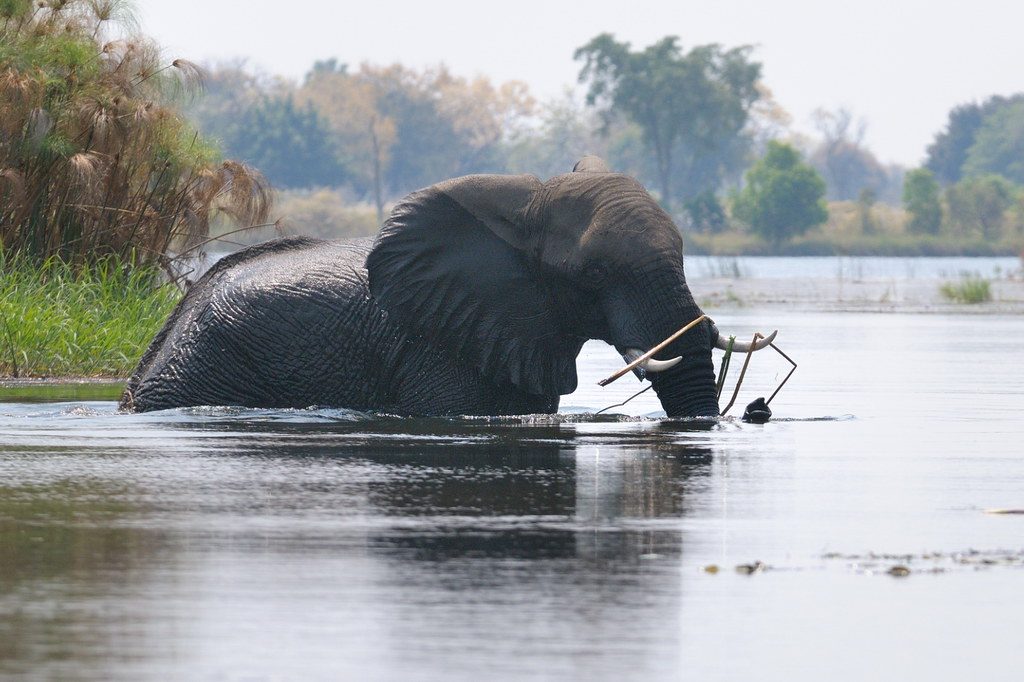
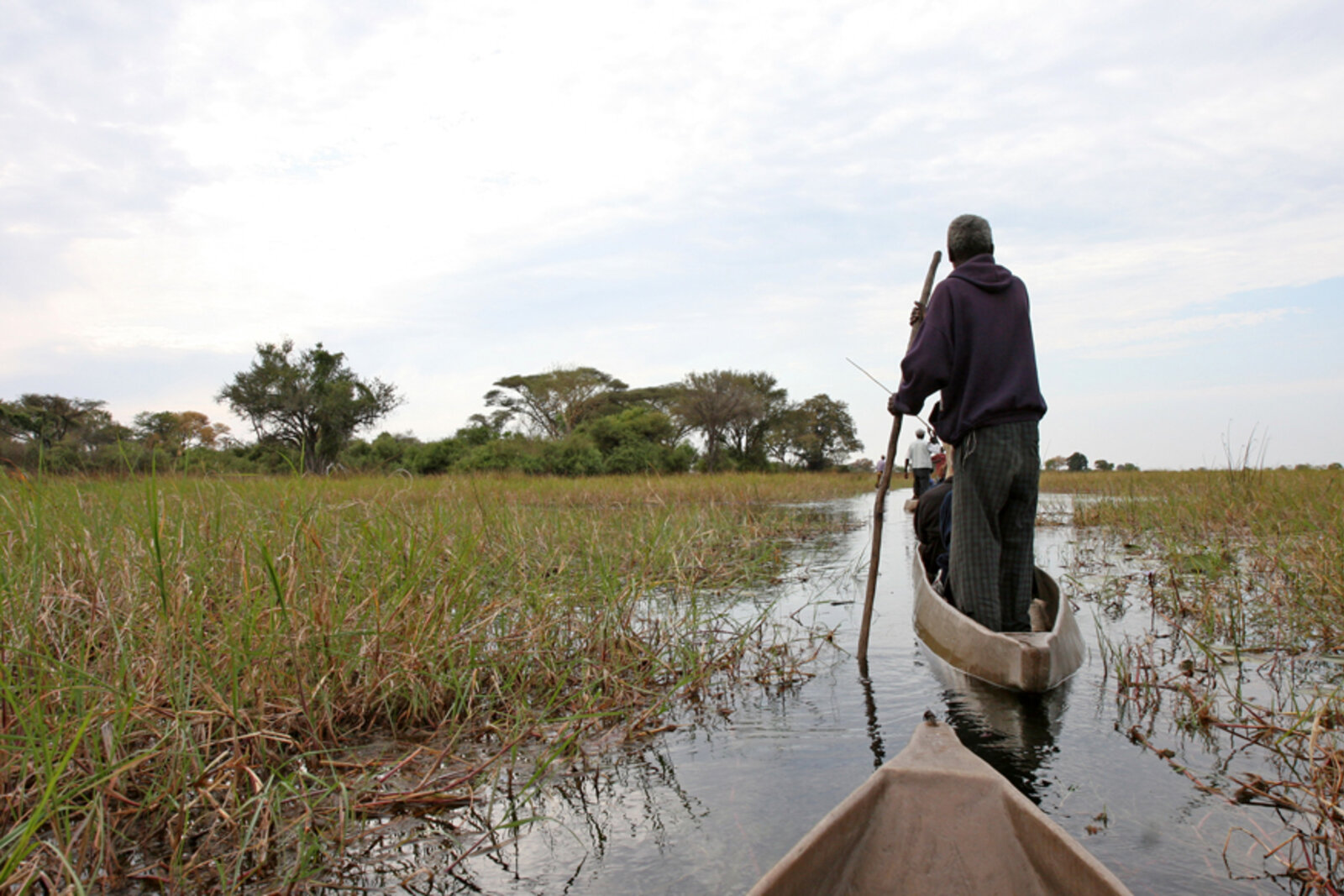
Here you explore by water as much as by land - gliding silently through the reeds in a mokoro (dugout canoe), cruising the channels by boat, and tracking big game by 4x4 on the islands. Elephant wade the floodplains, red lechwe splash through the shallows, and the delta's islands hold lion, leopard and one of Africa's healthiest populations of wild dog. Every camp offers a different slice of this water world.
- Best for: Water safaris, mokoro and boat trips, big cats and wild dogs, the essential Botswana experience.
- When to go: June-August for peak floodwaters and water activities; May-October for excellent all-round game viewing.
- Access: Fly-in by light aircraft from Maun to the camp airstrips - the classic way to reach the delta.
- Reality check: Water levels vary by camp and season - some camps are 'wet' (mokoro country), others 'dry' (4x4 country). Choose to match the experience you want.
2. Chobe National Park - The Elephant Capital of Africa
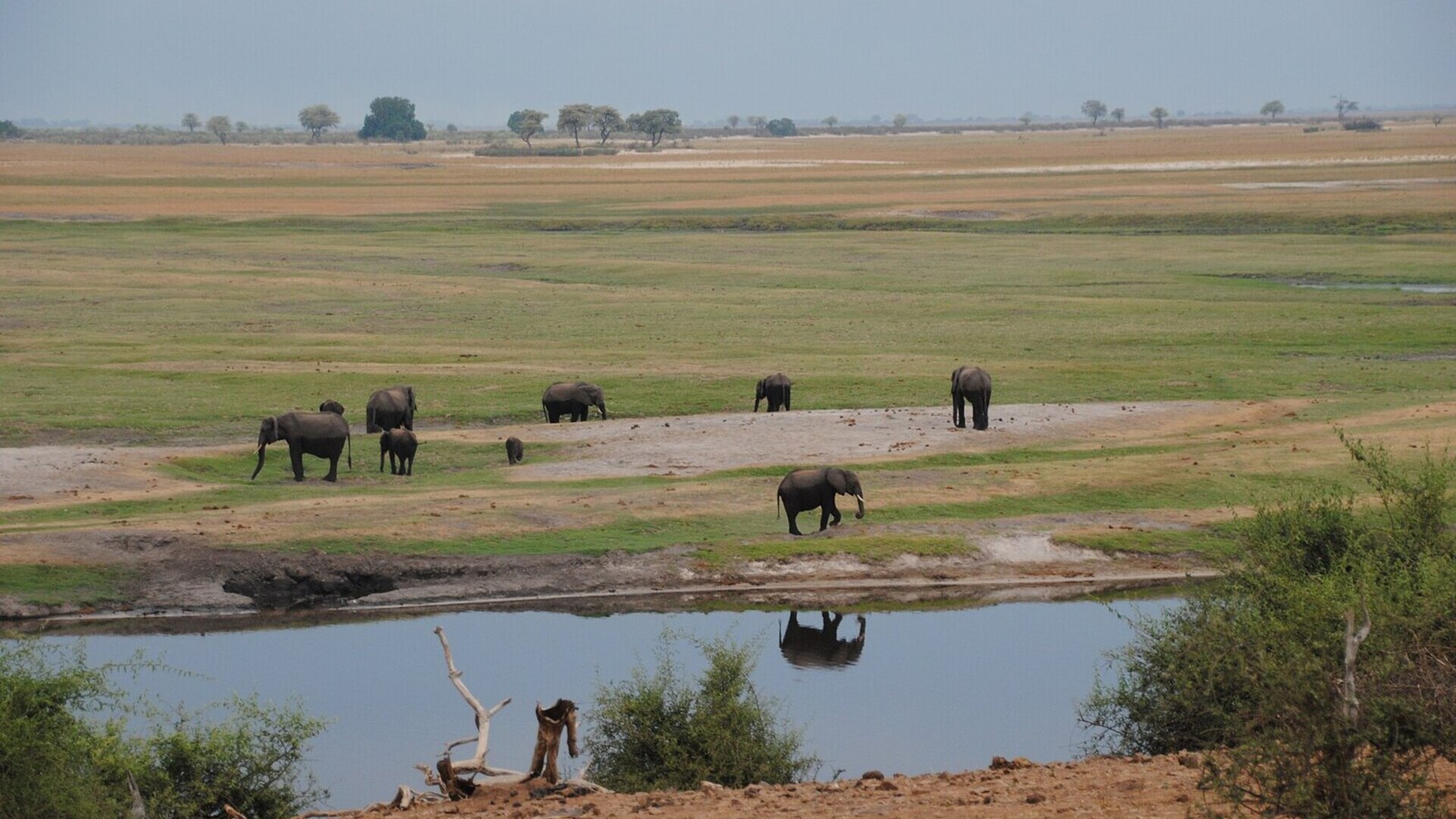
Chobe National Park holds the greatest concentration of elephant on the continent - estimates run to tens of thousands - and nowhere is the spectacle more accessible than along the Chobe riverfront. In the dry season, herds pour down to the water to drink, bathe and cross, often within metres of your vehicle or boat. A sunset river cruise here, gliding past drinking elephant, wallowing hippo and basking crocodile, is one of the great safari experiences in Africa.
Beyond the elephants, the riverfront teems with buffalo, giraffe, lion, sable and huge numbers of birds. Chobe's easy access - it is close to Kasane and just a short transfer from Victoria Falls - makes it a natural start or finish to a Botswana journey, combining big numbers with genuine comfort.
- Best for: Elephant, river cruises, easy game viewing, combining with Victoria Falls.
- When to go: May-October (dry season), peaking August-October when elephant crowd the river.
- Access: Drive or fly to Kasane; a short transfer from Victoria Falls (Zambia or Zimbabwe).
- Reality check: The riverfront can get busier than Botswana's private concessions. For solitude, stay in a private area or visit the quieter Savuti and Linyanti sectors.
3. Moremi Game Reserve - The Predator Heart of the Delta
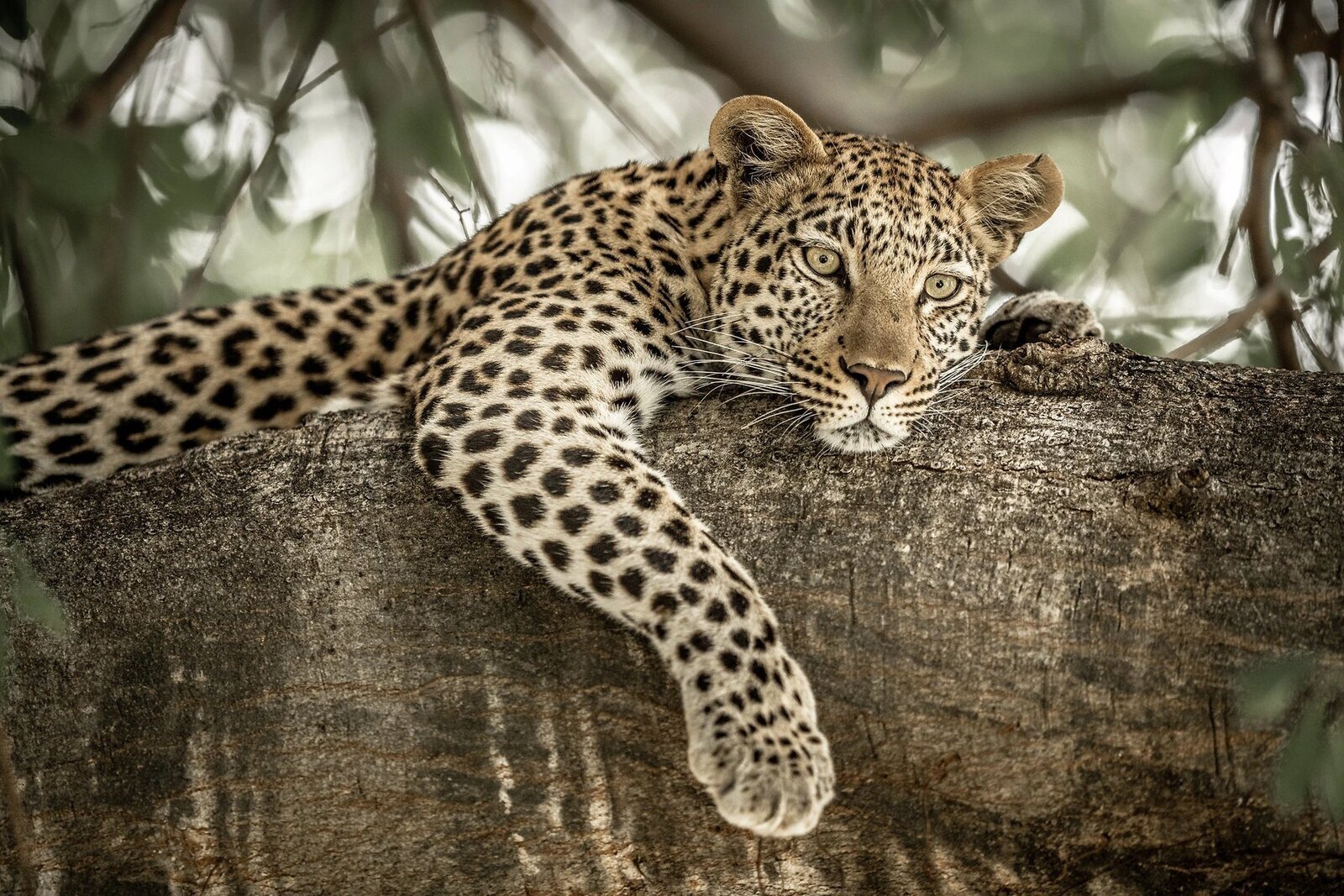
Moremi Game Reserve protects the eastern third of the Okavango Delta and is widely regarded as one of the finest game reserves in Africa - a superb mosaic of permanent water, floodplains, mopane forest and grassland. It is the only officially protected core of the delta, and its wildlife density is extraordinary: this is prime territory for lion, leopard, cheetah and wild dog, alongside elephant, buffalo and huge herds of plains game.
Moremi combines land and water beautifully - morning game drives across the islands, afternoon boat trips through the lagoons - and its legendary areas such as Chief's Island and the Khwai region deliver some of the most reliable big-cat and wild-dog sightings on the continent. For predator action in a delta setting, Moremi is hard to beat.
- Best for: Big cats, wild dogs, mixed land-and-water game viewing, serious wildlife enthusiasts.
- When to go: May-October for the best predator viewing and comfortable conditions.
- Access: Fly-in to the reserve's airstrips, or by 4x4 on a mobile safari from Maun.
- Reality check: As a national reserve, off-road driving and night drives are restricted inside its boundaries - the adjacent private concessions allow both.
4. Central Kalahari Game Reserve - Desert Lions & Endless Space
The Central Kalahari Game Reserve is one of the largest protected areas on Earth - a vast, remote wilderness of grass plains, ancient riverbeds and fossil valleys where the silence is total and the horizons endless. This is the land of the famous black-maned Kalahari lion, of cheetah on the open pans, of gemsbok, springbok and habituated meerkats that will use a standing human as a lookout post.
The Kalahari transforms with the seasons. In the green season (December to April), rain brings a flush of grass to Deception Valley and draws thousands of animals - and the predators that follow them - onto the plains, in one of Africa's great and least-known wildlife spectacles. By night, the desert delivers some of the darkest, starriest skies on the continent.
- Best for: Desert lions, cheetah, meerkats, green-season game, solitude and dark skies.
- When to go: December-April (green season) for the best wildlife in Deception Valley; year-round for desert atmosphere.
- Access: Fly-in to the camp airstrips, or a serious self-sufficient 4x4 expedition.
- Reality check: Wildlife is seasonal and spread out - the green season is prime, and the dry months are quieter for game but superb for solitude.
5. Linyanti & Selinda - Private Predator Country
Between the Okavango and Chobe lies a belt of private concessions - the Linyanti, Selinda and Kwando reserves - that rank among the finest wildlife areas in Botswana. Fed by the Linyanti and Selinda waterways, these vast private lands support enormous dry-season elephant concentrations and some of the best predator viewing in Africa: lion, leopard, cheetah and outstanding populations of wild dog.
Because these are private concessions rather than national parks, they permit off-road driving, night drives and walking safaris - and camp numbers are strictly limited, so you often have wildlife sightings entirely to yourself. This is Botswana's low-volume, high-value model at its very best.
- Best for: Predators and wild dogs, dry-season elephant, exclusive game viewing, night drives and walking.
- When to go: May-October (dry season) when wildlife concentrates along the waterways.
- Access: Fly-in only, to the private camp airstrips.
- Reality check: Exclusivity comes at a premium - these are among the priciest camps in the country, but also the least crowded.
Botswana's Waterways & Delta

6. Makgadikgadi Pans - Salt, Stars & the Zebra Migration
The Makgadikgadi Pans are the ghostly remains of a super-lake that once covered much of Botswana - a vast expanse of mirage-white salt flats so large they are visible from space. In the dry season the pans are a surreal, empty moonscape where you can quad-bike to the horizon and sleep out under a blaze of stars. Then the rains come, and everything changes.
The green season transforms the surrounding grasslands into a nursery for one of Africa's great and least-known events - the Makgadikgadi and Nxai zebra migration, the longest land-mammal migration on the continent. Add habituated meerkats, desert-adapted wildlife, and the eerie beauty of the pans themselves, and you have one of Botswana's most distinctive destinations.
- Best for: Salt-pan landscapes, the zebra migration, meerkats, quad-biking, sleep-outs and stargazing.
- When to go: Green season (December-April) for the migration and wildlife; dry season for the surreal empty pans and star beds.
- Access: Fly-in or drive from Maun; often combined with the delta.
- Reality check: A destination of two totally different faces - decide whether you want the migration (wet) or the empty-pan magic (dry) before you book.
7. Savuti - The Channel of the Lions
Savuti, in the western reaches of Chobe National Park, is one of Africa's most famous predator arenas. Its mysterious channel has dried up and flowed again several times over the decades, and the resulting landscape - a marsh fringed by rocky outcrops and open plains - supports a legendary population of lion, along with leopard, cheetah, spotted hyena and wild dog.
Savuti is renowned for dramatic wildlife encounters, including the extraordinary spectacle of its lion prides hunting elephant in the dry season - behaviour documented in countless wildlife films. In the green season, the arrival of thousands of zebra and their newborn foals draws predators onto the plains for another round of high-stakes drama.
- Best for: Lion and big cats, predator drama, dramatic landscapes, wildlife photography.
- When to go: May-October for dry-season predator action; November-March for the zebra and newborns.
- Access: Fly-in to the Savuti airstrip, or by 4x4 on a mobile safari linking the delta and Chobe.
- Reality check: Water levels in the Savuti Channel are famously unpredictable - the game, however, is reliably excellent.
8. Nxai Pan - Baobabs & Green-Season Plains
Just north of the Makgadikgadi lies Nxai Pan National Park, a fossil lakebed of open grassland dotted with the iconic cluster of ancient trees known as Baines' Baobabs, immortalised by the Victorian painter Thomas Baines. In the dry season Nxai is quiet and starkly beautiful; in the green season it becomes one of Botswana's finest wildlife stages.
After the rains, the plains fill with zebra, springbok, wildebeest and giraffe - and the lion, cheetah and wild dog that hunt them. Nxai's open terrain makes for superb, unobstructed game viewing and photography, and its combination with the Makgadikgadi Pans creates a rewarding desert-and-pans leg away from the delta crowds.
- Best for: Baobabs, green-season wildlife, open-plain photography, quiet desert safari.
- When to go: December-April (green season) for the best wildlife; year-round for the baobabs and landscapes.
- Access: Fly-in or 4x4 from Maun; naturally paired with the Makgadikgadi Pans.
- Reality check: Very seasonal for wildlife - the green season is the time to come. In the dry months it is more about landscape than big game.
9. Khwai Community Concession - Flexible Wilderness on the Delta's Edge
Bordering Moremi along the Khwai River, the Khwai Community Concession is one of Botswana's wildlife-richest and most flexible areas - a community-run reserve that delivers the same superb delta-edge game viewing as Moremi, but with the freedoms of a private concession. Here your guide can drive off-road to follow a leopard, run night drives to find the nocturnal world, and lead walking safaris across the floodplains.
The Khwai River is a magnet for wildlife, drawing elephant, buffalo, lion, leopard and wild dog to its banks, especially in the dry season. Because the concession supports both classic lodges and value-focused mobile camps, it offers a rare combination of outstanding wildlife and flexible pricing - a favourite for travellers who want the delta experience with more freedom.
- Best for: Off-road drives, night drives, walking safaris, flexible pricing, delta-edge wildlife.
- When to go: May-October (dry season) when game concentrates along the Khwai River.
- Access: Fly-in to the Khwai airstrips, or by 4x4 on a mobile safari.
- Reality check: A community area rather than a national park - the activity freedom is a genuine advantage over neighbouring Moremi.
10. Tuli Block - Botswana's Hidden Eastern Corner
In the far east, where Botswana, South Africa and Zimbabwe meet, lies the little-known Tuli Block - a dramatic land of red rock formations, riverine forest along the Limpopo, and sweeping views utterly unlike the flat delta country to the west. Sometimes called the "Land of Giants," it is home to large elephant herds, big predators, and unusual species such as the eland and the elusive brown hyena.
Tuli offers a genuinely different Botswana experience - superb photography against sculptural geology, excellent walking and horseback safaris, and a fraction of the visitor numbers found elsewhere. For a second-time visitor, or anyone seeking something off the classic circuit, it is a rewarding and affordable addition.
- Best for: Dramatic scenery, elephant, walking and horseback safaris, photography, off-the-beaten-track travel.
- When to go: May-October for wildlife; the landscape is striking year-round.
- Access: Fly-in or drive via the eastern border; it stands apart from the northern circuit.
- Reality check: Remote from the delta and Chobe - build it in as a distinct leg or a stand-alone trip rather than a quick add-on.
Botswana's Predators & Plains



How to Combine Botswana's Destinations Into One Trip
Botswana rewards contrast. The classic 7-10 day route pairs a water-based camp in the Okavango Delta (for mokoro and lagoons) with a land-based camp in Moremi or the Linyanti (for big cats and wild dogs), then finishes on the Chobe riverfront for elephant - often continuing to Victoria Falls. Every leg is a short, scenic light-aircraft hop, so you spend your time in the wilderness rather than on the road.
With more time, or on a return visit, add the Central Kalahari or the Makgadikgadi Pans for desert lions, the zebra migration and star-filled nights - best in the green season, when the delta is quieter and the deserts come alive. For help mapping the logistics and pacing, our Private Safari Tours Botswana guide and Ultimate Botswana Travel Guide are the place to start, and our Best Time to Visit Botswana guide helps you time it right.
Planning tip: In Botswana, water and wildlife peak at opposite ends of the calendar depending on region. The Okavango's flood and the northern rivers are best May-October, while the Kalahari and the pans shine in the green season (November-April). If you want both the delta and the desert at their finest, you may need two trips - or focus on the shoulder months for a fair balance.
Best Time for a Botswana Safari
Botswana is a year-round destination, but the experience changes dramatically with the seasons. Here is the quick view - for the full month-by-month breakdown, see our Best Time to Visit Botswana guide.
| Season | Months | What to Expect |
|---|---|---|
| Peak Dry Season | July-October | Best wildlife around the delta and rivers - elephant crowd Chobe, predators hunt hard. Peak Okavango flood June-August. Prime time. |
| Early Dry Season | May-June | Fresh green fading to gold, rising floodwaters, fewer visitors, superb value. Excellent all-round. |
| Green Season | November-April | The Kalahari and pans come alive - zebra migration, newborns, migratory birds, dramatic skies and lower rates. Some rain, lush landscapes. |
| Shoulder Months | April & November | A fine balance of decent wildlife across regions, green landscapes and fewer visitors. Good value. |
Ready to Plan Your Botswana Safari?
Our specialists design private, tailor-made Botswana journeys - fly-in or mobile - across every destination in this guide.
Explore Botswana Safari PackagesFrequently Asked Questions
Which is the best safari destination in Botswana?
It depends on what you want. For the classic water wilderness Botswana is famous for - mokoro glides, lagoons and island camps - the Okavango Delta is unbeatable. For sheer numbers of elephant and easy game viewing, Chobe National Park delivers. For big cats and wild dogs, Moremi and the Linyanti concessions are superb, and for desert lions and green-season drama, the Central Kalahari stands alone. Most great Botswana trips combine the delta with one or two other regions.
Can you see the Big Five in Botswana?
You can see four of the Big Five easily - elephant, lion, leopard and buffalo - across the Okavango Delta, Moremi, Chobe and the Linyanti. Rhino are the exception: both black and white rhino have been reintroduced to the Moremi area, but sightings are not guaranteed and populations are carefully protected. For elephant, Botswana is simply the best country in Africa.
Is Botswana better for fly-in or mobile safaris?
Botswana is the premier fly-in safari destination in Africa. Its camps are remote, its concessions are vast, and light-aircraft hops between airstrips are the classic way to travel. Mobile (overland) safaris, where a private crew moves camp with you, are a superb and more affordable alternative connecting the delta, Moremi, Savuti and Chobe by 4x4. Self-drive is possible but demands serious 4x4 experience and full self-sufficiency.
How many days do you need for a Botswana safari?
A focused trip to two areas - typically the Okavango Delta and Chobe - works well in 6-7 days. A fuller journey adding Moremi, the Linyanti or the Kalahari benefits from 8-10 days. To include the Makgadikgadi Pans or Central Kalahari alongside the delta, allow 10-12 days. Because most travel is by light aircraft between camps, Botswana packs a great deal into relatively few days.
When is the best time to go on safari in Botswana?
The dry season (May to October) is prime for wildlife, as animals concentrate around the delta's permanent water and the Chobe and Linyanti rivers - July to October is exceptional. The Okavango's annual flood peaks in the dry winter months, making June to August ideal for water activities. The green season (November to April) brings the Kalahari and pans to life with newborn animals, migratory birds and the zebra migration, at lower rates.
How do you combine Botswana's safari destinations into one trip?
The classic route pairs a water-based camp in the Okavango Delta with a land-based camp in Moremi or the Linyanti, then finishes on the Chobe riverfront near Victoria Falls - typically 7-10 days, all by light aircraft. Desert lovers add the Central Kalahari or Makgadikgadi Pans, best in the green season. Because Botswana borders Victoria Falls, Namibia and Zambia, it also combines beautifully into a wider southern-Africa journey.
Why is Botswana more expensive than other safari destinations?
Botswana follows a deliberate low-volume, high-value tourism model. The government limits the number of camps and beds across its vast concessions, keeping wildlife areas uncrowded and pristine - but this exclusivity comes at a premium. You are paying for remoteness, small camps, private guiding and some of the least-crowded wilderness in Africa. Mobile safaris and green-season travel offer more affordable ways to experience the same landscapes.
Is Botswana safe for safari travel?
Yes - Botswana is one of Africa's safest, most stable and best-run safari destinations, with a long record of political stability and a strong conservation ethos. Its camps are professionally operated and its guides are among the best trained on the continent. Standard travel precautions apply. Malaria is present in the northern safari areas, so anti-malarial prophylaxis is recommended - your operator will advise.
The Verdict: Botswana's Best Safari Destinations
Botswana is not a single safari - it is a set of wildernesses so distinct they feel like different worlds. The water labyrinth of the Okavango Delta, the elephant multitudes of Chobe, the predator theatre of Moremi and the Linyanti, and the desert lions of the Central Kalahari together form one of the most extraordinary journeys in Africa. Combine water and land, delta and desert, and let Botswana's space and silence do the rest.
When you are ready to turn this list into a route, our specialists will design a private, tailor-made Botswana journey - fly-in or mobile - around exactly the destinations that speak to you. For where to sleep along the way, continue to our Best Botswana Safari Lodges & Camps guide, and to see the full range of trips, browse our Top 10 Best Safari Tours in Botswana.