Key Takeaways
- The Serengeti has six official gates; Naabi Hill in the south-east is the main one and the entrance for almost everyone arriving from Arusha and Ngorongoro.
- Gates run 06:00 to 18:00, but aim to be through by about 16:00 — driving after dark is not allowed and the park is enormous.
- Your conservation fee buys 24 hours from the moment you enter, and it is paid by card or mobile money only — the gates take no cash.
- The non-resident adult conservation fee for 2026/27 is US$82.60 per 24 hours in the main season, with a lower rate from mid-March to mid-May.
- Five bush airstrips serve the park, and the right one depends entirely on where the migration is that month.
- From Arusha it is a 6 to 8 hour drive to central Serengeti, or a 45 to 75 minute flight to the Seronera airstrip.
How Entry Works
The Serengeti is not fenced the way the southern African parks are, but you still enter through a controlled gate where a ranger checks your permit and logs your vehicle. What trips up most first-timers is the sheer scale of the place. This is nearly 15,000 square kilometres, and a gate in the wrong corner can leave you with a four or five hour drive across the park to reach your camp. Getting the gate right is really about getting the corner right, and that comes down to the time of year and where you are sleeping.
Three rules govern every entry. First, the gates open at 06:00 and close at 18:00, but in practice you want to be through by mid-afternoon — a last-entry cut-off of around 16:00 is widely enforced so vehicles can reach camp before dark. Second, driving at night is not permitted anywhere inside the park, which is why that cut-off matters so much. Third, your park fee is a 24-hour conservation permit, valid from the moment you enter, and you can come and go through any gate within that window. Keep your entry time in mind, because the clock starts ticking the second you pass the barrier.
One detail saves a lot of confusion at the gate: the Serengeti is cashless. The Tanzania National Parks Authority collects fees through the government's electronic payment system, so you pay by Visa or Mastercard, or by mobile money, and never with notes. On an organised safari your operator settles this in advance and it sits inside your trip price, which is the smoothest way to handle it. If you are arranging your own entry, bring a working card and expect the card machine, not a cash drawer.
The Six Gates, One by One
Naabi Hill Gate is the one you will most likely use. It sits in the south-east, on the boundary with the Ngorongoro Conservation Area, and it is the entrance for almost everyone driving up from Arusha. It is also the most scenic arrival in the park: the gate stands at the foot of a granite kopje that rises straight out of the short-grass plains, and from the top you look out over an ocean of grass that runs to the horizon. It is busy in peak season, so expect a short wait while permits are processed, but there is no better first look at the Serengeti.
Ndabaka Gate guards the western boundary, close to Lake Victoria, and it is the natural entrance if you are coming from Mwanza or flying into that side of the country. It opens straight into the Western Corridor, the long arm of the park the herds pour through between roughly May and July. A last-entry time around 16:00 is the norm here. Handajega Gate sits a little south of it, a quieter back door into the same Kirawira and western country for those who want to sidestep the Ndabaka traffic.
Fort Ikoma Gate lies in the north-west, handy for travellers coming through the town of Mugumu, and it serves the Ikoma area on the park's western shoulder with a good set of visitor facilities. Klein's Gate is tucked into the north-east and links the park with the Loliondo and Lake Natron country beyond — a useful entrance for the eastern woodlands and some of the more remote northern camps.
Bologonja Gate sits in the far north, on the border with Kenya's Masai Mara, and it is the one people most often misunderstand. Despite its position it is not a tourist border crossing — it works as a ranger post and internal checkpoint, and it has been reported closed to general tourist traffic. There is no drive-through land crossing between the Serengeti and the Mara for visitors, so a Tanzania-to-Kenya migration trip is done by air or by the public border posts at Isebania or Namanga, never through Bologonja. Plan around that, because it catches people out every season.

The Serengeti by Air
For a park this big, the airstrips matter as much as the gates. Five of them serve the different sectors, and because the Great Migration moves through the year, the right strip changes with the season. Fly into the wrong one and you can still face a long game-drive transfer; fly into the right one and you are among the herds within the hour.
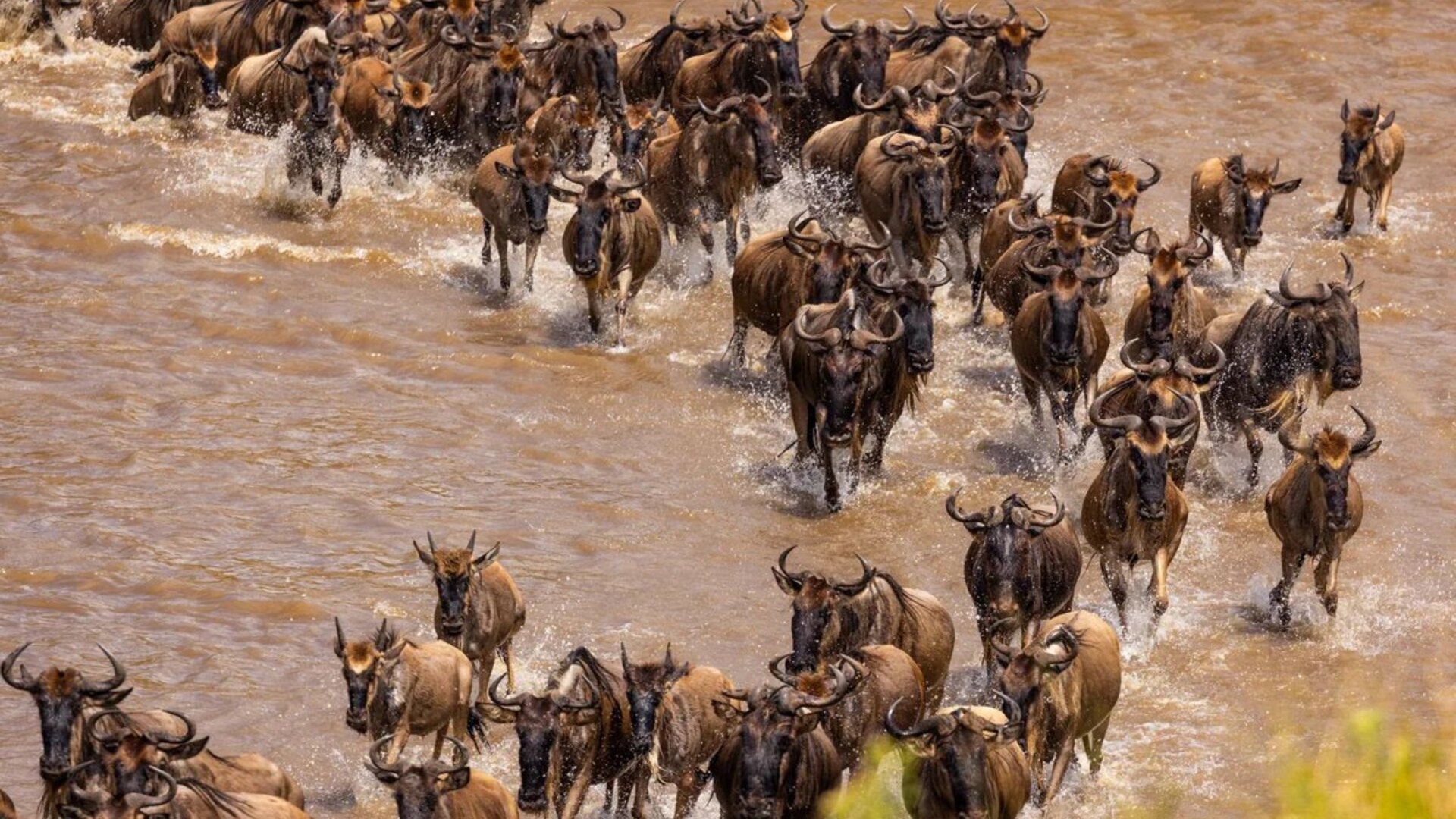
Seronera, in the central Serengeti, is the busiest and the most useful all-rounder — it works year-round and sits in resident big-cat country, so it suits first-timers and anyone whose dates straddle the seasons. Ndutu and Kusini, on the southern plains near Ngorongoro, are the strips for the calving season from December to March, when the short-grass plains fill with wildebeest and their newborns and the predators that follow them. Grumeti and Kirawira, in the west, come into their own from May to July as the herds move through the Western Corridor towards the Grumeti River. Kogatende and Lamai, in the north, are the hubs for the Mara River crossings between July and October — the drama most people picture when they think of the migration. And Lobo, in the quieter eastern woodlands, is a calm alternative from June to November.
Light aircraft fly in from Arusha, Kilimanjaro, Zanzibar and Mwanza, often as "milk runs" that touch down at two or three strips before yours, so your booked flight time is a guide rather than a promise. The bush planes are small, which means a strict luggage limit — usually around 15 kilograms in a soft-sided bag, as hard suitcases will not fit. Pack light, pack soft, and the flying part becomes one of the real pleasures of a Serengeti trip rather than a chore.

Park Fees at the Gate
Here is what you actually hand over at the barrier. The Serengeti conservation fee is charged per person for each 24-hour period inside the park, and for the 2026/27 season the non-resident adult rate is US$70 plus 18% VAT, which comes to US$82.60 a day, through the main season of 16 May to 14 March. In the quieter window of 15 March to 15 May the rate drops to US$60 plus VAT, or US$70.80. Children aged 5 to 15 pay US$23.60 including VAT year-round, and children under five enter free. Those are the headline numbers, and they are the ones to check line by line on any quote.
Two extras catch people out. If your camp or lodge is inside the park, there is a nightly concession fee on top of the conservation fee — it is how the lodges pay for their place in the wilderness, and it is normally bundled into your room rate or your safari price. And if you drive up from Arusha, you pass through the Ngorongoro Conservation Area on the way, which is a completely separate authority with its own entry permit of around US$70.80 per adult. That Ngorongoro charge is not a Serengeti fee and it is easy to miss when you are budgeting, so count it in.
This section is about paying at the gate, not about costing a whole safari — the full economics of a Serengeti trip, from vehicle hire to lodge tiers, is a bigger subject. If you want the complete picture of what a Serengeti safari costs and how the fees stack up against everything else, read our dedicated guide to Serengeti safari costs. For the gate itself, the rule is simple: know your nights, know whether you are sleeping inside the park, and have the card ready.
| Conservation Fee (per 24 hours) | Rate (incl. 18% VAT) |
|---|---|
| Non-resident adult — main season (16 May–14 Mar) | US$82.60 |
| Non-resident adult — low season (15 Mar–15 May) | US$70.80 |
| Child 5–15 (year-round) | US$23.60 |
| Child under 5 | Free |
| Ngorongoro permit (separate authority, on the drive in) | ≈ US$70.80 per adult |
Arusha to the Serengeti
Almost every Tanzanian safari starts in Arusha, and the question is always the same: drive or fly? Both are good, and the honest answer depends on how much time you have and how you feel about gravel roads. By road it is roughly 325 kilometres to Naabi Hill Gate and about 380 to the central Seronera area, which works out at 6 to 8 hours of driving to the heart of the park. The northern camps near Kogatende can be 500 kilometres and ten hours or more away, which is why nobody sensibly drives to the far north.
The drive itself is part of the trip. The classic route runs west from Arusha through Makuyuni, the busy market town of Mto wa Mbu and the coffee highlands around Karatu, then climbs into the Ngorongoro highlands before dropping down to Naabi Hill. The first stretch is smooth tarmac; once you enter the conservation area it turns to gravel and stays bumpy, especially in the wet months. Done well, with a stop at the Ngorongoro Crater rim on the way, it is a proper overland journey into the wild rather than a transfer to endure.
Flying trades the scenery for time. A light aircraft from Arusha reaches the Seronera airstrip in 45 to 75 minutes, and one-way scheduled seats typically run somewhere between US$200 and US$480 depending on the route and season. For the northern Serengeti in migration season, or for anyone short on days, flying is the obvious call. A lot of our guests do the best of both — drive in through Ngorongoro to soak up the landscape, then fly out from a bush strip at the end so they are not repeating that long gravel road in reverse. It is the arrangement we most often recommend.

Which Gate for Your Safari?
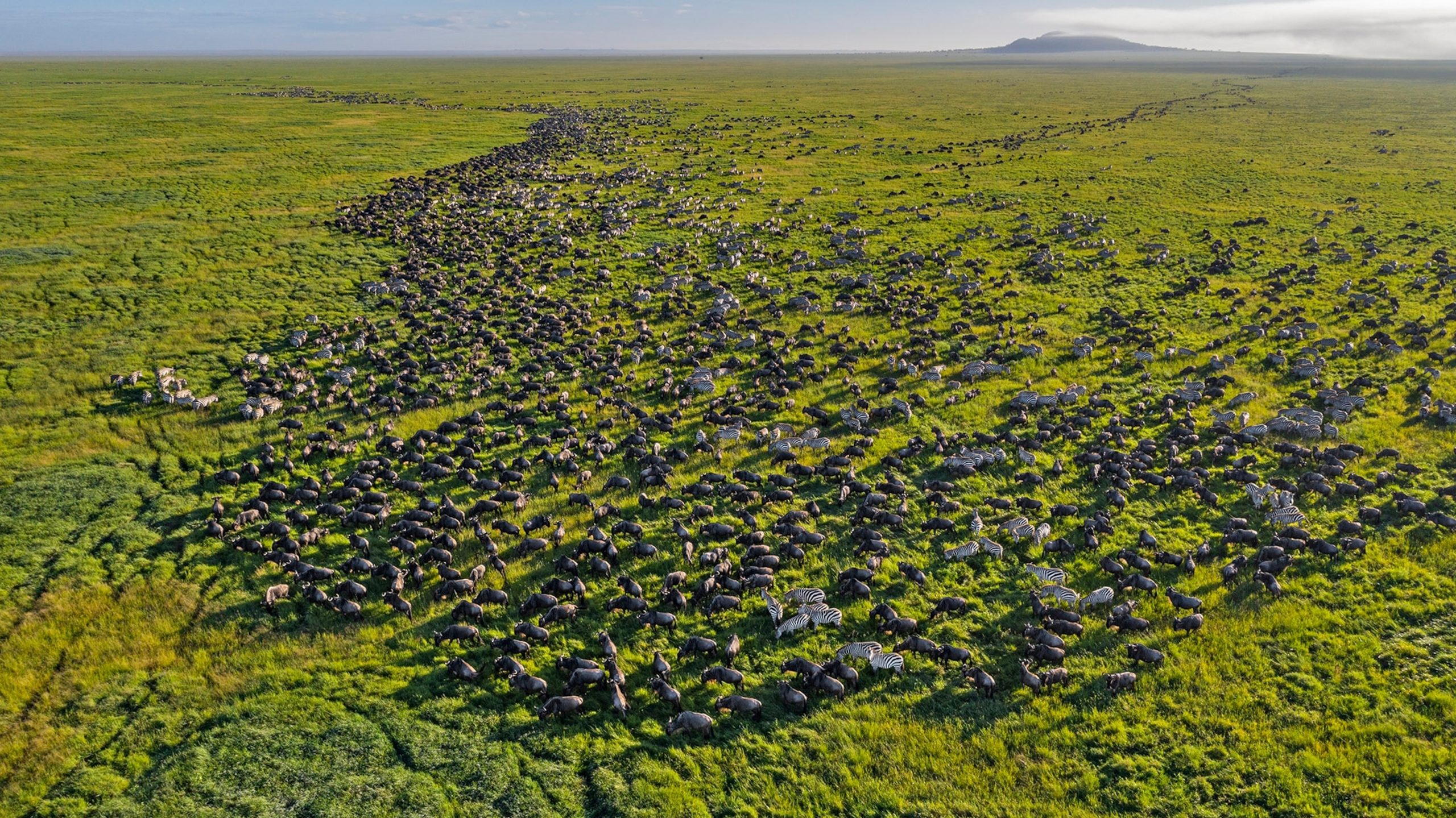
The simplest way to choose is to follow the herds and then work back to a gate or airstrip. From December to March the migration is on the southern plains for calving, so you want Naabi Hill by road or the Ndutu airstrip by air. From May to July the herds move into the Western Corridor, which points you at Ndabaka Gate or the Grumeti strip. From July to October the Mara River crossings pull everyone to the north, where Kogatende is the only sensible arrival and flying is almost essential. Central Serengeti around Seronera holds resident lion and leopard all year, so it is the safe choice whenever your dates fall between the big movements.
If you are combining the Serengeti with Ngorongoro and Tarangire on a classic northern-circuit trip, Naabi Hill ties the whole route together and you will likely drive the southern and central sectors. If the migration river crossings are your single goal, build the trip around a flight to the north and do not try to reach it by road. And if you simply want reliable big cats and open plains without chasing the herds, base yourself at Seronera and relax about the timing. Get the corner and the season right and the Serengeti delivers from your very first afternoon — which is exactly what we plan for every guest, down to the gate and the airstrip.

Let Us Get Your Serengeti Arrival Right
The gate, the airstrip, the season and the drive from Arusha are the moving parts that decide whether your first day is spent among the herds or stuck on a transfer. We know every one of them — which corner the migration is in for your dates, which strip lands you closest, and when the drive through Ngorongoro is worth it. Tell us when you want to travel, and we will build the arrival into a full Serengeti itinerary that puts you in the right place from the first afternoon.
Planning a Serengeti Safari?
Our specialists build private Serengeti and northern-circuit safaris around the migration — the right gate, the right airstrip and the right camps for your exact dates, with the fees and logistics handled for you.
Ready to plan? Browse our Serengeti safari packages →