Key Takeaways
- The Serengeti is outstanding all year — the migration is always somewhere in the ecosystem, and the resident big cats never leave.
- Calving on the southern plains peaks late January–February; river crossings in the north peak July–October.
- The dry season (late June–October) is the classic time — river-crossing drama and easy general game viewing.
- The green season (November–May) is lush, quieter and better value, with the spectacular southern calving as its highlight.
- Timing is about where the herds are, so choosing the right region of the Serengeti matters as much as the month.
The Serengeti Is Really About the Migration
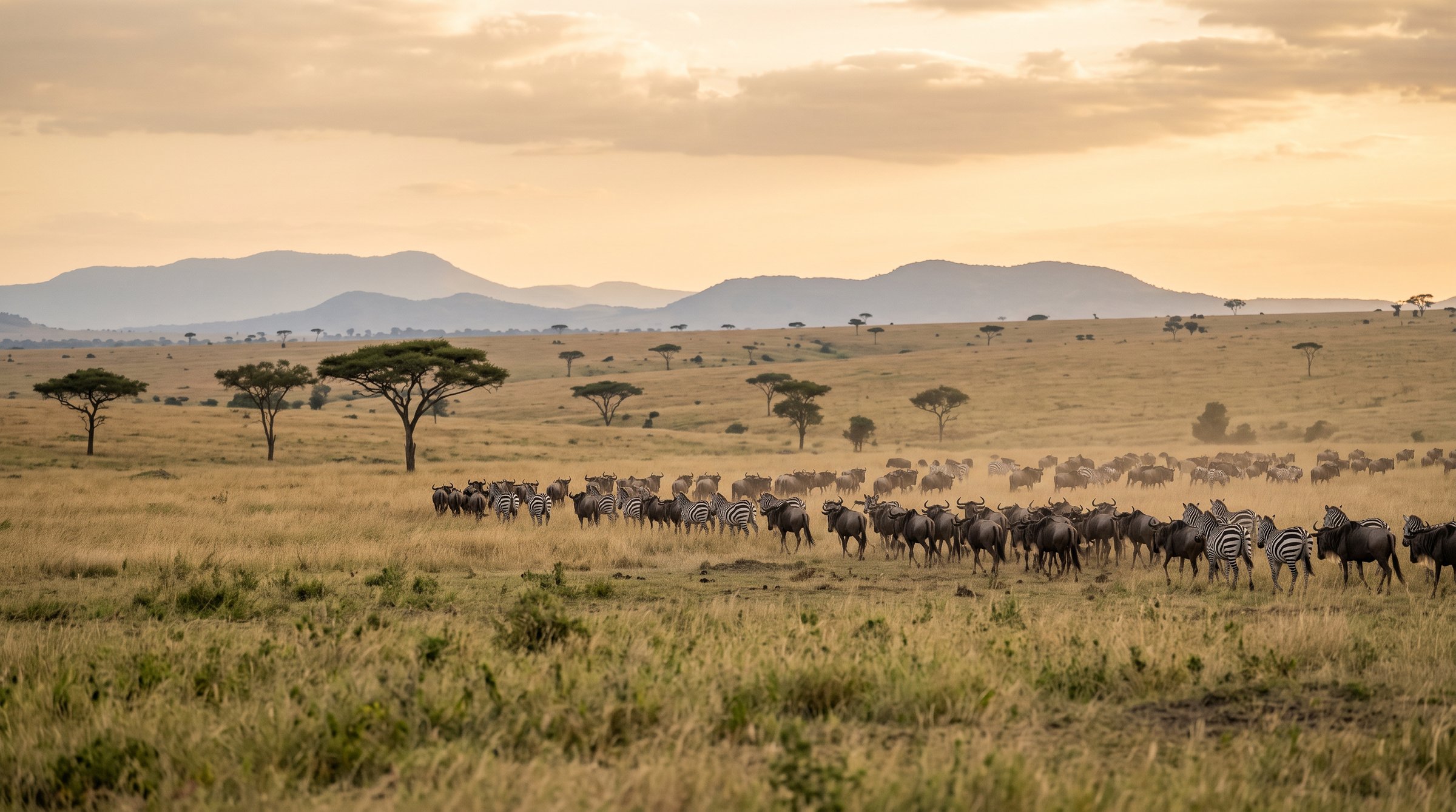
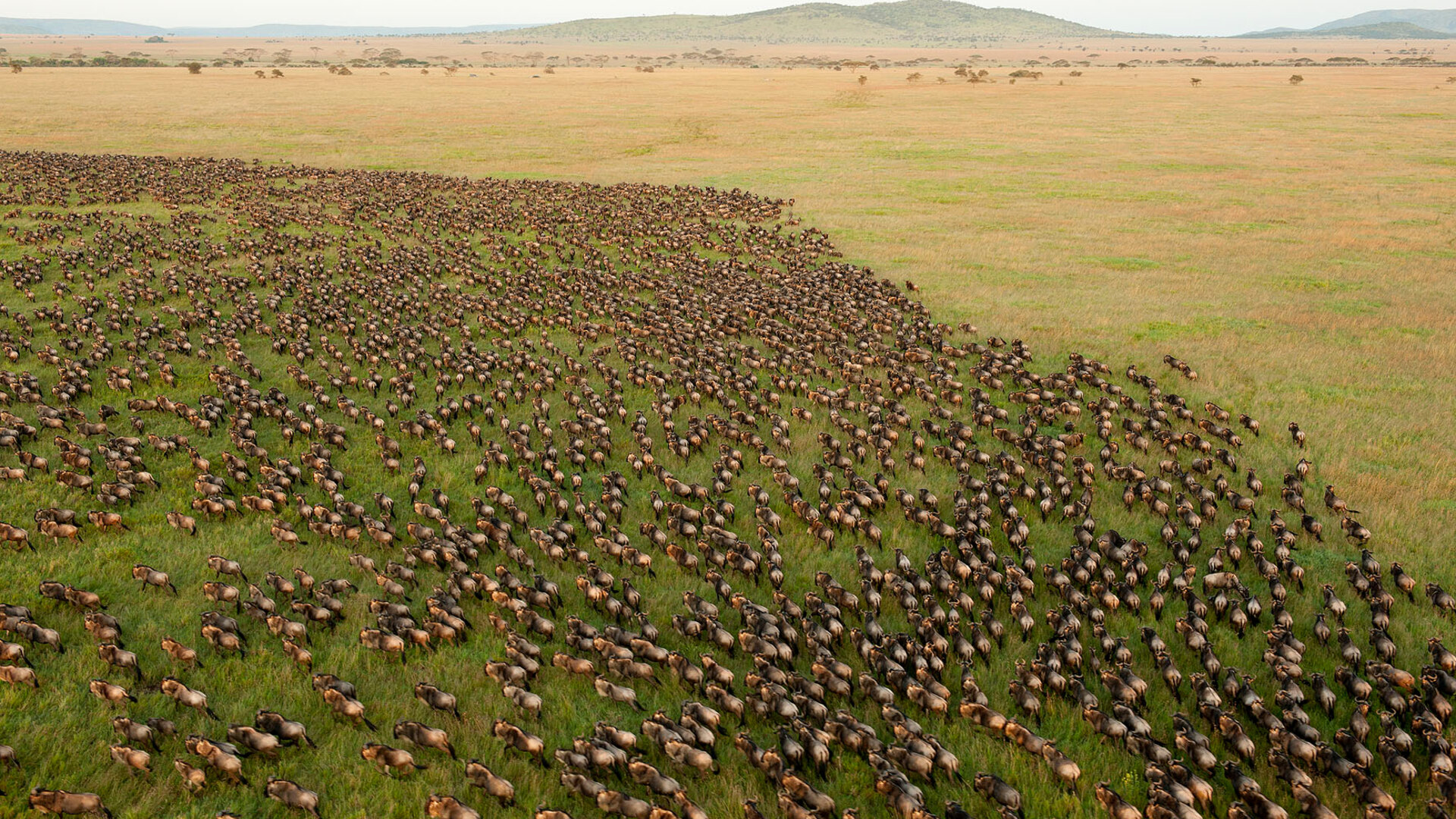
To choose the best time to visit the Serengeti, first understand that the herds never stop moving. The Great Migration is not an event with a fixed date — it is a continuous, year-round journey of some two million animals in a great clockwise loop, driven entirely by the rains and the fresh grass they bring. That means the Serengeti always has wildlife; the art is in placing yourself where the drama is at the time you travel.
Broadly, the herds spend the green months (roughly December to May) on the nutrient-rich southern short-grass plains, where they calve; then they push north-west through the Grumeti and up into the northern Serengeti and the Mara River for the dry season (roughly July to October), before circling back south as the rains return. The migration ignores calendars and reacts to the weather, so exact timing varies year to year — but the pattern is remarkably reliable.
The migration year in brief:
- Dec–Mar — southern plains (Ndutu): calving and predator action.
- Apr–May — herds begin moving north-west through the central Serengeti.
- Jun–Jul — the Grumeti River and the western corridor; the first crossings.
- Aug–Oct — the northern Serengeti and the dramatic Mara River crossings.
- Nov — the short rains pull the herds back south toward the plains.
The Calving Season (Late January–February)
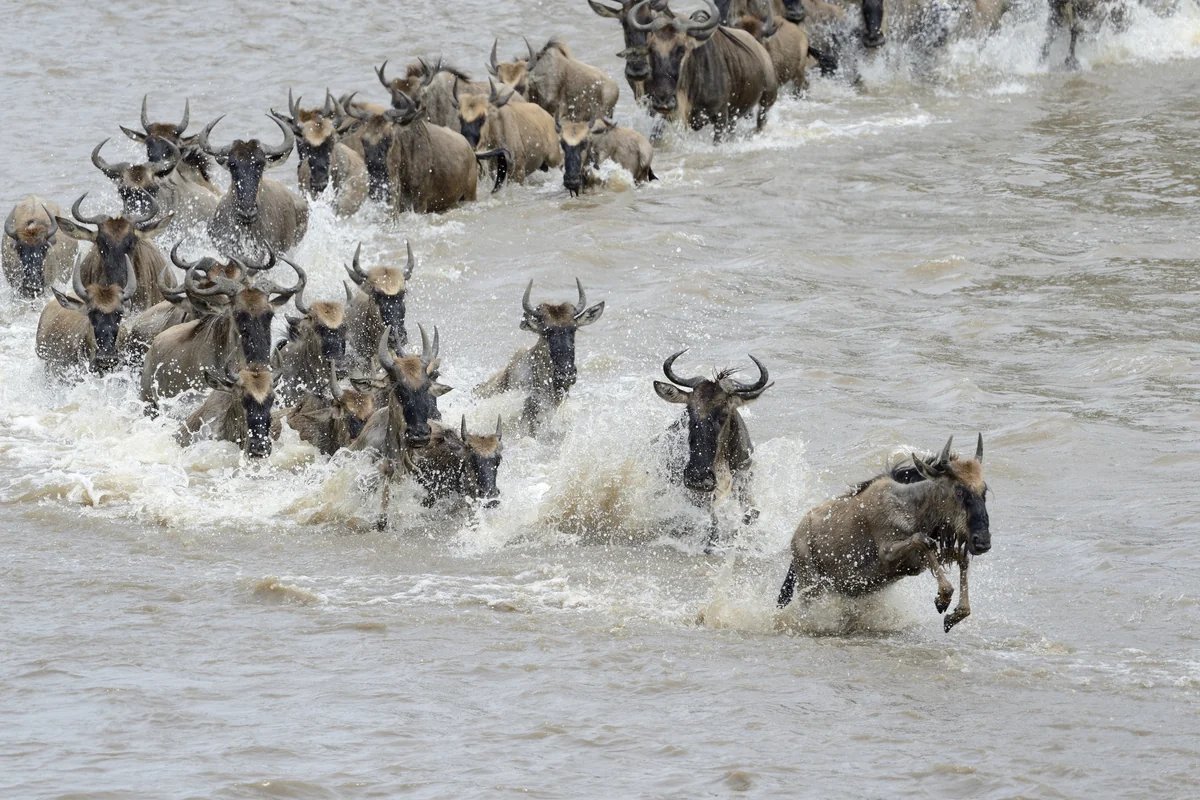
For many safari-goers, the calving is the greatest chapter of all. Through late January and February the herds gather on the mineral-rich southern short-grass plains around Ndutu, and in a concentrated three-week window some 400,000 wildebeest calves are born — up to 8,000 a day at the peak. The plains fill with newborns taking their first wobbly steps, and the sheer abundance draws every predator in the ecosystem.
This is the finest time for big-cat action: lion, cheetah and hyena hunt almost constantly, and the drama of the chase plays out on wide-open plains where nothing is hidden. The weather is green-season warm with short afternoon showers, the landscape is lush and photogenic, and — outside the immediate calving area — the wider Serengeti is quieter and better value. It is, quite simply, one of the great wildlife spectacles on Earth.
The River Crossings & the Dry Season (July–October)
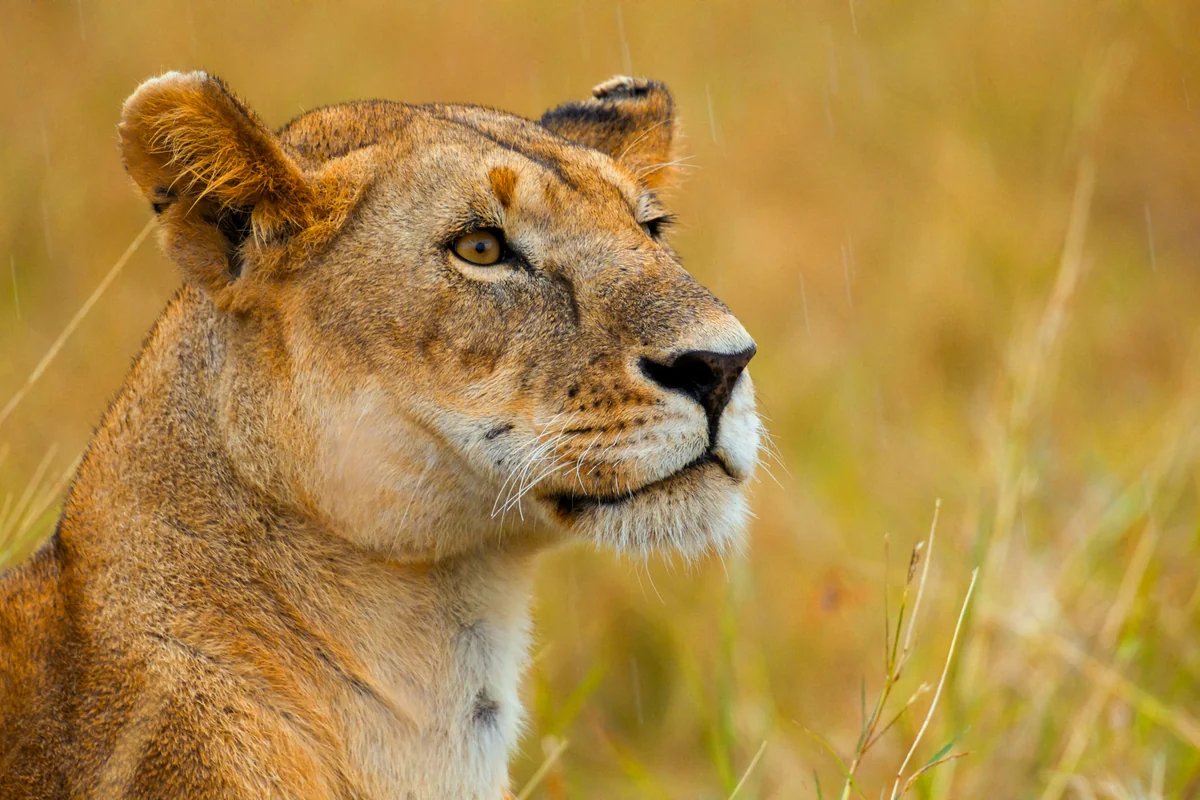
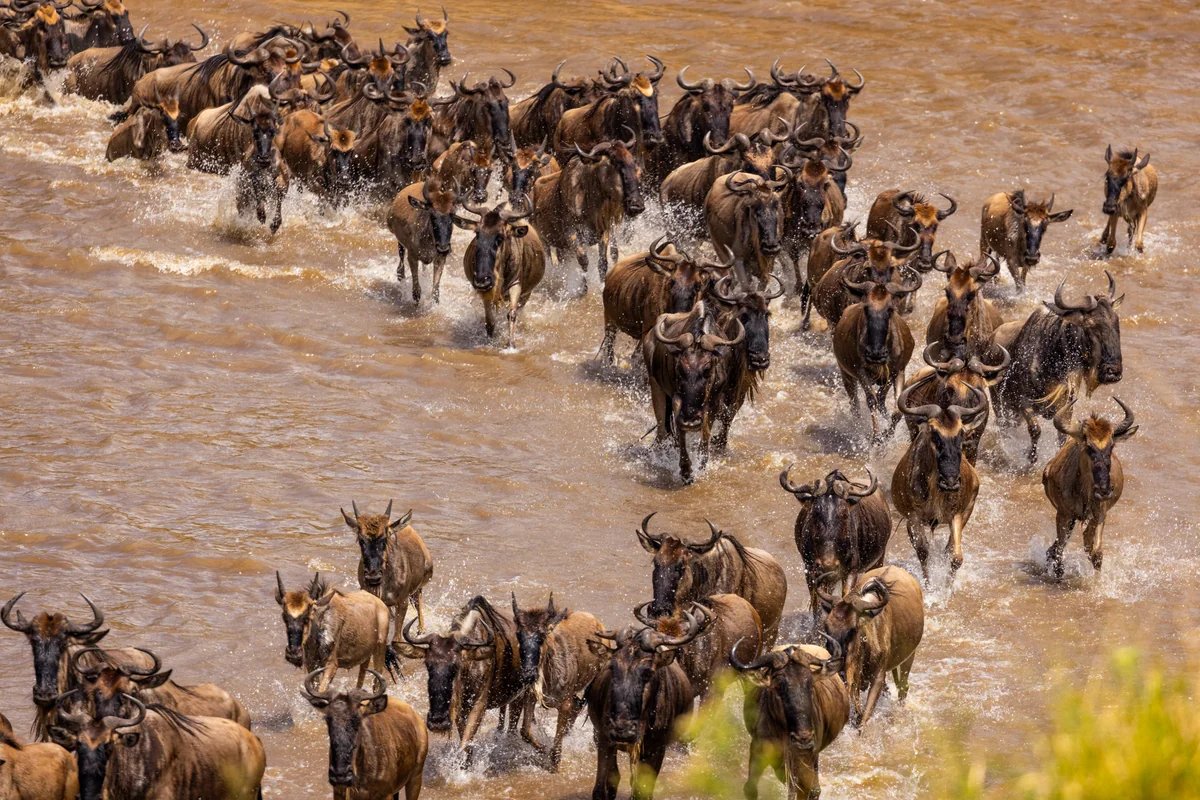
The dry season is the classic Serengeti safari, and its centrepiece is the river crossing. From July the herds mass along the banks of the Grumeti and, further north, the Mara River, and then — in the migration's most heart-stopping act — plunge across the crocodile-filled water in surging, dust-choked columns. There is no schedule to a crossing; it happens when it happens, so this is a chapter that rewards a few unhurried days in the right camp, waiting on the bank.
The dry season is also the easiest time for general game viewing across the whole park: the grass is short and golden, water is scarce so resident wildlife concentrates, and the weather is dry, sunny and pleasantly warm by day. It is the peak season, so the northern Serengeti in August and September is the busiest and most expensive part of the park at the busiest time of year — the crossings are worth every bit of it, but book far ahead.
The Serengeti Month by Month
Here is the migration and the Serengeti's year at a glance — where the herds are, the weather and what to expect.
| Month | Where the herds are | Highlight |
|---|---|---|
| Jan–Feb | Southern plains (Ndutu) | Calving & peak predator action; lush, good value |
| Mar–May | Central Serengeti, moving north-west | Green season, long rains in Apr; quietest & cheapest |
| Jun–Jul | Western corridor & Grumeti River | Dry season begins; first river crossings |
| Aug–Oct | Northern Serengeti & Mara River | The great Mara crossings; peak season & prices |
| Nov | Moving back south | Short rains; herds return to the plains; good value |
| Dec | Southern plains | Herds gather to calve; festive season busy |
The Green Season: Fewer Crowds, Better Value
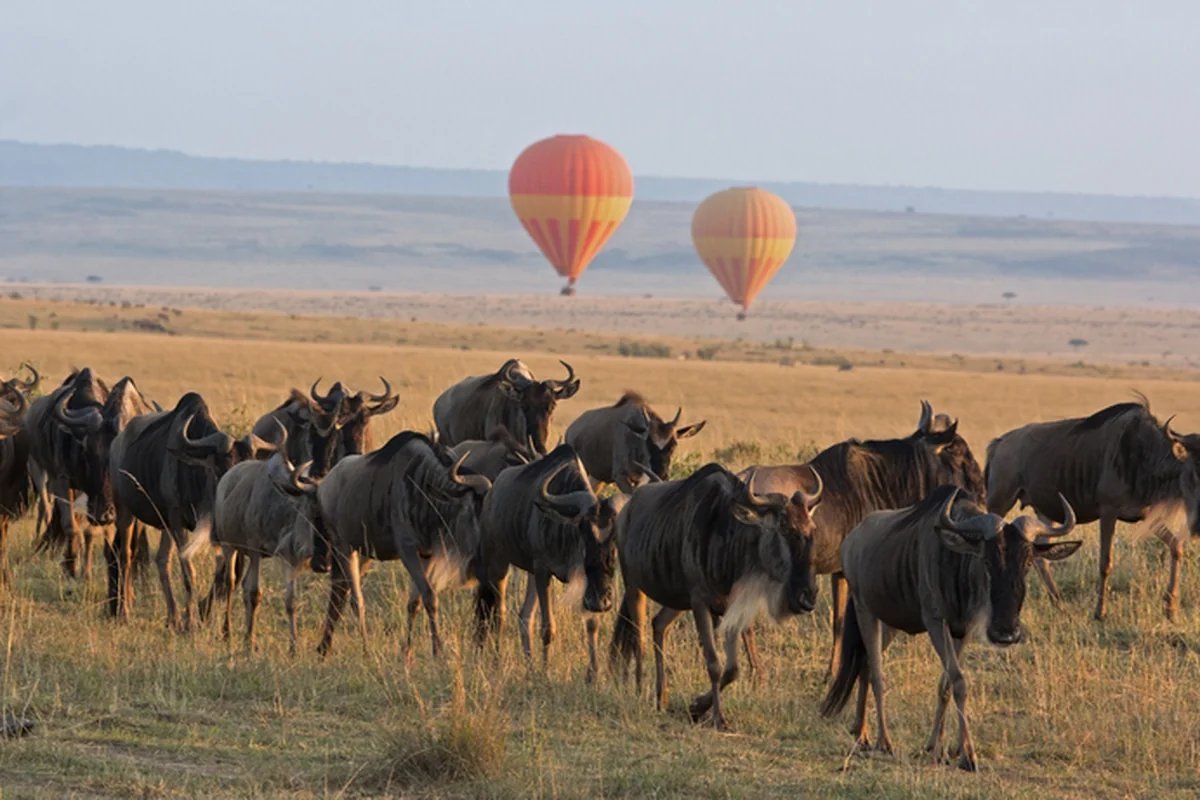
The green season is the Serengeti's best-kept secret. Outside the calving, the months of March to May and November bring the short and long rains, the plains turn a brilliant green, and the crowds and prices fall away. Showers tend to come in short afternoon bursts rather than all-day rain, the birding is superb, the light is dramatic, and the resident wildlife — the Serengeti's famous lion prides, leopards and elephants — is present regardless of where the migration has wandered.
If your heart is set on the calving, come in February; if it is set on the crossings, come between July and October. But if you want the Serengeti at its greenest, quietest and most affordable, with excellent resident game and only a modest chance of rain interrupting a drive, the green shoulder months are a wonderful and underrated choice.
Plan Your Serengeti Safari With Beyond Africa
We are a Cape Town-based, tailor-made safari house, and the Serengeti is a park we plan with real care — because here, more than anywhere, timing and region are everything. Tell us what you most want to see — the calving, the crossings, or a green-season escape — and we place you in the right part of the Serengeti at the right time of year, in mobile camps that follow the herds or classic lodges in the game-rich zones. We build the flights, the balloon, the Ngorongoro add-on and every transfer around the migration.
Ready to follow the migration? 👉 Request a tailor-made Serengeti quote → 👉 Browse our Serengeti safari packages → 👉 WhatsApp us: +27 78 471 4852