Key Takeaways
- Four of the five are easy. Lion, leopard, elephant and buffalo are abundant and widely distributed across northern Botswana.
- Elephant is Botswana's superpower — the country holds roughly a third of Africa's elephants (about 130,000), concentrated along the Chobe and Linyanti rivers.
- Rhino is the honest challenge. Poaching wiped them out; reintroduced black and white rhino now survive only in heavily protected pockets — chiefly Chief's Island and Moremi in the Okavango Delta.
- Best single region for all five: the Okavango Delta (Moremi and the Chief's Island concessions), where Mombo and the private reserves offer the country's best rhino odds alongside the other four.
- Best time: the dry season, May to October, when water shrinks and wildlife concentrates.
Botswana is not a numbers game — it is a wilderness game. There are no fences around its greatest parks, no tarmac grids, and in most concessions no crowds. Instead there is water where the Kalahari should be, the largest elephant population on Earth, and predators that hunt across floodplains in front of a handful of vehicles. For the Big Five safari traveller, that translates into some of the most intimate lion, leopard, elephant and buffalo sightings in Africa — and a rhino story that deserves to be told honestly rather than oversold.
This guide does exactly that. We go species by species — where each of the five lives, how reliable the sighting is, and the best time and place to find it. Then we answer the question every traveller actually asks: can you realistically see all Big Five in one Botswana safari? The answer is yes, but only if you plan around the rhino rather than assuming it.
The Big Five in Botswana — Species by Species
Botswana's Big Five are not spread evenly. Elephant and buffalo move in their thousands; lion and leopard are widespread and beautifully habituated in the private concessions; rhino cling to a few guarded strongholds. Here is the honest picture for each, with a sighting-reliability rating out of five stars.
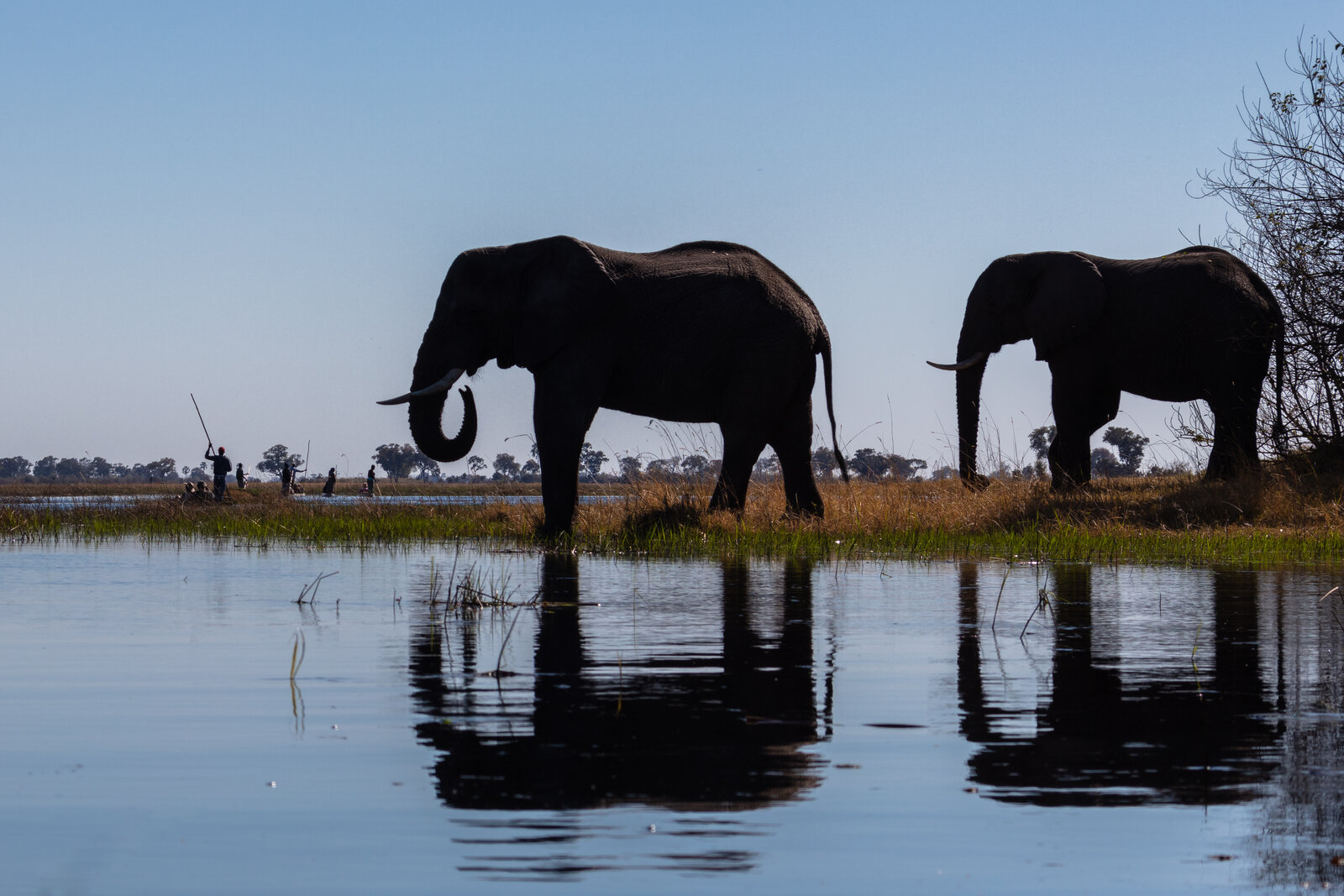
🐘 Elephant — ★★★★★ (Guaranteed)
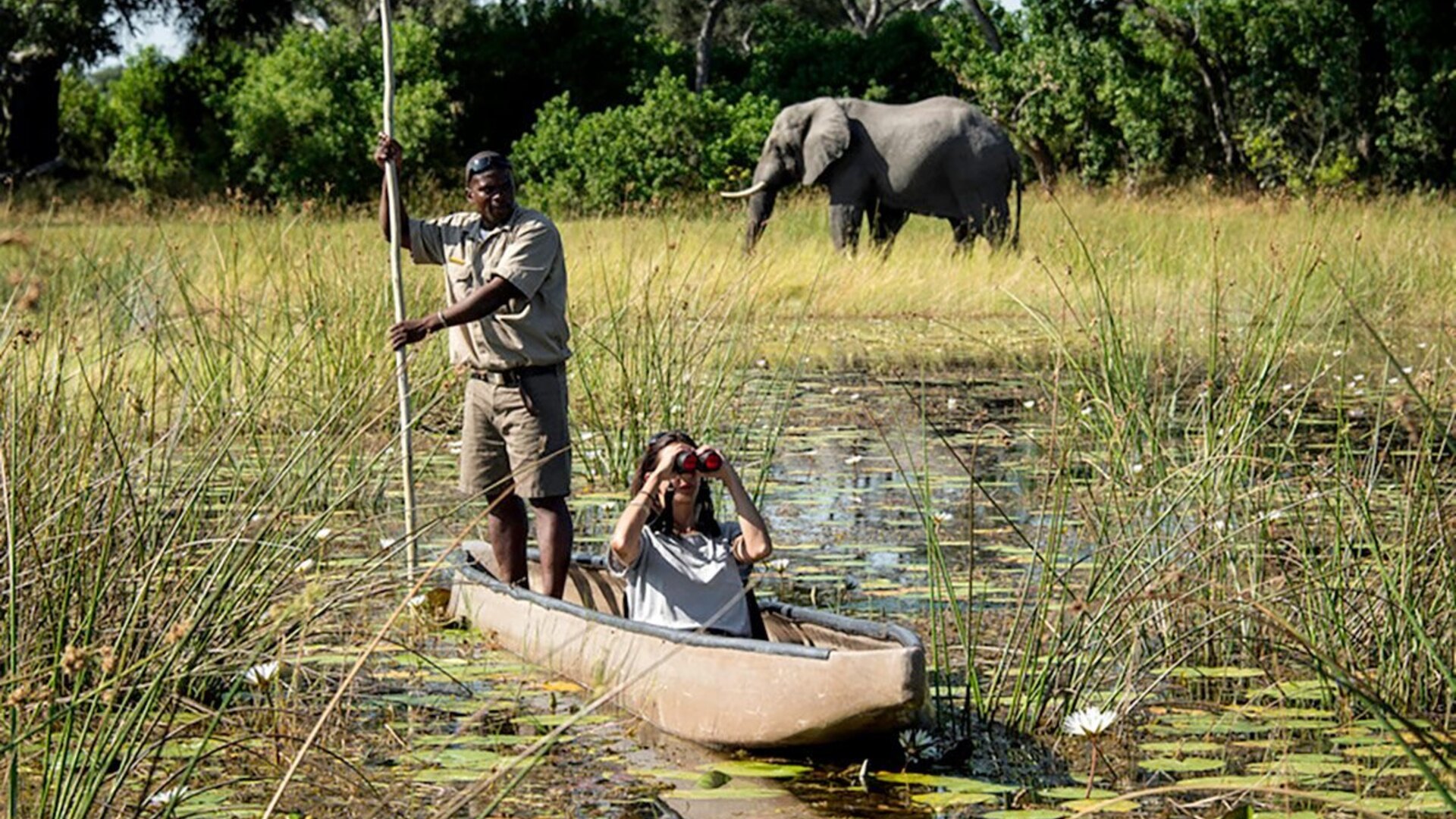
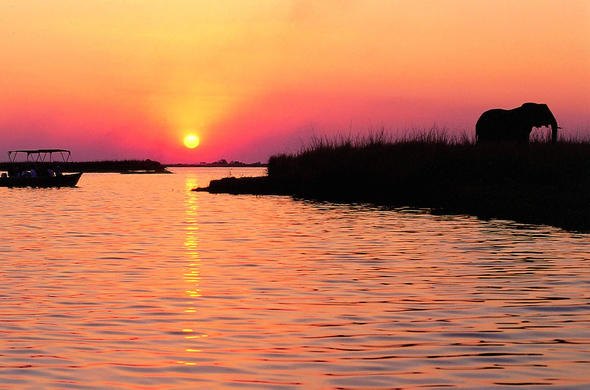
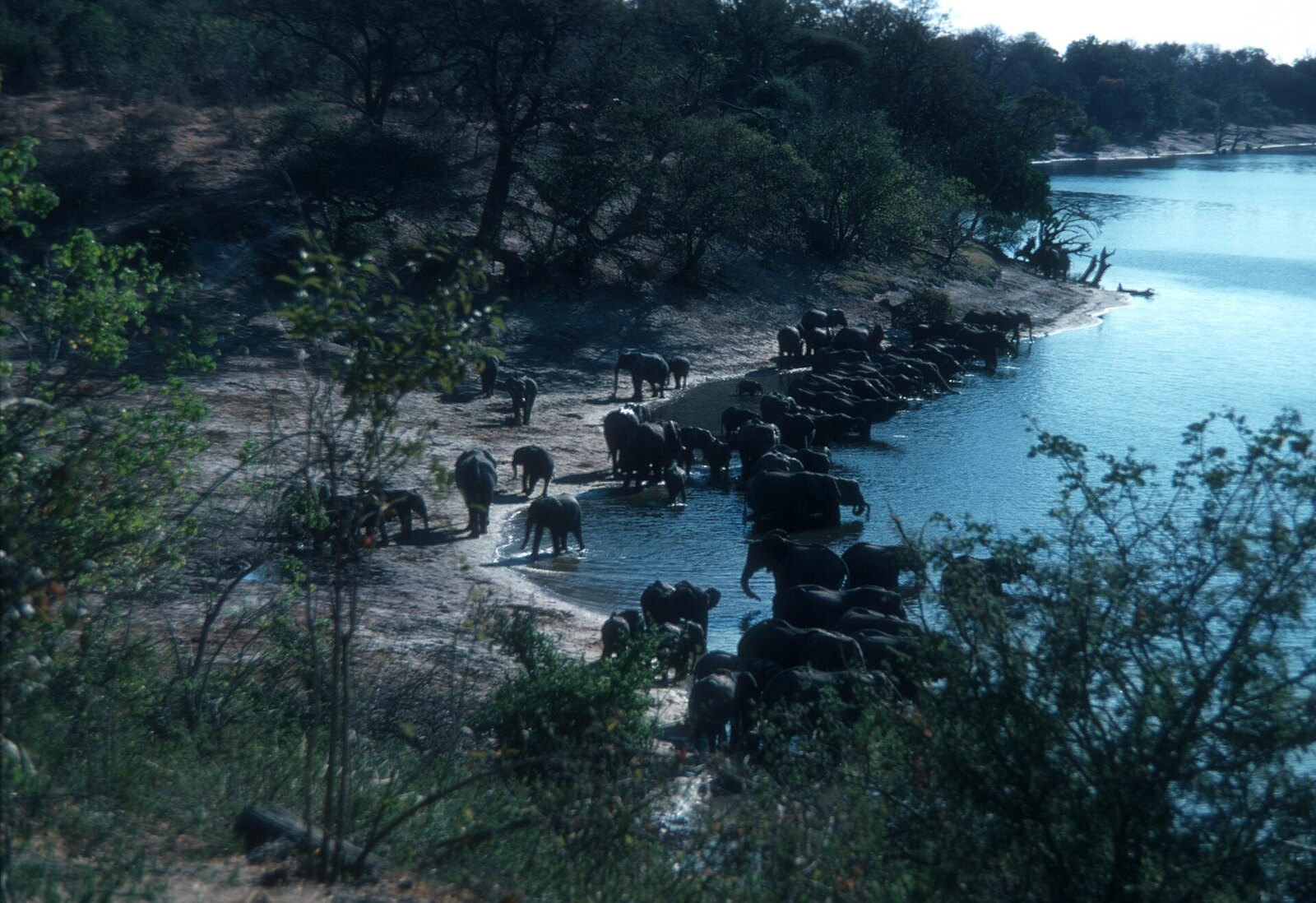
Nowhere in Africa does the elephant define a country the way it does Botswana. The nation holds roughly 130,000 elephants — about a third of the continent's total. In the dry season they mass along the Chobe Riverfront and the Linyanti and Kwando river systems in herds that stretch to the horizon, crossing channels, jostling at the water's edge, and dust-bathing on the banks.
- Best locations: Chobe National Park (Chobe Riverfront), Linyanti and Savuti, the Okavango Delta panhandle
- Best time: July to October, when thousands congregate on the rivers
- Reality: This is the single most reliable Big Five sighting anywhere in Botswana — you will not miss elephant.
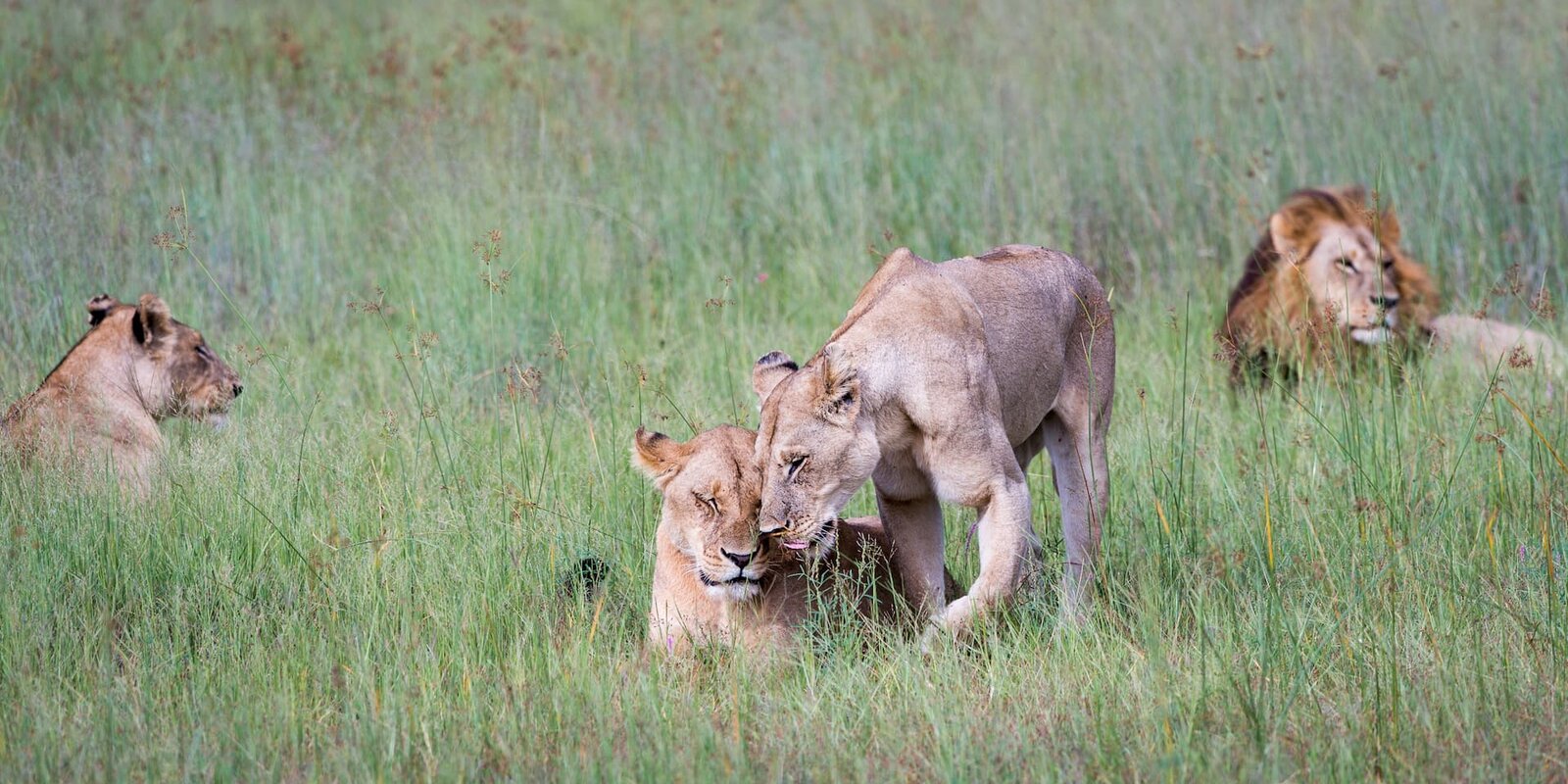
🦁 Lion — ★★★★★ (Excellent)
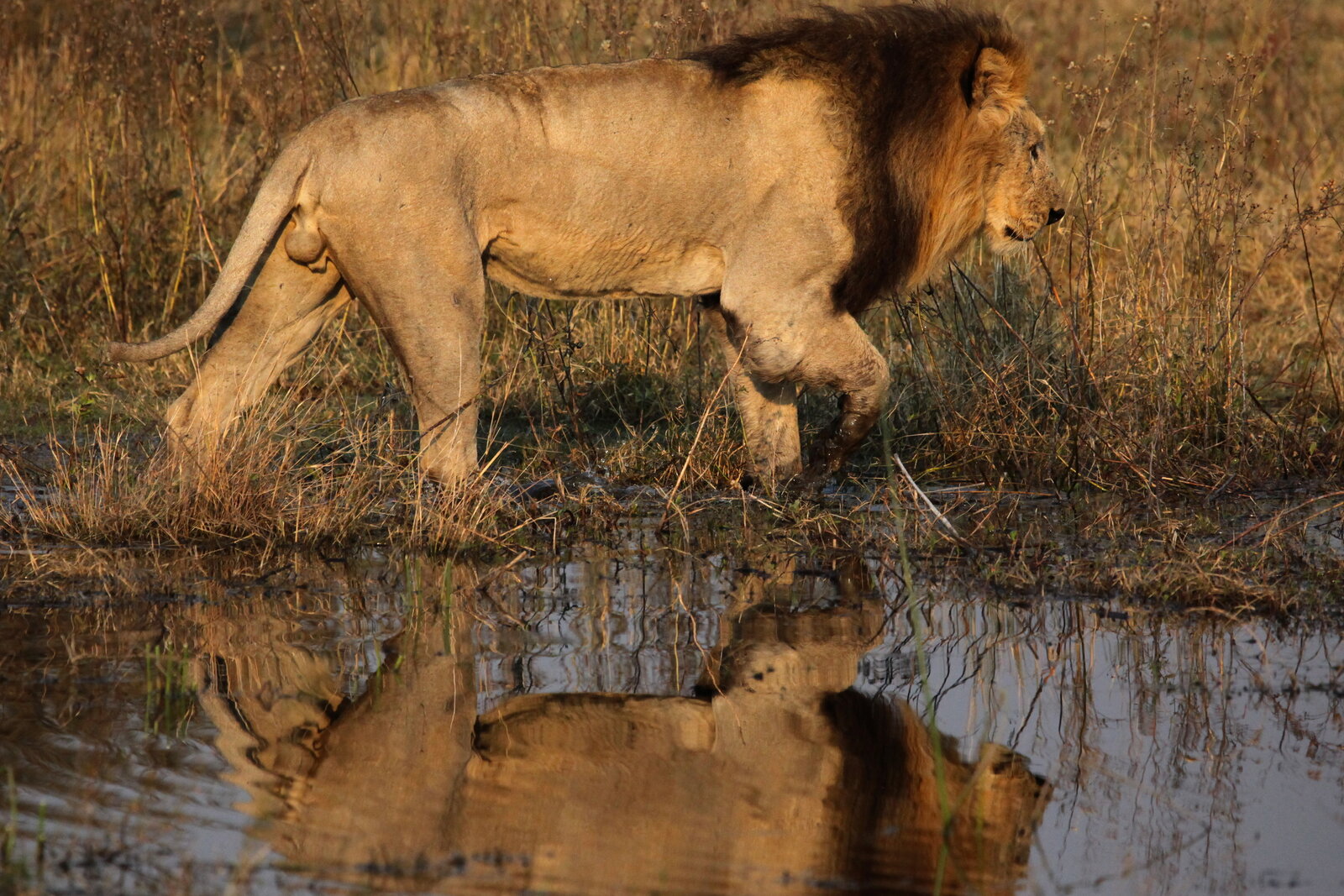
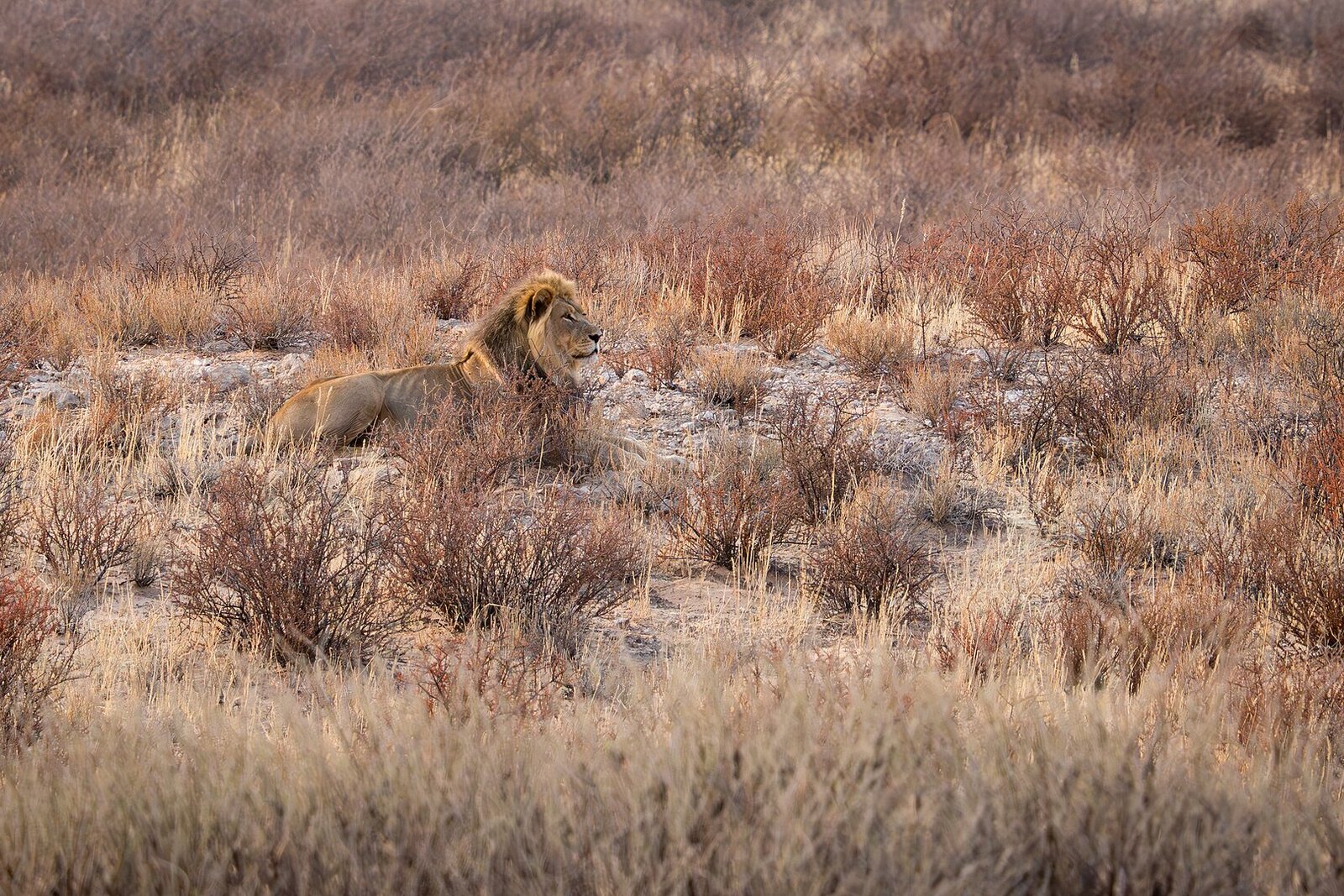
Lion are found across the entire north — the Okavango Delta, Moremi Game Reserve, Chobe and the Linyanti-Kwando concessions. Two populations stand out for anyone who has seen lions elsewhere: the Savuti prides, famous for learning to hunt elephant, and the Central Kalahari's black-maned lions, desert-adapted survivors that roam the dry riverbeds of Deception Valley. On the Duba Plains in the northern Delta, resident prides and huge buffalo herds stage some of the most dramatic predator-prey encounters in Africa.
- Best locations: Moremi and the Okavango concessions, Savuti (Chobe), Central Kalahari, Duba Plains
- Best time: Year-round; dry season (May–October) for concentrated sightings
- Reality: Excellent across the north. A few days in the Delta or Savuti reliably deliver lion.
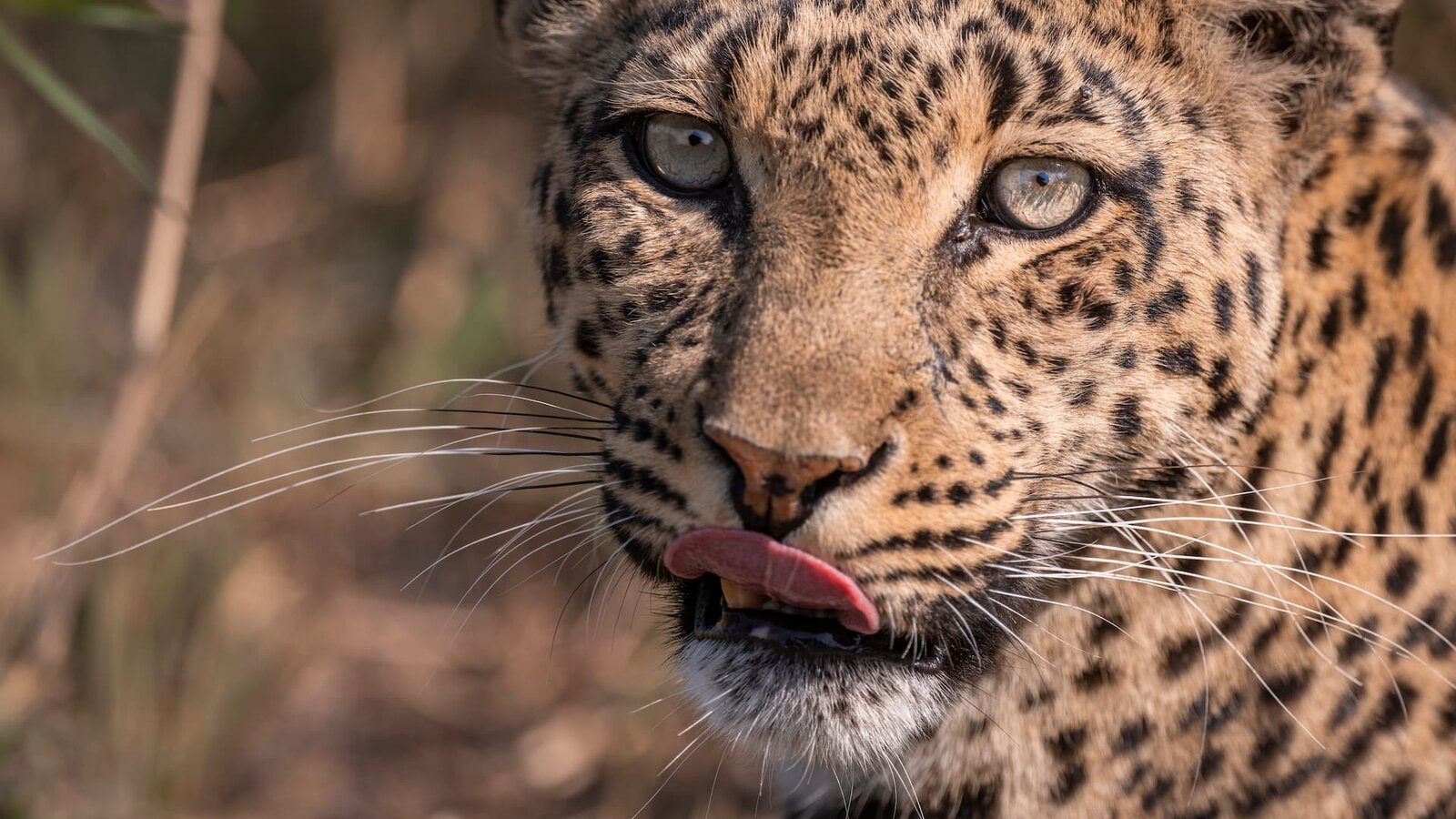
🐆 Leopard — ★★★★☆ (Very Good)
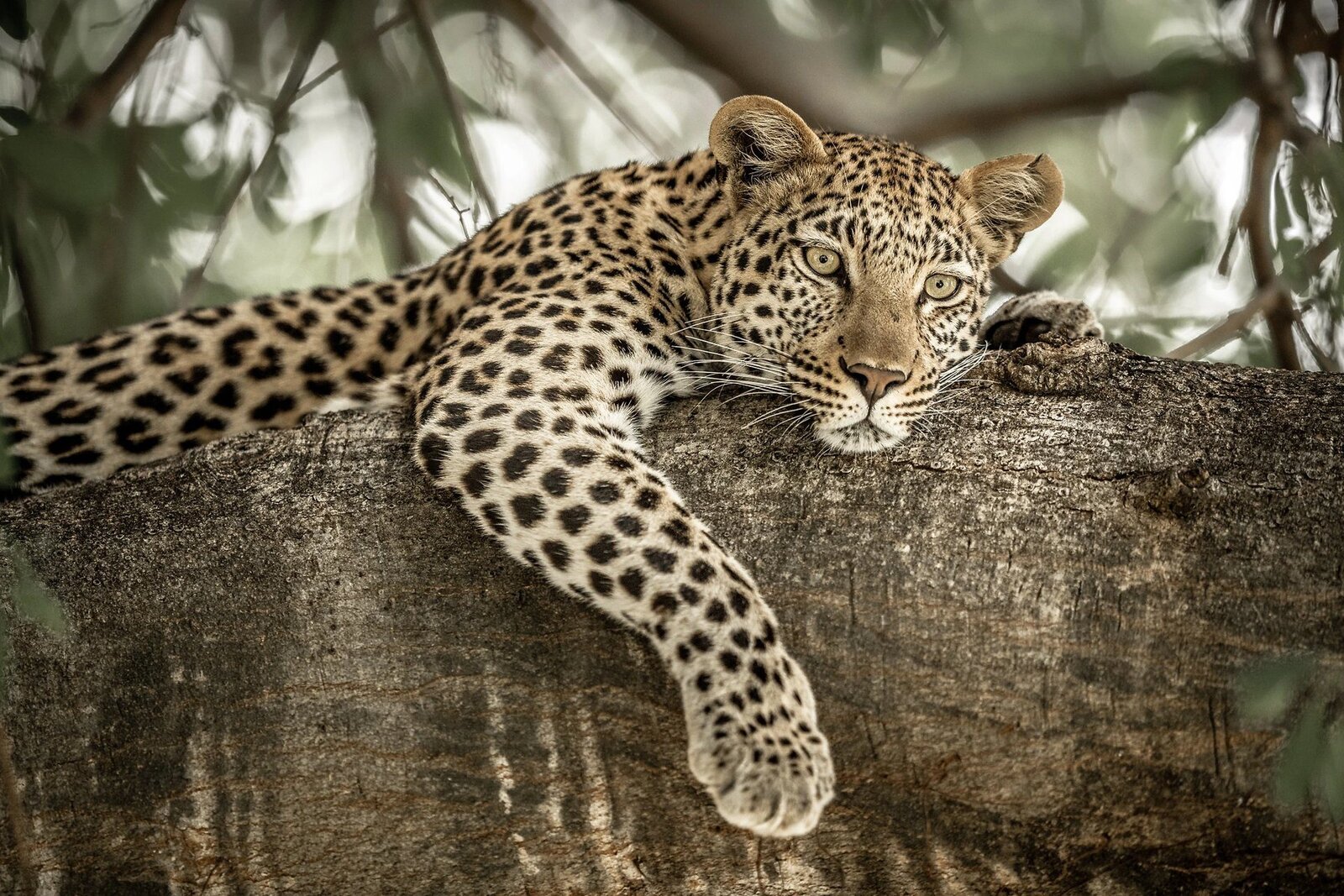
Botswana is one of the best places on the continent to see leopard well. In the private concessions of the Okavango Delta and Moremi, many individuals have become relaxed around vehicles, allowing unhurried sightings that are almost impossible in busier parks. The riverine woodlands along the Delta's channels and the Linyanti are prime leopard country. Camps such as those on the private reserves around Chief's Island and the Khwai region are renowned for leopard.
- Best locations: Okavango Delta private concessions, Moremi, Khwai, Linyanti
- Best time: Dry season for visibility; leopard are resident year-round
- Reality: Very good — better than most of Africa thanks to habituated cats in low-traffic concessions.
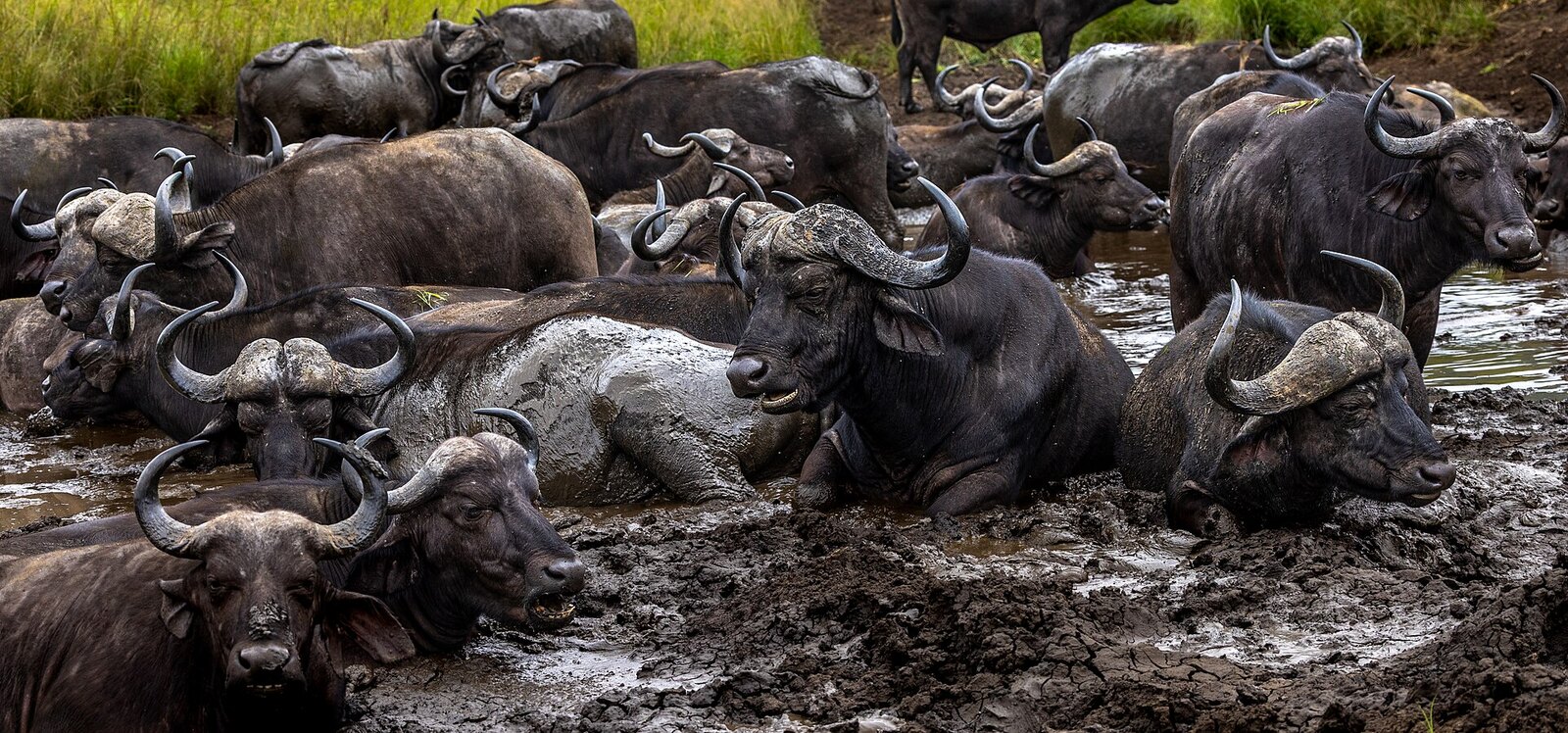
🐃 Buffalo — ★★★★★ (Excellent)
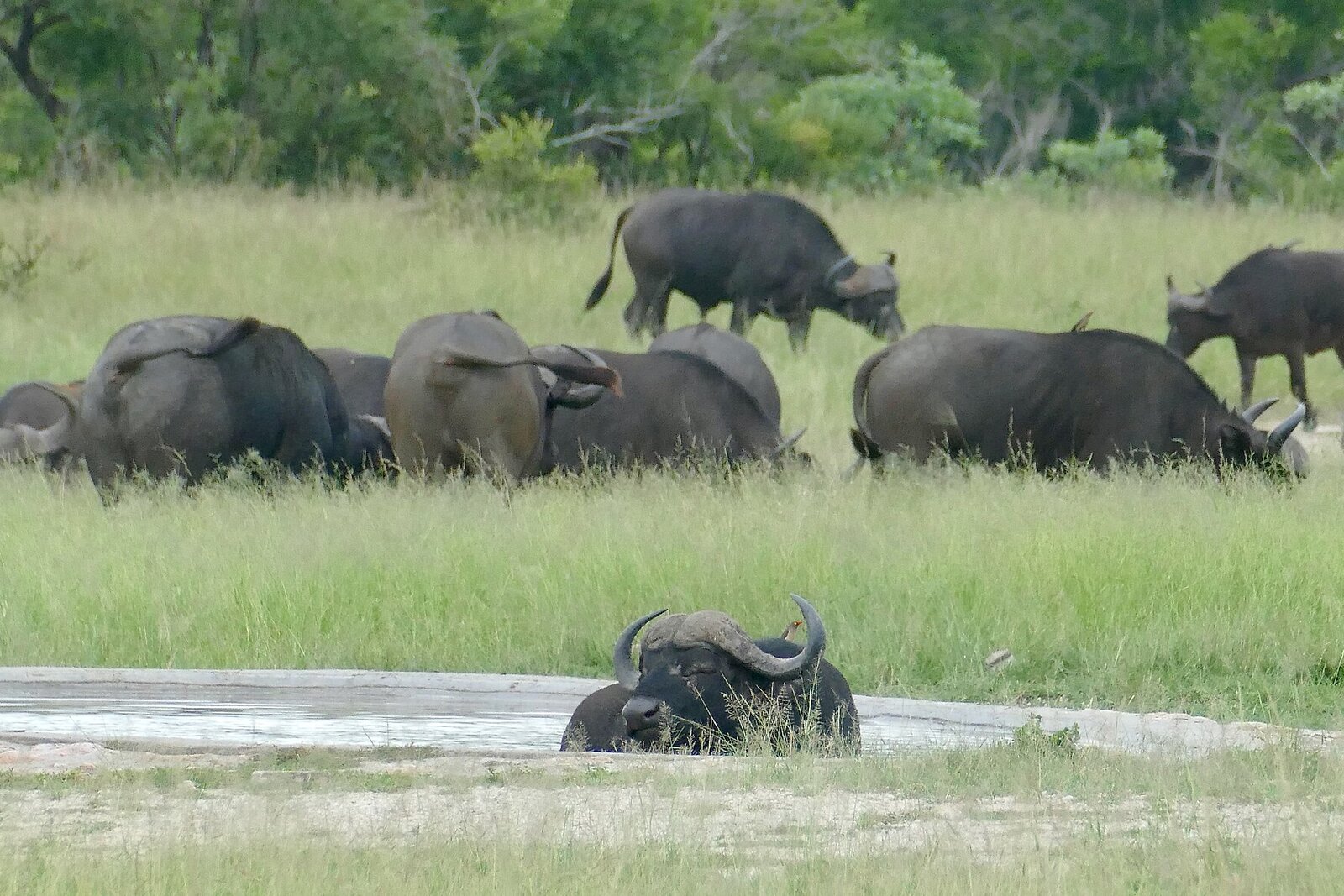
Cape buffalo move through the Okavango and along the northern rivers in herds that can number over a thousand. The Duba Plains concession in the far north of the Delta is world-famous for the running battles between its massive buffalo herds and resident lion prides — a spectacle documented by wildlife filmmakers for years. Chobe and Linyanti hold big herds too, especially in the dry months.
- Best locations: Okavango Delta (Duba Plains), Chobe, Linyanti, Moremi
- Best time: Dry season, when herds concentrate near permanent water
- Reality: Excellent — large herds are a near-certainty in the north.
🦏 Rhino — ★★☆☆☆ (The Honest Challenge)
Here is the truth other guides skate over. Botswana's rhino were poached to local extinction in the twentieth century. Both black and white rhino have since been reintroduced, but they survive only in a handful of intensively protected areas — and their exact locations are deliberately kept discreet to guard them. This is not a country where you drive up to a rhino the way you might see elephant.
Realistic rhino sightings come from a few places:
- Chief's Island (Okavango Delta) — the primary stronghold. Camps such as Mombo and the surrounding private concessions offer Botswana's best rhino odds.
- Moremi Game Reserve — a focus of rhino conservation, with reintroduced black and white rhino.
- Southeast Okavango pockets — the Gomoti and Duba areas have recorded rhino successes.
- Best locations: Chief's Island / Mombo, Moremi
- Best time: Dry season for movement and visibility
- Reality: Possible but never guaranteed. If completing the Big Five matters to you, build your trip around a Chief's Island or Moremi stay — and treat any rhino sighting as a privilege, not a promise.
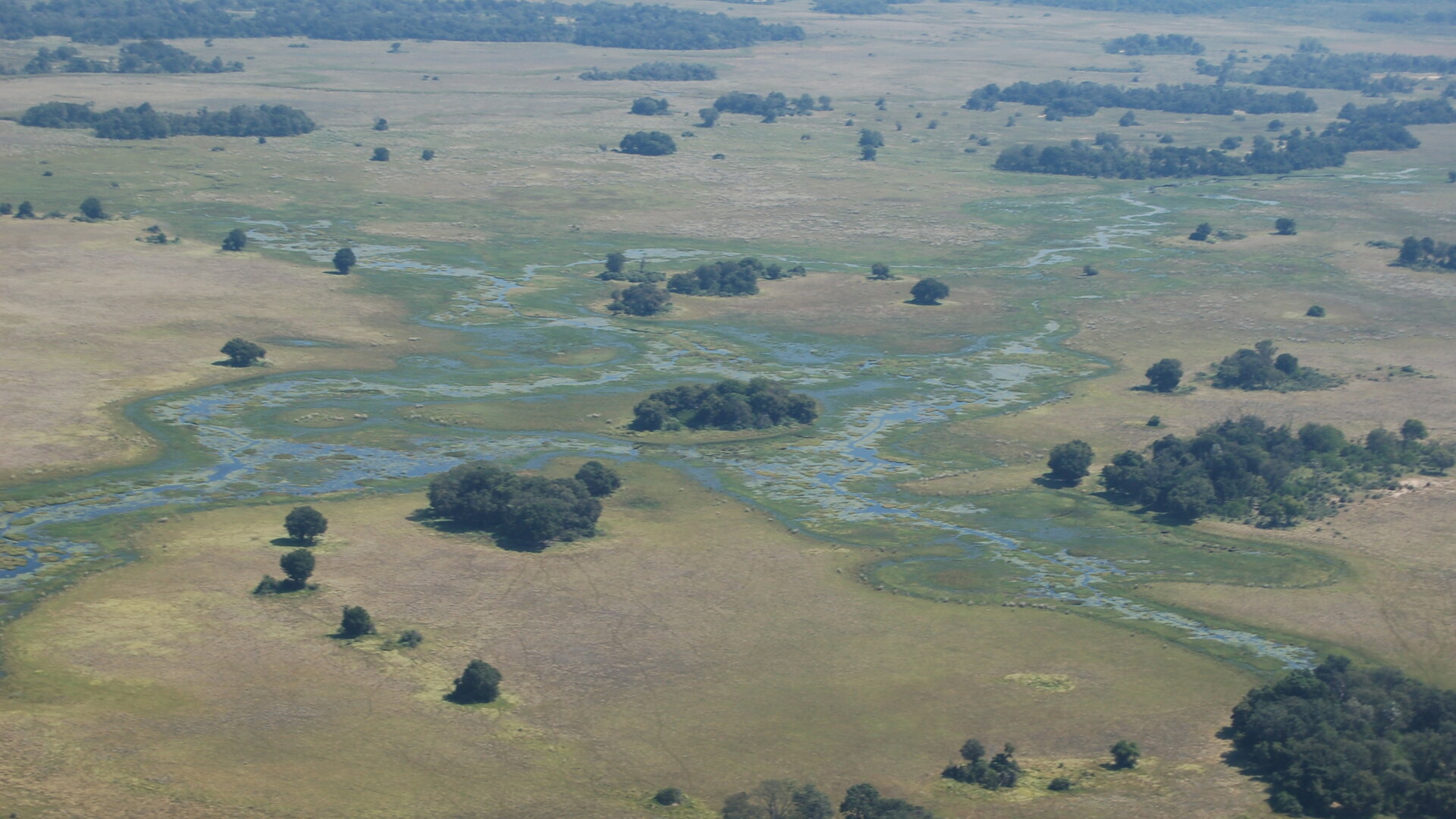
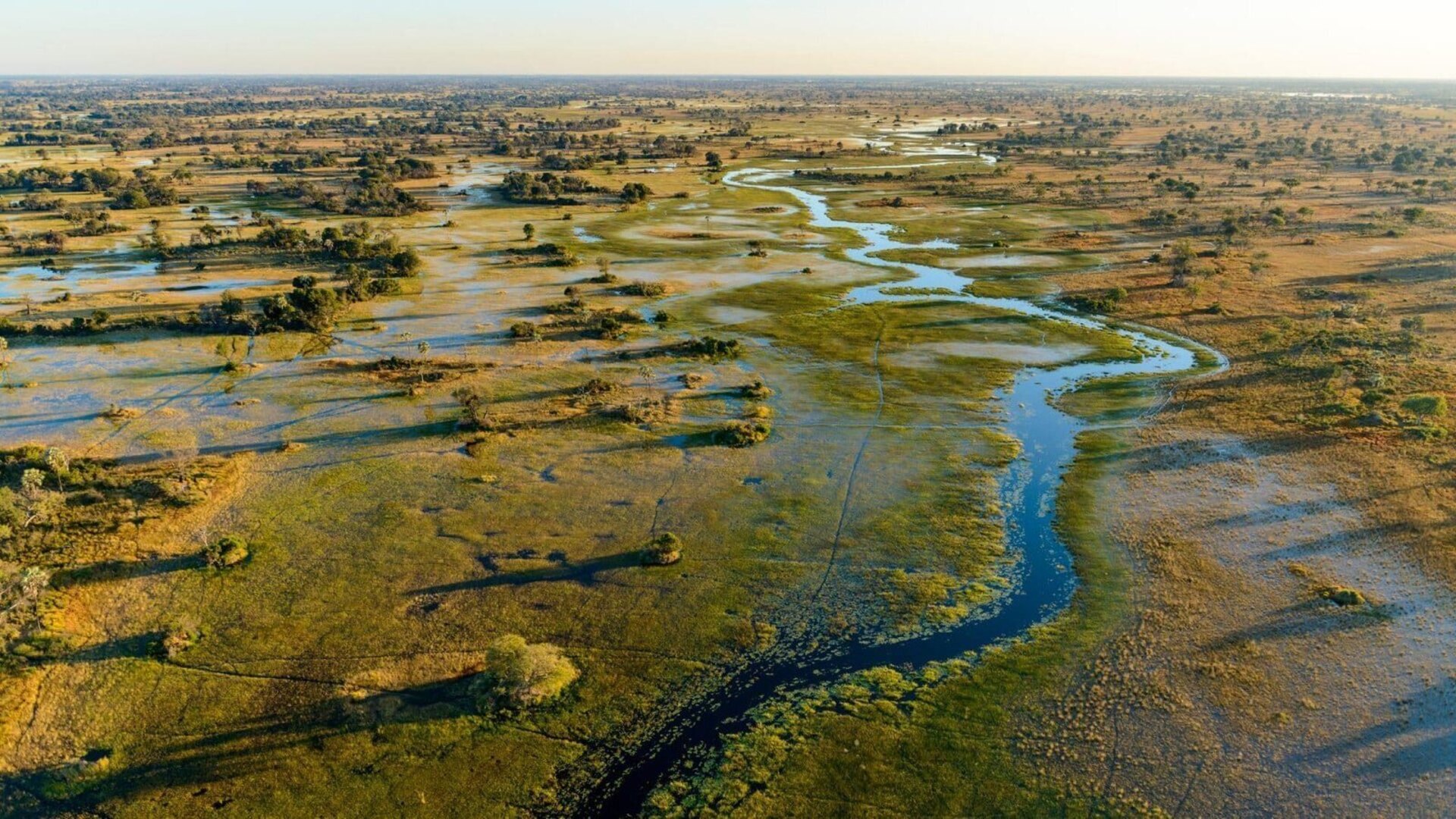
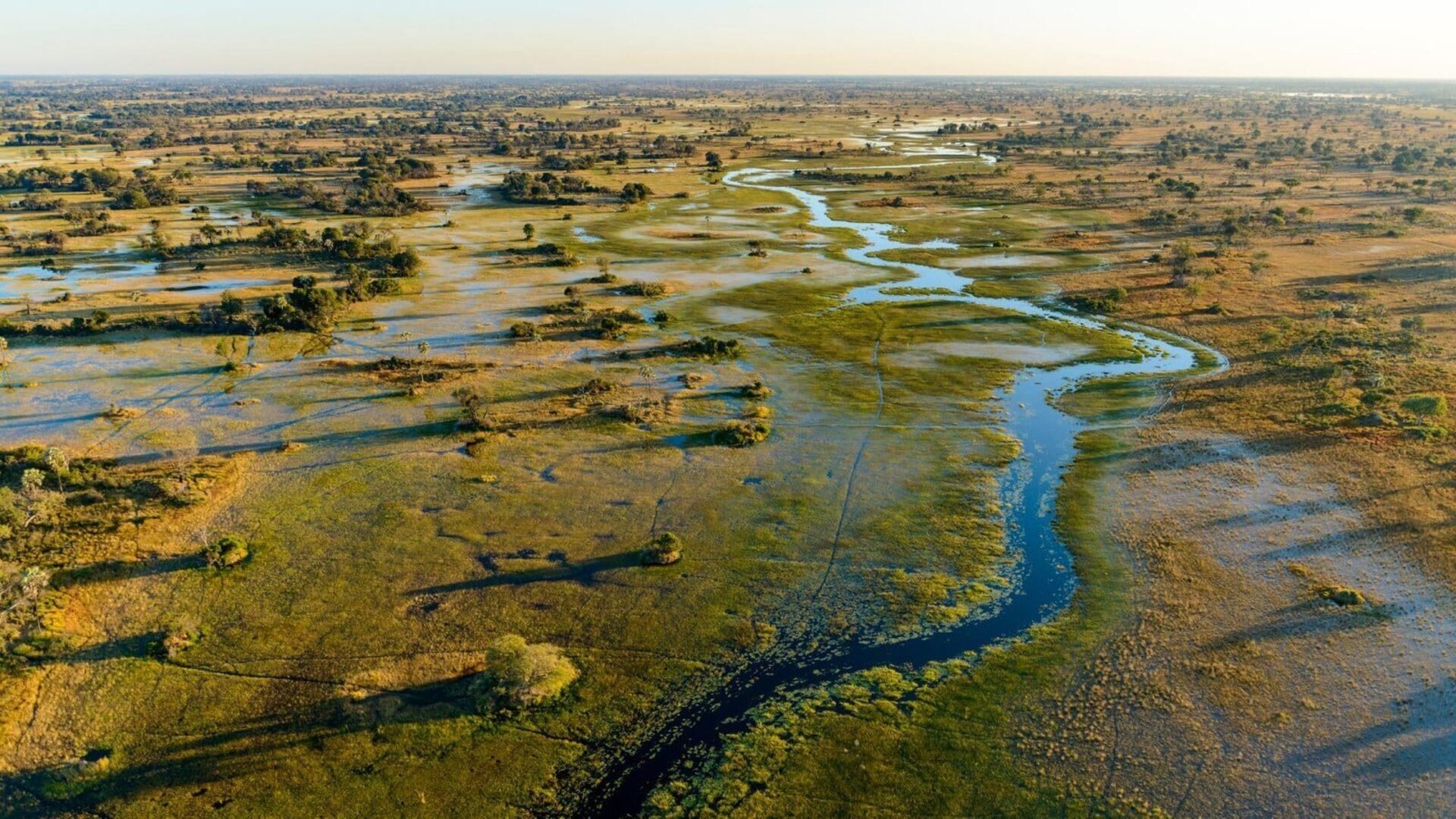
Okavango Delta — The Big Five Waterworld

Where to See the Big Five: Botswana Park-by-Park
Botswana's reserves each play a different role in a Big Five safari. Use this matrix to build a route that stacks the odds in your favour. Stars reflect realistic sighting reliability for each species in each area.
| Region | Lion | Leopard | Elephant | Buffalo | Rhino |
|---|---|---|---|---|---|
| Okavango Delta / Moremi | ★★★★★ | ★★★★★ | ★★★★☆ | ★★★★★ | ★★★☆☆ |
| Chobe National Park | ★★★★☆ | ★★★☆☆ | ★★★★★ | ★★★★★ | ☆☆☆☆☆ |
| Linyanti & Savuti | ★★★★★ | ★★★★☆ | ★★★★★ | ★★★★☆ | ☆☆☆☆☆ |
| Central Kalahari | ★★★★☆ | ★★★☆☆ | ★★☆☆☆ | ★★☆☆☆ | ☆☆☆☆☆ |
| Makgadikgadi & Nxai Pans | ★★★☆☆ | ★★☆☆☆ | ★★★☆☆ | ★★★☆☆ | ☆☆☆☆☆ |
How to read this matrix: The Okavango Delta and Moremi are the only region where all five are realistically on the table, because they hold the rhino. Chobe, Linyanti and Savuti are unbeatable for elephant, buffalo and lion but hold no rhino. The Central Kalahari and the pans are magnificent for desert-adapted lion, big skies and unique landscapes, but they are not Big Five completion grounds.
Chobe & Linyanti — The Elephant Superhighway
Best Time for a Big Five Safari in Botswana
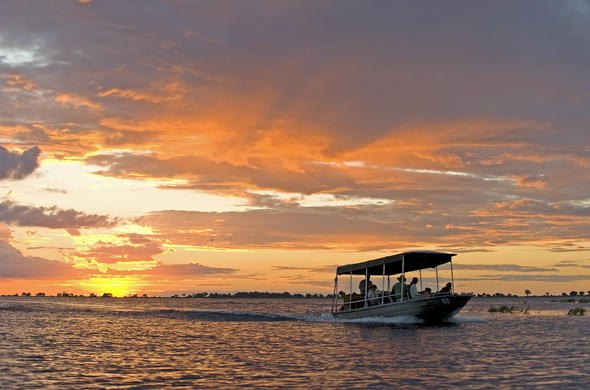
Botswana's magic is a paradox: the floodwaters arrive in the dry season, drawing wildlife inward just as the surrounding Kalahari bakes. Timing your safari to that rhythm dramatically improves your Big Five odds.
| Season | Months | Big Five Viewing | Notes |
|---|---|---|---|
| Peak Dry | Jul–Oct | ★★★★★ Exceptional | Delta in flood, elephants massing on rivers, thin bush, best predator action |
| Late Dry / Hot | Oct–Nov | ★★★★☆ Very Good | Very hot but concentrated game before the rains; excellent value shoulder |
| Green Season | Dec–Mar | ★★★☆☆ Good | Lush landscapes, newborn game, superb birding, lower rates; thicker bush |
| Shoulder | Apr–Jun | ★★★★☆ Very Good | Floodwaters arriving, drying land, improving sightlines, fewer crowds |
Verdict: The dry season (May–October) is objectively the best window for a Big Five safari in Botswana, offering:
- Thinner vegetation and clear sightlines
- Wildlife concentrated on the Delta channels and permanent rivers
- The Chobe and Linyanti elephant spectacle at its peak
- The best chance of the four easy species — and the discreet rhino strongholds at their most trackable
Budget-conscious travellers: the green season (December–March) brings lower rates, dramatic skies, newborn animals and outstanding birdlife — just accept taller grass and the possibility of afternoon storms.
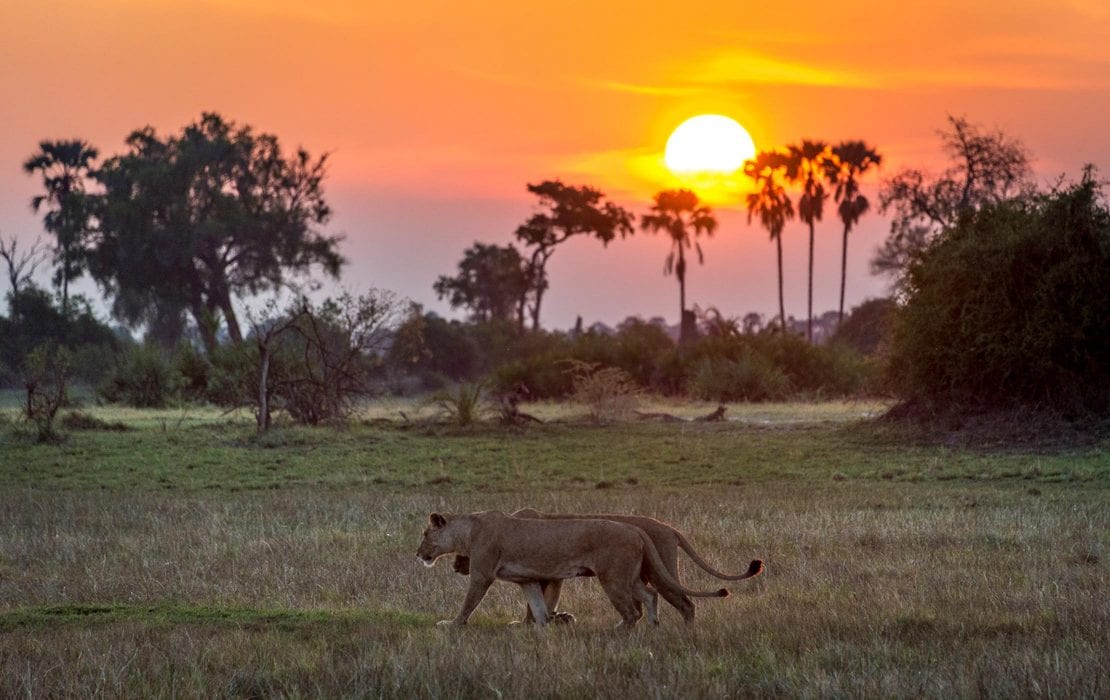
Central Kalahari & Moremi — Black-Maned Lions & Rhino Country

Honest Assessment: Can You See All Big Five in One Botswana Safari?
The honest answer is yes — but you have to plan for the rhino, not hope for it. Here is the reality.
Four of Five is Easy
Lion, leopard, elephant and buffalo are present and reliable across northern Botswana. A few days split between the Okavango Delta and Chobe or Linyanti will deliver these four species comfortably, often with sightings far more intimate than in busier destinations.
Rhino is the Fifth Wheel
Because Botswana's rhino were reintroduced after being poached out, they survive only in a few protected pockets. Unlike Kenya, where fenced sanctuaries such as Ol Pejeta and Lake Nakuru make rhino almost guaranteed, Botswana keeps its rhino in discreet wild strongholds. The realistic place to complete the Big Five is the Okavango Delta — specifically Chief's Island and Moremi.
Where to Complete Your Big Five:
- Chief's Island / Mombo (Okavango Delta) — the country's best all-in-one Big Five ground. Lion, leopard, elephant and buffalo are excellent here, and this is Botswana's strongest rhino stronghold. Recommended: at least 3 nights on Chief's Island or an adjacent private concession.
- Moremi Game Reserve — a "predator capital" with reintroduced black and white rhino. Combining Moremi with a Delta water camp covers all five in one region. Recommended: 3–4 nights across Moremi and a Delta concession.
- Delta + Chobe combination — the Delta secures rhino and cats; Chobe adds the greatest elephant and buffalo spectacle in Africa. Recommended itinerary: 4 nights Okavango + 3 nights Chobe/Linyanti.
Sample All-Five Itinerary (8 Days):
- Days 1–2: Chobe Riverfront (elephant, buffalo, lion) — the elephant spectacle
- Days 3–4: Linyanti or Savuti (lion, leopard, elephant)
- Days 5–7: Okavango Delta — Chief's Island / Moremi (leopard, lion, buffalo and the rhino to complete the set)
- Day 8: Fly out via Maun
This route chains Botswana's strongest Big Five ecosystems and finishes in the one region where the rhino makes the set complete.
💡 Planning Tip: Rhino locations in Botswana are deliberately kept quiet to protect the animals. Book a camp on Chief's Island or in Moremi that actively participates in rhino monitoring, ask your guide about recent movements on arrival, and treat a sighting as a genuine privilege. Never book operators who promise "guaranteed" wild rhino or off-road pursuit — it is both dishonest and harmful.
Sample Big Five Safari Itineraries for Botswana
Classic Delta & Chobe Big Five (8 Days)
Best for: First-time Big Five seekers, photographers, couples
- Days 1–2: Chobe Riverfront (elephant, buffalo, lion)
- Days 3–4: Linyanti or Savuti (lion, leopard, elephant)
- Days 5–7: Okavango Delta / Chief's Island (leopard, lion, buffalo, rhino)
- Day 8: Depart via Maun
Why it works: Pairs the greatest elephant and buffalo spectacle in Africa (Chobe/Linyanti) with the Delta's rhino stronghold, giving the highest realistic chance of all five.
Okavango Delta Big Five Focus (6 Days)
Best for: Travellers short on time who still want all five
- Days 1–3: Chief's Island / Moremi (lion, leopard, buffalo, rhino)
- Days 4–6: A second Delta concession for big cats and water activities (mokoro, boat)
Why it works: Concentrates the entire trip in the one region that holds all five, maximising rhino odds while still delivering superb cats, elephant and buffalo.
Kalahari, Delta & Chobe Grand Circuit (10 Days)
Best for: Adventurous travellers, repeat visitors seeking the full range of landscapes
- Days 1–2: Central Kalahari (black-maned lion, desert landscapes)
- Days 3–5: Okavango Delta / Chief's Island (leopard, lion, buffalo, rhino)
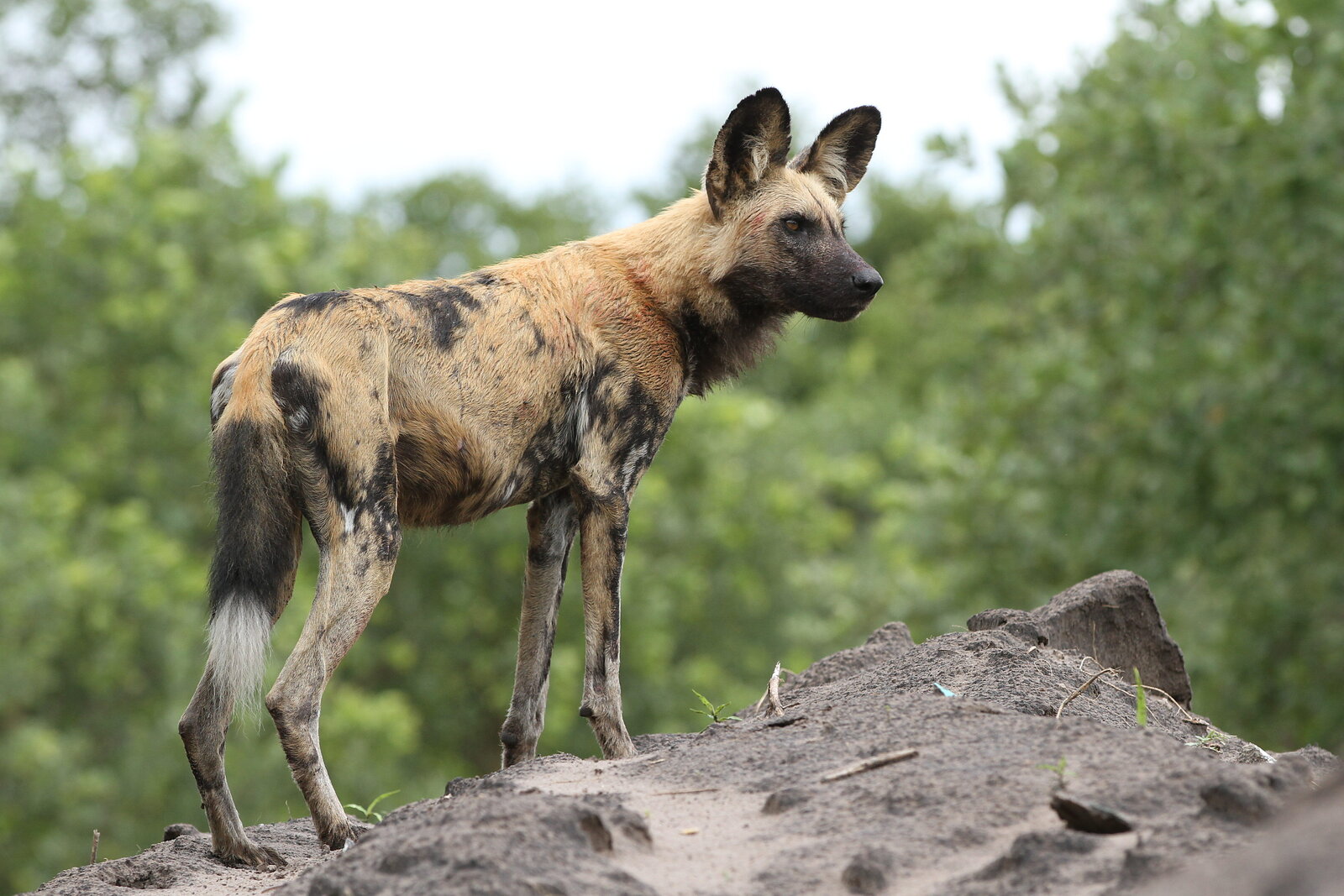
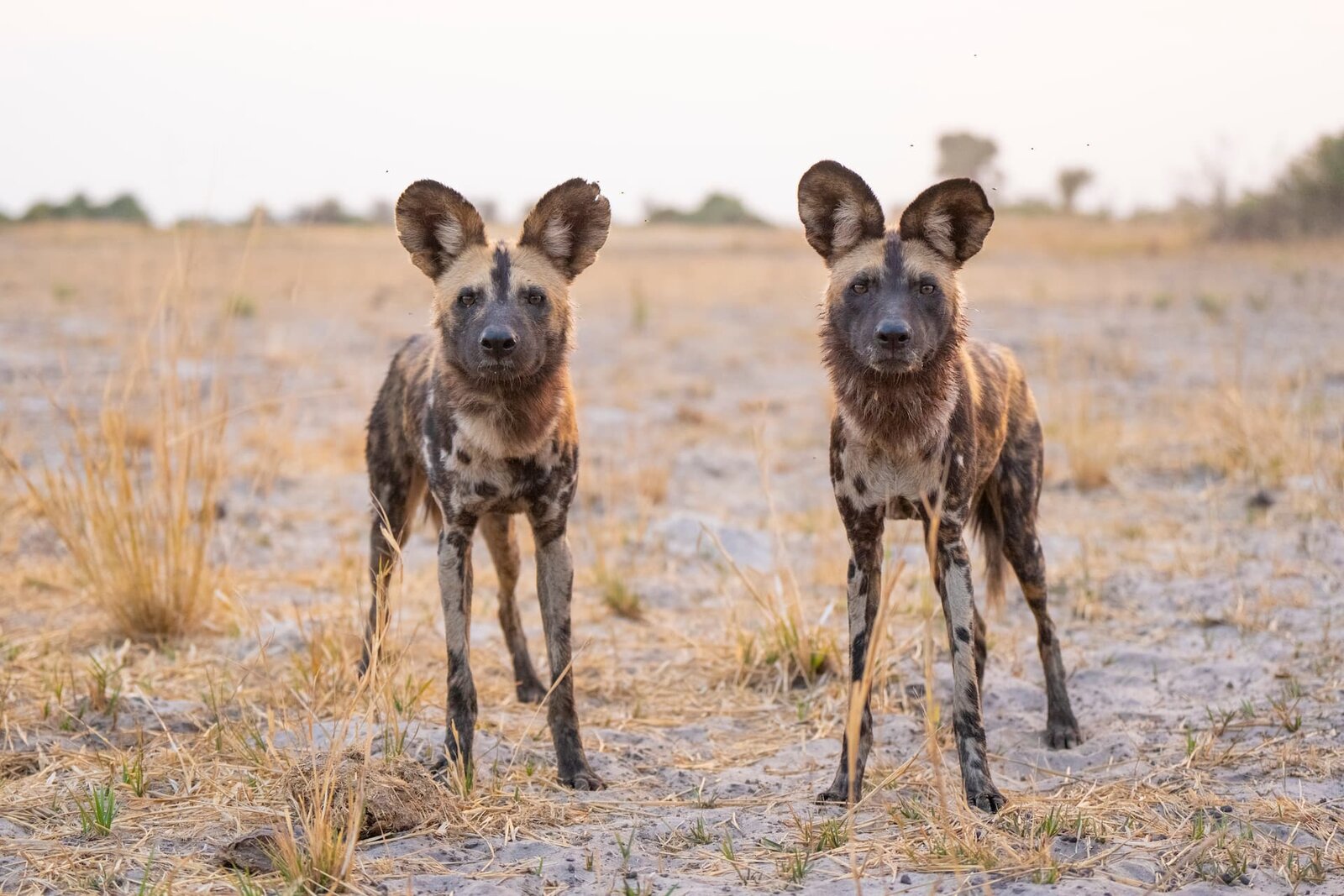
- Days 6–8: Linyanti / Savuti (elephant-hunting lions, wild dog)
- Days 9–10: Chobe Riverfront (the elephant grand finale)
Why it works: Showcases Botswana's astonishing range — desert to delta to river — while still building in the Delta rhino stop to complete the Big Five.
Luxury Fly-In Big Five & Victoria Falls (11 Days)
Best for: Honeymooners, luxury travellers
- Days 1–3: Okavango Delta private concession (leopard, lion, rhino)
- Days 4–6: Linyanti or Savuti (elephant, buffalo, big cats)
- Days 7–8: Chobe Riverfront (elephant spectacle, river cruises)
- Days 9–11: Victoria Falls extension (one of the Seven Natural Wonders)
Why it works: Completes the Big Five in Botswana's finest fly-in camps, then finishes at the thundering Victoria Falls just across the border — the classic luxury combination.
Moremi & Chief's Island — Predator Capital
Big Five Safari Planning Tips for Botswana
Choose the Right Camps and Concessions
Private concessions vs. national parks: Botswana's private concessions (much of the Okavango Delta and Linyanti) allow off-road driving, night drives and walking — dramatically improving leopard and predator sightings. National parks like Chobe and Moremi restrict off-roading but offer superb river and floodplain viewing. For a Big Five safari, a mix of both is ideal.
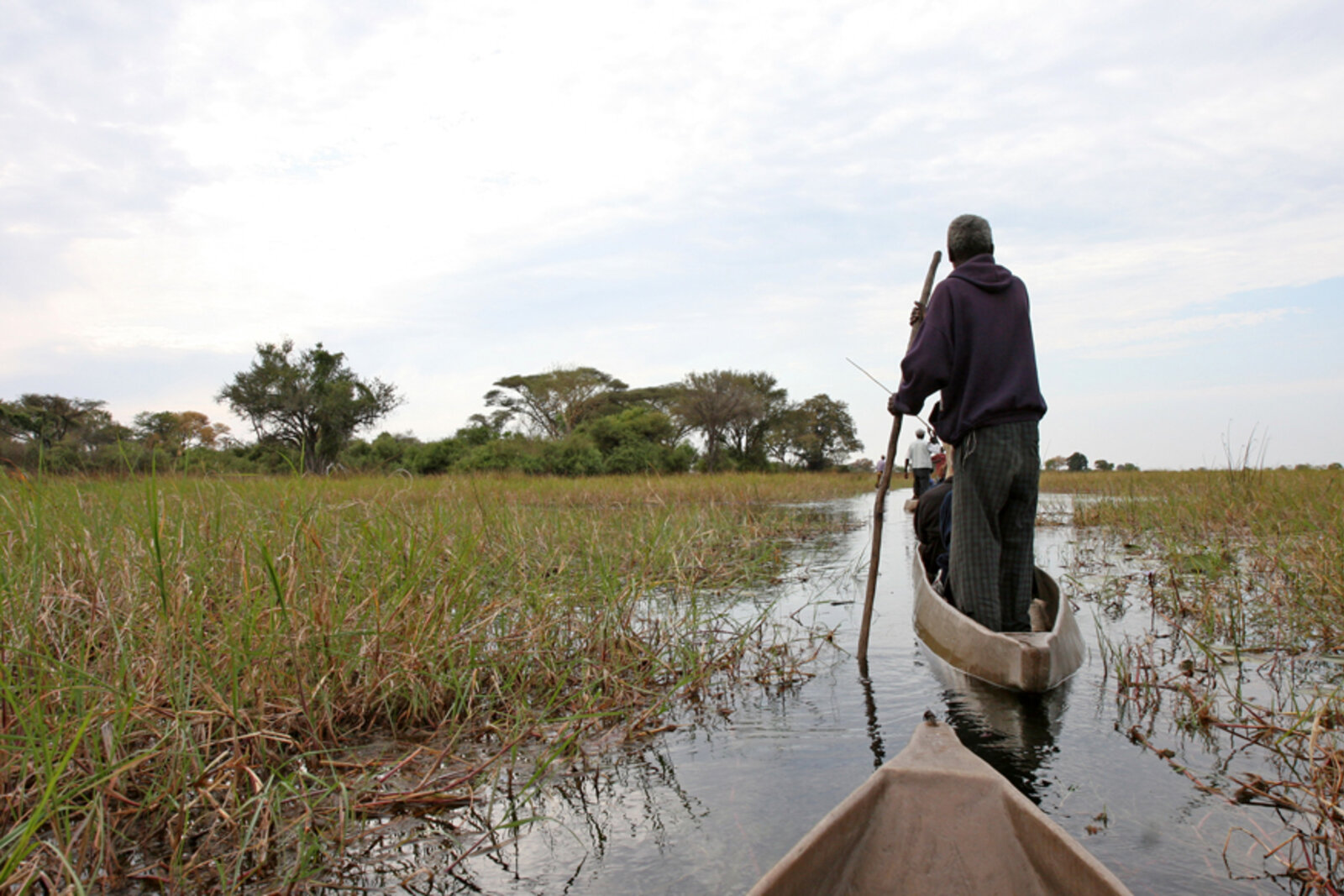
Water camps vs. land camps: Delta water camps offer mokoro and boat safaris (magical, but water-focused); land camps and mixed camps deliver the game drives that produce cats, elephant, buffalo and rhino. Choose mixed or land-based camps if the Big Five is your priority.
Hire Expert Guides
Botswana guides are among the best-trained in Africa. Professional guides use:
- Radio networks — camps share sightings to maximise guest success
- Tracking skills — reading spoor, scat and alarm calls across the floodplains
- Animal behaviour knowledge — predicting lion pride movements and leopard territories along the channels
The country's low-volume, high-cost model means guiding standards are consistently high — a major advantage for Big Five success.
Manage Expectations for Rhino and Leopard
Two of the five demand realism in Botswana. Rhino are confined to protected Delta strongholds and can never be guaranteed. Leopard, though excellent in the concessions, remain solitary and elusive. For both:
- Prioritise the Okavango Delta (Chief's Island, Moremi) for rhino
- Spend at least three nights in a private concession for leopard
- Travel in the dry season for clearer sightlines
Pack Appropriately
Big Five safaris in Botswana demand:
- Neutral-coloured clothing (khaki, olive, beige) — bright colours spook wildlife
- Binoculars — essential for distant rhino and tree-dwelling leopard
- Camera with telephoto lens — 200mm+ for wildlife photography
- Layers — dry-season dawns are cold on open vehicles, midday is hot
- Light luggage in soft bags — fly-in camps enforce strict weight limits on light aircraft
Respect Safety Protocols
The Big Five earned their name as Africa's most dangerous animals. Never:
- Exit your vehicle unless explicitly permitted by your guide
- Approach buffalo herds on foot (unpredictable and aggressive when cornered)
- Stand up or make sudden movements during big cat sightings
- Pressure a rhino sighting or share its location — Botswana's rhino are closely guarded for good reason
Support Conservation
Botswana's Big Five — especially its reintroduced rhino — exist thanks to intensive protection and a conservation-first tourism model. Support it by:
- Choosing responsible operators — concession and park fees fund anti-poaching and community programs
- Respecting rhino discretion — never post locations or pressure guides for guarantees
- Avoiding unethical operators — never book companies offering off-road pursuit or close-approach rhino "encounters"
Combine with Other Botswana Highlights
Big Five safaris pair beautifully with:
- Victoria Falls — a short hop across the border for one of the Seven Natural Wonders
- Mokoro and water safaris — the Delta's signature dugout-canoe experience
- Makgadikgadi Pans — meerkats, ancient baobabs and the surreal salt-pan landscape
🦁 Already planning your Botswana Big Five safari? Explore our Botswana Safari Packages guide for pre-designed itineraries, or check How Much Does a Botswana Safari Cost for detailed pricing. For premium experiences, see our Luxury Safari Botswana and Private Safari Tours Botswana articles, or browse the Best Botswana Safari Lodges. Broader trip planning? Start with the Ultimate Botswana Travel Guide.
Big Five Safari Botswana: Frequently Asked Questions
Can you see the Big Five in Botswana?
Yes — but with an honest caveat. Lion, leopard, elephant and buffalo are abundant and reliable across northern Botswana. Rhino are the exception: poached to local extinction and since reintroduced, they now live only in a few protected pockets, chiefly Chief's Island and Moremi in the Okavango Delta. To see all five in one trip, build your safari around a Delta stay that holds rhino.
Where can you see rhino in Botswana?
The most realistic place is the Okavango Delta — specifically Chief's Island, where camps such as Mombo and the surrounding private concessions offer Botswana's best rhino odds, and Moremi Game Reserve, a focus of rhino conservation with reintroduced black and white rhino. Exact locations are kept discreet to protect the animals. Sightings are possible but never guaranteed, so treat any rhino encounter as a genuine privilege.
Which Botswana region is best for seeing all Big Five?
The Okavango Delta — particularly Chief's Island and Moremi — is the only region where all five are realistically on the table, because it is the one area that holds rhino alongside excellent lion, leopard, elephant and buffalo. For the strongest overall trip, combine the Delta (for rhino and cats) with Chobe or Linyanti (for the greatest elephant and buffalo spectacle in Africa).
What is the best time of year for a Big Five safari in Botswana?
The dry season, roughly May to October, offers the best conditions: thinner vegetation, clear sightlines, and wildlife concentrated on the Delta channels and permanent rivers. July to October is peak, when the Delta is in flood and thousands of elephants mass along the Chobe and Linyanti. The green season (December–March) brings lush scenery, newborn game, superb birding and lower rates, but taller grass makes sightings harder.
How many days do you need for a Big Five safari in Botswana?
Plan on at least 7–8 days to see all five with a good chance. That allows a couple of days for Chobe's elephant and buffalo, a few days in Linyanti or Savuti for lion and leopard, and three nights in the Okavango Delta (Chief's Island or Moremi) to target the rhino. Shorter 5–6 day trips focused entirely on the Delta can still work, but leave less margin for the elusive rhino.
Is Chobe good for the Big Five?
Chobe is world-class for elephant and buffalo, and very good for lion, with leopard present but shyer. It does not, however, hold a viewable rhino population. Chobe is best used as the elephant-and-buffalo powerhouse of a Big Five trip, paired with the Okavango Delta, which supplies the rhino and superb leopard.
Which is better for the Big Five: Botswana or Kenya?
Both are outstanding but different. Botswana's edge is intimacy — uncrowded concessions, superb habituated leopard, the largest elephant population on Earth, and dramatic predator action on the Delta. Kenya's edge is easier rhino access, thanks to fenced sanctuaries like Ol Pejeta and Lake Nakuru that make rhino almost guaranteed. If completing the Big Five effortlessly is the priority, Kenya has the edge on rhino; if wilderness and exclusivity matter most, Botswana is hard to beat.
Why are rhinos so hard to see in Botswana?
Botswana's rhino were poached to local extinction in the twentieth century. Both black and white rhino have since been reintroduced, but they remain under threat and are therefore confined to a few intensively protected, discreet strongholds — mainly Chief's Island and Moremi. Unlike elephant or lion that roam freely, rhino are geographically restricted and closely guarded, which is why they are the hardest of the five to see.
What is the average cost of a Big Five safari in Botswana?
Botswana follows a low-volume, high-value model, so it sits at the premium end. Mid-range safaris typically run about $700–1,200 per person per night, and luxury fly-in camps from $1,500 to $3,000+ per person per night, including game activities, meals and often park fees. A 7–8 day Big Five safari commonly costs $6,000–15,000+ per person depending on camp choice and season. For detailed breakdowns, see our Botswana Safari Cost guide.
Final Verdict: Botswana Delivers Big Five Safaris with Wilderness and Honesty
Botswana stands among Africa's premier Big Five destinations — on its own uncompromising terms:
- ✅ Four of five with ease — lion, leopard, elephant and buffalo are reliable and often astonishingly intimate
- ✅ The greatest elephants on Earth — roughly a third of Africa's population, massing on the Chobe and Linyanti
- ✅ Superb leopard — habituated cats in low-traffic private concessions
- ✅ Rhino, honestly told — reintroduced and possible in the Okavango Delta's Chief's Island and Moremi, never guaranteed
- ✅ Unfenced wilderness — water where the desert should be, and safaris shared with only a handful of vehicles
The honest answer: Can you see all Big Five in Botswana? Yes — if you plan for the rhino. Build your trip around the Okavango Delta for the rhino and cats, add Chobe or Linyanti for the elephant and buffalo spectacle, travel in the dry season, and the complete set is genuinely achievable.
A Botswana Big Five safari isn't about ticking a checklist in the shortest possible time — it's about watching elephants cross the Chobe in their thousands, a leopard draped over a Delta jackalberry, black-maned lions in the Kalahari dawn, and — if fortune favours you — a reintroduced rhino stepping quietly through Moremi, a living symbol of a country that brought its greatest animal back from the brink.
Ready to plan your Botswana Big Five safari? Browse our curated Botswana Safari Packages, explore the Best Botswana Safari Lodges for accommodation insight, or start with the comprehensive Ultimate Botswana Travel Guide.