Key Takeaways
- The African fish eagle (Haliaeetus vocifer) is a large, fish-eating raptor found near open water across sub-Saharan Africa, from sea-level mangroves to highland lakes above 4,000 metres.
- Females are larger: wingspan 2.1 to 2.4 metres and weight 3.2 to 3.6 kg, compared with about 2.0 metres and 2.0 to 2.5 kg for males.
- Its hunting strike is fast and shallow. The bird swoops from a perch, swings its feet forward at the last moment, and snatches a fish from the top few centimetres of water. Rough, spiny pads on the toes (spiricules) grip the slippery catch.
- The loud, ringing duet call, delivered with the head thrown all the way back, carries over a kilometre and is often called the "voice of Africa".
- Globally the species is Least Concern on the IUCN Red List, with an estimated 300,000 individuals, though local declines are recorded in Namibia, parts of Nigeria and around polluted water bodies.
The Bird on the Branch Above the Water
If you have spent any time on an African river, you already know this bird. It sits high and upright on a bare branch or a dead tree above the waterline, white head and chest catching the light, chestnut belly blending with the bark, and black wings folded neatly at its sides. It looks calm, almost lazy, until something moves below the surface. Then the whole bird tips forward, drops, and in a movement too fast to follow properly, swings its yellow feet into the water and comes up with a fish.
The African fish eagle is not Africa's biggest raptor (the martial eagle and the crowned eagle are both heavier), but it may be the most familiar. Its range covers nearly every country south of the Sahara, it lives anywhere there is water and fish, and its call is so distinctive that bird guides usually mention it before they mention the plumage. It is the national bird of Namibia, Zambia, Zimbabwe and South Sudan, and it appears on the coats of arms of several nations. In parts of southern Africa, anglers call it the "tax collector" because it steals fish from their lines.
What follows is the bird as it actually is: size, build, hunting, voice, nesting, juveniles, population, and where the best sightings happen.
How Big Is an African Fish Eagle?
It is a big bird by any standard, though it looks even bigger than it weighs because the plumage is thick and the wingspan is generous. Adult females, the larger sex, are 63 to 77 centimetres long from bill to tail and weigh 3.2 to 3.6 kilograms, with a wingspan of 2.1 to 2.4 metres. Males are noticeably smaller, usually around 2.0 to 2.5 kilograms and roughly 2.0 metres across the wings. In a pair sitting side by side, you can often pick out the female simply by size.
The plumage is what makes identification straightforward. Adults have a snow-white head, chest and upper back, a rich chestnut belly and "shoulders", and black flight feathers and tail base. The tail itself is short and white. The eyes are dark brown, the bill is black with a yellow cere (the waxy patch at the base), and the feet are bare, rough-skinned and yellow. It is a clean, high-contrast bird, and against a blue sky or dark-green riverbank, you will not mistake it for anything else.


How African Fish Eagles Hunt
The technique is deceptively simple and very fast. The eagle sits on a perch overlooking the water, often a bare branch with a clear view in all directions, and watches the surface. When a fish comes close enough, the eagle launches, drops in a shallow glide, and at the last moment swings both feet forward, dipping them into the top few centimetres of water. The talons lock around the fish, the wings beat hard, and the bird is back in the air with its catch in a movement that can take less than two seconds from perch to strike.
What makes the grip work are the spiricules, tiny rough bumps on the underside of each toe that act like sandpaper on wet scales. Combined with the long, curved talons, they give the eagle a hold that few fish can break. The eagle carries its catch head-forward, the most aerodynamic position, and takes it back to a feeding perch where it tears the fish apart with its bill.
Most prey items are 200 grams to about one kilogram: tilapia, catfish, lungfish, barbel, whatever is common locally. If the fish is heavier than roughly 2.5 kilograms, the eagle cannot lift it clear of the water. Instead, it drops onto the surface, grips the fish with both feet, and paddles to shore with its wings, rowing in heavy, slow strokes. It looks absurd, but it works, and several guides have watched fish eagles paddle twenty or thirty metres to the bank with a fish too large to fly with.
Fish eagles also steal. They are accomplished kleptoparasites, and they will harass herons, storks, pelicans, kingfishers and even other eagles into dropping their catch. They take waterbirds, monitor lizards, small crocodiles, dassies, frogs and carrion when fish are scarce. Around some dams in southern Africa, they have learned to take the fish straight off an angler's line the moment it is hooked.
The Call That Carries a Kilometre
Ask anyone who has spent time in the African bush to name the sounds they remember best, and the fish eagle will come up in the first three. The call is a loud, ringing, high-pitched yelp, often written as "weee-ah, hyo-hyo-hyo", and it carries cleanly over water for well over a kilometre. Both sexes call, the female's voice slightly higher than the male's, and they often call together in a duet, the two birds standing on a perch or in the nest with their heads thrown all the way back and their wings half-raised.
The duet serves a clear territorial purpose. It tells every other fish eagle within earshot that this stretch of water is taken and that the pair is present, fit and ready to defend it. It also strengthens the bond between the two birds, and pairs that have been together for years will call in tight synchrony, the male's lower notes slotting neatly between the female's higher ones. Early mornings and late afternoons are peak calling times, especially during the breeding season.
The scientific name, Haliaeetus vocifer, translates roughly as "sea eagle that shouts", and it is a name that anyone who has heard the bird would have chosen. In several African languages, the bird's local name imitates its call: nkwazi in ChiChewa, hungwe in Shona.
Nesting and Family Life
African fish eagles mate for life, or at least for as long as both birds are alive and the territory holds enough fish. Some pairs have held the same stretch of river or shoreline for more than a decade, and the nest can grow enormous over those years. It is a large platform of sticks, lined with papyrus heads, grass and weeds, built in a tall tree overlooking water. Some nests measured at 120 to 180 centimetres across and over a metre deep, with new material added every season.
The female lays one to three eggs, usually two. Both parents share incubation, which lasts about 42 to 45 days, and both feed the chicks after hatching, though the female does most of the brooding. The older chick often dominates and may outcompete the younger one for food, but outright sibling killing ("Cainism") is less common than in some eagle species. Chicks fledge at about 70 to 75 days (roughly 10 weeks) and stay dependent on the parents for a further two to three months before dispersing.
Nest sites are valuable, and pairs defend them aggressively. Intruding fish eagles are chased with loud calling and sometimes with aerial combat, talons locked together in midair, the two birds tumbling before separating. Nesting success varies with fish supply and human disturbance, and in well-stocked water bodies, most pairs raise at least one chick per season.


Telling the Juvenile from the Adult
If you have ever looked at a big brown bird of prey beside an African river and had no idea what it was, there is a fair chance it was a juvenile fish eagle. Young birds look nothing like the clean white-and-chestnut adults. For the first year or two, they are mostly dark brown, streaked and blotched, with a pale chest flecked with brown. The eyes are pale greyish-brown rather than the dark brown of an adult, the bill is blackish, and the feet are dull yellow.
It takes roughly four to five years for a fish eagle to reach full adult plumage. The white head comes in gradually, and there is a messy intermediate stage where the bird has patches of white and brown on the head and chest. Many birders mistake these subadults for a different species entirely. If you see a big, brownish eagle near water in Africa, with a heavy bill and big feet, check the shape of the head and the size of the bird before you rule out a young fish eagle.
Where African Fish Eagles Live
Anywhere there is open water and fish. That is the short answer, and it explains why the fish eagle's range is so enormous. It covers most of sub-Saharan Africa, from Senegal and Ethiopia south to the Cape, and from sea level to highland lakes above 4,000 metres. The key requirement is a body of water large enough to support fish and a tall tree or structure near the shore for perching and nesting.
That means rivers, lakes, dams, estuaries, floodplains, mangrove creeks, reservoirs and even sewage works. Some of the highest densities are on Lake Malawi, the Chobe and Zambezi river systems, Lake Naivasha and Lake Baringo in Kenya, Lake Victoria, and the Okavango Delta. In South Africa, fish eagles are found on rivers and dams across the eastern half of the country, and their reporting rate in bird atlases has risen by about 43 percent over the past few decades, partly because of the construction of new dams and farm reservoirs.
The one thing they avoid is deep forest and dry desert. They need open water they can see into, and trees or pylons tall enough for a nest and a hunting perch. Where water dries up, fish eagles move on; where new water appears, they arrive remarkably quickly.
Threats and Pressures
Globally, the African fish eagle is in reasonable shape, but it is not without pressures. The main ones are:
Overfishing and gill nets. Where commercial or subsistence fishing strips a lake or river of fish, the eagles lose their food base. Gill nets are a double threat: they catch the fish the eagles need, and the eagles themselves sometimes drown in the nets when they swoop for a tangled fish.
Pesticide and pollution. Organochlorine pesticides thinned eggshells and crashed populations of fish-eating raptors across the northern hemisphere in the mid-twentieth century, and similar compounds are still used in parts of Africa. Lead sinkers swallowed with fish, agricultural run-off, and heavy-metal contamination from mining all affect water quality and, through the fish, the eagles.
Habitat change. Damming, deforestation of nesting trees, draining of wetlands and siltation of rivers all shrink the amount of suitable habitat. In Namibia, where the species is listed as Vulnerable with only about 550 individuals, the loss of large riverine trees along the Caprivi Strip is a documented concern.
Human disturbance at nest sites. Fish eagles are tolerant of people up to a point, but sustained disturbance close to a nest, from development, boats or foot traffic, can cause pairs to abandon eggs or small chicks.
How Many Are Left?
The global population is estimated at roughly 300,000 individuals, and the IUCN lists the species as Least Concern. That is a healthier picture than for most large African raptors, many of which are declining steeply. The fish eagle's advantage is its diet: fish are a renewable, widespread food source, and the bird's willingness to live near people (provided the water has fish) lets it occupy habitats that other large eagles have abandoned.
Within that continental picture, there is local variation. In southern Africa, the population appears stable or increasing in most areas, helped by new dam construction. In Namibia it is classed as Vulnerable, with an estimated 550 birds, partly because the country has limited permanent water. In parts of West Africa, deforestation and pollution have reduced numbers. The fish eagle is nowhere near as threatened as the martial eagle or the vultures, but it is not immune to the continent-wide pressures on raptors.
Where to See African Fish Eagles on Safari
Almost any safari that includes a boat trip, a river drive or a lake shore will produce fish eagles. Some of the most reliable spots:
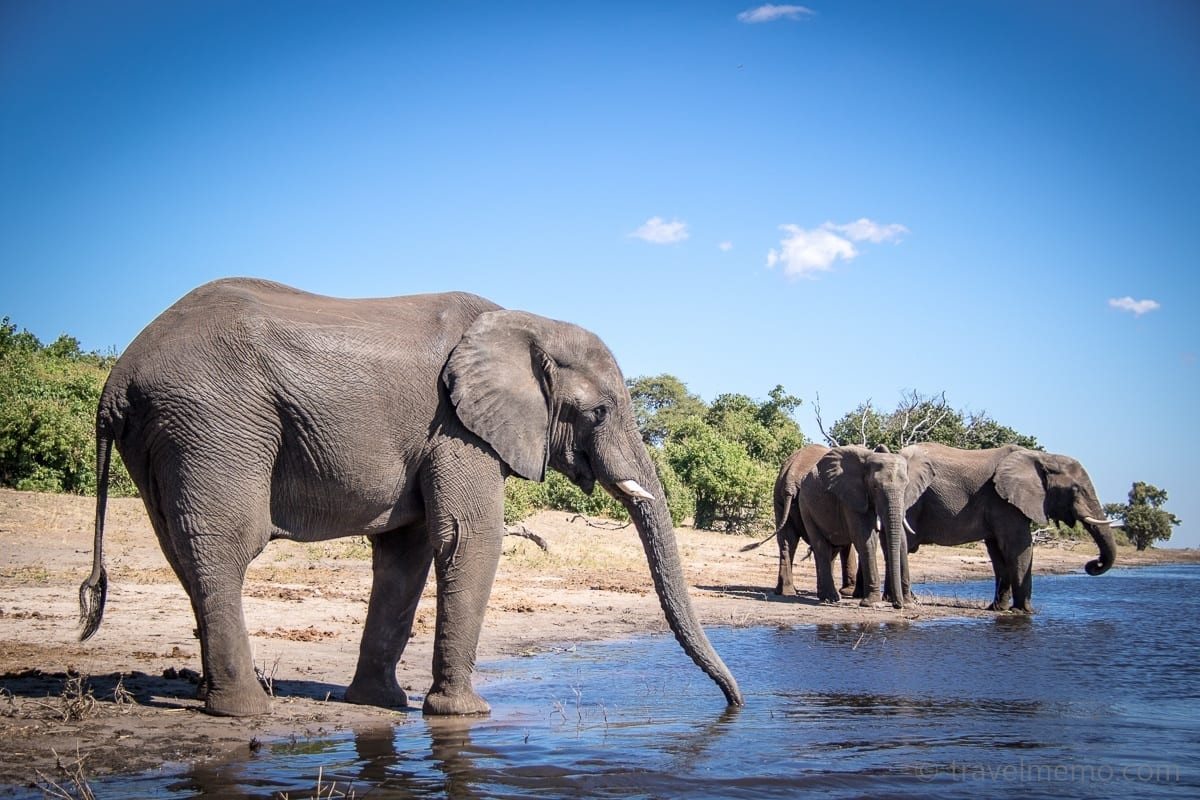
Chobe National Park, Botswana. The Chobe River frontage is one of the best places in Africa to photograph fish eagles. Afternoon boat cruises run close to perched and fishing birds, often with elephants and hippos in the same frame.
Okavango Delta, Botswana. Every channel and lagoon in the Delta has fish eagles, and the mokoro (dugout canoe) trips through the papyrus put you at water level beneath them.
Lake Naivasha, Kenya. The fish eagles here are habituated to boats and can be approached closely. Local fishermen sometimes throw fish into the air to trigger a swooping strike for tourists.
Kruger National Park, South Africa. Any bridge or dam in Kruger is worth a stop. The Sunset Dam at Lower Sabie, the causeway at Crocodile Bridge, and the rivers along the northern routes are all consistent spots.
Lake Malawi. One of the highest densities anywhere. The fish eagles along the shore at Cape Maclear are so used to people that they sometimes land within metres of the beach.
Zambezi River, Zimbabwe and Zambia. Upstream and downstream of Victoria Falls, the river is lined with fish eagles. Canoe safaris on the upper Zambezi in particular offer prolonged, close views.
For guided trips to any of these areas, see our Chobe National Park guide, our birding safari timing guide, and our full safari packages below.
Related: African Eagles and Raptors Worth Knowing
The fish eagle belongs to the genus Haliaeetus, the sea and fish eagles, which includes the American bald eagle, the Eurasian white-tailed eagle, and six others. Within Africa, it shares the skies with several other large and striking eagles:
Photo Credits
Hero and pair perched: Bernard Dupont (CC BY-SA 2.0). Fishing strike, Lake Malawi: Joachim Huber (CC BY-SA 2.0). Full wingspan in flight, juvenile, talons close-up, Chobe and sunset: Derek Keats (CC BY 2.0). Calling: I've Got It On Film! (CC BY 2.0). Nest: Charles J. Sharp (CC BY-SA 4.0). Lake Naivasha flight: Daniel Case (CC BY-SA 4.0). Wetland habitat, Akagera: KJ (CC BY-SA 4.0). Portrait: AngMoKio (CC BY-SA 3.0). Eating fish on perch: Bernard Dupont (CC BY-SA 2.0). Underwing from below: Dominic Sherony (CC BY-SA 2.0). Carrying fish and Chobe river: CC0 / public domain. All photographs are from Wikimedia Commons.