Key Takeaways
- The African wild dog is not a dog and not a wolf — it is Lycaon pictus, the only living member of its own genus, split from the wolf and dog line well over a million years ago.
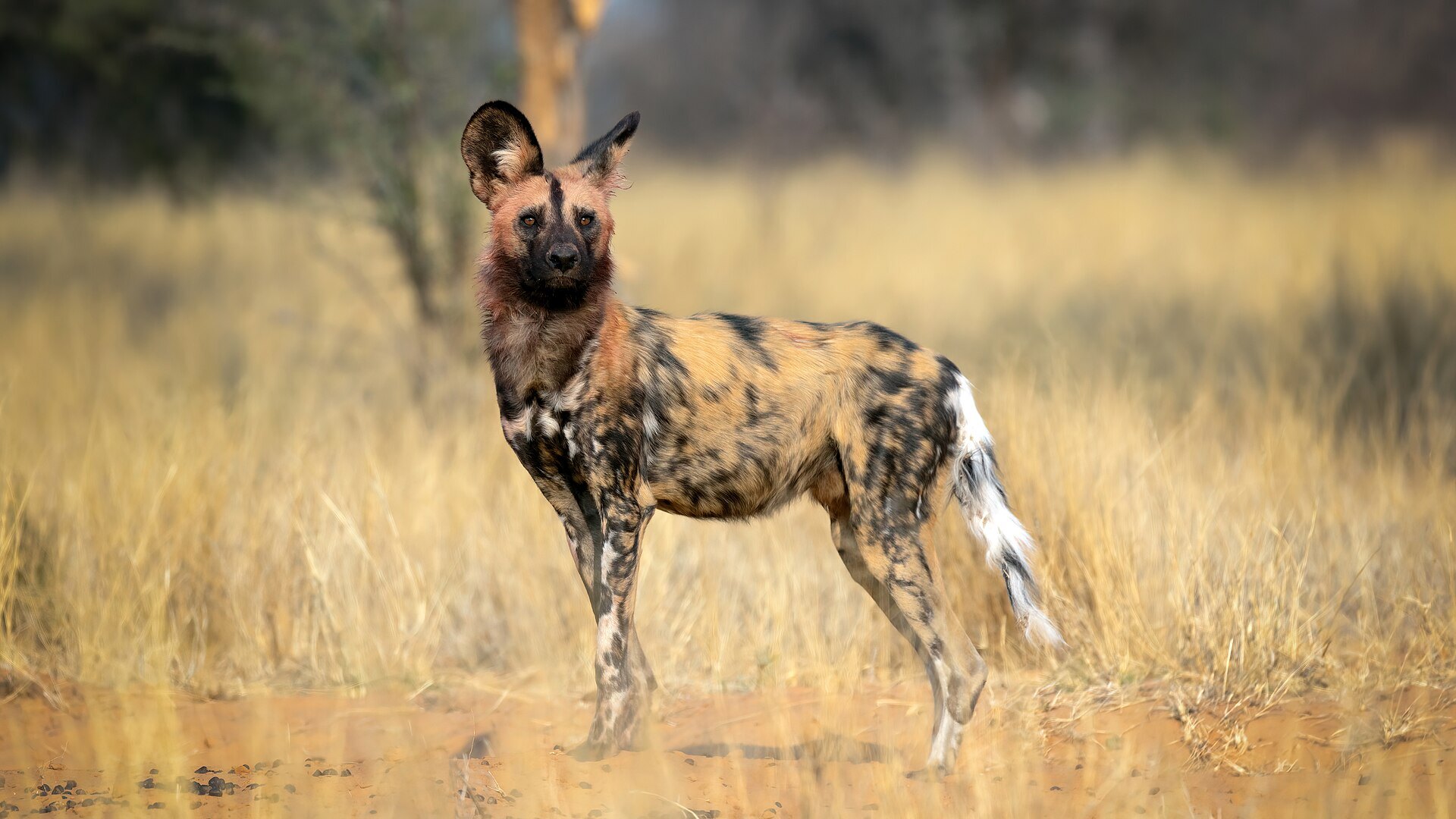
- Its mottled coat is a fingerprint: no two animals carry the same pattern of black, tan and white, and each has only four toes on the front foot — unique among dogs.
- It is the most successful big hunter in Africa, pulling off roughly four chases in five — far ahead of the lion and the spotted hyena.
- A pack raises its pups as one family, feeding the young, the sick and the old by bringing meat back and sharing it — and it even puts the decision to hunt to a kind of vote.
- The painted dog is Endangered, with only around 6,600 left in the wild, which makes a pack sighting one of the rarest moments on any safari.
The Predator Nobody Asks For — Until They See One
Most people arrive on safari with a list, and the wild dog is rarely on it. They want lions, leopards, elephants, the big names. Then one morning a guide gets a radio call, swings the vehicle off the track, and twenty minutes later you are sitting beside a pack of painted dogs sprawled in the shade, pups tumbling over the adults, the whole group twittering like a flock of strange birds. People who have never given the animal a second thought come away saying it was the best sighting of the trip. That happens again and again.
Part of it is the rarity. There are fewer wild dogs left than there are rhinos in some reserves, and a pack covers so much ground that even in the best areas you need luck to cross paths with one. Part of it is how alive they are — wild dogs are rarely still, and when a pack wakes and gets moving the energy is unlike anything else in the bush. And part of it is the story, once you know it, because almost everything people assume about this animal is wrong, starting with its name.
So here is the painted dog as it really is — grounded in the science, not the old reputation.
Not a Dog, Not a Wolf: What a Painted Dog Really Is
The African wild dog goes by a lot of names — painted dog, painted wolf, Cape hunting dog — and the scientific one tells you the most: Lycaon pictus, roughly "painted wolf-like animal." That Lycaon matters. It is the only species in its genus, which means the painted dog is not a wolf, not a jackal, and not a feral version of the dog asleep on your couch. Its line branched off from the ancestors of wolves and domestic dogs well over a million years ago and went its own way, and it cannot interbreed with any of them.
You can read the difference on the animal itself. A wild dog has enormous rounded ears, set high and swivelling like satellite dishes — they catch the faint long-distance calls of the pack and shed heat on a hot day. It stands tall and lean on long legs, built for distance rather than a short sprint. And it has only four toes on each front foot, with no dewclaw, which no other dog on earth can claim. It is its own creature entirely, and once you have seen one you stop confusing it with anything else.
The Coat That Works Like a Fingerprint
No two painted dogs are marked the same way. The coat is a mottled jumble of black, tan, yellow-brown and white, splashed on in a pattern that is different on every single animal — left side unlike the right side on the same dog. Researchers use it exactly the way police use fingerprints: a clear photograph is enough to tell one pack member from another and track an individual across years. The white-tipped tail is part of it too, a pale flag that stays visible in long grass and helps the pack keep contact on a chase.
The pattern is not just decoration. In the broken light and shade of the bush that chaos of blotches breaks up the animal's outline, so a moving pack is far harder to read than its size suggests. It is the same logic as a soldier's camouflage — nothing about the painted dog is tidy, and that is the point.
The Most Successful Hunter in Africa
Here is the fact that surprises people most. The lion, for all its power, comes home empty most of the time — roughly one chase in four ends in a kill. The spotted hyena does a little better. The painted dog leaves both of them far behind, succeeding in something like four hunts out of five. Pound for pound it is the most efficient large predator on the continent, and it is not close.
It manages that with teamwork rather than muscle. A wild dog is not especially strong and not a short-burst sprinter in the way a cheetah is. What it has is stamina and coordination. The pack sets off at a steady, loping pace — they can hold around 50 to 60 km/h for a long way — and simply runs the prey, usually an impala or a young kudu or wildebeest, until it tires. Dogs cut corners, swap the lead, and head off the animal where it turns. There is no single killing bite the way a cat does it; the pack brings the prey down together and feeds fast, because they know what is coming.
What is coming is the tax. Lions and hyenas follow the dogs and steal their kills constantly, and a lion will kill a wild dog given the chance. That theft is one reason the pack eats quickly and then moves — and one reason wild dogs need so much space to survive.


A Family That Looks After Its Own
If the hunting is the headline, the family life is the part that stays with you. A pack is usually five to twenty animals, sometimes more, built around a single dominant pair that are normally the only two to breed. Everyone else — brothers, sisters, grown pups from past years — helps raise that one litter. And the care goes well beyond the pups.
Wild dogs feed each other. A dog that stayed behind to guard the den, a mother nursing pups, an animal too old or sick or injured to keep up on the hunt — they all get fed, because returning dogs bring meat back in their stomachs and bring it up again for whoever needs it. Pups are let in to eat first, ahead of the adults who made the kill. There is remarkably little fighting inside a pack; aggression is turned outward, almost never on each other. For an animal so fierce in the hunt, the painted dog is one of the gentlest-run societies in the bush.
One more twist: in wild dogs it is the females that leave to find new packs, while the males tend to stay — the opposite of most social mammals, and a detail that keeps the family lines healthy.
Twitters, Hoo-Calls, and Voting With a Sneeze
Spend time near a pack and the first thing you notice is the sound. Wild dogs are constantly talking — soft twitters and whines and squeaks as they greet and reassure one another. Over distance they use a far-carrying, bird-like "hoo" call to find pack members that have wandered off, a sound that drifts for a kilometre or more across the bush. They do not howl like wolves. The whole feel of the pack is chatter, not chorus.
Then there is the strangest finding of all. Before a hunt, the pack holds a kind of rally — a burst of excited greeting — and researchers found that the dogs effectively vote on whether to go, using sneezes. The more sharp little sneezes the group makes during the rally, the more likely the pack is to move off and hunt. When a dominant dog starts the rally only a few sneezes are needed to carry it; when a lower-ranking dog starts it, the pack needs far more. It is as close to democracy as anything in the animal world, decided by a show of noses.
Where to Watch Wild Dogs in Africa
Wild dogs need room — a single pack can range over hundreds of square kilometres — so the best places to see them are the large, connected wildernesses where that is still possible. A sighting is never guaranteed anywhere, but a handful of regions tilt the odds, and we have ranked them below. If you want the full planning version — best months, how to build a trip around a den season, which camps sit on active pack territory — read our dedicated guide on where to see wild dogs in Africa, which goes deep on each of these.
1. Okavango Delta & Linyanti, Botswana
The strongest single stronghold on the continent. The Delta and the Linyanti woodlands to the north hold healthy, well-studied packs, and the big private concessions let a guide follow a hunt properly. If wild dogs are your priority, Botswana is where you start.
2. Mana Pools, Zimbabwe
Famous for painted dogs, and for the walking safaris that let you track a pack on foot through the open riverine floodplain. The dogs here have been followed for decades and feature in some of the finest wildlife filming ever done.
3. Greater Kruger: Sabi Sand & Timbavati, South Africa
The private reserves bordering Kruger carry resident packs and allow off-road following, so when the dogs are denning the sightings can be superb. The easiest region to fold into a wider South African trip.
4. Laikipia & Samburu, Kenya
Northern Kenya's conservancies have become one of East Africa's best bets for painted dogs, with packs recovering across the Laikipia plateau and the arid Samburu country around it.
5. Nyerere (Selous) & Ruaha, Tanzania
Southern Tanzania's vast, lightly visited reserves hold some of the largest wild dog populations in East Africa. Big, remote and wild — exactly the kind of country a pack thrives in.
6. South Luangwa, Zambia
Zambia's great valley is better known for leopards, but it holds wild dogs too, and its night drives and walking safaris give you a different, closer way to find a pack.
7. Hwange, Zimbabwe
Zimbabwe's biggest park, with established packs and a long-running painted dog conservation programme on its doorstep that has helped the population hold on.
8. Madikwe & the Tuli Block, Transfrontier
Malaria-free Madikwe in South Africa reintroduced wild dogs successfully and is one of the more reliable places to see them, while the Tuli Block where three countries meet adds another cross-border stronghold.


How to Give Yourself the Best Chance
Wild dogs reward planning more than almost any other animal. A few things move the odds:
- Go to the right country. This is not an animal you stumble on everywhere. Botswana, Zimbabwe's Mana Pools and Hwange, the Greater Kruger reserves, northern Kenya and southern Tanzania are where packs still run — pick one of them and your chances climb sharply.
- Travel in the denning season. For a few months each year a pack ties itself to a den to raise pups, so instead of ranging endlessly it returns to one place. That is the one time wild dogs are predictable, and the best window to find them.
- Choose a reserve that allows off-road driving. A pack on a hunt leaves the road instantly. Private concessions that let a guide follow cross-country turn a thirty-second glimpse into a proper sighting.
- Be ready at dawn. Wild dogs hunt in the cool of early morning and late afternoon and rest through the heat. First light, when the pack wakes and rallies, is the moment to be out and already with them.
How Many Wild Dogs Are Left?
Not many — which is exactly why the sighting matters. The African wild dog is listed as Endangered, with only around 6,600 left in the wild and perhaps 1,400 of those mature adults, scattered across fewer than forty separate populations. It has already vanished from most of the countries it once ranged across. For every lion left in Africa there are many fewer painted dogs.
The pressures are brutal and mostly come from the edges of the wild. Their range is being cut into smaller and smaller pieces by farms and roads, and because a pack travels so far it runs straight into those edges: dogs are caught in wire snares set for bushmeat, hit by vehicles on fast roads, shot when they take livestock, and — the quiet killer — wiped out in waves by rabies and canine distemper caught from domestic dogs. A single disease outbreak can erase an entire pack in weeks.
Why the Painted Dog Needs Us
The good news is that few animals respond to real protection as well as this one. Where it is given space and left alone, the painted dog bounces back. Conservation programmes across the region vaccinate domestic dogs on reserve boundaries to stop disease jumping across, sweep snares out of the bush, build predator-proof bomas for livestock so farmers stop shooting, and move animals between reserves to keep isolated packs from inbreeding — a managed network that treats scattered populations as one.
Safari tourism sits at the centre of it. A reserve that earns its keep from visitors wanting to see wild dogs has every reason to protect the land and the packs, fund the anti-snare patrols, and pay the people who track the dogs day after day. Spend a morning watching a pack pour across the open ground, pups scrambling to keep up, and you understand precisely what is at stake — and your trip becomes a small part of keeping it standing.
Plan Your Safari With Beyond Africa
We are a Cape Town-based, tailor-made safari house, and we build journeys around exactly what you most want to see. If the painted dog is at the top of your list, we will send you where the packs still run — the Okavango and Linyanti in Botswana, Mana Pools in Zimbabwe, the private Greater Kruger reserves — and time your trip to the denning season when the pack stays put. Then we weave the rest of the Big Five, the great migration and time on the water around it.
Ready to spend a morning with Africa's rarest hunter? 👉 Request a safari quote → 👉 Browse our safari packages → 👉 WhatsApp us: +27 78 471 4852