Key Takeaways
- Amboseli = elephants and the Kilimanjaro backdrop: vast, relaxed herds, some of the last great super-tuskers on earth, flamingo-filled swamps and 400+ birds, all beneath Africa's highest peak
- Masai Mara = the Great Migration and big cats: over 1.5 million wildebeest cross the Mara River (roughly July-October), plus the finest lion, cheetah and leopard viewing in Kenya
- The Great Migration river crossings are the Mara's alone — Amboseli has superb resident wildlife but no migration
- For elephants and the great tuskers, Amboseli is unmatched in Kenya; for big cats and predator action, the Mara is unmatched
- Photography: Amboseli owns the iconic elephants-beneath-Kilimanjaro portrait; the Mara owns dynamic wildlife action and migration drama
- Cost is broadly similar — roughly $150-250 (budget) to $600-1,500+ (luxury) per person per night — with the Mara's top conservancy camps reaching a little higher
- Access: Amboseli is a 4-hour drive or 45-min flight from Nairobi; the Mara is 5-6 hours by road or a 45-min flight
- The verdict: choose Amboseli for elephants, tuskers and Kilimanjaro; choose the Mara for the migration and big cats — or, better still, combine both in one 7-10 day safari
Kenya's Two Crown Jewels: The Mountain vs The Migration
Ask any safari specialist to name the two parks that define a Kenyan safari, and the answer is almost always the same: Amboseli and the Masai Mara. They are the crown jewels — and choosing between them is one of the most common questions we are asked. The honest truth is that they are so different they are barely comparable, and that is exactly why so many travellers end up doing both.
Amboseli is small, flat and utterly cinematic — a stage arranged around the snow-capped dome of Kilimanjaro, where vast elephant herds and the last of the great super-tuskers move between glittering, mountain-fed swamps. It is the home of the world’s longest-running elephant study, a birder’s paradise, and the source of arguably the most photographed backdrop on the continent.
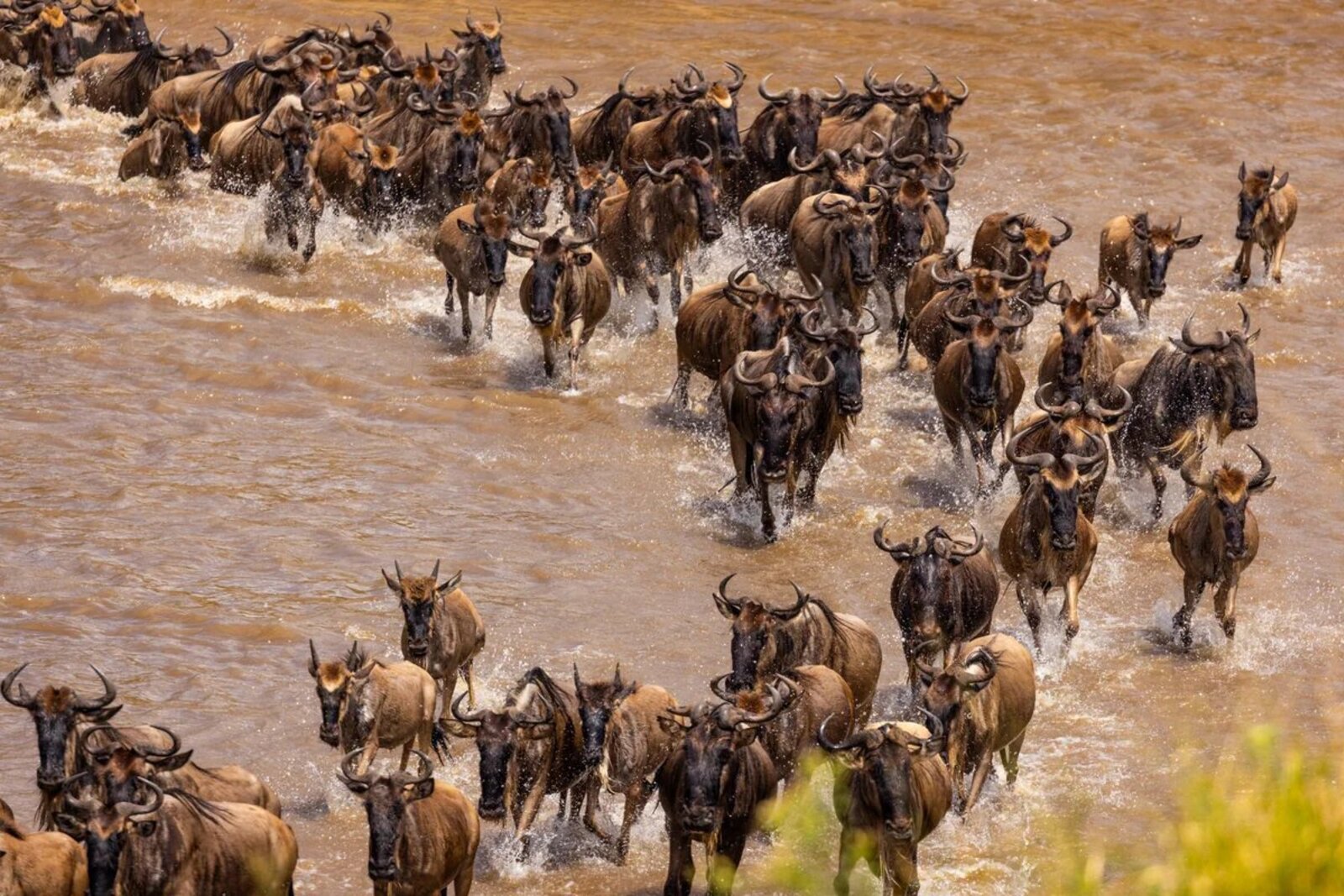
The Masai Mara is the Africa of the imagination — endless rolling grassland, the richest big-cat viewing in Kenya, and, from roughly July to October, the Great Migration’s heart-stopping river crossings, when more than 1.5 million wildebeest thunder across the crocodile-filled Mara River. It is raw, dramatic and unforgettable.
Below we compare the two across landscape, migration, elephants, big cats, birdlife, photography, crowds, culture, cost and logistics — backed by a full comparison table, honest price tiers, and the final verdict on which to choose, or how to weave both into one perfect safari. Let’s break it down, round by round.
Round 1: Landscape & Setting
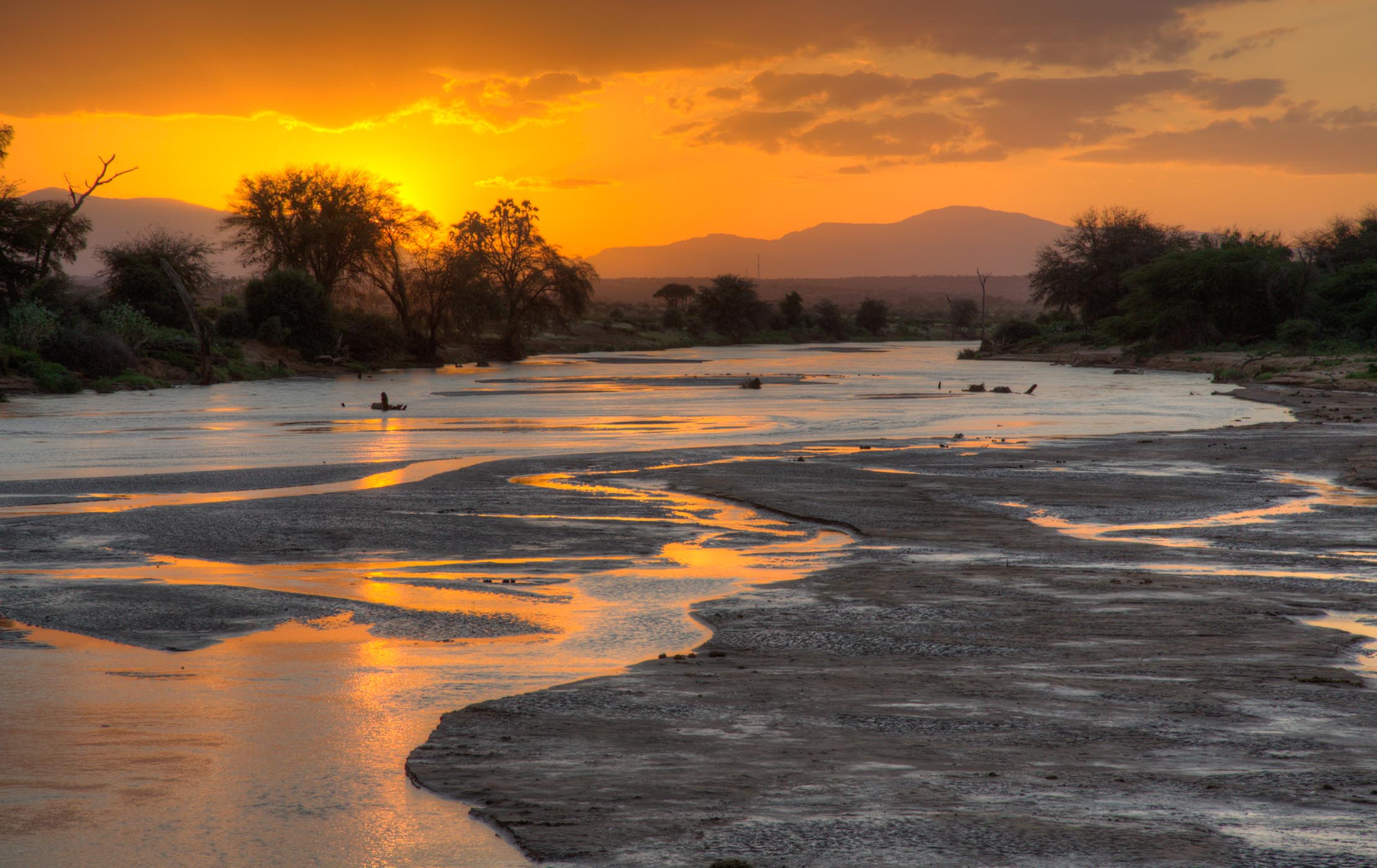
Amboseli: Amboseli is small, flat and utterly cinematic. Its 392 square kilometres sit in the rain-shadow of Mount Kilimanjaro, and everything here is arranged around a single, unforgettable backdrop — Africa’s highest peak, snow-capped and towering just across the Tanzanian border. Melt-water from the mountain feeds a chain of permanent swamps — Enkongo Narok, Longinye, Olokenya — emerald ribbons that draw elephants, hippo and thousands of birds even in the driest months. Between the swamps lie dusty, open pans and a shimmering seasonal lake bed. It is a landscape of contrasts: parched dust and glittering wetland beneath a mountain that seems close enough to touch.
Masai Mara: The Mara is the Africa of the imagination — endless rolling grassland stretching to the horizon, broken by lone balanites trees, riverine forest along the Mara and Talek rivers, and the dramatic Oloololo Escarpment rising in the west. At roughly 1,510 square kilometres (far larger with the surrounding conservancies), it merges seamlessly with Tanzania’s Serengeti to form one vast ecosystem. This is classic, wide-angle savannah — the golden plains that every safari dream is built on.
The split: Amboseli wins for its singular, mountain-backed drama; the Mara wins for sheer sweeping scale and that quintessential savannah horizon.
Round 2: The Great Migration
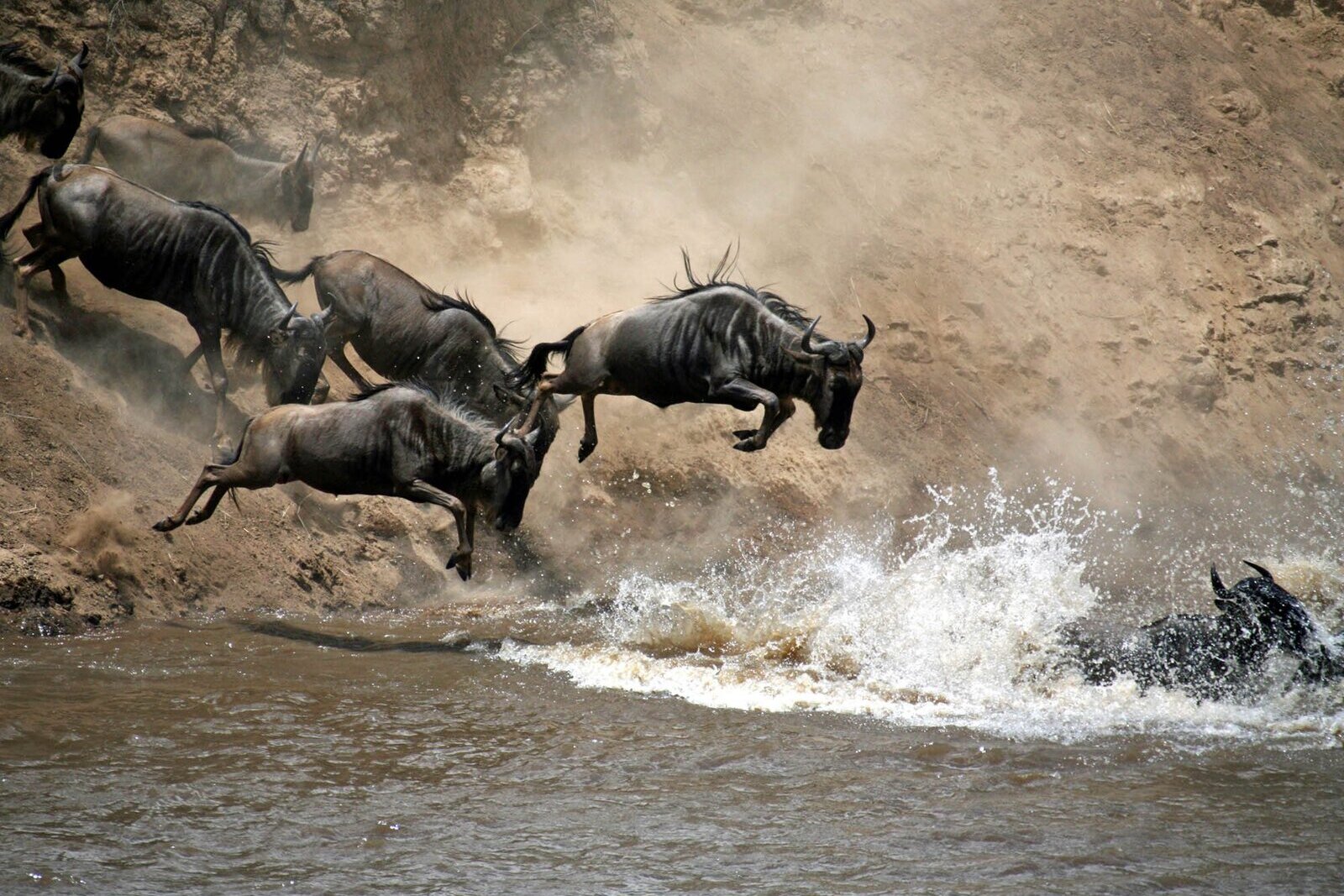
This is the Masai Mara’s trump card, and it is decisive. From roughly July to October, more than 1.5 million wildebeest and hundreds of thousands of zebra and gazelle pour north out of the Serengeti into the Mara, and the great river crossings begin. Massed herds hurl themselves down steep banks into the crocodile-patrolled waters of the Mara River in the single most electrifying wildlife spectacle on earth. Because the Mara is compact and the crossing points are well known, you can position for the drama at close quarters in a way the vast Serengeti rarely allows.
Amboseli has no migration. Its wildlife is resident and present year-round, which brings its own reward — reliable, relaxed elephant viewing without the seasonal gamble — but it delivers none of the raw, heart-in-mouth theatre of a river crossing. If witnessing the Great Migration is the reason you are coming to Kenya, there is only one choice.
Winner: Masai Mara, decisively. It is one of only two places on earth (with the Serengeti) to witness the crossings.
Round 3: Elephants & the Great Tuskers
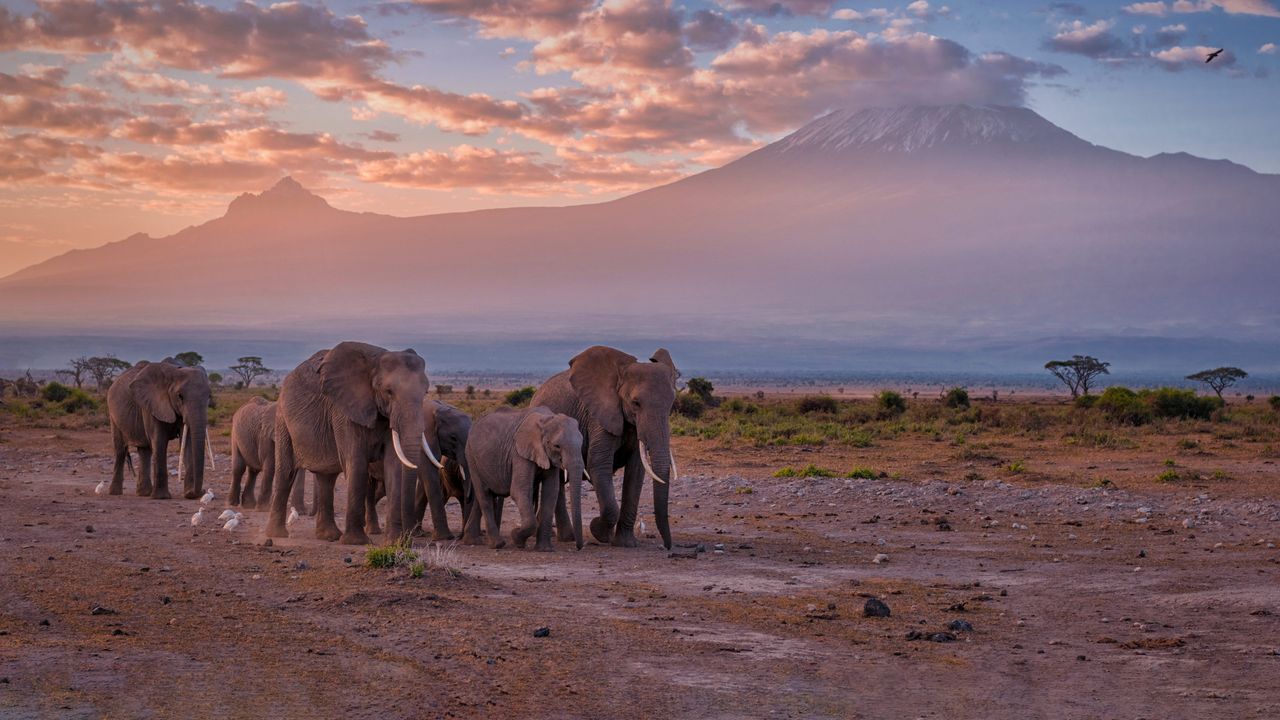
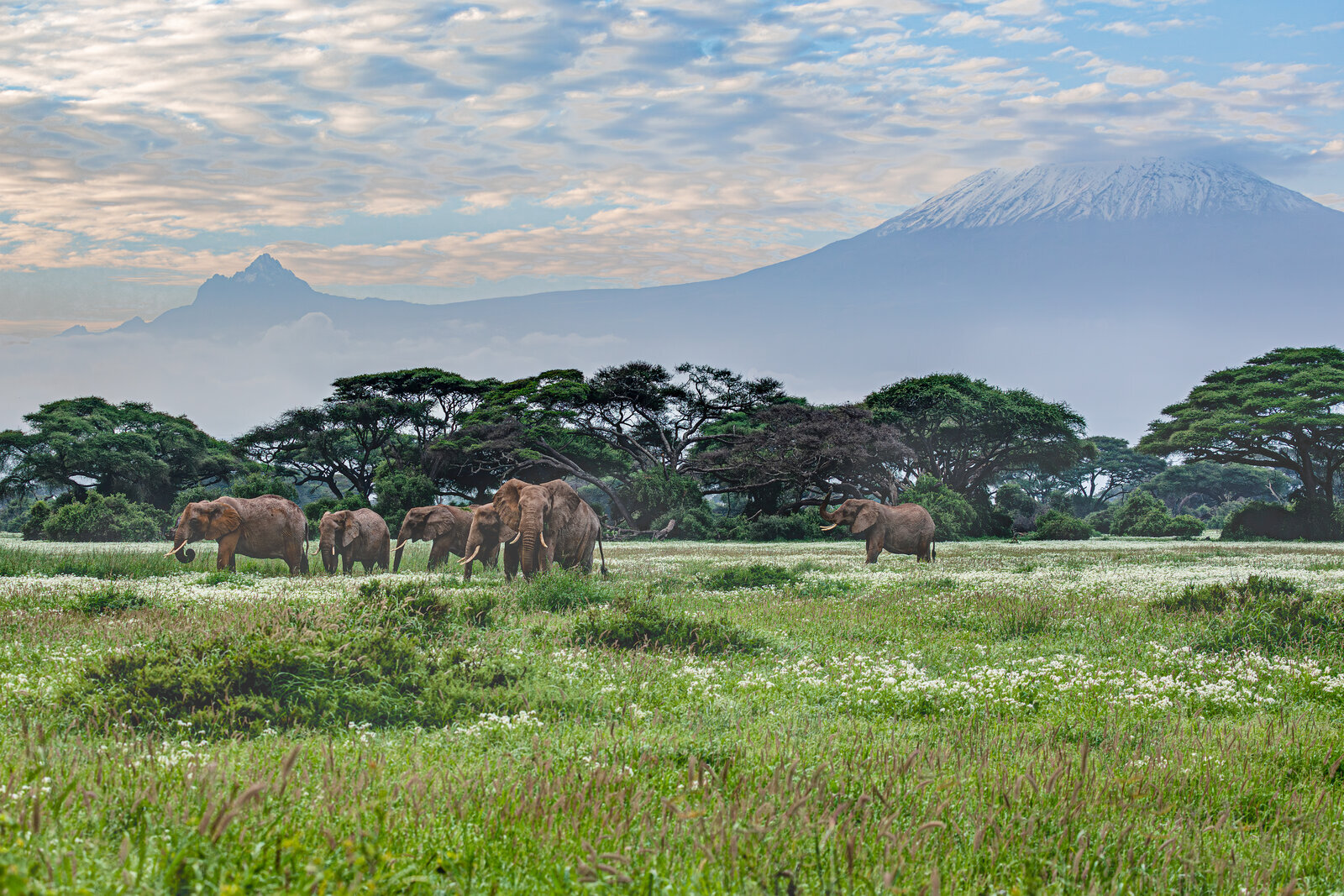
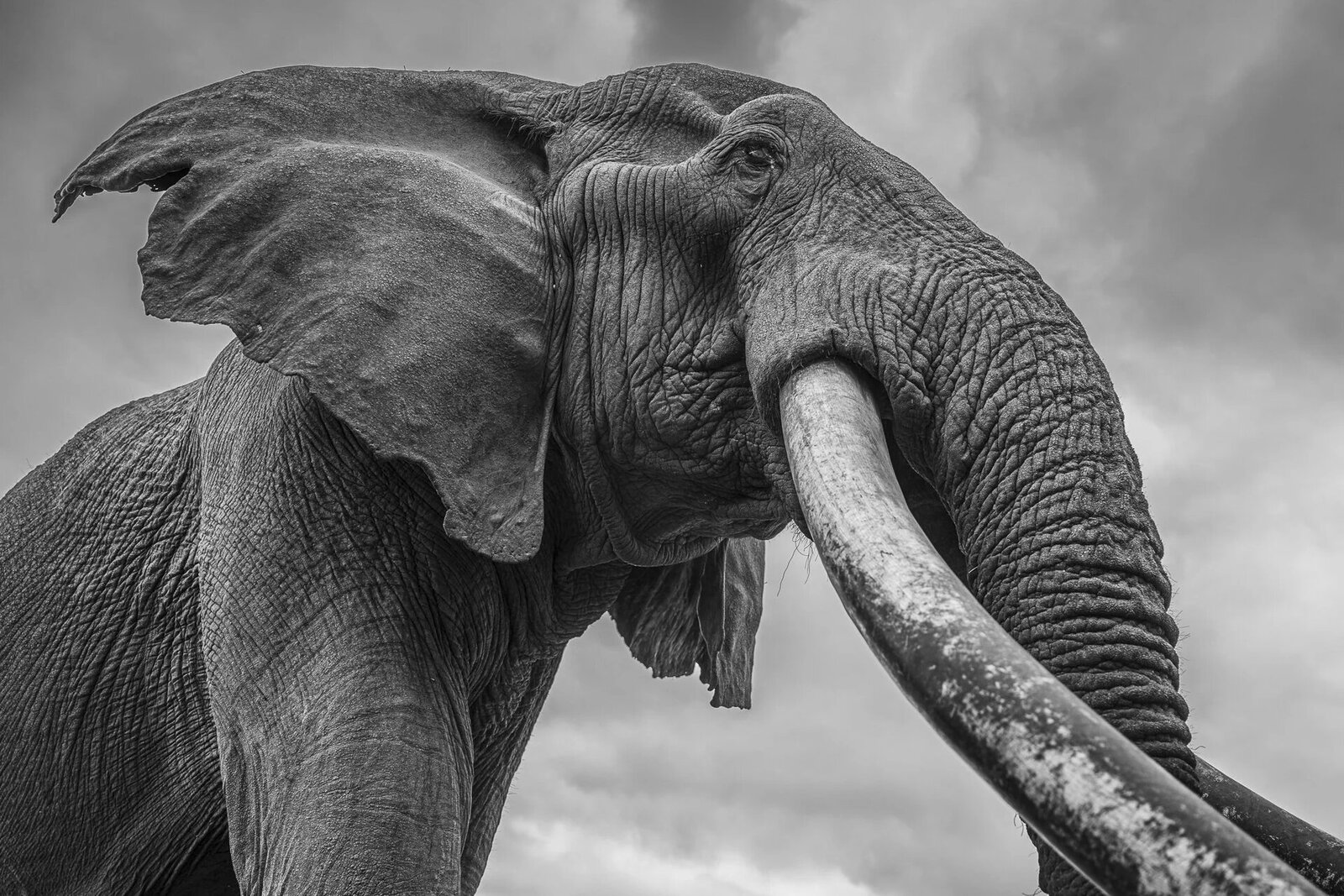
Amboseli: Amboseli is one of the greatest elephant destinations on the planet, and the beating heart of the world’s longest-running elephant study, begun by Cynthia Moss in 1972. Its 1,600-plus elephants are among the most relaxed and well-documented anywhere, moving in vast multi-generational herds between the swamps. Crucially, Amboseli is one of the last refuges of the great super-tuskers — bulls whose tusks are so long they sweep the ground, each carrying more than 45 kilograms of ivory per side. To photograph one of these giants striding beneath Kilimanjaro is a bucket-list moment nowhere else can match.
Masai Mara: The Mara has healthy elephant numbers too, and you will see good herds in the riverine forest and on the plains — but they are not the show. In the Mara, elephants are one act among many; in Amboseli, they are the headline, viewed in the open with the mountain behind them.
Winner: Amboseli, and it is not close. For elephants — and especially the last of the great tuskers — nowhere in Kenya compares.
Round 4: Big Cats & Predator Action
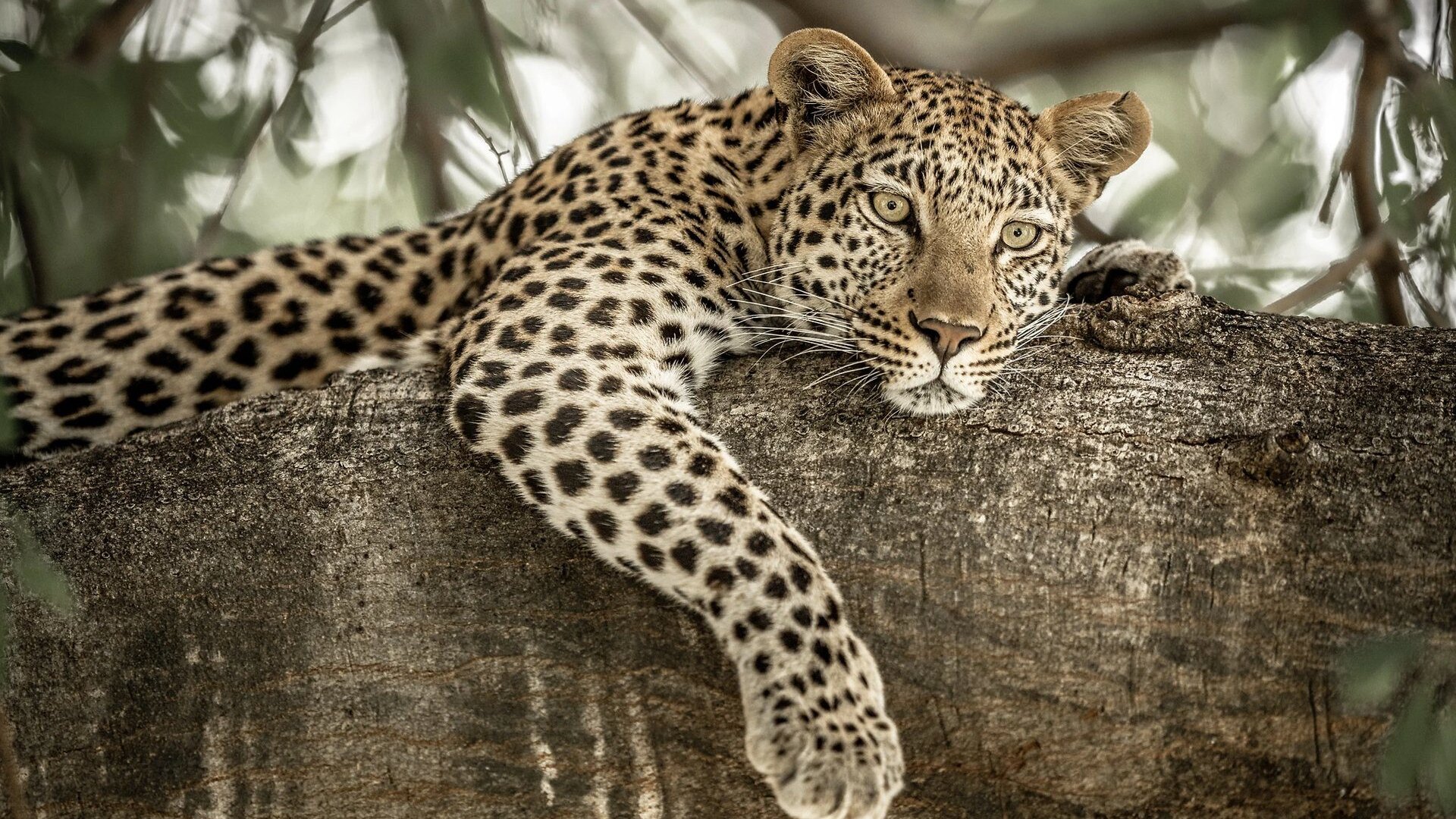
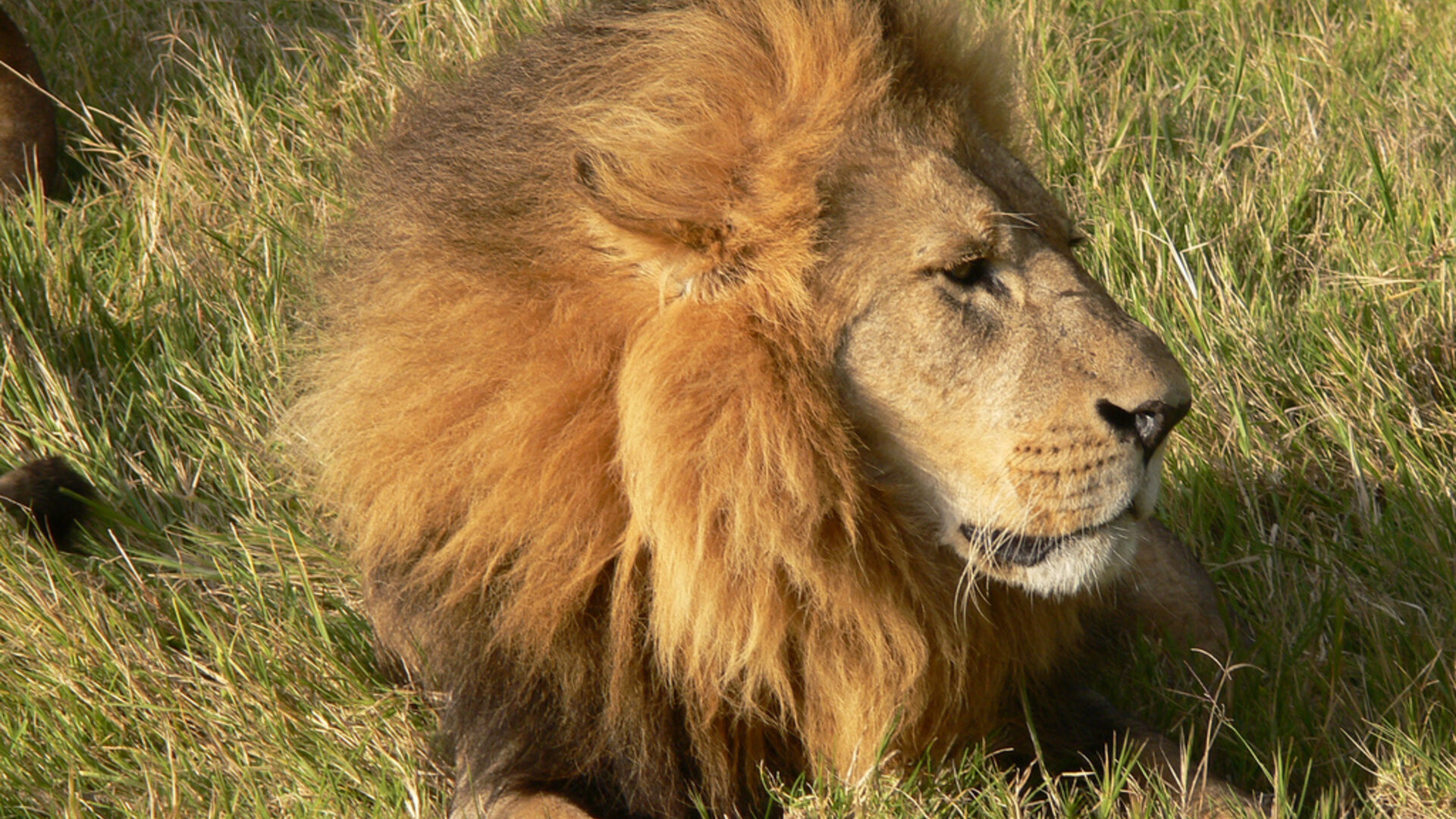
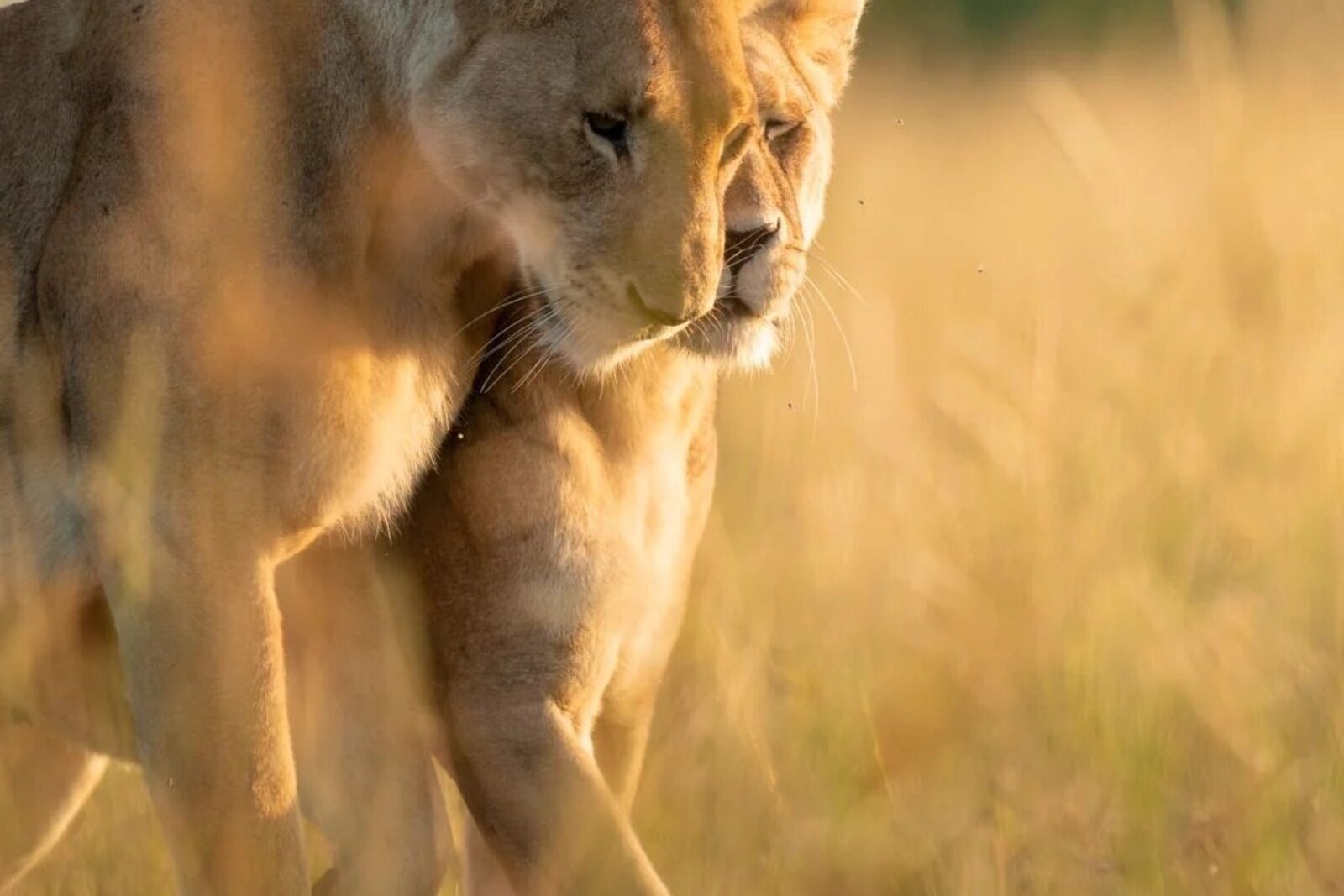
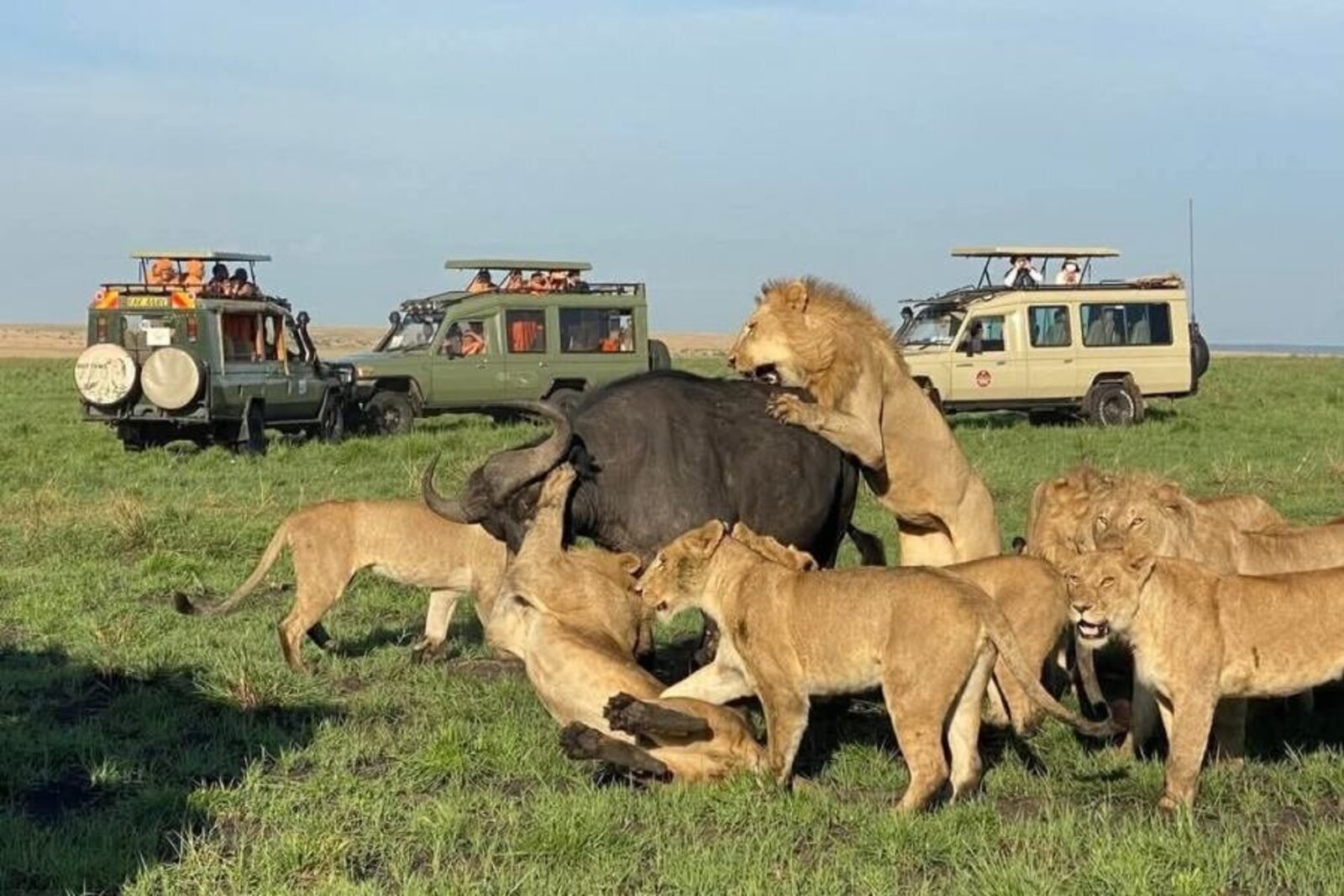
Masai Mara: The Mara is one of the finest big-cat theatres on the planet. Lion prides here are large, relaxed and famous — the reserve has been the stage for decades of documentary filming, from the BBC’s Big Cat Diary onward. Cheetah hunt across the open short-grass plains in broad daylight, sometimes leaping onto vehicles for a vantage point, and leopard are regularly seen draped in the riverine trees along the Talek and Mara. Add hyena, jackal and the drama of the migration’s river crossings and the Mara offers predator action at an intensity few places on earth can rival.
Amboseli: Amboseli has lion, cheetah, hyena and the occasional leopard, and sightings have improved as the ecosystem has been protected — but big cats are not its strength. The open terrain and lower prey concentrations mean predators are thinner on the ground and less habituated than in the Mara. You come to Amboseli for elephants and Kilimanjaro, not for cats.
Winner: Masai Mara, decisively. For lion, cheetah and leopard in numbers, the Mara is one of the best places in all of Africa.
Round 5: Birdlife & Wetlands
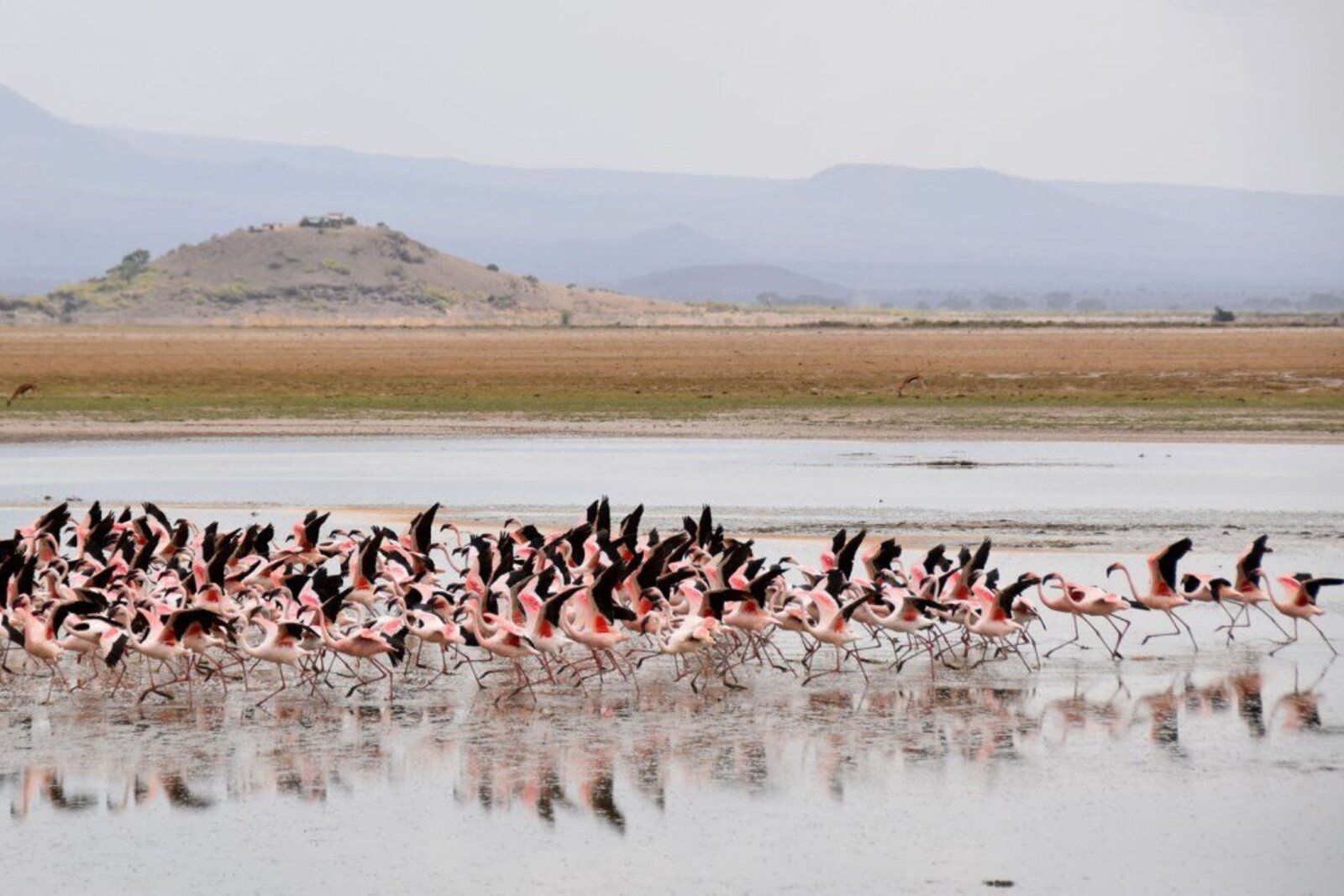
Amboseli: Amboseli is a birder’s paradise, and it owes everything to those Kilimanjaro-fed swamps. Over 400 bird species have been recorded, and the permanent wetlands concentrate them spectacularly — great flocks of flamingo wash the shallows pink, while pelicans, herons, egrets, African fish eagles, crowned cranes and countless waders throng the water’s edge. In the green season the pans flood and the birdlife becomes almost overwhelming. For photographers, the combination of massed waterbirds and a mountain backdrop is unique in Kenya.
Masai Mara: The Mara is excellent for birds too — roughly 470 species, including 57 raptors, plus the theatrical ground hornbill, secretary bird and the flamboyant lilac-breasted roller. But its birding is spread across grassland and riverine habitats rather than concentrated at water, so it lacks the sheer massed-waterbird spectacle of Amboseli’s swamps.
Winner: Amboseli for the concentrated wetland spectacle and flamingo flocks; the Mara for raptor diversity across its wider habitats. On balance, Amboseli edges it for birding drama.
Round 6: Photography & the Kilimanjaro Backdrop
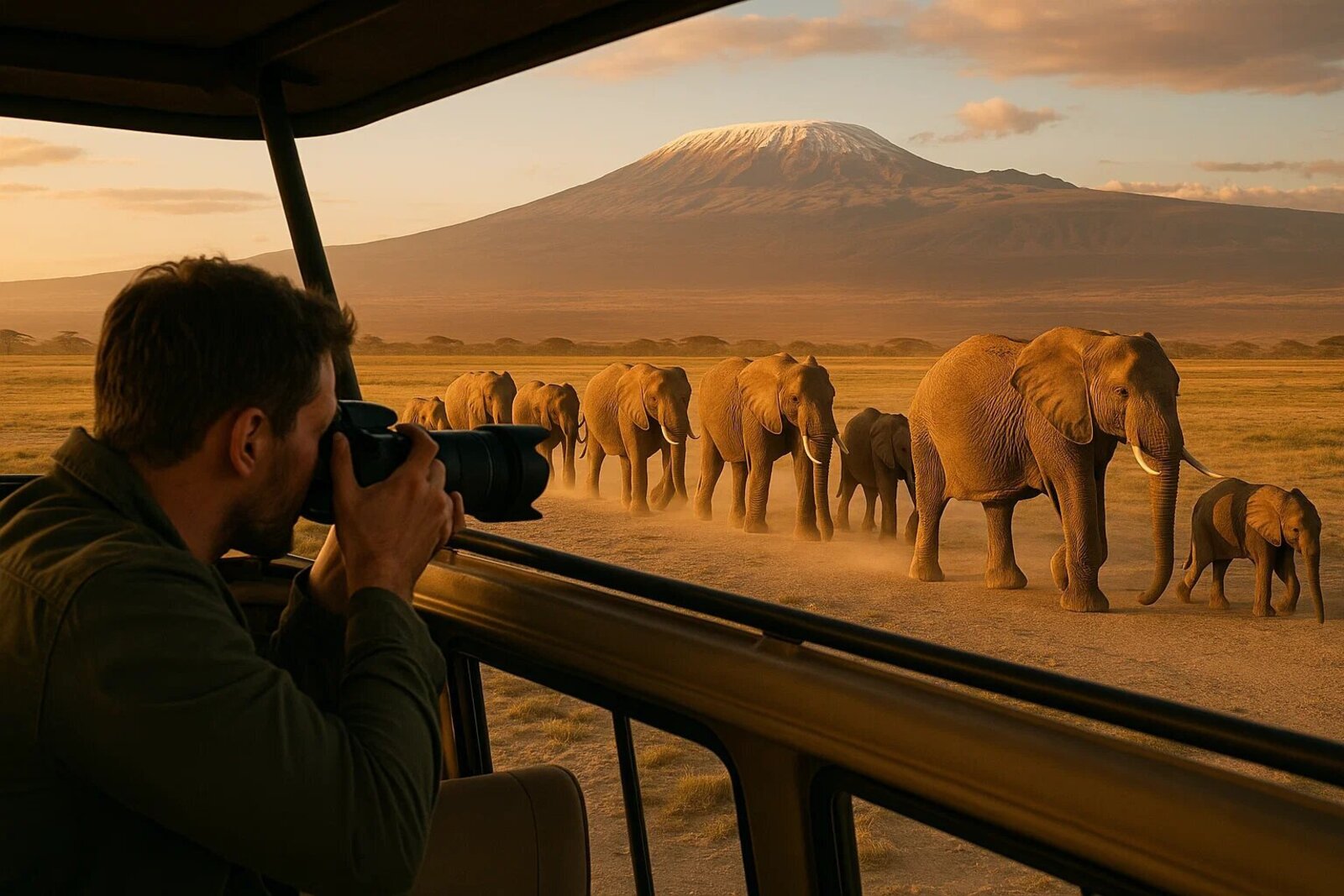
Amboseli: No park in Africa offers a signature frame like Amboseli’s — a herd of elephants, dust rising from their feet, marching across a golden pan with the snow-capped dome of Kilimanjaro filling the sky behind them. It is arguably the most photographed backdrop on the continent, and for good reason. The mountain is clearest at dawn and dusk before cloud gathers, so early starts are richly rewarded. The flat, open terrain and low horizons make for clean, uncluttered compositions and enormous skies.
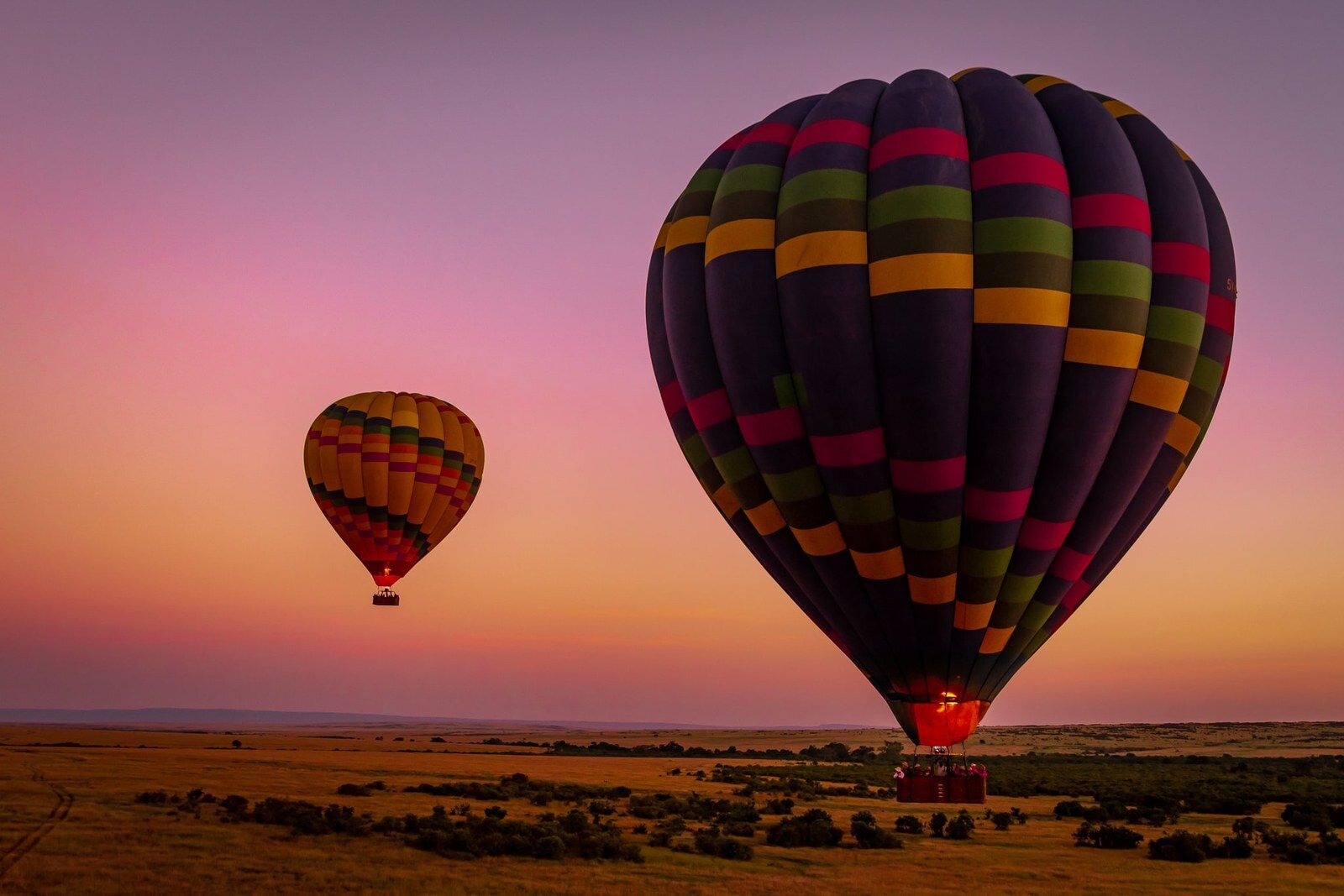
Masai Mara: The Mara delivers a different kind of photography — the classic wide-angle savannah of a lioness in golden grass at first light, a cheetah on a termite mound, a hot-air balloon drifting over the plains, and above all the chaos and spray of a river crossing. It is action and atmosphere rather than a single iconic backdrop, and for wildlife-behaviour photography it is world-class.
Winner: Split, and it depends on your vision. Amboseli owns the iconic mountain-backed portrait; the Mara owns dynamic wildlife action and migration drama.
Round 7: Crowds & Exclusivity
Amboseli: Being small and hugely popular, Amboseli’s core can feel busy at a prime sighting, and its compact size means vehicles concentrate around the swamps at peak times. The answer is to stay just outside the park in the surrounding Maasai group ranches — conservancies such as Kitirua, Selenkay and the Amboseli ecosystem’s private concessions — where vehicle numbers are limited and off-road and night drives are permitted.
Masai Mara: The Mara National Reserve can be genuinely crowded in high season, and a dramatic river crossing may draw dozens of vehicles jostling for position — the one real downside of its fame. But the Mara has a powerful answer: the ring of private conservancies (Mara North, Naboisho, Olare Motorogi, Ol Kinyei) that border the reserve enforce strict vehicle-per-sighting limits, allow off-road driving and night drives, and deliver a near-private wilderness — often for a similar or lower price than a peak-season reserve lodge.
Winner: Split. Both parks have busy cores, and both solve it the same way — book a conservancy camp and the crowds largely disappear. The Mara’s conservancy network is the more developed of the two.
Round 8: Culture & the Maasai
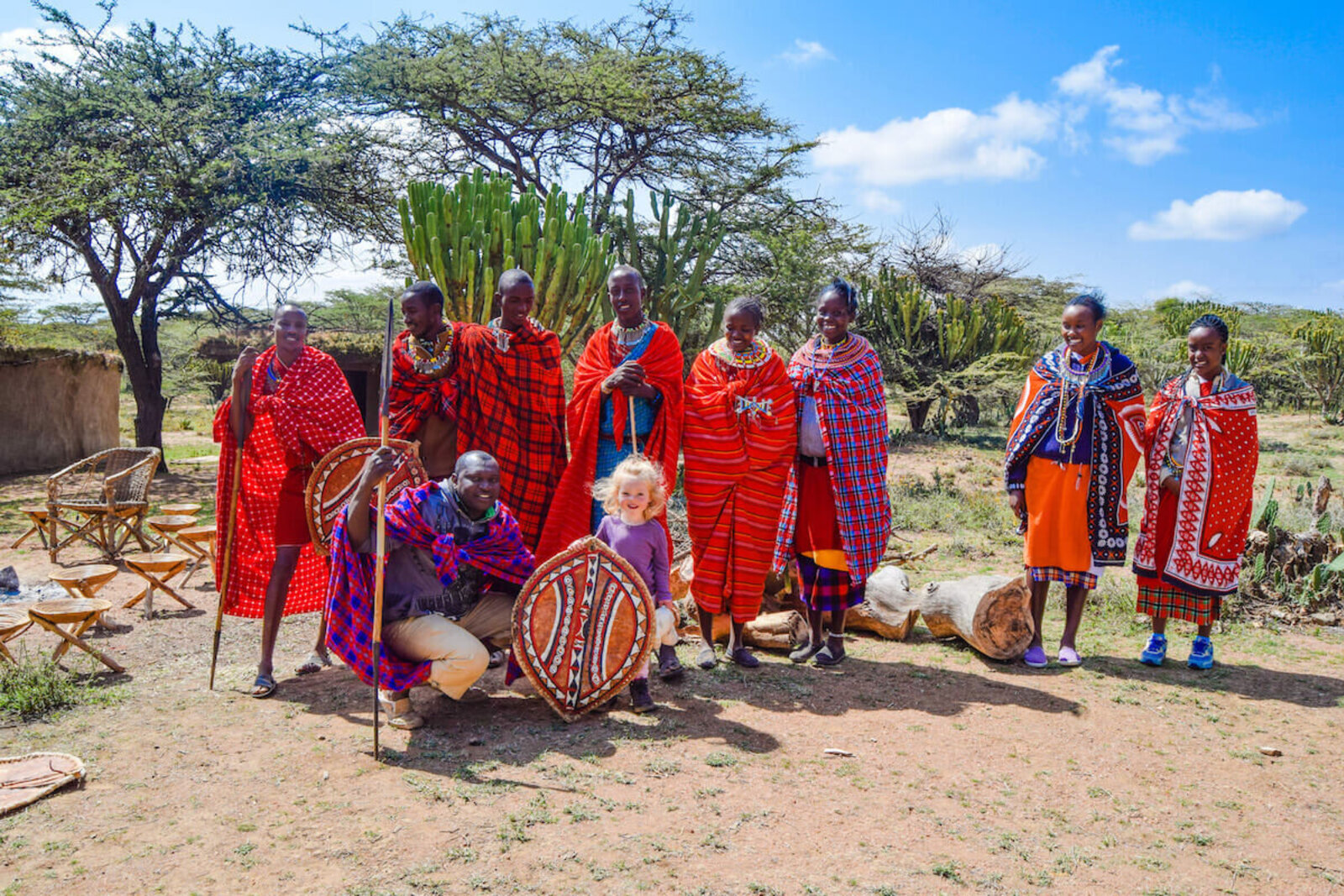
Both parks sit in the heart of Maasailand, and a respectful cultural visit is one of the great pleasures of a Kenyan safari — so this round is more about texture than a winner.
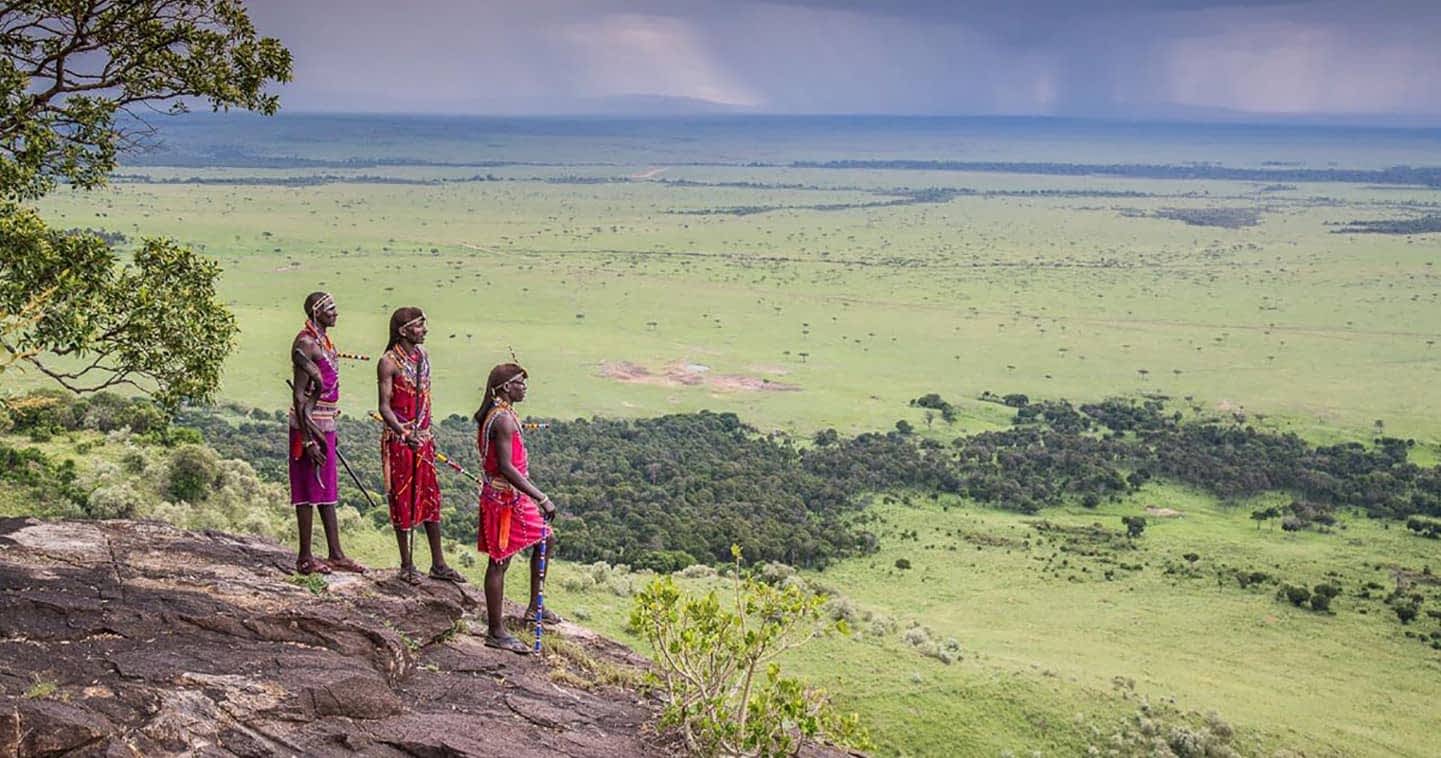
Amboseli: The Maasai group ranches surrounding Amboseli are central to its conservation story; the community leases land for the conservancies and benefits directly from tourism, and visits to a manyatta (homestead) arranged through your camp offer genuine insight into pastoralist life in the shadow of Kilimanjaro.
Masai Mara: The Mara takes its very name from the Maasai, and many of its conservancies are owned by Maasai communities, so your stay directly funds local livelihoods and land protection. Village visits, guided bush walks with Maasai trackers and cultural evenings are woven into most itineraries.
Winner: A tie — both deliver rich, living Maasai culture. Choose the camp that channels the most of your money back into the community, and you win either way.
Round 9: Cost & Value
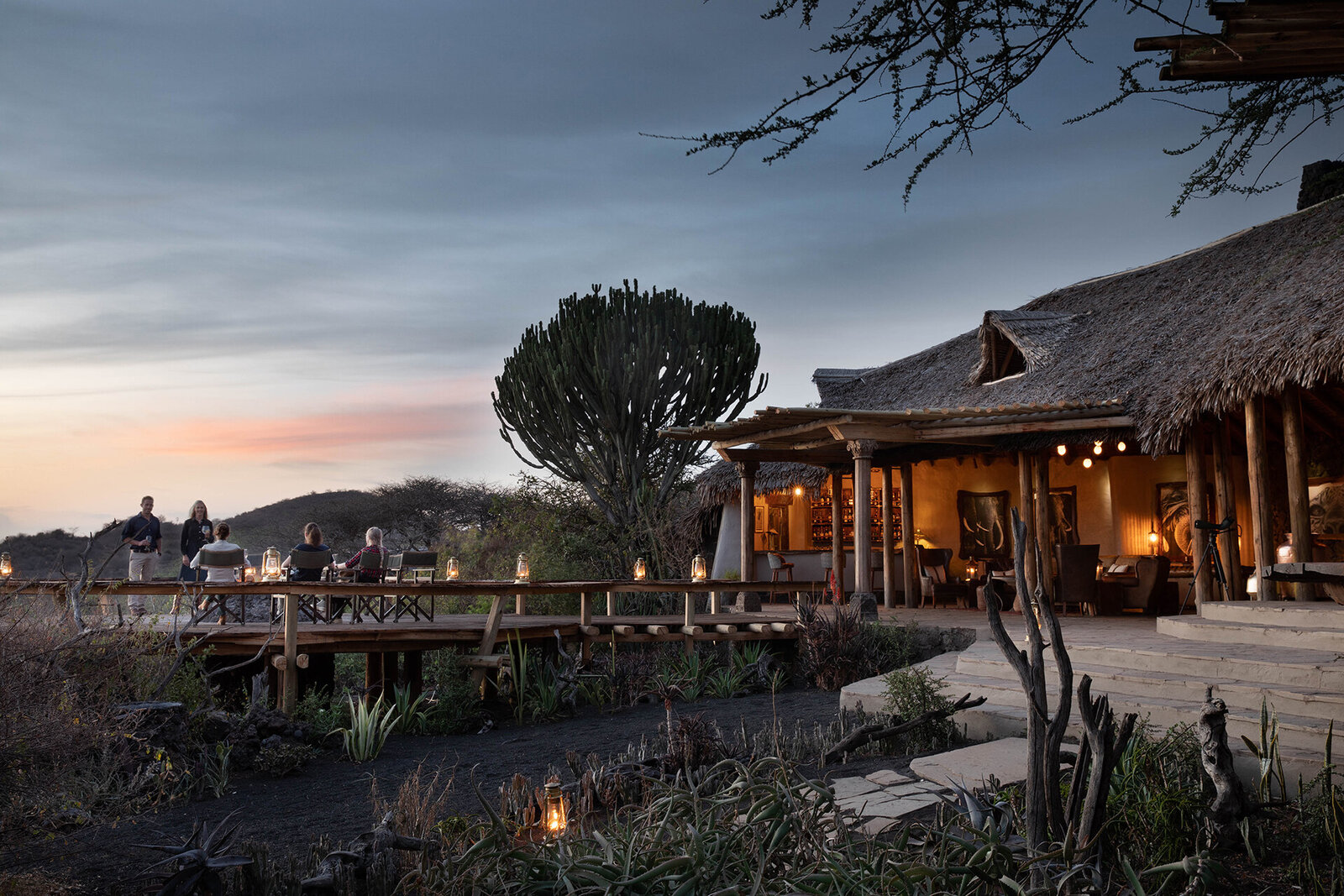
Both parks span the full range from honest tented camps to ultra-luxury lodges, and pricing is broadly similar — though the Mara’s top conservancy camps reach a little higher than Amboseli’s. As a rough guide, per person per night sharing, all meals and game drives included:
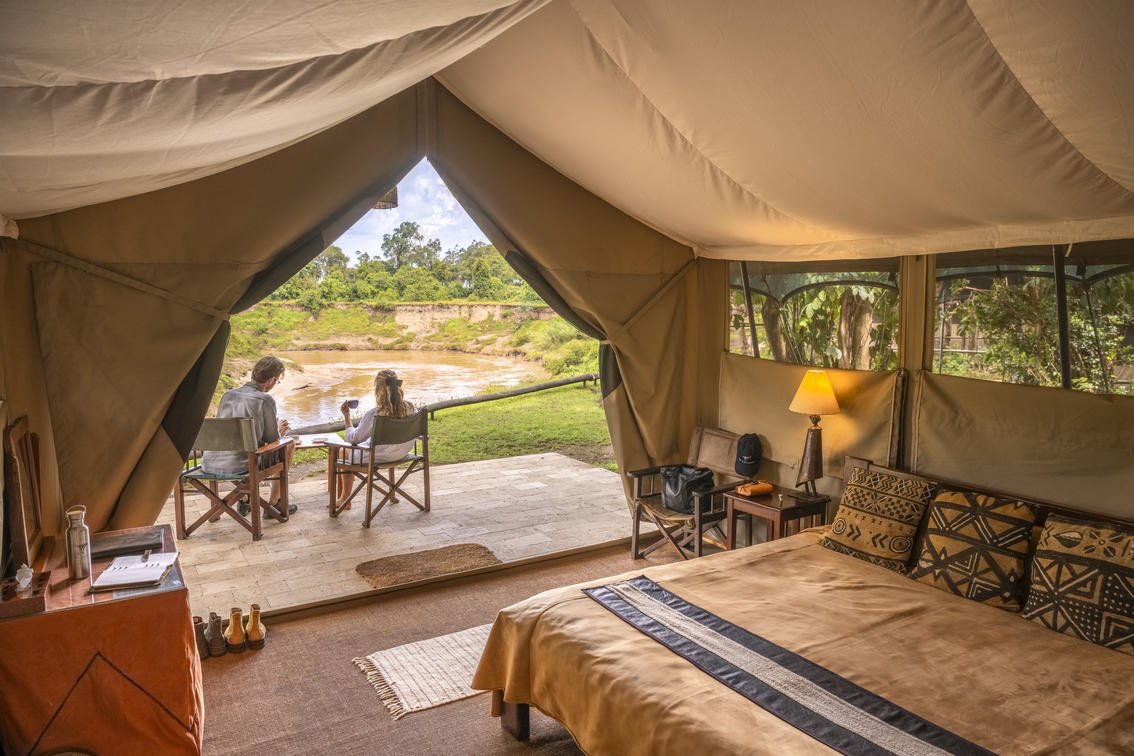
Budget / classic tented: Amboseli roughly $150–250; Masai Mara roughly $180–300. Expect comfortable tented camps or lodges, shared game drives and a genuine safari without frills.
Mid-range: Amboseli roughly $300–500; Masai Mara roughly $350–600. Better-sited camps, stronger guiding, smaller vehicles and often a swimming pool.
Luxury / conservancy: Amboseli roughly $600–1,000-plus; Masai Mara roughly $800–1,500-plus. Private conservancy access, off-road and night drives, superb guiding, and all-inclusive service.
On top of the nightly rate, budget for park and conservancy fees — around $100 per person per day for the Amboseli National Park or Masai Mara Reserve gate, plus $100–220 per day for private conservancies. Because the Mara’s conservancy tier is more developed, its very top end runs higher; for entry- and mid-level safaris the two parks are close in cost.
Winner: A near tie, with Amboseli slightly cheaper at the top end. For value, both deliver world-class wildlife at a fraction of Botswana’s prices.
Round 10: Getting There & Logistics
Amboseli: Amboseli is the more accessible of the two from Nairobi — roughly a four-hour drive (about 240 km) on a decent road, or a 45-minute scheduled light-aircraft hop to the Amboseli airstrip. Its proximity makes it easy to combine with Tsavo or a coastal beach finale, and it works well even for a shorter safari.
Masai Mara: The Mara is a longer haul overland — a scenic but bumpy five-to-six-hour drive (about 270 km) via the Great Rift Valley, or, far more comfortably, a 45-minute scheduled flight from Nairobi’s Wilson Airport to one of the Mara’s many airstrips. Most luxury travellers fly in. Once there, the reserve and conservancies are well served by camps and airstrips.
Winner: Amboseli, for its shorter drive and easy access. Both are a quick, painless flight from Nairobi if you would rather skip the road.
Round 11: Do Both or Pick One?
Here is the good news: Amboseli and Masai Mara are two of the finest parks in Kenya, they are utterly different, and they combine into one perfect safari. You do not have to choose — and most seasoned travellers do not.
Pick Amboseli if: Elephants and the great tuskers are your priority, you dream of that Kilimanjaro backdrop, you love birdlife and wetlands, you want an easier drive from Nairobi, and you are happy to trade big-cat action for scale and serenity. Amboseli is also excellent for a shorter, first taste of safari.
Pick the Masai Mara if: The Great Migration, big cats and classic savannah are what you are chasing, you want the richest predator action in Kenya, and you are visiting between July and October for the river crossings. The Mara is the natural centrepiece of most Kenyan safaris.
Do both if: You possibly can — and you should. A classic seven-to-ten-day Kenya safari pairs two or three nights in Amboseli (elephants, tuskers, Kilimanjaro) with three or four nights in the Masai Mara (migration, big cats), linked by a short flight via Nairobi. Add Lake Nakuru or Samburu in between and you have one of the greatest safaris on earth — the mountain and the migration in a single unforgettable journey.
| Aspect | Amboseli | Masai Mara |
|---|---|---|
| Landscape | Small, flat, cinematic — swamps & pans beneath Kilimanjaro | Vast rolling savannah — golden plains & riverine forest |
| Size | ~392 km² | ~1,510 km² (far larger with conservancies) |
| Iconic backdrop | Mount Kilimanjaro — snow-capped, unmatched | Endless plains & the Oloololo Escarpment |
| Great Migration | No — resident wildlife year-round | Yes — the Mara River crossings (roughly Jul-Oct) |
| Elephants | Exceptional — 1,600+, including great super-tuskers | Good herds, but not the headline |
| Big cats | Present but thinner — not the strength | World-class — lion, cheetah & leopard in numbers |
| Cheetah | Occasional | Excellent — daylight hunts on open plains |
| Birdlife | 400+ species; massed flamingos & waterbirds | 470+ species; 57 raptors |
| Balloon safari | Limited | Iconic — dawn flights over the plains |
| Crowds | Busy core; conservancies solve it | Busy reserve in season; strong conservancy network |
| Malaria risk | Low (high, dry altitude) | Present — prophylaxis advised |
| Budget stay (pppn) | ~$150-250 | ~$180-300 |
| Mid-range (pppn) | ~$300-500 | ~$350-600 |
| Luxury (pppn) | ~$600-1,000+ | ~$800-1,500+ |
| Park / conservancy fees | ~$100/day park; $100-200/day conservancy | ~$100/day reserve; $100-220/day conservancy |
| From Nairobi | ~4 hr drive or 45-min flight | ~5-6 hr drive or 45-min flight |
| Best time | Jun-Oct & Jan-Feb (clearest Kilimanjaro views) | Jul-Oct (migration); great year-round |
| Best for | Elephants, tuskers, Kilimanjaro, birds, photography | Migration, big cats, classic savannah, balloons |
The table makes the distinction clear. Amboseli is the elephant-and-mountain park — unbeatable for great herds, the last super-tuskers, birdlife and that Kilimanjaro backdrop, with an easier drive from Nairobi. The Masai Mara is the migration-and-big-cat powerhouse — the only place in Kenya to witness the river crossings, and one of the finest predator theatres on earth.
Neither is ‘better’ in the abstract; they answer different dreams. If you must pick one, let your priority — elephants and Kilimanjaro, or the migration and cats — make the call. If you can manage both, you have the makings of a truly great Kenyan safari.
When to Visit: Kilimanjaro Views vs Migration Timing
Amboseli: The best months are the dry seasons — June to October and January to February — when wildlife concentrates around the swamps and, crucially, when Kilimanjaro is most often clear of cloud. The mountain reveals itself most reliably at dawn and dusk, so early starts are richly rewarded. The green season (March to May and November) brings lush landscapes, dramatic skies, superb birding and lower prices, though the mountain hides behind cloud more often.
Masai Mara: The headline window is July to October, when the Great Migration is in the Mara and the river crossings occur — though exact timing shifts each year with the rains. Outside that window the Mara is still world-class for big cats and resident game all year. The green season (November to May) means fewer crowds, lower rates, newborn animals and lush scenery, with only short afternoon showers to plan around.
Bottom line: if the Great Migration is your goal, target July to October and centre your trip on the Mara. If clear Kilimanjaro views and elephants are the priority, Amboseli rewards the dry months. Combine both in the July-to-October window and you get the best of everything — the mountain and the migration in a single trip. Matching your dates to what you most want to see is exactly the sort of planning a specialist operator lives for.
Why Book Your Amboseli & Masai Mara Safari with Beyond Africa Safaris
We design Kenyan safaris around exactly this question every week, and we know how to get the best from each park. If elephants and Kilimanjaro are your dream, we will place you in the Amboseli camps with the finest mountain outlooks and the best chance of the great tuskers. If it is the migration and big cats, we will time your Mara stay to the crossings and steer you to the private conservancies where the game viewing is exclusive and the crowds vanish.
Best of all, we will show you how to combine the two seamlessly — a short flight via Nairobi links Amboseli and the Mara into one flowing itinerary, and we handle the internal flights, park fees, conservancy access, migration timing and every transfer in between. You get one itinerary, one quote, and one point of contact from first enquiry to the moment you fly home.
And because we are African-owned and operated from Cape Town, you plan directly with specialists who live and breathe this continent — not a distant middleman. Get in touch, and let’s build your perfect Kenya safari — Amboseli, the Masai Mara, or the unbeatable combination of both.
Ready to Choose Your Kenya Safari?
Tell us whether you are chasing elephants and Kilimanjaro, the Great Migration and big cats, or the best of both — and we will build the itinerary that matches, with camps secured, migration timing dialled in and every detail handled. Amboseli, the Masai Mara, or both.