Madagascar isn't just another safari destination. It's Africa's endemic wildlife value champion — a 300-million-year-old island where 95% of all species exist nowhere else on Earth.
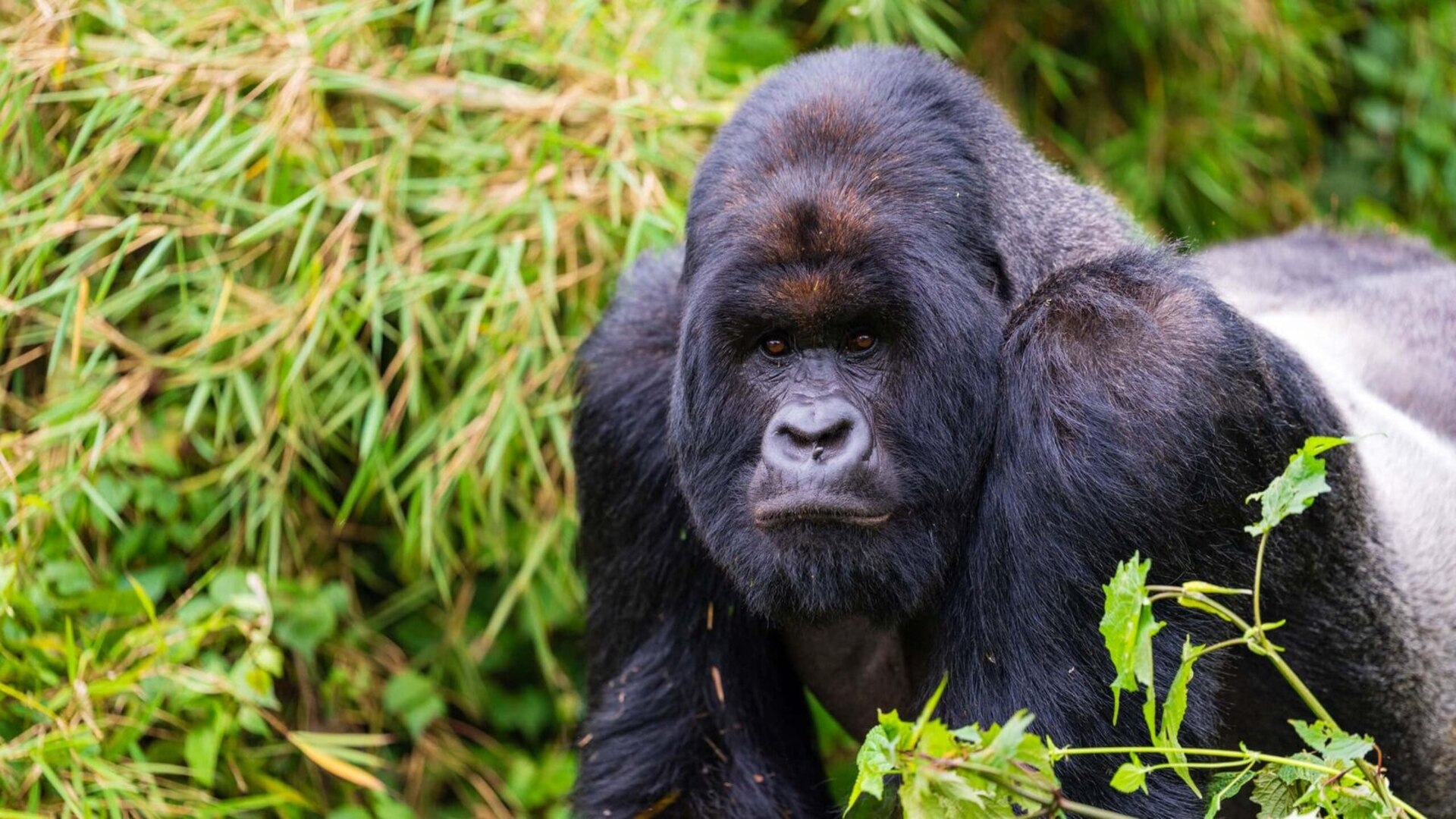
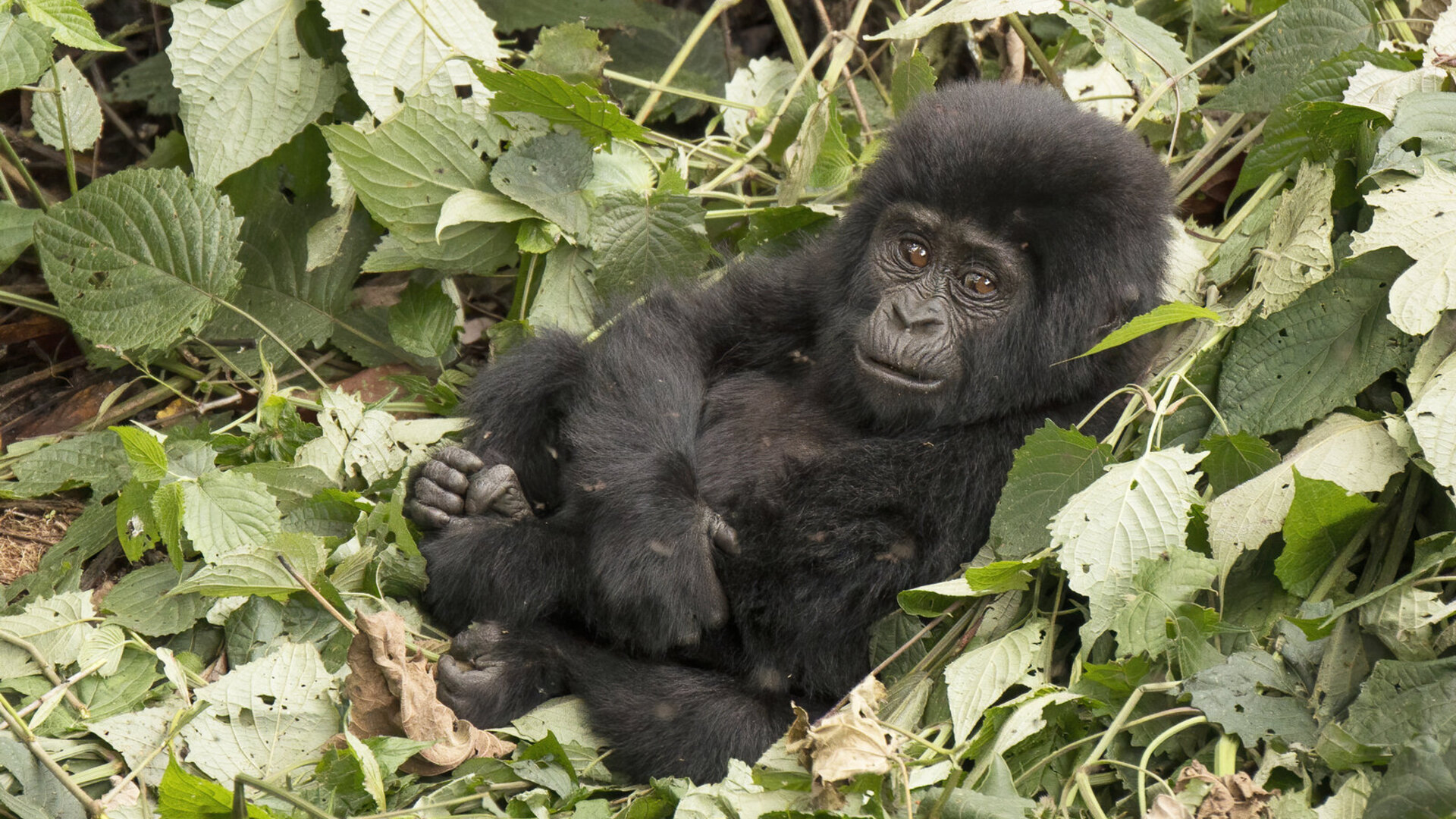
While East Africa charges US$800–1,500 for gorilla permits, Madagascar offers indri lemurs, fossas, chameleons, and baobab forests for just $10–30 in guide fees. You're not paying premium prices for wildlife encounters found on every continent — you're accessing unique biodiversity that doesn't exist anywhere else, at half the cost of gorilla tracking.
This guide reveals 15 value lodges ($50–$350 per night) across 5 ecosystems, each placing you inside irreplaceable wildlife habitats. From Andasibe's rainforest indri lemurs (just 2.5 hours from the capital) to the limestone tsingy's vertical forests, these lodges prove Madagascar's greatest secret: the world's most unique wildlife experiences cost less than conventional African safaris.
Why Madagascar Delivers Unmatched Wildlife Value
Madagascar separated from Africa 165 million years ago and from India 88 million years ago. That isolation created the planet's most concentrated endemic biodiversity hotspot:
The Endemic Wildlife Reality
Mammals: 100% of lemur species (113 recognized), 100% of tenrecs, 90% of reptiles including 66% of the world's chameleon species
Flora: 90% of plant species including 8 baobab species (6 endemic)
Birds: 44% endemic, including ground-rollers and vangas found nowhere else
Insects: 95%+ endemic, including the world's smallest chameleon (Brookesia micra — 29mm)
The Value Calculation:
Rwanda gorilla permit: US$1,500 per person for 1 hour
Madagascar park entry + mandatory guide: US$10–30 per day for unlimited wildlife encounters
That's 50–150× better value for experiences you literally cannot have anywhere else on Earth.
No Expensive Permits, No Crowds
Unlike Uganda's gorilla permits (US$800) or Rwanda's mountain gorilla tracking (US$1,500), Madagascar's national parks operate on simple entry fees:
- Park entry: US$5–15 per person per day
- Mandatory local guides: US$10–20 per day (often split among your group)
- No advance booking required for most parks
- No timed slots or group limits — you're not racing against permit windows
The mandatory guide system isn't a revenue scheme — it's community employment that funds conservation while ensuring you don't miss the 29mm chameleon on the branch beside you.
Self-Drive Impossible = Lodge Location Matters Most
Madagascar's wildlife infrastructure differs fundamentally from Namibia or Botswana. You cannot self-drive between parks and expect success:
- Route Nationale 7 (the main north-south artery) is tarred but requires 12-hour driving days between regions
- Secondary roads to parks like Tsingy de Bemaraha involve river crossings and 4x4-only tracks
- No rental car companies allow their vehicles on unpaved roads
- Night driving is universally discouraged due to road conditions and zebu cattle
The lodge strategy: Choose accommodations inside or adjacent to parks. A $180 lodge beside Andasibe's rainforest gates delivers more wildlife value than a $80 hotel requiring 2-hour daily transfers.
The Five Must-Experience Ecosystems
Madagascar's biogeography divides into distinct wildlife zones. A comprehensive visit requires sampling at least three:
1. Eastern Rainforest Belt (Andasibe-Mantadia, Ranomafana)
- Indri lemurs (world's largest, eerie calls at dawn)
- Golden bamboo lemurs (280 remaining)
- Greater bamboo lemurs (critically endangered)
- Tree frogs, chameleons, day geckos in every color
2. Southern Spiny Forest (Ifaty, Mikea, near Toliara)
- Octopus trees, Didiereaceae (Madagascar's answer to cacti)
- Ring-tailed lemurs, Verreaux's sifakas
- Baobab forests (Adansonia za, A. grandidieri)
- Endemic tortoises and iguanas
3. Western Dry Forest (Tsingy de Bemaraha, Ankarana)
- Limestone karst formations (tsingy = "where you cannot walk barefoot")
- Decken's sifakas navigating vertical cliffs
- Narrow-striped mongooses, fossas (Madagascar's apex predator)
- Endemic birds: Coquerel's coua, crested ibis
4. Central Highlands (Isalo National Park)
- Sandstone canyon oases with natural pools
- Ring-tailed lemur families (20+ groups)
- Endemic palms in canyon microclimates
- Benson's rock thrush, Madagascar kestrel
5. Northern Rainforest (Amber Mountain/Montagne d'Ambre, Masoala)
- Sanford's brown lemurs, crowned lemurs
- Leaf-tailed geckos (Uroplatus phantasticus)
- Amber Mountain rock thrush (critically endangered)
- Freshwater waterfalls and volcanic crater lakes
Region 1: Andasibe-Mantadia National Park — The Indri Lemur Gateway
Distance from Antananarivo: 140km (2.5–3 hours by paved RN2)
Why it's the value champion: Madagascar's most accessible rainforest, highest probability indri encounters, no internal flights required
Andasibe is where 95% of first-time Madagascar visitors begin their wildlife journey — and for good reason. The park protects 810 hectares of lowland rainforest just 2.5 hours from the capital, delivering guaranteed encounters with indri lemurs (the world's largest living lemur, famous for whale-like territorial calls) without requiring expensive charter flights or multi-day road transfers.
The park divides into two sections: Analamazaotra (the smaller, heavily visited reserve with short loop trails perfect for families) and Mantadia (the larger wilderness zone requiring 4x4 access and full-day hikes). Both protect 14 lemur species including indri, diademed sifakas, and the nocturnal aye-aye (the world's largest nocturnal primate, with a skeletal middle finger for extracting grubs).
Wildlife Scorecard:
- Indri lemurs: 95% encounter rate on morning walks
- Chameleons: Parson's chameleon (world's second-largest), nose-horned, short-horned
- Nocturnal: Mouse lemurs, woolly lemurs, aye-ayes (night walk required)
- Birds: 120+ species including Madagascar blue pigeon, velvet asity, nuthatch vanga
1. Vakona Forest Lodge — The Lemur Island Budget Champion
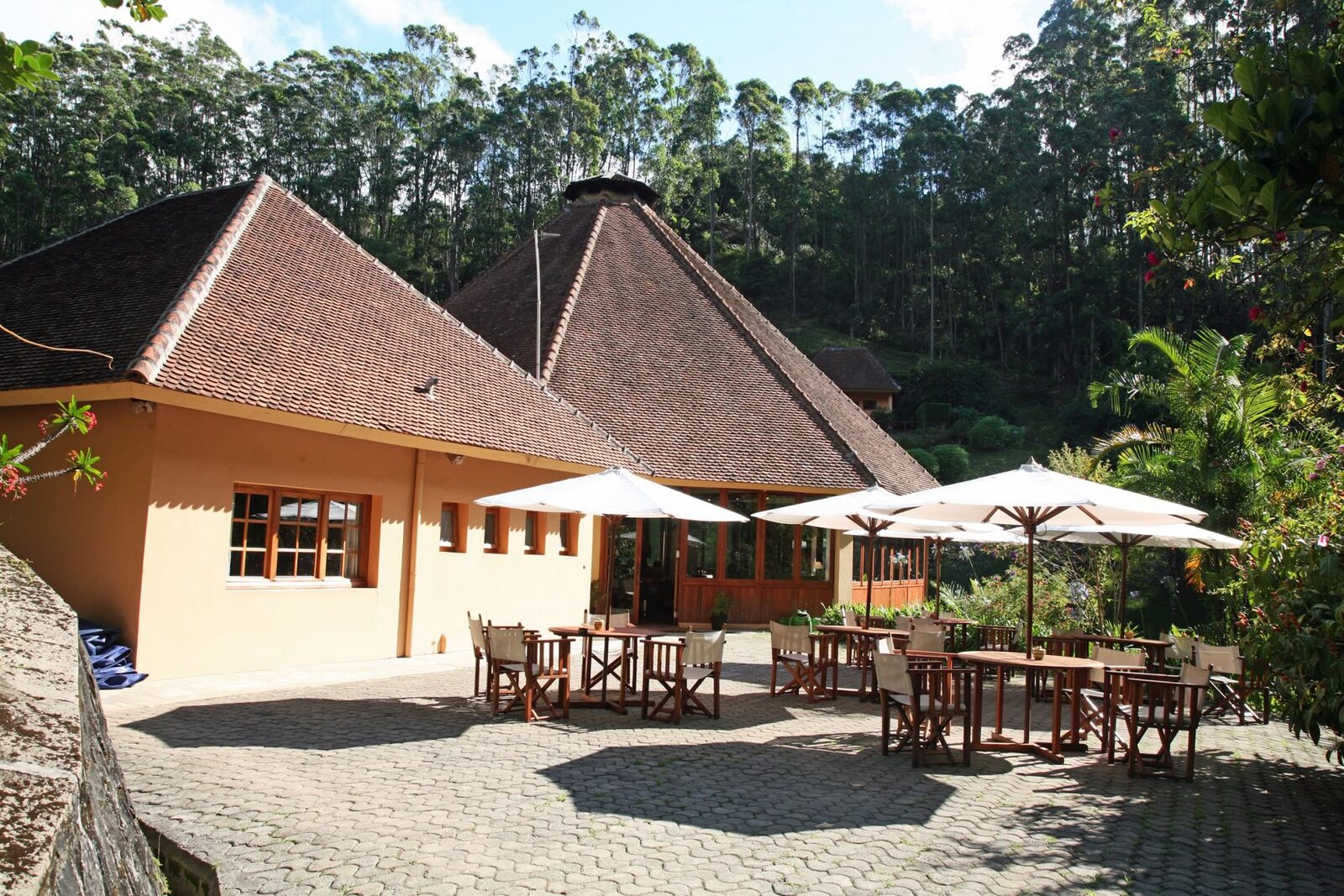
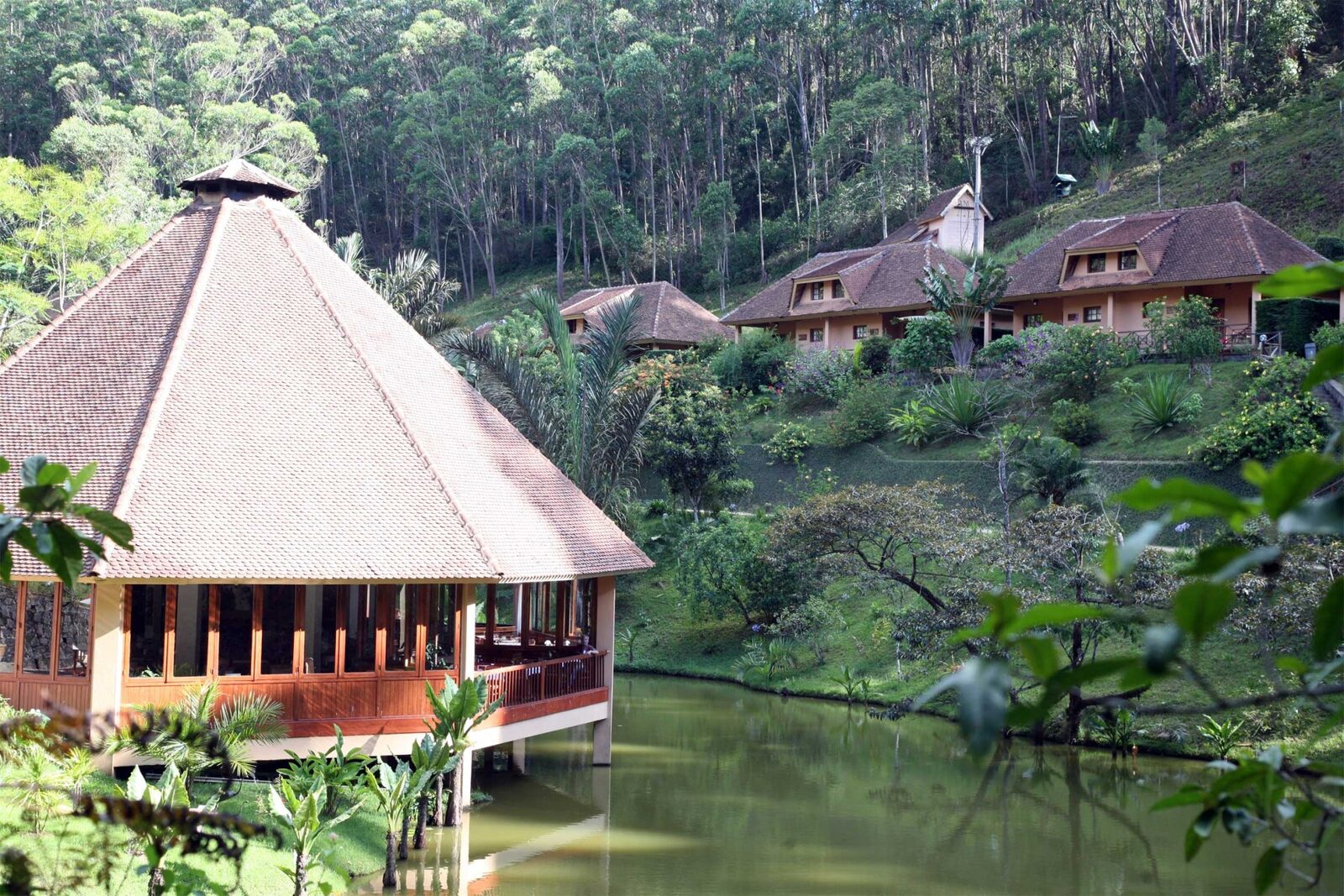
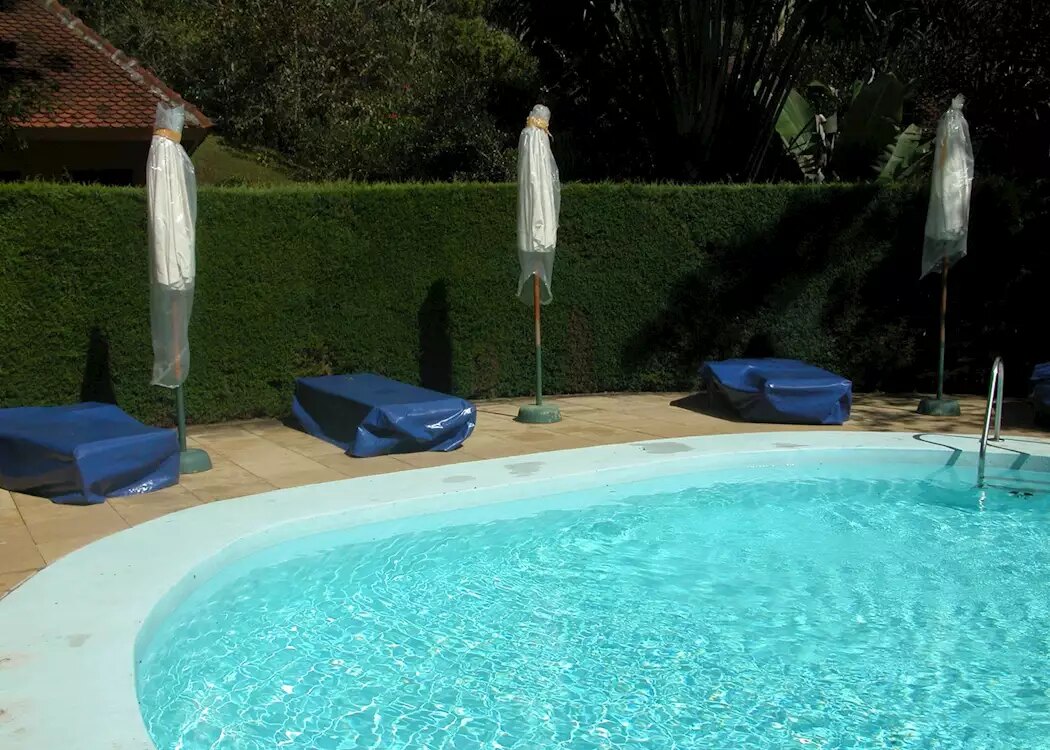
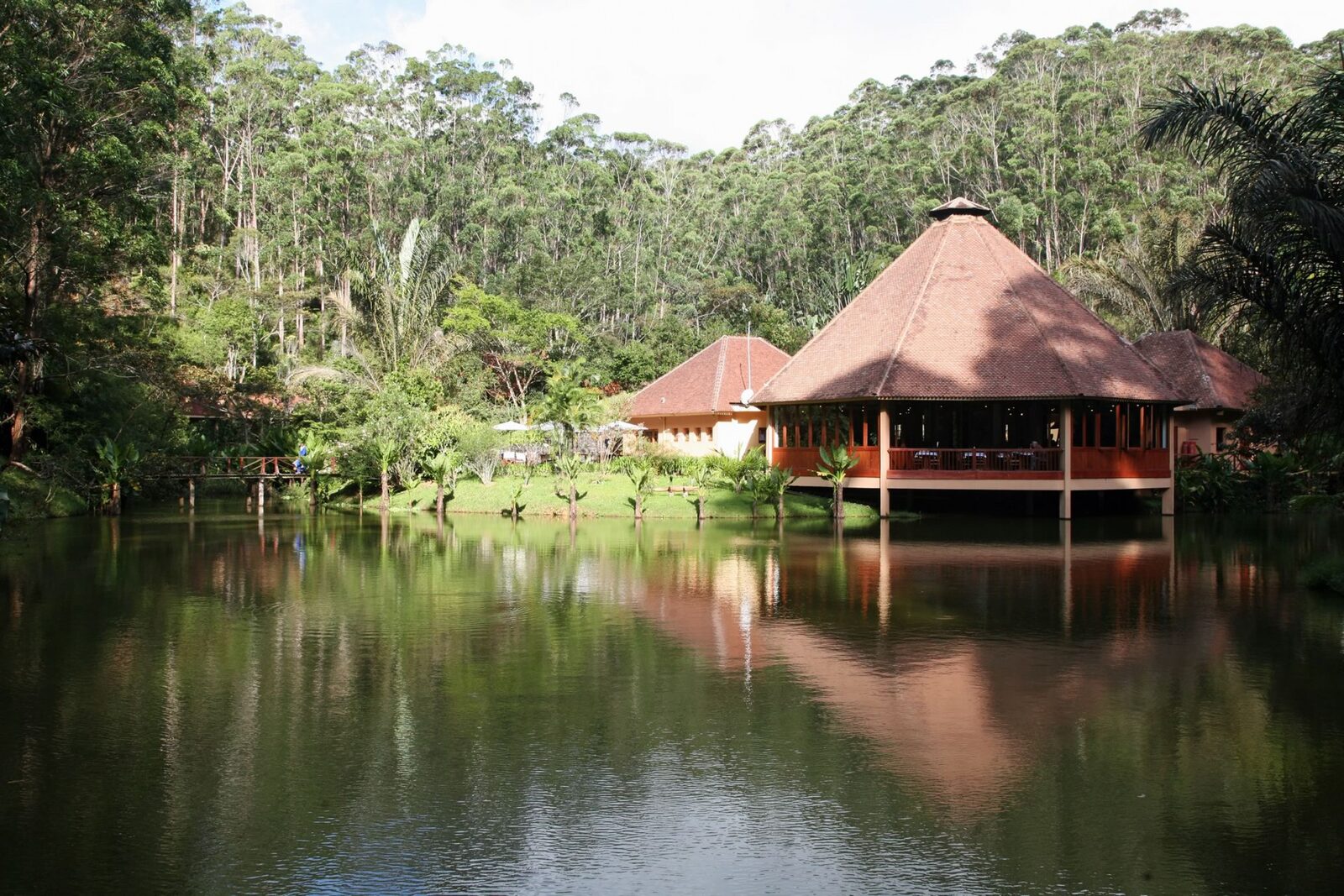
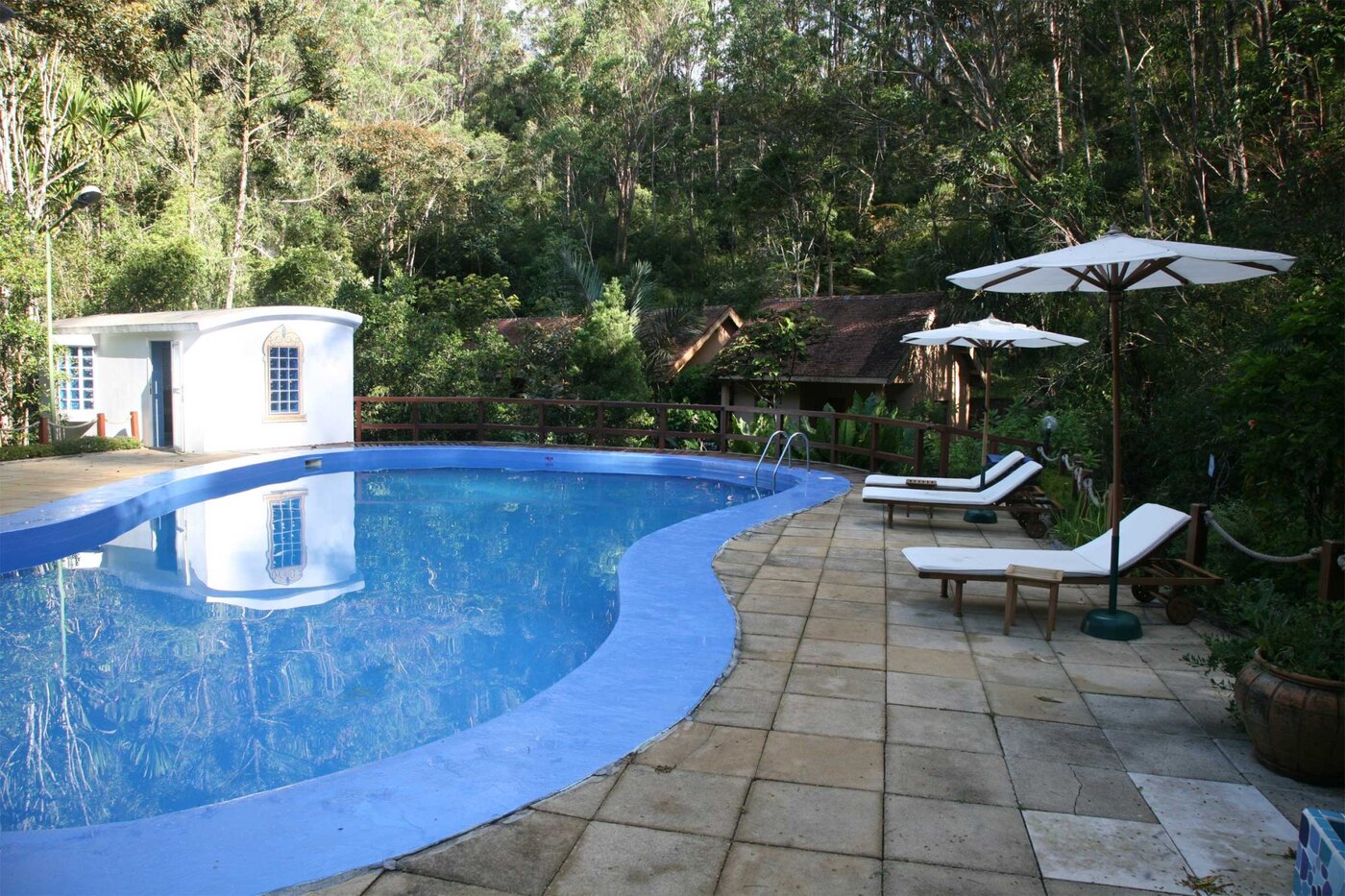
Price: US$50–97 per person per night (double occupancy, breakfast included)
Location: 800m from Andasibe village, 3km from Analamazaotra Reserve entrance
Style: 28 Malagasy-style bungalows around man-made lake
Vakona has anchored the Andasibe budget scene since 1998, offering the only private lemur reserve accessible without park fees. "Lemur Island" is a 2-hectare forested island where rescued habituated lemurs (black-and-white ruffed, bamboo, diademed sifaka, brown lemurs) approach visitors for photos — controversial among conservationists but beloved by families wanting guaranteed close encounters.
What you get: En-suite bungalows with mosquito nets, hot water (solar-heated), restaurant serving Malagasy/European fusion, bar with Three Horses Beer (THB), swimming pool, and access to private trails. The property borders a small reserve where you'll hear indri calls at dawn from your patio.
The value math: At $50pppn, you're paying less per night than a gorilla permit costs per hour, while accessing lemur encounters on-site plus Andasibe's wild populations 10 minutes away.
Activities: Lemur Island visits ($10), canoeing on the lake (free for guests), crocodile farm tour ($5), guided night walks for mouse lemurs ($15), horse riding through surrounding farmland ($20/hour).
Book if: You want the lowest price point in Andasibe with guaranteed lemur photography opportunities, or you're traveling with children who might struggle with 3-hour rainforest hikes.
2. Andasibe Hotel — The Park Entrance Value Play
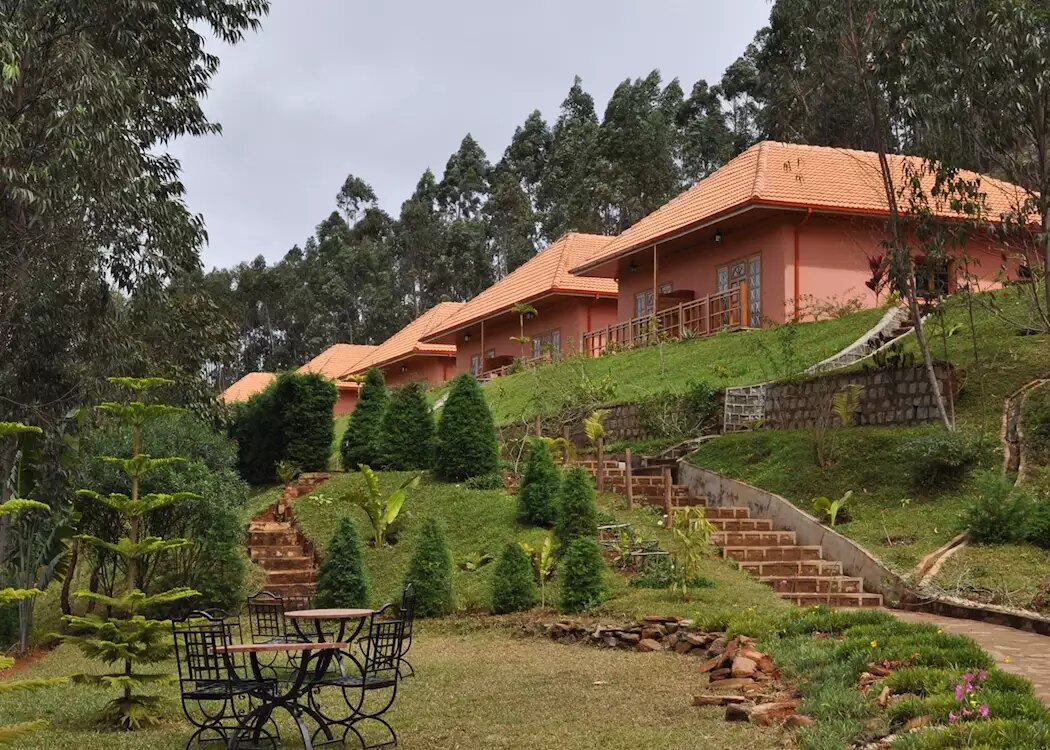
Price: US$80–150 per person per night (breakfast included)
Location: 1.5km from Analamazaotra Reserve entrance, 2km from Andasibe village
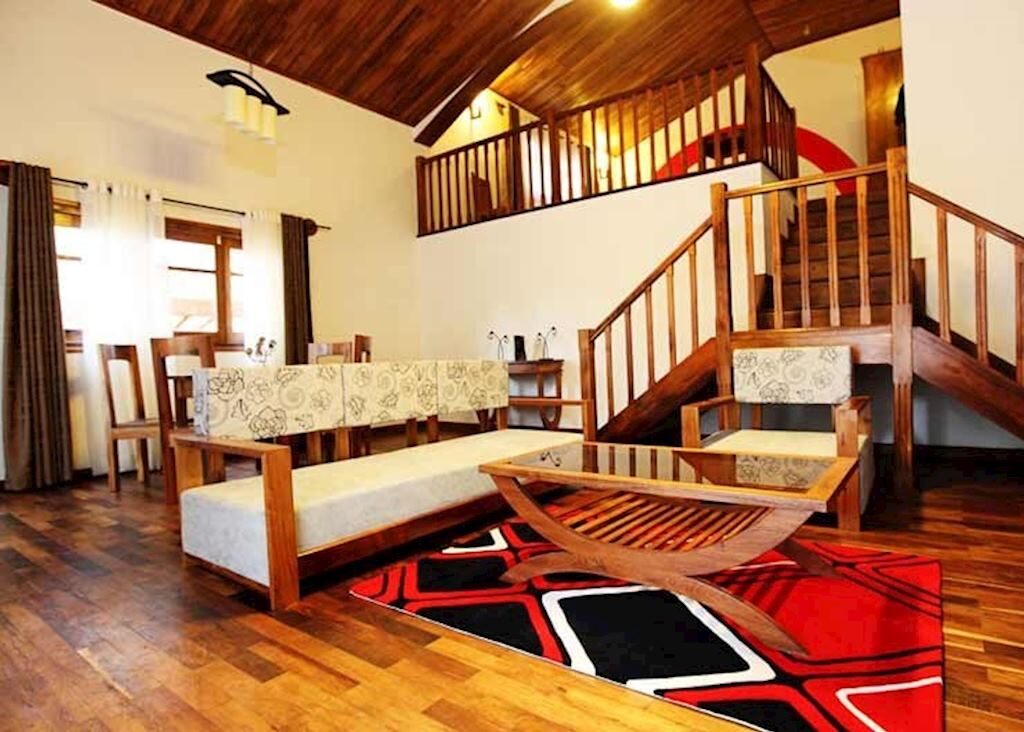
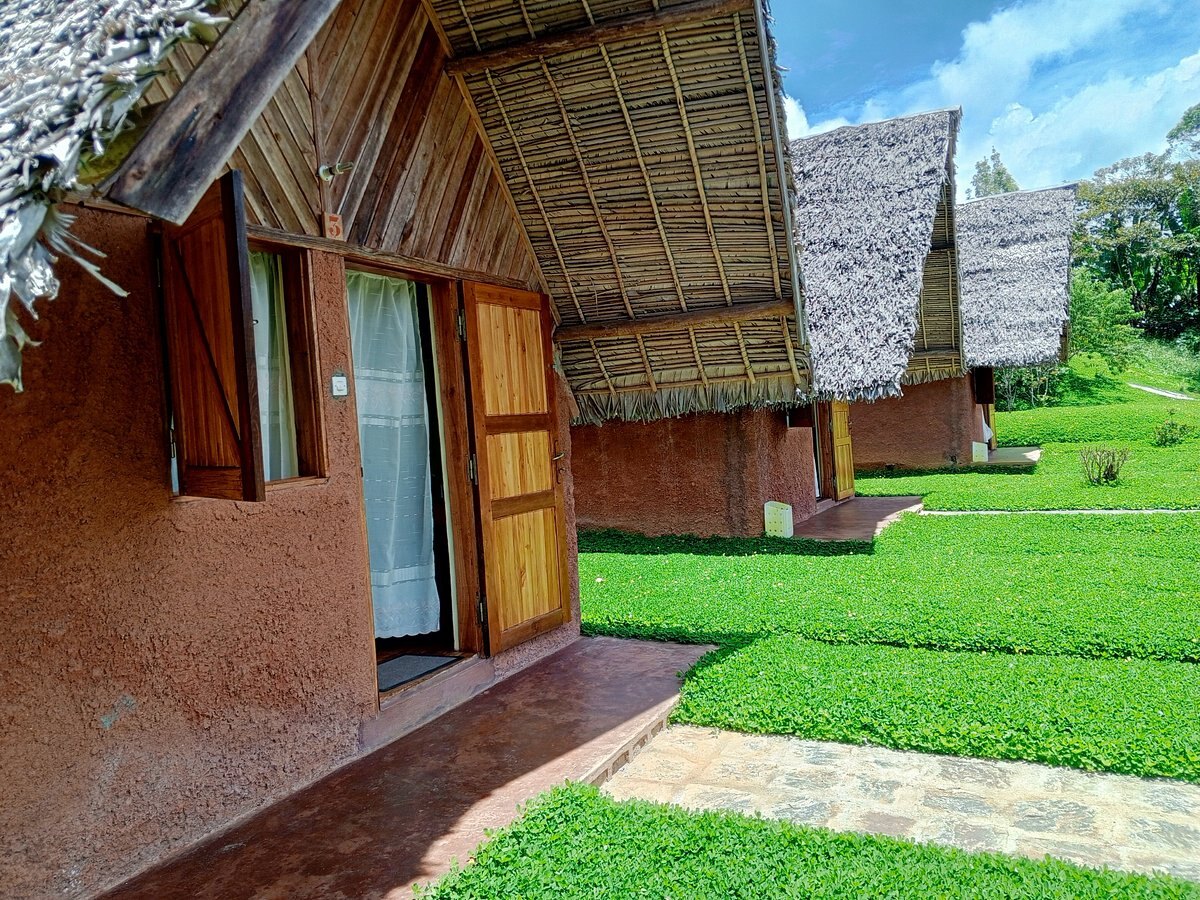
Style: 20 timber bungalows in landscaped rainforest gardens
Andasibe Hotel occupies the strategic middle ground: close enough to walk to the park entrance (avoiding vehicle hire) while maintaining rainforest ambience with indri calls audible from the grounds. The property underwent renovations in 2024, upgrading bathrooms and adding a saltwater pool.
What you get: Standalone bungalows with private terraces, ceiling fans (no AC — unnecessary at 900m elevation), modern bathrooms with rainfall showers, mosquito nets, and 24-hour solar-backed electricity. The restaurant emphasizes Malagasy cuisine using local produce: ravitoto (cassava leaf stew), romazava (beef and greens), fresh-caught tilapia from nearby lakes.
Wildlife on-site: The hotel's 3-hectare grounds protect secondary forest where brown lemurs feed in the morning, chameleons hunt on garden shrubs, and Madagascar magpie robins nest. The property employs a resident naturalist for evening presentations.
Why it's value: At $80–150pppn, you're getting proximity to Andasibe's gates (avoiding $30-40 daily taxi fees) plus reliable infrastructure (hot water, electricity, WiFi in restaurant) without luxury pricing. Many guests do morning Analamazaotra walks (7am start, $30 guide fee), return for lunch, then book afternoon Mantadia excursions or night walks.
Activities: Forest canopy walks on the property (free), guided night walks departing from the hotel ($15), transfers to Mantadia (1-hour drive, $40 vehicle), crocodile/butterfly farm combo tour ($25).
Book if: You want reliable comfort with easy park access, or you're booking last-minute (Vakona often sells out weeks ahead while Andasibe Hotel maintains better availability).
3. Mantadia Lodge — The Rainforest Canopy Immersion
Price: US$180–300 per person per night (full board)
Location: Road to Mantadia National Park, 12km from Andasibe village
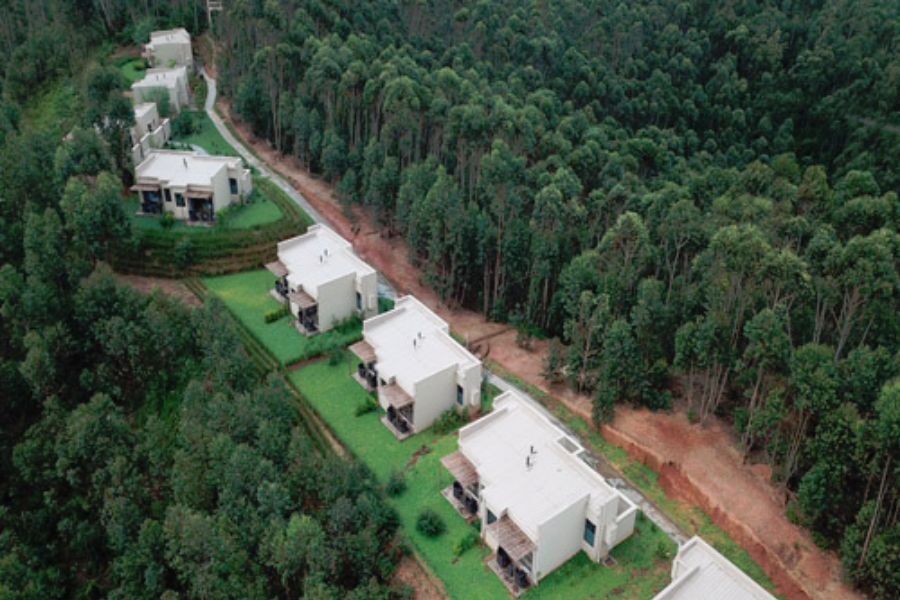
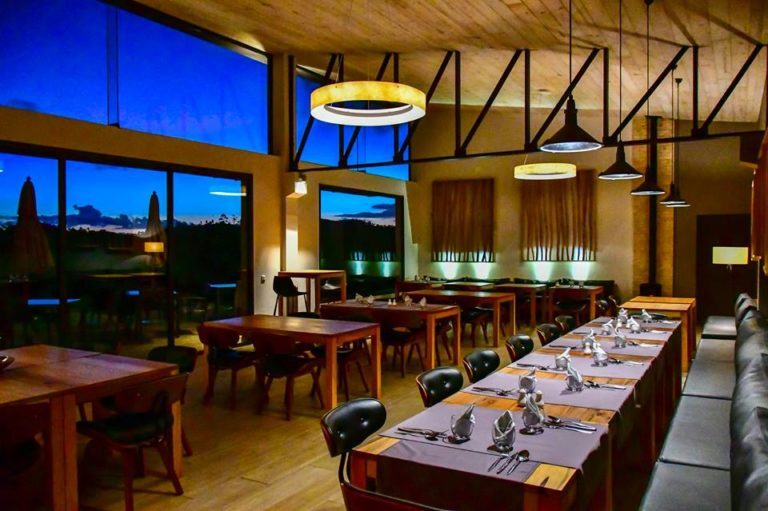
Style: 10 luxury timber chalets elevated for forest canopy views
Mantadia Lodge represents the affordable luxury tier — significantly cheaper than Madagascar's island resorts (US$600–1,200pppn) while delivering full immersion in pristine rainforest. The lodge sits at 1,100m elevation where morning mist rolls through the canopy and indri calls echo from Mantadia's wilderness just 8km away.
What you get: Spacious chalets (45m²) with floor-to-ceiling windows facing the forest, king beds with orthopedic mattresses, stone bathrooms with rainfall showers, private decks with daybeds, and subtle luxury touches (Malagasy silk cushions, local artwork). The infinity pool overlooks the forest canopy where diademed sifakas sometimes cross at dawn.
Included experiences: Full board (three meals plus afternoon tea), guided forest walks on the property's 15 hectares, sundowner cocktails on the deck, cultural visits to nearby villages, and transfers to Analamazaotra (free for guests).
Wildlife encounters: The lodge's forest protects resident brown lemurs, greater bamboo lemurs (critically endangered — fewer than 500 exist), and Madagascar tree boas. The grounds host 40+ bird species including blue couas, sunbirds, and Madagascar sparrowhawks. Staff leave fallen fruit near the restaurant to attract chameleons after dark.
The luxury calculus: At $180–300pppn full board, you're paying half the rate of Seychelles beach resorts while accessing wildlife found nowhere else. The price includes meals (eliminating the $15-25 restaurant bills at budget lodges) plus guided activities, making the net difference smaller than it appears.
Activities: Mantadia National Park full-day treks ($50 guide + $15 entry), night walks on property (free for guests), village visits with traditional Malagasy cooking demonstrations ($30), transfer to Vakona's Lemur Island ($15 + $10 entry).
Book if: You want to wake inside the rainforest without roughing it, or you're celebrating a special occasion while prioritizing wildlife over beach luxury.
Region 2: Ranomafana National Park — The Golden Bamboo Lemur Kingdom
Distance from Antananarivo: 410km (7–8 hours via RN7)
Why it's essential: The only reliable place on Earth to see golden bamboo lemurs (280 individuals remaining), plus natural hot springs
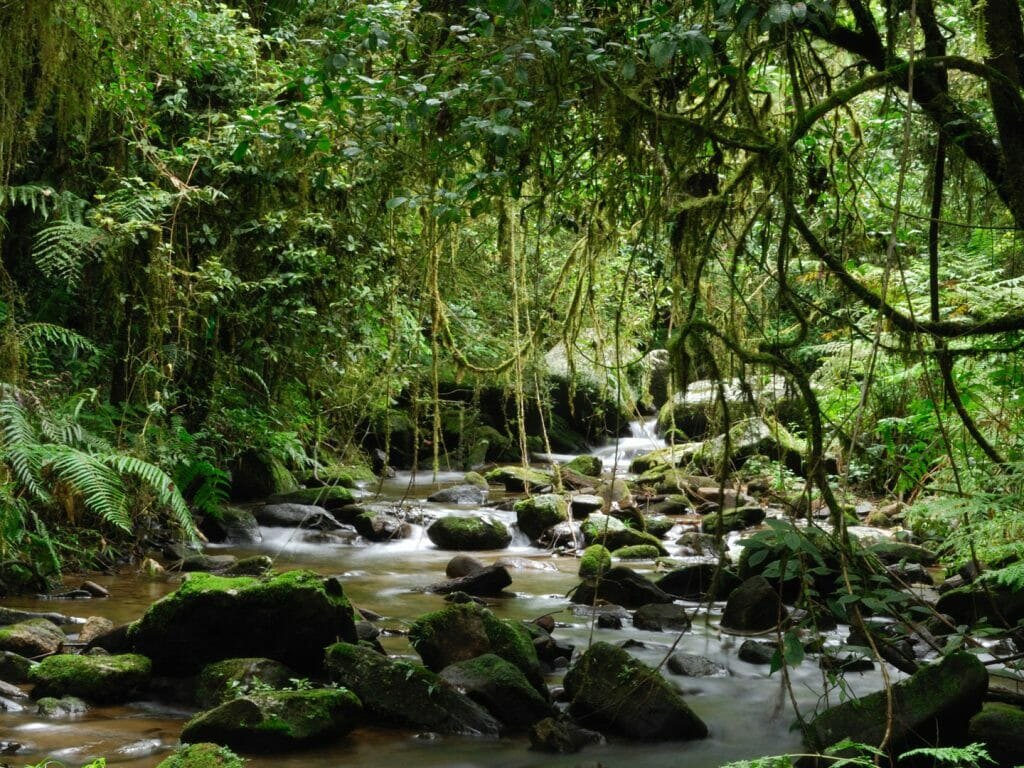
Ranomafana ("hot water" in Malagasy) protects 41,600 hectares of montane rainforest (600–1,400m elevation) where morning mist shrouds the canopy and 12 lemur species navigate territories defined by rivers and ridge lines. The park achieved fame in 1986 when researchers discovered the golden bamboo lemur — a species eating cyanide-laced giant bamboo in quantities that would kill most mammals.
The park requires mandatory guided treks on marked trails ranging from 2-hour family loops to 8-hour wilderness expeditions. Unlike Andasibe's flat terrain, Ranomafana involves steep climbs on muddy trails — proper hiking boots and rain gear are non-negotiable.
Wildlife Scorecard:
- Golden bamboo lemurs: 70% encounter rate (Talatakely trail, morning)
- Greater bamboo lemurs: 40% encounter rate (critically endangered, 800 remaining worldwide)
- Milne-Edwards' sifakas, red-bellied lemurs, red-fronted brown lemurs
- Birds: Yellow-bellied sunbird-asity, Pollen's vanga, Madagascar flufftail
4. Centrest Sejour — The Clean Budget Base
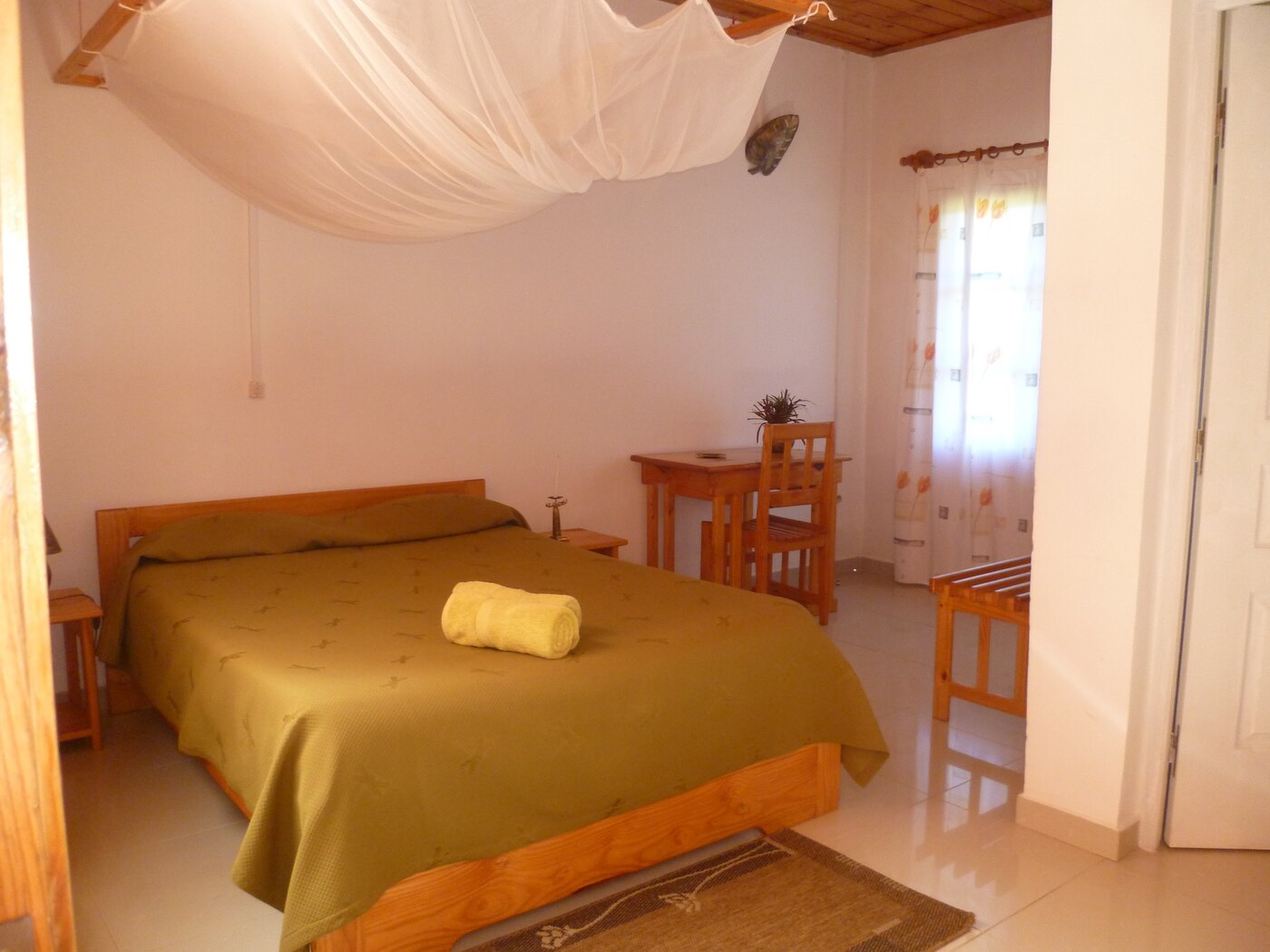
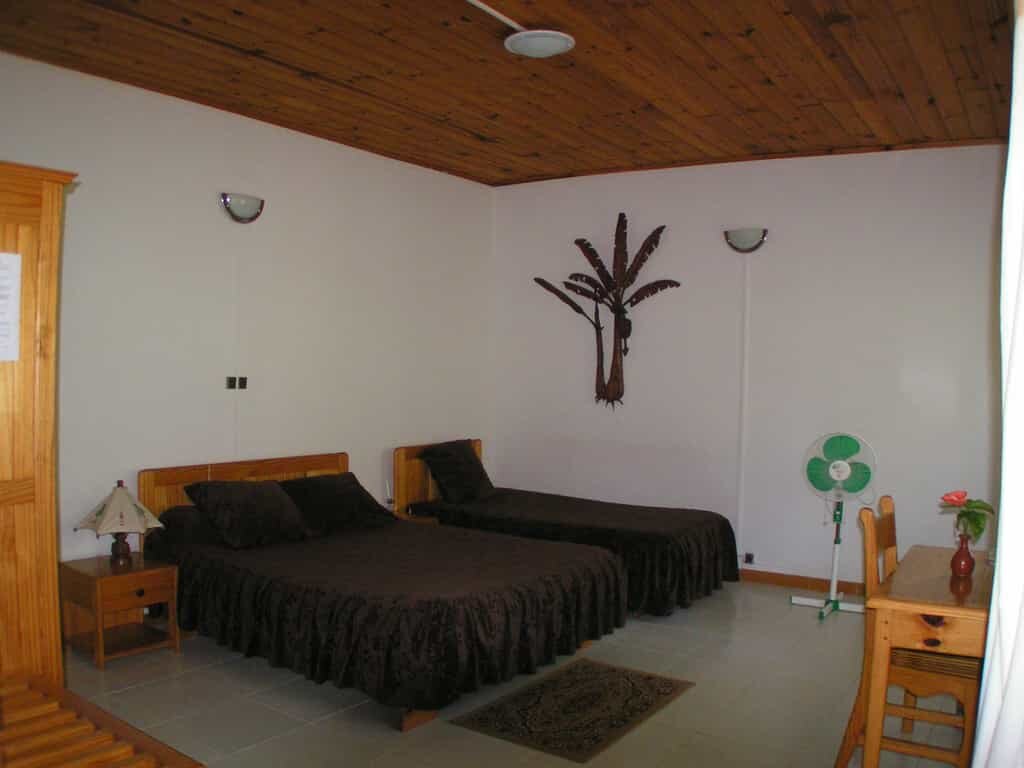
Price: US$60–100 per person per night (breakfast included)
Location: Ranomafana village center, 4km from park entrance
Style: Simple guesthouse with 12 rooms
Centrest Sejour wins on cleanliness and location — the two factors that matter most when you're spending 6–8 hours hiking muddy rainforest trails. The guesthouse occupies a two-story building in the village center, offering walking distance access to restaurants, shops, and 4x4 taxis to the park gates.
What you get: Clean rooms with twin or double beds, mosquito nets, en-suite bathrooms with reliable hot water (solar-heated with gas backup), and Malagasy breakfast (coffee, fresh bread, honey, omelet). No frills, but everything works — rare in rural Madagascar where "hot water available" often means "heated on request with a bucket."
Why it's value: At $60–100pppn, you're paying one-third the rate of mid-range eco-lodges while maintaining the same park access. The savings fund better guides (experienced trackers cost $25-30 vs. minimum $15) or additional night walks ($20) to find mouse lemurs and leaf-tailed geckos.
Logistics: The guesthouse doesn't arrange park transfers (you pay $5-8 for shared 4x4 taxis from the village) but staff connect you with top local guides via WhatsApp. Electricity runs 6pm-10pm from the village grid; pack a headlamp.
Restaurant scene: Ranomafana village has 5-6 simple restaurants serving rice-and-zebu curry ($4-6), tilapia from the Namorona River ($6-8), and Three Horses Beer ($2). Centrest Sejour's included breakfast is adequate but basic; budget $15-20 daily for other meals.
Book if: You're an independent traveler prioritizing guide quality and park time over lodge amenities, or you're backpacking Madagascar on $60-80 daily budgets.
5. Hotel Manja — The Hillside Mid-Range
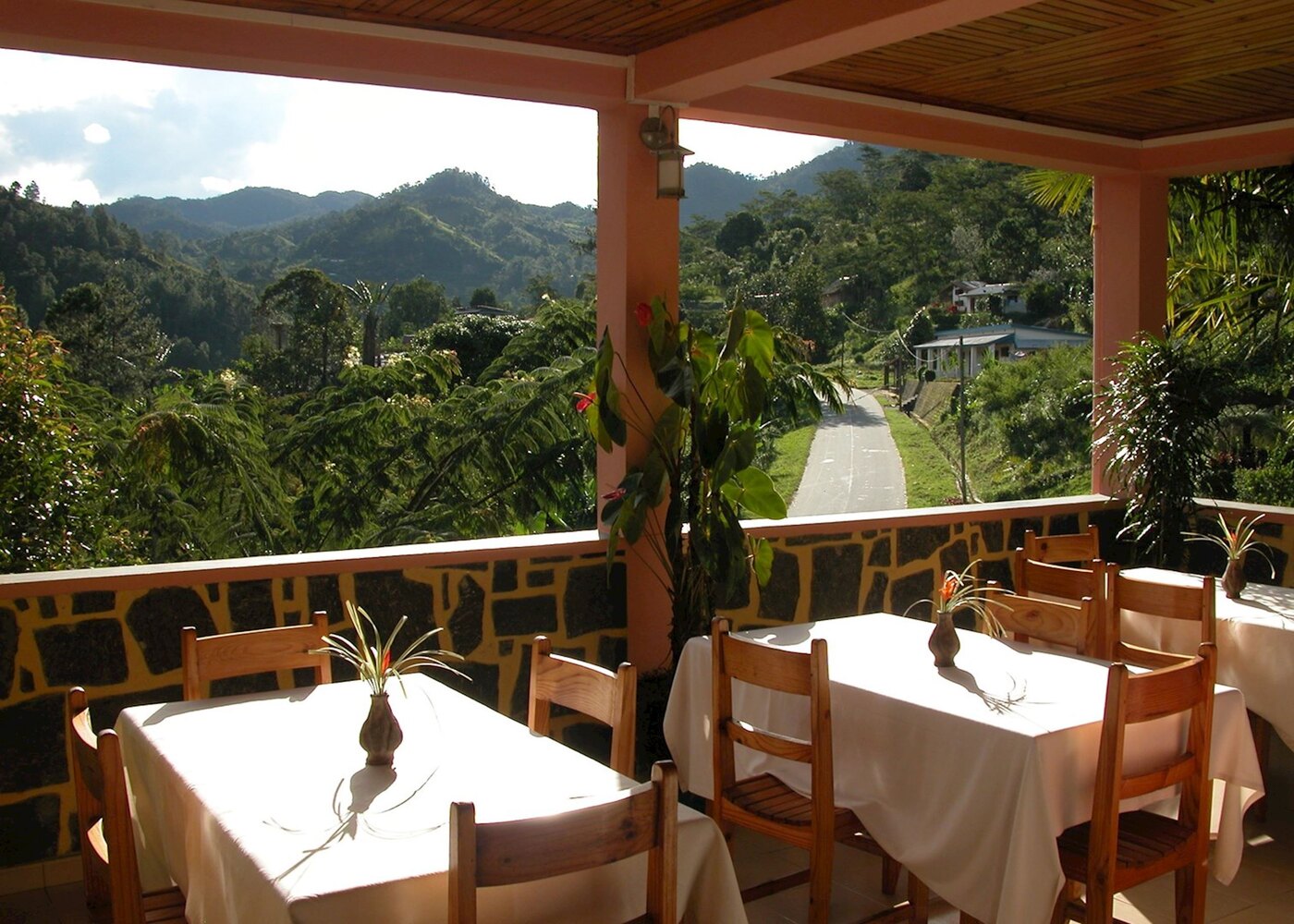
Price: US$70–120 per person per night (breakfast included)
Location: Hillside above village, 3.5km from park entrance
Style: 15 wooden bungalows on terraced gardens
Hotel Manja occupies the middle tier — too comfortable for backpackers, too rustic for luxury travelers, and perfectly positioned for those wanting reliable hot water and forest views without paying eco-lodge premiums.
What you get: Timber bungalows with private verandas overlooking the Namorona River valley, en-suite bathrooms with consistent hot water, ceiling fans, mosquito nets, and simple furnishings (bed, wardrobe, desk). The restaurant serves good Malagasy-French fusion (zebu steak frites, romazava, fresh tilapia, crêpes) at fair prices ($8-12 mains).
On-site wildlife: The property's hillside gardens attract sunbirds, Madagascar bulbuls, and chameleons. Staff place fruit near the restaurant deck to attract birds at breakfast. Several guests have spotted fossas crossing the road above the hotel at dawn — rare but documented.
Practical details: Hotel Manja is one of few lodges in Ranomafana that accepts credit cards (Visa/Mastercard with 5% surcharge). The village has no ATMs — bring sufficient Malagasy Ariary cash for park fees, guide tips, and meals. The hotel arranges shared 4x4 transfers to park gates ($5-6 per person) or private vehicles ($15-20 total).
Night walk advantage: Ranomafana's night walks (7pm-9pm, $20 guide fee) reveal entirely different fauna: mouse lemurs (the world's smallest primates at 30g), greater dwarf lemurs, chameleons sleeping on branches, and leaf-tailed geckos. Hotel Manja's hillside location means guides can spotlight the gardens before entering the park, often finding species on-property.
Book if: You want reliable comfort without luxury pricing, or you're nervous about ultra-budget guesthouses but can't justify $250+ eco-lodge rates.
6. Hotel Thermal — The Renovated Village Center
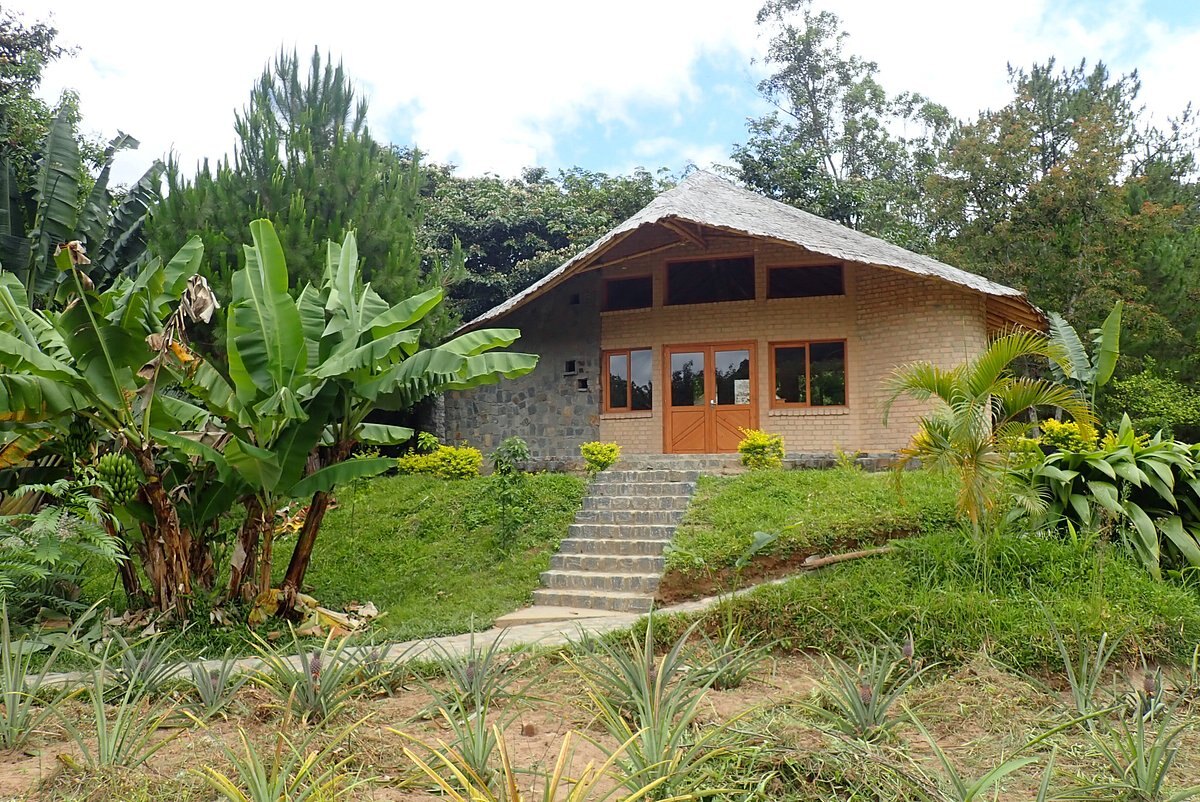
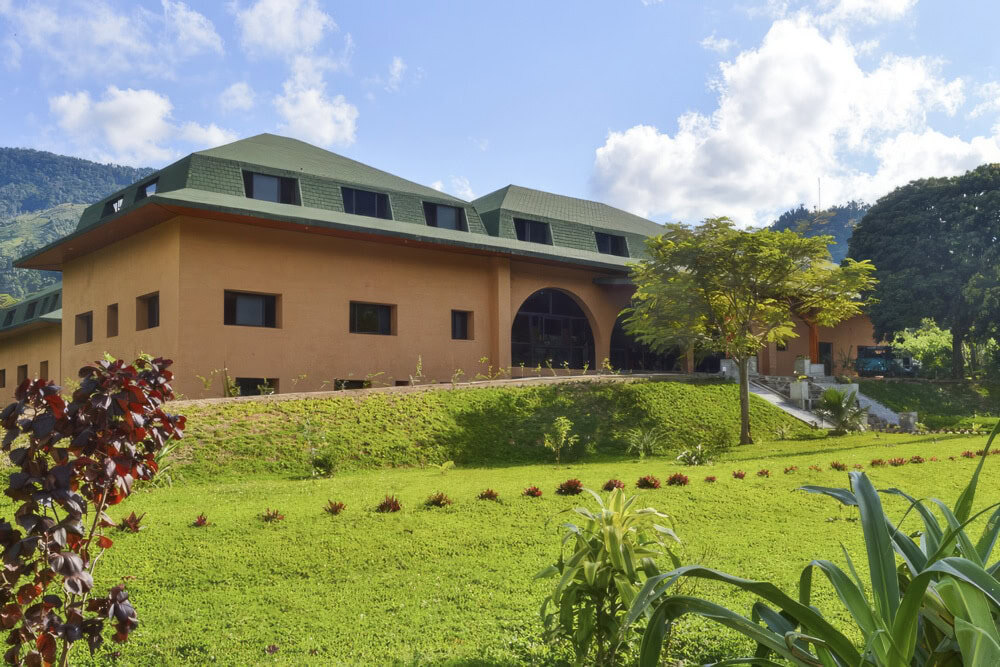
Price: US$80–140 per person per night (breakfast included)
Location: Ranomafana village center, 4km from park entrance
Style: Recently renovated hotel with 20 rooms
Hotel Thermal underwent major renovations in 2024-2025, transforming from a faded 1990s establishment into Ranomafana's most reliable mid-range option. The hotel's name references the village's natural hot springs (accessible via 2km trail from the park), though the hotel itself doesn't have thermal facilities.
What you get: Renovated rooms with modern bathrooms (tiled, rainfall showers, consistent hot water), comfortable beds with quality linens, ceiling fans, mosquito nets, and 24-hour electricity (diesel generator backup). The restaurant serves the village's most consistent food (Malagasy staples plus pasta, salads, French desserts) with better hygiene standards than budget guesthouses.
Village center advantages: Being in the village center means walking access to shops (buy bottled water, snacks, rain ponchos for $2-3), restaurants, and the taxi stand for park transfers. You're not dependent on lodge vehicles or isolated on a hillside.
Activities base: Hotel Thermal functions as the booking hub for Ranomafana adventures: night walks ($20 guide), cultural village visits ($15 guide + $10 community fee), Namorona River waterfall hikes ($25 guide for half-day), and sunrise golden bamboo lemur treks ($30-40 experienced guide).
The renovation factor: Pre-renovation, Hotel Thermal ranked below Manja and Centrest. Post-2024 upgrades, it's now the most reliable infrastructure in the village center — important when you're returning from 8-hour rainforest hikes and just want a hot shower that works.
Book if: You want the village's newest/cleanest mid-range option, or you're risk-averse about infrastructure reliability in rural Madagascar.
Region 3: Isalo National Park — The Ring-Tailed Lemur Oasis
Distance from Antananarivo: 700km (10-12 hours via RN7, or fly to Toliara + 4 hours)
Why it's unique: Sandstone canyon landscapes resembling Arizona, natural swimming pools, highest ring-tailed lemur density in Madagascar
Isalo protects 81,540 hectares of eroded Jurassic sandstone — a Mars-like landscape of red-rock canyons hiding emerald oases where palm-lined streams create natural swimming pools. The park supports 8-10 habituated ring-tailed lemur families (the iconic black-and-white tailed species), Verreaux's sifakas (white lemurs that "dance" sideways across the ground), and endemic birds found in the canyon microclimates.
Unlike the humid rainforests of the east, Isalo's dry climate (rainy season January-March only) makes it Madagascar's most comfortable hiking destination. Trails range from 2-hour family walks to the natural pools to full-day circuits reaching the canyon rims (1,200m elevation).
Wildlife Scorecard:
- Ring-tailed lemurs: 99% encounter rate (multiple families along all trails)
- Verreaux's sifakas: 80% encounter rate (Piscine Naturelle and Canyon des Singes)
- Brown lemurs, red-fronted brown lemurs (less common)
- Birds: Benson's rock thrush (endemic to Isalo), Madagascar kestrel, crested drongo
7. Isalo Rock Lodge — The Natural Architecture Marvel
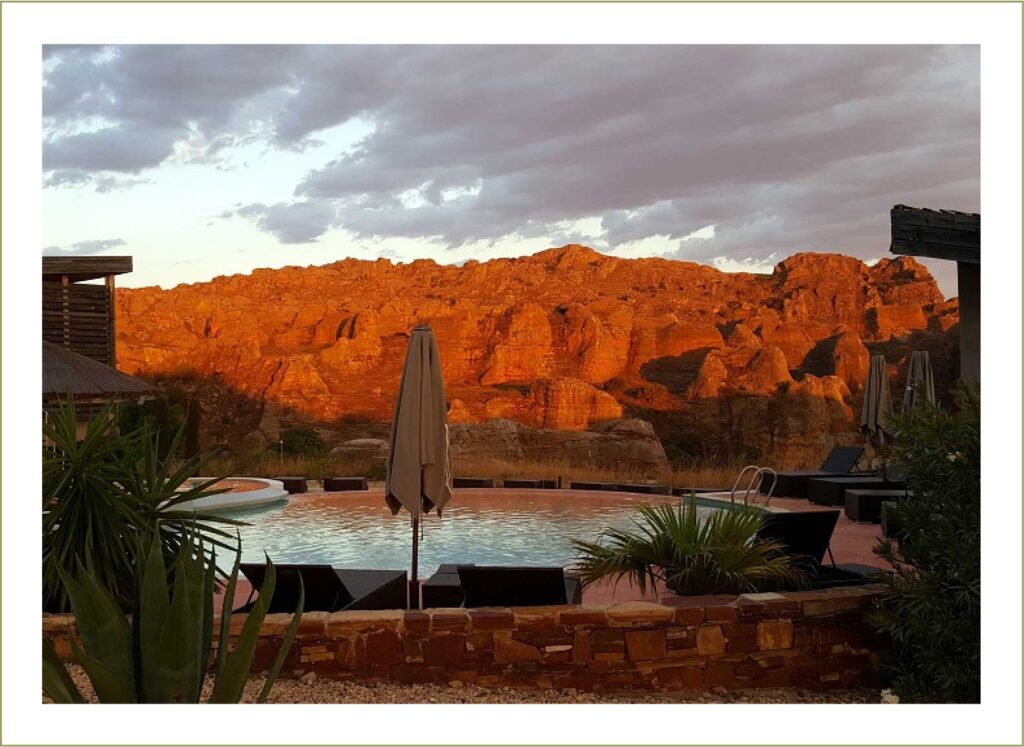
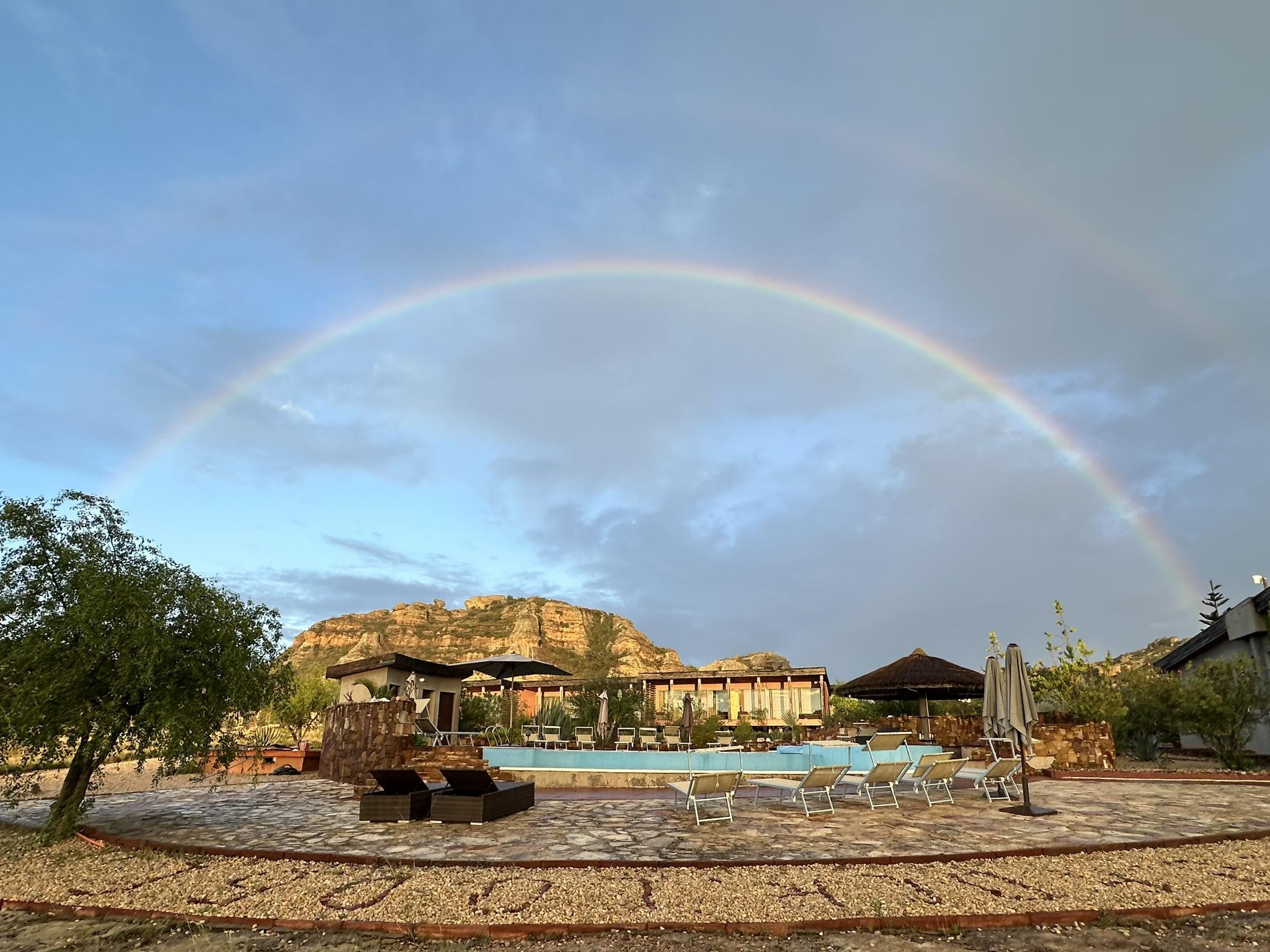
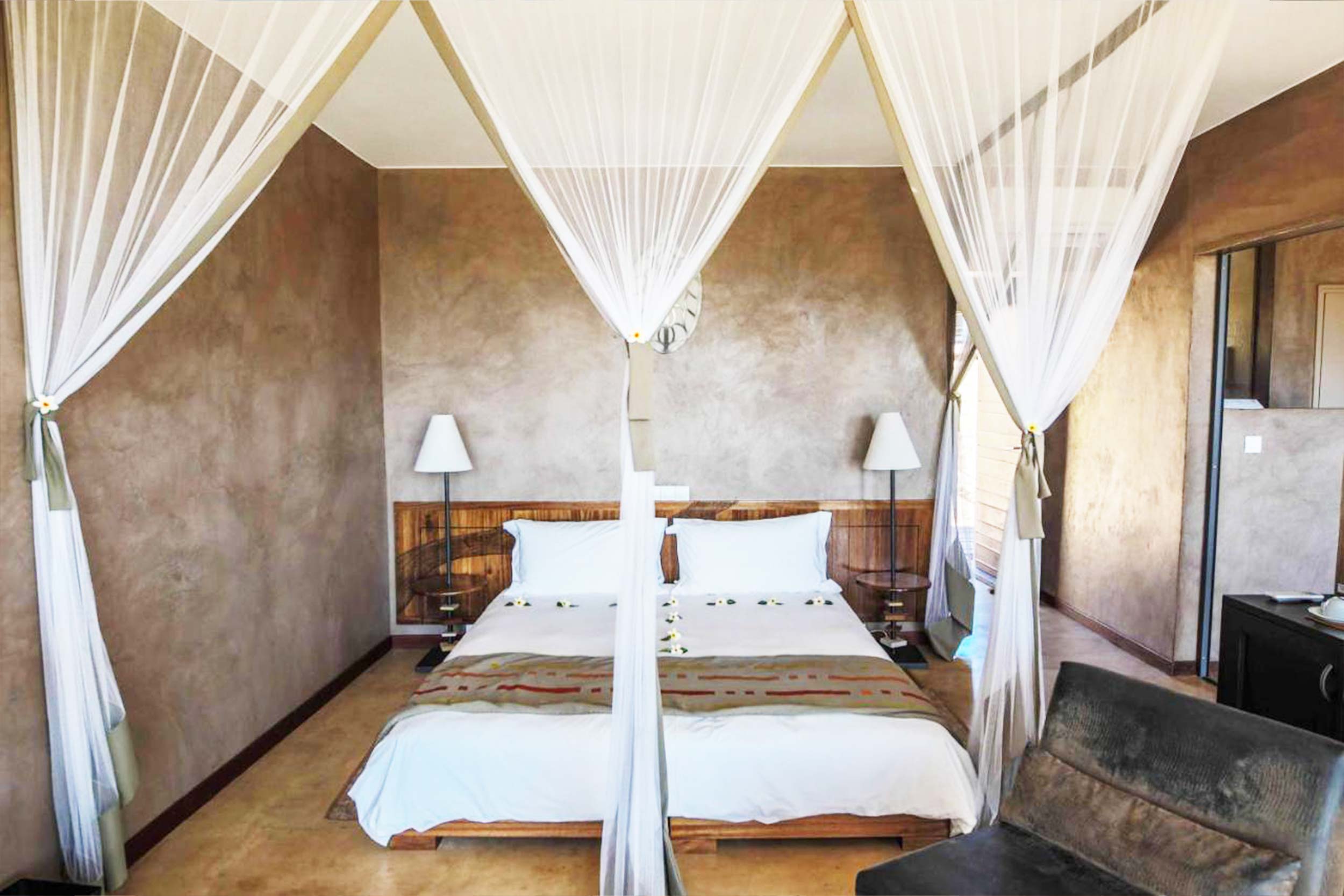
Price: US$99–190 per night (room only, breakfast available $12)
Location: 8km from Ranohira village, adjacent to park boundary
Style: 60 rooms integrated into natural granite rock formations
Isalo Rock Lodge is Madagascar's most photographed accommodation — a property where buildings disappear into boulders and pool decks cantilever over the savanna. Architect built each room into the existing granite formations, creating cave-like spaces that stay naturally cool in the 35°C midday heat.
What you get: Stone-clad rooms (some carved partially into rock faces) with air-conditioning, en-suite bathrooms, private terraces with savanna views, and subtle African-meets-Malagasy decor. The two swimming pools nestle between boulders, creating Instagram-famous sunset scenes with Isalo's massif as backdrop.
On-site wildlife: The lodge's 20-hectare grounds are unfenced — ring-tailed lemurs cross the property morning and evening, Verreaux's sifakas sleep in the tamarind trees near reception, and Madagascar nightjars nest in the rock crevices. Guests spot lemurs from breakfast tables.
The pricing puzzle: At $99-190 per night (room only), Isalo Rock costs more per room than it does per person at lodges quoting pppn rates. The trick: if you're solo, it's expensive; if you're sharing a double, it's competitive. Factor in $12-15 breakfasts and $20-30 dinners (the restaurant is excellent but not cheap), and budget-conscious travelers should calculate $140-180 per person per night all-in for couples.
Park access: The lodge provides paid transfers to park gates (8km, $10-15 per vehicle), where you meet mandatory guides. Popular half-day circuits (Piscine Naturelle, 4 hours, $30 guide) leave at 8am and 2pm. Full-day Canyon des Singes and Canyon des Rats expeditions ($50 guide, pack lunch) require 6-8 hours.
Activities: Natural pool hikes (half-day), rim circuits (full-day), sunset viewpoint drives ($25 lodge vehicle), cultural visits to Bara villages ($20 guide), and stargazing on the deck (free — Isalo has Dark Sky–quality night skies).
Book if: You want Madagascar's most unique lodge architecture, or you're celebrating a special occasion and willing to spend mid-range budgets for design-led luxury.
8. Le Relais de la Reine — The Active Adventurer's Lodge
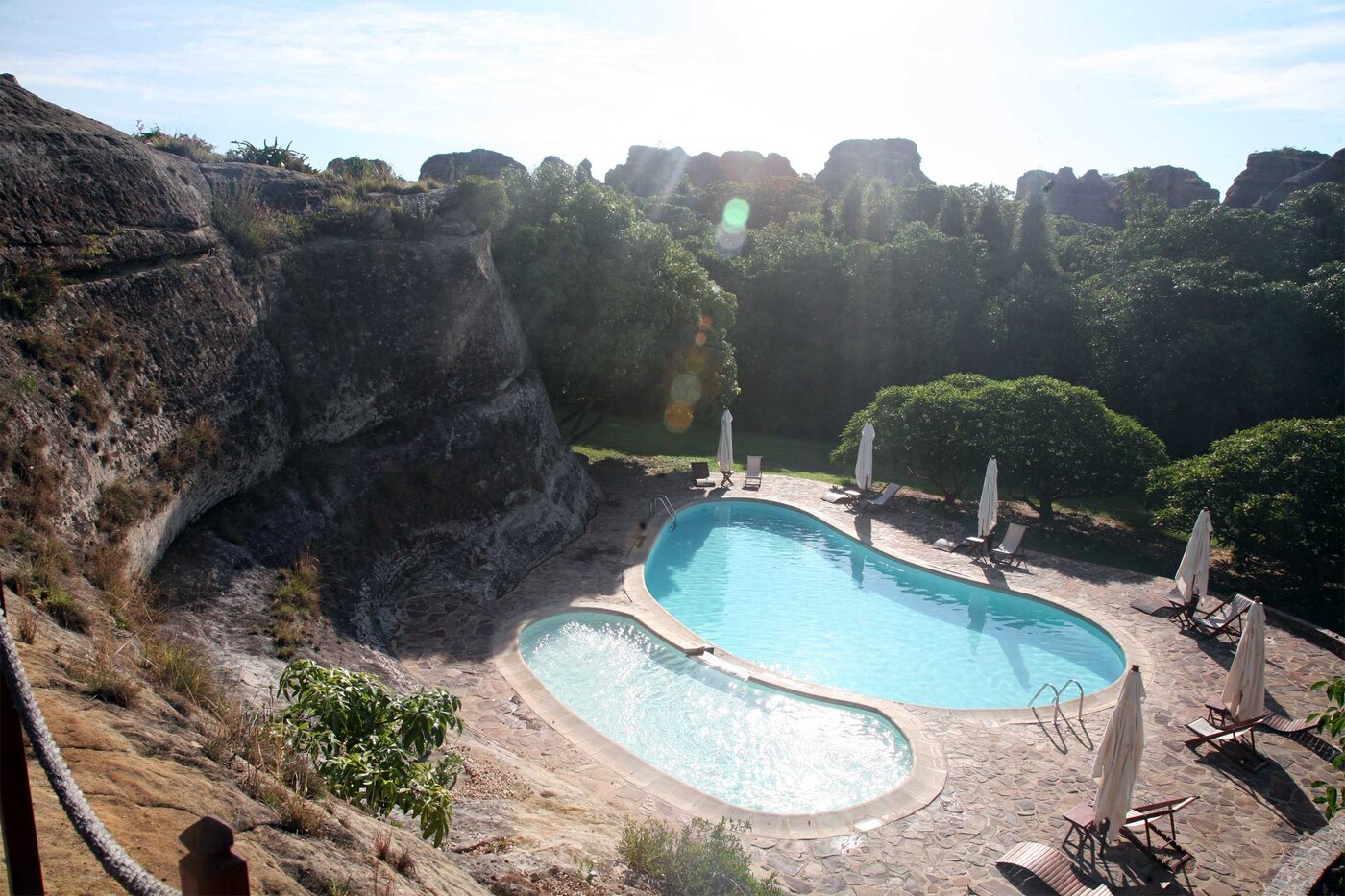
Price: US$150–250 per person per night (half board)
Location: Ranohira village edge, 2km from park entrance
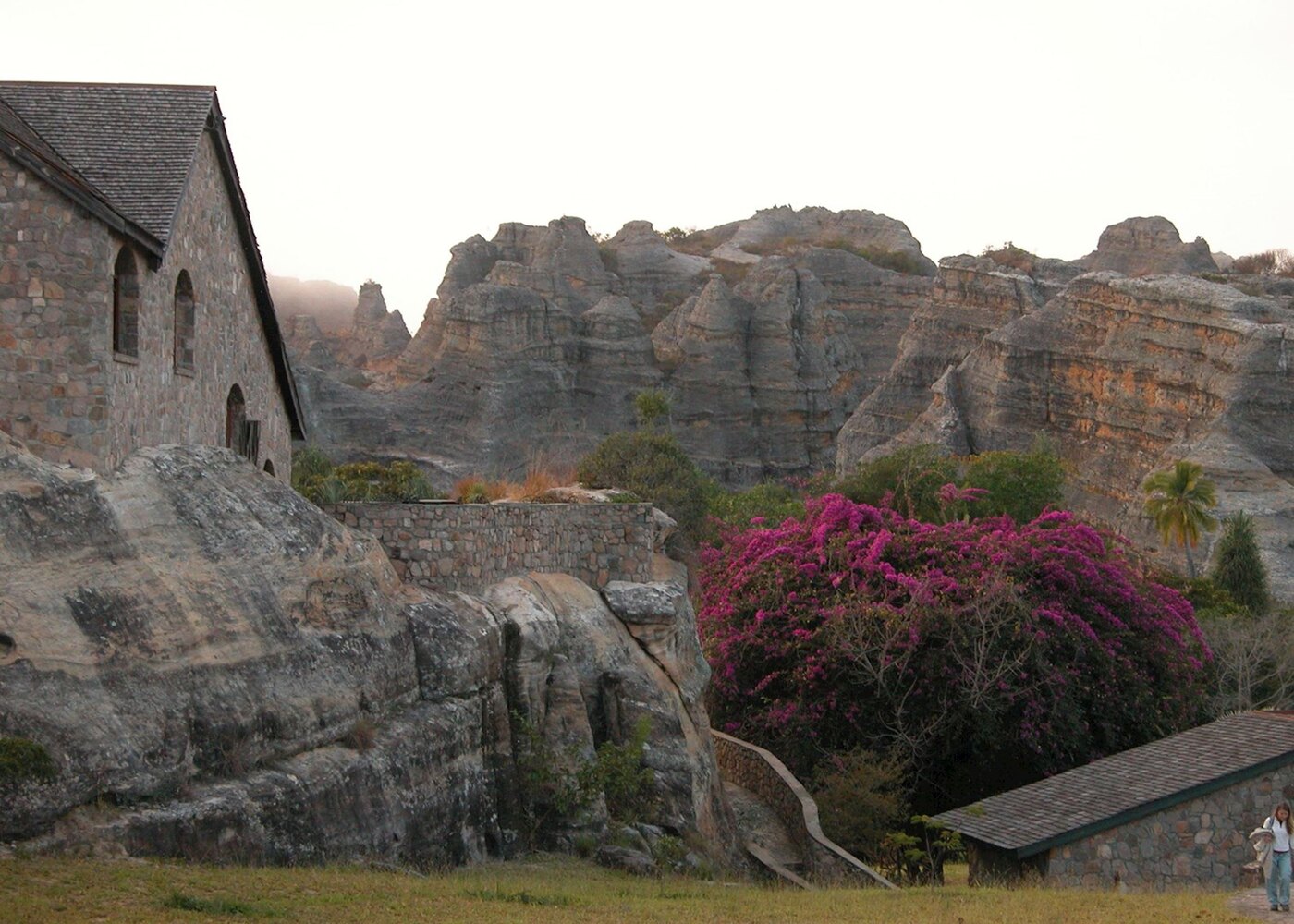
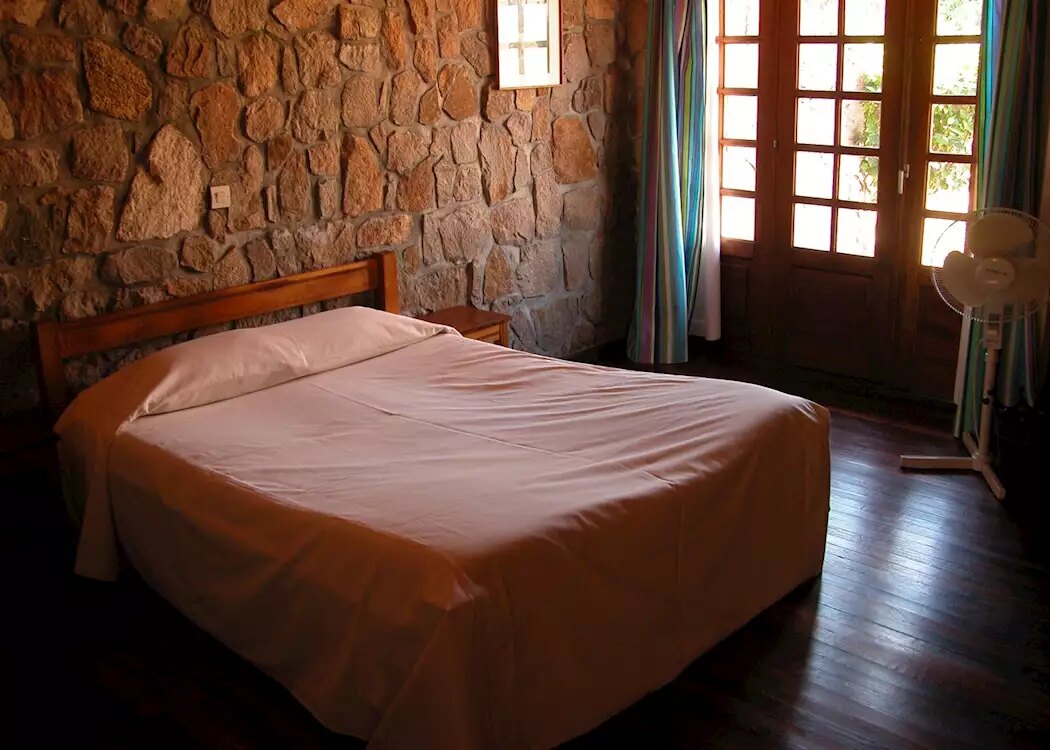
Style: 30 stone chalets built into natural rock amphitheater
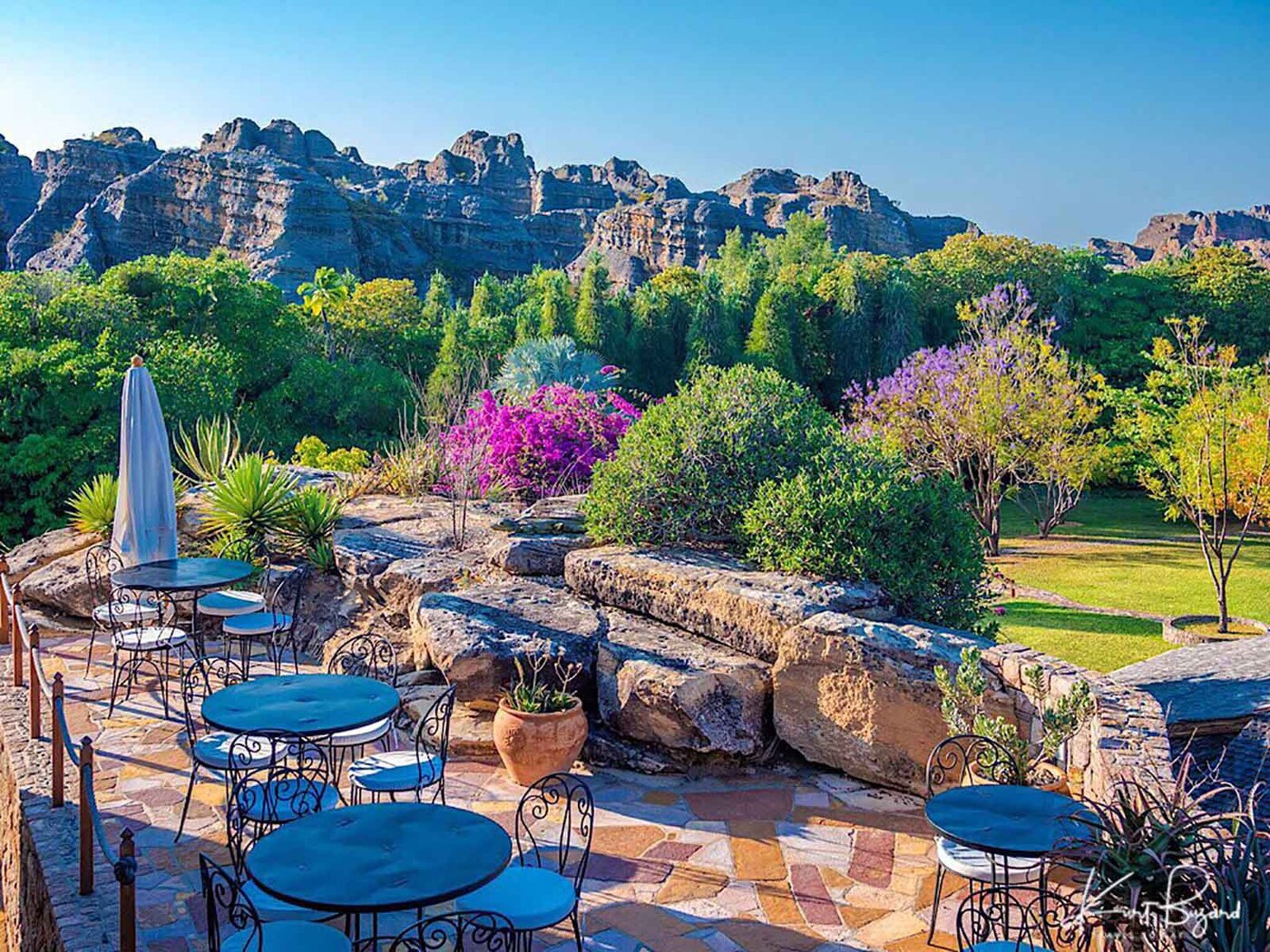
Le Relais de la Reine occupies 50 hectares of private savanna where the lodge's stone buildings (constructed from the same Jurassic sandstone as Isalo's cliffs) blend into the landscape. This is Madagascar's adventure activity headquarters — the only lodge offering via ferrata, horse riding circuits, and mountain biking alongside traditional park hikes.
What you get: Stone chalets (some are partially cave-like, staying cool without AC) with en-suite bathrooms, private patios, and half-board meal plans. The restaurant serves Franco-Malagasy cuisine emphasizing local ingredients (zebu carpaccio, Isalo honey, organic vegetables from the lodge garden). The pool, set into a natural rock grotto, provides post-hike recovery.
Adventure menu:
- Via ferrata: Steel cable routes up sandstone cliffs ($45, 3 hours, gear included)
- Horse riding: Bara horsemen lead savanna circuits ($40-60 for 2-4 hours)
- Mountain biking: Trails through spiny forest and Bara villages ($30 guide, bike included)
- Isalo park hikes: Standard guided treks ($30-50 depending on difficulty)
The horse riding advantage: Le Relais runs Madagascar's most professional equestrian operation — 15 well-trained horses and experienced Bara riders (the region's semi-nomadic pastoralist ethnic group). Multi-day horseback circuits into Isalo's canyons are possible but require advance booking.
On-site extras: The lodge maintains an organic garden supplying vegetables, a beekeeper producing Isalo honey sold at reception (US$8 per jar — excellent gifts), and an essential oil distillery making eucalyptus and lemongrass oils. Cultural programs visit Bara villages to understand Madagascar's pastoralist cultures ($25, 3 hours).
The value calculation: At $150-250pppn half board, you're paying significantly more than Isalo Rock's room rate — but the half board includes dinner (saving $20-30) and the adventure activities cost less than booking independently through tour operators. If you plan to do via ferrata, riding, or biking, the net premium is small.
Book if: You want active adventures beyond standard lemur walks, or you're an experienced rider wanting multi-day horseback circuits.
Region 4: Tsingy de Bemaraha — The Limestone Cathedral
Distance from Antananarivo: 700km (2-3 days via RN8, or fly to Morondava + 1 day)
Why it's challenging: Remote access (unpaved roads, river crossings), but rewards with otherworldly limestone karst
Tsingy de Bemaraha is Madagascar's UNESCO World Heritage crown jewel — 152,000 hectares of limestone karst eroded into vertical razor-sharp needles (tsingy means "where you cannot walk barefoot"). The formations reach 60-90 meters high, creating a stone forest canopy where Decken's sifakas leap across gaps that would be fatal falls.
Access requires serious commitment: unpaved Route Nationale 8 from Morondava (8-10 hours), river crossings (ferries operate dry season May-November only), and 4x4-only final approach. Most visitors fly to Morondava from Antananarivo (1.5 hours, $250-400 return) then drive 7-9 hours. Accommodation is limited to Bekopaka village, 15km from the park gates.
Wildlife Scorecard:
- Decken's sifakas: 90% encounter rate (adapted to vertical climbing on tsingy)
- Red-fronted brown lemurs, Coquerel's sifakas (Petit Tsingy only)
- Fossas: 15% encounter rate (Madagascar's apex predator)
- Birds: Madagascar fish eagle (critically endangered), crested ibis, vangas
10. Olympe du Bemaraha — The Bekopaka Budget Leader
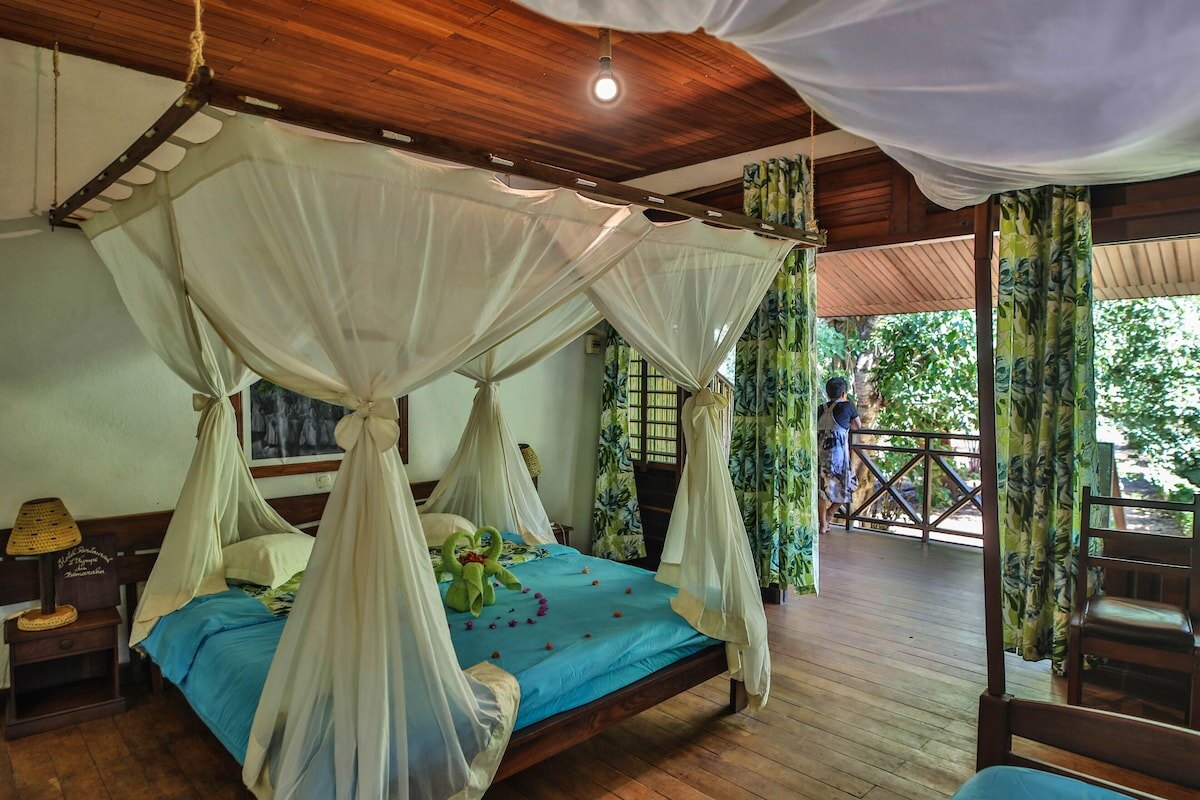
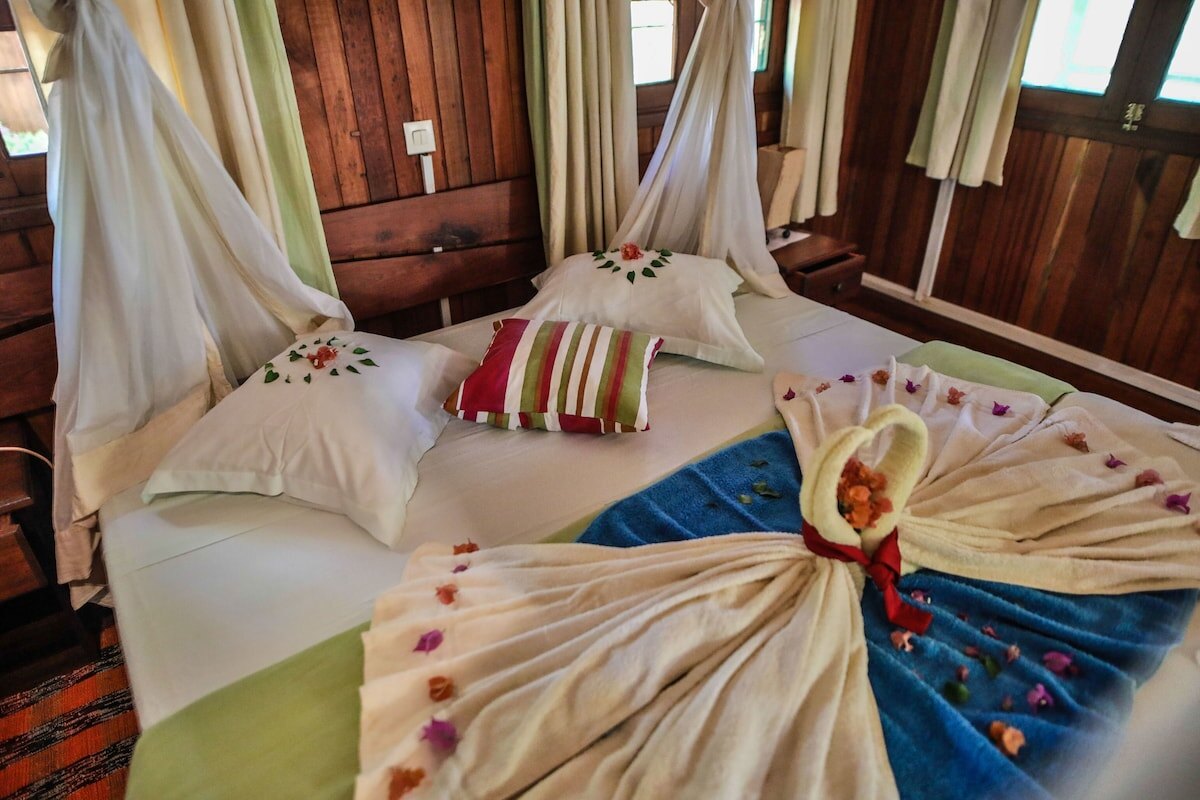
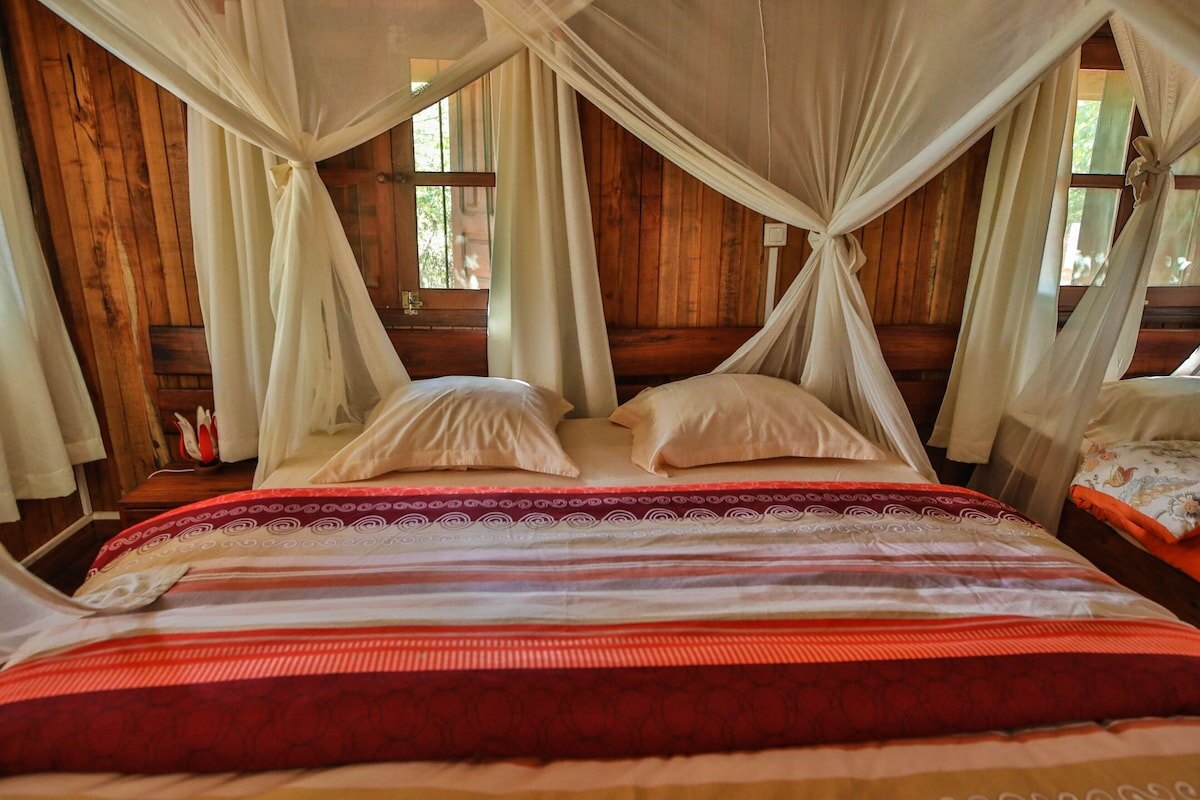
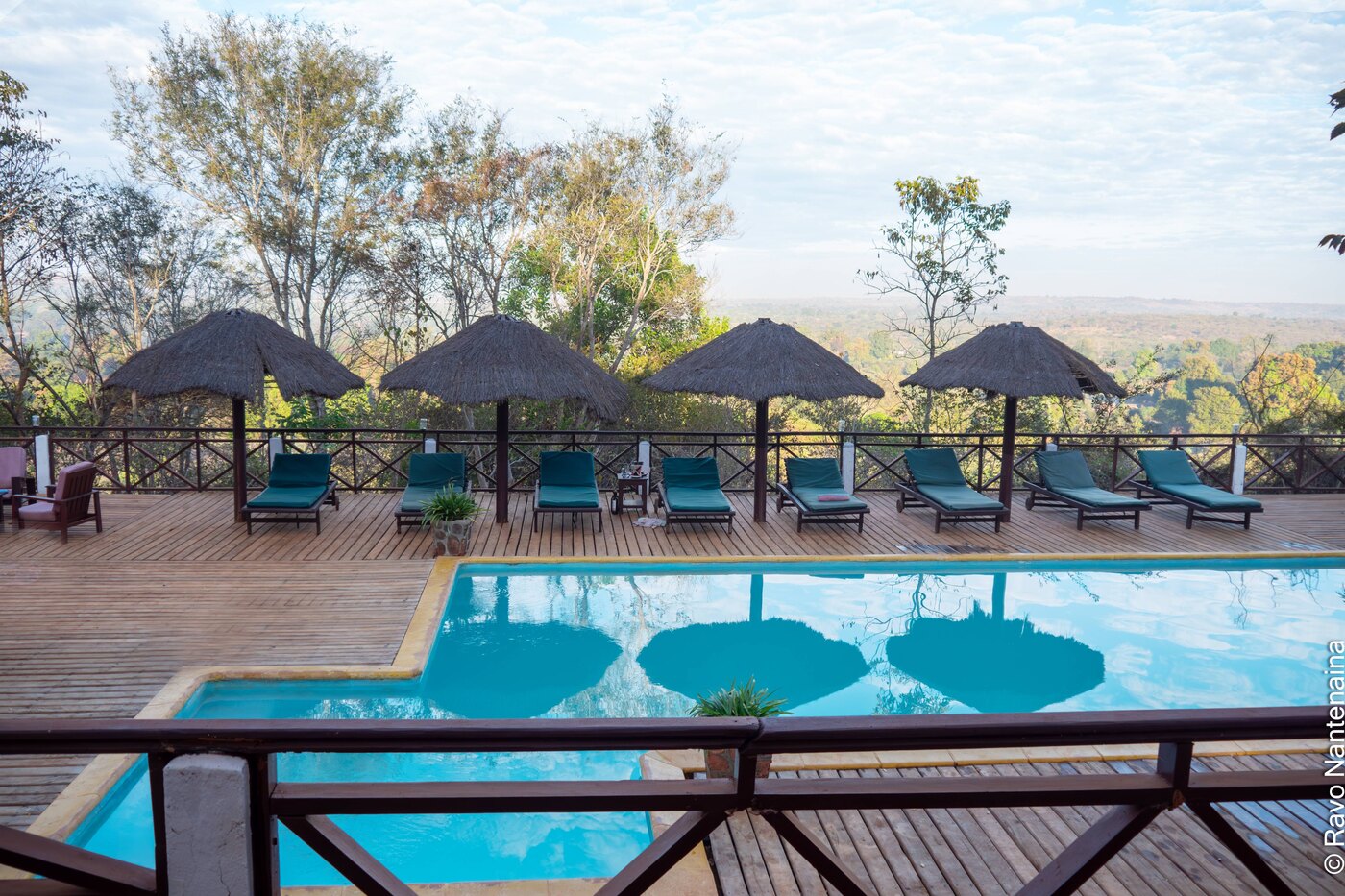
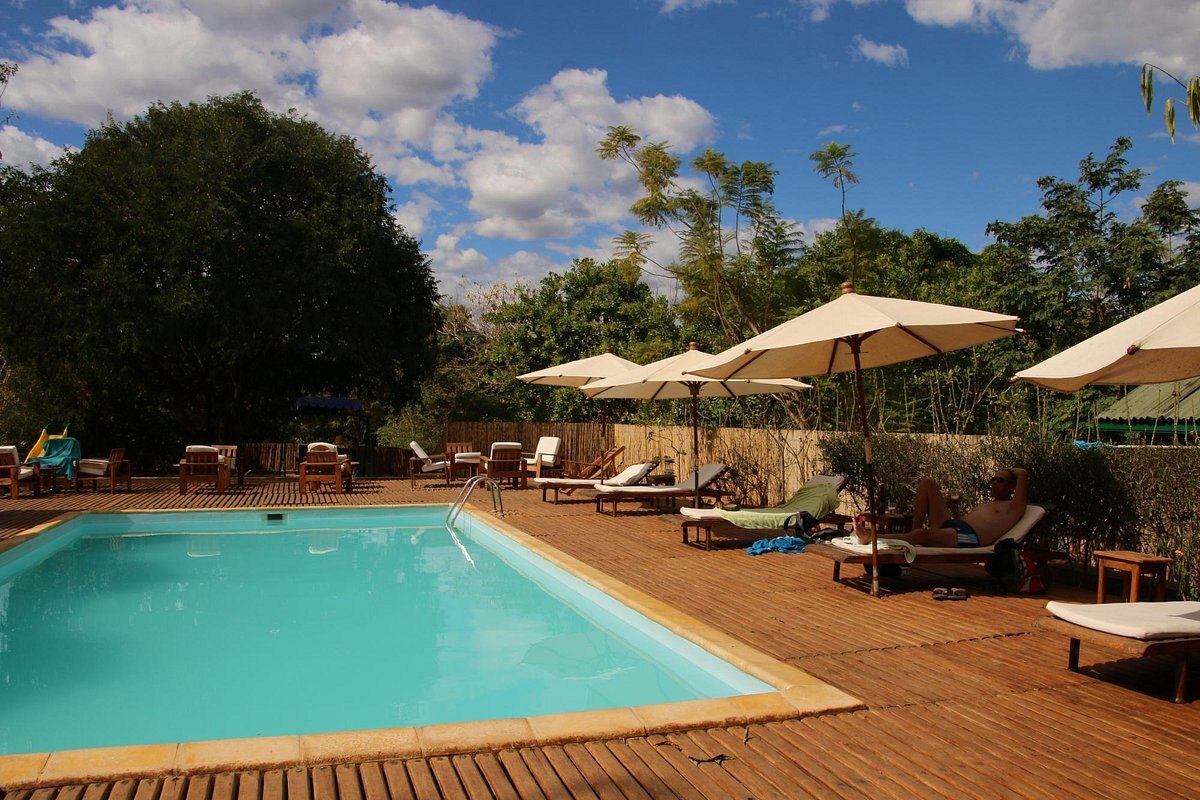
Price: US$98–150 per person per night (half board)
Location: Bekopaka village center, 15km from park entrance
Style: 20 bungalows around swimming pool
Olympe du Bemaraha is the de facto budget choice in Bekopaka — partly because Bekopaka only has 5-6 lodges total, partly because Olympe delivers reliable infrastructure in Madagascar's most remote park zone. The lodge functions as expedition base camp: bungalows for sleeping, restaurant for meals, pool for recovery, and 4x4 fleet for park transfers.
What you get: Standalone timber bungalows with en-suite bathrooms (hot water via solar), ceiling fans (no AC — generator electricity 6pm-10pm only), mosquito nets, and terraces facing the pool. Half board includes breakfast and dinner (Malagasy staples: zebu stews, rice, cassava, fresh Tsiribihina River fish when available). The restaurant bar stocks Three Horses Beer and rum arrangé (flavored rums — try baobab seed or vanilla).
Tsingy logistics: The park entrance lies 15km from Bekopaka via rough track (30-40 minutes by 4x4). Olympe arranges mandatory transfers ($25-30 per vehicle round-trip, split among your group) timed for park opening (7am). Guides must be booked at the park office — lodges don't employ them directly.
Circuit options:
- Petit Tsingy (easy): 2-3 hours, wooden walkways through small karst formations ($15 guide, $10 park fee)
- Grand Tsingy (moderate-hard): 4-6 hours, via ferrata cables, vertical climbs, suspended bridges ($30 guide, $15 park fee, gear provided)
- Grand Tsingy full circuit (hard): 7-8 hours, includes gorge descent and canyon floor ($40 guide, pack lunch required)
Remote realities: Bekopaka has no ATMs, no reliable internet (lodge WiFi is 3G hotspot in restaurant only), and limited mobile coverage. Bring all cash needed in Malagasy Ariary from Morondava or Antananarivo. Generator power runs 6pm-10pm; pack headlamps and battery banks.
Why it's value: At $98-150pppn half board, you're paying less per night than a gorilla permit to access formations that exist nowhere else on Earth. The price includes two meals, eliminating restaurant uncertainty in a village with limited options.
Book if: You're doing Tsingy on moderate budgets, or you want Bekopaka's most established infrastructure.
11. Le Soleil des Tsingy — The Boutique Bush Camp
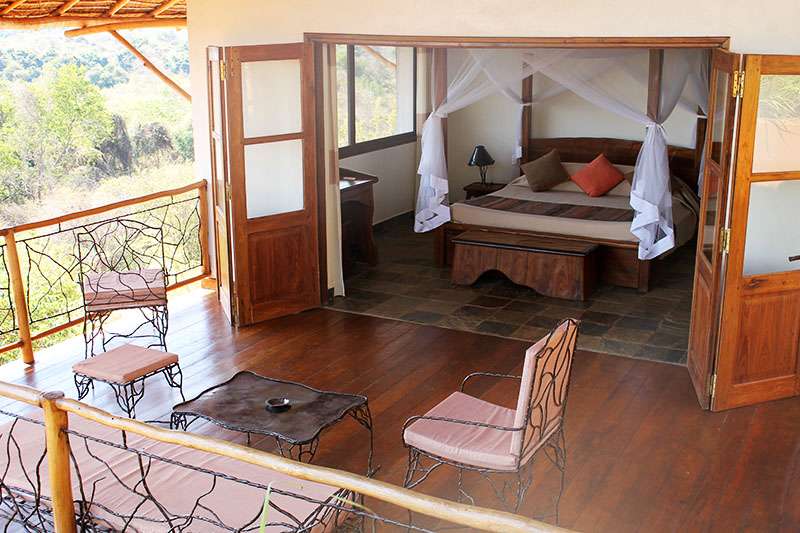
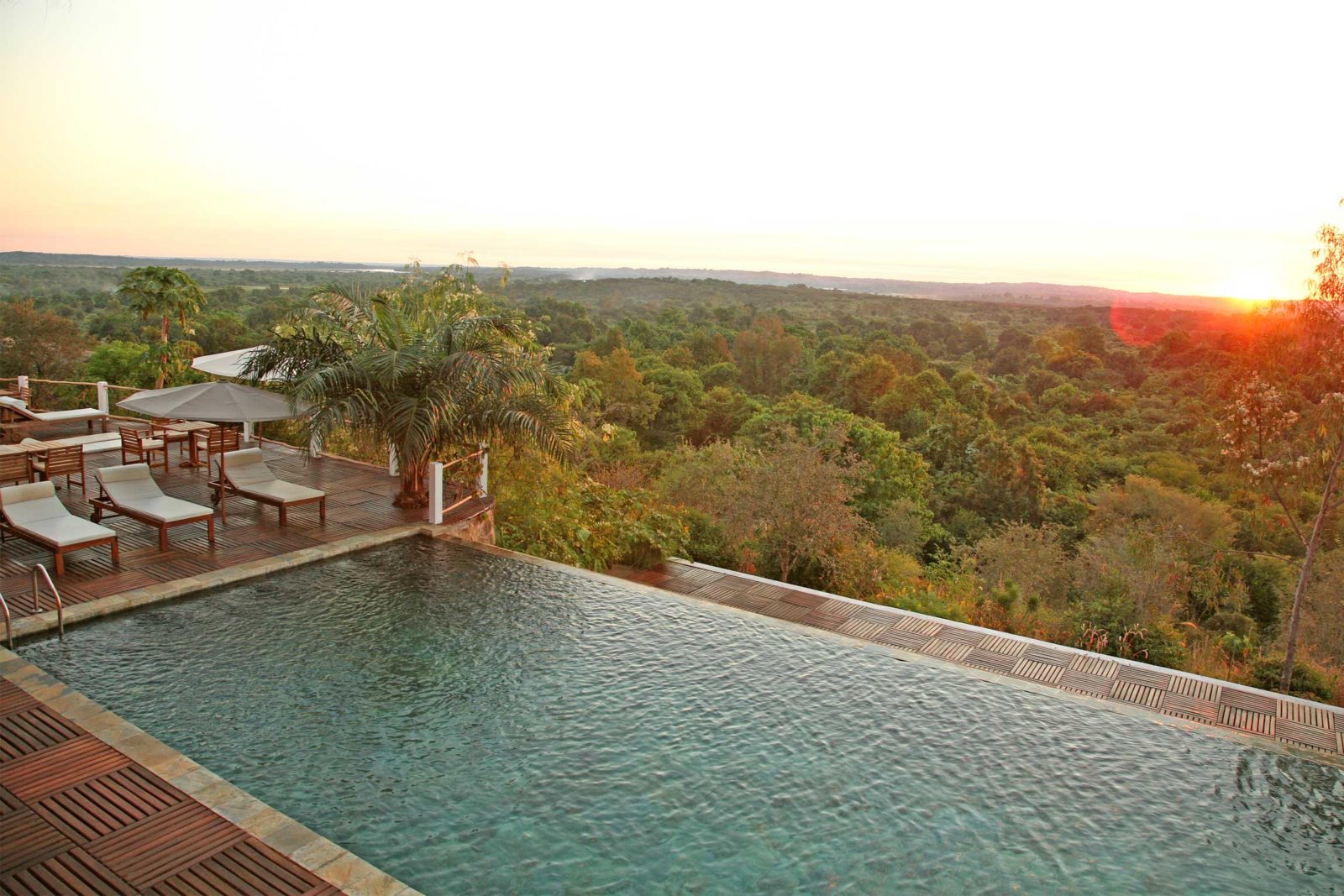
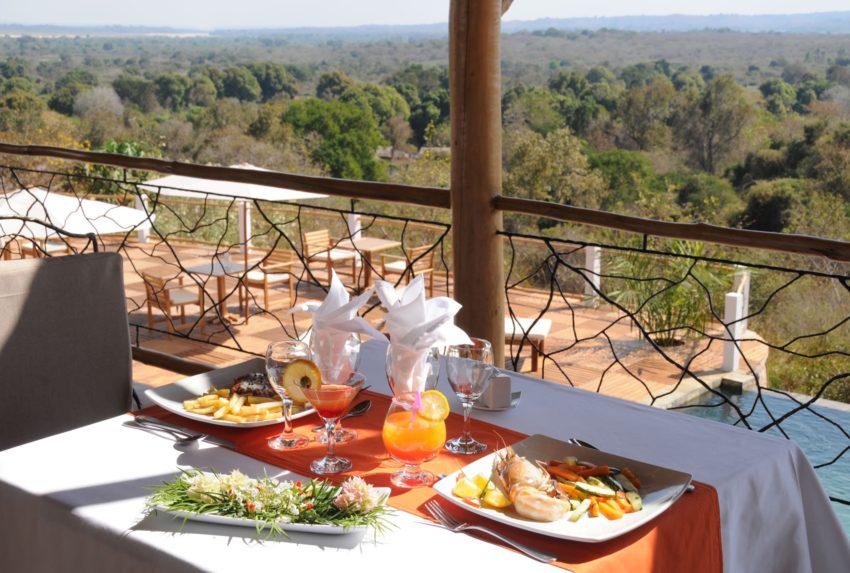
Price: US$120–180 per person per night (full board)
Location: 3km from Bekopaka, on 20-hectare private reserve
Style: 17 thatched bungalows in isolated bush setting
Le Soleil des Tsingy trades Bekopaka village convenience for isolated bush immersion — the lodge occupies 20 hectares of secondary forest where lemurs cross the grounds and stars dominate night skies. This is Madagascar's answer to Botswana's bush camps: solar power, paraffin lamps, and full-board dining under thatch.
What you get: Spacious bungalows (30m²) built from local timber and thatch, with en-suite bathrooms (bucket showers — hot water delivered on request), mosquito nets, and wide verandas with canvas chairs. No electricity in rooms (solar charges batteries in the main lodge for phone charging). Full board includes all meals plus afternoon tea, emphasizing fresh-baked bread and Malagasy curries.
Bush experience: The lodge's isolation means wildlife on-property — Coquerel's sifakas feed in the tamarind trees at dawn, nocturnal mouse lemurs emerge after dark, and Madagascar nightjars nest near the bungalows. The lack of village light pollution reveals exceptional night skies (no formal telescope, but clear naked-eye Milky Way views).
Park access: Le Soleil provides included 4x4 transfers to Tsingy gates (18km, 40 minutes via rough track). The lodge's full-board pricing eliminates restaurant decisions — a real advantage in Bekopaka where dinner choices are limited to 3-4 village spots.
The trade-offs: You're paying $20-30 more per night than Olympe for bush isolation and full board, but sacrificing village proximity and evening social options. If you want to explore Bekopaka's simple restaurants or interact with locals after dark, Le Soleil's remoteness is limiting. If you want to sit on your veranda listening to lemur calls with a rum arrangé, it's perfect.
Practical note: The lodge employs local guides from Bekopaka for cultural village walks ($15, 2 hours) explaining Sakalava ethnic traditions, zebu pastoralism, and baobab uses. These aren't park-required guides but add context to the Tsingy experience.
Book if: You want boutique bush-camp atmosphere over village convenience, or you're tired of lodge-hopping and want one all-inclusive base.
Region 5: Ifaty & Southern Coast — The Spiny Forest Beach Combo
Distance from Antananarivo: 950km (fly to Toliara 1.5 hours, then 25km north)
Why it's unique: Only region combining spiny forest (endemic octopus trees, baobabs) with Indian Ocean snorkeling
Ifaty isn't a single town but a 25km stretch of fishing villages (Mangily is the main settlement) along Madagascar's southwest coast, backed by the Mikea National Park spiny forest. This is where Madagascar's endemic Didiereaceae family (octopus trees resembling cacti but unrelated) dominates landscapes alongside Adansonia za baobabs (one of Madagascar's six endemic baobab species).
The region combines terrestrial endemism (ring-tailed lemurs, radiated tortoises, Madagascar iguanas) with marine biodiversity (whale sharks May-November, humpback whales July-September, 60+ reef fish species). Most lodges offer both spiny forest walks and snorkeling/diving excursions.
Wildlife Scorecard:
- Ring-tailed lemurs: 85% encounter rate (Reniala Reserve, private reserves)
- Radiated tortoises: 70% encounter rate (critically endangered, Reniala Reserve only)
- Birds: Long-tailed ground roller, sub-desert mesite (both endemic)
- Marine: Whale sharks (seasonal), sea turtles, octopus, reef fish
13. Le Jardin de L'isle — The Beachfront Budget Champion
Price: US$31–32 per night (room only, shared kitchen available)
Location: Mangily village, 50m from beach
Style: 6-room guesthouse with garden
Le Jardin de L'isle consistently wins "best value in Ifaty" awards on traveler forums — a family-run guesthouse where US$31 per night gets you beachfront access, shared kitchen, and gardens where ring-tailed lemurs visit at dawn. This is backpacker-tier pricing with unexpectedly high cleanliness and charm.
What you get: Simple rooms with double or twin beds, mosquito nets, shared bathrooms (cold water only — unnecessary in 28°C coastal heat), and access to a communal kitchen (fridge, gas stove, utensils). The garden grows papaya, banana, and mango trees attracting endemic birds. Beach access is 30 seconds walk.
Self-catering advantage: The shared kitchen means you can buy fresh seafood from Mangily fishermen (they sell catches on the beach each morning) and cook your own meals. Rock lobster $8-12, fresh octopus $4-6, line-caught fish $3-5. Local shops sell rice, vegetables, Three Horses Beer, and rum arrangé. Daily meal costs: $8-15 if self-catering vs. $25-40 at lodge restaurants.
Beach reality: Ifaty's beaches are working fishing villages, not resort zones. Expect wooden pirogues (traditional outrigger canoes), fish-drying racks, and locals mending nets. The sand is white, the Indian Ocean is turquoise, but this isn't Mauritius-level luxury.
Activities base: Le Jardin's owners arrange spiny forest walks ($15 guide to Reniala Reserve, $8 park fee), snorkeling trips ($20-30 with boat and guide), whale shark excursions May-November ($40-60 depending on group size), and kite-surfing lessons with village operators ($50 per 2-hour session).
Why it's exceptional value: At $31 per night, you're paying 2% the cost of Madagascar's luxury island resorts while accessing the same endemic spiny forest ecosystems and arguably better snorkeling (reefs near Mangily are healthier than over-dived Nosy Be sites).
Book if: You're backpacking Madagascar, you enjoy self-catering, or you want beach+forest at rock-bottom prices.
14. La Bella Donna — The Beachfront Mid-Range
Price: US$42–47 per night (breakfast included)
Location: Mangily beachfront
Style: 12-room lodge with pool and restaurant
La Bella Donna occupies the sweet spot for travelers wanting beachfront location and meals included without backpacker self-catering. The property sits directly on Mangily's sand, with a pool, thatched restaurant, and bar serving cold Three Horses Beer and seafood grills.
What you get: Simple but clean rooms with en-suite bathrooms (cold water showers — adequate in coastal heat), ceiling fans, mosquito nets, and small terraces. Breakfast includes Malagasy coffee, fresh-baked bread, fruit salad, and eggs. The restaurant serves fresh seafood (grilled lobster $15-18, octopus curry $10-12, zebu brochettes $8-10) and cold drinks.
Beach advantage: The lodge's beachfront location means you can walk straight onto the sand for morning swims, arrange pirogue snorkeling trips with village fishermen ($15-20 per person for 2 hours), or watch sunset from the bar deck with a Three Horses Beer ($2).
Pool reality: The small swimming pool (maybe 6m × 3m) isn't destination-worthy, but it's perfect for rinsing off reef salt after snorkeling or cooling down after spiny forest hikes. Don't expect infinity-edge luxury.
Activities: La Bella Donna's staff arrange Reniala Reserve walks ($15 guide + $8 entry for radiated tortoises and baobabs), village cultural tours ($10), pirogue snorkeling ($15-25), and transfers to Toliara (25km, $10-15 shared taxi).
The value math: At $42-47 per night with breakfast, you're paying $11-15 more than Le Jardin but gaining en-suite bathrooms, included breakfast, and a restaurant (eliminating self-catering time). For travelers not wanting to cook, it's a sensible upgrade.
Book if: You want beachfront comfort without backpacker self-catering, or you're traveling as a couple and prefer privacy over shared kitchens.
15. Mikea Lodge — The Remote Eco-Glamping
Price: US$100–200 per person per night (full board)
Location: Andravona (10km north of Mangily), between Mikea National Park and Indian Ocean
Style: 10 elevated tented bungalows
Mikea Lodge is Madagascar's most remote southern coast property — accessible via 3-4 hour 4x4 drive over sand tracks from Toliara, or by boat transfer (3 hours, weather dependent). The lodge sits on a deserted beach section where Mikea National Park's spiny forest meets white-sand beaches, creating a Robinson Crusoe atmosphere.
What you get: Elevated canvas-and-timber tented bungalows (40m²) with king beds, en-suite open-air bathrooms (cold water showers under the stars), private decks, and solar-powered lighting (no electricity in tents). Full board includes all meals (emphasis on fresh seafood — lobster, tuna, octopus — and Malagasy curries) plus drinking water and local rum.
Spiny forest access: The lodge sits adjacent to Mikea National Park, home to the semi-nomadic Mikea people (one of Madagascar's last forest-dwelling groups). Guided forest walks ($25) reveal octopus trees, Grandidier's baobabs, radiated tortoises, and traditional Mikea honey-gathering methods.
Marine activities: The lodge's isolated beach provides access to healthier reefs than crowded Mangily: snorkeling from beach ($15 guide), pirogue reef trips ($25), deep-sea fishing ($80-100 for half-day), and seasonal whale shark expeditions ($60-80).
The remoteness factor: Mikea's isolation is both selling point and limitation. You're off-grid (solar power, no WiFi except satellite phone in emergencies) on a beach with no other development. If you want evening village restaurants or social options, you're out of luck. If you want stars, silence, and seafood, it's paradise.
Access logistics: Most guests reach Mikea via lodge-arranged 4x4 transfer from Toliara ($80-120 per vehicle depending on group size) or boat transfers ($100-150 per boat, only possible calm weather May-October). Self-driving is theoretically possible but requires serious 4x4 experience (deep sand, unmarked tracks, river crossings).
Book if: You want remote beach-meets-spiny-forest immersion, or you've already done Andasibe/Ranomafana and want Madagascar's hidden southern wilderness.
When to Visit Madagascar: Balancing Weather, Wildlife, and Costs
Madagascar's seasons are inverted from the Northern Hemisphere (it's in the Southern Hemisphere), and climate varies dramatically by region. The eastern rainforests receive 2,000-4,000mm annual rainfall; the southwest spiny forest gets 400-600mm. Your timing depends on priorities.
Peak Season: July-September (Dry Season, Cooler Temperatures)
Best for: First-time visitors, families with children, lemur photography
Advantages:
- Lowest rainfall: Eastern rainforest trails are passable (June-September is the only dry window); Tsingy roads are open
- Comfortable temperatures: 15-25°C in highlands (Andasibe, Ranomafana), 20-28°C on coast
- High lemur visibility: Fruit-bearing trees attract lemurs to predictable locations; less dense foliage improves photography
- Humpback whale season: July-September brings humpbacks to Ifaty and Ile Sainte-Marie for calving (whale-watching tours $40-80)
Disadvantages:
- Peak prices: Lodges charge 20-40% premiums; international flights are most expensive
- Advance booking required: Popular properties (Vakona, Mantadia Lodge, Isalo Rock) sell out 8-12 weeks ahead
- Tourist crowds: Andasibe's trails see 50-80 daily visitors; prime photography hours (dawn/dusk) are busy
Shoulder Season: April-June & October-November (Transition Periods)
Best for: Budget-conscious travelers, experienced safari-goers, photographers prioritizing light quality
Advantages:
- Price savings: Lodges offer 15-25% discounts compared to peak; some properties have "special offer" rates
- Fewer tourists: Andasibe's trails see 20-30 daily visitors; you often have lemur families to yourself
- October-November chameleon peak: Mating season brings out vibrant colors and daytime activity
- April-May post-cyclone greenery: Rainforests are lush (though trails are muddy); waterfalls are full
Disadvantages:
- April-June rain risk: Eastern parks receive 200-400mm monthly rainfall; expect afternoon showers and muddy trails
- October-November heat: Southern regions hit 32-38°C; spiny forest walks are uncomfortable midday
- Variable lemur activity: Some species are less visible as food sources disperse
Low Season: December-March (Cyclone Season, Peak Rain)
Best for: Herping enthusiasts (reptiles/amphibians), birders (breeding season), extreme budget travelers
Advantages:
- Lowest prices: Lodges offer 30-50% discounts; some properties close entirely (reducing options but maximizing deals at those open)
- Reptile/amphibian peak: Chameleons, frogs, geckos, and snakes are most active; breeding displays and calls are dramatic
- Birding season: Endemic birds are breeding, displaying, and calling (best for identification)
- Deserted parks: You may have entire trails to yourself
Disadvantages:
- Cyclone risk: January-March brings 2-5 cyclones annually; RN7 floods, Tsingy roads close, domestic flights cancel
- Heavy rain: Eastern parks receive 400-600mm monthly; expect daily afternoon storms and impassable trails
- Reduced wildlife visibility: Dense foliage, dispersed food sources, and lemurs sheltering from rain reduce encounter rates
- Logistical chaos: Roads wash out, ferries stop running, lodge staff take holidays (verify open dates before booking)
Regional Variations
Andasibe-Mantadia: Rainiest December-March (avoid unless you're a committed herper); driest July-September (best visibility); April-June acceptable (afternoon rain but trails passable).
Ranomafana: Wet year-round (1,800mm annually); "dry" season July-September has 80-120mm monthly rainfall; bring rain gear regardless of travel dates.
Isalo: Dry year-round except January-March (300mm in 3 months); best April-November (comfortable hiking temperatures, clear skies); December-March is hot (35-40°C) with afternoon storms.
Tsingy de Bemaraha: Accessible May-November only (river ferries and roads close December-April); best July-October (dry trails, comfortable temperatures); May and November are hotter but less crowded.
Ifaty: Dry April-November (perfect beach weather, 25-28°C); avoid December-March (hot and humid with occasional rain); whale shark season May-November (peak August-October).
Practical Planning: Costs, Logistics, and Insider Tips
The Full-Trip Budget Reality
Madagascar is cheaper than Kenya or Tanzania for activities, but expensive for transport. Here's what a 12-day itinerary costs for two people sharing:
Budget Tier: US$3,400-4,800 total ($283-400 per person per day)
- Accommodation: $60-120pppn (Vakona, Centrest, Le Jardin)
- Meals: $15-25 per person daily (Malagasy restaurants, some self-catering)
- Guides: $15-25 per day per person (split guide costs)
- Transport: $600-1,000 (4x4 hire with driver, or shared taxis + 1 domestic flight)
- Park fees: $80-120 total (entry + mandatory guides for 5-6 parks)
Mid-Range Tier: US$6,800-9,500 total ($567-792 per person per day)
- Accommodation: $150-250pppn (Mantadia Lodge, Le Relais de la Reine, Mikea Lodge)
- Meals: $35-50 per person daily (lodge restaurants, occasional fine dining)
- Guides: $30-40 per day per person (experienced specialist guides)
- Transport: $1,200-1,800 (private 4x4 with driver + 2 domestic flights)
- Park fees: $120-180 total (entry + premium guides)
Transport: The Biggest Wild Card
Domestic flights: Light aircraft connect Antananarivo to Toliara, Morondava, Nosy Be, and Fort Dauphin ($250-450 per person one-way). Essential for reaching Tsingy or Ifaty without 2-3 days of overland driving. Book via Madagascar Air Tours or Tsaradia.
4x4 hire with driver: US$80-150 per day (vehicle + fuel + driver/guide). Standard for RN7 circuits (Antananarivo → Andasibe → Ranomafana → Isalo → Toliara). Drivers often double as informal guides and fixers.
Shared taxis-brousse: Local minibuses connecting major towns ($5-15 per person per leg). Cheap but uncomfortable (14-seat vehicles hold 20+ people) and slow (stops for passengers, cargo, and goats). Not recommended for short trips.
Self-drive rental: Available in Antananarivo but strongly discouraged. Roads lack signage, mechanics speak only French/Malagasy, and police checkpoints require vehicle papers translated into French. Budget travelers save more hiring 4x4+driver than renting and navigating alone.
Money Matters: The Cash Economy
ATMs: Only in major cities (Antananarivo, Toliara, Nosy Be). Villages like Ranomafana, Bekopaka, and Mangily have no ATMs. Withdraw maximum daily limits (usually 400,000-600,000 MGA / US$90-135) in cities before departing.
Credit cards: Accepted at upscale lodges in Andasibe/Isalo (often with 3-5% surcharge). Not accepted at budget guesthouses, village restaurants, or park offices. Bring cash for 80% of expenses.
Tipping: Guides expect 5,000-10,000 MGA ($1.10-2.20) per person per day for standard service; 15,000-20,000 MGA ($3.30-4.50) for exceptional guiding. Lodge staff appreciate 10% of room cost as end-of-stay tip (leave in envelope at reception).
Park fees: Paid in cash (Malagasy Ariary or US dollars) at park offices. Bring small bills — offices rarely have change for 50,000 MGA notes.
Health and Safety Essentials
Malaria: Endem to coastal regions (Ifaty, Nosy Be, Masoala) and low-elevation areas. Andasibe, Ranomafana, and Isalo are malaria-free due to altitude (900-1,400m). Consult travel clinics for prophylaxis.
Vaccinations: Yellow fever certificate required if arriving from endemic countries (not required if flying direct from Europe/US). Hepatitis A, typhoid, and tetanus recommended.
Water: Drink only bottled water (Eau Vive brand, 1,500 MGA / US$0.33 per 1.5L). Brush teeth with bottled water. Avoid ice in drinks unless at high-end lodges with purified ice.
Traveler's diarrhea: Expect it, regardless of precautions. Pack Imodium, oral rehydration salts, and ciprofloxacin (prescription antibiotic). Avoid raw vegetables and unpeeled fruit at village restaurants.
Crime: Madagascar is generally safe. Antananarivo has pickpocketing in markets; avoid displaying expensive cameras/phones. Villages are extremely safe. Common sense precautions suffice.
Language and Culture
Languages: Malagasy (official, 18 distinct dialects), French (official, spoken by educated urbanites). English is rare outside Antananarivo's tourist offices. Learn basic French greetings and numbers, or hire guides who speak English.
Cultural notes:
- Fady: Taboos vary by region/ethnic group (e.g., some Bara villages prohibit visitors wearing red; some areas ban pork). Guides explain local fady — respect them.
- Photography: Always ask permission before photographing people. Offering to share photos via email/WhatsApp is appreciated (most Malagasy have smartphones).
- Bargaining: Expected at markets and for taxi fares; not appropriate for guide fees or restaurant meals.
The Madagascar Value Verdict
Madagascar's value proposition is unparalleled if you measure cost against endemic uniqueness. You cannot see indri lemurs, baobab forests, or limestone tsingy anywhere else on Earth — there is no Plan B destination. At US$50-350 per night for lodges that place you inside irreplaceable ecosystems, Madagascar delivers 10-50× better value than gorilla tracking's $800-1,500 per-hour permits.
The challenges are real: expensive flights (New York/London to Antananarivo: US$1,200-1,800), time-intensive overland transport (RN7 circuits require 2 weeks minimum), and rustic infrastructure in rural areas (bucket showers, generator electricity, village restaurants). But these "inconveniences" are precisely why Madagascar's endemic wildlife hasn't been loved to death by mass tourism.
If you can tolerate adventure over luxury, accept that hot showers may be bucket-heated, and embrace the reality that the best wildlife costs time not money, Madagascar is the most value-rich wildlife destination on Earth.
The lodges in this guide prove you don't need luxury budgets to experience the world's most unique biodiversity. You need curiosity, flexibility, and US$60-250 per night.