Key Takeaways
- You can hold both a gorilla trek and the Great Migration inside one trip of about nine to ten days. The cleanest version pairs Rwanda's Volcanoes National Park with Kenya's Masai Mara.
- The timing that lines up best is July to October, when the Mara river crossings are running and the forest trails in Rwanda are at their driest.
- For a January-to-March trip, swap Kenya for Tanzania: the herds are calving on the southern Serengeti plains while the Rwanda gorillas trek year-round.
- A Rwanda gorilla permit is 1,500 US dollars; Uganda is 800. Numbers are capped at eight trekkers per family per day, for one hour with the gorillas.
- The link between the two halves is a short chain of flights — Kigali to Nairobi, then a light aircraft into the Mara — that we arrange end to end.
Why These Two Belong in One Trip
Most people meet a mountain gorilla and the Great Migration on two separate holidays, often a decade apart. That is a shame, because the two sit closer together than they look. Rwanda and Kenya are a single short flight and a border apart, and the same dry months that firm up the forest trails in Volcanoes National Park are the months the wildebeest are massing on the banks of the Mara River. Plan it properly and one trip carries both.
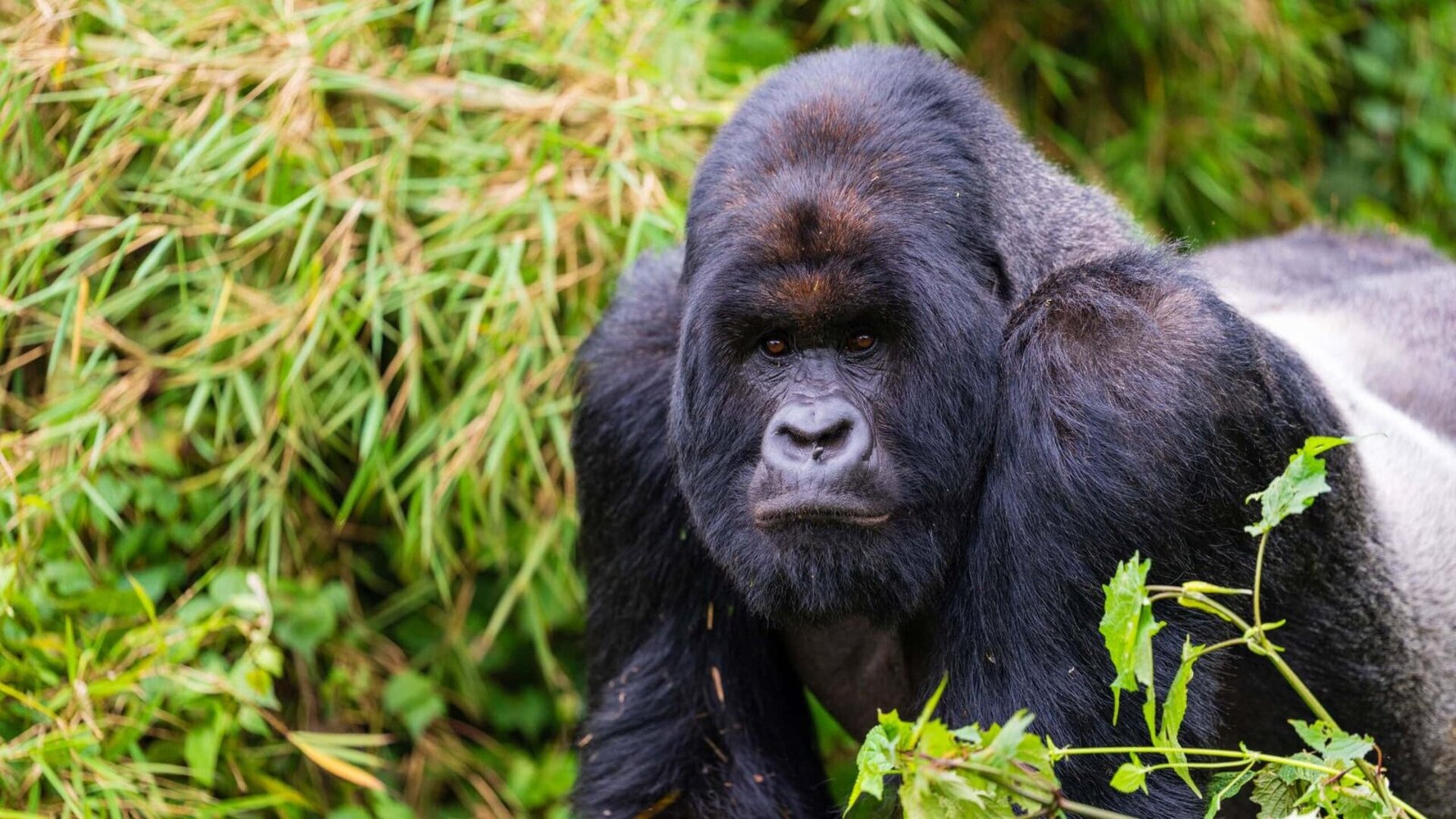
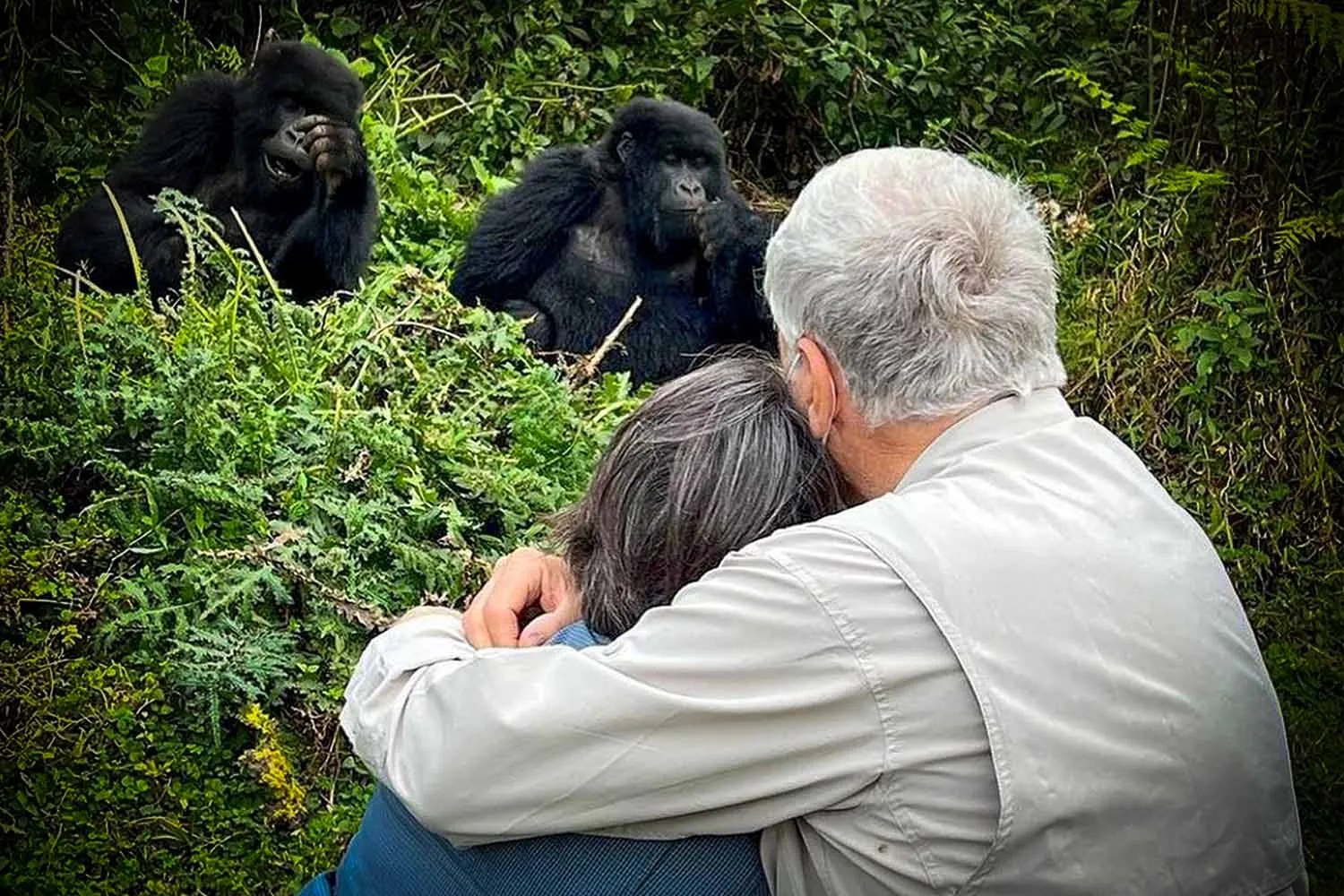
The pairing works because the two experiences are opposites, and the contrast is the reward. The gorilla half is slow, close and quiet — a steep walk into a cloud forest, then an hour sitting a few metres from a silverback and his family while they feed and the youngsters wrestle. The migration half is wide and loud — open plains to the horizon, dust, the smell of the herds, and the held-breath tension of a river crossing where crocodiles wait. You spend part of the trip looking into a single animal's eyes and part of it watching a million of them move. Few journeys swing that far.
The Gorilla Half: Rwanda, and the Uganda Option
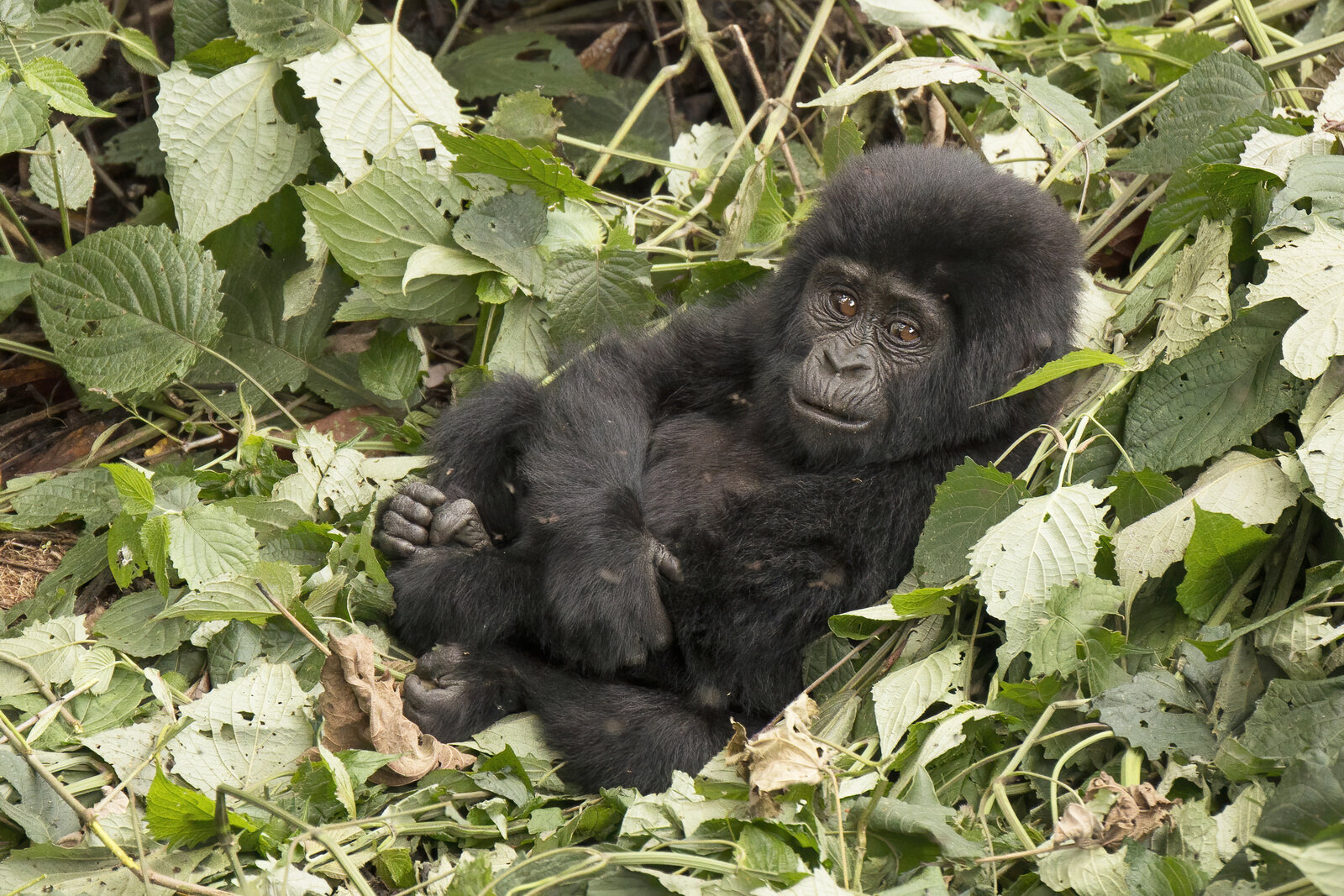
For a combined trip, Rwanda is usually the right call for the gorillas. The reason is distance. You land at Kigali, drive about two and a half hours north to the edge of Volcanoes National Park, and you are at the trailhead the next morning. The park protects part of the Virunga chain — a run of steep, forested volcanoes shared with Uganda and the DRC — and holds several habituated gorilla families. The treks range from a gentle hour to a hard half-day, depending on where the family has moved overnight, and the park tries to match your fitness to a family that suits it.
The trek itself follows a pattern. You gather at the headquarters at Kinigi for a briefing, drive to the forest edge, and climb with a guide and trackers who have been with the family since dawn. The forest is steep, often wet, and sits between about 2,500 and 3,000 metres, so the air is thin. Then the trackers stop, you leave your packs, and you walk the last stretch to find them. One hour is all you are given, and it is enough to change how you think about the animals.
Uganda is the alternative, and it is the better choice if you want everything in one country or you prefer a wilder, longer trek. Gorillas there live in Bwindi Impenetrable Forest and Mgahinga, the permit is 800 US dollars rather than 1,500, and the forest is denser and the walks generally tougher. The trade-off for a combined migration trip is travel time — Bwindi is a long drive or a light-aircraft hop from Entebbe — so for a tight nine-day trip most travellers take Rwanda, and keep Uganda for a longer, gorilla-led journey.
The Migration Half: Kenya, and the Tanzania Option
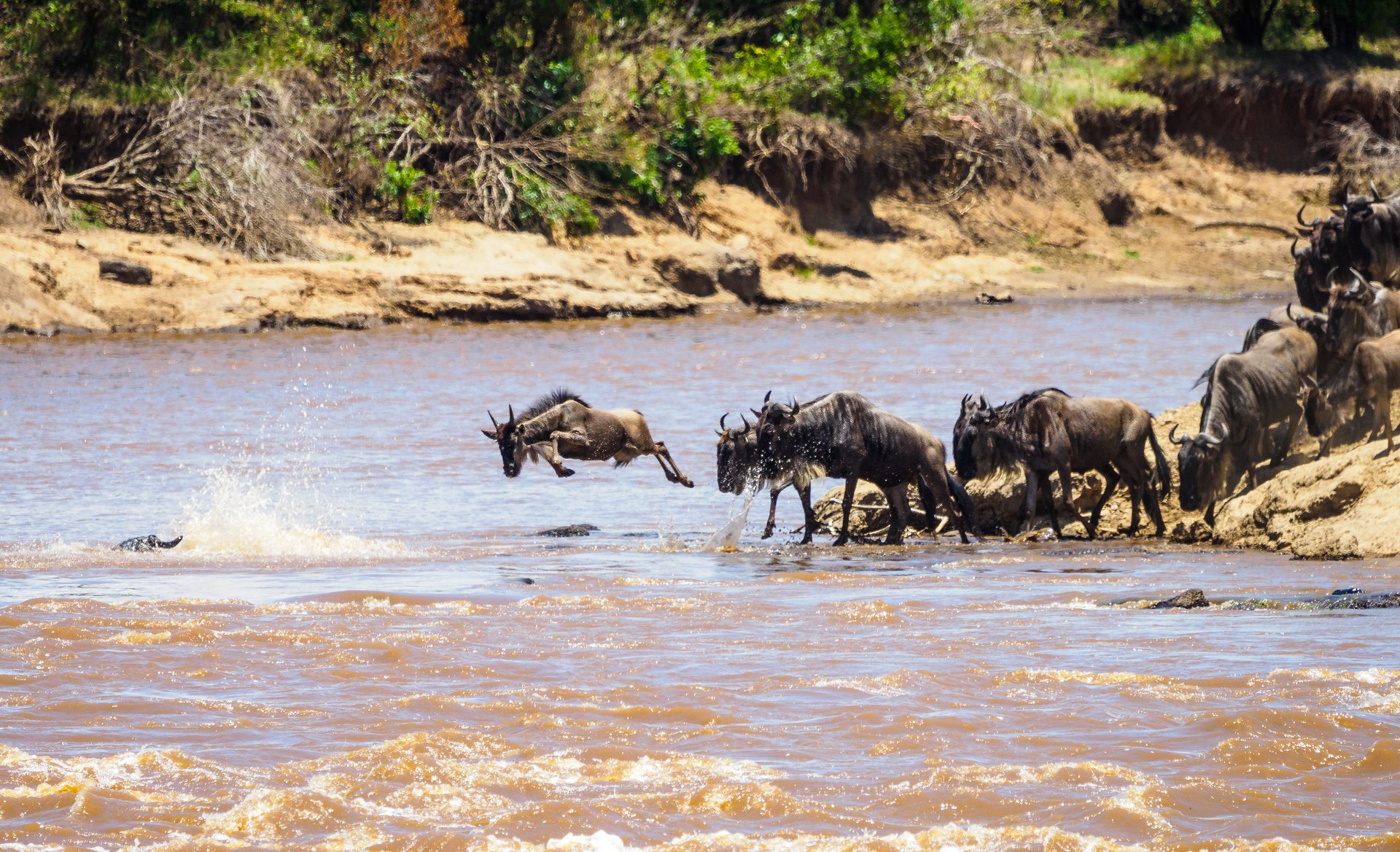
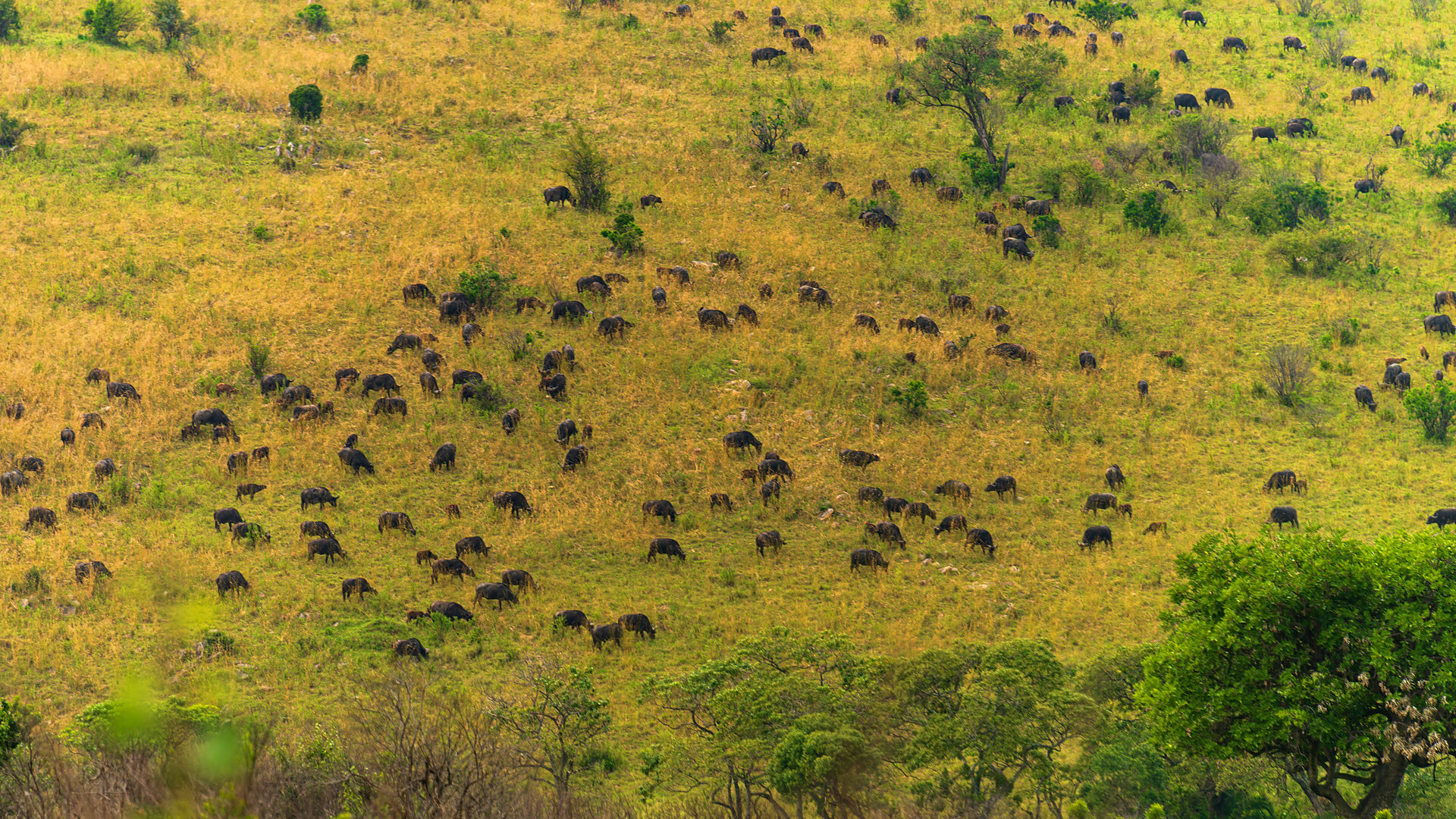
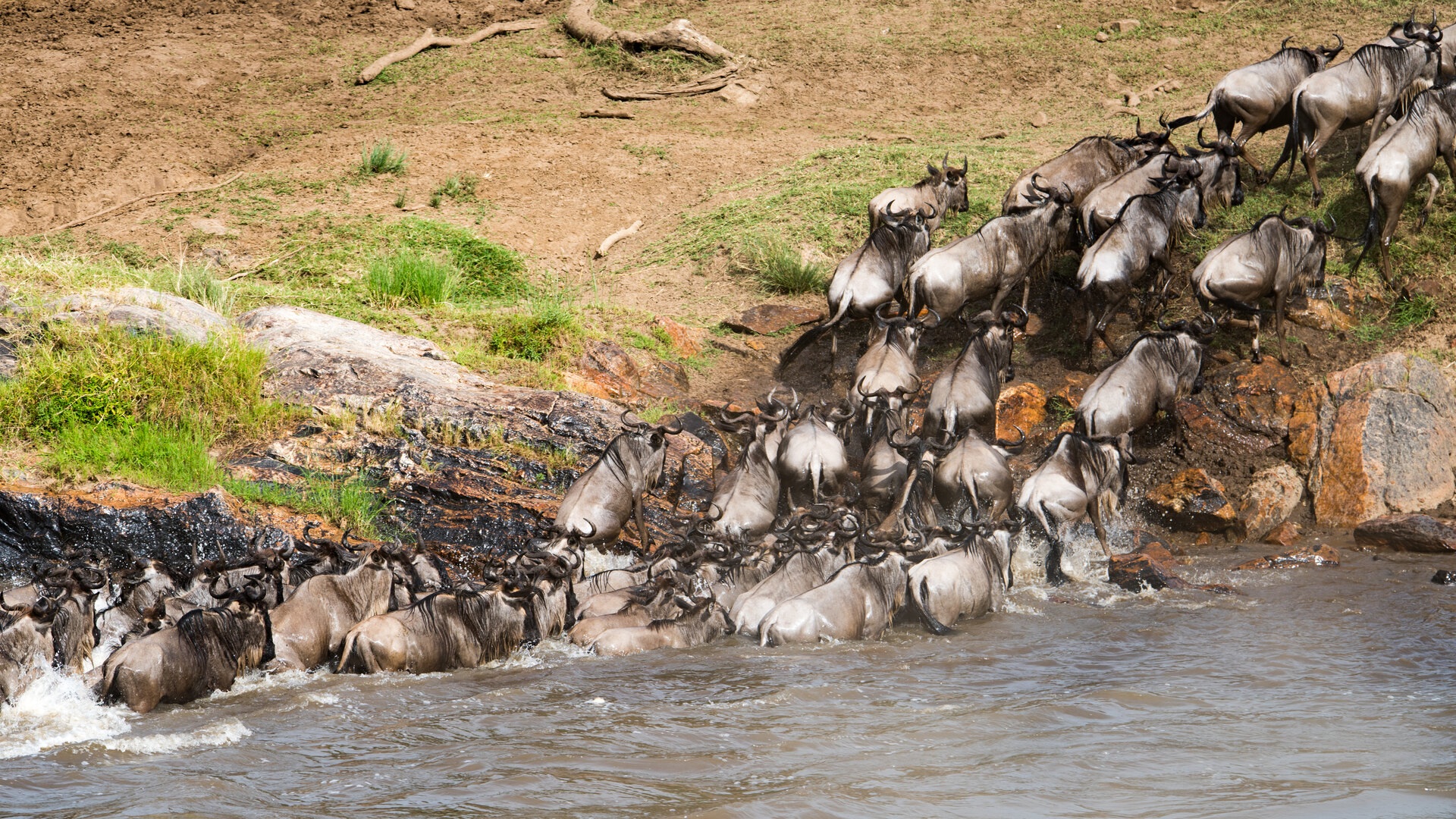
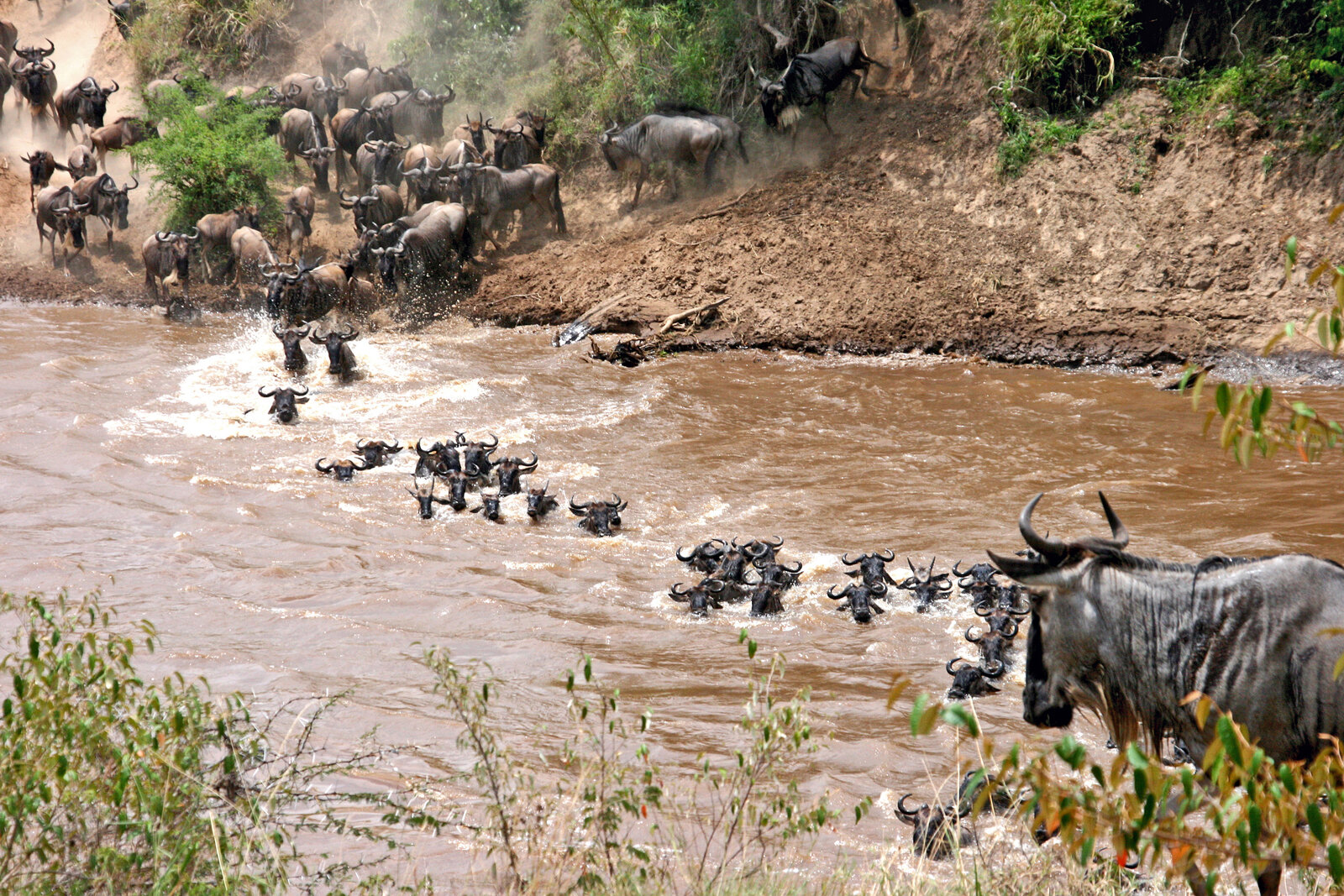
The migration is not a single event on a fixed date; it is a year-long loop of around two million wildebeest, zebra and gazelle moving between Tanzania's Serengeti and Kenya's Masai Mara in search of grazing and water. Where you go depends entirely on the month. For a July-to-October trip, the herds are in the northern Serengeti and crossing into the Masai Mara, and that is when the Mara River crossings happen — the scenes of wildebeest plunging down the banks through waiting crocodiles that most people picture when they think of the migration.
That is why Kenya pairs so well with Rwanda in those months. You fly into the Mara, base yourself at a camp within reach of the main crossing points on the Mara and Talek rivers, and spend your days tracking the herds as they build up along the banks. Crossings are never guaranteed on any single day — the animals cross when they decide to — so we build in enough nights to give you real chances rather than one roll of the dice.
If your trip falls between January and March, the picture flips. The herds are far to the south on the short-grass plains of the Ndutu area, in the southern Serengeti, where around half a million calves are born inside a few weeks. That calving season brings its own drama — newborns finding their feet, and the predators that follow them — and it is a Tanzania experience, not a Kenya one. So a January-to-March combined trip pairs the Rwanda gorillas with the Serengeti rather than the Mara. Same gorillas, different migration chapter.
How the Two Link: Flights and Routing
The practical question is how you get from a volcano in Rwanda to a riverbank in Kenya without losing days to travel. The answer is a short chain of flights that we book as one. The usual shape runs Kigali to Nairobi — a scheduled flight of under two hours — and then a light aircraft from Nairobi's Wilson Airport into one of the Mara's airstrips, which takes about forty-five minutes. You can fly the two halves in either order, but most trips start with the gorillas while legs are fresh, then move to the plains.
A few details make this smoother than it sounds. The East African Tourist Visa covers Rwanda, Kenya and Uganda on a single document, so you are not buying visas at every border. Baggage on the light aircraft into the Mara is limited, usually to soft bags of around 15 kilograms, which is worth knowing before you pack. And because the connections are tight, we hold your Mara flight against your Kigali arrival and keep a buffer night in Nairobi where the schedule needs it. For the Tanzania version, the chain runs Kigali to Kilimanjaro or Nairobi, then a light aircraft to a Serengeti airstrip.
Month by Month: When to Go for Both
Gorillas are trekked all year, so the migration is what sets your dates. The table below shows where the herds are through the year and which country to pair with the Rwanda gorillas in each window.
| Months | Where the Herds Are | Best Pairing with Rwanda Gorillas |
|---|---|---|
| Jan – Mar | Calving on the southern Serengeti plains (Ndutu) | Tanzania — the calving season and newborn-led predator action |
| Apr – May | Herds moving through the central Serengeti; long rains | Quieter and greener; lower rates, muddier forest trails |
| Jun | Herds pushing north and west through the Serengeti | Tanzania for the Grumeti; drier gorilla trails begin |
| Jul – Oct | Mara River crossings into Kenya's Masai Mara | Kenya — the peak pairing, crossings plus firm forest trails |
| Nov | Herds turning back south; short rains | Either country, with fewer crowds and green plains |
| Dec | Herds gathering on the southern plains before calving | Tanzania, as the plains fill for the new season |
The short version: if you can choose your dates, aim for July to October and pair Rwanda with Kenya. It gives you the river crossings and the driest trekking in one window. If your dates are fixed to the early year, go Rwanda and Tanzania for the calving. Either way the gorillas are there.
Permits, Fitness, Altitude and Cost
Every gorilla trek needs a permit, and permits are deliberately limited and expensive. Rwanda charges 1,500 US dollars per person per trek, Uganda 800. Only eight trekkers visit each habituated family per day, and the group spends a strictly timed one hour with the gorillas. That money is not a markup — it funds the rangers and trackers and the conservation work that has pulled mountain gorillas back from the edge, and it is the reason there are gorillas to visit at all. Because the daily numbers are capped, permits must be held months ahead, especially for the July-to-October window.
On fitness, you need to be a steady walker, not an athlete. The forest is steep and often slick with mud, and the altitude — roughly 2,500 to 3,000 metres — makes the climb harder than the same walk at sea level, so take the first days steadily and drink more water than you think you need. A porter costs a small amount, carries your pack, gives you a hand on the steep sections and puts money straight into the local community, so hire one. The minimum age for gorilla trekking is 15. Pack sturdy waterproof boots, a rain jacket, long sleeves and garden gloves for grabbing stinging vegetation.
On cost, this is a premium trip and it helps to know why. Two gorilla permits alone come to 3,000 US dollars for a couple in Rwanda before a single night's lodging. Add the internal flights between the countries, the light aircraft into the Mara, quality camps in both halves and private guiding, and a well-built nine-day trip generally starts in the region of 8,000 to 9,000 US dollars per person and climbs with the level of lodge you choose. Our bookable version, the 9-Day Gorilla Trekking and Great Migration Safari, starts from 8,950 US dollars per person and lays out exactly what is included.
How Long You Need and the Shape of the Trip
Nine to ten days is the sweet spot. It is long enough to give each half room without a day feeling wasted on transit. A trip much shorter than that forces one of the two experiences into a single rushed night, and these are not experiences to rush. The classic shape looks like this: arrive Kigali and overnight near the park; one or two gorilla treks on the following mornings; fly Kigali to Nairobi with a buffer; light aircraft into the Mara; three nights on the plains tracking the herds and the crossings; then home via Nairobi.
Two pieces of advice from arranging these constantly. First, build in a second gorilla permit if the budget allows. Each family is different, the second hour is never a repeat of the first, and a spare trek protects you against one wet, hard-going morning. Second, give the Mara three nights rather than two. Crossings happen on the animals' schedule, not yours, and the extra day turns a single chance into a real run of them. Get the length right and this stops being two trips squeezed together and becomes one journey that holds the best of both.
Ready to Plan Both Halves?
We hold the gorilla permits, book every flight between the countries, and choose the camps that put you within reach of the crossings — so the trip runs as one journey, not two. Tell us your dates and we will match them to the right pairing.
Want to see the full itinerary? View our 9-Day Gorilla Trekking & Great Migration Safari →