Key Takeaways
- The best affordable safari lodges in Zambia deliver world-class walking safaris and legendary leopard sightings at $150–550 per person per night — a fraction of the ultra-luxury tier — making Zambia one of Africa's most rewarding value safari destinations
- Flatdogs Camp and Wildlife Camp put you on the doorstep of South Luangwa from around $150–325 per person, sharing the same leopard-rich bush as the $1,500-a-night camps
- Mfuwe Lodge and Track & Trail River Camp are Zambia's mid-range backbone — comfortable, well-run properties at $280–550 per person, all meals and game drives included
- Green season (November to April) slashes rates by 30–40% while delivering superb birding, dramatic skies, newborn animals and the emerald-season bush at its most photogenic
- Kafue National Park and the Lower Zambezi offer genuinely affordable alternatives to the Luangwa — with fewer visitors, canoe safaris, and predator sightings on the Busanga Plains
- Book 6–9 months ahead for the dry season (May–October), or just 2–3 months for green season savings — multi-camp itineraries and stay/pay specials cut costs further
TL;DR: The best affordable safari lodges in Zambia are Mfuwe Lodge, Flatdogs Camp, Track & Trail River Camp, Wildlife Camp, Marula Lodge, Kafunta River Lodge, Nkwali Camp, Thornicroft Lodge, Kapani Lodge, Baines’ River Camp, Mvuu Lodge, Mayukuyuku Bush Camp, McBride’s Camp, Kaingu Safari Lodge and Croc Valley Camp — delivering the walking safaris, leopard encounters and canoe trails the ultra-luxury camps command, at $150–550 per person per night instead of $1,500+. South Luangwa is the value heartland, the Lower Zambezi adds canoe magic, Kafue offers the Busanga Plains, and the green season (November–April) saves 30–40% while still offering superb wildlife and the most dramatic African skies. Travel in the dry season (May–October) for peak game viewing, or embrace the green season for empty parks, lower rates and newborn wildlife. Below you will find 15 lodge reviews, a value tiers explainer, comparison table, when-to-book strategy, green season deep-dive, and the best lodge for every traveler type. Read this alongside our Zambia safari tours guide and Zambia vs Zimbabwe safari.
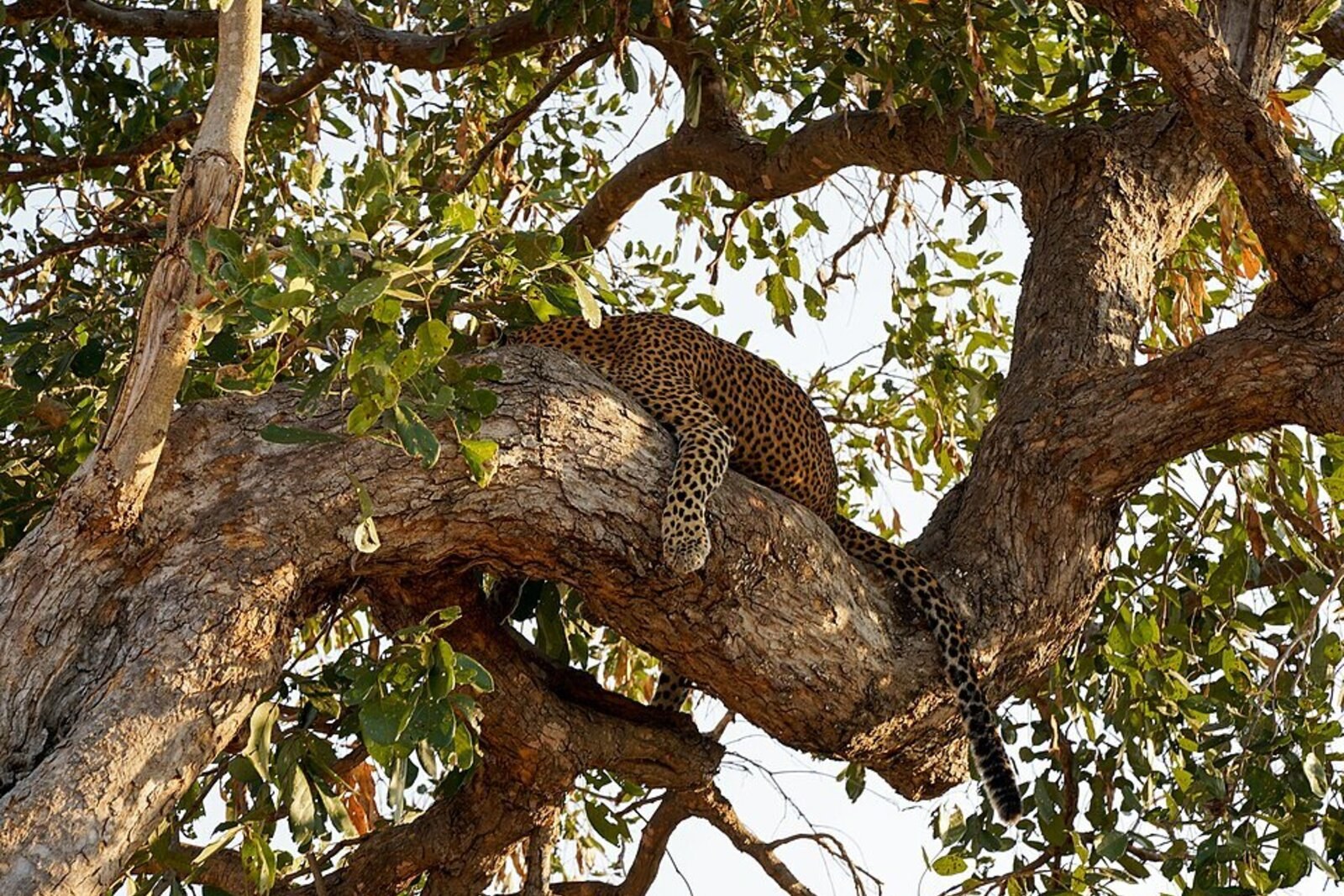
Zambia is the walking-safari capital of the world. It is the land of the leopard-rich Luangwa Valley, of canoe trails on the great Zambezi, of the secret Busanga Plains where lions hunt red lechwe on floodplains that feel like the last place on Earth. And, crucially, it is one of Africa’s most rewarding value safari destinations — a country where the dream of a genuine bush experience is genuinely attainable on a modest budget.
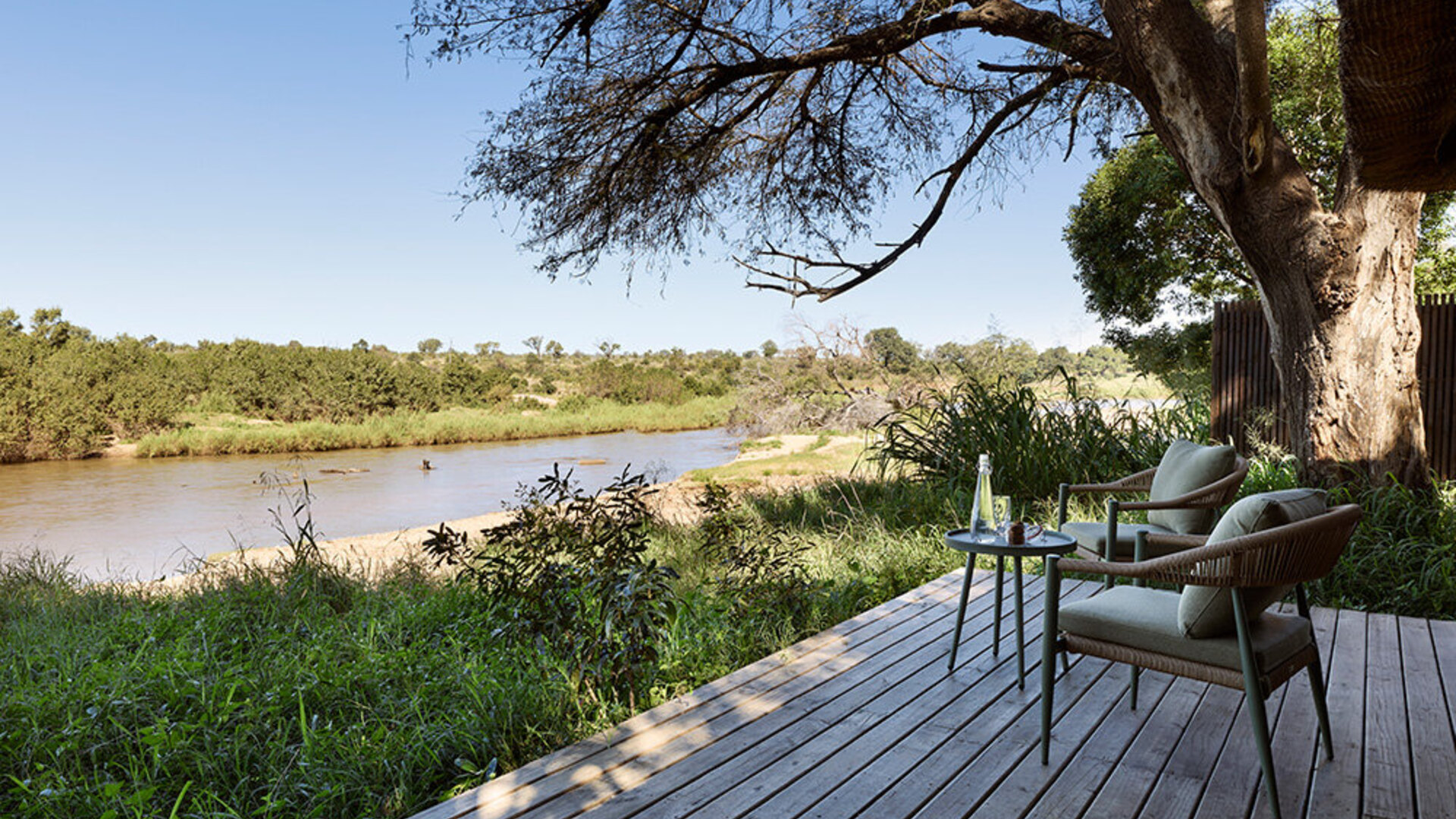
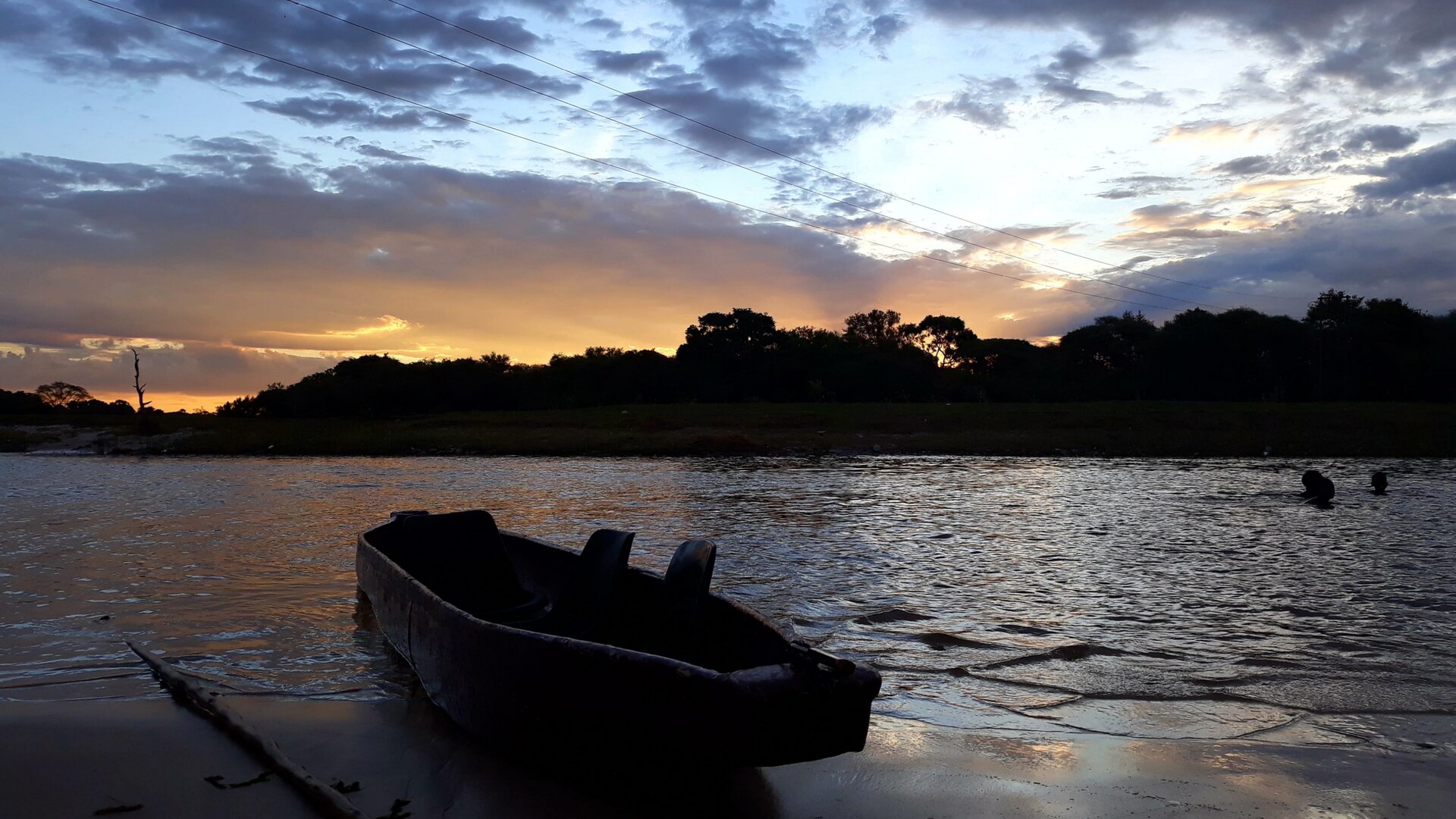
This is not a compromise. It is the whole point. Zambia built its safari reputation on intimate, owner-run camps that prize guiding quality over marble bathrooms. Where Botswana prices most travelers out and the ultra-luxury Luangwa camps charge $1,500 a night, Zambia offers a deep bench of comfortable, well-run lodges from as little as $150 per person per night. The leopard does not know the difference. The walking safari is the same. The Luangwa River reflects the same sunset whether you are watching it from a $200 deck or a $2,000 one.
This guide walks you through the best affordable safari lodges in Zambia, from the leopard-rich Mfuwe sector of South Luangwa to the canoe trails of the Lower Zambezi, the vast Busanga Plains of Kafue and the riverside camps that make Zambia one of Africa’s last great affordable frontiers. We explain the value tiers, decode the green season opportunity, and match you to the lodge that fits your style and your budget. By the end, you will know exactly how to experience Zambia without the ultra-luxury price tag — and why, in the country that invented the walking safari, that is a very good idea.
Understanding Value in Zambia — Why It Is Africa’s Affordable Walking-Safari Capital
Zambia’s safari model is fundamentally different from the high-volume, large-lodge approach of Kenya or the high-price, low-volume model of Botswana. Zambia has vast, under-visited national parks — South Luangwa, the Lower Zambezi, Kafue — served by a mix of owner-run camps, community-partnership lodges and established groups that keep prices competitive. Properties tend to be small (8 to 20 rooms), guiding quality is among the best in Africa, and the country’s relative anonymity keeps demand manageable and prices honest.
Value in Zambia clusters in three places:
- The Mfuwe sector of South Luangwa, where a cluster of road-accessible lodges near the main gate delivers the full Luangwa experience — leopards, walking safaris, night drives — at a fraction of what the remote bush camps charge
- The green season (November–April), when discounts of 30–40% bring even the best lodges within reach, the bush is emerald-green, and the birding is extraordinary
- Kafue National Park, Africa’s second-largest park and one of its most under-visited, where small camps offer genuine wilderness at genuinely affordable rates
Affordable in Zambia means $150 to $550 per person per night, all-inclusive — covering meals, drinks, twice-daily game activities and, in the Luangwa, the walking safaris that are the country’s signature experience. For that, you get access to some of the richest wildlife areas on Earth, guided by some of the continent’s finest safari guides. Zambia proves that the safari of a lifetime does not have to cost a lifetime of savings.
Best Affordable Safari Lodges in Zambia — Our Top 15
South Luangwa National Park — The Leopard Valley
Mfuwe Lodge
Location: Mfuwe sector, inside South Luangwa National Park
Rates: ~$350–550 per person per night all-inclusive (green season from $280)
Why affordable: Established group lodge inside the park at mid-range rates
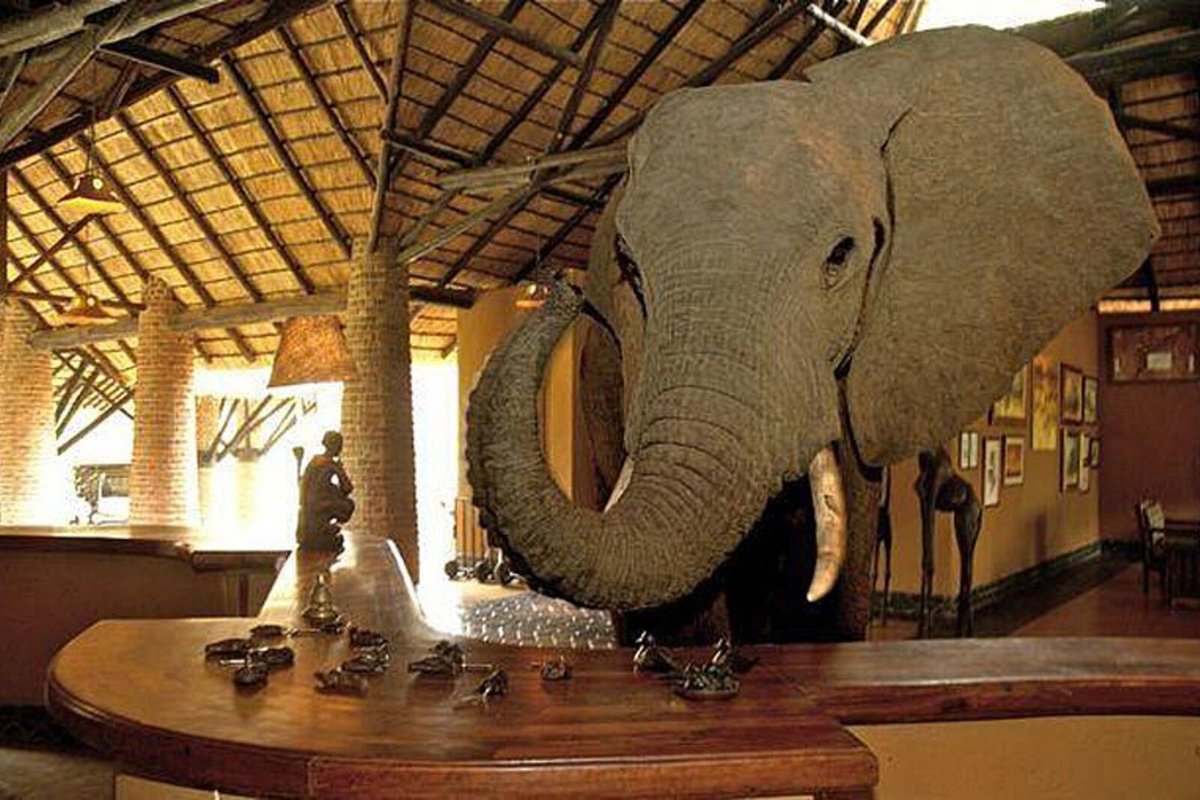
Wildlife: Famous elephants walking through the lobby, leopards, wild dogs, lion prides
Best for: First-timers who want to be inside the park, the famous elephant lobby walk
When to go: May–October for dry season; November for the carmine bee-eater colony
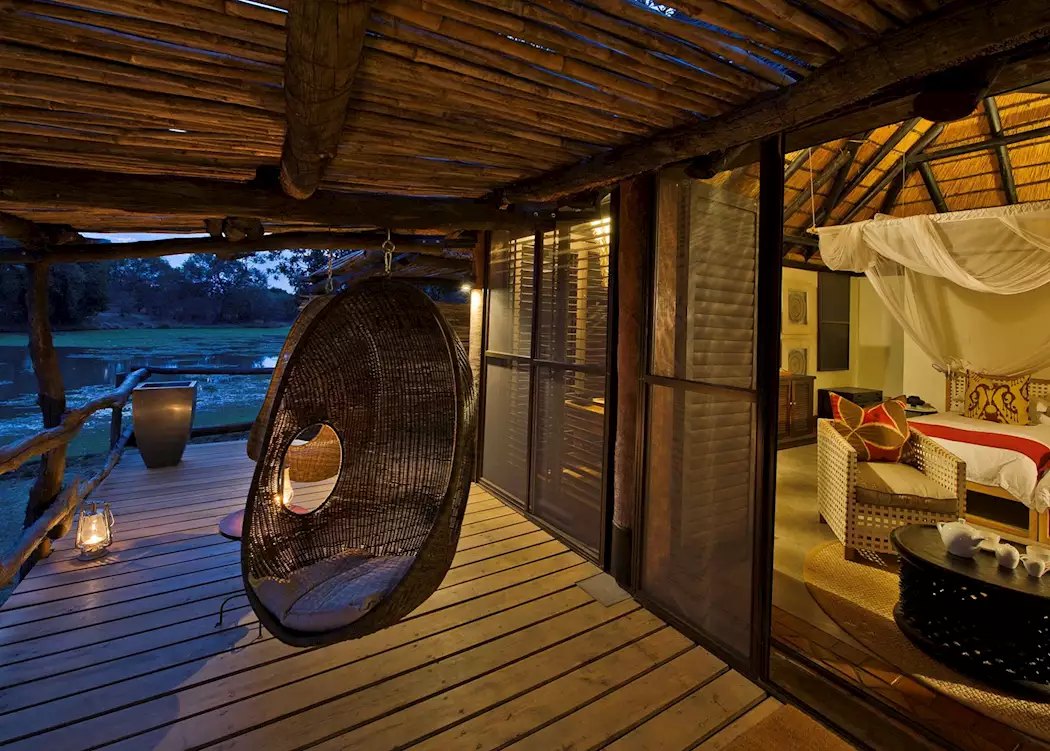
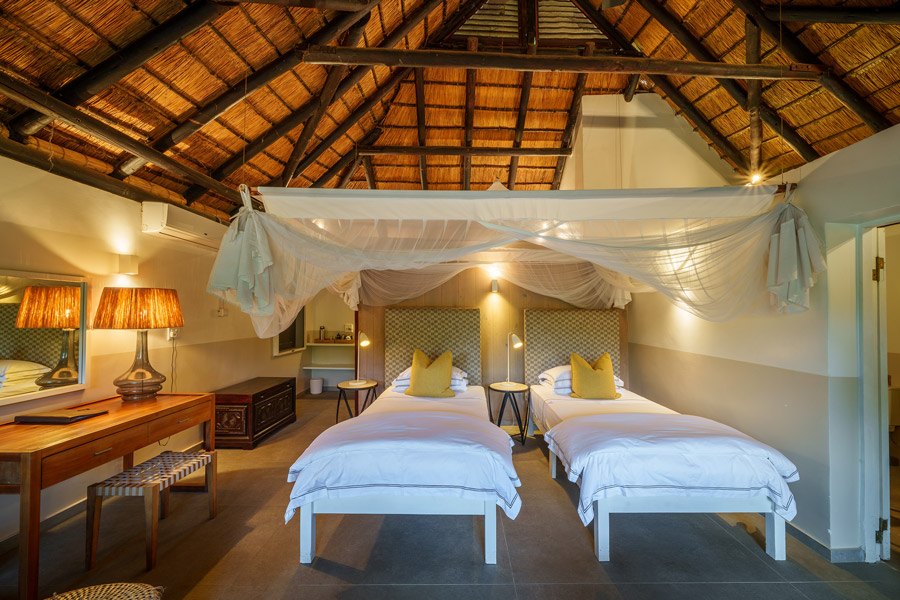
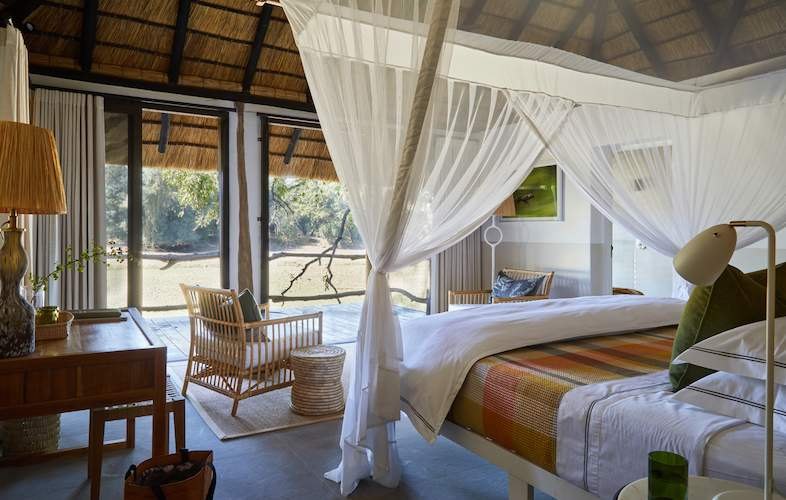
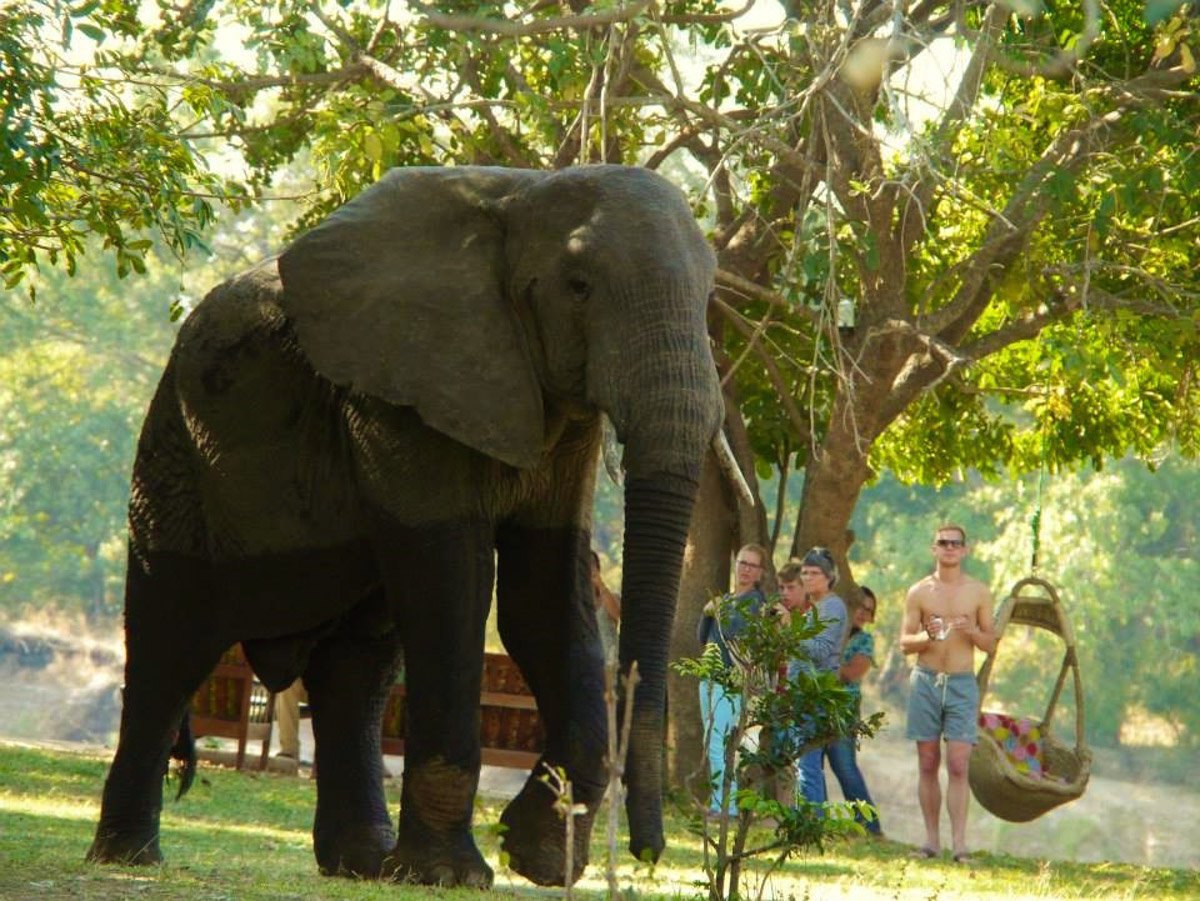
Mfuwe Lodge is the most famous lodge in South Luangwa, and for good reason. Built around a lagoon where elephants come to drink — and, famously, walk right through the reception area to reach a mango tree — it sits inside the park in the productive Mfuwe sector. The lodge is comfortable and well-run, with spacious rooms overlooking the lagoon, a pool, and excellent guiding into the leopard-rich riverine forest. At $350–550 per person, it delivers a genuine in-park Luangwa experience at a fraction of what the remote bush camps charge. The green season rate of $280 makes this one of the best-value in-park lodges in all of southern Africa.
Flatdogs Camp
Location: Mfuwe area, just outside South Luangwa main gate
Rates: ~$200–350 per person per night all-inclusive (room-only from $60)
Why affordable: Flexible pricing — room-only, half-board or full safari packages
Wildlife: Full Luangwa access, unfenced camp with wildlife wandering through
Best for: Budget-conscious travelers, self-drivers, flexible itinerary builders
When to go: Year-round; May–October for dry season game drives
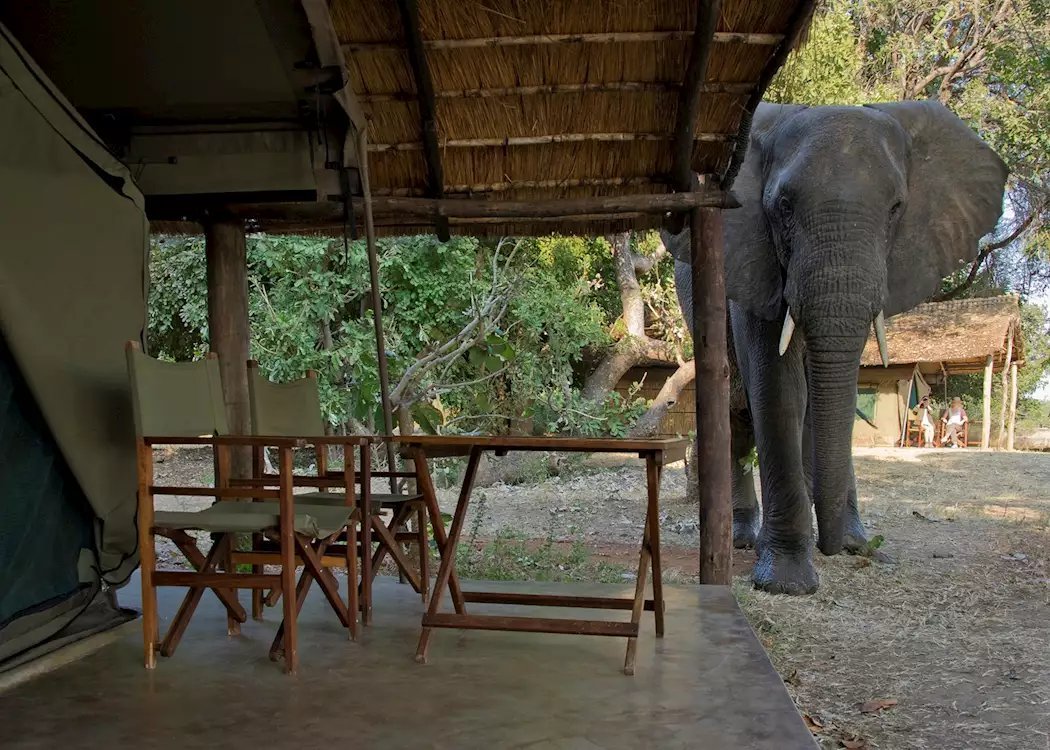
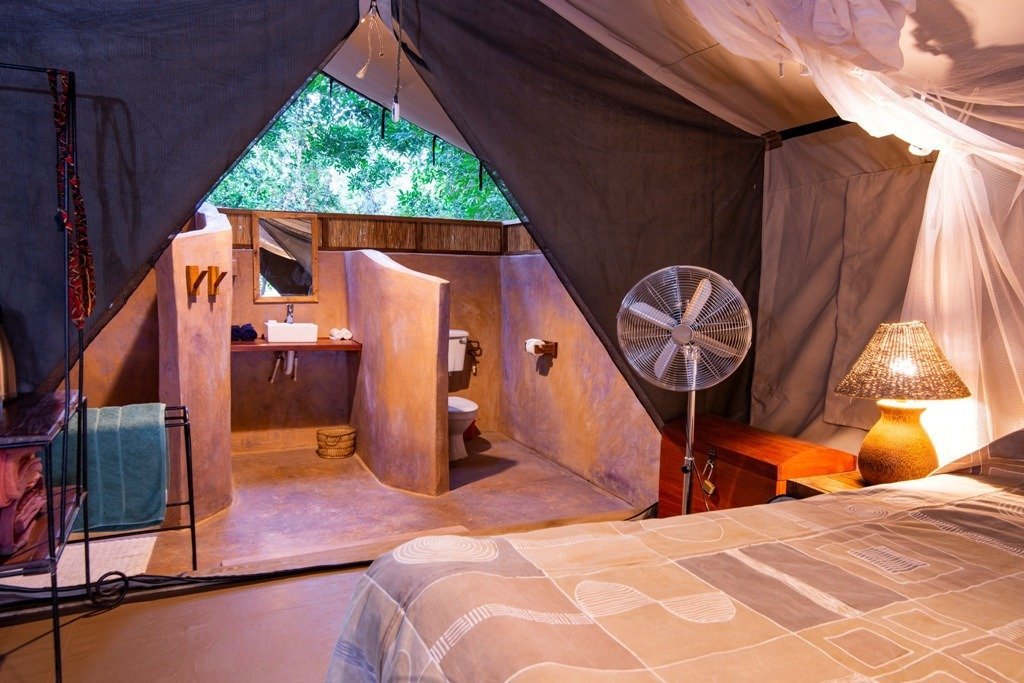
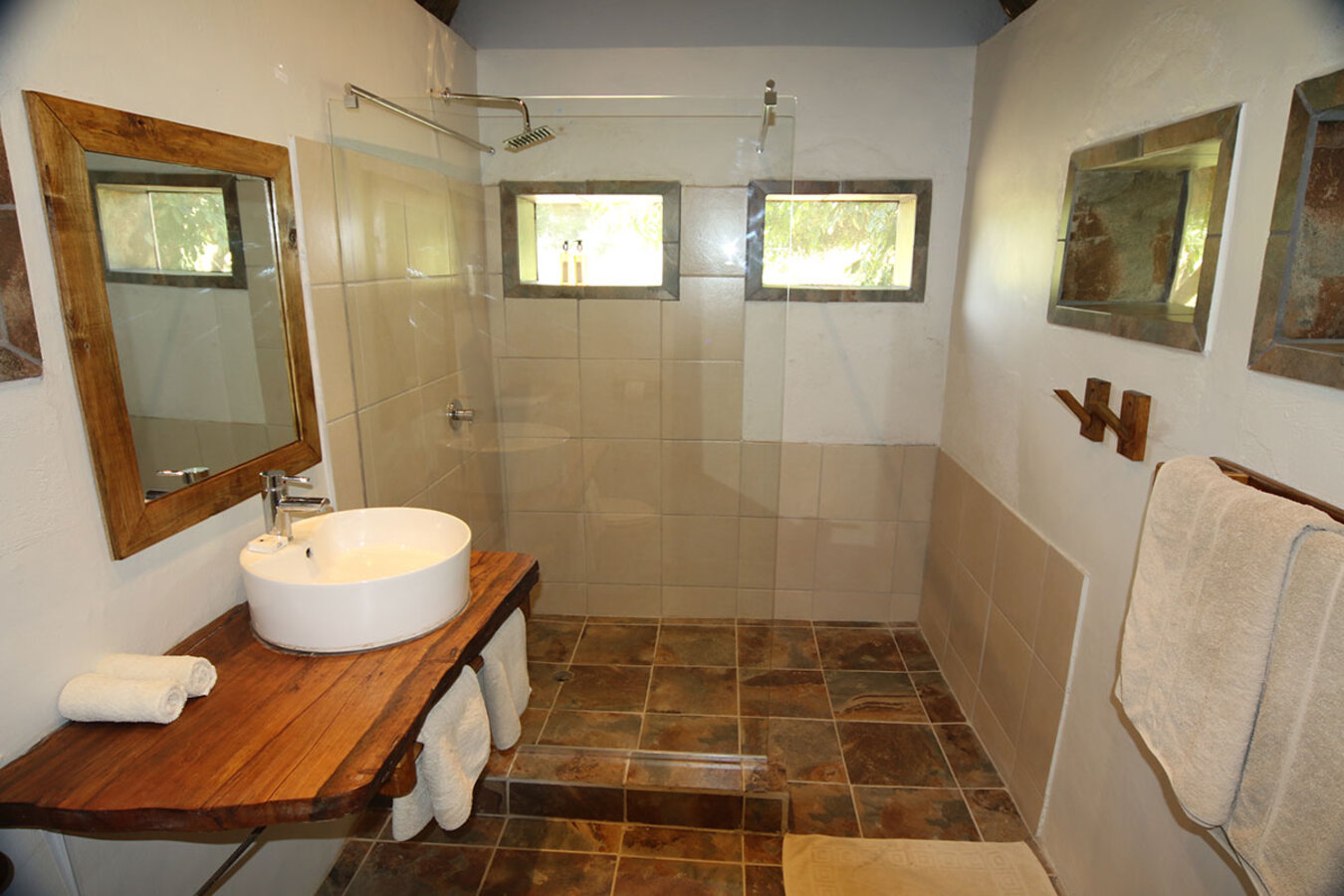
Flatdogs is the darling of the South Luangwa value scene — the first Fair Trade Tourism certified camp in Zambia, and a property that proves you can sleep on the doorstep of one of Africa’s great parks without spending a fortune. The camp offers everything from simple safari tents to the luxurious Crocodile Nest and Jackalberry Treehouse, and the genius of the model is flexibility: you can book room-only from $60 per person and add game drives individually, or take a full all-inclusive package. The camp is unfenced, so elephants and hippos wander through the grounds, and the guiding into the park is excellent. At $200–350 all-inclusive, Flatdogs is the most accessible way into the Luangwa.
Track & Trail River Camp
Location: Luangwa River, near Mfuwe Bridge
Rates: ~$280–450 per person per night all-inclusive
Why affordable: Well-run riverside camp with strong inclusions at mid-range rates
Wildlife: Luangwa leopards, elephants at the river, walking safaris available
Best for: Couples and photographers wanting a river setting on a budget
When to go: May–October for dry season; green season for value
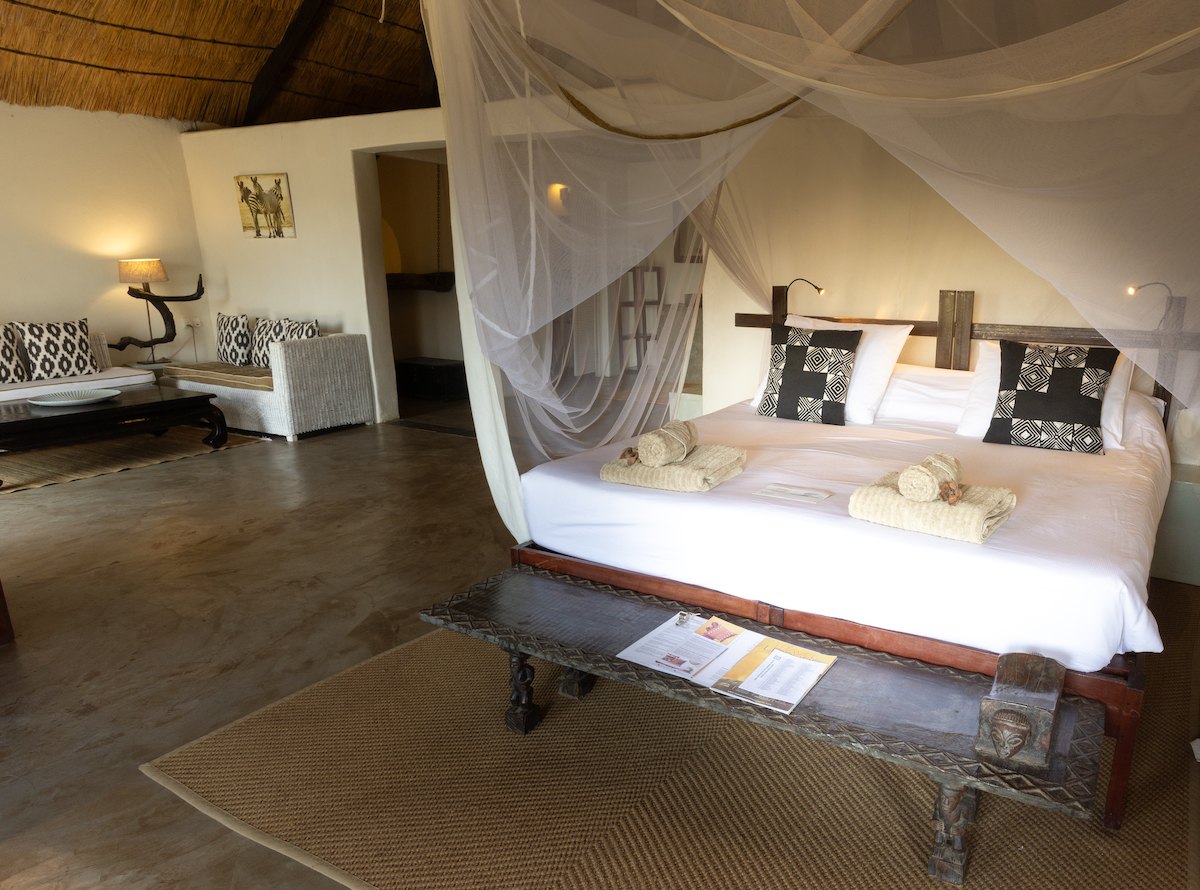
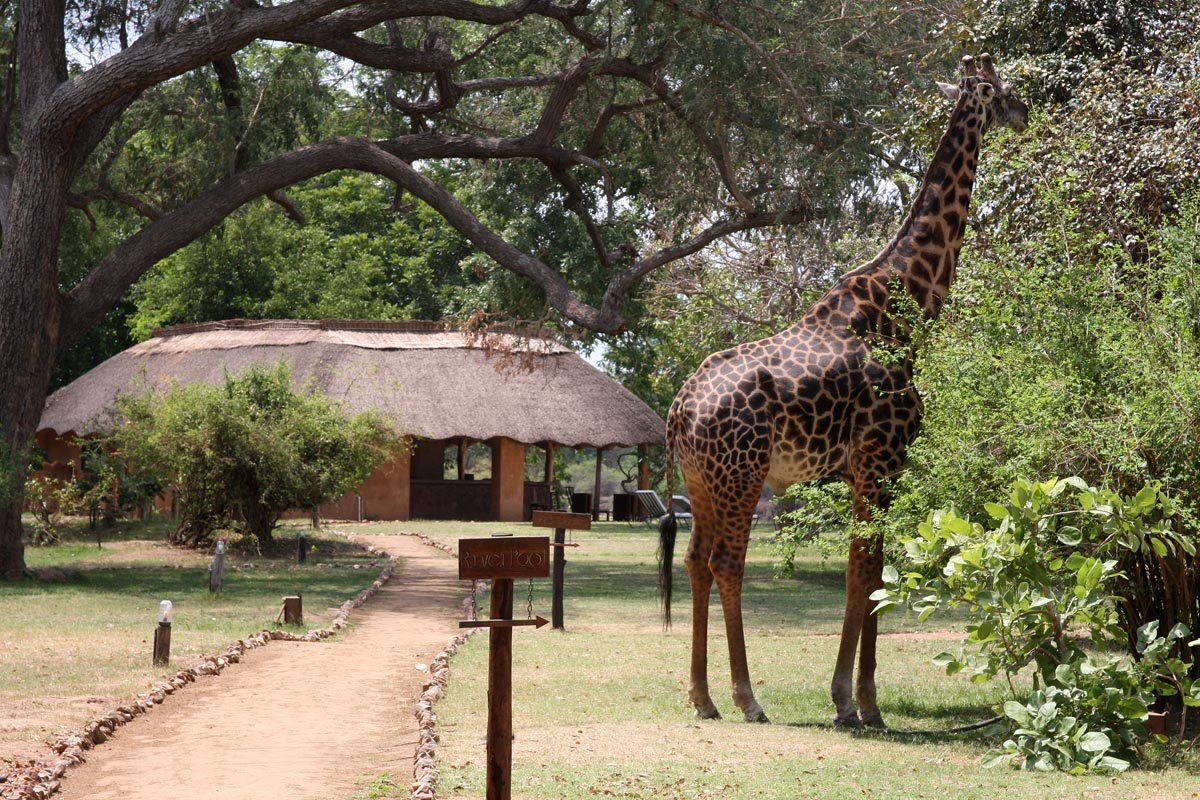
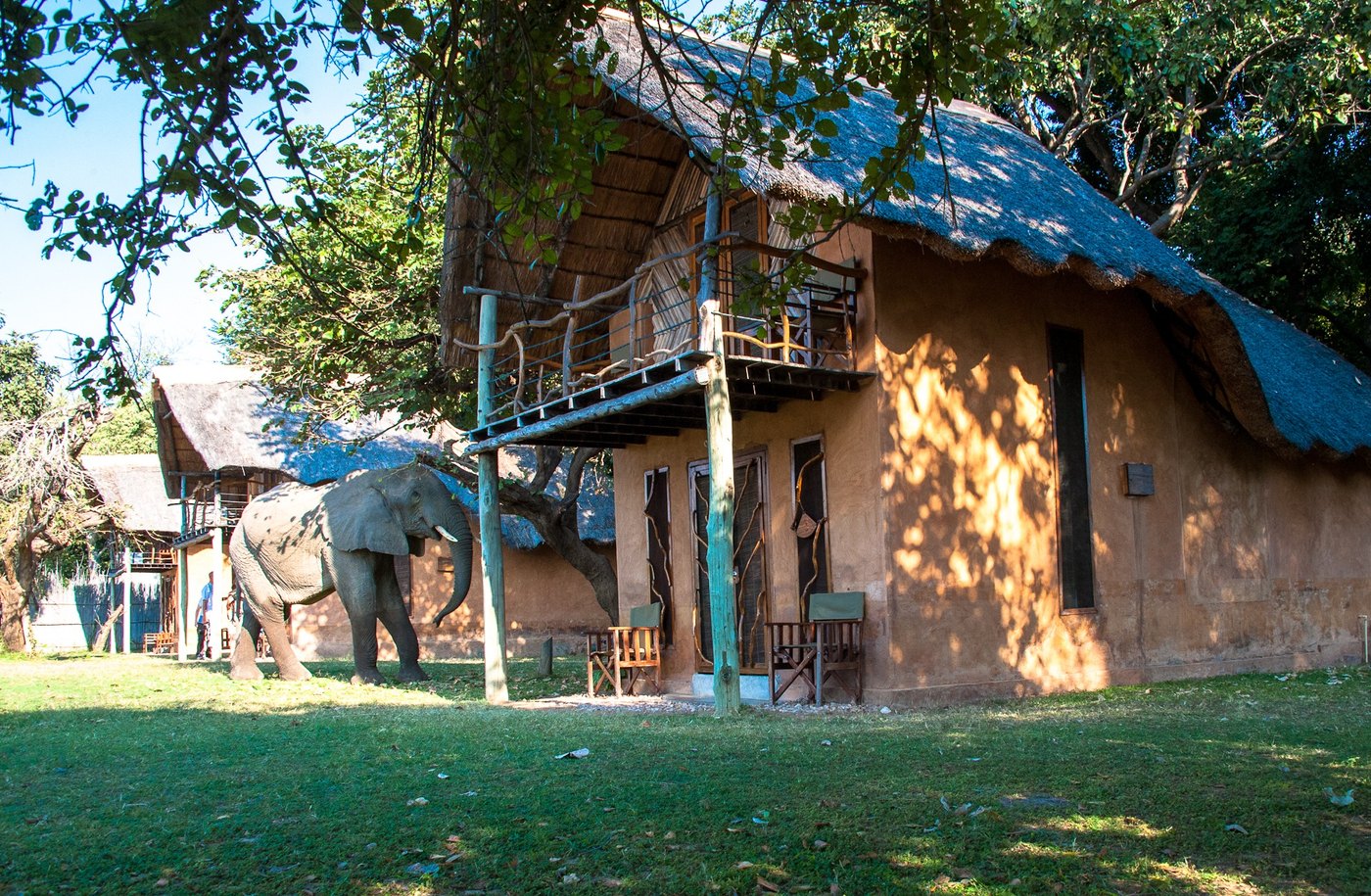
Track & Trail sits on the Luangwa River in a beautiful setting of ebony and mahogany forest, its chalets raised on stilts above the riverbank with hippos wallowing below. This is a comfortable, well-run mid-range camp with a pool, good food and professional guiding into the park. The river setting means the game viewing starts before you leave the lodge — elephants cross at dawn, kingfishers dive at breakfast, and the sunset light on the water is spectacular. At $280–450 per person, Track & Trail delivers the Luangwa riverside experience at a rate the private bush camps cannot match.
Wildlife Camp
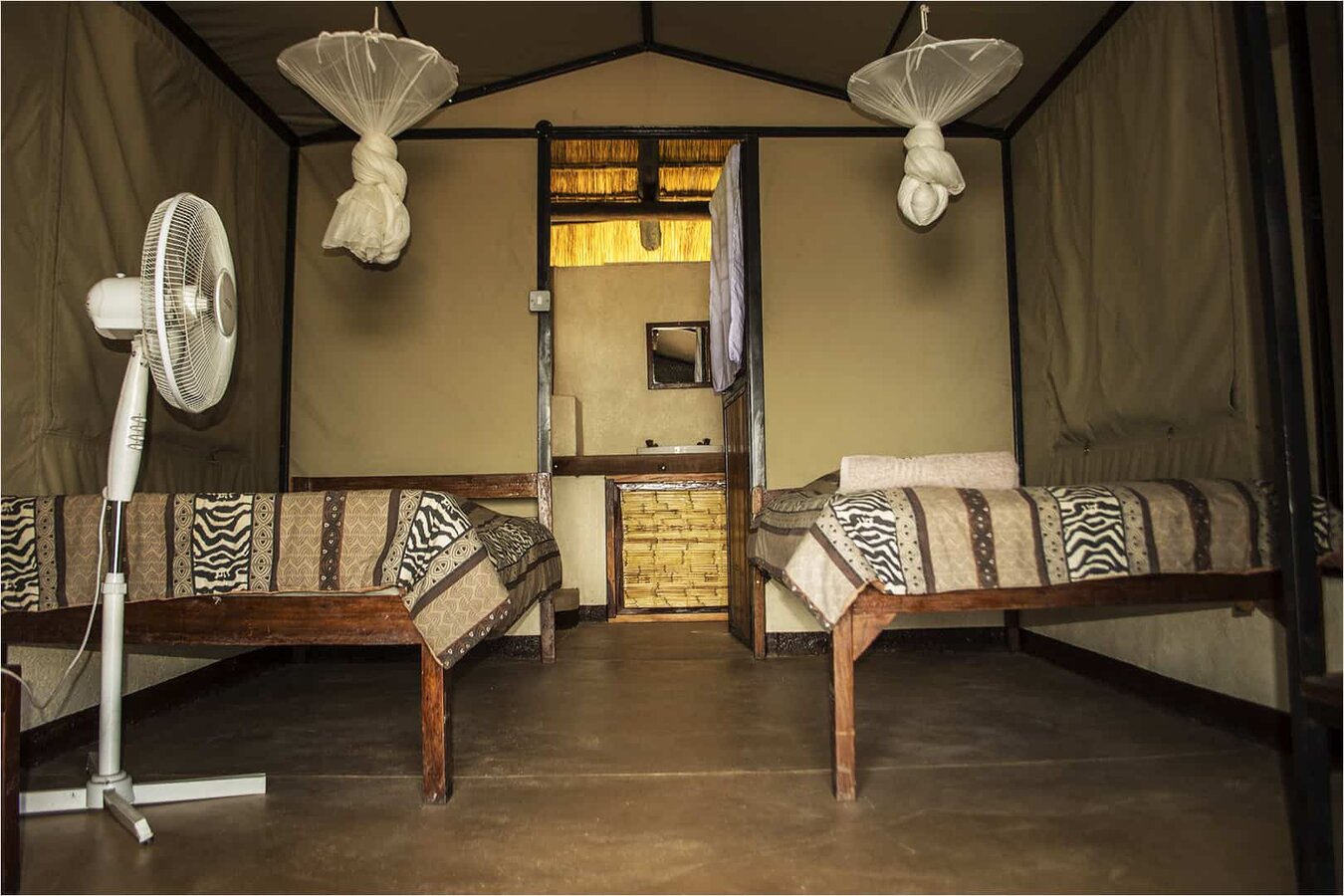
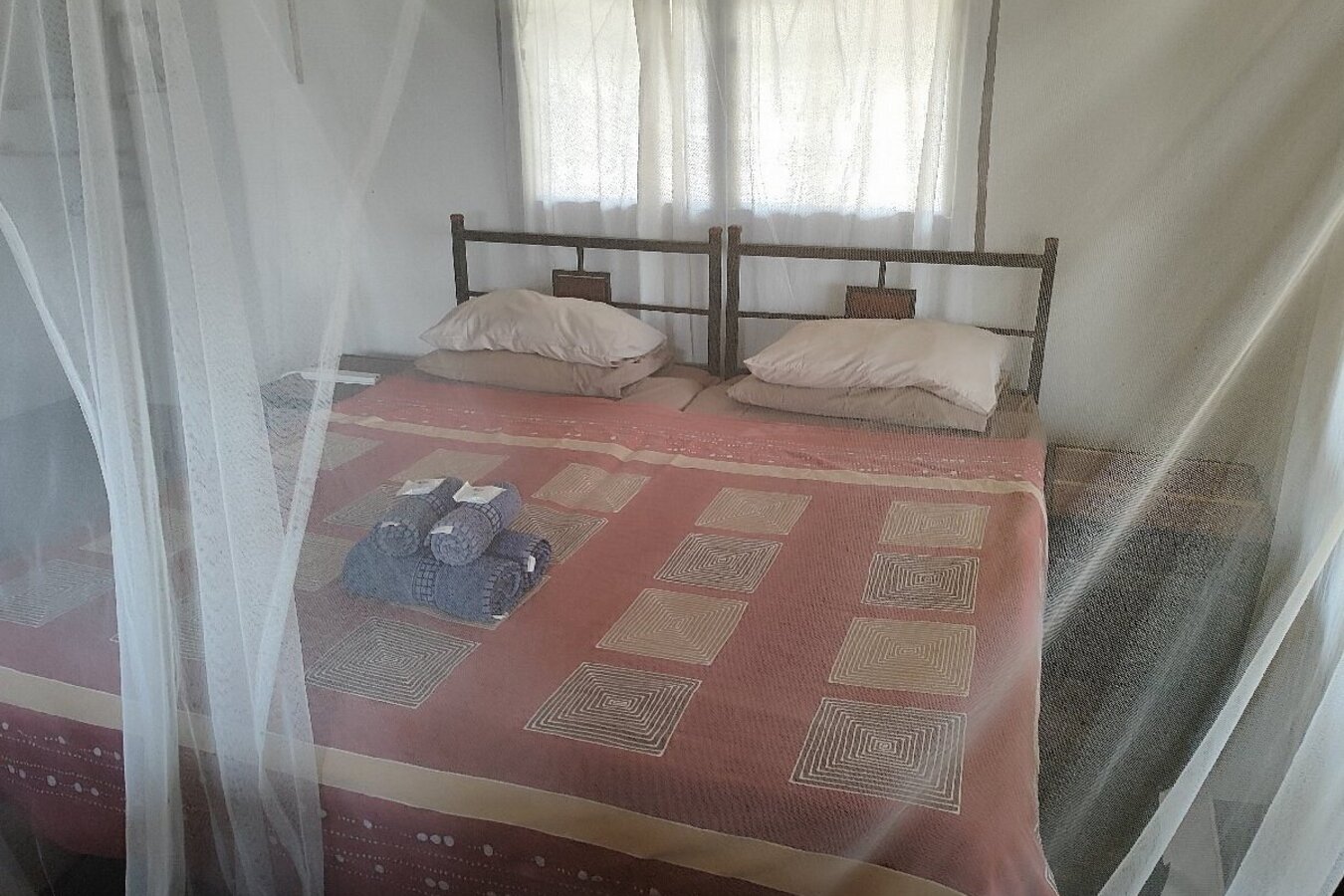
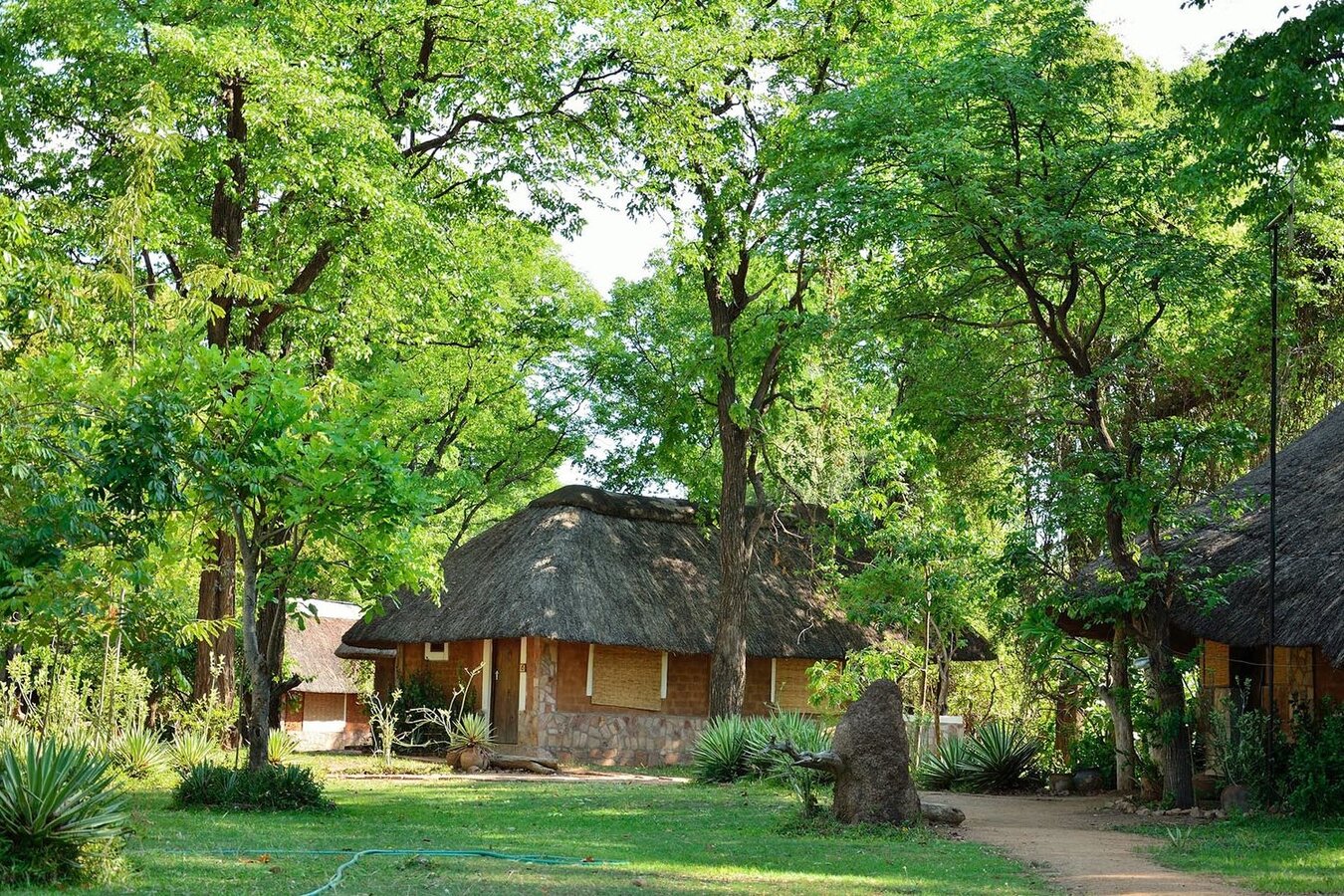
Location: Luangwa River, just outside South Luangwa main gate
Rates: ~$155–325 per person per night full-board (safari tents from $155, chalets from $205 green season)
Why affordable: Budget-to-mid lodge with camping, tents and chalets at the lowest full-board rates in the valley
Wildlife: Full South Luangwa access, riverside game viewing
Best for: Budget travelers, backpackers, families with flexible budgets
When to go: Year-round; green season for the lowest rates
Wildlife Camp is the most affordable full-board option on the Luangwa River, offering comfortable chalets, safari tents and camping pitches on a riverfront site just outside the main gate. The camp is unfussy but well-run, with generous meals, a pool and a warm, sociable atmosphere that draws a mix of first-timers and returning guests. Green season rates start at just $155 per person in a safari tent, full board included — one of the lowest genuine all-inclusive rates in any of Africa’s great national parks. At $155–325 per person, Wildlife Camp is the entry point to the Luangwa for travelers who want to spend on the experience, not the accommodation.
Marula Lodge
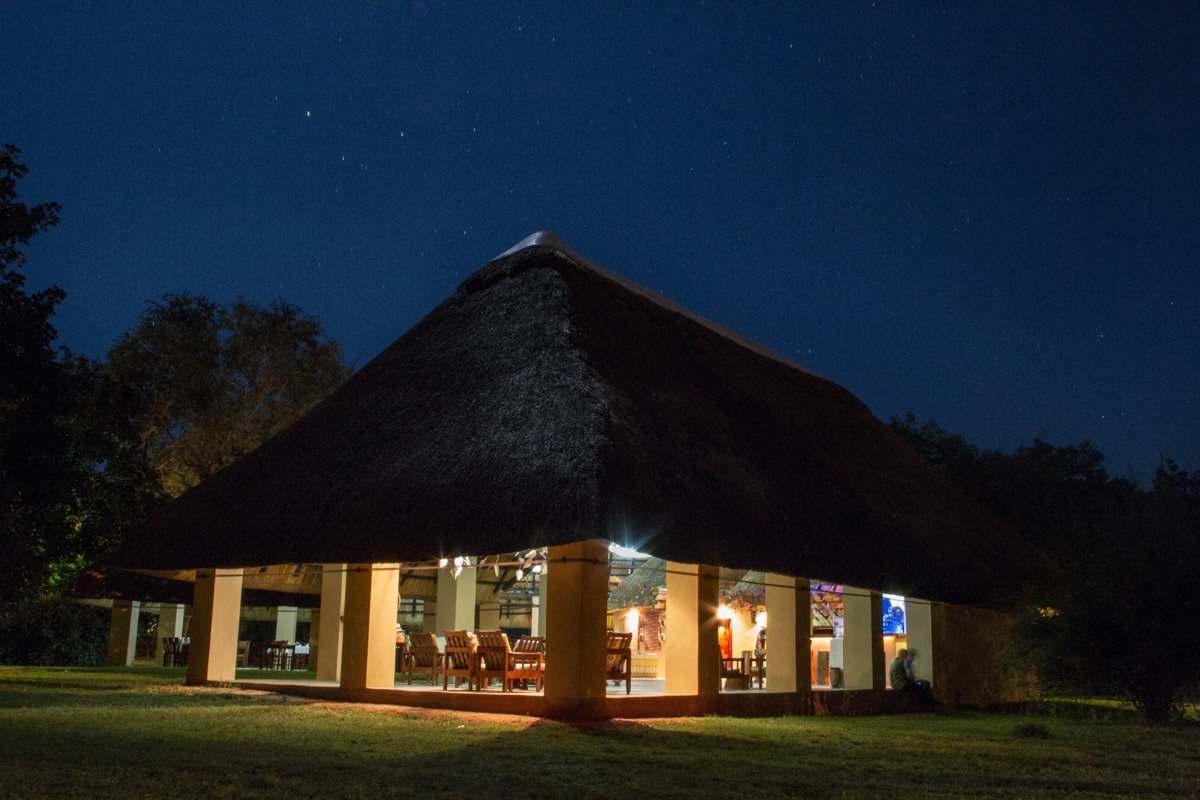
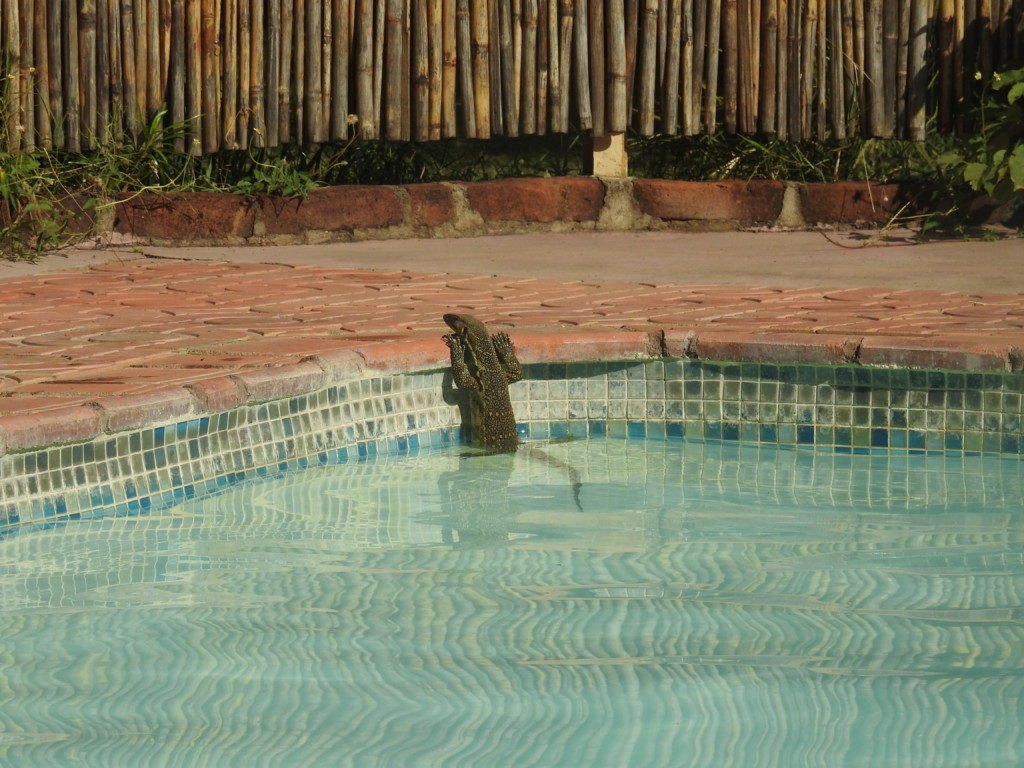
Location: Mfuwe area, near South Luangwa main gate
Rates: ~$250–400 per person per night all-inclusive
Why affordable: Comfortable lodge with a pool and gardens at fair mid-range rates
Wildlife: Full South Luangwa access, walking safaris, night drives
Best for: Couples and families who want comfort without the premium
When to go: May–October for dry season; green season for birding and value
Marula Lodge is a comfortable, unpretentious mid-range property in the Mfuwe area, set in shady gardens with a pool and well-appointed thatched chalets. The lodge offers good food, professional guiding and a warm, welcoming atmosphere. It sits at the heart of the Mfuwe cluster, which means easy access to the park’s main gate and the productive game-drive loops where the leopards, elephants and wild dogs concentrate. At $250–400 per person, Marula Lodge is the sweet spot between budget camp and boutique lodge — comfortable, honest, and genuinely good value for the Luangwa.
Kafunta River Lodge
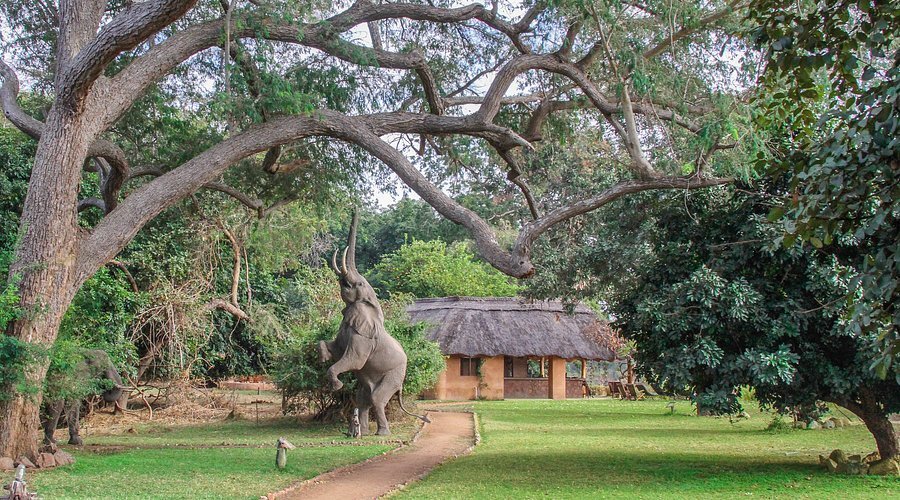
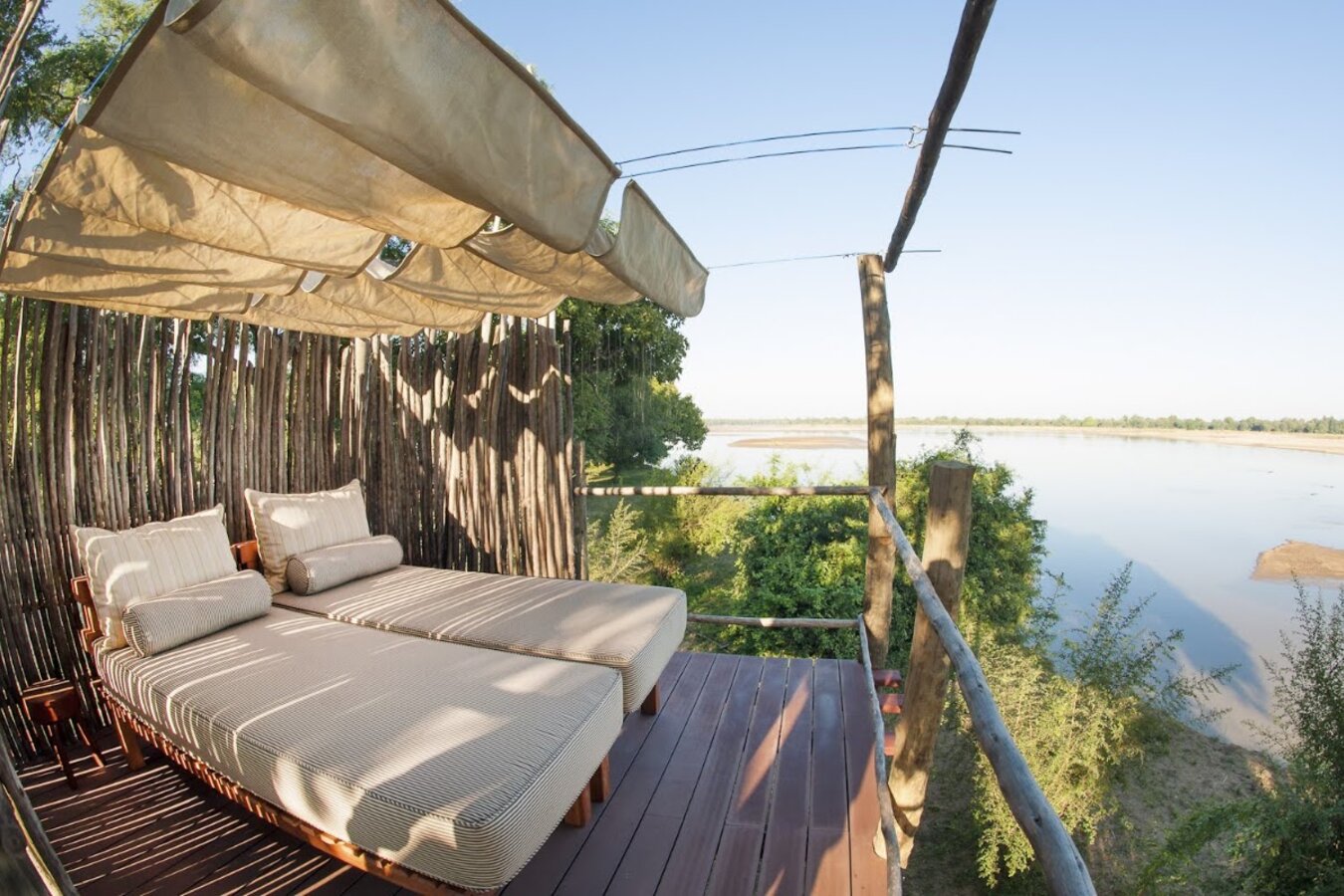
Location: Luangwa River, inside the park boundary
Rates: ~$470–710 per person per night all-inclusive (long-stay and green season from $470)
Why affordable: Owner-run lodge with long-stay discounts and multi-camp itineraries
Wildlife: Leopard, wild dog, lion, walking safaris, night drives
Best for: Travelers who want owner-run guiding at accessible-luxury rates
When to go: May–October for the dry season; green season for value and birding
Kafunta sits on the Luangwa River inside the park, a beautifully run owner-operated lodge with superb guiding, comfortable rooms and a warm, personal atmosphere. The lodge runs its own fleet of vehicles and guides, and the quality of the game drives and walking safaris is consistently excellent. Kafunta also operates three bush camps in the wider Luangwa system, and multi-camp itineraries bring the per-night cost down significantly. At the top of the affordable range at $470–710 per person, Kafunta delivers an intimate, owner-run experience that rivals lodges charging twice as much — and the green season and long-stay rates make it genuinely accessible.
Nkwali Camp
Location: West bank of the Luangwa River, overlooking South Luangwa National Park
Rates: ~$525–795 per person per night all-inclusive (emerald season from $525)
Why affordable: Robin Pope’s flagship at accessible-luxury rates rather than ultra-premium pricing
Wildlife: Leopard, wild dog, lion, elephants at the river, walking safaris
Best for: Travelers who want world-class guiding at the top of the value range
When to go: May–October for the dry season; emerald season for value
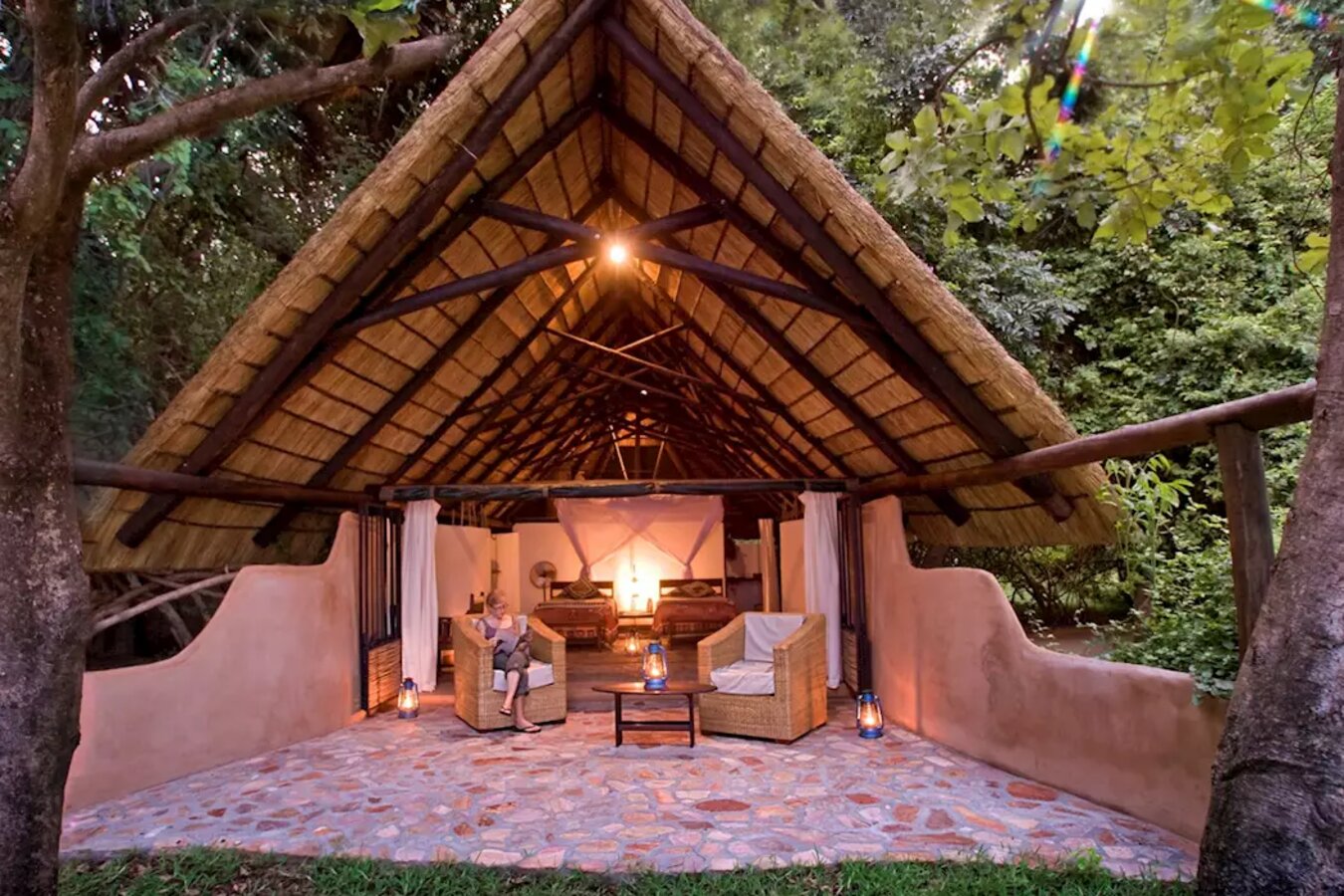
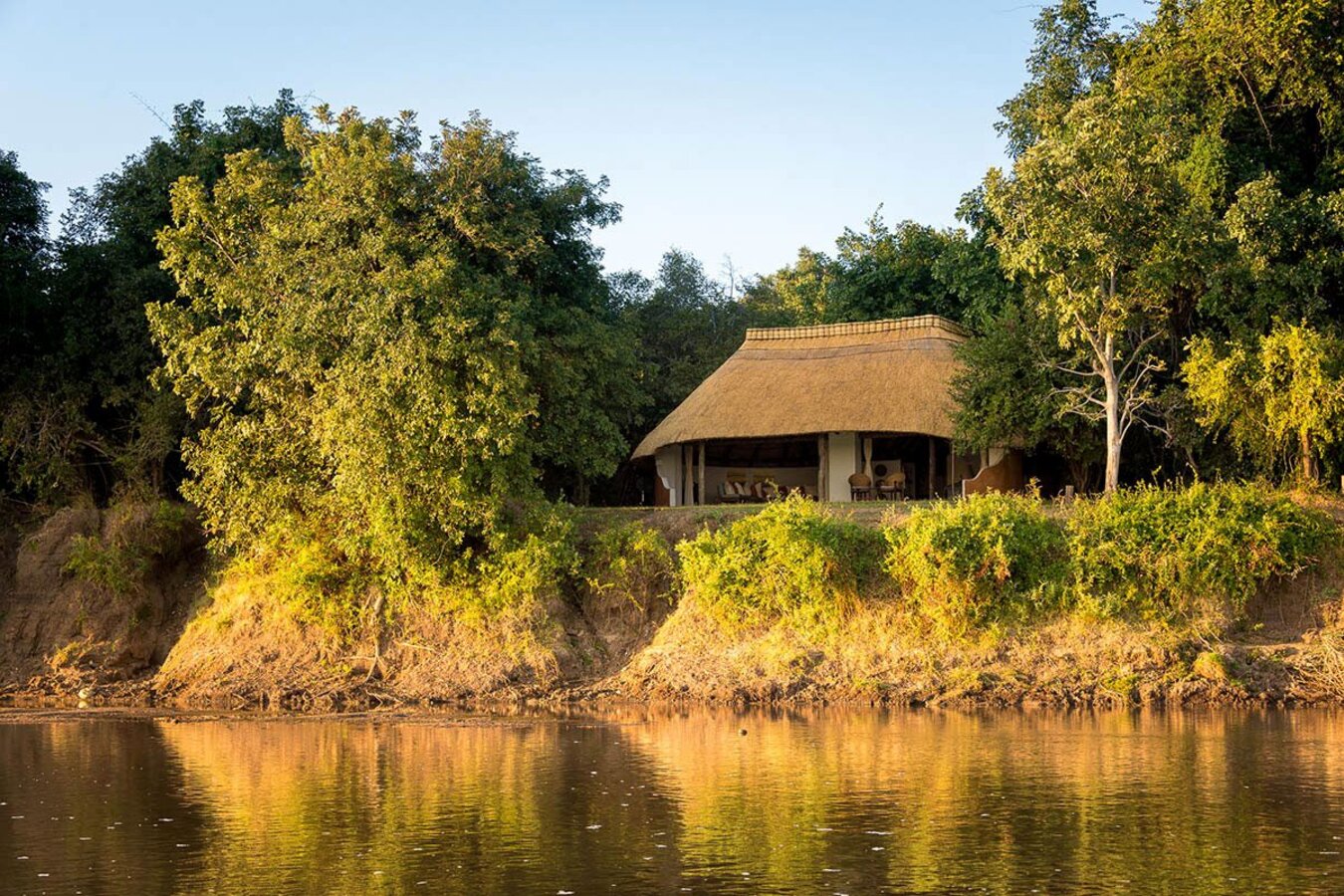
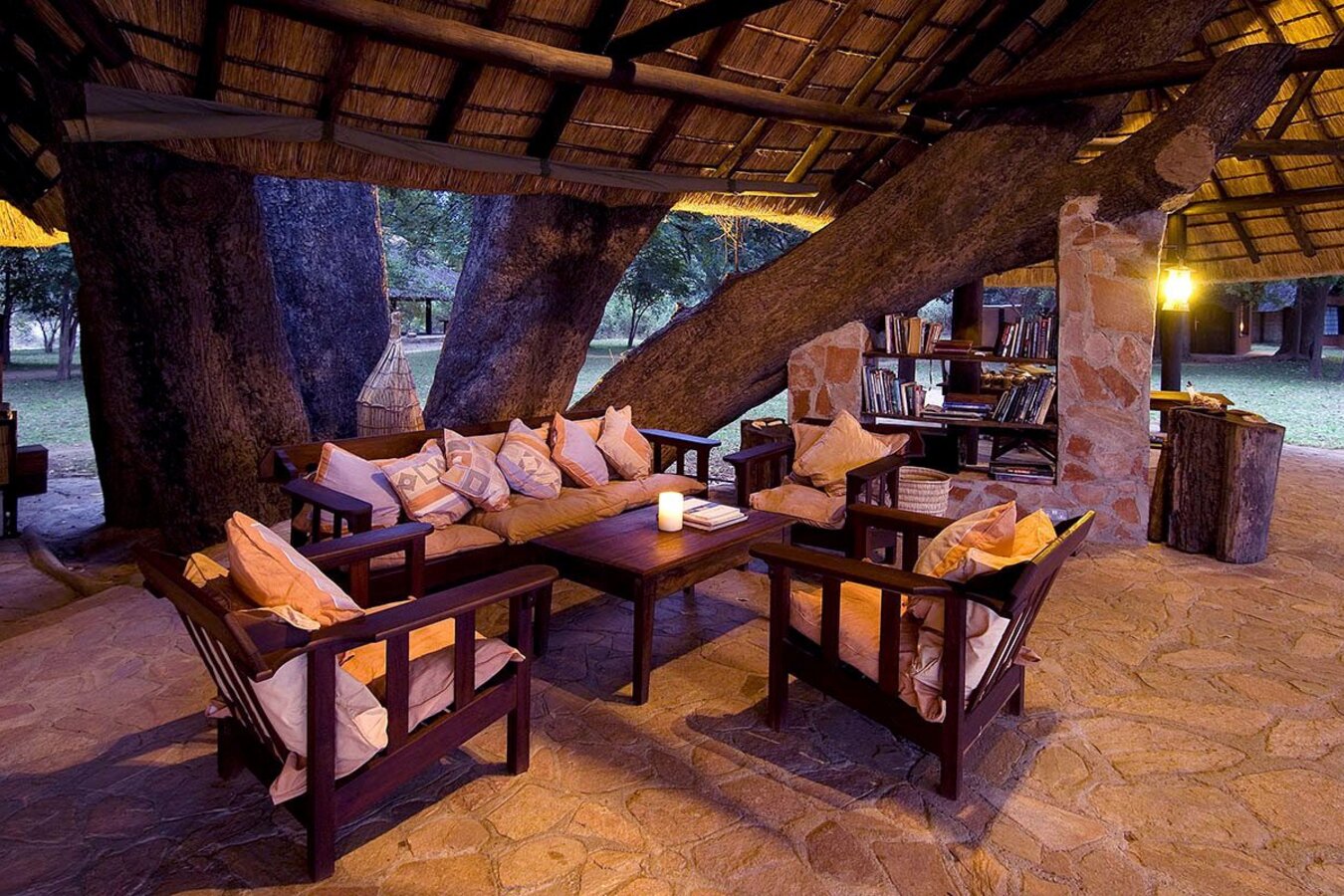
Nkwali Camp is the flagship of the Robin Pope Collection, one of the most respected safari operations in Africa. Set on the west bank of the Luangwa with open-fronted rooms looking straight into the national park, it offers an immediacy of bush experience that few camps can match — elephants graze past the rooms, leopards hunt on the floodplain at dusk, and the guiding is among the finest in the continent. At the top of the affordable range at $525–795 per person, Nkwali sits at the intersection of luxury and value — you are paying for world-class guiding and an intimate setting, not marble and champagne. The emerald season rate of $525 is exceptional value for a camp of this calibre.
Thornicroft Lodge
Location: Luangwa River, Mfuwe sector
Rates: ~$300–500 per person per night all-inclusive
Why affordable: Intimate riverside lodge at honest mid-range rates
Wildlife: Leopard, Thornicroft’s giraffe (endemic), wild dog, night drives
Best for: Wildlife enthusiasts seeking the endemic Thornicroft’s giraffe
When to go: May–October for peak game; green season for birding
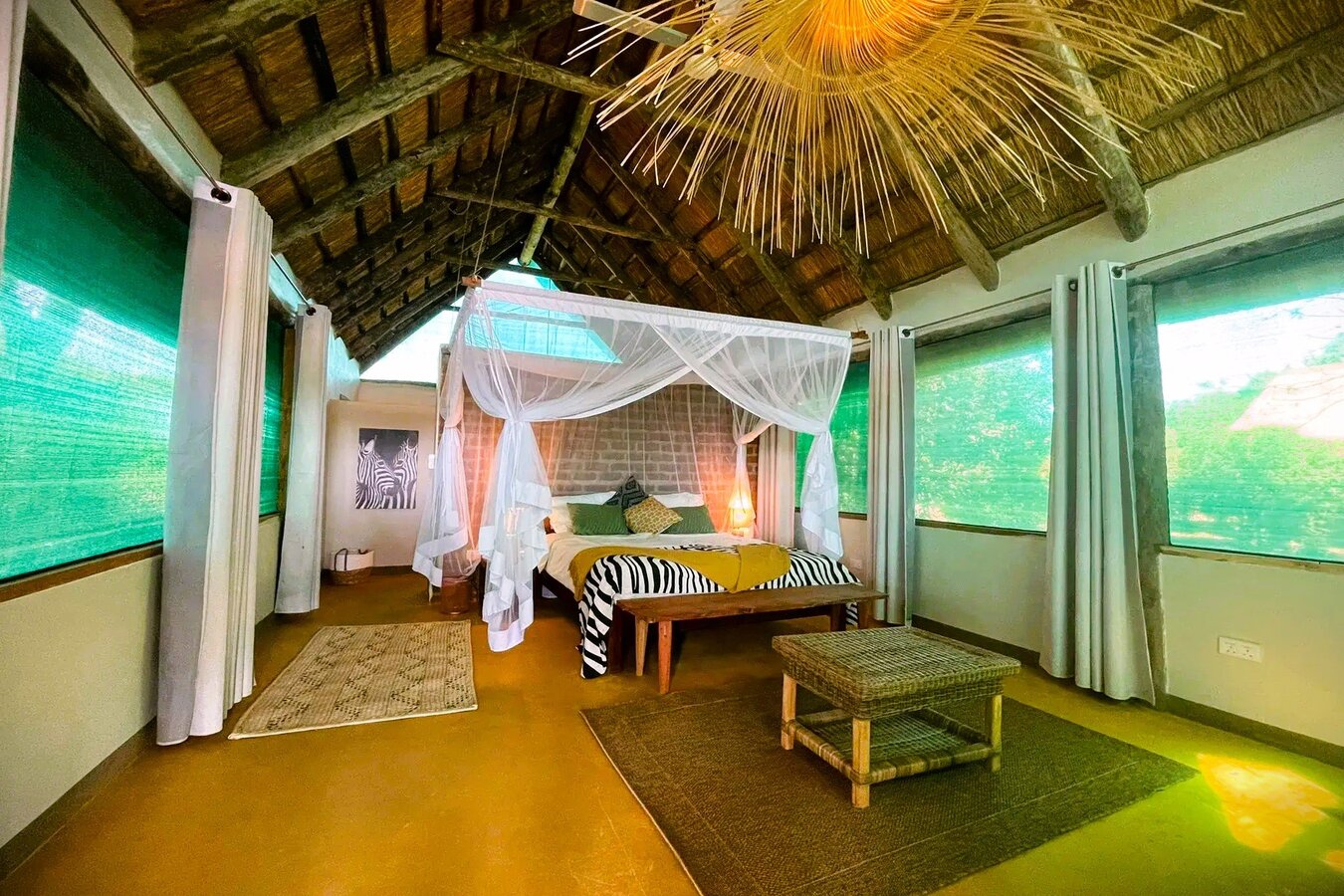
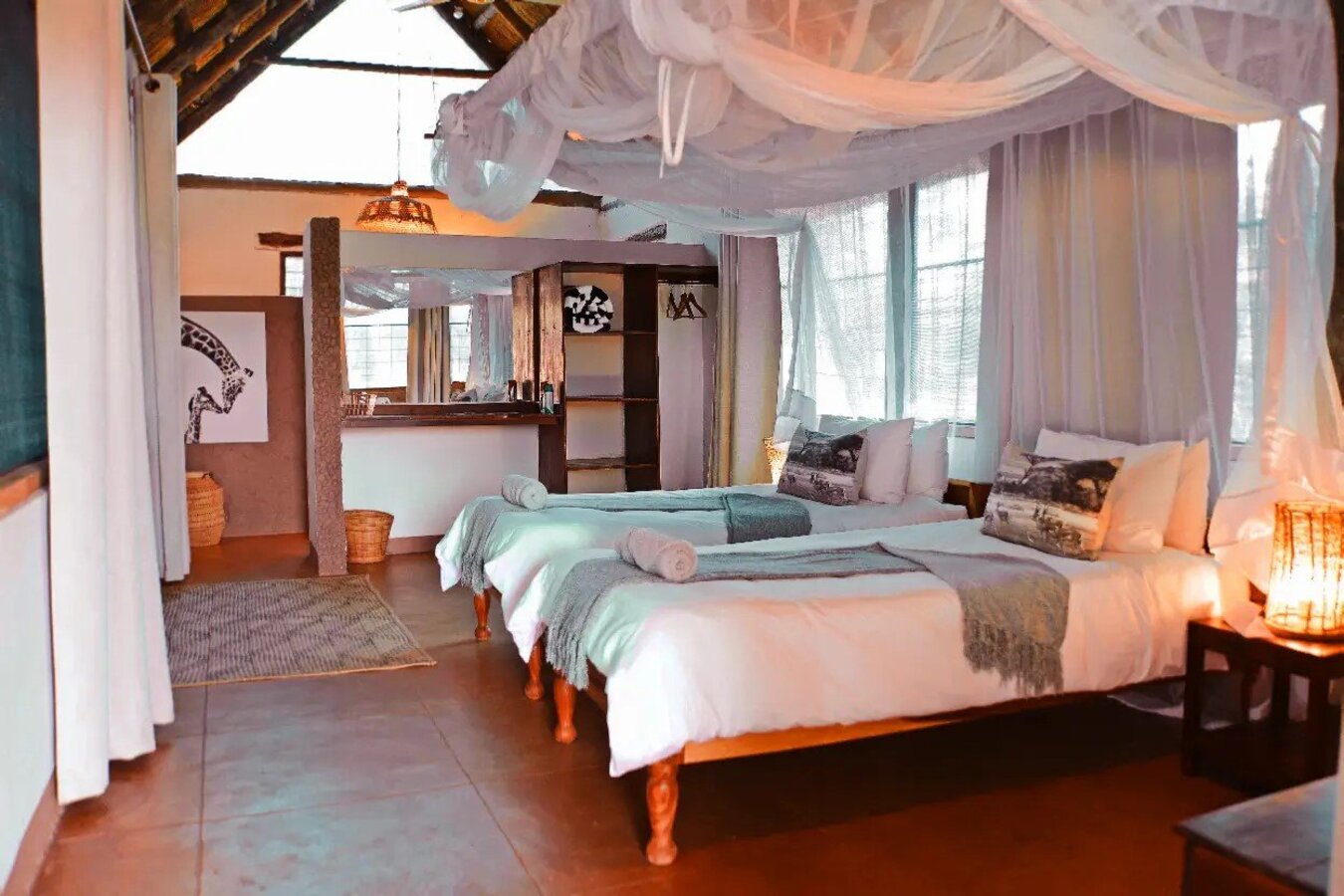
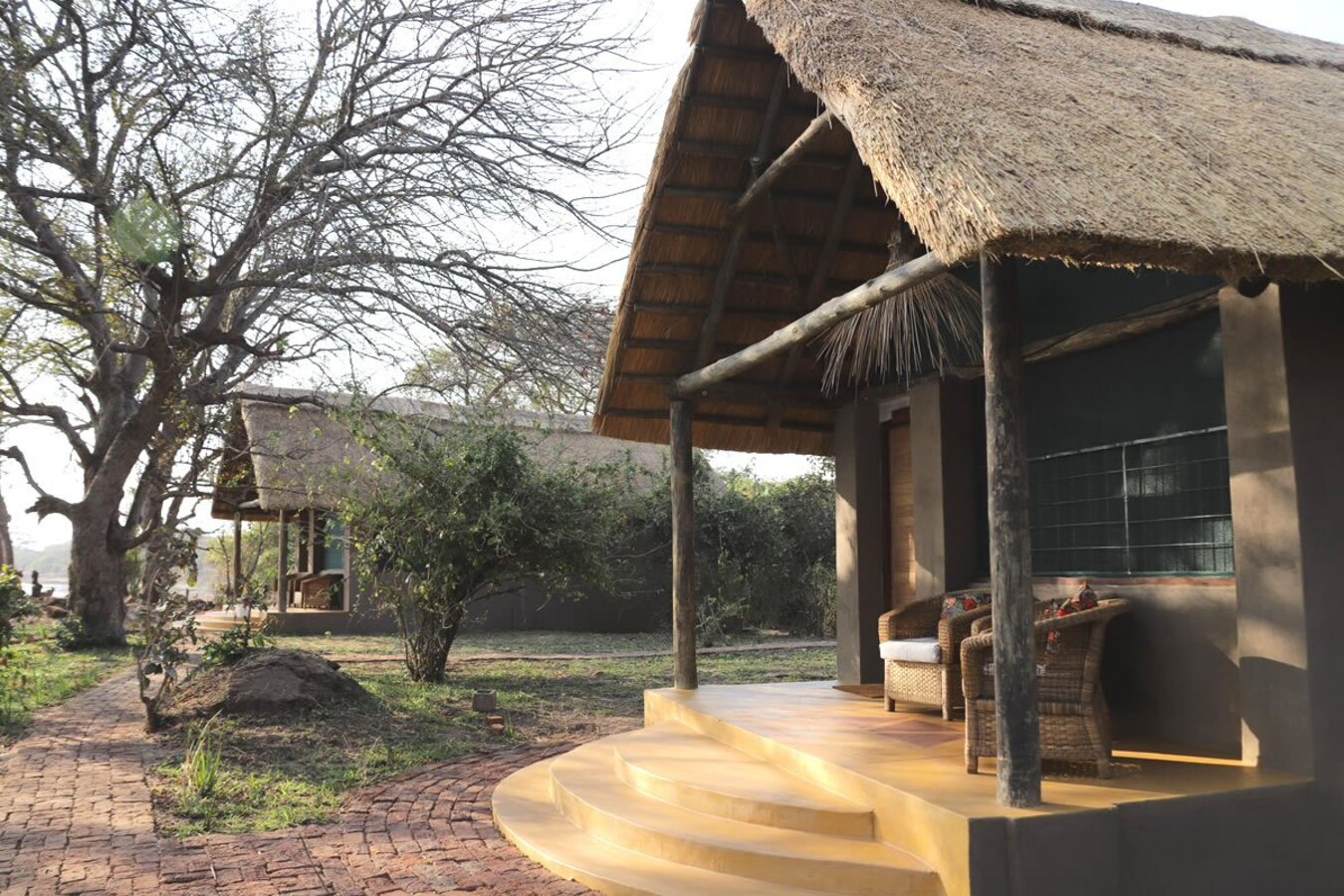
Thornicroft Lodge takes its name from the endemic Thornicroft’s giraffe, found nowhere else on Earth outside the South Luangwa Valley. The lodge sits on the Luangwa River in the Mfuwe sector, a small, quiet property with comfortable chalets, a pool and a personalised approach to guiding. The endemic giraffe is a draw, but the lodge delivers the full Luangwa experience — leopards, wild dogs, walking safaris and night drives. At $300–500 per person, Thornicroft offers a gentler, more intimate version of the Luangwa at fair value.
Kapani Lodge
Location: Mfuwe sector, near South Luangwa main gate
Rates: ~$350–550 per person per night all-inclusive
Why affordable: Heritage lodge with the Norman Carr legacy at mid-range pricing
Wildlife: Full Luangwa wildlife, walking safaris in the Norman Carr tradition
Best for: Walking-safari purists, history buffs, the Norman Carr story
When to go: May–October; green season for discounts and birding
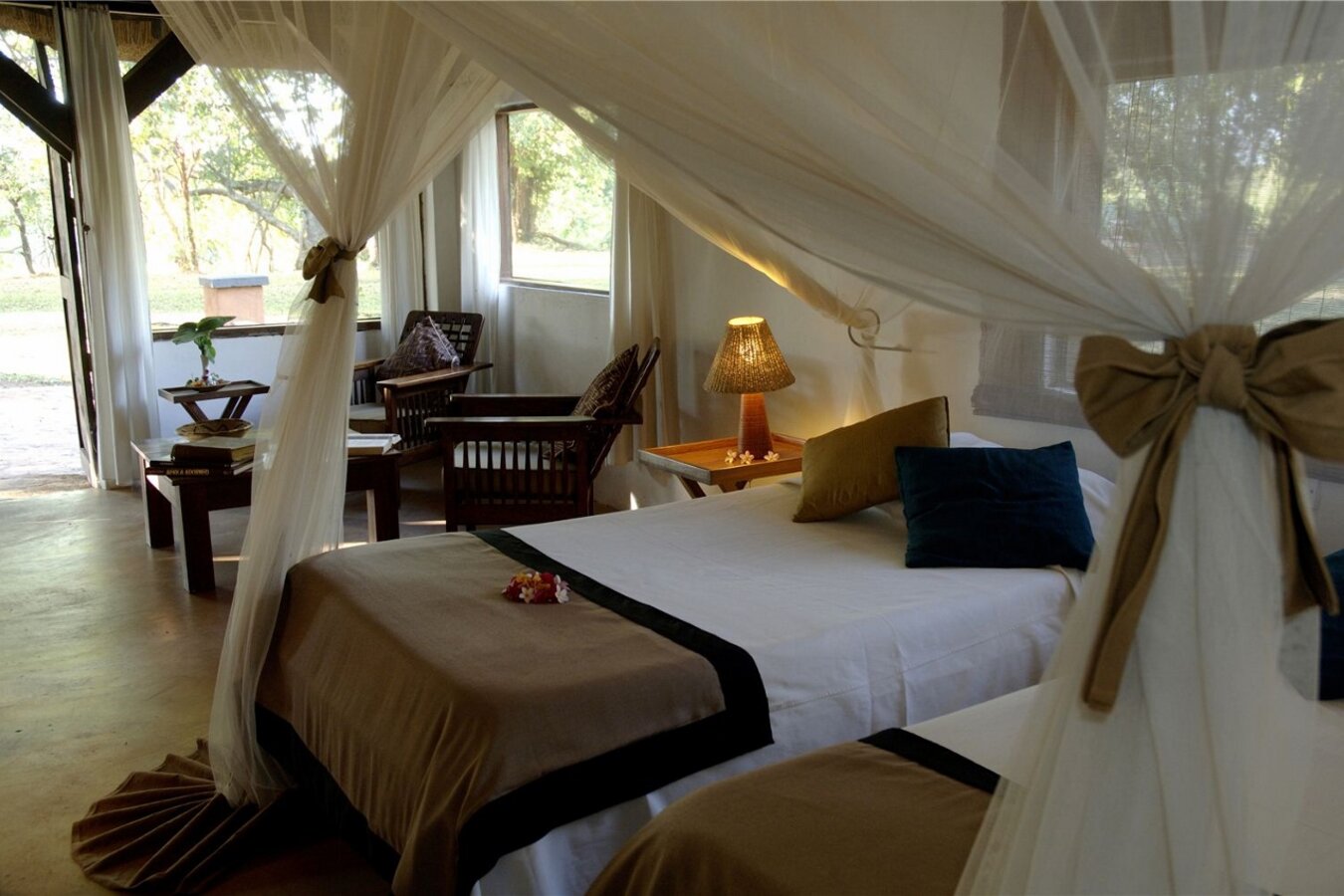
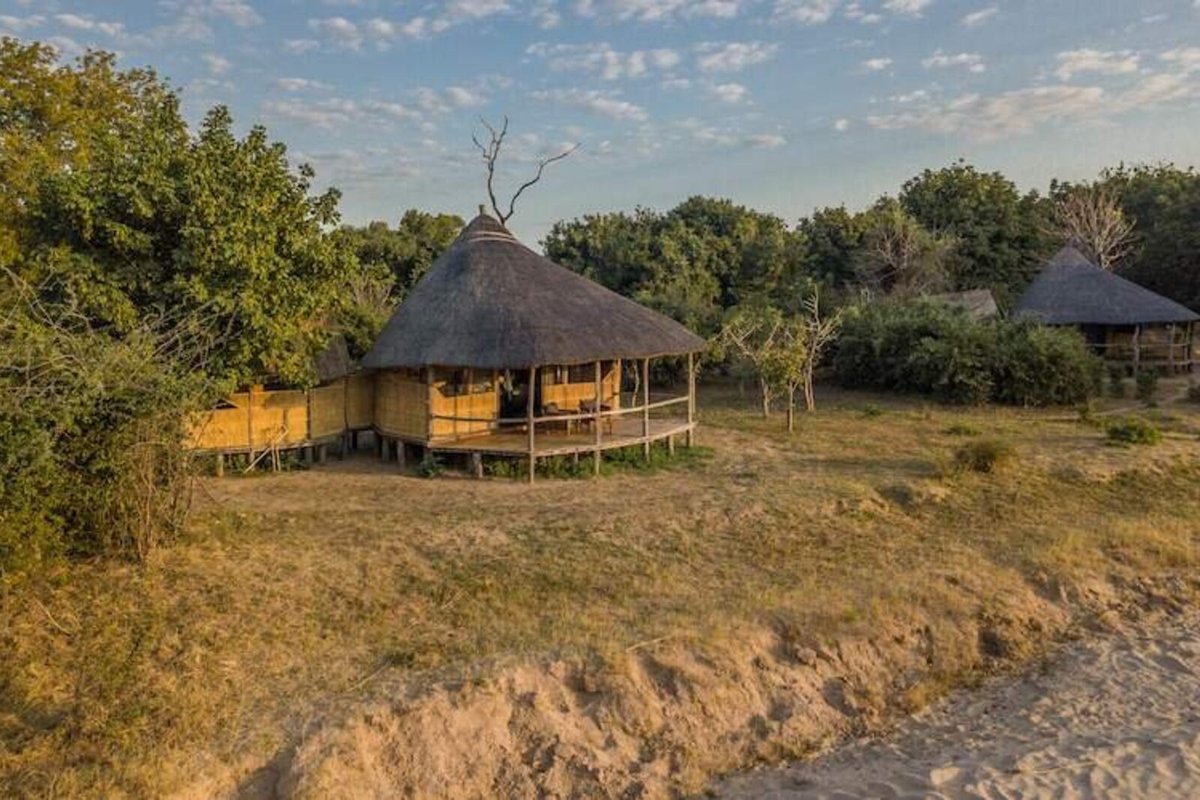
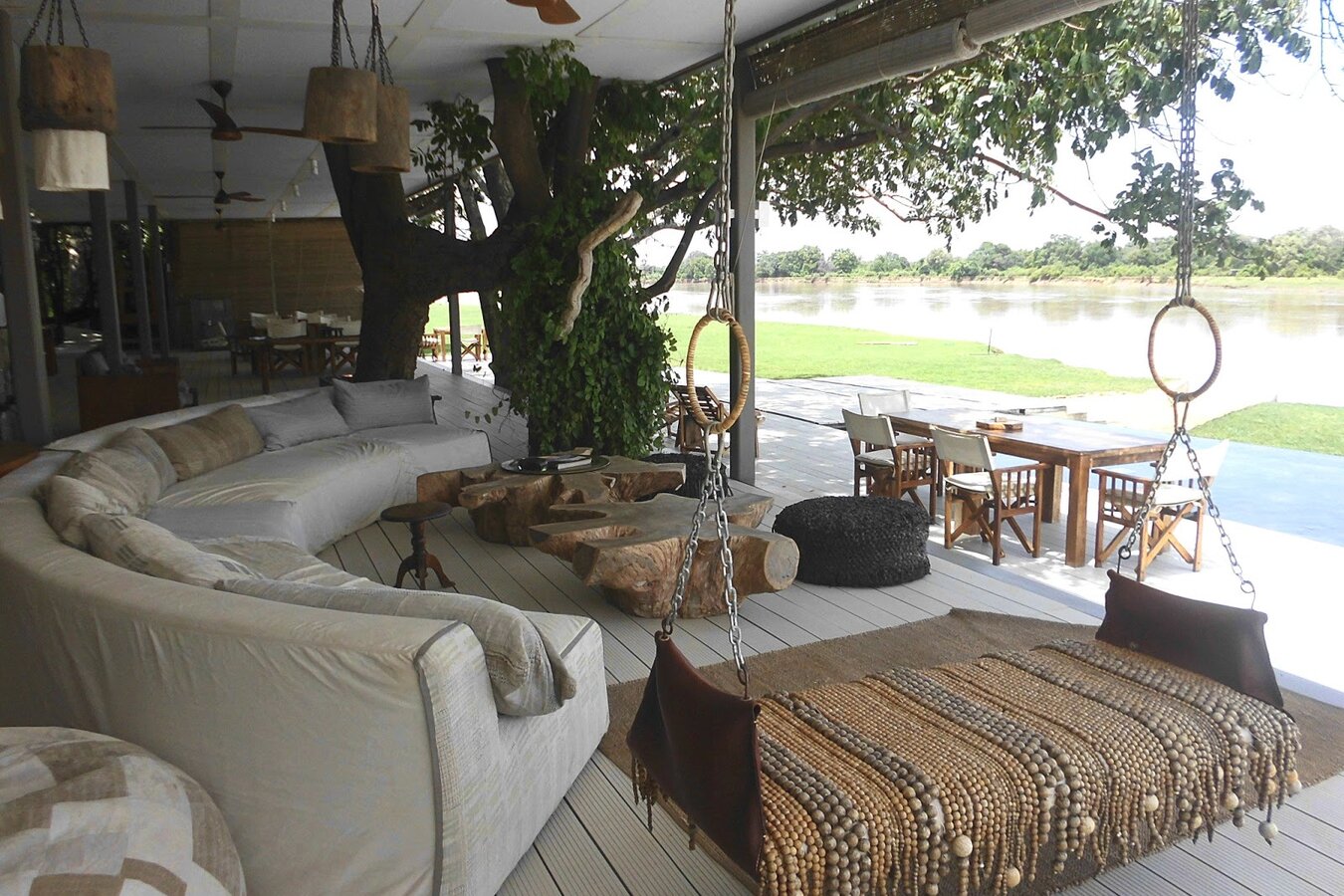
Kapani Lodge carries the legacy of Norman Carr, the pioneer who invented the walking safari in the Luangwa Valley in the 1950s. The lodge sits in a grove of mature trees near the main gate, comfortable and characterful, with walking safaris at the heart of the programme. This is where the walking safari began, and the tradition continues with expert guides leading guests into the bush on foot — an intimate, thrilling encounter with the African wild. At $350–550 per person, Kapani delivers a genuine piece of safari history at honest mid-range rates.
Croc Valley Camp
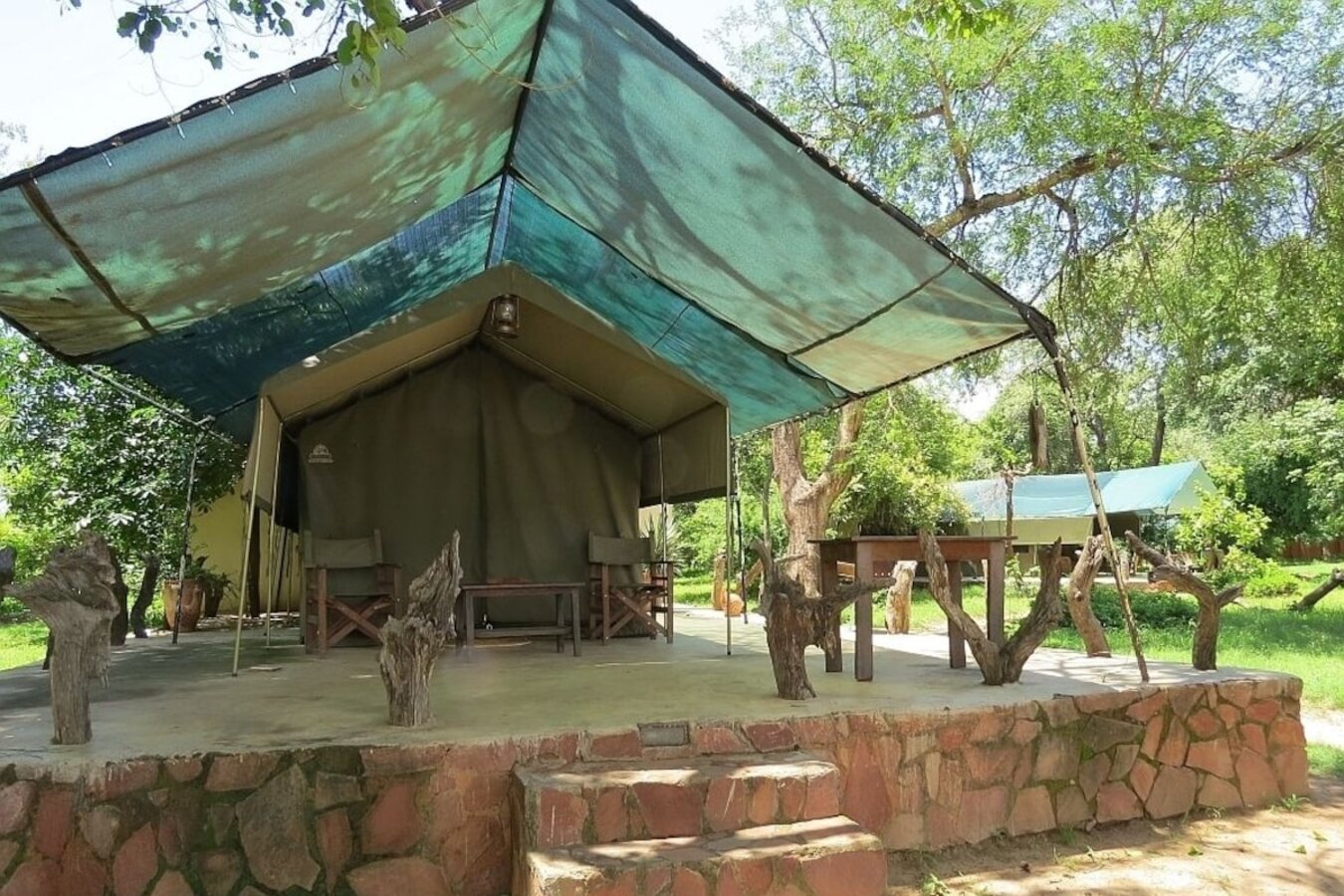
Location: Mfuwe area, just outside South Luangwa main gate
Rates: ~$15 camping / $80–180 per person chalets and tents (activities extra)
Why affordable: Pay-as-you-go model — the lowest base rates in the Luangwa
Wildlife: Full South Luangwa access via optional guided drives and walks
Best for: Backpackers, self-drivers, overland groups, shoestring budgets
When to go: Year-round; the ultimate green-season budget base
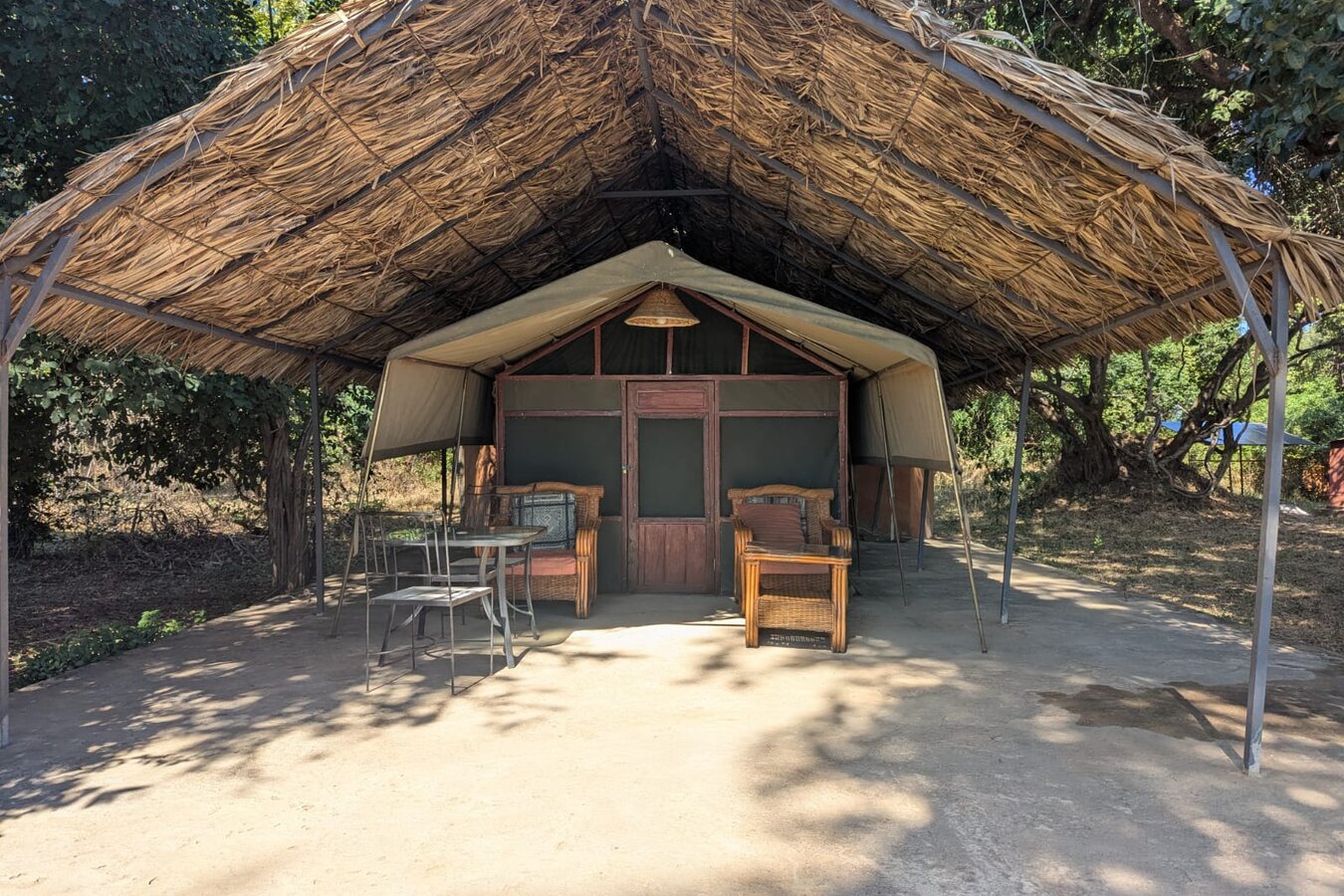
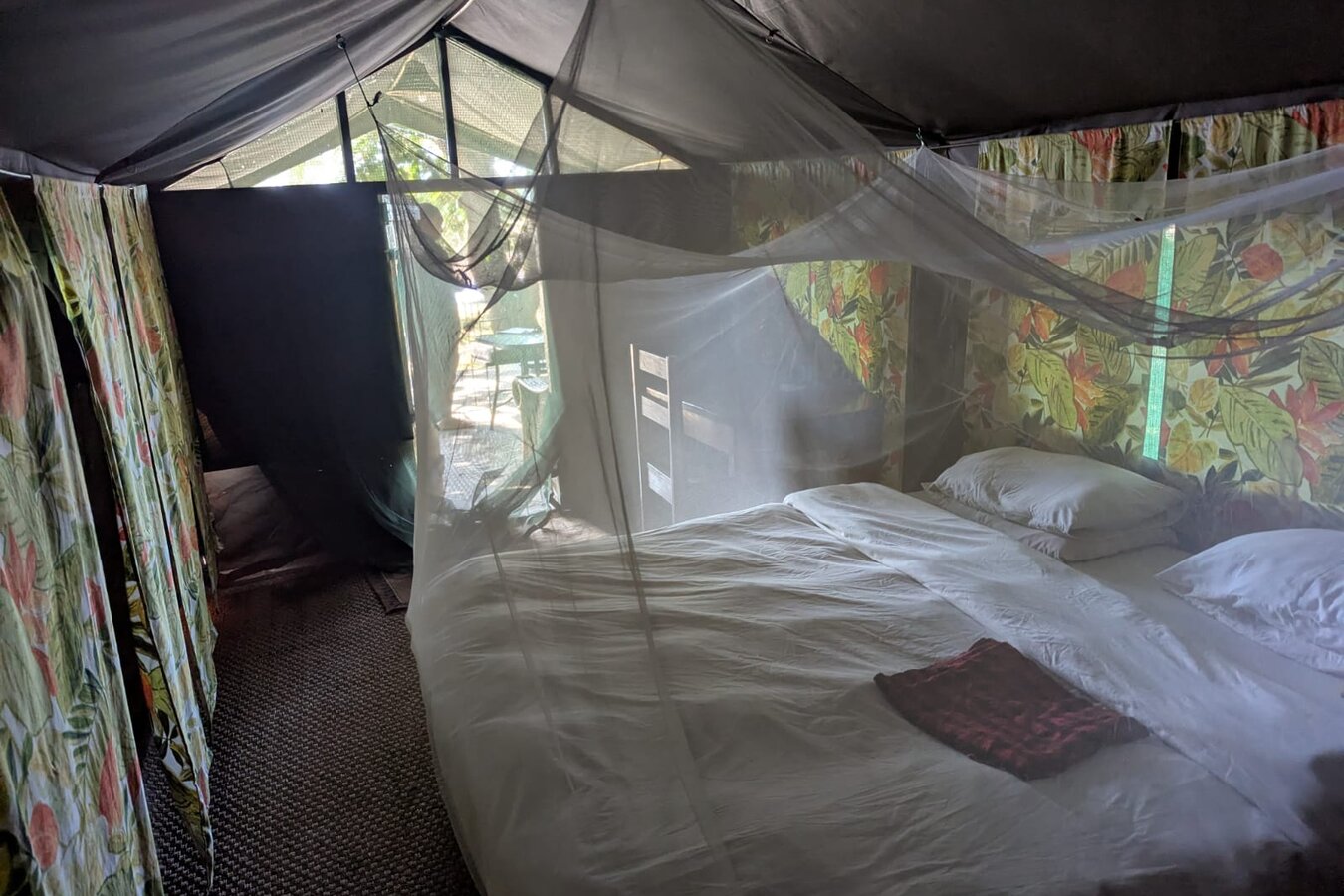
Croc Valley is the Luangwa’s backpacker gateway — a family-run camp near the Mfuwe Gate that offers camping pitches from $15 per person and simple chalets from $80, with game drives and walking safaris available as optional extras. This is the no-frills, pay-for-what-you-use model, and it works beautifully for self-drivers, overlanders and budget travelers who want to explore the Luangwa without committing to an all-inclusive package. The atmosphere is sociable and warm, the Zambian meals are hearty, and the wildlife is identical to what the luxury guests see. Croc Valley proves that the Luangwa is open to every budget.
Lower Zambezi National Park — The Canoe Safari Frontier
Baines’ River Camp
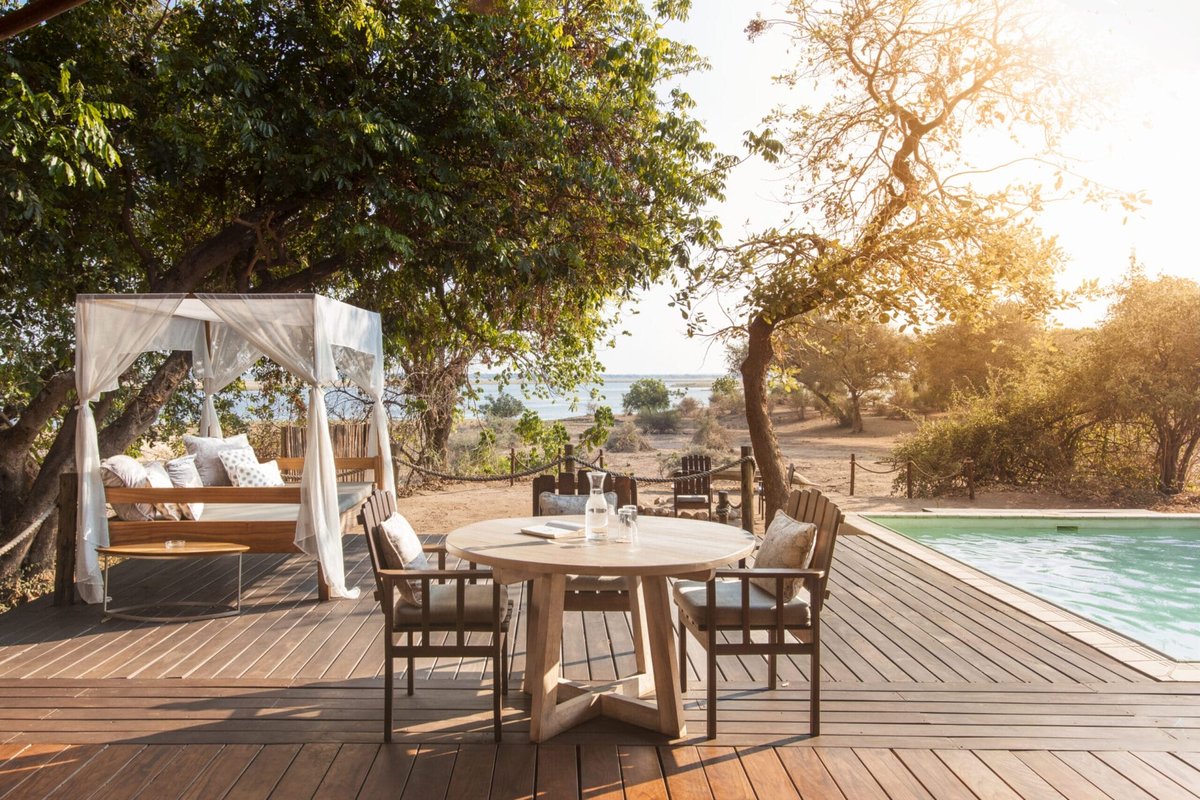
Location: Lower Zambezi National Park, on the Zambezi River
Rates: ~$350–550 per person per night all-inclusive
Why affordable: Intimate riverside camp at accessible rates for the Lower Zambezi
Wildlife: Elephant herds at the river, hippo, buffalo, predators on the escarpment, world-class fishing
Best for: Canoe safari enthusiasts, anglers, couples wanting a river wilderness
When to go: April–November (the park closes in the wet season)
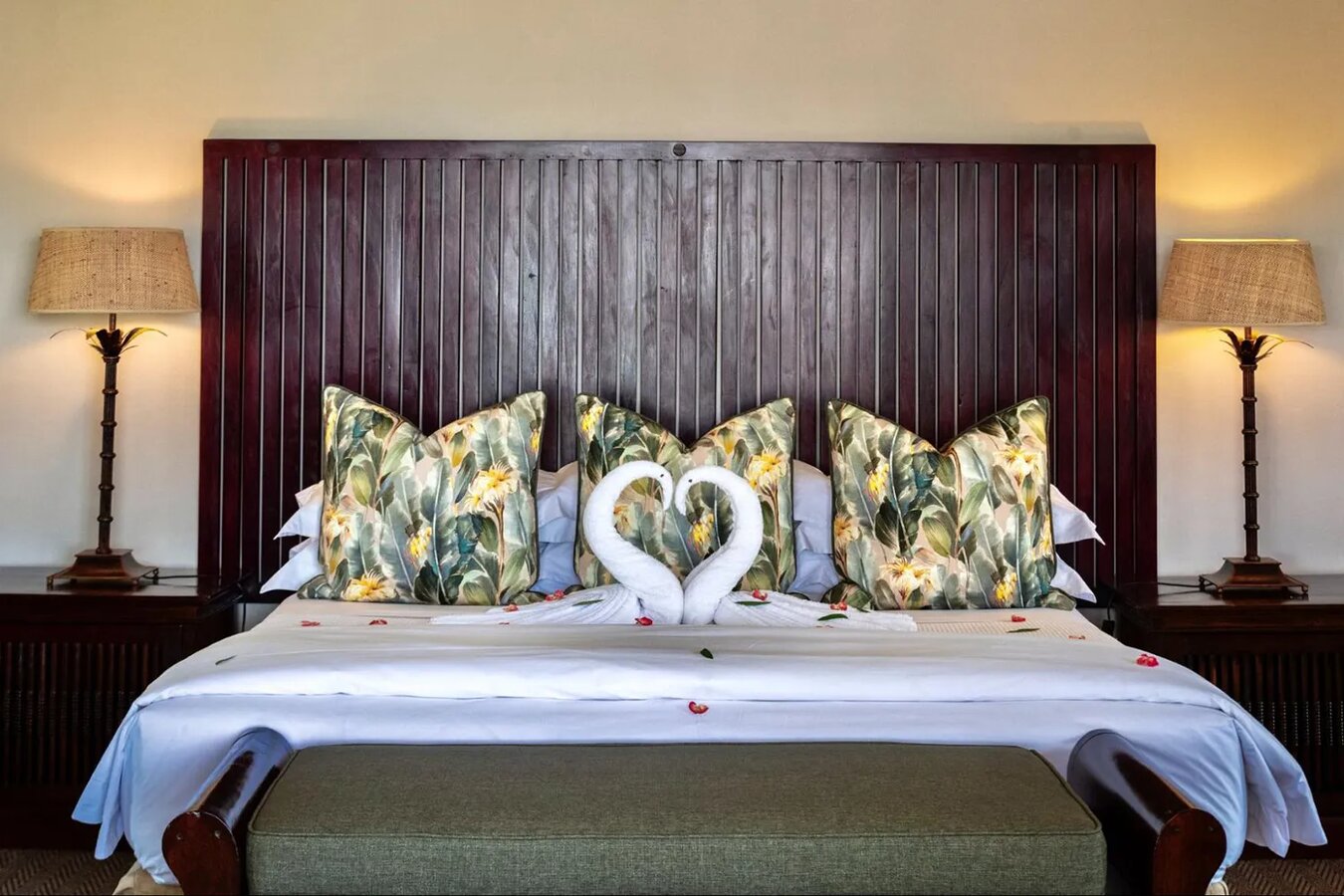
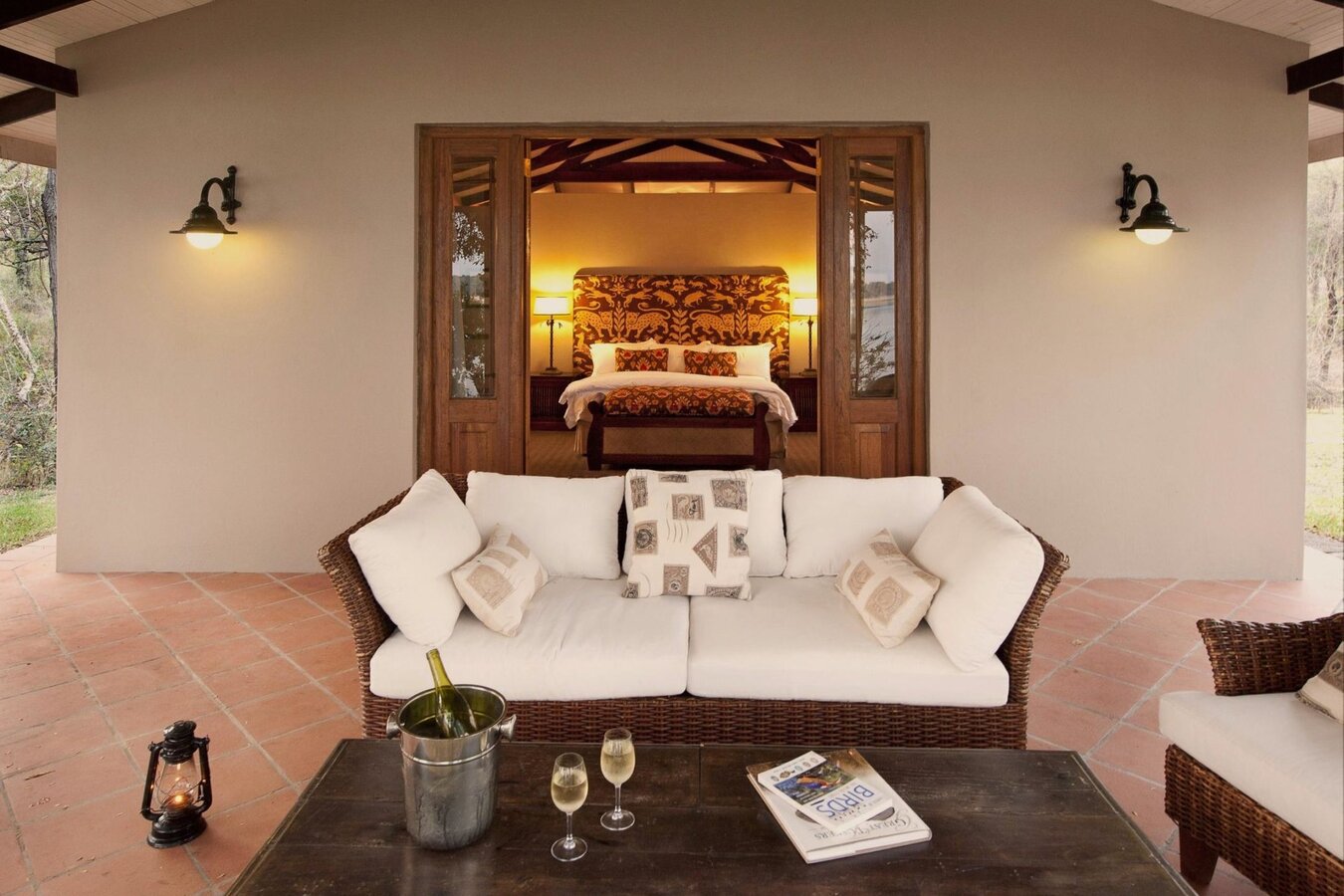
Baines’ River Camp sits on the Zambezi in one of the most spectacular settings in Zambia, with views across the great river to the Zimbabwe escarpment beyond. The Lower Zambezi is a canoe-safari destination par excellence — you paddle silently past elephants drinking at the water’s edge, hippos surfacing ahead, and fish eagles calling overhead. Baines’ is a small, well-run camp with comfortable tents, excellent food and a programme that mixes canoe safaris with game drives and walking safaris. At $350–550 per person, it delivers the Lower Zambezi experience at the lowest reliable rate in the park.
Mvuu Lodge
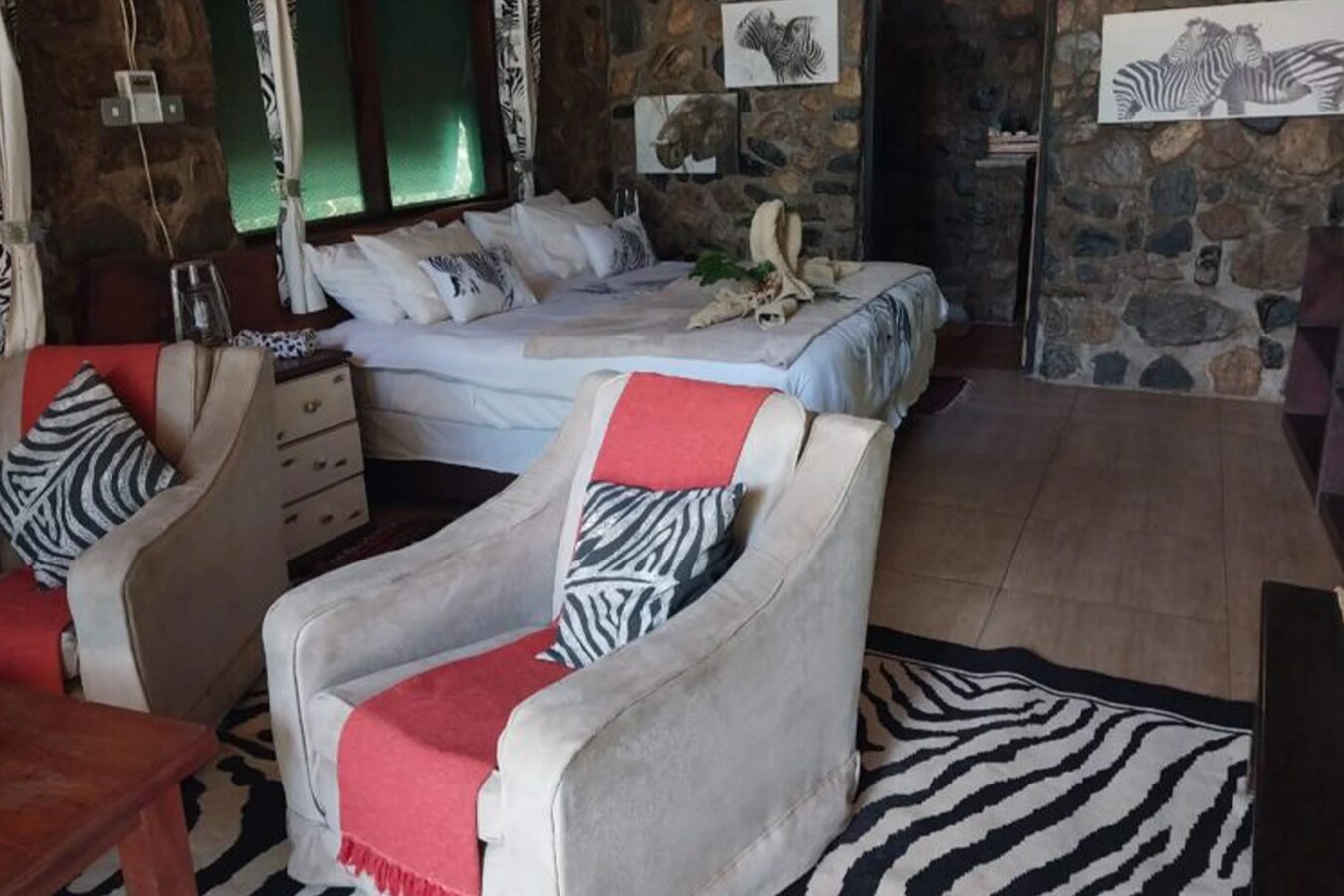
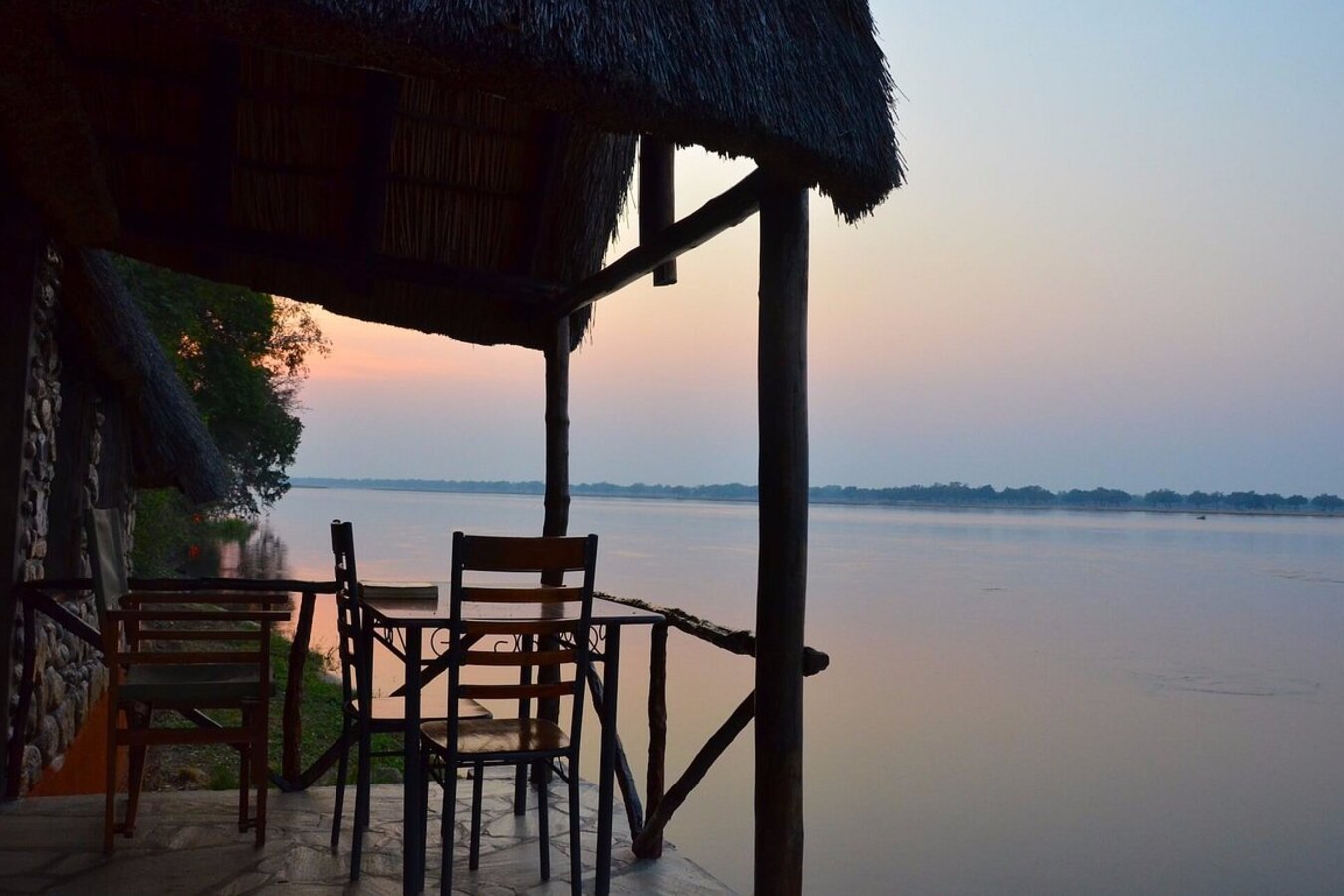
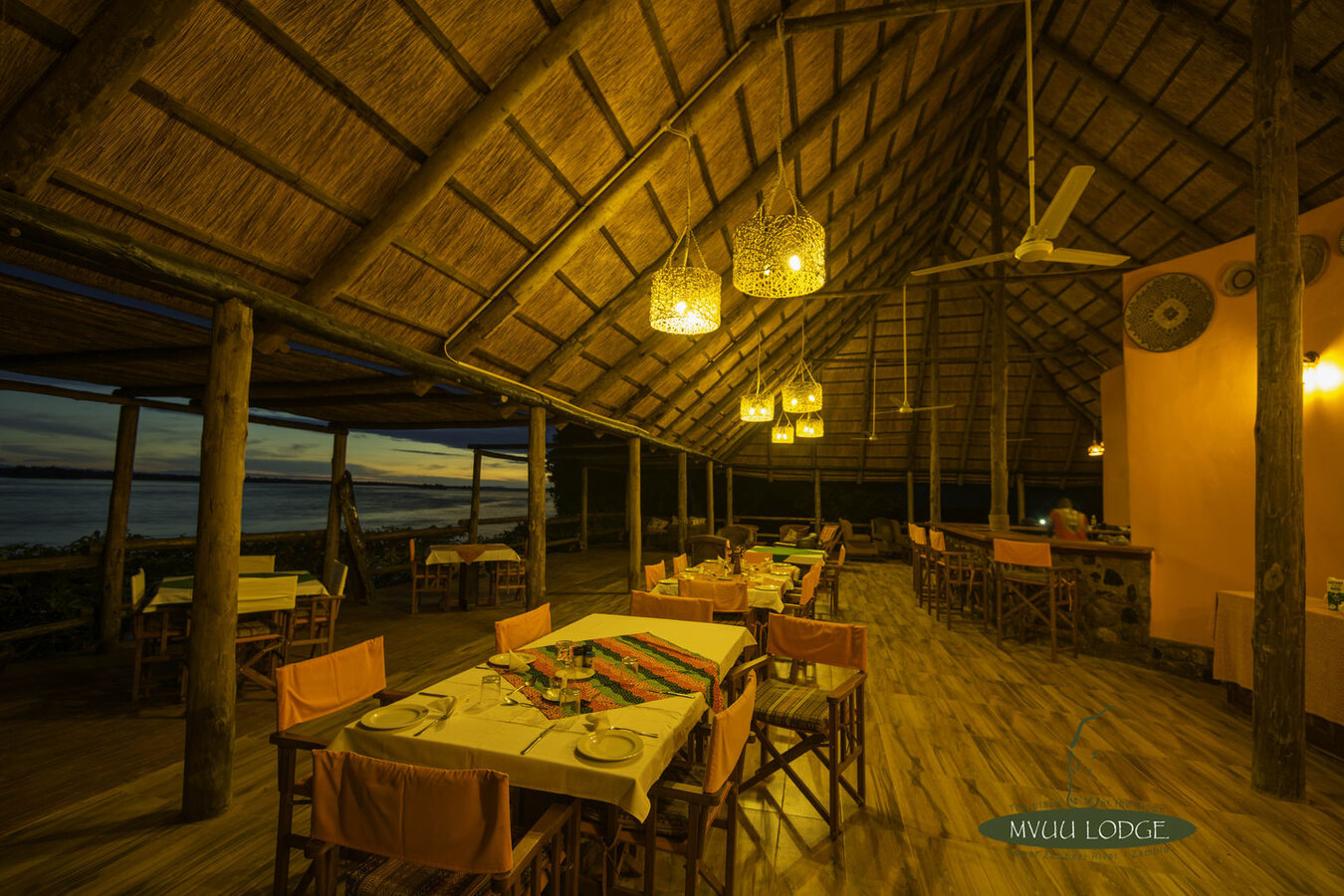
Location: Lower Zambezi, community conservancy
Rates: ~$250–400 per person per night all-inclusive
Why affordable: Community-partnership lodge with honest value rates
Wildlife: Zambezi elephants, hippo, crocodile, canoe safari access
Best for: Travelers who want to combine the Zambezi with community engagement
When to go: April–November
Mvuu Lodge (“mvuu” means hippo in the local language) sits on the Lower Zambezi in a community conservancy, combining a genuine river-wilderness experience with direct support for local communities. The lodge is small, comfortable and well-positioned for canoe safaris, game drives along the river and walks into the escarpment forest. The community-partnership model keeps rates fair and ensures that tourism revenue reaches the people who live alongside the wildlife. At $250–400 per person, Mvuu is one of the most affordable ways to experience the Lower Zambezi — and one of the most meaningful.
Kafue National Park — Africa’s Last Great Affordable Wilderness
Mayukuyuku Bush Camp
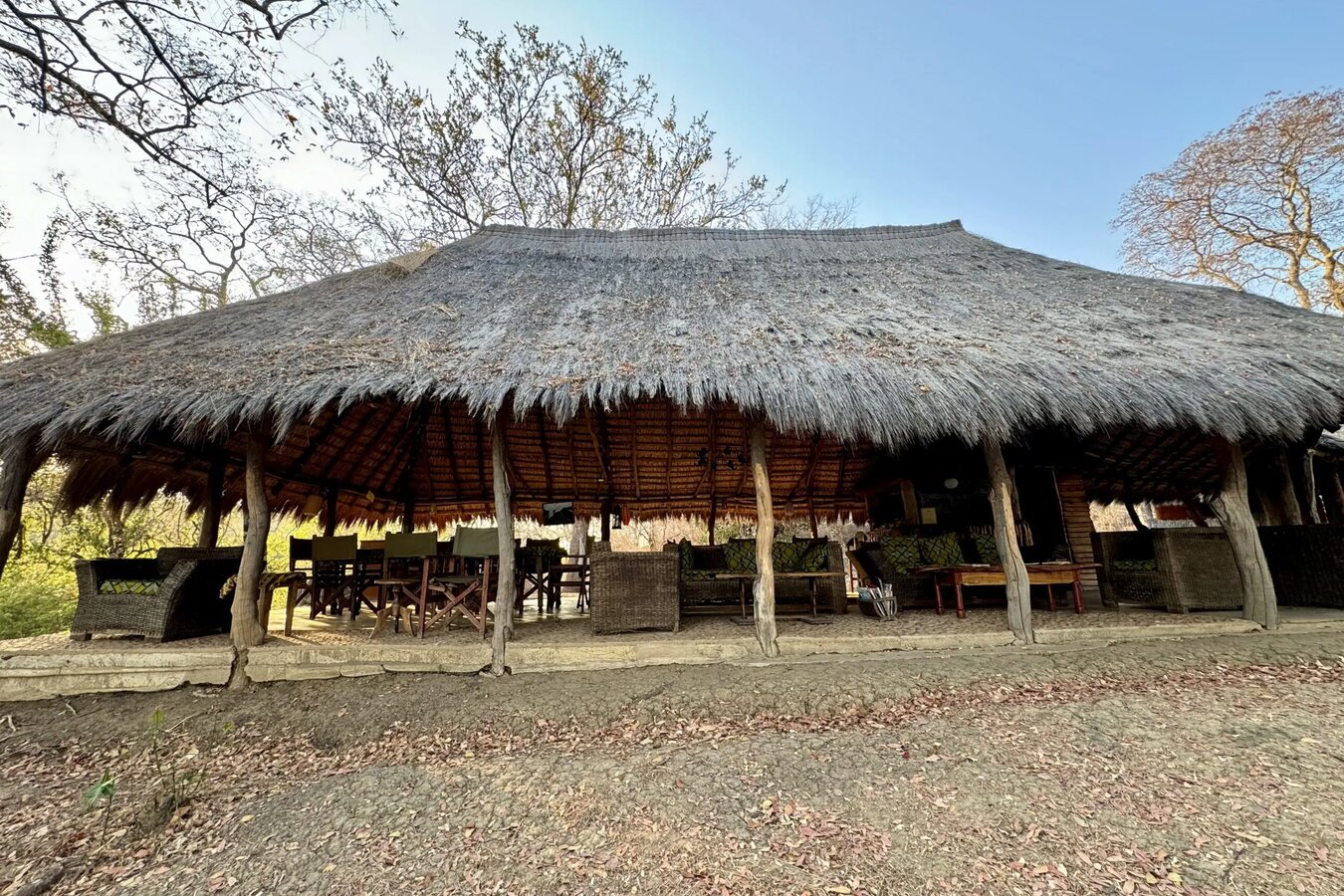
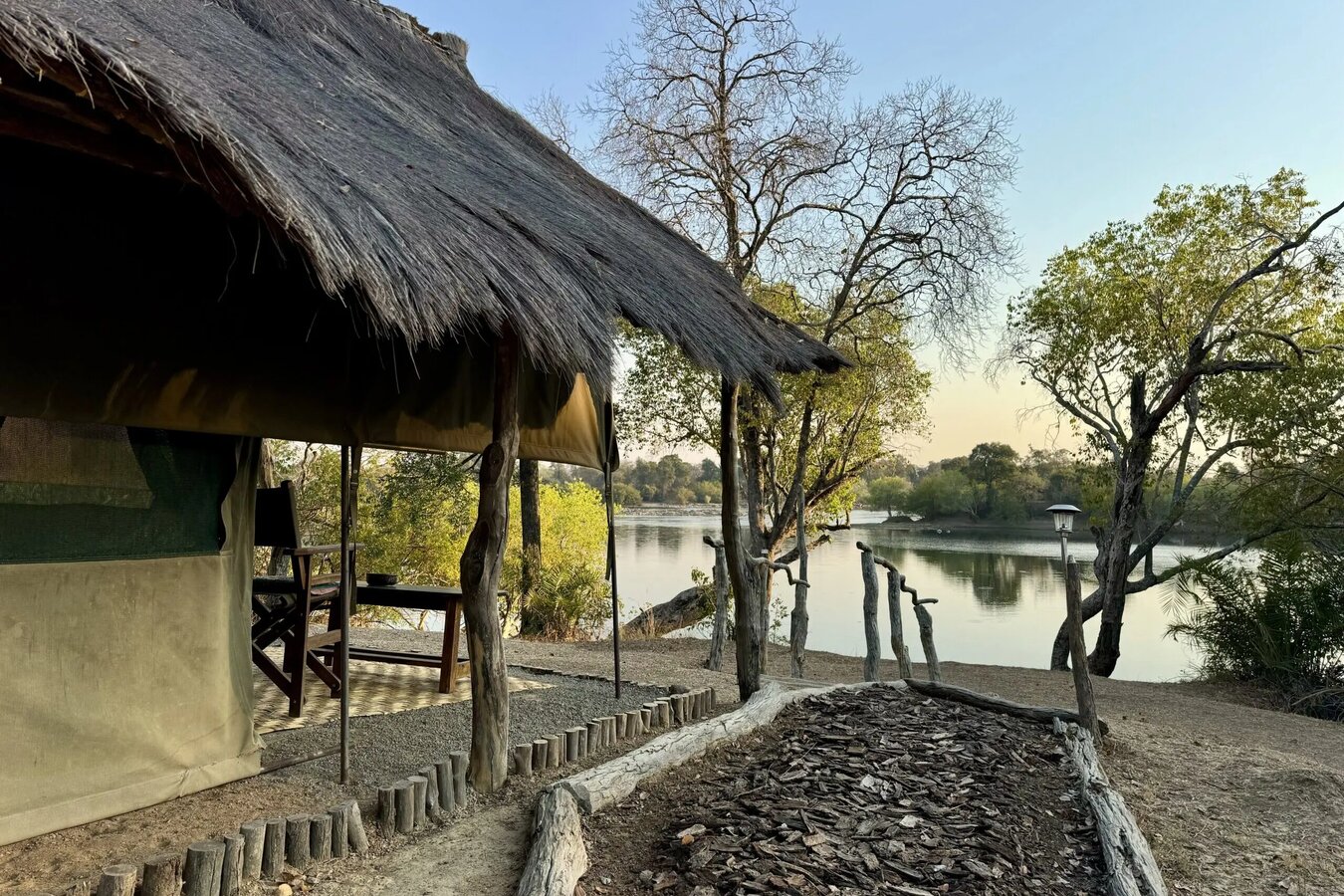
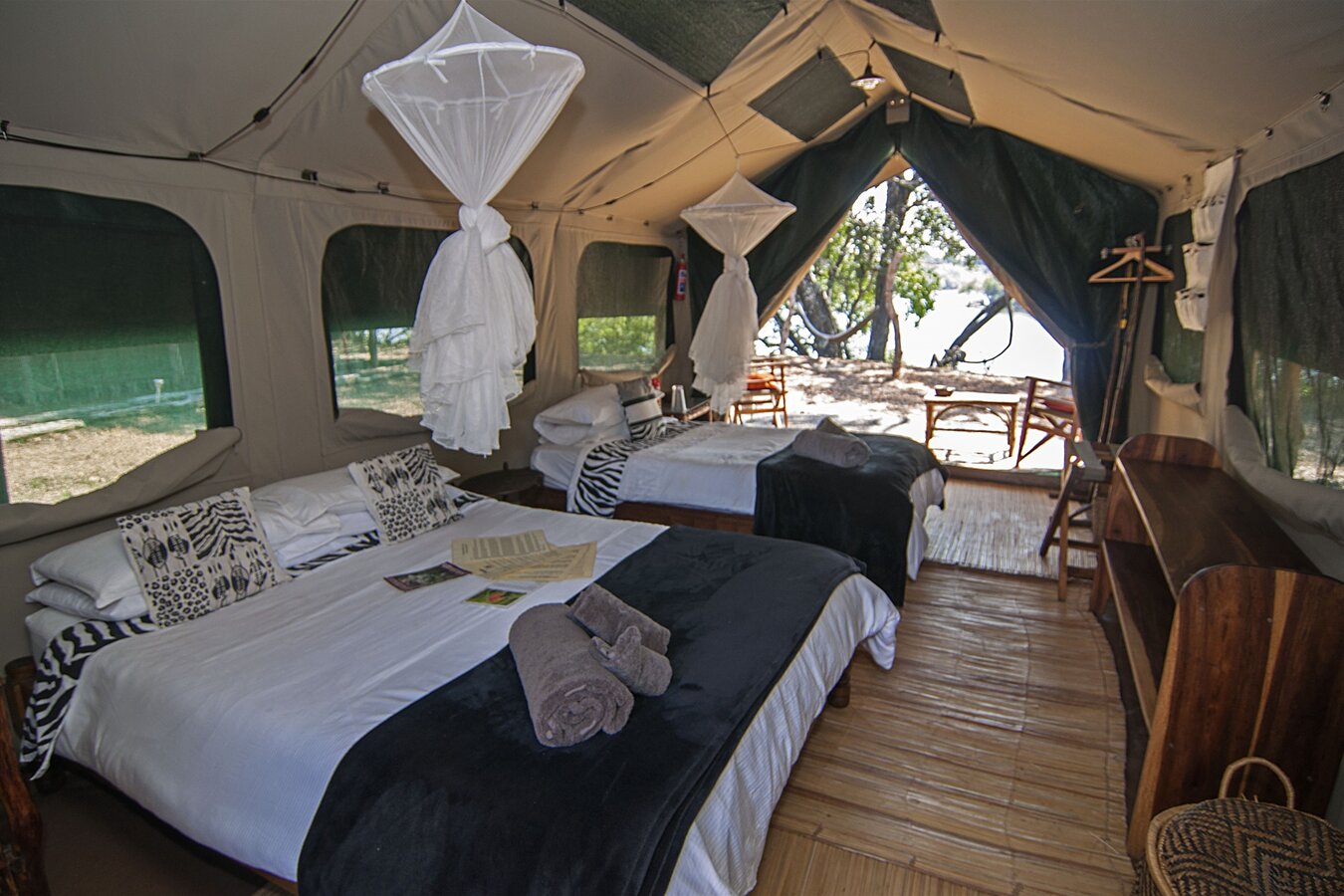
Location: Central Kafue, on the Kafue River
Rates: ~$180–300 per person per night all-inclusive
Why affordable: Simple, well-run bush camp on one of Africa’s great rivers at budget rates
Wildlife: Puku, hippo, elephant, lion, leopard, crocodile, prolific birdlife
Best for: Budget travelers wanting genuine wilderness without another soul in sight
When to go: June–November for accessible roads and peak game
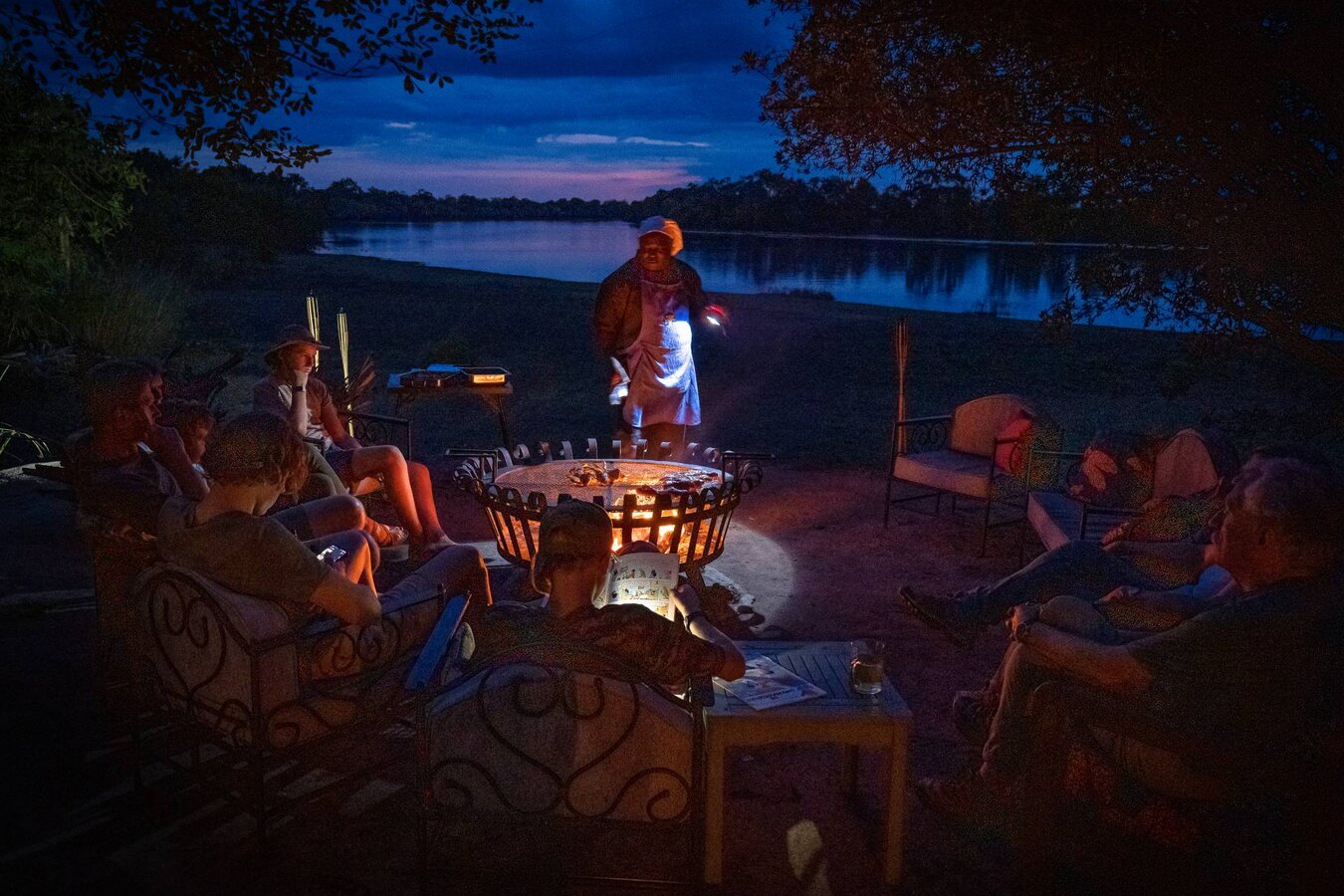
Kafue National Park is Africa’s second-largest park and one of its least visited — a vast wilderness of miombo woodland, river systems and the famous Busanga Plains where lions hunt red lechwe on open floodplains. Mayukuyuku Bush Camp sits on the Kafue River in the central sector, a simple but comfortable bush camp with thatched chalets, excellent birding and the kind of solitude that has vanished from most of Africa’s marquee parks. At $180–300 per person, Mayukuyuku offers genuine Kafue wilderness at a rate that reflects the park’s under-the-radar status — extraordinary value for the wildlife and the setting.
McBride’s Camp
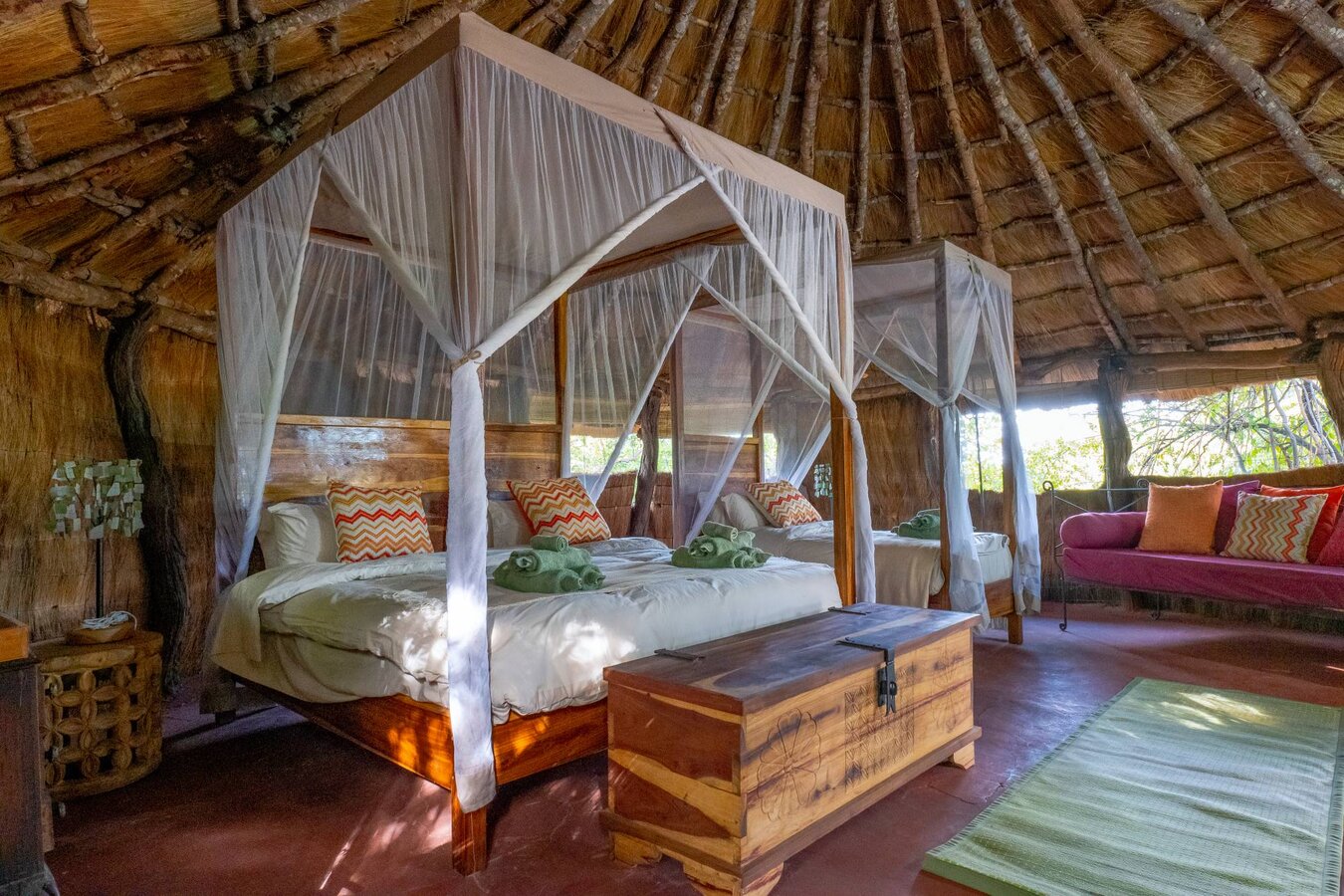
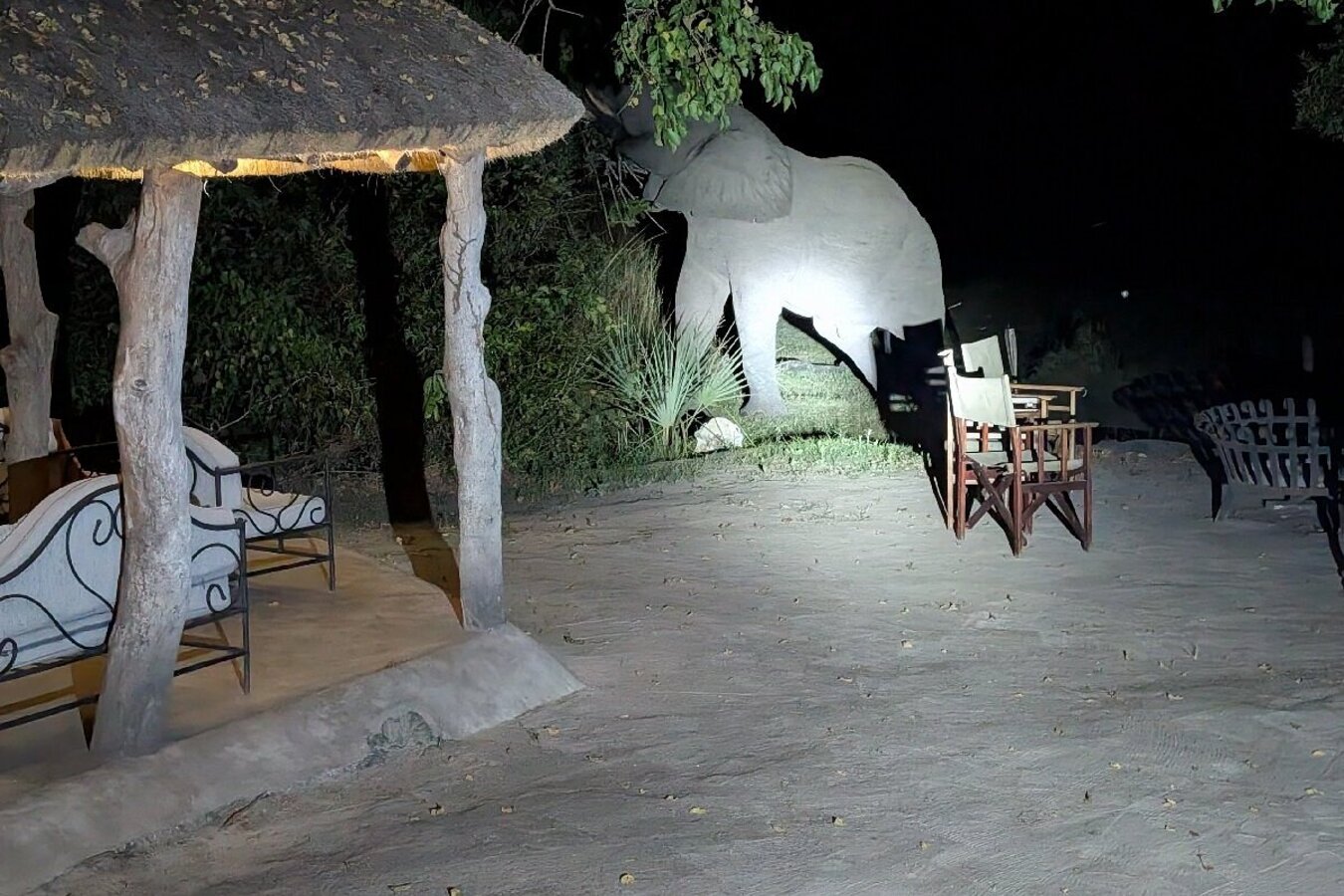
Location: Central Kafue, on the Kafue River
Rates: ~$300–500 per person per night all-inclusive
Why affordable: Owner-run camp with passionate guiding at mid-range rates
Wildlife: Lion, leopard, cheetah, wild dog, red lechwe, sable, roan antelope
Best for: Travelers who want a personal, owner-hosted Kafue experience
When to go: June–November for peak game; August–October for the Busanga Plains
McBride’s Camp is a small, owner-run property on the Kafue River in the central sector, run by the McBride family who have lived in Kafue for decades. The guiding is passionate and deeply knowledgeable, the camp is comfortable and intimate, and the wildlife in the central Kafue — lion, leopard, cheetah, wild dog, and the extraordinary red lechwe herds — is world-class. At $300–500 per person, McBride’s delivers the kind of personal, owner-hosted experience that makes Zambia special, at a rate that reflects Kafue’s under-visited status rather than its wildlife quality.
Kaingu Safari Lodge
Location: Central Kafue, on the Kafue River
Rates: ~$250–450 per person per night all-inclusive
Why affordable: Small, intimate river lodge at accessible-value Kafue rates
Wildlife: Hippo, elephant, lion, leopard, prolific birdlife along the river
Best for: Bird enthusiasts, couples who love river settings, solitude seekers
When to go: June–November; July for peak birding alongside game
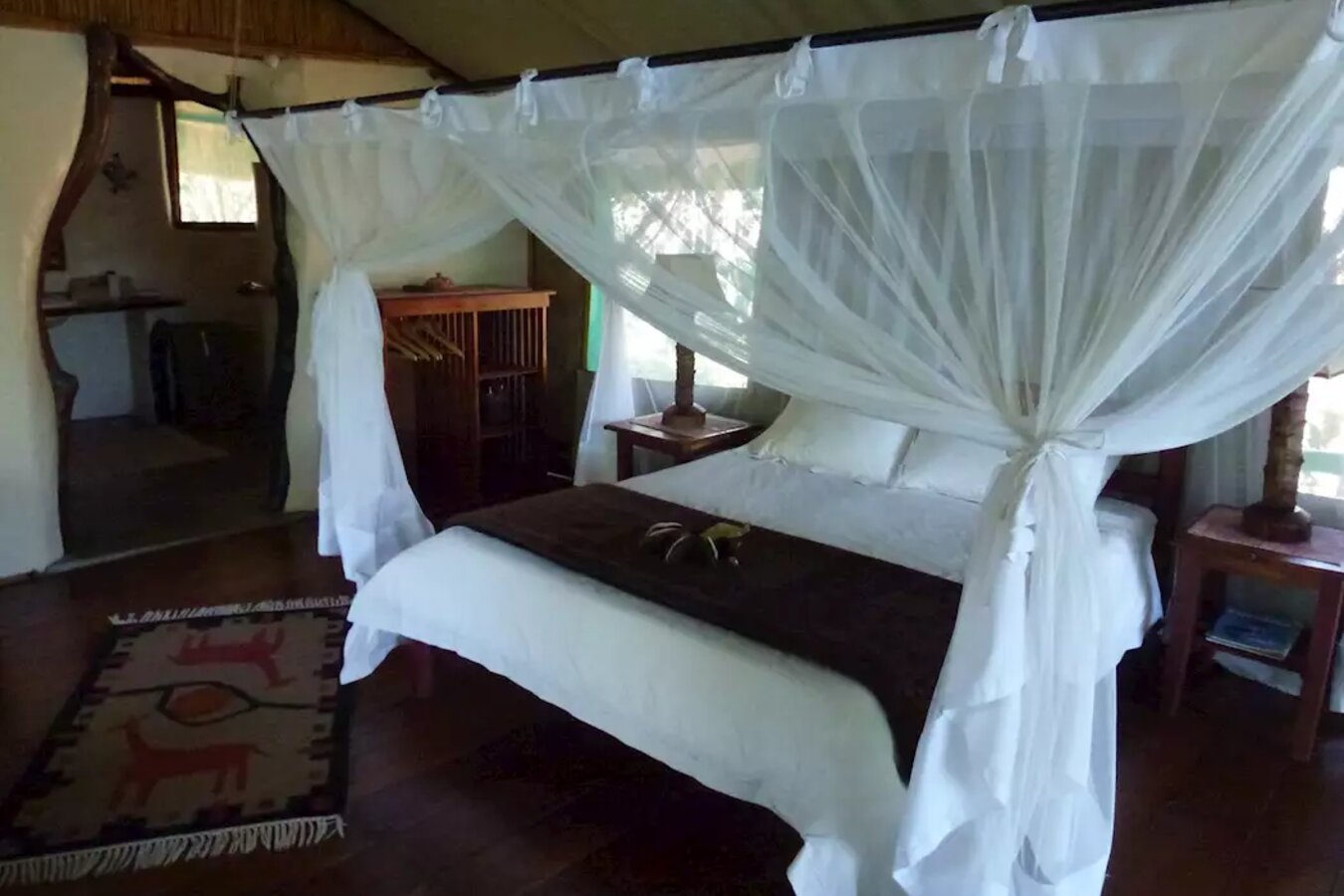
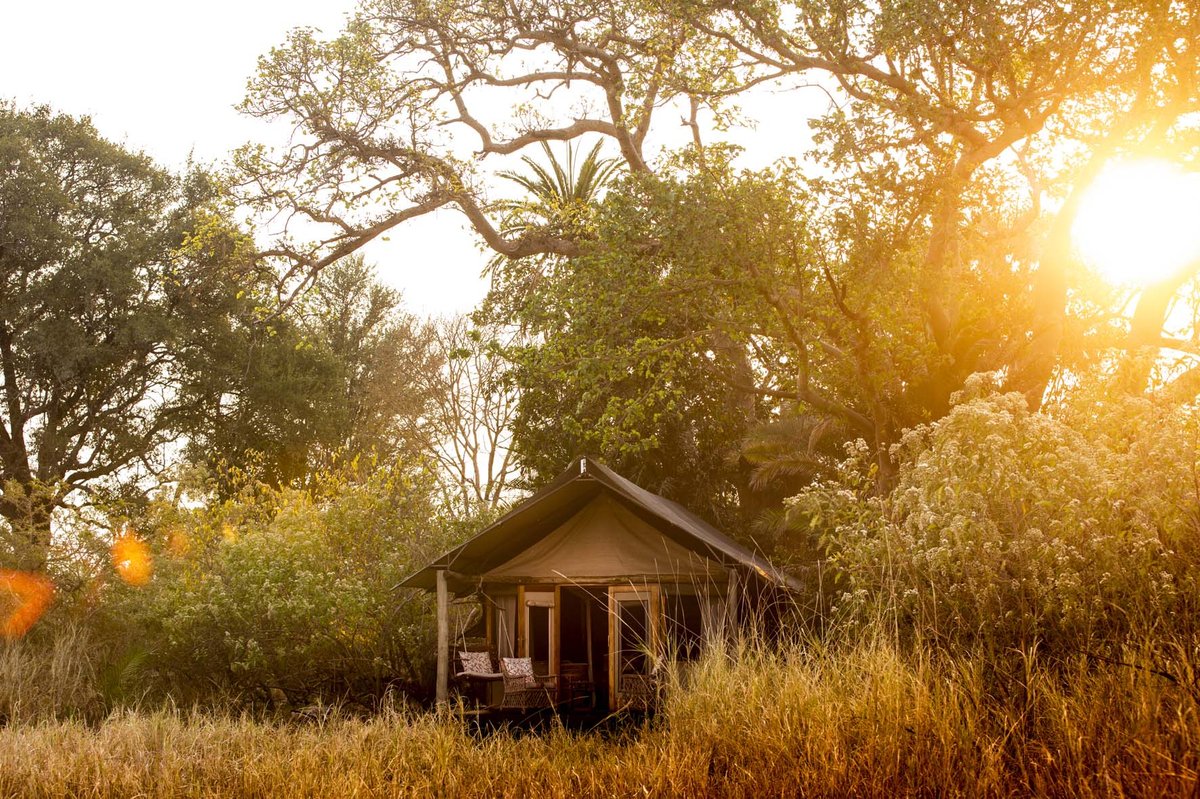
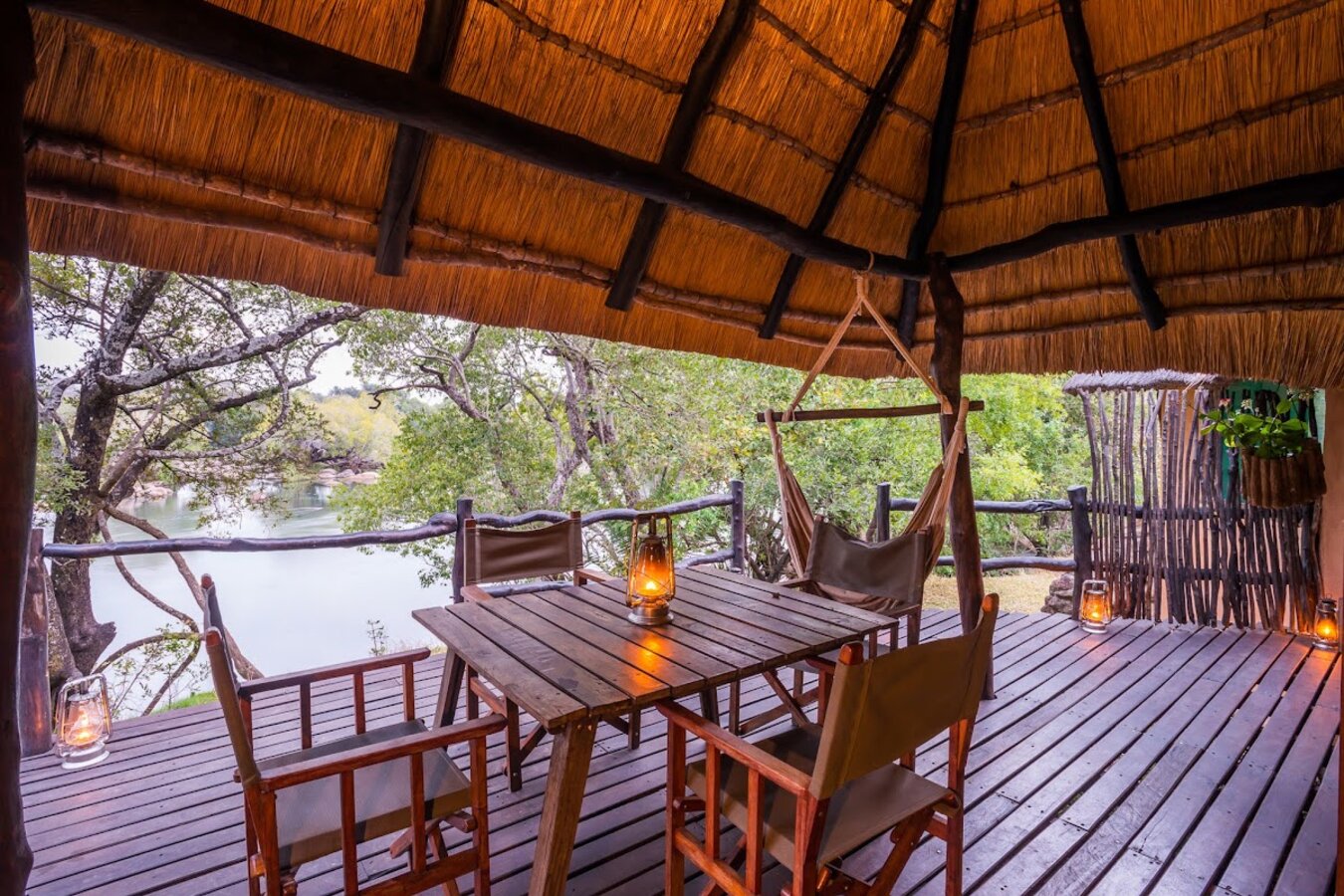
Kaingu Safari Lodge sits on the Kafue River in a stretch of rapids and island-dotted channels that draw some of the finest birdlife in Zambia. The lodge is small and characterful, built from local materials with an artist’s eye for setting and detail. Boat safaris, island walks, and game drives into the surrounding bush make for a varied programme, and the solitude is near-total — you may be the only guests. At $250–450 per person, Kaingu delivers a deeply personal Kafue experience at a rate that belongs to another era of African safari pricing.
Value Tiers Explained — What You Get at Each Price Point
| Tier | Rate (per person per night) | Accommodation | Activities | Examples |
|---|---|---|---|---|
| Budget | $15–200 | Camping, simple tents and chalets | Pay-per-activity or full-board packages | Croc Valley, Wildlife Camp, Mayukuyuku |
| Mid-Range | $200–450 | Comfortable lodges and tented camps | All-inclusive: meals, drives, walks, night drives | Flatdogs, Track & Trail, Marula, Thornicroft, Mvuu, Kaingu |
| Accessible Luxury | $450–800 | Owner-run camps, in-park lodges | All-inclusive with walking safaris, canoe trails | Mfuwe Lodge, Kafunta, Nkwali, Kapani, Baines’ |
The Green Season Opportunity — 30–40% Savings, Empty Parks, Emerald Bush
Zambia’s green season runs from November to April, and it is the country’s great value secret. Rates drop by 30–40% across the board, the bush is emerald-green, dramatic thunderstorms build theatrical skies for photographers, and migratory birds arrive in their hundreds of thousands. Some camps close entirely in the peak rains (January–March), but many remain open through the shoulder months of November–December and April, offering superb wildlife at deeply discounted rates.
The green season is not for everyone — roads can be challenging, some remote camps close, and the tall grass makes game viewing harder in certain areas. But for birders, photographers and travelers who value solitude over checklist sightings, it is an extraordinary time to visit. And the prices are genuinely transformative: a lodge that charges $550 in peak season may drop to $280 in the green — the same guide, the same river, the same leopard, at half the price.
When to Book and How to Save
- Dry season (May–October): Book 6–9 months ahead. Peak months (August–October) fill fastest, especially for the small owner-run camps.
- Green season (November–April): Book 2–3 months ahead. Many camps offer last-minute green-season specials.
- Stay/pay specials: Look for “Stay 4, Pay 3” or “Stay 6, Pay 5” offers from major operators — these effectively reduce the per-night rate by 15–25%.
- Multi-camp itineraries: Operators like Kafunta, Robin Pope and The Bushcamp Company offer long-stay discounts when you combine their camps — often 10–15% below the single-camp rate.
- Group-joining departures: Some operators offer fixed-date group safaris at lower rates than private bookings.
Best Lodge for Every Traveler Type
- First-timers on a budget: Flatdogs Camp or Wildlife Camp — flexible, well-run, close to the park gate
- Walking-safari purists: Kapani Lodge — where Norman Carr invented the walking safari
- Couples seeking romance: Track & Trail or Nkwali Camp — riverside settings, intimate atmosphere
- Families with children: Mfuwe Lodge — spacious, family-friendly, the famous elephant lobby walk
- Backpackers and self-drivers: Croc Valley Camp — camping from $15, pay-as-you-go safaris
- Canoe-safari enthusiasts: Baines’ River Camp — the Lower Zambezi’s most accessible paddling base
- Solitude seekers: Mayukuyuku or Kaingu — Kafue’s empty wilderness at budget rates
- Photographers: Nkwali Camp — open-fronted rooms, world-class guiding, prime leopard country
Comparison Table — All 15 Lodges at a Glance
| Lodge | Region | Rate (pppn) | Best For | Star Activity |
|---|---|---|---|---|
| Mfuwe Lodge | South Luangwa | $280–550 | First-timers, families | Elephant lobby walk |
| Flatdogs Camp | South Luangwa | $60–350 | Budget travelers | Flexible room-only option |
| Track & Trail | South Luangwa | $280–450 | Couples, photographers | Riverside game viewing |
| Wildlife Camp | South Luangwa | $155–325 | Budget travelers | Cheapest full-board in Luangwa |
| Marula Lodge | South Luangwa | $250–400 | Couples, families | Walking safari + night drive |
| Kafunta River Lodge | South Luangwa | $470–710 | Owner-run enthusiasts | Multi-camp itineraries |
| Nkwali Camp | South Luangwa | $525–795 | Guiding connoisseurs | Robin Pope walking safaris |
| Thornicroft Lodge | South Luangwa | $300–500 | Wildlife enthusiasts | Endemic Thornicroft’s giraffe |
| Kapani Lodge | South Luangwa | $350–550 | Walking-safari purists | Norman Carr walking heritage |
| Croc Valley Camp | South Luangwa | $15–180 | Backpackers | Camping from $15 a night |
| Baines’ River Camp | Lower Zambezi | $350–550 | Canoe safari lovers | Zambezi canoe safaris |
| Mvuu Lodge | Lower Zambezi | $250–400 | Community-minded travelers | Community conservancy canoe trail |
| Mayukuyuku | Kafue | $180–300 | Solitude seekers | Kafue River bird safaris |
| McBride’s Camp | Kafue | $300–500 | Predator enthusiasts | Busanga Plains excursions |
| Kaingu Safari Lodge | Kafue | $250–450 | Bird enthusiasts | Island walks and boat safaris |
Zambia is one of Africa’s last great affordable frontiers. The wildlife is world-class, the guiding is among the finest on the continent, and the intimate, owner-run model means your money goes directly to the people who know and love the bush. Whether you camp on the Luangwa for $15 a night or take an all-inclusive walking safari from a riverside lodge at $500, you are experiencing the real Africa — the walking safari that Norman Carr invented, the leopard that the luxury guests pay ten times as much to see, the sunset that belongs to everyone. The wild does not know the difference. Neither, after a day in the Zambian bush, will you.