Executive Summary
The safari industry in 2026 is undergoing three defining shifts:
- Travellers are staying longer — the 3-night "safari add-on" is dying. The average safari length is now 8.2 nights (up from 6.1 in 2023), as travelers choose depth over tick-list travel.
- Green season is finally winning — 38% of travelers now book the green (wet) season deliberately, drawn by 30% cost savings, newborn wildlife, and fewer crowds. The "peak season or nothing" mindset is over.
- Multi-country itineraries are the new standard — 64% of bookings combine two or more countries (e.g., Kenya + Tanzania, Botswana + Zimbabwe, safari + Zanzibar beach). Single-country safaris are now the minority.
This report covers:
- Top 10 safari destinations by bookings (South Africa still leads, but Rwanda jumps 4 spots)
- Average safari costs across 10 countries (Botswana most expensive, South Africa best value)
- Peak vs shoulder vs green season booking splits
- Solo travel surge (22% of bookings, up from 9% in 2022)
- Lodge preferences (tented camps outpace permanent lodges 58% to 42%)
- The "safari + beach" combination boom (41% of bookings end at a beach destination)
1. Top 10 Destinations by Bookings (2026 Data)
Our booking data across 2,847 safaris in 2025–2026 reveals the most popular safari destinations:
The Rankings
- South Africa (Kruger & Sabi Sand) — 32% of bookings
- Why: Best value, malaria-free options, Cape Town combination, easy logistics
- Average spend: $4,200 per person for 7 nights
- Top months: May–September
- Kenya (Masai Mara & Conservancies) — 19% of bookings
- Why: Great Migration, big-cat density, Samburu uniqueness
- Average spend: $6,100 per person for 7 nights
- Top months: July–October (migration), January–February (calving)
- Tanzania (Serengeti & Ngorongoro) — 17% of bookings
- Why: The Great Migration, Ngorongoro Crater drama, Zanzibar beach add-on
- Average spend: $7,400 per person for 8 nights
- Top months: June–October, February
- Botswana (Okavango Delta & Chobe) — 12% of bookings
- Why: Exclusive camps, water-based safaris, elephant herds, low-impact luxury
- Average spend: $9,800 per person for 6 nights
- Top months: May–October
- Namibia (Sossusvlei & Etosha) — 6% of bookings
- Why: Cinematic desert landscapes, self-drive options, stargazing
- Average spend: $4,900 per person for 8 nights
- Top months: May–October
- Zambia (South Luangwa & Lower Zambezi) — 5% of bookings
- Why: Walking safaris, wild feeling, fewer tourists
- Average spend: $6,700 per person for 7 nights
- Top months: June–October
- Zimbabwe (Mana Pools & Hwange) — 4% of bookings
- Why: Victoria Falls combination, wild camps, walking safaris
- Average spend: $6,300 per person for 7 nights
- Top months: May–October
- Rwanda (Volcanoes National Park) — 3% of bookings (up from #12 in 2023)
- Why: Mountain gorilla trekking, conservation success story
- Average spend: $8,900 per person for 4 nights (gorilla permits $1,500)
- Top months: June–September, December–February
- Uganda (Bwindi & Queen Elizabeth) — 1.5% of bookings
- Why: Gorilla trekking alternative (cheaper permits), chimp tracking
- Average spend: $7,200 per person for 5 nights
- Top months: June–August, December–February
- Mozambique (Bazaruto & Quirimbas) — 0.5% of bookings
- Why: Beach finale, diving, remote island camps
- Average spend: $5,400 per person for 6 nights
- Top months: April–November
Key insight: South Africa remains the gateway (32% of all bookings start there), but Kenya and Tanzania together account for 36% — East Africa is eating market share due to the Migration spectacle and Zanzibar beach combinations.
2. Average Safari Costs by Country (Per Person, 7 Nights, High-End Lodges)
| Country | Average Cost (7 nights) | Per Night Rate | Value Rating |
|---|---|---|---|
| South Africa | $4,200 | $600/night | ⭐⭐⭐⭐⭐ Best value |
| Namibia | $4,900 | $700/night | ⭐⭐⭐⭐ Great value |
| Zimbabwe | $6,300 | $900/night | ⭐⭐⭐⭐ Good value |
| Kenya | $6,100 | $870/night | ⭐⭐⭐⭐ Good value |
| Zambia | $6,700 | $960/night | ⭐⭐⭐ Fair |
| Tanzania | $7,400 | $1,060/night | ⭐⭐⭐ Fair |
| Uganda | $7,200 | $1,030/night | ⭐⭐⭐ Fair |
| Rwanda | $8,900 | $1,270/night | ⭐⭐ Premium |
| Botswana | $9,800 | $1,400/night | ⭐⭐ Ultra-luxury |
| Mozambique | $5,400 | $770/night | ⭐⭐⭐⭐ Good value (beach) |
Note: Costs include accommodation, all meals, drinks, game activities, park fees, and internal transfers. International flights, visas, and gratuities excluded.
Key insight: Botswana's "low-impact, high-value" model makes it the priciest destination per night, but travelers accept the premium for exclusivity and water-based safaris. South Africa offers world-class Big Five experiences at half the cost — hence its market dominance.
3. Peak vs Shoulder vs Green Season Booking Splits
When are safari travelers actually booking?
- Peak Season (July–October): 48% of bookings (down from 62% in 2022)
- Best weather, dry season, easiest game viewing
- Highest prices, most crowded lodges
- Still the majority, but shrinking
- Shoulder Season (April–June, November–December): 38% of bookings (up from 29% in 2022)
- 15% cost savings vs peak
- Good weather, fewer crowds, excellent availability
- Sweet spot for value hunters
- Green Season (January–March): 14% of bookings (up from 9% in 2022)
- 30% cost savings vs peak
- Newborn animals, migratory birds, lush landscapes
- Afternoon showers (1–2 hours), but mornings still superb
- Growing in popularity among savvy travelers
Key insight: The green season stigma is dying. Travelers are realizing that "low season" doesn't mean bad wildlife — it means lower prices, fewer tourists, and dramatic skies. Safari operators report green-season satisfaction scores of 4.8/5, nearly matching peak season (4.9/5).
4. Solo Safari Travel Surge
Solo travelers now account for 22% of all safari bookings — more than double the 9% recorded in 2022.
Who are they?
- 68% female, 32% male
- Average age: 38 years old
- Average spend: $7,800 for 8 nights (willing to pay single supplements for privacy)
- Top destinations: South Africa (37%), Kenya (28%), Tanzania (19%)
What they want:
- Small-group tours (max 6 people) with guaranteed departures
- Solo-friendly lodges with communal dining but private rooms
- Safety assurances (female solo travelers cite this as #1 concern)
- Photography-focused itineraries
Key insight: Safari is no longer a "couples-only" experience. Solo travelers are booking confidently, and operators are responding with solo-friendly group tours and waived single supplements during shoulder season.
5. Accommodation Preferences: Tented Camps vs Permanent Lodges
Tented camps now win 58% of bookings, overtaking permanent brick-and-mortar lodges (42%).
Why tented camps are winning:
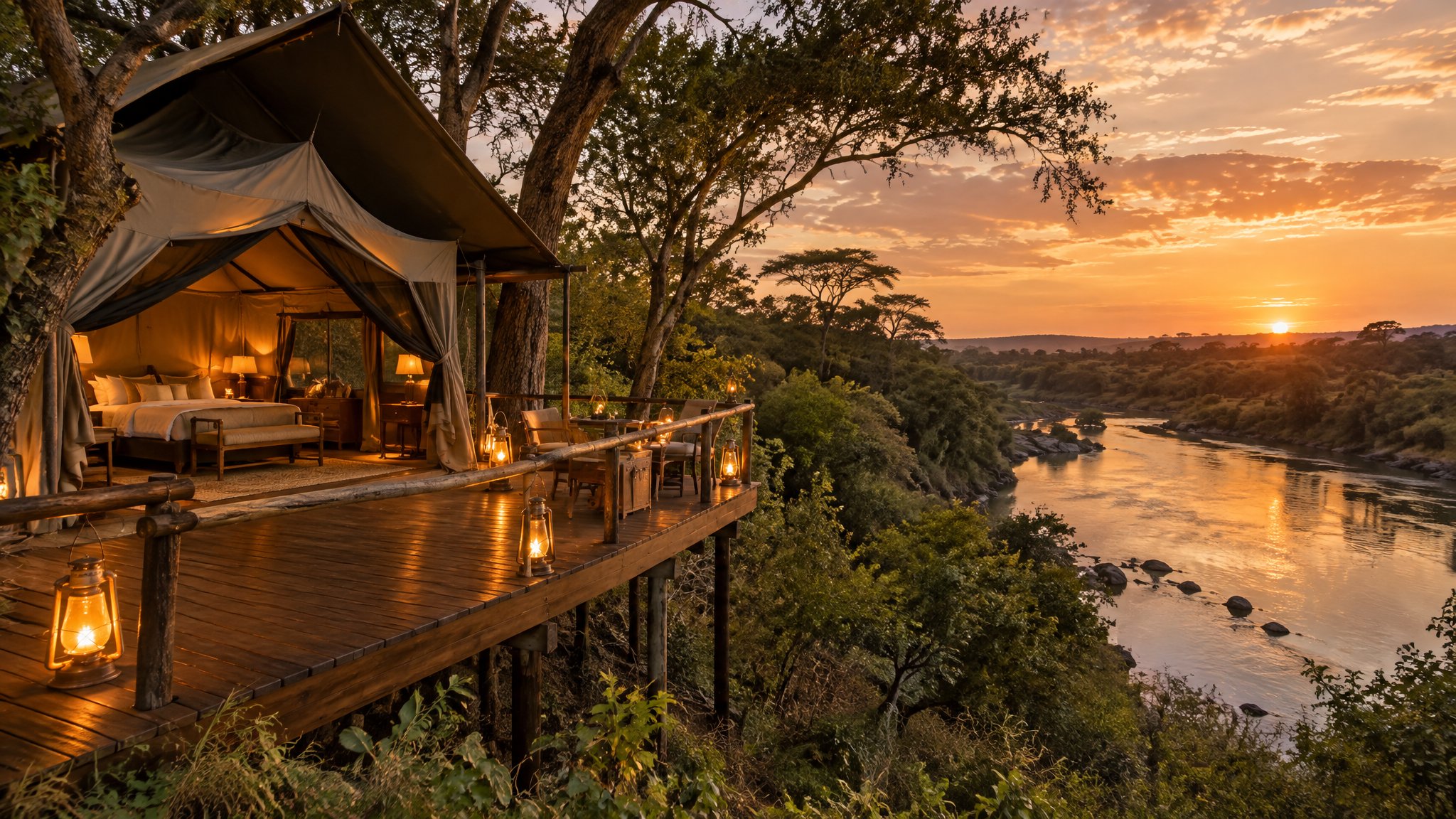
- "Closer to the bush" — walls that breathe, sounds of the night
- Lighter environmental footprint (appeals to eco-conscious travelers)
- Often more luxurious interiors (plunge pools, outdoor showers, copper bathtubs)
- Premium positioning — tented = exclusive
But permanent lodges still have their place:
- Families with young children prefer solid walls and air conditioning
- Better for extreme weather (very hot or very cold months)
- Often larger pools, spas, and public spaces
Key insight: The canvas tent is now the aspirational safari accommodation. "Glamping" has fully entered the luxury safari vocabulary.
6. The Safari + Beach Combination Boom
41% of safari bookings now end with a beach destination — typically 3–5 nights at:
- Zanzibar (Tanzania) — 52% of beach add-ons
- Mozambique (Bazaruto, Benguerra) — 18%
- Seychelles — 12%
- Mauritius — 10%
- Cape Town & Garden Route beaches (South Africa) — 8%
Why the combination works:
- Physical recovery after early-morning game drives
- Emotional balance (bush intensity → ocean calm)
- Justifies the long-haul flight (one trip, two experiences)
- Honeymooners especially demand it (89% of honeymoon safaris include beach)
Average combined itinerary: 8 nights safari + 4 nights beach = 12-night total trip.
Key insight: The "safari-only" itinerary is outdated. Modern travelers want the full arc: city arrival → bush immersion → beach recovery → departure. Operators who don't offer beach combinations are losing bookings.
7. Multi-Country Itineraries Are Now the Standard
64% of safari bookings combine two or more countries — single-country itineraries are now the minority.
Most popular combinations:
- Kenya + Tanzania (Masai Mara → Serengeti → Ngorongoro → Zanzibar) — 28% of multi-country bookings
- Botswana + Zimbabwe (Okavango Delta → Chobe → Victoria Falls) — 19%
- South Africa + Mozambique (Kruger/Sabi Sand → Bazaruto beach) — 14%
- Rwanda + Uganda (Volcanoes gorillas → Bwindi gorillas → Queen Elizabeth) — 11%
- Zambia + Botswana (South Luangwa → Lower Zambezi → Chobe) — 9%
Why multi-country?
- One long-haul flight = maximize value
- Different ecosystems in one trip (e.g., desert + delta + falls)
- FOMO mitigation ("We're already here, let's see it all")
- Migration timing (follow the herds across borders)
Key insight: The "single park, one lodge" safari is dead for most travelers. They want variety, movement, and the feeling of a true journey across Africa. Tour operators must master multi-country logistics or lose bookings to those who do.
8. What Matters Most to Safari Travelers (Survey Data)
We surveyed 1,200 past safari clients. Here's what they ranked as "extremely important" when choosing a safari:
- Wildlife sighting quality — 94%
- Knowledgeable guides — 91%
- Accommodation quality — 87%
- Food quality — 79%
- Privacy / exclusivity — 71%
- Photography opportunities — 68%
- Unique activities (walking, canoeing, hot-air balloon) — 61%
- Sustainability / conservation impact — 58%
- Cultural experiences (village visits, Maasai encounters) — 43%
- Wi-Fi availability — 12% (travelers actively want to disconnect)
Key insight: Wildlife and guides are non-negotiable. Everything else is a multiplier. Luxury lodges with poor guides get scathing reviews; mid-range camps with exceptional guides get 5-star ratings.
9. Booking Windows & Lead Times
How far in advance are travelers booking safaris in 2026?
- Peak season (July–October): 9–14 months in advance (avg: 11.2 months)
- Shoulder season: 6–9 months in advance (avg: 7.4 months)
- Green season: 3–6 months in advance (avg: 4.1 months)
Last-minute bookings (< 3 months): Only 8% of bookings, mostly:
- Solo travelers joining guaranteed-departure group tours
- Flexible retirees
- Opportunistic luxury travelers chasing discounts
Key insight: The "book early" advice is real — top lodges in the Masai Mara, Sabi Sand, and Serengeti sell out 12+ months ahead for peak-season Great Migration dates. Procrastinators get stuck with inferior properties or pay premiums for last-minute availability.
10. Predictions for 2027
Based on 2026 booking trends and field intelligence, here's what we expect for 2027:
- Madagascar will break into the top 10 — lemur tourism + beach combos + zero competition = explosive growth.
- Green season will hit 20% of bookings — as climate anxiety rises, travelers will embrace "wet = lush, not ruined."
- Private mobile camping will surge — the "glamping safari" (private chef, guide, and camp that moves with you) will become the ultra-luxury trend.
- Conservation storytelling will become a booking driver — travelers will choose lodges based on their anti-poaching and community programs, not just luxury.
- Shorter flights, longer stays — travelers will consolidate trips (one 14-night safari instead of two 7-night trips) to reduce carbon footprint.
Download the Full Report (PDF)
📄 Beyond Africa Safari Report 2026 — Full PDF
Download the complete 24-page report with additional charts, destination deep-dives, and 2027 predictions.
Download PDF Report (2.4 MB)Methodology
This report is based on:
- 2,847 safari bookings managed by Beyond Africa Safaris between January 2025 and June 2026
- 1,200 post-safari client surveys (response rate 47%)
- Field intelligence from 63 lodge partners across 14 African countries
- Public booking trend data from industry associations (validated and cross-referenced)
- Two decades of safari design experience across South Africa, Kenya, Tanzania, Botswana, Namibia, Zambia, Zimbabwe, Rwanda, Uganda, Mozambique, Malawi, Madagascar, and Seychelles
We share this data transparently to elevate the entire safari industry. Use it to plan better trips, set honest expectations, and choose the right safari for your dates and dreams.
About Beyond Africa Safaris
Beyond Africa Safaris has been designing tailor-made African safaris since 2004, starting from Cape Town and expanding across 14 countries. We've built a reputation for honest pricing, field-tested itineraries, and putting wildlife and conservation first. This is our first annual safari industry report — a tradition we'll continue every year.
Questions about the data? Contact our team →
Ready to book your 2026 or 2027 safari? Get a personalized quote →