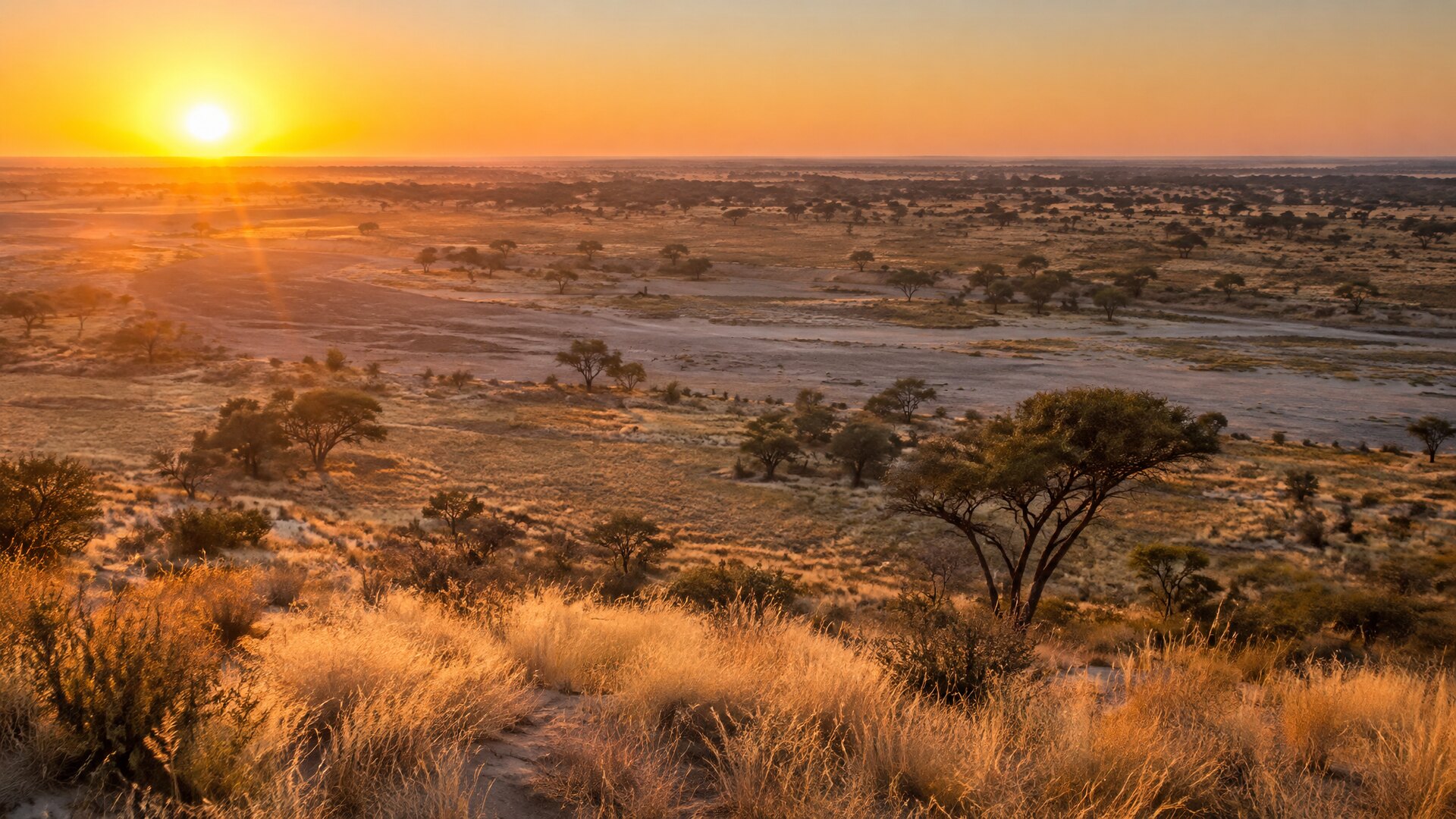
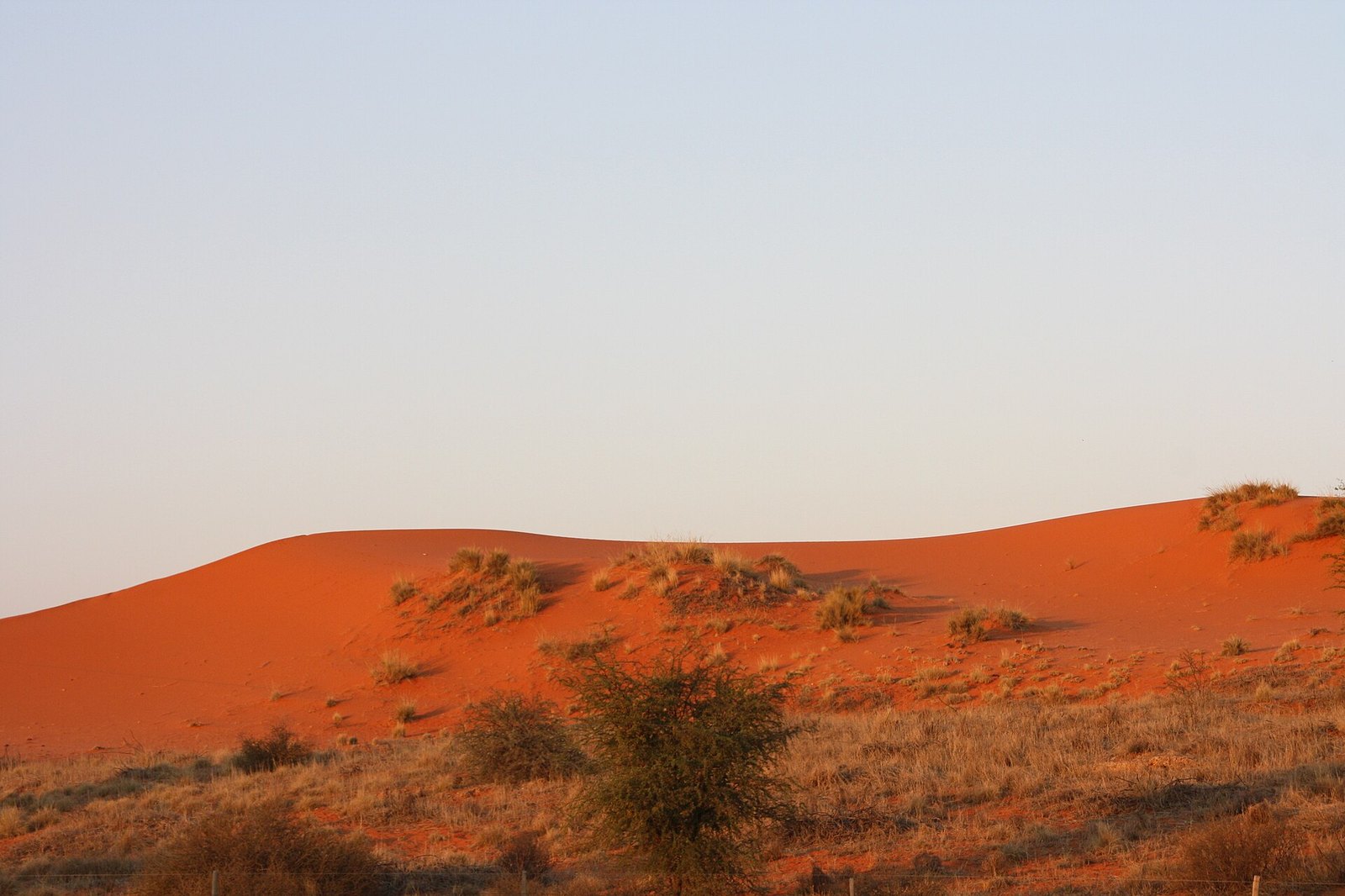
The Central Kalahari Game Reserve covers 52,000 square kilometres of grassland, salt pans and ancient riverbeds, and most visitors see only the fraction their self-drive route happens to cross. Dinaka Safari Lodge takes a different line. It sits on a 40,000-hectare private concession abutting the reserve's northern boundary, and that private status is the whole point: the lodge can go off-road to a sighting, run night drives after dark, walk with armed guides and station you in an underground photographic hide — none of which the national reserve itself allows.
What you get is the Kalahari's best wildlife — black-maned lions, cheetah, leopard, brown hyena, gemsbok, springbok and, if you are lucky on a night drive, aardvark or pangolin — combined with a level of access and flexibility normally reserved for the delta camps of the Okavango. It is the lodge we recommend when a guest says they want the desert, but they do not want to sacrifice guiding quality or photographic opportunity to get it.
The Tents — Eight Rooms on Raised Timber Decks
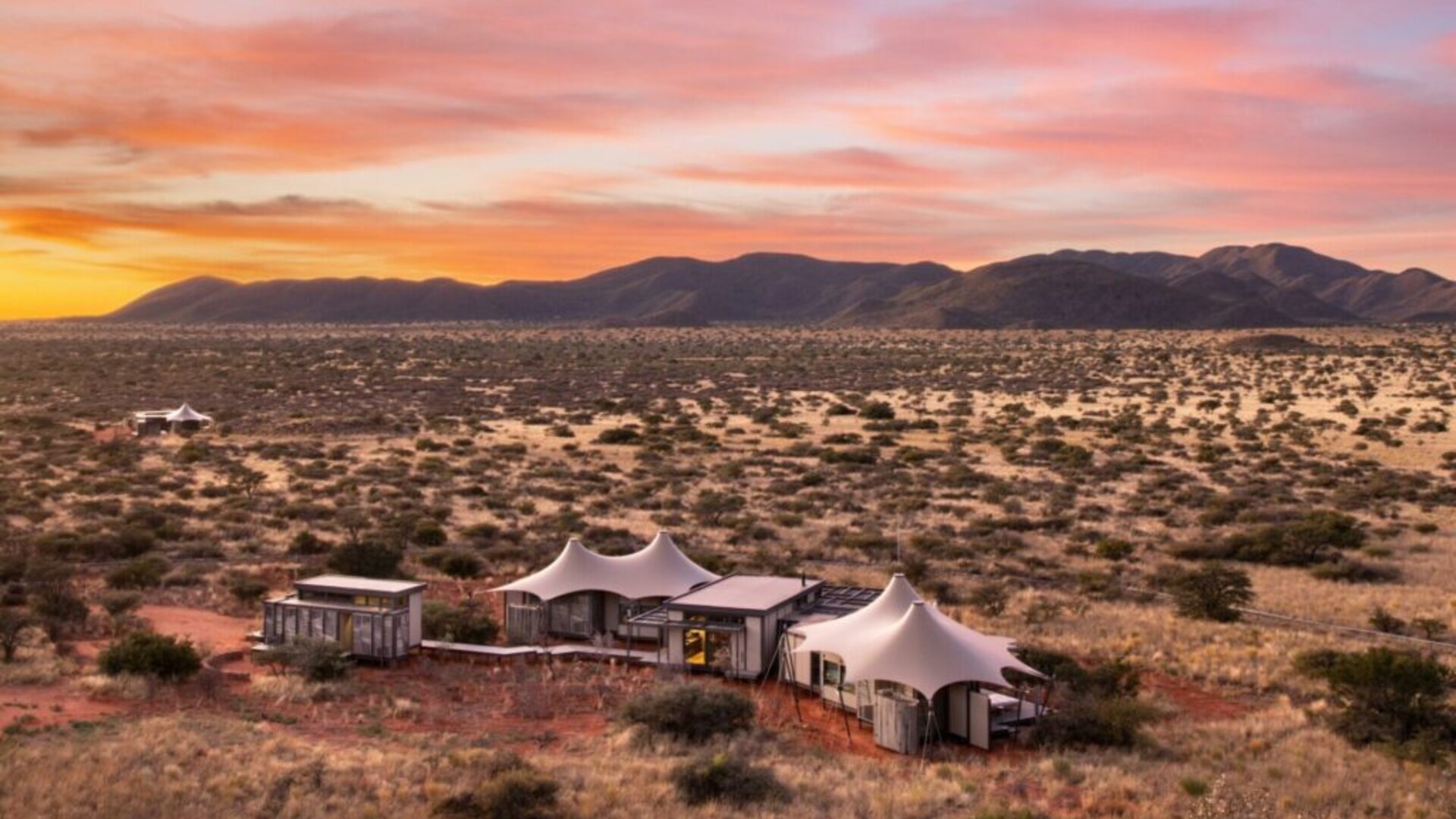
Dinaka has eight thatched safari tents, each raised on a timber platform and connected to the main area by elevated walkways — the whole camp is wheelchair-accessible, which is unusual for a remote Kalahari lodge. Seven are standard tents; the eighth is a two-bedroom family unit that sleeps up to five.
Each tent has polished hardwood floors, a king-sized or twin beds, a mosquito net, a ceiling fan and a coffee station. The bathroom is en suite with both an indoor shower and an open-air shower on the back deck. There is a private veranda out front that looks toward the camp's permanent waterhole. The furnishings are warm and unpretentious — canvas, timber, muted earth tones — and the experience is less about interior design than it is about the view from your chair and the silence when the fan stops turning.
There are no televisions and Wi-Fi reaches only the main area. If you need to be online, you will manage; if you do not, you will be grateful for the quiet.
The Main Area — Pool, Lounge, Bar, Firepit
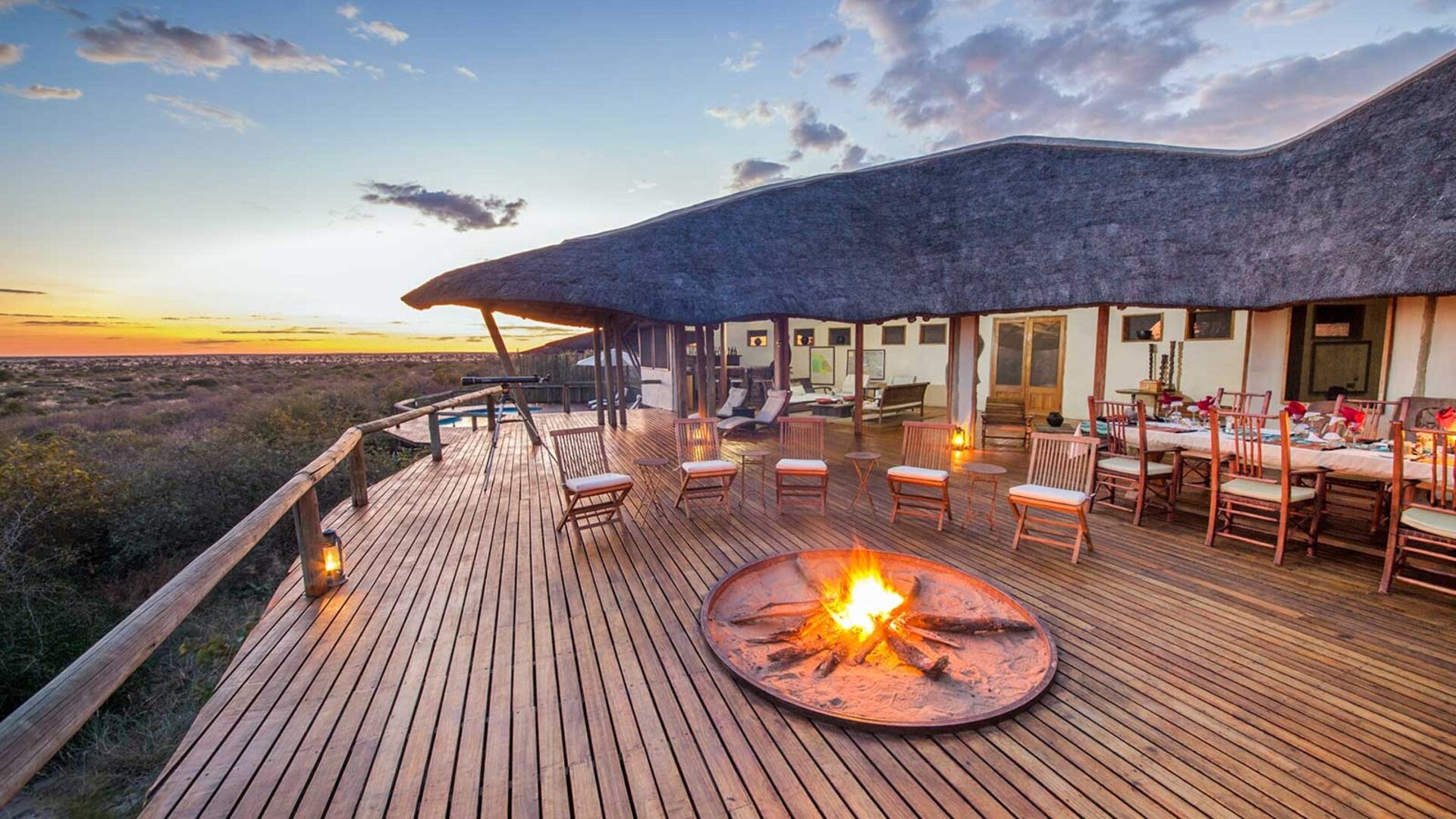
The communal spaces sit under an open-sided thatch structure with clear sight lines over the reserve. There is a lounge with deep sofas, a small bar, a dining area and a deck. A plunge pool sits on the edge of camp — not large, but enough to cool off between drives, which is all a pool needs to do when the afternoon temperature pushes past 35°C.
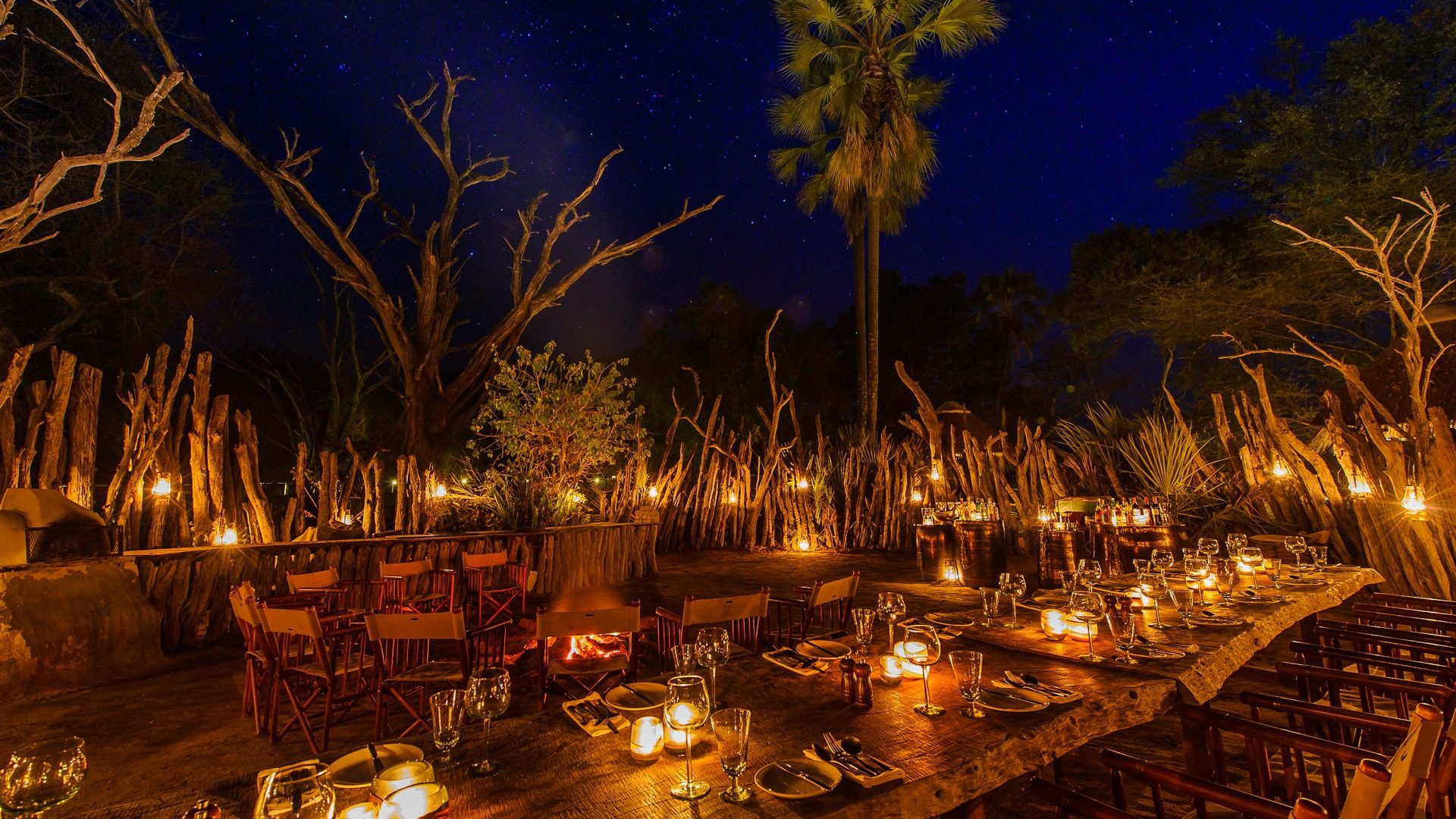
Dinners rotate between a candle-lit dining table under the stars, the boma around the fire and the main deck. The kitchen handles dietary needs without fuss — vegetarian, halal, allergies — and meals are communal, which means new guests quickly learn what the others saw that day and where they saw it. It is a small camp, and it runs like one: eight tents, one guide team, one fire.
The Photographic Hides
This is the single feature that sets Dinaka apart from most Kalahari camps. The lodge operates an underground photographic hide at the camp waterhole, sunk to eye level with whatever comes to drink. You sit in a concrete bunker, lens resting on a padded ledge, and the animals stand directly in front of you — gemsbok, springbok, giraffe, jackal, occasionally elephant — close enough that a 70-200mm lens is often too long.
There is also a ground-level hide set back from the water, giving a wider perspective. Both are available to all guests, and the guides will slot hide time into your schedule whenever you ask. For photographers who have done dozens of game drives but never shot from ground level, this is worth the trip on its own.
The Activities — Night Drives, San Walks, Horseback, Sleep-Out
Because Dinaka sits on a private concession rather than inside the national reserve, it can offer activities that the Central Kalahari Game Reserve itself does not permit:
- Day and night game drives in open Land Cruisers, with a maximum of four guests per vehicle. The night drives are where you pick up the species the daylight hides — brown hyena, aardwolf, bat-eared fox, aardvark and, occasionally, African wild cat or pangolin.
- San Bushmen cultural walks led by members of the local !Naro community. They track animals by footprint, identify edible and medicinal plants, pull water-filled tubers from sand that looks perfectly dry and make fire with two sticks. It is not a performance; it is a working demonstration of knowledge that has been tested over tens of thousands of years in this landscape.
- Guided nature walks with an armed escort through the concession — good for insects, birds, ground-level tracking and a sense of how small you are out here on foot.
- Horseback riding across the open grasslands for experienced riders — a rare offering in the Kalahari and one that genuinely changes how the landscape feels.
- The sleep-out deck — a raised platform set away from camp where you spend the night under the open Kalahari sky, available seasonally between roughly April and November. The Kalahari has some of the darkest, clearest skies on the continent, and the Milky Way overhead is extraordinary. Staff set up bedding, a lantern and a radio; you do the rest.
The Wildlife — What You Will See
The 40,000-hectare concession is fenced, which means the game population is stable rather than migratory — you will not arrive to an empty reserve. The trade-off, if you are a purist, is that the wildlife is managed rather than free-roaming. In practice, the concession is large enough that the herds behave naturally, territories shift and predator-prey dynamics play out as they would anywhere else in the Kalahari.
The headlining species are the black-maned Kalahari lions — the males carry thick, dark manes that photograph spectacularly against the pale sand — along with cheetah (the open grasslands are prime hunting ground), leopard (less frequent than in the Sabi Sand but present and tracked), brown hyena (more reliably seen here than almost anywhere else) and the desert-adapted gemsbok and springbok herds that form the base of the food chain.
Over 200 bird species have been recorded, including raptors — martial eagle, secretary bird, pale chanting goshawk — that thrive in the open country. Birders coming from the Okavango will find a completely different list here.
2027 Rates and What They Include
Dinaka quotes in US dollars per person per night sharing. The 2027 season structure is:
| Season | Dates (2027) | Rate pppn sharing | Single supplement |
|---|---|---|---|
| Low | 7 Jan – 28 Feb | US$765 | none |
| Mid | 1 Mar – 23 Mar; 3 Apr – 30 Apr; 1 Nov – 16 Dec | US$1,145 | US$401 |
| High | 24 Mar – 2 Apr; 1 May – 31 Oct; 17 Dec – 6 Jan 2028 | US$1,525 | US$610 |
What is included: accommodation, all meals and snacks, selected alcoholic and non-alcoholic beverages, day and night game drives, guided walks, San Bushmen walks, photographic hides, sleep-out deck (seasonal), daily laundry and emergency medical evacuation.
What is not included: light-aircraft transfers to the camp's private airstrip (usually quoted from Maun, roughly 35 minutes), premium wines and spirits, spa treatments (if available) and the conservation levy of US$55 per person per night (2027).
For a lodge on a private concession with this level of guiding, activity range and game density, Dinaka's pricing sits firmly in the mid-range by Botswana's standards — well below Tswalu Kalahari (South Africa's most exclusive private reserve, from roughly US$1,900 pppn) and on par with the better-known Central Kalahari camps. The low-season entry of US$765 is one of the strongest value propositions in the Kalahari for a camp of this quality.
Who Dinaka Suits — and Who It Does Not
Dinaka is an excellent fit for:
- Photographers who want eye-level hide access, open-country cheetah shots and black-maned lion portraits against pale sand.
- Travellers pairing a Kalahari leg with the Okavango Delta — two ecosystems, one country, a light-aircraft hop between them.
- First-time Botswana visitors who want an introduction to the desert without sacrificing guiding quality.
- Families with children aged six and above — the family tent sleeps five, and the San walk is one of the best things a child can do on safari.
- Birders looking for the dry-country raptors, larks and sandgrouse they will not find in the delta.
It may not suit:
- Guests who want water-based activities — mokoro, boating or fishing. That is the Okavango, not the Kalahari; we pair the two when both are wanted.
- Visitors who feel strongly about game reserves being unfenced. The concession is fenced, and the animal population is managed accordingly.
- Luxury travellers looking for spa suites, private pools or a wine cellar. Dinaka is comfortable and well-run, but it is a tented camp, not a resort.
How We Would Use Dinaka in a Trip
A three-night stay at Dinaka pairs naturally with two or three nights in the Okavango Delta — Mombo, Jao, Abu, Vumbura or one of the Moremi camps — creating a dry-green contrast that covers two completely different Botswana ecosystems in a single trip. The transfer is a short charter flight via Maun.
For a longer journey we would add two nights at Jack's Camp on the Makgadikgadi Pans (meerkats, quad bikes, vast salt flats) or a final leg at Victoria Falls for the spray and the gorge walk, connecting through Kasane. A 10-day Botswana circuit with Dinaka + the delta + the pans is one of the strongest safari itineraries on the continent right now, and we quote them regularly.
We hold allocation at Dinaka and can confirm availability, add transfers and issue a fully costed itinerary within 24 hours. No deposits, no commitment — just an honest price for the dates you want.
The Verdict
Dinaka Safari Lodge delivers a private, activity-rich Kalahari experience at a fair price. The underground hides, the San Bushmen walks, the night drives and the horseback riding give it a range of things to do that the national-reserve camps simply cannot match, and the black-maned lion prides, cheetah and brown hyena give it a wildlife list that holds its own against any camp in the region. It is not trying to be the most luxurious lodge in Botswana — and it does not need to be. What it is, is a well-run, honest desert camp with real guiding depth, run by a team who know this land as well as anyone. If the Kalahari is on your list, Dinaka belongs on the shortlist.