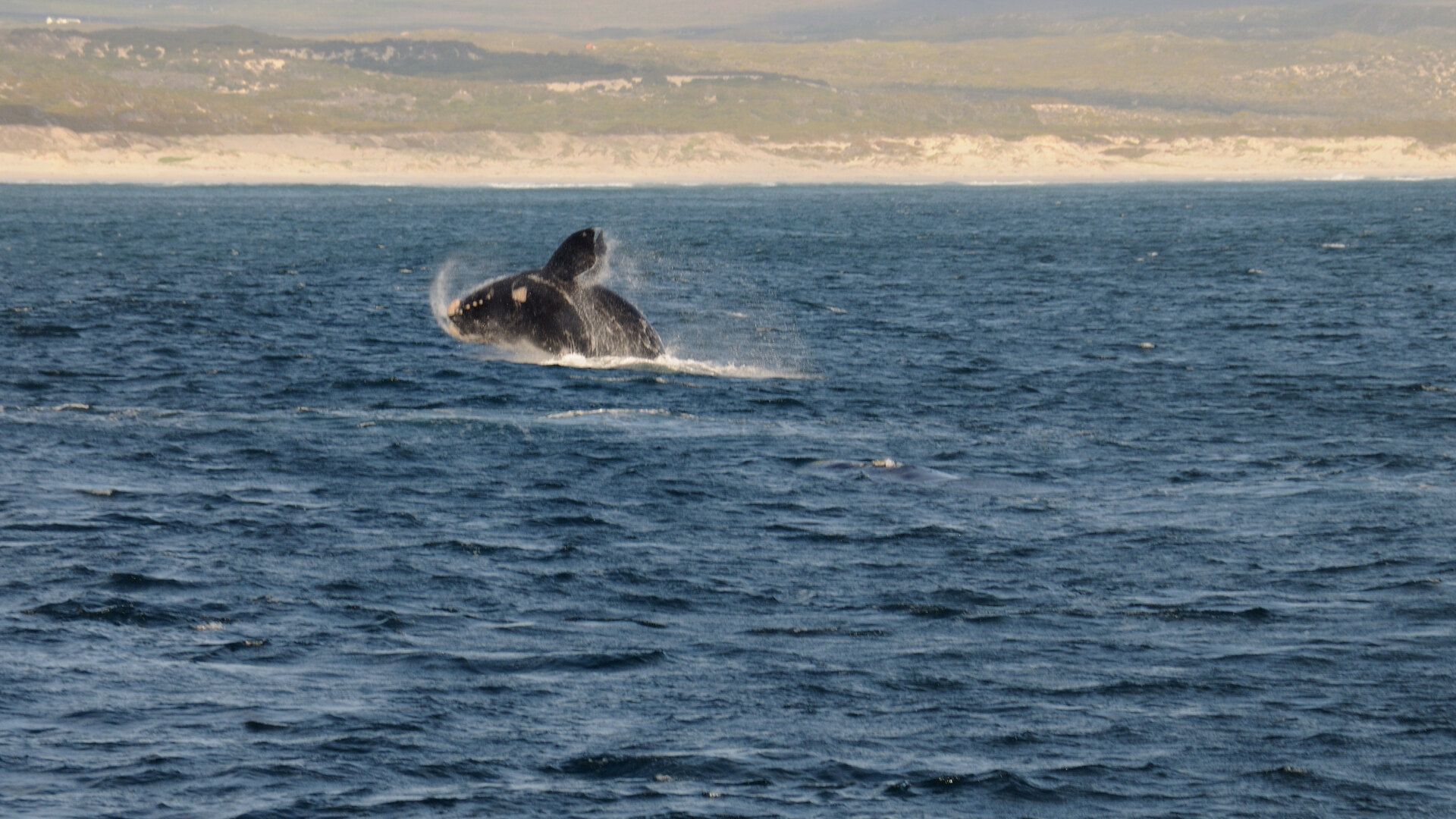
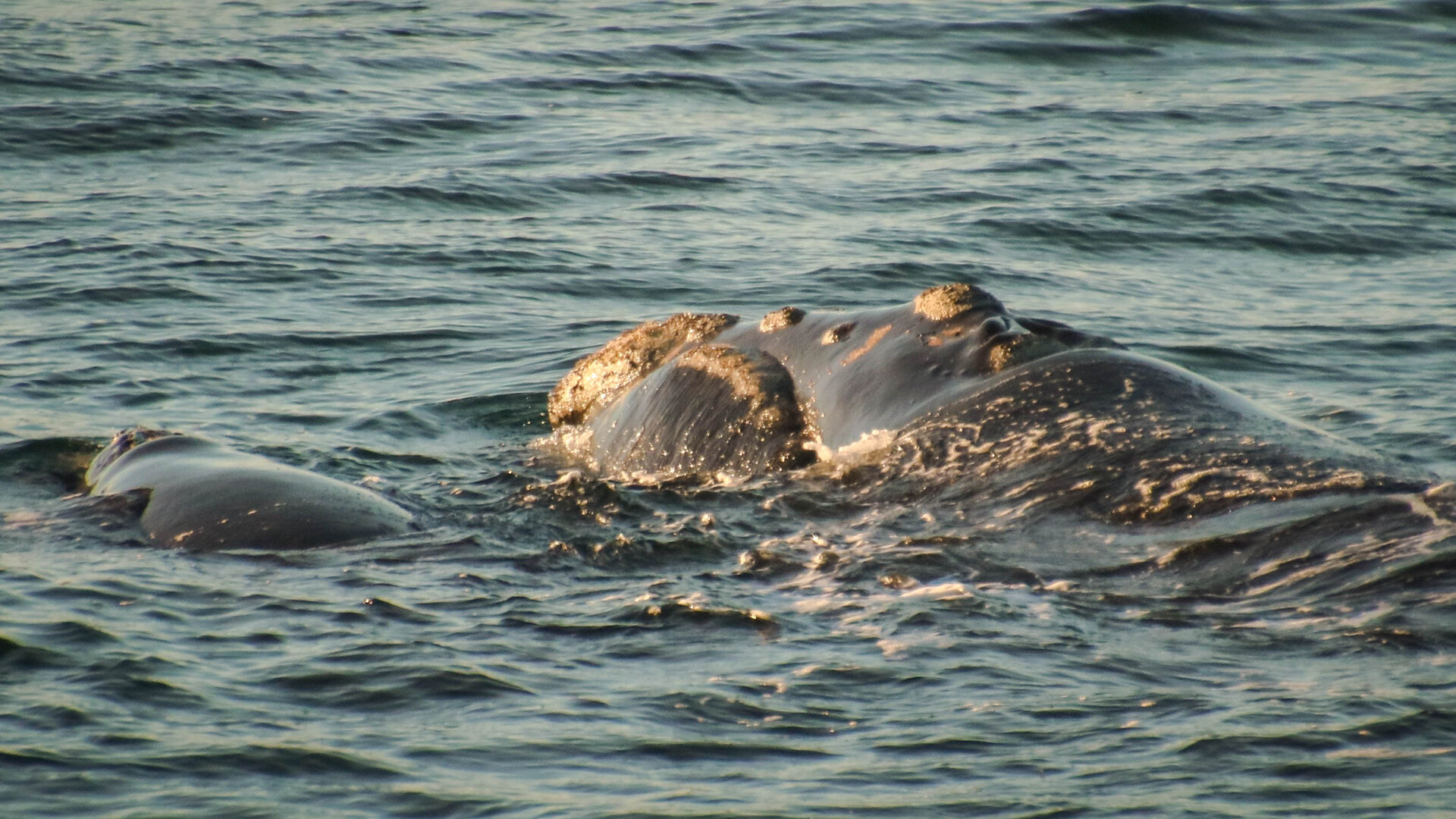
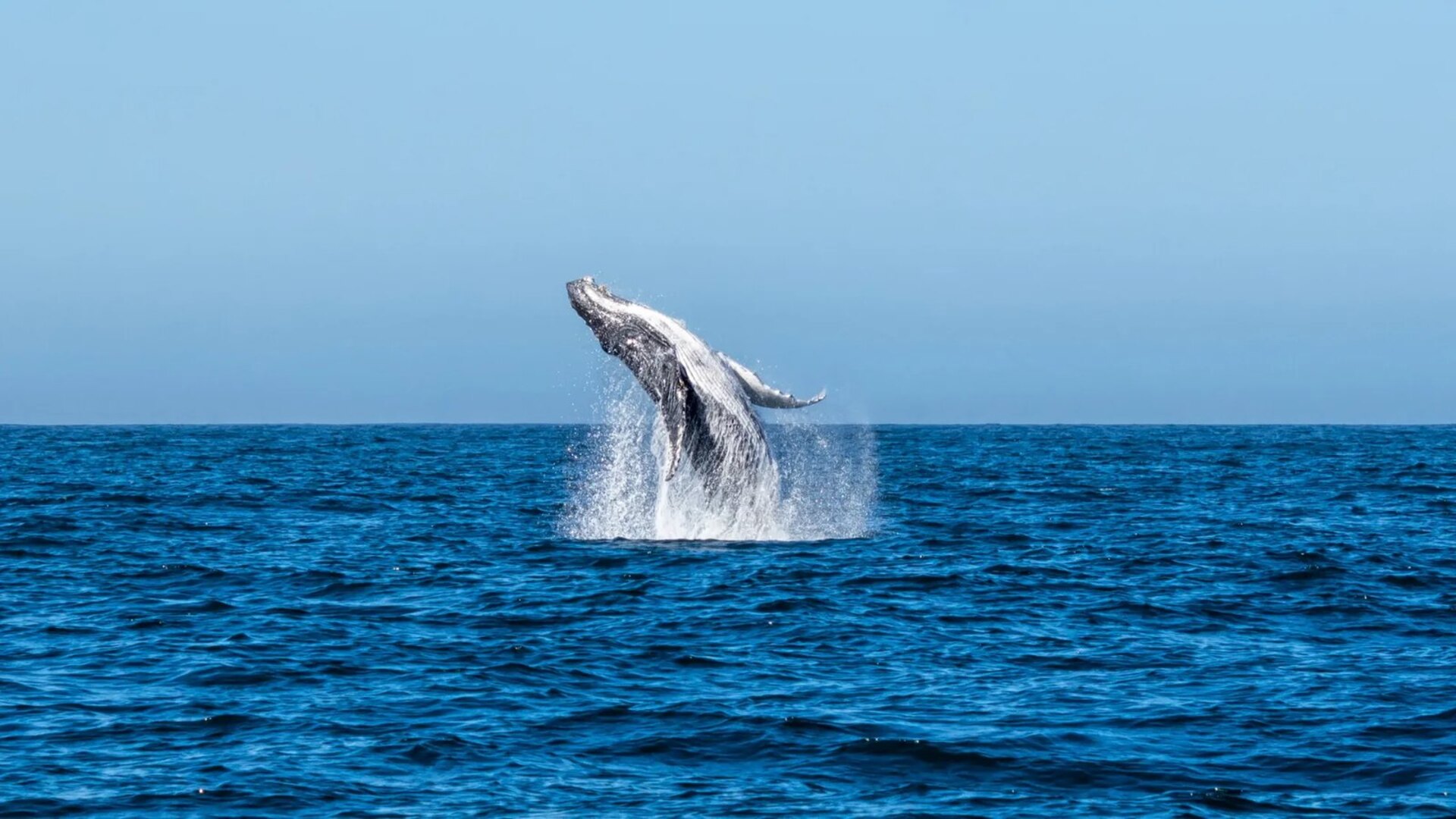
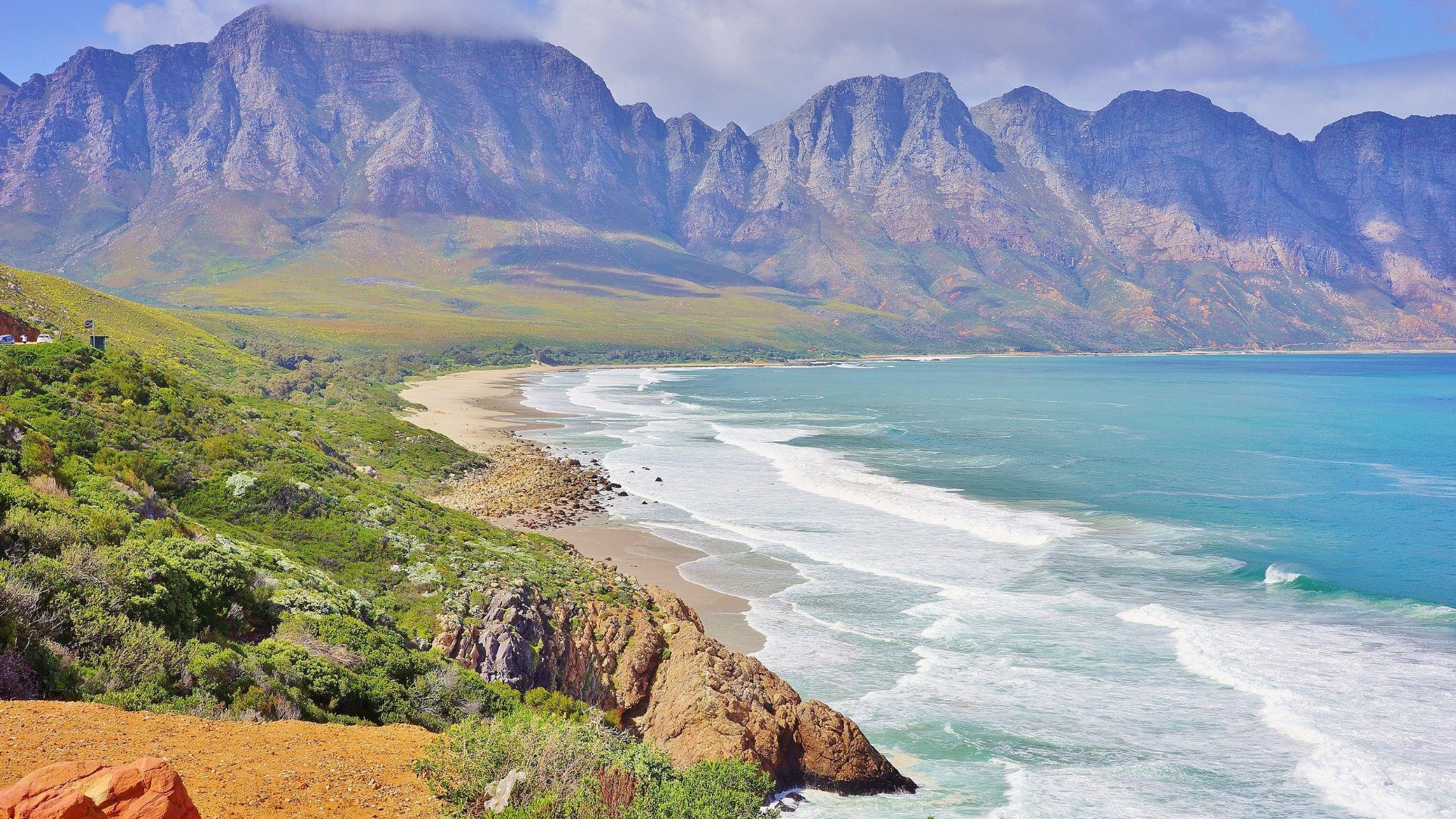
Spend enough mornings on the cold water off the Cape and sooner or later someone on the boat points at the horizon and goes quiet. Two tall black fins, one folding left and one folding right, cutting the swell in a straight, unhurried line. Those two fins belong to the animals that have rewritten the story of the South African coast over the last decade — a pair of male killer whales the local skippers call Port and Starboard. They are the reason the great white sharks left False Bay, the reason the shark map of this country has shifted east, and, for a growing number of travellers, a reason to come here in their own right.
Killer whales — orcas, the largest member of the dolphin family — have always moved through South African waters, but they were rare, scattered and seldom seen from shore. That changed when Port and Starboard settled into a hunting range along the Western Cape and began doing something almost no other orcas on Earth are known to do with such method: killing adult great white sharks and eating their livers. The sharks read the threat and fled. Beaches woke to four-metre white sharks washed up with a single clean wound and the liver gone. And a quiet, poorly understood ocean predator became the most talked-about animal on the coast.
This is an honest account of killer whales in South Africa — who these orcas are, where along the coast you have a real chance of seeing one, when to come, what they are doing to the great white population and why the science is not as settled as the headlines suggest. It is written by a team that puts travellers on these boats and hears back from the crews. If your interest is the sharks themselves and where to find them now, our companion great white sharks in South Africa guide maps that coast by coast; this piece is about the animals at the top of the chain.
Orcas in South African waters — the short version
There is no resident, predictable orca population in South Africa the way there is off Norway or the Pacific Northwest. Orcas here are wide-ranging ocean travellers that follow prey across enormous distances, which means sightings are opportunistic rather than guaranteed. What has changed is the frequency: Port and Starboard, and a handful of other individuals, now work the Western Cape coast often enough that encounters — from the shore, from whale-watching boats, from the shark cage fleet — have gone from freak events to a few times a season in the right places.
Two broad types of killer whale move through these waters. Most are the generalist, offshore-ranging orcas that hunt dolphins, seals and other whales. A rarer group are the flat-toothed, shark-specialist animals — worn teeth from a lifetime of eating rough shark skin — and it is this group Port and Starboard belong to. Understanding that split is the key to the whole story, because it is the shark specialists, not orcas in general, that emptied the bays.
At a glance: where killer whales turn up along the coast
| Stretch of coast | Base towns | Chance of orcas | Best window | What you are likely to see them doing |
|---|---|---|---|---|
| False Bay & Cape Peninsula | Simon’s Town, Hout Bay | Occasional, rising | Autumn–spring | Transiting; historically hunting sharks and dolphins |
| Gansbaai & the Overberg | Kleinbaai, Gansbaai | Occasional | Apr–Sep | Shark predation events; the Port and Starboard range |
| Plettenberg Bay & Garden Route | Plett, Mossel Bay, Knysna | Best in the country | Year-round, peaks winter | Hunting dolphins and seals; boat-based sightings |
| West Coast & St Helena Bay | St Helena Bay, Lambert’s Bay | Seasonal | Spring–summer | Following bait fish and common dolphins |
| KwaZulu-Natal South Coast | Port Edward, Shelly Beach | Sardine Run only | May–Jul | Working the sardine shoals with sharks and dolphins |
1. Plettenberg Bay & the Garden Route — the most reliable orca coast
If you want the best standing chance of a killer whale sighting in South Africa, base yourself on the Garden Route and specifically around Plettenberg Bay. The marine-rich bays between Mossel Bay and Plett hold large pods of common and bottlenose dolphins, Cape fur seals and migrating whales, and that concentration of prey draws orcas in more consistently than anywhere else on the coast. The permit-holding boat operators out of Plett log orca encounters most years, usually of the dolphin-and-seal-hunting type rather than the shark specialists, and the sightings are spread across the seasons rather than locked to one short window.
A Plettenberg Bay marine trip is a fine outing whether or not the orcas show. The same water gives you humpback and southern right whales in season, big dolphin pods almost daily, the Robberg seal colony and the seabirds of the offshore islands. Orcas are the jackpot, not the guarantee, and any honest skipper will frame it that way before you leave the harbour. Fold it into a wider Garden Route trip and the marine morning becomes one chapter among forests, lagoons and the Tsitsikamma coast rather than a single roll of the dice.


2. False Bay, the Cape Peninsula & the Overberg — where the story unfolded
The stretch of coast from False Bay round the Cape Peninsula and east to Gansbaai is where the orca story became world news, because it is here that Port and Starboard did their work on the great white sharks. This is not a coast where you go out expecting to see orcas on a given morning — the pair range widely and unpredictably — but it is where the shark-specialist killer whales turn up, and where the drama has played out on the beaches of Struisbaai, Gansbaai and the Overberg.
From the shore, orcas are seen a few times a season off the Peninsula, often from the road above Simon’s Town or from the whale-watching boats working the bay. The great white cage fleet out of Kleinbaai near Gansbaai occasionally finds itself sharing the water with the very animals that frighten its sharks away. If you are travelling this coast for the marine life, the honest advice is to come for the whales, seals, penguins and sharks that this water reliably delivers — our guide to where to see whales in South Africa covers those — and treat an orca as the rare, electric bonus it is.
3. The West Coast & St Helena Bay — the dolphin-hunting ground
North of Cape Town, the cold Benguela-fed waters of the West Coast around St Helena Bay and Lambert’s Bay hold some of the largest common dolphin pods in the world — superpods that can number in the thousands — along with vast shoals of bait fish in spring and summer. That prey base pulls in orcas of the dolphin-hunting type, and boat operators and fishermen record encounters most seasons, usually in the warmer months when the dolphin activity peaks.
This is the least developed of the orca coasts for visitors, with fewer dedicated marine-wildlife boats than the Garden Route, but for a traveller already exploring the West Coast “its fishing villages, the spring wildflowers, the birdlife of the lagoons” it is worth asking local operators what has been seen. Orcas here are hunting in open water rather than at a fixed seal island, so the sightings are fast, mobile and hard to predict.
4. The KwaZulu-Natal Sardine Run — orcas in the feeding frenzy
The one time of year orcas become a near-feature rather than a rarity is the Sardine Run, the great cold-water migration of sardines up the KwaZulu-Natal coast between roughly May and July. As billions of fish push north along the South Coast near Port Edward and Shelly Beach, they draw one of the planet’s largest gatherings of marine predators — thousands of common dolphins herding the shoals into bait balls, Cape gannets diving in white curtains, bronze whaler and dusky sharks, Bryde’s whales, and, often enough, killer whales working the edges of the chaos.
Sardine Run trips are run as dedicated multi-day marine expeditions, usually by boat and often with snorkelling on the bait balls, and they are the closest thing South Africa offers to a guaranteed high-action ocean spectacle. Orcas are not on every trip, but the Sardine Run is statistically your strongest shot at seeing them hunting in numbers. It is a serious, weather-dependent ocean adventure rather than a casual harbour cruise, and it sits far from the Cape — a different trip entirely, best built around the KZN coast and a Zululand Big Five reserve inland.
Port and Starboard — the two orcas that changed a coast
Around 2015, two male orcas with collapsed dorsal fins — one bending to the left, giving “Port” his name, the other to the right for “Starboard” — began appearing off the Western Cape. They belong to that rare, flat-toothed group of killer whales specialised in hunting sharks, and they turned out to be formidably good at it. Over the following years they were documented killing broadnose sevengill sharks and then great whites, flipping the sharks upside down into the trance-like state known as tonic immobility and opening them with surgical neatness to remove the oil-rich liver — the single most calorie-dense meal in the sea.
The effect on the great white sharks was immediate and dramatic. After an attack, the surviving whites would abandon a bay entirely, sometimes for months. False Bay, once the stage for the famous breaching “flying sharks,” saw its great whites dwindle from 2015 and effectively vanish after 2017. Gansbaai’s sightings turned erratic. The sharks were not being wiped out so much as frightened off — one of the clearest cases ever recorded of a top predator displaced by an even higher one. The pair’s technique sharpened too: where early kills were coordinated, Starboard was later filmed killing a juvenile great white single-handed in under two minutes.
What makes Port and Starboard so compelling is not just the violence of it but the intelligence. These are two individual animals, recognisable on sight, that identified an abundant, under-exploited food source and built a hunting method around it, reshaping the predator hierarchy of an entire coastline in the process. Most operators would rather talk about anything else, because the orcas are bad for the shark-cage business. We think they are the most extraordinary thing happening in South African waters, and worth understanding whether or not you ever see them.
How killer whales hunt great white sharks
The liver is the prize. A great white’s liver can account for up to a third of its body weight, and it is dense with squalene and oil — enormous energy in a single organ. Port and Starboard learned to take it with precision. Working a shark near the surface, an orca will grip it and flip it belly-up; held upside down, a shark falls into tonic immobility, a natural paralysis that leaves it unable to resist. The orca then makes a controlled bite near the pectoral fins and extracts the liver, frequently leaving the rest of the carcass largely intact — which is why the evidence has washed up so clearly on Cape beaches, whole sharks missing one specific organ.
This is learned, specialised behaviour, not something orcas do everywhere. It requires the shark-specialist ecotype, the knowledge of how to induce tonic immobility, and the willingness to take on an animal as dangerous as an adult great white. That combination is vanishingly rare worldwide, which is part of why marine scientists from around the world now watch the South African coast so closely.
| Orca fact | The reality in South African waters |
|---|---|
| What they are | Killer whales — the largest member of the dolphin family |
| Adult male length | Up to roughly 8–9 m; females smaller |
| Dorsal fin (males) | Up to about 1.8 m tall; Port and Starboard’s are collapsed |
| Key prey here | Dolphins, seals, and — for the specialists — sharks’ livers |
| Famous individuals | Port and Starboard, shark-hunting males since ~2015 |
| Status | Wide-ranging, not resident; sightings opportunistic |
Orcas or people? The honest state of the science
It would be tidy to lay the entire decline of South Africa’s great whites at the door of two orcas, and plenty of headlines have. The real picture is more argued. Port and Starboard have unquestionably driven sharks out of specific bays — the timing, the carcasses and the flight behaviour are not in doubt. But a number of respected marine scientists, among them researchers who have worked these waters for decades, point out that the great white population was already under heavy human pressure before the orcas arrived.
The KwaZulu-Natal shark-control nets and drumlines kill white sharks every year; the demersal longline fishery that targets smaller sharks removes the very prey base young white sharks depend on; and estimates put the total number of adult great whites along the entire South African coast at fewer than a few hundred animals. On a population that small and slow to breed, those steady human-caused losses may matter as much as the orcas, or more. The orcas, in this reading, are the dramatic trigger on top of a longer, quieter decline.
We lay out both sides because the honest answer is that both are true and the balance is still being worked out. What is not in dispute is that the great white is a species under real strain in these waters, that the orcas have reshaped where the remaining sharks gather, and that the coast is a more complicated, more fascinating place than the simple “orcas versus sharks” story allows. For the current state of the sharks themselves, coast by coast, see our great white sharks guide.
Have the great whites started coming back?
There have been signs. In September 2026 a young great white was spotted and filmed near Seal Island in False Bay — the first encounter there for one long-running operator since 2018 — and the sighting ran around the world as a hopeful headline. The honest reading, shared by the scientists and the operators themselves, is more cautious: it was a single sub-adult, not the return of the old aggregation, and great whites have never been entirely absent from the wider bay, with a handful confirmed in other corners over the intervening years.
One shark does not rebuild a population, and nobody working this coast is calling the sharks “back.” What it does show is that the system is not frozen — the sharks test the old grounds, the orcas move on and off the coast, and the balance keeps shifting. For a traveller, the takeaway is simple honesty: come for the ocean as it is now, with Mossel Bay the dependable great white water, the Garden Route the best orca odds, and False Bay a superb coast for whales, seals and penguins whether or not its sharks have truly returned.
What a day looking for orcas is actually like
There is no dedicated “orca trip” in South Africa the way there is a shark-cage trip, because the animals are too unpredictable to build a product around. Instead you find orcas on the back of a permit-holding whale-watching or marine “Big Five” boat trip, most often out of Plettenberg Bay, Hermanus, Gansbaai or Simon’s Town. You book the marine outing, you go out for the whales, dolphins, seals and seabirds that are near-certain, and if the orcas appear the whole boat knows it is a rare day.
The trips themselves are gentle — a couple of hours on a licensed boat, a qualified guide, life jackets, and a slow run along the coast with the engine cut whenever there is something to watch. South African regulations require boats to keep a respectful distance from whales and orcas, approaching no closer than the permitted minimum and never chasing or crowding an animal, which is exactly as it should be. Mornings tend to bring the calmest seas. If you are prone to seasickness, take something before you sail and pick a settled-weather day.


When to come, coast by coast
Because orcas follow prey rather than a calendar, there is no perfect orca month — but the odds do shift with the season and the coast. On the Garden Route around Plett, sightings are spread across the year with a lean toward the winter whale season. Off the West Coast, the dolphin-driven encounters peak in the warmer spring and summer months. And on the KZN South Coast, the orcas ride the Sardine Run through the heart of winter.
| Coast | Best months for orcas | Why |
|---|---|---|
| Plettenberg Bay & Garden Route | Year-round, peaks Jun–Oct | Resident dolphin and seal prey plus winter whales |
| False Bay & the Cape Peninsula | Apr–Oct | Cooler-water predator activity; whale season overlap |
| West Coast & St Helena Bay | Sep–Feb | Common-dolphin superpods and bait-fish shoals |
| KwaZulu-Natal South Coast | May–Jul | The Sardine Run — the coast’s biggest feeding event |
If seeing an orca is the single thing you most want, the strategy is to stack your odds: build in several marine boat trips rather than one, favour the Garden Route or a Sardine Run expedition, and treat every outing as a whale-and-dolphin trip that might, on a lucky day, turn into something far rarer.
The wider marine cast
An orca is the crown, but it sits on top of one of the richest cold-water coasts on the planet, and the supporting cast is the real reason to be out there. The same bays give you southern right and humpback whales in season, Bryde’s whales year-round, bottlenose and common dolphins in their hundreds, Cape fur seals, African penguins and great white sharks — the grouping South Africans call the Marine Big Five. A single morning on the water off the Cape or the Garden Route can hand you most of that list, with the orca as the wildcard on top.
That is why we never sell an orca outing as such. We build a marine day around the animals the ocean reliably delivers, point you at the coasts and seasons where killer whales are most likely, and let the rarity be the gift it is. Pair it with the right whale-watching season and you give yourself the fullest ocean the country can offer.
How an orca coast fits a bigger South African journey
The great advantage of South Africa is that this cold, wild ocean sits beside everything else the country does well. A marine morning off the Cape Peninsula or Gansbaai slots neatly into a Cape Town and safari trip — Table Mountain, the winelands, the Peninsula and a malaria-free Big Five reserve all within easy reach. A Garden Route marine day is simply one stop along a self-drive that runs through forests, lagoons, Addo’s elephants and the Eastern Cape reserves. And a Sardine Run expedition pairs with the Big Five parks of Zululand inland.
Done well, the orca becomes one thread in a journey that reaches from the deep ocean into the bush — the same travellers who watched two black fins cut the Cape swell in the morning tracking a leopard from a game vehicle a few days later. Those full-country journeys, ocean to bushveld, are the ones our team enjoys shaping most.
Respecting the animals
Killer whales are protected in South African waters, and the rules around them are strict for good reason: boats must keep their distance, must not chase or encircle, and must let the animals set the terms of any encounter. Choosing a licensed, permit-holding operator is not a formality — it is the difference between an encounter that respects the animal and one that harasses it. The best skippers cut the engine, hold back, and let an orca approach the boat on its own terms if it chooses to, which is both the law and the only way to watch an animal this intelligent without changing its behaviour.
Port and Starboard, and the great whites they hunt, are all players in an ocean under pressure from fishing, nets and a warming sea. Watching them honestly — understanding the orcas rather than villainising them, valuing the sharks rather than fearing them — is a small part of how a coast like this keeps its wild animals worth protecting. The orcas did not break the ocean; they revealed how alive it still is.
Come and read the coast with us
Killer whales will never be a sure thing in South Africa, and anyone who promises you one is not being straight. What we can do is read the coast for you — put you on the Garden Route in the right season, on the right permit-holding boat, with the whales, dolphins and seals near-certain and the orca a live possibility — and then fold that marine day into a journey that carries you from this cold, extraordinary ocean deep into the African bush. Tell us when you are coming and how much of the coast you want to read, and our team will map the whole thing around you.
Hero film and photographs: killer whales and the Cape marine coast, via Wikimedia Commons (CC BY-SA / public domain), graded and trimmed for this page. George narration recorded for Beyond Africa Safaris.